

AP Literature - Literary Terms Flashcards
Terms : Hide Images
| 6537266878 | allegory | A story, poem, or picture that can be interpreted to reveal a hidden meaning, typically a moral or political one. | 0 | |
| 6537266879 | alliteration | It is a stylistic device in which a number of words, having the same first consonant sound, occur close together in a series. |  | 1 |
| 6537266880 | allusion | A brief and indirect reference to a person, place, thing or idea of historical, cultural, literary or political significance. | 2 | |
| 6537266881 | anagram | a word or phrase spelled by rearranging the letters of another word or phrase | 3 | |
| 6537266882 | antecedent | The word, phrase, or clause referred to by a pronoun. |  | 4 |
| 6537266883 | antagonist | A character or force in conflict with the main character |  | 5 |
| 6537266884 | anaphora | A rhetorical figure of repetition in which the same word or phrase is repeated in (and usually at the beginning of) successive lines, clauses, or sentences. | 6 | |
| 6537266885 | anastrophe | Inversion of the natural or usual word order |  | 7 |
| 6537266886 | antithesis | A balancing of two opposite or contrasting words, phrases, or clauses. |  | 8 |
| 6537266887 | aphorism | A brief, cleverly worded statement that makes a wise observation about life. |  | 9 |
| 6537266888 | apostrophe | A figure of speech that directly addresses an absent or imaginary person or a personified abstraction, such as liberty or love. | 10 | |
| 6537266889 | assonance | Repetition of a vowel sound within two or more words in close proximity |  | 11 |
| 6537266890 | asyndeton | A series of words separated by commas (with no conjunction), e.g. "I came, I saw, I conquered." The parts of the sentence are emphasized equally; in addition, the use of commas with no intervening conjunction speeds up the flow of the sentence. |  | 12 |
| 6537266891 | blank verse | Poetry written in unrhymed iambic pentameter |  | 13 |
| 6537266892 | caesura | A natural pause or break in a line of poetry, usually near the middle of the line. |  | 14 |
| 6537266893 | cacophony | Harsh, discordant, or meaningless mixture of sounds |  | 15 |
| 6537266894 | cadence | Rhythmic rise and fall | 16 | |
| 6537266895 | conceit | A fanciful expression, usually in the form of an extended metaphor or surprising analogy between seemingly dissimilar objects. |  | 17 |
| 6537266896 | connotation | All the meanings, associations, or emotions that a word suggests |  | 18 |
| 6537266897 | consonance | Repetition of a consonant sound within two or more words in close proximity. |  | 19 |
| 6537266898 | couplet | A pair of rhymed lines that may or may not constitute a separate stanza in a poem. |  | 20 |
| 6537266899 | dactyl | A stressed syllable followed by two unstressed syllables | 21 | |
| 6537266900 | denotation | Dictionary definition of a word |  | 22 |
| 6537266901 | denouement | an outcome or solution; the unraveling of a plot |  | 23 |
| 6537266902 | diction | The choice and use of words and phrases in speech or writing |  | 24 |
| 6537266903 | didactic | Intended to instruct; teaching, or teaching a moral lesson |  | 25 |
| 6537266904 | dirge | a funeral hymn or mournful speech |  | 26 |
| 6537266905 | euphemism | An indirect, less offensive way of saying something that is considered unpleasant |  | 27 |
| 6537266906 | end-stopped line | A line that ends with a natural speech pause, usually marked by punctuation |  | 28 |
| 6537266907 | enjambment | A run-on line of poetry in which logical and grammatical sense carries over from one line into the next. |  | 29 |
| 6537266908 | epitaph | A brief statement written on a tomb or gravestone |  | 30 |
| 6537266909 | epic | A long narrative poem, written in heightened language, which recounts the deeds of a heroic character who embodies the values of a particular society |  | 31 |
| 6537266910 | epistolary | A piece of literature contained in or carried on by letters |  | 32 |
| 6537266911 | flashback | A method of narration in which present action is temporarily interrupted so that the reader can witness past events |  | 33 |
| 6537266912 | foreshadowing | A narrative device that hints at coming events; often builds suspense or anxiety in the reader. |  | 34 |
| 6537266913 | foot | A metrical unit composed of stressed and unstressed syllables. | 35 | |
| 6537266914 | frame story | A secondary story or stories embedded in the main story | 36 | |
| 6537266915 | free verse | Poetry that does not have a regular meter or rhyme scheme |  | 37 |
| 6537266916 | genre | A category or type of literature (or of art, music, etc.) characterized by a particular form, style, or content. |  | 38 |
| 6537266917 | hamartia | tragic flaw which causes a character's downfall |  | 39 |
| 6537266918 | heroic couplet | A pair of rhymed, iambic pentameter lines. |  | 40 |
| 6537266919 | hexameter | A line of poetry that has six metrical feet. |  | 41 |
| 6537266920 | hubris | Excessive pride or arrogance that results in the downfall of the protagonist of a tragedy |  | 42 |
| 6537266921 | hyperbole | A figure of speech that uses exaggeration to express strong emotion, make a point, or evoke humor |  | 43 |
| 6537266922 | iamb | A common meter in poetry consisting of an unrhymed line with five feet or accents, each foot containing an unaccented syllable and an accented syllable. |  | 44 |
| 6537266923 | imagery | Descriptive or figurative language in a literary work; the use of language to create sensory impressions. |  | 45 |
| 6537266924 | irony | A contrast or discrepancy between what is stated and what is really meant, or between what is expected to happen and what actually does happen. |  | 46 |
| 6537266925 | verbal irony | In this type of irony, the words literally state the opposite of the writer's true meaning |  | 47 |
| 6537266926 | situational irony | Occurs when the outcome of a work is unexpected, or events turn out to be the opposite from what one had expected |  | 48 |
| 6537266927 | dramatic irony | Irony that occurs when the meaning of the situation is understood by the audience but not by the characters in the play. |  | 49 |
| 6537266928 | jargon | Special words or expressions that are used by a particular profession or group and are difficult for others to understand |  | 50 |
| 6537266929 | juxtaposition | Placement of two things closely together to emphasize comparisons or contrasts |  | 51 |
| 6537266930 | kenning | A device employed in Anglo-Saxon poetry in which the name of a thing is replaced by one of its functions or qualities. |  | 52 |
| 6537266931 | metaphor | A comparison that establishes a figurative identity between objects being compared. |  | 53 |
| 6537266932 | meter | A regular pattern of stressed and unstressed syllables in a line of poetry | 54 | |
| 6537266933 | metonymy | A figure of speech in which something is referred to by using the name of something that is associated with it | 55 | |
| 6537266934 | mood | Feeling or atmosphere that a writer creates for the reader |  | 56 |
| 6537266935 | motif | (n.) a principal idea, feature, theme, or element; a repeated or dominant figure in a design |  | 57 |
| 6537266936 | motivation | A psychological factor that provides a directional force or reason for behavior. |  | 58 |
| 6537266937 | narration | The purpose of this type of rhetorical mode is to tell the story or narrate an event or series of events. |  | 59 |
| 6537266938 | novel | A long fictional narrative written in prose, usually having many characters and a strong plot. | 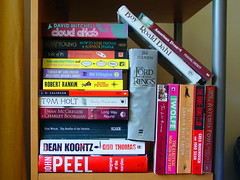 | 60 |
| 6537266939 | novella | A short novel usually under 100 pages. | 61 | |
| 6537266940 | novelette | When a novel is short and has chapters reffered to as vignettes |  | 62 |
| 6537266941 | octave | a verse form consisting of eight lines of iambic pentameter | 63 | |
| 6537266942 | ode | A lyric poem usually marked by serious, respectful, and exalted feelings toward the subject. |  | 64 |
| 6537266943 | onomatopoeia | A figure of speech in which natural sounds are imitated in the sounds of words. |  | 65 |
| 6537266944 | oxymoron | A figure of speech that combines opposite or contradictory terms in a brief phrase. |  | 66 |
| 6537266945 | paean | song of joy or triumph; a fervent expression of joy |  | 67 |
| 6537266946 | parable | A simple story used to illustrate a moral or spiritual lesson | 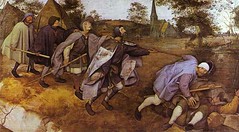 | 68 |
| 6537266947 | paradox | A statement or proposition that seems self-contradictory or absurd but in reality expresses a possible truth. |  | 69 |
| 6537266948 | parallelism | Phrases or sentences of a similar construction/meaning placed side by side, balancing each other |  | 70 |
| 6537266949 | parody | A work that closely imitates the style or content of another with the specific aim of comic effect and/or ridicule. |  | 71 |
| 6537266950 | pedantic | An adjective that describes words, phrases, or general tone that is overly scholarly, academic, or bookish. |  | 72 |
| 6537266951 | pentameter | a rhythm in poetry that has five stressed syllables in each line (five metrical feet) |  | 73 |
| 6537266952 | persona | A pattern of relatively permanent traits, dispositions, or characteristics that give some consistency to people's behavior. |  | 74 |
| 6537266953 | personification | A figure of speech in which an object or animal is given human feelings, thoughts, or attitudes |  | 75 |
| 6537266954 | plot | Sequence of events in a story |  | 76 |
| 6537266955 | point of view | The perspective from which a story is told |  | 77 |
| 6537266956 | polysyndeton | Deliberate use of many conjunctions in close succession, especially where some might be omitted. Hemingway and the Bible both use extensively. Ex. "he ran and jumped and laughed for joy" |  | 78 |
| 6537266957 | prosody | Appropriate expression when reading. Includes pitch (intonation), loudness, stressing phrases, etc. |  | 79 |
| 6537266958 | protagonist | Chief character in a dramatic or narrative work, usually trying to accomplish some objective or working toward some goal. |  | 80 |
| 6537266959 | pun | A joke exploiting the different possible meanings of a word or the fact that there are words that sound alike but have different meanings. |  | 81 |
| 6537266960 | quatrain | 4 line stanza |  | 82 |
| 6537266961 | refrain | A line or set of lines repeated several times over the course of a poem. | 83 | |
| 6537266962 | rhetorical question | A question asked merely for rhetorical effect and not requiring an answer |  | 84 |
| 6537266963 | end rhyme | A word at the end of one line rhymes with a word at the end of another line |  | 85 |
| 6537266964 | eye rhyme | rhyme that appears correct from spelling but does not rhyme because of pronunciation |  | 86 |
| 6537266965 | forced rhyme | when two words don't really rhyme together, but an author uses similar spelled, or sounding words to try to create a rhyme; Ex: stone, one | 87 | |
| 6537266966 | internal rhyme | A word inside a line rhymes with another word on the same line |  | 88 |
| 6537266967 | slant rhyme | rhyme in which the vowel sounds are nearly, but not exactly the same (i.e. the words "stress" and "kiss"); sometimes called half-rhyme, near rhyme, or partial rhyme |  | 89 |
| 6537266968 | rhyme scheme | A regular pattern of rhyming words in a poem |  | 90 |
| 6537266969 | satire | A literary work that criticizes human misconduct and ridicules vices, stupidities, and follies. |  | 91 |
| 6537266970 | sestet | a rhythmic group of six lines of verse |  | 92 |
| 6537266971 | shifts/turns | Changes in the speaker's attitude. Look for key words such as but, yet, however, and although, punctuation, and stanza division. | 93 | |
| 6537266972 | sonnet | 14-line lyric poem focused on a single theme; usually written in iambic pentameter |  | 94 |
| 6537266973 | symbol | A thing that represents or stands for something else, especially a material object representing something abstract. |  | 95 |
| 6537266974 | synecdoche | a figure of speech in which a part is made to represent the whole or vice versa |  | 96 |
| 6537266975 | syntax | Arrangement of words in phrases and sentences |  | 97 |
| 6537266976 | theme | A topic of discussion or writing; a major idea broad enough to cover the entire scope of a literary work. |  | 98 |
| 6537266977 | tone | A writer's attitude toward his or her subject matter revealed through diction, figurative language, and organization on the sentence and global levels. |  | 99 |
| 6537266978 | understatement | the presentation of something as being smaller, worse, or less important than it actually is. |  | 100 |
| 6537266979 | villanelle | A French verse form calculated to appear simple and spontaneous but consisting of nineteen lines and a prescribed pattern of rhymes. |  | 101 |
Intermediate Macroeconomics Flashcards
Terms : Hide Images
| 5255129833 | output | the level of production of a country as a whole | 0 | |
| 5255129834 | output growth | the rate of change of output | 1 | |
| 5255129835 | unemployment rate | the ratio of the number of people who are unemployed to the number of people in the labor force | 2 | |
| 5255129836 | inflation rate | the rate at which the average price of goods in the economy is increasing over time | 3 | |
| 5255129837 | Gross Domestic Product | the value of final goods and services produced in the economy in a given geographic space in a given time period; it depends on (1) the quantity of inputs or factors of production and (2) the ability of those inputs to product output, or the production function | 4 | |
| 5255129838 | intermediate good | a good used in the production of another good | 5 | |
| 5255129840 | Gross Domestic Product | the sum of incomes in the economy during a given period of time, since the sum of the expenditure of buyers is equal to income of sellers | 6 | |
| 5255129841 | value added | the value of production minus the value of the intermediate goods used in its production | 7 | |
| 5255129842 | nominal GDP | the sum of the quantities of final goods produced times their current price | 8 | |
| 5255129843 | real GDP | the sum of the quantities of final goods produced times constant prices; what would happen to GDP if only prices had not changed. | 9 | |
| 5255129844 | employment | the number of people who have a job | 10 | |
| 5255129845 | unemployment | the number of people who don't have a job and are looking for one | 11 | |
| 5255129846 | labor force | the sum of employment and unemployment: L = N + U | 12 | |
| 5255129847 | discouraged workers | people in the labor force who give up looking for a job due to high unemployment | 13 | |
| 5255129848 | participation rate | the ratio of the labor force to the total population of adults | 14 | |
| 5255129849 | inflation | a sustained rise in the price level | 15 | |
| 5255129850 | inflation rate | the rate at which the price level increases | 16 | |
| 5255129851 | GDP deflator | in year t, Pt is defined as the ratio of nominal GDP to real GDP in year t: Pt = (nominal GDPt)/(real GDPt) = ($Yt)/(Yt) | 17 | |
| 5255129852 | consumer price index | the average price of consumption (cost of living); represents the consumption basket of a typical urban consumer; measures changes in price levels relative to a base year, so it measures inflation; it is a type of deflator with a constant basket, or a Laapreys index; overstates inflation because of substitution effect and new goods which actually help, quality changes | 18 | |
| 5255129858 | consumption | C = c0 + c1Y: goods and services purchased by consumers; | 19 | |
| 5255129859 | investment | I - the sum of nonresidential investment and residential investment (purchase of new plants or machines by firms + purchase of new houses or apartments) | 20 | |
| 5255129860 | government spending | G - the purchase of goods and services by federal, state, and local governments | 21 | |
| 5255129861 | net exports | X - M: also called trade balance; sum of the value of exports - sum of the value of imports | 22 | |
| 5255129862 | trade surplus / deficit | exports >/< imports | 23 | |
| 5255129863 | inventory investment | difference between goods produced and sold in a given year | 24 | |
| 5255129864 | aggregate demand for goods | Z = C + I + G + X-IM | 25 | |
| 5255129867 | disposable income | YD = Y - T after-tax income | 26 | |
| 5255129868 | income | Y | 27 | |
| 5255129869 | taxes - government transfers | T | 28 | |
| 5255129870 | fiscal policy | the choice of taxes and spending by the government | 29 | |
| 5255129874 | private saving | by consumers, equal to disposable Y-C[Y-T] | 30 | |
| 5255129875 | public saving | equal to T-G (can be negative if gvt is in deficit) | 31 | |
| 5255129876 | investment = saving | I=Sn in a closed economy | 32 | |
| 5255129877 | money | unit of account, store of value; medium of exchange. | 33 | |
| 5255129879 | demand for money and how can expected inflation influence price levels and cause real inflation; what is fixed? | the amount of real balances of money (purchasing power) people want to hold: (M/P)d = L(i,Y) = L(r+Epi,Y) | 34 | |
| 5255129881 | open market operations | the purchase or sale of gov bonds by the central bank to increase or decrease the money supply; expansionary = buying bonds; contractionary = selling bonds | 35 | |
| 5255129882 | reserves | held by banks, not lent out; so depositors can withdraw from their checking accounts and so depositors can write checks | 36 | |
| 5255129883 | reserve ratio | ratio of bank reserves to checkable deposits | 37 | |
| 5255129885 | investment relation | I = I(Y(+), i(-) ): investment I depends positively on production Y and negatively on interest rate i; tells how interest rate affects output | 38 | |
| 5255129886 | crowding out | when investment falls as the deficit rises, since government purchases crowd out investment | 39 | |
| 5255129890 | labor demand curve | W = MPL*P | 40 | |
| 5255129891 | expected inflation | the inflation rate "Epi" that people expect and use to influence their decisions | 41 | |
| 5255129892 | real wage/rental rate profit maximization | W/P = MPL | 42 | |
| 5255266666 | Cobb-Douglas production function | where Y=A(K^a)(L^1-a) the coefficients are the share of labor of each factor; the marginal products of each factor are proportional to their average products |  | 43 |
| 5255298634 | Walra's law | the fact that the real interest rate "r" equilibrates both the loanable funds market and the goods market; states that in a general equilibrium model, if there are "n" markets and "n-1" are in equilibrium, the last one must be too. LF eq. Y-C-G = I Goods eq. +(C+G) so Y = C+I+G | 44 | |
| 5255307000 | effect of fiscal policy on C/S | desired savings corresponds to desired consumption; increase G leads to lower public saving and lower Sn; decreased taxes leads to higher Y-T and higher C and higher private savings but lower public savings. So Sn depends on maybe corresponding increase/decrease in G. | 45 | |
| 5255353405 | Euler's theorem | with CRTS in the long run, competitive factor payments exhaust output so there is zero economic profit | 46 | |
| 5255358978 | Fisher effect | According to the Fisher equation, a 1 percent increase in the rate of infla- tion in turn causes a 1 percent increase in the nominal interest rate. 1:1:1 changes in money supple lead to change in inflation (see money demand function above in equilibrium) lead to change in nominal interest rate. | 47 | |
| 5255421632 | equity capital or bank capital or owner's equity | assets - liabilities (extra money a bank has on hand) | 48 | |
| 5255421596 | leverage ratio | total assets / equity capital | 49 | |
| 5255867161 | models | used by economists to simplify reality and see how exogenous variables influence endogenous variables | 50 | |
| 5255881707 | market-clearing | essential assumption that in the long run, price of a good/service moves quickly to balance its quantity supplied and demanded; assume that wages and prices are flexible, not sticky | 51 | |
| 5255936172 | imputed value | value of goods/services not sold in the marketplace that is included in GDP ("rent" that homeowners "pay" to themselves" | 52 | |
| 5255966453 | chain-weighted measures of GDP | base year changes over time | 53 | |
| 5255976547 | GNP | gross national product, income earned by nationals, not within borders; GNP = GDP + NFP | 54 | |
| 5255985562 | gross | measurement including depreciation | 55 | |
| 5255987754 | NNP | net national product = GNP - depreciation | 56 | |
| 5255991043 | NI | national income = NNP - statistical discrepancy | 57 | |
| 5255999096 | seasonal adjustment | removal of seasonal fluctuations (ex. Christmas) | 58 | |
| 5256037239 | PCE | personal consumption expenditure deflator (like GDP deflator) but only for "C" component | 59 | |
| 5256069769 | household vs establishment surveys | measure employed (includes part-time at time of survey), unemployed, out of labor force (includes discouraged workers); differ due to self-employment, etc; establishment survey is employees on firms' present payroll | 60 | |
| 5256166774 | factors of production | inputs used to product goods/services; take capital and labor as fixed in the classical model, assume both are fully utilized; each unit is paid the factor price | 61 | |
| 5256205590 | production function | relationship between how much output from given capital and labor amounts | 62 | |
| 5256208960 | CRTS | constant returns to scale; equal increase in all factors causes equal increase in output; zY=F(zK, zL) | 63 | |
| 5256239303 | competitive firm | small relative to the markets in which it trades, so it has little influence on market prices | 64 | |
| 5256259284 | MPL | marginal product of labor is the extra amount of output the firm gets from one extra unit of labor, holding the amount of capital fixed; diminishing marginal product if capital is held fixed | 65 | |
| 5256327903 | national income accounts identity | Y=C+I+G determines demand for g/s; equal to the supply of output in equilibrium (market-clearing assumption); also shows S=I when rearranged | 66 | |
| 5256334794 | comsumption function | relationship between C and Y-T; MPC | 67 | |
| 5256338650 | interest rate | cost of funds used to finance investment, as the price of loanable funds, while savings is the supply of loanable funds and investment is the demand (as a downward-sloping curve) for loanable funds; real vs nominal | 68 | |
| 5256384285 | fiat money | established by decree so no intrinsic value | 69 | |
| 5256415325 | commodity money | has an intrinsic value and is used as money; like gold or paper redeemable for gold with the gold standard | 70 | |
| 5256431416 | money supply | quantity of money available in the economy; M=C+D | 71 | |
| 5256431417 | monetary policy | government's control over M | 72 | |
| 5256434197 | central band | FR in the US; an independent institution that controls monetary policy | 73 | |
| 5256441753 | OMO | When the Fed wants to increase the money supply, it uses some of the dollars it has to buy government bonds from the public. Because these dollars leave the Fed and enter into the hands of the public, the purchase increases the quantity of money in circulation. | 74 | |
| 5256444638 | currency | sum of outstanding paper and coins | 75 | |
| 5256448162 | demand deposits | funds people have in their checking accounts; | 76 | |
| 5256470859 | balance sheet | accounting statement of assets and liabilities |  | 77 |
| 5256508498 | financial intermediation | transferring funds from savers to borrowers | 78 | |
| 5256736625 | leverage | use of borrowed money to supplement existing funds for purposes of investment. The leverage ratio is the ratio of the bank's total assets (the left side of the balance sheet) to bank capital (the one item on the right side of the balance sheet that represents the owners' equity). | 79 | |
| 5256749963 | monetary base | B=C+R; total dollars held by public | 80 | |
| 5256752359 | rr | reserve-deposit ratio rr is the fraction of deposits that banks hold in reserve. It is determined by the business policies of banks and the laws regulating banks. | 81 | |
| 5256755197 | cr | currency-deposit ratio cr is the amount of currency C people hold as a fraction of their holdings of demand deposits D. It reflects the preferences of households about the form of money they wish to hold. | 82 | |
| 5256812414 | reserve requirement | Fed imposes minimum rr; reserves above are excess | 83 | |
| 5256816327 | interest on reserves | Fed pays this to banks | 84 | |
| 5257114670 | quantity equation | MoneyxVelocity=PricexTransactions MxV=Px(T or proxy Y) | 85 | |
| 5257135674 | income velocity of money | V in equation MxV=PxY | 86 | |
| 5257137982 | real money balances | M/P; the quantity of money in terms of the quantity of goods and services it can buy | 87 | |
| 5257146508 | money demand function | equation that shows the determinants of the quantity of real money balances people wish to hold; (M/P)d = kY as portion of income; at equilibrium; money supply equals money demand, so M/P = kY and V=1/k M/P = L([i=r+Epi], Y) negative correlation with "i", positive correlation with Y | 88 | |
| 5257156833 | quantity theory of money | assuming that in equation MV=PY, velocity of money, income is constant, money supply is set by CB, P is ratio of nominal output PY to output Y; % Change in M+% Change in V =% Change in P+% Change in Y. Thus, the quantity theory of money states that the central bank, which controls the money supply, has ultimate control over the rate of inflation. If the central bank keeps the money supply stable, the price level will be stable. If the central bank increases the money supply rapidly, the price level will rise rapidly. According to the quantity theory, an increase in the rate of money growth of 1 percent causes a 1 percent increase in the rate of inflation. | 89 | |
| 5257179881 | seigniorage | revenue raised by the printing of money | 90 | |
| 5257183665 | inflation tax | cost of printing money to raise revenue | 91 | |
| 5257201752 | nominal interest rate | interest rate that the bank pays; i=r+pi | 92 | |
| 5257203879 | real interest rate | the increase in your purchasing power | 93 | |
| 5257210202 | Fisher equation | i=r+Epi (for expected inflation which influences present decisions) | 94 | |
| 5257212886 | ex ante real interest rate | real interest rate that the borrower and lender expect when the loan is made due to Epi or expected inflation | 95 | |
| 5257225952 | ex post real interest rate | the real interest rate that is actually realized | 96 | |
| 5257242907 | shoeleather cost | The inconvenience of reducing money holding is metaphorically called the shoeleather cost of inflation, because walking to the bank more often causes one's shoes to wear out more quickly. | 97 | |
| 5257246376 | menu costs | Changing prices is sometimes costly; for example, it may require printing and distributing a new catalog; causes higher variability in relative prices and price distortion as prices are not constantly being updated | 98 | |
| 5257255715 | unexpected inflation | transfers money from lenders to borrowers since borrowers pay back a loan with money that is worth less | 99 | |
| 5257264720 | benefit of inflation | wage cuts are rare since nominal wages are sticky downward; inflation cuts real wages then | 100 | |
| 5257289661 | real vs nominal | expressed in output units or fixed price levels vs. in terms of money | 101 | |
| 5257293736 | monetary neutrality | irrelevance of money in the determination of real variables | 102 | |
| 5257343094 | Slow growth model | an exogenous growth model, an economic model of long-run economic growth set within the framework of neoclassical economics. It attempts to explain long-run economic growth by looking at capital accumulation, labor or population growth, and increases in productivity, commonly referred to as technological progress. At its core it is a neoclassical aggregate production function, usually of a Cobb-Douglas type | 103 | |
| 5257357067 | steady-state | when k=k*, or investment in capital equals capital depreciation so capital levels are not changing | 104 | |
| 5257363804 | depreciation rate | delta; rate at which capital stock depreciates per year | 105 | |
| 5257409232 | savings rate in solow | If the saving rate is high, the economy will have a large capital stock and a high level of output in the steady state. If the saving rate is low, the economy will have a small capital stock and a low level of output in the steady state. | 106 | |
| 5257415286 | growth effect vs level effect | Policies that alter the steady-state growth rate of income per person are said to have a growth effect (like policies that alter rate of technological progress g(u)); we will see examples of such policies in the next chapter. By contrast, a higher saving rate is said to have a level effect, because only the level of income per person—not its growth rate—is influenced by the saving rate in the steady state. | 107 | |
| 5257461641 | Golden Rule level of capital | The steady-state value of k that maximizes consumption is called the Golden Rule level of capital and is denoted k*gold; c*=f(k*) - i (break-even investment/depreciation); maximized when MPK = depreciation/break-even rates. The net marginal product of capital is equal to the steady-state growth of total income (MPK-delta=n+g) If the economy is operating with less capital than in the Golden Rule steady state, then diminishing marginal product tells us that MPK n g. In this case, increasing the rate of saving will increase capital accumulation and economic growth and, eventually, lead to a steady state with higher consumption (although consumption will be lower for part of the transition to the new steady state). On the other hand, if the economy has more capital than in the Golden Rule steady state, then MPK n g. In this case, capital accumulation is excessive: reducing the rate of saving will lead to higher consumption both immediately and in the long run. When the economy begins above the Golden Rule, reaching the Golden Rule produces higher consumption at all points in time. When the economy begins below the Golden Rule, reaching the Golden Rule requires initially reducing consumption to increase consumption in the future. Reaching the Golden Rule achieves the high- est steady-state level of consumption and thus benefits future generations. But when the economy is initially below the Golden Rule, reaching the Golden Rule requires raising investment and thus lowering the consumption of current generations. | 108 | |
| 5257623627 | population growth | Because the number of workers is growing at rate n, however, total capital and total out- put must also be growing at rate n. Hence, although population growth cannot explain sustained growth in the standard of living (because output per worker is constant in the steady state), it can help explain sustained growth in total output. .According to the Solow model, the higher the rate of population growth, the lower the steady-state levels of capital per worker and output per worker. | 109 | |
| 5257634080 | Malthus and his model | "food is necessary to the existence of man" and that "the passion between the sexes is necessary and will remain nearly in its present state." He concluded that "the power of population is infinitely greater than the power in the earth to produce subsistence for man." prediction that mankind would remain in poverty forever has proven very wrong. | 110 | |
| 5257640261 | Kremer and his model | Kremer has suggested that world population growth is a key driver of advancing economic prosperity. If there are more people, Kremer argues, then there are more scientists, inventors, and engineers to contribute to innovation and technological progress. | 111 | |
| 5257657401 | efficiency of labor | where E is a new (and somewhat abstract) variable called the efficiency of labor. The efficiency of labor is meant to reflect society's knowledge about production methods: as the available technology improves, the efficiency of labor rises, and each hour of work contributes more to the production of goods and services. technology is parametrized by labor and effective workers | 112 | |
| 5257673204 | abor-augmenting technological progress | This form of technological progress is called labor augmenting, and g is called the rate of labor-augmenting technological progress. Because the labor force L is growing at rate n, and the efficiency of each unit of labor E is growing at rate g, the effective number of workers L E is growing at rate n g. | 113 | |
| 5257678821 | balanced growth | According to the Solow model, technological progress causes the values of many variables to rise together in the steady state. | 114 | |
| 5257705229 | covergence | poor countries catch up with the rich; According to Solow model, conditional convergence: countries appear to be converging to their own steady states, which in turn are determined by such variables as saving, population growth, and human capital. | 115 | |
| 5257816854 | Capital income | MPK*K; share of capital income out of total income is MPK*K/Y | 116 | |
| 5257832054 | return to capital relative to economy's growth rate? | MPK-delta <=> n+g | 117 | |
| 5257924698 | creative destruction | When the entrepreneur's firm enters the market, it has some degree of monopoly power over its innovation; indeed, it is the prospect of monopoly profits that motivates the entrepreneur.The entry of the new firm is good for consumers, who now have an expanded range of choices, but it is often bad for incumbent producers, who may find it hard tocompete with the entrant. If the new product is sufficiently better than old ones, the incumbents may even be driven out of business. Over time, the process keeps renewing itself. The entrepreneur's firm becomes an incumbent, enjoying high profitability until its product is displaced by another entrepreneur with the next generation of innovation. | 118 |
AP Literature Vocabulary Flashcards
Terms : Hide Images
| 6673893382 | allegory | a story in which people, things and actions represent an idea about life; allegories often have a strong moral or lesson | 0 | |
| 6673893383 | allusion | a reference in a literary work to a person, place, or thing in history or another work of literature | 1 | |
| 6673901360 | ambiguity | deliberately suggesting two or more different, and sometimes conflicting, meanings in a work | 2 | |
| 6673903587 | analogy | a comparison of two or more like objects that suggests if they are alike in certain respects, they will probably be alike in other ways as well | 3 | |
| 6673906169 | anecdote | a brief account of an interesting incident or event that usually is intended to entertain or to make a point | 4 | |
| 6695335475 | antagonist | 5 | ||
| 6695335476 | antihero | 6 | ||
| 6695335477 | aphorism | 7 | ||
| 6695337372 | bildungsroman | 8 | ||
| 6695337373 | characterization | 9 | ||
| 6695339833 | colloquialism | 10 | ||
| 6695339834 | conceit | 11 | ||
| 6695339835 | conflict | 12 | ||
| 6695339836 | didactic | 13 | ||
| 6695341701 | epigram | 14 | ||
| 6695341702 | epigraph | 15 | ||
| 6695341703 | epistolary novel | 16 | ||
| 6695343785 | extended metaphor | 17 | ||
| 6695343786 | fable | 18 | ||
| 6695343787 | farce | 19 | ||
| 6695343788 | figurative language | 20 | ||
| 6695346648 | flashback | 21 | ||
| 6695346649 | foil | 22 | ||
| 6695346650 | foreshadowing | 23 | ||
| 6695346651 | genre | 24 | ||
| 6695346652 | hyperbole | 25 | ||
| 6695348661 | imagery | 26 | ||
| 6695348662 | irony | 27 | ||
| 6695348663 | juxtaposition | 28 | ||
| 6695348722 | metonymy | 29 | ||
| 6695351438 | mood | 30 | ||
| 6695351439 | motif | 31 | ||
| 6695351440 | narrative | 32 | ||
| 6695351640 | oxymoron | 33 |
Flashcards
AP Literature Flashcards
Terms : Hide Images
| 5832739999 | denotation | a dictionary definition of a word | 0 | |
| 5832742513 | social commentary | when an author utilizes a text to comment about a particular society | 1 | |
| 5832745803 | paradox | a statement that appears to be self-contradictory, but still makes sense | 2 | |
| 5832751439 | juxtaposition | two or more ideas, characters, actions, settings, phrases, or words arranged in close proximity for the purpose of highlighting their differences, but also for the purpose of comparison | 3 | |
| 5832761557 | bildungsroman | a special kind of novel that focuses on the psychological and moral growth of its main character from his/her youth to adulthood | 4 | |
| 5832766410 | hyperbole | exaggerated statements or claims not meant to be taken literally | 5 | |
| 5832769634 | flashback | an interruption that writers use to insert past events in order to provide background or context to the current events of a narrative | 6 | |
| 5832776648 | pathos | a quality of an experience in life or a work of art that stirs up emotions of pity, sympathy and sorrow | 7 | |
| 5832781002 | couplet | two lines of verse usually in the same meter and joined by rhyme, that form a unit | 8 | |
| 5832784064 | hamartia | a fatal flaw leading to the downfall of a tragic hero or heroine | 9 | |
| 5832787605 | parable | a simple story used to illustrate a moral or spiritual lesson | 10 | |
| 5832789965 | epic | a long, serious poem that tells the story of a heroic figure | 11 | |
| 5832792741 | elegy | a sad and thoughtful poem about the death of an individual or thing | 12 | |
| 5832794736 | deus ex machina | a plot device where a problem is suddenly solved with an unexpected intervention of some new character, ability, or object | 13 | |
| 5832802124 | narrative | a poem or piece of prose that tells a story | 14 | |
| 5832805175 | dialogue | a conversation between two or more people as a feature of a book, play, or movie | 15 | |
| 5832808013 | saga | a long story of heroic achievement | 16 | |
| 5832811358 | theme | the message of the text | 17 | |
| 5832812097 | bathos | fake sentimentality, or real but exaggerated | 18 | |
| 5832818393 | villanelle | a 19 line poem of 5 three line stanzas and a concluding quatrain | 19 | |
| 5832822268 | satire | the use of humor, irony, exaggeration, or ridicule to expose and criticize people's stupidity or vices, particularly in the context of contemporary politics and other topical issues | 20 | |
| 5832831663 | shift/turn | a change in mood or attitude that's typically accompanied by a corresponding change in the focus and language of a literary scene, passage, or theme | 21 | |
| 5832836183 | apostrophe | a figure of speech in which some absent or nonexistent person or thing is addressed as if present or capable of understanding | 22 | |
| 5832841220 | allusion | a brief and indirect reference to a person, place, thing, or idea of historical, cultural, literary, or political significance | 23 | |
| 5832846881 | hubris | excessive pride or self-confidence | 24 | |
| 5832848379 | connotation | an implied meaning of a word | 25 | |
| 5832850494 | 3rd person limited | the narrator only knows the thoughts and feelings of one character | 26 | |
| 5832852749 | alliteration | the occurrence of the same letter or sound at the beginning of adjacent or closely connected words | 27 | |
| 5832856537 | repetition | a literary device that repeats the same words or phrases a few times to make an idea clearer | 28 | |
| 5832859858 | idyll | a lyric poem or passage that describes a kind of ideal life or place | 29 | |
| 5832863291 | extended metaphor | refers to a comparison between two unlike things that continue throughout a series of sentences in a paragraph or lines in a poem | 30 | |
| 5832869023 | onomatopoeia | the formation of a word from a sound associated with what is named | 31 | |
| 5832873499 | oxymoron | a figure of speech that combines two normally contradictory terms placing them side by side, and they also make sense | 32 | |
| 5832876796 | protagonist | the leading character or one of the major characters in a drama, movie, novel, or other fictional text | 33 | |
| 5832881071 | tercet | a set or group of three lines of verse rhyming together or connected by rhyme with an adjacent tercet | 34 | |
| 5832955471 | lyric | a poem that expresses the thoughts and feelings of the poet | 35 | |
| 5832957795 | antagonist | a person who actively opposes or is hostile to someone or something | 36 | |
| 5832961413 | antithesis | it involves using contradictory phrases in close conjunction | 37 | |
| 5832966148 | epithalamium | a poem written in honor of a bride, groom, or wedding | 38 | |
| 5832970860 | monologue | a long speech by one actor in a play or movie, as part of a theatrical or broadcast program | 39 | |
| 5832974140 | auditory | ears | 40 | |
| 5832975492 | visual | eyes | 41 | |
| 5832975493 | olfactory | smell | 42 | |
| 5832977132 | gustatory | taste | 43 | |
| 5832978167 | kinesthetic | touch | 44 | |
| 5832979545 | blank verse | a poem written in unrhymed iambic pentameter | 45 | |
| 5832986765 | tone | an attitude of a writer toward a subject or an audience | 46 | |
| 5832991935 | foil | a character that contrasts with another character and highlights various facets of the main character's personality | 47 | |
| 5832995832 | allegory | a story with two meanings, literal and symbolic | 48 | |
| 5833000192 | conceit | develops a comparison which is exceedingly unlikely, but is intellectually imaginative with the help of similes and metaphors | 49 | |
| 5833012380 | enjambment | the continuation of a sentence without a pause beyond the end of a line, couplet, or stanza | 50 | |
| 5833016454 | catharsis | the process of releasing, and providing relief from strong and repressed emotions | 51 | |
| 5833186884 | parallelism | parts of the sentence are grammatically the same, or are similar in construction | 52 | |
| 5833189786 | figurative language | using figures of speech to be more effective, persuasive, and impactful | 53 | |
| 5833194499 | parody | an imitation of the style of a particular writer, artist, or genre with deliberate exaggeration for comic effect | 54 | |
| 5833212526 | personification | when human characteristics are given to something that is nonliving | 55 | |
| 5833217896 | diction | word choice | 56 | |
| 5833219152 | symbol | a thing that represents or stands for something abstract | 57 | |
| 5833221289 | simile | a figure of speech that compares to unlike things using like or as | 58 | |
| 5833223768 | quatrain | a stanza of four lines | 59 | |
| 5833225021 | red herring | misleads readers or characters or to induce them to make false conclusions | 60 | |
| 5833228574 | anachronism | a representation of something as existing or occurring at other than its proper time in history | 61 | |
| 5833233380 | euphemism | makes something harsh or offensive sound better | 62 | |
| 5833238021 | structure | the arrangement of and relations between the parts or elements of something complex | 63 | |
| 5833247204 | soliloquy | an act of speaking one's thoughts aloud when by oneself or regardless of any hearers | 64 | |
| 5833250998 | foreshadowing | a literary device in which a writer gives an advance hint of what is to come later in the story | 65 | |
| 5833255216 | caricature | a picture, description, or imitation of a person or thing in which certain striking characteristics are exaggerated in order to create a comic effect | 66 | |
| 5833262801 | meiosis | when a speaker deliberately makes a situation seem less important or serious that in it is, creating an ironic contrast | 67 | |
| 5833267768 | end-stopped lines | when a line of poetry ends with a period or definite punctuation marks | 68 | |
| 5833272600 | metonymy | the substitution of a name with something that is closely related | 69 | |
| 5833284159 | expose | a public exposure or revelation, as of something discreditable | 70 | |
| 5833286312 | didactism | a philosophy that emphasizes instructional and informative qualities in literature and other types of art | 71 | |
| 5833290494 | synecdoche | a figure of speech in which a part is made to represent the whole or vice versa | 72 | |
| 5833294480 | point of view | the narrator's position in relation to the story being told | 73 | |
| 5833296758 | litotes | a form of understatement in which a speaker makes a statement indirectly, denying the opposite | 74 | |
| 5833301098 | rhyme scheme | the ordered pattern of rhymes at the ends of the lines of a poem or verse | 75 | |
| 5833303543 | 1st person | when the main character is telling the story | 76 | |
| 5833305701 | sonnet | a lyric poem that consists of 14 lines which usually have one or more conventional rhyme schemes | 77 | |
| 5833308876 | pastoral | a poem that depicts rural life in a peaceful, romanticized way | 78 | |
| 5833310909 | epitaph | a commemorative inscription on a tomb or a mortuary monument written to praise the deceased | 79 | |
| 5833313758 | selection of detail | the specific words, incidents, images, or events the author uses to create a scene or narrative | 80 | |
| 5833317436 | dramatic monologue | a type of poem which is spoken to a listener and the speaker addresses a specific topic, while the listener unwittingly reveals details about themselves | 81 | |
| 5833325313 | irony | the expression of one's meaning by using language that normally signifies the opposite, typically for humorous or emphatic effect | 82 | |
| 5833331501 | sestina | a 39 line poem of six, six line stanzas, and a three line stanza called an envoy | 83 | |
| 5833334970 | free verse | poetry written in unrhymed lines that have no set fixed metrical pattern | 84 | |
| 5833339047 | 3rd person omniscient | the narrator knows the thoughts and feelings of all the characters in the story | 85 | |
| 5833341583 | assonance | the repetition of the sound of a vowel | 86 | |
| 5833343705 | ode | a poem dedicated to someone or something | 87 | |
| 5833345090 | syntax | the arrangement of words and phrases to create well-formed sentences in a language | 88 | |
| 5833349210 | mood | a literary element that evokes certain feelings or vibes in readers through words and descriptions | 89 | |
| 5833353356 | heroic couplet | a pair of rhyming iambic pentameters | 90 | |
| 5833354748 | anaphora | the repetiton of a word or phrase at the beginning of successive clauses | 91 | |
| 5833356991 | triplet | three lines that rhyme | 92 | |
| 5833358399 | omniscient narrator | the teller of the tale is all knowing on the story being told | 93 | |
| 5833361459 | analogy | a comparison between two things, typically on the basis of their structure and for the purpose of explanation or clarification | 94 | |
| 5833366307 | ballad | a poem that tells a story similar to a folktale or legend | 95 | |
| 5833368555 | exposition | a comprehensive description and explanation of an idea or theory | 96 | |
| 5833371134 | metaphor | a thing regarded as representative or symbolic of something else, especially something abstract | 97 | |
| 5833384489 | reflection | a contemplation or a long consideration | 98 |
AP English Literature Review Flashcards
Terms : Hide Images
| 6708883463 | Allegory | A work in which the characters, setting, and events stand for abstract or moral concepts | 0 | |
| 6708883464 | Alliteration | The repetition of initial consonant sounds. | 1 | |
| 6708883465 | Allusion | A reference to history, politics, or religion in a work | 2 | |
| 6708883466 | Anapest | A metrical patter of two unaccented syllables followed by an accented syllable (uus) | 3 | |
| 6708883467 | Antagonist | The force or character that opposes the main character, the protagonist. | 4 | |
| 6708883468 | Apostrophe | A direct address, usually in poetry, of something nonliving | 5 | |
| 6708883469 | Aside | Words spoken by an actor intended to be heard by the audience but not by the other characters on stage. | 6 | |
| 6708883471 | Ballad | A song-like poem that tells a story | 7 | |
| 6708883472 | Blank verse | Unrhymed iambic pentameter. | 8 | |
| 6708883473 | Cacophony | Harsh or discordant sounds in a line or passage of a literary work. | 9 | |
| 6708883474 | Caesura | A break or pause within a line of poetry indicated by punctuation and used to emphasize meaning. | 10 | |
| 6708883475 | Catharsis | According to Aristotle, the release of emotion that the audience of a tragedy experiences. | 11 | |
| 6708883477 | Climax | The turning point of action or character in a literary work, usually the highest moment of tension. | 12 | |
| 6708883478 | Comic Relief | The inclusion of humorous character or scene to contrast with the tragic elements of a work, thereby intensifying the next tragic event. | 13 | |
| 6708883480 | Connotation | The interpretive level of a word based on its associated images rather than its literal meaning. | 14 | |
| 6708883481 | Convention | A traditional aspect of a literary work. | 15 | |
| 6708883482 | Couplet | Two lines of rhyming poetry. | 16 | |
| 6708883483 | Dactyl | A foot or poetry consisting of a stressed syllable followed by two unstressed syllables (suu) | 17 | |
| 6708883484 | Denotation | The literal or dictionary meaning of a word. | 18 | |
| 6708883485 | Denouement | The conclusion or tying up of loose ends in a literary work; the resolution of the conflict and plot. | 19 | |
| 6708883487 | Diction | The author's choice of words. | 20 | |
| 6708883488 | Elegy | A poem that laments the dead or a loss. | 21 | |
| 6708883489 | Enjambment | A technique in poetry that involves the running on of a line or stanza. It enables the poem to move and to develop coherence as well as directing the reader with regard to form and meaning. | 22 | |
| 6708883490 | Epic | A lengthy, elevated poem that celebrates the exploits of a hero. | 23 | |
| 6708883492 | Euphony | The pleasant, mellifluous presentation of sounds in a literary work. | 24 | |
| 6708883493 | Exposition | Background information presented in a literary work. | 25 | |
| 6708883494 | Fable | A simple, symbolic story, usually employing animals as characters. | 26 | |
| 6708883495 | Figurative Language | The body of devices that enables the writer to operate on levels other than the literal one. | 27 | |
| 6708883496 | Flashback | A device that enables a writer to refer to past thoughts, events, and episodes. | 28 | |
| 6708883497 | Foot | A metrical unit in poetry; a syllabic measure of a line: iamb, trochee, anapest, dactyl, and spondee. | 29 | |
| 6708883498 | Foreshadowing | Hints of future events in a literary work. | 30 | |
| 6708883499 | Form | The shape or structure of a literary work. | 31 | |
| 6708883500 | Free Verse | Poetry without a defined form, meter, or rhyme scheme. | 32 | |
| 6708883501 | Hyperbole | Extreme exaggeration. | 33 | |
| 6708883502 | Iamb | A metrical foot consisting of an unaccented syllable followed by an accented one (us) | 34 | |
| 6708883504 | Image | A verbal approximation of a sensory impression, concept, or emotion. | 35 | |
| 6708883505 | Imagery | The total effect of related sensory images in a work of literature. | 36 | |
| 6708883507 | Situational Irony | A contrast between what happens and what was intended or expected to happen. | 37 | |
| 6708883508 | Lyric poetry | A type of poetry characterized by emotion, personal feelings, and brevity. | 38 | |
| 6708883510 | Metaphor | A direct comparison between dissimilar things. | 39 | |
| 6708883511 | Metaphysical Poetry | Refers to the works of poets like John Donne who explore highly complex, philosophical ideas through extended metaphors and paradox. | 40 | |
| 6708883512 | Meter | A pattern of beats in poetry | 41 | |
| 6708883513 | Metonymy | A figure of speech in which a representative term is used for a larger idea (using "the crown" to refer to a member of royalty, for example) | 42 | |
| 6708883514 | Dramatic Monologue | A poem in the form of a speech or narrative by an imagined person, in which the speaker inadvertently reveals aspects of their character while describing a particular situation or series of events | 43 | |
| 6708883515 | Motif | The repetition or variations of an image or idea in a work which is used to develop theme or characters. | 44 | |
| 6708883516 | Narrative poem | A poem that tells a story | 45 | |
| 6708883517 | Narrator | The speaker of a prose work. | 46 | |
| 6708883518 | Octave | An eight-line stanza, usually combined with a sestet in a Petrarchan sonnet. | 47 | |
| 6708883519 | Ode | A complex, long lyric poem characterized by a serious subject and formal tone | 48 | |
| 6708883520 | Onomatopoeia | Words that sound like the sound they represent. | 49 | |
| 6708883521 | Oxymoron | An image of contradictory terms. | 50 | |
| 6708883522 | Parable | A story that operates on more than one level and usually teaches a moral lesson. | 51 | |
| 6708883523 | Paradox | A set of seemingly contradictory elements which nevertheless reflects an underlying truth. | 52 | |
| 6708883524 | Parallel plot | A secondary story line that mimics and reinforces the main plot. | 53 | |
| 6708883525 | Parody | A comic imitation of a work that ridicules the original | 54 | |
| 6708883526 | Pathos | The aspects of a literary work that elicit pity from the audience. | 55 | |
| 6708883527 | Personification | The assigning of human qualities to inanimate objects or concepts. | 56 | |
| 6708883528 | Plot | A sequence of events in a literary work | 57 | |
| 6708883529 | Point of View | The method of narration in a work. | 58 | |
| 6708883530 | Protagonist | The hero or main character of a literary work, the character the audience sympathizes with. | 59 | |
| 6708883531 | Quatrain | A four line stanza | 60 | |
| 6708883532 | Resolution | The denouement of a literary work. | 61 | |
| 6708883533 | Rhetorical Question | A question that does not expect an explicit answer. | 62 | |
| 6708883535 | Rhyme scheme | The annotation of the pattern of the rhyme | 63 | |
| 6708883536 | Rhythm | The repetitive pattern of beats in poetry | 64 | |
| 6708883537 | Romanticism | A style or movement of literature that has as its foundation an interest in freedom, adventure, idealism, and escape. | 65 | |
| 6708883538 | Satire | Writing that ridicules human nature to bring about social reform | 66 | |
| 6708883539 | Scansion | Analysis of a poem's rhyme and meter. | 67 | |
| 6708883540 | Sestet | A six-line stanza, usually paired with an octave to firm a Petrarchan sonnet. | 68 | |
| 6708883541 | Sestina | A highly structured poetic form of 39 lines, written in iambic pentameter. It depends on the repetition of six words from the first stanza in each of the six stanzas. | 69 | |
| 6708883542 | Setting | The time and place of a literary work | 70 | |
| 6708883543 | Simile | An indirect comparison that uses the word, "like" or "as" to link the differing items in the comparison. | 71 | |
| 6708883544 | Soliloquy | A speech in a play which is used to reveal the character's inner thoughts to the audience. | 72 | |
| 6708883545 | Sonnet | A 14-line poem with a prescribed rhyme scheme in iambic pentameter. | 73 | |
| 6708883546 | Spondee | A poetic foot consisting of two accented syllables. | 74 | |
| 6708883548 | Stanza | A unit of a poem, similar in rhyme, meter, and length to other units in the porm | 75 | |
| 6708883549 | Structure | The organization and form of a work. | 76 | |
| 6708883550 | Style | The unique way an author presents his ideas. | 77 | |
| 6708883553 | Symbol | Something in a literary work that stands for something else. | 78 | |
| 6708883554 | Synecdoche | A figure of speech that utilizes a part as representative of the whole. | 79 | |
| 6708883555 | Syntax | The grammatical structure of prose and poetry | 80 | |
| 6708883556 | Tercet | A three-line stanza | 81 | |
| 6708883557 | Theme | The underlying ideas that the author illustrates through characterization, motifs, language, plot, etc. | 82 | |
| 6708883558 | Tone | The author's attitude toward his subject | 83 | |
| 6708883559 | Tragic Hero | According to Aristotle, a basically good person of noble birth or exalted position who has a fatal flaw or commits an error in judgement which leads to his downfall. The tragic hero must have a moment of realization and live and suffer. | 84 | |
| 6708883560 | Trochee | A single metrical foot consisting of one accented syllable followed by one unaccented syllable (su) | 85 | |
| 6708883561 | Understatement | The opposite of exaggeration. | 86 | |
| 6708883562 | Villanelle | A highly structured poetic form that comprises six stanzas: five tercets and a quatrain. The poem repeats the first and third line throughout. | 87 | |
| 6709149885 | Speaker | The voice behind the poem—the person we imagine to be saying the words out loud | 88 | |
| 6709154376 | Pastoral | Poetry that presents an ideal country setting | 89 | |
| 6709163237 | Foil | A character that serves as a contrast to another character | 90 | |
| 6709168346 | Doppelganger | A look-alike of another character who usually represents his alter ego | 91 | |
| 6709175019 | Consonance | The repetition of consonant sounds through a sequence of words | 92 | |
| 6709180464 | Bildungsroman | A coming-of-age story | 93 | |
| 6709184833 | Assonance | The repetition of vowel sounds in a sequence of words with different endings | 94 |
AP Language Literary Terms Set 1 Flashcards
Terms : Hide Images
| 6318105636 | Anaphora | A rhetorical figure of repetition in which the same word or phrase is repeated in (and usually at the beginning of) successive lines, clauses, or sentences. |  | 0 |
| 6318105637 | Metonymy | A figure of speech in which something is referred to by using the name of something that is associated with it | 1 | |
| 6318105638 | Antithesis | Direct opposite |  | 2 |
| 6318105639 | Rhetoric | From the Greek for "orator," this term describes the principles governing the art of writing effectively, eloquently, and persuasively. | 3 | |
| 6318105640 | Ad Hominem Argument | Attacks the opposing speaker or another person rather than addressing the issues at hand | 4 | |
| 6318105641 | Allegory | A story in which each aspect of the story has a symbolic meaning outside the tale itself. | 5 | |
| 6318105642 | Allusion | A reference to another work of literature, person, or event | 6 | |
| 6318105643 | Anecdote | A brief narrative that focuses on a particular incident or event. | 7 | |
| 6318105644 | Euphemism | A mild or indirect word or expression substituted for one considered to be too harsh or blunt when referring to something unpleasant or embarrassing | 8 | |
| 6318105645 | Colloquial Language | Slang or common language that is informal | 9 | |
| 6318105646 | Diction | An author's choice of words | 10 | |
| 6318105647 | Ethos | Appeal to values, credibility | 11 | |
| 6318105648 | Pathos | Appeal to emotion | 12 | |
| 6318105649 | Logos | Appeal to logic and reasoning | 13 | |
| 6318105650 | Exposition | Writing or speech that is organized to explain | 14 | |
| 6318105651 | Foreshadowing | A hint of things to come | 15 | |
| 6318105652 | Hyperbole | An exaggeration | 16 | |
| 6318105653 | Juxtaposition | When two contrasting things are placed next to each other for comparison | 17 | |
| 6318105654 | Metonymy | A figure of speech in which something is referred to by using the name of something that is associated with it | 18 | |
| 6318105655 | Oxymoron | Two contradictory words in one expression | 19 | |
| 6318105656 | Parallelism | A literary technique that relies on the use of the same syntactical structures | 20 | |
| 6318105657 | Paradox | A seeming contradiction that in fact reveals some truth | 21 | |
| 6318105658 | Persona | The character created by the voice and narration of the speaker of a text | 22 | |
| 6318105659 | Repetition | The reiteration of a word or phrase for emphasis | 23 | |
| 6318105660 | Aristotelian Triangle | Also known as the Rhetorical Triangle. Includes subject, speaker, and audience. | 24 | |
| 6318105661 | Rhetorical Devices | The specific language tools that an author uses to carry out a rhetorical strategy (diction, imagery, or syntax). | 25 | |
| 6318105662 | Rhetorical Strategy | The way an author organizes words, sentences, and overall argument in order to achieve a particular purpose | 26 | |
| 6318105663 | Rhetorical Question | A question that is asked for the sake of argument | 27 | |
| 6318105664 | Satire | To ridicule or mock ideas, persons, events, or doctrines | 28 | |
| 6318105665 | Syntax | Arrangement of words in a sentence. | 29 | |
| 6318105666 | Theme | Central idea; not limited to one text (should be universal). | 30 | |
| 6318105667 | Tone | Author/speaker's attitude | 31 | |
| 6318105668 | Understatement | When an author assigns less significance to an event or thing than it deserves | 32 |
WAGNER AP Literature terms Flashcards
Terms : Hide Images
| 3663956078 | alliteration | repetition of the same initial consonant sounds in a sequence of words ex: weak and weary we walked ahead | 0 | |
| 3663958483 | allegory | a literary work that portrays abstract ideas concretely ex: "Young Goodman Brown" is an allegory written by Nathaniel Hawthorne. | 1 | |
| 3663981529 | allusion | a reference to another work of literature, art, history, or current events | 2 | |
| 3663992472 | apostrophe | a direct address to an abstraction, a thing, an animal, or an imaginary or absent person ex: O Life! O Love! | 3 | |
| 3664000844 | cacophony | harsh, clashing, or dissonant sounds produced by words requiring clipped, explosive delivery Ex: " Hear the loud alarum bells! / Brazen Bells! / What a tale of terror, now, their turbulency tells" | 4 | |
| 3664039919 | caesura | a pause within a line of poetry often mirroring natural speech | 5 | |
| 3664047719 | conceit | figure of speech comparing two very dissimilar things ex: "If hairs be wires, then wires grow on her head" | 6 | |
| 3664057813 | epiphany | a character's transformative moment of realization | 7 | |
| 3664060366 | hyperbole | deliberate exaggeration used for emphasis or to produce a comic or ironic effect | 8 | |
| 3664069469 | juxtaposition | placing two things side by side for comparison or contrast purposes | 9 | |
| 3664074752 | litotes | figure of speech that affirms something by stating the negative of its opposite Ex: she's is no idiot | 10 | |
| 3664080285 | metaphor | figure of speech that compares or equates two things without using like or as Ex: Life is a hard road | 11 | |
| 3664084733 | metonymy | fiure of speech in which something is represented by another thing that is related to it Ex: the throne for a king or monarch | 12 | |
| 3664121072 | onomatopoeia | use of words that refer to a sound and whose pronunciation mimic those sounds Ex: buzz | 13 | |
| 3665232400 | paradox | a statement that is seems contradictory but actually is not Ex: Youth is wasted on the young | 14 | |
| 3665233896 | personification | figure of speech in which an animal or inanimate object is imbued with human qualities | 15 | |
| 3665242569 | satire | literary work that uses irony to critique society or an individual | 16 | |
| 3665242570 | simile | figure of speech used to explain an idea by comparing it to another thing using like, as, or resembles | 17 | |
| 3665249266 | synaesthesia | technique in writing where a writer presents ideas, characters, or places so that they appeal to more than one senses at a given time ex: "With blue, uncertain, stumbling buzz, between the light and me" | 18 | |
| 3665251305 | synechdoche | figure of speech in which part of something is used to represent the whole thing Ex: "I got wheels!" meaning you bought a car | 19 | |
| 3665251306 | style | the way a literary work is written | 20 | |
| 3708668372 | understatement | The opposite of hyperbole, this refers to a figure a speech that says less than is intended | 21 | |
| 3708672287 | ambiguity | Allows for two or more interpretations of a word, phrase, action, or situation | 22 | |
| 3708673993 | mood | the emotional feeling instilled in the reader by a literary work | 23 | |
| 3708678781 | irony | The difference between appearance and reality; it may be verbal, dramatic, or situational | 24 | |
| 3708680856 | assonance | Close repetition of middle vowel sounds between different consonant sounds; fade/pale | 25 | |
| 3708680857 | consonance | Close repetition of identical consonant sounds before and after differing vowel sounds Ex: love/leave, work/park | 26 | |
| 3708687550 | soliloquy | A dramatic speech in which a character alone on stage speaks his/her thoughts out loud | 27 | |
| 3708689016 | aside | Speech directed to the audience that is supposedly not audible to other characters onstage | 28 | |
| 3708693615 | enjambment | Carrying the words of a sentence beyond the end of a line of poetry Ex: so much depends upon a red wheelbarrow... | 29 | |
| 3708702350 | foil | A character who, by contrast, highlights the qualities or characteristics of another character. ex: Tom Buchanan and Jay Gatsby, Mater and Lightning McQueen | 30 | |
| 3708826252 | parallellism | Technique showing that words, phrases, and clauses or larger structures are comparable in content and importance by placing them side by side or making them similar in form | 31 | |
| 3708832689 | sterotype | A character who represents a trait attributed to a social or racial group and lacks other individual traits | 32 | |
| 3708836540 | euphony | A succession of sweet, melodious sounds; opposite of cacophony | 33 | |
| 3708839719 | oxymoron | Figure of speech in which two contradictory words or phrases are combined in a single expression Ex: black light, jumbo shrimp | 34 | |
| 3708841832 | Bildungsroman | A novel that traces the early education of its hero from youth to experience Ex: Great Expectations | 35 | |
| 3708845928 | colloquialism | A word/phrase in everyday use in conversation and informal writing | 36 | |
| 3708847798 | characterization | The act of creating or describing a character directly or indirectly | 37 | |
| 3708849638 | foreshadowing | Hints that suggest what is to come later in a literary piece | 38 | |
| 3708852410 | symbol | A person, object, image, word, or event that evokes a range of additional meaning beyond its literal significance | 39 | |
| 3708854698 | motif | Any element appearing in one or more works of literature or art, or a specific pattern in a work | 40 | |
| 3708856383 | scansion | The process of measuring stresses in a line of verse in order to determine metrical pattern | 41 | |
| 3708859136 | mood | The emotional feeling instilled in the reader by a literary work. | 42 |
AP Psychology-Language and Thinking Flashcards
From chapter ten of Psychology by David Meyers
Terms : Hide Images
| 3517621731 | cognition | The combined function of thinking, remembering, knowing, and communicating information. | 0 | |
| 3517621732 | concept | A mental gathering of similar events, concepts and people. | 1 | |
| 3517621733 | prototype | The ideal example of a particular category. | 2 | |
| 3517621734 | algorithm | A standard fixed procedure to approach and solve problems with. like a formula. sometimes it can be slow but it guarantees success. | 3 | |
| 3517621735 | heuristic | A relatively simple thinking strategies that allow us to make decisions and judgment calls. unlike algorithms they are more efficient, but they do not always guarantee success. | 4 | |
| 3517621736 | insight | A sudden and unique realization to the answer of a problem can lead to success after trial and error or inspire a new instance of trial and error. | 5 | |
| 3517621737 | confirmation bias | A typical obstacle in problem solving. it is the tendency to look for evidence that confirms our own beliefs/preconceptions on the subject matter at hand. | 6 | |
| 3517621738 | fixation | The difficulty in not being able to look at a problem in a new way. | 7 | |
| 3517621739 | mental set | The tendency to apply a problem-solving strategy even when it is no longer helpful. | 8 | |
| 3517621740 | functional fixedness | This is a type of fixation where the individual can only think of other tings in relation to their own functions. | 9 | |
| 3517621741 | representativeness heuristic | Tendency to predict the likelihood of things in respects to how well they conform to one's own prototypes. | 10 | |
| 3517621742 | availability heuristic | Based on guessing the probability of certain events depending on how quickly they come to mind. | 11 | |
| 3517621743 | overconfidence | Tendency to overestimate the correctness of one's own beliefs and judgments. | 12 | |
| 3517621744 | framing | The way a question is worded which can affect people's perception on of the issue/answer to the question/problem. | 13 | |
| 3517621745 | belief bias | Tendency for one's preconceptions/beliefs to become an obstacle in objective reasoning. | 14 | |
| 3517621746 | belief perseverance | The tendency for people to continue to support a particular belief even though they are given info that invalidates that belief. | 15 | |
| 3517621747 | language | Spoken, written, or gestured words and how they are used to carry meaning | 16 | |
| 3517621748 | phonemes | Smallest unit of language. these sounds are relatively distinctive for different languages. | 17 | |
| 3517621749 | morphemes | Smallest units of language that carry meaning. the word "dogs" has four phonemes, but two morphemes. "dog" and "s" this meaning dog (concept) and there are multiple ("s"). | 18 | |
| 3517621750 | grammar | The rules that allow us to organize language so that we can understand and communicate with others. | 19 | |
| 3517621751 | semantics | Aspect of grammar that allows us to acquire meaning from morphemes, words, and sentences in a given language. | 20 | |
| 3517621752 | syntax | Aspect of grammar that specifies the rules of sentence structure to create grammatically sound sentences to allow for effective communication. | 21 | |
| 3517621753 | babbling | Atage of speech development in infants at around 4 months. characterized by spontaneous utterance of speech-related sounds. | 22 | |
| 3517621754 | one-word stage | Stage between 1-2 years when babies speak in single words. | 23 | |
| 3517621755 | two-word stage | Stage starting at around 2 years when children begin to speak mostly in two-word sentences. | 24 | |
| 3517621756 | telegraphic speech | The economical (unwasteful) telegram-like speech of children in the two-word stage. However the words are in grammatical order indicating the child has gained an understanding of the languages syntactic rules. | 25 | |
| 3517621757 | linguistic determinism | Benjamin Whorf's hypothesis that language determines the way we think. | 26 | |
| 3517621758 | Apes and language | Scientists beleive that apes do possess language to some extent, but nowhere near human capability. some skeptics believe it is merely conditioning. however, Washoe and her adoptive baby learned to sign with each other and eventually other apes in the enclosure began to sign to one another to communicate. | 27 | |
| 3517621759 | Tversky and Kahneman | Two cognitive psychologists that identified the representativeness and availability heuristic. | 28 | |
| 3517621760 | intuition | Smart intuition that is created through experience can be very useful. I.E. an expert chess player will know the right move after a short glance at the board. | 29 | |
| 3517621761 | Critical period | There is an ideal timeframe for children to acquire a first language and truly master it. proven to be the same with apes and sign language. | 30 | |
| 3520379439 | Aphasia | Impairment of language, usually cause by left-hemisphere damage ether to Broca's area (impairing speaking) or to Wernicke's area (impairing understanding). | 31 | |
| 3520390605 | Broca's Area | Controls language expression - an area of the frontal lobe usually in left hemisphere, that directs the muscle movements involved in speech. | 32 | |
| 3520405341 | Wernicke's Area | Controls language reception - a brain area involved in language comprehension and expression; usually in the left temporal lobe. | 33 |
Pages

Need Help?
We hope your visit has been a productive one. If you're having any problems, or would like to give some feedback, we'd love to hear from you.
For general help, questions, and suggestions, try our dedicated support forums.
If you need to contact the Course-Notes.Org web experience team, please use our contact form.
Need Notes?
While we strive to provide the most comprehensive notes for as many high school textbooks as possible, there are certainly going to be some that we miss. Drop us a note and let us know which textbooks you need. Be sure to include which edition of the textbook you are using! If we see enough demand, we'll do whatever we can to get those notes up on the site for you!
