AP Notes, Outlines, Study Guides, Vocabulary, Practice Exams and more!

AP US History: American Pageant Chapter 12 Flashcards

Terms : Hide Images
12525798598War of 1812(1812-1815): fought b/w US and Britain largely over issues of trade and impressment. Ended in relative draw, but showed the US willingness to fight for their beliefs and earned respect from the European nations. "2nd war for independence."0
12525798599Battle of New OrleansBattle won by the US and Andrew Jackson. Was a decisive win for the United States in the War of 1812.1
12525798600Congress of Vienna(1814-1815): Convention of major European powers to redraw the boundaries of continental Europe after the defeat of Napoleonic France.2
12525798601Treaty of Ghent(1815): Ended the War of 1812 in a virtual draw, restoring prewar borders but failing to address and of the grievances that first brought America into the war.3
12525798602Hartford Convention(1814-1815): convention of Federalists from 5 New England states who opposed the War of 1812 and resented the strength of Southern and Western interests in Congress and in the White House.4
12525798604Tariff of 1816First protective tariff in US History, created primarily to shield New England manufacturers from the inflow of British goods after the War of 1812.5
12525798605American System(1820s): Henry Clay's three pronged system to promote American industry. Clay advocated a strong banking system, a protective tariff, and a federally funded transportation network.6
12525798606The Era of Good Feelings(1816-1824): Popular name for the period of one-party, Republican, rule during James Madison's presidency. The term obscures bitter conflicts over internal improvements, slavery, and the national bank.7
12525798607The Panic of 1819severe financial crisis brought on primarily by the efforts of the Bank of the United States to curb over-speculation on western lands. It disproportionally affected the poorer classes, especially in the West, sowing the seeds of Jacksonian Democracy.8
12525798608Land act of 1820Fueled the settlement of the Northwest and Missouri territories by lowering the price of public land. Also prohibited the purchase of federal acreage on credit, thereby eliminating on of the causes of the Panic of 1819.9
12525798609Tallmadge Amendment(1819): Failed proposal to prohibit the importation of slaves into Missouri territory and pave the way for gradual emancipation. Southerners opposed this, which they perceived as a threat to the sectional balance between the North and the South.10
12525798611The Missouri Compromise(1820): Allowed Missouri to enter as a slave state but preserved the balance between North and South by carving free-soil Maine out of the Massachusetts and prohibiting slavery from territories acquired in the Louisiana Purchase, north of the line 36.30.11
12525798613Loose constructionidea of using the elastic clause as a way of interpreting the constitution12
12525798619Florida Purchase Territory (Adams-Onis Treaty)(1819): Under the agreement, Spain ceded Florida to the US, which, in exchange, abandoned its claims to Texas.13
12525798620Monroe DoctrineStatement delivered by President James Monroe, warning European powers to refrain from seeking any new territories in the Americas. The US largely lacked the power to back up the pronouncement, which was actually enforced by the British, who sought free access to Latin American markets.14
12525798623Francis Scott KeyAuthor and lawyer who composed the "Star Spangled Banner", our national anthem, while observing the bombardment of Fort McHenry from the deck of a British ship where he was detained.15
12525798624James MonroeRevolutionary war soldier, statesman, and 5th president. As president, he supported protective tariffs, and a national bank, but maintained a Jeffersonian opposition to federally funded improvements. Though he sought to transcend partisanship, even undertaking a goodwill tour of the states in 1817, his presidency was rocked by partisan and sectional conflicts.16
12525798625John MarshallSupreme Court Chief Justice who expanded the power of both the Supreme Court and the National Government17

AP exam Flashcards

Terms : Hide Images
14809166396Heuristica simple thinking strategy that often allows us to make judgments and solve problems efficiently; usually speedier but also more error-prone than algorithms0
14809175723Distrubuted Denial of Service (DDos)I am a network attack. I use multiple computers or bots to attack a service of a network with the intent of keeping it so preoccupied with requests that it cannot process legitimate traffic.1
14809181089DatabaseA collection of data organized in a manner that allows access, retrieval, and use of that data2
14809191426Metadatadata that describes other data3
14809199764Phishinga technique to gain personal information for the purpose of identity theft, usually by means of fraudulent e-mail4
14809226326Infinite loopA loop in which the terminating condition is never satisfied.5
14809244509Input lista list of how many outputs you have for the band, the required mixer inputs, and the specifics involved6

AP US History: Chapter 20 Flashcards

Terms : Hide Images
13483901599while progressivism has many meanings it tended to be based on the central assumptionthat american society was capable of improvement0
13483901600At the turn of the twentieth century, progressive activistsWere "antimonopoly" and feared concentrated power1
13483901601The term "muckrakers"Journalists2
13483901602At the turn of the twentieth century, Lincoln Steffens wrote extensively of the need to reformUrban political organizations3
13483901603in 1904, Idea Tarbell published a highly critical study onThe standard oil trust4
13483901604In the late nineteenth century and early twentieth centuries the "social gospel"An effort to make religious faith a tool of social reform5
13483901605At the turn of the twentieth century the leaders of the settlement house movement tended to beFemale6
13483901606At the turn of the twentieth century, leaders in the settlement house movementdirected their attention at improving urban living conditions7
13483901607The settlement house movement of the early twentieth century helped spawn the profession ofSocial work8
13483901608In his 1899 book, A Theory of the Leisure Class, Thorstein Veblen arguedModern cities should rely on a handful of experts to solve their social problems9
13483901609In regards to organizing the professions during the progressive eraby ww1, all states had established professional bar associations10
13483901610In 1901 first professions to organize on a national level was in the field ofMedicine11
13483901611In regards to women and the professions during the progressive erasocial work was generally thought to be an appropriate career for women12
13483901612The most distinctive quality of women in professions during the progressive era wasThey were concentrated in the "helping" professions13
13483901613During the progressive era, the "new woman" was a product ofAll of the above14
13483901614The term "Boston marriage"Two women who lived together15
13483901615In regards to divorce in the united states during the progressive era, by 1916more than 10% of all marriages ended in divorce16
13483901616During the progressive era, the women's club movementHad a national organization to coordinate club activities17
13483901617During the progressive era, club women generallyNeither A nor B18
13483901618During the progressive era, supporters of woman suffrage argued that female votersDeserved to vote because of their unique traits as women19
13483901619During the progressive era, significant voting rights for women were first won inThe far west20
13483901620In the years prior to the passage of the nineteenth amendmentBoth A and B21
13483901621Alice Paul and the national women's partyNeither A nor B22
13483901622Prior to the adoption of the secret ballot, voter ballots were printed and distributed byThe political parties themselves23
13483901623During the progressive era, one of the first targets for political reformersMunicipal governments24
13483901624During the progressive era, opponents of political reform included many memebers of all of the following exceptThe middle class25
13483901625During the progressive era, reformers of city government frequently triedCreate city managers26
13483901626The initiative and referendum were progressive era political reforms, designed to weakenState legislatures27
13483901627The recall and direct primary were progressive era political reforms, designed to weakenPolitical parties28
13483901628As governor of Wisconsin, the progressive reformer Robert La FolletteThe direct primary29
13483901629During the progressive era, the power of political partiesDeclined as did voter turnout30
13483901630During the progressive era, political "interest groups"Were a product of the progressive era31
13483901631During the progressive era, important vehicles for social reformNew York's Tammany hall political machine32
13483901632The 1911 triangle shirtwaist fire in new york cityStrict regulations with effective enforcement were imposed on factory owners33
13483901633Western states during the progressive era, major target for political reformThe federal government34
13483901634Progressive reformers from the western statesAlfred E. Smith35
13483901635A major reason progressive political reforms, such as the direct primary, were quickly embraced in the western statesPolitical parties were weak in this region36
13483901636During the progressive, w. e. b. Du Bois asserted all of the following exceptThe principle tool for gaining civil rights was to elect blacks to public office37
13483901637The national association for the advancement of colored peopleNeither A or B38
13483901638The temperance crusade,Was supproted by most business employers39
13483901639The women's christian temperance unionWas at one time the largest women's organization in American history40
13483901640Between 1914 and 1919, the temperance movementGained momentum as a result of ww141
13483901641In regards to the immigrant population in the united states, progressive reformersBoth A and b42
13483901642In the early twentieth century, the theories of eugenicsSupported the restriction of immigration by nationality43
13483901643During the progressive era, the socialist party of americaGrew stronger44
13483901644During the progressive era, the acknowledged leader of american socialismEugene Debs45
13483901645In the 1912 presidential election, the socialist party candidateBoth A and B: received nearly one million votes and attracted support from rural and urban46
13483901646During the early twentieth century, the industrial workers of the worldAdvocated a single union for all workers47
13483901647WW1 hurt the socialist movement in the united statesThe war generated anti-radical feelings in the country48
13483901648Herbert Croly argued in his 1909 book, the promise of american life, thatIt was important that the federal government was led by a strong president: government should distinguish between good trusts and bad trusts49
13483901649When Theodore Roosevelt assumed the presidency in 1901Neither50
13483901650Political ideology, Theodore Rooseveltin many respects, decidedly conservative51
13483901651When he assumed the presidency in 1901, Theodore RooseveltWas the youngest ever52
13483901652During Theodore Roosevelt's first three years as presidenthe desired to win for government the power to investigate corporate activities53
13483901653In the 1902 strike by the united mine workers, president Theodore RooseveltOrdered federal arbitration54
13483901654In the election of 1904, Theodore Roosevelteasily won his party nomination and the general election55
13483901655Legislation was passed during Theodore Roosevelt's administration exceptInterstate commerce act56
13483901656Upton Sinclair's 1906 novel, The JungleMeatpacking industry57
13483901657Environmental issues, Theodore RooseveltBoth A and B58
13483901658As an environmental conservationist, Theodore Rooseveltadded extensive areas of land to the national forest system59
13483901659The first director of the National Forest Service wasPinchot60
13483901660The Sierra Club was founded byJohn Muir61
13483901661The controversy over Hetch Hetchy Valley is falseTheodore Roosevelt led the fight in favor of building a dam at Hetch Hetchy62
13483901662The panic of 1907 was caused byNone of these answers is correct63
13483901663In 1908, Theodore Roosevelt did not run for another term as president becauseHe had promised not to run again64
13483901664In the election of 1908, William Howard Taftwas hand-picked by Theodore Roosevelt to succeed him65
13483901665As president, William Howard TaftNeither A or b66
13483901666The payne-aldrich tariff of 1909resulted in President william H Taft losing favor with progressives67
13483901667In 1909, a controversy involving Richard Ballinger and Gifford PinchotPresident William H. Taft fire Pinchot for insubordination68
13483901668In 1910, in Osawatomie Kansasgreater activism by the federal government69
13483901669In 1912 Theodore Roosevelt ran for president, in part, becausethe Taft administration implied Roosevelt had acted improperly as president70
13483901670In the presidential campaign of 1912,Theodore Roosevelt ultimately ran on a third party ticket71
13483901671The 1912 presidential election was an ideological contest betweenBoth A and B72
13483901672In the 1912 presidential election results,Woodrow Wilson won only a plurality of the popular vote73
13483901673In his political program known as "New Freedom," Woodrow WilsonBelieved trusts should be ended altogether74
13483901674As president Woodrow Wilsonmore tightly consolidated executive power than had Theodore Roosevelt75
13483901675During president Woodrow Wilson's first term, Colonel Edward HouseWas one of wilsons closest advisors76
13483901676The 1913 Underwood-Simmons TariffWas intended to weaken the power of business trusts77
13483901677In 1913, to offset the loss of revenues from other legislation, CongressPassed a graduate income tax78
13483901678In 1913, a major reform of American bankingThe federal reserve act79
13483901679The federal reserve actCreated a new paper currency80
13483901680The federal trade commission actcreated an agency to determine whether business practices were acceptable to the government81
13483901681By the fall of 1914, President Woodrow Wilsonbelieved his reform program had largely been accomplished.)82
13483901682In 1914, President Woodrow WilsonNone are correct83
13483901683After the elections of 1914, Presidential Woodrow Wilsonbegan another round of progressive legislation84
13483901684The 1916 Keating-Owen ActFirst law regulating child labor85
13483901685The supreme court, in two rulings related to the 1916 Keating-Owen ActStruck down reform legislation86
13483901686During the progressive era, clubs for African American womenFrequently embraced controversial issues87
13483901687During the progressive era, the women suffrage movementBecame the single largest reform movement of the early twentieth century88
13483901688In regards to race during the progressive eraBoth A and B89
13483901689While progressivism has many meanings, it tended in this period to be based on the central assumption thatAmerican society was capable of improvement.90
13483901690The term "muckrakers" referred tojournalists.91
13483901691In 1904, Ida Tarbell published a highly critical study onthe Standard Oil trust.92
13483901692At the turn of the twentieth century, the leaders of the settlement house movementdirected their attention to improving urban living conditions.93
13483901693The settlement house movement of the early twentieth century helped spawn the profession ofsocial work.94
13483901694Regarding women and the professions during the Progressive Era,social work was generally thought to be an appropriate career for women.95
13483901695During the progressive era, the "new woman" was a product ofAll these answers are correct.96
13483901696Regarding divorce in the United States during the progressive era, by 1916more than ten percent of all marriages ended in divorce.97
13483901697During the progressive era, clubs for African American womenoften took anti-lynching and anti-segregation positions.98
13483901698During the Progressive Era, some supporters of woman suffrage argued that female votersdeserved the vote because of their unique traits as women.99
13483901699In the years prior to the passage of the Nineteenth Amendment,All these answers are correct.100
13483901700Prior to the adoption of the secret ballot, voter ballots were printed and distributed bythe political parties.101
13483901701During the progressive era, reformers of city government frequently tried tohire professionally trained business managers or engineers as city managers.102
13483901702The initiative and referendum were progressive-era political reforms primarily designed to weaken the power ofstate legislatures.103
13483901703The recall and the direct primary were progressive-era political reforms designed to weakenpolitical parties.104
13483901704During the progressive era, political "interest groups"rose to replace the declining power centers of the parties.105
13483901705For western states, the most important target of reform energies wasthe federal government, because it exerted great power in the western states.106
13483901706The temperance crusadewas supported by business employers.107
13483901707The temperance movement between 1914 and 1919gained momentum as a result of World War I.108
13483901708In the early twentieth century, eugenicssupported the restriction of immigration by nationality.109
13483901709During the progressive era, the Socialist Party of Americagrew stronger.110
13483901710During the progressive era, the acknowledged leader of American socialism wasEugene V. Debs.111
13483901711During the early twentieth century, the Industrial Workers of the Worldadvocated a single union for all workers.112
13483901712World War I hurt the socialist movement in the United Statesbecause the war generated anti-radical feelings in the country.113
13483901713The brilliant lawyer Louis D. Brandies, who later became a Supreme Court justice, argued that the federal government should work to break up the largest corporations because the "curse of bigness"All these answers are correct.114
13483901714During Theodore Roosevelt's first three years as president,he desired to win for government the power to investigate corporate activities.115
13483901715All of the following legislation was passed during Theodore Roosevelt's administration EXCEPT theInterstate Commerce Act.116
13483901716Upton Sinclair's 1906 novel, The Jungle, encouraged the federal government to regulate themeatpacking industry.117
13483901717As an environmental conservationist, President Theodore Rooseveltadded extensive areas of land to the national forest system.118
13483901718In the election of 1908, William Howard Taftwas hand-picked by Theodore Roosevelt to succeed him.119
13483901719In his political program known as the "New Freedom," Woodrow Wilson believed trustsshould be destroyed.120
13483901720In 1913, to offset the loss of revenues from other legislation, Congresspassed a graduated income tax.121
13483901721The Federal Reserve Actcreated a new type of paper currency.122
13483901722The Federal Trade Commission Actcreated an agency to determine whether business practices were acceptable to the government.123
13483901723By the fall of 1914, President Woodrow Wilsonbelieved his reform program had largely been accomplished.124
13483901724The 1916 Keating-Owen Act was the first federal law regulatingchild labor.125
13483901725European powers favored a civil war in the United States becausewar would weaken the United States' power in the Western Hemisphere126
13483901726Confederate batteries fired on Fort Sumter when it was learned thatLincoln had ordered supplies sent to the fort127
13483901727Many Northerners were willing to allow Southern states to leave the Union untilthe South attacked Fort Sumter128
13483901728The Border States offered all of the following EXCEPTshipbuilding facilities129
13483901729Lincoln's declaration that the North sought to preserve the Union with or without slaveryrevealed the influence of the Border States on his policies130
13483901730In return for support from the Plains Indians during the Civil War, the Unionwaged war on them and herded them onto reservations131
13483901731To achieve its independence, the Confederacy had tofight the invading Union army to a draw132
13483901732As the Civil War began, the South seemed to have the advantage ofmore talented military leaders133
13483901733All of the following were similar characteristics that both Union and Confederate soldiers shared EXCEPTpoor unskilled workers were well represented among both armies134
13483901734Johnny Reb tended to be all of the following EXCEPTdetached personally from the war135
13483901735Billy Yank tended to be all of the following EXCEPTreligious136
13483901736The greatest weakness of the South during the Civil War was itseconomy137
13483901737The North's greatest strength in the Civil War was itseconomy138
13483901738Much of the hunger experienced by Confederate soldiers in the Civil War was due tothe South's rickety transportation system139
13483901739Northern soldiers eventually became known for theirdiscipline and determination140
13483901740to find effective high-level commanders, the unionused trial and error141
13483901741A supposed asset for the South at the beginning of the Civil War that never materialized to its real advantage wasintervention from Britain and France142
13483901742One reason that the British did not try to break the Union blockade of the South during the Civil War was thatthey feared losing Northern grain shipments143
13483901743The South believed that the British would come to its aid becauseBritain was dependent on the Southern colonies144
13483901744During the Civil War, Britain and the United States were nearly provoked into war bythe Trent affair, involving the removal of Southern diplomats from a British ships145
13483901745Confederate commerce-raiders such as the Alabamaproved effective against Union shipping146
13483901746The Confederacy's most effective commerce-raider was theAlabama147
13483901747Napolean III's attempt to install Maximilian on the Mexican throne was a clear violation ofthe Monroe-Doctrine148
13483901748France abandoned its attempt to control Mexicowhen the United States threatened to force France to leave.149
13483901749During the Cvil War,relations between the Union and Canada were at times very poor150
13483901750The Southern cause was weakened bythe concept of states' rights that the Confederacy professed.151
13483901751As leader of the Confederacy, Jefferson Davisdefied rather than led public opinion152
13483901752The problems that Abraham Lincoln experienced as president were less prostrating than those experienced by Jefferson Davis partly because the Northhad a long-established and fully recognized government153
13483901753As president of the Confederacy, Jefferson Davis did not exercise the arbitrary power wielded by Abraham Lincoln becauseof the South's emphasis on states' rights154
13483901754To fill the army's demand for troops, the North relied mainly onvolunteers155
13483901755The Union's establishment of the National Banking Systemwas the first significant step toward a unified baking network since 1836156

AMSCO AP US History Chapter 3 Flashcards

AMSCO United States History 2015 Edition, Chapter 3 Colonial Society in the 18th Century

Terms : Hide Images
14818166329English cultural dominationIn the 18th century, cultural life in the colonies was dominated by English culture. Architecture, painting, and literature were strongly influenced by the English. (p. 50)0
14818166330Benjamin WestPainter who went to England to acquire the necessary training and financial support to establish himself as a prominent artist. (p. 51)1
14818166331John CopleyPainter who went to England to acquire the necessary training and financial support to establish himself as a prominent artist. (p. 51)2
14818166332Benjamin FranklinHe was the most popular and successful American writer of the 18th century. (p. 51)3
14818166333Poor Richard's AlmanackWritten by Benjamin Franklin, this book written in 1732 and annually revised, contained aphorisms and advice. (p. 51)4
14818166334Phillis WheatleyHer poetry is noteworthy for her triumph over slavery and the quality of her verse. (p. 51)5
14818166335John BartramSelf-taught botanist from Philadelphia. (p. 51)6
14818166336professions; religion, medicine, lawMinisters, physicians, and lawyers were all respected careers in the 18th century colonies. (p. 52)7
14818166337religious tolerationThe overwhelming majority of colonists were Protestants. Jews, Catholics, and Quakers suffered from the most serious discrimination and even persecution. (p. 49)8
14818166338established churchChurches that were financed by the government. (p. 49)9
14818166339Great AwakeningThis religious movement was at its peak in the 1730s and 1740s. It was characterized by fervent expressions of religious feeling among masses of people. (p. 49)10
14818166340Jonathan EdwardsThis reverend from Massachusetts argued that God was rightfully angry with human sinfulness. Those who repented could be saved by God's grace, but those who did not would suffer eternal damnation. (p. 49)11
14818166341George WhitefieldHe came to the colonies from England in 1739. He spread the Great Awakening throughout the colonies, sometime attracting crowds of 10,000 people. His sermons stressed that God was all powerful and would save only those who openly professed belief in Jesus Christ. He taught that ordinary people could understand scripture without depending on ministers to lead them. (p. 50)12
14818166342Cotton MatherThis minister from Massachusetts, was the author of several widely read religious tracts. (p. 51)13
14818166343sectarianThe first colonial colleges were sectarian, meaning they promoted the doctrines of a particular religion. The Puritans founded Harvard in Cambridge, Massachusetts, in 1636. (p. 51)14
14818166357nonsectarianIn the mid 18th century, one nonsectarian colleges was founded. The College of Philadelphia (later University of Pennsylvania) was founded, with no religious sponsors. (p. 52)15
14818166344subsistence farmingIn the mid 18th century the colonies had little manufacturing and were devoted almost entirely to agriculture. In New England colonies, most farms were under 100 acres and farming was limited to subsistence levels that provided just enough for a farm family to survive. In the southern colonies, most people lived on small subsistence family farms with no slaves. (p. 48)16
14818166345J. Hector St. John CrevecoeurIn 1782, this Frenchman wrote , "America is a new man, who acts upon new principles; he must therefore entertain new ideas, and form new opinions. From involuntary idleness, servile dependence, and useless labor, he has passed to toils of a very different nature, rewarded by ample subsistence. This is an American." (p. 45)17
14818166346colonial familiesIn the mid 18th century, there was an abundance of fertile land and a dependable food supply in the colonies. This attracted thousands of European settlers each year and supported the raising of large families. (p. 45)18
14818166358GermansThis group of immigrants settled chiefly on the rich farmlands west of Philadelphia. By 1775, they comprised 6 percent of the colonial population. (p. 46)19
14818166359Scotch-IrishThese English-speaking people emigrated from northern Ireland. They were known as Scotch-Irish because their ancestors had moved to Ireland from Scotland. By 1775, they comprised 7 percent of the colonial population. (p.46)20
14818166360Huguenots; Dutch; SwedesThe Huguenots (French Protestants), the Dutch, and the Swedes came to the colonies. By 1775, these groups comprised 5 percent of the colonial population. (p. 46)21
14818166361AfricansThe largest single group of non-English immigrants did not come to America by choice. By 1775, the African American population (slave and free) comprised 20 percent of the colonial population. About 90 percent were in the southern colonies. (p. 46)22
14818166347immigrantsNewcomers to the colonies, were mostly Protestant, and came from England, Scotland, Wales, and Ireland, and Western and Central Europe. Some left Europe to escape religious persecution and wars. Others sought economic opportunities in farming, or setting up shop as an artisan or merchant. Africans were also brought in large numbers to the colonies, albeit unwillingly. (p. 45)23
14818166348social mobilityEveryone in colonial society, except African Americans, could improve their standard of living and social status with hard work. (p. 47)24
14818166349hereditary aristocracyThere was no hereditary aristocracy in the colonies. Their class system was based on economics with wealthy landowners at the top. Craft workers and small farmers made up the majority of the population. (p. 47)25
14818166350John Peter ZengerIn 1735, he published a true, but unflattering article about New York's royal governor. According to English common law at the time this was a criminal act, but he was acquitted by a jury. This encouraged newspapers in the colonies to take greater risks in criticising the government. (p. 52)26
14818166351Andrew HamiltonIn 1735, he was the lawyer for John Peter Zenger in the Zenger case. (p. 52)27
14818166362EnlightenmentIn the 18th century, some colonists were attracted to this European movement in literature and philosophy. They believed that human reason could be used to solve most of humanity's problems. They reasoned that while the state is supreme, it is bound to follow natural law based on the rights of individual. (p. 53)28
14818166352colonial governorsIn 1750, there were 13 colonies. In the eight royal colonies the governors were appointed by the King, in the three proprietary colonies the governors were appointed by the proprietors, and in Rhode Island and Connecticut the governors were elected by popular vote. (p. 54)29
14818166353colonial legislaturesIn every colony, the legislature consisted of two houses. In every colony, the members of the lower house were elected by eligible voters. In the royal and proprietary colonies, the members of the upper house were appointed by the king or the proprietor. Only in Rhode Island and Connecticut, the members of both houses were elected by eligible voters. (p. 54)30
14818166354town meetingsThe dominant form of local government in the New England colonies, in which the people of the town would regularly come together to vote directly on public issues. (p. 54)31
14818166355county governmentIn the southern colonies, the local government was carried on by a sheriff and other officials who served a large territory called a county. (p. 54)32
14818166356limited democracyIn the mid 18th century, colonial democracy was limited to mostly white men that owned land. Those barred from voting included white women, poor white men, all slaves, and most free blacks. (p. 54)33

AP US History Chapter 18 Key Terms and Key People Flashcards

Terms : Hide Images
12355092390Plessy v FergusonAn 1896 Supreme Court case that ruled that racially segregated railroad cars and other public facilities, if they claimed to be "separate but equal," were permissible according to the Fourteenth Amendment.0
12355092391Young Men's Christian AssociationIntroduced in Boston in 1851, the YMCA promoted muscular Christianity, combining evangelism with athletic facilities where men could make themselves "clean and strong."1
12355092392Negro LeaguesAll-African American professional baseball teams where black men could showcase athletic ability and race pride. The leagues thrived until the desegregation of baseball after World War II.2
12355092393Sierra ClubAn organization founded in 1892 that was dedicated to the enjoyment and preservation of America's great mountains (including the Sierra Nevadas) and wilderness environments. Encouraged by such groups, national and state governments began to set aside more public lands for preservation and recreation.3
12355092394National Park ServiceA federal agency founded in 1916 that provided comprehensive oversight of the growing system of national parks.4
12355092395National Audubon SocietyNamed in honor of antebellum naturalist John James Audubon, a national organization formed in 1901 that advocated for broader government protections for wildlife.5
12355092396Comstock ActAn 1873 law that prohibited circulation of "obscene literature," defined as including most information on sex, reproduction, and birth control.6
12355092397Liberal ArtsA form of education pioneered by President Charles W. Eliot at Harvard University, whereby students chose from a range of electives, shaping their own curricula as they developed skills in research, critical thinking, and leadership.7
12355092398Atlanta CompromiseAn 1895 address by Booker T. Washington that urged whites and African Americans to work together for the progress of all. Delivered at the Cotton States Exposition in Atlanta, the speech was widely interpreted as approving racial segregation.8
12355092399MaternalismThe belief that women should contribute to civic and political life through their special talents as mothers, Christians, and moral guides. Maternalists put this ideology into action by creating dozens of social reform organizations.9
12355092400Woman's Christian Temperance UnionAn organization advocating the prohibition of liquor that spread rapidly after 1879, when charismatic Frances Willard became its leader. Advocating suffrage and a host of reform activities, it launched tens of thousands of women into public life and was the first nationwide organization to identify and condemn domestic violence.10
12355092401National Association of Colored WomenAn organization created in 1896 by African American women to provide community support. Through its local clubs, the NACW arranged for the care of orphans, founded homes for the elderly, advocated temperance, and undertook public health campaigns.11
12355092402National American Woman Suffrage AssociationWomen's suffrage organization created in 1890 by the union of the National Woman Suffrage Association and the American Woman Suffrage Association. Up to national ratification of suffrage in 1920, the NAWSA played a central role in campaigning for women's right to vote.12
12355092403FeminismThe ideology that women should enter the public sphere not only to work on behalf of others, but also for their own equal rights and advancement. Feminists moved beyond advocacy of women's voting rights to seek greater autonomy in professional careers, property rights, and personal relationships.13
12355092404Natural SelectionCharles Darwin's theory that when individual members of a species are born with random genetic mutations that better suit them for their environment — for example, camouflage coloring for a moth — these characteristics, since they are genetically transmissible, become dominant in future generations.14
12355092405Social DarwinismAn idea, actually formulated not by Charles Darwin but by British philosopher and sociologist Herbert Spencer, that human society advanced through ruthless competition and the "survival of the fittest."15
12355092406EugenicsAn emerging "science" of human breeding in the late nineteenth century that argued that mentally deficient people should be prevented from reproducing.16
12355092407RealismA movement that called for writers and artists to picture daily life as precisely and truly as possible.17
12355092408NaturalismA literary movement that suggested that human beings were not so much rational agents and shapers of their own destinies as blind victims of forces beyond their control.18
12355092409ModernismA movement that questioned the ideals of progress and order, rejected realism, and emphasized new cultural forms. Modernism became the first great literary and artistic movement of the twentieth century and remains influential today.19
12355092410American Protective AssociationA powerful political organization of militant Protestants, which for a brief period in the 1890s counted more than two million members. In its virulent anti-Catholicism and calls for restrictions on immigrants, the APA prefigured the revived Ku Klux Klan of the 1920s.20
12355092411Social GospelA movement to renew religious faith through dedication to public welfare and social justice, reforming both society and the self through Christian service.21
12355092412FundamentalismA term adopted by Protestants, between the 1890s and the 1910s, who rejected modernism and historical interpretations of scripture and asserted the literal truth of the Bible. Fundamentalists have historically seen secularism and religious relativism as markers of sin that will be punished by God.22
12355092413Thomas EdisonOperated an independent laboratory rather than a corporation. Despite his shred personality, he was hailed as the most famous inventor of his time (and this time). He is credited for creating the phonograph, the motion-picture camera, and long-lasting electrical light bulb.23
12355092414John MuirBecame the most prominent voice for the wilderness. He is most well known for developing the Sierra Club.24
12355092415Booker T. WashingtonMade one of the most famous educational projects in the South, known as the Tuskegee Institute, founded in 1881. He taught and exemplified the goal of self- help. He is also known for publishing "Up From Slavery" (1901) which became a bestseller.25
12355092416Frances WillardBecame the leader of the Woman's Christian Temperance Union in 1879. She advised "womanliness first" to all of her followers. She also put lots of blame on alcohol over all other factors.26
12355092417Ida B. WellsOne of the most prominent racial voices who was a young Tennessee schoolteacher who sued the Chesapeake and Ohio Railroad Company for denying her a seat in the ladies' car/27
12355092418Mark TwainAmerica's most famous writer. He came to such a success with books such as "The Adventures of Tom Sawyer" and "The Adventures of Huckleberry Finn." He became one of the bitterest critics of America's idea of progress.28
12355092419Billy SundayHelped bring evangelism into the modern era. He became the most celebrated and influential American evangelist.29

AMSCO AP US History Chapter 16 Flashcards

AMSCO United States History 2015 Edition, Chapter 16 The Rise of Industrial America, 1865-1900

Terms : Hide Images
12806063842nation's first big businessRailroads created a nationwide market for goods. This encouraged mass production, mass consumption, and economic specialization. (p. 320)0
12806063843Cornelius VanderbiltHe merged local railroads into the New York Central Railroad, which ran from New York City to Chicago. (p. 320)1
12806063844Eastern Trunk LinesIn the early days of the railroads, from the 1830s to the 1860s, railroad lines in the east were different incompatible sizes which created inefficiencies. (p. 320)2
12806063845transcontinental railroadsDuring the Civil War, Congress authorized land grants and loans for the building of the first transcontinenal railroad. Two new companies were formed to share the task of building the railroad. The Union Pacific started in Omaha, Nebraska, and the Central Pacific started in Sacramento, California. On May 10, 1869, at Promontory Point, Utah, a golden spike was driven into the rail ties to mark the completion of the railroad. (p. 321)3
12806063846Union Pacific and Central PacificTwo railroad companies, one starting in Sacramento, California and the other in Omaha, Nebraska were completed in Utah in 1869 to create the first first transcontinental railroad. (p. 321)4
12806063847American Railroad AssociationIn 1883, this organization divided the country into four different time zones, which would become the standard time for all Americans. (p. 320)5
12806063848railroads and time zonesThe United States was divided into four time zones by the railroad industry. (p. 320)6
12806063849speculation and overbuildingIn the 1870s and 1880s railroad owners overbuilt. This often happens during speculative bubbles, created by exciting new technology. (p. 321)7
12806063850Jay Gould, watering stockEntered railroad business for quick profits. He would sell off assets inflate the value of a corporation's assets and profits before selling its stock to the public. (p. 321)8
12806063851rebates and poolsIn a scramble to survive, railroads offered rebates (discounts) to favored shippers, while charging exorbitant freight rates to smaller customers. They also created secret agreements with competing railroads to fix rates and share traffic. (p. 321)9
12806063852bankruptcy of railroadsA financial panic in 1893 forced a quarter of all railroads into bankruptcy. J.P. Morgan and other bankers moved in to take control of bankrupt railroads and consolidate them. (p.321)10
12806063853Panic of 1893In 1893, this financial panic led to the consolidation of the railroad industry. (p. 321)11
12806063854causes of industrial growthAfter the Civil War, a "second Industrial Revolution" because of an increase in steel production, petroleum, electrical power, and industrial machinery. (p. 323)12
12806063855Andrew CarnegieA Scottish emigrant, in the 1870s he started manufacturing steel in Pittsburgh. His strategy was to control every stage of the manufacturing process from mining the raw materials to transporting the finished product. His company Carnegie Steel became the world's largest steel company. (p. 323)13
12806063856vertical integrationA business strategy by which a company would control all aspects of a product from raw material mining to transporting the finished product. Pioneered by Andrew Carnegie. (p. 323)14
12806063857U.S. SteelIn 1900, Andrew Carnegie sold Carnegie Steel to a group headed by J. P. Morgan. They formed this company, which was the largest enterprise in the world, employing 168,000 people, and controlling more than three-fifths of the nation's steel business. (p. 323)15
12806063858John D. RockefellerHe started Standard Oil in 1863. By 1881, Standard Oil Trust controlled 90 percent of the oil refinery business. His companies produced kerosene, which was used primarily for lighting at the time. The trust that he created consisted of various acquired companies, all managed by a board of trustees he controlled. (p. 323)16
12806063859horizontal integrationBuying companies out and combining the former competitors under one organization. This strategy was used by John D. Rockefeller to build Standard Oil Trust. (p. 323)17
12806063860Standard Oil TrustIn 1881, the name of John D. Rockefeller's company, which controlled 90 percent of the oil refinery business in the United States. (p. 323)18
12806063861interlocking directoratesThe term for the same directors running competing companies. (p. 322)19
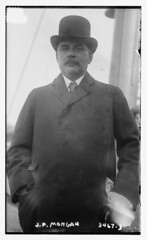
12806063862J. P. MorganA banker who took control and consolidated bankrupt railroads in the Panic of 1893. In 1900, he led a group in the purchase of Carnegie Steel, which became U.S. Steel. (p. 321, 323)20
12806063863leading industrial powerBy 1900, the United States was the leading industrial power in the world, manufacturing more than an of its rivals, Great Britain, France, or Germany. (p. 319)21
12806063864Second Industrial RevolutionThe term for the industrial revolution after the Civil War. In the early part of the 19th century producing textiles, clothing, and leather goods was the first part of this revolution. After the Civil War, this second revolution featured increased production of steel, petroleum, electric power, and industrial machinery. (p. 323)22
12806063865Bessemer processIn the 1850s, Henry Bessemer discovered this process. By blasting air through molten iron you could produce high-quality steel. (p. 323)23
12806063866transatlantic cableIn 1866, Cyrus W. Field's invention allowed messages to be sent across the oceans. (p. 325)24
12806063867Alexander Graham BellIn 1876, he invented the telephone. (p. 325)25
12806063868Thomas EdisonPossibly the greatest inventor of the 19th century. He established the first modern research labratory, which produced more than a thousand patented inventions. These include the phonograph, first practical electric light bulb, dynamo for electric power generation, mimeograph machine, and a motion picture camera. (p. 326)26
12806063869Menlo Park Research LabThe first modern research laboratory, created in 1876, by Thomas Edison in Menlo Park, New Jersey. (p. 326)27
12806063870electric power, lightingIn 1885, George Westinghouse produced a transformer for producing high-voltage alternating current, which made possible the lighting of cities, electric streetcars, subways, electrically powered machinery, and appliances. (p. 326)28
12806063871George WestinghouseHe held more than 400 patents. He invented the high-voltage alternating current transformer, which made possible the nationwide electrial power system. (p. 326)29
12806063872Eastman's Kodak cameraIn 1888, George Eastman invented the camera. (p. 325)30
12806063873large department storesR.H. Macy and Marshall Field made these stores the place to shop in urban centers. (p. 326)31
12806063874R.H. MacyHe created a New York department store. (p. 326)32
12806063875mail-order companiesTwo companies, Sears Roebuck, and Montgomery Ward, used the improved rail system to ship to rural customers to sell many different products. The products were ordered by mail from a thick paper catalog. (p. 326)33
12806063876Sears-RoebuckMail order company that used the improved rail system to ship to rural customers. (p. 326)34
12806063877packaged foodsBrand name foods created by Kellogg and Post became common items in American homes. (p. 326)35
12806063878refrigeration; canningThese developments in the food industry changed American eating habits. (p. 326)36
12806063879Gustavus SwiftHe changed American eating habits by making mass-produced meat and vegetable products. (p. 326)37
12806063880advertisingThis new technique was important to creating the new consumer economy. (p. 326)38
12806063881consumer economyAdvertizing and new marketing techniques created a new economy. (p. 326)39
12806063882federal land grants and loansThe federal government provided land and loans to the railroad companies in order to encourage expansion of the railroads. (p. 320)40
12806063883fraud and corruption, Credit MobilierInsiders used construction companies to bribe government officials and make huge profits. (p. 321)41
12806063884Interstate Commerce Act of 1886This act, created in 1886, did little to regulate the railroads. (p. 322)42
12806063885anti-trust movementMiddle class people feared a growth of new wealth due to the trusts. In the 1880s trust came under widespread scrutiny and attack. In 1890, the Sherman Antitrust Act was passed, but it was too vaguely worded to stop the development of trusts. Not until the Progressive era, would the trusts be controlled. (p. 324)43
12806063886Sherman Antitrust Act of 1890In 1890, Congress passed this act, which prohibited any "contract, combination, in the form of trust or otherwise, or conspiracy in restraint of trade or commerce." The U.S. Department of Justice secured few convictions until the law was strenghted during the Progressive era. (p. 324)44
12806063887federal courts, U.S. v. E.C. KnightIn 1895, the Supreme Court ruled that the Sherman Antitrust Act could be applied only to commerce, not manufacturing. (p. 324)45
12806063888causes of labor discontentWorker's discontent was caused by performing monotonous task required completion within a certain time, dangerous working conditions, and exposure to chemicals and pollutants. (p. 328)46
12806063889iron law of wagesDavid Ricardo developed this theory which stated that low wages were justified. He argued that raising wages would only increase the working population, the availability of more workers would cause wages to fall, thus creating a cycle of misery. (p. 327)47
12806063890anti-union tacticsEmployers used the following tactics to defeat unions: the lockouts (closing the factory), blacklists (lists circulated among employers), yellow dog contracts (contracts that forbade unions), private guards to quell strikes, and court injunctions against strikes. (p. 329)48
12806063891railroad strike of 1877In 1887, this strike spread across much of the nation and shut down two-thirds of the country's railroads. An additional 500,000 workers from other industries joined the strike. The president used federal troops to end the violence, but more than 100 people had died in the violence. (p. 329)49
12806063892Knights of LaborStarted in 1869 as a secret national labor union. It reached a peak of 730,000 members. (p. 330)50
12806063893Haymarket bombingOn May 4, 1886 workers held a protest in which seven police officers were killed by a protester's bomb. (p. 330)51
12806063894American Federation of LaborThe labor union focused on just higher wages and improved working conditions. By 1901 they had one million members. (p. 330)52
12806063895Samuel GompersHe led the American Federation of Labor until 1924. (p. 330)53
12806063896Pullman StikeIn 1894, workers at Pullman went on strike. The American Railroad Union supported them when they refused to transport Pullman rail cars. The federal government broke the strike. (p. 331)54
12806063897Eugene DebsThe American Railroad Union leader, who supported the Pullman workers. The government broke the strike and he was sent to jail for six months. (p. 331)55
12806063898railroad workers: Chinese, Irish, veteransIn the construction of the first transcontinental railroad, the Union Pacific, starting in Omaha, employed thousands of war veterans and Irish immigrants. The Central Pacific, starting from Sacramento, included 6,000 Chinese immigrants among their workers. (p. 321)56
12806063899old rich vs. new richThe trusts came under widespread scrutiny and attack in the 1880s, urban elites (old rich) resented the increasing influence of the new rich. (p. 324)57
12806063900white-collar workersThe growth of large corporation required thousands of white-collar workers (jobs not involving manual labor) to fill the highly organized administrative structures. (p. 327)58
12806063901expanding middle classIndustrialization helped expand the middle class by creating jobs for accountants, clerical workers, and salespeople. The increase in the number of good-paying jobs after the Civil War significantly increased the size of the middle class. (p. 327)59
12806063902factory wage earnersBy 1900, two-thirds of all working Americans worked for wages, usually at jobs that required them to work ten hours a day, six days a week.(p. 327)60
12806063903women and children factory workersBy 1900, 20 percent of adult woman working for wages in the labor force. Most were young and single women, only 5 percent of married women worked outside the home. (p. 327)61
12806063904women clerical workersAs the demand for clerical workers increased, women moved into formerly male occupations as secretaries, bookkeepers, typists, and telephone operators. (p. 328)62
12806063905Protestant work ethicThe believe that hard work and material success are signs of God's favor. (p. 325)63
12806063906Adam SmithIn 1776, this economist wrote "The Wealth of Nations" which argued that business should not be regulated by government, but by the "invisible hand" (impersonal econmic forces). (p. 324)64
12806063907laissez-faire CapitalismIn the late 19th century, american industrialists supported the theory of no government intervention in the economy, even as they accepted high tariffs and federal subsidies. (p. 324)65
12806063908concentration of wealthBy the 1890s, the richest 10 percent of the U.S. population controlled 90 percent of the nation's wealth. (p. 326)66
12806063909Social DarwinismThe belief that government's helping poor people weakened the evolution of the species by preserving the unfit. (p. 324)67
12806063910William Graham SumnerAn English social philosopher, he argued for Social Darwism, the belief that Darwin's ideas of natural slection and survival of the fittest should be applied to the marketpalce and society. (p. 324)68
12806063911survival of the fittestThe belief that Charles Darwin's ideas of natural selection in nature applied to the economic marketplace. (p. 324)69
12806063912Gospel of WealthSome Americans thought religion ideas justified the great wealth of successful industrialists. (p. 325)70
12806063913Horatio Alger Stories self-made manHis novels portrayed young men who became wealth through honesty, hard work and a little luck. In reality these rags to riches stories were somewhat rare. (p. 327)71

AP Language Multiple Choice Flashcards

Terms : Hide Images
9094969327aestheticconcerned with beauty or the appreciation of beauty0
9094969328amoralbeing neither moral nor immoral; lacking moral sensibility; not involving questions of right or wrong1
9094969329aphorisma pithy observation that contains a general truth; a terse saying that holds a general truth2
9094969330analogouscomparable in certain respects; similar in some way3
9094969331approbationapproval or praise4
9094969332avant-gardefavoring or introducing experimental or unusual ideas5
9094969333censora person who examines books, movies, letters, etc, and removes things that are considered to be offensive, immoral, or harmful to society6
9094969334certitudeabsolute conviction that something is the case7
9094969335circumspectionthe quality of being wary and unwilling to take risks8
9094969336conjecturean opinion or conclusion formed on the basis of incomplete information9
9094969337contriveddeliberately created rather than arising naturally or spontaneously10
9094969338churlishrude in a mean-spirited way; not polite11
9094969339cynicaldistrusting the motives of others; bitterly or sneeringly distrustful or pessimistic12
9094969340diminutiveextremely or unusually small, little, or tiny13
9094969341dogmaa belief or set of beliefs that is accepted by the members of a group without being questioned or doubted14
9094969342ephemerallasting a very short time; short-lived15
9094969343ebullientlively and enthusiastic; cheerful and full of energy16
9094969344empathythe feeling that you understand and share another person's experiences and emotions17
9094969345equitablejust or fair; dealing fairly and equally with everyone18
9094969346eruditehaving or showing knowledge that is learned by studying19
9094969347enervatedlacking physical, mental, or moral vigor20
9094969348equanimitymental calmness, composure, and evenness of temper, especially in a difficult situation21
9094969349expedientproviding an easy and quick way to solve a problem or do something22
9094969350extrinsicnot part of something; coming from the outside of something23
9094969351exuberancethe quality or state of being very lively, happy, or energetic24
9094969352epitomizeto be a perfect example or representation of something25
9094969353enigmaticdifficult to interpret or understand; mysterious26
9094969354elegiachaving a mournful or sad quality27
9094969355fatuoussilly and pointless28
9094969356guilesly or cunning intelligence; crafty or artful deception29
9094969357homologoushaving the same relation; relative position or structure; corresponding in structure or origin30
9094969358illicitforbidden by law, rules, or custom; not legally permitted or authorized31
9094969359ineptitudelack of skill or ability32
9094969360ironcladnot able to be changed; too strong to be doubted or questioned; unbreakable, solid, foolproof33
9094969361ideologuea person who zealously advocates an ideology; someone who very strongly supports and is guided by the ideology of a particular group; prone to fanciful ideas/theories; a theorist34
9094969362indignantfeeling or showing anger or annoyance at what is perceived as unfair treatment35
9094969363indefatigableable to work or continue for a very long time without becoming tired36
9094969364imperioushaving or showing the proud and unpleasant attitude of someone who gives orders and expects other people to obey them37
9094969365intrinsicbelonging to the essential nature of a thing; occurring as a natural part of something38
9094969366inscrutableimpossible to understand; causing people to feel curious or confused39
9094969367incredulousnot able or willing to believe something; feeling or showing a lack of belief40
9094969368invectiveof, relating to, or characterized by insult or abuse; insulting, abusive, or highly critical language41
9094969369judicioushaving, showing, or done with good judgment or sense42
9094969370lexiconthe words used in a language or by a person or group of people; the vocabulary of a person, language, or branch of knowledge43
9094969371mayhemactions that hurt people and destroy things; a scene or situation that involves a lot of violence44
9094969372magnanimitythe quality of being very generous or forgiving45
9094969373modicuma small amount; a small quantity of a particular thing, especially something considered desirable or valuable46
9094969374obliquenot explicit or direct in addressing a point47
9094969375polemicala strong verbal or written attack on someone or something48
9094969376paucitya small amount of something; amount that is less than what is needed or wanted; scarcity49
9094969377paradigma model or pattern for something that may be copied; a theory or a group of ideas about how something should be done, made, or thought about50
9094969378prodigya young person who is unusually talented in some way51
9094969379prodigalspending money or resources freely and recklessly; wastefully extravagant52
9094969380ribaldreferring to sexual matters in an amusingly rude or irreverent way53
9094969381sanguineconfident or hopeful; optimistic or positive, especially in an apparently bad or difficult situation54
9094969382servilehaving or showing an excessive willingness to serve or please others55
9094969383synchronicitythe simultaneous and coincidental occurrence of events that appear significantly related by have no visible connection56
9094969384speculativebased on guesses or ideas about what might happen or be true rather than on facts; tending to think what might happen57
9094969385stridentsounding harsh and unpleasant; expressing opinions or criticism in a very forceful and often annoying or unpleasant way58
9094969386symbiosisa relationship between two people or groups that work and depend on each other; mutually beneficial relationship59
9094969387synesthesiaan expression of one sense through the description of another sense; a condition in which one type of stimulation evokes the sensation of another60
9094969388transcendentalisma man's spirit in association with nature; a philosophy which says that thought and spiritual things are more real than ordinary human experience and material things61
9094969389treatisea written work dealing formally and systematically with a subject62
9094969390torpora state of physical or mental inactivity; lethargy63
9094969391uncannystrange or mysterious, especially in an unsettling way; strange or unusual in a way that is surprising or difficult to understand64
9094969392wistfulhaving or showing a feeling of vague or regretful longing65
9094969393wryusing or expressing dry, especially mocking, humor66
9094969394vituperativebitter and abusive; containing or characterized by verbal abuse67

AP US History Chapter 6/Brinkley Flashcards

AMSCO United States History 2015 Edition Chapter 6

Terms : Hide Images
11551919125James Madison1. "Father of the Constitution". 2. solved the questions of sovereignty and limiting power with the separation of power and checks and balances. 3. Contributed to the Federalist papers.0
11551919126Alexander HamiltonOne of the authors of the Federalist Papers. He favored a strong central government. He was appointed by washington as secretary of the treasury. He also desird the creation of a national bank.1
11551919127FederalistsPolitical party that supported the constitution. They supported a centralized & economically sound government. Had the support of Alexander Hamilton, James Madison, John Jay, Ben Franklin and loosely George Washington. better organized than anti-federalists feared disorder, anarchy, chaos, unchecked power of the masses2
11551919128Anti-FederalistPolitical party in opposition to the constitution. They believed the constitution violated the principles of the revolution. They were concerned that the constitution lacked a bill of rights and gave government too much power feared the dangers of concentrated power and that the gov would abuse the citizens' rights like england3
11551919129Bill of RightsThe first ten amendments (changes to the Constitution) were added to protect the rights of individual citizens. Nine dealt with basic rights. The tenth reserved state power for anything not specifically withheld from or delegated to the federal government.4
11551919130Kentucky and Virginia ResolutionsTwo states passed resolutions that argued states had the right to nullify laws passed at the federal level. it was unsuccessful.5
11551919131National bank tariffs; excise tariffsFavored by Federalists in North as way to fund government/protect businesses; opposed by South and farmers6
11551919132Checks and balancesDesigned to keep one branch of government from dominating the other7
11551919133Great CompromiseA compromise made at the constitutional convention of 1787. Stated that their would be a 2 house legislature with one house represented by population and each slave would count as 3/5ths of a person in both taxation and representation. The upper house would have 2 representatives per state regardless of population. population: house of reps equal representation: senate aka Connecticut compromise-- compromise of VA and NJ plan8
11551919134House of RepresentativesRepresentation in the House would be based on population of each state9
11551919135SenateTwo people per state, regardless of size10
115519191363/5ths Compromise3/5's of a state's slave population would be counted for representation and direct taxation11
11551919137Electoral college systemProcess by which a President is elected in the US12
11551919138Legislative branchThe branch of government that makes laws13
11551919139CongressLegislative branch; House and Senate14
11551919140CabinetTerm for chiefs of departments appointed by Washington constitution does not specify how many there should/should not be. first 3 were state (jefferson), treasury (Hamilton), and war (knox)15
11551919141Judiciary ActEstablished a Supreme Court with one chief justice and five associate justices16
11551919142Federal courtsCourts created by the Judiciary Act judiciary act of 1789- gave details to what constitution listed about judicial branch17
11551919143Supreme CourtUltimate court in the US had the power to make final decisions in cases involving constitutionality of state laws18
11551919144Democratic-Republican PartyRival to Federalists; opposed strong central government; led by Jefferson19
11551919145John AdamsIn 1796 he was a Federalist who was elected as the second president.20
11551919146Revolution of 1800Election in which Democratic-Republicans peacefully took power from the Federalists.21
11551919147French RevolutionDemocratic-Republican's felt we were obligated to support the French.22
11551919148Proclamation of NeutralityIn 1793 Washington announced US as neutral in the war between England and France23
11551919149Jay's Treatyestablish American Sovereignty over the entire Northwest Territory and produced a satisfactory commercial relationship with britain.24
11551919150Pinckney TreatySpain agreed to open lower Mississippi River and New Orleans to US trade & conceded to prevent indian attacks across the border of FL.25
11551919151Articles of ConfederationAmerica's original governing document. - Established a very weak central government and strong state governments. This government was favored by those terrified of tyrannical central government.26
11551919152The Virginia PlanA plan for new government with three branches, Executive, Legislative, and Judicial. According to this plan the legislative branch would have 2 houses. The lower house would represent the states based on population, the upper house would be appointed by the lower house. Favored by large states, disliked by small states.27
11551919153The New Jersey PlanA plan proposing a "federal" not "national" government. This plan would have a one house legislature with equal representation for each house but with more ability to tax and regulate commerce. Favored by small states, disliked by large states.28
11551919154Federalist PapersSeries of widely published essays written by Alexander Hamilton, John Jay, and James Madison under the pseudonym Publius. They defended the constitution to the public attempting to get them to want to ratify the constitution29
11551919155First national elections in 1789George Washington elected to the presidency unanimously. John Adams became Vice-President. April 30, 1789 Inauguration.30
11551919156Judiciary Act of 1789An act that provided a Supreme Court with six justices, thirteen district courts and three circuit courts of appeals. The act also gave the Supreme Court final decision in cases involving the constitutionality of state laws.31
11551919157National BankHamilton proposed this to stabilize and unify the American banking system. In 1791 the bank began operations controversial bc constitution did not assigned it so some people argued that it was not legal. Hamilton argued that it was necessary and that the constitution did not specifically prohibit it32
11551919158RepublicansBecause of the rise of the Federalist party headed by Hamilton, it's opposition formed the (Democratic) Republican party. Key figures were Thomas Jefferson and James Madison.33
11551919159Whiskey Rebellion of 1794Farmers in western PA refused to pay the excice tax on whiskey, directly breaking federal law. The also terrorized tax collectors. Washington organized an army of 15,000 and personally led the troops to PA....rebellion quickly ceased.34
11551919160Constitution and the IndiansThe constitution only vaguely mentions indians and leaves their place in the new nation unclear. They are not citizens but are not foreign countries like britain and france.35
11551919161Election of 1796Washington did not run for presidency. The Republican party had Thomas Jefferson. The Federalist party was split between John Adams and Thomas Pinckney. Adams won by three electoral votes.36
11551919162The Alien ActThis act discouraged immigation and encouraged foreigners already in the country to leave. It put new obstacles in the way of citizenship and strengthened the president's hand in dealing with foreigners.37
11551919163The Sedition ActThis act allowed the government to prosecute anyone who committed "libelous or treasonous acts" against the government. Different people thought different things treasonous so the government could basically prosecute anyone who did not agree with them.38
11551919164Judiciary Act 1801Federalists reduced number of supreme court judges and then flooded the court system with federalist judges so that they could maintain control over one branch of government during the republican dominated political era to come.39
11551919165compromise on slaverycongress could not tax exports and could not impose a duty of more than 10 dollars per imported slave and they had no authority to stop the slave trade for 20 years40
11551919166why was the question of sovereignty so difficult to resolve?how could both state and national governments exercise sovereignty at the same time? could not decide where ultimate sovereignty lies decided that sovereignty came from the people this neither state nor national gov was truly sovereign. people were fearful of a tyrannical government, but there also needed to be a powerful national government bc not having one failed in the articles of conferderation41
11551919167federalismpower divided between states and federal government power at all levels of gov flowed ultimately from the people42
11551919168separation of powersdivided power among the branches so that one branch would not be more powerful than the other43
11551919169positives of the national bankrestored public credit bonds of US were selling at home and abroad at brices above their face value speculators reaped huge profits from this^^ manufacturers profited from the tariffs and merchants in seaports benefited from the new banking system44
11551919170negatives of the national bankfarmers had to bear a disproportionate tax burden- pay property taxes and tax on distillers initiated by hamilton. many believed the system served the the interest of wealthy elites bc they controlled the money in the bank (one reason people opposed the bank)45
11551919171why did Thomas J and Madison disagree with federalistsrepublicans (their party) believed that farming and small property owners were crucial to the economy and federalists believed in centralized society and strong, large industries.46
11551919172citizen genetfrench diplomatic representative who went to charleston and tried to convince shipwconers to aid the french when us was trying to remain neutral47
11551919173quasi warUS created a navy to fight french ships forming an ally with britain in the war with france. came to a peaceful end48

Pages

Subscribe to CourseNotes RSS

Need Help?

We hope your visit has been a productive one. If you're having any problems, or would like to give some feedback, we'd love to hear from you.

For general help, questions, and suggestions, try our dedicated support forums.

If you need to contact the Course-Notes.Org web experience team, please use our contact form.

Need Notes?

While we strive to provide the most comprehensive notes for as many high school textbooks as possible, there are certainly going to be some that we miss. Drop us a note and let us know which textbooks you need. Be sure to include which edition of the textbook you are using! If we see enough demand, we'll do whatever we can to get those notes up on the site for you!