AP Notes, Outlines, Study Guides, Vocabulary, Practice Exams and more!

AP US History 1 Intro Flashcards

Terms : Hide Images
14847011971RenaissanceFlowering of art, culture, and humanism in Western Europe.0
14847014558ColumbusOpened the New World to Europe with multiple journeys to the Caribbean1
14847018657Henry the NavigatorPortuguese Prince who funded aviation and sailing -- Exploration not possible to New World w/out him starting it2
14847021897BalboaSpanish explorer who reached and named the Pacific Ocean3
14847031593MagellanLed 1st voyage to circumnavigate globe -- died in the Philippines - crew finished voyage4
14847036272CortesSpanish conquistador who conquered the Aztec Empire5
14847039316PizarroSpanish conquistador who conquered the Incan Empire6
14847048175Henry HudsonExplored coast of NY and Atlantic for the Dutch and English7
14847054848ChamplainFrench explorer who colonized eastern Canada----French Canada = Quebec/Montreal8
14847058263Joint Stock CompanyGroup/pool of private investors who put up $ to find New World colonies9
14847062795Jamestown (1607)1st permanent English settlement in colonial America10
14847070886John Smith2nd leader of Jamestown who prevented it from dying11
14847075567John RolfeColonist of Jamestown who married Pocahontas and created modern tobacco12
14847079647Royal ColonyColony that is run by a Royal Governor13
14847092787Proprietary ColonyColony run by 1 private person----Pennsylvania = William Penn = Quaker14
14847096917Separatists/PilgrimsPeople who wanted to separate from the Church of England (Anglican Church)15
14847114653PuritansWanted to purify the Church of England of everything Catholic16
14847118648Myles Standish / John Carver1st leaders of Plymouth Colony ---- Standish = military leader ---- Carver = first governor; died soon into settlement in 1621; Bradford replaced him17
14847127344William BradfordEarly leader of Plymouth who left diaries describing the society18
14847133422Mayflower Compact1st set of English laws in colonial America19
14847138694John WinthropGovernor of Mass Bay Colony who envisioned a "City on a Hill"20
14847142623Massachusetts Bay ColonyLargest colony and Puritan theocracy (govt. w/ religious leadership)21
14847146757Great Migration1st mass movement of Europeans to the New World22
14847151390House of Burgesses (1619)The first democratically-elected legislative body in British North America, established by the Virginia Company to allow representative government in Virginia.23
14847176787Act of Toleration (MD)Act which allowed for freedom of worship for all Christians in MD and kept peace for Catholics and Protestants.24
14847268877Bacon's RebellionAn armed rebellion by Virginia Settlers led by Nathaniel Bacon in 1676 against the government due to their failure of addressing colonists' demands regarding their safety from a possible Native American War.25
14847298782Governor BerkeleyGovernor of Colonial Virginia from 1641-1652 and from 1660-1677. His first main initiative was to diversify Virginia's agricultural products.26
14847303969Indentured ServantsMen or women who signed indentures (contracts) in an agreement to work for a set amount of years in exchange for transportation to Virginia, and basic necessities like food and shelter once they arrived.27
14847311165Headright SystemThe Virginia Company's system in which settlers and the family members who came with them each received a grant of land of about 50 acres.628
14847841475Anne HutchinsonAmerican colonist (born in England) who was banished from Boston for her religious views (1591-1643)29
14847884719Fundamental Orders of Connecticut (1639)Set up a unified government for the towns of the Connecticut area (Windsor, Hartford, and Wethersfield). First constitution written in America.30
14847891766Halfway CovenantA Puritan church document; In 1662, it allowed partial membership rights to persons not yet converted into the Puritan church; It lessened the difference between the "elect" members of the church from the regular members; Women soon made up a larger portion of Puritan congregations.31
14847943834New England Confederation1643 - Formed to provide for the defense of the four New England colonies against local Native American tribes, and also acted as a court in disputes between colonies; act of self-government without English crown permission.32
14848038280Pequot War (1636-1638)Series of clashes between English settlers and Pequot Indians in the Connecticut River valley. Ended in the slaughter of the Pequots by the Puritans and their Narragansett Indian allies.33
14848162202King Philip's WarWas the last major effort to drive out the English settlers led by Metacom (King Phillip) with the Wampanoag Indians joined, Nipmucks, Pocumtucks, and Narragansetts. The war ended with a Puritan victory.34
14848178125MercantilismAn economic policy under which nations sought to increase their wealth and power by obtaining large amounts of gold and silver and by selling more goods than they bought35
14848242651Speciecoined money, usually gold or silver, used to back paper money36
14848257797Balance of Tradethe difference in value between a country's imports and exports.37
14848352395TariffA tax on imported goods38
14848358180Harvard (Colonial Times)college founded from a grant by the Massachusetts general court. It followed Puritan beliefs and its original purpose was to train ministers.39
14848377905J.P. ZangerA printer and journalist who wrote against the governor and established the first win for the freedom of the press for the colonies.40
14848402758LibelA written defamation of a person's character, reputation, business, or property rights.41
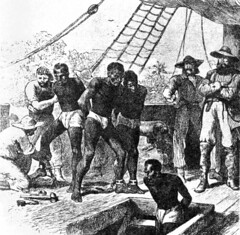
14848538080Triangle Tradethe trading system between the Americas, England and Africa; Africa would give slaves and rum to the Americas, including the West Indies; America would offer timber, tobacco, fish, and flour to England and England would mainly send guns and rum to Africa.42
14848891626Middle Passagethe route in between the western ports of Africa to the Caribbean and southern U.S. that carried the slave trade43
14848942725Navigation ActsActs passed in 1660 passed by British parliament to increase colonial dependence on Great Britain for trade; limited goods that were exported to colonies; caused great resentment in American colonies.44
14848954009Salutary NeglectAn English policy from 1607 to 1763 where England did not enforce any strict parliamentary laws on the Colonies.45
14849054060Salem Witch TrialsA series of hearing and prosecutions of people accused of performing witchcraft from 1692 to 1693 in Salem, Massachusetts.46

AP US History Period 2 Flashcards

AMSCO United States History 2015 Edition, Chapter 2 The Thirteen Colonies and the British Empire, 1607-1754

Terms : Hide Images
15224945512Cecil Calvert, Second Lord BaltimoreIn 1634, Cecil Calvert (Second Lord Baltimore) was the son of George Calvert (First Lord Baltimore). Cecil Calvert set about making his father's dream of a Maryland colony that would be a haven for Catholics in America. (p. 27)0
15224945513Act of TolerationThe first colonial statue granting religious freedom to all Christians, but it called for death of all non-Christians. It was created to provide a safe haven for Catholics. (p.27)1
15224945514Roger WilliamsA respected Puritan minister who believed that the individual's conscience was beyond the control of any civil or church authority. He was banished from the Bay colony for his beliefs. In 1636, he founded the settlement of Providence. (p. 29)2
15224945556ProvidenceThis settlement has founded in 1636 by Roger Williams. (p. 29)3
15224945515Anne HutchinsonThis Puritan believed in antinomianism and was banished from the Bay colony because of her beliefs. In 1638, she founded the colony of Portsmouth. (p. 29)4
15224945516antinomianismThe idea that faith alone, not deeds, is necessary for salvation. (p. 29)5
15224945517Rhode IslandIn 1644, Parliament granted Roger Williams a charter, joining Providence and Portsmouth into a single colony, Rhode Island. (p. 30)6
15224945518Halfway covenantIn the 1660s, people could now take part in church services and activities without making a formal commitment to Christ. It was created because the next generation of colonists were less committed to religious faith, but churches still needed members. (p. 31)7
15224945519QuakersMembers of the Religious Society of Friends who believed in the equality of men and women, nonviolence, and resistance to military service. (p. 34)8
15224945520William PennIn 1861, the royal family paid a large debt by granting his family a large parcel of American land. This Quaker, formed a colony that he named Pennsylvania. (p. 34)9
15224945521Holy ExperimentWilliam Penn put his Quaker beliefs to the test in his colony, Pennsylvania. He wanted the colony to provide a religious refuge for Quakers and other persecuted people, enact liberal ideas in government, and generate income and profits for himself. (p. 34)10
15224945522Charter of LibertiesIn 1701, the Pennsylvania colony created this written constitution which guaranteed freedom of worship for all and unrestricted immigration. (p. 34)11
15224945523rice plantationsThese plantations required a loarge land area and many slaves. (p. 37)12
15224945524tobacco farmsAs Tobacco prices fell, rice and indigo became the most profitable crops. (p. 37)13
15224945557John CabotFirst Englishman to explore lands in North America which England would later settle in the early 1600's. (p. 25)14
15224945558JamestownIn 1607, the first permanent English colony in America was founded at this location. The Virginia Company, was a a joint-stock company chartered by England's King James I. (p. 25)15
15224945559Captain John SmithBecause of his forceful leadership, Jamestown barely survived its first five years. (p. 25)16
15224945560John RolfeHe helped Jamestown develop a new variety of tobacco which became popular in Europe and became a profitable crop. (p. 25)17
15224945561PocahontasShe was the American Indian wife of John Rolfe in early settlement days in Jamestown. (p. 25)18
15224945562PuritansGroup of dissenters that wanted to purify the Church of England. In 1630 they founded the Massachusetts Bay Colony at Boston. (p. 26)19
15224945563SeparatistsRadical dissenters to the Church of England, they were known by this name because they wanted to organized a completely separate church that was independent of royal control. They became known as Pilgrims, because of the travels. (p. 26)20
15224945564PilgrimsThey were radical dissenters to the Church of England. They moved to Holland, then in 1620, they sailed to America on the Mayflower in search of religious freedom. They established a new colony at Plymouth on the Massachusetts coast. (p. 26)21
15224945565MayflowerIn 1620, the boat that the Pilgrims sailed to Plymouth. (p. 26)22
15224945566Plymouth ColonyThis colony was started by the Pilgrims at Plymouth (Massechusetts). In the first winter nearly half of them perished. They were helped by friendly American Indians and celebrated the first Thanksgiving in 1621. (p. 26)23
15224945567John WinthropIn 1630, he led about a thousand Puritans to America and and founded Boston and several other towns. (p. 26)24
15224945568Great MigrationThis movement started because of a civil war in England. Nearly 15,000 settlers came to the Massachusetts Bay Colony. (p. 26)25
15224945569VirginiaSir William Berkeley, the royal governor of Virginia use dictatorial powers to govern on behalf of the large planters. (p. 29)26
15224945525Thomas HookerIn 1636, he led a large group of Boston Puritans dissatisfied with the Massachusetts Bay colony to found Hartford, which is now Connecticut. In 1639 they drew up the first written constitution in American history. (p. 30)27
15224945526John DavenportIn 1637, he founded a settlement south of Hartford, by the name of New Haven. (p. 30)28
15224945527ConnecticutIn 1665, New Haven and Hartford joined to form the colony of Connecticut under a royal charter. (p. 30)29
15224945528New HampshireHoping to increase royal control in the colonies, King Charles II separated New Hampshire from Massachusetts in 1679 and made it a royal colony. (p. 31)30
15224945529The CarolinasIn 1663, King Charles II granted eight nobles the Carolinas. In 1729, the Carolinas were split into two royal colonies. In South Carolina, the economy was based on the fur trade and growing food for the West Indies, which led to many plantations. In North Carolina, there were many small tobacco farms and fewer plantations. (p. 32)31
15224945530New YorkIn 1664, King Charles II granted his brother, the Duke of York (future King James II) the land now known as New York. James took control of the Dutch colony that was located there, but the Dutch were treated fairly. James was unpopular because of his taxes and refusal to institute a representative government. Finally in 1683, he agreed to grant broad civil and political rights to the colony. (p. 33)32
15224945531New JerseyThe territory of New York was split. In 1674, land was granted to Lord John Berkeley and Sir George Carteret. Eventually they sold to the Quakers. In 1702, the two Jerseys were combined into a single royal colony, New Jersey. (p. 33)33
15224945570PennsylvaniaIn 1861, the royal family paid a large debt by granting William Penn's father a large parcel of American land. He then formed a colony from the land. (p. 34)34
15224945532DelawareIn 1702, William Penn granted the lower three colonies of Pennsylvania their own assembly. In effect, Delaware became a separate colony, even though its governor was the same as Pennsylvaniaá until the American revolution. (p. 34)35
15224945533GeorgiaIn 1732, Georgia was formed to provide a buffer between wealthy Georgia and Spanish controlled Florida, and to provide a place for the many debtors of England to begin again. (p. 34)36
15224945534James OglethorpeFounder of Georgia's first settlement, Savannah, in 1733. He acted as governor of Georgia and had strict laws which included a ban on rum and slavery. (p. 35)37
15224945535WampanoagsAn American Indian tribe led by Metacom. (p. 31)38
15224945536MetacomThis American Indian chief was known to the colonists as King Philip. He joined together the Native American tribes to fight the colonists in King Philip's War, a war that lasted from 1675 to 1676. (p. 31)39
15224945571King Philip's WarFrom 1675 to 1676, the American Indian chief Metacom (King Philip), waged a vicious war against the English settlers in southern New England. (p. 31)40
15224945572Mayflower CompactIn 1620, while they were sailing to America on the Mayflower, the Pilgrims created this document that pledged them to make decisions by the will of the majority. It was a rudimentary written constitution. (p. 27)41
15224945573Virginia House of BurgessesIn 1619, just 12 years after the founding of Jamestown, Virginia's colonists organized the first representative assembly in America, the Virginia House of Burgesses. (p. 27)42
15224945537Sir William BerkeleyRoyal Governor of Virginia who favored large plantation owners and did not support or protect smaller farms from Indian raids. He put down Bacon's rebellion in 1676. (p. 29)43
15224945538Bacon's RebellionIn 1676, Nathaniel Bacon led a group of army volunteers that raided Native American villages, fought the governor's forces, and set fire to Jamestown. The rebellion lost momentum when Bacon died of dysentery. The rebellion was caused by the Governor's unfair favoritism of large plantation owners and refusal to protect small farms from Native American raids. (p. 29)44
15224945539Fundamental Orders of ConnecticutIn 1639, the Hartford settlers drew up the first written constitution in America. It established a representative government made up of a legislature elected by the people and a governor chosen by the legislature. (p. 30)45
15224945540New England ConfederationIn 1643, Plymouth, Massachusetts Bay, Connecticut, and New Haven colonies formed a military alliance to deal with the threat from the Native Americans. It lasted until 1684. (p. 31)46
15224945541Frame of Government (1682)In 1682-1683, William Penn provided the Pennsylvania colony with a Frame of Government which guaranteed a representative assembly elected by landowners and a written constitution. (p. 34)47
15224945542corporate coloniesColonies operated by joint-stock companies during the early years of the colonies, such as Jamestown. (p. 24)48
15224945543royal coloniesColonies under the direct authority and rule of the king's government, such as Virginia after 1624. (p. 24)49
15224945544proprietary coloniesColonies under the authority of individuals granted charters of ownership by the king, such as Maryland and Massachusetts. (p. 24)50
15224945545Chesapeake ColoniesIn 1632, the area once known as the Virginia colony, has divided into the Virginia and Maryland colony. Maryland became the first proprietary colony. (p. 27)51
15224945574joint-stock companyCorporate colonies, such as Jamestown, were operated by joint-stock companies, at least during the colony's early years. (p. 24)52
15224945575Virginia CompanyEngland's King James I chartered the Virginia Company, a joint-stock company that founded the first permanent English colony in America at Jamestown in 1607. (p. 25)53
15224945546mercantilismAn economic policy in which the colonies were to provide raw materials to the parent country of growth and profit of the parent country. (p. 35)54
15224945547Navigation ActsBetween 1650 and 1673 England passed a series of acts which establish rules for colonial trade. * Trade to and from the colonies could be carried only by English or colonial-built ships, which could be operated only by English or colonial crews. * All goods imported in the colonies, except some perishables, had to pass through the ports in England. * Specified goods from the colonies could be exported only to England. (p. 35)55
15224945548Dominion of New EnglandJames II wanted to increase royal control in the colonies, so he combined them into larger units and abolished their representative assemblies. The Dominion of New England was combined New York, New Jersey, and the other New England colonies into a single unit. (p. 36)56
15224945549Sir Edmund AndrosIn 1686, King James II combined New York, New Jersey, and additional New England colonies into a single unit called the Dominion of New England. He was sent England to govern the dominion. he was very unpopular by levying new taxes, limiting town meetings, and revoking land titles. (p. 36)57
15224945550Glorious RevolutionIn 1688, King James II was deposed and replaced with William and Mary. This brought the end to the Dominion of New England, and the colonies operated under their previous structure. (p. 37)58
15224945551indentured servantsYoung people from England under contract with a master who paid for their passage. Worked for a specified period for room and board, then they were free. (p. 28)59
15224945552headright systemA method for attracting immigrants, Virginia offered 50 acres of land to each immigrant who paid for passage to America and to any plantation owner who paid for an immigrants passage. (p. 28)60
15224945553slaveryThe first slaves arrived in the colonies in 1619, they were not slaves for life, but worked for a period of time, like an indentured servant. Then discriminatory laws were passed, slaves and their offspring were kept in permanent bondage. (p. 28)61
15224945554triangular tradeMerchants traded colonist rum for African slaves, African slaves for West Indies sugar cane, and sugar cane was brought back to the colonies to make rum. (p. 37)62
15224945555Middle PassageVoyage from West Africa to the West Indies. It was miserable for the slaves transported and many died. (p. 38)63

US History: Revolutionary War Flashcards

Terms : Hide Images
11637803140Sugar Act1764. Modified the "Sugar and Molasses Act of 1733" by lowering the tax on molasses, but increased the enforcement of preventing nonBritish molasses from French and Spanish West Indies, including the right to search homes of accused smugglers. It also increased the items to be taxed. It disrupted the colonial economy greatly by preventing them from trading outside the British.0
11637803141Declaratory ActStated that the British have the right to Tax anything or do anything regarding its colonies.1
11637803142George GrenvilleBritish Prime minister in 17632
11637803145Battle of Saratoga1777. Battle won by the Americans, turning point of the Revolution that forced the resignation of British Commander General Howe. It also caught the attention of France and convinced them to aid the Colonists.3
11637803146Battle of YorktownWon by Americans with assistance of the Frenchs help. Significant battle of Revolutionary War.4
11637803147Boston Massacre1770. March 5. British soldiers fired into a frenzied crowd, killing 5 people. It was entitled a "massacre" by Paul Revere who created an engraving of the scene, and became a rallying cry for independence.5
11637803150Executive BranchCarries out the laws made by the legislature. President, at least 35 years old, serves four years, and cannot serve more than two terms (or 10 years if finishing a term of a previous president)6
11637803151Judicial BranchSupreme Court (9 members, jobs for life) and lower courts, interprets laws as they relate to the constitution7
11637803152Checks and Balances (Separation of Powers)System in which the 3 branches of government (legislative, executive, judicial) check each other to provide balance to ensure that no branch becomes too powerful.8
11637803153Legislative BranchMakes laws , bi-cameral Congress: Senate and House of Representatives, Meets in the Capital Building.9
11637803157We the peopleFirst three words of the Constitution10
11637803158Lexington1775. British troops coming from Boston and on their way to Concord, met the minutemen here. It marked the beginning of the American Revolution. Ralph Waldo Emerson wrote about it in the "Concord Hymn" and made the phrase famous in the opening lines, "Shot heard around the world."11
116378031593/5 Compromisea slave would count as three-fifths of a person for representation in the House of Representatives12
11637803160Constitutionsecond constitution of the US; stronger federal government, could collect taxes, president could enforce the laws13
11637803161Federalismsystem of government in which states share power with the federal government14
11637803167Proclamation of 1763British announced that the land won during the French & Indian War (land west of the Appalachian mountains) was reserved for Native Americans (any already there must move back) in order to keep peace with the Indians, keep colonists near coast where army is stronger, control fur trade and westward expansion. It was largely ignored by colonists.15
11637803168Stamp Act1765. Direct tax on the colonists; required that many printed materials (cards, paper, news) in colonies be produced on stamped paper produced in London that cost money amounting to a tax.16
11637803169No taxation without representationColonists did not elect representative to Parliament, colonists were willing to pay taxes passed by colonial legislatures; one of the major causes of the American Revolution17
11637803170Tea Act1773. Made tea from British East India Co less expensive than nonBritish tea (which was technically illegal and smuggled) in order to help the struggling company. They believed that it would encourage merchants to purchase the British tea. However, colonists were enraged because they saw it as an underhanded way to get them to purchase the taxed British tea, thus giving in to "Taxation without Representation."18
11637803172John LockeEnlightenment thinker who wrote about life, liberty, and property. Inspiration for the Declaration of Independence19
11637803177Thomas Jefferson(1743-1826) Founding father and primary author of the Declaration of Independence. The 3rd President of the US, a lawyer, farm and slave owner, architect, and inventor.20
11637803182Natural RightsRights given to all humans by God and can't be taken away21
11637803185Bill of Rights of 1689 (English)The English Bill of Rights had a massive influence on the colonies and the Constitution of the United States. The most important Articles are: free elections, freedom of speech in Parliament, no armies raised in peacetime ,no taxes without the authority of parliament, no excessive fines, no cruel and unusual punishment22
11637803186Articles of ConfederationAdopted by Continental Congress in 1777, ratified in 1781. Governing Law over all colonies that divided the colonies into independent, sovereign states which had no executive or judicial branch and could not tax, regulate trade, or have a standing army (Influence of the antifederalists). All state legislatures had to approve an amendment (unanimous), which proved to be impossible. It had to be replaced with the current constitution in 1789 because it left the government with no power.23
11637803187Virginia Plan; New Jersey PlanThe Constitutional Convention had two major plans- _________________ which supported a bicameral legislature based on population and the ________________ which supported a unicameral legislature with an equal number of representatives from each state.24
11637803188Great CompromiseAt the Constitutional Convention, it created a bicameral legislature with a lower house based on a state's population and an upper house with an equal number of states representatives in order to balance rule of the people with rule of the representative government.25
11637803190Continental Congress (Second)Convened in Philadelphia after the Revolutionary War had been initiated. First, in 1775 (July 5), it send the Olive Branch Petition to King George III in order to try to prevent full-on war; it was rejected Thomas Jefferson wrote the Declaration of Independence, which was adopted July 4, 1776. It created the Continental Army led by George Washington. War officially began.26
11637803193Battle at YorktownLast major battle of the Revolutionary War in which Generals Washington and Lafayette trapped British General Cornwallis's men and forced a surrender.27
11637803194Treaty of Paris 17831783. (September 3) Officially ended the American Revolution and Great Britain recognized the independence of the United States. The 3 principal members from America sent to negotiate peace were Benjamin Franklin, John Adams, and John Jay. (A preliminary treaty was signed Nov 30 1782 in secret from the French, who wanted to keep fighting).28
11637803196Great Awakening (First)1730s, 1740s. Sparked religious ideas of renewed piety and devotion that greatly shaped the culture of America.29
11637803197LoyalistAmerican colonists who remained loyal to Britain and opposed American independence.30
11637803198PatriotAmerican colonists who were determined to fight the British until American independence was won31
11637803199Unalienable Rightsbasic rights of the people that may not be taken away (i.e., Life, Liberty, and the Pursuit of Happiness)32
11637803202Intolerable Acts (aka Coercive Acts)1774. A series of laws set up by British Parliament to punish Massachusetts for its protests against the British during the Boston Tea Party. Boston harbor was shut down, drastically reduced colonial self- government, permitted royal officers to be tried in other colonies or in England when accused of crimes, and provided for the quartering of troops.33
11637803204Boston Tea Party1773. An act of civil disobedience by the Sons of Liberty against British taxation policies. Citizens of Boston, disguised as Indians, raided three British ships in Boston harbor and dumped tea into the water.34
11637803205Declaration of Independence1776 (July 4). It was written by Thomas Jefferson (mainly), John Adams, and Benjamin Franklin and was adopted by the 2nd Continental Congress. It outlined purpose of government, stated the colonial grievances, and officially cut ties with Great Britain. It is known for the statement "All men are created equal" and relied on Enlightenment ideas of John Locke's Social Contract Theory and natural rights (life, liberty, property)35
11637803206Common Sense1776. A pamphlet written by Thomas Paine that criticized monarchies and convinced many American colonists of the need to break away from Britain.36
11637803209Franklin, BenjaminAmerican intellectual, born in Boston, Massachusetts. Was an inventor and politician. He helped write the Declaration of Independence, was an ambassador to France and convinced French to join in the Revolution on the side of the colonists, and was instrumental in writing of the Treaty of Paris which officially ended the war. He also "discovered" electricity with the kite experiment.37
11637803210King George III(1738-1820) King of England during the American Revolution who wanted to enforce the laws and restrictions required of the colonists38
11637803211George Washington(1732-1799) Delegate to the Continental Congress, Commander-in-chief of the Continental Army during the American Revolution, and First US President. He set several precedents: neutrality in foreign wars, a cabinet of advisors, limit of 2 terms, and a farewell address.39
11637803212Thomas Paine(1737-1809) American Revolutionary leader and pamphleteer (born in England) who supported the American colonist's fight for independence, most famous for writing "Common Sense". He served in the American army during the Revolution, while writing more tracts. Later, he joined the French Revolution and published "The Rights of Man" in 1791.40
11637803215Continental Congress (First)1774. A gathering of colonial leaders (all except Georgia) in Philadelphia to plan a response to Britain's Coercive Acts (Intolerable Acts). They prepared for boycott and formed a militia.41
11637803216Committees of CorrespondenceFormed to help towns and colonies share information about resisting British laws42
11637803217Townshend Acts1767. Laws passed by the British that placed a tax on products imported to America such as lead, paper, paint, glass, and tea in order to collect revenue.43

AP US History, Chapter 12 Flashcards

Terms : Hide Images
15212356894Battle of New Orleans(January 1815): Resounding victory of American forces against the British, restoring American confidence and fueling an outpouring of nationalism. Final battle of the War of 1812.0
15212356895Congress of Vienna(1814-1815): Convention of major European powers to redraw the boundaries of continental Europe after the defeat of Napoleonic France.1
15212356896Treaty of Ghent(1815): Ended the War of 1812 in a virtual draw, restoring prewar borders but failing to address any of the griev- ances that first brought America into the war.2
15212356897Hartford Convention(1814-1815): Convention of Federalists from five New England states who opposed the War of 1812 and resented the strength of Southern and Western interests in Congress and in the White House.3
15212356898Rush-Bagot agreement(1817): Signed by Britain and the United States, it established strict limits on naval armaments in the Great Lakes, a first step in the full demilitarization of the U.S.-Canadian border, completed in the 1870s.4
15212356899Tariff of 1816First protective tariff in American history, created primarily to shield New England manufacturers from the inflow of British goods after the War of 1812.5
15212356900American System(1820s): Henry Clay's three-pronged system to promote American industry. Clay advocated a strong banking system, a protective tariff and a federally funded transportation network.6
15212356901Era of Good Feelings(1816-1824): Popular name for the period of one-party, Republican, rule during James Monroe's presidency. The term obscures bitter conflicts over internal improvements, slavery, and the national bank.7
15212356902panic of 1819Severe financial crisis brought on primarily by the efforts of the Bank of the United States to curb overspeculation on western lands. It disproportionately affected the poorer classes, especially in the West, sowing the seeds of Jacksonian Democracy. (258)8
15212356903Land Act of 1820Fueled the settlement of the Northwest and Missouri territories by lowering the price of public land. Also pro- hibited the purchase of federal acreage on credit, thereby eliminat- ing one of the causes of the Panic of 1819.9
15212356904Tallmadge amendment(1819): Failed proposal to prohibit the importation of slaves into Missouri territory and pave the way for gradual emancipation. Southerners vehemently opposed the amendment, which they perceived as a threat to the sectional bal- ance between North and South.10
15212356906Missouri Compromise(1820): Allowed Missouri to enter as a slave state but preserved the balance between North and South by carv- ing free-soil Maine out of Massachusetts and prohibiting slavery from territories acquired in the Louisiana Purchase, north of the line of 36°30'.11
15212356907McCulloch v. Maryland(1819): Supreme Court case that strength- ened federal authority and upheld the constitutionality of the Bank of the United States by establishing that the State of Maryland did not have power to tax the bank.12
15212356909Cohens v. Virginia(1821): Case that reinforced federal supremacy by establishing the right of the Supreme Court to review decisions of state supreme courts in questions involving the powers of the federal government.13
15212356910Gibbons v. Ogden(1824): Suit over whether New York State could grant a monopoly to a ferry operating on interstate waters. The rul- ing reasserted that Congress had the sole power to regulate inter- state commerce.14
15212356911Fletcher v. Peck(1810): Established firmer protection for private property and asserted the right of the Supreme Court to invalidate state laws in conflict with the federal Constitution.15
15212356912Dartmouth College v. Woodward(1819): Supreme Court case that sustained Dartmouth University's original charter against changes proposed by the New Hampshire state legislature, thereby protecting corporations from domination by state governments.16
15212356913Anglo-American Convention(1818): Signed by Britain and the United States, the pact allowed New England fishermen access to Newfoundland fisheries, established the northern border of Louisiana territory and provided for the joint occupation of the Oregon Country for ten years.17
15212356914Florida Purchase Treaty (Adams-Onís Treaty)(1819): Under the agreement, Spain ceded Florida to the United States, which, in exchange, abandoned its claims to Texas.18
15212356915Monroe Doctrine(1823): Statement delivered by President James Monroe, warning European powers to refrain from seeking any new territories in the Americas. The United States largely lacked the power to back up the pronouncement, which was actually enforced by the British, who sought unfettered access to Latin American markets.19
15212356916Russo-American Treaty(1824): Fixed the line of 54°40' as the south- ernmost boundary of Russian holdings in North America.20
15212356918Oliver Hazard Perry(1785-1819): American naval officer whose decisive victory over a British fleet on Lake Erie during the War of 1812 reinvigorated American morale and paved the way for General William Henry Harrison's victory at the Battle of the Thames in 1813.21
15212356920Francis Scott Key(1779-1843): American author and lawyer who composed the "Star Spangled Banner"—now the national anthem— purportedly while observing the bombardment of Fort McHenry from the deck of a British ship where he was detained.22
15212356921James Monroe(1758-1831): Revolutionary war soldier, statesman and fifth president of the United States. As president, he supported protective tariffs and a national bank, but maintained a Jeffersonian opposition to federally-funded internal improvements. Though Monroe sought to transcend partisanship, even undertaking a goodwill tour of the states in 1817, his presidency was rocked by bitter partisan and sectional conflicts.23

Ap us history Mr. Kibodeaux test 1 Flashcards

Terms : Hide Images
10773904065In the _________ of the declaration of independence Thomas Jefferson declared the natural rights of man to "Life, Liberty, and the Pursuit of Happiness.preamble0
10773940165According to __________ the gov't derives its authority from the peopleJhon Locke1
10773955042___________ was the first chief justice of the United States supreme courtJohn Jay2
10773975777What do we call the delegates from the colonies who declared their independence from Britainfounding fathers3
10773980149How many articles are in the Constitutionseven4
10773994928the bill of rights are the first ___________ amendmentsten5
10774015666The united states senate and house of representatives were created by Article _____________ of the U.S. Constitutionone6
10774034303According to the constitution, the vice president of the United States only job is _____________the president of the senate7
10774055447One qualification of a member of the house of representatives is that they be at least ___________ years of age258
10774074708One qualification of a senator of the united states is that he/she must have been a U.S. citizen for __________ yearsnine9
10774080905Article II of the U.S. constitution creates the ________ branch of the gov'texecutive10
10774100806According to the U.S. Constitution, how many requirements are there in order to be eligible to be the presidentthree11
10774125040The judicial power of the United states shall be vested in one _______________supreme court12
10774138059What article of the US Constitution creates an avenue to amend the constitutionArticle V13
10774165462How many states are required to vote for a proposed amendment in order to ratify a constitutional amendment3/414
10774192146The U.S. Congress can propose a Constitutional amendment but a _________ is another way to propose an Amendment to the U.S. ConstitutionConvention of States15
10774204717How many times has Article VII of the constitution been usedone16
10774216052How many of the first 13 states needed to ratify the U.S. constitutionNine17
10774224583The Bill of Rights was added to the Constitution as a compromise between the Federalists and the _____________ so that an agreement could be reached in order to ratify the original constitutionanti-federalsts18
10774256707Right to peacefully assemble is listed in the ____________ amendment to the U.S. Constitutionfirst19
10774283639The right to trial by jury in a federal civil case is recognized by the _____________ Amendmentseventh20
10774309892what amendment states that listing specific rights in the constitution does NOT mean that people do not have other rights that have not been spelled outninth21
10774334687the protection we have against unreasonable search and seizures is spelled out in the _____________ amendment of the U.S. constitutionfourth22
10774341030the second amendment insures our right to _______________keep and bear arms23
10774381152which amendment to the U.S. constitution states that the powers NOT delegated to the united states by the constitution nor prohibited by it to the states are reserved to the states respectively or to the peopletenth24
10774394563The Great Ice Age accounted for the origins of North America's human history becauseit exposed a land bridge connecting eurasia with north america25
10774410423most likely the first americans werepeople who crossed the land bridge from Eurasia to North America26
10774443099what permitted bands of original americans to make their way southward and eastward across the americas,eventually reaching the far tip of south america thousands of years before the first europeans arrived in the americasthe same climatic warming that melted the ice and drowned the bridge to eurasia about 10,000 years ago27
10774467290Some of the more advanced Native American cultures did all of the following exceptengage in significant ocean voyages of discovery28
10774484003The size and sophistication of Native American civilizations in Mexico and South America can be attributed tothe development of agriculture29
10774502946all of the following are true of the inca, mayan, and aztec civilizations except theyhad the use of large draft animals such as the horse and oxen30
10774516548The crop that became the staple of life in Mexico and South America wascorn31
10774525436native american civilization was least highly developed innorth america32
10774531545The Iroquois Confederacy was able to menace its Native American and European neighbors because ofits military alliances, sustained by political and organizational skills33
10774562610Men in the more settled agricultural groups in North America performed all of the following tasks excepttending crops34
10774570180The early voyages of the Scandinavian seafarers did not result in permanent settlement in North America becauseno nation-state supported these ventures35
10774582570Europeans wanted to discover a new, shorter route to eastern Asia in order tobreak the hold that muslim merchants had on trade with asia, reduce the prices of goods from asia, and gain more profits for themselves36
10774605142Before the middle of the fifteenth century, sub-Saharan Africa had remained remote and mysterious to Europeans because:sea travel down the african coast had been virtually impossible37
10774626358which group was responsible for slave trade in africa long before the europeans had arrivedthe arbs and africans38
10774635578In the last half of the fifteenth century, some forty thousand Africans were forced into slavery by Portugal and Spain towork on plantations on the atlantic sugar islands39
10774646449The stage was set for a cataclysmic shift in the course of history wheneuropeans increasingly demanded less expensive goods from asia, africa was established as a source of slave labor, and the portuguese demonstrated the feasibility of long-range ocean navigation40
10774707238all of the following contributed to the emergence of a new independent global economic system excepteuropean's desire to create new cultures41
10774718320The introduction of American plants around the world resulted inrapid population growth in europe42
10774730102European contact with Native Americans led tothe deaths of millions of Native Americans, who had little resistance to European diseases43
10774734292The adoption of horses by Native American tribes such as the Sioux, Apaches and Blackfeettransformed their cultures into wide-ranging, hunter-gather societies that roamed the great plains44
10774760271european explorers introduced ______________into the New Worldsmallpox45
10774766672The Aztec chief Moctezuma allowed Cortes to enter the capital of Tenochtitlan because:Montezuma believed that Cortes was the god Quetzalcoatl46
10774791355Spain began to fortify and settle its North American border lands in order toprotect its domain from encroachments by england and france47
10774829594which of the following is the false concept, which held that the Spanish conquerors merely tortured and butchered the indians, stole their gold, infected them with smallpox, and left little but misery behindBlack Legend48
10774837275The institution of encomienda allowed theEuropean governments to give Indians to colonists if they promised to Christianize them49
10774849726The settlement founded in the early 1600s that was the most consequential for the future United States was theenglish at jamestown in 160750
10774868578which word best describes england's efforts in the 1500s to compete with the spanish empireindifferent51
10774873722Identify the statement that is falseSpain and England were long-time and bitter enemies in the first half of the 16th century52
10774880439Francis Drake"sea dog" who plundered the treasure ships of the Spanish Main53
10774884312Walter Raleighcourtier whose colony at Roanoke Island was mysteriously abandoned in the 1580s54
10774890149Humphrey Gilbertadventurer who tried but failed to establish a colony in Newfoundland55
10774895305Spain's dreams of empire began to fade with theDefeat of the Spanish Armada56
10774902422The first English attempt at colonization in 1585 was inRoanoke Island57
10774910062England's defeat of the Spanish Armadahelped to ensure England's naval dominance in the North Atlantic58
10774923459all of the following were true of england as the 17th century opened up exceptdesolate cities with a decreasing population59
10774934825The ____ decreed that only eldest sons were eligible to inherit landed estates.laws of primogeniture60
10774945417The financial means for England's first permanent colonization in America were provided bya joint-stock company61
10774947968The early years at Jamestown were mainly characterized bystarvation, disease, and frequent indian raids62
10774963187Despite an abundance of fish and game, early Jamestown settlers continued to starve becausethey were unaccustomed to fending for themselves and wasted time looking for gold63
10774984265Captain John Smith's role at Jamestown can best be described assaving the colony from collapse64
10774994380Of the four hundred settlers who managed to make it to Virginia, only sixty survived the "starving time" winter of1609-161065
10775002357The introduction of horses brought about significant change in the lives of the Lakotas, from this theybecame nomadic hunters66
10775009022The cultivation of tobacco in Jamestown resulted in all of the following exceptdiversification of the colony's economy67
10775018276A major reason for the founding of the Maryland colony in 1634 was tobe financially profitable and create a refuge for the catholics68
10775031054Despite its problems, Maryland prospered, and like Virginia itdepended for labor in its early years mainly on white indentured servents69
10775044022At the outset, Lord Baltimore allowed some religious toleration in the Maryland colony because hehoped to secure freedom of worship for his fellow catholics70
10775060470in 1629, maryland's act of tolerationguaranteed toleration to all christians71
10775068572Tobacco was considered a poor man's crop becauseit could be produced easily and quickly72
10775074641Sugar was called a rich man's crop for all of the following reasons except that itits commercial version could be purchased only by the wealthy73
10775083587The colony of South Carolina prosperedby developing close economic ties with the British West Indies74
10775086941Some Africans became especially valuable as slaves in the Carolinas because theywere experienced in rice cultivation75
10775094504The busiest seaport in the southern colonies wasCharleston76
10775098198The inhabitants of North Carolina were regarded by their neighbors asoutcasts and irreligous77
10775105073The colony of Georgia was foundedas a defensive buffer against Spain for the valuable Carolinas78
10775112469Georgia's founders were determined tocreate a haven for people imprisoned for debt79
10775117391By 1750, all the southern plantation coloniesbased their economies on the production of staple crops for export, practiced slavery, had few large cities80
10775126928Arrange the following events in chronological order: the founding of (A) georgia, (B) the Carolinas, (C) virginia, and (D) MarylandC,D,B,A81
10781789496all of the following are true of Martin Luther exceptthere was little notice of his reforms in europe82
10781801549John Calvin profoundly affected the thought of all of the following exceptspanish armenians83
10781812525Henry VIII aided the entrance of Protestant beliefs into England when hebroke england's ties with the roman catholic church84
10781822762King James I opposed the Separatists who wanted to break away entirely from the Church of England because herealized that if his subjects could defy him as there spiritual leader,they could defy him as their political leader85
10781857173The Separatists migrated from Holland to the New World in order toavoid the dutchification of their children86
10782070403all of the following were true of the pilgrims except theyarrived at their original destination with no casualties87
10782231643The Mayflower Compact can be best described as a(n)promising step toward genuine self-gov't88
10782247244The leader that helped the Pilgrims survive wasWilliam Bradford89
10782253853The historical significance of the Pilgrims of Plymouth Bay lies in theirmoral and spiritual qualities90
10782260199Unlike Separatists, the Puritansremained members of the Church of England91
10782268671Puritan doctrine included acceptance ofthe idea of a covenant with God92
10782289137in the massachusetts "Bible Commonwealth", clergymenwere barred from holding political office93
10782299340Puritan religious beliefs allowed all of the following exceptchallenging religious authority94
10782311611People who flouted the authority of the Puritan clergy in Massachusetts Bay were subject to which of the following punishments?fines, floggings, and banishment95
10782321839According to Anne Hutchinson, a dissenter in Massachusetts Baythe truly saved need not bother to obey the laws of God or man96
10782342231which of these is NOT a true statement about the fate of Anne Hutchinsonshe preached to fellow residents of salem97
10782360057All of the following were true of Roger Williams excepthe was not a separatist and advocated reconciliation with the church of england98
10782394347Roger Williams' beliefs included all of the following exceptdenying Catholics and Jews complete religious freedom in Rhode Island99
10782415659Settlers of the Connecticut River colony developed a document known as the Fundamental Orders, whichis considered the first constitution in colonial america100
10782429543The New England Indians' only hope for resisting English encroachment lay inintertribal unity against the english101
10782455824King Philip's war resulted in all of the following exceptthe immediate westward march of english settlement in New England102
10782479367During the early years of colonization in the New World, Englandpaid little attention to its colonies103
10782491519The Dutch colony of New Netherland (later New York)was established for its quick profit of fur trading104
10782507158One of the traits that made Quakers unpopular in England wastheir refusal to do military service105
10782517405pennsylvania was thebest advertised106
10782522113Indian policy in early Pennsylvania can be best described asfair107
10782533001the middle colonies were notable for theirunusual degree of democratic control108
10782537079Separtistswere radical Puritans, were also known as Pilgrims, authored the mayflower compact109
10782567774Factors leading to the first major European migration includea population explosion, economic depression, and religious repression110

AP US History Ch. 25 Flashcards

Terms : Hide Images
9300520517Proposal made by Eisenhower to the UN where the US, the Soviet Union,and the United Kingdom would turn over some of their nuclear material to an international agency for peaceful useWhat was atoms for peace?0
9300529059The US and Soviet Union distrusted each other too much and military spending was too important to American defense industries and jobsWhy was atoms for peace unsuccessful?1
9300538209Keeping the financial costs of the cold War to a minimum, protecting US influences in key corners of the globe and avoid warWhat was Eisenhower's foreign policy focused on?2
9300546296Massive RetaliationPolicy adopted by the Eisenhower administration to limit the costs of the Cold War. Rather than keep a large military presence, the administration used the threat to to use the hydrogen bomb in the Soviet Union expanded its grasp to new territory3
9300549209BrinkmashipWhat was Massive Retaliation also called?4
9300550168CIAEstablished by President Truman and expanded by President Eisenhower, was the nation's spy agency charged with keeping tabs on developments in other countries especially those with communist influences and with engaging in secret missions to advanced American interests5
9300568846Organized a government overthrow of the elected Prime Minister of Iran, Muhammad Mussadegh who may have had communist sympathies in favor of pro-Western Muhammad Rza Shah PahleviWhat action did the CIA take in 1953 in the Middle East to protect American interests?6
9300575220Helped overthrow the elected government of Jacobo Arbenz Guzman in Guatemala after he tried to create land reform by taking land from the US based United Fruit Company. Company was angry and the US feared a communist movement until the CIA overthrew the governmentWhat action did the CIA take in 1954 in Latin America to protect American interests?7
9300585627Built up anti-US sentimentWhat impact did the actions of the CIA have on the Middle East and Latin America?8
9300619698The US did not interveneWhat was the US policy toward Vietnam and Taiwan?9
9300623250Created a treaty recognizing Austrian independence and made many optimistic about the possibility of co-existenceWhat happened at the 1955 summit meeting between Khrushchev and Eisenhower?10
9300628124Khrushchev denounced Stalin and proposed the de-Stalinization of Russia. Marked a new era in RussiaWhat was the significance of Khrushchev's speech of February 1956?11
9300645582To build the Aswan Dam which would provide electricity, promote industrialization, and irrigate areas of EgyptWhy was the ruler of Egypt, Gamal Abdel Nasser seeking funding from both the US and the Soviet Union?12
9300656102They were angered and the US cancelled their loan to EgyptHow did the US and Soviet Union react when they found out that Nasser was playing both of them for funding?13
9300658276He took control of the Suez CanalHow did Nasser respond when the US cancelled their loan?14
9300659123It was crucial in sending oil to EuropeWhy was the Suez Canal important?15
9300663750With the help of Britain and France, Israel attacked EgyptWhat happened after Nasser took control of the Suez Canal?16
9300679236He was angry and ordered Israel to withdrawHow did Eisenhower react when he found out Israel attacked Egypt?17
9300688039Eisenhower was ignored and the British and French bombed Egypt and Nasser sunk ships and blocked the canalAfter Eisenhower's order to Israel to withdraw what happened?18
9300692438Eisenhower threatened to send troops to EgyptHow did Eisenhower finally get the fighting in Egypt to stop?19
9300696966TrueTrue or False? After the Suez Canal incident, Britain and France never again played a major influence in the Middle East.20
9300698249Discontent with Soviet Rule caused an uprising in Hungary were 40,000 Hungarians were killed after Khrushchev sent troops to end the uprisingWhat happened in Hungary in 1956?21
9300702113SputnikThe world's first space satellite, launched by the Soviet Union in 195722
9300706082A Government Space Agency and Improved EducationWhat were two results from the Sputnik launch that impacted the US?23
9300714483National Aeronautics and Space Administration (NASA)A new government agency created in 1958 in response to Sputnik and specifically charged with fostering American space efforts; eventually led to the first manned moon landing and the space shuttle24
9300720871National Defense Education Act (NDEA)Federal aid to improve education, especially science and math education approved by Congress in 195825
9300728588Better Education in RussiaMany thought that Sputnik's launch stemmed from what?26
9300730378Spirit of GenevaA perspective fostered by Eisenhower and Khrushchev that the Cold War might, at the least, be limited by their personal engagement with each other27
9300738589Atmospheric nuclear testing was found to be a health riskWhy did the Soviet Union and the US suspend their nuclear testing?28
9301624048Visit each other in their respective countriesWhat did Eisenhower and Khrushchev agree to do?29
9301629995American U2 reconnaissance plane was shot down as it flew over Russia, the plane and the pilot, Francis Gary Powers were captured. Khrushchev demanded Eisenhower condemn the flights and punish those responsible which Eisenhower did not do, but he did suspend the flightsWhat was the U2 incident?30
9301638811It was setbackHow did the U2 incident impact the progress of peace between the US and Soviet Union?31
9301640225Richard M. Nixon for the Republicans and John F. Kennedy for the DemocratsWho was nominated for the 1960 presidential election?32
9301643998His charming personality, virtually unlimited campaign funds, and his superb campaign teamWhat factors enable John F. Kennedy to capture the Democratic party's nomination for President in the 1960 election33
9301648829Promised to expand US defenses and space missionsWhat were Kennedy's campaign promises?34
9301650526He made a very public call to King's wife and called for King's release, helped him gain many African American votesWhen Martin Luther King Jr. was arrested, what did Kennedy do?35
9301655420Increased prosperity increased the average family income and 62% of homes were owner occupiedWhat were the changes in income and home ownership during the 1950s?36
930457093180%What percentage of homes had a television by 1960?37
9304585396Brought news and current events to many Americans Changed how people viewed politicians and politics with more Americans finding intimacy with leaders and candidates Television shows reaffirmed white, middle class, suburban lifestylesHow did television impact America?38
9304595532Need for support services and infrastructure as well as highways increasedAs the desire for automobiles increased, the need for what also increased?39
9304599343Fund that used revenue from automobiles to build highwaysWhat was the Highway Trust Fund?40
9304607259Interstate Highway SystemA national system of super highways that Congress approved at the urging of Eisenhower in 1956 to improve car and truck travel across the US41
9304613504Made travel by car, truck, and bus easier and cheaper, increased urban, suburban, and rural sprawl and decreased the need for mass transitWhat were the impacts of the Interstate Highway System?42
9304627654Gas StationsWhat was the most widely built new commercial structure?43
9304628939Increased dependency on the Middle East for oilNeed for gas increased what?44
9304635933More Americans became more actively involved in religious organizations, religious programs ere televised and more Americans attended churchHow did the role of religion in the lives of Americans change during the 1950s?45
9304638287Billy GrahamWho was at the center of the religious revival in the 1950s?46
9304645038He was the best known religious leader in the US for the next 50 years, held large sermons and religious revivals and he played a key role in the expansion of religion in the USWhy was Billy Graham important?47
9304652833More Catholic schools, churches, and parishes were built at an increasing rateHow did Catholic America change during the 1950s?48
9304656158Protestants still distrusted Catholics but were becoming more tolerantHow did Protestant views of Catholics change during the 1950s?49
93046601913%What percentage of Americans identified as Jewish?50
9304815292Brought on a renewed interest in the Jewish faith Linked modern thinking with Jewish traditions and inner pietyWhat effect did WWII have on American Jews?51
9304824131African Americans had their own religious revivals separate from WhitesWhat were some developments in African American religious communities?52
9304828314The National Baptist Convention African Methodist Episcopal African Methodist Episcopal ZionWhat were the three largest African American religious bodies?53
9304833944Nation of IslamA religious and political organization founded by Elijah Muhammad that mixed Muslim religious teachings with a campaign for African American separatism, pride, and self determination54
9304844567Government saw religion as a way to counter atheistic communism Added "One nation under God" to the Pledge of Allegiance and "In god we trust" to American currencyHow did the increased religious faith of Americans influence government policies?55
9304853864Dorothy DayName the dissenter: I helped found the Civil Catholic Worker Movement and protested the buildup of nuclear arms and Korean war56
9304855802Myles HortonName the dissenter: I was a socialist party member and I trained leadership for the labor movement and the Civil Rights movement57
9304855803Elvis PresleyName the dissenter: I was a Rock 'n' Roll superstar that worried many people because I represented sultry suggestiveness and non-conformity58
9304855804Alfred KinseyName the dissenter: I wrote "Sexual Behavior in the Human Male" and "Sexual Behavior in the Human Female" which reported statistics on homosexual activity and adultery59
9304855805Hugh HeffnerName the dissenter: I published playboy which linked sexuality with upward mobility and described a good life as one filled with sex, liquor, and smoking60
9304856981Allen GinsbergName the dissenter: I had my poems "Howl and other poems" seized by the police as obscene and was forced to a trial61
9304856982Jack KerouacName the dissenter: I wrote "On the Road" which glorified escape from expectations and conventions62
9304887285Generation that challenged the ideas or conformity in the 1950sWhat was the "beat generation" or "beatniks"63
9304892078Brown v. Board of EducationA supreme court decision in the 1954 declaring that "separate but equal" schools for children of different races violated the constitution64
9304901538National Association for the Advancement of Colored People (NAACP)What organization began challenging the legality of segregation?65
9304905787Charles Hamilton Houston and Thurgood MarshallWhat two lawyers took charge of the legal effort of challenging segregation?66
9304911961US Supreme Court ruled Lloyd Gaines could not be rejected by the University of Missouri Law School because of his race. To offer education to whites but not blacks was a denial of equal rightsWhat was the significance of Missouri ex re. Gaines v. Canada, Registrar of the University, et al.?67
9304924578Supreme Court ruled that separate salary schedules for black and white teachers violated the 14th amendmentWhat was the significance of Alston v. School Board of the City of Norfolk?68
9304924579Supreme Court ruled that separate law schools for blacks and whitesWhat was the significance of Sweatt v. Painter?69
9304924580Supreme Court ruled that segregating graduate students violated their equal protection rightsWhat was the significance of McLaurin v. Oklahoma State Regents?70
93049245811896 decision that ruled segregation constitutional "separate but equal"What was the significance of Plessy v. Ferguson?71
9304925480Supreme Court declared segregation in interstate transportation was constitutionalWhat was the significance of Boynton v. Virginia?72
9304964154After the Supreme Court ruled that segregation in public school was unconstitutional, governors began resisting integration such as in Little Rock Arkansas where Governor Orval Faubus ordered the Arkansas National Guard to stop nine African American students from enrollingWhat happened at Little Rock Central High School?73
9305037874He sent a thousand US soldiers to secure the school and ensure the students safetyHow did Eisenhower respond to the events at Little Rock High School?74
9305041397She refused to give up her seat on a bus for a white person in Montgomery, AlabamaWhy was Rosa Parks arrested?75
9305044855Sparked a movement to continue challenging segregation and a boycott of the Montgomery bus system and after a year of boycotting, the buses were desegregatedWhat impact did Rosa Parks arrest have?76
9305048114Her experience and training as a civil rights activistWhy was Rosa Parks the right person to challenge segregated public transportation?77
9305064900Southern Christian Leadership ConferenceThe leading clergy-led voice of the southern, nonviolent Civil Rights Movement, founded in 1957 by MLK Jr. and some 60 other black ministers, many veterans of the Montgomery Bus Boycott78
9305067965In 1960, 4 young African Americans sat down at the whites-only lunch counter and were denied service, causing hundreds of other students to join in and caused the de-segregation of lunch countersWhat were the sit-ins and what impact did they have?79
9305085406Organized by the Congress of Racial Equality where African Americans rode on interstate transportation in order to hasten integration on transportation servicesWhat were Freedom Rides?80
9305104683Interstate Commerce Commission ordered de-segregationWhat was the impact of the Freedom Rides?81
9305106483Summer where the Mississippi Freedom Democratic Party gained national publicity for the denial of voting rights for African Americans in MississippiWhat was Freedom Summer?82
9305118610Helped organize court cases which challenged the legality of segregationWhat role did the NAACP play in the civil rights movement?83
9305119947Congress of Racial Equality, organized freedom rights to speed up integration of transportation servicesWhat role did the CORE play in the civil rights movement?84
9305120764Southern Christian Leadership Conference Led voice of the Southern, nonviolent Civil rights movementWhat role did the SCLC play in the civil rights movement?85
9305120765Student Nonviolent Coordinating Committee that drew heavily on younger activists and college studentsWhat role did the SNCC play in the civil rights movement?86
9305120766First black to enroll at the University of Mississippi, backed by a federal court orderWhat role James Meredith play in the civil rights movement?87
9305120767Chief of the Birmingham police force which arrested 3000 children and set attack dogs and fire hoses on children and adults during a protest to desegregate Birmingham, AlabamaWhat role "Bull" Connor play in the civil rights movement?88
9305120768NAACP field secreatary in Jackson, Mississippi who was murdered on his front porchWhat role did Medgar Evers play in the civil rights movement?89
9305120769A separate Democratic delegation launched as a result of the SNCC led voter registration campaign that challenged the right of the regular, all-white delegation to represent Mississippi at the 1964 Democratic conventionWhat role did the Mississippi Freedom Democratic Party play in the civil rights movement?90
9305122070Spokeswoman for the MFDP, helped raise awareness for denial of voting rights for African AmericansWhat role did Fannie Lou Hamer play in the civil rights movement?91
9305165527Struggled with ending segregated housing, poor quality schooling, and economic marginalizationWhat did African Americans in the North struggle with?92
9305173503Malcolm X joined the Nation of Islam and pledged total allegiance to Allah and Elijah Muhammad, however Malcolm began to doubt Elijah and broke with the Nation of IslamWhat was the relationship between Malcolm X and Elijah Muhammad?93
9305181963He began to understand and believe in integrationWhat happened to Malcolm X's beliefs about civil rights after he went on a pilgrimage to Mecca?94
9305184814Malcolm X was much more militant and didn't believe in the nonviolent protest MLK practiced and believed inHow was Malcolm X's beliefs about civil rights different from Martin Luther King Jr's beliefs about civil rights?95

Tsuyoshi Ap US History period 3 Flashcards

Terms : Hide Images
15410116013The French and Indian War1754-1763 War between French and British in American colonies part of 7 years0
15410116014The Proclamation of 1763Line drawn by British Parliament, colonists not allowed to settle past Appalachian mountains1
15410116015Stamp Act1765 direct tax on a stamp that must be put on paper, office documents, etc.2
15410116016The Coercive Actspunitive acts applied to Massachusetts in retaliation for the Boston Tea Party; referred to by colonists as the Intolerable Acts3
15410116017Common Sense1776: a pamphlet written by Thomas Paine that claimed the colonies had a right to be an independent nation4
15410116018The Declaration Of Independence1776 statement, issued by the Second Continental Congress, explaining why the colonies wanted independence from Britain.5
15410116019Battle of SaratogaAmerican victory over British troops in 1777 that was a turning point in the American Revolution.6
15410116020French American Alliancepact signed by the Americans and the French after the Battle of Saratoga, paving the way for French support of the colonial war for independence and binding the two countries together long-term7
15410116021Treaty of Paris1783 treaty ending the Revolutionary War8
15410116022Articles of confederationfirst government of the United States; extremely weak government that gave most of the power to states9
15410116023The Northwest Ordinance of 1787a law that established a procedure for the admission of new states to the Union and set the boundary for slavery at the Ohio River10
15410116024Shay's RebellionA 1787 rebellion in which ex-Revolutionary War soldiers attempted to prevent foreclosures of farms as a result of high interest rates and taxes11
15410116025The Constitutiondocument which spells out the principles by which the US government runs and the fundamental laws that govern society12
15410116026The Great Compromisea compromise between the New Jersey and Virginia plans that created the Senate and the House of Representatives; each state received equal number of senators, states received representatives based on population13
15410116027The Three-Fifths compromiseAgreement at the creation of the Constitution that each slave counted as three-fifths of a person in determining representation in the House for representation and taxation purposes14
15410116028The Federalists papersThis collection of essays by John Jay, Alexander Hamilton, and James Madison; explained the importance of a strong central government; published to convince New York to ratify the Constitution15
15410116029FederalistsSupported the ratification of the Constitution and a strong federal government16
15410116030Anti-federalistsearly opponents of the Constitution during the period of ratification; opposed the Constitution's powerful centralized government, arguing that the Constitution gave too much political, economic, and military control17
15410116031The Bill of rightsFirst ten amendments to the Constitution, drafted by Madison, created limitations on government and protects natural rights.18
15410116032Alexander Hamilton1789-1795; First Secretary of the Treasury. He advocated creation of a national bank, assumption of state debts by the federal government, and a tariff system to pay off the national debt; strong federalist19
15410116033Washington's farewell addressHe warned against the dangers of political parties and foreign alliances.20
15410116034XYZ AffairA 1797 incident in which French officials demanded a bribe from U.S. diplomats21
15410116035Alien and Sedition ActsSeries of four laws enacted in 1798 to reduce the political power of recent immigrants and limit political opposition to the federalists22
15410116036Kentucky and Virginia ResolutionsRepublican documents that argued that the Alien and Sedition Acts were unconstitutional; claimed that states have the authority to nullify federal laws23
15410116037EnlightenmentA philosophical movement which started in Europe in the 1700's and spread to the colonies. It emphasized reason and the scientific method. Writers of the enlightenment tended to focus on government, ethics, and science, rather than on imagination, emotions, or religion. Many members of the Enlightenment rejected traditional religious beliefs in favor of Deism, which holds that the world is run by natural laws without the direct intervention of God.24
15410116038John LockeEnglish philosopher who advocated the idea of a "social contract" in which government powers are derived from the consent of the governed and in which the government serves the people; also said people have natural rights to life, liberty and property.25
15410116039George WhitefieldChristian preacher whose tour of the English colonies attracted big crowds; prominent preacher during the First Great Awakening26
15410116040First Great AwakeningReligious revival in the colonies in 1730s and 1740s; George Whitefield and Jonathan Edwards preached a message of atonement for sins by admitting them to God; the movement attempted to combat the growing secularism and rationalism of mid-eighteenth century America27
15410116041PietismA Christian revival moment characterized by Bible study, the conversion experience, and the individual's personal relationship with God. It began as an effort to reform the German Lutheran Church in the mid-seventeenth century and became widely influential in Britain and its colonies in the eighteenth century.28
15410116042Ben FranklinA delegate from Pennsylvania and proposed the "Albany Plan of the Union" as a way to strengthen colonies.29
15410116043AbolitionThe movement to make slavery and the slave trade illegal; begun by Quakers in England in the 1780s30
15410116044representationA basic principle of traditional democratic theory that describes the relationship between the few leaders and the many followers31
15410116045Sugar Act of 1764An act that raised tax revenue in the colonies for the crown. It also increased the duty on foreign sugar imported from the West Indies.32
15410116046Vice-Admiralty CourtsIn these courts, British judges tried colonials in trials with no juries.33
15410116047Virtual RepresentationThe political theory that a class of persons is represented in a lawmaking body without direct vote.34
15410116048Quartering Act of 1765Act forcing colonists to house and supply British forces in the colonies; created more resentment; seen as assault on liberties.35
15410116049English Common LawThe centuries-old body of legal rules and procedures that protected the lives and property of the British monarch's subjects.36
15410116050Declaratory ActAct passed in 1766 after the repeal of the Stamp Act; stated that Parliament had authority over the the colonies and the right to tax and pass legislation "in all cases whatsoever."37
15410116051Townshend ActsA tax that the British Parliament passed in 1767 that was placed on lead, glass, paint, and tea38
15410116052Popular SovereigntyA belief that ultimate power resides in the people.39
15410116053Thomas JeffersonWrote the Declaration of Independence; 3rd President of the United States40
15410116054Second Continental Congress (1775)Managed the colonial war effort, and moved incrementally towards independence - finally adopting the Declaration of Independence in 1776.41
15410116055Sons of LibertyA radical political organization for colonial independence which formed in 1765 after the passage of the Stamp Act. They incited riots and burned the customs houses where the stamped British paper was kept. After the repeal of the Stamp Act, many of the local chapters formed the Committees of Correspondence which continued to promote opposition to British policies towards the colonies. Leaders included Samuel Adams and Paul Revere.42
15410116056Patriots(also known as Revolutionaries, Continentals, Rebels, or American Whigs) were those colonists of the Thirteen Colonies who rejected British rule during the American Revolution and declared the United States of America as an independent nation in July 1776.43
15410116057Tories/LoyalistsColonists who favored remaining under British control44
15410116058Constitutional ConventionA meeting in Philadelphia in 1787 that produced a new constitution45
15410116059Republican MotherhoodThe idea that American women had a special responsibility to cultivate "civic virtue" in their children46
15410116060American SystemEconomic program advanced by Henry Clay that included support for a national bank, high tariffs, and internal improvements; emphasized strong role for federal government in the economy.47
15410116061War of 1812A war (1812-1814) between the United States and England; reaction to British impressment of American sailors and interference with American trade48
15410116062John MarshallAmerican jurist and politician who served as the chief justice of the U.S. Supreme Court (1801-1835) and helped establish the practice of judicial review.49
15410116063Louisiana Purchaseterritory in western United States purchased from France in 1803 for $15 million50
15410116064Pinckney's Treaty (1795)This treaty between the U.S. and Spain which gave the U.S. the right to transport goods on the Mississippi River and to store goods in the Spanish port of New Orleans51
15410116065Quasi War (1798-1800)undeclared war fought mostly at sea between the French Republic and the United States, caused by the signing of Jay's Treaty between the UK and the US52
15410116066Jay's TreatyTreaty signed in 1794 between the U.S. and Britain; intended to strengthen trade relations between the US and Britain; British agreed to abandon outposts in the Northwest Territory but would not guarantee the non-impressment of American sailors53
15410116067Northwest Ordinancea law passed by Congress in 1787 that specified how western lands would be integrated into the Union54
15410116068Treaty of Ghent (1814)Ended the War of 1812 with Britain confirming the sovereignty of the new nation55
15410116069Embargo Act of 1807restrictions on trade with Britain and France intended to induce both nations to cease impressing American citizens; inflicted economic harm on the US56
15410116070Gaspee AffairRhode Island colonists boarded the HMS Gaspee, a British ship, looted it, then burned and sank it in 1772.57
15410116071British Southern Strategy1778-79; British campaign to take over the Southern colonies and build support amongst Loyalists and foment rebellion within the slave population58
15410116072Revolution of 1800Electoral victory of Democratic Republicans over the Federalists, who lost their Congressional majority and the presidency. The peaceful transfer of power between rival parties solidified faith in America's political system.59
15410116073Barbary Wars (1801-1805)President Thomas Jefferson's refusal to pay tribute to protect American ships from the Barbary pirates off the Mediterranean coast of Africa sparked an undeclared naval war with North African nations that lasted from 1801 to 1805.60
15410116074Missouri Compromise of 1820Allowed Missouri to enter the union as a slave state, Maine to enter the union as a free state, prohibited slavery north of latitude 36˚ 30' within the Louisiana Territory (1820)61

Pages

Subscribe to CourseNotes RSS

Need Help?

We hope your visit has been a productive one. If you're having any problems, or would like to give some feedback, we'd love to hear from you.

For general help, questions, and suggestions, try our dedicated support forums.

If you need to contact the Course-Notes.Org web experience team, please use our contact form.

Need Notes?

While we strive to provide the most comprehensive notes for as many high school textbooks as possible, there are certainly going to be some that we miss. Drop us a note and let us know which textbooks you need. Be sure to include which edition of the textbook you are using! If we see enough demand, we'll do whatever we can to get those notes up on the site for you!