

Flashcards
AP US History: American Pageant Chapter 13 Flashcards
Terms : Hide Images
| 15605506760 | Andrew Jackson | The seventh President of the United States (1829-1837), who as a general in the War of 1812 defeated the British at New Orleans (1815). As president he opposed the Bank of America, objected to the right of individual states to nullify disagreeable federal laws, and increased the presidential powers. |  | 0 |
| 15605506761 | John C. Calhoun | The writer of The South Carolina Exposition, vice president under both John Quincy Adams and Andrew Jackson; he wrote Exposition and Protest and led the nullification fight in 1832 and 1833. As senator and vice president, he was the leading voice for southern states' rights from 1828 to 1850. |  | 1 |
| 15605506762 | Henry Clay | Influential Speaker of the House who greatly influenced the decision in the election of 1824 Man who composed the Compromise Tariff of 1830 |  | 2 |
| 15605506763 | John Quincy Adams | Secretary of State, He served as sixth president under Monroe. In 1819, he drew up the Treaty in which Spain gave the United States Florida in exchange for the United States dropping its claims to Texas. The Monroe Doctrine was mostly his work. |  | 3 |
| 15605506764 | Daniel Webster | Famous American politician and orator. he advocated renewal and opposed the financial policy of Jackson. Many of the principles of finance he spoke about were later incorporated in the Federal Reserve System. Would later push for a strong union. |  | 4 |
| 15605506765 | Nicholas Biddle | President of the Second Bank of the United States; he struggled to keep the bank functioning when President Jackson tried to destroy it. |  | 5 |
| 15605506766 | Stephen Austin | Man chosen to receive Texas, Original settler of Texas, granted land from Mexico on condition of no slaves, convert to Roman Catholic, and learn Spanish,, the state capitol of Texas was named after him; he was the man the brought the first Americans into Texas because he was granted permission by the Mexicans. Leader of Texas settlers in 1820 |  | 6 |
| 15605506767 | William Henry Harrison | was an American military leader, politician, the ninth President of the United States, and the first President to die in office. His death created a brief constitutional crisis, but ultimately resolved many questions about presidential succession left unanswered by the Constitution until passage of the 25th Amendment. Led US forces in the Battle of Tippecanoe. |  | 7 |
| 15605506768 | Sam Houston | Ex-governor of Tennessee, led the Texas Rebellion, United States politician and military leader who fought to gain independence for Texas from Mexico and to make it a part of the United States (1793-1863) |  | 8 |
| 15605506769 | Santa Anna | Mexican dictator during the Texas Rebellion, Mexican general who tried to crush the Texas revolt and who lost battles to Winfield Scott and Zachary Taylor in the Mexican War (1795-1876) |  | 9 |
| 15605506770 | corrupt bargain | In the election of 1824, none of the candidates were able to secure a majority of the electoral vote, thereby putting the outcome in the hands of the House of Representatives, which elected John Quincy Adams over rival Andrew Jackson. Henry Clay was the Speaker of the House at the time, and he convinced Congress to elect Adams. Adams then made Clay his Secretary of State. |  | 10 |
| 15605506771 | Tariff of Abominations | 1828 - Also called Tariff of 1828, it raised the tariff on imported manufactured goods. The tariff protected the North but harmed the South; South said that the tariff was economically discriminatory and unconstitutional because it violated state's rights. | 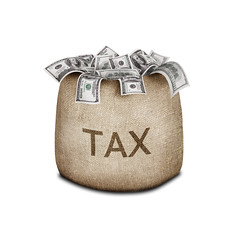 | 11 |
| 15605506772 | Tariff of 1833 | Tariff proposed to settle the dispute between nullies and Jackson, It was a new tariff proposed by Henry Clay and John Calhoun that gradually lowered the tariff to the level of the tariff of 1816 This compromise avoided civil war and prolonged the union for another 30 years. |  | 12 |
| 15605506773 | panic of 1837 | Ecnomic downturn caused by loose lending practices of stat banks' and overspeculation. Martin Van Buren spent most of his time in office attempting to stablize and lessen the economic situation |  | 13 |
| 15605506774 | Force Bill | Bill that says Congress is authorized to use the military against belligerent states. Is nullified by South Carolina. |  | 14 |
| 15605506775 | Nullification Crisis of 1832 | When southern states (SC) attempted to nullify the Tariff Act of 1832, Andrew Jackson punishes them | 15 | |
| 15605506776 | san jacinto battle | The battle in which Santa Anna was forced to sign a treaty with Texas. | 16 | |
| 15605506777 | Cult of Domesticity | idealized view of women & home; women, self-less caregiver for children, refuge for husbands | 17 | |
| 15605506778 | Erie Canal | an artificial waterway connecting the Hudson river at Albany with Lake Erie at Buffalo | 18 | |
| 15605506779 | Know-Nothing Party | anti-immigrant party formed in the 1850s | 19 | |
| 15605506780 | Market Revolution | economic changes where people buy and sell goods rather than make them themselves | 20 | |
| 15605506781 | Robert Fulton | Invented the steamboat | 21 | |
| 15605506782 | Elias Howe | invented the sewing machine | 22 | |
| 15605506783 | Cyrus McCormick | United States inventor and manufacturer of a mechanical harvester (1809-1884) | 23 | |
| 15605506784 | Samuel morse | Invented the telegraph | 24 | |
| 15605506785 | Samuel slater | Father of factory system | 25 |
Flashcards
Flashcards
Flashcards
AMSCO AP US History Chapter 9 Flashcards
AMSCO United States History 2015 Edition, Chapter 9 Sectionalism, 1820-1860
Terms : Hide Images
| 15396364004 | Northeast | In the early 19th century, the area which included New England and the Middle Atlantic states. (p. 173) |  | 0 |
| 15396364029 | Old Northwest | In the early 19th century, the territory which stretched from Ohio to Minnesota. (p. 173) |  | 1 |
| 15396364030 | sectionalism | Loyalty to a particular region of the country. (p. 173) |  | 2 |
| 15396364031 | Nativists | Native-born Americans who reacted strongly against the immigrants, they feared the newcomers would take their jobs and weaken the culture of the Protestant and Anglo majority. (p. 176) |  | 3 |
| 15396364032 | American party | In the early 1850s, this party which opposed immigrants, nominated candidates for office. They were also called the Know-Nothing party. (p. 176) |  | 4 |
| 15396364005 | Supreme Order of the Star-Spangled Banner | A secret anti-foreign society in the 1840s. In the 1850s the society turned to politics by forming the American party. (p. 176) |  | 5 |
| 15396364006 | Know-Nothing Party | Nativists, also known as the American party. (p. 176) |  | 6 |
| 15396364007 | Free African Americans | By 1860 as many as 250,000 African Americans in the South were free citizens. Most of them lived in the cities where they could own property. However, they were not allowed to vote or work in most skilled professions. (p. 179) |  | 7 |
| 15396364008 | planters | The South's small wealthy elite that owned more than 100 slaves and more than 1000 acres. (p. 180) |  | 8 |
| 15396364009 | Codes of Chivalry | The Southern aristocratic planter class ascribed to a code of chivalrous conduct, which included a strong sense of personal honor, defense of womanhood, paternalistic attitudes toward all who were deemed inferior. (p. 180) |  | 9 |
| 15396364010 | poor whites | The term for the three-fourths of the South's white population who owned no slaves. (p. 180) |  | 10 |
| 15396364011 | hillbillies | Derisive term for poor white subsistence farmers, they often lived in the hills and farmed less productive land. (p. 180) |  | 11 |
| 15396364033 | mountain men | In the 1820s, these were the earliest white people in the Rocky Mountains. They trapped for furs and served as guides for settlers traveling to the West coast. (p. 181) |  | 12 |
| 15396364012 | the West | The term that referred to the new area that was being settled, the location changed as the white settlements moved westward. (p. 181) |  | 13 |
| 15396364013 | the frontier | The area that was newly settled in the West, it moved further west over time. (p. 181) |  | 14 |
| 15396364014 | Deep South | The cotton rich area of the lower Mississippi Valley. (p. 178) |  | 15 |
| 15396364034 | American Indian removal | By 1850, most American Indians were living west of the Mississippi River. The Great Plains provide temporary relief from white settlers encroaching on their territory. (p. 181) |  | 16 |
| 15396364035 | Great Plains | Native Americans in this area used the horse to hunt buffalo. Tribes such as the Cheyenne and the Sioux, became nomadic hunters following the buffalo herds. (p. 181) |  | 17 |
| 15396364015 | white settlers | In the 1840s and 1850s, they settled the Western frontier. They worked hard, lived in log cabins or sod huts. Disease and malnutrition were even greater dangers than attacks by American Indians. (p. 182) |  | 18 |
| 15396364016 | urbanization | Early 19th century urban working class neighborhoods featured crowded housing, poor sanitation, infectious diseases, and high rates of crime. (p. 174) |  | 19 |
| 15396364017 | urban life | The North's urban population grew from about 5 percent of the population in 1800 to 15 percent by 1850. (p. 174) |  | 20 |
| 15396364018 | new cities | After 1820, Buffalo, Cleveland, Detroit, Chicago, Cincinnati, and St. Louis developed as transportation points for shipping agricultural products to the East, and receiving manufactured goods from the East. (p. 175) |  | 21 |
| 15396364036 | Irish potato famine | From 1820 to 1860, almost 2 million immigrants came from Ireland. Most of them were tenant farmers driven from their homeland by potato crop failures. This is why many emigrated to the U.S. (p. 176) |  | 22 |
| 15396364019 | Roman Catholic | Most of the Irish were this religion and they faced strong discrimination because of it. (p. 176) |  | 23 |
| 15396364020 | Tammany Hall | New York City's Democratic organization. (p. 176) |  | 24 |
| 15396364021 | Germans | In the 1840s and 1850s, because of economic hardship and the failure of democratic revolutions, one million of these people came to the United States. They often established homesteads in the Old Northwest and generally prospered. (p. 176) |  | 25 |
| 15396364022 | immigration | From the 1830s to the 1850s, four million people came from northern Europe to the United States. (p. 175) |  | 26 |
| 15396364037 | King Cotton | By the 1850s, this agricultural product was by far the South's most important economic force. (p. 177) |  | 27 |
| 15396364038 | Eli Whitney | The United States inventor of the mechanical cotton gin, which made cotton affordable throughout the world. (p. 178) |  | 28 |
| 15396364039 | peculiar institution | A term that referred to slavery because many southern whites were uneasy with the fact that slaves were human beings yet treated so unfairly. Some used historical and religious arguments to support their claim that it was good for both slave and master. (p. 178) |  | 29 |
| 15396364040 | Denmark Vesey | In 1822, he led a major slave uprising which was quickly and violently suppressed. However, it gave hope to enslaved African Americans, drove Southern states to tighten already strict slave codes, and demonstrated to many the evils of slavery. (p. 179) |  | 30 |
| 15396364041 | Nat Turner | In 1831, he led a major slave uprising. (p. 179) |  | 31 |
| 15396364023 | slave codes | In parts of the Deep South, slaves made up nearly 75 percent of the population. Fearing slave revolts, laws were passed which restricted blacks movements and education. (p. 178) |  | 32 |
| 15396364042 | Industrial Revolution | Originally this revolution was centered in the textile industry, but by the 1830's, northern factories were producing a wide range of goods - everything from farm implements to clocks and shoes. (p. 174) |  | 33 |
| 15396364024 | unions | For a brief period in the 1830s an increasing number of urban workers joined unions and participated in strikes. (p. 174) |  | 34 |
| 15396364025 | Commonwealth v. Hunt | In 1842, the Massachusetts Supreme Court ruled that peaceful unions had the right to negotiate labor contracts with employers. (p. 174) |  | 35 |
| 15396364026 | ten-hour workday | During the 1840s and 1850s, most northern state legislatures passed laws establishing a ten-hour workday for industrial workers. (p. 174) |  | 36 |
| 15396364043 | Cyrus McCormick | United States inventor and manufacturer of a mechanical reaper, which made farms more efficient. (p. 175) |  | 37 |
| 15396364044 | John Deere | United States inventor of the steel plow, which made farms more efficient. (p. 175) |  | 38 |
| 15396364045 | Daniel Webster | A senator, who warned that sectionalism was dangerous for the United States. (p. 173) | | 39 |
| 15396364027 | environmental damage | This term, described what occurred when settlers cleared forests and exhausted the soil. (p. 182) |  | 40 |
| 15396364028 | extinction | This term, described what trappers and hunters did to the beaver and buffalo populations. (p. 182) |  | 41 |
Flashcards
Flashcards
Flashcards
Pages

Need Help?
We hope your visit has been a productive one. If you're having any problems, or would like to give some feedback, we'd love to hear from you.
For general help, questions, and suggestions, try our dedicated support forums.
If you need to contact the Course-Notes.Org web experience team, please use our contact form.
Need Notes?
While we strive to provide the most comprehensive notes for as many high school textbooks as possible, there are certainly going to be some that we miss. Drop us a note and let us know which textbooks you need. Be sure to include which edition of the textbook you are using! If we see enough demand, we'll do whatever we can to get those notes up on the site for you!
