AP Notes, Outlines, Study Guides, Vocabulary, Practice Exams and more!

AP US History Court Cases Flashcards

Major US court cases on AP US History test.

Terms : Hide Images
14024556607Marbury v. Madison (1803, Marshall)The court established its role as the arbiter of the constitutionality of federal laws, the principle is known as judicial review0
14024556609McCulloch v. Maryland (1819, Marshall)The Court ruled that states cannot tax the federal government, i.e. the Bank of the United States; the phrase "the power to tax is the power to destroy"; confirmed the constitutionality of the Bank of the United States.1
14024556612Johnson v. McIntosh (1823, Marshall)Established that Indian tribes had rights to tribal lands that preceded all other American law; only the federal government could take land from the tribes.2
14024556613Cherokee Nation v. Georgia (1831, Marshall)"The conditions of the Indians in relation to the United States is perhaps unlike that of any two people in existence," Chief Justice John Marshall wrote, "their relation to the United States resembles that of a ward to his guardian. . .(they were a) domestic dependent nation." Established a "trust relationship" with the tribes directly under federal authority.3
14024556614Worcester v. Georgia (1832, Marshall)Established tribal autonomy within their boundaries, i.e. the tribes were "distinct political communities, having territorial boundaries within which their authority is exclusive."4
14024556617Scott v. Sanford (1857, Taney)Speaking for a widely divided court, Chief Justice Taney ruled that Dred Scott was not a citizen and had no standing in court; Scott's residence in a free state and territory had not made him free since he returned to Missouri; Congress had no power to prohibit slavery in a territory (based on the 5th Amendment right of a person to be secure from seizure of property), thus voiding the Missouri Compromise of 1820.5
14024556620Wabash, St. Louis, and Pacific Railway Co. v. Illinois (1886)Declared state-passed Granger laws that regulated interstate commerce unconstitutional.6
14024556621Chicago, Milwaukee and St. Paul Railroad Co. v. Minnesota (1890)Found that Granger law regulations were violations of the 5th Amendment right to property.7
14024556623U. S. v. E. C. Knight Co. (1895)Due to a narrow interpretation of the Sherman Anti-Trust Act, the Court undermined the authority of the federal government to act against monopolies.8
14024556624Plessy v. Ferguson (1896)Legalized segregation in publicly owned facilities on the basis of "separate but equal."9
14024556625"Insular Cases" / Downes v. Bidwell (1901)Confirmed the right of the federal government to place tariffs on good entering the U. S. From U. S. Territories on the grounds that "the Constitution does not follow the flag."10
14024556627Lochner v. New York (1905)Declared unconstitutional a New York act limiting the working hours of bakers due to a denial of the 14th Amendment rights.11
14024556628Muller v. Oregon (1908)First case to use the "Brandeis brief"; recognized a 10-hour work day for women laundry workers on the grounds of health and community concerns.12
14024556630Schenck v. U. S. (1919)Unanimously upheld the Espionage Act of 1917 which declared that people who interfered with the war effort were subject to imprisonment; declared that the 1st Amendment right to freedom of speech was not absolute; free speech could be limited if its exercise presented a "clear and present danger."13
14024556633Korematsu v. U. S. (1941)The court upheld the constitutionality of detention camps for Japanese-Americans during World War 2.14
14024556635Brown v. Board of Education of Topeka, Kansas (1954, Warren)Unanimous decision declaring "separate but equal" unconstitutional.15
14024556636Gideon v. Wainwright (1963)Extends to the defendant the right of counsel in all state and federal criminal trials regardless of their ability to pay.16
14024556638Miranda v. Arizona (1966)The court ruled that those subjected to in-custody interrogation be advised of their constitutional right to an attorney and their right to remain silent.17
14024556639Roe v. Wade (1973)The court legalized abortion by ruling that state laws could not restrict it during the first three months of pregnancy. Based on 4th Amendment rights of a person to be secure in their persons.18
14024556640U. S. v. Richard Nixon (1974)The court rejected Richard Nixon's claim to an absolutely unqualified privilege against any judicial process.19

AP LITERATURE TERMS Flashcards

Terms : Hide Images
8846185823DICTIONA SPEAKER OR WRITERS CHOICE OF WORDS0
8846185824SYNTAXSyntax is a set of rules in a language. It dictates how words from different parts of speech are put together in order to convey a complete thought.1
8846185825TONEThe attitude a writer takes toward the subject of a work, the characters in it, or the audience, revealed through diction, figurative language, and organization2
8846185826IMAGERYthe use of language to evoke a picture or a concrete sensation of a person, a thing, a place, or an experience.3
8846188457FIGURATIVE LANGUAGEWords which are inaccurate if interpreted literally, but are used to describe. Similes and metaphors are common forms.4
8846188458POINT OF VIEWthe vantage point from which the writer tells the story.5
8846188501DETAILDetails are items or parts that make up a larger picture or story. Chaucer's "Prologue" to The Canterbury Tales is celebrated for its use of a few details to bring the characters to life. The miller, for example, is described as being brawny and big-boned, able to win.6
8846190963PACINGIn literature, pace, or pacing is the speed at which a story is told. The pace is determined by the length of the scenes, how fast the action moves, and how quickly the reader is provided with information. It is also sometimes determined by the genre of the story.7
8846190964SHIFTA rhetorical shift occurs when speakers or writers alter their style or tone in a piece. It is often accompanied by a shift in focus. These shifts may happen between rhetorical modes -- a term representing in what manner or to what purpose language is used -- or simply from one frame of reference to another.8
8846190965CONNOTATIONThe implications of a word or phrase, as opposed to its exact meaning (denotation). Both China and Cathay denote a region in Asia, but to a modern reader, the associations of the two words are different.9
8846192734DENOTATIONThe dictionary meaning of a word, as opposed to connotation.10
8846192735THEMEThe main thought expressed by a work. Essay questions may ask for discussion of the theme or themes of a work or may use the words "meaning" or "meanings." The open question frequently asks you to relate a discussion on one subject to a "meaning of the work as a whole." When preparing the novels and plays you might use on the open question, be sure to consider what theme or themes you would write about if you are asked to talk about a "meaning of the work." The question is much harder to answer for some works than others. I'm not sure what I would say is the meaning of Hamlet, Wuthering Heights, or Waiting for Godot. But I have much less trouble defining a theme in works like Brave New World or Animal Farm.11
8846319786ALLEGORYa story, poem, or picture that can be interpreted to reveal a hidden meaning, typically a moral or political one.12
8846319787ALLUSIONan expression designed to call something to mind without mentioning it explicitly; an indirect or passing reference.13
8846322111ALLITERATIONthe occurrence of the same letter or sound at the beginning of adjacent or closely connected words.14
8846322112ANALOGYa comparison between two things, typically for the purpose of explanation or clarification.15
8846324938EPIPHANYEpiphany is the point in a work of literature where a character has a sudden insight or realization that changes his or her understanding.16
8846324939FOILa character who contrasts with another character —usually the protagonist— to highlight particular qualities of the other character.17
8846324940HYPERBOLEexaggerated statements or claims not meant to be taken literally.18
8846327354JUXTAPOSITIONthe fact of two things being seen or placed close together with contrasting effect.19
8846327355IRONYthe expression of one's meaning by using language that normally signifies the opposite, typically for humorous or emphatic effect.20
8846327356LITOTESironic understatement in which an affirmative is expressed by the negative of its contrary21
8846328729METAPHOREa figure of speech in which a word or phrase is applied to an object or action to which it is not literally applicable.22
8846330520OXYMORONa figure of speech in which apparently contradictory terms appear in conjunction23
8846330521PARODYan imitation of the style of a particular writer, artist, or genre with deliberate exaggeration for comic effect.24
8846332391PERSONIFICATIONthe attribution of a personal nature or human characteristics to something nonhuman, or the representation of an abstract quality in human form.25
8846334161SIMILEa figure of speech involving the comparison of one thing with another thing of a different kind, used to make a description more emphatic or vivid using "like" or "as"26
8846334162SYMBOLa mark or character used as a conventional representation of an object, function, or process, e.g., the letter or letters standing for a chemical element or a character in musical notation.27
8846336090SATIREthe use of humor, irony, exaggeration, or ridicule to expose and criticize people's stupidity or vices, particularly in the context of contemporary politics and other topical issues.28

AP Psychology AP Review Flashcards

Terms : Hide Images
13763321420psychologythe study of behavior and mental processes0
13763321421psychology's biggest questionWhich is more important in determining behavior, nature or nurture?1
13763321422psychology's three levels of analysisbiopsychosocial approach (looks at the biological, psychological, and social-cultural approaches together)2
13763321423biological approachgenetics, close-relatives, body functions3
13763321424evolutionary approachspecies - helped with survival (ancestors)4
13763321425psychodynamic approach(Freud) subconscious, repressed feelings, unfulfilled wishes5
13763321426behavioral approachlearning (classical and operant) observed6
13763321427cognitive approachthinking affects behavior7
13763321428humanistic approachbecoming a better human (behavior, acceptance)8
13763321429social-cultural approachcultural, family, environment9
13763321430two reasons of why experiments are importanthindsight bias + overconfidence10
13763321431types of research methodsdescriptive, correlational, and experimental11
13763321432descriptive methodscase study survey naturalistic observation (DON'T SHOW CAUSE/EFFECT)12
13763321433case studystudies one person in depth may not be typical of population13
13763321434surveystudies lots of people not in depth14
13763321435naturalistic observationobserve + write facts without interference15
13763321436correlational methodshows relation, but not cause/effect scatterplots show research16
13763321437correlation coefficient+ 1.0 (both increase) 0 (no correlation - 1.0 (one increases, other decreases)17
13763321438experimental methoddoes show cause and effect18
13763321439populationtype of people who are going to be used in experiment19
13763321440sampleactual people who will be used (randomness reduces bias)20
13763321441random assignmentchance selection between experimental and control groups21
13763321442control groupnot receiving experimental treatment receives placebo22
13763321443experimental groupreceiving treatment/drug23
13763321444independent variabledrug/procedure/treatment24
13763321445dependent variableoutcome of using the drug/treatment25
13763321446confounding variablecan affect dependent variable beyond experiment's control26
13763321447scientific methodtheory hypothesis operational definition revision27
13763321448theorygeneral idea being tested28
13763321449hypothesismeasurable/specific29
13763321450operational definitionprocedures that explain components30
13763321451modeappears the most31
13763321452meanaverage32
13763321453medianmiddle33
13763321454rangehighest - lowest34
13763321455standard deviationhow scores vary around the mean35
13763321456central tendencysingle score that represents the whole36
13763321457bell curve(natural curve)37
13763321458ethics of testing on animalsneed to be treated humanly basically similar to humans38
13763321459ethics of testing on humansconsent debriefing no unnecessary discomfort/pain confidentiality39
13763321460sensory neuronstravel from sensory receptors to brain40
13763321461motor neuronstravel from brain to "motor" workings41
13763321462interneurons(in brain and spinal cord) connecting motor and sensory neurons42
13763321654neuron43
13763321463dendritesreceive messages from other neurons44
13763321464myelin sheathprotects the axon45
13763321465axonwhere charges travel from cell body to axon terminal46
13763321466neurotransmitterschemical messengers47
13763321467reuptakeextra neurotransmitters are taken back48
13763321468excitatory charge"Let's do it!"49
13763321469inhibitory charge"Let's not do it!"50
13763321470central nervous systembrain and spinal cord51
13763321471peripheral nervous systemsomatic nervous system autonomic nervous system52
13763321472somatic nervous systemvoluntary movements53
13763321473autonomic nervous systeminvoluntary movements (sympathetic and parasympathetic nervous systems)54
13763321474sympathetic nervous systemarousing55
13763321475parasympathetic nervous systemcalming56
13763321476neural networksmore connections form with greater use others fall away if not used57
13763321477spinal cordexpressway of information bypasses brain when reflexes involved58
13763321478endocrine systemslow uses hormones in the blood system59
13763321479master glandpituitary gland60
13763321480brainstemextension of the spinal cord responsible for automatic survival61
13763321481reticular formation (if stimulated)sleeping subject wakes up62
13763321482reticular formation (if damaged)coma63
13763321483brainstem (if severed)still move (without purpose)64
13763321484thalamussensory switchboard (does not process smell)65
13763321485hypothalamusbasic behaviors (hunger, thirst, sex, blood chemistry)66
13763321486cerebellumnonverbal memory, judge time, balance emotions, coordinate movements67
13763321487cerebellum (if damaged)difficulty walking and coordinating68
13763321488amygdalaaggression, fear, and memory associated with these emotions69
13763321489amygdala (if lesioned)subject is mellow70
13763321490amygdala (if stimulated)aggressive71
13763321491hippocampusprocess new memory72
13763321492cerebrumtwo large hemispheres perceiving, thinking, and processing73
13763321493cerebral cortexonly in higher life forms74
13763321494association areasintegrate and interpret information75
13763321495glial cellsprovide nutrients to myelin sheath marks intelligence higher proportion of glial cells to neurons76
13763321496frontal lobejudgement, personality, processing (Phineas Gage accident)77
13763321497parietal lobemath and spatial reasoning78
13763321498temporal lobeaudition and recognizing faces79
13763321499occipital lobevision80
13763321500corpus callosumsplit in the brain to stop hyper-communication (eliminate epileptic seizures)81
13763321501Wernicke's areainterprets auditory and hearing82
13763321502Broca's areaspeaking words83
13763321503plasticityability to adapt if damaged84
13763321504sensationwhat our senses tell us85
13763321505bottom-up processingsenses to brain86
13763321506perceptionwhat our brain tells us to do with that information87
13763321507top-down processingbrain to senses88
13763321508inattentional blindnessfail to "gorilla" because attention is elsewhere89
13763321509cocktail party effecteven with tons of stimuli, we are able to pick out our name, etc.90
13763321510change blindnessgiving directions and person is changed and we don't notice91
13763321511choice blindnesswhen defending the choice we make, we fail to notice choice was changed92
13763321512absolute thresholdminimum stimulation needed in order to notice 50% of the time93
13763321513signal detection theorywe notice what is more important to us (rather hear a baby crying)94
13763321514JND (just noticeable difference)(Weber's law) difference between different stimuli noticed in proportion95
13763321515sensory adaptationtired of noticing (Brain says, "Been there, done that. Next?"96
13763321516rodsnight time97
13763321517conescolor98
13763321518parallel processingnotice color, form, depth, movement, etc.99
13763321519Young-Helmholtz trichromatic theory3 corresponding color receptors (RGB)100
13763321520Hering's opponent-process theoryafter image in opposite colors (RG, YB, WB)101
13763321521trichromatic + opponent-processYoung-Helmholtz -> color stimuli Hering -> en route to cortex102
13763321522frequency we hear mosthuman voice103
13763321523Helmoltz (hearing)we hear different pitches in different places in basilar membrane (high pitches)104
13763321524frequency theoryimpulse frequency (low pitches)105
13763321525Helmholtz + frequency theorymiddle pitches106
13763321526Skin feels what?warmth, cold, pressure, pain107
13763321527gate-control theorysmall fibers - pain large fibers - other senses108
13763321528memory of painpeaks and ends109
13763321529smellclose to memory section (not in thalamus)110
13763321530groupingGestalt make sense of pieces create a whole111
13763321531grouping groupsproximity similarity continuity connectedness closure112
13763321532make assumptions of placementhigher - farther smaller - farther blocking - closer, in front113
13763321533perception =mood + motivation114
13763321534consciousnessawareness of ourselves and the environment115
13763321535circadian rhythmdaily biological clock and regular cycle (sleep and awake)116
13763321536circadian rhythm pattern- activated by light - light sensitive retinal proteins signal brains SCN (suprachiasmatic nucleus) - pineal gland decreases melatonin117
13763321537What messes with circadian rhythm?artificial light118
13763321538The whole sleep cycle lasts how long?90 minutes119
13763321539sleep stagesrelaxed stage (alpha waves) stage 1 (early sleep) (hallucinations) stage 2 (sleep spindles - bursts of activity) (sleep talk) stage 3 (transition phase) (delta waves) stage 4 (delta waves) (sleepwalk/talk + wet the bed) stage 5 (REM) (sensory-rich dreams) (paradoxical sleep)120
13763321540purpose of sleep1. recuperation - repair neurons and allow unused neural connections to wither 2. making memories 3. body growth (children sleep more)121
13763321541insomniacan't sleep122
13763321542narcolepsyfall asleep anywhere at anytime123
13763321543sleep apneastop breathing in sleep124
13763321544night terrorsprevalent in children125
13763321545sleepwalking/sleeptalkinghereditary - prevalent in children126
13763321546dreaming (3)1. vivid bizarre intense sensory experiences 2. carry fear/survival issues - vestiges of ancestors' survival ideas 2. replay previous day's experiences/worries127
13763321547purpose of dreaming (5 THEORIES)1. physiological function - develop/preserve neural pathways 2. Freud's wish-fulfillment (manifest/latent content) 3. activation synthesis - make sense of stimulation originating in brain 4. information processing 5. cognitive development - reflective of intelligence128
137633215481. Can hypnosis bring you back in time? 2. Can hypnosis make you do things you wouldn't normally do? 3. Can it alleviate pain? 4. What state are you in during hypnosis? 5. Who is more susceptible?1. cannot take you back in time 2. cannot make you do things you won't do 3. can alleviate pain 4. fully conscious ((IMAGINATIVE PEOPLE MORE SUSCEPTIBLE))129
13763321549depressantsslows neural pathways130
13763321550alcohol((depressant)) disrupts memory formation (REM) lowers inhibition expectancy effect131
13763321551barbituates (tranquilizers)((depressant)) reduce anxiety132
13763321552opiates((depressant)) pleasure reduce anxiety/pain133
13763321553stimulantshypes neural processing134
13763321554methamphetamine((stimulant)) heightens energy euphoria affects dopamine135
13763321555caffeine((stimulant))136
13763321556nicotine((stimulant)) CNS releases neurotransmitters calm anxiety reduce pain affects (nor)epinephrine and dopamine137
13763321557cocaine((stimulant)) euphoria affects dopamine, serotonin, and norepinephrine138
13763321558hallucinogenexcites neural activity139
13763321559ecstasy((hallucinogen)) reuptake is blocked affects dopamine and serotonin140
13763321560LSD((hallucinogen)) affects sensory/emotional "trip" (+/-) affects serotonin141
13763321561marijuana((hallucinogen)) amplify sensory experience disrupts memory formation142
13763321562learningorganism changing behavior due to experience (association of events)143
13763321563types of learningclassical operant observational144
13763321564famous classical psychologistsPavlov and Watson145
13763321565famous operant psychologistSkinner146
13763321566famous observational psychologistsBandura147
13763321567classical conditioningoutside stimulus148
13763321568Pavlov's experimentStep 1: US (food) -> UR (salivation) Step 2: NS (bell) -> US (food) -> UR (salivation) Later... CS (bell) -> CR (salivation)149
13763321569Watson's experimentwhite rat was given to Little Albert Step 1: US (noise) -> UR (cry) Step 2: NS (rat) -> US (noise) -> UR (cry) Later... CS (rat) -> CR (cry)150
13763321570generalizationany small, white fluffy creature will make Albert cry now151
13763321571discriminateany large, white fluffy creature won't make Albert cry152
13763321572extinctionstop "treating" with conditioned response153
13763321573spontaneous recoverybring stimulus back after a while154
13763321574operant conditioningcontrol by organism155
13763321575Skinner's experimentoperant chamber / Skinner box (lead to shaping)156
13763321576shapingget animal closer to doing what you want them to do157
13763321577reinforcerswant to continue behavior (positive reinforcement: give money to do laundry) (negative reinforcement: do to avoid nagging)158
13763321578punishmentswant to stop behavior (positive reinforcement: smack) (negative reinforcement: take away phone)159
13763321579fixed ratiohappens a certain number of times (Starbucks punch card)160
13763321580variable ratiohappens an unpredictable number of times (winning the lottery)161
13763321581organism must do these (2 times)fixed ratio and variable ratio162
13763321582fixed intervalhappens at a certain time (mailman comes to the house at 10:00 AM)163
13763321583variable intervalhappens at any time (receive texts from friends)164
13763321584these things happen regardless (2 times)fixed interval and variable interval165
13763321585Which (fixed/variable) conditions better?variable166
13763321586criticisms of Skinnerdoesn't take into account intrinsic motivation167
13763321587intrinsic motivationdoing something for yourself, not the reward168
13763321588extrinsic motivationdoing something for reward169
13763321589Skinner's legacyuse it personally, at school, and at work170
13763321590famous observational experimentBandura's Bobo doll171
13763321591famous observational psychologistBandura172
13763321592mirror neurons"feel" what is observed happens in higher order animals173
13763321593Bobo doll experiment legacyviolent video games/movies desensitize us see good: do good see evil: do evil174
13763321594observational learningbiological behaviors work best175
13763321595habituationget used to it -> stop reacting176
13763321596examples for observational learninglectures and reading177
13763321597serotonin involved with memoryspeeds the connection between neurons178
13763321598LTP((long-term potentiation)) strengthens potential neural forming (associated with speed)179
13763321599CREBprotein that can switch genes on/off with memory and connection of memories180
13763321600glutamate involved with memoryneurotransmitter that enhances LTP181
13763321601glucose involved with memoryreleased during strong emotions ((signaling important event to be remembered))182
13763321602flashbulb memorytype of memory remembered because it was an important/quick moment183
13763321603amygdala (memory)boosts activity of proteins in memory-forming areas to fight/flight184
13763321604cerebellum (memory)forms and stores implicit memories ((classical conditioning))185
13763321605hippocampus (memory)active during sleep (forming memories) ((information "moves" after 48 hours))186
13763321606memorylearning over time contains information that can be retrieved187
13763321607processing stagesencoding -> storage -> retrieval188
13763321608encodinginformation going in189
13763321609storagekeeping information in190
13763321610retrievaltaking information out191
13763321611How long is sensory memory stored?seconds192
13763321612How long is short-term memory stored?less than a minute193
13763321613How many bits of information is stored in short-term memory?7194
13763321614How many chunks of information is stored in short-term memory?4195
13763321615How many seconds of words is stored in short-term memory?2196
13763321616short term memory goes to ______________working memory197
13763321617working memorymake a connection and process information to mean something198
13763321618working memory goes to _________________long-term memory199
13763321619How much is stored in long-term memory?LIMITLESS200
13763321620implicit memorynaturally do201
13763321621explicit memoryneed to explain202
13763321622automatic processingspace, time, frequency, well-learned information203
13763321623effortful processingprocessing that requires effort204
13763321624spacing effectspread out learning over time205
13763321625serial position effectprimary/recency effect206
13763321626primary effectremember the first things in a list207
13763321627recency effectremember the last things in a list208
13763321628effortful processing (4 things)1. recency effect 2. spacing effect 3. testing effect 4. serial position effect209
13763321629semantic encoding (1) meaning (2) how tomake meaning out of something --- chunk, hierarchy, or connect to you210
13763321630if we can't remember a memory...1. change memory to suit us 2. fill in the blanks with logical story211
13763321631misinformation effectnot correct information212
13763321632imagination inflationimagine or visualize something that isn't real213
13763321633source amnesiawhat is the truth? (is it a dream, story, memory, etc.?)214
13763321634primingassociation (setting you up)215
13763321635contextenvironment helps with memory216
13763321636state-dependencyyou may remember something if you go back to the state you were in (go back to high)217
13763321637mood-congruencyemotion will bring back similar emotional memories218
13763321638forgetting curveforget after 5 days forget after 5 years219
13763321639the forgetting curve was created byEbbinghaus220
13763321640proactive interferenceold information interferes with the new221
13763321641retroactive interferencenew information interferes with the old222
13763321642children can't remember before age __3223
13763321643Loftusconnected to abuse cases/childhood224
13763321644prototypesgeneralize225
13763321645problem-solving (4)trial + error algorithms heuristic (representative + availability) insight - "AHA!"226
13763321646against problem-solvingfixation227
13763321647mental setwhat has worked in the past228
13763321648functional fixednessonly way to do this is with this229
13763321649Chomsky (nature or nurture?)"born with language" (nature)230
13763321650Skinner (nature or nurture?)language is learned (nurture)231
13763321651grammar is _________universal232
13763321652phonemessmallest sound unit233
13763321653morphemessmallest meaning unit234

AP US History Chapter 28 :) Flashcards

Terms : Hide Images
12969469435Statistics of Americans- 1/7 foreign-born in 1900 - 1900-1914 - 13 million immigrants0
12969469436Progressivescrusaders who waged war on *monopoly, corruption, inefficiency, and social justice*1
12969469437Cause/origin of new reformist waveGreenback Labor party and the Populists because *industrialists* made fewer and fewer have *power*2
12969469438Progressive theorists believedSociety could *no longer* afford the luxury of *laissez-faire* policy. The *people*, through government, must substitute mastery for drift3
12969469439Henry Demarest Lloyd(1894) "Wealth Against Commonwealth: - wrote against *Standard Oil Company*4
12969469440Thorstein Vablen- (1899) "The Theory of the Leisure Class" - *attack* on the *new rich*. Viewed the leisure class engaged in making money for *money's sake* instead of making goods to satisfy *real needs* - Argued that the *social leadership* should go *from* the *useless rich to* those who are *useful*5
12969469441Jacob A. Riis- (1890) "How the Other Half Lives" - spoke about the horrors of the *NY slums* - *Influenced* future NYC police commissioner, *TR*6
12969469442Theodore DreiserPounded promoters and profiteers in "The Financier" (1912) and "The Titan" (1914)7
12969469443Socialism in AmericaMany advocates for this were *European immigrants* inspired by the strong movement for socialism in Europe -> began to get more *strength at the ballot box*8
12969469444Types of reformersSocial gospel, university-based economists, feminists, muckrakers, temperance, labor rights, and many more9
12969469445Social gospelUsed *religious doctrine* to demand better housing and living conditions for the urban *poor*10
12969469446University-based economistsAdvocated for new reforms modeled on *European examples*11
12969469447Feminists (suffrage)*Jane Addams* in Chicago and *Lillian Wald* in NY - made women enter the *fight* to improve the lot of families *living* and *working* in the festering cities12
1296946944810¢ and 15¢ magazinesMcClure's Cosmopolitan, Collier's, and Everybody's. Extensive research for finding things bad about business that the public loved13
12969469449MuckrakersBright young *reporters* at the turn of the 20th century, term coined by *TR*, but *boosted circulations* of their magazines by writing *exposés* of widespread *corruption* in American society (business manipulation of government, white slaves, child labor, and illegal deeds of trusts). Also helped spur passage of *reform legislation*14
12969469450Popular Muckrakers- *Lincoln Steffens*: The Shame of the Cities - *Ida M. Tarbell*: exposé of the Standard Oil Company - *Upton Sinclair*: The Jungle - *David G. Phillips*: The Treason of the Senate15
12969469451Social evils in the Progressive Era *and* books about them- "White slave" traffic for women, slums, and industrial accidents - Stannard Baker's "Following the Color Line" (1908) - 9 million blacks, 90% of the South, and 1/3 illiterate - John Spargo's "The Bitter Cry of the Children" (1906) - abuses of child labor16
12969469452Habit-forming drugsOften sold for money, induced with alcohol. In Collier's, they exposed the medicine and were reinforced by Dr. Harvey W. Wiley17
12969469453Significance of the muckrakers- Symbolized much of the *nature* of the *progressive* reform movements - Long on *lamentation* but stopped *short* of *revolutionary methods* - Counted on *publicity* and *aroused public conscience* (not drastic political change) to right social wrongs - Sought to not overthrow capitalism but to *cleanse* it (Puritans vs Pilgrims anyone??) - Believed more *democracy* was the answer to solve issues18
12969469454Most progressive reformers weremiddle-class men and women19
12969469455How progressives sought to modernize American institutions- Use the *state* to curb monopoly power - Limit socialist threat by improving the *common person's* conditions of life and labor20
12969469456Progressivism can be best described asa broadly dispersed *majority mood*, not a movement21
12969469457Objectives of Progressives- *Regain the power* that had slipped from the hands of the *people* into those of the *"interests"* - Getting rid of *graft* (bribery, corrupt practices, etc.) - *Direction election* of US *Senators* - often heeded to the voice of *business* instead of the *people* (even referred to as the "Millionaires' Club)22
12969469458How Progressives attempted to get power into the hands of the peopleDirect election of US senators, initiative, referendum, and recall23
12969469459InitiativeA Progressive reform measure allowing *voters* to *petition* to have a law placed on the *general ballot*24
12969469460ReferendumProgressive reform procedure allowing *voters* to place a *bill* on the ballot for *final approval* even after being passed by the *legislature*25
12969469461RecallEnabled the voters to *remove* corrupted elected *officials*26
12969469462Significance of initiative, referendum, and recallBrought *democracy* to the people and helped foster a *shift* towards *interest-group* politics and away from old political machines27
12969469463How Progressives aimed to get rid of graft- *Limited the amount of money* a candidate could spend on their election *campaign* - Australian ballot28
12969469464Australian ballotA system developed in Australia in 1850 that allows voters *privacy* in marking their *ballot choices*. Counteracted boss rule (can't bribe if they don't know who they're voting for)29
1296946946517th Amendment*Direct election of senators*. Many Senators liked existing methods, and *local legislatures* found it wise to give the vote to the *people*30
12969469466Women suffrage support- *Political reformers* believed the women's vote would elevate the *political tone* - *Anti-Saloons* felt they could rely on support of enfranchised females31
12969469467Women's suffrage gradually began especially in:Western states32
12969469468Urban Progressive reforms- Frustrated by *inefficiency* and *corruption* of city government — looked to *Galveston, TX* as an example (expert-staffed commissions to manage urban affairs) - Often favored *efficiency* over *democracy* - City-manager systems33
12969469469City-manager systemstake politics out of municipal administration34
12969469470Urban reformers- Attacked slumlords, juvenile delinquency, and wide-open prostitution in red-light districts - Looked to English and German cities35
12969469471Robert M. La FolletteMost militant of progressive *Republican* leaders. Became the governor of WI in 1901. - Tackled *RR* and *lumber* "interests" - *Regulated* public utilities and *inspired* other states to *follow* - Gave the power from the *business -> people*36
12969469472Hiram W. Johnson*Republican* governor in 1910, broke the dominant grip of the *Southern Pacific Railroad* on California politics and set up a *political machine* of his own37
12969469473Charles Evans Hughes*Republican* governor of NY; *investigator* of malpractices by gas and insurance companies and the coal trust38
12969469474Settlement houses — significanceOffered *door* to public life - showed *issues* of America's cities and gave women *skills/confidence* to attack them39
12969469475Literary clubsEducated women met to improve literary knowledge -> went to *social issues* instead of literature40
12969469476"Separate spheres"- *Women*'s place was in the *home*, *Republican Motherhood* - Women viewed being involved in *issues* was an *extension of their motherly role* (protecting children from labor issues, health problems, etc.)41
12969469477The most successful reform of the Progressive Era waschild labor reform42
12969469478Florence KelleyIllinois' first chief *factory inspector*, one of the nation's leading advocates for *improved factory conditions*. Also took control of the *National Consumers League*43
12969469479National Consumers LeagueMobilized female consumers to pressure for laws safeguarding women and children in the workplace44
12969469480Muller v. Oregon(1908) *Louis D. Brandeis* persuaded the SC to accept the constitutionality of the laws *protecting women workers* by presenting evidence of the *harmful effects* of factory labor on women's *weaker bodies*; restricted women to 10-hour work day45
12969469481At the time, protecting ___________ rather than __________ was more common and similar to __________women and children —— granting benefits to everyone —— Western Europe46
12969469482Lochner v. New York(1905) Semi-setback for reformers, the SC *invalidated* a NY law *establishing a 10-hour work day* for bakers47
12969469483Triangle Shirtwaist Factory Fire (1911)Locked doors and *fire code violations* made the factory a death trap. 146 workers, mostly *young immigrant women*, incinerated or leapt to their death from 8 or 9 stories48
12969469484Results of the Triangle Shirtwaist Company fire- NY had much *stronger laws* regulating hours and conditions - 30 other states by 1917 put workers' compensation in the books (*insurance*) - Progressively changed from dog-eat-dog world to *employer's responsibility*49
12969469485Woman's Christian Temperance Union (WCTU)Founded by *Frances E. Willard*, largest organization of women in the world50
12969469486"Dry" lawsControlled, restricted, or abolished alcohol51
12969469487Major centers for alcohol products and why*Big cities*. Large *immigrant* vote; Old World had free-flowing alcohol52
12969469488The temperance movements resulted in tensions between:Nativists and immigrants53
12969469489"Square Deal" and TR's three C's- *Control* of corporations - *Consumer* protection - *Conservation* of natural resources54
12969469490Anthracite Coal Mines in PA- 140k workers demanded 20% increase in pay and 9-hour workday - *Unsympathetic mine owners*, George F. Baer also unsympathetic - Coal *supplies dwindled* -> factories, schools, and hospitals had to shut down because of the lack of heat -- - *TR* brandished the Big Stick -> threatened to *seize the mines* and use *federal troops* - Owners *arbitrated* -> 10% pay boost and working day of 9 hours55
12969469491Department of Commerce and LaborSettle disputes between owners and workers56
12969469492Bureau of CorporationsProbe business engaged in *interstate commerce*; useful in *breaking* stranglehold of *monopoly* and allowing *"trust-busting"*57
12969469493Elkins Act(1903) Law passed by Congress to *impose penalties* on *RRs* that offered *rebates* and customers who *accepted them*. Strengthened the ICA of 188758
12969469494Hepburn Act(1906) *Restricted free passes* and also strengthened the ICC (now included express, sleeping-car, and pipeline companies)59
12969469495TR's actions against trusts- Believed there were *good* and *bad* trusts - *Didn't* want to completely *destroy* all big business60
12969469496Northern Securities Company- *Railroad* holding by JP Morgan and James Hill, wanted a *monopoly* of *NW RRs* - 1904 - Company appealed to *SC*, ordered it to be dissolved -> *Upset* Wall street and *big business* but gave TR reputation as a *trust-smasher*61
12969469497Beef Trust CasesSC declared beef trust *illegal*, monopolists controlling sugar, fertilizer, harvesters, and other key products *suffered*62
12969469498Roosevelt's real purpose of in getting rid of big businessTo prove conclusively that the *government*, not private business, *ruled the country.* Believed in *regulating*, not fragmenting, the big business63
12969469499Big business at the end of TR's reign"healthier" but more "tame" — even gave JP Morgan blessing with US Steel to absorb TN Coal and Iron Company64
12969469500Meat companies in Europeshut out because of unsanitary meat sold65
12969469501Upton Sinclair and The Jungle (1906)Described the *grotesqueness* of Chicago's *slaughterhouses*. Moved readers and even *TR* to appoint an investigating commission66
12969469502Meat Inspection Act(1906) The *preparation* of meat shipped over *state lines* would be subject to federal inspection, regardless of packaging. *Larger companies* saw it as a way to put *smaller competitors out of business*67
12969469503Pure Food and Drug Act(1906) Designed to *prevent* the *mislabeling* of food and pharmaceuticals68
12969469504Desert Land Act(1877) Fed govt *sold arid land cheaply* on the condition that the purchaser *irrigate* the thirsty soil within *three years*69
12969469505Forest Reserve Act(1891) *Authorized* the president to set aside public forests as national parks and other reserves70
12969469506Carey Act(1894) *Distributed* federal land to the states on the condition that it be *irrigated* and *settled*71
12969469507Newlands Act(1902) Fed govt was *authorized* to *collect money* from the *sale of public lands* in the western states and then use the funds for the *development* of *irrigation* projects72
12969469508Roosevelt DamArizona Salt River, dedicated to TR in 1911. Resulted in *more dams* in all major western rivers in *upcoming decades*73
12969469509TR's nature conservationSet aside 125 million acres for *federal reserves*. Designated millions of acres of coal deposits and water resources for irrigation and power74
12969469510Cause of TR's conservation- His outdoorsman persona - Upwelling *national mood* of concern about the disappearance of the *frontier* - Jack London's Call of the Wild (1903) and other books of nature made the Boy Scouts of America the country's largest youth organization75
12969469511Roosevelt's most enduring achievement was:*preserving* or *conserving* land (IMPORTANT!!)76
12969469512Ways people conserved nature- Middle-class club-women raised money for *nature preserves* and organized the *Massachusetts Audubon Society* (save birds by banning the use of plumes to hats) - Sierra Club - preserve wilderness of western landscape77
12969469513Hetch Hetchy ValleyGovernment *allowed* San Fran to *build a dam* here in 1913. *Blow to the preservationists*, who wished to project the Yosemite National Park, location of the dam78
12969469514Opponents and proponents of the Hetch Hetchy Valley DamOpponents: "temple" of nature that should be preserved. Proponents: Should use nature's resources wisely (TR and Gifford Pinchot)79
12969469515"Multiple-use resource management"*Combined* recreation, sustained-yield logging, watershed protection, and summer stock grazing on the *same expanse* of federal *land*80
12969469516Business influence/characteristics in the West- *Large companies* found ways to work with the federal conservation programs - *Individuals and single-person* enterprises had minimal influence and were set aside in favor of efficiency81
12969469517Roosevelt in the 1904 election- Easily elected president in 1904, yet *Republican bosses* found him unpredictable - Blunder: announced he would *never run* a *third term* - Platform was stronger *regulation* of *corporations*, *taxing incomes, and protecting workers*82
12969469518"Roosevelt Panic" of 1907 / Panic of 1907- Financial world *blamed TR* for causing it, TR lashed back - Paved way for fiscal reforms - Aldrich-Vreeland Act83
12969469519Fiscal reforms in the panic of 1907- Banks unable to increase volume of money in circulation - Those with ample reserves reluctant to lend to their competitors84
12969469520Aldrich-Vreeland Act*Authorized national banks* to issue *emergency currency* backed by various kinds of collateral. Paved way for the Federal Reserve Act of 1913. In theory, more people could have $, spend it, and help out the economy85
12969469521Election of 1908- Boring. - Roosevelt hand-picks for Taft - 421k votes for Eugene V. Debs (Socialism)86
12969469522TR's presidency charas- Political lightning rod to *protect capitalists* against popular resentment and socialism - *Middle road* between unbridled individualism and paternalistic collectivism87
12969469523Lasting achievements of TR's presidency- Most lasting achievement: *Conservation crusade* (conservationists of wilderness and resource predators) - *Enlarged power* and prestige of presidential office - Helped shape the *progressive movement* and reform campaigns later in the century - Square Deal - grandfather of the New Deal - Opened the eyes of Americans to the fact that they *shared the world* with other nations88
12969469524T/F: Roosevelt busted more trusts than TaftFalse, Taft busted almost two times as many trusts89
12969469525William Howard Taft, the other bull-necked president- Reputation as lawyer and judge, regarded as hostile to labor unions, trusted administrator under TR - Suffered from *political handicaps*: didn't have the charisma of TR, *passive* towards Congress, and *poor judge* of public *opinion* - Cabinet didn't contain any of the insurgent wing on fire for current issues (tariff)90
12969469526Dollar diplomacyName applied by Taft's critics to the *policy* of *supporting US investments* and *political interests* abroad. First applied to the financing of the railways in China after 1909, the policy then spread to Haiti, Honduras, and Nicaragua -- In other words: Wall Street bankers encouraged to invest in areas of strategic concern to the US. Helped other countries while made $$ for the US91
12969469527The government often encouraged bankers to:invest their money in foreign places -> strengthened American defenses and foreign policies92
12969469528Manchuria- *Object* of Taft's effort to inject the dollar into the *Far East* - *Japan* and *Russia* controlled the *RRs* here - Saw *Chinese economic interests* and a slamming of the *Open Door* in the faces of US merchants93
12969469529Philander C. Knox- Proposed that a group of American and foreign bankers buy the *Manchurian RRs* and turn them over to *China* under a self-liquidating arrangement - *Japan and Russia rejected* -> Taft ridiculed94
12969469530Caribbean involvementWashington encouraged Wall Street bankers to *pump money* into Honduras and Haiti to *keep out foreign funds*. Couldn't allow other countries to *invade* under the Monroe Doctrine95
12969469531American forces in the CaribbeanDisorders in Cuba, Honduras, and the Dominican Republic made *marines* be *deployed* there96
12969469532Taft the Trustbuster- *Brought more suits against trusts than TR did* - 1911 - SC demanded the dissolution of the Standard Oil Company (violated Sherman Antitrust Act of 1890) -> rule of reason - Taft decided to press an antitrust suit against US Steel Corporation -> upset Roosevelt97
12969469533"Rule of reason"Only those combinations that "unreasonably" restrained trade were illegal98
12969469534Bureau of MinesControlled the mineral resources, attempt at conservation by Taft99
12969469535Secretary of the Interior Richard Ballinger- *Opened public lands* in WY, MT, and AK to *corporate development* - Criticized by Gifford Pinchot100
12969469536New NationalismSpeech by Roosevelt in NY, urged the *national government* to increase its power to remedy *economic* and *social* abuses101
12969469537Election of 1912Republicans lost the election because of *internal divisions*, and Victor L. Berger elected (socialist)102
12969469538National Progressive Republican LeagueSenator La Follette as the candidate — separate branch of the Republican party103
12969469539Taft's actions that upset Roosevelt- Taft went after "good trusts" and fired Pinchot (TR's Chief of Agriculture Department)104
12969469540Taft-Roosevelt explosionRoosevelt said he'd run now and is willing to accept Republican nomination -- - Republican convention — Rooseveltites about 100 short of winning the nomination, most contests settled in favor of Taft - Roosevelt adherents refused to vote, Taft triumphed105
12969469541Result of the 1912 election for RooseveltRoosevelt refused to quit. Now on fire to lead a third party...106
12969469542Taft's dollar diplomacy ultimately failed to change American foreign policy becausedisorder and revolt led to US military intervention in Latin America despite massive financial aid107

AP US History - Period 3 (Timeline) Flashcards

Terms : Hide Images
115918015051754Beginning of French and Indian War0
115918015061763Treaty of Paris ends French and Indian War, Proclamation Act1
115918015071764March of the Paxton Boys, Sugar Act, First Committee of Correspondence established in Boston2
115918015081765Stamp Act, Stamp Act Congress3
115918015091766Declaratory Act4
115918015101767Townshend Acts5
115918015111770Boston Massacre6
115918015121772Gaspee Affair7
115918015131773Tea Act, Boston Tea Party8
115918015141774Intolerable Acts, First Continental Congress9
115918015151775Fighting at Lexington and Concord, Second Continental Congress10
115918015161776Common Sense published, Declaration of Independence11
115918015171777Articles of Confederation12
115918015181778Battle of Saratoga, France enters the war on the side of the colonists13
115918015191781Articles of Confederation ratified by states14
115918015201783Treaty of Paris ends the American Revolution15
115918015211784First Land Ordinance, Treaty of Fort Stanwix16
115918015221785Second Land Ordinance17
115918015231786Shay's Rebellion, Annapolis meeting to revise A.O.C18
115918015241787Northwest Ordinance, Constitutional Convention in Philadelphia19
115918015251788Publication of The Federalist, Ratification of the Constitution, First federal elections20
115918015261789Inauguration of GW, Judiciary Act, Beginning of French Revolution, The Interesting Narrative of the Life of Olaudah Equiano21
115918015271791Ratification of the Bill of Rights, Alexander Hamilton issues "Report on Manufacturers", Bank of United States approved22
115918015281793Great Britain vs France, Washington Neutrality Proclamation23
115918015291794Whiskey Rebellion, Jay's Treaty24
115918015301795Pinckney's Treaty25
115918015311796GW Farewell Address26
115918015321798XYZ Affair, "Quasi-War" with France, Alien and Sedition Acts, Kentucky and Virginia Resolutions27
115918015331800Election of Thomas Jefferson28

AP US History Period 5 Flashcards

Terms : Hide Images
12128320567Popular SovereigntyThe notion that the sovereign people of a given territory should decide whether to allow slavery.0
12128320568Fugitive Slave LawPassed as part of the Compromise of 1850, it set high penalties for anyone who aided escaped slaves and compelled all law enforcement officers to participate in retrieving runaways.1
12128320569Uncle Tom's CabinHarriet Beecher Stowe's widely read novel that dramatized the horrors of slavery.2
12128320570New York Draft RiotsUprisings during the Civil War (1863), mostly of working-class Irish-Americans, in protest of the draft. Rioters were particularly incensed by the ability of the rich to hire substitutes or purchase exemptions.3
12128320571Emancipation Proclamation1863. Declared all slaves in rebelling states to be free but did not affect slavery in non-rebelling Border States.4
12128320572Sherman's March to the Sea1864-1865. Union General William Tecumseh Sherman's destructive march through Georgia. An early instance of "total war", purposely targeting infrastructure and civilian property to diminish morale and undercut the Confederate War effort.5
12128320573Freedmans' Bureau1865-1872. Created to aid newly emancipated slaves by providing food, clothing, medical care, education, and legal support.6
12128320574Black Codes1865-1866. Laws passed throughout the South to restrict the rights of emancipated blacks.7
12128320575KKK (Ku Klux Klan)An extremist, paramilitary, right-wing secret society founded in the mid-nineteenth century and revived during the 1920s. It was anti-foreign, anti-black, anti-Jewish, anti-pacifist, anti-Communist, anti-internationalist, anti-evolutionist, and anti-bootlegger, but pro-Anglo-Saxon and pro-Protestant. Its members, cloaked in sheets to conceal their identities, terrorized freedmen and sympathetic whites throughout the South after the Civil War.8
12128320576SharecroppingAn agricultural system that emerged after the Civil War in which black and white farmers rented land and residences from a plantation owner in exchange for giving him a certain "share" of each year's crop.9
12128320577Hayes-Tilden ElectionThe South conceded to let Hayes win the presidency because he agreed to pull out the troops.10
12128320578Compromise of 1850Admitted California as a free state, opened New Mexico and Utah to popular sovereignty, ended the slave trade (but not slavery itself) in Washington D.C., and introduced a more stringent fugitive slave law. Widely opposed in both the North and South, it did little to settle the escalating dispute over slavery.11
12128320579Kansas-Nebraska Act1854. Proposed that the issue of slavery be decided by popular sovereignty in the Kansas and Nebraska territories, thus revoking the 1820 Missouri Compromise. Introduced by Stephen Douglass in an effort to bring Nebraska into the Union and pave the way for a northern transcontinental railroad.12
12128320580Homestead Act1862. A federal law that gave settlers 160 acres of land for about $30 if they lived on it for five years and improved it by, for instance, building a house on it. The act helped make land accessible to hundreds of thousands of westward-moving settlers.13
12128320581Gettysburg Address1863. Abraham Lincoln's oft-quoted speech, delivered at the dedication of the cemetery at Gettysburg battlefield. In the address, Lincoln framed the war as a means to uphold the values of liberty.14
12128320582Appomattox Court HouseSite (city) where Robert E. Lee surrendered to Ulysses S. Grant in April 1865 after almost a year of brutal fighting throughout Virginia in the "Wilderness Campaign".15
1212832058310% Reconstruction Plan1863. Introduced by President Lincoln, it proposed that a state be readmitted to the Union once 10 percent of its voters had pledged loyalty to the United States and promised to honor emancipation of slaves.16
1212832058413th, 14th, 15th Amendments (Reconstruction Amendments)13th: Abolished slavery except for criminal punishment. 14th: Gave equal rights and government protection to all men. 15th: Secured suffrage for men.17
12128320585Radical RepublicansMost liberal part of the Republican Party. Desired political, economic, and social equality for African Americans. Wanted harsh punishment for the South after the Civil War.18
12128320586Election of LincolnAngered many people in the south who owned slaves because he wanted to end slavery. Won the election of 1860 but did not win the popular vote. South Carolina was happy at the outcome of the election because now it had a reason to secede.11 states in the south seceded and made themselves the Confederacy after the election.19
12128320587Abolitionist MovementThe movement to end the practice of slavery within the entirety of the United States.20
12128320588Anaconda PlanUnion war plan by Winfield Scott, called for blockade of southern coast, capture of Richmond, capture of the Mississippi River, and to take an army through heart of south.21
12128320617The American Party (The Know-Nothing Party)(1840s-1850s) This political party carried anti-immigrant sentiments against the Catholic and the Irish and saw some electoral success.22
12128320618Wilmot Proviso(1846) Proposal to prohibit slavery in any land acquired in the Mexican War. Never passed by both houses of Congress but helped fan the flame of sectional tension.23
12128320619Free-Soil Party(1848) Political party dedicated to stopping the expansion of slavery into new territories.24
12128320620Treaty of Guadalupe Hidalgo(1848) The Mexican government gave up the area of Texas and offered to sell the provinces of California and New Mexico as a result of its defeat in the Mexican-American War.25
12128320621Gadsden Purchase(1853) Agreement w/ Mexico that gave the US parts of present-day New Mexico & Arizona in exchange for $10 million; all but completed the continental expansion envisioned by those who believed in Manifest Destiny.26
12128320622Ostend Manifesto(1854) A declaration issued from Ostend, Belgium, by the U.S. ministers to England, France, and Spain, stating that the U.S. would be justified in seizing Cuba if Spain did not sell it to the U.S.27
12128320623Bleeding Kansas(1856-1861) A sequence of violent events involving abolitionists and pro-Slavery elements that took place in Kansas-Nebraska Territory. The dispute further strained the relations of the North and South, making civil war imminent.28
12128320624Dred Scott v. Sanford(1857) Supreme Court case that decided US Congress did not have the power to prohibit slavery in federal territories and slaves, as private property, could not be taken away without due process. Invalidated the Missouri Compromise.29
12128320625John Brown's Raid on Harper's Ferry(1859) John Brown led a raid on Harper's Ferry. He hoped to start a rebellion against slaveholders by arming enslaved African Americans. Brown was quickly defeated by citizens and federal troops. Brown became a villain to southerners who now thought northerners would use violence to end slavery as well as a martyr to some northerners who saw Brown as someone who sacrificed himself for the ideal of freedom for all.30
12128320626Election of 1860(1860) The United States presidential election of 1860 set the stage for the American Civil War. Hardly more than a month following Lincoln's victory came declarations of secession by South Carolina and other states, which were rejected as illegal by outgoing President James Buchanan and President-elect Lincoln.31
12128320627Civil Rights Act of 1867(1867) Banned discrimination in public accommodations, prohibited discrimination in any federally assisted program, outlawed discrimination in most employment; enlarged federal powers to protect voting rights and to speed school desegregation.32
12128320589Thirteenth Amendment(1865) The constitutional amendment ratified after the Civil War that forbade slavery and involuntary servitude.33
12128320628Fourteenth Amendment(1868) Provided equal protection of the law to freed slaves. Representation for any state that withheld voting from African Americans would be reduced.34
12128320629Fifteenth Amendment(1870) Prohibited any state from denying citizens the right to vote on the grounds of race, color, or previous condition of servitude.35
12128320630Compromise of 1877(1877) It withdrew federal soldiers from their remaining position in the South, enacted federal legislation that would spur industrialization in the South, appointed Democrats to patronage positions in the south, appointed a Democrat to the president's cabinet, and allowed Rutherford B. Hayes to win the election. Marked the end of reconstruction.36
12128320631Manifest DestinyA notion held by a nineteenth-century Americans that the United States was destined to rule the continent, from the Atlantic the Pacific.37
12128320632Texas Annexation1845. Originally refused in 1837, as the U.S. Government believed that the annexation would lead to war with Mexico. Texas remained a sovereign nation. Annexed via a joint resolution through Congress, supported by President-elect Polk, and approved in 1845. Land from the Republic of Texas later became parts of NM, CO, OK, KS, and WY.38
12128320633"Fifty-Four Forty or Fight"The phrase used in James K Polk's 1844 presidential election dealing with the Oregon Territory. Polk's campaign used the phrase as a rallying cry for the United States to obtain all of Oregon Territory, including land claimed by the English, up through Northern Canada.39
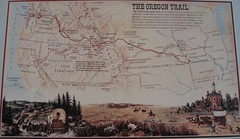
12128320634Oregon Trail2000 mile long path along which thousands of Americans journeyed to the Willamette Valley in the 1840's.40
12128320635California Gold Rush1849. Gold discovered in California attracted a rush of people all over the country and world to San Francisco; arrival of the Chinese; increased pressure on federal government to establish a stable government41
12128320636Mexican American War1846 - 1848. President Polk declared war on Mexico over the dispute of land in Texas. At the end, American ended up with 55% of Mexico's land, called the Mexican Cession.42
12128320637Republican Party1854. Established by anti-slavery Whigs and Democrats, "free-soilers" and reformers from the Northwest met and formed party in order to keep slavery out of the territories.43
12128320638Stephen A. DouglasSenator from Illinois who ran for president against Abraham Lincoln and was a leading voice in the debates over slavery and its expansion before the Civil War. Wrote the Kansas-Nebraska Act and the Freeport Doctrine.44
12128320639Freeport DoctrineStated that exclusion of slavery in a territory (where it was legal) could be accomplished by the refusal of the voters to enact any laws that would protect slave property. Stated by Stephen Douglass during the Lincoln-Douglass debates, eventually contributed to his loss in the 1860 presidential election as Democrats believed he had walked back the gains made with the Dred Scott v. Sanford decision.45
12128320640Abraham Lincoln16th President of the United States saved the Union during the Civil War and emancipated the slaves; was assassinated by Booth (1809-1865)46
12128320641secessionFormal withdrawal of states or regions from a nation47
12128320590habeas corpusPetition requiring law enforcement officers to present detained individuals before the court to examine the legality of the arrest. Protects individuals from arbitrary state action. Suspended by Lincoln during the Civil War.48
12128320642sectionalismTerm used to describe the growing differences between the regions of the United States, especially the North and South, leading up to the Civil War.49
12128320643Robert E. LeeConfederate general who had opposed secession but did not believe the Union should be held together by force. Military genius whose aggressiveness made him a fearsome opponent throughout the Civil War.50
12128320644Fort SumterFederal fort in the harbor of Charleston, South Carolina; the confederate attack on the fort marked the start of the Civil War.51
12128320645Battle of AntietamA battle near a sluggish little creek, it proved to be the bloodiest single day battle in American History with over 26,000 lives lost in that single day. Prevented an Confederate invasion of Maryland.52
12128320646Battle of GettysburgA large battle in the American Civil War, took place in southern Pennsylvania from July 1 to July 3, 1863. Union General George G. Meade led an army of about 90,000 men to victory against General Robert E. Lee's Confederate army of about 75,000. Proved to be a significant turning point in the war because of the loss of about 1/3 of Lee's army.53
12128320647Ulysses S. GrantAn American general and the eighteenth President of the United States (1869-1877). He achieved international fame as the leading Union general in the American Civil War.54
12128320648William Tecumseh ShermanUnion General who destroyed South during "march to the sea" from Atlanta to Savannah; example of total war and "scorched-earth" military tactics.55
12128320649Thomas "Stonewall" JacksonHe was a confederate general who was known for his fearlessness in leading rapid marches, bold flanking movements, and furious assaults. He earned his nickname at the battle of first bull run for standing courageously against union fire. During the battle of Chancellorsville his own men accidently mortally wounded him.56
12128320650martial lawRule by the army instead of the elected government (such as in the South as a result of the Military Reconstruction Act)57
12128320651Radical ReconstructionName given to the period when Congress, which was controlled by Republicans, took over Reconstruction efforts. When southerners balked at some of the more moderate reforms proposed, more radical republicans started to gain more power and pass more legislation.58
12128320652Military Reconstruction Act1867. Divided the South into five districts and placed them under military rule; required Southern States to ratify the 14th amendment; guaranteed freedmen the right to vote in convention to write new state constitutions59
12128320653Freedmen's Bureau1865. Organization (turned government agency) run by the army to care for and protect southern Blacks after the Civil War, sometimes including settling them on confiscated confederate lands.60
12128320654Election of 1876Ended reconstruction because neither candidate had an electoral majority. The Democrat Sam Tilden loses the election to Rutherford B Hayes, Republican, was elected, and then ended reconstruction as he secretly promised.61
12128320655carpetbaggerA northerner who went to the South immediately after the Civil War; especially one who tried to gain political advantage or other advantages from the disorganized situation in southern states (as viewed from the southern perspective).62
12128320656scalawagA derogatory term for southerners who were working with the North to buy up land from desperate southerners; sometimes used in a general way by southerners criticizing other southerners who had northern sympathies.63
12128320591Gag ResolutionStrict rule passed by pro-southern Congressmen in 1836 to prohibit all discussion of slavery in the House of Representatives64
12128320592James K. PolkDemocratic president after John Tyler who was best known for policies that promoted Manifest Destiny and expansionism.65
12128320593John C. FremontAn American military officer, explorer, the first candidate of the Republican Party for the office of President of the United States (1856), and the first presidential candidate of a major party to run on a platform in opposition to slavery.66
12128320594Bear Flag Revolt(1846) a revolt that took place during the Mexican-American War when 500 Americans (Anglos) in Mexican California took the city of Sonoma, CA in the spirit of Manifest Destiny and declared California to be an independent nation.67
12128320595Liberty PartyA former political party in the United States; formed in 1839 to oppose the practice of slavery; merged with the Free Soil Party in 1848.68
12128320596John C. CalhounSenator who argued for states' rights for the South. He asked for slavery to be left alone, slaves to be returned to the South, and state balance to be kept intact.69
12128320597William H. SewardCongressman of the "Young Guard" who fiercely opposed slavery and argued that Americans should follow a "higher law" (God's law) over the Constitution when it came to the issue of slavery.70
12128320598Henry ClayKnown as the "Great Compromiser"; senator who pushed for compromise between the North and South and worked with Stephen Douglas; major figure in the passing of both the Missouri Compromise (1820) and Compromise of 1850.71
12128320599Underground RailroadSecret system of safe houses along a route that led many slaves to freedom in the North and eventually Canada.72
12128320600"Fire Eaters"Refers to a group of extremist pro-slavery politicians from the South who urged the cessation of southern states.73
12128320601Charles SumnerSenator who spoke out for black freedom and racial equality post-Civil War. Publicly beaten by Preston Brooks for speaking out against the violence in Kansas, an event that marked increasing tensions between the North and South prior to the Civil War.74
12128320602Jefferson DavisPresident of the Confederate States of America prior to and during the Civil War.75
12128320603self-determinationThe ability of a people/government to determine their own course or future using their own free will.76
12128320604Lecompton ConstitutionSupported the existence of slavery in the proposed state and protected rights of slaveholders. It was rejected by Kansas, making Kansas an eventual free state (and was a factor in spurring violence there).77
12128320605Lincoln-Douglas DebatesLincoln challenged Stephen Douglas to debates during the senatorial race of 1858 which became a public referendum on the issue of slavery.78
12128320606Border StatesSouthern states that never chose secession and joined the Confederacy during the Civil War (Missouri, Kentucky, Maryland, and Deleware).79
12128320607Andrew Johnson17th President of the United States, A Southerner form Tennessee, as V.P. when Lincoln was killed, he became president. He opposed radical Republicans who passed Reconstruction Acts over his veto. The first U.S. president to be impeached, he survived the Senate removal by only one vote.80
12128320608George B. McClellanFirst commander of the Army of the Potomac; well-known for being a master at training an army; was replaced several times by President Lincoln during the Civil War because of his timidness and sometimes outright refusal to send his army into battle.81
12128320609CopperheadsNickname for Northerners who were pro-Confederacy.82
12128320610First Battle of Bull Run (Battle of Manassas)(July 1861) first major conflict of the Civil War. Southern victory led to overconfidence.83
12128320611Thaddeus StevensRadical Republican congressman from Pennsylvania who defended runaway slaves in court for free and insisted on being buried in a black cemetery; hated white Southerners. Leading figure on the Joint Committee on Reconstruction and for the social equality of African Americans.84
12128320612Wade-Davis BillBill pushed by Congress in 1864 that required 50 percent of a state's voters take the oath of allegiance and demanded stronger safe-guards for emancipation than proposed in Lincoln's 10 percent plan. Pocket-vetoed by Lincoln.85
12128320613Civil Rights Act (1866)A Reconstruction bill which gave which granted citizenship to African Americans and weakened the poliferation of Black Codes in the South.86
12128320614RedeemersLargely former slave owners who were the bitterest opponents of the Republican program in the South. Staged a major counterrevolution to "redeem" the south by taking back southern state governments. Their foundation rested on the idea of racism and white supremacy.87
12128320615Ku Klux KlanThe "Invisible Empire of the South", founded in Tennessee in 1866, made up of embittered white Southerners who resented the success and ability of Black legislators. They would terrorize, mutilate, and even murder "upstart" blacks or their supporters to "keep them in their place".88
12128320616"Seward's Folly"Refers to the United States' Secretary of State William Seward's decision to purchase the Alaskan territory from Russia in 1867. At the time, Seward's decision to buy the land was regarded as a terrible one by many critics in the United States.89

AP World History Unit 3: Empires Expand Flashcards

Terms : Hide Images
14545720877GunpowderInvented within China during the 9th century, this substance was became the dominate military technology used to expand European and Asian empires by the 15th century.0
14545720878ManchusNortheast Asian peoples who defeated the Ming Dynasty and founded the Qing Dynasty in 1644, which was the last of China's imperial dynasties.1
14545720879Mughal EmpireMuslim state (1526-1857) exercising dominion over most of India in the sixteenth and seventeenth centuries.2
14545720880Ottoman EmpireIslamic state founded by Osman in northwestern Anatolia. After the fall of the Byzantine Empire, the Ottoman Empire was based at Istanbul (formerly Constantinople) from 1453-1922. It encompassed lands in the Middle East, North Africa, the Caucasus, and eastern Europe.3
14545720881Safavid EmpireIranian kingdom (1502-1722) established by Ismail Safavi, who declared Iran a Shi'ite state.4
14545720882Songhaia West African empire that conquered Mali and controlled trade from the 1400s to 15915
14545720883monumental architecturearchitectural constructions of a greater-than-human scale, such as pyramids, temples, and tombs6
14545720884Tax farmingA government's use of private collectors to collect taxes. Individuals or corporations contract with the government to collect a fixed amount for the government and are permitted to keep as profit everything they collect over that amount. (p. 334)7
14545720885Devshirme'Selection' in Turkish. The system by which boys from Christian communities were taken by the Ottoman state to serve as Janissaries.8
14545720886Samuria member of a powerful military caste in feudal Japan, especially a member of the class of military retainers of the daimyos.9
14545720887Divine RightBelief that a rulers authority comes directly from god.10
14545720888Temple of CuzcoIncan sun temple and example of monumental architecture.11
14545720889Taj MahalA beautiful tomb built by the Mughal ruler Shah Jahan to honor his wife.12
14545720890VersaillesA palace built by Louis XIV outside of Paris; it was home to Louis XVI and Marie Antoinette13
14545720891Zamindara local official in Mogul India who received a plot of farmland for temporary use in return for collecting taxes for the central government14
14545720892Protestant ReformationA religious movement of the 16th century that began as an attempt to reform the Roman Catholic Church and resulted in the creation of Protestant churches.15
14545720893Catholic Reformationa 16th century movement in which the Roman Catholic Church sought to make changes in response to the Protestant Reformation16
14545720894SunniA branch of Islam whose members acknowledge the first four caliphs as the rightful successors of Muhammad17
14545720895Shiathe branch of Islam whose members acknowledge Ali and his descendants as the rightful successors of Muhammad18
14545720896Sikhismthe doctrines of a monotheistic religion founded in northern India in the 16th century by Guru Nanak and combining elements of Hinduism and Islam19
14545720897Ming DynastyA major dynasty that ruled China from the mid-fourteenth to the mid-seventeenth century. It was marked by a great expansion of Chinese commerce into East Africa, the Middle East, and Southeast Asia20
14545720898SycreticA religion that combines several traditions21

Pages

Subscribe to CourseNotes RSS

Need Help?

We hope your visit has been a productive one. If you're having any problems, or would like to give some feedback, we'd love to hear from you.

For general help, questions, and suggestions, try our dedicated support forums.

If you need to contact the Course-Notes.Org web experience team, please use our contact form.

Need Notes?

While we strive to provide the most comprehensive notes for as many high school textbooks as possible, there are certainly going to be some that we miss. Drop us a note and let us know which textbooks you need. Be sure to include which edition of the textbook you are using! If we see enough demand, we'll do whatever we can to get those notes up on the site for you!