

AMSCO AP US History Chapter 18 Flashcards
AMSCO United States History 2015 Edition, Chapter 18 The Growth of Cities and American Culture, 1865-1900
Terms : Hide Images
| 8660418126 | causes of immigration | Forces in the United States driving this process were (1) political and religious freedom, (2) economic opportunities in the western U.S. and cities, (3) large steamships offered relatively inexpensive transportation. (p. 361) |  | 0 |
| 8660418127 | old immigrants | Through the 1880s, they came to the United States from northern and western Europe. They were mostly Protestant and had a high-level of literacy. (p. 361) |  | 1 |
| 8660418128 | new immigrants | From the 1890s to 1914, they came to the United States from southern and eastern Europe. Mostly non-Protestant, poor and illiterate. (p. 361) |  | 2 |
| 8660418129 | Statue of Liberty | Began in the 1870's, by the French sculptor Frederic-Auguste Bartholdi. It opened in New York Harbor, in 1886. (p. 362) |  | 3 |
| 8660418130 | Chinese Exclusion Act of 1882 | It was the first bill regarding immigration. It placed a ban on all new immigrants from China. (p. 362) |  | 4 |
| 8660418131 | Immigration Act of 1882 | In 1882, this act placed restrictions on the immigration of undesirable persons, such as paupers, criminals, convicts, and mentally incompetent. (p. 362) |  | 5 |
| 8660418132 | Contract Labor Act of 1885 | Restricted the immigration of temporary workers, to protect American workers. (p. 362) |  | 6 |
| 8660418133 | American Protective Association | A nativist society that was prejudiced against Roman Catholics. (p. 362) |  | 7 |
| 8660418134 | Ellis Island 1892 | An immigration center opened in 1892 in New York Harbor. (p. 362) |  | 8 |
| 8660418135 | melting pot vs. cultural diversity | The historian's term, melting pot, refers to immigrants leaving their old-world characteristics and adopting the United States characteristics. Other historians argue that first-generation immigrants maintained their cultural identity and only the second and third generations were assimilated in the U.S. society. (p. 373) |  | 9 |
| 8660418136 | cause of migration | In the late 1800s, forces driving Europeans to migrate to the United States were (1) Displaced farmworkers by political turmoil and mechanization, (2) Overcrowding due to population boom, (3) Religious persecution. (p. 361) | | 10 |
| 8660418137 | streetcar cities | In these cities, people lived in residences many miles from their jobs and commuted to work by horse-drawn streetcars. (p. 363) |  | 11 |
| 8660418138 | steel-framed buildings | Skyscrapers were made possible by this type of building. The first, was the Home Insurance Company Building in Chicago. It was made possible by a steel skeleton, Otis elevator, and central steam heating system. (p. 363) |  | 12 |
| 8660418139 | tenements, poverty | As rich people left residences near the business district, the buildings were often divided into small crowded windowless apartments for the poor. (p. 363) |  | 13 |
| 8660418140 | ethnic neighborhoods | Different immigrant groups created distinct neighborhoods where they could maintain their distinct identity. (p. 363) |  | 14 |
| 8660418141 | residential suburbs | By 1900, suburbs had grown up around every major U.S. city. the United States became the world's first suburban nation. (p. 364) |  | 15 |
| 8660418142 | political machines, boss | Political parties in major cities came under the control of tightly organized groups of politicians, known as political machines. Each machine had its boss, the top politician who gave orders and doled out government jobs. (p. 364) |  | 16 |
| 8660418143 | Tammany Hall | A political machine in New York City, which developed into a power center. (p. 364) |  | 17 |
| 8660418144 | urban reformers | Urban reformers stated more than 400 settlement houses in the cities. They provided services to help poor immigrants. (p. 365) |  | 18 |
| 8660418145 | City Beautiful movement | In the 1890s, this movement included plans to remake America's cities with tree-lined boulevards, public parks, and public cultural attractions. (p. 364) |  | 19 |
| 8660418146 | Henry George | A San Francisco journalist who authored "Progress and Poverty" in 1879 that called to attention the failings of laissez-faire capitalism along with the wealth polarization caused by industrialization. (p. 365) |  | 20 |
| 8660418147 | Edward Bellamy | In 1888, he wrote "Looking Backward", a popular book of social criticism that that envisioned a future that had eliminated poverty, greed, and crime. (p. 365) |  | 21 |
| 8660418148 | Jane Addams | In 1889, she started Hull House in Chicago, which was a settlement house which provide help to immigrants. (p. 365) |  | 22 |
| 8660418149 | settlement houses | They provide social services to new immigrants. (p. 365) | | 23 |
| 8660418150 | Social Gospel | In the 1880s and 1890s this movement espoused social justice for the poor based on Christian principles. (p. 365) |  | 24 |
| 8660418151 | Walter Rauschenbusch | The leading figure of the Social Gospel movement, and a New York City minister. (p. 365) |  | 25 |
| 8660418152 | Cardinal Gibbons | A Roman Catholic leader who supported organized labor. (p. 366) |  | 26 |
| 8660418153 | Dwight Moody | He founded Moody Bible Institute, in 1889. It helped generations of urban evangelists to adapt traditional Christianity to city life. (p. 366) |  | 27 |
| 8660418154 | Salvation Army | Imported from England in 1879, this charity provided the basic necessities of life for the homeless and the poor while also preaching Christian Gospel. (p. 366) |  | 28 |
| 8660418155 | family size; divorce | Family size continued to drop as more people moved from the farms to the cities. Children were needed to do work on farms, but in the city they did not provide that advantage. Divorce rates increased as the legal grounds for divorce became more lenient. (p. 366) | 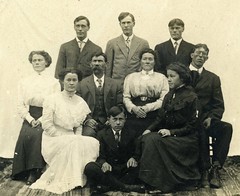 | 29 |
| 8660418156 | Susan B. Anthony, NAWSA | In 1890, one of the founders of the National American Womens Suffrage Association (NAWSA), which worked to secure voting rights for women. (p. 366) |  | 30 |
| 8660418157 | Francis Willard, WCTU | Leader of the Women's Christian Temperance Union (WCTU) which advocated total abstinence from alcohol. (p. 367) |  | 31 |
| 8660418158 | Antisaloon League | In 1893, this organization became a powerful political force and by 1916 had persuaded twenty one states to close down all saloons and bars. (p. 367) |  | 32 |
| 8660418159 | Carrie Nation | She raided saloons and smashed barrels of beer with a hatchet. (p. 367) |  | 33 |
| 8660418160 | kindergarten | In the late 1800s, the practice of sending children to kindergarten became popular. (p. 367) |  | 34 |
| 8660418161 | public high school | In the late 1800s, there was growing support for tax-supported public high schools. (p. 367) |  | 35 |
| 8660418162 | college elective system | In the late 1800s, colleges started reducing the number of required courses and offered more elective courses. These were courses students could choose, and this increased the number of foreign language and science courses. (p. 368) |  | 36 |
| 8660418163 | Johns Hopkins University | This university was founded in Baltimore in 1876, the first to specialize in advanced graduate studies. (p. 368) |  | 37 |
| 8660418164 | new social sciences | New fields such as psychology, sociology, anthropology, and political science emerged. (p 368) |  | 38 |
| 8660418165 | Richard T. Ely | He attacked laissez-faire economic thought as dogmatic and outdated and used economics to study labor unions and trusts. (p. 368) |  | 39 |
| 8660418166 | Oliver Wendell Holmes | He taught that law should evolve with the times and not be bound by previous precedents or decisions. (p. 368) |  | 40 |
| 8660418167 | Clarence Darrow | A famous lawyer, he argued that criminal behavior could be caused by an environment of poverty, neglect, and abuse. (p. 368) |  | 41 |
| 8660418168 | W.E.B. Du Bois | A leading black intellectual, he advocated for equality for blacks, integrated schools, and equal access to higher education. (p. 368) |  | 42 |
| 8660418169 | realism, naturalism | Mark Twain became the first realist author and his books often showed the greed, violence, and racism in American society. Authors known for their naturalism focused in how emotions and experience shaped human experience. (p. 369) |  | 43 |
| 8660418170 | Mark Twain | The first great realist author, he is famous for his classic "The Adventures of Huckleberry Finn". (p. 369) |  | 44 |
| 8660418171 | Stephen Crane | He wrote in the 1890s about the human condition. His books included "Maggie: A Girl in the Streets" and the "Red Badge of Courage". (p. 369) |  | 45 |
| 8660418172 | Jack London | He wrote about the conflict between man and nature in books such as "The Call of the Wild". (p. 369) |  | 46 |
| 8660418173 | Theodore Dreiser | The author of "Sister Carrie". Notable for its naturalism and controversy, as it ran contrary to the moral undercurrents of 1900. (p. 369) | 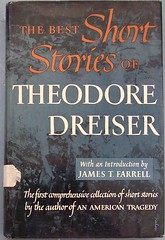 | 47 |
| 8660418174 | Winslow Homer | The foremost American painter of seascapes and watercolors. (p. 369) |  | 48 |
| 8660418175 | Thomas Eakins | Specialized in the painting of the working class and used serial-action photographs to study human anatomy. (p. 369) |  | 49 |
| 8660418176 | Impressionism | A painting technique that originating in France. (p. 370) | 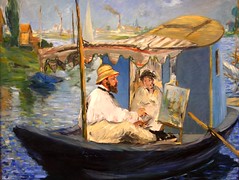 | 50 |
| 8660418177 | James Whistler | An American expat, he painted Arrangement in Grey and Black, popularly known as Whistler's Mother. It was a quintessential example of his study of color rather than subject. (p. 370) |  | 51 |
| 8660418178 | Mary Cassatt | An American impressionist painter known as a portrait painter. She spent much of her life in France. (p. 370) |  | 52 |
| 8660418179 | Ashcan School | Around 1900, they painted scenes of everyday life in poor urban neighborhoods. (p. 370) |  | 53 |
| 8660418180 | Armory Show | A New York painting exhibit in 1913 that featured abstract paintings. (p. 370) |  | 54 |
| 8660418181 | abstract art | Non-representational art, not accepted by Americans until the 1950s. (p. 370) |  | 55 |
| 8660418182 | Henry Hobson Richardson | His architectural designs of the 1870s, based on the Romanesque style, gave a gravity and stateliness to functional commercial buildings. (p. 370) |  | 56 |
| 8660418183 | Romanesque style | This architecture style featured massive stone walls and rounded arches. (p. 370) |  | 57 |
| 8660418184 | Louis Sullivan | He rejected historical architecture and focused on tall, steel-framed office buildings. He focused on building a form that followed function. A member of the Chicago School. (p. 370) |  | 58 |
| 8660418185 | form follows function | The form of the building flowed from its function. (p. 370) |  | 59 |
| 8660418186 | Frank Lloyd Wright | The most famous architect of the 20th century, he developed an organic style that made his buildings fit in with their natural surroundings. (p. 370) |  | 60 |
| 8660418187 | organic architecture | An architectural style in which the building was in harmony with its natural surroundings. (p. 370) |  | 61 |
| 8660418188 | Frederick Law Olmsted | The originator of landscape architecture, he designed Central Park and grounds of the U.S. Capitol. (p. 371) |  | 62 |
| 8660418189 | growth of leisure time | The growth of leisure time activities was a result of the reduction of work hours, improved transportation, advertizing, and the decline of restrictive values. (p. 371) |  | 63 |
| 8660418190 | John Philip Sousa | He wrote a series of popular marches played in small town bandstands across the country. (p. 371) |  | 64 |
| 8660418191 | jazz, blues, ragtime | A form of music that combined African rhythms and western-style instruments and mixed improvisation with a structured band format. (p. 371) |  | 65 |
| 8660418192 | Jelly Roll Morton | A famous African American jazz musician from New Orleans. (p. 371) |  | 66 |
| 8660418193 | Scott Joplin | A black composer notable for his contribution to ragtime. He sold over one million copies of his song "Maple Leaf Rag". (p 371) |  | 67 |
| 8660418194 | mass circulation newspapers | Large circulation newspapers had been around since 1830, but the first to exceed one million subscribers was Joseph Pulitzer's New York World. (p. 371) |  | 68 |
| 8660418195 | Joseph Pulitzer | He established the first newspaper to exceed over one million in circulation by filling it with sensational stories of crime and disaster. (p. 317) |  | 69 |
| 8660418196 | William Randolph Hearst | A newspaper publisher whose introduction of large headlines and sensational reporting changed American journalism. (p. 371) |  | 70 |
| 8660418197 | Ladies Home Journal | By the 1880s, advertising and new printing technology lead to this magazine which sold for only 10 cents. (p. 371) |  | 71 |
| 8660418198 | circus trains | The national rail network made possible traveling circuses. (p. 371) | 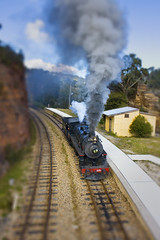 | 72 |
| 8660418199 | Barnum & Bailey, Greatest Show on Earth | A traveling circus that was very popular. (p. 371) |  | 73 |
| 8660418200 | Buffalo Bill Wild West Show | William F. Cody brought this show to urban populations. (p. 372) |  | 74 |
| 8660418201 | spectator sports, boxing, baseball | In the late 19th century professional sports started. (p.372) |  | 75 |
| 8660418202 | amateur sports, bicycling, tennis | These were late 19th century sports of the middle and upper classes. (p. 372) | 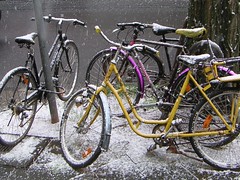 | 76 |
| 8660418203 | social class and discrimination | In the late 19th century, sports such as golf and tennis became popular with wealth members of athletic clubs. The very rich pursued polo and yachting. (p. 372) | 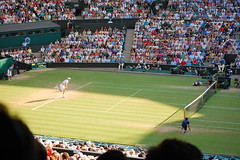 | 77 |
| 8660418204 | country clubs, golf, polo, yachts | These were late 19th century sports of the wealthy. (p. 372) |  | 78 |
| 8660418205 | corner saloon, pool halls | In the late 19th century, young single men often centered their lives around these establishments. (p. 372) |  | 79 |
Flashcards
AP Gov Vocab #8 Flashcards
Terms : Hide Images
| 15603771254 | Individualism | a social theory favoring freedom of action for individuals over collective or state control. | 0 | |
| 15603771255 | equality of opportunity | a widely shared American ideal that all people should have the freedom to use whatever talents and wealth they have to reach their fullest potential | 1 | |
| 15603776080 | free enterprise | Economic system in which individuals and businesses are allowed to compete for profit with a minimum of government interference | 2 | |
| 15603776081 | Rule of Law | principle that the law applies to everyone, even those who govern | 3 | |
| 15603781182 | political socialization | the process by which people gain their political attitudes and opinions | 4 | |
| 15603781183 | political ideology | a more or less consistent set of beliefs about what policies government ought to pursue | 5 | |
| 15603785098 | Keynesian economic theory | The theory emphasizing that government spending and deficits can help the economy weather its normal ups and downs. | 6 | |
| 15603785099 | supply-side economics | An economic philosophy that holds the sharply cutting taxes will increase the incentive people have to work, save, and invest. Greater investments will lead to more jobs, a more productive economy, and more tax revenues for the government. | 7 | |
| 15603792764 | monetary policy | Government policy that attempts to manage the economy by controlling the money supply and thus interest rates. | 8 | |
| 15603801592 | fiscal policy | A government policy for dealing with the budget (especially with taxation and borrowing) | 9 | |
| 15603801593 | Liberal Ideology | open to new behavior or opinions and willing to discard traditional values. | 10 | |
| 15603806383 | Conservative Ideology | Holding to traditional attitudes and values and cautious about change or innovation, typically in politics or religion. | 11 | |
| 15603809962 | Franchise/Suffrage | the legal right to vote | 12 |
Flashcards
Flashcards
AP Language Christian Tankson Flashcards
Terms : Hide Images
| 11317255444 | Ambiguity (am-bi-gyoo-i-tee) | The multiple meanings, either intentional or unintentional, of a word, phrase, sentence, or passage. |  | 0 |
| 11317255445 | Analogy | A similarity or comparison between two different things or the relationship between them. An analogy can explain something unfamiliar by associating it with or pointing out its similarity to something more familiar. Analogies can also make writing more vivid, imaginative, or intellectually engaging. Ex. He that voluntarily continues ignorance is guilty of all the crimes which ignorance produces, as to him |  | 1 |
| 11317255446 | Anaphora (uh-naf-er-uh) | One of the devices of repetition, in which the same expression (word or words) is repeated at the beginning of two or more lines, clauses, or sentences. |  | 2 |
| 11317255447 | Anecdote | A short narrative detailing particulars of an interesting episode or event. The term most frequently refers to an incident in the life of a person |  | 3 |
| 11317255448 | Antecedent (an-tuh-seed-nt) | The word, phrase, or clause referred to by a pronoun. The AP Language exam occasionally asks for the antecedent of a given pronoun in a long, complex sentence or in a group of sentences. |  | 4 |
| 11317255449 | Antithesis (an-tih-theh-sis) | Figure of balance in which two contrasting ideas are intentionally juxtaposed, usually through parallel structure; a contrasting of opposing ideas in adjacent phrases, clauses, or sentences. Antithesis creates a definite and systematic relationship between ideas. |  | 5 |
| 11317255450 | Aphorism | A terse statement of know authorship which expresses a general truth or a moral principle. (If the authorship is unknown, the statement is generally considered to be a folk proverb.) An aphorism can be a memorable summation of the author's point. |  | 6 |
| 11317255452 | Asyndeton (uh-sin-di-tuhn) | consists of omitting conjunctions between words, phrases, or clauses. This can give the effect of unpremeditated multiplicity, of an extemporaneous rather than a labored account. Asyndetic lists can be more emphatic than if a final conjunction were used. |  | 7 |
| 11317255453 | Atmosphere | The emotional mood created by the entirety of a literary work, established partly by the setting and partly by the author's choice of objects that are described. Even such elements as description of the weather can contribute to the atmosphere. Frequently atmosphere forshadows events. Perhaps it can create a mood. |  | 8 |
| 11317255454 | Chiasmus (kahy-az-muhs) | (From the Greek word for "criss-cross," a designation baed on the Greek letter "chi," written X). Chiasmus is a figure of speech in which two successive phrases or clauses are parallel in syntax, but reverse the order of the analogous words. |  | 9 |
| 11317255455 | Clause | a grammatical unit that contains both a subject and a verb. An independent, or main, clause expresses a complete thought and can sand alone as a sentence. A dependent, or subordinate clause cannot stand alone as a sentence and must be accompanied by an independent clause. The point that you want to consider is the question of what or why the author subordinates one element to the other. You should also become aware of making effective use of subordination in your own writing. |  | 10 |
| 11317255456 | Colloquial/colloquialism (kuj-loh-kwee-uhl) | The use of slang or informalities in speech or writing. Not generally acceptable for formal writing, colloquialisms give a work a conversational, familiar tone. Colloquial expressions in writing include local or regional dialects. |  | 11 |
| 11317255457 | Coherence | A principle demanding that the parts of any composition be arranged so that the meaning of the whole may be immediately clear and intelligible. Words, phrases, clauses within the sentence; and sentences, paragraphs, and chpters in larger pieces of writing are the unit that by their progressive and logical arrangement, make for coherence. |  | 12 |
| 11317255458 | Conceit | A fanciful expression, usually in the form of an extended metaphor or surprising analogy between seemingly dissimilar objects. A conceit displays intellectual cleverness as a result of the unusual comparison being made. |  | 13 |
| 11317255459 | Connotation | - The nonliteral, associative meaning of a word; the implied, suggested meaning. Connotations may involve ideas, emotions, or attitudes. |  | 14 |
| 11317255460 | Denotation | The strict, literal, dictionary definition of a word, devoid of any emotion attitude, or color. |  | 15 |
| 11317255461 | Diacope | repetition of a word or phrase after an intervening word or phrase: word/phrase X, . . ., word/phrase X. |  | 16 |
| 11317255462 | Diction | Related to style, diction refers to the writer's word choices, especially with regard to their correctness, clearness, or effectiveness. For the AP exam, you should be able to describe an author's diction (for example, formal or informal, ornate or plain) and understand the ways in which diction can complement the author's purpose. Diction, combined with syntax, figurative language, literary devices, etc., creates an author's style. |  | 17 |
| 11317255463 | Didactic (dahy-dak-tik) | From the Greek, didactic literally means "teaching." Didactic works have the primary aim of teaching or instructing, especially the teaching of moral or ethical principles. |  | 18 |
| 11317255464 | Enumeratio | Figure of amplification in which a subject is divided into constituent parts or details, and may include a listing of causes, effects, problems, solutions, conditions, and consequences; the listing or detailing of the parts of something. |  | 19 |
| 11317255465 | Expletive (ek-spli-tiv) | Figure of emphasis in which a single word or short phrase, usually interrupting normal speech, is used to lend emphasis to the words on either side of the expletive. |  | 20 |
| 11317255466 | Euphemism (yoo-fuh-miz-uhm) | From the Greek for "good speech," euphemisms are a more agreeable or less offensive substitute for a generally unpleasant word or concept. The euphemism may be sued to adhere to standards of social or political correctness or to add humor or ironic understatement. |  | 21 |
| 11317255467 | Exposition | In essays, one of the four chief types of composition, the others being argumentation, description, and narration. The purpose of exposition is to explain something. In drama, the exposition is the introductory material, which creates the tone, gives the setting, and introduces the characters and conflict. |  | 22 |
| 11317255468 | Extended metaphor | A metaphor developed at great length, occurring frequently in or throughout the work. |  | 23 |
| 11317255469 | Figurative language | - Writing or speech that is not intended to carry literal meaning and is usually meant to be imaginative and vivid. |  | 24 |
| 11317255471 | Generic conventions | This term describes traditions for each genre. These conventions help to define each genre; for example, they differentiate an essay and journalistic writing or an autobiography and political writing. On the AP language exam, try to distinguish the unique features of a writer's work from those dictated by convention. |  | 25 |
| 11317255473 | Homily (hom-uh-lee) | This term literally means "sermon," but more informally, it can include any serious talk, speech, or lecture involving moral or spiritual advice. |  | 26 |
| 11317255475 | Hypophora | Figure of reasoning in which one or more questions is/are asked and then answered, often at length, by one and the same speaker; raising and responding to one's own question(s). A common usage is to ask the question at the beginning of a paragraph and then use the paragraph to answer it. You can use hypophora to raise questions which you think the reader obviously has on his/her mind and would like to see formulated and answered. |  | 27 |
| 11317255477 | Inference/infer | To draw a reasonable conclusion from the information presented. When a multiple-choice question asks for an inference to be drawn from a passage, the most direct, most reasonable inference is the safest answer choice. If an inference is implausible, it's unlikely to be the correct answer. Note that if the answer choice is directly stated, it is not inferred and is wrong. You must be careful to note the connotation - negative or positive - of the choices. |  | 28 |
| 11317255478 | Invective | an emotionally violent, verbal denunciation or attach using strong, abusive language. | 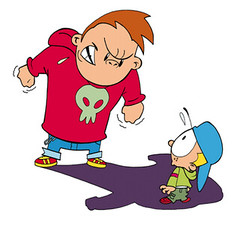 | 29 |
| 11317255480 | Juxtaposition (juhk-stuh-puh-zish-uhn) | When two words, phrases, images, ideas are placed close together or side by side for comparison or contrast. |  | 30 |
| 11317255481 | Litotes (lahy-toh-teez) | From the Greek word "simple" or "plain." Litotes is a figure of thought in which a point is affirmed by negating its opposite. It is a special form of understatement, where the surface denial serves, through ironic contrast, to reinforce the underlying assertion. |  | 31 |
| 11317255482 | Loose sentence | a type of sentence in which the main idea (independent clause) comes first, followed by wdependent grammatical units such as phrases and clauses. If a period were placed at the end of the independent clause, the clause would be a complete sentence. A work containing many loose sentences often seems informal, relaxed, and conversational. Generally loose sentences create loose style. |  | 32 |
| 11317255484 | Metonymy (mi-ton-uh-mee) | A term from the Greek meaning "changed label" or "substitute name." Metonymy is a figure of speech in which the name of one object is substituted for that of another closely associated with it. A news release that claims "the White House declared" rather that "the President declared" is using metonymy. The substituted term generally carries a more potent emotional response. |  | 33 |
| 11317255486 | Narrative | The telling of a story or an account of an event or series of events. |  | 34 |
| 11317255488 | Oxymoron | From the Greek for "pointedly foolish," an oxymoron is a figure of speech wherein the author groups apparently contradictory terms to suggest a paradox. Simple examples include "jumbo shrimp" and "cruel kindness." This term does not usually appear in the multiple-choice questions, but there is a chance that you might find it in an essay. Take note of the effect which the author achieves with this term. |  | 35 |
| 11317255489 | Paradox | A statement that appears to be self-contradictory or opposed to common sense but upon closer inspection contains some degree of truth or validity. |  | 36 |
| 11317255490 | Parallelism | Also referred to as parallel construction or parallel structure, this term comes from Greek roots meaning "beside one another." It refers to the grammatical or rhetorical framing of words, phrases, sentences, or paragraphs to give structural similarity. This can involve, but is not limited to repetition of a grammatical element such as a preposition or verbal phrase. A famous example of parallelism begins Charles Dickens's novel A Tale of Two Cities: "It was the best of times, it was the worst of times, it was the age of wisdom, it was the age of foolishness, it was the epoch of belief, it was the epoch of incredulity . . ." The effects of parallelism are numerous, but frequently they act as an organizing force to attract the reader's attention, add emphasis and organization, or simply provide a musical rhythm. |  | 37 |
| 11317255491 | Parody | A work that closely imitates the style or content of another with the specific aim of comic effect and/or ridicule. As comedy, parody distorts or exaggerated distinctive features of the original. As ridicule, it mimics the work by repeating and borrowing words, phrases, or characteristics in order to illuminate weaknesses in the original. Well-written parody offers enlightenment about the original, but poorly written parody offers only ineffectual imitation. Usually an audience must grasp literary allusion and understand the work being parodied in order to fully appreciate the nuances of the newer work. Occasionally, however, parodies take on a life of their own and don't require knowledge of the original |  | 38 |
| 11317255492 | Pedantic (puh-dan-tik) | An adjective that describes words, phrases, or general tone that is overly scholarly, academic, or bookish. |  | 39 |
| 11317255493 | Periodic sentence | A sentence that presents its central meaning in a main clause at the end. This independent clause is preceded by a phrase or clause that cannot stand alone. For example: "Ecstatic with my AP score, I let out a loud, joyful shout!" The effect of a periodic sentence is to add emphasis and structural variety. It is also a much stronger sentence than the loose sentence. |  | 40 |
| 11317255494 | Personification | A figure of speech in which the author presents or describes concepts, animals, or inanimate objects by endowing them with human attributes or emotions. Personification is used to make these abstractions, animal, or objects appear more vivid to the reader. |  | 41 |
| 11317255495 | Polysyndeton (paulee-sin-dih-tawn) | Figure of addition and emphasis which intentionally employs a series of conjunctions (FANBOYS: for, and, nor, but, or, yet, so) not normally found in successive words, phrases or clauses; the deliberate and excessive use of conjunctions in successive words or clauses. The effect is a feeling of multiplicity, energetic enumeration, and building up - a persistence or intensity. |  | 42 |
| 11317255496 | Predicate adjective | One type of subject complement is an adjective, group of adjectives, or adjective clause that follows a linking verb. It is an the predicate of the sentence, and modifies, or describes, the subject. |  | 43 |
| 11317255497 | Predicate nominative | A second type of subject complement - a noun, group of nouns, or noun clause that names the subject. It, like the predicate adjective, follows a linking verb and is located in the predicate of the sentence. |  | 44 |
| 11317255498 | Prose | One of the major divisions of genre, prose refers to fiction and non-fiction, including all its forms. In prose the printer determines the length of the line; in poetry, the poet determines the length of the line |  | 45 |
| 11317255499 | Repetition | The duplication, either exact or approximate, of any element of language, such as a sound, word, phrase, clause, sentence, or grammatical pattern. |  | 46 |
| 11317255500 | Rhetoric | From the Greek for "orator," this term describes the principles governing the art of writing effectively, eloquently, and persuasively. | 47 | |
| 11317255501 | Rhetorical modes | This flexible term describes the variety, the conventions, and purposes of the major kinds of writing. The four most common rhetorical modes and their purposes are as follows: (1) The purpose of exposition (or expository writing) is to explain and analyze information by presenting an idea, relevant evidence, and appropriate discussion. The AP language exam essay questions are frequently expository topics. (2) The purpose of argumentation is to prove the validity of an idea, or point of view, by presenting sound reasoning, discussion, and argument that thoroughly convince the reader. Persuasive writing is a type of argumentation having an additional aim of urging some form of action. (3) The purpose of description is to re-create, invent, or visually present a person, place, event or action so that the reader can picture that being described. Sometimes an author engages all five senses in description; good descriptive writing can be sensuous and picturesque. Descriptive writing may be straightforward and objective or highly emotional and subjective. (4) The purpose of narration is to tell a story or narrate an event or series of events. This writing mode frequently uses the tools of descriptive writing. These four modes are sometimes referred to as mode of discourse. |  | 48 |
| 11317255502 | Rhetorical Question [erotesis] | - differs from hypophora in that it is not answered by the writer because its answer is obvious or obviously desired, and usually just a yes or no answer would suffice. It is used for effect, emphasis, or provocation, or for drawing a conclusionary statement from the fact at hand. |  | 49 |
| 11317255503 | Sarcasm | From the Greek meaning "to tear flesh," sarcasm involves bitter, caustic language that is meant to hurt or ridicule someone or something. It may use irony is a device, but not all ironic statements are sarcastic, that is, intended to ridicule. When well done, sarcasm can be witty and insightful; when done poorly, it's simply cruel |  | 50 |
| 11317255504 | Satire | A work that targets human vices and follies or social institutions and conventions for reform or ridicule. Regardless of whether or not the work aims to reform human behavior, satire is best seen as a style of writing rather than a purpose for writing. It can be recognized by the many devices used effectively the satirist: irony, wit, parody, caricature, hyperbole, understatement, and sarcasm. The effects of satire are varied, depending on the writer's goal, but good satire, often humorous, is thought provoking and insightful about the human condition. |  | 51 |
| 11317255505 | Semantics | The branch of linguistics that studies the meaning of words, their historical and psychological development, their connotations, and their relation to one another |  | 52 |
| 11317255506 | Style | The consideration of style has two purposes: (1) An evaluation of the sum of the choices an author makes in blending diction, syntax, figurative language, and other literary devices. Some authors' styles are so idiosyncratic that we can quickly recognize works by the same author (or a writer emulating that author's style)/ Compare, for example, Jonathan's Swift to George Orwell or William Faulkner to Ernest Hemingway. We can analyze and describe an author's personal style and make judgments on how appropriate it is to the author's purpose. Styles can be called flowery, explicit, succinct, rambling, bombastic, commonplace, incisive, or laconic, to name only a few examples. (2) Classification of authors to a group and comparison of an author to similar authors. By means of such classification and comparison, we can see how an author's style reflects and helps to define a historical period, such as the Renaissance of the Victorian period, or a literary movement, such as the romantic, transcendental or realist movement. | | 53 |
| 11317255507 | Subject complement | The word (with any accompanying phrases) or clauses that follows a linking verb and complements, or completes, the subject of the sentence by either (1) renaming it or (2) describing it. The former is the technically a predicate nominative, the latter a predicate adjective. Multiple-choice questions. |  | 54 |
| 11317255508 | Subordinate clause | Like all clauses, this word group contains both a subject and a verb (plus any accompanying phrases or modifiers), but unlike the independent clause, the subordinate clause cannot stand alone; it does not express a complete thought. Also called a dependent clause, the subordinate clause depends on a main clause, sometimes called an independent clause, to complete its meaning. Easily recognized key words and phrases usually begin these clauses 0 for example: although, because, unless, if even though, since, as soon as, while who, when , where, how and that. |  | 55 |
| 11317255509 | Syllogism (sil- uh-jiz-uhm) | From the Greek for "reckoning together, " a syllogism (or syllogistic-reasoning or syllogistic logic is a deductive system of formal logic that presents two premises (the firs one called "major" and the second, "minor") that inevitably lead to a sound conclusion. A frequently cited example proceeds as follows; |  | 56 |
| 11317255511 | Synecdoche (si-nek-duh-kee) | is a type of metaphor in which the part stands for the whole, the whole for a part, the genus for the species, the species for the genus, the material for the thing made, or in short, any portion , section, or main quality for the whole or the thing itself (or vice versa). |  | 57 |
| 11317255512 | Syntax | The way an author chooses to join words into phrases, clauses, and sentences. Syntax is similar to diction, but you can differentiate them by thinking of syntax as the groups of words, while diction refers to the individual words. In the multiple-choice section, expect to be asked some questions about how an author manipulates syntax. In the essay section, you will need to analyze how syntax produces effects. |  | 58 |
| 11317255513 | Theme | The central idea or message of a work, the insight it offers into life. Usually theme is unstated in fictional works, but in nonfiction, the theme may be directly stated, especially in exposityr or argumentative writing. |  | 59 |
| 11317255514 | Thesis | In expository writing, the thesis statement is the sentence or a group of sentences that directly expresses the author's opinion, purpose, meaning, or position. Expository writing is usually judged by analyzing how accurately, effectively, and thoroughly a writer has proved the thesis. |  | 60 |
| 11317255516 | Transition | A word or phrase that links different ideas. Used especially, although not exclusively, in expository and argumentative writing, transitions effectively signal a shift from one idea to another. A few commonly used transitional words or phrases are furthermore, consequently, nevertheless, for example, in addition, likewise, similarly and on the contrary. More sophisticated writers use more subtle means of transition. We will discuss these methods later. |  | 61 |
| 11317255517 | Understatement | The ironic minimizing of fact, understatement presents something as less significant than it is. The effect can frequently be humorous and emphatic. Understatement is the opposite of hyperbole. | 62 | |
| 11317255518 | Undertone | An attitude that may lie under the ostensible tone of the piece. Under a cheery surface, for example, a work may have threatening undertones. William Blake's "The Chimney Sweeper" from the Songs of Innocence has a grim undertone. |  | 63 |
| 11317255519 | Wit | In modern usage, intellectually amazing language that surprises and delights. A witty statement is humorous, while suggesting the speaker's verbal power in creating ingenious and perceptive remarks. Wit usually uses terse language that makes a pointed statement. Historically, wit originally meant basic understanding. Its meaning evolved to include speed of understanding, and finally (in the early seventeenth century), it grew to mean quick perception including creative fancy and a quick tongue to articulate an answer that demanded the same quick perception. |  | 64 |
Flashcards
AP Psychology - Developmental Psychology Flashcards
Advanced Placement Psychology
Terms : Hide Images
| 14981585404 | Developmental Psychology | a branch of psychology that studies physical, cognitive, and social change throughout the life span. physical cognitive & social change in the life |  | 0 |
| 14981585405 | Zygote | the fertilized egg; it enters a 2-week period of rapid cell division and develops into an embryo. |  | 1 |
| 14981585406 | Embryo | the developing human organism from about 2 weeks after fertilization through the second month. the developing human organism |  | 2 |
| 14981585407 | Fetus | the developing human organism from 9 weeks after conception to birth. |  | 3 |
| 14981585408 | Teratogens | agents, such as chemicals and viruses, that can reach the embryo or fetus during prenatal development and cause harm. viruses and chemicals that cause harm to the fetus |  | 4 |
| 14981585409 | Fetal Alcohol Syndrome (FAS) | physical and cognitive abnormalities in children caused by a pregnant woman's heavy drinking. In severe cases, symptoms include noticeable facial misproportions. physical and cognitive abnormalities to the baby when the mother drinks during the pregnancy |  | 5 |
| 14981585410 | Habituation | decreasing responsiveness with repeated stimulation. As infants gain familiarity with repeated exposure to a visual stimulus, their interest wanes and they look away sooner. the accustomation to visuals |  | 6 |
| 14981585411 | Maturation | biological growth processes that enable orderly changes in behavior, relatively uninfluenced by experience. biological and behavioral growth |  | 7 |
| 14981585412 | Cognition | all the mental activities associated with thinking, knowing, remembering, and communicating. thinking knowing memory and communication |  | 8 |
| 14981585413 | Schema | a concept or framework that organizes and interprets information. an outline to determine information |  | 9 |
| 14981585414 | Assimilation | interpreting our new experience in terms of our existing schemas. using our ideals to interpret new experiences | | 10 |
| 14981585415 | Accommodation | Development - adapting our current understandings (schemas) to incorporate new information. changing our ideals for new info | | 11 |
| 14981585416 | Sensorimotor Stage | in Piaget's theory, the stage (from birth to about 2 years of age) during which infants know the world mostly in terms of their sensory impressions and motor activities. age 0-2 getting to know the world through senses and motion |  | 12 |
| 14981585417 | Object Permanence | the awareness that things continue to exist even when not perceived. objects stay even when you don't see them |  | 13 |
| 14981585418 | Preoperational Stage | in Piaget's theory, the stage (from 2 to about 6 or 7 years of age) during which a child learns to use language but does not yet comprehend the mental operations of concrete logic. age 2-6 language | | 14 |
| 14981585419 | Conservation | the principle (which Piaget believed to be a part of concrete operational reasoning) that properties such as mass, volume, and number remain the same despite changes in the forms of objects. despite changes, mass volume and number stay the same |  | 15 |
| 14981585420 | Egocentrism | in Piaget's theory, the preoperational child's difficulty taking another's point of view. children don't understand others views |  | 16 |
| 14981585421 | Theory of Mind | people's ideas about their own and others' mental states—about their feelings, perceptions, and thoughts, and the behaviors these might predict. thoughts on feelings, perceptions, and thoughts. |  | 17 |
| 14981585422 | Concrete Operational Stage | in Piaget's theory, the stage of cognitive development (from about 6 or 7 to 11 years of age) during which children gain the mental operations that enable them to think logically about concrete events. age 6-11 where logic works | | 18 |
| 14981585423 | Formal Operational Stage | in Piaget's theory, the stage of cognitive development (normally beginning about age 12) during which people begin to think logically about abstract concepts. age 12 people where people logic out non-logic things | | 19 |
| 14981585424 | Autism | a disorder that appears in childhood and is marked by; deficient communication, social interaction, and understanding of others; states of mind. |  | 20 |
| 14981585425 | Stranger Anxiety | the fear of strangers that infants commonly display; beginning by about 8 months of age. |  | 21 |
| 14981585426 | Attachment | an emotional tie with another person; shown in young children by their seeking closeness to the caregiver and showing distress on separation. |  | 22 |
| 14981585427 | Critical Period | an optimal period shortly after birth when an organism's exposure to certain stimuli or experiences produces proper development. the period after birth when certain things cause proper development |  | 23 |
| 14981585428 | Imprinting | the process by which certain animals form attachments during a critical period very early in life. baby animals create bonds early on |  | 24 |
| 14981585429 | Temperament | a person's characteristic; emotional reactivity and intensity. |  | 25 |
| 14981585430 | Basic Trust | according to Erik Erikson. a sense that; the world is predictable and trustworthy; said to be formed during infancy by appropriate experiences with responsive caregivers. |  | 26 |
| 14981585431 | Self-Concept | all our thoughts and feelings about ourselves, in answer to the question, "Who am I?" our view of ourselves |  | 27 |
| 14981585432 | Gender | in psychology, the biologically and socially influenced characteristics by which people define male and female. the biological and social sex characteristics |  | 28 |
| 14981585433 | Aggression | physical or verbal behavior intended to hurt someone. |  | 29 |
| 14981585434 | X Chromosome | the sex chromosome found in both men and women; Females have two of these; males have one. One chromosome from each parent produces a female child. |  | 30 |
| 14981585435 | Y Chromosome | the sex chromosome found only in males; When paired with an X chromosome from the mother, it produces a male child. | | 31 |
| 14981585436 | Testosterone | the most important of the male sex hormones. Both males and females have it, but the additional levels in males stimulates the growth of the male sex organs in the fetus and the development of the male sex characteristics during puberty. Male hormone chemical |  | 32 |
| 14981585437 | Role | a set of expectations (norms) about a social position, defining how those in the position ought to behave. How to behave in your place in society |  | 33 |
| 14981585438 | Gender Role | a set of expected behaviors for males or for females. expected behavior per gender. |  | 34 |
| 14981585439 | Gender Identity | our sense of being male or female. |  | 35 |
| 14981585440 | Gender Typing | the acquisition of a traditional masculine or feminine role. developed traditional roles |  | 36 |
| 14981585441 | Social Learning Theory | the theory that we learn social behavior by observing and imitating and by being rewarded or punished. social behavior is taught by imitation and punishment |  | 37 |
| 14981585442 | Adolescence | the transition period from childhood to adulthood; extending from puberty to independence. |  | 38 |
| 14981585443 | Puberty | the period of; sexual maturation; during which a person becomes capable of reproducing. |  | 39 |
| 14981585444 | Primary Sex Characteristics | the body structures (ovaries, testes, and external genitalia) that make sexual reproduction possible. genitalia |  | 40 |
| 14981585445 | Secondary Sex Characteristics | nonreproductive sexual characteristics; such as female breasts and hips, male voice quality, and body hair. |  | 41 |
| 14981585446 | Menarche | the first menstrual period. |  | 42 |
| 14981585447 | Identity | our sense of self; according to Erikson, the adolescent's task is to solidify a sense of self by testing and integrating various roles. who we are |  | 43 |
| 14981585448 | Social Identity | the "we" aspect of our self-concept; the part of our answer to "Who am I?" that comes from our group memberships. Who we are in society |  | 44 |
| 14981585449 | Intimacy | in Erikson's theory; the ability to form close, loving relationships; a primary developmental task in late adolescence and early adulthood. |  | 45 |
| 14981585450 | Emerging Adulthood | for some people in modern cultures, a period from the; late teens to mid-twenties, bridging the gap; between adolescent dependence, full independence, and responsible adulthood. |  | 46 |
| 14981585451 | Cross-Sectional Study | a study in which; people of different ages are compared with one another. |  | 47 |
| 14981585452 | Longitudinal Study | research in which; the same people are restudied and retested over a long period. |  | 48 |
| 14981585453 | Crystallized Intelligence | accumulated knowledge and verbal skills; tends to increase with age. |  | 49 |
| 14981585454 | Fluid Intelligence | ability to reason; speedily and abstractly; tends to decrease during late adulthood. | | 50 |
| 14981585455 | Social Clock | the culturally preferred timing of social events such as marriage, parenthood, and retirement. preferred timing of marriage parenthood and retirement |  | 51 |
| 14981585457 | Moro reflex | Infant startle response to sudden, intense noise or movement. When startled the newborn arches its back, throws back its head, and flings out its arms and legs. Usually disappears after four months. Newborn reflex to arch back, throw out head and fling out appendages. | 52 | |
| 14981585458 | Babinski reflex | Reflex in which a; newborn fans out the toes when the sole of the foot is touched | 53 | |
| 14981585459 | holographic speech | one word declarations by children at about age 1 | 54 | |
| 14981585460 | Vygotsky | Believed that cognitive development was largely the result of the child's interaction with members of his or her own culture rather than his or her interaction with concrete objects Zones of Proximal Devl: social interaction influences learning. Students learn best when teachers teach them something they don't know yet, and then provide students opportunities to practice and learn with other peers and adults supporting. cognitive development based off of people rather than objects | 55 | |
| 14981585461 | Piaget | theorist that developed a series of stages in which an individual passes during cognitive development. Growth occurs in stages - sensory motor (0-2), pre-operational, experiential (2-7), concrete operational (7-11) formal operational (11+) formal and abstract operations cognitive development | 56 | |
| 14981585462 | Kohlberg | theorist who claimed; individuals went through a series of stages in the process of moral development. Development; Concepts: stages of moral development; Study Basics: Studied boys responses to and processes of reasoning in making moral decisions. Most famous moral dilemma is "Heinz" who has an ill wife and cannot afford the medication. Should he steal the medication and why? Developing children progress through a predictable sequence of stages of moral reasoning (preconventional, conventional, postconventional). Stages of moral development | 57 | |
| 14981585463 | Erikson | Proposed that individuals go through 8 distinct, universal stages of development. Each stage consists of a developmental task that confronts individuals with a crisis. Infant; 0-2 years: Trust Vs. mistrust 2. Toddler; 2-3 years: Autonomy Vs shame and doubt 3. Preschool; 3-5 years: Initiative Vs guilt 4. School age; 6-12 years: Industry Vs inferiority 5. Adolescent; 12-18 years: Identity Vs identity (or role) confusion 6. Young adult: 18-25 years: Intimacy Vs isolation 7. Middle adult: 25-45 years: Generativity Vs stagnation 8. Older adult: 45-death: Ego integrity Vs despair; 8 stages of development: trust autonomy guilt industry identity intimacy stagnation despair | 58 | |
| 14981585464 | Bandura | Social Learning Theory; Observational learning; Bobo dolls; social-cognitive theory Social Learning Theory - emphasizes modeling or observational learning as a powerful source of development and behavior modification | 59 | |
| 14981585465 | empty-nest syndrome | the feelings of sadness or loneliness that accompany children's leaving home and entering adulthood children leave home, parent is sad | 60 | |
| 14981585466 | dementia | Impairment of mental functioning and global cognitive abilities; in otherwise alert individuals, causing memory loss and related symptoms and typically having a; progressive nature | 61 | |
| 14981585467 | Alzheimer's disease | chronic, progressive, degenerative cognitive disorder; that accounts for more than 60% of all dementias an irreversible, progressive brain disorder, characterized by the; deterioration of memory, language, and eventually, physical functioning | 62 | |
| 14981585468 | Kubler-Ross | Her theory proposes that the terminally ill pass through a squence of 5 stages: 1. denial, 2. anger/resentment, 3. bargaining with God, 4. depression, and 5. acceptance stages of grief, made for the terminally ill | 63 | |
| 14981585469 | stages vs. continuity | Debate over development occurring in set time periods verses continual or individual changes and development development in set time vs individual | 64 |
AP Chemistry: Gases Flashcards
Terms : Hide Images
| 15430131267 | manometer | instrument to measure pressure of gas in a container |  | 0 |
| 15430134755 | barometer | an instrument used to measure atmospheric pressure |  | 1 |
| 15430143159 | average height of barometer | 760 mmHg | 2 | |
| 15430146753 | atmospheric pressure | mass of air being pulled toward the center of the Earth by gravity | 3 | |
| 15430166540 | standard atmosphere (atm) | a unit of pressure; it is the pressure required to support 760 mm of mercury in a mercury barometer at 25°C 1 atm = 760 mmHg (torr) = 101325 Pa = 14.7 psi | 4 | |
| 15430781873 | kelvin scale of temperature | an absolute scale of temperature in which 0 K is the absolute zero of temperature |  | 5 |
| 15430186499 | Boyle's Law | a principle that describes the relationship between the pressure and volume of a gas at constant temperature P₁V₁ = P₂V₂ inverse relationship between pressure and volume |  | 6 |
| 15430206435 | Charles's Law | a principle that describes the relationship between the temperature and volume of a gas at constant pressure V₁/T₁ = V₂/T₂ volume of each gas is directly proportional to temperature |  | 7 |
| 15430230346 | Avogadro's Law (Avogadro's Hypothesis) | equal volumes of gases at the same temperature and pressure contain equal numbers of molecules P₁/n₁ = V₂/n₂ for a gas at a constant temperature and pressure, the volume is directly proportional to the number of moles of gas |  | 8 |
| 15430599382 | root mean square velocity | the square root of the average of the squares of the individual velocities of gas particles u (average speed of gas particle (m/s)) = √3RT/M (molar mass) R = 8.31 J/mol·K (8.31x10³ g·m²/s²·mol·K) M = molar mass of gas |  | 9 |
| 15430291544 | Ideal Gas Law | PV=nRT (n is equal to the number of moles of the substance and R is the gas constant 0.0821) |  | 10 |
| 15430306152 | Combined Gas Law | the relationship between the pressure, volume, and temperature of a fixed amount of gas |  | 11 |
| 15430322506 | volume of 1 mole of gas at STP | 22.4 L/mol |  | 12 |
| 15430331408 | standard temperature and pressure (STP) | a temperature of 273 K and a pressure of 1.00 atm | 13 | |
| 15430345138 | Dalton's Law of Partial Pressures | for a mixture of gases in a container, the total pressure exerted is the sum of the pressures that each gas would exert if it were alone |  | 14 |
| 15430350864 | partial pressure | the pressure that a particular gas would exert if it were alone in the container |  | 15 |
| 15430374764 | mole fraction and partial pressure | The partial pressure of a component in a gaseous mixture is its mole fraction of gas multiplied by the total pressure For gases, the mole fraction of a component is equivalent to its percent by volume divided by 100% |  | 16 |
| 15430411421 | collecting gas over water | gas in bottle is a mixture of water vapor and oxygen collected when the rate of escape equals the rate of return (equilibrium), the number of water molecules in vapor state remains constant, thus pressure of the water vapor remains constant |  | 17 |
| 15430498164 | vapor pressure of water | pressure exerted by water vapor in equilibrium with liquid water in a closed container at a specific temperature | 18 | |
| 15430504512 | Kinetic Molecular Theory of Gases | 1. the particles are so small compared with the distances between them that the volume of the individual particles can be assumed to be negligible (zero) 2. the particles are in constant motion. the collisions of particles with the walls of the container are the cause of the pressure exerted by the gas 3. the particles are assumed to exert no forces on each other; they are assumed neither to attract nor repel each other 4. the average kinetic energy of a collision of gas particles is assumed to be directly proportional to the Kelvin temperature of the gas |  | 19 |
| 15430582262 | average kinetic energy | directly proportional to the absolute temperature |  | 20 |
| 15428057073 | diffusion | the process by which molecules move from an area of higher concentration to an area of lower concentration smaller gas particles diffuse faster than larger ones the rate of the mixing of gases |  | 21 |
| 15430683476 | effusion | the passage of a gas through a tiny orifice into an evacuated chamber | | 22 |
| 15430700648 | Graham's Law of Effusion | states that the rate of effusion for a gas is inversely proportional to the square root of its molar mass |  | 23 |
| 15428050309 | rate of effusion | measures the speed at which the gas is transferred into the chamber |  | 24 |
| 15430902108 | rate of effusion using density | the rate of effusion of a gas is inversely proportional to the square root of the density of the gas r₁/r₂ = √D₂ /√D₁ |  | 25 |
| 15430958318 | time of effusion | the time it takes a gas to effuse if directly proportional to the square root of the molar mass of the gas t₂/t₁ = √MM₂/√MM₁ |  | 26 |
| 15430712027 | Van der Waals Equation | a mathematical expression for describing the behavior of real gases |  | 27 |
| 15430736458 | intermolecular forces | relatively weak interactions that occur between molecules | 28 | |
| 15430740283 | dipole-dipole attraction | attractive force resulting when polar molecules line up so that the positive and negative ends are close to each other |  | 29 |
| 15430745783 | london dispersion forces | forces, existing among noble gas atoms and nonpolar molecules, that involve an accidental dipole that induces a momentary dipole in a neighbor |  | 30 |
| 15479413098 | when does a gas behave most ideally | low pressure, high temperature, low number of moles | 31 | |
| 15479416327 | when does a gas behave less ideally | high pressure, low temperature, high number of moles | 32 |
Pages

Need Help?
We hope your visit has been a productive one. If you're having any problems, or would like to give some feedback, we'd love to hear from you.
For general help, questions, and suggestions, try our dedicated support forums.
If you need to contact the Course-Notes.Org web experience team, please use our contact form.
Need Notes?
While we strive to provide the most comprehensive notes for as many high school textbooks as possible, there are certainly going to be some that we miss. Drop us a note and let us know which textbooks you need. Be sure to include which edition of the textbook you are using! If we see enough demand, we'll do whatever we can to get those notes up on the site for you!
