

Flashcards
Ap Flashcards
Terms : Hide Images
| 10899739957 | Abdominal | Anterior body trunk region inferior to the ribs | 0 | |
| 10899739958 | Acromial | Point of the shoulder, top of shoulder | 1 | |
| 10899739959 | Antebrachial | Forearm | 2 | |
| 10899739960 | Antecubital | Anterior surface of elbow, front of the elbow | 3 | |
| 10899739961 | Axillary | Armpit | 4 | |
| 10899739962 | Brachial | Arm, second part of the arm | 5 | |
| 10899739963 | Buccal | Cheek | 6 | |
| 10899739964 | Carpal | Wrist | 7 | |
| 10899739965 | Cephalic | Head | 8 | |
| 10899739966 | Cervical | Neck | 9 | |
| 10899739967 | Coxal | Hip | 10 | |
| 10899739968 | Crural | Leg | 11 | |
| 10899739969 | Digital | Fingers or toes | 12 | |
| 10899739970 | Femoral | Thigh | 13 | |
| 10899739971 | Fibular | Side of leg | 14 |
Flashcards
AP Language Set 2 Flashcards
Terms : Hide Images
| 11773525795 | penitent | expressing remorse for one's misdeeds | 0 | |
| 11773525796 | plausible | seemingly valid or acceptable; credible | 1 | |
| 11773533153 | substantiated | supported with proof or evidence; verified | 2 | |
| 11773536002 | vindicated | freed from blame | 3 | |
| 11773540904 | condescending | treating people as weak or inferior | 4 | |
| 11773566324 | contemptuous | Feeling hatred; scornful | 5 | |
| 11773932914 | despotic | exercising absolute power; tyrannical | 6 | |
| 11773936441 | dictatorial | domineering; oppressively overbearing | 7 | |
| 11773936442 | disdain | contempt, scorn | 8 | |
| 11773940971 | haughty | arrogant; vainly proud | 9 | |
| 11773945676 | imperious | arrogantly domineering or overbearing | 10 | |
| 11773950265 | patronizing | treating in a condescending manner | 11 | |
| 11773953512 | convoluted | intricate; complex | 12 | |
| 11774487605 | cryptic | difficult to comprehend | 13 | |
| 11774490808 | futile | having no useful purpose; pointless | 14 | |
| 11774495072 | impede | to slow the progress of | 15 | |
| 11774498845 | obscure | relatively unknown; to conceal or make indistinct | 16 | |
| 11774504040 | quandary | a state of perplexity or doubt | 17 | |
| 11774508968 | indolent | lazy | 18 | |
| 11774512797 | insipid | uninteresting; unchallenging | 19 |
AP Psychology AP Review Flashcards
Terms : Hide Images
| 13893291780 | psychology | the study of behavior and mental processes | 0 | |
| 13893291781 | psychology's biggest question | Which is more important in determining behavior, nature or nurture? | 1 | |
| 13893291782 | psychology's three levels of analysis | biopsychosocial approach (looks at the biological, psychological, and social-cultural approaches together) | 2 | |
| 13893291783 | biological approach | genetics, close-relatives, body functions | 3 | |
| 13893291784 | evolutionary approach | species - helped with survival (ancestors) | 4 | |
| 13893291785 | psychodynamic approach | (Freud) subconscious, repressed feelings, unfulfilled wishes | 5 | |
| 13893291786 | behavioral approach | learning (classical and operant) observed | 6 | |
| 13893291787 | cognitive approach | thinking affects behavior | 7 | |
| 13893291788 | humanistic approach | becoming a better human (behavior, acceptance) | 8 | |
| 13893291789 | social-cultural approach | cultural, family, environment | 9 | |
| 13893291790 | two reasons of why experiments are important | hindsight bias + overconfidence | 10 | |
| 13893291791 | types of research methods | descriptive, correlational, and experimental | 11 | |
| 13893291792 | descriptive methods | case study survey naturalistic observation (DON'T SHOW CAUSE/EFFECT) | 12 | |
| 13893291793 | case study | studies one person in depth may not be typical of population | 13 | |
| 13893291794 | survey | studies lots of people not in depth | 14 | |
| 13893291795 | naturalistic observation | observe + write facts without interference | 15 | |
| 13893291796 | correlational method | shows relation, but not cause/effect scatterplots show research | 16 | |
| 13893291797 | correlation coefficient | + 1.0 (both increase) 0 (no correlation - 1.0 (one increases, other decreases) | 17 | |
| 13893291798 | experimental method | does show cause and effect | 18 | |
| 13893291799 | population | type of people who are going to be used in experiment | 19 | |
| 13893291800 | sample | actual people who will be used (randomness reduces bias) | 20 | |
| 13893291801 | random assignment | chance selection between experimental and control groups | 21 | |
| 13893291802 | control group | not receiving experimental treatment receives placebo | 22 | |
| 13893291803 | experimental group | receiving treatment/drug | 23 | |
| 13893291804 | independent variable | drug/procedure/treatment | 24 | |
| 13893291805 | dependent variable | outcome of using the drug/treatment | 25 | |
| 13893291806 | confounding variable | can affect dependent variable beyond experiment's control | 26 | |
| 13893291807 | scientific method | theory hypothesis operational definition revision | 27 | |
| 13893291808 | theory | general idea being tested | 28 | |
| 13893291809 | hypothesis | measurable/specific | 29 | |
| 13893291810 | operational definition | procedures that explain components | 30 | |
| 13893291811 | mode | appears the most | 31 | |
| 13893291812 | mean | average | 32 | |
| 13893291813 | median | middle | 33 | |
| 13893291814 | range | highest - lowest | 34 | |
| 13893291815 | standard deviation | how scores vary around the mean | 35 | |
| 13893291816 | central tendency | single score that represents the whole | 36 | |
| 13893291817 | bell curve | (natural curve) |  | 37 |
| 13893291818 | ethics of testing on animals | need to be treated humanly basically similar to humans | 38 | |
| 13893291819 | ethics of testing on humans | consent debriefing no unnecessary discomfort/pain confidentiality | 39 | |
| 13893291820 | sensory neurons | travel from sensory receptors to brain | 40 | |
| 13893291821 | motor neurons | travel from brain to "motor" workings | 41 | |
| 13893291822 | interneurons | (in brain and spinal cord) connecting motor and sensory neurons | 42 | |
| 13893292014 | neuron |  | 43 | |
| 13893291823 | dendrites | receive messages from other neurons | 44 | |
| 13893291824 | myelin sheath | protects the axon | 45 | |
| 13893291825 | axon | where charges travel from cell body to axon terminal | 46 | |
| 13893291826 | neurotransmitters | chemical messengers | 47 | |
| 13893291827 | reuptake | extra neurotransmitters are taken back | 48 | |
| 13893291828 | excitatory charge | "Let's do it!" | 49 | |
| 13893291829 | inhibitory charge | "Let's not do it!" | 50 | |
| 13893291830 | central nervous system | brain and spinal cord | 51 | |
| 13893291831 | peripheral nervous system | somatic nervous system autonomic nervous system | 52 | |
| 13893291832 | somatic nervous system | voluntary movements | 53 | |
| 13893291833 | autonomic nervous system | involuntary movements (sympathetic and parasympathetic nervous systems) | 54 | |
| 13893291834 | sympathetic nervous system | arousing | 55 | |
| 13893291835 | parasympathetic nervous system | calming | 56 | |
| 13893291836 | neural networks | more connections form with greater use others fall away if not used | 57 | |
| 13893291837 | spinal cord | expressway of information bypasses brain when reflexes involved | 58 | |
| 13893291838 | endocrine system | slow uses hormones in the blood system | 59 | |
| 13893291839 | master gland | pituitary gland | 60 | |
| 13893291840 | brainstem | extension of the spinal cord responsible for automatic survival | 61 | |
| 13893291841 | reticular formation (if stimulated) | sleeping subject wakes up | 62 | |
| 13893291842 | reticular formation (if damaged) | coma | 63 | |
| 13893291843 | brainstem (if severed) | still move (without purpose) | 64 | |
| 13893291844 | thalamus | sensory switchboard (does not process smell) | 65 | |
| 13893291845 | hypothalamus | basic behaviors (hunger, thirst, sex, blood chemistry) | 66 | |
| 13893291846 | cerebellum | nonverbal memory, judge time, balance emotions, coordinate movements | 67 | |
| 13893291847 | cerebellum (if damaged) | difficulty walking and coordinating | 68 | |
| 13893291848 | amygdala | aggression, fear, and memory associated with these emotions | 69 | |
| 13893291849 | amygdala (if lesioned) | subject is mellow | 70 | |
| 13893291850 | amygdala (if stimulated) | aggressive | 71 | |
| 13893291851 | hippocampus | process new memory | 72 | |
| 13893291852 | cerebrum | two large hemispheres perceiving, thinking, and processing | 73 | |
| 13893291853 | cerebral cortex | only in higher life forms | 74 | |
| 13893291854 | association areas | integrate and interpret information | 75 | |
| 13893291855 | glial cells | provide nutrients to myelin sheath marks intelligence higher proportion of glial cells to neurons | 76 | |
| 13893291856 | frontal lobe | judgement, personality, processing (Phineas Gage accident) | 77 | |
| 13893291857 | parietal lobe | math and spatial reasoning | 78 | |
| 13893291858 | temporal lobe | audition and recognizing faces | 79 | |
| 13893291859 | occipital lobe | vision | 80 | |
| 13893291860 | corpus callosum | split in the brain to stop hyper-communication (eliminate epileptic seizures) | 81 | |
| 13893291861 | Wernicke's area | interprets auditory and hearing | 82 | |
| 13893291862 | Broca's area | speaking words | 83 | |
| 13893291863 | plasticity | ability to adapt if damaged | 84 | |
| 13893291864 | sensation | what our senses tell us | 85 | |
| 13893291865 | bottom-up processing | senses to brain | 86 | |
| 13893291866 | perception | what our brain tells us to do with that information | 87 | |
| 13893291867 | top-down processing | brain to senses | 88 | |
| 13893291868 | inattentional blindness | fail to "gorilla" because attention is elsewhere | 89 | |
| 13893291869 | cocktail party effect | even with tons of stimuli, we are able to pick out our name, etc. | 90 | |
| 13893291870 | change blindness | giving directions and person is changed and we don't notice | 91 | |
| 13893291871 | choice blindness | when defending the choice we make, we fail to notice choice was changed | 92 | |
| 13893291872 | absolute threshold | minimum stimulation needed in order to notice 50% of the time | 93 | |
| 13893291873 | signal detection theory | we notice what is more important to us (rather hear a baby crying) | 94 | |
| 13893291874 | JND (just noticeable difference) | (Weber's law) difference between different stimuli noticed in proportion | 95 | |
| 13893291875 | sensory adaptation | tired of noticing (Brain says, "Been there, done that. Next?" | 96 | |
| 13893291876 | rods | night time | 97 | |
| 13893291877 | cones | color | 98 | |
| 13893291878 | parallel processing | notice color, form, depth, movement, etc. | 99 | |
| 13893291879 | Young-Helmholtz trichromatic theory | 3 corresponding color receptors (RGB) | 100 | |
| 13893291880 | Hering's opponent-process theory | after image in opposite colors (RG, YB, WB) | 101 | |
| 13893291881 | trichromatic + opponent-process | Young-Helmholtz -> color stimuli Hering -> en route to cortex | 102 | |
| 13893291882 | frequency we hear most | human voice | 103 | |
| 13893291883 | Helmoltz (hearing) | we hear different pitches in different places in basilar membrane (high pitches) | 104 | |
| 13893291884 | frequency theory | impulse frequency (low pitches) | 105 | |
| 13893291885 | Helmholtz + frequency theory | middle pitches | 106 | |
| 13893291886 | Skin feels what? | warmth, cold, pressure, pain | 107 | |
| 13893291887 | gate-control theory | small fibers - pain large fibers - other senses | 108 | |
| 13893291888 | memory of pain | peaks and ends | 109 | |
| 13893291889 | smell | close to memory section (not in thalamus) | 110 | |
| 13893291890 | grouping | Gestalt make sense of pieces create a whole | 111 | |
| 13893291891 | grouping groups | proximity similarity continuity connectedness closure | 112 | |
| 13893291892 | make assumptions of placement | higher - farther smaller - farther blocking - closer, in front | 113 | |
| 13893291893 | perception = | mood + motivation | 114 | |
| 13893291894 | consciousness | awareness of ourselves and the environment | 115 | |
| 13893291895 | circadian rhythm | daily biological clock and regular cycle (sleep and awake) | 116 | |
| 13893291896 | circadian rhythm pattern | - activated by light - light sensitive retinal proteins signal brains SCN (suprachiasmatic nucleus) - pineal gland decreases melatonin | 117 | |
| 13893291897 | What messes with circadian rhythm? | artificial light | 118 | |
| 13893291898 | The whole sleep cycle lasts how long? | 90 minutes | 119 | |
| 13893291899 | sleep stages | relaxed stage (alpha waves) stage 1 (early sleep) (hallucinations) stage 2 (sleep spindles - bursts of activity) (sleep talk) stage 3 (transition phase) (delta waves) stage 4 (delta waves) (sleepwalk/talk + wet the bed) stage 5 (REM) (sensory-rich dreams) (paradoxical sleep) | 120 | |
| 13893291900 | purpose of sleep | 1. recuperation - repair neurons and allow unused neural connections to wither 2. making memories 3. body growth (children sleep more) | 121 | |
| 13893291901 | insomnia | can't sleep | 122 | |
| 13893291902 | narcolepsy | fall asleep anywhere at anytime | 123 | |
| 13893291903 | sleep apnea | stop breathing in sleep | 124 | |
| 13893291904 | night terrors | prevalent in children | 125 | |
| 13893291905 | sleepwalking/sleeptalking | hereditary - prevalent in children | 126 | |
| 13893291906 | dreaming (3) | 1. vivid bizarre intense sensory experiences 2. carry fear/survival issues - vestiges of ancestors' survival ideas 2. replay previous day's experiences/worries | 127 | |
| 13893291907 | purpose of dreaming (5 THEORIES) | 1. physiological function - develop/preserve neural pathways 2. Freud's wish-fulfillment (manifest/latent content) 3. activation synthesis - make sense of stimulation originating in brain 4. information processing 5. cognitive development - reflective of intelligence | 128 | |
| 13893291908 | 1. Can hypnosis bring you back in time? 2. Can hypnosis make you do things you wouldn't normally do? 3. Can it alleviate pain? 4. What state are you in during hypnosis? 5. Who is more susceptible? | 1. cannot take you back in time 2. cannot make you do things you won't do 3. can alleviate pain 4. fully conscious ((IMAGINATIVE PEOPLE MORE SUSCEPTIBLE)) | 129 | |
| 13893291909 | depressants | slows neural pathways | 130 | |
| 13893291910 | alcohol | ((depressant)) disrupts memory formation (REM) lowers inhibition expectancy effect | 131 | |
| 13893291911 | barbituates (tranquilizers) | ((depressant)) reduce anxiety | 132 | |
| 13893291912 | opiates | ((depressant)) pleasure reduce anxiety/pain | 133 | |
| 13893291913 | stimulants | hypes neural processing | 134 | |
| 13893291914 | methamphetamine | ((stimulant)) heightens energy euphoria affects dopamine | 135 | |
| 13893291915 | caffeine | ((stimulant)) | 136 | |
| 13893291916 | nicotine | ((stimulant)) CNS releases neurotransmitters calm anxiety reduce pain affects (nor)epinephrine and dopamine | 137 | |
| 13893291917 | cocaine | ((stimulant)) euphoria affects dopamine, serotonin, and norepinephrine | 138 | |
| 13893291918 | hallucinogen | excites neural activity | 139 | |
| 13893291919 | ecstasy | ((hallucinogen)) reuptake is blocked affects dopamine and serotonin | 140 | |
| 13893291920 | LSD | ((hallucinogen)) affects sensory/emotional "trip" (+/-) affects serotonin | 141 | |
| 13893291921 | marijuana | ((hallucinogen)) amplify sensory experience disrupts memory formation | 142 | |
| 13893291922 | learning | organism changing behavior due to experience (association of events) | 143 | |
| 13893291923 | types of learning | classical operant observational | 144 | |
| 13893291924 | famous classical psychologists | Pavlov and Watson | 145 | |
| 13893291925 | famous operant psychologist | Skinner | 146 | |
| 13893291926 | famous observational psychologists | Bandura | 147 | |
| 13893291927 | classical conditioning | outside stimulus | 148 | |
| 13893291928 | Pavlov's experiment | Step 1: US (food) -> UR (salivation) Step 2: NS (bell) -> US (food) -> UR (salivation) Later... CS (bell) -> CR (salivation) | 149 | |
| 13893291929 | Watson's experiment | white rat was given to Little Albert Step 1: US (noise) -> UR (cry) Step 2: NS (rat) -> US (noise) -> UR (cry) Later... CS (rat) -> CR (cry) | 150 | |
| 13893291930 | generalization | any small, white fluffy creature will make Albert cry now | 151 | |
| 13893291931 | discriminate | any large, white fluffy creature won't make Albert cry | 152 | |
| 13893291932 | extinction | stop "treating" with conditioned response | 153 | |
| 13893291933 | spontaneous recovery | bring stimulus back after a while | 154 | |
| 13893291934 | operant conditioning | control by organism | 155 | |
| 13893291935 | Skinner's experiment | operant chamber / Skinner box (lead to shaping) | 156 | |
| 13893291936 | shaping | get animal closer to doing what you want them to do | 157 | |
| 13893291937 | reinforcers | want to continue behavior (positive reinforcement: give money to do laundry) (negative reinforcement: do to avoid nagging) | 158 | |
| 13893291938 | punishments | want to stop behavior (positive reinforcement: smack) (negative reinforcement: take away phone) | 159 | |
| 13893291939 | fixed ratio | happens a certain number of times (Starbucks punch card) | 160 | |
| 13893291940 | variable ratio | happens an unpredictable number of times (winning the lottery) | 161 | |
| 13893291941 | organism must do these (2 times) | fixed ratio and variable ratio | 162 | |
| 13893291942 | fixed interval | happens at a certain time (mailman comes to the house at 10:00 AM) | 163 | |
| 13893291943 | variable interval | happens at any time (receive texts from friends) | 164 | |
| 13893291944 | these things happen regardless (2 times) | fixed interval and variable interval | 165 | |
| 13893291945 | Which (fixed/variable) conditions better? | variable | 166 | |
| 13893291946 | criticisms of Skinner | doesn't take into account intrinsic motivation | 167 | |
| 13893291947 | intrinsic motivation | doing something for yourself, not the reward | 168 | |
| 13893291948 | extrinsic motivation | doing something for reward | 169 | |
| 13893291949 | Skinner's legacy | use it personally, at school, and at work | 170 | |
| 13893291950 | famous observational experiment | Bandura's Bobo doll | 171 | |
| 13893291951 | famous observational psychologist | Bandura | 172 | |
| 13893291952 | mirror neurons | "feel" what is observed happens in higher order animals | 173 | |
| 13893291953 | Bobo doll experiment legacy | violent video games/movies desensitize us see good: do good see evil: do evil | 174 | |
| 13893291954 | observational learning | biological behaviors work best | 175 | |
| 13893291955 | habituation | get used to it -> stop reacting | 176 | |
| 13893291956 | examples for observational learning | lectures and reading | 177 | |
| 13893291957 | serotonin involved with memory | speeds the connection between neurons | 178 | |
| 13893291958 | LTP | ((long-term potentiation)) strengthens potential neural forming (associated with speed) | 179 | |
| 13893291959 | CREB | protein that can switch genes on/off with memory and connection of memories | 180 | |
| 13893291960 | glutamate involved with memory | neurotransmitter that enhances LTP | 181 | |
| 13893291961 | glucose involved with memory | released during strong emotions ((signaling important event to be remembered)) | 182 | |
| 13893291962 | flashbulb memory | type of memory remembered because it was an important/quick moment | 183 | |
| 13893291963 | amygdala (memory) | boosts activity of proteins in memory-forming areas to fight/flight | 184 | |
| 13893291964 | cerebellum (memory) | forms and stores implicit memories ((classical conditioning)) | 185 | |
| 13893291965 | hippocampus (memory) | active during sleep (forming memories) ((information "moves" after 48 hours)) | 186 | |
| 13893291966 | memory | learning over time contains information that can be retrieved | 187 | |
| 13893291967 | processing stages | encoding -> storage -> retrieval | 188 | |
| 13893291968 | encoding | information going in | 189 | |
| 13893291969 | storage | keeping information in | 190 | |
| 13893291970 | retrieval | taking information out | 191 | |
| 13893291971 | How long is sensory memory stored? | seconds | 192 | |
| 13893291972 | How long is short-term memory stored? | less than a minute | 193 | |
| 13893291973 | How many bits of information is stored in short-term memory? | 7 | 194 | |
| 13893291974 | How many chunks of information is stored in short-term memory? | 4 | 195 | |
| 13893291975 | How many seconds of words is stored in short-term memory? | 2 | 196 | |
| 13893291976 | short term memory goes to ______________ | working memory | 197 | |
| 13893291977 | working memory | make a connection and process information to mean something | 198 | |
| 13893291978 | working memory goes to _________________ | long-term memory | 199 | |
| 13893291979 | How much is stored in long-term memory? | LIMITLESS | 200 | |
| 13893291980 | implicit memory | naturally do | 201 | |
| 13893291981 | explicit memory | need to explain | 202 | |
| 13893291982 | automatic processing | space, time, frequency, well-learned information | 203 | |
| 13893291983 | effortful processing | processing that requires effort | 204 | |
| 13893291984 | spacing effect | spread out learning over time | 205 | |
| 13893291985 | serial position effect | primary/recency effect | 206 | |
| 13893291986 | primary effect | remember the first things in a list | 207 | |
| 13893291987 | recency effect | remember the last things in a list | 208 | |
| 13893291988 | effortful processing (4 things) | 1. recency effect 2. spacing effect 3. testing effect 4. serial position effect | 209 | |
| 13893291989 | semantic encoding (1) meaning (2) how to | make meaning out of something --- chunk, hierarchy, or connect to you | 210 | |
| 13893291990 | if we can't remember a memory... | 1. change memory to suit us 2. fill in the blanks with logical story | 211 | |
| 13893291991 | misinformation effect | not correct information | 212 | |
| 13893291992 | imagination inflation | imagine or visualize something that isn't real | 213 | |
| 13893291993 | source amnesia | what is the truth? (is it a dream, story, memory, etc.?) | 214 | |
| 13893291994 | priming | association (setting you up) | 215 | |
| 13893291995 | context | environment helps with memory | 216 | |
| 13893291996 | state-dependency | you may remember something if you go back to the state you were in (go back to high) | 217 | |
| 13893291997 | mood-congruency | emotion will bring back similar emotional memories | 218 | |
| 13893291998 | forgetting curve | forget after 5 days forget after 5 years | 219 | |
| 13893291999 | the forgetting curve was created by | Ebbinghaus | 220 | |
| 13893292000 | proactive interference | old information interferes with the new | 221 | |
| 13893292001 | retroactive interference | new information interferes with the old | 222 | |
| 13893292002 | children can't remember before age __ | 3 | 223 | |
| 13893292003 | Loftus | connected to abuse cases/childhood | 224 | |
| 13893292004 | prototypes | generalize | 225 | |
| 13893292005 | problem-solving (4) | trial + error algorithms heuristic (representative + availability) insight - "AHA!" | 226 | |
| 13893292006 | against problem-solving | fixation | 227 | |
| 13893292007 | mental set | what has worked in the past | 228 | |
| 13893292008 | functional fixedness | only way to do this is with this | 229 | |
| 13893292009 | Chomsky (nature or nurture?) | "born with language" (nature) | 230 | |
| 13893292010 | Skinner (nature or nurture?) | language is learned (nurture) | 231 | |
| 13893292011 | grammar is _________ | universal | 232 | |
| 13893292012 | phonemes | smallest sound unit | 233 | |
| 13893292013 | morphemes | smallest meaning unit | 234 |
AP Psychology - Module 9 Flashcards
Terms : Hide Images
| 13890997935 | Biological psychologists | Study links between biological and psychological processes. | 0 | |
| 13890997936 | Dendrite | A neuron's bushy, branching extensions that receive messages and conduct impulses toward the cell body. |  | 1 |
| 13890997937 | Cell Body | The cell's life support center. |  | 2 |
| 13890997938 | Nucleus | contains the genetic material of the cell. |  | 3 |
| 13890997939 | Axon | the neuron extension that passes messages through its branches to other neurons. |  | 4 |
| 13890997940 | Axon Terminals | Are the hair like ends that receive the message. |  | 5 |
| 13890997941 | Myelin Sheath | a layer of fatty tissue layer that the insulates the axons and speeds their impulses. |  | 6 |
| 13890997942 | Action potential | a brief electrical charge that travels down an axon. |  | 7 |
| 13890997943 | Refractory period | The resting period after the neuron fires. | 8 | |
| 13890997944 | threshold | The level of stimulation required to trigger a neural impulse. | 9 | |
| 13890997945 | All-or-none response | the neuron's reaction to firing or not firing. |  | 10 |
| 13890997946 | Synapse | The gap between the axon tip of sending neuron and the dendrite/cell body of the receiving neuron. |  | 11 |
| 13890997947 | Neurotransmitters | chemical messengers that cross the synaptic gaps between neurons. |  | 12 |
| 13890997948 | Reuptake | A neurotransmitter's reabsorption by the sending neuron. | 13 | |
| 13890997949 | Acetylcholine (ACh) | - Enables muscle action, learning and memory - Lack of it can cause Alzheimer's Disease (ACh neurons deteriorate) | 14 | |
| 13890997950 | Dopamine | - Influences movement, learning, attention, and emotion - Oversupply = Schizophrenia - Undersupply = tremors and decreased mobility in Parkinson's disease | 15 | |
| 13890997951 | Serotonin | - Affects mood, hunger, sleep, and arousal - Undersupply = Depression - Some antidepressant drugs raise serotonin levels | 16 | |
| 13890997952 | Norepinephrine | - Controls alertness and arousal - Undersupply = depress mood | 17 | |
| 13890997953 | Gaba (Gamma-Aminobutryic Acid) | - A major inhibitory nuerotransmitter - Undersupply = seizures, tremors, and insomnia | 18 | |
| 13890997954 | Glutamate | - A major excitatory neurotransmitter involved in memory - Oversupply = Migraines and seizures | 19 | |
| 13890997955 | Endorphins | - In response to pain or rigorous exercise - "Runner's high" or "morphine within" - natural, opiate-like neurotransmitters linked to pain control and/or pleasure. | 20 | |
| 13890997956 | Agonist | Mimic neurotransmitters | 21 | |
| 13890997957 | Antagonist | Block neurotransmitters | 22 |
AP Literature: Frankenstein Unit Flashcards
Terms : Hide Images
| 9652337362 | Where did the term "Gothic" come from? | During the Renaissance to describe Middle Ages architecture (castles, mansions, abbeys) | 0 | |
| 9652343307 | Where did "Gothic" take shape mostly? | England from 1790-1830 but still resonates today (Stephen King) | 1 | |
| 9652346100 | What is "Gothic" a sub-category of? | Romantic literature; reacts to rigid/formal Romantic literature | 2 | |
| 9652350358 | Setting of "Gothic" novel | Horror and dread Deterioration of world Decay ruined scenery contrasts once thriving world | 3 | |
| 9652355087 | Gothic hero | Protagonist is isolated Villain is evil by fall from grace or implicit malevolence Wanderer is isolated because he was exiled usually as form of divine punishment | 4 | |
| 9653179391 | Plot of "Gothic" novel | Mirrors ruined world with protagonist's fall from grace by succumbing to temptation Protagonist must be saved through reunion with loved one | 5 | |
| 9653182929 | Theme of "Gothic" novel | Deals with sublime and supernatural but applies to real world Terror and human levels Fears of murder, rape, sin, and unknown are multiplied | 6 | |
| 9653186389 | Elements of "Gothic" novel | Melodrama (stereotype, moral polarization, one dimensionally) Exoticism (wild/remote locations) Transgression (fear of barbarism) Alienation | 7 | |
| 9653192465 | How is Frankenstein a "Gothic" novel | Theme of dangers of science Created mad scientist and archetypal monster First sci fi novel | 8 | |
| 9653195774 | Doppelganger | "Doublegoer" Ghostly counterpart of living person Could be alter ego or another person of same name Psychic projection caused by unresolved anxiety Double can possess traits both complimentary and antithetical to character | 9 | |
| 9653207467 | Archetype | Original model from which copies are made Character, action, or situation represents common human life patterns Includes a symbol, theme, setting, or character that has common meaning for entire culture | 10 | |
| 9653213264 | Recurring literary symbolic situations | Orphaned prince raised ignorant of heritage Damsel in distress rescued by handsome man Long journey, difficult search Pursuit of revenge Descent into underworld Great flood End of the world | 11 | |
| 9653216642 | Recurring literary themes | Pride preceding a fall Inevitable nature of death, fate or punishments Blindness Madness Forbidden love, patricide, incest | 12 | |
| 9653221149 | Recurring literary characters | Witches who eat children Womanizing Don Juan Hunted man Femme fatale Snob Social climber Wise old man/mentor Star crossed lovers Caring mother Helpless old lady Stern father Bully Villain in black Oracle/prophet Mad scientist Victorious underdog Mourning widow | 13 | |
| 9653230573 | Recurring literary colors | Green: life, vegetation, summer Blue: water, tranquility White/black: purity Red: blood, fire, passion | 14 | |
| 9653233434 | Recurring literary images | Blood Water Pregnancy Ashes Cleanness/dirtiness Cavern Phallic/yonic symbols Ruined tower Lion Snake Eagle Hanged man Dying god that rises again Feast/banquet Fall from great heights | 15 | |
| 9653239564 | Literary archetypes: characters | Hero: courageous figure saving the day Outcast: cast out of society - often a Christ figure Scapegoat: gets blamed for everything Star-crossed lovers: young couple parted by fate Shrew: nagging wife verbally abusing husband Mad scientist: insane scientist working with fictional technology | 16 | |
| 9653246735 | Literary archetypes: situations | Task: character is driven to complete big duty Quest: character is searching for something, everything centers around that goal Loss of innocence: through sexual experience or violence Initiation: process where character is brought into another sphere of influence Water: symbol of life, cleansing, or rebirth | 17 | |
| 9653272460 | Prometheus and Epimetheus | Prometheus: forethought Epimetheus: afterthought Brothers refused to fight war against Olympians; spared prison but had to create man | 18 | |
| 9653275543 | Prometheus and creation of man | Shaped man out of mud; Athena breathed life to man | 19 | |
| 9653278033 | Epimetheus - "afterthought" | Prometheus told Epimetheus to give creature their qualities (swiftness, cunning, strength, fur, wings) Epimetheus gave all qualities to animals so Prometheus made man stand upright and gave them fire | 20 | |
| 9653282013 | Prometheus and Man | Prometheus loved man more than Gods, who banished his family Zeus said that man must present portion of animal they killed to God Prometheus tricked Zeus; created 2 piles - one with bones with juicy fat and other with meat hidden in bones; Zeus picked bones | 21 | |
| 9653287131 | Zeus's anger | Zeus took fire from man; Prometheus lit torch from sun and gave it to man; Zeus punished Prometheus and man | 22 | |
| 9653289598 | Man's punishment | Zeus had Hephaestus create beautiful mortal with wealth, had Hermes give mortal deceptive heart and lying tongue Pandora was first woman and given jar that was forbidden to open; Pandora was sent to Prometheus | 23 | |
| 9653294424 | Pandora's box | Prometheus warned Epimetheus not to accept give from Pandora, but Epimetheus could not resist beauty Pandora opened jar, releasing sorrow, plagues, misfortunes, and HOPE | 24 | |
| 9653297803 | Prometheus's punishment | Zeus's servants, Force and Violence, took Prometheus to Caucasus Mountains, where he was chained to rock and tormented every day by a giant eagle tearing his liver; every night, liver grew back and body healed, starting torture all over again | 25 | |
| 9653304308 | Prometheus unbound | In order to be saved, immortal must die for him and a mortal must kill eagle and unchain him Chiron the Centaur died for him and Hearcles killed eagle and unbound him | 26 |
APES 7 Flashcards
Terms : Hide Images
| 12942978538 | demography | study of human populations and population trends; they look at input (birth and immigration) and output (death and emigration) | 0 | |
| 12942978539 | demographer | a scientist in the field of demography | 1 | |
| 12942978540 | immigration | the movement of people into a country or region, from another country or region |  | 2 |
| 12942978541 | emigration | the movement of people out of a country or region. | 3 | |
| 12942978542 | crude birth rate (CBR) | number of births per 1,000 individuals per year | 4 | |
| 12942978543 | crude death rate (CDR) | number of deaths per 1,000 individuals per year | 5 | |
| 12942978544 | total fertility rate (TFR) | an estimate of average number of children that each woman in a population will bear throughout her childbearing years between the onset of puberty and menopause | 6 | |
| 12942978545 | doubling time | number of years it takes for a population to double; rule of 70 | 7 | |
| 12942978546 | Replacement level fertility | The total fertility rate required to offset the average number of deaths in a population in order to maintain the current population size | 8 | |
| 12942978547 | Developed countries | countries with relatively high levels of industrialization and income | 9 | |
| 12942978548 | Developing countries | Relatively low levels of industrialization and incomes of less than three dollars per person per day | 10 | |
| 12942978549 | Life expectancy | The average number of years in infant born in a particular year in a particular country can be expected to live given the current average life span and death rate in the country; women is higher; effected by these factors: availability of health care, access to good nutrition and exposure to pollutants | 11 | |
| 12942978550 | Infant mortality rate | Number of deaths of children under one year of age per thousand live births | 12 | |
| 12942978551 | Child mortality rate | Number of deaths of children under age 5 per 1000 live births | 13 | |
| 12942978552 | Age structure diagram | Visual representation of the number of individuals within specific age groups for a country; usually given for males and females | 14 | |
| 12942978553 | Population Pyramid | Age structure diagram that is widest at the bottom, smallest at the top, typical of developing countries | 15 | |
| 12942978554 | Population momentum | Continued population growth after growth reduction measures have been implemented; that does not slow in response to growth reduction measures | 16 | |
| 12942978555 | Net migration rate | The difference between immigration and emigration in a given year per 1000 people in a country | 17 | |
| 12942978556 | Theory of demographic transition | A country moves from a subsistence economy to industrialization and increased affluence it undergoes a predictable shift in population growth: Phase 1=slow pop growth; Phase 2: Rapid pop growth; Phase 3= pop growth stable; Phase 4: declining pop growth | 18 | |
| 12942978557 | Phase 1 demographic transition | slow population growth; high birthrates and high death rates offset each other. Shorter adult life-expectancy due to difficult working conditions, poor sanitation and health care. However they tend to have more children to help with work. Diseases like AIDS deaths have pushed some countries back (Lesotho) to this phase. | 19 | |
| 12942978558 | Phase 2: demographic transition | rapid pop growth; death rates decline while birthrates remain high. As the country modernizes with better sanitation, clean drinking water, increased access to food and goods- deaths decline; but couples continue to have kids because they are used to so many dying. | 20 | |
| 12942978559 | Phase 3: demographic transition | pop growth stable; as economy and educational system improves, and as family income increase people have fewer children. Birthrate fall (US, Canada) because having many may be more of a financial burden now, rather than benefit. Affluence, availability of birth control, more time pursuing education influence mean people to have fewer children. Population growth levels off because birth rates and death rates cancel each other out. | 21 | |
| 12942978560 | Phase 4: demographic transition | we see a declining pop growth when there is a high level of affluence and economic development (Japan, Germany, UK, Russia, Italy); fewer young people and higher proportion of elderly. This ratio can have social effects, with fewer people working and more dependent elderly; there is a shortage of healthcare workers, increased burden on taxes for workers; governments may encourage immigration or encourage families (with incentives in Japan) to have more | 22 | |
| 12942978561 | Family planning | Regulation of the number or spacing of offspring through the use of birth control | 23 | |
| 12942978562 | Affluence | Money, goods, or property= wealth | 24 | |
| 12942978563 | IPAT equation | An equation used to estimate the impact of the human lifestyle on the environment; Impact= population x affluence x technology; factors that influence environmental impact | 25 | |
| 12942978564 | Urban area | One that contains more than 386 people per square kilometer (1,000 people per square mile); population is growing; they have much more environmental impact than rural areas. | 26 | |
| 12942978565 | Gross domestic product (GDP) | Value of all products and services produced in a year in that country; made up of 4 economic activities: consumer spending, investments, government spending, exports minus imports | 27 |
AP Renaissance Europe Flashcards
Ethel wood book
Terms : Hide Images
| 10635336620 | Alberti, Leon Battista | Wrote a theory of architecture that summed up the Renaissance ideal of perfection. architectural beauty is the result of the correct observation and application of rules of proportion that create harmony and order | 0 | |
| 10635336621 | Brunelleschi, Filippo | (1377 - April 15, 1446) was one of the foremost architects and engineers of the Italian Renaissance. He is perhaps most famous for his studies of linear perspective and engineering the dome of the Florence Cathedral. |  | 1 |
| 10635336622 | Bruni, Leonardo | Florentine who first gave the name humanitas (humanity) to the learning of grammar, rhetoric, poetry, history, politics, and moral philosophy based on the Greek and Latin classics. |  | 2 |
| 10635336623 | Burgundians | Part of French Royal House acting as the head of an independent kingdom through acquisition of land , primarily in the Netherlands building their armies, and commanding a great deal of loyalty from their subjects. When the Burgundian Duke Charles the Bold died with out an heir in 1477, Louis XI took advantage of the temporary weakness by seizing large pieces of Burgundian territory. | 3 | |
| 10635336624 | Castiglione, Baldassare | In 1528, he published The Book of the Courtier, which many consider to be the most influential work on education of the Renaissance. The idea of the "Renaissance Man" was described by him to be virtuous, refined, and a student of the liberal arts - perfectly well suited to artistic, written and spiritual pursuits. |  | 4 |
| 10635336625 | city-states | these trade rich cities of Italy in the 13th and 14th century expanded to become powerful city-states that dominated the political and economic life of the surrounding countryside.Lacked a central control and became independent states. By the 15th century, five states-Milan, Florence, Venice, the Papal States, and the Kingdom of Naples overshadowed the other smaller states and were in fierce competition with one another for economic and political power. |  | 5 |
| 10635336626 | the Courtier | (1528), by Castiglione, it described the ideal courtier, or attendant at a court, as someone who had mastered the classics and several languages, and who could paint, sing, write poetry, advise and console his prince, as well as run, jump, swim, and wrestle. | 6 | |
| 10635336627 | David | 18 foot sculpture by Michelangelo that stood for many years in the great square of Florence, and it has been one of the most popular sculptures in the world. | 7 | |
| 10635336628 | doge | In Venice during the Renaissance this was the chief executive elected for life by the Senate, a body which represented the nobility. |  | 8 |
| 10635336629 | Durer, Albrecht | Leading northern artist, a German who blended the northern and southern styles. He made two trips to Venice, where he studied the southern styles, but his work clearly re |  | 9 |
| 10635336630 | Erasmus, Desiderius | Dutch scholar. Began writing career with dialogues that he prepared for his students. These dialogues were intended to teach them how to speak and live well, and to exhibit good manners worthy of the gentlemen he wanted them to become. Wrote in Praise of Folly. Was a Catholic but his works were placed on the Index of Forbidden Books. |  | 10 |
| 10635336631 | Ferdinand and Isabella | A king and queen of Spain in the late fifteenth and early sixteenth centuries. They united their country and sponsored the exploration of the New World by Christopher Columbus. Reduced the power of the great nobles when they filled the political bureaucracy including the royal council-with hidalgos, lesser aristocrats who owed their positions to the throne. |  | 11 |
| 10635336632 | Gutenberg, Johann | German goldsmith and printer of Mainz, Germany. Developed movable type (although it had been invented in China and Korea) his printing press printed the bible. |  | 12 |
| 10635336633 | Heretics | Christian judged to be non-believers or false believers were persecuted by the Catholic Church |  | 13 |
| 10635336634 | Humanism | A Renaissance intellectual movement in which thinkers studied classical texts and focused on human potential and achievements.Most new works by Petrarch and Boccaccio were written in the vernacular and expressed the accomplishments of the individual. |  | 14 |
| 10635336635 | Inquisition | tribunal originally set up to monitor the sincerity of former Muslims and Jews who had converted (often by force) to Christianity. |  | 15 |
| 10635336636 | Italian Renaissance | ..., A period of intense artistic and intellectual activity, said to be a 'rebirth' of Greco-Roman culture. From roughly the mid-fourteenth to mid-fifteenth century followed by this movement spreading into the Northern Europe during 1400-1600 | 16 | |
| 10635336637 | Louis XI | of the Valois family and did a lot to centralize power during his reign from 1461-1485. |  | 17 |
| 10635336638 | Machiavelli, Niccolo | (1469-1527) Author of The Prince(16th century): emphasized realistic discussions of how to seize and maintain power; one of the most influential authors of the Italian Renaissance |  | 18 |
| 10635336639 | Medici, Cosimo de' | Head of Medici family-supported by a few patrician families who helped to banish prominent members of the most powerful rival clans. |  | 19 |
| 10635336640 | Medici Family | A wealthy merchant family that ruled over Florence as uncrowned rulers. Great patrons of the arts. Includes Cosimo and Lorenzo. |  | 20 |
| 10635336641 | Medici, Lorenzo de' | Politician and promoted the family's power with his extravagant patronage of the arts |  | 21 |
| 10635336642 | Mona Lisa | A painting by Leonardo da Vinci of a woman with a mysterious smile. It is now of the most readily recognized paintings in the world. Reflects the humanist interest in individual facial expressions and in painting realistic landscapes as backgrounds |  | 22 |
| 10635336643 | More, Thomas | ..., the author of "Utopia", believed that society, not people, needed improving. Was a minister of King Henry VIII, but because he had conflicting views he was executed. |  | 23 |
| 10635336644 | "new monarchs" | The term applied to Louis XI of France, Henry VII of England, and Ferdinand and Isabella of Spain, who strengthened their monarchical authority often by Machiavellian means.Emphasized royal majesty and authority over their subjects, and they suppressed opposition and rebellion. Still continued some middle age practices. | 24 | |
| 10635336645 | oligarchies | rule of merchant aristocracies, controlled much of Italy by 1300 |  | 25 |
| 10635336646 | Papal States | ruled by the pope and formed another important power during Renaissance Italy |  | 26 |
| 10635336647 | patriarchs , patriarchies | Male heads of the family in 15th century Italy. Patriarchies are societies dominated by men |  | 27 |
| 10635336648 | perspective | An artistic technique that creates the appearance of three dimensions on a flat surface. |  | 28 |
| 10635336649 | Petrarch | (1304- 1374) He was the first great humanist thinker and a scholar of Latin. He used writing to consider the ebb and flow of his life and the human condition itself. He is known as the "Father of Humanism". Instrumental in standardizing the Florentine vernacular. Admired Cicero and valued St. Augustine. Also famous for his Italian verse, short sonnets. |  | 29 |
| 10635336650 | popolo grasso | "fat people" - the elite in Italian city states; including nobles, wealthy merchants, and manufacturers. Made up around 5% of the population |  | 30 |
| 10635336651 | The Prince | A short political treatise about political power how the ruler should gain, maintain, and increase it. Machiavelli explores the problems of human nature and concludes that human beings are selfish and out to advance their own interests. He believed it was better to be feared than loved. | 31 | |
| 10635336652 | principalities | areas ruled by hereditary despots called signori who had absolute power. | 32 | |
| 10635336653 | Raphael | (1483-1520) Italian Renaissance painter; he painted frescos, his most famous being The School of Athens. famous for his madonnas. Died young |  | 33 |
| 10635336654 | Reconquista | Beginning in the eleventh century, military campaigns by various Iberian Christian states to recapture territory taken by Muslims. In 1492 the last Muslim ruler was defeated, and Spain and Portugal emerged as united kingdoms. |  | 34 |
| 10635336655 | Reichstag | National assembly composed of the electors, other princes, and the representatives of the free cities was created to control feuding. Managed to launch a court of justice to enforce internal peace and a council to coordinate executive policy. | 35 | |
| 10635336656 | Renaissance | 1. the time period which Europe flourished and the rebirth the love of the classics 2. The great period of rebirth in art, literature, and learning in the 14th-16th centuries, which marked the transition into the modern periods of European history began in Italy | 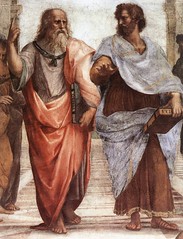 | 36 |
| 10635336657 | "Renaissance Man" | multi-talented, skilled in many areas: Arts, Math/Science, Music, Architecture. Example: Leonardo Da Vinci | 37 | |
| 10635336658 | republics | in Italy during the Renaissance Italian states were divided into two categories. these were base on the old medieval communes. or associations with free men who sought complete political and economic independence from local nobles |  | 38 |
| 10635336659 | rhetoric | From the Greek for "orator," this term describes the principles governing the art of writing and speaking effectively, eloquently, and persuasively. |  | 39 |
| 10635336660 | The School of Athens | Raphael - Italian Renaissance fresco wall painting of Greek philosophers drawn to scale in accordance with the vantage point of the viewer. The placement, in the center of the archway, of Plato and Aristotle emphasizes the importance of these two central figures. Raphael shows his style of basic one-point perspective converging in a single vanishing point just behind Plato and Aristotle. The exception is the cube in the foreground which gives a two-point perspective. It easy to see, that with the removal of the figures, the building is symmetrically balanced. |  | 40 |
| 10635336661 | scholasticism | attempt to reconcile the beliefs and values of Christianity with the logical reasoning of Greek philosophy. |  | 41 |
| 10635336662 | secularism | An indifference to religion and a belief that religion should be excluded from civic affairs and public education |  | 42 |
| 10635336663 | Treaty of Lodi | a treaty between Milan, Naples, and Florence against Venice and the Papal States. It fell apart when Milan and Naples began to feud |  | 43 |
| 10635336664 | Tudors | The House of Lancaster and the House of York feuded over the throne for more than twenty years, until finally a compromis was reached when a new royal house-------emerged in 1485 by intermarriage between two warring families. Henry VII, the first of this dynasty. This dynasty would dominate England throughout the 16th century |  | 44 |
| 10635336665 | Utopia | A work that presents a revolutionary view of society and describes an ideal socialistic community on an island somewhere off the mainland of the New World. He created the name utopia as a good place which is no place. Book by Thomas More |  | 45 |
| 10635336666 | Van Eyck, Jan | An important painter of the Northern Renaissance. He is credited with the first use of the oil glazing technique of painting. He is also known for the great detail in his work. His most famous work was the Arnolfini Wedding. |  | 46 |
| 10635336667 | Vasari, Giorgio | an Italian painter and architect, who is today famous for his biographies of Italian artists, considered the ideological foundation of art-historical writing. |  | 47 |
| 10635336668 | Vernacular | Everyday language of ordinary people. |  | 48 |
| 10635336669 | Vinci, Leonardo da | "Renaissance Man"- great artist, engineer, scientist, and inventor. He created the Mona Lisa. |  | 49 |
| 10635336670 | War of the Roses | 1455-1485; A war between the York family and Lancaster family of England for the crown. This struggle was ended when Henry Tudor, who was on the Lancaster side, won. He became Henry VII, the first Tudor king. |  | 50 |
Pages

Need Help?
We hope your visit has been a productive one. If you're having any problems, or would like to give some feedback, we'd love to hear from you.
For general help, questions, and suggestions, try our dedicated support forums.
If you need to contact the Course-Notes.Org web experience team, please use our contact form.
Need Notes?
While we strive to provide the most comprehensive notes for as many high school textbooks as possible, there are certainly going to be some that we miss. Drop us a note and let us know which textbooks you need. Be sure to include which edition of the textbook you are using! If we see enough demand, we'll do whatever we can to get those notes up on the site for you!
