| 13480318265 | Allegory | The device of using character and/or story elements symbolically to represent an abstraction in addition to
the literal meaning. |  | 0 |
| 13480318267 | Allusion | A direct or indirect reference to something which is presumably commonly known, such as an event, book, myth, place, or work of art. |  | 1 |
| 13480318268 | Ambiguity (am-bi-gyoo-i-tee) | The multiple meanings, either intentional or unintentional, of a word, phrase, sentence, or passage. |  | 2 |
| 13480318269 | Analogy | A similarity or comparison between two different things or the relationship between them- can also make writing more vivid, imaginative, or intellectually engaging. |  | 3 |
| 13480318270 | Anaphora (uh-naf-er-uh) | One of the devices of repetition, in which the same expression (word or words) is repeated at the beginning of two or more lines, clauses, or sentences.
I have a dream that ....I have a dream that ....(Martin Luther King). |  | 4 |
| 13480318271 | Anecdote | A short narrative detailing particulars of an interesting episode or event. The term most frequently refers to an incident in the life of a person |  | 5 |
| 13480318272 | Antithesis (an-tih-theh-sis) | Figure of balance in which two contrasting ideas are intentionally juxtaposed, usually through parallel structure; a contrasting of opposing ideas in adjacent phrases, clauses, or sentences. |  | 6 |
| 13480318273 | Aphorism | phrase that shares a general truth or a moral principle. Ex: Early to bed, early to rise, makes a man healthy, wealthy, and wise. THINK: Ben Franklin |  | 7 |
| 13480318274 | Apostrophe | A figure of speech that directly addresses an absent or imaginary person or a personified abstraction, such as liberty or love, an address to someone or something that cannot answer. |  | 8 |
| 13480318275 | Atmosphere | The emotional mood created by the entirety of a literary work, established partly by the setting and partly by the author's choice of objects that are described. Even such elements as description of the weather can contribute to the atmosphere. Frequently atmosphere forshadows events. Perhaps it can create a mood. |  | 9 |
| 13480318276 | Chiasmus (kahy-az-muhs) | a figure of speech in which two successive phrases or clauses are parallel in syntax, but reverse the order of the analogous words. |  | 10 |
| 13480318277 | Clause | a grammatical unit that contains both a subject and a verb. An independent, or main, clause expresses a complete thought and can sand alone as a sentence. A dependent, or subordinate clause cannot stand alone as a sentence and must be accompanied by an independent clause. |  | 11 |
| 13480318279 | Coherence | A principle demanding that the parts of any composition be arranged so that the meaning of the whole may be immediately clear and intelligible. |  | 12 |
| 13480318281 | Connotation | The nonliteral, associative meaning of a word; the implied, suggested meaning. |  | 13 |
| 13480318282 | Denotation | The strict, literal, dictionary definition of a word, devoid of any emotion attitude, or color. |  | 14 |
| 13480318285 | Didactic (dahy-dak-tik) | From the Greek, didactic literally means "teaching." the primary aim of teaching or instructing, especially the teaching of moral or ethical principles. This is a strong tone word. |  | 15 |
| 13480318286 | Enumeratio | Figure of amplification in which a subject is divided into constituent parts or details, and may include a listing of causes, effects, problems, solutions, conditions, and consequences; the listing or detailing of the parts of something. |  | 16 |
| 13480318287 | Expletive (ek-spli-tiv) | Figure of emphasis in which a single word or short phrase, usually interrupting normal speech, is used to lend emphasis to the words on either side of the expletive.
Ex: "The strength of America's response, *please understand,* flows from the principles upon which we stand." |  | 17 |
| 13480318288 | Euphemism (yoo-fuh-miz-uhm) | a more agreeable or less offensive substitute for a generally unpleasant word or concept.
Ex: "racially charged" instead of "racist" |  | 18 |
| 13480318289 | Exposition | The purpose is to explain or introduce something in an essay or work. |  | 19 |
| 13480318290 | Extended metaphor | A metaphor developed at great length, occurring frequently in or throughout the work. |  | 20 |
| 13480318291 | Figurative language | - Writing or speech that is not intended to carry literal meaning and is usually meant to be imaginative and vivid. |  | 21 |
| 13480318292 | Figure of speech | A device used to produce figurate language. Many compare dissimilar things. May include apostrophe, hyperbole, irony, metaphor, metonymy, oxymoron, paradox, personification, simile, synecdoche, and understatement. This is an umbrella statement. |  | 22 |
| 13480318293 | Genre | The major category into which a literary work fits. The basic divisions of literature are prose, poetry, and drama. |  | 23 |
| 13480318294 | Homily (hom-uh-lee) | This term literally means "sermon," but more informally, it can include any serious talk, speech, or lecture involving moral or spiritual advice. |  | 24 |
| 13480318295 | Hyperbole (hahy-pur-buh-lee) | A figure of speech using deliberate exaggeration or overstatement. |  | 25 |
| 13480318296 | Hypophora | Figure of reasoning in which one or more questions is/are asked and then answered, often at length, by one and the same speaker; raising and responding to one's own question(s). |  | 26 |
| 13480318297 | Imagery | The sensory details or figurative language used to describe, arouse emotion, or represent abstractions. |  | 27 |
| 13480318299 | Invective | An emotionally violent, verbal denunciation or attach using strong, abusive language. | 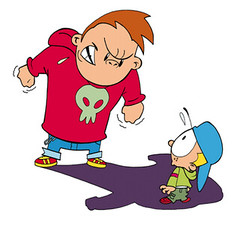 | 28 |
| 13480318300 | Irony/ironic | The contrast between what is stated explicitly and what is really meant. The difference between what appears to be and what actually is true, is used for many reasons, but frequently, it's used to create poignancy or humor. This is often present in satire. |  | 29 |
| 13480318301 | Juxtaposition (juhk-stuh-puh-zish-uhn) | When two words, phrases, images, ideas are placed close together or side by side for comparison or contrast. |  | 30 |
| 13480318302 | Litotes | From the Greek word "simple" or "plain." Litotes is a figure of thought in which a point is affirmed by negating its opposite. It is a special form of understatement.
Ex: "Not too bad" |  | 31 |
| 13480318303 | Metaphor | A figure of speech using implied comparison of seemingly unlike things or the substitution of one for the other, suggesting some similarity. |  | 32 |
| 13480318304 | Metonymy (mi-ton-uh-mee) | a figure of speech in which the name of one object is substituted for that of another closely associated with it. Example: A news release that claims "the White House declared" rather that "the President declared" |  | 33 |
| 13480318305 | Mood | The prevailing atmosphere or emotional aura of a work. Setting, tone, and events can affect the mood. In this usage, mood is *similar* to tone and nearly identical to atmosphere. |  | 34 |
| 13480318306 | Narrative | The telling of a story or an account of an event or series of events. |  | 35 |
| 13480318307 | Onomatopoeia (on-uh-mat-uh-pee-uh) | A figure of speech in which natural sounds are imitated in the sounds of words. Simple examples include such words as buzz, hiss, hum, crack, whinny, and murmur. |  | 36 |
| 13480318308 | Oxymoron | the author groups apparently contradictory terms to suggest a paradox. Simple examples include "jumbo shrimp" and "cruel kindness." |  | 37 |
| 13480318309 | Paradox | A statement that appears to be self-contradictory or opposed to common sense but upon closer inspection contains some degree of truth or validity. |  | 38 |
| 13480318310 | Parallelism | The grammatical or rhetorical framing of words, phrases, sentences, or paragraphs to give structural similarity. Parallelism acts as an organizing force to attract the reader's attention, add emphasis and organization, or simply provide a musical rhythm. |  | 39 |
| 13480318311 | Parody | A work that closely imitates the style or content of another with the specific aim of comic effect and/or
ridicule. |  | 40 |
| 13480318312 | Pedantic (puh-dan-tik) | An adjective that describes words, phrases, or general tone that is overly scholarly, academic, or bookish. |  | 41 |
| 13480318313 | Personification | A figure of speech in which the author presents or describes concepts, animals, or inanimate objects by endowing them with human attributes or emotions. |  | 42 |
| 13480318314 | Polysyndeton (paulee-sin-dih-tawn) | Figure of addition and emphasis which intentionally employs a series of conjunctions (FANBOYS: for, and, nor, but, or, yet, so) not normally found in successive words, phrases or clauses.
Ex: "And Joshua, and all of Israel with him, took Achan the son of Zerah, and the silver, and the garment, and the wedge of gold, and his sons, and his daughters, and his oxen, and his asses, and his sheep, and his tent, and all that he had." |  | 43 |
| 13480318315 | Prose | refers to fiction and non-fiction, including all its forms. |  | 44 |
| 13480318316 | Repetition | The duplication, either exact or approximate, of any element of language, such as a sound, word, phrase, clause, sentence, or grammatical pattern. |  | 45 |
| 13480318317 | Rhetoric | From the Greek for "orator," this term describes the principles governing the art of writing effectively, eloquently, and persuasively. | | 46 |
| 13480318319 | Rhetorical Question | not answered by the writer because its answer is obvious or obviously desired, and usually just a yes or no answer would suffice. It is used for effect, emphasis, or provocation, or for drawing a conclusionary statement from the fact at hand. |  | 47 |
| 13480318320 | Sarcasm | language that is meant to hurt or ridicule someone or something. |  | 48 |
| 13480318321 | Satire | A work that targets human vices and follies or social institutions and conventions for (mostly) reform or (less frequently) simply ridicule. |  | 49 |
| 13480318323 | Style | (1) An evaluation of the sum of the choices an author makes in blending diction, syntax, figurative language, and other literary devices. (2) Classification of authors to a group and comparison of an author to similar authors. | | 50 |
| 13480318324 | Subordinate clause | Like all clauses, this word group contains both a subject and a verb, but unlike the independent clause, cannot stand alone; it does not express a complete thought. |  | 51 |
| 13480318326 | Symbol/symbolism | Generally, anything that represents itself and stands for something else. Usually something concrete - such as object, action, character, or scene - that represents something more abstract. |  | 52 |
| 13480318327 | Synecdoche (si-nek-duh-kee) | is a type of metaphor in which the part stands for the whole or the whole for a part.
Ex: The word "boots" usually refers to soldiers. |  | 53 |
| 13480318329 | Theme | The central idea or message of a work, the insight it offers into life. |  | 54 |
| 13480318330 | Thesis | The sentence or a group of sentences that directly expresses the author's opinion, purpose, meaning, or position. |  | 55 |
| 13480318332 | Transition | A word or phrase that links different ideas. effectively signals a shift from one idea to another. |  | 56 |
| 13480318333 | Understatement | The ironic minimizing of fact presents something as less significant than it is. | | 57 |
| 13480318337 | Rhetorical Appeals | Logos, Ethos Pathos are the primary ones. Remember, these are established, NOT used. |  | 58 |
| 13480318338 | Logos | Appealing to reason; presented calmly, logically, step-by-step. They can include references to historical events, experts, and statistics. Tone will often be measured, neutral, logical (but not always). |  | 59 |
| 13480318339 | Ethos | An appeal to show that the speaker or writer is credible, a person whom we can trust, a good person who knows what he is talking about or who cares about us and knows us. |  | 60 |
| 13480318340 | Pathos | Appeal that tugs at people's feelings; may include emotional diction, imagery, repetition, and figurative language. Might make you laugh or cry. Could also be intended to make you afraid or feel outraged. |  | 61 |
| 13480318341 | Syntax | The arrangement of words and the order of grammatical elements in a sentence or paragraph. Sentence types, sentences lengths -- how the sentence is structured.
The way an author chooses to join words into phrases, clauses, and sentences; similar to diction, but more focused on punctuation, etc. |  | 62 |
| 13480318346 | Tone | Writer's or speaker's attitude toward a subject, character, or audience. Is it amused? Hostile? Angry? Sad? Reflective?
Remember: start with positive/negative/neutral, but NEVER end there. |  | 63 |
| 13480318347 | Diction | The writer's or speaker's word choice intended to create a particular impact on the audience. |  | 64 |
| 13480318349 | Alliteration | The practice of beginning several consecutive or neighboring words with the same sound. ex) She sells sea shells ... |  | 65 |
| 13480318352 | SOAPSTone | A strategy for establishing the rhetorical situation of a text. Think of this for your introduction (plus the thesis statement). | | 66 |
| 13480318353 | The first S in SOAPSTone | The speaker or source of the text. What do you know about the speaker? (Relates to ethos) | | 67 |
| 13480318354 | The O in SOAPSTone | The occasion or circumstance of the text. What has happened or is happening? Why has the writer written this NOW? This is the context of the piece. | | 68 |
| 13480318355 | The A in SOAPSTone | The intended audience or recipient of the text. Many texts will have multiple audiences. | | 69 |
| 13480318356 | The P in SOAPSTone | the speaker's purpose for the text; the desired outcome. Ex) Lou Gehrig wants to thank his fans and show them that is remains positive. | | 70 |
| 13480318357 | The second S in SOAPSTone | The subject of the text. This takes the shape of "A [what the text is shaped as] about [a basic topic]" | | 71 |
| 13480318358 | Counterargument | Opposing argument to the one the writer is putting forward. Rather than ignoring the counterargument, the writer will acknowledge it and then crush it with the mighty weight of their pen (and brain). |  | 72 |
| 13480318359 | Colloquial Language | An informal type of diction that reflects casual, conversational language and often times slang. Examples: "What's up dude" and "y'all" opposed to "How's it going" and "you all" |  | 73 |
| 13480318361 | Verbal Irony | Someone's spoken meaning is different from the words being used. Closely associated with sarcasm. |  | 74 |
| 13480318363 | Logical Fallacy -- Generalization | An argument based on unsound logic. Ex) Generalization: Stating that all members of a group are a particular way. This is what the Muslim travel ban is saying about people from these Muslim majority countries. If a generalization is to have validity, it must be supported with facts. How can you prove anything about 1.6 billion Muslims? |  | 75 |
| 13480318364 | Logical Fallacy -- Bandwagon | Everyone is doing it -- so you should do it too! Another argument based on unsound logic. Used in advertising a lot. |  | 76 |
| 13480318365 | Logical Fallacy -- Ad Hominem | Attack on character. Someone who cannot attack someone's ideas, so goes after them personally. Ex) Donald Trump (when he was a candidate) attacked female candidate's appearance stating, "Look at that face." He did not attack her policies. |  | 77 |
| 13480318366 | Inclusive and Exclusive Language | Using language to include or exclude people. "We're in this together" makes people feel like they are a team. "Those people are a threat" can exclude people and creates divisions between people. | | 78 |
| 13480318367 | Anecdotal Evidence | Evidence that is a personal story. | | 79 |
| 13480318368 | Expert Testimony | An expert in a field who can support the argument with facts and data. | | 80 |
| 13480318369 | Research findings | Evidence derived from a study. | | 81 |
| 13480318370 | Emotive language | Language that is sensational -- designed to get an emotional response from the reader. | | 82 |



