AP Notes, Outlines, Study Guides, Vocabulary, Practice Exams and more!

AP World Chapter 5 Flashcards

Terms : Hide Images
12739275805Ahura MazdaIn Zoroastrianism, the good god who rules the world.0
12739275806Angra MainyuIn Zoroastrianism, the evil god engaged in the cosmic struggle against good.1
12739275807AristotleA Greek polymath philosopher (384-322 BCE) student of Plato and teacher of Alexander the Great2
12739275808atmanThe human soul, which in classic Hindu belief seeks union with Brahman.3
12739275809Ban ZhaoA major female Confucian author of Han dynasty China (45-116 CE) whose works give insight into the implication of Confucian thinking for women.4
12739275810Bhagavad GitaA great Hindu epic text. part of the much larger Mahabharata, which affirms the performance of caste duties as a path to religious liberation.5
12739275811bhakti movementAn immensely popular development in Hinduism, advocating intense devotion toward a particular deity.6
12739275812BrahmanThe "world soul" or final reality in upanishadic Hindu belief.7
12739275813BrahminsThe priestly cast of India8
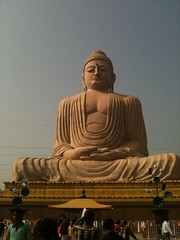
12739275814BuddhismThe cultural/religious tradition first enunciated by Siddhartha Gautama9
12739275815ConfucianismThe Chinese philosophy first enunciated by Confucius, advocating the moral example of superiors as the key element of social order.10
12739275816ConfuciusKong Fuzi. The founder of Confucianism (551-479 BCE) an aristocrat of northern China who proved to be the greatest influence on Chinese culture in its history.11
12739275817ConstantineRoman emperor (306-337 CE) whose conversion to Christianity paved the way for the triumph of Christianity in Europe.12
12739275818DaodejingThe central text of Daoism; translated as The Way and Its Power.13
12739275819DaoismA Chinese philosophy/popular religion that advocates simplicity and understanding of the world of nature, founded by the legendary figure Laozi.14
12739275820filial pietyThe honoring of one's ancestors and parents, a key element of Confucianism.15
12739275821Greek rationalismA secularizing system of scientific and philosophic thought that developed in classical Greece in the period 600 to 300 BCE it emphasized the power of education and human reason to understand the world in nonreligious terms.16
12739275822HinduismA word derived from outsiders to describe the vast diversity of indigenous Indian religious beliefs17
12739275823HippocratesA very influential Greek medical theorist (ca. 460-ca 370 BCe) regarded as the father of modern medicine18
12739275824IsaiahOne of the most important prophets of Judaism, whose teachings show the transformation of the religion in favor of compassion and social justice19
12739275825Jesus of NazarethThe prophet/god of Christianity20
12739275826JudaismThe monotheistic religion developed by the Hebrews, emphasizing a sole personal god (Yahweh) with concerns for social justice.21
12739275827karmaIn Hinduism, the determining factor of the level at which the individual is reincarnated, based on purity of action and fulfillment of duty in the prior existence.22
12739275828LaoziA legendary Chinese philosopher of the 6th century BCE regarded as the founder of Daoism23
12739275829LegalismA Chinese philosophy distinguished by an adherence to clear laws with vigorous punishments.24
12739275830Mahayana"Great Vehicle", the popular development of Buddhism in the early centuries of the Common Ear, which gives a much greater role to supernatural beings and proved to be more popular than original (Theravada) Buddhism.25
12739275831mokshaIn Hindu belief, liberation from separate existence and union with Brahman.26
12739275832nirvanaThe end goal of Buddhism in which individual identity is "extinguished" into a state of serenity and great compassion.27
12739275833PlatoA disciple of Socrates whose Dialogues convey the teachings of his master while going beyond them to express his own philosophy (429-348 BCE)28
12739275834PythagorasA major Greek philosopher (ca. 560-ca 480 BCE) who believed that an unchanging mathematical order underlines the apparent chaos of the world.29
12739275835Saint PaulThe first great popularizer of Christianity30
12739275836Siddhartha Gautama(Buddha) The Indian prince turned ascetic (ca 566-ca486 BCE) who founded Buddhism.31
12739275837SocratesThe first great Greek philosopher to turn rationalism toward questions of human existence.32
12739275838Thales of MiletusA Greek natural philosopher (ca 623-ca 547 BCE) noted for his application of reason to astronomy and for his questioning of the fundamental nature of the universe33
12739275839TheodosiusRoman emperor (r. 379-395 CE) who made Christianity the official religion of the Roman state, banning all polytheistic rituals.34
12739275840Theravada"the Teaching of the Elders," the early form of Buddhism according to which the Buddha was a wise teacher but not divine and which emphasizes practices rather than beliefs35
12739275841UpanishadsIndian mystical and philosophical works, written between 800 and 400 BCE36
12739275842VedasThe earliest religious texts of India, a collection of ancient poems, hymns, and rituals that were transmitted orally before being written down ca 600 BCE37
12739275843Warring States periodPeriod in China from 403 to 221 BCE that was typified by disorder and political chaos.38
12739275844yin and yangExpression of the Chinese belief in the unity of opposites.39
12739275845ZarathustraA Persian prophet, traditionally dated to the 6th or 7th century BCE who founded Zoroastrianism.40
12739275846ZhuangziA Chinese philosopher (369-286 BCE) who spelled out the teachings of Daoism.41
12739275847ZoroastrianismPersian monotheistic religion founded by Zarathustra.42
12739275848Zhou DynastyA decentralized Chinese dynasty in China because of the massive size which began in 1122 BCE and whose emperor was the first to claim to be a link between heaven and earth. Kong Fuzi and Laozi preached new religions/philosophies. Iron metallurgy increased. Fell to the Waring States period.43
12739275849AnalectsThe collection of Confucius's thoughts and sayings; most important text in Confucianism; stressed the moral example to be set by superiors and emphasized social relationships.44
12739275850RenTranslated as human-heartedness, benevolence and goodness; nobility. The essential ingredient for a tranquil society in Confucianism.45
12739275851Four Noble TruthsIn Buddhism, the principles that rule life and promise an end to suffering (All life is suffering, suffering is caused by desire, to end suffering stop desiring, and to reach enlightenment follow the eight fold path.46
12739275852Laws of ManuHindu text that governed social life ("In childhood a female must be subject to her father; in youth to her husband; when her lord is dead to her sons; a woman must never be independent").47
12739275853MonotheismThe belief in one God most prominently practiced by Zoroastrians and early Jews that most influenced the early development of Christianity and Islam48

AP LANGUAGE RHETORICAL DEVICES Flashcards

Terms : Hide Images
13953660214active voice- The subject of the sentence performs the action. This is a more direct and preferred style of writing in most cases. "Anthony drove while Toni searched for the house." The opposite is passive voice when the subject of the sentence receives the action. "The car was driven by Anthony." Passive voice is often overused, resulting in lifeless writing. When possible, try to use active voice.0
13953660215allusion- An indirect reference to something (usually a literary text, although it can be other things1
13953660216alter-ego- A character that is used by the author to speak the author's own thoughts; when an author speaks directly to the audience through a character.2
13953660217antecedent- The word, phrase, or clause referred to by a pronoun. The AP language exam occasionally asks for the antecedent of a given pronoun in a long, complex sentence or in a group of sentences. "If I could command the wealth of all the world by lifting my finger, I would not pay such a price for it." An AP question might read: "What is the antecedent for "it"?3
13953660218anecdote- A brief recounting of a relevant episode. Anecdotes are often inserted into fictional or non fictional texts as a way of developing a point or injecting humor.4
13953660219comic relief- when a humorous scene is inserted into a serious story, in order to lighten the mood somewhat5
13953660220diction- Word choice, particularly as an element of style.6
13953660221colloquial- A "colloquialism" is a common or ordinary or familiar type of conversation.7
13953660222connotation- Rather than the dictionary definition (denotation), the associations suggested by a word.8
13953660223denotation- The literal, explicit meaning of a word, without its connotations.9
13953660224jargon- The diction used by a group which practices a similar profession or activity.10
13953660225vernacular- 1. Language or dialect of a particular country. 2. Language or dialect of a regional group11
13953660226adage -A folk saying with a lesson. "A rolling stone gathers no moss."12
13953660227allegory- A story, fictional or non fictional, in which characters, things, and events represent qualities or concepts13
13953660228aphorism- A terse statement which expresses a general truth or moral principle.14
13953660229ellipsis- The deliberate omission of a word or phrase from prose done for effect by the author. Symbolized by 3 periods.15
13953660230euphemism- A more agreeable or less offensive substitute for generally unpleasant words or concepts.16
13953660231analogy- An analogy is a comparison of one pair of variables to a parallel set of variables.17
13953660232hyperboleextreme exaggeration18
13953660233idiomA common, often used expression that doesn't make sense if you take it literally. "I got chewed out by my coach."19
13953660234metaphorA comparison of two unlike things not using "like" or "as"20
13953660235metonymy- Replacing an actual word or idea, with a related word or concept. "Relations between London and Washington have been strained," does not literally mean relations between the two cities, but between the leaders of The United States and England. Metonymy is often used with body parts: "I could not understand his tongue," means his language or his speech.21
13953660236personificationGiving human-like qualities to something that is not human. "The tired old truck groaned as it inched up the hill."22
13953660237foreshadowing- When an author gives hints about what will occur later in a story.23
13953660238genre -The major category into which a literary work fits. The basic divisions of literature are prose, poetry, and drama. However, genres can be subdivided as well (poetry can be classified into lyric, dramatic, narrative, etc.). The AP Language exam deals primarily with the following genres: autobiography, biography, diaries, criticism, essays, and journalistic, political, scientific, and nature writing.24
13953660239imageryWord or words that create a picture in the reader's mind. Usually this involves the five senses25
13953660240invective- A long, emotionally violent, attack using strong, abusive language.26
13953660241irony- When the opposite of what you expect to happen does.27
13953660242verbal irony- When you say something and mean the opposite/something different - also described as sarcasm28
13953660243dramatic irony- When the audience of a drama, play, movie, etc. knows something that the character doesn't and would be surprised to find out.29
13953660244juxtaposition- Placing things side by side for the purposes of comparison. Authors often use juxtaposition of ideas or examples in order to make a point.(For example, an author my juxtapose the average day of a typical American with that of someone in the third world in order to make a point of social commentary).30
13953660245mood- The atmosphere created by the literature and accomplished through word choice (diction). Syntax is often a creator of mood since word order, sentence length and strength and complexity also affect pacing and therefore mood. Setting, tone, and events can all affect the mood.31
13953660246motif- a recurring idea in a piece of literature. In To Kill a Mockingbird, the idea that "you never really understand another person until you consider things from his or her point of view" is a motif, because the idea is brought up several times over the course of the novel.32
13953660247oxymoron -When apparently contradictory terms are grouped together and suggest a paradox - "wise fool," "eloquent silence," "jumbo shrimp."33
13953660248pacing- The speed or tempo of an author's writing. Writers can use a variety of devices (syntax, polysyndeton, anaphora, meter) to change the pacing of their words. An author's pacing can be fast, sluggish, stabbing, vibrato, staccato, measured, etc.34
13953660249paradox- A seemingly contradictory situation which is actually true."You can't get a job without experience, and you can't get experience without getting a job."35
13953660250parallelism- (Also known as parallel structure or balanced sentences.) Sentence construction which places equal grammatical constructions near each other, or repeats identical grammatical patterns.36
13953660251anaphora-Repetition of a word, phrase, or clause at the beginning of two or more sentences or clauses in a row. This is a deliberate form of repetition and helps make the writer's point more coherent. "I came, I saw, I conquered."37
13953660252chiasmus- When the same words are used twice in succession, but the second time, the order of the words is reversed. "Fair is foul and foul is fair."38
13953660253antithesis- Two opposite or contrasting words, phrases, or clauses, or even ideas, with parallel structure. "It was the best of times, it was the worst of times"39
13953660254parody- An exaggerated imitation of a serious work for humorous purposes. It borrows words or phrases from an original, and pokes fun at it40
13953660255persona- The fictional mask or narrator that tells a story. Do not confuse with alter-ego.41
13953660256alliterationThe repetition of the same consonant sound at the beginning of words. "Sally sells sea shells by the sea shore"42
13953660257onomatopoeiaThe use of a word which imitates or suggests the sound that the thing makes.43
13953660258pun- When a word that has two or more meanings is used in a humorous way.44
13953660259rhetoricThe art of effective communication.45
13953660260rhetorical question-Question not asked for information but for effect.46
13953660261sarcasmA generally bitter comment that is ironically or satirically worded.47
13953660262satireA work that reveals a critical attitude toward some element of life to a humorous effect. It targets human vices and follies, or social institutions and conventions.48
13953660263declarative sentenceStates an idea. It does not give a command or request, nor does it ask a question. "The ball is round."49
13953660264imperative sentenceIssues a command. "Kick the ball."50
13953660265interrogative sentenceSentences incorporating interrogative pronouns (what, which, who, whom, and whose). "To whom did you kick the ball?"51
13953660266styleThe choices in diction, tone, and syntax that a writer makes. Style may be conscious or unconscious.52
13953660267symbolAnything that represents or stands for something else.53
13953660268Syntax/sentence varietyGrammatical arrangement of words. This is perhaps one of the most difficult concepts to master. First, a reader should examine the length of sentences (short or long). How does sentence length and structure relate to tone and meaning.54
13953660269themeThe central idea or message of a work.55
13953660270thesisThe sentence or groups of sentences that directly expresses the author's opinion, purpose, meaning,56
13953660271toneA writer's attitude toward his subject matter revealed through diction, figurative language and organization57
13953660272understatementThe ironic minimizing of fact, understatement presents something as less significant58
13953660273ethos-(credibility) means being convinced by the credibility of the author. We tend to believe people whom we respect.59
13953660274pathos(emotional) means persuading by appealing to the reader's emotions.60
13953660275logos(logical) means persuading by the use of reasoning, using true premises and valid arguments. This is generally considered the strongest form of persuasion.61
13953660276concessionAccepting at least part or all of an opposing viewpoint. Often used to make one's own argument stronger by demonstrating that one is willing to accept what is obviously true and reasonable, even if it is presented by the opposition.62
13953660277conditional statementA conditional statement is an if-then statement and consists of two parts, an antecedent and a consequent. "If you studied hard, then you will pass the test." Conditional statements are often used as premises in an argument.63
13953660278deductive argumentAn argument in which it is thought that the premises provide a guarantee of the truth of the conclusion. In a deductive argument, the premises are intended to provide support for the conclusion that is so strong that, if the premises are true, it would be impossible for the conclusion to be false.64
13953660279fallacyA fallacy is an attractive but unreliable piece of reasoning.65
13953660280AD HOMINEMLatin for "against the man". Personally attacking your opponents instead of their arguments.66
13953660281APPEAL TO AUTHORITYThe claim that because somebody famous supports an idea, the idea must be right67
13953660282APPEAL TO THE BANDWAGONThe claim, as evidence for an idea, that many people believe it, or right.68
13953660283APPEAL TO EMOTIONAn attempt to replace a logical argument with an appeal to the audience's emotions. Common emotional appeals are an appeal to sympathy, an appeal to revenge, an appeal to patriotism - basically any emotion can be used as an appeal.69
13953660284BAD ANALOGYClaiming that two situations are highly similar, when they aren't. "We have pure food and drug laws regulating what we put in our bodies; why can't we have laws to keep musicians from giving us filth for the mind?"70
13953660285FALSE CAUSEAssuming that because two things happened, the first one caused the second one. (Sequence is not causation.) "Before women got the vote, there were no nuclear weapons. Therefore women's suffrage must have led to nuclear weapons."71
13953660286HASTY GENERALIZATIONA generalization based on too little or unrepresentative data. "My uncle didn't go to college, and he makes a lot of money. So, people who don't go to college do just as well as those who do."72
13953660287NON SEQUITURA conclusion that does not follow from its premises; an invalid argument. "Hinduism is one of the world's largest religious groups. It is also one of the world's oldest religions. Hinduism helps millions of people lead happier, more productive lives. Therefore the principles of Hinduism must be true."73
13953660288SLIPPERY SLOPEThe assumption that once started, a situation will continue to its most extreme possible outcome. "If you drink a glass of wine, then you'll soon be drinking all the time, and then you'll become a homeless alcoholic."74

AP World History Revolutions Flashcards

Terms : Hide Images
9245274354What did Peter the Great want to do?modernize Russia0
9245288242How did Peter the Great learn about western European countries?He visited them in disguise1
9245293701What did Peter the Great accomplish?-established the 1st newspaper in Russia -better education in Russia -introduced the potato -made Boyars dress like western nobles - improved women's rights -established St. Petersburg ("window on the sea")2
9245323438Philip II-strict Catholic king of Netherlands and Spain -sent the Duke of Alva to root out heresy in the Netherlands/convert it to Catholicism which led to the war for Dutch independence3
9245340663Louis XIV was the... (sorry this is a weird question)-sun king -most powerful monarch in French history4
9245446891Who ruled when Louis XIV was too young to rule?Cardinal Mazarin5
9245473136Louis XIV accomplishments-made France the cultural and economic center of Europe -built Versailles to distract nobles -tried to get more land (War of Spanish Succession)6
9245814362The French Revolutiona period of far-reaching social and political upheaval in France and its colonies that lasted from 1789 until 1799; it was partially carried forward by Napoleon during the later expansion of the French Empire7
9245838163What does the acronym MEAT mean?It is a way to remember the causes of the French Revolution. M- Monarchy: Louis XIV was not a very good leader & Marie Antoinette and Louis XIV spent much of the government's money on their expensive lifestyle E- Enlightenment Ideas: ideas of social contract and natural rights arose; people argued that the King was violating their natural rights to life, liberty, and property; people believed that they were able to govern themselves A- American Revolution: inspired people (saw a group of people overthrow their king and start a democracy and they wanted that as well) & since the French had helped America win their revolution, it cost France a lot of money and contributed to their debt T- Taxes, Taxes, Taxes: enforced taxes to pay for expensive lifestyle of royal family and for the American Revolution expenses; unfair taxing due to the social system (only the poorest people (Third Estate) had to pay taxes)8
9245932096Social class system of revolutionary France:First Estate: was made up of the clergy, who owned 10 % of the land but made up only 1% of the population; did not pay taxes Second Estate: Nobility; 2 % of population but owned 25% of land; rented land; charged dues and rents to peasants; paid almost no taxes (exempt from all direct taxes)9
9245972591Abbe Sieyes- Sympathetic to the Third Estate - Declared the nobility was a useless caste that could be abolished without loss10
9245990677Women's MovementThe women's society was created -founded by Pauline Leon and Claire Lacombe -illustrates the political consciousness of women during the revolution. - they frequented the bleachers of the Convention to hear the debates - became increasingly radical and demanded stricter control of bread prices and other commodities, and even brawled with working market women whom they thought to be insufficiently revolutionary The Jacobins feared turmoil and banned the society11
9246049317Maximilien RobespierreA radical Jacobin leader during the Reign of Terror - "Terror is nothing other than justice, prompt, severe, inflexible" - "Softness to traitors will destroy us all." - believed that terror was the order of the day12
9246062744Reign of Terror- designed to fight the enemies of the revolution, to prevent counter-revolution from gaining ground - most of the people rounded up were not aristocrats, but ordinary people - The Revolutionary Tribunal of Paris alone executed 2,639 victims in 15 months. - The total number of victims nationwide was over 20,000! - Public executions were considered educational. Women were encouraged to sit and knit during trials and executions.13
9246087249Napoleon Bonaparte- overthrew the government in a coup d'etat - military genius; was able to defeat coalitions brought against him - Horatio Nelson prevented him from invading England - hurt by the Russian winter - sentenced to exile on the island of Elba but escaped Elba and returned to France i a period called the Hundred Days - last battle at Waterloo - exiled again, this time to the island of St. Helena where he eventually dies of natural causes14
9248509329influence of commercial revolutionrise in capitalism, joint stock companies, mercantilism, economic self-sufficiency, and overseas colonization- all factors that spurred the industrial revolution15
9248511347influence of agricultural revolutionallowed landowners to experiment in their larger fields to increase crop output. These farming methods first developed in the Netherlands, where farmland was scarce, and then spread to England; crop rotation16
9248511348influence of scientific revolutionsaw new inventions and experimentation that would lead to better agricultural practices and machines for industry.17
9249218371Charles "turnip" TownsendIntroduced crop rotation to England. Crop rotation= during the middle ages the farmers used a 3 field rotation leaving one field fallow every third year to preserve nutrients. The dutch discovered that by alternating between grain and nitrogen producing plants (such as beans, peas, clover, turnips) the soil would restore itself.18
9249266262Why did the IR begin in Britain?1- it is an island nation with no part of it being more than 20 miles from the sea & had an abundance of rivers/canals/harbors-- cheaper to ship goods by sea than land 2-atlantic market (dominated by england) provided a market for manufactured goods. growing overseas trade, economic prosperity, & a climate of progress contributed to the increased demand for goods 3- enclosure movement in england provided a large class of mobile workers in England 4- england had natural resources- coal/water to power machines, iron to make them 5- englands improved farming methods allowed low food prices and families had enough money for manufactured goods 6- no internal tariffs in england to restrict trade like in france/germany 7- good banking system (central bank and credit markets) 8- stable gov supportive of industry and practiced laissez-faire 9- england had all the factors of productions (land, labor, capital) necessary19
9254544938textile industryThe first industry to industrialize. Originally textiles were part of a cottage industry where merchants gave raw materials to workers who manufactured the cloth using hand tools. While the system provided cheap cloth, by the 18th century the cottage industry was not meeting demands. The problems of spinning wool or flax put the focus of the textile industry on cotton (cheaper and more available). The bottle neck was the weaving which took a long time on hand looms. An english mechanist, John Kay, in 1733 invented the flying shuttle which doubled the amount of work a weaver could do. The spinners could no longer produce enough thread for the weavers. James Hargreaves invented the spinning Jenny that allowed one spinner to do 8 threads. This led to the power loom which sped up weaving (1787- Edmund Cartwright) and the cotton gin. Textiles were cheaper and profits soared.20
9255168602Absolute monarchMonarch that claimed they had absolute power from God to rule21
9255179980Maria Theresa-ruler of Austria-Hungary -her father, Charles VI, wrote the Pragmatic Sanction to protect her from other monarchs attacking -Prussia attacked Austria-Hungary to get Silesia during her rule in the War of Austrian Succession22
9255201326Imperialisma policy of extending a country's power and influence through diplomacy or military force23
9255341929Innovations- developed industrial economies and a powerful military force - breechloader - the Maxim gun (machine gun) - the steamboat - quinine (drug that protected Europeans from malaria) All lowered the costs financially and in European lives making imperialism cost-effective24
9255457685What is the significance of Africa in terms of Imperialism?- David Livingstone traveled deep into central Africa - When several years passed with no word from him an American news reporter named Henry Stanley went looking for Livingstone - gave King Leopold II of Belgium (who had financed Stanley) a claim to the Congo region of Africa - Eventually all of Africa would be divided up with the exception of Liberia and Ethiopia25
9255537696Apartheid- means apartness - White, European descendants in South Africa controlled 87% of the land and all the mineral resources of the country - Black, African descendants were forced to live in townships, could not talk to more than two people at a time, could not publish anything, could not talk to the press and had to carry a passbook at all times showing where they had permission to be26
9255578821Impact of Imperialism of the global economyWorld superpowers were able to access raw materials that they weren't able to access before and were therefore able to produce more manufactured goods to use in trade with other countries27
9255716404Sphere of Influencea country or area in which another country has power to affect developments although it has no formal authority28
9255728794Opium Wars- China decided to crack down on opium use so they banned the trade of opium which hurt Britain's economy so Britain went to war with them to try to earn trading rights. - The British won both the first and second Opium Wars29
9255854010Goals of the Taiping Rebellion- Radical redistribution of land - Equality of men and women - End of foot binding, prostitution, and opium smoking - Expulsion of all "foreigners" - Transformation of China into an industrial nation with railroads, health care for all, universal public education, etc.30
9255893978Why did the Taiping Rebellion fail?- Divisions and indecisiveness within leadership - Inability to link up with other rebel groups throughout China - Western military support for pro-Qing forces31
9255906676What were some of the effects of the Taiping rebellion on China?- Weakening of the Qing centralized government - Disruption and weakening of China's economy - Destruction and devastation to the land - Estimated 20-30 million lives lost - Continued social instability32
9255870654The Boxer Rebellion- Anti-foreign movement - Led by militia organizations called the Society of Righteous and Harmonious Fists - "Boxers" killed many Europeans and Chinese Christians and attacked the foreign embassies in Beijing - made it clear that China was a dependent country under foreign control33
9255939128What was Imperialism like in India?- the British had wrestled control of India from the French during the Seven Years War - the Mughal Empire was collapsing and dozens of small states ruled by maharajahs, begin breaking away from Mughal rule. The East India Company took advantage of the collapse of the Mughals to gain control of most of India - Lord Cornwallis (Battle of Yorktown) worked to end corruption in the company and to end practices like slavery and the killing of infant girls in India - suttee (jumping into funeral pyre) was banned34
9255971037Sepoys and the Sepoy Rebellion- native Indian soldiers used by the British - rebelled in 1857, they mutinied, killing their officers cause- the Enfield rifle (A rumor began to circulate that the cartridges had been packed in beef and pork fat. Cows are sacred to Hindus and Muslims do not eat pork, so biting the cartridges would be sacrilegious.)35
9255996331Raj- the part of India under British rule36
9256039032What was British influence in India like (pros and cons)?- pros: the building of railroads, a modern road network, telephone and telegraph lines, dams, bridges, and irrigation canals allowed India to modernize - cons: the British held political and economic power, restricted Indian industries forcing the people of India to buy manufactured goods (like textiles) from England, forced to plant cash crops instead of food crops (many people in India starved), British customs and Christianity threatened India's traditional religions and life.37
9255249877What are the motives for the revival of imperialism?1. The Industrial Revolution- increased the demand for raw materials and markets where goods could be sold 2. Social Darwinism- leaders thought gaining colonies strengthened a nation's military security 3. Nationalism- people believed an empire was a symbol of national success and glory 4. Fear of Malthus- surplus population of nations could migrate to colonies 5. The wish to Christianize other people in the world 6. "White Man's Burden" By Rudyard Kipling- the wish to educate and civilize the less fortunate38
9255369448AbsolutismA political system in which a monarch has total power39
9255377815Scientific RevolutionA new way of thinking about the natural world; came about because of careful observation and people being willing to question their beliefs40
9255397195heliocentric theory and people that contributed to it-the Sun is the center of the solar system, and planets orbit around it -Copernicus first formed this theory but waited until he was on his deathbed to publish a book about it -Brahe collected the data that proved this theory but didn't do anything with it -Kepler used Brahe's data and his discovery of elliptical orbits to prove this theory41
9255433463Galileo Galilei-disproved many of Aristotle's theories of physics -used a telescope to study space and further prove the heliocentric theory -the church put him under house arrest and he had to say that his theories were wrong to avoid getting executed42
9255466222Anton van Leeuwenhoekdiscovered bacteria using the microscope (which he did not invent)43
9255528969Italian unification-made up of many city-states -was relatively easy to unite because the city-states had similar culture and religion -Austria was in north Italy and Spain was in south Italy but Italy could unify once those countries left44
9255473317Nationalismlove of one's country; having loyalty to the country, not the person ruling it45
9255489816Congress of Vienna-Representatives for European countries met in Vienna after the Napoleonic Wars to create a balance of power in Europe so not one country could become to powerful -dominated by the Austrian prime minister, Klemens von Metternich -most of the representatives were conservative and wanted to revert back to the ways of Europe before the revolutions (absolute monarchs), but European citizens did not want to go back to the old ways46
9255561230Giuseppe Mazzini-first person that fought for Italian unification -formed Young Italy47
9255611957German unification-made up of many principalities that did not have very similar culture -Grimm's Fairy Tales helped bring them together -the Austro-Prussian War drove the Austrians out of south Germany -the northern German principalities helped the southern German principalities in the Franco-Prussian War, making the southern German principalities not hate the northern ones like the did before, and Germany unified48
9255706615Franco-Prussian War-the southern German principalities hated the northern German ones after the Seven Years War, but they hated France more -Bismarck persuaded Louis-Napoleon, the ruler of France, to invade the southern German principalities -the northern German principalities came to the southern one's rescue -Germany won, allowing it to unite49
9255732940Decline of the Ottoman Empire-When Suleiman wasn't able to capture Vienna in 1683, it lost gradually lost power until the 19th century ("sick man of Europe") Declined because: -corrupt government -conflict between the Muslims Turks and Christians -different ethnic groups clashed -nationalism -the Young Turks50
9255766106Crimean War-Russia attacked the Ottoman Empire for a warm weather port -to keep up the balance of power in Europe, Great Britain and France joined the Ottomans and Austria joined Russia -in the charge of the British Light Brigade, the light brigade was accidentally sent instead of the heavy brigade, and many died -more people died of disease than battle -Florence Nightingale worked in hospitals in this war and made them more sanitary -ended with the Treaty of Paris51
9255648805Otto von Bismarck-prime minister of Prussia -wanted to unite Germany -built up the Prussian army and fought alongside the Austrian army against Denmark to compare his army to Austria's -then provoked Austria to declare war on Prussia-Austro-Prussian War -persuaded Louis-Napoleon to attack south Germany, and north Germany came to their rescue in the Franco-Prussian War -Germany united after and he became the Chancellor of Germany -passed the Accident Insurance Law and Old Age Insurance Law52
9255689545Kaiser Wilhelm-first ruler of Germany -weak and allowed power to go to Bismarck53
9255591169Giuseppe Garibaldi-soldier in Italian unification -was exiled and got experience fighting in South America with Simon Bolivar -returned to Italy, raised an army (the Red Shirts), and used continental-style fighting to drive the Spanish out of south Italy -joined forces with Cavour to totally unify Italy54
9255568662Count Camillo Cavour-politician in Italian unification -got France (Louis-Napoleon) to help him drive Austria out of north Italy -convinced Garibaldi not to attack the Vatican and joined forces with him55
9255453519Sir Issac Newton-created the laws of physics -his most influential law of physics was the law of universal gravitation -wrote Principia56
9255310947Catherine the Great-ruled Russia -known as an enlightened despot because she wrote letters to philosophes telling them about modernizing and reforming Russia through religious toleration, abolishing torture, and ending serfdom, but she didn't do much to achieve these goals -got a warm water port on the Black Sea and expanded Russia west into Poland57
9255237947Queen Elizabeth-ruled England -known as the Virgin Queen because she never married -had the 39 Articles written, which outline the doctrine of the Anglican Church -helped the Beggars in the Dutch Independence War, prompting Philip II to try to invade England with the Invincible Armada. England defeated them at Calais58
9255206754Mary II-Her and her husband William III became rulers of England during the Glorious Revolution -She and William established the Cabinent59
9256534233What was imperialism like in Japan?- Tokugawa Shogun ruled through a central bureaucracy tied by feudal alliances to local daimyos and samurai - American Matthew Perry threatened to bombard the Japanese capital if they did not open up to American trade. Japan opened itself to foreign influence and, as in China, westerners residing in Japan were not subject to Japanese laws60
9256593804Imperial ExpansionAs more countries wanted free access to natural resources that they never had access to before, a few countries got very big and engulfed other countries. People also explored more lands in hopes of finding natural resources that other countries hadn't already exploited61
9256626748Meiji Restoration- Meiji emperors realized that Japan needed to modernize and began reforms - included the abolishment of feudalism, the centralization of political power (based on German government), a new constitution, modernization of army and navy, land reform and industrial taxes - borrowed from Western culture but made sure to also keep aspects of Traditional Japanese culture62
9258033003railroadsland freight was expensive and so inventors turned to steam power. In 1804 Richard Trevithick built a locomotive to win a bet. George Stephenson then built the 1st effective locomotive (the rocket) in 1825. He made railways commercially successful & revolutionized travel by making it fast, cheap, and usable in any terrain.63
9258075813steamEnglnd needed a new power source because there was a shortage of trees and water power was limited. Thomas Savery and Thomas Newcomen invented the 1st steam engines to pump water out of coal mines. James Watt improved the steam engine- almost unlimited power source, replaced water power, led to transportation revolution.64
9258097836spread of IR to continental Europehappened after industrail fair in britain (crystal palace). War and the continental system slowed the spread of industrialization. Countried in Europe faced obstacles in lack of engineers, lack of money for steam power, landowners were suspicious. They found it was easier to steal technology and use the power of the state to catch up (ex the governent would build railroad tracks). William Cockerill and his sons brought blueprints from england to belgium.65
9258141139reaction to IRMiddle class developed. Early on IR allowed hard workers opportunities but quickly time went on and industries became inherited as only the wealthy advanced. IR eventually led to a better quality of life but there was child labor and the gap between the rich and poor grew. Luddites in N England (1812) attacked factories and smashed machines.66
9258169378Laborfactories worked long dangerous shifts. Many joined unions which spoke for al the workers in a particular trade. In 1799 parlaiment passed the combination acts outlawing unions and strikes. Factory workers joined unions anyway and the acts were repealed; also child labor67
9258212119David Ricardoproposed the iron law of wages- that wages would link to subsistent levels. Wages would be just high enough to keep workers from starving.68
9258220975Adam Smithdefended the idea of the free market in his book The Wealth of Nations69
9258230053Karl Marx and SocialismKarl Marx and Friedrich Engels criticized the IR and wrote the communist manifesto. Marx wrote the conditon of the working class in england charging that the new poverty of industrial workers was worse than that before. They criticized capitalism and promoted an economic system developed by French reformers like Charles Fourier and Saint Simon called socialism- factors of production owned by the public and operate for the welfare of all70
9258275401William Cockerillalong with his sons he stole blueprints from britian and brought them back to belgium where he buit machinery71
9258287198Freidrich Listgerman nationalist, thought industrialization would strengthen them. He created the zollverein, a customs union that enforced high protective tariffs on incoming goods which let germany industrialize without competition72
9258303063scientific revolutionnew way of thinking about the modern world based on observation and people willing to question accepted beliefs; heliocentric theory (copernicus-kepler-galileo), scientific method (francis bacon), analytical geometry (descartes), gravity (newton), smallpox vaccine (jenner)73

AP World History Chapter 18 Flashcards

Terms : Hide Images
14058649845What was the principal cause of mortality aboard Atlantic slave ships?Disease0
14058649846On most islands, the percentage of slaves in the population was90 percent1
14058649847The cultivation and production of sugar can best be described asrequiring farm as well as factory production methods.2
14058649848Which maroon community first signed treaties recognizing their independent status as runaway slaves?Jamaican3
14058649849The majority of African slaves in the Islamic world were:The majority of African slaves in the Islamic world were:4
14058649850The second leg of the Atlantic Circuit, transporting slaves across the Atlantic to plantation colonies, was known as:the Middle Passage5
14058649851Most slaves died ofdisease6
14058649852Which area best illustrates the dramatic transformation that sugar brought to the 17th century Caribbean?Barbados7
14058649853Most slaves taken from Africa wereprisoners of war.8
14058649854"Drivers" were typicallymale slaves.9
14058649855Generally, the Atlantic African slave trade was based on a partnership betweenEuropean and African elites.10
14058649856Mercantilism isa government policy that protects trade and demands the accumulation of gold and silver.11
14058649857The expansion of sugar plantations in the West Indies requireda sharp increase in the African slave trade.12
14058649858Africans who provided slaves to Europeans most often preferred to receive in returnguns and textiles13
14058649859The greatest source for slaves for the Atlantic trade was from:Angola14
14058649860To reduce the risks of overseas trading, companiesbought insurance.15
14058649861Which was NOT a method used to curtail African cultural traditions by European planters?Mandatory primary education.16
14058649862Both Muslims and Europeans obtained slaves from sub-Saharan Africa, butthe Islamic trade was much smaller.17
14058649863Which of the following is true regarding the Atlantic slave trade?Europeans gained far more wealth than Africans.18
14058649864Sugar plantations caused environmental damage throughsoil exhaustion and deforestation.19
14058649865How did France and England expand their Caribbean holdings?By attacking older Spanish colonies.20
14058649866Plantation slaves were motivated to work hardto escape punishment.21
14058649867In the seventeenth-century Caribbean, indentured servants cost ____ as slaves.half as much22
14058649868Among the planter elite in Saint Domingue, where would free blacks rank in the social hierarchy?Fourth, after free whites23
14058649869Men outnumbered women on Caribbean plantations becausetwice as many men were imported.24
14058649870In the eighteenth century, what was the major source of slaves in the interior of the Bight of Biafra?Kidnapped people25
14058649871Although tobacco was a New World plant long used by Amerindians,it was Europeans who began growing the crop on large plantations.26
14058649872glish Navigation Acts in the 1660s were meant toconfine trade to English ships and cargoes.27
14058649873The "clockwise" network of trade in the Atlantic was theAtlantic Circuit.28
14058649874Most slaves in the Islamic world weresoldiers and servants.29
14058649875In the eighteenth century, West Indian plantations were controlled by a plantocracy,a small number of rich men who owned the land and slaves.30
14058649876The French plantation economies were considered "more diverse" because they also producedcoffee and cacao31
14058649877During the "sugar boom" from 1650 to 1800, ____ slaves were transported.7.5 million32
14058649878Life expectancy for nineteenth-century Brazilian male slaves was23 years33
14058649879ring the first 150 years after the European discovery of the Americas, how many Africans were transported in the Atlantic slave trade?800,00034
14058649880While the British system of mercantilism was defined by the Navigation Acts, the French system used laws known as:Exclusif35
14058649881Chartered companies wereprivate investors with trade monopolies in colonies.36
14058649882Where would slave children most likely be found working?in "grass gangs" doing simple, lighter work.37

AP World History: Period 1 Flashcards

Terms : Hide Images
13590787788Where did Nomadic Humans originate from?East Africa around 8000 B.C.E.0
13590799525Hunter-GatherersPeople who hunted animals and foraged seeds, nuts, fruits, and edible roots. They would constantly move around.1
13590814064Bering StraitA strait that connected Eastern Asia and Alaska during the winter before the water unfroze.2
13590825512Paleolithic Period/Stone AgeTime Period between that lasted between 2.5 Million Years ago to 10,000 Years Ago. Used sharp tools to cut down things and hunt animals.3
13590850445Kinship GroupRelated families that moved together in search of food.4
13590853117ClanA larger group that could include other Kinship Groups5
13590856595TribeWhere multiple clans grouped into one. Were led by chiefs and priests and were formed to hunt or defend from enemies.6
13590874400AnimismBelief that animals, rivers, and other elements of nature embody spirits.7
13590877333ShamansReligious leaders that were believed to have special abilities to cure the sick and influence the future.8
13590883760Neolithic Revolution/Agricultural RevolutionStarted after the ice age where dramatic changes occurred and changed the way how people live.9
13590895110The 7 Major Developments During the Neolithic RevolutionAgriculture, Pastoralism, Labor, Towns and Cities, Governments, and Technological Innovations.10
13590904222Where did Agriculture first begin?The Lands east of the Mediterranean.11
13590917774What Crops did the Southwest Asians First Grow?Wheat and Barley12
13590920193What Crops did the Southeast Asians First Grow?Rice13
13590922460What Crops did the Northern Chinese First Grow?Millet14
13590928242What Crops did the Mesoamericans First Grow?Corn15
13590946107DomesticationTo make wild animals tame so they could live with humans. This happened in Africa, Europe, and Asia before farming was a thing.16
13590953350Nomadic PastoralismLeading large herds of animals from one land to another. First came from grassland regions in Africa and Eurasia.17
13590969519ArtisansPeople who made objects people needed18
13590971530MerchantsPeople who buy and sell goods for a living19
13590989335How did Villages, Towns, and Cities Start to Grow?When there was a surplus of food and a growth in population occurred20
13590992720Social StratificationWhere people accumulated wealth in the form of jewelry or other coveted items and by building larger and better decorated houses21
13591006403JerichoOne of the first cities ever created which was located on the West Bank of the Jordan River22
13591012785Catal HayukOne of the first cities ever created which was located in present-day Turkey23
13591022618MonotheismThe practice of worshipping only on Deity, like the Hebrews24
13591038014ZoroasterA teacher who inspired the religion of Zoroastrianism, which focused on the eternal battle between good and evil25
13591167721Waterproof Clay PotsUsed to store food and carry water. Were made by people shaping them with wet clay and hardening them with fire.26
13591172454Drilling Sticks/PlowWere pulled by oxen or other animals and made cultivation easy27
13591176154Wheeled CartMade for transportation and trade and could transport a load with about 3 percent of the effort needed to drag it28
13591179937TextilesWere made with cloth by women who learned to spin hair from animals. Workers would dye the threads and make patterns.29
13591192812MetallurgyThe study of metals and soon replaced stone tools with metal ones. These people copper and tin to make bronze tools as well.30
13591200214Bronze AgeA period where bronze was used between 3300 and 2300 B.C.E.31
13591224918CivilizationA large society with cities and powerful states. First of these were found in Southwest Asia in Mesopotamia.32
13591227121PatriarchyA society ruled by men33
13591255096SumerWas the first civilization and was located in Mesopotamia. They created large urban areas, extensive trade, formed legal codes, made sophisticated writing systems, and more34
13591265838MesopotamiaMeant "Two Rivers" as it was in between the Tigris and Euphrates rivers35
13591285633UrukThe largest city of Sumer which had a population of 50,000 in which most of them were farmers36
13591325562City-StateWhat each Sumerian city and the land it controlled formed which usually covered several hundred square miles. They usually each has their own Governments.37
13591333287Stone WallsWere used to surround cities from enemies38
13591335811KingMilitary ruler over a territory known as a kingdom. Were also considered high priests as Religion and Politics began to form in cities39
13591366608PolytheisticTo believe in many gods, Sumerians were these40
13591370076ZigguratsLarge stepped pyramids with temples and altars inside41
13600263784Sumerian EconomyBased on farming while also wove cloth, making pottery, casting bronze utensils, and more42
13600278458Sumerian Social StructureTop Class: Nobles, Wealthy Landowners, priests, and kings Middle Class: Merchants, farmers, and people such as architects Bottom Class: Slaves, foreign prisoners of war, and poor Sumerian families who couldn't pay their debt43
13600301447Women's Rights in SumerCould own property, have incomes separate from husband, but couldn't attend school and were taught at home. Also couldn't arrange marriages44
13600312313CueniformMarks carved onto wet clay tablets which were created to keep records of surplus crops, manufacturing, and trade45
13600323126ScribesIndividuals who were changed first with record-keeping and later with the writing of history and myths46
13600338190Sumerian Scientific ContributionsCuneiform, Sundial, Scribes, Calendars, Number System, and stories47
13600347219Sumerian DeclineNo natural barriers and were invaded48
13600350618Epic of GilgameshThe first story about a king named Gilgamesh who ruled the city of Uruk in Sumer49
13600361452Babylonian EmpireCreated after Sumer. Were originally named Persia and capital was Babylon50
13600371188EmpireLarge territory divided into diverse cultural groups, Persia was one51
13600376485King HammurabiThe most powerful king of Persia and conquered all of Mesopotamia and ruled for over 40 years until 1750 BCE. Contributed and created many things52
13600388540Code of HammurabiThe first known 282 laws carved into stone monuments. The laws dealt with property rights, wages, contracts, marriage, and various crimes53
13600401239Babylonian CultureWas like Sumer but women had more rights. Had many skilled astronomers who could predict many things in space54
13600408195The PhoeniciansLocated in present day, Lebanon, Israel, and Jordan around 3000 BCE. Created a big trade network, created a 22 letter alphabet, and had an important colony in North Africa named Carthage55
13600429226The HebresLocated in Region of Canaan, present day Israel, Palestine, and Lebanon. Created the 10 commandments, were led by Moses, and left Egypt around 1300 BCE to go back to Canaan.56
13600455126Jewish DiasporaIsraelites being fled out of their home and being sent all over the Mediterranean and the Middle East57
13600482540Hebrew ReligionWere polytheistic but soon became monotheistic. They split into 2 kingdoms but were invaded and were sent away58
13600550915Ancient EgyptAncient civilization located primarily along the Nile River.59
13608229382Transportation and Trade in EgyptUsed Nile for transportation and trade so they could move south against the current by putting sails on their boats60
13608237718Early Egyptian GovernmentsDivided into Lower and Upper Egypt. In 3100 BCE, King Menes united the kingdoms and established Memphis as the capital near the southern end of the Nile Delta61
13608252361What are the divided periods of Egypt?Old Kingdom, Middle Kingdom, and New Kingdom62
13608256858TheocratsKings and queens holding religious and political power in Memphis63
13608264366PharaohA leader of Egypt64
13608267138Why did the Old Kingdom die?Pharaoh power began to weaken due to the noble class and led to a period of famine and starvation. This led to a split in Egypt once again65
13608280943When did the Old Kingdom take place?2660-2160 BCE66
13608285371How was the Old Kingdom made?When King Menes united the kingdoms and established Memphis as the capital67
13608289505How was the Middle Kingdom made?When Mentuhotep II took power and moved the capital to Thebes and reuniting Egypt in 2040 BCE68
13608303130When did the Middle Kingdom take place?2040-1786 BCE69
13608309484Why did the Middle Kingdom end?When an invasion by pastoral nomadic people called Hyksos from Modern Syria used their superior horse drawn chariots and better arrows70
13608324586How was the New Kingdom made?When Egypt took back their land from the Hyksos71
13608328952When did the New Kingdom take place?1570-1070 BCE72
13608340455Egyptian AgricultureHad irrigation projects created by the Pharaoh to increase farmland73
13608356246What did Pharaoh Akhenaton try to do in 1350 BCE?He tried to change Egypt's religion by wanting everyone to worship one god which was Aten the sun god74
13608367569Ramses the GreatA pharaoh of Egypt who took power in 1290 BCE and expanded the empire into Southwest Asia during his 67 year reign75
13608378013What did Egypt (The New Kingdom) get after getting land in Nubia and Mesopotamia?Wood and Bronze76
13608384988Why did Egypt decline?After Ramses' death, many invasions occurred and internal revolts happened as well77
13608397483Egyptian SocietyTop: Royals, Nobles, Priests 2: Artisans 3: Farmers Bottom: Slaves All people had equal laws except slaves and women had many rights78
13608401567Egyptian ReligionWere polytheistic and believed in gods like Ra and Osiris79
13608424262MummificationRemoving the body's internal organs, drying the body with salts, and packing its insides and wrapping it with chemically treated cloth and soon put into a coffin80
13608431990HieroglyphicsUsed in Egypt and used symbols to represent ideas and sounds. It was written on Mashed Papyrus81
13608439238Book of the DeadA book put in coffins of pharaohs and some nobles82
13608445068Egyptian Scientific ContributionsTemples, Pyramids, a 365 day calendar, Mummification, Geometry, and plants and herbs to treat asthma and more83
13608460458Nubia, Kush, and AxumSouth of Egypt, ancient kingdoms developed but none of these were as grand as Egypt84
13621156103NubiaEmerged in the Upper Nile Malley round 3500 BCE. They were heavily influenced by Egyptian culture and were recruited to be mercenaries in Egyptian forces. They lasted for 1000 years until remerging as Kush around 2500 BCE85
13621166364KushRemained dependent on Egypt until establishing political and cultural independence around 1000 BCE. They were an important kingdom that traded with many big places. Meroe was a very important trade center for them. They enjoyed great power and even conquered Egypt once. They were conquered by Axum in the 340s CE however.86
13621182633AxumFounded on plateau of present day Ethiopia where their capital city was called Axum. They had an agricultural economy and even had a successful trading colony called Adulis on the Red Sea. Christianity became the main religion in 330 CE by King Ezana. In the 500, they expanded into modern Yemen but declined around 600 CE87
13621203238Indus Valley CivilizationsCivilizations that developed near water and became the core and foundation of later civilizations. This Valley included Harappa and Mohenjo Daro. These civilizations had sophisticated technology and urban planning88
13621211505DravidiansIndigenous people of the Indian subcontinent that established Harappa and Mohenjo Daro between 2500 and 2000 BCE89
13621219882Indus Valley AgricultureVery few people were farmers. They traded by sea and land with Sumer and Egypt. They had lots of flooding and also deforestation90
13621225296AryansIndo-European speaking peoples from Central Asia in where they traveled through Persia through the Kush Mountains over several centuries beginning in 1500 BCE. They brought horses into India and were very powerful. Their culture spread along the Ganges River along with their settlements.91
13621239062Aryan TribesWere divided into a clan with their own territory and were headed by a male chief who ruled with advice from a committee of clan members. They had no central government. They also used Barter to trade.92
13621248411BarterA system used by the Aryans which one thing is exchanged for another93
13621251997SanskritA language used by Aryans. Shares many similarities with Latin and is still studied by religious scholars94
13621258684VedasA collection of Aryan religious hymns, poems, and songs, also meaning knowledge95
13621262614Aryan ReligionHad vedas, Rig-Veda, and more96
13621264410Rig-VedaMost famous veda as it shed light on Ancient Indian society97
13621275824Late Vedic Age (800-400 BCE)Was marked by the Aryan's growing awareness of Dravidian beliefs98
13621278118BrahmaAn overarching, universal soul that connects all creatures on Earth. Each individual human being is not a separate Entity99
13621282738DharmaDetermines one's karma, or fate100
13621284314MokshaEternal peace and unity with Brahma101
13621286503UpanishadsA foundation test for the set of religious beliefs that later became known as Hinduism102
13621298669Huang He (Yellow) and Chiang Jiang (Yangtze)Two major rivers in China. Yellow due to yellow soil103
13621307691China's Natural BarriersGobi Desert in the West and the Himalayas in the southwest104
13621315101China's First SettlementIn 6500 BCE, Neolithic people of the Yangtze valley were growing rice and by 5800 BCE, people were farming near the yellow river105
13621318665China's First RulersA man named Yu who brought order to the region in 2100 BCE and his son Qi who started the Xia Dynasty106
13621326269Shang DynastyAround 1750 BCE, a leader named Tang overthrew the Xia king and started this 600 year long dynasty107
13621333976Shang Economy, Technology, and TradeTheir economy was primarily based on economy. They traded with other places and used bronze for weapons108
13621337657Shang ReligionWas Polytheistic. Worshipped Sun God, Moon God, and Cloud and Wind God. People would inscribe questions in animal bones to get answers about things. Ancestor Veneration was there too.109
13621367315Shang Cultural and Scientific ContributionsDeveloped pictographs or graphic symbols. Also had a 12-month calendar. They had many instruments as well.110
13621373870Shang DeclineKings became weaker and in 1045 BCE, a military man named Wu raised his own army and challenged against this Dynasty's rule.111
13621379026Zhou DynastyRuled for about 900 years, the longed dynasty in Chinese History. Their golden age was the first 200 years of the dynasty and expanded the empire greatly. Kings used the Mandate of Heaven and kinds were referred to as the sons of heaven112
13621387092Mandate of Heaventhe idea that a just ruler's power was bestowed by the gods113
13621393937Zhou GovernmentExpanded territory so much that they couldn't control it so they divided it into many regions like city states. Used Feudalism as well114
13621401250FeudalismNetwork of regional rulers with relationships based on mutual defense agreements115
13621404304Zhou Trade and AgricultureInternal trade expanded and some foreign trade. Their first currency were cooper coins and Iron technology made agriculture much easier to control water.116
13621412790Decline of the Zhou DynastyBy the 800s BCE, the dynasty's kings began to lose control due to local leaders gaining power and invasions from the west. By the 400s, the kings had little powers except their own state which led to themselves fighting for control117
13621436905First American CivilizationsWere very different from each other. By 3000 BCE, some indigenous peoples, probably in Mexico, discovered food that could be grown and harvested. One of the main crops were corn.118
13621450228The ChavinCame in Peru and existed from around 1000 to 200 BCE. Center of this civilization was Chavin de Huantar which was home to a temple made of white granite and black limestone. Most of the people grew crops and relied heavily on llamas. The civilization developed irrigation systems and were very religious. Their political structure was weak.119
13621462713The OlmecA civilization in Mesoamerica. Flourished in East and Central Mexico from 1200 to 400 BCE. They relied on agriculture and developed near water. They built structures like pyramids and produced small carvings of animals for religion. Their writing system was Glyphs120
13621474344GlyphsOlmec writing system that contained pictures and symbols of real life things121
13621479296The Pacific PeoplesLived in Oceania in places such as New Guinea, Australia, and over a thousand other islands. 60,000 years ago, they were hunter foragers until the ice age where it was difficult to get from island to island.122
13621488096Austronesian SpeakersProbably originated in South China then moved to Taiwan and the Philippines. Around 5000 to 2500 BCE, they migrated to New Guinea. They were farmers and herders and migrated by boat to many places.123
13621499594Easter IslandPeople on this island were divided into clans where one chief ruled over all of them. They constructed statues to represent ancestor gods and cultivated sweet potatoes.124

AP Bio - DNA replication Flashcards

Terms : Hide Images
15497163026nucleotidesBasic units of DNA molecule, composed of a sugar, a phosphate, and one of 4 DNA bases0
15497163027DNA basesadenine, guanine, cytosine, thymine1
15497163028complementary base pairingadenine form hydrogen bonds with thymine, cytosine forms hydrogen bonds with guanine2
15497163029phosphodiester bondsbonds that join nucleotides in nucleic acids3
15497163030antiparallelThe opposite arrangement of the sugar-phosphate backbones in a DNA double helix.4
15497163031ribonucleic acid(RNA) part of the genetic material that organisms inherited from their parents5
15497163032helicasean enzyme that untwists the double helix at the replication forks, separating the two parental strands and making them available as template strands6
15497163034topoisomeraseA protein that functions in DNA replication, helping to relieve strain in the double helix ahead of the replication fork.7
15497163035DNA polymeraseAn enzyme that catalyzes the elongation of new DNA at a replication fork by the addition of nucleotides to the existing chain.8
15497163037leading strandthe new continuous complementary DNA strand synthesized along the template strand in the mandatory 5' --> 3' direction9
15497163038lagging strandThe strand in replication that is copied 3' to 5' as Okazaki fragments and then joined up.10
15504501755Okazaki fragmentsSmall fragments of DNA produced on the lagging strand during DNA replication, joined later by DNA ligase to form a complete strand.11
15497163040DNA ligasean enzyme that eventually joins the Okazaki fragments at their sugar-phosphate backbone12
15497163041semiconservativerefers to the fact that half of a newly made DNA is the old template.13

Pages

Subscribe to CourseNotes RSS

Need Help?

We hope your visit has been a productive one. If you're having any problems, or would like to give some feedback, we'd love to hear from you.

For general help, questions, and suggestions, try our dedicated support forums.

If you need to contact the Course-Notes.Org web experience team, please use our contact form.

Need Notes?

While we strive to provide the most comprehensive notes for as many high school textbooks as possible, there are certainly going to be some that we miss. Drop us a note and let us know which textbooks you need. Be sure to include which edition of the textbook you are using! If we see enough demand, we'll do whatever we can to get those notes up on the site for you!