

Flashcards
AP language literature terms Flashcards
Terms : Hide Images
| 14912431247 | active voice | The subject of the sentence performs the action | 0 | |
| 14912431248 | Allusion | an expression designed to call something to mind without mentioning it explicitly; an indirect or passing reference. | 1 | |
| 14912431249 | Alter-ego | A character that is used by the author to speak the author's own thoughts; when an author speaks directly to the audience through a character. | 2 | |
| 14912431250 | Anecdote | A brief recounting of a relevant episode, often for the sake of humor. | 3 | |
| 14912431251 | Antecedent | The word, phrase, or clause referred to by a pronoun. | 4 | |
| 14912431252 | Classicism | Art or literature characterized by a realistic view of people and the world; sticks to traditional themes and structures. | 5 | |
| 14912431253 | comic relief | A humorous scene or speech intended to lighten the mood | 6 | |
| 14912431254 | Diction | A writer's or speaker's choice of words | 7 | |
| 14912431255 | Colloquial | Characteristic of ordinary conversation rather than formal speech or writing | 8 | |
| 14912431256 | Connotation | implied meaning of a word, associations suggested by the word | 9 | |
| 14912431257 | Denotation | the literal meaning of a word | 10 | |
| 14912431258 | Jargon | special words or expressions that are used by a particular profession or group | 11 | |
| 14912431259 | Vernacular | the language or dialect spoken by the ordinary people in a particular country or region. | 12 | |
| 14912431260 | didactic | Literature meant to teach a specific lesson or moral | 13 | |
| 14912431261 | Adage | A folk saying with a lesson. "A rolling stone gathers no moss" | 14 | |
| 14912431262 | Allegory | A literary work in which characters, objects, or actions represent abstractions | 15 | |
| 14912431263 | Aphorism | A terse statement which expresses a general truth or moral principle. "God helps them that help themselves" | 16 | |
| 14912431264 | Ellipsis | The deliberate omission of a word or phrase from prose done for effect by the author. "The whole day, rain, torrents of rain" | 17 | |
| 14912431265 | Euphemism | a more agreeable or less offensive substitute for a generally unpleasant word or concept | 18 | |
| 14912431266 | figurative language | Language that cannot be taken literally since it was written to create a special effect or feeling. | 19 | |
| 14912431267 | Analogy | A comparison of two different things that are similar/parallel in some way | 20 | |
| 14912431268 | Hyperbole | exaggeration | 21 | |
| 14912431269 | Idiom | A common, often used expression that doesn't make sense if you take it literally. | 22 | |
| 14912431270 | Metaphor | A comparison without using like or as | 23 | |
| 14912431271 | Metonymy | Replacing an actual word or idea, with a related word or concept. "Relations between London and Washington have been strained" | 24 | |
| 14912431272 | Synecdoche | A kind of metonymy when a whole is represented by naming one of its parts, or vice versa."Check out my new wheels" | 25 | |
| 14912431273 | Simile | A comparison using "like" or "as" | 26 | |
| 14912431274 | Synthesia | A description involving a "crossing of the senses", "A purplish sent filled the room | 27 | |
| 14912431275 | personification | giving human qualities to non-human things | 28 | |
| 14912431276 | Foreshadowing | When an author gives hints about what will occur later in a story. | 29 | |
| 14912431277 | Genre | The major category into which a literary work fits. | 30 | |
| 14912431278 | Gothic | Writing characterized by gloom, mystery, fear and/or death. | 31 | |
| 14912431279 | Imagery | Words that create a picture in the reader's mind. | 32 | |
| 14912431280 | Invective | An emotionally violent, verbal denunciation or attack using strong, abusive language. | 33 | |
| 14912431281 | Irony | when the opposite of what is expected happens | 34 | |
| 14912431282 | Verbal irony | when a character says one thing but means another | 35 | |
| 14912431283 | Dramatic irony | when the audience knows something the characters do not | 36 | |
| 14912431284 | Situational irony | Irony within the plot of a book, story, or movie | 37 | |
| 14912431285 | Juxtaposition | Placing two things side by side, usually to show contrast. | 38 | |
| 14912431286 | Mood | The atmosphere created by the literature and accomplished through word choice. | 39 | |
| 14912431287 | Motif | A recurring theme, subject or idea | 40 | |
| 14912431288 | Oxymoron | When apparently contradictory terms are grouped together and suggest a paradox | 41 | |
| 14912431289 | Pacing | The speed or tempo of an author's writing. | 42 | |
| 14912431290 | Paradox | a seemingly contradictory statement that may nonetheless be true | 43 | |
| 14912431291 | Anaphora | the repetition of a word or phrase at the beginning of successive clauses | 44 | |
| 14912431292 | Chiasmus | When the same words are used twice in succession, but the second time, the order of the words is reversed. Also called antimetabole | 45 | |
| 14912431293 | Antithesis | Two opposite or contrasting words, phrases, or clauses, or even ideas, with parallel structure. | 46 | |
| 14912431294 | Zuegma (Syllepsis) | When a single word governs or modifies two or more other words, and the meaning of the first word must change for each of the other words it governs or modifies. "The butler killed the lights, and then the mistress." "I quickly dressed myself and the salad." | 47 | |
| 14912431295 | parenthetical idea | Parentheses are used to set off an idea from the rest of the sentence. | 48 | |
| 14912431296 | Parody | An exaggerated imitation of a serious work for humorous purposes. | 49 | |
| 14912431297 | Persona | The fictional mask or narrator that tells a story | 50 | |
| 14912431298 | Poetic device | A device used in poetry to manipulate the sound of words, sentences or lines. | 51 | |
| 14912431299 | Alliteration | Repetition of initial consonant sounds | 52 | |
| 14912431300 | Assonance | Repetition of vowel sounds | 53 | |
| 14912431301 | Consonance | Repetition of consonant sounds at the end of or within words | 54 | |
| 14912431302 | Onomatopoeia | the use of words that imitate sounds | 55 | |
| 14912431303 | internal rhyme | When a line of poetry contains a rhyme within a single line | 56 | |
| 14912431304 | Slant rhyme | two words that have some sound in common but do not rhyme exactly | 57 | |
| 14912431305 | end rhyme | Rhyme that occurs at the end of two or more lines of poetry | 58 | |
| 14912431306 | rhyme scheme | A regular pattern of rhyming words in a poem | 59 | |
| 14912431307 | stressed syllable | part of the word that is emphasized when said aloud | 60 | |
| 14912431308 | unstressed syllable | the part of the word that you don't emphasize or accent | 61 | |
| 14912431309 | Meter | A regular pattern of stressed and unstressed syllables in a line of poetry | 62 | |
| 14912431310 | free verse | poetry that does not rhyme or have a regular meter | 63 | |
| 14912431311 | iambic pentameter | Poetry that is written in lines of 10 syllables, alternating stressed and unstressed syllables. | 64 | |
| 14912431312 | Sonnet | A 14 line poem written in iambic pentameter often divided into three quatrains and a couplet. | 65 | |
| 14912431313 | Polysndeton | When a writer creates a list of items which are all separated by conjunctions | 66 | |
| 14912431314 | Pun | When a word that has two or more meanings is used in a humorous way | 67 | |
| 14912431315 | Rhetoric | the art of using language effectively and persuasively | 68 | |
| 14912431316 | Aristotle's Rhetorical Triangle | The relationships between the writer, the audience, and the subject. | 69 | |
| 14912431317 | rhetorical question | A question asked merely for effect with no answer expected. | 70 | |
| 14912431318 | Romanticism | Art or literature characterized by an idealistic, perhaps unrealistic view of people and the world, and an emphasis on nature. | 71 | |
| 14912431319 | Sarcasm | the use of irony to mock or convey contempt | 72 | |
| 14912431320 | Satire | A work that reveals a critical attitude toward some element of life to a humorous effect. | 73 | |
| 14912431321 | Appositive | A noun or noun phrase that follows another noun immediately or defines or amplifies its meaning | 74 | |
| 14912431322 | Sentence | A group of words that expresses a complete thought | 75 | |
| 14912431323 | clause | A grammatical unit that contains both a subject and a verb. | 76 | |
| 14912431324 | independent clause | expresses a complete thought and can stand alone as a sentence. | 77 | |
| 14912431325 | subordinate clause (dependent clause) | word group that contains both a subject and a verb, plus any accompanying phrases or modifiers, cannot stand alone, does not express a complete thought | 78 | |
| 14912431326 | balanced sentence (parallelism) | a sentence in which words, phrases, or clauses are set off against each other to emphasize a contrast | 79 | |
| 14912431327 | compound sentence | a sentence with two or more coordinate independent clauses, often joined by one or more conjunctions | 80 | |
| 14912431328 | complex sentence | A sentence with one independent clause and at least one dependent clause | 81 | |
| 14912431329 | Cumulative sentence (loose sentence) | a sentence in which the main independent clause is elaborated by the successive addition of modifying clauses or phrases | 82 | |
| 14912431330 | periodic sentence | When the main idea is not completed until the end of the sentence. The writer begins with subordinate elements and postponed the main clause. | 83 | |
| 14912431331 | simple sentence | A sentence consisting of one independent clause and no dependent clause | 84 | |
| 14912431332 | declarative sentence | a sentence that makes a statement | 85 | |
| 14912431333 | imperative sentence | sentence used to command or enjoin | 86 | |
| 14912431334 | interrogative sentence | A sentence that asks a question | 87 | |
| 14912431335 | Style | The choices in diction, tone, and syntax a writer makes. | 88 | |
| 14912431336 | Symbol | anything that stands for or represents something else | 89 | |
| 14912431337 | Syntax | The arrangement of words and phrases to create well-formed sentences in a language. | 90 | |
| 14912431338 | Theme | Central idea of a work of literature | 91 | |
| 14912431339 | Thesis | the primary position taken by a writer or speaker | 92 | |
| 14912431340 | Tone | A writer's attitude toward his or her subject matter revealed through diction, figurative language, and organization on the sentence and global levels. | 93 | |
| 14912431341 | Understatement | The ironic minimizing of fact, presents something as less significant than it is. | 94 | |
| 14912431342 | Litotes | A form of understatement that involves making an affirmative point by denying its opposite | 95 | |
| 14912431343 | Argument | A statement put forth and supported by evidence | 96 | |
| 14912431344 | Premises | The reasons presented to persuade someone that a conclusion is true or probably true. | 97 | |
| 14912431345 | Conclusion | End result of an argument. | 98 | |
| 14912431346 | Ethos | credibility | 99 | |
| 14912431347 | Pathos | Appeal to emotion | 100 | |
| 14912431348 | Logos | Appeal to logic | 101 | |
| 14912431349 | Concession | Accepting at least part or all of an opposing viewpoint. | 102 | |
| 14912431350 | conditional statement | if-then statement with an antecedent and a consequent | 103 | |
| 14912431351 | Contradiction | A direct opposition between things compared; inconsistency | 104 | |
| 14912431352 | Counterexample | an example used to support a claim or statement that is the opposite of another claim or statement | 105 | |
| 14912431353 | deductive argument | an argument that reasons from known premises to an inevitable conclusion. It would be impossible for it to not happen under these circumstances. | 106 | |
| 14912431354 | Fallacy | an attractive but unreliable piece of reasoning | 107 | |
| 14912431355 | ad hominem | a fallacy that attacks the person rather than dealing with the real issue in dispute | 108 | |
| 14912431356 | Appeal to Authority | Somebody famous supports an idea, the idea must be right | 109 | |
| 14912431357 | Appeal to the bandwagon | Appeal that attaches to the need to belong and keep up with others | 110 | |
| 14912431358 | Appeal to Emotion | manipulating an emotional response in place of a valid or compelling argument | 111 | |
| 14912431359 | Bad analogy | Claiming that two situations are highly similar, when they aren't. | 112 | |
| 14912431360 | Cliche thinking | Using as evidence a well-known saying, as if it is proven, or as if it has no exceptions. | 113 | |
| 14912431361 | False clause | Assuming that because two things happened, the first one caused the second one. | 114 | |
| 14912431362 | Hasty Generalization | A fallacy in which a faulty conclusion is reached because of inadequate evidence. | 115 | |
| 14912431363 | non sequitur | A statement that does not follow logically from evidence | 116 | |
| 14912431364 | Slippery Slope | a fallacy which assumes that taking a first step will lead to subsequent steps that cannot be prevented | 117 | |
| 14912431365 | inductive argument | An argument in which it is thought that the premises provide reasons supporting the probable truth of the conclusion. It is unlikely that the conclusion is false | 118 | |
| 14912431366 | sound argument | A deductive argument is said to be sound if it meets two conditions: First, that the line of reasoning from the premises to the conclusion is valid. Second, that the premises are true. | 119 | |
| 14912431367 | Unstated premises | Not every argument is fully expressed.Sometimes premises or even conclusions are left unexpressed. | 120 | |
| 14912431368 | Valid argument | An argument is valid if the conclusion logically follows from the premises. | 121 |
AP English Language (Terms) Flashcards
Terms : Hide Images
| 14503659283 | Alliteration | is where words begin with letters belonging to the same sound group | 0 | |
| 14503659284 | Allusion | A reference to another work of literature, person, or event | 1 | |
| 14503659285 | Analogy | A comparison of two different things that are similar in some way | 2 | |
| 14503659286 | Anaphora | Repetition of the first word in a sentence pronouns | 3 | |
| 14503659287 | Anecdote | A short and amusing or interesting story often proposed to support or demonstrate some point | 4 | |
| 14503659288 | Annotation | a note of explanation or comment added to a text, diagram, or literary works | 5 | |
| 14503659289 | Antecedent | The word, phrase, or clause referred to by a pronoun | 6 | |
| 14503659290 | Antimetabole | Repetition of words in reverse order | 7 | |
| 14503659291 | Antithesis | the direct opposite, a sharp contrast | 8 | |
| 14503659292 | Aphorism | a concise statement of a truth or principle | 9 | |
| 14503659293 | Archaic Diction | Old-fashioned or outdated choice of words. "beliefs for which our forebears fought" | 10 | |
| 14503659294 | Argument | A statement put forth and supported by evidence; main point | 11 | |
| 14503659295 | Assertion | a confident and forceful statement of fact or belief | 12 | |
| 14503659296 | Assumption | A belief or statement taken for granted without proof | 13 | |
| 14503659297 | Asyndeton | Writing without any conjunctions | 14 | |
| 14503659298 | Attitude | A person's consistently favorable or unfavorable evaluations, feelings, and tendencies toward an object or idea | 15 | |
| 14503659333 | Audience | the listener, viewer, or reader of a text | 16 | |
| 14503659334 | Authority | the power or right to give orders, make decisions, and enforce obedience | 17 | |
| 14503659335 | Bias | A particular preference or point of view that is personal, rather than scientific | 18 | |
| 14503659336 | Cite | Identifying a part of a piece of writing as being derived from a source | 19 | |
| 14503659337 | Claim | An assertion, usually supported by evidence | 20 | |
| 14503659338 | Close Reading | the careful, sustained interpretation of a brief passage of a text | 21 | |
| 14503659299 | Colloquialism | the use of informal words, phrases or even slang in a piece of writing | 22 | |
| 14503659300 | Connotation | An idea or feeling that a word invokes in addition to its literal or primary meaning | 23 | |
| 14503659339 | Context | The circumstances, atmosphere, attitudes, and events surrounding a text | 24 | |
| 14503659340 | Coordination | The ability to use two or more body parts together | 25 | |
| 14503659341 | Deduction | reasoning from general to specific | 26 | |
| 14503659342 | Counterargument | A challenge to a position; an opposing argument | 27 | |
| 14503659301 | Denotation | The dictionary definition of a word | 28 | |
| 14503659302 | Diction | The word choice and phrasing in a written or spoken text | 29 | |
| 14503659343 | Documentation | The act of creating citations to identify resources used in writing, work, etc. | 30 | |
| 14503659344 | Elegiac | Mourning that which is lost or past; sorrowful | 31 | |
| 14503659345 | Epigram | A witty saying or expressing a single thought or observation | 32 | |
| 14503659346 | Ethos | The moral element that determines a character's actions, rather than thought or emotion. | 33 | |
| 14503659303 | Euphemism | An indirect, less offensive way of saying something that is considered unpleasant | 34 | |
| 14503659304 | Foreshadowing | A narrative device that hints at coming events; often builds suspense or anxiety in the reader | 35 | |
| 14503659305 | Figurative Language | Anything that's not meant literally | 36 | |
| 14503659347 | Figure of Speech | An expression that strives for literary effect rather than conveying a literal meaning | 37 | |
| 14503659306 | Hyperbole | Exaggerated statements or claims not meant to be taken literally | 38 | |
| 14503659307 | Idiom | A common, often used expression that doesn't make sense if you take it literally | 39 | |
| 14503659308 | Imagery | Sensory Details | 40 | |
| 14503659309 | Irony | A contrast between expectation and reality | 41 | |
| 14503659310 | Juxtaposition | Placement of two things closely together to emphasize comparisons or contrasts | 42 | |
| 14503659311 | Jargon | Vocabulary distinctive to a particular group of people | 43 | |
| 14504955545 | Kairos | A time when conditions are right for the accomplishment of a crucial action; the opportune and decisive moment | 44 | |
| 14503659348 | Logos | Employs logical reasoning, combining a clear idea with well-thought-out and appropriate example and details | 45 | |
| 14503659312 | Mood | The feeling you get as a reader | 46 | |
| 14503659313 | Metaphor | A comparison without using like or as | 47 | |
| 14503659314 | Metonymy | Using (a) related term(s) to discuss an idea(s) | 48 | |
| 14503659349 | Occasion | An aspect of context; the cause or reason for writing. | 49 | |
| 14895002184 | Onomatopoeia | A word that imitates the sound it represents | 50 | |
| 14503659315 | Oxymoron | A figure of speech that combines opposite or contradictory terms in a brief phrase. | 51 | |
| 14503659316 | Pacing | How fast a story unfolds | 52 | |
| 14503659317 | Paradox | A statement or proposition that seems self-contradictory or absurd but in reality expresses a possible truth | 53 | |
| 14503659318 | Parallelism | Two or more elements of a sentence have the same grammatical structure | 54 | |
| 14503659319 | Parody | Imitation through exaggeration for comedic affect | 55 | |
| 14503659350 | Pathos | Plays with the reader's emotions and interests | 56 | |
| 14503659351 | Persona | Greek for "mask." The face or character that a speaker shows to his or her audience | 57 | |
| 14503659320 | Personification | Giving human qualities to non-living things | 58 | |
| 14503659321 | Polysyndeton | Using a lot of conjunctions | 59 | |
| 14503659352 | Propaganda | Information, usually of a biased or misleading nature, used to promote or publicize a particular political cause or point of view | 60 | |
| 14503659353 | Purpose | One's intention or objective in a speech or piece of writing | 61 | |
| 14503659354 | Refute | To prove to be false | 62 | |
| 14503659322 | Repetition | Strategic repeating of words for emphasis | 63 | |
| 14503659355 | Rhetoric | The art of effective or persuasive speaking or writing, especially the use of figures of speech and other compositional techniques | 64 | |
| 14503659323 | Rhetorical Question | A question posed to make a point, not for answering. | 65 | |
| 14503659324 | Satire | The use of exaggeration, irony or humor to expose vices. | 66 | |
| 14503659356 | Scheme | A pattern of words or sentence construction used for rhetorical effect | 67 | |
| 14503659325 | Simile | A comparison using "like" or "as" | 68 | |
| 14503659357 | Source | A book, article, person, or other resource consulted for information | 69 | |
| 14503659358 | Speaker | A term used for the author, speaker, or the person whose perspective (real or imagined) is being advanced in a speech or piece of writing | 70 | |
| 14503659326 | Style | The way an author writes and/or tells a story | 71 | |
| 14503659359 | Subject | The topic of a text; what the text is about | 72 | |
| 14503659360 | Syllogism | A form of deductive reasoning consisting of a major premise, a minor premise, and a conclusion | 73 | |
| 14503659327 | Symbolism | A representation of something more within a person/object | 74 | |
| 14503659361 | Syntax | The arrangement of words and phrases to create well-formed sentences in a language | 75 | |
| 14503659362 | Synthesize | Combine to form a more complex product | 76 | |
| 14503659328 | Synesthesia | Describing something by crossing the senses (touch, smell, taste, etc.) | 77 | |
| 14503659329 | Synechdoche | a part of something represents the whole or it may use a whole to represent a part | 78 | |
| 14503659363 | Thesis | A statement or theory that is put forward as a premise to be maintained or proved | 79 | |
| 14503659364 | Thesis Statement | A statement of the central idea in a work, may be explicit or implicit | 80 | |
| 14503659330 | Tone | The authors attitude toward the subject | 81 | |
| 14503659365 | Trope | Artful diction; the use of language in a nonliteral way; also called a figure of speech | 82 | |
| 14503659366 | Topic Sentence | A sentence that expresses the main idea of the paragraph in which it occurs | 83 | |
| 14503659331 | Understatement | Deliberately representing something as much less important than it really is | 84 | |
| 14503659332 | Vernacular | The dialect of a region | 85 | |
| 14503659367 | Voice | A writers distinctive use of language | 86 | |
| 14503659368 | Zeugma | a figure of speech in which a word applies to two others in different senses (I.e. John and his license expired last week; with weeping eyes and hearts) | 87 |
AP Language and Composition Vocabulary Flashcards
Terms : Hide Images
| 14841658145 | Abstract | Opposed to the concrete, not quantifiable | 0 | |
| 14841658146 | Ad Hominem | "against the main;" attacking the arguer rather than the argument or issue | 1 | |
| 14841658147 | Ad Populem | "to the people;" playing on the prejudices of the audience | 2 | |
| 14841658148 | Aesthetic | the study or philosophy of beauty in art, literature, and nature | 3 | |
| 14841658149 | Allegory | form of a metaphor, the meaning of a person, object, or action resides outside the story, the concrete is within the story | 4 | |
| 14841658150 | Analogy | the comparison of two things alike in some respects | 5 | |
| 14841658151 | Analysis | to separate into parts for inspection and evaluation | 6 | |
| 14841658152 | Aphorism | a short witty statement; also, a statement or statements providing support for a claim | 7 | |
| 14841658153 | Appeal to tradition | a process of reasoning and advancing proof about issues on which conflicting views may be held | 8 | |
| 14841658154 | Apology | a written or spoken defense | 9 | |
| 14841658155 | Argument | a statement put forth and supported by evidence; a process of reasoning and advancing proof about issues on which conflicting views may be held | 10 | |
| 14841658156 | Aristotelian Argument | a diagram that represents a rhetorical situation as the relationship among the speaker, the subject, and the audience | 11 | |
| 14841658157 | Assertion | an emphatic statement; declaration. An assertion supported by evidence becomes an argument | 12 | |
| 14841658158 | Assumption | a belief or statement taken for granted without proof | 13 | |
| 14841658159 | Attitude | the author's or speaker's feelings towards the subject, attend to distance when discussing attitude | 14 | |
| 14841658160 | Audience | the intended receiver/s for a speaker or writer's message | 15 | |
| 14841658161 | Authoritative Warrant | a warrant based on credibility of trustworthiness of the source | 16 | |
| 14841658162 | Authority | a reliable, respected source of evidence | 17 | |
| 14841658163 | Backing | the assurances upon which a warrant or assumption is held | 18 | |
| 14841658164 | Begging the Question | a fallacy in reasoning which omits the minor premise and goes directly to the conclusion; assumes that the issue has already been decided | 19 | |
| 14841658165 | Bias | prejudice or predisposition toward one side of a subject or issue | 20 | |
| 14841658166 | Cause and Effect | reasoning that assumes one event or condition can bring about another | 21 | |
| 14841658167 | Chronological | in the order of time. First, second, third. The simplest way to structure a narrative. | 22 | |
| 14841658168 | Claim | an assertion, usually supported by evidence | 23 | |
| 14841658169 | Claim of Fact | reasoning that asserts something exists, has existed, or will exist, based on data that the audience will accept as objectively verfiable | 24 | |
| 14841658170 | Claim of Policy | a claim asserting that specific courses of action should be instituted as solutions to problems | 25 | |
| 14841658171 | Claim of Value | a claim that asserts some things are more or less desirable than others | 26 | |
| 14841658172 | Cliche | a worn-out expression or idea, no longer capable of producing a visual, image provoking thought about a subject | 27 | |
| 14841658173 | Colloquial | informal conversation, it differs in grammar, vocabulary, syntax, imagery, or connotation | 28 | |
| 14841658174 | Common Ground | Shared beliefs, values, or positions | 29 | |
| 14841658175 | Conceit | a type of metaphor that is strikingly odd and thoughtful, ex. Love compared to a motorcycle | 30 | |
| 14841658176 | Concrete Detail | details used in a persuasive paper which attempt to convince the reader; proof or evidence; in contrast to abstract language | 31 | |
| 14841658177 | Connotation | that which is implied by a word, as opposed to the word's literal meaning; the overtones that adhere to a word through its long usage | 32 | |
| 14841658178 | Context | words, events, or circumstances that help determine meaning | 33 | |
| 14841658179 | Controlling Image | an image or metaphor which runs throughout the work | 34 | |
| 14841658180 | Counterargument | a challenge to a position; an opposing argument | 35 | |
| 14841658181 | Credibility | the audience's belief in the arguer's trustworthiness; see ethos | 36 | |
| 14841658182 | Deductive | reasoning from the general of the specific; see syllogism | 37 | |
| 14841658183 | Definition | an explanation of the meaning of a term, concept, or experience; may be used for clarification, especially that of a claim, or as means of developing argument | 38 | |
| 14841658184 | Denotation | the literal meaning of a word; its dictionary definition | 39 | |
| 14841658185 | Devices | speech, syntax, diction. These stylistic elements collectively produce an effect | 40 | |
| 14841658186 | Diction | word choice; denotation = dictionary definition, connotation = all the emotions the word brings | 41 | |
| 14841658187 | Didactic | a teaching type of tone, usually lesson-like or boring in nature | 42 | |
| 14841658188 | Digression | insertion of material not closely related to the work or subject | 43 | |
| 14841658189 | Dilemma | two choices - both bad, or two choices either one producing a bad outcome | 44 | |
| 14841658190 | Ethos | the qualities of character, intelligence and goodwill in an arguer that contribute to an audience's acceptance of the claim | 45 | |
| 14841658191 | Euphenism | a device where being indirect replaces directness to avoid unpleasantness | 46 | |
| 14841658192 | Evidence | facts or opinions that supports an issue or claim; may consists of statistics, reports or personal experience, or views of experts | 47 | |
| 14841658193 | Expository | a mode of writing which is used to explain something | 48 | |
| 14841658194 | Fact | something that is believed to have objective reality; a piece of information regarded as verifiable | 49 | |
| 14841658195 | Factual Evidence | support consisting of data that is considered objectively verifiable by the audience | 50 | |
| 14841658196 | Fallacy | an error of reasoning based on faulty use of evidence or incorrect inference | 51 | |
| 14841658197 | False Analogy | assuming without sufficient proof that if objects or possesses are similar in some ways, then they are similar in other ways as well | 52 | |
| 14841658198 | False Dilemma | simplifying a complex problem into an either/ or dichotomy | 53 | |
| 14841658199 | Faulty Emotional Appeal | basing an argument on feelings, especially pity or fear - often to draw attention away from the real issues or to conceal another purpose | 54 | |
| 14841658200 | Faulty Use of Authority | failing to acknowledge disagreement among experts or otherwise misrepresenting the trustworthiness of sources | 55 |
AP Language Vocabulary #1 Flashcards
Terms : Hide Images
| 14873617337 | abstruse | difficult to understand; obscure | 0 | |
| 14873617338 | acrimonious | (adj.) stinging, bitter in temper or tone | 1 | |
| 14873617339 | aesthetic | concerned with beauty or the appreciation of beauty | 2 | |
| 14873617340 | affable | (adj.) courteous and pleasant, sociable, easy to speak to | 3 | |
| 14873617341 | aloof | (adj.) withdrawn, standing apart from others (usually as a matter of choice) | 4 | |
| 14873617342 | altruistic | unselfish, concerned with the welfare of others | 5 | |
| 14873617343 | ambivalent | having mixed feelings or contradictory ideas about something or someone | 6 | |
| 14873617344 | ameliorate | to improve, make better, correct a flaw or shortcoming | 7 | |
| 14873617345 | amenable | (adj.) willing to follow advice or authority, tractable, submissive; responsive; liable to be held responsible | 8 | |
| 14873617346 | amorphous | (adj.) shapeless, without definite form; of no particular type or character; without organization, unity, or cohesion | 9 | |
| 14873617347 | angular | sharp-cornered; having an angle; not rounded (body); bony; lean; gaunt; stiff in manner | 10 | |
| 14873617348 | antiquated | obsolete, out of fashion, no longer usable | 11 | |
| 14873617349 | Antithesis | the direct opposite, a sharp contrast | 12 | |
| 14908359228 | Genre | a major category or type of literature | 13 | |
| 14908359229 | generic conventions | This term describes traditions for each genre. These conventions help to define each genre; for example, they differentiate an essay and journalistic writing or an autobiography and political writing. On the AP language exam, try to distinguish the unique features of a writer's work from those dictated by convention. | 14 | |
| 14908359230 | rhetoric appeals | ethos, pathos, logos | 15 | |
| 14908359231 | Logos | an appeal based on logic or reason | 16 | |
| 14908359232 | Ethos | credibility | 17 | |
| 14908397775 | rhetorical modes (modes of discourse) | the variety, the conventions, and the purposes of the major kinds of writing. | 18 | |
| 14908397776 | Exposition | to explain and analyze information by presenting an idea, relevant evidence, and appropriate discussion | 19 | |
| 14908397777 | Argumentation | writing that attempts to prove the validity of a point of view or an idea by presenting reasoned arguments; persuasive writing is a form of argumentation that has the additional aim of urging some form of action. | 20 |
AP World Period 1 Flashcards
From Hunting and Gathering to Civilizations, 2.5 million-1000 B.C.E.: Origins
Terms : Hide Images
| 12686605197 | Hunting and Gathering | Means of obtaining subsistence by humans before the mastery of sedentary agriculture; normally typical of tribal social organization |  | 0 |
| 12686605198 | Civilization | Societies with reliance on sedentary agriculture, ability to produce food surpluses, and existence of nonfarming elites, along with merchant and manufacturing groups | 1 | |
| 12686605199 | Neolithic | The New Stone Age between 8000 and 5000 B.C.E.; period in which adaptation of sedentary agriculture occurred; domestication of plants and animals accomplished |  | 2 |
| 12686605200 | Nomads | Cattle- and sheep-herding societies normally found on the fringes of civilized societies; commonly referred to as "barbarian" by civilized societies |  | 3 |
| 12686605201 | Culture | Combination of ideas, objects, and patterns of behavior that result from human social interaction |  | 4 |
| 12686605202 | Neolithic Revolution | (10,000 - 8,000 BCE) The development of agriculture and the domestication of animals as a food source. This led to the development of permanent settlements and the start of civilization. |  | 5 |
| 12686605203 | Pastoralism | A nomadic agricultural lifestyle based on herding domesticated animals; tended to produce independent people capable of challenging sedentary agricultural societies |  | 6 |
| 12686605204 | Catal Huyuk | Early urban culture based on sedentary agriculture; located in modern southern Turkey; larger in population than Jericho, had greater degree of social stratification |  | 7 |
| 12686605205 | Bronze Age | From 4000 to 3000 B.C.E.; increased use of plow, metalworking; development of wheeled vehicles, writing |  | 8 |
| 12686605206 | Mesopotamia | Literally "between the rivers"; the civilization that arose in the alluvial plain of the Tigris-Euphrates river valleys |  | 9 |
| 12686605207 | Sumerians | People who migrated into Mesopotamia circa 4000 B.C.E.; created the first civilization within the region; organized area into city-states |  | 10 |
| 12686605208 | Cuneiform | A form of writing developed by the Sumerians using a wedge-shaped stylus and clay tablets | 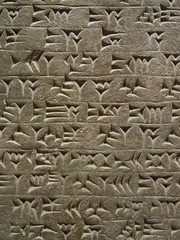 | 11 |
| 12686605209 | City-state | A form of political organization typical of Mesopotamian civilization; consisted of agricultural hinterlands ruled by an urban-based king |  | 12 |
| 12686605210 | Ziggurats | Massive towers usually associated with Mesopotamian temple connections |  | 13 |
| 12686605211 | Babylonian Empire | Unified all of Mesopotamia circa 1800 B.C.E.; collapsed due to foreign invasion circa 1600 B.C.E. |  | 14 |
| 12686605212 | Hammurabi | The most important Babylonian ruler; responsible for codification of the law |  | 15 |
| 12686605213 | Pharaoh | The term used to denote the kings of ancient Egypt; the term, "great house" refers to the palace of the pharaohs |  | 16 |
| 12686605214 | Pyramids | Monumental architecture typical of Old Kingdom Egypt; used as burial sites for pharaohs |  | 17 |
| 12686605215 | Hieroglyphs | Form of writing developed in ancient Egypt; more pictorial than Mesopotamian cuneiform |  | 18 |
| 12686605216 | Kush | African state that developed along the upper reaches of the Nile circa 1000 B.C.E.; conquered Egypt and ruled it for several centuries | 19 | |
| 12686605217 | Monotheism | The exclusive worship of one god; introduced by Jews into Middle Eastern civilization |  | 20 |
| 12686605218 | Phoenicians | Seafaring civilization located on the shores of the eastern Mediterranean; established colonies throughout the Mediterranean |  | 21 |
| 12686605219 | Harappa and Mohenjo Daro | Major urban complexes of Harappan civilization; laid out on planned grid pattern |  | 22 |
| 12686605220 | Aryans | Indo-European nomadic, warlike, pastorialists who replaced Harappan civilization |  | 23 |
| 12686605221 | Huanghe (Yellow) River Basin | Site of the development of sedentary agriculture in China |  | 24 |
| 12686605222 | Shang | 1st Chinese dynasty |  | 25 |
| 12686605223 | Oracles | Shamans or priests in Chinese society who foretold the future through interpreting animal bones cracked by heat; inscriptions on bones led to Chinese writing |  | 26 |
| 12686605224 | Paleolithic | The period that ended about 3,000 years after the end of the last Ice Age, it lasted until about 10,000 years ago. (Old Stone Age) The period of the Stone Age associated with the evolution of humans. It predates the Neolithic period. |  | 27 |
| 12686605225 | Path of migration for humans during Paleolithic era | From Africa to Eurasia, Australia, and the Americas | 28 | |
| 12686605226 | Egalitarian | Believing in the equality of all peoples | 29 | |
| 12686605227 | Patriarchy | a system of society or government in which men hold the power and women are largely excluded from it. |  | 30 |
| 12686605228 | Permanent agricultural villages emerged first in the lands of the eastern Mediterranean, possibly as a response to what? | climatic change | 31 | |
| 12686605230 | Codification | The act or process of rendering laws in written form | 32 | |
| 12686605231 | Hammurabi's Code | first written code/set of laws that all were expected to obey. | 33 | |
| 12686605232 | Polytheism | Belief in many gods | 34 | |
| 12686605233 | First civilization | Mesopotamia | 35 |
AP Language Terminology Flashcards
Terms : Hide Images
| 7959920755 | Assonance | The sergeant asked him to bomb the lawn with hotpots. OR Try to light the fire | 0 | |
| 7959920756 | Anaphora | This royal throne of kings, this sceptred isle, This earth of majesty, this seat of Mars. | 1 | |
| 7959920757 | Epistrophre | What lies behind us and what lies before us are tiny compared to what lies within us. | 2 | |
| 7959920758 | Anadiplosis | The love of wicked men converts to fear, That fear to hate, and hate turns one or both To worthy danger and deserved death. | 3 | |
| 7959920759 | Parallelism | She tried to make her pastry fluffy, sweet, and delicate. OR Singing a song or writing a poem is joyous. OR Perch are inexpensive; cod are cheap; trout are abundant; but salmon are best. | 4 | |
| 7959920760 | Zeugma | She looked at the object with suspicion and a magnifying glass. | 5 | |
| 7959920761 | Antithesis | It can't be wrong if it feels so right. | 6 | |
| 7959920762 | Antimetabole | Integrity without knowledge is weak and useless, and knowledge without integrity is dangerous and dreadful. | 7 | |
| 7959920763 | Anastrophe | He spoke of times past and future, and dreamt of things to be. | 8 | |
| 7959920764 | Isocolon | That government of the people, by the people, and for the people shall not perish from the earth. | 9 | |
| 7959920765 | Parenthesis | [I]n Calormen, story-telling (whether the stories are true or made up) is a thing you're taught, just as English boys and girls are taught essay-writing. | 10 | |
| 7959920766 | Appositive | Maybe the Toronto Maple Leafs, Derek's favorite team, or the hometown junior league team, the Melfort Mustangs. | 11 | |
| 7959920767 | Asyndeton | An empty stream, a great silence, an impenetrable forest. The air was thick, warm, heavy, sluggish. | 12 | |
| 7959920768 | Polysyndeton | The dinner was so good; I ate the chicken, and the salad, and the turkey, and the wild rice, and the bread, and the mashed potatoes, and the cranberry sauce. | 13 | |
| 7959920769 | Ellipsis | "I went to the mall on Monday, and she on Sunday." | 14 | |
| 7959920770 | Synecdoche | Ask for her hand OR Lend me your eye | 15 | |
| 7959920771 | Metonymy | The crown The press The white house | 16 | |
| 7959920772 | Personification | The car sputtered and coughed before starting. | 17 | |
| 7959920773 | Hyperbole | I'm so angry, I could kill him! OR I've asked you not to do that a thousand times. | 18 | |
| 7959920774 | Litotes | He's not the friendliest person. OR It's not exactly a walk in the park. | 19 | |
| 7959920775 | Situational Irony | Referring to WWI as "the war to end all wars" | 20 | |
| 7959920776 | Dramatic Irony | The movie "The Truman Show", where only Truman doesn't know that he's being filmed at all times. | 21 | |
| 7959920777 | Verbal Irony | Alanis Morissette when the man whose plane is going down says, "Well, isn't this nice." | 22 | |
| 7959920778 | Oxymoron | "I am a deeply superficial person." OR Deafening silence | 23 | |
| 7959920779 | Paradox | "Whatever you do will be insignificant, but it is very important that you do it." | 24 | |
| 7959920780 | Motif | Dr. Martin Luther King Jr.'s uses "I have a dream" to unify various ideas | 25 | |
| 7959920781 | Cliché | "It's not you, it's me" OR "Don't put all of your eggs in one basket" | 26 | |
| 7959920782 | Imagery | The stench of sulfur rose from the chimneys, the stench of caustic lyes from the tanneries, and from the slaughterhouses came the stench of congealed blood. | 27 | |
| 7959920783 | Simile | You are like a hurricane: there's calm in your eye, but I'm getting blown away | 28 | |
| 7959920784 | Metaphor | For ever since that time you went away, I've been a rabbit burrowed in the wood OR Sly as a fox | 29 | |
| 7959920785 | Alliteration | Why not waste a wild weekend at Westmore Water Park? | 30 | |
| 7959920786 | Jargon | twizzles, toe-loops, salchows, and spirals | 31 | |
| 7959920787 | Allusion | The phrase "Catch-22" has entered the English language as a situation that has no good solution, and is an allusion to Heller's novel. | 32 | |
| 7959920788 | Analogy | GREEN : COLOR :: ORCHID : FLOWER OR As quiet as a mouse | 33 | |
| 7959920789 | Euphemism | Gosh darn it; what the F; she's a piece of work;shoot, shut the front door, dang, fudge | 34 | |
| 7959920790 | Symbol | Garden of Eden The serpent in this story represents wickedness and the apple is a symbol for knowledge. | 35 | |
| 7959920791 | Rhetorical Question | Does it look like I care? | 36 |
AP Language Vocab #1 Flashcards
Terms : Hide Images
| 14823301719 | Audience | The listener, viewer, or reader of a text. Most texts are likely to have multiple audiences. | 0 | |
| 14823307892 | Concession | an acknowledgement that an opposing argument may be true or reasonable. In a strong argument, a concession is usually accompanied by a refutation challenging the validity of the opposing argument. | 1 | |
| 14823320948 | Connotation | Meetings or associations that readers have with a word beyond its dictionary definition, or denotation. Connotations are are positive or negative, and they often greatly affect the author's tone. | 2 | |
| 14823357340 | Context | The circumstances, atmosphere, attitudes, and events surrounding a text. | 3 | |
| 14823366598 | Counterargument | An opposing argument to the one a writer is putting forward. Rather than ignoring a counterargument, a strong writer will usually address it through the process of concession and refutation. | 4 | |
| 14823406484 | Ethos | Greek for "character." Speakers appeal to ethos to demonstrate that they are credible and trustworthy to speak on a given topic. Ethos is established by both who you are and what you say. | 5 | |
| 14823432164 | Pathos | Greek for "suffering" or "experience." Speakers to appeal to pathos to emotionally motivate their audience. More specific appeals to pathos might play on the audience's values, desires, and hopes, on the one hand, or fears and prejudices, on the other. | 6 | |
| 14823495751 | Occasion | The time and place a speech is given or a piece is written. | 7 | |
| 14823502719 | Persona | Greek for "mask." The face or character that a speaker shows to his or her audience. | 8 |
AP Language and Composition Flashcards
Terms : Hide Images
| 14664950550 | Rhetoric | the art of using language effectively and persuasively | 0 | |
| 14664950551 | Kairos | The opportune time and/or place to say or do the right/appropriate thing. | 1 | |
| 14664950552 | Decorum | the use of a style that is appropriate to a subject, situation, speaker, and audience | 2 | |
| 14664951605 | Audience | One's listener or readership; those to whom a speech or piece of writing is addressed. | 3 | |
| 14664951606 | Ethos | the ethical appeal, means to convince an audience of the author's credibility or character. | 4 | |
| 14664951607 | Pathos | Appeal to emotion | 5 | |
| 14664951608 | Logos | an appeal based on logic or reason | 6 | |
| 14664951609 | Alliteration | Repetition of initial consonant sounds | 7 | |
| 14664952533 | Hyperbole | exaggerated statements or claims not meant to be taken literally. | 8 | |
| 14664952534 | Metonymy | substituting the name of one object for another object closely associated with it (e.g. the Redcoats of the UK) | 9 | |
| 14664952535 | Parellelism | similarity of structure in a pair or series of related words, phrases, or clauses | 10 | |
| 14664952536 | Anaphora | repetition of a word or phrase in successive phrases, clauses, or lines (often at the beginning of each, but not always) | 11 | |
| 14664952537 | Irony | A contrast between expectation and reality | 12 | |
| 14664953660 | Oxymoron | A figure of speech that combines opposite or contradictory terms in a brief phrase. (e.g. deafening silence) | 13 | |
| 14664953661 | Rhetorical Question | A question asked merely for rhetorical effect and not requiring an answer | 14 | |
| 14664953662 | Antithesis | opposites in clauses, phrases, words, etc (e.g. intro to A Tale of Two Cities) | 15 | |
| 14664953663 | Litotes | A figure of speech consisting of an understatement in which an affirmative is expressed by negating its opposite. (e.g. I'm not as young as I used to be) | 16 | |
| 14664954658 | Paradox | a rhetorical device that is made up of two opposite things and seems impossible or untrue but is actually possible or true | 17 | |
| 14664954659 | Synecdoche | a rhetorical device by which a part of something actually refers to the whole (e.g. Milwaukee beat the Lakers) | 18 |
Pages

Need Help?
We hope your visit has been a productive one. If you're having any problems, or would like to give some feedback, we'd love to hear from you.
For general help, questions, and suggestions, try our dedicated support forums.
If you need to contact the Course-Notes.Org web experience team, please use our contact form.
Need Notes?
While we strive to provide the most comprehensive notes for as many high school textbooks as possible, there are certainly going to be some that we miss. Drop us a note and let us know which textbooks you need. Be sure to include which edition of the textbook you are using! If we see enough demand, we'll do whatever we can to get those notes up on the site for you!
