

AP Chemistry Flashcards
Terms : Hide Images
| 13916842347 | isotope | element with a different number of neutrons | 0 | |
| 13916842348 | mass spectrometry | mass of various isotopic elements to create a mass spectrum graph | 1 | |
| 13916842349 | avogadros number | 6.022 E23 | 2 | |
| 13916842350 | ? L/mol | 22.4 L | 3 | |
| 13916842351 | empirical formula | simplest ratio of the molecules making up a compound | 4 | |
| 13916842352 | molecular formula | actual formula for a substance | 5 | |
| 13916842353 | coulombs law | the amount of energy that an electron has depends on its distance from the nucleus of an atom; e=k(q1*q20)/r | 6 | |
| 13916842354 | ionization energy | amount of energy necessary to remove electrons from an atom (electromagnetic energy exceeds binding energy) | 7 | |
| 13916842356 | periodic trend: left to right | periodic trend: atomic radius decreases; protons are added to the nucleus so valence electrons are more strongly attracted ionization energy increases (protons are added to the nucleus) | 8 | |
| 13916842357 | periodic trend: down a group | periodic trend: atomic radius increases; shells of electrons are added which shield the more distant shells and valence e- get farther away ionization energy decreases (shells of e- added, each inner shell shields more and reduces the pull on valence e- so they are easier to remove) | 9 | |
| 13916842358 | ionic bond | bond between metal and nonmetal; electrons are NOT shared: the cation gives an e- up to the anion |  | 10 |
| 13916842359 | metallic bonding | bond between two metals; sea of electrons that make metals such good conductors; delocalized structure allows for malleability and ductility | 11 | |
| 13916842360 | interstitial alloy | metal atoms with vastly different radii combine; ex. steel |  | 12 |
| 13916842361 | substitutional alloy | metal atoms with similar radii combine; ex. brass |  | 13 |
| 13916842362 | covalent bonds | bond in which two atoms share electrons; each atom counts the e- as a part of its valence shell |  | 14 |
| 13916842363 | single bonds | one sigma bond, one e- pair; longest bond, least energy | 15 | |
| 13916842364 | double bonds | one sigma bond, one pi bond; two e- pairs | 16 | |
| 13916842365 | triple bonds | one sigma bond, two pi bonds; 3 e- pairs; shortest bond, most energy | 17 | |
| 13916842366 | network covalent bonds | lattice of covalent bonds; network solid (acts similar to one molecule); very hard, high melting/boiling points; poor conductors | 18 | |
| 13916842367 | the common network solids | SiO2, | 19 | |
| 13916842368 | doping | the addition of an impurity to an existing lattice | 20 | |
| 13916842369 | p-doping | create a hole (positively charged) that draws electrons through the substance (add a substance with one LESS valence e-) i.e. si + al | 21 | |
| 13916842370 | n-doping | add a substance with one MORE valence e- which leaves a free e- to travel freely i.e. si + p | 22 | |
| 13916842371 | polarity | exists when a molecule has a clustering of negative charge on one side due to unequal sharing of electrons (e- are pulled to the more electronegative side); creates dipoles in molecules | 23 | |
| 13916842372 | dipole moment | the measurement of the polarity of a molecule; the unit of measurement is a debye (D) |  | 24 |
| 13916842373 | more polar molecule.... | .... larger dipole moment | 25 | |
| 13916842374 | intermolecular forces (IMFs) | forces that exist between molecules in a covalently bonded substance; not bonds | 26 | |
| 13916842375 | dipole-dipole forces | the positive end of one polar molecule is attracted to the negative end of another molecule; relatively weak attraction force |  | 27 |
| 13916842376 | hydrogen bonding | strong IMF between two moelcules; F, O, N; have higher melting and boiling points than molecules with other IMFs |  | 28 |
| 13916842377 | london dispersion forces | IMFs that occur between all molecules; occur because of the random motions of electrons on atoms within molecules to create instantaneous polarities; molecules with more e- will have greater _________________ forces | 29 | |
| 13916842378 | substances with only london dispersion forces usually... | ... are gases at room temp, and boil/melt at extremely low temps | 30 | |
| 13916842379 | melting & boiling points of a covalent substance is almost always _____________ than that of ionic substances | lower | 31 | |
| 13916842380 | vapor pressure | the pressure exerted by a vapor over a liquid | 32 | |
| 13916842381 | resonance structures | structures that occur when it is possible to draw two or more valid lewis electron dot diagrams that have the same number of electron pairs for a molecule or ion | 33 | |
| 13916842382 | formal charge | used to find which structure is most likely to occur; valence - assigned | 34 | |
| 13916842383 | linear geometry | sp hybridization 0 lone pairs ex. BeCl2 & CO2 |  | 35 |
| 13916842384 | trigonal planar geometry | sp2 hybridization bond angles 120 0 lone pairs: trigonal planar (three bonds) 1 lone pair: bent (two bonds) |  | 36 |
| 13916842385 | tetrahedral geometry | 4 e- pairs, sp3 hybridization angles 109.5 0 lone pairs: tetrahedral (four bonds) [CH4, NH4+, ClO4-, SO4 2-, PO4 3-] 1 lone pair: trigonal pyramidal (3 bonds) [NH3, PCl3, SO3 2-] 2 lone pairs: bent (2 bonds) [H2O, OF2, NH2-] |  | 37 |
| 13916842386 | trigonal bipyramidal geometry | 5 e- pairs, sp4 hybridization 0 lone pairs: trigonal bipyramidal (5 bonds) [PCl5, PF5] 1 lone pair: seesaw (4 bonds) [SF4, IF4+] 2 lone pairs: t-shaped (3 bonds) [ClF3, ICl3] 3 lone pairs: linear (2 bonds) [XeF2, I3-] |  | 38 |
| 13916842387 | octahedral geometry | 6 e- pairs, sp5 hybridization 0 lone pairs: octahedral (6 bonds) [SF6] 1 lone pair: square pyramidal (5 bonds) [BrF5, IF5] 2 lone pairs: square planar (4 bonds) [XeF4] |  | 39 |
| 13916842388 | maxwell-boltzmann diagrams | shows the range of velocities for molecules of a gas | 40 | |
| 13916842389 | effusion | the rate at which a gas will escape from a container through microscopic holes in the surface of the container | 41 | |
| 13916842390 | mole fraction | moles of substance/total moles in solution | 42 | |
| 13916842391 | dissociation | when ionic substances break up into ions into solution | 43 | |
| 13916842392 | electrolytes | free ions in solution that conduct electricity | 44 | |
| 13916842393 | paper chromatography | the separation of a mixture by passing it through a medium in which the components of the solution move at different rates | 45 | |
| 13916842394 | retention factor | stronger the attraction between the solute and the solvent front is, the larger the Rf value will be |  | 46 |
| 13916842395 | column chromatography | a column is packed with stationary substance, then the solution to be separated (analyte) is injected into the column where it adheres to the stationary phase, then the eluent solution is injected into the column. as the eluent solution passes through the stationary phase the analyte molecules will be attracted to it with varying degrees of strength based on polarity | 47 | |
| 13916842396 | distillation | the process that separates the substances in a solution based on their boiling points |  | 48 |
| 13916842397 | precipitation reaction | a reaction in which an insoluble substance (salt) forms and separates from the solution | 49 | |
| 13916842398 | net ionic equation | an equation for a reaction in solution showing only those particles that are directly involved in the chemical change |  | 50 |
| 13916842399 | limiting reactant | the substance that controls the quantity of product that can form in a chemical reaction; moles of each reactant divided by moles used in reaction | 51 | |
| 13916842400 | gravimetric analysis | a type of quantitative analysis in which the amount of a species in a material is determined by converting the species to a precipitate that can be isolated completely and weighed | 52 | |
| 13916842401 | when bonds are formed | ...energy is released | 53 | |
| 13916842402 | when bonds are broken | ...energy is absorbed | 54 | |
| 13916842403 | exothermic | products have stronger bonds than the reactants; heat is released, - ΔH | 55 | |
| 13916842404 | endothermic | reactants have stronger bonds than the products; heat is absorbed, + ΔH | 56 | |
| 13916842405 | activation energy | the minimum amount of energy required to start a chemical reaction | 57 | |
| 13916842406 | catalyst | substance that speeds up a reaction by reducing the activation energy required by the reaction; provides an alternate reaction pathway; no effect on equilibrium conditions | 58 | |
| 13916842407 | oxidation number: H | +1 | 59 | |
| 13916842408 | entropy | ΔS; a measure of the randomness or disorder of the system | 60 | |
| 13916842409 | enthalpy | ΔH; heat of a system at constant pressure | 61 | |
| 13916842410 | Gibbs free-energy | ΔG; a measure of whether or not a process will proceed without the input of outside energy ∆G=∆H-T∆S (T in degrees Kelvin) when ΔG=0, the reaction is at equilibrium | 62 | |
| 13916842411 | spontaneous | thermodynamically favored; -ΔG | 63 | |
| 13916842412 | nonspontaneous | thermodynamically unfavored; +ΔG | 64 | |
| 13916842413 | Arrhenius acids | a substance that ionizes in water and produces hydrogen ions | 65 | |
| 13916842414 | Arrhenius bases | a substance that ionizes in water and produces hydroxide ions | 66 | |
| 13916842415 | Brønsted-Lowry acids | a substance that is capable of donating a proton | 67 | |
| 13916842416 | Brønsted-Lowry bases | a substance that is capable of accepting a proton | 68 | |
| 13916842417 | pH | -log [H+] | 69 | |
| 13916842418 | pOH | -log [OH-] | 70 | |
| 13916842419 | pKa | -log [Ka] | 71 | |
| 13916842420 | pKb | -log [Kb] | 72 | |
| 13916842421 | amphoteric | a substance that can act as both an acid and a base; ex. H2O | 73 | |
| 13916842422 | strong acids | dissociate completely in water; reaction goes to completion and never reaches equilibrium | 74 | |
| 13916842423 | weak acid | most of the acid molecules remain in solution and very few dissociate | 75 | |
| 13916842424 | percent dissociation | the ratio of the amount of a substance that is dissociated at equilibrium to the initial concentration of the substance in a solution, multiplied by 100 | 76 | |
| 13916842425 | oxoacids | acids that contain oxygen; the more oxygens, the stronger the acid | 77 | |
| 13916842426 | polyprotic acids | acids that can donate more than one H+ |  | 78 |
| 13916842427 | Kw | 1.0x10^-14 | 79 | |
| 13916842428 | henderson hasselbach | pH = pKa + log([A-]/[HA]) | 80 | |
| 13916842429 | buffers | weak acids or bases that can react with strong acids or bases to prevent sharp, sudden changes in pH | 81 |
Flashcards
Flashcards
Flashcards
Flashcards
Flashcards
Glossary of Terms- AP Language Flashcards
Terms : Hide Images
| 8735283225 | Allegory | A literary work in which characters, objects, or actions represent abstractions | 0 | |
| 8735283226 | Alliteration | Repetition of initial consonant sounds | 1 | |
| 8735283227 | Allusion | A reference to another work of literature, person, or event | 2 | |
| 8735283228 | Ambiguity | The multiple meanings, either intentional or unintentional, of a word, phrase, sentence, or passage. | 3 | |
| 8735283229 | Anadiplosis | repetition of the last word of one clause at the beginning of the following clause | 4 | |
| 8735283230 | Analogy | A similarity or comparison between two different things or the relationship between them. | 5 | |
| 8735283231 | Anaphora | the repetition of a word or phrase at the beginning of successive clauses | 6 | |
| 8735283232 | Anecdote | A brief narrative that focuses on a particular incident or event. | 7 | |
| 8735283233 | Aphorism | A terse statement of known authorship which expresses a general truth or a moral principle. | 8 | |
| 8735283234 | Apostrophe | A figure of speech that directly addresses an absent or imaginary person or personified abstraction. | 9 | |
| 8735283235 | Atmosphere | The emotional mood created by the entirety of a literary work | 10 | |
| 8735283236 | Clause | A grammatical unit that contains both a subject and a verb. | 11 | |
| 8735283237 | Colloquialism | The use of slang or informalities in speech or writing | 12 | |
| 8735283238 | Coherence | A principle demanding that the parts of any composition be arranged so that the meaning of the whole may be immediately clear and intelligible. | 13 | |
| 8735283239 | Conceit | A fanciful, particularly clever extended metaphor between dissimilar objects. | 14 | |
| 8735283240 | Connotation | The nonliteral, associative meaning of a word; the implied, suggested meaning. | 15 | |
| 8735283241 | Denotation | The strict, literal, dictionary definition of a word, devoid of any emotion, attitude, or color. | 16 | |
| 8735283242 | Diction | Related to style, diction refers to the writer's word choices, especially with regard to their correctness, clearness, or effectiveness. | 17 | |
| 8735283243 | Didactic | From the Greek, didactic literally means "teaching." Didactic works have the primary aim of teaching or instructing moral or ethical principles. | 18 | |
| 8735283244 | Epistrophe | The opposite of anaphors, repetition at the END of successive clauses. | 19 | |
| 8735283245 | Euphemism | From the Greek for "good speech," euphemisms are more agreeable terms for a generally unpleasant concept | 20 | |
| 8735283246 | Exposition | In essays, one of the four chief types of composition. The purpose is to explain something. Sometimes establishes a tone or setting. | 21 | |
| 8735283247 | Extended Metaphor | A metaphor developed at great length, occurring frequently in or throughout a work. | 22 | |
| 8735283248 | Figurative Language | Writing or speech that is not intended to carry literal meaning | 23 | |
| 8735283249 | Figure of speech | A device used to produce figurative language. Many compare dissimilar things. | 24 | |
| 8735283250 | Generic Conventions | This term describes traditions for each genre. These conventions help to define each genre; for example, they differentiate an essay and journalistic writing or an autobiography and political writing. | 25 | |
| 8735283251 | Genre | The major category into which a literary work fits. | 26 | |
| 8735283252 | Homily | Any serious talk, speech, or lecture involving moral or spiritual advice. | 27 | |
| 8735283253 | Hyperbole | A figure of speech using deliberate exaggeration or overstatement. | 28 | |
| 8735283254 | Imagery | The sensory details or figurative language used to describe, arouse emotion, or represent abstractions | 29 | |
| 8735283255 | Infer | To draw a reasonable conclusion from the information presented. | 30 | |
| 8735283256 | Invective | An emotionally violent, verbal denunciation or attack using strong, abusive language. | 31 | |
| 8735283257 | Irony | The contrast between what is stated explicitly and what is really meant. | 32 | |
| 8735283258 | Loose Sentence | A type of sentence in which the main idea comes first, followed by dependent grammatical units such as phrases and clauses. | 33 | |
| 8735283259 | Metaphor | A figure of speech using implied comparison of seemingly unlike things or the substitution of one for the other. | 34 | |
| 8735283260 | Metonymy | A term from the Greek meaning "changed label" or "substitute name," it is a figure of speech in which the name of one object is substituted for another that is closely associated with it. i.e. "The White House says" | 35 | |
| 8735283261 | Mood | The prevailing atmosphere or emotional aura of a work. Setting, tone, and effect can affect the mood. | 36 | |
| 8735283262 | Narrative | The telling of a story or an account of an event or series of events. | 37 | |
| 8735283263 | Onomatopoeia | A figure of speech in which natural sounds are imitated in the sounds of words. | 38 | |
| 8735283264 | Oxymoron | A figure of speech wherein the author groups apparently contradictory terms to suggest a paradox. i.e. "jumbo shrimp" | 39 | |
| 8735283265 | Paradox | A statement that appears to be contradictory but upon closer inspection contains some validity. | 40 | |
| 8735283266 | Parallelism | The grammatical or rhetorical framing of words to give structural similarity. "It was the best of times, it was the worst of times, it was the age of wisdom, it was the age of foolishness." | 41 | |
| 8735283267 | Parody | A work that closely imitates the style or content of another with the specific aim of comic effect or ridicule. i.e. Saturday Night Live | 42 |
Flashcards
AP World History Time Period 2 Flashcards
Terms : Hide Images
| 15134626474 | Ahura Mazda | In Zoroastrianism, the good god who rules the world. |  | 0 |
| 15134626475 | Alexander the Great | Alexander III of Macedon (356-323 B.C.E.), conqueror of the Persian Empire and part of northwest India. |  | 1 |
| 15134626476 | Aryans | Indo-European pastoralists who moved into India about the time of the collapse of the Indus Valley civilization; their role in causing this collapse is still debated by historians. |  | 2 |
| 15134626477 | Ashoka | The most famous ruler of the Mauryan Empire (r. 268-232 B.C.E.), who converted to Buddhism and tried to rule peacefully and with tolerance. |  | 3 |
| 15134626478 | Caesar Augustus | The great-nephew and adopted son of Julius Caesar who emerged as sole ruler of the Roman state at the end of an extended period of civil war (r. 31 B.C.E.-14 C.E.). |  | 4 |
| 15134626479 | Cyrus (the Great) | Founder of the Persian Empire (r. 557-530 B.C.E.); a ruler noted for his conquests, religious tolerance, and political moderation. |  | 5 |
| 15134626480 | Darius I | Great king of Persia (r. 522-486 B.C.E.) following the upheavals after Cyrus's death; completed the establishment of the Persian Empire. |  | 6 |
| 15134626481 | Greco-Persian Wars | Two major Persian invasions of Greece, in 490 B.C.E. and 480 B.C.E., in which the Persians were defeated on both land and sea. |  | 7 |
| 15134626482 | Gupta Empire | An empire of India (320-550 C.E.). |  | 8 |
| 15134626483 | Han dynasty | Chinese dynasty that restored unity in China softened legalist policies. Begun in 202 B.C. by Liu Bang, the Han ruled China for more than 400 years. |  | 9 |
| 15134626484 | Hellenistic era | The period from 323 to 30 B.C.E. in which Greek culture spread widely in Eurasia in the kingdoms ruled by Alexander's political successors. |  | 10 |
| 15134626485 | Herodotus | Greek historian known as the "father of history" (ca. 484-ca. 425 B.C.E.). His Histories enunciated the Greek view of a fundamental divide between East and West, culminating in the Greco-Persian Wars of 490-480 B.C.E. | 11 | |
| 15134626486 | hoplite | A heavily armed Greek infantryman. Over time, the ability to afford a military wares and to fight for the city came to define Greek citizenship. |  | 12 |
| 15134626487 | Ionia | The territory of Greek settlements on the coast of Anatolia; the main bone of contention between the Greeks and the Persian Empire. |  | 13 |
| 15134626488 | Mandate of Heaven | The ideological underpinning of Chinese emperors, this was the belief that a ruler held authority by command of divine force as long as he ruled morally and benevolently. |  | 14 |
| 15134626489 | Battle of Marathon | Athenian victory over a Persian invasion in 490 B.C.E. | 15 | |
| 15134626490 | Mauryan Empire | A major empire (322-185 B.C.E.) that encompassed most of India. | 16 | |
| 15134626491 | Patricians | Wealthy, privileged Romans who dominated early Roman society. | 17 | |
| 15134626492 | Pax Romana | The "Roman peace," a term typically used to denote the stability and prosperity of the early Roman Empire, especially in the first and second centuries C.E. | 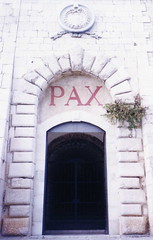 | 18 |
| 15134626493 | Peloponnesian War | Great war between Athens (and allies) and Sparta (and allies), lasting from 431 to 404 B.C.E. The conflict ended in the defeat of Athens and the closing of Athens's Golden Age. |  | 19 |
| 15134626494 | Persepolis | The capital and greatest palace-city of the Persian Empire, destroyed by Alexander the Great. |  | 20 |
| 15134626495 | Persian Empire | A major empire that expanded from the Iranian plateau to incorporate the Middle East from Egypt to India; flourished from around 550 to 330 B.C.E. | 21 | |
| 15134626496 | Plebians | Poorer, less privileged Romans who gradually won a role in Roman politics. | 22 | |
| 15134626497 | Punic Wars | Three major wars between Rome and Carthage in North Africa, fought between 264 and 146 B.C.E., that culminated in Roman victory and control of the western Mediterranean. | 23 | |
| 15134626498 | Qin Dynasty | A short-lived (221-206 B.C.E.) but highly influential Chinese dynasty that succeeded in reuniting China at the end of the Warring States period. |  | 24 |
| 15134626499 | Qin Shihuangdi | Literally "first emperor" (r. 221-210 B.C.E.) forcibly reunited China and established a strong and repressive state. | 25 | |
| 15134626500 | Solon | Athenian statesman and lawmaker (fl. 594-560 B.C.E.) whose reforms led the Athenians toward democracy. | 26 | |
| 15134626501 | Wudi | Han emperor (r. 141-86 B.C.E.) who began the Chinese civil service system by establishing an academy to train imperial bureaucrats. | 27 | |
| 15134626502 | Xiongnu | Nomadic peoples to the north of the Great Wall of China who were a frequent threat to the stability of the Chinese state. | 28 | |
| 15134626503 | Aristotle | A Greek polymath philosopher (384-322 B.C.E.); student of Plato and teacher of Alexander the Great. | 29 | |
| 15134626504 | Atman | The human soul, which in classic Hindu belief seeks union with Brahman. | 30 | |
| 15134626505 | Bhagavad Gita | A great Hindu epic text, part of the much larger Mahabharata, which affirms the performance of caste duties as a path to religious liberation. | 31 | |
| 15134626506 | Brahman | The "World Soul" or final reality in upanishadic Hindu belief. | 32 | |
| 15134626507 | Brahmins | The priestly caste of India. | 33 | |
| 15134626508 | Buddhism | The cultural/religious tradition first enunciated by Siddhartha Gautama | 34 | |
| 15134626509 | Confucianism | The Chinese philosophy first enunciated by Confucius, advocating the moral example of superiors as the key element of social order. | 35 | |
| 15134626510 | Confucius | The founder of Confucianism (551-479 B.C.E.); an aristocrat of northern China who proved to be the greatest influence on Chinese culture in its history. | 36 | |
| 15134626511 | Constantine | Roman emperor (r. 306-337 C.E.) whose conversion to Christianity paved the way for the triumph of Christianity in Europe. |  | 37 |
| 15134626512 | Daodejing | The central text of Daoism; translated as The Way and Its Power. | 38 | |
| 15134626513 | Daoism | A Chinese philosophy/popular religion that advocates simplicity and understanding of the world of nature, founded by the legendary figure Laozi. | 39 | |
| 15134626514 | Filial piety | respect shown by children for their parents and elders | 40 | |
| 15134626515 | Greek rationalism | A secularizing system of scientific and philosophic thought that developed in classical Greece in the period 600 to 300 B.C.E.; it emphasized the power of education and human reason to understand the world in nonreligious terms. | 41 | |
| 15134626516 | Hinduism | A word derived from outsiders to describe the vast diversity of indigenous Indian religious traditions. | 42 | |
| 15134626517 | Hippocrates | A very influential Greek medical theorist (ca. 460-ca. 370 B.C.E.); regarded as the father of medicine. | 43 | |
| 15134626518 | Jesus of Nazareth | The prophet/god of Christianity(ca. 4 B.C.E.-ca. 30 C.E.). | 44 | |
| 15134626519 | Yahweh | A form of the Hebrew name of God used in the Bible. The monotheistic religion developed by the Hebrews, emphasizing a sole personal god with concerns for social justice. | 45 | |
| 15134626520 | Karma | In Hinduism, the determining factor of the level at which the individual is reincarnated, based on purity of action and fulfillment of duty in the prior existence. |  | 46 |
| 15134626521 | Laozi | A legendary Chinese philosopher of the sixth century B.C.E.; regarded as the founder of Daoism. | 47 | |
| 15134626522 | Legalism | A Chinese philosophy distinguished by an adherence to clear laws with vigorous punishments. | 48 | |
| 15134626523 | Mahayana | "Great Vehicle," the popular development of Buddhism in the early centuries of the Common Era, which gives a much greater role to supernatural beings and proved to be more popular than original (Theravada) Buddhism. | 49 | |
| 15134626524 | Moksha | In Hindu belief, liberation from separate existence and union with Brahman. | 50 | |
| 15134626525 | Nirvana | The end goal of Buddhism, in which individual identity is "extinguished" into a state of serenity and great compassion. | 51 | |
| 15134626526 | Plato | A disciple of Socrates whose Dialogues convey the teachings of his master while going beyond them to express Plato's own philosophy; lived from 429 to 348 B.C.E. | 52 | |
| 15134626527 | Pythagoras | A major Greek philosopher (ca. 560-ca. 480 B.C.E.) who believed that an unchanging mathematical order underlies the apparent chaos of the world. | 53 | |
| 15134626528 | Siddhartha Gautama (the Buddha) | The Indian prince turned ascetic (ca. 566-ca. 486 B.C.E.) who founded Buddhism. | 54 | |
| 15134626529 | Socrates | The first great Greek philosopher to turn rationalism toward questions of human existence (469-399 B.C.E.). | 55 | |
| 15134626530 | Theravada | "The Teaching of the Elders," the early form of Buddhism according to which the Buddha as a wise teacher but not divine and which emphasizes practices rather than beliefs. | 56 | |
| 15134626531 | Upanishads | Indian mystical and philosophical works, written between 800 and 400 B.C.E. | 57 | |
| 15134626532 | Vedas | The earliest religious texts of India, a collection of ancient poems, hymns, and rituals that were transmitted orally before being written down ca. 600 B.C.E. | 58 | |
| 15134626533 | Warring States Period | Period in China from 403 to 221 B.C.E. that was typified by disorder and political chaos. | 59 | |
| 15134626534 | Yin and Yang | Expression of the Chinese belief in the unity of opposites. | 60 | |
| 15134626535 | Zarathustra | A Persian prophet, traditionally dated to the sixth or seventh century B.C.E. (but perhaps much older), who founded Zoroastrianism. | 61 | |
| 15134626536 | Zoroastrianism | Persian monotheistic religion founded by the prophet Zarathustra. | 62 | |
| 15134626537 | caste as varna and jati | The system of social organization in India that has evolved over millennia; it is based on an original division of the populace into four inherited classes, with the addition of thousands of social distinctions based on occupation, which became the main cell of social life in India. | 63 | |
| 15134626538 | dharma | In Indian belief, performance of the duties appropriate to an individual's caste; good performance will lead to rebirth in a higher caste. | 64 | |
| 15134626539 | helots | The dependent, semi-enslaved class of ancient Sparta whose social discontent prompted the militarization of Spartan society. | 65 | |
| 15134626540 | Kshatriya | The Indian social class of warriors and rulers. | 66 | |
| 15134626541 | latifundia | Huge estates operated by slave labor that flourished in parts of the Roman Empire | 67 | |
| 15134626542 | Pericles | A prominent and influential statesman of ancient Athens (ca. 495-429 B.C.E.); presided over Athens's Golden Age. | 68 | |
| 15134626543 | scholar-gentry class | A term used to describe members of China's landowning families, reflecting their wealth from the land and the privilege that they derived as government officials. | 69 | |
| 15134626544 | Sudra | The lowest Indian social class of varna; regarded as servants of their social betters; eventually included peasant farmers | 70 | |
| 15134626545 | the "three submissions" | In Chinese Confucian thought, the notion that a woman is permanently subordinate to male control: first that of her father, then of her husband, and finally of her son. | 71 | |
| 15134626546 | Untouchables | An Indian social class that emerged below the Sudras and whose members performed the most unclean and polluting work. | 72 | |
| 15134626547 | Vaisya | The Indian social class that was originally defined as farmers but eventually comprised merchants. | 73 | |
| 15134626548 | Axum | Classical-era kingdom of East Africa, in present-day Eritrea and northern Ethiopia; flourished from 100 to 600 C.E. and adopted Christianity. | 74 | |
| 15134626549 | Bantu expansion | Gradual migration of peoples from their homeland in what is now southern Nigeria and the Cameroons into most of eastern and southern Africa, a process that began around 3000 B.C.E. and continued for several millennia. The agricultural techniques and ironworking technology of these farmers gave them an advantage over the gathering and hunting peoples they encountered. | 75 | |
| 15134626550 | Coptic Christianity | The Egyptian variety of Christianity, distinctive in its belief that Christ has only a single, divine nature. | 76 | |
| 15134626551 | Silk Road | Trade route stretching from China into Europe. | 77 | |
| 15134626552 | syncretism | a blending of beliefs and practices from different religions into one faith | 78 | |
| 15134626553 | monasticism | The lifestyle of a monk or nun, characterized by prayer and solitude | 79 | |
| 15134626554 | Judaism | the monotheistic religion of the Jews having its spiritual and ethical principles embodied chiefly in the Torah | 80 | |
| 15134626555 | Torah | A Hebrew word meaning "law," contains the basic laws for Jews, referring to the first five books of the Hebrew Scriptures. | 81 | |
| 15134626556 | Christianity | the religion based on the person and teachings of Jesus of Nazareth, originated as an offshoot from Judaism | 82 | |
| 15134626557 | Ancestor Veneration | Veneration of the dead or ancestor reverence is based on the beliefs that the dead have a continued existence, and may possess the ability to influence the fortune of the living, the worship of deceased ancestors | 83 | |
| 15134626558 | Empire | a major political unit having a territory of great extent - OR - a number of territories or peoples under a single sovereign authority | 84 |
Pages

Need Help?
We hope your visit has been a productive one. If you're having any problems, or would like to give some feedback, we'd love to hear from you.
For general help, questions, and suggestions, try our dedicated support forums.
If you need to contact the Course-Notes.Org web experience team, please use our contact form.
Need Notes?
While we strive to provide the most comprehensive notes for as many high school textbooks as possible, there are certainly going to be some that we miss. Drop us a note and let us know which textbooks you need. Be sure to include which edition of the textbook you are using! If we see enough demand, we'll do whatever we can to get those notes up on the site for you!
