

Flashcards
rhetorical terms | ap language Flashcards
Terms : Hide Images
| 14663498786 | antithesis | a person or thing that is the direct opposite of someone or something else. | 0 | |
| 14663505448 | archetype | a very typical example of a certain person or thing | 1 | |
| 14663511154 | chiasmus | a rhetorical or literary figure in which words, grammatical constructions, or concepts are repeated in reverse order, in the same or a modified form | 2 | |
| 14663517470 | cliché | a phrase or opinion that is overused and betrays a lack of original thought. | 3 | |
| 14663520069 | connotation | an idea or feeling that a word invokes in addition to its literal or primary meaning. | 4 | |
| 14663522610 | diction | the choice and use of words and phrases in speech or writing. | 5 | |
| 14663524004 | enthymeme | an argument in which one premise is not explicitly stated | 6 | |
| 14663525549 | ethos | the characteristic spirit of a culture, era, or community as manifested in its beliefs and aspirations | 7 | |
| 14663543609 | euphamism | a mild or indirect word or expression substituted for one considered to be too harsh or blunt when referring to something unpleasant | 8 | |
| 14663543610 | logical fallacy | an error in reasoning that renders an argument invalid | 9 | |
| 14663550219 | logos | the Word of God, or principle of divine reason and creative order, identified in the Gospel of John with the second person of the Trinity incarnate in Jesus Christ. | 10 | |
| 14663551864 | pathos | a quality that evokes pity or sadness | 11 | |
| 14663558955 | qualification | the action or fact of qualifying or being eligible for something. | 12 | |
| 14663569206 | syllogism | an instance of a form of reasoning in which a conclusion is drawn (whether validly or not) from two given or assumed propositions (premises), each of which shares a term with the conclusion, and shares a common or middle term not present in the conclusion (e.g., all dogs are animals; all animals have four legs; therefore all dogs have four legs ). | 13 | |
| 14663571710 | warrant | a document issued by a legal or government official authorizing the police or some other body to make an arrest, search premises, or carry out some other action relating to the administration of justice. | 14 |
Chapter 1 Vocabulary - AP Language and Composition Flashcards
Terms : Hide Images
| 10471340584 | audience | The listener, viewer, or reader of a text. Most texts are likely to have multiple audiences. | 0 | |
| 10471340585 | concession | An acknowledgment that an opposing argument may be true or reasonable. In a strong argument, a concession is usually accompanied by a refutation challenging the validity of the opposing argument. | 1 | |
| 10471341349 | connotation | Meanings or associations that reader have with a word beyond its dictionary definition, or denotation. Connotations are usually positive or negative, and they can greatly affect the author's tone. | 2 | |
| 10471342164 | context | The circumstances, atmosphere, attitudes, and events surrounding a text. | 3 | |
| 10471344153 | counterargument | An opposing argument to the one a writer is putting forward. Rather than ignoring a counterargument, a strong writer will usually address it through the process of concession and refutation. | 4 | |
| 10471400288 | ethos | Greek for "character." Speakers appeal to ethos to demonstrate that they are credible and trustworthy to speak on a given topic. Ethos is established by both who you are and what you say. | 5 | |
| 10471401287 | logos | Greek for "embodied thought." Speakers appeal to logos, or reason, by offering clear, rational ideas and using specific details, examples, facts, statistics, or expert testimony to back them up. | 6 | |
| 10471403133 | occasion | The time and place a speech is given or a piece is written. | 7 | |
| 10471660295 | pathos | Greek for "suffering" or "experience." Speakers appeal to pathos to emotionally motivate their audience. More specific appeals to pathos might play on the audience's values, desires, and hopes, on the one hand, or fears and prejudices, on the other. | 8 | |
| 10471660296 | persona | Greek for "mask." The face or character that a speaker shows to his or her audience. | 9 | |
| 10471666024 | polemic | Greek for "hostile." An aggressive argument that tries to establish the superiority of one opinion over all others. Polemics generally do not concede that opposing opinions have any merit. | 10 | |
| 10471666517 | propaganda | The spread of ideas and information to further a cause. In its negative sense, propaganda is the use of rumors, lies, disinformation, and scare tactics in order to damage or promote a cause. | 11 | |
| 10471666518 | purpose | The goal the speaker wants to achieve. | 12 | |
| 10471668567 | refutation | A denial of the validity of an opposing argument. In order to sound reasonable, refutations often follow a concession that acknowledges that an opposing argument may be true or reasonable. | 13 | |
| 10471669119 | rhetoric | As Aristotle defined the term, "the faculty of observing in any given case the available means of persuasion." In other words, it is the art of finding ways to persuade an audience. | 14 | |
| 10471671767 | rhetorical appeals | Rhetorical techniques used to persuade an audience by emphasizing what they find most important or compelling. The three major appeals are to ethos (character), logos (reason), and pathos (emotion). | 15 | |
| 10471672466 | rhetorical triangle (Aristotelian triangle) | A diagram that illustrates the interrelationship among the speaker, audience, and subject in determining a text. | 16 | |
| 10471674215 | SOAPS | A mnemonic device that stands for Subject, Occasion, Audience, Purpose, and Speaker. | 17 | |
| 10471674803 | subject | The topic of a text. What the text is about. | 18 | |
| 10471674804 | text | While this term generally means the written word, in the humanities it has come to mean any cultural product that can be "read" -- meaning not just consumed and comprehended, but investigated. This includes fiction, nonfiction, poetry, political cartoons, fine art, photography, performances, fashion, cultural trends, and much more. | 19 |
Flashcards
AP Biology- Biochemistry Flashcards
Terms : Hide Images
| 7246778014 | ionic bond | bond resulting from a transfer of electrons |  | 0 |
| 7246778015 | covalent bond | bond resulting from the sharing of electrons |  | 1 |
| 7246778016 | nonpolar | electrons shared equally |  | 2 |
| 7246778017 | polar | electrons shared unequally |  | 3 |
| 7246778018 | buffer | substance that resists changes in pH | 4 | |
| 7246778019 | isomer | organic compounds with the same molecular formula but different structure |  | 5 |
| 7246778023 | monosaccharide | C6H12O6 simple sugar; glucose, galactose, and fructose |  | 6 |
| 7246778030 | glycerol | alcohol portion of a lipid |  | 7 |
| 7246778031 | fatty acid | hydrocarbon chain with a carboxyl group at one end; majority portion in lipids |  | 8 |
| 7246778032 | saturated fat | fat without double bonds |  | 9 |
| 7246778033 | unsaturated fat | fat with double bonds |  | 10 |
| 7246778034 | steroid | lipid with a four fused ring structure; cholesterol and testosterone |  | 11 |
| 7246778035 | peptide bond | bond creating amino acid chains or polymers |  | 12 |
| 7246778036 | primary structure | linear sequence of amino acids; peptide bonds |  | 13 |
| 7246778037 | secondary structure | a specific region of a protein formed with hydrogen bonds- beta pleated sheet or alpha helix |  | 14 |
| 7246778038 | tertiary structure | overall 3D conformation; determines function |  | 15 |
| 7246778039 | quaternary structure | protein with more than one polypeptide chain |  | 16 |
| 7246778040 | alpha helix | secondary structure form of a protein; human hair (keratin) |  | 17 |
| 7246778041 | beta pleated sheet | secondary structure form of a protein; spider webs and silk |  | 18 |
| 7246778042 | functional group | components of organic molecules most often involved in chemical reactions | 19 | |
| 7246778043 | metabolism | sum of all chemical reactions that take place in cell | 20 | |
| 7246778044 | enzyme | catalytic protein that lowers a reaction's energy of activation |  | 21 |
| 7246778045 | induced fit model | enzyme model where the substrate induces the enzyme to alter its shape slightly so it fits better |  | 22 |
| 7246778046 | cofactor | inorganic chemical compound or metallic ion that is required for an enzyme's activity |  | 23 |
| 7246778047 | coenzyme | organic molecules that are required by certain enzymes to carry out catalysis (vitamins) |  | 24 |
| 7246778048 | competitive inhibition | compounds that look like the normal substrate compete for the same active site on the enzyme |  | 25 |
| 7246778049 | noncompetitive inhibition | a molecule binds to an enzyme somewhere other than the active site and reduces the activity of the enzyme |  | 26 |
| 7246778050 | allosteric regulation | the regulation of an enzyme by binding an effector molecule at a site other than the enzyme's active site |  | 27 |
| 7246778051 | cohesion | attractive forces between molecules of the same substance |  | 28 |
| 7246778052 | salt | an ionic compound which is made up of two groups of oppositely charged ions. | 29 | |
| 7246778053 | chemical equilibrium | when the reaction rate is about the same in either direction | 30 | |
| 7246778054 | polymer | long molecule consisting of many similar or identical monomers linked together |  | 31 |
| 7246778055 | monomer | the subunit that serves as the building block of a polymer. | | 32 |
| 7246778056 | adhesion | attractive forces between unlike molecules | | 33 |
| 7246778057 | surface tension | measure of how difficult it is to stretch or break the surface of a liquid |  | 34 |
| 7246778058 | van der Waals interactions | tertiary structure; weak attractions between molecules or parts of molecules that result from localized charge fluctuations |  | 35 |
| 7246778059 | evaporative cooling / heat of vaporization | property of a liquid where the surface becomes cooler during evaporation due to the loss of molecules |  | 36 |
| 7246778060 | disulfide bridge | tertiary structure; strong covalent bond formed when one sulfur of one cysteine monomer bonds to the sulfur of another |  | 37 |
| 7246778061 | hydrophobic interaction | tertiary structure; weak chemical bond formed when molecules that do not mix with water change to exclude the water |  | 38 |
| 7246778062 | hydrocarbon | organic molecule consisting of only hydrogen and carbon |  | 39 |
| 7246778063 | macromolecule | giant molecule formed by the joining of smaller molecules |  | 40 |
| 7246778065 | nucleotide | building block of a nucleic acid; five carbon sugar covalently bonded to a nitrogen base and a phosphate group |  | 41 |
| 7246778066 | pyrimidine | cytosine, thymine, and uracil; six-membered ring |  | 42 |
| 7246778067 | purine | adenine and guanine; six-membered ring fused to a five-membered ring |  | 43 |
| 7246778068 | hydroxyl | hydrogen bonded to oxygen bonded to an organic molecule's carbon skeleton; alcohol; polar |  | 44 |
| 7246778069 | carbonyl | carbon double bonded to oxygen; ketones and aldehydes |  | 45 |
| 7246778070 | carboxyl | oxygen double bonded to a carbon atom that is bonded to a hydroxyl group |  | 46 |
| 7246778071 | amine | nitrogen bonded to two hydrogens and to the carbon skeleton |  | 47 |
| 7246778072 | sulfhydryl | sulfur bonded to hydrogen in roughly the shape of a hydroxyl; cysteine |  | 48 |
| 7246778073 | phosphate | phosphorous bonded to four oxygens, two have negative charges, one is bonded to the carbon skeleton; phospholipid |  | 49 |
| 7246778074 | methyl | carbon bonded to three hydrogens; arrangement determines function of male and female sex hormones |  | 50 |
| 7246864274 | macromolecule | a giant molecule formed by the joining of smaller molecules, usually by a dehydration reaction. | 51 | |
| 7246864275 | Four classes of biological macromolecules | Proteins, carbohydrates, nucleic acids, lipids | 52 | |
| 7246864276 | polymer | a long molecule consisting of many similar or identical monomers linked together by covalent bonds. | 53 | |
| 7246864278 | dehydration synthesis | a chemical reaction in which two molecules become covalently bonded to each other with the removal of a water molecule. | 54 | |
| 7246864279 | hydrolysis | a chemical reaction that breaks bonds between two molecules by the addition of water; functions in dis-assembly of polymers to monomers. | 55 | |
| 7246864280 | protein | a biologically functional molecule consisting of one or more polypeptides folded and coiled into a specific three-dimensional structure. | 56 | |
| 7246864281 | Functions of proteins | structural support, catalyst, transport, defense, movement, regulation | 57 | |
| 7246864282 | amino acid | an organic molecule possessing both a carboxyl and an amino group. The monomers of polypeptides. There are 20 different forms. Distinguished by side chains. | 58 | |
| 7246864283 | peptide bond | the covalent bond between the carboxyl group on one amino acid and the amino group on another, formed by a dehydration reaction. | 59 | |
| 7246864289 | denaturation | loss of a proteins normal 3D structure; can possibly be caused by pH and temperature which affect the ionic bonds, hydrogen bonds & hydrophilic interactions | 60 | |
| 7246864290 | enzyme | a macromolecule serving as a catalyst, a chemical agent that increases the rate of a reaction without being consumed by the reaction. most of them are proteins. | 61 | |
| 7246864291 | carbohydrate | a sugar (monosaccharide) or one of its dimers (disaccharides) or polymers (polysaccharides). Primarily C, H and O. | 62 | |
| 7246864292 | What are the functions of carbohydrates | function as energy source & structure | 63 | |
| 7246864293 | monosaccharide | the simplest carbohydrate, active alone or serving as a monomer for disaccharides and polysaccharides. Also called simple sugars, they have formulas that are generally some multiple of CH2O (1:2:1). | 64 | |
| 7246864294 | disaccharide | a double sugar, consisting of two monosaccharides joined by a glycosidic linkage formed by a dehydration reaction. | 65 | |
| 7246864295 | glycosidic linkage | a covalent bond formed between two monosaccharides by a dehydration reaction. | 66 | |
| 7246864296 | polysaccharide | a polymer of many monosaccharides, formed by dehydration reactions. | 67 | |
| 7246864297 | starch | a storage polysaccharide in plants, consisting entirely of glucose monomers joined by x glycosidic linkages. Used for energy storage. | 68 | |
| 7246864298 | glycogen | an extensively branched glucose storage polysaccharide found in the liver and muscle of animals; the animal equivalent of starch. | 69 | |
| 7246864299 | cellulose | a structural polysaccharide of plant cell walls, consisting of glucose monomers joined by B glycosidic linkages. A type of plant starch. | 70 | |
| 7246864300 | lipids | any of a group of large biological molecules, including fats, phospholipids, and steroids, that mix poorly, if at all, with water (hydrophobic). No true monomers. | 71 | |
| 7246864301 | What are the three types of lipids? | fats/oils, phospholipids & steroids | 72 | |
| 7246864302 | fat/oil | a lipid consisting of three fatty acids lined to one glycerol molecule; also called a triacylglycerol or triglyceride. Function as energy storage. | 73 | |
| 7246864303 | saturated | a fatty acid in which all carbons in the hydrocarbon tail are connected by single bonds, thus maximizing the number of hydrogen atoms that are attached to the carbon skeleton. | 74 | |
| 7246864304 | unsaturated | a faty acid that has one or more double bonds betwen carbons in the hydrocarbon tail. such bonding reduces the number of hydrogen atoms attached to the carbon skeleton. | 75 | |
| 7246864306 | triglyceride | a lipid consisting of three fatty acids linked to one glycerol molecule | 76 | |
| 7246864307 | phospholipid | a lipid made up of glycerol joined to two fatty acids and a phosphate group. The hydrocarbon chains of the fatty acids act as nonpolar hydrophobic tails, while the rest of the molecule acts s a polar, hydrophilic head. They form bilayers that function as biological membrane. | 77 | |
| 7246864308 | steroid | a type of lipid characterized by a carbon skeleton consisting of four fused rings with various chemical groups attached. Function as part of membranes or hormones. | 78 | |
| 7246864309 | hydrophobic | a type of weak chemical interaction caused when molecules that do not mix with water coalesce to exclude water. | 79 | |
| 7246864311 | polypeptide | a polymer of many amino acids linked together by peptide bonds. | 80 | |
| 7246864312 | nucleotide | the building block of a nucleic acid, consisting of a five-carbon sugar covalently bonded to a nitrogenous base and one or more phosphate groups. | 81 | |
| 7246864313 | phosphodiester linkage | bond between nucleotides in nucleotide chain to form polynucleotide | 82 | |
| 7246864314 | RNA | transmission of information, consists of monomers with a ribose sugar and nitrogenous bases cytosine (C), guanine (G), adenine (A) & uracil (U). Single stranded. | 83 | |
| 7246864315 | DNA | a nucleic acid molecule, usually a double-stranded helix, in which each polynucleotide strand consists of nucleotide monomers with a deoxyribose sugar and the nitrogenous bases adenine (A), cytosine (C), guanine (G), and thymine (T); capable of being replicated and determining the inherited structure of a cell's proteins. | 84 | |
| 7246864316 | deoxyribose | the sugar component of DNA nucleotides, having one fewer hydroxyl group than ribose, the sugar component of RNA nucleotides. | 85 | |
| 7246864317 | ribose | the sugar component of RNA nucleotides. | 86 |
AP English Language - Rhetorical devices Flashcards
Terms : Hide Images
| 11657625353 | allegory | Device of using character and/or story symbolically to represent an abstraction in addition to the literal meaning. The allegorical meaning usually deals with moral truth or a generalization about human existence. EX. In the book, The Lord of the Flies is an allegory for human nature in the "real world." |  | 0 |
| 11657625354 | alliteration | Repetition of sound, especially initial consonant sounds in two or more neighboring words. Repetition can reinforce meaning, unify ideas, supply a musical sound, and/or echo the sense of the passage. EX. Sally Sold Sea Shells by the Sea Shore. |  | 1 |
| 11657625355 | allusion | Direct or indirect reference to something which is presumably commonly known, such as an event, book, myth, place, or work of art. May be historical, literary, religious, topical, or mythical. EX. "Hey! Guess who the new Newton of our school is?" - "Newton", means a genius student, alludes to a famous scientist Isaac Newton. |  | 2 |
| 11657625356 | ambiguity | Multiple meanings, either intentional or unintentional, of word, phrase, sentence, or passage EX. A good life depends on a liver. - Liver may be an organ or simply a living person. |  | 3 |
| 11657625357 | analogy | A similarity or comparison between two different things or the relationship between them. Can explain something unfamiliar by associating it with to pointing out its similarity to something more familiar. Analogies can also make writing more vivid, imaginative, or intellectually engaging. EX. Just as a sword is the weapon of a warrior, a pen is the weapon of a writer. |  | 4 |
| 11657625358 | antecedent | The word, phrase, or clause referred to by a pronoun. EX. David plays football in the courtyard. All the children have gathered there. |  | 5 |
| 11657625359 | antithesis | The opposition or contrast of ideas; the direct opposite EX. Good and Evil |  | 6 |
| 11657625360 | aphorism | A terse statement of known authorship which expresses a general truth or a moral principle. (If the authorship is unknown, the statement is generally considered to be a folk proverb.) An aphorism can be a memorable summation of the author's point. EX. The man who removes a mountain begins by carrying away small stones. |  | 7 |
| 11657625361 | apostrophe | A figure of speech that directly addresses an absent or imaginary person or a personified abstraction, such as liberty or love. It is an address to someone or something that cannot answer. The effect may add familiarity or emotional intensity. EX. William Wordsworth addresses John Milton as he writes, "Milton, thou shouldst be living at this hour: / England hath need of thee." |  | 8 |
| 11657625362 | atmosphere | The emotional mood created by the entirety of a literary work, established partly by the setting and partly by the author's choice of objects that are described. Even such elements as a description of the weather can contribute to the atmosphere. Frequently atmosphere foreshadows events. Perhaps it can create a mood. EX. |  | 9 |
| 11657625363 | caricature | A verbal description, the purpose of which is to exaggerate or distort, for comic effect, a person's distinctive physical features or other characteristics. EX. |  | 10 |
| 11657625364 | clause | A grammatical unit that contains both a subject and a verb. An independent, or main, clause expresses a complete thought and can stand alone as a sentence. A dependent, or subordinate clause cannot stand alone as a sentence and must be accompanied by an independent clause. The point that you want to consider is the question of what or why the author subordinates one element to the other. You should also become aware of making effective use of subordination in your own writing. EX. "All animals are equal, but some animals are more equal than others." |  | 11 |
| 11657625365 | colloquial/colloquialism | The use of slang or informalities in speech or writing. Not generally acceptable for formal writing, colloquialisms give a work a conversational, familiar tone. Colloquial expressions in writing include local or regional dialects. EX. "Sick, dude!" |  | 12 |
| 11657625366 | conceit | A fanciful expression, usually in the form of an extended metaphor or surprising analogy between seemingly dissimilar objects. A conceit displays intellectual cleverness as a result of the unusual comparison being made. EX. The mighty oaks are as abundant as the squirrels in the forest. |  | 13 |
| 11657625367 | connotation | The nonliteral, associative meaning of a word; the implied, suggested meaning. Connotations may involve ideas, emotions, or attitudes. EX. Childlike, Youthful, Childish, Young Childish and childlike implies that someone is immature, but youthful infers that someone is lively and energetic. |  | 14 |
| 11657625368 | denotation | The strict, literal, dictionary definition of a word, devoid of any emotion, attitude, or color. EX. If you search for the meaning of the word "dove" in a dictionary, you will see that its meaning is "a type of pigeon, a wild and domesticated bird having a heavy body and short legs." |  | 15 |
| 11657625369 | diction | Related to style, diction refers to the writer's word choices, especially with regard to their correctness, clearness, or effectiveness. and understand the ways in which diction can complement the author's purpose. Diction, combined with syntax, figurative language, literary devices, etc., creates an author's style. EX. formal or informal, ornate or plain |  | 16 |
| 11657625370 | didactic | From the Greek, didactic literally means "teaching." Didactic works have the primary aim of teaching or instructing, especially the teaching of moral or ethical principles. EX. |  | 17 |
| 11657625371 | euphemism | From the Greek for "good speech," euphemisms are a more agreeable or less offensive substitute for a generally unpleasant word or concept. The euphemism may be used to adhere to standards of social or political correctness or to add humor or ironic understatement. EX. Saying "earthly remains" rather than "corpse" |  | 18 |
| 11657625372 | extended metaphor | A metaphor developed at great length, occurring frequently in or throughout a work. EX. "Life is a mountain, filled with switchbacks and rock slides and few straight paths to the top." |  | 19 |
| 11657625373 | figurative language | Writing or speech that is not intended to carry literal meaning and is usually meant to be imaginative and vivid. EX. The poorest man is the richest, and the rich are poor. |  | 20 |
| 11657625374 | figure of speech | A device used to produce figurative language. Many compare dissimilar things. EX. Figures of speech include apostrophe, hyperbole, irony, metaphor, metonymy, oxymoron, paradox, personification, simile, synecdoche, and understatement. |  | 21 |
| 11657625375 | generic conventions | This term describes traditions for each genre. These conventions help to define each genre; for example, they differentiate an essay and journalistic writing or an autobiography and political writing. |  | 22 |
| 11657625376 | genre | The major category into which a literary work fits. The basic divisions of literature are prose, poetry, and drama. However, genre is a flexible term; within these broad boundaries exist many subdivisions that are often called genres themselves. For example, prose can be divided into fiction (novels and short stories) or nonfiction (essays, biographies, autobiographies, etc.). Poetry can be divided into lyric, dramatic, narrative, epic, etc. Drama can be divided into tragedy, comedy, melodrama, farce, etc. EX. autobiography, biography, diaries, criticism, essays, and journalistic, political, scientific, and nature writing. |  | 23 |
| 11657625377 | homily | This term literally means "sermon," but more informally, it can include any serious talk, speech, or lecture involving moral or spiritual advice. |  | 24 |
| 11657625378 | hyperbole | A figure of speech using deliberate exaggeration or overstatement. Hyperboles often have a comic effect; however, a serious effect is also possible. Often, hyperbole produces irony. EX. "I'm so hungry I could eat a horse" |  | 25 |
| 11657625379 | imagery | The sensory details or figurative language used to describe, arouse emotion, or represent abstractions. On a physical level, imagery uses terms related to the five senses; we refer to visual, auditory, tactile, gustatory, or olfactory imagery. On a broader and deeper level, however, one image can represent more than one thing. For example, a rose may present visual imagery while also representing the color in a woman's cheeks and/or symbolizing some degree of perfection (It is the highest flower on the Great Chain of Being). An author may use complex imagery while simultaneously employing other figures of speech, especially metaphor and simile. In addition, this term can apply to the total of all the images in a work. |  | 26 |
| 11657625380 | inference/infer | To draw a reasonable conclusion from the information presented. When a multiple- choice question asks for an inference to be drawn from a passage, the most direct, most reasonable inference is the safest answer choice. If an inference is implausible, it's unlikely to be the correct answer. Note that if the answer choice is directly stated, it is not inferred and is wrong. EX. |  | 27 |
| 11657625381 | invective | an emotionally violent, verbal denunciation or attack using strong, abusive language. EX. "I cannot but conclude the bulk of your natives to be the most pernicious race of little odious vermin that nature ever suffered to crawl upon the surface of the earth." | 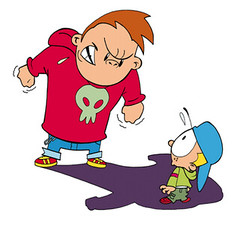 | 28 |
| 11657625382 | irony/ironic | The contrast between what is stated explicitly and what is really meant. The difference between what appears to be and what actually is true. In general, there are three major types of irony used in language; (1) In verbal irony, the words literally state the opposite of the writer's (or speaker's) true meaning. EX. Looking at her son's messy room, Mom says, "Wow, you could win an award for cleanliness!" (2) In situational irony, events turn out the opposite of what was expected. What the characters and readers think ought to happen is not what does happen. EX. There are roaches infesting the office of a pest control service. (3) In dramatic irony, facts or events are unknown to a character in a play or piece of fiction but known to the reader, audience, or other characters in the work. Irony is used for many reasons, but frequently, it's used to create poignancy or humor. EX. The reader knows that a storm is coming, but the children playing on the playground do not. |  | 29 |
| 11657625383 | litotes | A form of understatement that involves making an affirmative point by denying its opposite EX. You are not as young as you used to be. |  | 30 |
| 11657625384 | loose sentence/non-periodic sentence | A type of sentence in which the main idea (independent clause) comes first, followed by dependent grammatical units such as phrases and clauses. If a period were placed at the end of the independent clause, the clause would be a complete sentence. A work containing many loose sentences often seems informal, relaxed, and conversational. Generally loose sentences create loose style. EX. "The teacher considered him a good student, steady if not inspired, willing if not eager, responsive to instruction and conscientious about his work." |  | 31 |
| 11657625385 | metaphor | A figure of speech using implied comparison of seemingly unlike things or the substitution of one for the other, suggesting some similarity. Metaphorical language makes writing more vivid, imaginative, thought provoking, and meaningful. EX. "She is a walking dictionary." |  | 32 |
| 11657625386 | metonymy | A term from the Greek meaning "changed label" or "substitute name," metonymy is a figure of speech in which the name of one object is substituted for that of another closely associated with it. EX. A news release that claims "the White House declared" rather that "the President declared" is using metonymy. The substituted term generally carries a more potent emotional impact. | 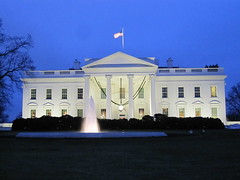 | 33 |
| 11657625387 | mood | This term has two distinct technical meanings in English writing. The first meaning is grammatical and deals with verbal units and a speaker's attitude. The indicative mood is used only for factual sentences. EX. "Joe eats too quickly." The subjunctive mood is used to express conditions contrary to fact. EX. "If I were you, I'd get another job." The imperative mood is used for commands. EX. "Shut the door!" The second meaning of mood is literary, meaning the prevailing atmosphere or emotional aura of a work. Setting, tone, and events can affect the mood. In this usage, mood is similar to tone and atmosphere. EX. "It was a dark and stormy night; the rain fell in torrents." |  | 34 |
| 11657625388 | narrative | The telling of a story or an account of an event or series of events. EX. Narrative of the Life of Frederick Douglas |  | 35 |
| 11657625389 | onomatopoeia | A figure of speech in which natural sounds are imitated in the sounds of words. Simple examples include such words as buzz, hiss, hum, crack, whinny, and murmur. If you note examples of onomatopoeia in an essay passage, note the effect. EX. buzz, hiss, hum, crack, whinny, and murmur. |  | 36 |
| 11657625390 | oxymoron | From the Greek for "pointedly foolish," an oxymoron is a figure of speech wherein the author groups apparently contradictory terms to suggest a paradox. EX. "jumbo shrimp" and "cruel kindness." |  | 37 |
| 11657625391 | paradox | A statement that appears to be self-contradictory or opposed to common sense but upon closer inspection contains some degree of truth or validity. EX. "To bring peace, we must war." |  | 38 |
| 11657625392 | parallelism | Also referred to as parallel construction or parallel structure, this term comes from Greek roots meaning "beside one another." It refers to the grammatical or rhetorical framing of words, phrases, sentences, or paragraphs to give structural similarity. This can involve, but is not limited to, repetition of a grammatical element such as a preposition or verbal phrase. The effects of parallelism are numerous, but frequently they act as an organizing force to attract the reader's attention, add emphasis and organization, or simply provide a musical rhythm. EX. A famous example of parallelism begins Charles Dickens's novel A Tale of Two Cities: "It was the best of times, it was the worst of times, it was the age of wisdom, it was the age of foolishness, it was the epoch of belief, it was the epoch of incredulity . . . ." |  | 39 |
| 11657625393 | anaphora | A sub-type of parallelism, when the exact repetition of words or phrases at the beginning of successive lines or sentences. EX. "My life is my purpose. My life is my goal. My life is my inspiration." |  | 40 |
| 11657625394 | parody | A work that closely imitates the style or content of another with the specific aim of comic effect and/or ridicule. As comedy, parody distorts or exaggerates distinctive features of the original. As ridicule, it mimics the work by repeating and borrowing words, phrases, or characteristics in order to illuminate weaknesses in the original. Well-written parody offers enlightenment about the original, but poorly written parody offers only ineffectual imitation. Usually an audience must grasp literary allusion and understand the work being parodied in order to fully appreciate the nuances of the newer work. Occasionally, however, parodies take on a life of their own and don't require knowledge of the original. | 41 | |
| 11657625395 | pedantic | An adjective that describes words, phrases, or general tone that is overly scholarly, academic, or bookish. |  | 42 |
| 11657625396 | periodic sentence | A sentence that presents its central meaning in a main clause at the end. This independent clause is preceded by a phrase or clause that cannot stand alone. Adds emphasis and structural variety. It is also a much stronger sentence than the loose sentence. EX. "Ecstatic with my AP score, I let out a loud, joyful shout.!" |  | 43 |
| 11657625397 | personification | A figure of speech in which the author presents or describes concepts, animals, or inanimate objects by endowing them with human attributes or emotions. Personification is used to make these abstractions, animals, or objects appear more vivid to the reader. EX. The leaves danced around as they began falling from the trees. |  | 44 |
| 11657625398 | point of view | In literature, the perspective from which a story is told. There are two general divisions of point of view and many subdivision within those. (1) the first person narrator tells the story with the first person pronoun, "I," and is a character in the story. This narrator can be the protagonist, a participant (character in a secondary role), or an observer (a character who merely watches the action). (2) the third person narrator relates the events with the third person pronouns, "he," "she," and "it." There are two main subdivisions to be aware of: omniscient and limited omniscient. In the "third person omniscient" point of view, the narrator, with godlike knowledge, presents the thoughts and actions of any or all characters. This all-knowing narrator can reveal what each character feels and thinks at any given moment. The "third person limited omniscient" point of view, as its name implies, presents the feelings and thoughts of only one character, presenting only the actions of all remaining characters. |  | 45 |
| 11657625399 | prose | One of the major divisions of genre, prose refers to fiction and nonfiction, including all its forms . In prose the printer determines the length of the line; in poetry, the poet determines the length of the line. |  | 46 |
| 11657625400 | repetition | The duplication, either exact or approximate, of any element of language, such as a sound, word, phrase, clause, sentence, or grammatical pattern. EX. "When I was a child, I spoke as a child, I understood as a child, I thought as a child". |  | 47 |
| 11657625401 | rhetoric | From the Greek for "orator," this term describes the principles governing the art of writing effectively, eloquently, and persuasively. EX. "Smoking kills.... so why bother starting" poster |  | 48 |
| 11657625402 | rhetorical modes | This flexible term describes the variety, the conventions, and the purposes of the major kinds of writing. The four most common rhetorical modes and their purposes are as follows: (1) The purpose of exposition (or expository writing) is to explain and analyze information by presenting an idea, relevant evidence, and appropriate discussion. (2) The purpose of argumentation is to prove the validity of an idea, or point of view, by presenting sound reasoning, discussion, and argument that thoroughly convince the reader. Persuasive writing is a type of argumentation having an additional aim of urging some form of action. (3) The purpose of description is to re-create, invent, or visually present a person, place, event, or action so that the reader can picture that being described. Sometimes an author engages all five senses in description; good descriptive writing can be sensuous and picturesque. Descriptive writing may be straightforward and objective or highly emotional and subjective. (4) The purpose of narration is to tell a story or narrate an event or series of events. This writing mode frequently uses the tools of descriptive writing. These four writing modes are sometimes referred to as modes of discourse. |  | 49 |
| 11657625403 | sarcasm | From the Greek meaning "to tear flesh," sarcasm involves bitter, caustic language that is meant to hurt or ridicule someone or something. It may use irony as a device, but not all ironic statements are sarcastic, that is, intended to ridicule. When well done, sarcasm can be witty and insightful; when poorly done, it's simply cruel. EX. As i fell down the stairs headfirst, I heard her say, "Look at that coordination." |  | 50 |
| 11657625404 | satire | A work that targets human vices and follies or social institutions and conventions for reform or ridicule. Regardless of whether or not the work aims to reform human behavior, satire is best seen as a style of writing rather than a purpose for writing. It can be recognized by the many devices used effectively by the satirist: irony, wit, parody, caricature, hyperbole, understatement, and sarcasm. The effects of satire are varied, depending on the writer's goal, but good satire, often humorous, is thought provoking and insightful about the human condition. EX. Saturday Night Live, Mad Magazine |  | 51 |
| 11657625405 | semantics | The branch of linguistics that studies the meaning of words, their historical and psychological development, their connotations, and their relation to one another. EX. Crash can mean auto accident, a drop in the Stock Market, to attend a party without being invited, ocean waves hitting the shore or the sound of a cymbals being struck together. |  | 52 |
| 11657625406 | style | The consideration of style has two purposes: (1) An evaluation of the sum of the choices an author makes in blending diction, syntax, figurative language, and other literary devices. Some authors' styles are so idiosyncratic that we can quickly recognize works by the same author (or a writer emulating that author's style). Compare, for example, Jonathan Swift to George Orwell or William Faulkner to Ernest Hemingway. We can analyze and describe an author's personal style and make judgments on how appropriate it is to the author's purpose. Styles can be called flowery, explicit, succinct, rambling, bombastic, commonplace, incisive, or laconic, to name only a few examples. (2) Classification of authors to a group and comparison of an author to similar authors. By means of such classification and comparison, we can see how an author's style reflects and helps to define a historical period, such as the Renaissance or the Victorian period, or a literary movement, such as the romantic, transcendental or realist movement. | | 53 |
| 11657625407 | subject complement | The word (with any accompanying phrases) or clauses that follows a linking verb and complements, or completes, the subject of the sentence by either (1) renaming it or (2) describing it. The former is technically a predicate nominative, the latter a predicate adjective. EX. Jason hopes to become a firefighter. |  | 54 |
| 11657625408 | subordinate clause | Like all clauses, this word group contains both a subject and a verb (plus any accompanying phrases or modifiers), but unlike the independent clause, the subordinate clause cannot stand alone; it does not express a complete thought. Also called a dependent clause, the subordinate clause depends on a main clause, sometimes called an independent clause, to complete its meaning. Easily recognized key words and phrases usually begin these clauses-- EX. although, because, unless, if, even though, since, as soon as, while, who, when, where, how, and that. |  | 55 |
| 11657625409 | syllogism | From the Greek for "reckoning together," a syllogism (or syllogistic reasoning or syllogistic logic) is a deductive system of formal logic that presents two premises (the first one called "major" and the second, "minor") that inevitably lead to a sound conclusion. A frequently cited example proceeds as follows:EX. major Premise: All men are mortal. minor premise: Socrates is a man. conclusion: Therefore, Socrates is mortal. A Syllogism's conclusion is valid only if each of the two premises is valid. Syllogisms may also present the specific idea first ("Socrates") and the general second ("All men"). |  | 56 |
| 11657625410 | symbol/symbolism | Generally, anything that represents itself and stands for something else. Usually a symbol is something concrete--such as an object, action, character, or scene--that represents something more abstract. However, symbols and symbolism can be much more complex. One system classifies symbols in three categories: (1) Natural symbols are objects and occurrences from nature to represent ideas commonly associated with them EX. (dawn symbolizing hope or a new beginning, a rose symbolizing love, a tree symbolizing knowledge). (2) Conventional symbols are those that have been invested with meaning by a group. Ex. (religious symbols such as a cross or Star of David; national symbols, such as a flag or an eagle; or group symbols, such as a skull and crossbones for pirates or the scales of justice for lawyers). (3) Literary symbols are sometimes also conventional in the sense that they are found in a variety of works and are generally recognized. However, a work's symbols may be more complicated as is the whale in Moby Dick and the jungle in Heart of Darkness. |  | 57 |
| 11657625411 | synecdoche | A figure of speech in which a part of something is used to represent the whole or, occasional, the whole is used to represent a part. EX. The phrase "gray beard" refers to an old man. |  | 58 |
| 11657625412 | synesthesia | When one kind of sensory stimulus evokes the subjective experience of another. EX. "Taste the Pain" |  | 59 |
| 11657625413 | syntax | The way an author chooses to join words into phrases, clauses, and sentences. Syntax is similar to diction, but you can differentiate them by thinking of syntax as the groups of words, while diction refers to the individual words. Syntax is the way in which words and punctuation are used and arranged to form phrases, clauses and sentences. EX. Incorrect: To the mall we are going. Correct: We are going to the mall. |  | 60 |
| 11657625414 | theme | The central idea or message of a work, the insight it offers into life. Usually theme is unstated in fictional works, but in nonfiction, the theme may be directly stated, especially in expository or argumentative writing. EX. Money can't buy happiness |  | 61 |
| 11657625415 | thesis | In expository writing, the thesis statement is the sentence or group of sentences that directly expresses the author's opinion, purpose, meaning, or position. Expository writing is usually judged by analyzing how accurately, effectively, and throughly a writer has proved the thesis. |  | 62 |
| 11657625416 | tone | Similar to mood, tone describes the author's attitude toward his material, the audience, or both. Tone is easier to determine in spoken language than in written language. Considering how a work would sound if it were read aloud can help in identifying an author's tone. EX. playful, serious, businesslike, sarcastic, humorous, formal, ornate, sardonic, and somber. |  | 63 |
| 11657625417 | transition | A word or phrase that links different ideas. Used especially, although not exclusively, in expository and argumentative writing, transitions effectively signal a shift from one idea to another. EX. furthermore, consequently, nevertheless, for example, in addition, likewise, similarly and on the contrary. More sophisticated writers use more subtle means of transition. |  | 64 |
| 11657625418 | understatement | The ironic minimizing of fact, understatement presents something as less significant than it is. The effect can frequently be humorous and emphatic. Understatement is the opposite of hyperbole. EX. your leg is broken in 3 places, so it is going to be a little sore for a while |  | 65 |
| 11657625419 | wit | In modern usage, intellectually amusing language that surprises and delights. A witty statement is humorous, while suggesting the speaker's verbal power in creating ingenious and perceptive remarks. Wit usually uses terse language that makes a pointed statement. EX. "you can't be late until you show up" |  | 66 |
AP Psychology Unit 2 Flashcards
Terms : Hide Images
| 10797484285 | hindsight bias | The tendency to believe, after learning an outcome, that one would have foreseen it |  | 0 |
| 10797879275 | What does Naturalistic Observation aim for? | To describe behavior rather than try to explain it | 1 | |
| 10797484286 | critical thinking | examines assumptions, discerns hidden values, evaluates evidence, and assesses conclusions | 2 | |
| 10797879276 | Naturalistic Observation | Observing/recording behavior in real-world settings without trying to manipulate or control the situation | 3 | |
| 10797484287 | validity | the extent to which a test or experiment measures or predicts what it is supposed to do | 4 | |
| 10797484288 | theory | A hypothesis that has been tested with a significant amount of data | 5 | |
| 10797484289 | hypothesis | A testable prediction, often implied by a theory | 6 | |
| 10797484290 | operational definition | A statement of the procedures used to define research variables that is specific and allows research to be replicated | 7 | |
| 10797484292 | case study | An observation technique in which one person is studied in depth in the hope of revealing universal principles | 8 | |
| 10797484293 | survey | A study, generally in the form of an interview or questionnaire, that provides researchers with information about how people think and act | 9 | |
| 10797484294 | population | the whole group that you want to study and describe | 10 | |
| 10797484295 | random sample | A sample that fairly represents a population because each member has an equal chance of inclusion | 11 | |
| 10797484296 | correlation | A measure of the relationship between two variables | 12 | |
| 10797484297 | correlation coefficient | A statistical index of the relationship between two things (from -1 to +1) | 13 | |
| 10797484298 | scatterplot | A graphed cluster of dots, each of which represents the values of two variables | 14 | |
| 10797484299 | illusory correlation | The perception of a relationship where none exists | 15 | |
| 10797484300 | experiment | A research method in which an investigator manipulates one or more factors to observe the effect on some behavior or mental process | 16 | |
| 10797484301 | random assignment | Assigning participants to experimental and control conditions by chance, thus minimizing preexisting differences between those assigned to the different groups(how you assign them) | 17 | |
| 10797484302 | double-blind study | An experiment in which neither the participant nor the researcher knows whether the participant has received the treatment or the placebo | 18 | |
| 10797484303 | placebo effect | improvement resulting from the mere expectation of improvement | 19 | |
| 10797484304 | experimental group | A subject or group of subjects in an experiment that is exposed to the factor or condition being tested | 20 | |
| 10797484305 | control group | The group that does not receive the experimental treatment | 21 | |
| 10797484306 | independent variable | A variable whose values are independent of changes in the values of other variables | 22 | |
| 10797484307 | confounding variable | A factor other than the independent variable that might produce an effect in an experiment | 23 | |
| 10797484308 | dependent varibale | The variable that is observed and that changes in response to the independent variable, the thing you are measuring | 24 | |
| 10797484309 | mode | Most frequently occurring score | 25 | |
| 10797484310 | mean | Average | 26 | |
| 10797484311 | median | Middle number | 27 | |
| 10797484312 | range | Distance between highest and lowest scores in a set of data | 28 | |
| 10797484313 | standard deviation | A computed measure of how much scores vary around the mean score | 29 | |
| 10797484314 | normal curve | The symmetrical bell-shaped curve that describes the distribution of many physical and psychological attributes | 30 | |
| 10797484315 | statistical significance | A statistical statement of how likely it is that an obtained result occurred by chance | 31 | |
| 10797484316 | culture | Beliefs, customs, and traditions of a specific group of people | 32 | |
| 10797484317 | informed consent | An ethical principle requiring that research participants be told enough to enable them to choose whether they wish to participate | 33 | |
| 10797484318 | debriefing | A verbal description of the true nature and purpose of a study AFTER the study is over | 34 | |
| 10797484319 | sample | A part of the population you are studying | 35 | |
| 10797484322 | 3 main components of scientific attitude | curiosity skepticism humility | 36 | |
| 10797484323 | disadvantage of a case study | overgeneralization, suggests that the results could be for everyone but more research is needed to back it up | 37 | |
| 10797484324 | a theory is useful if? | it effectively organizes a range of self-reports/observations and leads to a clear hypothesis that anyone can use and stimulates research to lead to a revised theory that better organizes and predicts what we know | 38 | |
| 10797484326 | positive correlation | two variable rise and fall together |  | 39 |
| 10797484327 | negative correlation | variables are related inversely, one goes up and the other goes down |  | 40 |
| 10797484328 | 1 standard deviation | 68% | 41 | |
| 10797484329 | deception | investigators providing false or incomplete information to participants for the purpose of misleading research subjects | 42 | |
| 10797484330 | descriptive statistics | numerical data used to measure and describe characteristics of groups, including measures of central tendency and variation | 43 | |
| 10797484332 | skewed graph | mode, median, and mean are different |  | 44 |
| 10797484333 | positive skew | high outlier |  | 45 |
| 10797484334 | negative skew | low outlier |  | 46 |
| 10797484335 | measures of variability | depict diversity of the distribution (range, standard deviation) | 47 | |
| 10797484344 | normal curve |  | 48 | |
| 10797484337 | 3 principles of being reliable | representative samples are better than biased less variable observations are more reliable than those that are more variable more cases are better than fewer | 49 | |
| 10797879277 | inferential statistics | to infer from sample data the probability of something being true of a population | 50 | |
| 10797484339 | statistically significant | how likely it is that an obtained result occurred by chance | 51 | |
| 10797484340 | culture (behavior) | enduring behaviors ideas, attitudes, and how people perceive different situations, such as body shape, early sex, etc | 52 | |
| 10797879278 | Overconfidence | Tendency to overestimate our ability to make correct predictions | 53 | |
| 10797879279 | What is causation? | The relationship between cause and effect | 54 | |
| 10797879280 | 2 standard deviation | 95% | 55 | |
| 10797879281 | 3 standard deviation | 99.7% | 56 | |
| 10880570331 | What is empirical method? | A process that depends on direct observation of nature and experimentation | 57 | |
| 10880570332 | What is the measure of central tendency | mean | 58 |
Flashcards
AP Lang Vocab: Set 1 Flashcards
Terms : Hide Images
| 10534686394 | ad hominem | a fallacy that attacks the person rather than dealing with the real issue in dispute | 0 | |
| 10534691247 | ad populum (bandwagon appeal) | This fallacy occurs when evidence boils down to "everybody's doing it, so it must be a good thing to do." | 1 | |
| 10534693285 | Alliteration | the occurrence of the same letter or sound at the beginning of adjacent or closely connected words. | 2 | |
| 10534696089 | Allusion | A reference to another work of literature, person, or event | 3 | |
| 10534697572 | Analogy | A comparison between two seemingly dissimilar things | 4 | |
| 10534708917 | Anaphora | the repetition of a word or phrase at the beginning of successive clauses, phrases, or lines | 5 | |
| 10534711126 | anecdote | a brief story used to illustrate a point or claim | 6 | |
| 10534714527 | annotation | the taking of notes directly on a text | 7 | |
| 10534720150 | Antimetabole | Repetition of words in reverse order | 8 | |
| 10534721023 | Antithesis | opposition, or contrast, of ideas or words in a parallel construction | 9 | |
| 10534722614 | appeal to false authority | This fallacy occurs when someone who has no expertise to speak on an issue is cited as an authority. | 10 | |
| 10534728070 | archaic diction | old-fashioned or outdated choice of words | 11 | |
| 10534729775 | argument | A process of reasoned inquiry; a persuasive discourse resulting in a coherent and considered movement from a claim to a conclusion. | 12 | |
| 10534732766 | Aristotelian triangle | See rhetorical triangle | 13 | |
| 10534734546 | assertion | a statement that presents a claim or thesis | 14 | |
| 10534736192 | assumption | see warrant | 15 | |
| 10534738953 | Asyndeton | omission of conjunctions between coordinate phrases, clauses, or words | 16 | |
| 10534743031 | audience | the listener, viewer, or reader of a text | 17 | |
| 10534744774 | Backing | In the Toulmin model, backing consists of further assurances or data without which the assumption lacks authority. | 18 | |
| 10534747522 | bandwagon appeal | see ad populum fallacy | 19 |
Pages

Need Help?
We hope your visit has been a productive one. If you're having any problems, or would like to give some feedback, we'd love to hear from you.
For general help, questions, and suggestions, try our dedicated support forums.
If you need to contact the Course-Notes.Org web experience team, please use our contact form.
Need Notes?
While we strive to provide the most comprehensive notes for as many high school textbooks as possible, there are certainly going to be some that we miss. Drop us a note and let us know which textbooks you need. Be sure to include which edition of the textbook you are using! If we see enough demand, we'll do whatever we can to get those notes up on the site for you!
