

AP Psychology AP Review Flashcards
Terms : Hide Images
| 13868490303 | psychology | the study of behavior and mental processes | 0 | |
| 13868490304 | psychology's biggest question | Which is more important in determining behavior, nature or nurture? | 1 | |
| 13868490305 | psychology's three levels of analysis | biopsychosocial approach (looks at the biological, psychological, and social-cultural approaches together) | 2 | |
| 13868490306 | biological approach | genetics, close-relatives, body functions | 3 | |
| 13868490307 | evolutionary approach | species - helped with survival (ancestors) | 4 | |
| 13868490308 | psychodynamic approach | (Freud) subconscious, repressed feelings, unfulfilled wishes | 5 | |
| 13868490309 | behavioral approach | learning (classical and operant) observed | 6 | |
| 13868490310 | cognitive approach | thinking affects behavior | 7 | |
| 13868490311 | humanistic approach | becoming a better human (behavior, acceptance) | 8 | |
| 13868490312 | social-cultural approach | cultural, family, environment | 9 | |
| 13868490313 | two reasons of why experiments are important | hindsight bias + overconfidence | 10 | |
| 13868490314 | types of research methods | descriptive, correlational, and experimental | 11 | |
| 13868490315 | descriptive methods | case study survey naturalistic observation (DON'T SHOW CAUSE/EFFECT) | 12 | |
| 13868490316 | case study | studies one person in depth may not be typical of population | 13 | |
| 13868490317 | survey | studies lots of people not in depth | 14 | |
| 13868490318 | naturalistic observation | observe + write facts without interference | 15 | |
| 13868490319 | correlational method | shows relation, but not cause/effect scatterplots show research | 16 | |
| 13868490320 | correlation coefficient | + 1.0 (both increase) 0 (no correlation - 1.0 (one increases, other decreases) | 17 | |
| 13868490321 | experimental method | does show cause and effect | 18 | |
| 13868490322 | population | type of people who are going to be used in experiment | 19 | |
| 13868490323 | sample | actual people who will be used (randomness reduces bias) | 20 | |
| 13868490324 | random assignment | chance selection between experimental and control groups | 21 | |
| 13868490325 | control group | not receiving experimental treatment receives placebo | 22 | |
| 13868490326 | experimental group | receiving treatment/drug | 23 | |
| 13868490327 | independent variable | drug/procedure/treatment | 24 | |
| 13868490328 | dependent variable | outcome of using the drug/treatment | 25 | |
| 13868490329 | confounding variable | can affect dependent variable beyond experiment's control | 26 | |
| 13868490330 | scientific method | theory hypothesis operational definition revision | 27 | |
| 13868490331 | theory | general idea being tested | 28 | |
| 13868490332 | hypothesis | measurable/specific | 29 | |
| 13868490333 | operational definition | procedures that explain components | 30 | |
| 13868490334 | mode | appears the most | 31 | |
| 13868490335 | mean | average | 32 | |
| 13868490336 | median | middle | 33 | |
| 13868490337 | range | highest - lowest | 34 | |
| 13868490338 | standard deviation | how scores vary around the mean | 35 | |
| 13868490339 | central tendency | single score that represents the whole | 36 | |
| 13868490340 | bell curve | (natural curve) |  | 37 |
| 13868490341 | ethics of testing on animals | need to be treated humanly basically similar to humans | 38 | |
| 13868490342 | ethics of testing on humans | consent debriefing no unnecessary discomfort/pain confidentiality | 39 | |
| 13868490343 | sensory neurons | travel from sensory receptors to brain | 40 | |
| 13868490344 | motor neurons | travel from brain to "motor" workings | 41 | |
| 13868490345 | interneurons | (in brain and spinal cord) connecting motor and sensory neurons | 42 | |
| 13868490537 | neuron |  | 43 | |
| 13868490346 | dendrites | receive messages from other neurons | 44 | |
| 13868490347 | myelin sheath | protects the axon | 45 | |
| 13868490348 | axon | where charges travel from cell body to axon terminal | 46 | |
| 13868490349 | neurotransmitters | chemical messengers | 47 | |
| 13868490350 | reuptake | extra neurotransmitters are taken back | 48 | |
| 13868490351 | excitatory charge | "Let's do it!" | 49 | |
| 13868490352 | inhibitory charge | "Let's not do it!" | 50 | |
| 13868490353 | central nervous system | brain and spinal cord | 51 | |
| 13868490354 | peripheral nervous system | somatic nervous system autonomic nervous system | 52 | |
| 13868490355 | somatic nervous system | voluntary movements | 53 | |
| 13868490356 | autonomic nervous system | involuntary movements (sympathetic and parasympathetic nervous systems) | 54 | |
| 13868490357 | sympathetic nervous system | arousing | 55 | |
| 13868490358 | parasympathetic nervous system | calming | 56 | |
| 13868490359 | neural networks | more connections form with greater use others fall away if not used | 57 | |
| 13868490360 | spinal cord | expressway of information bypasses brain when reflexes involved | 58 | |
| 13868490361 | endocrine system | slow uses hormones in the blood system | 59 | |
| 13868490362 | master gland | pituitary gland | 60 | |
| 13868490363 | brainstem | extension of the spinal cord responsible for automatic survival | 61 | |
| 13868490364 | reticular formation (if stimulated) | sleeping subject wakes up | 62 | |
| 13868490365 | reticular formation (if damaged) | coma | 63 | |
| 13868490366 | brainstem (if severed) | still move (without purpose) | 64 | |
| 13868490367 | thalamus | sensory switchboard (does not process smell) | 65 | |
| 13868490368 | hypothalamus | basic behaviors (hunger, thirst, sex, blood chemistry) | 66 | |
| 13868490369 | cerebellum | nonverbal memory, judge time, balance emotions, coordinate movements | 67 | |
| 13868490370 | cerebellum (if damaged) | difficulty walking and coordinating | 68 | |
| 13868490371 | amygdala | aggression, fear, and memory associated with these emotions | 69 | |
| 13868490372 | amygdala (if lesioned) | subject is mellow | 70 | |
| 13868490373 | amygdala (if stimulated) | aggressive | 71 | |
| 13868490374 | hippocampus | process new memory | 72 | |
| 13868490375 | cerebrum | two large hemispheres perceiving, thinking, and processing | 73 | |
| 13868490376 | cerebral cortex | only in higher life forms | 74 | |
| 13868490377 | association areas | integrate and interpret information | 75 | |
| 13868490378 | glial cells | provide nutrients to myelin sheath marks intelligence higher proportion of glial cells to neurons | 76 | |
| 13868490379 | frontal lobe | judgement, personality, processing (Phineas Gage accident) | 77 | |
| 13868490380 | parietal lobe | math and spatial reasoning | 78 | |
| 13868490381 | temporal lobe | audition and recognizing faces | 79 | |
| 13868490382 | occipital lobe | vision | 80 | |
| 13868490383 | corpus callosum | split in the brain to stop hyper-communication (eliminate epileptic seizures) | 81 | |
| 13868490384 | Wernicke's area | interprets auditory and hearing | 82 | |
| 13868490385 | Broca's area | speaking words | 83 | |
| 13868490386 | plasticity | ability to adapt if damaged | 84 | |
| 13868490387 | sensation | what our senses tell us | 85 | |
| 13868490388 | bottom-up processing | senses to brain | 86 | |
| 13868490389 | perception | what our brain tells us to do with that information | 87 | |
| 13868490390 | top-down processing | brain to senses | 88 | |
| 13868490391 | inattentional blindness | fail to "gorilla" because attention is elsewhere | 89 | |
| 13868490392 | cocktail party effect | even with tons of stimuli, we are able to pick out our name, etc. | 90 | |
| 13868490393 | change blindness | giving directions and person is changed and we don't notice | 91 | |
| 13868490394 | choice blindness | when defending the choice we make, we fail to notice choice was changed | 92 | |
| 13868490395 | absolute threshold | minimum stimulation needed in order to notice 50% of the time | 93 | |
| 13868490396 | signal detection theory | we notice what is more important to us (rather hear a baby crying) | 94 | |
| 13868490397 | JND (just noticeable difference) | (Weber's law) difference between different stimuli noticed in proportion | 95 | |
| 13868490398 | sensory adaptation | tired of noticing (Brain says, "Been there, done that. Next?" | 96 | |
| 13868490399 | rods | night time | 97 | |
| 13868490400 | cones | color | 98 | |
| 13868490401 | parallel processing | notice color, form, depth, movement, etc. | 99 | |
| 13868490402 | Young-Helmholtz trichromatic theory | 3 corresponding color receptors (RGB) | 100 | |
| 13868490403 | Hering's opponent-process theory | after image in opposite colors (RG, YB, WB) | 101 | |
| 13868490404 | trichromatic + opponent-process | Young-Helmholtz -> color stimuli Hering -> en route to cortex | 102 | |
| 13868490405 | frequency we hear most | human voice | 103 | |
| 13868490406 | Helmoltz (hearing) | we hear different pitches in different places in basilar membrane (high pitches) | 104 | |
| 13868490407 | frequency theory | impulse frequency (low pitches) | 105 | |
| 13868490408 | Helmholtz + frequency theory | middle pitches | 106 | |
| 13868490409 | Skin feels what? | warmth, cold, pressure, pain | 107 | |
| 13868490410 | gate-control theory | small fibers - pain large fibers - other senses | 108 | |
| 13868490411 | memory of pain | peaks and ends | 109 | |
| 13868490412 | smell | close to memory section (not in thalamus) | 110 | |
| 13868490413 | grouping | Gestalt make sense of pieces create a whole | 111 | |
| 13868490414 | grouping groups | proximity similarity continuity connectedness closure | 112 | |
| 13868490415 | make assumptions of placement | higher - farther smaller - farther blocking - closer, in front | 113 | |
| 13868490416 | perception = | mood + motivation | 114 | |
| 13868490417 | consciousness | awareness of ourselves and the environment | 115 | |
| 13868490418 | circadian rhythm | daily biological clock and regular cycle (sleep and awake) | 116 | |
| 13868490419 | circadian rhythm pattern | - activated by light - light sensitive retinal proteins signal brains SCN (suprachiasmatic nucleus) - pineal gland decreases melatonin | 117 | |
| 13868490420 | What messes with circadian rhythm? | artificial light | 118 | |
| 13868490421 | The whole sleep cycle lasts how long? | 90 minutes | 119 | |
| 13868490422 | sleep stages | relaxed stage (alpha waves) stage 1 (early sleep) (hallucinations) stage 2 (sleep spindles - bursts of activity) (sleep talk) stage 3 (transition phase) (delta waves) stage 4 (delta waves) (sleepwalk/talk + wet the bed) stage 5 (REM) (sensory-rich dreams) (paradoxical sleep) | 120 | |
| 13868490423 | purpose of sleep | 1. recuperation - repair neurons and allow unused neural connections to wither 2. making memories 3. body growth (children sleep more) | 121 | |
| 13868490424 | insomnia | can't sleep | 122 | |
| 13868490425 | narcolepsy | fall asleep anywhere at anytime | 123 | |
| 13868490426 | sleep apnea | stop breathing in sleep | 124 | |
| 13868490427 | night terrors | prevalent in children | 125 | |
| 13868490428 | sleepwalking/sleeptalking | hereditary - prevalent in children | 126 | |
| 13868490429 | dreaming (3) | 1. vivid bizarre intense sensory experiences 2. carry fear/survival issues - vestiges of ancestors' survival ideas 2. replay previous day's experiences/worries | 127 | |
| 13868490430 | purpose of dreaming (5 THEORIES) | 1. physiological function - develop/preserve neural pathways 2. Freud's wish-fulfillment (manifest/latent content) 3. activation synthesis - make sense of stimulation originating in brain 4. information processing 5. cognitive development - reflective of intelligence | 128 | |
| 13868490431 | 1. Can hypnosis bring you back in time? 2. Can hypnosis make you do things you wouldn't normally do? 3. Can it alleviate pain? 4. What state are you in during hypnosis? 5. Who is more susceptible? | 1. cannot take you back in time 2. cannot make you do things you won't do 3. can alleviate pain 4. fully conscious ((IMAGINATIVE PEOPLE MORE SUSCEPTIBLE)) | 129 | |
| 13868490432 | depressants | slows neural pathways | 130 | |
| 13868490433 | alcohol | ((depressant)) disrupts memory formation (REM) lowers inhibition expectancy effect | 131 | |
| 13868490434 | barbituates (tranquilizers) | ((depressant)) reduce anxiety | 132 | |
| 13868490435 | opiates | ((depressant)) pleasure reduce anxiety/pain | 133 | |
| 13868490436 | stimulants | hypes neural processing | 134 | |
| 13868490437 | methamphetamine | ((stimulant)) heightens energy euphoria affects dopamine | 135 | |
| 13868490438 | caffeine | ((stimulant)) | 136 | |
| 13868490439 | nicotine | ((stimulant)) CNS releases neurotransmitters calm anxiety reduce pain affects (nor)epinephrine and dopamine | 137 | |
| 13868490440 | cocaine | ((stimulant)) euphoria affects dopamine, serotonin, and norepinephrine | 138 | |
| 13868490441 | hallucinogen | excites neural activity | 139 | |
| 13868490442 | ecstasy | ((hallucinogen)) reuptake is blocked affects dopamine and serotonin | 140 | |
| 13868490443 | LSD | ((hallucinogen)) affects sensory/emotional "trip" (+/-) affects serotonin | 141 | |
| 13868490444 | marijuana | ((hallucinogen)) amplify sensory experience disrupts memory formation | 142 | |
| 13868490445 | learning | organism changing behavior due to experience (association of events) | 143 | |
| 13868490446 | types of learning | classical operant observational | 144 | |
| 13868490447 | famous classical psychologists | Pavlov and Watson | 145 | |
| 13868490448 | famous operant psychologist | Skinner | 146 | |
| 13868490449 | famous observational psychologists | Bandura | 147 | |
| 13868490450 | classical conditioning | outside stimulus | 148 | |
| 13868490451 | Pavlov's experiment | Step 1: US (food) -> UR (salivation) Step 2: NS (bell) -> US (food) -> UR (salivation) Later... CS (bell) -> CR (salivation) | 149 | |
| 13868490452 | Watson's experiment | white rat was given to Little Albert Step 1: US (noise) -> UR (cry) Step 2: NS (rat) -> US (noise) -> UR (cry) Later... CS (rat) -> CR (cry) | 150 | |
| 13868490453 | generalization | any small, white fluffy creature will make Albert cry now | 151 | |
| 13868490454 | discriminate | any large, white fluffy creature won't make Albert cry | 152 | |
| 13868490455 | extinction | stop "treating" with conditioned response | 153 | |
| 13868490456 | spontaneous recovery | bring stimulus back after a while | 154 | |
| 13868490457 | operant conditioning | control by organism | 155 | |
| 13868490458 | Skinner's experiment | operant chamber / Skinner box (lead to shaping) | 156 | |
| 13868490459 | shaping | get animal closer to doing what you want them to do | 157 | |
| 13868490460 | reinforcers | want to continue behavior (positive reinforcement: give money to do laundry) (negative reinforcement: do to avoid nagging) | 158 | |
| 13868490461 | punishments | want to stop behavior (positive reinforcement: smack) (negative reinforcement: take away phone) | 159 | |
| 13868490462 | fixed ratio | happens a certain number of times (Starbucks punch card) | 160 | |
| 13868490463 | variable ratio | happens an unpredictable number of times (winning the lottery) | 161 | |
| 13868490464 | organism must do these (2 times) | fixed ratio and variable ratio | 162 | |
| 13868490465 | fixed interval | happens at a certain time (mailman comes to the house at 10:00 AM) | 163 | |
| 13868490466 | variable interval | happens at any time (receive texts from friends) | 164 | |
| 13868490467 | these things happen regardless (2 times) | fixed interval and variable interval | 165 | |
| 13868490468 | Which (fixed/variable) conditions better? | variable | 166 | |
| 13868490469 | criticisms of Skinner | doesn't take into account intrinsic motivation | 167 | |
| 13868490470 | intrinsic motivation | doing something for yourself, not the reward | 168 | |
| 13868490471 | extrinsic motivation | doing something for reward | 169 | |
| 13868490472 | Skinner's legacy | use it personally, at school, and at work | 170 | |
| 13868490473 | famous observational experiment | Bandura's Bobo doll | 171 | |
| 13868490474 | famous observational psychologist | Bandura | 172 | |
| 13868490475 | mirror neurons | "feel" what is observed happens in higher order animals | 173 | |
| 13868490476 | Bobo doll experiment legacy | violent video games/movies desensitize us see good: do good see evil: do evil | 174 | |
| 13868490477 | observational learning | biological behaviors work best | 175 | |
| 13868490478 | habituation | get used to it -> stop reacting | 176 | |
| 13868490479 | examples for observational learning | lectures and reading | 177 | |
| 13868490480 | serotonin involved with memory | speeds the connection between neurons | 178 | |
| 13868490481 | LTP | ((long-term potentiation)) strengthens potential neural forming (associated with speed) | 179 | |
| 13868490482 | CREB | protein that can switch genes on/off with memory and connection of memories | 180 | |
| 13868490483 | glutamate involved with memory | neurotransmitter that enhances LTP | 181 | |
| 13868490484 | glucose involved with memory | released during strong emotions ((signaling important event to be remembered)) | 182 | |
| 13868490485 | flashbulb memory | type of memory remembered because it was an important/quick moment | 183 | |
| 13868490486 | amygdala (memory) | boosts activity of proteins in memory-forming areas to fight/flight | 184 | |
| 13868490487 | cerebellum (memory) | forms and stores implicit memories ((classical conditioning)) | 185 | |
| 13868490488 | hippocampus (memory) | active during sleep (forming memories) ((information "moves" after 48 hours)) | 186 | |
| 13868490489 | memory | learning over time contains information that can be retrieved | 187 | |
| 13868490490 | processing stages | encoding -> storage -> retrieval | 188 | |
| 13868490491 | encoding | information going in | 189 | |
| 13868490492 | storage | keeping information in | 190 | |
| 13868490493 | retrieval | taking information out | 191 | |
| 13868490494 | How long is sensory memory stored? | seconds | 192 | |
| 13868490495 | How long is short-term memory stored? | less than a minute | 193 | |
| 13868490496 | How many bits of information is stored in short-term memory? | 7 | 194 | |
| 13868490497 | How many chunks of information is stored in short-term memory? | 4 | 195 | |
| 13868490498 | How many seconds of words is stored in short-term memory? | 2 | 196 | |
| 13868490499 | short term memory goes to ______________ | working memory | 197 | |
| 13868490500 | working memory | make a connection and process information to mean something | 198 | |
| 13868490501 | working memory goes to _________________ | long-term memory | 199 | |
| 13868490502 | How much is stored in long-term memory? | LIMITLESS | 200 | |
| 13868490503 | implicit memory | naturally do | 201 | |
| 13868490504 | explicit memory | need to explain | 202 | |
| 13868490505 | automatic processing | space, time, frequency, well-learned information | 203 | |
| 13868490506 | effortful processing | processing that requires effort | 204 | |
| 13868490507 | spacing effect | spread out learning over time | 205 | |
| 13868490508 | serial position effect | primary/recency effect | 206 | |
| 13868490509 | primacy effect | remember the first things in a list | 207 | |
| 13868490510 | recency effect | remember the last things in a list | 208 | |
| 13868490511 | effortful processing (4 things) | 1. recency effect 2. spacing effect 3. testing effect 4. serial position effect | 209 | |
| 13868490512 | semantic encoding (1) meaning (2) how to | make meaning out of something --- chunk, hierarchy, or connect to you | 210 | |
| 13868490513 | if we can't remember a memory... | 1. change memory to suit us 2. fill in the blanks with logical story | 211 | |
| 13868490514 | misinformation effect | not correct information | 212 | |
| 13868490515 | imagination inflation | imagine or visualize something that isn't real | 213 | |
| 13868490516 | source amnesia | what is the truth? (is it a dream, story, memory, etc.?) | 214 | |
| 13868490517 | priming | association (setting you up) | 215 | |
| 13868490518 | context | environment helps with memory | 216 | |
| 13868490519 | state-dependency | you may remember something if you go back to the state you were in (go back to high) | 217 | |
| 13868490520 | mood-congruency | emotion will bring back similar emotional memories | 218 | |
| 13868490521 | forgetting curve | forget after 5 days forget after 5 years | 219 | |
| 13868490522 | the forgetting curve was created by | Ebbinghaus | 220 | |
| 13868490523 | proactive interference | old information interferes with the new | 221 | |
| 13868490524 | retroactive interference | new information interferes with the old | 222 | |
| 13868490525 | children can't remember before age __ | 3 | 223 | |
| 13868490526 | Loftus | connected to abuse cases/childhood | 224 | |
| 13868490527 | prototypes | generalize | 225 | |
| 13868490528 | problem-solving (4) | trial + error algorithms heuristic (representative + availability) insight - "AHA!" | 226 | |
| 13868490529 | against problem-solving | fixation | 227 | |
| 13868490530 | mental set | what has worked in the past | 228 | |
| 13868490531 | functional fixedness | only way to do this is with this | 229 | |
| 13868490532 | Chomsky (nature or nurture?) | "born with language" (nature) | 230 | |
| 13868490533 | Skinner (nature or nurture?) | language is learned (nurture) | 231 | |
| 13868490534 | grammar is _________ | universal | 232 | |
| 13868490535 | phonemes | smallest sound unit | 233 | |
| 13868490536 | morphemes | smallest meaning unit | 234 |
Flashcards
WHAP AP PD 6 Flashcards
Terms : Hide Images
| 9324348422 | Dependency Theory | tells how developed industrial nations dominate the international economy and profit at the expense of less developed nations; essentially an economic legacy of imperialism | 0 | |
| 9324348423 | Gamal Abdel Nasser | President of Egypt who caused controversy with the Suez Crisis and challenged Western dominance of the middle east. Also fought with Israel | 1 | |
| 9324348424 | Zionism | Goal of making a Jewish state in Palestine, supported by the Balfour Declaration | 2 | |
| 9324348425 | Changes in the role of the middle class woman | large numbers stayed at home as men became the main wage-earner | 3 | |
| 9324348426 | Glasnost (openness) and perestroika (economic restructuring( | Gorbachev's Reforms - helped lead to the fall of the Soviet Union | 4 | |
| 9324348427 | Iranian Revolution | Pahlavi's reformers to modernize & westernize the country were later overturned in '79 to reflect conservative Muslim traditions | 5 | |
| 9324348428 | nonalignment | Nations that did not take sides during the Cold War | 6 | |
| 9324348429 | Mexican Revolution Causes | Zapata and Villa fought for social and land reforms and to end the power of rulers who acted as dictators. nationalism increased | 7 | |
| 9324348430 | Sun Yatsen | Chinese nationalist that led the movement to end dynastic rule and establish a republic Three Principles of the People | 8 | |
| 9324348431 | Industrialization | Led to an increased need for raw materials and marketplaces | 9 | |
| 9324348432 | Unification of Germany | Independent German-speaking states were unified to form a single nation | 10 | |
| 9324348433 | Marx and Engels | Condemned capitalism and promoted socialism | 11 | |
| 9324348434 | Kwame Nkrumah | One of the most important nationalistic leaders of Africa and leader of the first independent country in sub-saharan africa, Ghana | 12 | |
| 9324348435 | Five Year Plans | Economic goal by Stalin to improve agriculture and industrial production. Led to USSR going from agrarian to world power | 13 | |
| 9324348436 | Israel | Divided Palestine, a mandate into an Arab and Jewish state | 14 | |
| 9324348437 | Total War | All of a nation's resources are dedicated to the war effort | 15 | |
| 9324348438 | Monroe Doctrine | Sought to limit European interference in the Americas | 16 | |
| 9324348439 | indirect colonial possession | preferred by the british, the colony was given some degree of autonomy | 17 | |
| 9324348440 | Tanzimat Reforms | Aimed at modernizing westernizing the Ottoman Empire especially government and military | 18 | |
| 9324348441 | Declaration of the Rights of Man | Included natural rights of the citizen and that sovereignty belonged to the people | 19 | |
| 9324348442 | Vietnam War | The US joined South Vietnam's fight to against the spread of communism | 20 | |
| 9324348443 | Pearl Harbor | Surprise attack on Americans by the Japanese during WWII that led to the US involvement in the war | 21 | |
| 9324348444 | Decolonization | Mounting pressure from nationalists movements within the colonies for home rule | 22 | |
| 9324348445 | Fall of Qing | Failed series of reforms, internal rebellions, increase of nationalism - sun yat sen | 23 | |
| 9324348446 | Guomindang | Chinese group led by Jiang Jieshi and fought communists during civil war [1920s - 1949] Lost war and fled to taiwan | 24 | |
| 9324348447 | Juan Peron | President of Argentina that built up industry and became popular with the urban poor, but harmed the economy | 25 | |
| 9324348448 | Nationalism Role in 19th/20th centuries | played a significant role in political movements - fr. rev., unification in germany and italy, se asia, and africa | 26 | |
| 9324348449 | Mexican Revolution Results | 20th century revolution that helped to set the foundation for sustained democratic rule, rights for all people, and control of resources | 27 | |
| 9324348450 | India's Independence | led by Gandhi and Nehru, used by peaceful means, led to a partition of India and Pakistan | 28 | |
| 9324348451 | Benito Mussolini | Fascist Italian leader who used fear and extreme nationalism to gain power | 29 | |
| 9324348452 | Pan-Africanism | Revival of African pride, culture and traditions | 30 | |
| 9324348453 | Armenian Genocide | Turks targeted and killed millions of Christians. Nationalism increased | 31 | |
| 9324348454 | Boxer Rebellion | Internal rebellion that wanted to rid China of foreign influences | 32 | |
| 9324348455 | Self-Strengthening movement | reforms had limited success, china remained agrarian-based, founded in confucianism | 33 | |
| 9324348456 | Muhammad Ali Jinnah | Founder of the state of Pakistan | 34 | |
| 9324348457 | King Leopold | used forced labor on rubber plantations, brought himself great wealth, this encouraged euro nations to colonize | 35 | |
| 9324348458 | Indian National Congress | Nationalist group concerned over lack of self rule in India | 36 | |
| 9324348459 | Dollar Diplomacy | US should substitute its foreign policy through development of peaceful, foreign markets | 37 | |
| 9324348460 | Great Leap Forward | Mao's plan for industrialization. Similar to Five Year Plans. Disastrous for China | 38 | |
| 9324348461 | Containment | Policy of the western democracies to control the expansion of communism | 39 | |
| 9324348462 | Emancipation of Serfs (Russia) | 1861 - brought about by years of unrest and a defeat in the Crimean War | 40 | |
| 9324348463 | Napoleon Bonaparte | His civil code extended political and elgal equality to all adult men, and religious tolerance | 41 | |
| 9324348464 | Latin American Revolution Results | Most had independence by 1825 but power was still in the hands of the Creoles, Caudillos, and Military Leaders | 42 | |
| 9324348465 | Ghettos | Term used to describe the areas where groups are isolated from the main population. Have little resources, unsanitary | 43 | |
| 9324348466 | Technology of WWI | submarine warfare, machine guns, poison gas, warfare was revolutionized | 44 | |
| 9324348467 | Appeasement | Defined as a process or action taken in order to avoid conflict | 45 | |
| 9324348468 | Anschluss | Term used to describe the expansion of the Nazi regime (annexation) to include Austria | 46 | |
| 9324348469 | Warsaw Pact | Response to the creation of NATo. USSR Eastern Euro satellites had no choice but to join | 47 | |
| 9324348470 | Rwanda | Ethnic conflict between the HUTUS and the TUTSIS led to mass killing | 48 | |
| 9324348471 | Island Hopping | Strategy during WWII in the Pacific theatre whereby the focus is on capturing strategic locations vs attacking everything | 49 | |
| 9324348472 | Soviet invasion of Afghanistan | The Soviet Union installed Karmal as president who used the Soviet military to gain control | 50 | |
| 9324348473 | Detente | Attempt to reduce tension between the US and USSR during the cold war, SALT | 51 | |
| 9324348474 | apartheid | African National Congress protested this segregation | 52 | |
| 9324348475 | Korean War | first major cold war conflict, increased the US containment policy | 53 | |
| 9324348476 | NATO | military alliance of democratic nations against Soviet aggression | 54 | |
| 9324348477 | Iron Curtain | Symbolic division of Europe after WWII | 55 | |
| 9324348478 | New Deal | American govt increased social and economic interventions and reforms | 56 | |
| 9324348479 | Blitzkrieg | Term used to describe the Nazi war strategy in WWII (lightening war) | 57 | |
| 9324348480 | Mandate System | Established in former German colonies and territories of the Ottoman Empire | 58 |
AP Psychology AP Review Flashcards
Terms : Hide Images
| 13847466352 | psychology | the study of behavior and mental processes | 0 | |
| 13847466353 | psychology's biggest question | Which is more important in determining behavior, nature or nurture? | 1 | |
| 13847466354 | psychology's three levels of analysis | biopsychosocial approach (looks at the biological, psychological, and social-cultural approaches together) | 2 | |
| 13847466355 | biological approach | genetics, close-relatives, body functions | 3 | |
| 13847466356 | evolutionary approach | species - helped with survival (ancestors) | 4 | |
| 13847466357 | psychodynamic approach | (Freud) subconscious, repressed feelings, unfulfilled wishes | 5 | |
| 13847466358 | behavioral approach | learning (classical and operant) observed | 6 | |
| 13847466359 | cognitive approach | thinking affects behavior | 7 | |
| 13847466360 | humanistic approach | becoming a better human (behavior, acceptance) | 8 | |
| 13847466361 | social-cultural approach | cultural, family, environment | 9 | |
| 13847466362 | two reasons of why experiments are important | hindsight bias + overconfidence | 10 | |
| 13847466363 | types of research methods | descriptive, correlational, and experimental | 11 | |
| 13847466364 | descriptive methods | case study survey naturalistic observation (DON'T SHOW CAUSE/EFFECT) | 12 | |
| 13847466365 | case study | studies one person in depth may not be typical of population | 13 | |
| 13847466366 | survey | studies lots of people not in depth | 14 | |
| 13847466367 | naturalistic observation | observe + write facts without interference | 15 | |
| 13847466368 | correlational method | shows relation, but not cause/effect scatterplots show research | 16 | |
| 13847466369 | correlation coefficient | + 1.0 (both increase) 0 (no correlation - 1.0 (one increases, other decreases) | 17 | |
| 13847466370 | experimental method | does show cause and effect | 18 | |
| 13847466371 | population | type of people who are going to be used in experiment | 19 | |
| 13847466372 | sample | actual people who will be used (randomness reduces bias) | 20 | |
| 13847466373 | random assignment | chance selection between experimental and control groups | 21 | |
| 13847466374 | control group | not receiving experimental treatment receives placebo | 22 | |
| 13847466375 | experimental group | receiving treatment/drug | 23 | |
| 13847466376 | independent variable | drug/procedure/treatment | 24 | |
| 13847466377 | dependent variable | outcome of using the drug/treatment | 25 | |
| 13847466378 | confounding variable | can affect dependent variable beyond experiment's control | 26 | |
| 13847466379 | scientific method | theory hypothesis operational definition revision | 27 | |
| 13847466380 | theory | general idea being tested | 28 | |
| 13847466381 | hypothesis | measurable/specific | 29 | |
| 13847466382 | operational definition | procedures that explain components | 30 | |
| 13847466383 | mode | appears the most | 31 | |
| 13847466384 | mean | average | 32 | |
| 13847466385 | median | middle | 33 | |
| 13847466386 | range | highest - lowest | 34 | |
| 13847466387 | standard deviation | how scores vary around the mean | 35 | |
| 13847466388 | central tendency | single score that represents the whole | 36 | |
| 13847466389 | bell curve | (natural curve) | | 37 |
| 13847466390 | ethics of testing on animals | need to be treated humanly basically similar to humans | 38 | |
| 13847466391 | ethics of testing on humans | consent debriefing no unnecessary discomfort/pain confidentiality | 39 | |
| 13847466392 | sensory neurons | travel from sensory receptors to brain | 40 | |
| 13847466393 | motor neurons | travel from brain to "motor" workings | 41 | |
| 13847466394 | interneurons | (in brain and spinal cord) connecting motor and sensory neurons | 42 | |
| 13847466586 | neuron | | 43 | |
| 13847466395 | dendrites | receive messages from other neurons | 44 | |
| 13847466396 | myelin sheath | protects the axon | 45 | |
| 13847466397 | axon | where charges travel from cell body to axon terminal | 46 | |
| 13847466398 | neurotransmitters | chemical messengers | 47 | |
| 13847466399 | reuptake | extra neurotransmitters are taken back | 48 | |
| 13847466400 | excitatory charge | "Let's do it!" | 49 | |
| 13847466401 | inhibitory charge | "Let's not do it!" | 50 | |
| 13847466402 | central nervous system | brain and spinal cord | 51 | |
| 13847466403 | peripheral nervous system | somatic nervous system autonomic nervous system | 52 | |
| 13847466404 | somatic nervous system | voluntary movements | 53 | |
| 13847466405 | autonomic nervous system | involuntary movements (sympathetic and parasympathetic nervous systems) | 54 | |
| 13847466406 | sympathetic nervous system | arousing | 55 | |
| 13847466407 | parasympathetic nervous system | calming | 56 | |
| 13847466408 | neural networks | more connections form with greater use others fall away if not used | 57 | |
| 13847466409 | spinal cord | expressway of information bypasses brain when reflexes involved | 58 | |
| 13847466410 | endocrine system | slow uses hormones in the blood system | 59 | |
| 13847466411 | master gland | pituitary gland | 60 | |
| 13847466412 | brainstem | extension of the spinal cord responsible for automatic survival | 61 | |
| 13847466413 | reticular formation (if stimulated) | sleeping subject wakes up | 62 | |
| 13847466414 | reticular formation (if damaged) | coma | 63 | |
| 13847466415 | brainstem (if severed) | still move (without purpose) | 64 | |
| 13847466416 | thalamus | sensory switchboard (does not process smell) | 65 | |
| 13847466417 | hypothalamus | basic behaviors (hunger, thirst, sex, blood chemistry) | 66 | |
| 13847466418 | cerebellum | nonverbal memory, judge time, balance emotions, coordinate movements | 67 | |
| 13847466419 | cerebellum (if damaged) | difficulty walking and coordinating | 68 | |
| 13847466420 | amygdala | aggression, fear, and memory associated with these emotions | 69 | |
| 13847466421 | amygdala (if lesioned) | subject is mellow | 70 | |
| 13847466422 | amygdala (if stimulated) | aggressive | 71 | |
| 13847466423 | hippocampus | process new memory | 72 | |
| 13847466424 | cerebrum | two large hemispheres perceiving, thinking, and processing | 73 | |
| 13847466425 | cerebral cortex | only in higher life forms | 74 | |
| 13847466426 | association areas | integrate and interpret information | 75 | |
| 13847466427 | glial cells | provide nutrients to myelin sheath marks intelligence higher proportion of glial cells to neurons | 76 | |
| 13847466428 | frontal lobe | judgement, personality, processing (Phineas Gage accident) | 77 | |
| 13847466429 | parietal lobe | math and spatial reasoning | 78 | |
| 13847466430 | temporal lobe | audition and recognizing faces | 79 | |
| 13847466431 | occipital lobe | vision | 80 | |
| 13847466432 | corpus callosum | split in the brain to stop hyper-communication (eliminate epileptic seizures) | 81 | |
| 13847466433 | Wernicke's area | interprets auditory and hearing | 82 | |
| 13847466434 | Broca's area | speaking words | 83 | |
| 13847466435 | plasticity | ability to adapt if damaged | 84 | |
| 13847466436 | sensation | what our senses tell us | 85 | |
| 13847466437 | bottom-up processing | senses to brain | 86 | |
| 13847466438 | perception | what our brain tells us to do with that information | 87 | |
| 13847466439 | top-down processing | brain to senses | 88 | |
| 13847466440 | inattentional blindness | fail to "gorilla" because attention is elsewhere | 89 | |
| 13847466441 | cocktail party effect | even with tons of stimuli, we are able to pick out our name, etc. | 90 | |
| 13847466442 | change blindness | giving directions and person is changed and we don't notice | 91 | |
| 13847466443 | choice blindness | when defending the choice we make, we fail to notice choice was changed | 92 | |
| 13847466444 | absolute threshold | minimum stimulation needed in order to notice 50% of the time | 93 | |
| 13847466445 | signal detection theory | we notice what is more important to us (rather hear a baby crying) | 94 | |
| 13847466446 | JND (just noticeable difference) | (Weber's law) difference between different stimuli noticed in proportion | 95 | |
| 13847466447 | sensory adaptation | tired of noticing (Brain says, "Been there, done that. Next?" | 96 | |
| 13847466448 | rods | night time | 97 | |
| 13847466449 | cones | color | 98 | |
| 13847466450 | parallel processing | notice color, form, depth, movement, etc. | 99 | |
| 13847466451 | Young-Helmholtz trichromatic theory | 3 corresponding color receptors (RGB) | 100 | |
| 13847466452 | Hering's opponent-process theory | after image in opposite colors (RG, YB, WB) | 101 | |
| 13847466453 | trichromatic + opponent-process | Young-Helmholtz -> color stimuli Hering -> en route to cortex | 102 | |
| 13847466454 | frequency we hear most | human voice | 103 | |
| 13847466455 | Helmoltz (hearing) | we hear different pitches in different places in basilar membrane (high pitches) | 104 | |
| 13847466456 | frequency theory | impulse frequency (low pitches) | 105 | |
| 13847466457 | Helmholtz + frequency theory | middle pitches | 106 | |
| 13847466458 | Skin feels what? | warmth, cold, pressure, pain | 107 | |
| 13847466459 | gate-control theory | small fibers - pain large fibers - other senses | 108 | |
| 13847466460 | memory of pain | peaks and ends | 109 | |
| 13847466461 | smell | close to memory section (not in thalamus) | 110 | |
| 13847466462 | grouping | Gestalt make sense of pieces create a whole | 111 | |
| 13847466463 | grouping groups | proximity similarity continuity connectedness closure | 112 | |
| 13847466464 | make assumptions of placement | higher - farther smaller - farther blocking - closer, in front | 113 | |
| 13847466465 | perception = | mood + motivation | 114 | |
| 13847466466 | consciousness | awareness of ourselves and the environment | 115 | |
| 13847466467 | circadian rhythm | daily biological clock and regular cycle (sleep and awake) | 116 | |
| 13847466468 | circadian rhythm pattern | - activated by light - light sensitive retinal proteins signal brains SCN (suprachiasmatic nucleus) - pineal gland decreases melatonin | 117 | |
| 13847466469 | What messes with circadian rhythm? | artificial light | 118 | |
| 13847466470 | The whole sleep cycle lasts how long? | 90 minutes | 119 | |
| 13847466471 | sleep stages | relaxed stage (alpha waves) stage 1 (early sleep) (hallucinations) stage 2 (sleep spindles - bursts of activity) (sleep talk) stage 3 (transition phase) (delta waves) stage 4 (delta waves) (sleepwalk/talk + wet the bed) stage 5 (REM) (sensory-rich dreams) (paradoxical sleep) | 120 | |
| 13847466472 | purpose of sleep | 1. recuperation - repair neurons and allow unused neural connections to wither 2. making memories 3. body growth (children sleep more) | 121 | |
| 13847466473 | insomnia | can't sleep | 122 | |
| 13847466474 | narcolepsy | fall asleep anywhere at anytime | 123 | |
| 13847466475 | sleep apnea | stop breathing in sleep | 124 | |
| 13847466476 | night terrors | prevalent in children | 125 | |
| 13847466477 | sleepwalking/sleeptalking | hereditary - prevalent in children | 126 | |
| 13847466478 | dreaming (3) | 1. vivid bizarre intense sensory experiences 2. carry fear/survival issues - vestiges of ancestors' survival ideas 2. replay previous day's experiences/worries | 127 | |
| 13847466479 | purpose of dreaming (5 THEORIES) | 1. physiological function - develop/preserve neural pathways 2. Freud's wish-fulfillment (manifest/latent content) 3. activation synthesis - make sense of stimulation originating in brain 4. information processing 5. cognitive development - reflective of intelligence | 128 | |
| 13847466480 | 1. Can hypnosis bring you back in time? 2. Can hypnosis make you do things you wouldn't normally do? 3. Can it alleviate pain? 4. What state are you in during hypnosis? 5. Who is more susceptible? | 1. cannot take you back in time 2. cannot make you do things you won't do 3. can alleviate pain 4. fully conscious ((IMAGINATIVE PEOPLE MORE SUSCEPTIBLE)) | 129 | |
| 13847466481 | depressants | slows neural pathways | 130 | |
| 13847466482 | alcohol | ((depressant)) disrupts memory formation (REM) lowers inhibition expectancy effect | 131 | |
| 13847466483 | barbituates (tranquilizers) | ((depressant)) reduce anxiety | 132 | |
| 13847466484 | opiates | ((depressant)) pleasure reduce anxiety/pain | 133 | |
| 13847466485 | stimulants | hypes neural processing | 134 | |
| 13847466486 | methamphetamine | ((stimulant)) heightens energy euphoria affects dopamine | 135 | |
| 13847466487 | caffeine | ((stimulant)) | 136 | |
| 13847466488 | nicotine | ((stimulant)) CNS releases neurotransmitters calm anxiety reduce pain affects (nor)epinephrine and dopamine | 137 | |
| 13847466489 | cocaine | ((stimulant)) euphoria affects dopamine, serotonin, and norepinephrine | 138 | |
| 13847466490 | hallucinogen | excites neural activity | 139 | |
| 13847466491 | ecstasy | ((hallucinogen)) reuptake is blocked affects dopamine and serotonin | 140 | |
| 13847466492 | LSD | ((hallucinogen)) affects sensory/emotional "trip" (+/-) affects serotonin | 141 | |
| 13847466493 | marijuana | ((hallucinogen)) amplify sensory experience disrupts memory formation | 142 | |
| 13847466494 | learning | organism changing behavior due to experience (association of events) | 143 | |
| 13847466495 | types of learning | classical operant observational | 144 | |
| 13847466496 | famous classical psychologists | Pavlov and Watson | 145 | |
| 13847466497 | famous operant psychologist | Skinner | 146 | |
| 13847466498 | famous observational psychologists | Bandura | 147 | |
| 13847466499 | classical conditioning | outside stimulus | 148 | |
| 13847466500 | Pavlov's experiment | Step 1: US (food) -> UR (salivation) Step 2: NS (bell) -> US (food) -> UR (salivation) Later... CS (bell) -> CR (salivation) | 149 | |
| 13847466501 | Watson's experiment | white rat was given to Little Albert Step 1: US (noise) -> UR (cry) Step 2: NS (rat) -> US (noise) -> UR (cry) Later... CS (rat) -> CR (cry) | 150 | |
| 13847466502 | generalization | any small, white fluffy creature will make Albert cry now | 151 | |
| 13847466503 | discriminate | any large, white fluffy creature won't make Albert cry | 152 | |
| 13847466504 | extinction | stop "treating" with conditioned response | 153 | |
| 13847466505 | spontaneous recovery | bring stimulus back after a while | 154 | |
| 13847466506 | operant conditioning | control by organism | 155 | |
| 13847466507 | Skinner's experiment | operant chamber / Skinner box (lead to shaping) | 156 | |
| 13847466508 | shaping | get animal closer to doing what you want them to do | 157 | |
| 13847466509 | reinforcers | want to continue behavior (positive reinforcement: give money to do laundry) (negative reinforcement: do to avoid nagging) | 158 | |
| 13847466510 | punishments | want to stop behavior (positive reinforcement: smack) (negative reinforcement: take away phone) | 159 | |
| 13847466511 | fixed ratio | happens a certain number of times (Starbucks punch card) | 160 | |
| 13847466512 | variable ratio | happens an unpredictable number of times (winning the lottery) | 161 | |
| 13847466513 | organism must do these (2 times) | fixed ratio and variable ratio | 162 | |
| 13847466514 | fixed interval | happens at a certain time (mailman comes to the house at 10:00 AM) | 163 | |
| 13847466515 | variable interval | happens at any time (receive texts from friends) | 164 | |
| 13847466516 | these things happen regardless (2 times) | fixed interval and variable interval | 165 | |
| 13847466517 | Which (fixed/variable) conditions better? | variable | 166 | |
| 13847466518 | criticisms of Skinner | doesn't take into account intrinsic motivation | 167 | |
| 13847466519 | intrinsic motivation | doing something for yourself, not the reward | 168 | |
| 13847466520 | extrinsic motivation | doing something for reward | 169 | |
| 13847466521 | Skinner's legacy | use it personally, at school, and at work | 170 | |
| 13847466522 | famous observational experiment | Bandura's Bobo doll | 171 | |
| 13847466523 | famous observational psychologist | Bandura | 172 | |
| 13847466524 | mirror neurons | "feel" what is observed happens in higher order animals | 173 | |
| 13847466525 | Bobo doll experiment legacy | violent video games/movies desensitize us see good: do good see evil: do evil | 174 | |
| 13847466526 | observational learning | biological behaviors work best | 175 | |
| 13847466527 | habituation | get used to it -> stop reacting | 176 | |
| 13847466528 | examples for observational learning | lectures and reading | 177 | |
| 13847466529 | serotonin involved with memory | speeds the connection between neurons | 178 | |
| 13847466530 | LTP | ((long-term potentiation)) strengthens potential neural forming (associated with speed) | 179 | |
| 13847466531 | CREB | protein that can switch genes on/off with memory and connection of memories | 180 | |
| 13847466532 | glutamate involved with memory | neurotransmitter that enhances LTP | 181 | |
| 13847466533 | glucose involved with memory | released during strong emotions ((signaling important event to be remembered)) | 182 | |
| 13847466534 | flashbulb memory | type of memory remembered because it was an important/quick moment | 183 | |
| 13847466535 | amygdala (memory) | boosts activity of proteins in memory-forming areas to fight/flight | 184 | |
| 13847466536 | cerebellum (memory) | forms and stores implicit memories ((classical conditioning)) | 185 | |
| 13847466537 | hippocampus (memory) | active during sleep (forming memories) ((information "moves" after 48 hours)) | 186 | |
| 13847466538 | memory | learning over time contains information that can be retrieved | 187 | |
| 13847466539 | processing stages | encoding -> storage -> retrieval | 188 | |
| 13847466540 | encoding | information going in | 189 | |
| 13847466541 | storage | keeping information in | 190 | |
| 13847466542 | retrieval | taking information out | 191 | |
| 13847466543 | How long is sensory memory stored? | seconds | 192 | |
| 13847466544 | How long is short-term memory stored? | less than a minute | 193 | |
| 13847466545 | How many bits of information is stored in short-term memory? | 7 | 194 | |
| 13847466546 | How many chunks of information is stored in short-term memory? | 4 | 195 | |
| 13847466547 | How many seconds of words is stored in short-term memory? | 2 | 196 | |
| 13847466548 | short term memory goes to ______________ | working memory | 197 | |
| 13847466549 | working memory | make a connection and process information to mean something | 198 | |
| 13847466550 | working memory goes to _________________ | long-term memory | 199 | |
| 13847466551 | How much is stored in long-term memory? | LIMITLESS | 200 | |
| 13847466552 | implicit memory | naturally do | 201 | |
| 13847466553 | explicit memory | need to explain | 202 | |
| 13847466554 | automatic processing | space, time, frequency, well-learned information | 203 | |
| 13847466555 | effortful processing | processing that requires effort | 204 | |
| 13847466556 | spacing effect | spread out learning over time | 205 | |
| 13847466557 | serial position effect | primary/recency effect | 206 | |
| 13847466558 | primary effect | remember the first things in a list | 207 | |
| 13847466559 | recency effect | remember the last things in a list | 208 | |
| 13847466560 | effortful processing (4 things) | 1. recency effect 2. spacing effect 3. testing effect 4. serial position effect | 209 | |
| 13847466561 | semantic encoding (1) meaning (2) how to | make meaning out of something --- chunk, hierarchy, or connect to you | 210 | |
| 13847466562 | if we can't remember a memory... | 1. change memory to suit us 2. fill in the blanks with logical story | 211 | |
| 13847466563 | misinformation effect | not correct information | 212 | |
| 13847466564 | imagination inflation | imagine or visualize something that isn't real | 213 | |
| 13847466565 | source amnesia | what is the truth? (is it a dream, story, memory, etc.?) | 214 | |
| 13847466566 | priming | association (setting you up) | 215 | |
| 13847466567 | context | environment helps with memory | 216 | |
| 13847466568 | state-dependency | you may remember something if you go back to the state you were in (go back to high) | 217 | |
| 13847466569 | mood-congruency | emotion will bring back similar emotional memories | 218 | |
| 13847466570 | forgetting curve | forget after 5 days forget after 5 years | 219 | |
| 13847466571 | the forgetting curve was created by | Ebbinghaus | 220 | |
| 13847466572 | proactive interference | old information interferes with the new | 221 | |
| 13847466573 | retroactive interference | new information interferes with the old | 222 | |
| 13847466574 | children can't remember before age __ | 3 | 223 | |
| 13847466575 | Loftus | connected to abuse cases/childhood | 224 | |
| 13847466576 | prototypes | generalize | 225 | |
| 13847466577 | problem-solving (4) | trial + error algorithms heuristic (representative + availability) insight - "AHA!" | 226 | |
| 13847466578 | against problem-solving | fixation | 227 | |
| 13847466579 | mental set | what has worked in the past | 228 | |
| 13847466580 | functional fixedness | only way to do this is with this | 229 | |
| 13847466581 | Chomsky (nature or nurture?) | "born with language" (nature) | 230 | |
| 13847466582 | Skinner (nature or nurture?) | language is learned (nurture) | 231 | |
| 13847466583 | grammar is _________ | universal | 232 | |
| 13847466584 | phonemes | smallest sound unit | 233 | |
| 13847466585 | morphemes | smallest meaning unit | 234 |
Flashcards
Flashcards
AP Psychology: Psychological Disorders Flashcards
Psychological Disorders: important terms
Terms : Hide Images
| 8608629679 | Agoraphobia | A morbid fear of open spaces (as fear of being caught alone in some public place) |  | 0 |
| 8608629681 | Antisocial personality disorder | A personality disorder in which the person exhibits a lack of conscience for wrongdoing, even toward friends and family members; may be aggressive and ruthless or a clever con artist |  | 1 |
| 8608629683 | ADHD | A psychological disorder marked by the appearance by age 7 of one or more of three key symptoms: extreme inattention, hyperactivity, and impulsivity |  | 2 |
| 8608629684 | Bipolar disorder | A mood disorder in which the person alternates between the hopelessness and lethargy of depression and the overexcited state of mania. was once known as Manic Depression. |  | 3 |
| 8608629687 | Catatonia | a form of schizophrenia characterized by a tendency to remain in a fixed stuporous state for long periods | 4 | |
| 8608629688 | Conversion disorder | A rare somatoform disorder in which a person experiences very specific genuine physical symptoms for which no physiological basis can be found |  | 5 |
| 8608629689 | compulsions | The person's need to perform repetitive behaviors |  | 6 |
| 8608629690 | Delusions | False beliefs, often of persecution or grandeur, that may accompany psychotic disorders |  | 7 |
| 8608629692 | Dissociative disorders | Disorders in which conscious awareness becomes separated from previous memories, thoughts, and feelings. the person may become "detached" from themselves |  | 8 |
| 8608629693 | Dissociative fugue | The sudden loss of memory for one's personal history, accompanied by an abrupt departure from home and the assumption of a new identity |  | 9 |
| 8608629694 | Dissociative identity disorder (DID) | A rare dissociative disorder in which a person exhibits two or more distinct and alternating personalities; formerly called multiple personality disorder |  | 10 |
| 8608629696 | diathesis stress theory | an individual is born with a genetic predisposition towards a mental health problem- the problem is only expressed if the individual is exposed to certain environmental triggers. | 11 | |
| 8608629697 | dopamine | neurotransmitter that influences voluntary movement, attention, alertness; lack of dopamine linked with Parkinson's disease; too much is linked with schizophrenia |  | 12 |
| 8608629698 | DSM-V | Diagnostic and Statistical Manual of Mental Disorders, Fifth Edition: A reference for coding psychiatric disorders or conditions. Organized by symptoms |  | 13 |
| 8608629700 | Generalized anxiety disorder | An anxiety disorder in which a person is continually tense, apprehensive, and in a state of autonomic nervous system arousal |  | 14 |
| 8608629701 | Hallucinations | False sensory experiences, such as seeing something in the absence of an external visual stimulus |  | 15 |
| 8608629702 | Hypochondriasis | Chronic and abnormal anxiety about imaginary symptoms and ailments |  | 16 |
| 8608629704 | Major depressive disorder | A mood disorder in which a person, for no apparent reason, experiences two or more weeks of depressed moods, feelings of worthlessness, and diminishes interest or pleasure in most activities |  | 17 |
| 8608629706 | Mood disorders | Psychological disorders characterized by emotional extremes |  | 18 |
| 8608629707 | Negative symptoms | Schizophrenic symptoms that involve behavioral deficits, such as flattened emotions, social withdrawal, apathy, impaired attention, and poverty of speech |  | 19 |
| 8608629708 | Obsessive-compulsive disorder (OCD) | An anxiety disorder characterized by unwanted repetitive thoughts (obsessions) and/or actions (compulsions) |  | 20 |
| 8608629709 | obsessions | persistent ideas, thoughts, or impulses that are unwanted and inappropriate, causing marked distress | 21 | |
| 8608629710 | Panic disorder | An anxiety disorder characterized by unpredictable panic attacks. May be triggered by the amygdala. |  | 22 |
| 8608629711 | Personality disorders | Psychological disorders characterized by inflexible and enduring behavior patterns that impair social functioning | 23 | |
| 8608629712 | phobia | An anxiety disorder characterized by a persistent, irrational fear of a specific object or situation |  | 24 |
| 8608629713 | Positive symptoms | Schizophrenic symptoms that involve behavioral excesses or peculiarities, such as hallucinations, delusions, bizarre behavior, and wild flights of ideas |  | 25 |
| 8608629714 | PTSD | Post Traumatic Stress Disorder A disorder in which a person has lingering memories, nightmares, and other symptoms for weeks after a severely threatening, uncontrollable event |  | 26 |
| 8608629715 | postpartum depression | A new mother's feelings of inadequacy and sadness in the days and weeks after giving birth |  | 27 |
| 8608629716 | Prevalence | The percentage of a population that exhibits a disorder during a specified time period | 28 | |
| 8608629717 | psychological disorder/psychopathology | a mental or behavioral pattern or anomaly that results in distress | 29 | |
| 8608629718 | Rosenhan study | study in which healthy individuals were admitted into mental hospitals after saying they were hearing voices. Once in, they acted normally and still were not labeled as impostors. |  | 30 |
| 8608629719 | Schizophrenia | psychological disorder marked by disturbances in thought that spill over to affect perceptual, social, and emotional processes |  | 31 |
| 8608629720 | Somatoform disorders | Disorders characterized by physical symptoms for which no known physical cause exists |  | 32 |
| 8608629721 | serotonin | a neurotransmitter that affects hunger,sleep,arousal,and mood. appears in lower than normal levels in depressed persons |  | 33 |
| 8608629722 | seasonal affective disorder | Controversial disorder in which a person experiences depression during winter months and improved mood during spring. Can be treated using phototherapy, using bright light and high levels of negative ions. |  | 34 |
| 8608629723 | mania | A mood disorder marked by a hyperactive, wildly optimistic state. extravagant shopping sprees may happen or a flight of ideas |  | 35 |
| 8608629724 | flat affect | A marked lack of expressed emotions; a symptom of schizophrenia. | 36 | |
| 8608629725 | word salad | Incoherent mixture of words, phrases, and sentences | 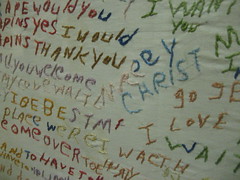 | 37 |
| 8608629726 | paranoia | A tendency toward excessive or irrational suspiciousness; irrational fear; delusions of persecution |  | 38 |
| 8608629730 | Irrationality | Abnormal indicator involving acting or talking in ways that are incomprehensible to others | 39 | |
| 8608653629 | Organic Disorders | disorders that affect organs; in the case of psychological patients most often dementia and Alzheimer's which leads to problems with normal functioning | 40 |
AP Biology - Evolution Flashcards
Terms : Hide Images
| 13598535166 | convergent evolution | the independent evolution of similar features in different lineages |  | 0 |
| 13598535167 | population | a group of individuals of the same species that live in the same area and interbreed, producing fertile offspring |  | 1 |
| 13598535168 | founder effect | when a individuals become isolated from a larger population, this smaller group may establish a new population whose gene pool differs from the source population |  | 2 |
| 13598535169 | bottleneck effect | when there is a severe drop in population size, certain alleles may be overrepresented among the survivors, others may be underrepresented, and some may be absent altogether |  | 3 |
| 13598535170 | directional selection | when conditions favor individuals exhibiting one extreme of a phenotypic range, thereby shifting the frequency curve for the phenotypic character in one direction or the other |  | 4 |
| 13598535171 | disruptive selection | when conditions favor individuals at both extremes of a phenotypic range over individuals with intermediate phenotypes |  | 5 |
| 13598535172 | stabilizing selection | acts against both extreme phenotypes and favors intermediate variants |  | 6 |
| 13598535173 | sexual dimorphism | marked differences between the two sexes in secondary sexual characteristics, which are not directly associated with reproduction or survival (differences in size, color, ornamentation, and behavior) |  | 7 |
| 13598535174 | heterozygote advantage | when individuals who are heterozygous at a particular locus have greater fitness than do both kind of homozygous | 8 | |
| 13598535175 | microevolution | changes over time in allele frequencies in a population | 9 | |
| 13598535176 | macroevolution | the broad pattern of evolution over long time spans | 10 | |
| 13598535177 | species | a group of populations whose members have the potential to interbreed in nature and produce viable, fertile offspring- but do not produce viable, fertile offspring with members of other such groups | 11 | |
| 13598535178 | reproductive isolation | the existance of biological barriers that impede members of two species from producing viable offspring | 12 | |
| 13598535179 | hybrids | offspring that result from interspecific mating |  | 13 |
| 13598535180 | prezygotic barriers | impede mating or hinder fertilization if mating occurs (five types: habitat, temporal, behavioral, mechanical, gametic) |  | 14 |
| 13598535181 | post zygotic barriers | prevents hybrid zygote from developing into a viable fertile adult through reducing hybrid viability, reducing hybrid fertility, or hybrid breakdown | 15 | |
| 13598535182 | allopatric speciation | Speciation occurs as a result of geographic isolation. |  | 16 |
| 13598535183 | sympatric speciation | speciation occurs in populations that live in the same geographic area (usually occurs due to polyploidy, habitat differentiation, and sexual selection) |  | 17 |
| 13598535184 | endosymbiosis | mitochondria and chloroplasts were formally small prokaryotes that began living within larger cells |  | 18 |
| 13598535185 | adaptive radiation | Period of evolutionary change in which groups of organisms form many new species whose adaptations allow them to fill vacant ecological roles in their communities |  | 19 |
| 13598535186 | phylogeny | the evolutionary history of a species or group of species |  | 20 |
| 13598535187 | phylogenetic tree | evolutionary history of a group of organisms represented in a branching diagram |  | 21 |
| 13598535188 | Abiogenesis | origin of life from nonliving matter | 22 | |
| 13598535189 | Artificial selection | The selective breeding of domesticated plants and animals to encourage the occurrence of desirable traits | 23 | |
| 13598535190 | Endosymbiosis | A process in which a unicellular organism engulfs another cell, which lives within the host cell and ultimately becomes an organelle in the host cell. Example: Mitochondria and chloroplasts were once independent cells. | 24 | |
| 13598535191 | Founder effect | Genetic drift that occurs when a few individuals become isolated from a larger population and form a new population whose gene pool composition is not reflective of that of the original population | 25 | |
| 13598535192 | Hardy-Weinberg principle | The principle that frequencies of alleles and genotypes in a population remain constant from generation to generation, provided that only Mendelian segregation and recombination of alleles are at work | 26 | |
| 13598535193 | Heterozygous advantage | Greater reproductive success of heterozygous individuals compared with homozygotes and tends to preserve variation in a gene pool (example: carriers of the sickle cell allele, which are immune to malaria but are not homozygous and do not have the sickle cell disease). | 27 | |
| 13598535194 | Macroevolution | Evolution which results in speciation (formation of a new species). | 28 | |
| 13598535195 | Microevolution | Evolutionary change within a population. A change in the allele frequencies in a population over generations. | 29 | |
| 13598535196 | Phylogenic tree | A branching diagram that represents a hypothesis about the evolutionary history of a group of organisms | 30 | |
| 13598535197 | Sympatric speciation | The formation of new species in populations that live in the same geographic area | 31 | |
| 13598535251 | evolutionary adaptation | An accumulation of inherited characteristics that enhance organisms' ability to survive and reproduce in specific environments. |  | 32 |
| 13598535252 | artificial selection | human modification of species for desired traits through selective breeding |  | 33 |
| 13598535253 | descent with modification | each living species has descended, with changes, from other species over time |  | 34 |
| 13598535254 | founder effect | When a small number of individuals colonize a new area; the new gene pool is not reflective of original population. |  | 35 |
| 13598535255 | fitness | ability of an organism to survive in its environment and pass on its genes |  | 36 |
| 13598535256 | homology | Similarity resulting from common ancestry. |  | 37 |
| 13598535257 | population genetics | Study of allele frequency distribution and change under the influence of evolutionary processes. |  | 38 |
| 13598535258 | Hardy-Weinberg Theorem | measures changes in allele frequencies over time; Provides an "ideal" population to use as a basis of comparison. |  | 39 |
| 13598535259 | sexual recombination | Crossing over and shuffling of genes during meiosis. |  | 40 |
| 13598535260 | quantitative characteristic | Characteristic that varies along a continuum, usually due to influence of two or more genes. |  | 41 |
| 13598535261 | geographic variation | Difference in variation between population subgroups in different areas. |  | 42 |
| 13598535262 | cline | A graded change in a trait along a geographic axis. |  | 43 |
| 13598535263 | relative fitness | Fitness of a particular genotype. |  | 44 |
| 13598535264 | directional selection | Shift in allele frequency toward a favorable variation. |  | 45 |
| 13598535265 | disruptive selection | Shift in allele frequency toward the extremes of a range of phenotypes |  | 46 |
| 13598535266 | stabilizing selection | Shift in allele frequency that favors the average trait |  | 47 |
| 13598535267 | heterozygous advantage | condition where heterozygotes are fittent; maintains recessive alleles in a population; ex: Sickle Cell Anemia |  | 48 |
| 13598535268 | sexual selection | certain traits increase mating success |  | 49 |
| 13598535269 | sexual dimorphism | Differences between the sexes in secondary sexual characteristics. |  | 50 |
| 13598535270 | biological species concept | A species is a group of populations whose members have the potential to produce fertile offspring. |  | 51 |
| 13598535271 | reproductive isolation | Barriers that impede members of two different species from producing fertile offspring. |  | 52 |
| 13598535272 | prezygotic barriers | Barriers that impede mating or hinder fertilization. |  | 53 |
| 13598535273 | habitat isolation | two species do not interbreed because they encounter each other only rarely. |  | 54 |
| 13598535274 | temporal isolation | two species do not interbreed because they breed at different times of day, season, or years. |  | 55 |
| 13598535275 | behavioral isolation | two species do not interbreed because they have incompatible courtship rituals, pheromones, or bird songs. |  | 56 |
| 13598535276 | mechanical isolation | two species do not interbreed because morphological differences prevent fertilization. |  | 57 |
| 13598535277 | gametic isolation | two species do not interbreed because sperm can't fertilize the eggs. |  | 58 |
| 13598535278 | postzygotic barriers | Barriers that prevent the hybrid zygote from becoming a fertile adult. |  | 59 |
| 13598535279 | reduced hybrid viability | genes of different species interact and impair hybrid development. |  | 60 |
| 13598535280 | reduced hybrid fertility | Sterile hybrids, often due to uneven chromosome number. |  | 61 |
| 13598535281 | hybrid breakdown | Hybrid is fertile, but when they breed the next generation is sterile. |  | 62 |
| 13598535282 | allopatric speciation | When a population is divided; leads to speciation. | | 63 |
| 13598535283 | sympatric speciation | Speciation without a divided population. | | 64 |
| 13598535284 | polyploidy | In plants, the result of an extra set of chromosomes during cell division. |  | 65 |
| 13598535285 | adaptive radiation | Evolution of many new species from a common ancestor as a result of introduction to new environments. | 66 | |
| 13598535286 | systematics | Analytical approach to understanding the diversity and relationships of present and past organisms. |  | 67 |
| 13598535287 | analogy | Anatomical similarity due to convergent evolution; creates analogous structures |  | 68 |
| 13598535288 | clade | A taxonomic grouping that includes only a single ancestor and all of its descendants. |  | 69 |
| 13598535289 | cladistics | A phylogenetic classification system that uses shared derived characters and ancestry as the sole criterion for grouping taxa. |  | 70 |
| 13598535290 | monophyletic group | A taxonomic grouping that includes an ancestral species and all of its descendants. |  | 71 |
| 13598535291 | paraphyletic group | A monophyletic group in which some descendants of the common ancestor have been removed. |  | 72 |
| 13598535292 | polyphyletic group | A taxonomic grouping consisting of several species that lack a common ancestor (more work is needed to uncover species that tie them together into a monophyletic clade). |  | 73 |
| 13598535293 | shared primitive character | Trait shared beyond the taxon. |  | 74 |
| 13598535294 | shared derived character | Evolutionary novelty unique to that clade. |  | 75 |
| 13598535295 | outgroups | Species or group of species closely related to the ingroup. |  | 76 |
| 13598535296 | Miller-Urey Experiment | Experiment that found that organic molecules can form in a strongly reducing atmosphere. |  | 77 |
| 13598535297 | radiometric dating | Dating using decay of radioactive isotopes. |  | 78 |
| 13598535298 | radioisotopes | Isotopes that have unstable nuclei and undergo radioactive decay. |  | 79 |
| 13598535299 | endosymbiotic theory | Ancestors of mitochondria and plastids were prokaryotes that came to live in a host cell. |  | 80 |
| 13598535300 | colony | Collection of autonomously replicating cells. |  | 81 |
| 13598535301 | antibiotic resistance | Resistance evolving rapidly in many species of prokaryotes due to overuse of antibiotics, especially in agriculture. |  | 82 |
| 13598535198 | homologous structures | structures in different species that are similar because of common ancestry |  | 83 |
| 13598535199 | vestigial structures | remnants of features that served important functions in the the organism's ancestors |  | 84 |
| 13598535200 | convergent evolution | the independent evolution of similar features in different lineages | | 85 |
| 13598535201 | Hardy-Weinberg | the frequencies of alleles and genotypes in a population will remain constant from generation to generation, provided that only Mendelian segregation and recombination of alleles are at work |  | 86 |
| 13598535202 | gene pool | the aggregate of all of the alleles for all of the loci in individuals in a population |  | 87 |
| 13598535203 | population | a group of individuals of the same species that live in the same area and interbreed, producing fertile offspring | | 88 |
| 13598535204 | natural selection | a process in which organisms with certain inherited characteristics are more likely to survive and reproduce than are organisms with other characteristics |  | 89 |
| 13598535205 | genetic drift | changes in the gene pool due to random events | 90 | |
| 13598535206 | founder effect | when a individuals become isolated from a larger population, this smaller group may establish a new population whose gene pool differs from the source population | | 91 |
| 13598535207 | bottleneck effect | when there is a severe drop in population size, certain alleles may be overrepresented among the survivors, others may be underrepresented, and some may be absent altogether | | 92 |
| 13598535208 | gene flow | the transfer of alleles into or out of a population due to the movement of fertile individuals or their gametes | 93 | |
| 13598535209 | directional selection | when conditions favor individuals exhibiting one extreme of a phenotypic range, thereby shifting the frequency curve for the phenotypic character in one direction or the other | | 94 |
| 13598535210 | disruptive selection | when conditions favor individuals at both extremes of a phenotypic range over individuals with intermediate phenotypes | | 95 |
| 13598535211 | stabilizing selection | acts against both extreme phenotypes and favors intermediate variants | | 96 |
| 13598535212 | sexual selection | a form of natural selection in which individuals with certain inherited characteristics are more likely than other individuals to obtain mates |  | 97 |
| 13598535213 | sexual dimorphism | marked differences between the two sexes in secondary sexual characteristics, which are not directly associated with reproduction or survival (differences in size, color, ornamentation, and behavior) | | 98 |
| 13598535214 | diploidy | the state of being diploid, that is having two sets of chromosomes | 99 | |
| 13598535215 | heterozygote advantage | when individuals who are heterozygous at a particular locus have greater fitness than do both kind of homozygous | 100 | |
| 13598535216 | frequency-dependent selection | fitness of a phenotype declines if it becomes too common in the population | 101 | |
| 13598535217 | speciation | the process by which one species splits into two or more species |  | 102 |
| 13598535218 | microevolution | changes over time in allele frequencies in a population | 103 | |
| 13598535219 | hybrids | offspring that result from interspecific mating | | 104 |
| 13598535220 | prezygotic barriers | impede mating or hinder fertilization if mating occurs (five types: habitat, temporal, behavioral, mechanical, gametic) | | 105 |
| 13598535221 | post zygotic barriers | prevents hybrid zygote from developing into a viable fertile adult through reducing hybrid viability, reducing hybrid fertility, or hybrid breakdown | 106 | |
| 13598535222 | allopatric speciation | gene flow is interrupted when a population is divided into geographically isolated subpopulations | | 107 |
| 13598535223 | sympatric speciation | speciation occurs in populations that live in the same geographic area (usually occurs due to polyploidy, habitat differentiation, and sexual selection) | | 108 |
| 13598535224 | polyploidy | extra sets of chromosomes due to accidents during cell division | | 109 |
| 13598535225 | punctuated equilibrium | the theory that in the evolution there are long periods of little morphological change punctuated by relatively short periods of significant change |  | 110 |
| 13598535226 | endosymbiosis | mitochondria and chloroplasts were formally small prokaryotes that began living within larger cells | | 111 |
| 13598535227 | adaptive radiation | Period of evolutionary change in which groups of organisms form many new species whose adaptations allow them to fill vacant ecological roles in their communities | | 112 |
| 13598535228 | homeotic genes | master regulatory genes that determine such basic features as where a pair of wings and a pair of legs will develop on a bird or how a plant's flower parts are arranged | 113 | |
| 13598535229 | phylogeny | the evolutionary history of a species or group of species | | 114 |
| 13598535230 | phylogenetic tree | evolutionary history of a group of organisms represented in a branching diagram | | 115 |
| 13598535231 | analogy | similarity due to convergent evolution | | 116 |
| 13598535232 | homology | similarity due to shared ancestry | | 117 |
| 13598535233 | clade | a group of species which includes an ancestral species and all of its descendants | 118 | |
| 13598535234 | outgroup | a species or group of species from an evolutionary lineage that is known to have diverged before the lineage that includes the species we are studying | 119 | |
| 13598535235 | Darwin's Theory (five parts) | 1. Variation 2. Overproduction 3. Competition 4. Survival of the fittest 5. Overtime, emergence of new species (new alleles) | 120 | |
| 13598535236 | Abiogenesis | origin of life from nonliving matter | 121 | |
| 13598535237 | abiotic synthesis | formation of organic molecules from inorganic material | 122 | |
| 13598535238 | extinction | total disappearance of all members of a species | 123 | |
| 13598535239 | mass extinction | total disappearance of a large number a species within a few million years | 124 | |
| 13598535240 | extant | still in existance | 125 | |
| 13598535241 | fitness | ability to produce surviving offspring | 126 | |
| 13598535242 | morphological species concept | new species differ by physical characteristics known as diagnostic traits | 127 | |
| 13598535243 | evolutionary species concept | members of a species share distinct evolutionary pathway and common traits | 128 | |
| 13598535244 | phylogenetic species concept | a family tree is used to identify species based on a common ancestor | 129 | |
| 13598535245 | biological species concept | species are identified as separate because of reproductive isolation. | 130 | |
| 13598535246 | plate tectonics | branch of geology which follows the movement of pieces of Earth's crust which float on a lower, hot mantle layer | 131 | |
| 13598535247 | continental drift | change over time of the positions of the continents | 132 | |
| 13598535248 | fossil | remains and traces of evidence of past life | 133 | |
| 13598535249 | paleontology | study of the fossil record | 134 | |
| 13598535250 | absolute dating | relies on radiometric dating to assign an age to a fossil | 135 |
AP Psychology AP Review Flashcards
Terms : Hide Images
| 13854846705 | psychology | the study of behavior and mental processes | 0 | |
| 13854846706 | psychology's biggest question | Which is more important in determining behavior, nature or nurture? | 1 | |
| 13854846707 | psychology's three levels of analysis | biopsychosocial approach (looks at the biological, psychological, and social-cultural approaches together) | 2 | |
| 13854846708 | biological approach | genetics, close-relatives, body functions | 3 | |
| 13854846709 | evolutionary approach | species - helped with survival (ancestors) | 4 | |
| 13854846710 | psychodynamic approach | (Freud) subconscious, repressed feelings, unfulfilled wishes | 5 | |
| 13854846711 | behavioral approach | learning (classical and operant) observed | 6 | |
| 13854846712 | cognitive approach | thinking affects behavior | 7 | |
| 13854846713 | humanistic approach | becoming a better human (behavior, acceptance) | 8 | |
| 13854846714 | social-cultural approach | cultural, family, environment | 9 | |
| 13854846715 | two reasons of why experiments are important | hindsight bias + overconfidence | 10 | |
| 13854846716 | types of research methods | descriptive, correlational, and experimental | 11 | |
| 13854846717 | descriptive methods | case study survey naturalistic observation (DON'T SHOW CAUSE/EFFECT) | 12 | |
| 13854846718 | case study | studies one person in depth may not be typical of population | 13 | |
| 13854846719 | survey | studies lots of people not in depth | 14 | |
| 13854846720 | naturalistic observation | observe + write facts without interference | 15 | |
| 13854846721 | correlational method | shows relation, but not cause/effect scatterplots show research | 16 | |
| 13854846722 | correlation coefficient | + 1.0 (both increase) 0 (no correlation - 1.0 (one increases, other decreases) | 17 | |
| 13854846723 | experimental method | does show cause and effect | 18 | |
| 13854846724 | population | type of people who are going to be used in experiment | 19 | |
| 13854846725 | sample | actual people who will be used (randomness reduces bias) | 20 | |
| 13854846726 | random assignment | chance selection between experimental and control groups | 21 | |
| 13854846727 | control group | not receiving experimental treatment receives placebo | 22 | |
| 13854846728 | experimental group | receiving treatment/drug | 23 | |
| 13854846729 | independent variable | drug/procedure/treatment | 24 | |
| 13854846730 | dependent variable | outcome of using the drug/treatment | 25 | |
| 13854846731 | confounding variable | can affect dependent variable beyond experiment's control | 26 | |
| 13854846732 | scientific method | theory hypothesis operational definition revision | 27 | |
| 13854846733 | theory | general idea being tested | 28 | |
| 13854846734 | hypothesis | measurable/specific | 29 | |
| 13854846735 | operational definition | procedures that explain components | 30 | |
| 13854846736 | mode | appears the most | 31 | |
| 13854846737 | mean | average | 32 | |
| 13854846738 | median | middle | 33 | |
| 13854846739 | range | highest - lowest | 34 | |
| 13854846740 | standard deviation | how scores vary around the mean | 35 | |
| 13854846741 | central tendency | single score that represents the whole | 36 | |
| 13854846742 | bell curve | (natural curve) | | 37 |
| 13854846743 | ethics of testing on animals | need to be treated humanly basically similar to humans | 38 | |
| 13854846744 | ethics of testing on humans | consent debriefing no unnecessary discomfort/pain confidentiality | 39 | |
| 13854846745 | sensory neurons | travel from sensory receptors to brain | 40 | |
| 13854846746 | motor neurons | travel from brain to "motor" workings | 41 | |
| 13854846747 | interneurons | (in brain and spinal cord) connecting motor and sensory neurons | 42 | |
| 13854846939 | neuron | | 43 | |
| 13854846748 | dendrites | receive messages from other neurons | 44 | |
| 13854846749 | myelin sheath | protects the axon | 45 | |
| 13854846750 | axon | where charges travel from cell body to axon terminal | 46 | |
| 13854846751 | neurotransmitters | chemical messengers | 47 | |
| 13854846752 | reuptake | extra neurotransmitters are taken back | 48 | |
| 13854846753 | excitatory charge | "Let's do it!" | 49 | |
| 13854846754 | inhibitory charge | "Let's not do it!" | 50 | |
| 13854846755 | central nervous system | brain and spinal cord | 51 | |
| 13854846756 | peripheral nervous system | somatic nervous system autonomic nervous system | 52 | |
| 13854846757 | somatic nervous system | voluntary movements | 53 | |
| 13854846758 | autonomic nervous system | involuntary movements (sympathetic and parasympathetic nervous systems) | 54 | |
| 13854846759 | sympathetic nervous system | arousing | 55 | |
| 13854846760 | parasympathetic nervous system | calming | 56 | |
| 13854846761 | neural networks | more connections form with greater use others fall away if not used | 57 | |
| 13854846762 | spinal cord | expressway of information bypasses brain when reflexes involved | 58 | |
| 13854846763 | endocrine system | slow uses hormones in the blood system | 59 | |
| 13854846764 | master gland | pituitary gland | 60 | |
| 13854846765 | brainstem | extension of the spinal cord responsible for automatic survival | 61 | |
| 13854846766 | reticular formation (if stimulated) | sleeping subject wakes up | 62 | |
| 13854846767 | reticular formation (if damaged) | coma | 63 | |
| 13854846768 | brainstem (if severed) | still move (without purpose) | 64 | |
| 13854846769 | thalamus | sensory switchboard (does not process smell) | 65 | |
| 13854846770 | hypothalamus | basic behaviors (hunger, thirst, sex, blood chemistry) | 66 | |
| 13854846771 | cerebellum | nonverbal memory, judge time, balance emotions, coordinate movements | 67 | |
| 13854846772 | cerebellum (if damaged) | difficulty walking and coordinating | 68 | |
| 13854846773 | amygdala | aggression, fear, and memory associated with these emotions | 69 | |
| 13854846774 | amygdala (if lesioned) | subject is mellow | 70 | |
| 13854846775 | amygdala (if stimulated) | aggressive | 71 | |
| 13854846776 | hippocampus | process new memory | 72 | |
| 13854846777 | cerebrum | two large hemispheres perceiving, thinking, and processing | 73 | |
| 13854846778 | cerebral cortex | only in higher life forms | 74 | |
| 13854846779 | association areas | integrate and interpret information | 75 | |
| 13854846780 | glial cells | provide nutrients to myelin sheath marks intelligence higher proportion of glial cells to neurons | 76 | |
| 13854846781 | frontal lobe | judgement, personality, processing (Phineas Gage accident) | 77 | |
| 13854846782 | parietal lobe | math and spatial reasoning | 78 | |
| 13854846783 | temporal lobe | audition and recognizing faces | 79 | |
| 13854846784 | occipital lobe | vision | 80 | |
| 13854846785 | corpus callosum | split in the brain to stop hyper-communication (eliminate epileptic seizures) | 81 | |
| 13854846786 | Wernicke's area | interprets auditory and hearing | 82 | |
| 13854846787 | Broca's area | speaking words | 83 | |
| 13854846788 | plasticity | ability to adapt if damaged | 84 | |
| 13854846789 | sensation | what our senses tell us | 85 | |
| 13854846790 | bottom-up processing | senses to brain | 86 | |
| 13854846791 | perception | what our brain tells us to do with that information | 87 | |
| 13854846792 | top-down processing | brain to senses | 88 | |
| 13854846793 | inattentional blindness | fail to "gorilla" because attention is elsewhere | 89 | |
| 13854846794 | cocktail party effect | even with tons of stimuli, we are able to pick out our name, etc. | 90 | |
| 13854846795 | change blindness | giving directions and person is changed and we don't notice | 91 | |
| 13854846796 | choice blindness | when defending the choice we make, we fail to notice choice was changed | 92 | |
| 13854846797 | absolute threshold | minimum stimulation needed in order to notice 50% of the time | 93 | |
| 13854846798 | signal detection theory | we notice what is more important to us (rather hear a baby crying) | 94 | |
| 13854846799 | JND (just noticeable difference) | (Weber's law) difference between different stimuli noticed in proportion | 95 | |
| 13854846800 | sensory adaptation | tired of noticing (Brain says, "Been there, done that. Next?" | 96 | |
| 13854846801 | rods | night time | 97 | |
| 13854846802 | cones | color | 98 | |
| 13854846803 | parallel processing | notice color, form, depth, movement, etc. | 99 | |
| 13854846804 | Young-Helmholtz trichromatic theory | 3 corresponding color receptors (RGB) | 100 | |
| 13854846805 | Hering's opponent-process theory | after image in opposite colors (RG, YB, WB) | 101 | |
| 13854846806 | trichromatic + opponent-process | Young-Helmholtz -> color stimuli Hering -> en route to cortex | 102 | |
| 13854846807 | frequency we hear most | human voice | 103 | |
| 13854846808 | Helmoltz (hearing) | we hear different pitches in different places in basilar membrane (high pitches) | 104 | |
| 13854846809 | frequency theory | impulse frequency (low pitches) | 105 | |
| 13854846810 | Helmholtz + frequency theory | middle pitches | 106 | |
| 13854846811 | Skin feels what? | warmth, cold, pressure, pain | 107 | |
| 13854846812 | gate-control theory | small fibers - pain large fibers - other senses | 108 | |
| 13854846813 | memory of pain | peaks and ends | 109 | |
| 13854846814 | smell | close to memory section (not in thalamus) | 110 | |
| 13854846815 | grouping | Gestalt make sense of pieces create a whole | 111 | |
| 13854846816 | grouping groups | proximity similarity continuity connectedness closure | 112 | |
| 13854846817 | make assumptions of placement | higher - farther smaller - farther blocking - closer, in front | 113 | |
| 13854846818 | perception = | mood + motivation | 114 | |
| 13854846819 | consciousness | awareness of ourselves and the environment | 115 | |
| 13854846820 | circadian rhythm | daily biological clock and regular cycle (sleep and awake) | 116 | |
| 13854846821 | circadian rhythm pattern | - activated by light - light sensitive retinal proteins signal brains SCN (suprachiasmatic nucleus) - pineal gland decreases melatonin | 117 | |
| 13854846822 | What messes with circadian rhythm? | artificial light | 118 | |
| 13854846823 | The whole sleep cycle lasts how long? | 90 minutes | 119 | |
| 13854846824 | sleep stages | relaxed stage (alpha waves) stage 1 (early sleep) (hallucinations) stage 2 (sleep spindles - bursts of activity) (sleep talk) stage 3 (transition phase) (delta waves) stage 4 (delta waves) (sleepwalk/talk + wet the bed) stage 5 (REM) (sensory-rich dreams) (paradoxical sleep) | 120 | |
| 13854846825 | purpose of sleep | 1. recuperation - repair neurons and allow unused neural connections to wither 2. making memories 3. body growth (children sleep more) | 121 | |
| 13854846826 | insomnia | can't sleep | 122 | |
| 13854846827 | narcolepsy | fall asleep anywhere at anytime | 123 | |
| 13854846828 | sleep apnea | stop breathing in sleep | 124 | |
| 13854846829 | night terrors | prevalent in children | 125 | |
| 13854846830 | sleepwalking/sleeptalking | hereditary - prevalent in children | 126 | |
| 13854846831 | dreaming (3) | 1. vivid bizarre intense sensory experiences 2. carry fear/survival issues - vestiges of ancestors' survival ideas 2. replay previous day's experiences/worries | 127 | |
| 13854846832 | purpose of dreaming (5 THEORIES) | 1. physiological function - develop/preserve neural pathways 2. Freud's wish-fulfillment (manifest/latent content) 3. activation synthesis - make sense of stimulation originating in brain 4. information processing 5. cognitive development - reflective of intelligence | 128 | |
| 13854846833 | 1. Can hypnosis bring you back in time? 2. Can hypnosis make you do things you wouldn't normally do? 3. Can it alleviate pain? 4. What state are you in during hypnosis? 5. Who is more susceptible? | 1. cannot take you back in time 2. cannot make you do things you won't do 3. can alleviate pain 4. fully conscious ((IMAGINATIVE PEOPLE MORE SUSCEPTIBLE)) | 129 | |
| 13854846834 | depressants | slows neural pathways | 130 | |
| 13854846835 | alcohol | ((depressant)) disrupts memory formation (REM) lowers inhibition expectancy effect | 131 | |
| 13854846836 | barbituates (tranquilizers) | ((depressant)) reduce anxiety | 132 | |
| 13854846837 | opiates | ((depressant)) pleasure reduce anxiety/pain | 133 | |
| 13854846838 | stimulants | hypes neural processing | 134 | |
| 13854846839 | methamphetamine | ((stimulant)) heightens energy euphoria affects dopamine | 135 | |
| 13854846840 | caffeine | ((stimulant)) | 136 | |
| 13854846841 | nicotine | ((stimulant)) CNS releases neurotransmitters calm anxiety reduce pain affects (nor)epinephrine and dopamine | 137 | |
| 13854846842 | cocaine | ((stimulant)) euphoria affects dopamine, serotonin, and norepinephrine | 138 | |
| 13854846843 | hallucinogen | excites neural activity | 139 | |
| 13854846844 | ecstasy | ((hallucinogen)) reuptake is blocked affects dopamine and serotonin | 140 | |
| 13854846845 | LSD | ((hallucinogen)) affects sensory/emotional "trip" (+/-) affects serotonin | 141 | |
| 13854846846 | marijuana | ((hallucinogen)) amplify sensory experience disrupts memory formation | 142 | |
| 13854846847 | learning | organism changing behavior due to experience (association of events) | 143 | |
| 13854846848 | types of learning | classical operant observational | 144 | |
| 13854846849 | famous classical psychologists | Pavlov and Watson | 145 | |
| 13854846850 | famous operant psychologist | Skinner | 146 | |
| 13854846851 | famous observational psychologists | Bandura | 147 | |
| 13854846852 | classical conditioning | outside stimulus | 148 | |
| 13854846853 | Pavlov's experiment | Step 1: US (food) -> UR (salivation) Step 2: NS (bell) -> US (food) -> UR (salivation) Later... CS (bell) -> CR (salivation) | 149 | |
| 13854846854 | Watson's experiment | white rat was given to Little Albert Step 1: US (noise) -> UR (cry) Step 2: NS (rat) -> US (noise) -> UR (cry) Later... CS (rat) -> CR (cry) | 150 | |
| 13854846855 | generalization | any small, white fluffy creature will make Albert cry now | 151 | |
| 13854846856 | discriminate | any large, white fluffy creature won't make Albert cry | 152 | |
| 13854846857 | extinction | stop "treating" with conditioned response | 153 | |
| 13854846858 | spontaneous recovery | bring stimulus back after a while | 154 | |
| 13854846859 | operant conditioning | control by organism | 155 | |
| 13854846860 | Skinner's experiment | operant chamber / Skinner box (lead to shaping) | 156 | |
| 13854846861 | shaping | get animal closer to doing what you want them to do | 157 | |
| 13854846862 | reinforcers | want to continue behavior (positive reinforcement: give money to do laundry) (negative reinforcement: do to avoid nagging) | 158 | |
| 13854846863 | punishments | want to stop behavior (positive reinforcement: smack) (negative reinforcement: take away phone) | 159 | |
| 13854846864 | fixed ratio | happens a certain number of times (Starbucks punch card) | 160 | |
| 13854846865 | variable ratio | happens an unpredictable number of times (winning the lottery) | 161 | |
| 13854846866 | organism must do these (2 times) | fixed ratio and variable ratio | 162 | |
| 13854846867 | fixed interval | happens at a certain time (mailman comes to the house at 10:00 AM) | 163 | |
| 13854846868 | variable interval | happens at any time (receive texts from friends) | 164 | |
| 13854846869 | these things happen regardless (2 times) | fixed interval and variable interval | 165 | |
| 13854846870 | Which (fixed/variable) conditions better? | variable | 166 | |
| 13854846871 | criticisms of Skinner | doesn't take into account intrinsic motivation | 167 | |
| 13854846872 | intrinsic motivation | doing something for yourself, not the reward | 168 | |
| 13854846873 | extrinsic motivation | doing something for reward | 169 | |
| 13854846874 | Skinner's legacy | use it personally, at school, and at work | 170 | |
| 13854846875 | famous observational experiment | Bandura's Bobo doll | 171 | |
| 13854846876 | famous observational psychologist | Bandura | 172 | |
| 13854846877 | mirror neurons | "feel" what is observed happens in higher order animals | 173 | |
| 13854846878 | Bobo doll experiment legacy | violent video games/movies desensitize us see good: do good see evil: do evil | 174 | |
| 13854846879 | observational learning | biological behaviors work best | 175 | |
| 13854846880 | habituation | get used to it -> stop reacting | 176 | |
| 13854846881 | examples for observational learning | lectures and reading | 177 | |
| 13854846882 | serotonin involved with memory | speeds the connection between neurons | 178 | |
| 13854846883 | LTP | ((long-term potentiation)) strengthens potential neural forming (associated with speed) | 179 | |
| 13854846884 | CREB | protein that can switch genes on/off with memory and connection of memories | 180 | |
| 13854846885 | glutamate involved with memory | neurotransmitter that enhances LTP | 181 | |
| 13854846886 | glucose involved with memory | released during strong emotions ((signaling important event to be remembered)) | 182 | |
| 13854846887 | flashbulb memory | type of memory remembered because it was an important/quick moment | 183 | |
| 13854846888 | amygdala (memory) | boosts activity of proteins in memory-forming areas to fight/flight | 184 | |
| 13854846889 | cerebellum (memory) | forms and stores implicit memories ((classical conditioning)) | 185 | |
| 13854846890 | hippocampus (memory) | active during sleep (forming memories) ((information "moves" after 48 hours)) | 186 | |
| 13854846891 | memory | learning over time contains information that can be retrieved | 187 | |
| 13854846892 | processing stages | encoding -> storage -> retrieval | 188 | |
| 13854846893 | encoding | information going in | 189 | |
| 13854846894 | storage | keeping information in | 190 | |
| 13854846895 | retrieval | taking information out | 191 | |
| 13854846896 | How long is sensory memory stored? | seconds | 192 | |
| 13854846897 | How long is short-term memory stored? | less than a minute | 193 | |
| 13854846898 | How many bits of information is stored in short-term memory? | 7 | 194 | |
| 13854846899 | How many chunks of information is stored in short-term memory? | 4 | 195 | |
| 13854846900 | How many seconds of words is stored in short-term memory? | 2 | 196 | |
| 13854846901 | short term memory goes to ______________ | working memory | 197 | |
| 13854846902 | working memory | make a connection and process information to mean something | 198 | |
| 13854846903 | working memory goes to _________________ | long-term memory | 199 | |
| 13854846904 | How much is stored in long-term memory? | LIMITLESS | 200 | |
| 13854846905 | implicit memory | naturally do | 201 | |
| 13854846906 | explicit memory | need to explain | 202 | |
| 13854846907 | automatic processing | space, time, frequency, well-learned information | 203 | |
| 13854846908 | effortful processing | processing that requires effort | 204 | |
| 13854846909 | spacing effect | spread out learning over time | 205 | |
| 13854846910 | serial position effect | primary/recency effect | 206 | |
| 13854846911 | primary effect | remember the first things in a list | 207 | |
| 13854846912 | recency effect | remember the last things in a list | 208 | |
| 13854846913 | effortful processing (4 things) | 1. recency effect 2. spacing effect 3. testing effect 4. serial position effect | 209 | |
| 13854846914 | semantic encoding (1) meaning (2) how to | make meaning out of something --- chunk, hierarchy, or connect to you | 210 | |
| 13854846915 | if we can't remember a memory... | 1. change memory to suit us 2. fill in the blanks with logical story | 211 | |
| 13854846916 | misinformation effect | not correct information | 212 | |
| 13854846917 | imagination inflation | imagine or visualize something that isn't real | 213 | |
| 13854846918 | source amnesia | what is the truth? (is it a dream, story, memory, etc.?) | 214 | |
| 13854846919 | priming | association (setting you up) | 215 | |
| 13854846920 | context | environment helps with memory | 216 | |
| 13854846921 | state-dependency | you may remember something if you go back to the state you were in (go back to high) | 217 | |
| 13854846922 | mood-congruency | emotion will bring back similar emotional memories | 218 | |
| 13854846923 | forgetting curve | forget after 5 days forget after 5 years | 219 | |
| 13854846924 | the forgetting curve was created by | Ebbinghaus | 220 | |
| 13854846925 | proactive interference | old information interferes with the new | 221 | |
| 13854846926 | retroactive interference | new information interferes with the old | 222 | |
| 13854846927 | children can't remember before age __ | 3 | 223 | |
| 13854846928 | Loftus | connected to abuse cases/childhood | 224 | |
| 13854846929 | prototypes | generalize | 225 | |
| 13854846930 | problem-solving (4) | trial + error algorithms heuristic (representative + availability) insight - "AHA!" | 226 | |
| 13854846931 | against problem-solving | fixation | 227 | |
| 13854846932 | mental set | what has worked in the past | 228 | |
| 13854846933 | functional fixedness | only way to do this is with this | 229 | |
| 13854846934 | Chomsky (nature or nurture?) | "born with language" (nature) | 230 | |
| 13854846935 | Skinner (nature or nurture?) | language is learned (nurture) | 231 | |
| 13854846936 | grammar is _________ | universal | 232 | |
| 13854846937 | phonemes | smallest sound unit | 233 | |
| 13854846938 | morphemes | smallest meaning unit | 234 |
Pages

Need Help?
We hope your visit has been a productive one. If you're having any problems, or would like to give some feedback, we'd love to hear from you.
For general help, questions, and suggestions, try our dedicated support forums.
If you need to contact the Course-Notes.Org web experience team, please use our contact form.
Need Notes?
While we strive to provide the most comprehensive notes for as many high school textbooks as possible, there are certainly going to be some that we miss. Drop us a note and let us know which textbooks you need. Be sure to include which edition of the textbook you are using! If we see enough demand, we'll do whatever we can to get those notes up on the site for you!
