

Rhetorical Modes AP Language Flashcards
Approaches to writing the essays for the AP English Language and Composition Exam.
Terms : Hide Images
| 12002927447 | Example or illustration | Using specific examples to illustrate an idea. Tips: 1). Use examples that your reader will identify with and understand 2). Draw examples from "real life," "real" culture, and well-known folklore 3). Make sure examples really do illustrate the main point 4). Introduce examples with transitions | 0 | |
| 12002927448 | Classification | Dividing up whatever is at hand into groups according to certain characteristics. Used to more easily analyze and explain. Tips: 1). Very useful for analyzing or explaining 2). Make sure there is a central idea (thesis) 3). Sort information into a manageable amount of meaningful groups that do not overlap 4). Justify the thesis, not the categories | 1 | |
| 12002927449 | Comparison and contrast | Finding the similarities and differences between objects, people, characteristics, and actions. Used to explain, or to argue in favor of one of the two elements. Tips: 1). Find common elements from both A and B 2). Do not write A in one paragraph and B in another 3). Combine common elements into a limited number of groups 4). Do not attempt to justify the groups, only present them | 2 | |
| 12002927450 | Analogy | Explaining things by comparing them with other things. Tips: 1). Use for expository writing, not argumentative writing 2). Use to explain something difficult to understand or that is abstract 3). Make sure the audience will readily understand the "simple" or concrete subject | 3 | |
| 12002927451 | Process analysis | Explaining how to do something or how it was done. Tips: 1). Sequence is chronological and usually fixed 2). Make sure the stages are clear by using transitions 3). Make sure the terminology is appropriate for the reader | 4 | |
| 12002927452 | Cause and effect | Explaining why things should be or should have been done. Tips: 1). Do not confuse the relating of mere circumstances with a cause-and-effect 2). Turn casual relationships into causes and effects with carefully chosen examples 3). Make sure to carefully address each step in a series of casual relationships | 5 | |
| 12002927453 | Definition | Defining things in terms everyone would understand. Tips: 1). Keep the reasoning for defining something in mind while writing 2). Define key terms according to what you know of your audience 3). Explain the background (history) when relevant to the definition 4). Define by negation when appropriate | 6 | |
| 12002927454 | Description | Describing things in order to make the essay lively and interesting and hold the reader's interest. Tips: 1). When possible, call on all five senses 2). Place most striking examples at the beginning and end of paragraphs 3). Use concrete nouns and adjectives; nouns should dominate. 4). Employ figures of speech and action verbs when appropriate | 7 | |
| 12002927455 | Narration | A story in which pieces of information are arranged in chronological order. Tips: 1). Structure events in chronological order 2). Make the story complete with a beginning middle and end 3). Provide a realistic setting 4). Establish a clear point of view | 8 | |
| 12002927456 | Induction and deduction | Using specific examples to reach general conclusions, and using generalizations to draw a conclusion about a specific case. Tips: 1). Induction goes from the specific to a generalization 2). Make sure there is sufficient evidence to support the claim 3). Deduction goes from a generalization to the specific 4). Make sure the generalization has sufficient credibility before applying it to specific cases | 9 |
AP Government -Unit 3 Flashcards
Terms : Hide Images
| 11346706164 | Parliamentary System | A system of government in which the chief executive is the leader whose party holds the most seats in the legislature after an election or whose party forms a major part of the ruling coalition. A system of government in which the legislature selects the prime minister or president. |  | 0 |
| 11346714833 | unified government | the political condition in which the same political party controls the presidency and Congress | 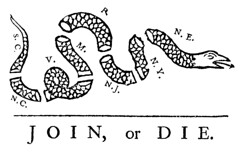 | 1 |
| 11361306409 | divided government | Governance divided between the parties, as when one holds the presidency and the other controls one or both houses of Congress. |  | 2 |
| 11346714834 | incumbent | (adj.) obligatory, required; (n.) one who holds a specific office at the time spoken of |  | 3 |
| 11346739599 | constituent | a person whom a member of Congress has been elected to represent |  | 4 |
| 11346759386 | Bicameral | A legislature consisting of two parts, or houses |  | 5 |
| 11346809520 | pork-barrel legislation | legislation that gives tangible benefits to constituents in several districts or states in the hope of winning their votes in return |  | 6 |
| 11346823996 | franking privilege | Benefit allowing members of Congress to mail letters and other materials postage-free |  | 7 |
| 11346827313 | Junkets | Seemingly unnecessary trips made by members of Congress at the taxpayers expense. |  | 8 |
| 11346834925 | Appropriation | A legislative grant of money to finance a government program or agency |  | 9 |
| 11346846511 | majority leader | the legislative leader elected by party members holding the majority of seats in the House or Senate |  | 10 |
| 11346860757 | Filibuster | A lengthy speech designed to delay or kill the vote on a bill; used only in the Senate |  | 11 |
| 11346895552 | conference committee | Committee appointed by the presiding officers of each chamber to adjust differences on a particular bill passed by each in different form. |  | 12 |
| 11347212120 | Quorum | The minimum number of members who must be present to permit a legislative body to take official action |  | 13 |
| 11347215202 | How a bill becomes a law | Bill is introduced in either house; sent to committee to be approved, rewritten, or killed; sent to the floor for debate and vote; sent to the other chamber for the same process; both houses pass the revised bill; sent to president for approval; president signs, (or, if vetoed, must have 2/3 vote of both houses to override); bill becomes a law. 1. written 2. discussed in committee + voted 3. discussed in House of Reps. and Senate + voted on in both 4. President signs it or vetoes it (which brings back to Congress, needs 2/3 vote to override veto) |  | 14 |
| 11347222718 | Gerrymandering | Process of redrawing legislative boundaries for the purpose of benefiting the party in power. |  | 15 |
| 11347225993 | Apportionment | Distribution of representatives among the states based on the population of each state |  | 16 |
| 11347233264 | safe districts | Districts in which incumbents win by margins of 55 percent or more. |  | 17 |
| 11347238157 | Prime Minister | the head of an elected government; the principal minister of a sovereign or state. |  | 18 |
| 11347241255 | Bureaucracy | a system of government in which most of the important decisions are made by state officials rather than by elected representatives. |  | 19 |
| 11347248394 | bureaucratic pathologies | the problems that tend to develop in bureaucratic systems. Problems shared by all or most federal bureaus or agencies. They include bureaucratic red tape, mission conflict, mission duplication, agency imperialism, and bureaucratic waste. |  | 20 |
| 11347259947 | Iron Triangle v. issue network | A close relationship between an agency, a congressional committee, and an interest group Relationships among interest groups, congressional committees and subcommittees, and the government agencies that share a common policy concern. |  | 21 |
| 11347276393 | Bully Pulpit | the president's use of his prestige and visibility to guide or enthuse the American public |  | 22 |
| 11347282853 | Veto | Chief executive's power to reject a bill passed by a legislature |  | 23 |
| 11347282854 | pocket veto | A veto taking place when Congress adjourns within 10 days of submitting a bill to the president, who simply lets it die by neither signing nor vetoing it. |  | 24 |
| 11347288203 | Impeachment | An action by the House of Representatives to accuse the president, vice president, or other civil officers of the United States of committing "Treason, Bribery, or other high Crimes and Misdemeanors." |  | 25 |
| 11347295817 | lame duck | an outgoing official serving out the remainder of a term, after retiring or being defeated for reelection |  | 26 |
| 11347299048 | Imperial Presidency | Term used to describe a president as an "emperor" who acts without consulting Congress or acts in secrecy to evade or deceive congress | 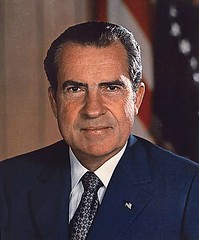 | 27 |
| 11347308433 | Executive orders | Regulations originating with the executive branch. Executive orders are one method presidents can use to control the bureaucracy. Formal orders issued by the president to direct action by the federal bureaucracy. |  | 28 |
| 11347317934 | War Powers Resolution of 1973 | Enacted to give Congress a greater voice in presidential decisions committing military forces to hostile situations overseas. Requires that the president notify Congress within 48 hours of deploying troops. Requires the president to bring troops home from hostilities within 60-90 days unless Congress extends the time. A law passed in 1973 spelling out the conditions under which the president can commit troops without congressional approval. |  | 29 |
| 11347328514 | Pyramid Cabinet | basically like a hierarchy so not everyone goes directly to the president. |  | 30 |
| 11347331511 | Circular Cabinet | when the president's assistants report directly to him. |  | 31 |
| 11347335266 | Judicial Review | The power of the courts to declare laws unconstitutional. review by the US Supreme Court of the constitutional validity of a legislative act. |  | 32 |
| 11347350981 | activist philosophy | when theres a law and judges interpret it based on the situation. |  | 33 |
| 11347354935 | writ of certiorari | Order by the Supreme Court directing a lower court to send up the records of a case for review |  | 34 |
| 11347364697 | amicus curiae | A Latin term meaning "friend of the court." Refers to interested groups or individuals, not directly involved in a suit, who may file legal briefs or oral arguments in support of one side. |  | 35 |
| 11347374495 | Opinion of the Court | An explanation of the decision of the Supreme Court or any other appellate court. |  | 36 |
| 11347374496 | concuring opinion | Judges opinion that reaches the SAME result as the MAJORITY OPINION of the Court, but usually for a DIFFERENT REASON than that stated by the other judges in the marjority |  | 37 |
| 11347385426 | dissenting (minority) opinion | written explanation of the views of one or more judges who disagree with a decision reached by a majority of the court. written documentation of the opinion of the minority voters (maybe 1 or more judges) |  | 38 |
| 11347395295 | stare decisis | Let the decision stand; decisions are based on precedents from previous cases |  | 39 |
| 11347399859 | United States v. Nixon | U.S. Supreme Court case that limited executive privilege. The 1974 case in which the Supreme Court unanimously held that the doctrine of executive priveledge was implicit in the Constitution but could not be extended to protect documents relevant to criminal prosecutions. Pardons+reprieves |  | 40 |
| 11347406536 | Marbury v. Madison | This case establishes the Supreme Court's power of Judicial Review |  | 41 |
| 11362178509 | Restraint Judicial Philosophy | That just go straight up by the law no joke no mercy. |  | 42 |
| 11362305517 | Russia | Executive: President Legislative: Federal assembly Judicial: Independent branch |  | 43 |
| 11362311293 | Nigeria | Executive: President Legislative: National Assembly Judicial: Federal Courts |  | 44 |
| 11362316998 | Britain | Executive: Royalty and prime minister Legislative: Parliament Judicial: Supreme court |  | 45 |
| 11362326064 | Iran | Executive: President Legislative: Islamic Assembly Judicial: Layered Courts |  | 46 |
| 11362332447 | Mexico | Executive: President Legislative: Bicameral congress Judicial: Federal and state courts |  | 47 |
| 11362337841 | China | Executive: President Legislative: National people congress Judicial: Independent court system |  | 48 |
Ap Flashcards
Terms : Hide Images
| 13499517848 | Humanistic | Self-actualization• Personal growth & potential | 0 | |
| 13499528401 | Cognitive | Analyzes ways of thinking | 1 | |
| 13499535049 | Sociocultural Psychology | Concerned with the ways that social environment and environment and cultural beliefs cultural beliefs shape our behavior• Social psychologists study all aspects of society and culture | 2 | |
| 13499552960 | Psychodynamic | The study of unconscious desires and motives (childhood issues) •Freud & Neo-Freudians Free Association & Dreams (latent content) | 3 | |
| 13499572506 | Genetic, Structural (Brain Abnormalities), Biochemical | Biological approaches typically look at 3 "causes" of abnormality: (3 biological approaches) | 4 | |
| 13499590058 | Behavioral Model | observable behavior! | 5 | |
| 13499599379 | Classical conditioning, operant conditioning, modeling | Three theories of Learning | 6 | |
| 13499611171 | Pavlov | Name associated with Classical Conditioning (dog) | 7 | |
| 13499617983 | Skinner | Name associated with Operant Conditioning (Pigeon) | 8 | |
| 13499624285 | Bandura | Name associated with modeling/observational learning | 9 | |
| 13499635937 | industrial-organizational psychology | The scientific study of behavior in organizations in the workplace (APA) -Recruitment, training, motivation, performance measurement, evaluation techniques | 10 | |
| 13499650166 | Hypothesis, Observation, Refine, Develop | 4 steps of Research | 11 | |
| 13499670909 | descriptive or correlational research | Using these, researchers can describe different events, experiences, or behaviors and look for links between them (do not enable researchers to determine causes) | 12 | |
| 13499687133 | longitudinal study | data gathered on same subjects over an extended of time | 13 | |
| 13499720411 | Cross-sectional study | data collected from a representative "cross-representative "cross-section" of a population at a single point in time | 14 | |
| 13499736348 | correlation coefficient | measures the strength of the relationship between two variables -Always a number between -1 and +1 -The sign (+ or -) of a correlation coefficient indicates the nature of the relationship between the variables | 15 | |
| 13499749879 | positive correlation | means that as one variable increases, the other does too | 16 | |
| 13499756892 | negative correlation | means that when one variable increases, the other one decreases | 17 | |
| 13499773498 | stronger | The higher the correlation coefficient, the BLANK the correlation | 18 | |
| 13499785643 | Experiments | Can provide cause-and-effect relationships between variables | 19 | |
| 13499801528 | independent variable | (the one manipulated) variable | 20 | |
| 13499806149 | dependent variable | (the one that may be affected by changes in independent variable) variable | 21 | |
| 13499854796 | Reliability | A test has good BLANK if it produces the same same results when administered to the same group of people at different times | 22 | |
| 13499857227 | Validity | A test has BLANK if it actually measures the quality it claims to measure | 23 | |
| 13499894638 | Ethical Guidelines | Today, researchers must abide by basic ethical guidelines dictated by the APA guidelines when conducting research -Most important, they must consider whether they might harm their human or animal subjects -Informed consent, anonymous | 24 | |
| 13499900065 | Mode | the most frequently occurring score(s) in a distribution | 25 | |
| 13499900066 | Mean | the arithmetic average of a distribution, obtained by adding the scores and then dividing by the number of scores | 26 | |
| 13499905708 | Median | the middle score in a distribution | 27 | |
| 13499914301 | range | the difference between the highest and lowest scores in a distribution | 28 | |
| 13499917897 | standard deviation | a computed measure of how much scores vary around the mean score | 29 | |
| 13499932585 | naturalistic observation | observing and recording behavior in naturally occurring situations without trying to manipulate and control the situation | 30 | |
| 13499935983 | survey | a technique for ascertaining the self-reported attitudes or behaviors of a particular group, usually by questioning a representative, random sample of the group | 31 | |
| 13499939775 | case study | a technique in which one person is studied in depth to reveal underlying behavioral principles | 32 | |
| 13499955182 | clinical psychologist | studies, assesses, and treats troubled people with psychotherapy. | 33 | |
| 13499962478 | psychiatrist | on the other hand are medical professionals (M.D.) who use treatments like drugs and psychotherapy to treat psychologically diseased patients. | 34 | |
| 13499967504 | educational psychologist | studies and helps individuals in school and educational settings | 35 | |
| 13499977048 | counseling psychologist | helps people cope with academic, vocational, and marital challenges. | 36 | |
| 13499994375 | Nature versus Nurture | A debate surrounding the relative importance of heredity and environment in determining behavior | 37 | |
| 13500011273 | Wundt and Titchener | BLANK and BLANK studied the elements (atoms) of the mind by conducting experiments at Leipzig, Germany, in 1879. | 38 | |
| 13500029007 | Freud | BLANK and his followers emphasized the importance of the unconscious mind and its effects on human behavior. | 39 | |
| 13500037601 | Watson and Skinner | BLANK and BLANK emphasized the study of overt behavior as the subject matter of scientific psychology. | 40 |
AP Language Vocab 131-140 Flashcards
Terms : Hide Images
| 12086413621 | Stratagem | Clever trick designed to deceive or outwit | 0 | |
| 12086427943 | Subordination | The dependence of one syntactical element on another in a sentence | 1 | |
| 12086440413 | Substantiated | Supported with proof or evidence; verified | 2 | |
| 12086455907 | Surreptitiously | Done by secretive means | 3 | |
| 12086466764 | Syllogism | A form of deductive reasoning: a major premise, minor premise, conclusion | 4 | |
| 12086484289 | Synecdoche | Form of metonymy where a part signifies the whole | 5 | |
| 12087960000 | Tenacity | Persistence | 6 | |
| 12087964105 | Tenuous | Having little substance; shaky, unsure, weak | 7 | |
| 12087980973 | Theoretical | Lacking practical application | 8 | |
| 12087980974 | Timorous | Timid, fearful of the future | 9 |
AP Human Geography Models Flashcards
Add any more models you know!
Terms : Hide Images
| 13997726395 | Demographic Transition Model (DTM) | In the four stages of transition from an agricultural subsistence economy to an industrialized country, demographic patterns move from extremely high birth and death rates to low birth and death rates. In the process, population growth rates skyrocket and then fall again. The crude death rate first falls because of the influx of better health technology, and then the birth rate gradually falls to match the new social structure. |  | 0 |
| 13997726397 | Epidemiologic Transition Model | Disease vulnerability shifts in patterns similar to the DTM. In the early stages, plague and pestilence spread as a result of poor medical technology. As industrialization proceeds, diseases related to urban life spread. In later stages, diseases once thought eradicated reappear as more-developed societies come into easier contact with less-developed regions struggling with the more primitive diseases, such as smallpox and the bubonic plague. Leading causes of death in later stages are related to diseases associated with aging, such as heart disease. |  | 1 |
| 13997726398 | Gravity Model | When applied to migration, larger places attract more migrants than do smaller places. Additionally, destinations that are more distant have a weaker pull effect than do closer opportunities of the same caliber. |  | 2 |
| 13997726399 | Zelinsky Model of Migration Transition | Migration trends follow demographic transition stages. People become increasingly mobile as industrialization develops. More international migration is seen in stage 2 as migrants search for more space and opportunities in countries in stages 3 and 4. Stage 4 countries show less emigration and more intraregional migration. |  | 3 |
| 13997726400 | Ravenstein's Laws of Migration | in the 19th century, E.G. Ravenstein used data from England to outline a series of "laws" explaining patterns of migration. His laws state that migration is impacted by push and pull factors. Unfavorable conditions, such as oppression and high taxes, push people out of a place, whereas attractive opportunities, called pull factors, cause them to migrate into regions. Ravenstein's laws state that better economic opportunities are the chief cause for migration; that migration occurs in multiple stages, rather than one move; that the majority of people move short distances and that those who migrate longer distances choose big-city destinations; that urban residents are less migratory than rural residents; that for every migration stream, there is a counterstream; and factors such as gender, age, and socio-economic level influence a person's likelihood to migrate. Keep in mind that his "laws" applied to the timeframe and context of his analysis. |  | 4 |
| 13997726401 | Von Thünen's Model of Agricultural Land Use | Developed by German geographer Johann Heinrich von Thünen, this model explains and predicts agricultural land use patterns in a theoretical state by varying transportation cost. Given the model's assumptions, the pattern that emerges predicts more-intensive rural land uses closer to the marketplace, and more-extensive rural land uses farther from the city's marketplace. These rural land use zones are divided in the model into concentric rings. |  | 5 |
| 13997726402 | Weber's Least Cost Theory | This is Alfred Weber's theory of industrial location, explaining and predicting where industries will locate based on cost analysis of transportation, labor, and agglomeration factors. Weber assumes an industry will choose its location based on the desire to minimize production costs and thus maximize profits. Drawbacks to the model include its assumption of an immobile and equal labor force. |  | 6 |
| 13997726403 | Hotelling's Model | Hotelling's theory asserts that an industry's locational choices are heavily influenced by the location of their chief competitors and related industries. In other words, industries do not make isolated decisions on locations without considering where other, related industries exist. location of an industry cannot be understood without reference to other industries of the same kind. |  | 7 |
| 13997726404 | Rostow's Modernization Model (stages of economic development) | Developed in the 1950s, the model exemplifies the liberal development ideology, as opposed to structuralist theory. Under this model, all countries develop in a five-stage process. The development cycle is initiated by investment in a takeoff industry that allows the country to grow a comparative advantage, whch sparks greater economic gain that eventually diffuses throughout the country's economy. Drawbacks to this model include its not identifying cultural and historic differences in development trajectories because it is based on North American and western European development histories. |  | 8 |
| 13997726405 | Borchert's Model of Urban Evolution | Borchert created this model in the 1960s to predict and explain the growth of cities in four phases of transportation history: stage 1, the "sail wagon" era of 1790-1830; stage 2, the "iron horse" era of 1830-1870; stage 3, the "steel rail" epoch of 1870-1920; and stage 4, the current era of car and air travel that began after 1920. | 9 | |
| 13997726406 | Christaller's Central Place Theory | Developed in the 1930s by Walter Christaller, this model explains and predicts patterns of urban places across the map. In his model, Christaller analyzed the hexagonal, hierarchical pattern of cities, villages, towns, and hamlets arranged according to their varying degrees of centrality, determined by the central place functions existing in urban places and the hinterlands they serve. Assumptions: - Flat plane with uniform geography and nature - Uniform population - single mode of transportation - evolution towards the growth of cities - all persons have a similar income - all persons have similar consumption patterns |  | 10 |
| 13997726407 | Burgess Concentric Zone Model | This model was devised in the 1920s by Ernest Burgess to predict and explain the growth patterns of North American urban spaces. Its main principle is that cities can be viewed from above as a series of concentric rings; as the city grows and expands, new rings are added and old ones change character. Key elements of the model are the central business district and the peak land value intersection. |  | 11 |
| 13997726409 | Hoyt's Sector Model | This model, conceived by Homer Hoyt, predicts and explains North American urban growth patterns in the 1930s in a pattern in which similar land uses and socioeconomic groups clustered in linear sectors radiating outward from a central business district, usually along transportation corridors. |  | 12 |
| 13997726410 | Harris-Ullman Multiple-Nuclei Model | Developed in the 1950s by Chauncy Harris and Edward Ullman, this model explains the changing growth pattern of urban spaces based on the assumption that growth occurred independently around several major foci (or focal nodes), many of which are far away from the central business district and only marginally connected to it. |  | 13 |
| 13997726411 | Vance Urban Realms Model | James Vance developed this model in the 1970s to explain and predict changing urban growth patterns as the automobile became increasingly prevalent and large suburban "realms" emerged. The suburban regions were functionally tied to a mixed-use suburban downtown, or mini-CBD, with relative independence from the original CBD. |  | 14 |
| 13997726415 | De Blij Sub-Saharan Africa City Model | Developed by Harm De Blij. A model of a city in Sub-Sahara Africa in which there are 3 Central Business Centers: Colonial CBD, Market Zone, and Traditional CBD. The Central Business Districts are encircled by ethnic neighborhoods, ethnic and mixed mining and manufacturing, and finally informal satellite townships |  | 15 |
| 13997726417 | Core-periphery model | Core is the economic, political dominant center (relative center). MDCs above Brandt Line, LDCs around periphery |  | 16 |
| 13997726418 | Lee's Migration Model | Model based on Lee's migration theory, that people migrate due to push and/or pull factors, and intervening obstacles are factored |  | 17 |
| 13997726420 | Malthus' Theory of Overpopulation | Malthus argued supply grows linearly (arithmetic), while population was growing geometrically. Also argued for humans to use "moral restraint" to avoid overpopulation |  | 18 |
| 13997726421 | Tobler's First Law of Geography | "All things are similar, but nearby things are more similar than distant things." | 19 | |
| 13997726423 | Friction of Distance and Distance Decay |  | 20 | |
| 13997726422 | Density Gradient Model | The change in density in an urban area from the center to the periphery | 21 |
AP Terms # 8- 10 Flashcards
Terms : Hide Images
| 12326869653 | rhetorical question | A question asked merely for rhetorical effect and not requiring an answer Ex: How could you! |  | 0 |
| 12326869654 | Roman a clef | A novel in which real people or events appear with invented names. A text that is fictional but based on actual events | 1 | |
| 12326869655 | Sarcasm | the use of irony to mock or convey contempt |  | 2 |
| 12326869656 | Satire | Often funny, it is a style of writing that targets human vices and follies, or social institutions and conventions. |  | 3 |
| 12326869657 | Simile | A comparison using "like" or "as" |  | 4 |
| 12326869658 | Straw Opponent | The fallaciously-created distortion of one's true stance. |  | 5 |
| 12326869659 | spatial structure | Arranges information according to how things fit together in physical space. | 6 | |
| 12326869660 | sequential structure | a type of content structure that normally deals with an examination of the sequences of utterances in order to make more sense of what is going on | 7 | |
| 12326869661 | Style | A basic and distinctive mode of expression. - unique and particle way the novel is written by the autho | 8 | |
| 12326869662 | Subplot | a minor plot that relates in some way to the main story |  | 9 |
| 12326869663 | Syllogism vs. enthymeme | Syllogism: A form of deductive reasoning consisting of a major premise, a minor premise, and a conclusion. Enthymemes When a premise in a syllogism is missing, the syllogism becomes an enthymeme. Enthymemes can be very effective in argument, but they can also be unethical and lead to invalid conclusions. Authors often use enthymemes to persuade audiences. |  | 10 |
| 12326869664 | Symbol | a thing that represents or stands for something else, especially a material object representing something abstract ex: dove= peace | 11 | |
| 12326869665 | Synecdoche | A figure of speech in which a part is made to represent the whole. Synecdoche (si'-nek-doh-kee) is a specific term employed when you use a part of the thing to mean the whole thing itself. ex: the crown, the wheels | 12 | |
| 12326869666 | Synaesthesia | When the senses get mixed up. - a heavy silence fell across the room | 13 | |
| 12326869667 | Syntax | In linguistics, the study of the rules that govern the ways in which words combine to form phrases, clauses, and sentences. ex: includes parralalism and anaphora: we will eat cheese. we will play. we will dance. | 14 | |
| 12326869668 | Theme | The universal truth of a work that applies to the human condition. ex: dont judge people on the base of their appearance (turtle and the rabbit) | 15 | |
| 12326869669 | thesis | a statement or theory that is put forward as a premise to be maintained or proved | 16 | |
| 12326869670 | antithesis | * a person or thing that is the direct opposite of someone or something else * A balanced sentence that makes a contrast is called antithesis. ex: my only love sprung from my only hate | 17 | |
| 12326869671 | synthesis | combination or composition. | 18 | |
| 12326869672 | tone | Attitude a writer takes toward the audience, a subject, or a character | 19 | |
| 12326869673 | transition | (n.) a change from one state or condition to another | 20 | |
| 12326869674 | understatement | A writer or speaker deliberately makes a situation seem less important or serious than it is. | 21 | |
| 12326869675 | verisimilitude | the appearance of being true or real | 22 | |
| 12326869676 | voice/speaker | The attitude and style a writer has to convey his/ her thoughts is often referred to as his/ her | 23 | |
| 12326869677 | wit | (to wit) that is to say (used to make clearer or more specific something already said or referred to) | 24 | |
| 12326869678 | litotes | An ironical understatement in which an affirmative is expressed by the negative as its contrary. ex: shes no ordinary girl (she is special) | 25 | |
| 12326869679 | zeugma | a figure of speech in which a word applies to two others in different senses (e.g., John and his license expired last week ) or to two others of which it semantically suits only one (e.g., with weeping eyes and hearts ). | 26 | |
| 12326869680 | Personification | the attribution of human characteristics to something nonhuman, or the representation of an abstract quality in human form | 27 | |
| 12326869681 | Persuasion/ persuasive essay | a literary technique that writers use to present their ideas through reasons and logic to influence the audience | 28 | |
| 12326869682 | Point of view | the perspective from which a story is told | 29 | |
| 12326869683 | Premise | An assertion or proposition that serves as the basis of a work or theory. | 30 | |
| 12326869684 | Prose | written or spoken language in its ordinary form, without metrical structure. | 31 | |
| 12326869685 | Pseudonym | (n.) a pen name, name assumed by a writer | 32 | |
| 12326869686 | pragmatic theory | Literary theory that regards the literature as is deliberately designed to achieve certain effects in the reader. * emphasizes the audience |  | 33 |
| 12326869687 | objective theory | Emphasizes the perspective of the reader or audience perceiving the poem 'as a given object'. * poem = object * emphasis on the poem | 34 | |
| 12326869688 | mimetic theory | The literary theory that literature reflects the universe. Key idea: 'the tendency to look to the nature of the given universe as the clue to the nature of poetry'. Key words: imitation, image, reflection, feigning, counterfeiting, copy, representation. | 35 | |
| 12326869689 | expressive theory | emphasizes the poet the POET and then the reader are carried away with the poem | 36 | |
| 12326869690 | Red herring | Distracter that draws attention away from the real issue. When something draws the attention away from the issue being discussed ex: you are a vegetarian because you do not believe in killing animals, but how do you support abortion |  | 37 |
| 12326869691 | Rhetoric | the art of using language effectively and persuasively | 38 | |
| 12326869692 | rhetorical mode | A strategy, way, or method of presenting a subject through writing or speech. rhetorical mode | 39 | |
| 12326869693 | exposition (rhetorical mode) | to explain and analyze information by presenting an idea, relevant evidence, and appropriate discussion | 40 | |
| 12326869694 | argumentation (rhetorical mode) | to prove the validity of an idea, or point of view, by presenting sound reasoning, discussion, and argument that thoroughly convince the reader | 41 | |
| 12326869695 | description (rhetorical mode) | Re-creates, invents, or visually presents a person, place, event, or action so that the reader can picture that which is being described. | 42 | |
| 12326869696 | narration (rhetorical mode) | One of the traditional modes of discourse that recounts an event or a series of related events. | 43 |
Flashcards
AP microeconomics Flashcards
Terms : Hide Images
| 14023042132 | scarcity | the imbalance between limited productive resources and unlimited human wants | 0 | |
| 14023042134 | opportunity cost | the value of the sacrifice made to pursue a course of action | 1 | |
| 14023042136 | marginal benefit(MB) | the additional benefit received from the consumption of the next unit of a good or service | 2 | |
| 14023042137 | marginal cost(MC) | the additional cost of producing one more unit of output | 3 | |
| 14023042139 | production possibilities | the different quantity of goods that an economy can produce with a given amount of scare resources. | 4 | |
| 14023042141 | absolute advantage | the ability to produce more of a good than all other producers | 5 | |
| 14023042142 | comparative advantage | the ability to produce a good at a lower opportunity cost than all other producers. | 6 | |
| 14023042144 | productive efficiency | production of maximum output for a given level of technology and resources | 7 | |
| 14023042145 | allocative efficiency | production of the combination of goods and service that provides the most net benefit to society; achieved when the marginal benefit equals the marginal cost(MB=MC) of the next unit. | 8 | |
| 14023042150 | Law of demand | all else equal, when the price of a good rises, the quantity demanded of that good falls |  | 9 |
| 14023042153 | substitution effect | the change in quantity demanded resulting from a change in the price of one good relative to the price of other goods | 10 | |
| 14023042154 | income effect | due to a higher price, the change in quantity demanded that results from a change in the consumer's purchasing power (or real income) | 11 | |
| 14023042158 | normal goods | a good for which demand increases with an increase in consumer income | 12 | |
| 14023042159 | inferior good | a good for which demand decreases with an increase in consumer income | 13 | |
| 14023042160 | substitute goods | two goods are consumer substitutes if they provide essentially the same utility to the consumer | 14 | |
| 14023042161 | complementary goods | two goods that provide more utility when consumed together than when consumed separately | 15 | |
| 14023042167 | shortage | a situation in which, at the going market priec, the quantity demanded exceeds the quantity supplied. |  | 16 |
| 14023042169 | surplus | a situation in which, at the going market price, the quantity supplied exceeds the quantity demanded | | 17 |
| 14023042171 | consumer surplus | the difference between buyer's willingness to pay and the price actually paid | 18 | |
| 14023042172 | producer surplus | the difference between the price received and the marginal cost of producing the good | 19 | |
| 14023042173 | elasticity | measures the sensitivity, or responsiveness, of a choice to a change in an external factor | 20 | |
| 14023042174 | price elasticity of demand | -measures the sensitivity of consumers' quantity demanded for good X when the price of good X changes |  | 21 |
| 14023042183 | total revenue test | total revenue rises with a price increase if demand is price inelastic and falls with a price increase if demand is price elastic | 22 | |
| 14023042185 | income elasticity | a measure of how sensitive the consumption of a good is to a change in consumer's income(Ei) |  | 23 |
| 14023042188 | inferior good (income elasticity value) | less than zero | 24 | |
| 14023042189 | cross-price elasticity of demand | a measure of how sensitive the consumption of good X is to a change in the price of good Y |  | 25 |
| 14023042190 | values of cross- price elasticity of demand for substitutes | greater than zero | 26 | |
| 14023042193 | lump-sum tax | -a tax levied on all firms or consumers regardless of the amount produced | 27 | |
| 14023042199 | minimum wage | a price floor in the labor market | 28 | |
| 14023042204 | law of diminishing marginal utility | in a given time period, as consumption of an item increases, the marginal(additional) utility from that item falls | 29 | |
| 14023042206 | utility maximizing rule | the consumer choose amounts of goods X and Y, with his or her limited income, so that the marginal utility per dollar spent is equal for both goods. |  | 30 |
| 14023042208 | accounting profit | the difference between total revenue and total explicit(明显的) cost | 31 | |
| 14023042209 | economic profit | the difference between total revenue and total production cost, including the implicit(含蓄的) costs | 32 | |
| 14023042213 | long run | a period or time long enough for the firm to alter all production inputs, including the plant size. | 33 | |
| 14023042222 | average variable cost(AVC) | total variable cost divided by the level of output AVC=TVC/Q | 34 | |
| 14023042223 | average total cost (ATC) | total cost divided by the level of output ATC=TC/Q | 35 | |
| 14023042225 | economies of scale | the downward part of the long-run average total cost (LRATC) curve where LRATC falls as plant size increase | 36 | |
| 14023042228 | perfect competition | the most competitive market structure is characterized by many small price-taking firms producing a standardized production an industry in which there are no barriers to entry or exit | 37 | |
| 14023042229 | profit-maximizing rule | all firms maximizing profit by producing where marginal return (MR) = marginal cost(MC) | 38 | |
| 14023042230 | break-even point | the output where average total cost (ATC) is minimized and economic profit is zero P=MR=MC=ATC | 39 | |
| 14023042231 | shutdown point | when price falls below AVC losses are equal to TFC | 40 | |
| 14023042233 | normal profit | the opportunity of the entrepreneur;s talents; another way of saying the firm is earning zero economic profit | 41 | |
| 14023042239 | natural monopoly | the case where economies of scale are so extensive that it is less costly for one firm to supply the entire range of demand than for multiple firms to share the market | 42 | |
| 14023042241 | price discrimination | the sale of same product to different groups of consumers at different price | 43 | |
| 14023042243 | monopolistic competition | a market structure characterized by a few small firms producing a differentiated product with easy entry into the market | 44 | |
| 14023042244 | monopolistic competition long-run equilibrium | -P>MR>MC, so there is allocative inefficiency -P=ATC, so economic profit equals zero | 45 | |
| 14023042248 | oligopoly | a very diverse market structure characterized by a small number of interdependent large firms, producing either a standardized or differentiated product in a market with a barrier to entry | 46 | |
| 14023042253 | nash equilibrium | in game theory, the result when all players choose the action that maximizes their payoffs, given the actions of other players | 47 | |
| 14023042255 | dominant strategy | a strategy that is always the best strategy to pursue, regardless of what a rival is doing | 48 | |
| 14023042256 | collusive oligopoly | models where firms agree to work together to mutually improve their situations | 49 | |
| 14023042257 | cartel | a group of firms that agree to maximize their joint profits rather than compete | 50 | |
| 14023042259 | marginal revenue product(MRP) | the change in the firm's total revenue from the hiring of an additional unit of an input | 51 | |
| 14023042260 | marginal resource cost(MRC) | the change in the firm's total cost from the hiring of an additional unit of an input | 52 | |
| 14023042266 | public goods | goods that are both nonrival and excludabe | 53 | |
| 14023042270 | marginal social cost | - the marginal cost of production plus the marginal external cost -with negative externalities, the marginal social cost curve lies above the market supply curve | 54 | |
| 14023042272 | positive externality | the existence of spillover benefits for third parties from the production of a good | 55 | |
| 14023042274 | negative externality | the existence of spillover costs for third parties from the production of a good | 56 | |
| 14023042275 | progressive tax | a tax where the proportion of income paid in taxes rises as income rises | 57 | |
| 14023042276 | regressive tax | a tax where the proportion of income paid in taxes decreases as income rises | 58 | |
| 14023042277 | proportional tax | a tax where the proportion of income paid in taxes is constant no matter the level of income | 59 |
Flashcards
Pages

Need Help?
We hope your visit has been a productive one. If you're having any problems, or would like to give some feedback, we'd love to hear from you.
For general help, questions, and suggestions, try our dedicated support forums.
If you need to contact the Course-Notes.Org web experience team, please use our contact form.
Need Notes?
While we strive to provide the most comprehensive notes for as many high school textbooks as possible, there are certainly going to be some that we miss. Drop us a note and let us know which textbooks you need. Be sure to include which edition of the textbook you are using! If we see enough demand, we'll do whatever we can to get those notes up on the site for you!
