

AP World History AMSCO chapter 8 vocab Flashcards
Terms : Hide Images
| 11135791837 | Abbasid | Dynasty that succeeded the Umayyads as caliphs within Islam; came to power in 750 C.E. | 0 | |
| 11135791838 | Baghdad | Capital of Abbasid dynasty located in Iraq near ancient Persian capital of Ctesiphon | 1 | |
| 11135795654 | Viziers | Prime ministers in the Abbasid Empire | 2 | |
| 11135799160 | Seljuk Turks | nomadic people from central Asia who converted to Islam and took command of the empire in 1055 | 3 | |
| 11135802878 | Sultan | Muslim ruler | 4 | |
| 11135805334 | Mamluks | Turkic military slaves who formed part of the army of the Abbasid Caliphate in the ninth and tenth centuries; they founded their own state in Egypt and Syria from the thirteenth to the early sixteenth centuries | 5 | |
| 11135808926 | Cordoba | Capital of Muslim Spain | 6 | |
| 11135812722 | Battle of Tours | (732 CE) European victory over Muslims. It halted Muslim movement into Western Europe. | 7 | |
| 11135815709 | Muhammad | The last prophet who lived in the desert lands of the Arabian Peninsula | 8 | |
| 11135824219 | Bedouins | small groups of nomadic people in Arabia | 9 | |
| 11135824220 | Polygyny | having more than one wife at a time | 10 | |
| 11135837615 | Allah | God of Islam | 11 | |
| 11135837616 | Mecca | the holiest city of Islam; Muhammad's birthplace | 12 | |
| 11135841919 | Quran (Koran) | The holy book of Islam | 13 | |
| 11135841920 | Medina | City in western Arabia to which the Prophet Muhammad and his followers emigrated in 622 to escape persecution in Mecca. | 14 | |
| 11135847715 | Hegira | Muhammad's journey from Mecca to Medina | 15 | |
| 11135851529 | Ka' aba | the cube shaped shrine in Mecca believed to be built by Abraham | 16 | |
| 11135857546 | Five pillars | beliefs that all Muslims needed to carry out: Faith, Prayer, Alms, Fasting, and Pilgrimage | 17 | |
| 11135851530 | People of the Book | what Muslims called Christians and Jews which means that they too only believe in one god | 18 | |
| 11135862367 | Ramadan | the ninth month of the Muslim year, during which strict fasting is observed from sunrise to sunset. | 19 | |
| 11135857547 | Jihad | A holy struggle or striving by a Muslim for a moral or spiritual or political goal | 20 | |
| 11135867380 | Shariah | Islamic code of law | 21 | |
| 11135867381 | Abu Bakr | first caliph after death of Muhammad (father in law) | 22 | |
| 11135867429 | Caliph | head of state | 23 | |
| 11135870053 | Ali | the fourth caliph of Islam who is considered to be the first caliph by Shiites (cousin and son-in-law0 | 24 | |
| 11135870054 | Sunnis | Supporters of Abu Bakr | 25 | |
| 11135870055 | Shias | Supporters of Ali | 26 | |
| 11135874943 | Dar al-Islam | Refers to all of Islamic culture, including Shia and Sunni | 27 | |
| 11135890756 | Umayyad Dynasty | A Sunni dynasty that controlled the largest territory of anyone since the Roman Empire; capital is Damascus | 28 | |
| 11135890757 | Damascus | Syrian city that was capital of Umayyad caliphate | 29 | |
| 11135899460 | Dhows | Large ships that were developed in India and China | 30 | |
| 11135899461 | Averroes | Muslim philosopher who used Greek philosophy to explain Islamic truth. | 31 | |
| 11135899459 | Imam | (Islam) the man who leads prayers in a mosque | 32 | |
| 11135908347 | Omar Khayyam | Author of the Rubaiyat | 33 | |
| 11135948911 | The Rubaiyat | Epic poem of Omar Khayyam; seeks to find meaning in life and a path to union with the divine | 34 | |
| 11135903142 | Alhambra | a palace and fortress built in Granada by the Muslims in the Middle Ages | 35 | |
| 11135919016 | Dowries | the property a woman brings to her husband at marriage | 36 | |
| 11136247054 | Ibn Rushd | a scholar who put all knowledge, except the Quran, to the test of reason | 37 | |
| 11135928419 | Sufis | Islamic mystics; spread Islam to many Afro-Asian regions | 38 | |
| 11135919015 | Female Infanticide | the killing of baby girls | 39 | |
| 11137560424 | Harem | a dwelling set aside for wives, concubines and the children of these women | 40 | |
| 11135922755 | Hijab | The practice of dressing modestly or to a specific type of covering | 41 |
AP World History Unit 2 Flashcards
Terms : Hide Images
| 12165481528 | Persian Empire | Empire represented in this map |  | 0 |
| 12165481529 | Athens | First recorded democracy ever established. Direct democracy with juries of up to 2,500 people. Had to be an 18 year old male with Athenian parents to rule. | 1 | |
| 12165481530 | Greco-Persian Wars | Two major Persian invasions of Greece, 490 and 480 B.C.E., in which the Persians were defeated on both land and sea each time. | 2 | |
| 12165481531 | Hellenism | Civilizations represented on this map |  | 3 |
| 12165481532 | Alexander the Great | Between 334 and 323 B.C.E. he conquered the Persian Empire, reached the Indus Valley, founded many Greek-style cities, and spread Greek culture across the Middle East. | 4 | |
| 12165481533 | Augustus | The first emperor of Rome whose leadership brought about a long period of Pax Romana (Roman Peace). | 5 | |
| 12165481534 | Qin Shihuangdi | (r.221-210 BCE) The emperor who unified China and established the first dynasty of a unified empire. |  | 6 |
| 12165481535 | Han Dynasty | (202 BC - 220 AD) dynasty started by Lui Bang; a great and long-lasting rule, it discarded the harsh policies of the previous dynasty and adopted Confucian principles; Its rulers chose officials who passed the civil service exams rather than birth; it was a time of prosperity | 7 | |
| 12165481536 | Mauryan Dynasty | 322-185 BCE. The first state to unify most of the Indian subcontinent. |  | 8 |
| 12165481537 | Ashoka | Third ruler of the Mauryan Empire in India (r. 270-232 B.C.E.). He converted to Buddhism and broadcast his precepts on inscribed stones and pillars, the earliest surviving Indian writing. | 9 | |
| 12165481538 | legalism | Chinese philosophy developed by Hanfeizi; taught that humans are naturally evil and therefore need to be ruled by harsh laws | 10 | |
| 12165481539 | Confucianism | Chinese ethical and philosophical system. It sought to minimize conflicts by stressing obedience to superiors, reverence for elder family members, and honoring of ancestors | 11 | |
| 12165481540 | Vedas | Ancient Sanskrit writings that are the earliest sacred texts of Hinduism. | 12 | |
| 12165481541 | Upanishads | A collection of over two hundred texts composed between 900 and 200 BC that provide philosophical commentary on the Vedas | 13 | |
| 12165481542 | Siddhartha Gautama | Founder of Buddhism |  | 14 |
| 12165481543 | Zoroastrianism | One of the first monotheistic religions, particularly one with a wide following. It was central to the political and religious culture of ancient Persia. A religion that developed in early Persia and stressed the fight between the forces of good and the forces of evil and how eventually the forces of good would prevail. |  | 15 |
| 12165481544 | Judaism | A religion with a belief in one god. It originated with a covenant between God and Abraham and his descendants the Hebrew people. Yahweh was responsible for the world and everything within it. Holy Book is the Torah | 16 | |
| 12165481545 | Greek Rationalism | A secularizing system of scientific and philosophic thought that developed in the period 600 B.C.E. to 300 B.C.E.; it emphasized the power of education and human reason to understand the world in nonreligious terms. | 17 | |
| 12165481546 | Socrates | (470-399 BCE) An Athenian philosopher who thought that human beings could lead honest lives and that honor was far more important than wealth, fame, or other superficial attributes. He taught students to question everything until a reasonable conclusion could be arrived at, later became Socratic method. condemed to death for corrupting young minds. |  | 18 |
| 12165481547 | Aristotle | Greek philosopher. A pupil of Plato, the tutor of Alexander the Great, and the author of works on logic, metaphysics, ethics, natural sciences, politics, and poetics, he profoundly influenced Western thought. In his philosophical system, which led him to criticize what he saw as Plato's metaphysical excesses, theory follows empirical observation and logic, based on the syllogism, is the essential method of rational inquiry. | 19 | |
| 12165481548 | Jesus of Nazareth | Founder of Christianity. His teachings were based on Judaism but eventually became a separate faith and spread throughout the Roman Empire and the world. | 20 | |
| 12165481549 | Yellow Turban Rebellion | A massive Chinese peasant uprising inspired by Daoist teachings that began in 184 C.E. with the goal of establishing a new golden age of equality and harmony. | 21 | |
| 12165481550 | caste | distinct social class grouping; in China, Varna consisted of four classes that people were born into for life, and in India, |  | 22 |
| 12165481574 | Cyrus | Founder of the Achaemenid Persian Empire. Between 550 and 530 B.C.E. he conquered Media, Lydia, and Babylon. He allowed the Jews to return to their homeland | 23 | |
| 12165481575 | Darius | Persian ruler who brought order to the Persian Empire. He also built roads; established a postal system; and standardized weights, measures, and coinage. | 24 | |
| 12165481576 | Alexander the Great | Successor of Philip of Macedon; 1st global empire, but no lasting bureaucracy; spread of Hellenism is greatest achievement | 25 | |
| 12165481577 | Persian | Of or relating to Iran or its people or language or culture | 26 | |
| 12165481578 | Satraps | under Darius's rule these were known as governors who ruled the provinces. They collected taxes, served as judges, and put down rebellions | 27 | |
| 12165481579 | Persian Wars | Conflicts between Greek city-states and the Persian Empire, ranging from the Ionian Revolt (499-494 B.C.E.) through Darius's punitive expedition that failed at Marathon. Chronicled by Herodotus. (131) | 28 | |
| 12165481580 | Ahura Mazda | Main god of Zoroastrianism who represented truth and goodness and was perceived to be in an eternal struggle with the malign spirit angra mainyu. | 29 | |
| 12165481581 | Angra Mainyu | evil spirit in zoroastrianism, the explanation for the presence of evil in the world | 30 | |
| 12165481582 | Laozi | Chinese Daoist philosopher; taught that governments were of secondary importance and recommended retreat from society into nature. | 31 | |
| 12165481583 | Qin Shihuangdi | Ruler of China who united China for the first time. He built road and canals and began the Great Wall of China. He also imposed a standard system of laws, money, weights, and writing. | 32 | |
| 12165481584 | Han Wudi | The most important Han Emperor: expanded the Empire in all directions; created the Civil Service System based upon Confucian learning; established Imperial University; promoted the Silk Roads | 33 | |
| 12165481585 | Daoism | Chinese School of Thought: Daoists believe that the world is always changing and is devoid of absolute morality or meaning. They accept the world as they find it, avoid futile struggles, and deviate as little as possible from the Dao, or 'path' of nature. | 34 | |
| 12165481586 | Legalism | In China, a political philosophy that emphasized the unruliness of human nature and justified state coercion and control. The Qin ruling class invoked it to validate the authoritarian nature of their regime. (p.52) | 35 | |
| 12165481587 | Qin Dynasty | The dynasty that replaced the Zhou dynasty and employed Legalist ideas in order to control warring states and unify the country. | 36 | |
| 12165481588 | Han dynasty | A great and long-lasting rule, it discarded the harsh policies of the Qin dynasty and adopted Confucian principles. Han rulers chose officials on merit rather than birth. It was a time of prosperity | 37 | |
| 12165481589 | Yellow Turban Uprising | Large revolt throughout China during the Han dynasty led by desperate peasants wearing yellow turbans. This uprising tested the resilience of the Han state during the late second century CE. It weakened the Han state during the second and third centuries CE. Leads to fall of Han Dynasty | 38 | |
| 12165481590 | Chandragupta Maurya | He founded India's first empire (Mauryan). He was an Indian prince who conquered a large area in the Ganges River valley soon after Alexander invaded western India. | 39 | |
| 12165481591 | Ashoka | The grandson of Chandragupta Maurya; extended conquests of the dynasty; converted to Buddhism and sponsored its spread throughout his empire. | 40 | |
| 12165481592 | Chandra Gupta | Laid the foundations for the Gupta empire, he forged alliances with powerful families in the Ganges Region and established a dynamic kingdom about the year 320 C.E. Golden Age | 41 | |
| 12165481593 | Siddhartha Gautama | founder of Buddism; born a prince; left his father's wealth to find the cause of human suffering; also know as Buddha | 42 | |
| 12165481594 | Mauryan Empire | The first state to unify most of the Indian subcontinent. It was founded by Chandragupta Maurya in 324 B.C.E. and survived until 184 B.C.E. From its capital at Pataliputra in the Ganges Valley it grew wealthy from taxes. (184) | 43 | |
| 12165481595 | Gupta Empire | Powerful Indian state based, like its Mauryan predecessor, in the Ganges Valley. It controlled most of the Indian subcontinent through a combination of military force and its prestige as a center of sophisticated culture. Golden Age | 44 | |
| 12165481596 | Huns | Nomadic invaders from central Asia; invaded India; disrupted Gupta administration (Overthrew Gupta) | 45 | |
| 12165481597 | Buddhism | a world religion or philosophy based on the teaching of the Buddha and holding that a state of enlightenment can be attained by suppressing worldly desire | 46 | |
| 12165481598 | Homer | ancient Greek epic poet who is believed to have written the Iliad and the Odyssey (circa 850 BC) | 47 | |
| 12165481599 | Socrates | Greek philosopher; socratic method--questioning; sentenced to death for corrupting Athens youth | 48 | |
| 12165481600 | Plato | Philosopher (429 BC-347 BC) who studied under Socrates and questioned reality. He believed that ideal forms existed on a separate plane than our conception of reality. In his work the Republic, he described an ideal society, in which philosopher-kings would rule and everyone would be given jobs based on their talents. He also creates the Academy, an ancient school of philosophy. | 49 | |
| 12165481601 | Aristotle | Greek philosopher. A pupil of Plato, the tutor of Alexander the Great, and the author of works on logic, metaphysics, ethics, natural sciences, politics, and poetics, he profoundly influenced Western thought. In his philosophical system. | 50 | |
| 12165481602 | polis | Greek word for city-state | 51 | |
| 12165481603 | Sparta | Greek city-state that was ruled by an oligarchy, focused on military, used slaves for agriculture, discouraged the arts | 52 | |
| 12165481604 | Persian War | King Darius of Persia wanted to conquer all of the Greek city-states but Athens and Sparta resisted. Greek city-states vs. Persia - Greek city-states won. Athens emerged as most powerful city state in Greece. | 53 | |
| 12165481605 | Delian League | An alliance headed by Athens that says that all Greek city-states will come together and help fight the Persians | 54 | |
| 12165481606 | Peloponnesian War | a war in which Athens and its allies were defeated by the league centered on Sparta | 55 | |
| 12165481607 | Hellenistic Age | Greek culture spread across western Asia and northeastern Africa after the conquests of Alexander the Great. The period ended with the fall of the last major Hellenistic kingdom to Rome, but Greek cultural influence persisted until the spread of Islam. | 56 | |
| 12165481608 | Ptolemaic Empire | The Hellenistic empire in Egypt area after Alexander's death; created by Ptolemy, one of Alexander's generals. | 57 | |
| 12165481609 | Seleucid Empire | The empire in Syria, Persia, and Bactria after the breakup of Alexander's empire. | 58 | |
| 12165481610 | Julius Caesar | Made dictator for life in 45 BCE, after conquering Gaul, assassinated in 44 BCE by the Senate because they were afraid of his power | 59 | |
| 12165481611 | Augustus Caesar | The first empreror of Rome, the adopted son of Julius Caesar, help Rome come into Pax Romana, or the Age of Roman Peace | 60 | |
| 12165481612 | Punic War | one of the three wars between Carthage and Rome that resulted in the destruction of Carthage and its annexation by Rome | 61 | |
| 12165481613 | Twelve tables | the earliest written collection of Roman laws, drawn up by patricians about 450B.C., that became the foundation of Roman law | 62 | |
| 12165481614 | Patricians | A member of one of the noble families of the ancient Roman Republic, which before the third century B.C. had exclusive rights to the Senate and the magistracies. | 63 | |
| 12165481615 | Plebeians | Members of the lower class of Ancient Rome including farmers, merchants, artisans and traders | 64 | |
| 12165481616 | Constantine | Emperor of Rome who adopted the Christian faith and stopped the persecution of Christians (280-337) | 65 | |
| 12165481617 | Silk roads | Trade routes stretching from China to the Mediterranean, which allowed for the exchange of goods and ideas from China to the Roman Empire | 66 | |
| 12165481551 | Qanats | Underground irrigation systems developed by Persians | 67 | |
| 12165481552 | Aquaducts | Above ground structures that piped in fresh drinking water to public fountains in Roman Empire | 68 | |
| 12165481553 | concrete | Roman innovation that aided construction of large-scale projects. | 69 | |
| 12165481554 | Paul of Tarsus | One of the most important apostles who is largely responsible for the spread of Christianity around the Mediterranean World in the 1st century. | 70 | |
| 12165481555 | Stepwells | an innovation of the gupta empire that allowed for the storage of fresh drinking water in a fashion that minimized evaporation. | 71 | |
| 12165481556 | Jati | a Hindu caste or distinctive social group of which there are thousands throughout India; a special characteristic is often the exclusive occupation of its male members (such as barber or potter) | 72 | |
| 12165481557 | filial piety | The Confucian belief that one should obey older family members and pay respect to ancesters. | 73 | |
| 12165481558 | Shudra | The serving class, the lowest caste in Hinduism before the creation of the untouchables | 74 | |
| 12165481559 | Four Noble Truths | The Buddhist beliefs that all life is a cycle of suffering, the cause of suffering is desires for worldly pleasures, and that the cycle of suffering will not be broken until a person escapes re-birth through a process of Enlightenment. | 75 | |
| 12165481560 | Brahma | In Hinduism, a universal spirit believed to be the origin of everything. | 76 | |
| 12165481561 | Salon | A reformer who preserved Athenian democracy by initiating a series of compromises between aristocrats and commoners. | 77 | |
| 12165481562 | stupa | Buddhist shrines, usually believed to hold holy relics. | 78 | |
| 12165481563 | synchretism | when elements of two or more cultures blend together | 79 | |
| 12165481564 | boddisattva | In Buddhism, a person who is able to reach nirvana but delays doing so to remain on earth as a spiritual guide to others. | 80 | |
| 12165481565 | ganges | A holy river in Hinduism | 81 | |
| 12165481566 | Persepolis | The city created by Darius the Great as the grand capital of the Achaemenid Empire. | 82 | |
| 12165481567 | Pataliputra | Large city along the Ganges River which was the capital of the Mauyaran Empire | 83 | |
| 12165481568 | Paarsargad | A capital city created by Cyrus the Great | 84 | |
| 12165481569 | Constantinople | Large Roman trading city located on the straits between the Black and Mediterranean Seas. | 85 | |
| 12165481570 | Peter | Established an early Christian Church in Rome. Viewed by Christians as the first Pope. | 86 | |
| 12165481571 | ascetic | someone who forgoes traditional desires such as food, sex, and shelter-usually for religious reasons. | 87 | |
| 12165481572 | cynicism | a Hellenistic philosophical movement that rejected material wealth and traditional authority. | 88 | |
| 12165481618 | "classical" civilization | a civilization that is old but still relevant to today... lays a foundation... trend-setting | 89 | |
| 12165481619 | Phonecians | in about 800 BCE... seafaring semetic group from the Mediterranean that visited the Aegean, reestablishing contact within Greece in the Middle East... unable to expand because of surrounding mountains and desert and took the sea to widen their horizons... created the Phonetic alphabet that was much simpler than any other language of its day | 90 | |
| 12165481620 | Minoans | civilization on the Greek island of Crete that controlled most of the area by around 1600 BCE... replaced by the Mycenaeans... cultural diffusion in that it had Egyptian-like art and architecture... commercial relations with Egypt also... | 91 | |
| 12165481621 | Myceneans | replaced Minoan civilization around 1600-800 BCE... often at war with others around them (Trojan war)... security was important | 92 | |
| 12165481622 | classical Greece | started when the Dark Age ended and literacy reemerged | 93 | |
| 12165481623 | Homer | created epic poetry (Iliad and Odyssey) that provides us with much of our knowledge of the early Greek period around 700 BCE... poetry illuminates Greek attitudes toward their "wine dark sea" and depict their heroes as the great mariners that they were... helped literacy reappear again after the Dark Age | 94 | |
| 12165481624 | Polis | city-state... development encouraged by geographic features of the Greek homeland... each of around 200 was a separate political and cultural unit, independent of others but still cooperating with them... never united under one government... each had its own patron god/godess | 95 | |
| 12165481625 | monarchy | hereditary rule by one (form of poleis government in ancient Greece) | 96 | |
| 12165481626 | oligarchy | rule by a few (form of poleis government in ancient Greece) | 97 | |
| 12165481627 | aristocracy | rule by leading families (form of poleis government in ancient Greece) | 98 | |
| 12165481628 | Sparta | defeated neighboring city-state called Messenia in 700s BCE... highly militaristic society... took Messenians as servants | 99 | |
| 12165481629 | democracy | a new form of popular government... appeared for the first time in classical Greece (Athens), but you had to be a soldier and educated | 100 | |
| 12165481630 | Persian war | 490-479 BCE... Persians wanted to take over Greece... started the cultural concept that Asia was separate from Europe... mobility and distance war, key to Persian warfare... made Athens the premier city-state in Greece | 101 | |
| 12165481631 | Persian empire | 539-331 BCE... multi-racial, multi-ethnic... professional army, professional bureaucracy... superior military leadership and organization... strong political system | 102 | |
| 12165481632 | Zoroastrianism | official religion of Persian empire... sacred book was Zend Avesta... Ahuramazda was supreme deity who brought all things into being... monotheistic but there was an evil spirit too... through free will, humans could choose between right and wrong... influenced other monotheistic religions | 103 | |
| 12165481633 | Pericles | leader of the Delian league which was an alliance of city-states who attacked the Spartans' ally, Corinth to offend the Spartans... led to Peloponnesian war between Athens and Sparta where Greeks were defeated by Macedonians | 104 | |
| 12165481634 | Golden Age of Athens | 479-404 BCE... ended with Peloponnesian War | 105 | |
| 12165481635 | Socrates | focused on ethical questions and truth-seeking... his trial represents clash between traditional religious values and the new emphasis on human capabilities (independent thinking)... created Socratic method which is asking questions of students | 106 | |
| 12165481636 | Plato | wrote The Republic which talked about how Socrates taught... talked about justice, logic and reason... student of Socrates | 107 | |
| 12165481637 | Aristotile | Plato's student who was interested in fields of human endeavor including science | 108 | |
| 12165481638 | drama | started in Classical Greece as a presentation of myths about the gods and their intervention in human affairs | 109 | |
| 12165481639 | Hellenic art | 500-300 BCE... part of Classical Greece's Hellenic culture... based on mathematical formulas and proportionality... Parthenon's columns were basis... perfected naturalism: more real-looking features | 110 | |
| 12165481640 | Hellenistic art | 323-146 BCE... not as much rational proportionality... average-looking people... more emotionally charged than Hellenic art... | 111 | |
| 12165481641 | Alexander the Great | 356-323 BCE... assassination of King Phillip left him in charge of Greece... taught by Aristotle and eventually conquered the whole known world... planned to merge Greece and Asia but died | 112 | |
| 12165481642 | Alexandria | named after Alexander the Great as he was forcing Greek and Asian institutions to blend civilizations | 113 | |
| 12165481643 | Rome | 509-476 BCE... most famous civilization with a practical, no-nonsense outlook on life... government was a cross between monarchy and oligarchy... opened citizenship to non-Romans, unlike Greeks | 114 | |
| 12165481644 | Latin | language of Roman literature that spread far and wide | 115 | |
| 12165481645 | Etruscans | 800 BCE... came into Italy and established city-states headed by Etruscan kings who managed local leaders from about 750-509 BCE... eventually formed Roman empire | 116 | |
| 12165481646 | Roman republic | republic = the people thing (a state without a monarch)... formed when Romans gained independence from Etruscan rule... most important ruling body was Senate composed of patricians (aristocrats).... BALANCE between MONARCHY and OLIGARCHY | 117 | |
| 12165481647 | Roman Law | studied and codified by Augustus Caesar who formed the Law of the Twelve Tables by adding onto the days of the republic | 118 | |
| 12165481648 | Punic Wars | 264-146 BCE... Rome vs. Carthage... produced crisis... Rome's economic and political power increased tremendously after their victory... took control of lands and resources of Carthage | 119 | |
| 12165481649 | Roman Empire | established when Augustus/Octavian became emperor... used the crisis to justify taking everything under his control... military became more powerful | 120 | |
| 12165481650 | Julius Caesar | 50 BCE... general who declared himself dictator... was assassinated and Octavian became ruler | 121 | |
| 12165481651 | Octavian (Augustus) | managed large Roman empire with considerable efficiency and honesty | 122 | |
| 12165481652 | Pax Romana | 31 BCE - 180 CE... brought on by Augustus... Roman empire reached its largest extent and settled into a long period of peace and prosperity in which Roman strength was generally unchallenged... internal stability, prosperity, wealth | 123 | |
| 12165481653 | concrete | building material crucial to Roman engineering and architecture... the arch was constructed of this | 124 | |
| 12165481654 | the arch | (in Rome) usually made of concrete... allowed buildings to carry great structural weight... often rested on columns... the dome was also an important architectural structure | 125 | |
| 12165481655 | auqeducts | connected water from mountain springs to cities... signified high quality lifestyle with amazing public architecture in Rome | 126 | |
| 12165481656 | Judaism | no more statues/images of God... God was more abstract, less human, more all-knowing and all-powerful... God set high standards for ethical and moral conduct | 127 | |
| 12165481657 | Hebrews | origin of Judaism... small, Middle Eastern, Semitic group influenced by Babylonian civilization... followed Hebrew Bible and | 128 | |
| 12165481658 | Abraham | Mesopotamian founder of Judaism who rejected polytheism and traveled to Israel and found a kingdom after the people migrated to Egypt and were enslaved | 129 | |
| 12165481659 | monotheism | idea of there being one god... distinguished Jews from all other religions | 130 | |
| 12165481660 | Torah | the law of God according to Hebrews/Jews | 131 | |
| 12165481661 | Jewish diaspora | scattering of Hebrews by the conquerors (Romans) that spread them to many parts of the earth... the religion was difficult to join and remained limited in widespread appeal | 132 | |
| 12165481662 | Christianity | emerged as a new religion in the early years of the Roman Empire in Judea, the old Jewish kingdom that had become a Roman province... based on love, charity, and humility, not on possessions and money, which made it appealing... also idea of afterlife was attractive | 133 | |
| 12165481663 | Jesus of Nazareth | Jewish prophet and teacher who lived during the time of Augustus and advocated a purification of the Jewish religion that would establish the kingdom of God on earth... appealed to poor because his message was universal: all people were welcome in the kingdom of God, no matter their social status or ethnicity... executed by Romans around 30 CE because they saw Christianity as new and thought Pagan gods would turn their back on them | 134 | |
| 12165481664 | Peter and Paul | Christian missionaries who appealed to Greeks and Romans and put Christian beliefs in terms that Greeks and Romans could understand... traveled through Mediterranean... claimed that Jesus' message was 'final covenant' between man and God... said that Jesus was savior of humanity and claimed his resurrection... both executed | 135 | |
| 12165481665 | Diocletian | 200 CE... strong Roman emperor who stopped Roman decline (during Germanic attacks) temporarily | 136 | |
| 12165481666 | Constantine | 300 CE... Roman emperor who legalized Christianity... created Constantinople to escape threatening attacks of Rome by nomads | 137 | |
| 12165481667 | Classical China | after Zhou dynasty had faded, end of Warring States Period | 138 | |
| 12165481668 | Warring States Period | 475-221 BCE... end of Zhou dynasty... time of political turmoil and instability with regional warlords constantly challenging the authority of the Zhou... also prompted much debate about how to solve China's many problems, resulting in the origins of three influential belief systems (Legalism, Daoism, Confucianism) | 139 | |
| 12165481669 | Qin Shi Huang Di | ruled from 221-210 BCE... king of Qin Dynasty who declared himself "The First Emperor" because he had much stronger centralized authority than the previous dynasties had... ruled through centralized bureaucracy... divided China into administrative provinces governed by administrators that served at his pleasure... criticized by Confucians... had books that were not practical burned... strengthened China by standardizing laws and currencies so that they were the same across all regional states... also standardized writing and language | 140 | |
| 12165481670 | Qin Dynasty | 221-207 BCE... founded upon legalism... used the philosophy of harsh, strict rule to dominate neighbors in western China... overthrown by revolts... public works such as roads were important | 141 | |
| 12165481671 | The Great Wall of China | Shi Huang Di forced his subjects to build this, among other roads to facilitate communications and move his armies | 142 | |
| 12165481672 | Han Dynasty | 206 BCE - 220 CE... rose to replace Qin dynasty... coexisted with Roman empire... led by Han Wudi... based on Confucianism... strong, nonhereditary bureaucracy... de-emphasized legalism in favor of a government based on Confucian values | 143 | |
| 12165481673 | forbidden city | city in Han Dynasty where the emperor lived... only his family, servants and closest advisors were permitted within its boundaries | 144 | |
| 12165481674 | Shi (Mandarins) | highest of social status in Han dynasty... scholar bureaucrats... held large amounts of land and bureaucratic positions in the government... usually only wealthy had time and money for the civil service exam they had to take | 145 | |
| 12165481675 | silk | most important material in Han China... sold throughout world because silkworm had been domesticated and no one else new how to make it | 146 | |
| 12165481676 | paper | important invention in Han China that greatly facilitated the work of the scholar-gentry | 147 | |
| 12165481677 | Confucius | 551-479 BCE... lived in the late Zhou Era during the Warring States period... middle-level bureaucrat in Chinese government who started Confucianism... teachings based on model of the Chinese family... most concerned about chaos... his philosophy envisions ideal society of harmony and order | 148 | |
| 12165481678 | Confucianism | started by Confucius and was foundation for Han dynasty... based on Five Great Relationships and gentlemanly conduct... wanted to appeal to peoples' better natures with concern and justice... important topics were the mandate of heaven and yin yang... more of a belief system or philosophy than a religion | 149 | |
| 12165481679 | Laozi | 5th century BCE... wrote mainly about withdrawal from the world, but advised Chinese rulers... emphasized the wise man's individual search for the meanings of life through the following of the Dao... disagreed with Confucius on need for strong, centralized state | 150 | |
| 12165481680 | Daoism | encourages people to retreat from society and develop a reflective and introspective consciousness... based on effortless action and natural forces in universe... influence on culture and art... Dao is inevitable way of nature | 151 | |
| 12165481681 | Classical India | less centralized government... no elite/bureaucracy, Rajas were local kings and chieftans | 152 | |
| 12165481682 | caste sytsem | structure was justified by religion and... you were defined by your caste... priests, warriors, merchants/landowners, commoners/peasants/servants, street sweepers/latrine cleaners (from greatest to least) | 153 | |
| 12165481683 | sanskrit | writing system in Classical India | 154 | |
| 12165481684 | the Vedas | myths written about gods, goddesses and heroes in Classical India... most important works written in Sanskrit... passed down to generations of Aryans... reflect conflicts between Aryans and Dravidians | 155 | |
| 12165481685 | The Upanishads | works that explored the nature of the metaphysical world... spoke about universal spirit named Brahman, who is eternal and unchanging... foundation for Hindu beliefs | 156 | |
| 12165481686 | Mauryan Empire/Dynasty | 321-185 BCE (same time as Alexander the Great)... came to rule a good part of India for a long time... started in a wealthy kingdom that was strategically located along the trade routes and expanded into India's first centralized empire... large imperial army controlled empire... empire collapsed from attacks in the northwest | 157 | |
| 12165481687 | Ashoka | leader of Mauryan empire... turned to Buddhism and became a responsible monarch... ruled with a large imperial army | 158 | |
| 12165481688 | Gupta Empire | 320-550 CE in India... localized government... Buddhism declined, Hinduism reasserted... smaller and less controlling than Mauryan empire... didn't build a bureaucracy but allowed regional warrior elites autonomy to rule their areas... mathematics were important | 159 | |
| 12165481689 | Hinduism | sort of monotheistic and sort of polytheistic... all gods are part of the universal spirit... not as much of a religion as Indian religious ideas... very open religion... Brahman is one universal soul... "all life is one"... ideas of karma, reincarnation and ending samsara or wheel of reincarnation | 160 | |
| 12165481690 | Brahma, Vishnu, Siva | important Hindu deities... ideas of birth, death and life | 161 | |
| 12165481691 | samsara | Hindu idea of reincarnation... something you achieving moksha, or unification with universal soul | 162 | |
| 12165481692 | karma | idea of Hindu destiny that each person has that has been shaped by years of cause and effect that is outwardly revealed by your caste (situation in life) | 163 | |
| 12165481693 | dharma | idea of Hindu set of duties that each individual must fulfill... if it is fulfilled, the person will be reincarnated in the next life as a person of higher caste | 164 | |
| 12165481694 | yoga | practiced in Hinduism (and Buddhism?) helps people focus on fulfilling dharma... meditation like this is promoted | 165 | |
| 12165481695 | Buddhism | 500 BCE - now... freedom from suffering, renouncing of physical pleasures... Judaism: Christianity as Hinduism: Buddhism... believed that obstacle to enlightenment is wanting to enlightenment in Hinduism... eight fold path ends suffering... middle path brings inner peace... Theravada (smaller and stricter division)... Mahayana (more accepting, believes in Buddha as a god)... came to China in 68 CE | 166 | |
| 12165481696 | Siddhartha Gautama | starter of Buddhism... abandoned privileged life to seek the meaning of life... taught that everyone, regardless of caste could attain nirvana... called the Buddha or enlightened one | 167 | |
| 12165481697 | nirvana | union with the one universal spirit, which offers release from human suffering... rough equivalent to moksha in Hinduism... total enlightenment and inner peace | 168 | |
| 12165481698 | four noble truths (Buddhism) | all life is suffering; desires/cravings are the source of pain; ending desire will end suffering; eight fold path ends suffering... can help anyone attain Nirvana | 169 | |
| 12165481699 | Arabic Numerals and Zero | Hindus created concept of zero and a number system (decimal system) based on 10... Roman numerals no longer effective... allowed for larger calculations | 170 | |
| 12165481700 | The Silk Road | 300 BCE - 1500s CE... most important trade route... costs increased as goods traveled towards other side... most goods agricultural... religious ideas and art forms also traveled on it... held together by nomads of Central Asia | 171 | |
| 12165481701 | Indian Ocean and Mediterranean Trade | things traded were smaller and more luxury-oriented... India provided spices... gold and ivory... slaves traded later on... dhows with lateen sails were used in Indian oceans because of harsh winds... trireme was a Greek sailing vessel | 172 | |
| 12165481702 | Trans-Saharan Trade | salt was hugely important for preservation and flavoring of food... camel caravans were used instead of horses because they could go days without food | 173 | |
| 12165481703 | stirrup | important invention on Silk Road that made horses more heavily armed | 174 | |
| 12165481704 | Huns | 300-400 CE... small empire that did a lot of damage... used nobility and new force to invade China, India, Europe... overwhelmed by Gupta's treasury and collapsed | 175 | |
| 12165481705 | Germanic People (Anglo-Saxons, Franks, Goths) | invaded Rome in 476... competed with Huns for land... took advantage of Rome's vulnerability... settled in European countries... Roman Catholicism continued | 176 |
AP World History Unit 1 Flashcards
From Hunting and Gathering to Civilizations, 2.5 million-1000 B.C.E.: Origins
Terms : Hide Images
| 12165709651 | Hunting and Gathering | Means of obtaining subsistence by humans before the mastery of sedentary agriculture; normally typical of tribal social organization |  | 0 |
| 12165709652 | Neolithic | The New Stone Age between 8000 and 5000 B.C.E.; period in which adaptation of sedentary agriculture occurred; domestication of plants and animals accomplished |  | 1 |
| 12165709653 | Nomads | Cattle- and sheep-herding societies normally found on the fringes of civilized societies; commonly referred to as "barbarian" by civilized societies |  | 2 |
| 12165709654 | Culture | Combination of ideas, objects, and patterns of behavior that result from human social interaction |  | 3 |
| 12165709655 | Neolithic/Agricultural/Agrarian revolution | Occurred between 8000 and 5000 B.C.E.; transition from hunting and gathering to sedentary agriculture |  | 4 |
| 12165709656 | Pastoralism | A nomadic agricultural lifestyle based on herding domesticated animals; tended to produce independent people capable of challenging sedentary agricultural societies |  | 5 |
| 12165709657 | Mesopotamia | Literally "between the rivers"; the civilization that arose in the alluvial plain of the Tigris-Euphrates river valleys |  | 6 |
| 12165709658 | Sumerians | People who migrated into Mesopotamia circa 4000 B.C.E.; created the first civilization within the region; organized area into city-states |  | 7 |
| 12165709659 | Cuneiform | A form of writing developed by the Sumerians using a wedge-shaped stylus and clay tablets | 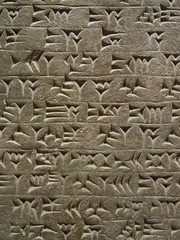 | 8 |
| 12165709660 | City-state | A form of political organization typical of Mesopotamian civilization; consisted of agricultural hinterlands ruled by an urban-based king |  | 9 |
| 12165709661 | Ziggurats | Massive towers usually associated with Mesopotamian temple connections |  | 10 |
| 12165709662 | Babylonian Empire | Unified all of Mesopotamia circa 1800 B.C.E.; collapsed due to foreign invasion circa 1600 B.C.E. |  | 11 |
| 12165709663 | Hammurabi | The most important Babylonian ruler; responsible for codification of the law |  | 12 |
| 12165709664 | Pharaoh | The term used to denote the kings of ancient Egypt; considered a god as well as a political and military leader. The term, "great house" refers to the palace of the pharaohs |  | 13 |
| 12165709665 | Pyramids | Monumental architecture typical of Old Kingdom Egypt; used as burial sites for pharaohs |  | 14 |
| 12165709666 | Hieroglyphs | Form of writing developed in ancient Egypt; more pictorial than Mesopotamian cuneiform |  | 15 |
| 12165709667 | Monotheism | The exclusive worship of one god; introduced by Jews into Middle Eastern civilization |  | 16 |
| 12165709668 | Phoenicians | Seafaring civilization located on the shores of the eastern Mediterranean; established colonies throughout the Mediterranean; extensive trade, communication networks, early alphabetical script |  | 17 |
| 12165709669 | Harappa and Mohenjo Daro | Major urban complexes of Harappan civilization; laid out on planned grid pattern |  | 18 |
| 12165709670 | Aryans | Indo-European nomadic, warlike, pastorialists who replaced Harappan civilization |  | 19 |
| 12165709671 | Huanghe (Yellow) River Basin | Site of the development of sedentary agriculture in China |  | 20 |
| 12165709672 | Shang | 1st Chinese dynasty |  | 21 |
| 12165709673 | Big Geography | A term that draws attention to the global nature of world history. |  | 22 |
| 12165709674 | Paleolithic | The period that ended about 3,000 years after the end of the last Ice Age, it lasted until about 10,000 years ago. (Old Stone Age) The period of the Stone Age associated with the evolution of humans. It predates the Neolithic period. |  | 23 |
| 12165709675 | Path of migration for humans during Paleolithic era | From Africa to Eurasia, Australia, and the Americas | 24 | |
| 12165709676 | Eglitarian | Believing in the equality of all peoples | 25 | |
| 12165709677 | Pastoralists were often the developers and disseminators of of ____ and ___ that transformed warfare in agrarian civilizations | new weapons modes of transportation | 26 | |
| 12165709678 | _____ developed in this period continued to have strong influences in later periods | New religious beliefs | 27 | |
| 12165709679 | Mediterranean Sea | Sea connecting Mesopotamia, Anatolia, and N. Africa | 28 | |
| 12165709680 | Polytheism | Belief in more than one god | 29 | |
| 12165709681 | Nile River | Principal water source of water flowing through North Africa (site of sophisticated cultural development); flooded regularly and enriched the soil in the process | 30 | |
| 12165709682 | history | the study of past events and changes in the development, transmission and transformation of cultural practices | 31 | |
| 12165709683 | stone age | the earliest known period of human culture, marked by the creation and use of stone tools and other nonmetallic substances | 32 | |
| 12165709684 | foragers | Food collectors who gather, fish, or hunt | 33 | |
| 12165709685 | city-state | A sovereign state comprising a city and its immediate surrounding area | 34 | |
| 12165709686 | Babylon | an ancient city of Mesopotamia known for its wealth, luxury, and vice. | 35 | |
| 12165709687 | Hammurabi | Babylonian king who codified the laws of Sumer and Mesopotamia (died 1750 BCE) | 36 | |
| 12165709688 | scribe | a person who copies or writes out documents; often a record keeper | 37 | |
| 12165709689 | cuneiform | A form of writing developed by the Sumerians (Mesopotamia) using a wedge shaped stylus and clay tablets. | 38 | |
| 12165709690 | bronze | A metal that is a mixture of copper and tin | 39 | |
| 12165709691 | paleolithic | stone age period when human used stone tools and survived by hunting and foraging | 40 | |
| 12165709692 | Homo sapiens | human species derived from apes with more brain capacity for intelligence | 41 | |
| 12165709693 | venus figurines | paleolithic female figurines that emphasize physical attributes associated with fecundity | 42 | |
| 12165709694 | cave paintings | paleolithic cave paintings that emphasize hunting--Lascaux France is most famous | 43 | |
| 12165709695 | pastoralism | the process of domestication, raising, and herding of animals | 44 | |
| 12165709696 | specialization of labor | people in civilizations could be assigned different jobs and statuses in society due to having a surplus of food | 45 | |
| 12165709697 | patriarchy | the idea that males have a right to rule and reign over states and families | 46 | |
| 12165709698 | civilization | large scale communities that had certain characteristics in common such as: recordkeeping, complex institutions (government, economy, organized religion), cities, specialization of labor, long-distance trade, technology | 47 | |
| 12165709699 | Euphrates and Tigris | two principle Mesopotamian rivers | 48 | |
| 12165709700 | Sumer | earliest Mesopotamian city state | 49 | |
| 12165709701 | Babylon | second oldest Mesopotamian city state, succeeds Sumer, most important king was Hammurabi | 50 | |
| 12165709702 | Hammurabi's Code | first law code in the world, of Babylonia, dealt with legal contracts and responsibility for wrong doing | 51 | |
| 12165709703 | bronze metallurgy | alloy of copper, tin, and zinc, this metal began to be produced from about 2800 BCE improved military equipment, agricultural knives, and plows | 52 | |
| 12165709704 | iron metallurgy | a changeable metal, less hard than bronze, but more flexible, developed around 1500 BCE by the Hittites | 53 | |
| 12165709705 | wheel | round object used to move heavy weights and to create vehicles first in Sumer | 54 | |
| 12165709706 | cuneiform | a very early form of writing, from Sumer in Mesopotamia, done by pressing a cone-shaped stylus into soft clay | 55 | |
| 12165709707 | Epic of Gilgamesh | epic Mesopotamian poem that highlights the stresses of civilization | 56 | |
| 12165709708 | Egypt | a founding civilization along the Nile in Northeastern Africa | 57 | |
| 12165709709 | Hieroglyphics | Egyptian writing (pictographs & symbols representing sounds+ideas) | 58 | |
| 12165709710 | Harrappa & Mohenjo Daro | Two early, very large, and complex Indus Valley city states. Little is known about these but their size and complexities imply central planning. | 59 | |
| 12165709711 | Indus River | River in Northern India on which the first Indian civilizations were built; flooded twice a year in a predictable manner | 60 | |
| 12165709712 | Vedas | A belief system based on the caste system brought into India by peoples probably from the Caucasus between about 5000 and 4000 BCE | 61 | |
| 12165709713 | Varna | Caste system of India: Brahmin, Khsatriya, Vaishya, Shudra--people could not move out of the caste they were born into | 62 | |
| 12165709714 | China | earliest civilization in Asia | 63 | |
| 12165709715 | Huang He and Yangzi He | two rivers in China that supported early civilization | 64 | |
| 12165709716 | Shang Dynasty | The dominant people in the earliest Chinese dynasty for which we have written records (ca. 1750-1027 B.C.E.). Ancestor worship, divination by means of oracle bones, and the use of bronze vessels for ritual purposes were major elements of this culture. | 65 | |
| 12165709717 | Hinduism | Term for a wide variety of beliefs and ritual practices that have developed in the Indian subcontinent since antiquity. It has roots in ancient Vedic, Buddhist, and south Indian religious concepts and practices. | 66 | |
| 12165709718 | Zoroastrianism | Founded by Zoroaster; taught that humans had the freedom to choose between right and wrong, and that goodness would triumph in the end. Marked by dualism between God = Good and the Evil. Influenced Christianity. Was one of the first monotheistic religions. | 67 | |
| 12165709719 | Judaism | Monotheistic (belief in one god), founded by Abraham, code of law found in the Torah (first 5 books of the Bible), led to the development of two other Abrahamic religions: Christianity and Islam. | 68 | |
| 12165709720 | Confucianism | The system of ethics, education, and statesmanship taught by Confucius and his disciples, stressing love for humanity, ancestor worship, reverence for parents, and harmony in thought and conduct. | 69 | |
| 12165709721 | Mandate of Heaven | A political theory of ancient China in which the emperor is given the power to rule by a divine sources. This tie could be severed by ineffectual rule | 70 | |
| 12165709722 | Oracle bones | bones on which the ruling class in China wrote questions and had them divined by the priestly class | 71 | |
| 12165709723 | Mesoamerica | cultural area in the Americas extending from central America to present-day Peru | 72 | |
| 12165709724 | Olmec | the first major civilization in Mexico | 73 | |
| 12165709725 | Maya | Mesoamerican civilization in and near the Yucatan Peninsula--had the first and only pre-Columbian writing system in the Americans | 74 | |
| 12165709726 | Chavin | Mesoamerican civilization in present-day Peru that had highly developed art and architectural practices | 75 | |
| 12165709727 | Carthage | City located in present-day Tunisia, founded by Phoenicians ca. 800 B.C.E. It became a major commercial center and naval power in the western Mediterranean until defeated by Rome in the third century B.C.E. (p. 107) | 76 | |
| 12165709728 | irrigation systems | replacement or supplementation of rainfall with water from another source in order to grow crops | 77 | |
| 12165709729 | Indus River Valley Civilization | an ancient civilization thriving along the Indus River in what is now Pakistan and western India. This civilization is also sometimes referred to as the Harappan or Harappa-Mohenjodaro Civilization of the Indus Valley, in reference to the excavated cities of Harappa and Mohenjodaro | 78 | |
| 12165709730 | Persian Wars | a series of conflicts between the Greek world and the Persian Empire that started about 500 BC and lasted until 448 BC. | 79 | |
| 12165709731 | Alexander the Great | United Ancient Greece; Hellenistic Age, conquered a large empire. | 80 | |
| 12165709732 | Socrates and Plato | Greek philosopher and his student | 81 |
Flashcards
Flashcards
AP World History - Period 2 Terms Flashcards
Terms : Hide Images
| 12182178394 | Ahura Mazda | In Zoroastrianism, the good god who rules the world. |  | 0 |
| 12182178395 | Alexander the Great | King of Macedon (356-323 B.C.E.), conqueror of the Persian Empire and part of northwest India. |  | 1 |
| 12182178396 | Aryans | Indo-European pastoralists who moved into India about the time of the collapse of the Indus Valley civilization; their role in causing this collapse is still debated by historians. | | 2 |
| 12182178397 | Ashoka | The most famous ruler of the Mauryan Empire (r. 268-232 B.C.E.), who converted to Buddhism and tried to rule peacefully and with tolerance. |  | 3 |
| 12182178398 | Caesar Augustus | The great-nephew and adopted son of Julius Caesar who emerged as sole ruler of the Roman state at the end of an extended period of civil war (r. 31 B.C.E.-14 C.E.). |  | 4 |
| 12182178399 | Cyrus (the Great) | Founder of the Persian Empire (r. 557-530 B.C.E.); a ruler noted for his conquests, religious tolerance, and political moderation. |  | 5 |
| 12182178400 | Darius I | Great king of Persia (r. 522-486 B.C.E.) following the upheavals after Cyrus's death; completed the establishment of the Persian Empire. |  | 6 |
| 12182178401 | Hellenistic era | The period from 323 to 30 B.C.E. in which Greek culture spread widely in Eurasia in the kingdoms ruled by Alexander's political successors. | | 7 |
| 12182178402 | Herodotus | Greek historian known as the "father of history" (ca. 484-ca. 425 B.C.E.). His Histories enunciated the Greek view of a fundamental divide between East and West, culminating in the Greco-Persian Wars of 490-480 B.C.E. | 8 | |
| 12182178403 | Mandate of Heaven | The ideological underpinning of Chinese emperors, this was the belief that a ruler held authority by command of divine force as long as he ruled morally and benevolently. | 9 | |
| 12182178404 | Patricians | Wealthy, privileged Romans who dominated early Roman society. | 10 | |
| 12182178405 | Pax Romana | The "Roman peace," a term typically used to denote the stability and prosperity of the early Roman Empire, especially in the first and second centuries C.E. | 11 | |
| 12182178406 | Peloponnesian War | Great war between Athens (and allies) and Sparta (and allies), lasting from 431 to 404 B.C.E. The conflict ended in the defeat of Athens and the closing of Athens's Golden Age. |  | 12 |
| 12182178407 | Persepolis | The capital and greatest palace-city of the Persian Empire, destroyed by Alexander the Great. |  | 13 |
| 12182178408 | Plebians | Poorer, less privileged Romans who gradually won a role in Roman politics. | 14 | |
| 12182178409 | Punic Wars | Three major wars between Rome and Carthage in North Africa, fought between 264 and 146 B.C.E., that culminated in Roman victory and control of the western Mediterranean. | 15 | |
| 12182178410 | Qin Dynasty | A short-lived (221-206 B.C.E.) but highly influential Chinese dynasty that succeeded in reuniting China at the end of the Warring States period. |  | 16 |
| 12182178411 | Qin Shihuangdi | Literally "first emperor" (r. 221-210 B.C.E.) forcibly reunited China and established a strong and repressive state. Used Legalism, standardized currency and weights and built the Terra cotta army. | 17 | |
| 12182178412 | Wudi | Han emperor (r. 141-86 B.C.E.) who began the Chinese civil service system by establishing an academy to train imperial bureaucrats. | 18 | |
| 12182178413 | Xiongnu | Nomadic peoples to the north of the Great Wall of China who were a frequent threat to the stability of the Chinese state. | 19 | |
| 12182178414 | Aristotle | A Greek philosopher (384-322 B.C.E.); student of Plato and teacher of Alexander the Great. | 20 | |
| 12182178415 | Bhagavad Gita | A great Hindu epic text, part of the much larger Mahabharata, which affirms the performance of caste duties as a path to religious liberation. | 21 | |
| 12182178416 | Brahmins | The priestly caste of India. | 22 | |
| 12182178417 | Buddhism | The cultural/religious tradition first enunciated by Siddhartha Gautama in India. | 23 | |
| 12182178418 | Confucianism | The Chinese philosophy first enunciated by Confucius, advocating the moral example of superiors as the key element of social order. | 24 | |
| 12182178419 | Constantine | Roman emperor (r. 306-337 C.E.) whose conversion to Christianity paved the way for the triumph of Christianity in Europe. |  | 25 |
| 12182178420 | Daoism | A Chinese philosophy/popular religion that advocates simplicity and understanding of the world of nature, founded by the legendary figure Laozi. | 26 | |
| 12182178421 | Filial piety | The honoring of one's ancestors and parents, a key element of Confucianism. | 27 | |
| 12182178422 | Hippocrates | A very influential Greek medical theorist (ca. 460-ca. 370 B.C.E.); regarded as the father of medicine. | 28 | |
| 12182178423 | Jesus of Nazareth | The prophet/god of Christianity(ca. 4 B.C.E.-ca. 30 C.E.). | 29 | |
| 12182178424 | Yahweh | A form of the Hebrew name of God used in the Bible. The monotheistic religion developed by the Hebrews, emphasizing a sole personal god with concerns for social justice. | 30 | |
| 12182178425 | Karma | In Hinduism, the determining factor of the level at which the individual is reincarnated, based on purity of action in the prior existence. |  | 31 |
| 12182178426 | Laozi | A legendary Chinese philosopher of the sixth century B.C.E.; regarded as the founder of Daoism. | 32 | |
| 12182178427 | Legalism | A Chinese philosophy distinguished by an adherence to clear laws with vigorous harsh punishments. | 33 | |
| 12182178428 | Moksha | In Hindu belief, liberation from separate existence and union with Brahman. The ultimate goal of Hindus and freedom from the cycle of rebirth. | 34 | |
| 12182178429 | Siddhartha Gautama | The Indian prince (ca. 566-ca. 486 B.C.E.) who founded Buddhism. | 35 | |
| 12182178430 | Socrates | The first great Greek philosopher to turn rationalism toward questions of human existence (469-399 B.C.E.). | 36 | |
| 12182178431 | Upanishads | Indian mystical and philosophical works, written between 800 and 400 B.C.E. | 37 | |
| 12182178432 | Vedas | The earliest religious texts of India, a collection of ancient poems, hymns, and rituals that were transmitted orally before being written down ca. 600 B.C.E. | 38 | |
| 12182178433 | Warring States Period | Period in China from 403 to 221 B.C.E. that was typified by disorder and political chaos. | 39 | |
| 12182178434 | Yin and Yang | Expression of the Chinese belief in the unity of opposites. | 40 | |
| 12182178435 | Zoroastrianism | Persian monotheistic religion founded by the prophet Zarathustra. | 41 | |
| 12182178436 | Caste System | The system of social organization in India that has evolved over millennia; it is based on an original division of the populace into four inherited classes, with the addition of thousands of social distinctions based on occupation, which became the main cell of social life in India. | 42 | |
| 12182178437 | Dharma | In Indian belief, performance of the duties appropriate to an individual's caste; good performance will lead to rebirth in a higher caste. | 43 | |
| 12182178438 | Kshatriya | The Indian social class of warriors and rulers. | 44 | |
| 12182178439 | Latifundia | Huge estates operated by slave labor that flourished in parts of the Roman Empire | 45 | |
| 12182178440 | Pericles | A prominent and influential statesman of ancient Athens (ca. 495-429 B.C.E.); presided over Athens's Golden Age of Democracy. | 46 | |
| 12182178441 | Sudra | The lowest Indian social class of varna; regarded as servants of their social betters; eventually included peasant farmers | 47 | |
| 12182178442 | the "three submissions" | In Chinese Confucian thought, the notion that a woman is permanently subordinate to male control: first that of her father, then of her husband, and finally of her son. | 48 | |
| 12182178443 | Untouchables | An Indian social class that emerged below the Sudras and whose members performed the most unclean and polluting work. | 49 | |
| 12182178444 | Vaisya | The Indian social class that was originally defined as farmers but eventually comprised merchants. | 50 | |
| 12182178445 | Syncretism | Attempted union or reconciliation of diverse or opposite tenets or practices, especially in philosophy or religion. (ex. Hellenistism) | 51 | |
| 12182178446 | Ancestor Veneration | The custom of worshiping deceased ancestors who are considered still a part of the family and whose spirits are believed to have the power to intervene in the affairs of the living. Practiced in Classical China. | 52 | |
| 12182178447 | Monasticism | a religious way of life in which one renounces worldly pursuits to devote oneself fully to spiritual work; typically in a house of worship (ex. Christianity and Buddhism) | 53 | |
| 12182178448 | Jewish Diaspora | the dispersion of Israelites, Judahites and later Jews out of their ancestral homeland (the Land of Israel) and their subsequent settlement in other parts of the globe | 54 | |
| 12182178449 | Nirvana | The goal of the Buddhist path. It is the ultimate spiritual goal in Buddhism and marks the release from rebirths. | 55 | |
| 12182178450 | Mahayana Buddihism | one of the two major traditions of Buddhism, now practiced in a variety of forms especially in China, Tibet, Japan, and Korea. Became more a religion and Buddha became viewed as a god. | 56 | |
| 12182178451 | Theravada Buddhism | One of the two major traditions of Buddhism. It is more similar to the Buddha's origional philosophy and Buddha is seen as a teacher rather than a god. It is practiced mainly in Southeast Asia in places such as Sri Lanka, Burma (Myanmar), Thailand, Cambodia, and Laos. | 57 | |
| 12182178452 | 5 Key Relationships | Ruler to subject, father to son, husband to wife, elder to younger and friend to friend. Confucius believed that if society follows these then it will lead to social harmony and order. | 58 | |
| 12182178453 | Animism | The ancient religious belief that objects, places and creatures all possess a distinct spiritual essence. All things—animals, plants, rocks, rivers, weather systems,—considered alive with spiritual presence. | 59 | |
| 12182178454 | Phoenicians | One of the earliest trading empires in world history that dominated the Mediterranean region; created the world's first known alphabet system that was later adapted by the Greeks. | 60 | |
| 12182178455 | Patriarchy | a system of society or government in which men hold the power and women are largely excluded from it | 61 | |
| 12182178456 | Monsoons | a seasonal prevailing wind in the region of South and Southeast Asia, blowing from the southwest between May and September and bringing rain (wet), or from the northeast between October and April (dry) | 62 | |
| 12182178457 | Qanat System | an ancient system of underground tunnels that supply mountain water to dry lower places in the Middle East. First used in the Persian Empire. | 63 | |
| 12182178458 | Bodhisattva | (in Mahayana Buddhism) a person who is able to reach nirvana but delays doing so out of compassion in order to save suffering beings | 64 | |
| 12182178459 | Roman Republic | The era of ancient Roman civilization beginning with the overthrow of the Roman Kingdom, traditionally dated to 509 BC, and ending in 27 BC with the establishment of the Roman Empire. It was during this period that Rome's government was headed by two consuls, elected annually by the citizens and advised by a senate composed of appointed magistrates. | 65 | |
| 12182178460 | Satraps | Persian administrators, usually members of the royal family, who governed a satrapy. | 66 |
AP World History Strayer Chapter 12 Flashcards
Terms : Hide Images
| 8301632488 | Paleolithic Persistence | Continuation of the previous paleolithic way of life (hunting and gathering). this allowed ppl to live survive off any land unsuitable for agriculture. | 0 | |
| 8301632489 | Igbo | A group based in West Africa, fully agricultural, patrilineal descent | 1 | |
| 8301632490 | Iroquois | Native American people of North America, created a confederacy of tribes called the Great Law of Peace, fully agricultural, and matrilineal | 2 | |
| 8301632491 | Timur | A Turkic warrior, led the attempt to restore the Mongol Empire | 3 | |
| 8301632492 | Fulbe | Pastoral people of West Africa, adopted Islam, became part of Islamic Empire, was major part of Islamic Movement | 4 | |
| 8301632493 | Ming Dynasty China | Was greatly disrupted by the Mongol Empire and bubonic plague, helped China recover, wanted to eliminate traces of foreign rule, promoted Confucianism and patriarchy | 5 | |
| 8301632494 | Zheng He | Cheng Ho, born at the end of Mongol rule, was a Hui court eunuch, effective military leader, changed religion. Helped sea routes become more peaceful. During Ming Dynasty era. | 6 | |
| 8301632495 | European Renaissance | Devastated by bubonic plague, revival of Greco-Roman traditions, merchants were wealthiest class, elite wealthy males, less focused on religion | 7 | |
| 8301632496 | Ottoman Empire | Started by a sultan named Osman, originated in present day Turkey. Primary purpose was to gain land and spread Islam. | 8 | |
| 8301632497 | seizure of Constantinople in 1453 | This marked the final demise of Christian Byzantium and allowed Ottoman rulers to see themselves as successors to the Roman Empire | 9 | |
| 8301632498 | Safavid Empire | The Shi'ite muslim dynasty that ruled in Persia between the 16th and 18th centuries | 10 | |
| 8301632499 | Songhay Empire | 1460-1591, by the Niger River. Became a major center of Islamic learning and commerce | 11 | |
| 8301632501 | Mughal Empire | Creation of an Islamic Turkic group, undertook a remarkable effort to blend many Hindu groups and a variety of Muslims into an effective partnership | 12 | |
| 8301632502 | Malacca | This city became a springboard for the spread of Islam through the region. The Islam of this city demonstrated blending with local and Hindu/Buddhist traditions, while the city itself, like many port towns, had a reputation for "rough behavior." | 13 | |
| 8301632503 | Aztec Empire | This was a loosely structured, unstable conquest state. They practiced human sacrifice and demanded tribute from conquered cities and subjects | 14 | |
| 8301632504 | Inca Empire | They had a bureaucratic empire topped with an absolute ruler regarded as divine. Instead of regular tribute, they demanded it in the form of mita, or labor. | 15 |
AP World History Vocab Chapters 6-10 Flashcards
Terms : Hide Images
| 12174421794 | monsoon | Seasonal winds in the Indian Ocean caused by the differences in temperature between the rapidly heating and cooling landmasses of Africa and Asia and the slowly changing ocean waters. These strong and predictable winds have long been ridden across the open sea by sailors, and the large amounts of rainfall that they deposit on parts of India, Southeast Asia, and China allow for the cultivation of several crops a year. | 0 | |
| 12174421795 | vedas | Early Indian sacred 'knowledge'-the literal meaning of the term-long preserved and communicated orally by Brahmin priests and eventually written down. | 1 | |
| 12174425756 | varna | The four major social divisions in India's caste system: the Brahmin priest class, the Kshatriya warrior/administrator class, the Vaishya merchant/farmer class, and the Shudra laborer class. | 2 | |
| 12174425757 | jati | Regional groups of people who have a common occupational sphere and who marry, eat, and generally interact with other members of their group. | 3 | |
| 12174425758 | karma | In Indian tradition, the residue of deeds performed in past and present lives that adheres to a 'spirit' and determines what form it will assume in its next life cycle. Used in India to make people happy with their lot in life. | 4 | |
| 12174429867 | moksha | The Hindu concept of the spirit's 'liberation' from the endless cycle of rebirths. | 5 | |
| 12174429868 | Buddha | An Indian prince named Siddhartha Gautama, who renounced his wealth and social position. After becoming 'enlightened' (the meaning of Buddha) he enunciated the principles of Buddhism. (180) | 6 | |
| 12174434670 | Mahayana Buddhism | "Great Vehicle" branch of Buddhism followed in China, Japan, and Central Asia. The focus is on reverence for Buddha and for bodhisattvas, enlightened persons who have postponed nirvana to help others attain enlightenment. | 7 | |
| 12174434671 | Theravada Buddhism | "Way of the Elders" branch of Buddhism followed in Sri Lanka and much of Southeast Asia. Theravada remains close to the original principles set forth by the Buddha; it downplays the importance of gods and emphasizes austerity and the individual's search for enlightenment. | 8 | |
| 12174443161 | Hinduism | A general term for a wide variety of beliefs and ritual practices that have developed in the Indian subcontinent since antiquity. Hinduism has roots in ancient Vedic, Buddhist, and south Indian religious concepts and practices. It spread along the trade routes to Southeast Asia. | 9 | |
| 12174447330 | Mauryan Empire | The first state to unify most of the Indian subcontinent. It was founded by Chandragupta Maurya in 324 B.C.E. and survived until 184 B.C.E. From its capital at Pataliputra in the Ganges Valley it grew wealthy from taxes. | 10 | |
| 12174447331 | Ashoka | Third ruler of the Mauryan Empire in India (r. 270-232 B.C.E.). He converted to Buddhism and broadcast his precepts on inscribed stones and pillars, the earliest surviving Indian writing. (p. 184) | 11 | |
| 12174452856 | Mahabharata | A vast epic chronicling the events leading up to a cataclysmic battle between related kinship groups in early India. It includes the Bhagavad-Gita, the most important work of Indian sacred literature. Mahayana Buddhism,Branch of Buddhism followed in China, Japan, and Central Asia. The focus is on reverence for Buddha and for bodhisattvas, enlightened persons who have postponed nirvana to help others attain enlightenment. | 12 | |
| 12174452857 | Bhagavad-Gita | The most important work of Indian sacred literature, a dialogue between the great warrior Arjuna and the god Krishna on duty and the fate of the spirit. | 13 | |
| 12174456452 | Tamil kingdoms | The kingdoms of southern India, inhabited primarily by speakers of Dravidian languages, which developed in partial isolation, and somewhat differently, from the Aryan north. | 14 | |
| 12174456453 | Gupta Empire | Powerful Indian state based, like its Mauryan predecessor, in the Ganges Valley. It controlled most of the Indian subcontinent through a combination of military force and its prestige as a center of sophisticated culture. | 15 | |
| 12174460122 | theater-state | Historians' term for a state that acquires prestige and power by developing attractive cultural forms and staging elaborate public ceremonies (as well as redistributing valuable resources) to attract and bind subjects to the center. Examples include the Gupta Empire in India and Srivijaya in Southeast Asia. | 16 | |
| 12174460123 | Malay peoples | A designation for peoples originating in south China and Southeast Asia who settled the Malay Peninsula, Indonesia, and the Philippines, then spread eastward across the islands of the Pacific Ocean and west to Madagascar. (p. 190) | 17 | |
| 12174460124 | Funan | An early complex society in Southeast Asia between the first and sixth centuries C.E. It was centered in the rich rice-growing region of southern Vietnam, and it controlled the passage of trade across the Malaysian isthmus. | 18 | |
| 12174471500 | Silk Road | Caravan routes connecting China and the Middle East across Central Asia and Iran. | 19 | |
| 12174471501 | Parthians | Iranian ruling dynasty between ca. 250 B.C.E. and 226 C.E. | 20 | |
| 12174471502 | Sasanid Empire | Iranian empire, established ca. 226, with a capital in Ctesiphon, Mesopotamia. The Sasanid emperors established Zoroastrianism as the state religion. Islamic Arab armies overthrew the empire ca. 640. (p. 225) | 21 | |
| 12174476963 | stirrup | device for securing a horseman's feet, enabling him to wield weapons more effectively. First evidence of the use of stirrups was among the Kushan people of northern Afghanistan in approximately the first century C.E. | 22 | |
| 12174476964 | Indian Ocean Maritime System | In premodern times, a network of seaports, trade routes, and maritime culture linking countries on the rim of the Indian Ocean from Africa to Indonesia. | 23 | |
| 12174483142 | trans-Saharan caravan routes | Trading network linking North Africa with sub-Saharan Africa across the Sahara. | 24 | |
| 12174483143 | Sahel | Belt south of the Sahara where it transitions into savanna across central Africa. It means literally 'coastland' in Arabic. | 25 | |
| 12174486910 | sub-Saharan Africa | Portion of the African continent lying south of the Sahara. | 26 | |
| 12174486911 | steppes | Treeless plains, especially the high, flat expanses of northern Eurasia, which usually have little rain and are covered with coarse grass. They are good lands for nomads and their herds. Good for breeding horses: essential to Mongol military. | 27 | |
| 12174486912 | savanna | Tropical or subtropical grassland, either treeless or with occasional clumps of trees. Most extensive in sub-Saharan Africa but also present in South America. | 28 | |
| 12174491814 | tropical rain forest | High-precipitation forest zones of the Americas, Africa, and Asia lying between the Tropic of Cancer and the Tropic of Capricorn. | 29 | |
| 12174491815 | "great traditions" | Historians' term for a literate, well-institutionalized complex of religious and social beliefs and practices adhered to by diverse societies over a broad geographical area. | 30 | |
| 12174496507 | "small traditions" | Historians' term for a localized, usually non-literate, set of customs and beliefs adhered to by a single society, often in conjunction with a "great tradition" | 31 | |
| 12174496508 | Bantu | Collective name of a large group of sub-Saharan African languages and of the peoples speaking these languages. | 32 | |
| 12174496509 | Armenia | One of the earliest Christian kingdoms, situated in eastern Anatolia (east of Turkey today) and the western Caucasus and occupied by speakers of the Armenian language. | 33 | |
| 12174501485 | Ethiopia | East African highland nation lying east of the Nile River. | 34 | |
| 12174506454 | Shi'ites | Muslims belonging to the branch of Islam believing that God vests leadership of the community in a descendant of Muhammad's son-in-law Ali. Shi'ism is the state religion of Iran. | 35 | |
| 12174506455 | Sunnis | Muslims belonging to branch of Islam believing that the community should select its own leadership. The majority religion in most Islamic countries. | 36 | |
| 12174506456 | Mecca | City in western Arabia; birthplace of the Prophet Muhammad, and ritual center of the Islamic religion. | 37 | |
| 12174512227 | Muhammad | Arab prophet; founder of religion of Islam. | 38 | |
| 12174512228 | muslim | An adherent of the Islamic religion; a person who 'submits' (in Arabic, Islam means 'submission') to the will of God. | 39 | |
| 12174512229 | Islam | Religion expounded by the Prophet Muhammad (570-632 C.E.) on the basis of his reception of divine revelations, which were collected after his death into the Quran. This religion calls on all people to to recognize one creator--Allah--who rewards or punishes believers after death according to how they led their lives | 40 | |
| 12174512230 | Medina | City in western Arabia to which the Prophet Muhammad and his followers emigrated in 622 to escape persecution in Mecca. | 41 | |
| 12174516003 | umma | The community of all Muslims. A major innovation against the background of seventh-century Arabia, where traditionally kinship rather than faith had determined membership in a community. | 42 | |
| 12174516004 | caliphate | Office established in succession to the Prophet Muhammad, to rule the Islamic empire; also the name of that empire. | 43 | |
| 12174520362 | Quran | Book composed of divine revelations made to the Prophet Muhammad between ca. 610 and his death in 632; the sacred text of the religion of Islam. | 44 | |
| 12174520363 | Umayyad caliphate | First hereditary dynasty of Muslim caliphs (661 to 750). From their capital at Damascus, the Umayyads ruled one of the largest empires in history that extended from Spain to India. Overthrown by the Abbasid Caliphate. | 45 | |
| 12174524560 | Abbasid Caliphate | Descendants of the Prophet Muhammad's uncle, al-Abbas, they overthrew the Umayyad Caliphate and ruled an Islamic empire from their capital in Baghdad (founded 762) from 750 to 1258. | 46 | |
| 12174524561 | mamluks | Under the Islamic system of military slavery, Turkic military slaves who formed an important part of the armed forces of the Abbasid Caliphate of the ninth and tenth centuries. Mamluks eventually founded their own state, ruling Egypt and Syria (1250-1517) | 47 | |
| 12174524562 | Ghana | First known kingdom in sub-Saharan West Africa between the sixth and thirteenth centuries C.E. Also the modern West African country once known as the Gold Coast. gold and salt trade. | 48 | |
| 12174529003 | ulama | Muslim religious scholars. From the ninth century onward, the primary interpreters of Islamic law and the social core of Muslim urban societies. (p. 238) | 49 | |
| 12174529004 | hadith | A tradition relating the words or deeds of the Prophet Muhammad; next to the Quran, the most important basis for Islamic law. | 50 | |
| 12174536223 | Charlemagne | King of the Franks (r. 768-814); emperor (r. 800-814). Through a series of military conquests he established the Carolingian Empire, which encompassed all of Gaul and parts of Germany and Italy. Illiterate, though started an intellectual revival. | 51 | |
| 12174536224 | medieval | Literally 'middle age,' a term that historians of Europe use for the period between roughly 500 and 1400, signifying the period between Greco-Roman antiquity and the Renaissance. | 52 | |
| 12174539956 | Byzantine Empire | Historians' name for the eastern portion of the Roman Empire from the fourth century onward, taken from 'Byzantion,' an early name for Constantinople, the Byzantine capital city. The empire fell to the Ottomans in 1453. | 53 | |
| 12174539957 | Kievan Russia | State established at Kiev in Ukraine ca. 879 by Scandinavian adventurers asserting authority over a mostly Slavic farming population. (p. 267) | 54 | |
| 12174539958 | schism | (n.) a formal split within a religious organization; any division or separation of a group or organization into hostile factions | 55 | |
| 12174544500 | manor | In medieval Europe, a large, self-sufficient landholding consisting of the lord's residence (manor house), outbuildings, peasant village, and surrounding land. | 56 | |
| 12174544501 | serf | In medieval Europe, an agricultural laborer legally bound to a lord's property and obligated to perform set services for the lord. In Russia some of them worked as artisans and in factories; in Russia it was not abolished until 1861. | 57 | |
| 12174544502 | fief | in medieval europe, land granted in return for a sworn oath to provide military service | 58 | |
| 12174549967 | vassal | In medieval Europe, a sworn supporter of a king or lord committed to rendering specified military service to that king or lord, usually in exchange for the use of land. | 59 | |
| 12174549968 | papacy | The central administration of the Roman Catholic Church, of which the pope is the head. | 60 | |
| 12174549969 | Holy Roman Empire | Loose federation of mostly German states and principalities, headed by an emperor elected by the princes. It lasted from 962 to 1806. | 61 | |
| 12174555876 | investiture controversy | Dispute between the popes and the Holy Roman Emperors over who held ultimate authority over bishops in imperial lands. | 62 | |
| 12174555877 | monasticism | Living in a religious community apart from secular society and adhering to a rule stipulating chastity, obedience, and poverty. (Primary Centers of Learning in Medieval Europe) | 63 | |
| 12174560207 | horse collar | Harnessing method that increased the efficiency of horses by shifting the point of traction from the animal's neck to the shoulders; its adoption favors the spread of horse-drawn plows and vehicles. | 64 | |
| 12174560208 | Crusades | Armed pilgrimages to the Holy Land by Christians determined to recover Jerusalem from Muslim rule. The Crusades brought an end to western Europe's centuries of intellectual and cultural isolation. | 65 | |
| 12174563908 | pilgrimage | journey to a sacred shrine by Christians seeking to show their piety, fulfill vows, or gain absolution from sins. Other religions also have similar traditions, such as the Muslim tradition to Mecca and the ones done by early Chinese Buddhists to India in search of sacred Buddhist writings | 66 | |
| 12174578275 | Li Shimin | One of the founders of the Tang Empire and its second emperor (r. 626-649). He led the expansion of the empire into Central Asia. | 67 | |
| 12174578276 | Tang Empire | Empire unifying China and part of Central Asia, founded 618 and ended 907. The Tang emperors presided over a magnificent court at their capital, Chang'an. | 68 | |
| 12174578277 | Grand Canal | The 1,100-mile (1,700-kilometer) waterway linking the Yellow and the Yangzi Rivers. It was begun in the Han period and completed during the Sui Empire. | 69 | |
| 12174583194 | tributary system | A system in which, from the time of the Han Empire, countries in East and Southeast Asia not under the direct control of empires based in China nevertheless enrolled as tributary states, acknowledging the superiority of the emperors in China. | 70 | |
| 12174583195 | bubonic plague | A bacterial disease of fleas that can be transmitted by flea bites to rodents and humans; humans in late stages of the illness can spread the bacteria by coughing. High mortality rate and hard to contain. Disastrous. (280) | 71 | |
| 12174587542 | Uighurs | A group of Turkic-speakers who controlled their own centralized empire from 744 to 840 in Mongolia and Central Asia. | 72 | |
| 12174587543 | Tibet | Country centered on the high, mountain-bounded plateau north of India. Tibetan political power occasionally extended farther to the north and west between the seventh and thirteen centuries. | 73 | |
| 12174587544 | Song Empire | Empire in central and southern China (960-1126) while the Liao people controlled the north. Empire in southern China (1127-1279; the "Southern Song") while the Jin people controlled the north. Distinguished for its advances in technology, medicine, astronomy, and mathematics. | 74 | |
| 12174591608 | junk | A very large flatbottom sailing ship produced in the Tang and Song Empires, specially designed for long-distance commercial travel. | 75 | |
| 12174591609 | gunpowder | A mixture of saltpeter, sulfur, and charcoal, in various proportions. The formula, brought to China in the 400s or 500s, was first used to make fumigators to keep away insect pests and evil spirits. In later centuries it was used to make explosives and grenades and to propel cannonballs, shot, and bullets | 76 | |
| 12174599112 | neo-confucianism | Term used to describe new approaches to understanding classic Confucian texts that became the basic ruling philosophy of China from the Song period to the twentieth century. | 77 | |
| 12174599113 | zen | The Japanese word for a branch of Mahayana Buddhism based on highly disciplined meditation. | 78 | |
| 12174599114 | movable type | Type in which each individual character is cast on a separate piece of metal. It replaced woodblock printing, allowing for the arrangement of individual letters and other characters on a page. Invented in Korea 13th Century. | 79 | |
| 12174602761 | Koryo | Korean kingdom founded in 918 and destroyed by a Mongol invasion in 1259. | 80 | |
| 12174602762 | Fujiwara | Aristocratic family that dominated the Japanese imperial court between the ninth and twelfth centuries. | 81 | |
| 12174607698 | Kamakura Shogunate | The first of Japan's decentralized military governments. (1185-1333). | 82 | |
| 12174617471 | champa rice | Quick-maturing rice that can allow two harvests in one growing season. Originally introduced into Champa from India, it was later sent to China as a tribute gift by the Champa state (as part of the tributary system.) | 83 |
AP Language Unit 2 Flashcards
Terms : Hide Images
| 9791479722 | Antecedent | the word, phrase, or clause referred to by a pronoun in specific sentence or group of sentences | 0 | |
| 9791479723 | Euphemism | a more agreeable or less offensive substitute for generally unpleasant words or concepts | 1 | |
| 9791479724 | Appositive | a noun or pronoun set beside another noun or pronoun to explain or identify it | 2 | |
| 9791479725 | Clause | a grammatical unit that contains both a subject and a verb | 3 | |
| 9791479726 | Balanced sentence | made up of two parallel parts that are roughly equal in length, importance, and grammatical structure | 4 | |
| 9791479727 | Compound sentence | contains at least two independent clauses but no dependent clauses | 5 | |
| 9791479728 | Complex sentence | contains only one independent clause and at least one dependent clause | 6 | |
| 9791479729 | Cumulative sentence | begins with an independent clause explained by the following addition of modifying clauses or phrases | 7 | |
| 9791479730 | Periodic sentence | begins with modifying clauses or phrases that explain the following independent clause | 8 | |
| 9791479731 | Genre | the major category into which a literary work fits | 9 | |
| 9791479732 | Juxtaposition | placing things side by side for the purposes of comparison or contrast | 10 | |
| 9791479733 | Oxymoron | when seemingly contradictory terms are grouped together and suggest a paradox | 11 | |
| 9791479734 | Paradox | a seemingly contradictory situation which is actually true | 12 | |
| 9791479735 | Parenthetical idea | an idea set off from the rest of the sentence | 13 | |
| 9791479736 | Parody | an exaggerated imitation of a serious work for humorous purposes | 14 | |
| 9791479737 | Persona | the fictional mask or narrator that tells a story | 15 | |
| 9791479738 | Simple sentence | contains only one independent clause | 16 | |
| 9791479739 | Declarative sentence | states an idea | 17 | |
| 9791479740 | Imperative sentence | issues a command | 18 | |
| 9791479741 | Interrogative sentence | asks a question | 19 | |
| 9791479742 | Syntax/Sentence variety | grammatical arrangement of words | 20 |
Pages

Need Help?
We hope your visit has been a productive one. If you're having any problems, or would like to give some feedback, we'd love to hear from you.
For general help, questions, and suggestions, try our dedicated support forums.
If you need to contact the Course-Notes.Org web experience team, please use our contact form.
Need Notes?
While we strive to provide the most comprehensive notes for as many high school textbooks as possible, there are certainly going to be some that we miss. Drop us a note and let us know which textbooks you need. Be sure to include which edition of the textbook you are using! If we see enough demand, we'll do whatever we can to get those notes up on the site for you!
