AP Notes, Outlines, Study Guides, Vocabulary, Practice Exams and more!

AP World History Chapter 5 Flashcards

Terms : Hide Images
11780236341China's Scholar-Gentry Classlived luxuriously, benefited from wealth and from power and prestige, located in both rural and urban areas, had multi-storied houses, fine silk clothes etc0
11780236342Wang Manga high court official of the Han Dynasty who usurped the emperor's throne in 8 c.e. and immediately launched a series of startling reforms1
11780236343Ge Hongperson born in an aristocratic family who studied Daoism seeing the disorder and disturbances in Chinese daily life, later held several military positions, yearned for solitary and interior life and spend his latest years thinking about legalism Daoism and Confucianism2
11780236344Yellow Turban RebellionA peasant revolt starting in 184 c.e. named for the yellow scarves the peasants wore on their head, unifying ideology of Daoism, goal of "Great Peace" a golden age of equality and harmony3
11780236345Varnafour social classes in India, relating to Caste system4
11780236346Jatidivisions within the varna, groups of similar people, sub-caste5
11780236347Ritual PurityIn Indian social practice, the idea that members of higher castes must adhere to strict regulations limiting or forbidding their contact with objects and members of lower castes to preserve their own caste standing and their relationship with the gods.6
11780236348Greek and Roman SlaveryIn the Greek and Roman world, slaves were captives from war and piracy (and their descendants), abandoned children, and the victims of long-distance trade; manumission was common. Among the Greeks, household service was the most common form of slavery, but in parts of the Roman state, thousands of slaves were employed under brutal conditions in the mines and on great plantations.7
11780236349SpartacusA Roman gladiator who led the most serious slave revolt in Roman history from 73 to 71 B.C.E.)8
11780236350The Three obediencesIn Chinese Confucian thought, the notion that a woman is permanently subordinate to male control: first to her father, then to her husband, and finally to her son9
11780236351Patriarchya form of social organization in which a male is the family head and title is traced through the male line,10
11780236352Empress WuThe only female "emperor" in Chinese history (r. 690-705 C.E.), Empress Wu patronized scholarship, worked to elevate the position of women, and provoked a backlash of Confucian misogynist invective.11
11780236353AspasiaA foreign woman resident in Athens (ca. 470-400 B.C.E.) and partner of the statesman Pericles who was famed for her learning and wit.12
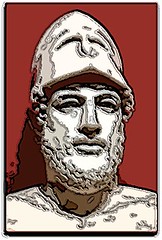
11780236354PericlesA prominent and influential statesman of ancient Athens (ca. 495-429 B.C.E.), he presided over Athens's Golden Age13
11780236355HelotsThe dependent, semi-enslaved class of ancient Sparta whose social discontent prompted the militarization of Spartan society14
11780236356Bhagavad Gita (Hinduism)Most sacred section of the Mahabharata; key Hindu beliefs; some scholars consider it to be Hinduism's most important religious text15
11780236357Mahabharatathe longest single poem in the world, about a war fought between two branches of the same family. One of India's greatest epics written between 1000 and 700 BC16
11780236358BrahminsPriests, at the top of the caste system which the Aryans made17
11780236359Kshatriyasrulers and warriors18
11780236360VaishyasThe artisan and merchant varna of the caste system.19
11780236361ShudrasThe landless peasants and serfs of the caste system.20
11780236362Untouchables (Dalits)Lowest of the caste system (sometimes not even considered part of the caste)21
11780236363Jainisma religion founded in India in the sixth century BC, whose members believe that everything in the universe has a soul and therefore shouldn't be harmed. Mahavira founded this religion.22
11780236364UpanishadsStated that all creatures on earth were part of a larger soul, or Brahma23
11780236365Ahismanon-violence24
11780236366BuddhismBelief system that started in India in the 500s BC. Happiness can be achieved through removal of one's desires. Believers seek enlightenment and the overcoming of suffering.25
11780236367AsceticOne who leads a life of self-denial and contemplation; absent of luxury26
117802363684 Noble TruthsCore of Buddha's doctrine; all life involves suffering, desire is the cause of suffering, elimination of desire brings the end to suffering, and disciplined life conducted in accordance with the Eightfold Path brings elimination of desire27
11780236369NirvanaThe state of englightenment for Buddhists.28
11780236370Buddhism, Jainism, and Hinduism were all hoping to end the cycle ofReincarnation29
11780236371Hindus believe that ones caste has anything to do with with onesKarma30
11780236372Vedesreligious writings in india written in sanskrit31
11780236373Dharmathe religious and moral duties of an individual32
11780236374Mauryan EmpireThe first state to unify most of the Indian subcontinent. It was founded by Chandragupta Maurya in 324 B.C.E. and survived until 184 B.C.E. From its capital at Pataliputra in the Ganges Valley it grew wealthy from taxes.33
11780236375Ashoka MauryaThe grandson of Chandragupta Maurya, he took the Mauryan Empire to its height. Famously converted to Buddhism after the deadly Kalinga Wars34
11780236376Why did the Mauryan Empire fall?Economic issues and invasion, followed by regional rule.35
11780236377Gupta Dynasty(320-550 C.E.)Ruling family in India during its golden age. Responsible for many achievements.36
11780236378Indus became an important destination on theSilk roads37
11780236379Arabic numeralsIndian numerical notation brought by the Arabs to the West.38
11780236380Nalandaa famous Buddhist university located in the eastern Ganges Valley39
11780236381Mauryan empire and Gupta empire allowedReligious freedom40
11780236382Why did the Gupta Empire fall?White Huns conquered India around 550 ce41
11780236383Confucius/ConfucianismGreat Chinese philosopher. His teachings become the backbone of Chinese and many Asian cultures. The teaching of Confucius based around ancestor worship, respecting relationships, golden rule, father was head of household42
11780236384Filial pietyThe duty of family members to put the male head of the family's needs above their own43
11780236385DaoismA religion in China which emphasizes the removal from society and to become one with nature. 500s bce laozi founded it44
11780236386LegalismA Chinese philosophy distinguished by an adherence to clear laws with vigorous punishments.45
11780236387Qin Dynasty(221-207 BCE) The first centralized dynasty of China that used Legalism as its base of belief.46
11780236388Terra Cotta Army8,000 clay soldiers guarding emperor Qin's tomb - built to take with him to the afterlife47
11780236389Han DynastyChinese dynasty that ruled for most of the period from 202 B.C. to A.D. 220, founded by han wudi, standardized civil service exams, centralized government48
11780236390Pax sinicaChina's "golden age"; a period of relative peace and advancement during Wudis rule49
11780236391Silk roadan ancient trade route between China and the Mediterranean (4,000 miles)50
11780236392Why did the Han dynasty collapse?weak leaders, rebellion, corruption, diseases from silk road51
11780236393Yellow Turban RebellionA major Chinese peasant revolt that began in 184 C.E. and helped cause the fall of the Han dynasty, scarves worn by peasant, led by daoists52

AP World History Period 2 Flashcards

Terms : Hide Images
11771963846Alexander the GreatLeader of Macedon (356-323 B.C.E.), who conquered Persia and Egypt, creating an empire that merged several cultures.0
11771963847AshokaThe most famous ruler of the Mauryan Empire (r. 268-232 B.C.E.), who promoted Buddhism and practiced religious tolerance.1
11771963848Chandragupta MauyraFounder of the Mauryan dynasty. Began centralization of power in S. Asia.2
11771963849Caesar AugustusThe great-nephew and adopted son of Julius Caesar who emerged as sole ruler of the Roman state at the end of an extended period of civil war (r. 31 B.C.E.-14 C.E.).3
11771963850ConstantineRoman emperor of the 4th century CE who legalized Christianity.4
11771963851Cyrus (the Great)Founder of the Achaemenid Empire (r. 557-530 B.C.E.); a ruler noted for his conquests, religious tolerance, and political moderation.5
11771963852Darius IAchaemenid king (r. 522-486 B.C.E.) who expanded the Persian empire through military conquest and undertook building campaigns in Susa and Parsargaade.6
11771963853GuptaEmpire that promoted Hinduism and under which India entered a "golden age" of culture.7
11771963936Mauryan Empire8
11771963854Han dynastyChinese dynasty that restored unity in China, pacified the xiongnu, and set up the civil service exams to create competent bureaucrats to administer the empire.9
11771963855HellenisticThe spread of Greek culture throughout Afro-Eurasia from 323 to 30 B.C.E by Alexander the Great and hsi political successors.10
11771963856Ptolemaic EmpireDynasty of Egypt founded by descendants of Macedonian generals. They promoted science, greek learning, and trade.11
11771963857Mandate of HeavenThe ideological underpinning of Chinese emperors, this was the belief that a ruler held authority by command of divine force as long as he ruled morally and benevolently.12
11771963858PatriciansWealthy, privileged Romans who dominated early Roman society.13
11771963859plebiansMembers of the general citizenry of ancient Rome. It included all citizens not connected to one of Rome's privileged families. They had little real power.14
11771963860Pax RomanaThe "Roman peace," a term typically used to denote the stability and prosperity of the early Roman Empire, especially in the first and second centuries C.E.15
11771963861Peloponnesian WarGreat war between Athens (and allies) and Sparta (and allies), lasting from 431 to 404 B.C.E. The conflict ended in the defeat of Athens and the closing of Athens's Golden Age.16
11771963862PersepolisThe capital and greatest palace-city of the Persian Empire, destroyed by Alexander the Great.17
11771963863PataliputraLocated at the confluence of the Ganges and Son Rivers in northeastern India. It was the capital city of the Mauryan and Gupta empires.18
11771963864AlexandriaAn important center of the Hellenistic civilization best known for the Lighthouse and largest library in the ancient world19
11771963865Appian Way (Via Appia)One of the earliest and strategically most important Roman roads of the ancient republic20
11771963866SamarkandImportant trading city that benefited from it's position along the silk roads.21
11771963867Qin DynastyA short-lived (221-206 B.C.E.) but highly influential Chinese dynasty that succeeded in reuniting China at the end of the Warring States period. used Legalism as its base of belief.22
11771963868Qin ShihuangdiLiterally "first emperor" (r. 221-210 B.C.E.) forcibly united China and established a strong and repressive state.23
11771963869WudiHan emperor (r. 141-86 B.C.E.) who began the Chinese civil service system by establishing an academy to train imperial bureaucrats.24
11771963870Han FeiFounder of legalism, a system justifying rule by a strong authority25
11771963871Kong FuziChinese philosopher who promoted a system of social and political ethics emphasizing order, moderation, and reciprocity between superiors and subordinates. The Analects contains a collection of his sayings and dialogues compiled by disciples after his death.26
11771963872SocratesThe first great Greek philosopher to turn rationalism toward questions of human existence (469-399 B.C.E.).27
11771963873AristotleA Greek philosopher (384-322 B.C.E.) who stressed the importance of using empirical evidence to explain the natural world28
11771963874SolonAthenian statesman and lawmaker (fl. 594-560 B.C.E.) whose reforms led the Athenians toward democracy.29
11771963875PlatoPhilosopher who believed the wisest men should rule. He introduced the idea that human misery due to their not engaging properly with a class of entities he called forms, chief examples of which were Justice, Beauty, and Equality.30
11771963876Bhagavad GitaA great Hindu epic text, part of the much larger Mahabharata, which affirms the performance of caste duties as a path to religious liberation.31
11771963877BrahminsThe priestly caste of India.32
11771963878BuddhismThe cultural/religious tradition first enunciated by Siddhartha Gautama33
11771963879DaoismA Chinese philosophy/popular religion that advocates simplicity and understanding of the world of nature, founded by the legendary figure Laozi.34
11771963880Filial pietyThe honoring of one's ancestors and parents, a key element of Confucianism.35
11771963881HinduismA word derived from outsiders to describe the vast diversity of indigenous Indian religious traditions.36
11771963882HippocratesA very influential Greek medical theorist (ca. 460-ca. 370 B.C.E.); regarded as the father of medicine.37
11771963883Jesus of NazarethThe prophet/god of Christianity(ca. 4 B.C.E.-ca. 30 C.E.).38
11771963884PaulFollower of Jesus who helped spread Christianity by preaching to both Jews and non-Jews and speaking to large audiences throughout the Roman Empire.39
11771963885PeterOne of the 12 Apostles who made Rome the center of Christianity and is known as the first pope.40
11771963886KarmaIn Hinduism, the determining factor of the level at which the individual is reincarnated, based on purity of action and fulfillment of duty in the prior existence.41
11771963887LaoziA legendary Chinese philosopher of the sixth century B.C.E.; regarded as the founder of Daoism.42
11771963888LegalismA Chinese philosophy distinguished by an adherence to clear laws with vigorous punishments.43
11771963889NirvanaThe end goal of Buddhism, in which individual identity is "extinguished" into a state of serenity and great compassion.44
11771963890Siddhartha Gautama (the Buddha)The Indian prince turned ascetic (ca. 566-ca. 486 B.C.E.) who founded Buddhism.45
11771963891Theravada"The Teaching of the Elders," the early form of Buddhism according to which the Buddha as a wise teacher but not divine and which emphasizes withdrawal from earthly pleasures in order to achieve nirvana46
11771963892MahayanaA form of Buddhism popular in East Asia that47
11771963893UpanishadsIndian mystical and philosophical works, written between 800 and 400 B.C.E.48
11771963894VedasThe earliest religious texts of India, a collection of ancient poems, hymns, and rituals that were transmitted orally before being written down ca. 600 B.C.E.49
11771963895Yin and YangExpression of the Chinese belief in the unity of opposites.50
11771963896ZarathustraA Persian prophet, traditionally dated to the sixth or seventh century B.C.E. (but perhaps much older), who founded Zoroastrianism.51
11771963897Manichaeisma syncretic religious system founded by a Persian claiming to be a prophet. It combined Gnostic Christianity, Buddhism, Zoroastrianism, and various other elements, which included doctrines of light and darkness:; the need for an ascetic life to purify the soul; and the need for personal salvation from the divine force of goodness.52
11771963898jatisocial distinctions based on occupation, which became the main cell of social life in India.53
11771963899ZoroastrianismPersian monotheistic religion founded by the prophet Zarathustra.54
11771963900helotsThe dependent, semi-enslaved class of ancient Sparta whose social discontent prompted the militarization of Spartan society.55
11771963901PericlesA prominent and influential statesman of ancient Athens (ca. 495-429 B.C.E.); presided over Athens's Golden Age.56
11771963902SudraOriginally the lowest Indian social class of varna; regarded as servants of their social betters; eventually included peasant farmers57
11771963903UntouchablesAn Indian social class that emerged below the Sudras and whose members performed the most unclean and polluting work.58
11771963904VaisyaThe Indian social class that was originally defined as farmers but eventually comprised merchants.59
11771963905Silk RoadTrade route stretching from China into Europe.60
11771963906Yellow Turban uprisingChinese peasant uprising that weakened the Han Empire.61
11771963907Spartacus RebellionOne of the largest slave revolts in history. It was led by a Roman slave who was backed by thousands of other slaves. It demonstrates the weakness of having a labor system increasingly dependent on slavery.62
11771963908ParthianEmpire in modern Iraq, Iran, and Afghanistan. originally made of nomadic peoples from Central Asia . They were able to defend the region from the Romans.63
11771963909VisigothsTribe who sacked Rome in the 5th century CE64
11771963910XiongnuCentral Asian tribe who harassed the early Chinese empires until they were occupied and pacified by the Han.65
11771963911Diasporathe dispersion of the Jews outside Israel66
11771963912ReincarnationIn Hinduism and Buddhism, the process by which a soul is reborn continuously until it achieves perfect understanding67
11771963913Caste System (Varnas)a set of rigid social categories that determined not only a person's occupation and economic potential, but also his or her position in society68
11771963914Monotheismbelief in only one god69
11771963915Polytheismbelief in more than one god70
11771963916Filial PietyIn Confucian thought, one of the virtues to be cultivated, a love and respect for one's parents and ancestors.71
11771963917Universal truths (dealing with belief systems)truths common to all people and at the heart of the identity of all people72
11771963918MonasticismLiving in a religious community apart from secular society and adhering to a rule stipulating chastity, obedience, and poverty.73
11771963919ShamanismThe practice of identifying special individuals (shamans) who will interact with spirits for the benefit of the community. Characteristic of the Korean kingdoms of the early medieval period and of early societies of Central Asia. (p. 292)74
11771963920AnimismBelief that objects, such as plants and stones, or natural events, like thunderstorms and earthquakes, have a discrete spirit and conscious life.75
11771963921Ancestor VenerationThe practice of praying to your ancestors. Found especially in China.76
11771963922Han Dynastyimperial dynasty that ruled China (most of the time) from 206 BC to 221 and expanded its boundaries and developed its bureaucracy77
11771963923Zhou Dynastythe longest lasting Chinese dynasty, during which the use of iron was introduced.78
11771963924Hellenistic Erathe age of Alexander the Great; period when the Greek language and ideas were carried to the non-Greek world79
11771963925Roman EmpireExisted from 27 BCE to about 400 CE. Conquiered entire Mediterranean coast and most of Europe. Ruled by an emperor. Eventually oversaw the rise and spread of Christianity.80
11771963926Syncretisma blending of beliefs and practices from different religions into one faith81
11771963927societythe aggregate of people living together in a more or less ordered community.82
11771963928StoicismAn ancient Greek philosophy that became popular among many notable Romans. Emphasis on ethics. They considered destructive emotions to be the result of errors in judgment, and that a wise person would repress emotions, especially negative ones and that "virtue is sufficient for happiness." They were also concerned with the conflict between free will and determinism. They were also non-dualists and naturalists.83
11771963929CiceroRome's greatest public speaker; he argued against dictators and called for a representative government with limited powers84
11771963930doctrine(n.) a belief, principle, or teaching; a system of such beliefs or principles; a formulation of such beliefs or principles85
11771963931Salvationdeliverance from ruin, acceptance into heaven, fulfillment of the principles of a religion86
11771963932Asceticismsevere self-discipline and avoidance of all forms of indulgence, typically for religious reasons.87
11771963933Oracle Bonesone of the animal bones or tortoise shells used by ancient Chinese priests to communicate with the gods, Shang dynasty88
11771963934Diasporic communitiesWidely dispersed community as a result of natural disaster, politics or other reasons. Many communities have become diasporic throughout time starting with the Jews of Babylon in ancient history89

AP WORLD HISTORY - Unit 3 Flashcards

Terms from 13 to 17

Terms : Hide Images
11773925090ConstantineEmperor of Rome who adopted the Christian faith and stopped the persecution of Christians (280-337)0
11773925091JustinianByzantine emperor in the 6th century A.D. who reconquered much of the territory previously ruler by Rome, initiated an ambitious building program , including Hagia Sofia, as well as a new legal code1
11773925092TheodoraThe wife of Justinian, she helped to improve the status of women in the Byzantinian Empire and encouraged her husband to stay in Constntinople and fight the Nike Revolt.2
11773925093St Cyrila missionary sent by the Byzantine government to eastern Europe and the Balkans... converted southern Russia and Balkans to Orthodox Christianity...responsible for creation of written script for Slavic known as Cyrillic3
11773925094Vladimir of KievPrince Vladimir of Kiev converted to Orthodox Christianity around 989. He ordered that his subjects convert, affirming the influence that Byzantine had on Russia.4
11773925095ConstantinoplePreviously known as Byzantium, Constantine changed the name of the city and moved the capitol of the Roman Empire here from Rome.5
11773925096CaesaropapismReligious and political power concentrated in the hands of the emperor6
11773925097Hagia SophiaMost famous example of Byzantine architecture, it was built under Justinian I and is considered one of the most perfect buildings in the world.7
11773925098Greek fireByzantine weapon consisting of mixture of chemicals (petroleum, quicklime, sulfur) that ignited when exposed to water; utilized to drive back Arab fleets that attacked Constantinople8
11773925099IconoclasmA religious controvery of the 8th century; Byzantine emperor attempted, but failed, to surpress icon veneration9
11773925100CrusadesA series of military expeditions in the 11th, 12th, and 13th centuries by Westrn European Christians to reclain control of the Holy Lands from the Muslims10
11773925101SaljuqsTurkish tribe that gained control over the Abbasid empire and fought with the Byzantine empire.11
11773925102OttomansTurks who had come to Anatolia and conquered Constantinople and changed the name to Istanbul. They converted to Islam12
11773925103Cyrillic alphabetan alphabet drived from the Greek alphabet and used for writing Slavic languages13
11773925104KievTrade city in southern Russia established by Scandinavian traders in 9th century; became focal point for kingdom of Russia that flourished to 12th century.14
11773925105Muhammadthe Arab prophet who founded Islam (570-632)15
11773925106Alithe fourth caliph of Islam who is considered to be the first caliph by Shiites16
11773925107AllahMuslim name for the one and only God17
11773925108Dar al-Islaman Arabic term that means the "house of Islam" and that refers to lands under Islamic rule.18
11773925109Ummathe community of all Muslims19
11773925110Five Pillars of Islamtrue Muslims were expected to follow (principle of Salvation): belief in Allah, pray 5 times a day, giving of alms, fasting during Ramadan, pilgrimage to Mecca once in a lifetime20
11773925111Shariabody of Islamic law that includes interpretation of the Quran and applies Islamic principles to everyday life21
11773925112Calipha supreme political and religious leader in a Muslim government22
11773925113UmayyadArabic dynasty (661-750), with its capital at Damascus, that was marked by a tremendous period of expansion to Spain in the west and India in the east.23
11773925114ShiaThe branch of Islam whose members acknowledge Ali and his descendants as the rightful successors of Muhammad24
11773925115AbbasidDynasty that overthrew the Umayyad to rule the Muslim caliphate from 750 to 1258; for 150 years they maintained the unity of the caliphate and Islamic civilization and culture flourished25
11773925116UlamaMuslim religious scholars. From the ninth century onward, the primary interpreters of Islamic law and the social core of Muslim urban societies.26
11773925117Caravanseriaan inn with a large outdoor area where caravans could stay27
11773925118Sufisa mystical Muslim group that believed they could draw closer to God through prayer, fasting, and a simple life28
11773925119Hajjthe fifth pillar of Islam is a pilgrimage to Mecca during the month of Dhu al-Qadah29
11773925120Sui DynastyThe short dynasty between the Han and the Tang; built the Grand Canal, strengthened the government, and introduced Buddhism to China30
11773925121Grand CanalThe 1,100-mile (1,700-kilometer) waterway linking the Yellow and the Yangzi Rivers. It was begun in the Han period and completed during the Sui Empire.31
11773925122Tang DynastyConsidered the golden age of Chinese civilization and ruled for nearly 300 years; China grew under the dynasty to include much of eastern Asia, as well as large parts of Central Asia32
11773925123Equal-field systemAgricultural reform favoring the peasants under the Tang dynasty in China, inheritance system where 1/5 of the land when to the peasant's descendants and the rest went to the government.33
11773925124Bureaucracy of MeritBureaucracy chosen by civil service examinations based on Confucian education - no longer decided by family lineage34
11773925125Middle Kingdomrefers to China because the people believed that their land stood between heaven and earth.35
11773925126UighursNomadic Turkish people who were hired by the Tang to defeat the rebellion of An Lushan, later sacked Chang'an and Luoyang.36
11773925127Song Dynasty(960 - 1279 AD); this dynasty was started by Tai Zu; by 1000, a million people were living there; started feet binding; had a magnetic compass; had a navy; traded with India and Persia (brought pepper and cotton); first to have paper money, explosive gun powder; *landscape black and white paintings37
11773925128Neo-ConfucianismThe Confucian response to Buddhism by taking Confucian and Buddhist beliefs and combining them into this. However, it is still very much Confucian in belief.38
11773925129SillaIndependent Korean kingdom in southeastern part of peninsula; defeated Koguryo along with their Chinese Tang allies; submitted as a vassal of the Tang emperor and agreed to tribute payment; ruled united Korea by 668.39
11773925130VietnamSoutheastern Asian country, called Nam Viet, successfully rebelled from China in 939. fell into chaos, stabilized after a series of long dynasties40
11773925131Heian periodThe era in Japanese history from A.D. 794-1185, arts and writing flourished during this time. Moved away from Chinese culture41
11773925132Shoguna hereditary military dictator of Japan42
11773925133Samuraia Japanese warrior who was a member of the feudal military aristocracy43
11773925134BushidoThe strict code of behavior followed by samurai warriors in Japan44
11773925135Sultanate of DelhiUnstable kingdom in North India founded by the Ghaznavids. This invasion was more systematic than Mahmud's and after it succedded, the capital was established at Delhi. Raided south India. Established Islam in India.45
11773925136Kingdom of AxumFounded in the highlands of northern Ethiopia, adopted Christianity, built an empire that included most of Ethiopia as well as Yemen in southern Arabia.46
11773925137Sufisa mystical Muslim group that believed they could draw closer to God through prayer, fasting, and a simple life47
11773925138Clovisking of the Franks who unified Gaul and established his capital at Paris and founded the Frankish monarchy48
11773925139Charles MartelCarolingian monarch of Franks; responsible for defeating Muslims in battle of Tours in 732; ended Muslim threat to western Europe.49
11773925140CharlemagneFrankish king who conquered most of Europe and was crowned Holy Roman Emperor by Pope Leo III in the year 80050
11773925141Pope Gregory IHe protected the city of Rome and the church by mobilizing forces for the purpose of defense; he reasserted papal supremacy and increased the role and importance of the church in people's lives51
11773925142FranksGroup of Germanic people who rose to prominence under the leadership of King Clovis. They converted to Christianity52
11773925143Missi dominiciRoyal officials under Charlemagne who traveled around the country to enforce the king's laws53
11773925144MagyarsMuslims who attacked Europe and converted to Christianity and established Hungary54
11773925145VikingsSeafaring Scandinavian people who raided the coasts of northern and western from the eighth through the tenth century.55
11773925146Holy Roman EmpireLoose federation of mostly German states and principalities, headed by an emperor who had little control over the hundreds of princes who elected him. It lasted from 962 to 1806.56
11773925147MonasticismA way of life in which men and women withdraw from the rest of the world in order to devote themselves to their faith57

Psychology Flashcards

Terms : Hide Images
11653094980All of these are symptoms of anxiety except: Feeling nervous Dying in Fornite Feeling helpless TremblingDying in Fortnite!0
11653125780What is a panic attack?A sudden feeling of disabling anxiety and a feeling of panic.1
11653211115What is anxiety?Anxiety disorders bare types of problems that cause people anxiety.2
11653259489What is a solution for anxiety called?antidepressants.3
11653341121What is a common cause for anxiety?School.4

AP Language Flashcards

Terms : Hide Images
11037248210Latentpresent or potential but not evident or active0
11037253297TenuousHaving little substance1
11037265554abhorrentdisgusting, loathsome or repellent2
11037270159Audacityfearless, daring3
11037280282Benevolencekindness, generosity4
11037283794Solacecomfort in sorrow, misfortune, or distress5
11037293574incredulitydisbelief6
11037293641Placidlycalmly7
11037297915Antipathya strong feeling of aversion or repugnance8
11037304863Reverentlyrespectfully9
11037309701Ebullitionsudden, violent outpouring, as of emotion10
11037317466LanguidlyWeakly11
11037327239colloquiallyinformally12
11037331260consolatorycomforting13
11037331261sinistersuggesting or threatening evil14
11037336239sardonicallysarcastically15
11037343671exanimatelifeless; spiritless16
11037347254innocuousharmless17
11037351737querulouslycomplainingly18
11037361076reticencethe state of being restrained or reserved19
11037370504mienbearing or manner that reveals an inner state of mind20
11037378604feignedpretended21
11037382707indolentlazy22
11037382708impudentCharacterized by offensive boldness23
11037393238sedentaryremaining or living in one area24

AP Language Flashcards

Terms : Hide Images
11662872443atmosphere/moodthe mood/ feeling of the literary work created for the reader by the writer.0
11662886088colloquialCharacteristic of ordinary conversation rather than formal speech or writing1
11662890834Connotationan idea or feeling that a word invokes in addition to its literal or primary meaning.2
11662892487Dennotationthe dictionary meaning of a word3
11662893906Dictionword choice4
11662894995pedanticAn adjective that describes words, phrases, or general tone that is overly scholarly, academic, or bookish.5
11662899107periodic sentencesentence whose main clause is withheld until the end6
11662902067point of viewthe perspective from which a story is told7
11662906109SemanticsMeaning of words and sentences8
11662907891Thesisthe primary position taken by a writer or speaker9
11662912265transition(n.) a change from one state or condition to another10
11662914138witintellectually amusing language that surprises and delights11
11662915437Coherencethe quality of being logical and consistent and the quality of forming a unified whole12
11662918457JuxtapositionPlacement of two things closely together to emphasize comparisons or contrasts13

AP LANGUAGE Flashcards

Terms : Hide Images
11131433438MetonymyA figure of speech in which something is referred to by using the name of something that is associated with it0
11131433439TropeThe generic name for a figure of speech such as image, symbol, simile, and metaphor.1
11131443171snecdochea figure of speech in which a part of something is used to represent a whole2
11131448035deductionthe process of moving from a general rule to a specific example3
11131452017inductionfactual reasoning4
11131458409D.E.E.P.CDefinition, ethics, emotional, persuasion, causation5
11131468513G.A.S.C.A.P.Generality, Analogy, Sign, Causal, Authority, Principle6
11131468514Antidiplosisrepetition of the last word of one clause at the beginning of the following clause7
11131472090PolysyndetonDeliberate use of many conjunctions8
11131490939Ethoscredibility9
11131490940PathosAppeal to emotion10
11131494330LogosAppeal to logic11
11131494331qualifierValidates an argument12
11131543107SyllogismA form of deductive reasoning consisting of a major premise, a minor premise, and a conclusion.13
11131546392Contextualrelating to or determined by or in context14
11131562808ArchetypeTranscends time and culture15

ap language vocab lesson 2 Flashcards

Terms : Hide Images
10667380486contingentadj. conditional n. a representitve group forming part of a larger group0
10667380487eventualityn. a possibility1
10667380488implausibleadj. difficult to believe2
10667380489inconceivableadj. impossible to fully grasp3
10667380490in vainadv. without success4
10667380491perchanceadv. perhaps5
10667380492preposterousadj. absurd6
10667380493proclivityn. a tendency7
10667380494proneadj. likely to do8
10667380495theoreticaladj. unproven9

Pages

Subscribe to CourseNotes RSS

Need Help?

We hope your visit has been a productive one. If you're having any problems, or would like to give some feedback, we'd love to hear from you.

For general help, questions, and suggestions, try our dedicated support forums.

If you need to contact the Course-Notes.Org web experience team, please use our contact form.

Need Notes?

While we strive to provide the most comprehensive notes for as many high school textbooks as possible, there are certainly going to be some that we miss. Drop us a note and let us know which textbooks you need. Be sure to include which edition of the textbook you are using! If we see enough demand, we'll do whatever we can to get those notes up on the site for you!