AP Notes, Outlines, Study Guides, Vocabulary, Practice Exams and more!

AP World History Period 1 Flashcards

From Hunting and Gathering to Civilizations, 2.5 million-1000 B.C.E.: Origins
Original from MrsBHatchTEACHER

Terms : Hide Images
8638896919hunting and gatheringMeans of obtaining subsistence by humans before the mastery of sedentary agriculture; normally typical of tribal social organization0
8638896920civilizationSocieties with reliance on sedentary agriculture, ability to produce food surpluses, and existence of nonfarming elites, along with merchant and manufacturing groups1
8638896921neolithicThe New Stone Age between 8000 and 5000 B.C.E.; period in which adaptation of sedentary agriculture occurred; domestication of plants and animals accomplished2
8638896922nomadic societieslivestock hearding societies that do not have a permanent settlement. normally found on the fringes of civilized (urban) societies; commonly referred to as "barbarian" by civilized societies3
8638896923cultureCombination of ideas, objects, and patterns of behavior that result from human social interaction4
8638896924agrarian revolutionOccurred between 8000 and 5000 B.C.E.; transition from hunting and gathering to sedentary agriculture5
8638896925pastoralismA nomadic agricultural lifestyle based on herding domesticated animals; tended to produce independent people capable of challenging sedentary agricultural societies6
8638896926Catal HuyukEarly urban culture/civiization based on sedentary agriculture; located in modern southern Turkey; larger in population than Jericho, had greater degree of social stratification7
8638896927Bronze AgeFrom 4000 to 3000 B.C.E.; increased use of plow, metalworking; development of wheeled vehicles, writing8
8638896928MesopotamiaLiterally "between the rivers"; the civilization that arose in the alluvial plain of the Tigris-Euphrates river valleys9
8638896929potter's wheelA technological advance in pottery making; invented circa 6000 B.C.E.; encouraged faster and higher-quality ceramic pottery products10
8638896930SumeriansPeople who migrated into Mesopotamia circa 4000 B.C.E.; created the first civilization within the region; organized area into city-states11
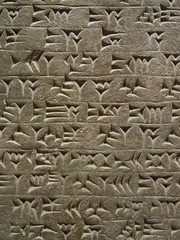
8638896931cuneiformA form of writing developed by the Sumerians using a wedge-shaped stylus and clay tablets12
8638896932city-stateA form of political organization typical of Mesopotamian civilization; consisted of agricultural hinterlands ruled by an urban-based king13
8638896933ziggurata massive tower building usually associated with Mesopotamian temple connections14
8638896934Babylonian EmpireUnified all of Mesopotamia circa 1800 B.C.E.; collapsed due to foreign invasion circa 1600 B.C.E.15
8638896935HammurabiThe most important Babylonian ruler; responsible for codification of the law16
8638896936PharaohThe term used to denote the kings of ancient Egypt; the term, "great house" refers to the palace of the pharaohs17
8638896937pyramidsMonumental architecture typical of Old Kingdom Egypt; used as burial sites for pharaohs18
8638896938hieroglyphsForm of writing developed in ancient Egypt; more pictorial than Mesopotamian cuneiform19
8638896939KushAfrican state that developed along the upper reaches of the Nile circa 1000 B.C.E.; conquered Egypt and ruled it for several centuries20
8638896940monotheismThe exclusive worship of one god; introduced by Jews into Middle Eastern civilization21
8638896941PhoeniciansSeafaring civilization located on the shores of the eastern Mediterranean; established colonies throughout the Mediterranean22
8638896942Harappa and Mohenjo DaroMajor urban complexes of Harappan civilization; laid out on planned grid pattern23
8638896943AryansIndo-European nomadic, warlike, pastorialists who replaced Harappan civilization24
8638896944Huanghe (Yellow) River BasinSite of the development of sedentary agriculture in China25
8638896945Shang1st Chinese dynasty (after the legendary Xia)26
8638896946OraclesShamans or priests in Chinese society who foretold the future through interpreting animal bones cracked by heat; inscriptions on bones led to Chinese writing27
8638896947ideographic writingPictograph characters grouped together to create new concepts; typical of Chinese writing28
8638896948Big GeographyA term that draws attention to the global nature of world history.29
8638896949PaleolithicThe period that ended about 3,000 years after the end of the last Ice Age, it lasted until about 10,000 years ago. (Old Stone Age) The period of the Stone Age associated with the evolution of humans. It predates the Neolithic period.30
8638896950Human migration during Paleolithic eramovement of humans from Africa to Eurasia, Australia, and the Americas31
8638896951eglitarianequality among people (no social levels)32
8638896952toolsHumans developed a wider range of ____ specially adapted to different environments from tropics to tundra33
8638896953Neolithic Revolutionperiod of change from hunter-gatherer lifesyle to agricultural lifestyles associated with domestication, farming, and settlement34
8638896954patriarchyfather based/male dominated society35
8638896955climatic changePermanent agricultural villages emerged first in the lands of the eastern Mediterranean, possibly as a response to what?36
8638896956weaponsPastoralists were often the developers and disseminators of of ____ and forms of transportation that transformed warfare in agrarian civilizations37
8638896957horsesname one mode of new transportation by the pastoralists38
8638896958artElites, both political and religious, promoted ____.39
8638896959record-keeping systems___ arose independently in all early civilization sand subsequently were diffused40
8638896960Nile RiverThis river flooded regularly.41
8638896961Tigris RiverThis river's floods were unpredictable.42
8638896962MesopotamianUnpredictable weather patterns affected the development of the _____ civilization.43
8638896963Egyptian_______art demonstrated little change for nearly 1000 years.44
8638896964Nubia and KushKingdoms upriver from Egypt.45
8638896965Standard of Ur46
8638896966Harappan King or Priest Figure47
8638896967JerichoOne of the earliest cities: located in modern Israel.48
8638896968Catal-HyoukOne of the earliest cities: located in modern Turkey.49

AP World History Chapter Twelve Notecards Flashcards

Terms : Hide Images
7950352905MongolsA people of this name is mentioned as early as the records of the Tang Empire, living as nomads in northern Eurasia. After 1206 they established an enormous empire under Genghis Khan, linking western and eastern Eurasia. 12.3410
7950367320Genghis KhanThe title of Temüjin when he ruled the Mongols (1206-1227). It means the "oceanic" or "universal leader." Genghis Khan was the founder of the Mongol Empire. 12.3411
7950370876NomadismA way of life, forced by a scarcity of resources, in which groups of people continually migrate to find pastures and water. 12.3422
7950382184Yuan EmpireEmpire created in China and Siberia by Khubilai Khan. 12.3443
7950384347Bubonic PlagueA bacterial disease of fleas that can be transmitted by flea bites to rodents and humans; humans in late stages of the illness can spread the bacteria by coughing. Because of its very high mortality rate and the difficulty of preventing its spread, major outbreaks have created crises in many parts of the world. 12.3484
7950392396Il-khanA "secondary" or "peripheral" khan based in Persia. The Il-khans' khanate was founded by Hülegü, a grandson of Genghis Khan, and was based at Tabriz in the Iranian province of Azerbaijan. It controlled much of Iran and Iraq. 12.3495
7950397192Golden HordeMongol khanate founded by Genghis Khan's grandson Batu. It was based in southern Russia and quickly adopted both the Turkic language and Islam. Also known as the Kipchak Horde. 12.3496
7950397193TimurMember of a prominent family of the Mongols' Jagadai Khanate, Timur through conquest gained control over much of Central Asia and Iran. He consolidated the status of Sunni Islam as orthodox, and his descendants, the Timurids, maintained his empire for nearly a century and founded the Mughal Empire in India. 12.3507
7950401103Rashid al-DinAdviser to the Il-khan ruler Ghazan, who converted to Islam on Rashid's advice. 12.3518
7950417280Nasir al-Din TusiPersian mathematician and cosmologist whose academy near Tabriz provided the model for the movement of the planets that helped to inspire the Copernican model of the solar system. 12.3529
7950426612Alexander NevskiiPrince of Novgorod (r. 1236-1263). He submitted to the invading Mongols in 1240 and received recognition as the leader of the Russian princes under the Golden Horde. 12.35410
7950426613TsarFrom Latin caesar, this Russian title for a monarch was first used in reference to a Russian ruler by Ivan III (r. 1462-1505). 12.35411
7950440908Ottoman EmpireIslamic state founded by Osman in northwestern Anatolia ca. 1300. After the fall of the Byzantine Empire, the Ottoman Empire was based at Istanbul (formerly Constantinople) from 1453 to 1922. It encompassed lands in the Middle East, North Africa, the Caucasus, and eastern Europe. 12.35612
7950440909Khubilai KhanLast of the Mongol Great Khans (r. 1260-1294) and founder of the Yuan Empire. 12.35713
7950448186LamaIn Tibetan Buddhism, a teacher. 12.35714
7950450452BeijingChina's northern capital, first used as an imperial capital in 906 and now the capital of the People's Republic of China. 12.35715
7950454187Ming EmpireEmpire based in China that Zhu Yuanzhang established after the overthrow of the Yuan Empire. The Ming emperor Yongle sponsored the building of the Forbidden City and the voyages of Zheng He. The later years of the Ming saw a slowdown in technological development and economic decline. 12.35916
7950457112YongleThe third emperor of the Ming Empire (r. 1403-1424). He sponsored the building of the Forbidden City, a huge encyclopedia project, the expeditions of Zheng He, and the reopening of China's borders to trade and travel. 12.35917
7950459697Zheng HeAn imperial eunuch and Muslim, entrusted by the Ming emperor Yongle with a series of state voyages that took his gigantic ships through the Indian Ocean, from Southeast Asia to Africa. 12.35918
7950459698YiThe Yi dynasty ruled Korea from the fall of the Koryo kingdom to the colonization of Korea by Japan. 12.36419
7950461897KamikazeThe "divine wind," which the Japanese credited with blowing Mongol invaders away from their shores in 1281. 12.36520
7950466589Ashikaga ShogunateThe second of Japan's military governments headed by a shogun (a military ruler). Sometimes called the Muromachi Shogunate. 12.36621

AP World History Dates Flashcards

Terms : Hide Images
11726124524Gupta Empire320-550 CE0
11726129123Sultanate of Delhi1206-1526 CE1
11726132535Aztec Empire1345-1521 CE2
11726136505Mongols1206-1368 CE3
11726137949Inca Empire1438-1533 CE4
11726144837Ghana600- 1000 CE5
11726156738Sui Dynasty581-618 CE6
11726159872Tang Dynasty618-907 CE7
11726163836Song Dynasty960-1279 CE8
11726165935Yuan Dynasty1279-1368 CE9
11726168363Ming Dynasty1368-1644 CE10
11726172401Qing Dynasty1644-1911 CE11
11726176430Umayyad Empire661-750 CE12
11726177957Abbasid Empire750-1258 CE13
11726181245Safavid Empire1502-1722 CE14
11726184485Mughal Empire1526-1857 CE15
11726186839Ottoman Empire1300's-1922 CE16
11726190223Songhai1400s-1591 CE17
11726192758Mali Empire1235-1400 CE18
11726197612Tokugawa Shogunate1603 to 1867 CE19
11726199957Life of Muhammad570-632 CE20
11726201166Life of Charlemagne742-814 CE21
11726204152Unification of Russia under Ivan III1462-1505 CE22
11726214741Life of Tamerlane1336-1405 CE23
11768405507Voyages of Zheng He1405-1433 CE24
11768407417The Crusades1096-1270 CE25
11768411465Spread Of The Plague1340s CE26
11768416002Champa Rice in China960-1279 CE27
11768423245Life of Queen Elizabeth1558-1603 CE28
11780753371Life of Akbar the Great1556-1605 CE29
11781052978Life of Louis XIV1643-1715 CE30
11781059447Life of Peter the Great1689-1725 CE31
11781069911Life of Catherine the Great1762-1796 CE32
11781075199Life of Suleyman the Magnificent1520-1566 CE33
11781083851Life of Copernicus1473-1543 CE34
11781089158Ottomans capture Constantinople1453 CE35
11781094597Protestant Reformation151736

AP World History - Chapter 5 Flashcards

Terms : Hide Images
10871757689Roman RepublicThe period from 507 to 31 B.C.E., during which Rome was largely governed by the aristocratic Roman Senate.0
10871861341Roman SenateAn advisory body to the early kings, in the era of the Roman Republic.1
10871886254patron/client relationshipa fundamental social relationship in which the patron provided legal and economic protection and assistance to clients2
10871893824QinA people and state in the Wei Valley of eastern China that conquered rival states and created the first short-lived Chinese empire (221-206 B.C.E.).3
10871901183Shi Huangdifounder of the Qin dynasty and China's first emperor4
10871904985LegalismChinese philosophy developed by Hanfeizi; taught that humans are naturally evil and therefore need to be ruled by harsh laws5
10871907586HanThe ethnic Chinese people who originated from the Yellow River Valley civilization and spread throughout regions of China.6
10871925802xiongnuA confederation of nomadic peoples living beyond the northwest frontier of ancient China.7
10871934536Gaozu (Liu Bang)One of the rebel leaders who brought down the Qin and founded the Han dynasty in 202 BCE8
10872158154Sima QianChief astrologer for the Han dynasty emperor Wu.9
10872363904ConfucianismThe system of ethics, education, and statesmanship taught by Confucius and his disciples, stressing love for humanity, ancestor worship, reverence for parents, and harmony in thought and conduct.10
10872453242Chang'anCity in the Wei Valley in eastern China. It became the capital of the Zhou kingdom and the Qin and early Han Empires.11
10872461985gentryClass of prosperous families in China, respected for their education and expertise12
10872476649Roman PrincipateA term used to characterize Roman government in the first three centuries C.E.13
10872485027AugustusHonorific name of Octavian, founder of the Roman Principate.14
10872493289Pax Romanameans "Roman Peace;" specifically the term that refers to the peace and stability that Rome maintained within its borders during the early empire.15
10872526053RomanizationThe process by which the Latin language and Roman culture became dominant in the western provinces of the Roman Empire.16
10872533856JesusA Jew from Galilee in northern Israel who sought to reform Jewish beliefs and practices.17
10872537919PaulFollower of Jesus who helped spread Christianity throughout the Roman world.18
10872591612AqueductA conduit, either elevated or under ground, using gravity to carry water from a source to a location-usually a city-that needed it.19
10872602726Third Century Crisispolitical, military, and economic turmoil that beset the Roman Empire during much of the third century C.E.20
10872609088DiocletianRoman emperor who divided the empire into a West and an East section.21
10872613969ConstantineRoman emperor (r. 312-337). After reuniting the Roman Empire, he moved the capital to Constantinople and made Christianity a favored religion.22
10872620790ConstantinopleCapital of the Roman Empire when Constantine came into power.23

AP World History: Unit 4 Flashcards

Terms : Hide Images
11775685513Trans-Oceanic Tradeglobal trading system in the Caribbean and the Americans trade networks extended to all corners of Atlantic Ocean0
11775685514Columbian ExchangeAn exchange of goods, ideas and skills from the Old World (Europe, Asia and Africa) to the New World (North and South America) and vice versa.1
11775685515MercantilismAn economic policy under which nations sought to increase their wealth and power by obtaining large amounts of gold and silver and by selling more goods than they bought2
11775685516Triangular TradeTrading System between Europe, Africa, and the colonies; European purchased slaves in Africa and sold them to colonies, new materials from colonies went to Europe while European finished products were sold in the colonies.3
11775685517Middle PassageA voyage that brought enslaved Africans across the Atlantic Ocean to North America and the West Indies4
11775685518CaravelA small, highly maneuverable three-masted ship used by the Portuguese and Spanish in the exploration of the Atlantic.5
11775685519Cartographythe science or the art of making maps6
11775685520Joint-stock companiesbusinesses formed by groups of people who jointly make an investment and share in the profits and losses7
11775685521East India CompaniesBritish, French, and Dutch trading companies that obtained government monopolies of trade to India and Asia; acted independently in their regions.8
11775685522Royal African Companya mercantile company set up by the Stuart family and London merchants to trade along the west coast of Africa9
11775685523AmerindiansAmerican Indians10
11775685524Italian Renaissancerebirth of Classical (Greece/Rome) art/architecture - humanistic focus - patrons - families like Medici and the Catholic Church - blended natural world w/ religion - transition away from religion11
11775685525Northern RenaissanceAn extension of the Italian Renaissance to the nations of northern Europe; the Northern Renaissance took on a more religious nature than the Italian Renaissance12
11775685526The MediciThe Medici family was a family of bankers that started out as middle class & then loaned money to a guy that became the pope & then they became the wealthiest family in Florence. They sponsored many artists/architects like Brunesllshci & made lots of money off them.13
11775685527HumanismA Renaissance intellectual movement in which thinkers studied classical texts and focused on human potential and achievements14
11775685528Protestant ReformationA religious movement of the 16th century that began as an attempt to reform the Roman Catholic Church and resulted in the creation of Protestant churches.15
11775685529Martin LutherA German monk who became one of the most famous critics of the Roman Catholic Chruch. In 1517, he wrote 95 theses, or statements of belief attacking the church practices. He led the Protestant Reformation.16
1177568553095 ThesesMartin Luther's ideas that he posted on the church door at Wittenburg which questioned the Roman Catholic Church. This act began the Reformation17
11775685531AnglicanismA Protestant denomination of the Christian faith founded by Henry VIII in England18
11775685532Catholic ReformationReligious reform movement within the Latin Christian Church, begun in response to the Protestant Reformation. It clarified Catholic theology and reformed clerical training and discipline.19
11775685533JesuitsMembers of the Society of Jesus, a Roman Catholic order founded by Ignatius Loyola in 1534. They played an important part in the Catholic Reformation and helped create conduits of trade and knowledge between Asia and Europe.20
11775685534Scientific RevolutionA major change in European thought, starting in the mid-1500s, in which the study of the natural world began to be characterized by careful observation and the questioning of accepted beliefs.21
11775685535CopernicusDevised a model of the universe with the Sun at the center, and not earth.22
11775685536DescartesFrench philosopher, discovered analytical geometry. Saw Algebra and Geometry have a direct relationship. Reduced everything to spiritual or physical.23
11775685537NewtonThis physicist developed the law of universal gravitation and further caused the decline of the old system of science24
11775685538GalileoHe was the first person to use a telescope to observe objects in space. He discovered that planets and moons are physical bodies because of his studies of the night skies.25
11775685539DeismA popular Enlightenment era belief that there is a God, but that God isn't involved in people's lives or in revealing truths to prophets.26
11775685540John Locke17th century English philosopher who opposed the Divine Right of Kings and who asserted that people have a natural right to life, liberty, and property.27
11775685541ColumbusItalian navigator who discovered the New World in the service of Spain while looking for a route to China (1451-1506)28
11775685542MagellanPortuguese explorer who sailed around the Southern end of South America and eventually reached the Philippines, but was killed in a local war there29
11775685543Vasco da Gamathe first European to reach India by sea sailing around the tip of Africa.30
11775685544Zheng HeAn imperial eunuch and Muslim, entrusted by the Ming emperor Yongle with a series of state voyages that took his gigantic ships through the Indian Ocean, from Southeast Asia to Africa.31
11775685545Plantation EconomyThis referred to the inefficient, slave-centered economy of the South where all land was used to grow large amounts of cash crops for export.32
11775685546Indentured servitudeA worker bound by a voluntary agreement to work for a specified period of years often in return for free passage to an overseas destination. Before 1800 most were Europeans; after 1800 most indentured laborers were Asians.33
11775685547Encomienda SystemSpaniards received grants of a number of Indians, from whom they could exact "tribute" in the form of gold or labor34
11775685548Hacienda Systemlanded estates granted to conquistadors35
11775685549Mita SystemThe system recruiting workers for particularly difficult and dangerous chores that free laborers would not accept.36
11775685550Peninularesa Spanish-born Spaniard residing in the New World or the Spanish East Indies37
11775685551Creolesa person of mixed European and black descent, especially in the Caribbean38
11775685552MestizosA person of mixed Native American and European ancestry39
11775685553MulattosPersons of mixed European and African ancestry40
11775685554Commercial RevolutionA dramatic change in the economy of Europe at the end of the Middle Ages. It is characterized by an increase in towns and trade, the use of banks and credit, and the establishment of guilds to regulate quality and price.41
11775685555Boyarsa member of the old aristocracy in Russia, next in rank to a prince42
11775685556Absolutismthe acceptance of or belief in absolute principles in political, philosophical, ethical, or theological matters43
11775685557*Louis XIV(1638-1715) Known as the Sun King, he was an absolute monarch that completely controlled France. One of his greatest accomplishments was the building of the palace at Versailles.44
11775685558*Phillip IIKing of Spain, 1556 - 1598; married to Queen Mary I of England;he was the most powerful monarch in Europe until 1588; controlled Spain, the Netherlands, the Spanish colonies in the New World, Portugal, Brazil, parts of Africa, parts of India, and the East Indies. He was also father to Alexander the Great.45
11775685559*Ivan III"Ivan the Great"; ruled as great prince and first ruler of the independent state called Russia. Prince of Moscow who ended Mongol rule in 1480 and adopted the title of tsar.46
11775685560*Ivan IVthe Terrible, beat the Mongols, Tartars, and the Poles, forced nobles into service, first ruler to take the title tsar47
11775685561*Peter the Great(1672-1725) Russian tsar. He enthusiastically introduced Western languages and technologies to the Russian elite, moving the capital from Moscow to the new city of St. Petersburg.48
11775685562*Parliamentary monarchyA government with a king or queen whose power is limited by the power of a parliament49
11775685563Divine RightsA belief of kings and monarchs that they have a God-given right to rule and that rebellion against them is a sin.50
11775685564VersaillesA palace built for Louis XIV near the town of Versailles, southwest of Paris. It was built around a chateau belonging to Louis XIII, which was transformed by additions in the grand French classical style51
11775685565European Empires in the AmericansGreat Britain, France, Spain, Netherlands, Denmark52
11775685566Aztecsa nomadic tribe in northern Mexico, arrived in Mesoamerica around the beginning of the 13th century. From their magnificent capital city, Tenochtitlan, the Aztecs emerged as the dominant force in central Mexico, developing an intricate social, political, religious and commercial organization that brought many of the region's city-states under their control by the 15th century53
11775685567IncasA Native American people who built a notable civilization in western South America in the fifteenth and sixteenth centuries. The center of their empire was in present-day Peru. Francisco Pizarro of Spain conquered the empire.54
11775685568Ming-Dynasty - ChinaThe Ming dynasty was the ruling dynasty of China—then known as the Empire of the Great Ming—for 276 years following the collapse of the Mongol-led Yuan dynasty.55
11775685569ConquistadorsEarly-sixteenth-century Spanish adventurers who conquered Mexico, Central America, and Peru. (Examples Cortez, Pizarro, Francisco.)56
11775685570Thirty Year Wara series of wars in Central Europe between 1618 and 1648. It was one of the longest and most destructive conflicts in European history, as well as the deadliest European religious war, resulting in eight million casualties.57
11775685571Treaty of WestphaliaEnded Thirty Years War in 1648; granted right to individual rulers within the Holy Roman Empire to choose their own religion-either Protestant or Catholic.58
11775685572Edict of Nantesdocument that granted religious freedom to the Huguenots59
11775685573English Civil Wara series of armed conflicts and political machinations between Parliamentarians and Royalists over, principally, the manner of England's government60
11775685574Glorious RevolutionA reference to the political events of 1688-1689, when James II abdicated his throne and was replaced by his daughter Mary and her husband, Prince William of Orange.61
11775685575Enlightenmenta European intellectual movement of the late 17th and 18th centuries emphasizing reason and individualism rather than tradition62
11775685576*John Locke17th century English philosopher who opposed the Divine Right of Kings and who asserted that people have a natural right to life, liberty, and property.63
11775685577*Adam Smitha Scottish moral philosopher, pioneer of political economy, and a key figure in the Scottish Enlightenment64
11775685578*Mary WollstonecraftEnglish writer and early feminist who denied male supremacy and advocated equal education for women65
117756855797 Years Wara war fought between 1754 and 1763, involving every European great power of the time except the Ottoman Empire, spanning five continents, and affected Europe, the Americas, West Africa, India, and the Philippines. The conflict split Europe into two coalitions, led by the Kingdom of Great Britain (Prussia, Portugal, Hanover, and other small German states) on one side and the Kingdom of France (Austria-led Holy Roman Empire, Russia, Spain, and Sweden) on the other.66
11775685580French & Indian WarAmerican version of the 7 Year's War, French and Indians fight colonists and are victorious in early stages, then British pour on the pressure and emerge victorious, end-result French are removed from North America and Britain is left in debt.67
11775685581Treaty of TordesillasA treaty signed by Portugal and Spain to divide the new world.68
11775685582Treaty of ZaragosaA treaty signed by Portugal and Spain to divided up Asia.69
11775685583Hernan Cortesa Spanish Conquistador who led an expedition that caused the fall of the Aztec Empire70
11775685584Francisco PizzaroSpanish conquistador who conquered the Inca's71
11775685585Viceroyaltiesthe office, position, or authority of a viceroy72
11775685586Zheng HeAn imperial eunuch and Muslim, entrusted by the Ming emperor Yongle with a series of state voyages that took his gigantic ships through the Indian Ocean, from Southeast Asia to Africa.73
11775685587balance of powerDistribution of military and economic power that prevents any one nation from becoming too strong (especially in Europe).74
11775685588James CookEnglish navigator who claimed the east coast of Australia for Britain and discovered several Pacific islands (1728-1779).75
11775685589Council of TrentCalled by Pope Paul III to reform the church and secure reconciliation with the Protestants. Lutherans and Calvinists did not attend.76
11775685590Charles VThis was the Holy Roman Emperor that called for the Diet of Worms. He was a supporter of Catholicism and tried to crush the Reformation by use of the Counter-Reformation77
11775685591creolesDescendents of Spanish-born but born in Latin America; resented inferior social, political, economic status.78
11775685592Francis DrakeEnglish explorer and admiral who was the first Englishman to circumnavigate the globe and who helped to defeat the Spanish Armada (1540-1596)79
11775685593Glorious RevolutionA reference to the political events of 1688-1689, when James II abdicated his throne and was replaced by his daughter Mary and her husband, Prince William of Orange.80
11775685594joint-stock companiesbusinesses formed by groups of people who jointly make an investment and share in the profits and losses81
11775685595humanismA Renaissance intellectual movement in which thinkers studied classical texts and focused on human potential and achievements82
11775685596Henry VIII(1491-1547) King of England from 1509 to 1547; his desire to annul his marriage led to a conflict with the pope, England's break with the Roman Catholic Church, and its embrace of Protestantism. Established the Church of England in 1532.83
11775685597patronsa person who supports artists, especially financially84
11775685598middle passageA voyage that brought enslaved Africans across the Atlantic Ocean to North America and the West Indies85
11775685599Holy Roman EmpireLoose federation of mostly German states and principalities, headed by an emperor elected by the princes. It lasted from 962 to 1806.86
11775685600Peter the Great(1672-1725) Russian tsar (r. 1689-1725). He enthusiastically introduced Western languages and technologies to the Russian elite, moving the capital from Moscow to the new city of St. Petersburg.87
11775685601PrussiaA former kingdom in north-central Europe including present-day northern Germany and northern Poland88
11775685602Renaissance ManA person who is successful when it comes to working, and overall universal, knew how to dance, fight, sing, write poetry, and how to create art, and well educated with the classics.89
11775685603secularConcerned with worldly rather than spiritual matters90
11775685604vernacularEveryday language of ordinary people91
11775685605Triangular Slave TradeA practice, primarily during the eighteenth century, in which European ships transported slaves from Africa to Caribbean islands, molasses from the Caribbean to Europe, and trade goods from Europe to Africa.92
11775685606Vasco de GamaA Portugese sailor who was the first European to sail around southern Africa to the Indian Ocean93
11775685607westernizationadoption of western ideas, technology, and culture94
11775685608capitalismAn economic system based on private ownership of capital95
11775685609absolutismA form of government in which the ruler is an absolute dictator (not restricted by a constitution or laws or opposition etc.)96
11775685610Oliver CromwellEnglish general and statesman who led the parliamentary army in the English Civil War (1599-1658)97
11775685611St. Ignatius of Loyolafounder of the society of jesus (jesuits)98
11775685612Maria TheresaThis was the queen of Austria as a result of the Pragmatic Sanction. She limited the papacy's political influence in Austria, strengthened her central bureaucracy and cautiously reduced the power that nobles had over their serfs99
11775685613African DiasporaThe separation of Africans from their homeland through centuries of forced removal to serve as slaves in the Americas and elsewhere.100

AP World History Chapter 22 Flashcards

Terms : Hide Images
6010357606The ultimate task of all the explorations launched by the Europeans from the 14th century onward wasA) finding a sea link between Europe and the wealthy civilizations of Asia.0
6010357607All of the following were sources of disappointment to the Europeans who arrived in Asia in the 16th and 17th centuries EXCEPTC) Asian civilization seemed materially impoverished.1
6010361021Whose voyages of exploration opened the way for the Europeans to the Indies?B) Vasco da Gama2
6010361022Despite their armaments, what factor convinced the Europeans that they could make little headway against the kingdoms of Asia?D) Large populations of Asian kingdoms3
6010363244What was the Portuguese lesson learned at Calicut?C) Western products brought for trade were of little or no value.4
6010370936What was the initial Portuguese response to the encounter at Calicut?D) They applied military force to obtain desired Asian products.5
6010370937What peoples had preceded the Portuguese in entering the markets of south and Southeast Asia?B) Muslims6
6010373617Which of the following products was associated with the Arab zone of the Asian sea trading network?A) Glass7
6010373618Which of the following products was associated with the Indian zone of the Asian sea trading network?B) Cotton textiles8
6010375185Which of the following products was NOT one of the products associated with the Indian zone of the Asian sea trading network?E) Porcelain9
6010375186What was the significance of the mainland kingdoms and island states of Southeast Asia that surrounded the three great manufacturing zones of the Asian sea trading network?B) These regions fed raw materials precious metals and forest products into the trading network.10
6010377279What raw materials were the most highly valued exports in the Asian sea trading network for the Europeans?C) Spices11
6010377280Which of the following items was more likely to be exchanged within the ports of each of the main trading zone rather than over greater distances between zones?A) Rice12
6010379695What was the nature of the sea routes in the Asian trading network?B) Most of the navigation consisted of sailing along the coastlines and avoiding open seas.13
6010379696Which of the following was one of the crucial points in the Asian sea trading network where trade converged?C) The straits of Malacca14
6010379697Which of the following statements most accurately describes the nature of the Asian sea trading network?C) There was no central control, and force was usually absent from commercial exchanges.15
6010382585Why were the Portuguese unwilling to exchange bullion for products within the Asian commercial system?A) The doctrine of mercantilism equated possession of bullion with power and argued against negative trade balances.16
6010382586Why did the Portuguese believe they could successfully enter the Asian sea trading by force?D) The Portuguese had fewer ships, but they were more maneuverable and better armed than those of their Asian opponents.17
6010382629The Portuguese won a major sea battle over a combined fleet of Egyptian and Indian vessels in 1509 atB) Diu.18
6010386844Which of the following was NOT a fortified trading port established by the Portuguese in the early 16th century?A) Batavia19
6010386845What trade did the Portuguese intend to monopolize within the Asian trading network?C) Spices20
6010390159How successful was the Portuguese monopoly on Asian products?B) Though they managed to monopolize some spices grown in limited locales, the Portuguese lacked the manpower and ships to sustain a monopoly.21
6010390160Who succeeded the Portuguese as the most successful European entrant into the Asian sea trading network?D) Holland22
6010390161Where was the chief Dutch trading fortress and port in Southeast Asia?C) Batavia23
6010392412How did the Dutch commercial strategy within the Asian trade network differ from that of the Portuguese?C) The Dutch were more systematic in their monopoly control of a limited number of specific spices.24
6010392413In what way did the Dutch and English participation within the Asian sea trading network change by the middle decades of the 17th century?A) For both the Dutch and the English, peaceful commerce came to be more profitable than forcible control and monopolies were aimed at European rather than Asian rivals.25
6010394565What area of the Philippines were the Spanish NOT able to conquer?D) Mindanao26
6010394566Among which of the following groups did Roman Catholic missionaries enjoy some success?D) Outcaste groups in Indian coastal regions27
6010396527What Jesuit missionary was responsible for creating the strategy of converting Hindu elites as a means of achieving mass conversions?B) Robert di Nobili28
6010396528In what sense was the Spanish conversion of the Filipinos similar to their experience in the Americas?C) Like the Amerindians, the Filipinos' brand of Christianity represented a creative blend of earlier beliefs and practices with Christianity.29
6010401248Which of the following was NOT a European contribution to the Asian sea trading network?D) The establishment of an exchange of new crops and diseases similar to the "Columbian Exchange" with the Americas30
6010401249The first Ming emperor of China wasB) Hongwu.31
6010401250Which of the following reforms was NOT introduced by the first Ming emperor?C) Family influence in the selection of men to the Chinese bureaucracy was eliminated.32
6010405929Which of the following was a reform instituted by the first Ming emperor to reduce court factionalism and the power of the scholar-gentry?B) Corrupt or incompetent members of the bureaucracy were punished by being beaten on the bare buttocks.33
6010405930Which of the following statements concerning Ming reforms in favor of the peasantry is most accurate?C) Despite some attempts to improve economic conditions for the peasantry, the growing power of the rural landlords led to increased tenancy and landless laborers.34
6010409345Which of the following statements concerning Ming social organization is most accurate?D) Under the continued influence of neo-Confucian ideology, Ming society remained rigidly stratified with emphasis on deference of youth to elders and women to men.35
6010411549Which of the following reasons is at least in part responsible for the peopling of the Yangtzi region in the southern part of China during the Ming era?A) The introduction of crops from the Americas that could be cultivated on inferior soils and did not require irrigation36
6010411550Where were foreigners permitted to do business in China during the Ming era?C) At Macao and Canton37
6010411551Which of the following statements concerning the Ming economy is most accurate?D) Much merchant wealth was invested in land as a means of social advancement.38
6010414423In terms of literature, what was the chief accomplishment of the Ming era?C) The novel39
6010414424During the reign of what Ming emperor did the Chinese launch commercial expeditions to Southeast Asia, Persia, and Africa?B) Yunglo40
6010418703Why did the Chinese abandon the commercial voyages of the Zhenghe expeditions?C) There was little of value for the Chinese to import in trade, and the voyages were expensive to carry out.41
6010418704In what way did the Jesuit missionaries maintain their positions at the court of the Ming emperors?D) By demonstrating knowledge of scientific and technological skills42
6010420494What group successfully asserted its control over China following the collapse of the Ming dynasty?C) The Jurchens or Manchus43
6010420495Which of the following was the first of the three military centralizers of Japan starting in the 16th century?A) Nobunaga44
6010422794In what year was the Tokugawa shogunate founded, marking the reestablishment of central government in Japan?B) 160345
6010422795Why did the earliest of the Japanese military centralizers accept Christian missionaries?C) Christianity was seen as a counterforce to the Buddhist orders that opposed the imposition of central rule.46
6010423428Which of the following was NOT a policy imposed as a result of Japanese isolation in the 17th century?D) The Japanese elite abandoned all contact with Western learning and technological advance.47

Mongols Vocabulary - AP World History Flashcards

Terms : Hide Images
11774160268William of Rubruck(ca. 1215-ca. 1295) Franciscan monk from France who visited the court of the Mongol khan Möngke in 1253-1254 and sent back one of the most detailed surviving sources about the Mongols.0
117741602691206The Mongols exploded out of their homeland and conquered most of Eurasia = unified Eurasia1
11774160270Chinggis Khan(ca. 1167-1227) Founder of the Mongol Empire who united the different peoples living in modern-day Mongolia in 1206, when he took the title Chinggis Khan.2
11774160272ShamansMongol religious specialists who contacted deities by burning bones and interpreting the cracks to determine the gods' wills.3
11774160274Yurtsfelt tents that could be put up and dismantled rapidly; nomadic and herders; mongol living quarters4
11774160276Temujinskillfully forged alliances with other leaders and began defeating other tribes. He eventually formed a confederation of all the peoples in the grasslands of modern Mongolia. In 1206, the Mongols awarded the thirty-nine-year-old Temüjin the title of universal ruler: Chinggis (literally "oceanic") Khan ("ruler").5
11774160277TanistryProcess the Mongols used to choose a new leader. Under it, all contenders for power had to prove their ability to lead by defeating their rivals in battle.6
11774160278KhuriltaiName of the Mongols' assembly that gathered to acclaim the new leader after he had defeated his rivals. Not an electoral body.7
11774160279Horsemanshipmongol advantage over European and Asian powers8
11774160280Goal of the Mongolsconquer territory as quickly as possible (the Mongols placed captives on their front lines to be killed by their own countrymen. If the enemy submitted voluntarily, the Mongols promised not to destroy their homes)9
11774160281DarughachiRegional governor appointed by the Mongols to administer a newly conquered region and to collect taxes.10
11774160282How the Mongols captured large amounts of Landwillingness to leave much of the local government and customs intact meant that they could conquer enormous swaths of territory quickly without having to leave behind a large occupying force to rule the conquered lands, which allowed them to move on quickly.11
11774160283Chinggisthe first Supreme Ruler of the Mongol empire, captured a lot of land, and when he died he divided his realm into four sections each for one of his sons12
11774160284OgodeiChinggi's son; governed all four section of the mongol's realm13
11774160285Postal Relay SystemMongol institution of fixed routes with regular stops where messengers could eat and get fresh mounts, which functioned as the central nervous system of the sprawling empire.14
11774160286Pax Mongolicaperiod of mongol unity and prosperity; happened when the mongols took over nearly all of asia15
11774160287Conquest of Baghdadmongol's bloodiest campaigns and Hulegu ordered the execution of the Caliph in 1258; the end to the Abbasid Caliphate16
11774160288Mongol Empiredivided into 4 khanates, each ruled by a different mongol prince - persia, russia, central asia, and china17
11774160290Khanate of the Golden Horde (Kipchak Khanate)khanate established in the 13th century and originating as the northwestern sector of the Mongol Empire. With the fragmentation of the Mongol Empire after 1259 it became a functionally separate khanate; both Mongols and Russia benefited (Symbiotic)18
11774160291Kievmost important city in Russia but mongol conquests devastated the city19
11774160292Principality of MuscovySuccessor to the Golden Horde in modern-day; eventually emerged as Kiev's successor, partially because the rulers of Moscow were frequently better able to pay their share of tribute and so were favored by the Golden Horde20
11774160293Ivan lll(r. 1462-1505) Muscovy's most important leader, who overthrew Mongol rule in 1502.21
11774160295Tamerlane(ca. 1336-1405) conquered a large swath of Central Asia south and east of the Caspian Sea; his capitol was Samarkand22
11774160296Karakorumhighly developed Mongol capital city built by prisoners who were artisans and architects23
11774160297Mongol Legal Codesthe Yasa and the Bilik24
11774160298Mongol Womenhigher social status, next to the leader helping him make decisions, fierce25
11774160299Steppesgrassland where the mongols lived26
11774160301Yuan Dynastychinese dynasty under mongol control and Khubilai Khan was the emperor27
11774160302Mongols in China-adopted Chinese postal and taxing system -adopted the Chinese dynastic system -adopted some Confucian and Daoist practices -Intermarriage was forbidden -Chinese exam system banned28
11774160310Khubilai Khan(1215-1294) Grandson of Chinggis Khan who became ruler of Mongolia and north China in 1260 and who succeeded in conquering south China in 1276, but not Japan or Vietnam.29
11774317516"fictive kinship"Common form of tribal bonding in nomadic societies in which allies are designated and treated as blood relatives.30
11774344836Marco Polotraveler/merchant from Europe who spend 17 years at court of Kublai Khan31
11774378051Ilkhan Khanateone of four regional subdivisions of the Mongol empire. Persia: Rule using local bureaucrats. Became Islamized and Persianized32

Pages

Subscribe to CourseNotes RSS

Need Help?

We hope your visit has been a productive one. If you're having any problems, or would like to give some feedback, we'd love to hear from you.

For general help, questions, and suggestions, try our dedicated support forums.

If you need to contact the Course-Notes.Org web experience team, please use our contact form.

Need Notes?

While we strive to provide the most comprehensive notes for as many high school textbooks as possible, there are certainly going to be some that we miss. Drop us a note and let us know which textbooks you need. Be sure to include which edition of the textbook you are using! If we see enough demand, we'll do whatever we can to get those notes up on the site for you!