AP Notes, Outlines, Study Guides, Vocabulary, Practice Exams and more!

AP World History Unit 1 Flashcards

From Hunting and Gathering to Civilizations, 2.5 million-1000 B.C.E.: Origins

Terms : Hide Images
10585335211Hunting and GatheringMeans of obtaining subsistence by humans before the mastery of sedentary agriculture; normally typical of tribal social organization0
10585335212NeolithicThe New Stone Age between 8000 and 5000 B.C.E.; period in which adaptation of sedentary agriculture occurred; domestication of plants and animals accomplished1
10585335213NomadsCattle- and sheep-herding societies normally found on the fringes of civilized societies; commonly referred to as "barbarian" by civilized societies2
10585335214CultureCombination of ideas, objects, and patterns of behavior that result from human social interaction3
10585335215Neolithic/Agricultural/Agrarian revolutionOccurred between 8000 and 5000 B.C.E.; transition from hunting and gathering to sedentary agriculture4
10585335216PastoralismA nomadic agricultural lifestyle based on herding domesticated animals; tended to produce independent people capable of challenging sedentary agricultural societies5
10585335217MesopotamiaLiterally "between the rivers"; the civilization that arose in the alluvial plain of the Tigris-Euphrates river valleys6
10585335218SumeriansPeople who migrated into Mesopotamia circa 4000 B.C.E.; created the first civilization within the region; organized area into city-states7
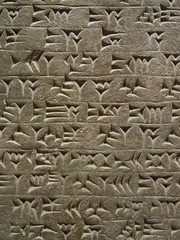
10585335219CuneiformA form of writing developed by the Sumerians using a wedge-shaped stylus and clay tablets8
10585335220City-stateA form of political organization typical of Mesopotamian civilization; consisted of agricultural hinterlands ruled by an urban-based king9
10585335221ZigguratsMassive towers usually associated with Mesopotamian temple connections10
10585335222Babylonian EmpireUnified all of Mesopotamia circa 1800 B.C.E.; collapsed due to foreign invasion circa 1600 B.C.E.11
10585335223HammurabiThe most important Babylonian ruler; responsible for codification of the law12
10585335224PharaohThe term used to denote the kings of ancient Egypt; considered a god as well as a political and military leader. The term, "great house" refers to the palace of the pharaohs13
10585335225PyramidsMonumental architecture typical of Old Kingdom Egypt; used as burial sites for pharaohs14
10585335226HieroglyphsForm of writing developed in ancient Egypt; more pictorial than Mesopotamian cuneiform15
10585335229Harappa and Mohenjo DaroMajor urban complexes of Harappan civilization; laid out on planned grid pattern16
10585335231Huanghe (Yellow) River BasinSite of the development of sedentary agriculture in China17
10585335234PaleolithicThe period that ended about 3,000 years after the end of the last Ice Age, it lasted until about 10,000 years ago. (Old Stone Age) The period of the Stone Age associated with the evolution of humans. It predates the Neolithic period.18
10585335235Path of migration for humans during Paleolithic eraFrom Africa to Eurasia, Australia, and the Americas19
10585335236EglitarianBelieving in the equality of all peoples20
10585335237Pastoralists were often the developers and disseminators of of ____ and ___ that transformed warfare in agrarian civilizationsnew weapons modes of transportation21
10585335238_____ developed in this period continued to have strong influences in later periodsNew religious beliefs22
10585335239Mediterranean SeaSea connecting Mesopotamia, Anatolia, and N. Africa23
10585335240PolytheismBelief in more than one god24
10585335241Nile RiverPrincipal water source of water flowing through North Africa (site of sophisticated cultural development); flooded regularly and enriched the soil in the process25
10585335242historythe study of past events and changes in the development, transmission and transformation of cultural practices26
10585335243stone agethe earliest known period of human culture, marked by the creation and use of stone tools and other nonmetallic substances27
10585335244foragersFood collectors who gather, fish, or hunt28
10585335245city-stateA sovereign state comprising a city and its immediate surrounding area29
10585335246Babylonan ancient city of Mesopotamia known for its wealth, luxury, and vice.30
10585335247HammurabiBabylonian king who codified the laws of Sumer and Mesopotamia (died 1750 BCE)31
10585335248scribea person who copies or writes out documents; often a record keeper32
10585335249cuneiformA form of writing developed by the Sumerians (Mesopotamia) using a wedge shaped stylus and clay tablets.33
10585335250bronzeA metal that is a mixture of copper and tin34
10585335251paleolithicstone age period when human used stone tools and survived by hunting and foraging35
10585335252Homo sapienshuman species derived from apes with more brain capacity for intelligence36
10585335254cave paintingspaleolithic cave paintings that emphasize hunting--Lascaux France is most famous37
10585335255pastoralismthe process of domestication, raising, and herding of animals38
10585335256specialization of laborpeople in civilizations could be assigned different jobs and statuses in society due to having a surplus of food39
10585335257patriarchythe idea that males have a right to rule and reign over states and families40
10585335258civilizationlarge scale communities that had certain characteristics in common such as: recordkeeping, complex institutions (government, economy, organized religion), cities, specialization of labor, long-distance trade, technology41
10585335259Euphrates and Tigristwo principle Mesopotamian rivers42
10585335260Sumerearliest Mesopotamian city state43
10585335261Babylonsecond oldest Mesopotamian city state, succeeds Sumer, most important king was Hammurabi44
10585335262Hammurabi's Codefirst law code in the world, of Babylonia, dealt with legal contracts and responsibility for wrong doing45
10585335265wheelround object used to move heavy weights and to create vehicles first in Sumer46
10585335266cuneiforma very early form of writing, from Sumer in Mesopotamia, done by pressing a cone-shaped stylus into soft clay47
10585335267Epic of Gilgameshepic Mesopotamian poem that highlights the stresses of civilization48
10585335268Egypta founding civilization along the Nile in Northeastern Africa49
10585335269HieroglyphicsEgyptian writing (pictographs & symbols representing sounds+ideas)50
10585335270Harrappa & Mohenjo DaroTwo early, very large, and complex Indus Valley city states. Little is known about these but their size and complexities imply central planning.51
10585335271Indus RiverRiver in Northern India on which the first Indian civilizations were built; flooded twice a year in a predictable manner52
10585335275Huang He and Yangzi Hetwo rivers in China that supported early civilization53
10585335281Mandate of HeavenA political theory of ancient China in which the emperor is given the power to rule by a divine sources. This tie could be severed by ineffectual rule54
10585335283Mesoamericacultural area in the Americas extending from central America to present-day Peru55
10585335284Olmecthe first major civilization in Mexico56
10585335288irrigation systemsreplacement or supplementation of rainfall with water from another source in order to grow crops57
10585335289Indus River Valley Civilizationan ancient civilization thriving along the Indus River in what is now Pakistan and western India. This civilization is also sometimes referred to as the Harappan or Harappa-Mohenjodaro Civilization of the Indus Valley, in reference to the excavated cities of Harappa and Mohenjodaro58

AP Literature: Vocabulary Lesson 8 Flashcards

Terms : Hide Images
7748813351adhere(v.) stick fast to (a surface or substance)0
7748817527austerity(n.) sternness or severity of manner or attitude1
7746208913bigot(n.) a person who is intolerant toward those holding different opinions; chauvinistic2
7746214774brazen(adj.) bold and without shame; shameless3
7746214775charlatan(n.) a person falsely claiming to have a special knowledge or skill; a fraud4
7746214776composure(n.) the state or feeling of being calm and in control of oneself; self control5
7746217814cull(v.) select from a large quantity; obtain from a variety of sources6
7746227259despondent(adj.) in low spirits from loss of hope or courage; discouraged, downcast7
7746220151diminish(v.) to make or become smaller or less; reduce8
7746227260endorse; endorsement(v.) declare one's public approval or support of9
7746231073equilibrium(n.) a state in which opposing forces or influences are balanced; symmetry10
7746231074fickle(adj.) changing frequently, especially as regards one's loyalties, interests, or affection; capricious11
7746235620grovel(v.) lie or move abjectly on the ground with one's face downward; prostrate oneself12
7746235621histrionic(adj.) overly theatrical or melodramatic in character or style; melodramatic13
7746238949impudent(adj.) not showing due respect for another person; impertinent14
7746238950indigent(adj.) poor, needy15
7746244119lassitude(n.) a state of physical or mental weariness; lack of energy; lethargy16
7746244120litigate; litigation(v.) go to law; be a party to a lawsuit17
7746246823magnitude(n.) the great size or extent of something; enormity18
7746246824minuscule(adj.) very small; tiny19
7746256932misanthrope; misanthropy(n.) a person who dislikes humankind and avoids human society20
7746264515miser; miserly(n.) a person who hoards wealth and spends as little money as possible; penny-pincher21
7746264516monotony(n.) lack of variety and interest; tedious repetition and routine22
7746264517mystic(adj.) inspiring a sense of spiritual mystery, awe, and fascination; mysterious23
7746267845novel(adj.) new or unusual in an interesting way; original24
7746271952ostentatious(adj.) characterized by vulgar or pretentious display; designed to impress or attract notice; pretentious25
7746271953parochial(adj.) having a limited or narrow outlook or scope; narrow-minded26
7746271954philatelist(n.) stamp collector27
7746274873placate(v.) make (someone) less angry or hostile; pacify, mollify28
7746274874placebo(n.) a harmless pill, medicine, or procedure prescribed more for the psychological benefit to the patient than for any physiological effect29
7746274875pout(v.) push one's lips or one's bottom lip forward as an expression of petulant annoyance or in order to make oneself look sexually attractive30
7746277304predestination(n.) (as a doctrine in Christian theology) the divine foreordaining of all that will happen, especially with regard to the salvation of some and not others31
7746277305progenitor(n.) a person or thing from which a person, animal, or plant is descended or originates; an ancestor or parent32
7746282185querulous(adj.) complaining in a petulant or whining manner; petulant33
7746282186reactionary(adj.) (of a person or a set of views) opposing political or social liberalization or reform; conservative34
7746285874recombinant(adj.) relating to or denoting an organism, cell, or genetic material formed by recombination35
7746290584relic(n.) an object surviving from an earlier time, especially one of historical or sentimental interest; artifact36
7746290585ruse(n.) an action intended to deceive or mislead someone; trick37
7746290586secular(adj.) denoting attitudes, activities, or other things that have no religious or spiritual basis; nonreligious38
7746297420shantytown(n.) a deprived area on the outskirts of a town consisting of large numbers of crude dwellings39

AP Literature Flashcards Flashcards

Terms : Hide Images
11040760888HOW MUCH DO I KNOW?ALL OF IT0
11040764447Achilles' heelweak point1
11040767243Adonishandsome young man2
11040768734Aeoliananything pertaining to wind; god who was Keeper of Wind3
11040786460Apollogod of music, poetry, prophecy, and medicine4
11040787921Argus-eyedomniscient, all-seeing; from Argus, the 100-eyed monster that Hera had guarding Io5
11040791325Athena/Minervagoddess of wisdom, the city, and arts; patron goddess of the city of Athens6
11040794072Atlanteanstrong like Atlas -who carried the globe (world) on his shoulders7
11040804440Auroraearly morning or sunrise; from the Roman personification of Dawn or Eos8
11040808745bacchanala drunken party or celebration9
11040827295bacchanalianpertaining to riotous or drunken festivity; pertaining to revelry10
11040836295Calliopean organ-like musical instrument having a keyboard that operates steam whistles11
11040837979Cassandraa person who continually predicts misfortune but often is not believed; from (Greek legends) a daughter of Priam cursed by Apollo for not returning his love; he left her with the gift of prophecy but made it so no one would believe her12
11040842237Centaura monster that had the head, arms, and chest of a man, and the body and legs of a horse13
11040844958chimeraa fantasy; a horrible creature of the imagination14
11040849531cupidity(n.) an eager desire for something; greed15
11040851133eroticpertaining to or arousing sexual love and desire16
11040852624furorfrenzy; great anger and excitement; CF. fury17
11040855825Gorgona very ugly or terrible person, especially a repulsive woman.; Medusa, any one or three sisters have snakes for hair and faces so horrible that anyone who looked at them turned to stone18
11040865763halyconcalm, peaceful19
11040867905Harpya predatory person or nagging woman; from harpy, a foul creature that was part woman, part bird20
11040872513Hectorto bully; to pester21
11040901420HelenWife of Menelaus and queen of Sparta. Helen's abduction from Sparta by the Trojans sparked the Trojan War. Her beauty is without parallel, but she is criticized for giving in to her Trojan captors and thereby costing many Greek men their lives. She offers Telemachus assistance in his quest to find his father.22
11040918861herculeanvery difficult; requiring the strength of Hercules23
11040933281Hydra-Headedhaving many centers or branches, hard to bring under control; something bad you cannot eradicate; from Hydra, the 9-headed serpent that was sacred to Hera. Hercules killed him in one of the 12 labors.24
11040944959iridescentdisplaying a play of lustrous colors like those of the rainbow25
11040947040jovial(adj.) good-humored, in high spirits; merry26
11040962949Junoesquemarked by stately beauty; comes from the word Juno, the wife of Jupiter, the Goddess of light, birth, women, and marriage27
11040968266lethargylack of energy; sluggishness28
11040980237martialwarlike; relating to the military29

AP Literature Terms Flashcards

Terms : Hide Images
10931807801AlliterationThe repetition of close intervals of initial identical consonant sounds which mirror or mimics the plot of mood of the text. Ex: "With Blue, Bumbling and emboldened Buzz" Note: The repetition of "B" sounds mirrors the erratic and annoying drone of a fly.0
10931840990AllusionAn indirect reference to something with which the reader is expected to be familiar. Allusions are usually literary, historical, Biblical, or mythological. Allusions should be for comparative purposes: "Manny was the Romeo of the class" Reference to Romeo and Juliet1
10931879002AmbiguityAn event of situation that may be interpreted in more than one way. Also, the manner of expression of such an event or situation may be ambiguous. Artful language may be ambiguous.2
10931897321AnaphoraRepetition of a word, phrase, or clause at the beginning of two or more sentences/lines in a row. This device is a deliberate form of repetition and helps make the writer's point more coherent. Ex: "It is too rash/ Too unadvised/ Too sudden/ Too like the lightning" Note: The repetition of "Too" at the beginning of the line emphasizes how very rushed Romeo and Juliet's love is."3
10931957034AntithesisA balancing of two opposite or contrasting words, phrases, or clauses. Ex: "It was the best of times. It was the worst of times."4
10931974410ApostropheAddressing an inanimate thing/object, speaking directly as if it were alive. Talking to an object as if it were a person.5
10931996823AssonanceRepetition of a vowel sound within two or more words in close proximity to mirror or mimic the plot or mood. Ex: "They trudge through thick, sucking sludge." Note: The "U" sounds mirror the heavy, slow process of the characters.6
10932018620AsyndetonA series of words separated by commas (With no Conjunction). Ex: "I came, I saw, I conquered." Notes: The parts of the sentence are emphasized equally; in addition, the use of commas with no intervening conjunction speeds up the flow of the sentence.7
10932063076Atmosphere/MoodRefers to emotions or feelings an author conveys to his/her readers through description of objects and settings.8
10932074798ChiasmusArrangement of repeated thought in the pattern X Y Y X. It is often short and summarizes a main idea. Ex: "Ask not what your country can do for you; Ask what you can do for your country."9
10932101269ConnotationRather than the dictionary definition, the feelings and ideas associated by a word. Implied meaning rather than the literal meaning or denotation. Ex: Mommy, Mother, Mama, and Mom all have the same denotations, but each has a different feeling attached.10
10932191067DictionWord choice, particular as an element of style. Different types of arrangements of words have significant effects on meaning.11
10932200935EpiphanyA major character's moment of realization or awareness.12
10932207027EpithetA term used as a descriptive substitute for the name or title or a person, such as The Great Emancipator for Lincoln. Also, a descriptor following a name: Catherine the Great or Ivan the Terrible.13
10932228458EuphemismThe use of a word or phrase that is less direct, but is also considered less distasteful or less offensive than another. Ex: "He is at rest" instead of "He is dead." Also consider "Technicolor Yawn" for "Vomiting."14
10932258591Figurative LanguageA word or words that are inaccurate literally, but describe by calling to mind sensations or responses that the thing describe evokes.15
10932277467HyperboleConscious exaggeration used to heighten effect. Not intended literally, it is often humorous. Ex: "And fired the shot heard round the world."16
10932296319ConsonanceThe repetition of identical or similar consonants in the MIDDLE or END of words that mirrors the plot or mood of the text. Ex: "The clickety clack of the quick picking of typewriter keys was the only sound in the office." Note: The "-ck" sounds in the words mimic the sounds of the keyboard.17
10933169538ImageryThe use of images, or any of the five senses to create vivid impression with words.18
10933176188IronyWhen a reader is aware of a reality that differs from a character's perception of reality (Dramatic Irony). The literal meaning of a writer's words that means something opposite (Verbal Irony). A discrepancy between expectation and reality.19
10933208800LitotesOpposite of hyperbole; it intensifies an idea understatement by stating through the opposite. Ex: Saying "It wasn't my best day" instead of "It was my worst day."20
10933237159MetaphorA comparison to two unrelated things.21
10933245713MetonymyThe use of linked term to stand in for an object or concept. Ex: "Hollywood was disgusted by the actor's behavior." Note: "Hollywood" stands in for all of the film industry. Ex: "The White House has made no comment." Note: "White House" stands for the U.S. government as a whole.22
10933463511OnomatopoeiaThe use of a word whose pronunciation suggest its meaning. Ex: "Buzz," "Hiss," "Slam," and "Pop" are commonly used.23
10933503648OxymoronA rhetorical antithesis. Juxtaposing two contradictory terms, like "Wise Fool" or "Deafening Silence."24
10933530298ParadoxA seemingly contradictory statement or situation which is actually true. This rhetorical device is often used for emphasis or simply to attract attention. Ex: "Education is an admirable thing, but it is well to remember from time to time that nothing that is worth knowing can be taught."25
10933599884PathosQualities of a fiction or nonfiction work that evoke sorrow or pity. Over-emotionalism can be the result of an excess of pathos.26
10933607528PersonificationIn which inanimate objects, animals, ideas, or abstractions are endowed with human traits or human form.27
10933627316PolysyndetonSentence which uses conjunctions (and/or) with no commas, to separate the items in a series, stressing equally each member of the series. It makes the sentence slower and the items more emphatic than in the asyndeton. Ex: "He called me loser and disgraceful and repulsive and cheap and disgusting." Note: The "and" add to the litany of insults thus making the list seem endless.28
10933675425RepetitionWord or phrase used two or more times in close proximity used for emphasis.29
10933680361Rhetorical QuestionA question asked for rhetorical effect to emphasize a point, no answer is expected.30
10933687757SatireA work that reveals a critical attitude toward some element of human behavior by portraying it in an extreme way. Usually targets groups or large concepts rather than individuals; its purpose is customarily to inspire change.31
10933707034SymbolA thing, event, or person that represents or stands for some idea or event. It also simultaneously retain their own literal meaning.32
10933713559SynedochePart of something is used to stand for the whole. Ex: "Threads" for clothes; "Wheels" for cars.33
10933725539SynesthesiaUsing one of the five senses to describe a different sense for poetic effect. Ex: "The room had a light purple smell, of the glorious bounty of spring."34

AP Literature terms Flashcards

Terms : Hide Images
8987048139AllegoryA work with both a literal and symbolic level of meaning *Characters often represent ideas EXAMPLE: Narnia- Biblical Allegory0
8987061925AllusionA reference to an event or person in history or literature often adds significance or depth to a character or a text EXAMPLE: Finding Nemo's "Here's Brucy" recalls "Here's Johnny" to mind1
8987099961AntithesisDirect Opposite EXAMPLE: Marlin and Gill are father figures to Nemo Marlin has scars of loss, but Gill has physical scars2
8987136035ApostropheA poem directed to a non- verbal entity as if that entity could reply EXAMPLE: Dear moon,3
8987152961ArchetypeUniversal symbol *transcends time and culture EXAMPLE: Apple = Temptation Snake = Deception4
9060442183AsideWhen a character directly addresses audience *characters do not hear5
9060486449*god from the machine Dues ex machineUsed to describe a miraculous or other wise unbelievable or unrealistic ending6
9060496837DictionWriters choice of words *diction dictates tone7
9060562277EnjambmentEnd punctuation in the middle of the line of poetry and a new sentence of poetry begins8
9060582180Epiphanymovement of sudden intellectual awakening (revelation)9
9060663175Epistolary novelNovel that is told through a series of letters10
9060672923EuphemismPleasant way of saying something unpleasant EXAMPLE: Passing away11
9060702736EuphonyPleasant enjoyable sounds12
9062098678Foil13

AP Spanish Literature - "Balada de los dos abuelos" Flashcards

Terms : Hide Images
11085148961la sombrashadow0
11085148962escoltarto escort; accompany1
11085148963la lanzaspear2
11085148964cueroleather3
11085148965la maderawood4
11085148968anchowide5
11085148969la armaduraarmor6
11085148970guerrerawarrior7
11085148971desnudonaked8
11085148972pétreorock-hard9
11085148973el vidrioglass10
11085148974los gongosgong, metal musical instrument11
11085148975sordodeaf12
11085148976aguaprietadark waters13
11085148977el caimánalligator14
11085148978cansarseto get tired15
11085148979las velassails16
11085148980amargobitter17
11085148981el galeónsailing ship18
11085148982arderto burn19
11085148983engañadadeceived20
11085148984el abaloriotrinket21
11085148986presoprisoner22
11085148987el arohoop23
11085148988redondoround24
11085148989el fulgorglow25
11085148991el látigowhip26
11085148992el negreroslave trader27
11085148993el llantocrying28
11085148994entreabiertohalf-open29
11085148995la madrugadaearly morning30
11085148996el atardecerlate afternoon31
11085148998despedazarto tear apart32
11085148999callarto be quiet33
11085149000soñarto dream34
11085149001suspirarto breathe deeply35
11085149002alzarto lift36
11085149003el tamañosize37
11085149004ansialonging38

AP Literature and Composition Vocabulary - created by bpetroski Flashcards

Terms : Hide Images
6598034298abstracta style in writing that is typically complex, discusses intangible qualities like good and evil, and seldom uses examples to support its points0
6598034299academican adjective describing style; dry and theoretical writing; piece of writing seems to be sucking all the life out of its subject with analysis1
6598034300accentin poetry, the stressed portion of a word; sometimes set, often a matter of opinion2
6598034301aestheticadj.: "appealing to the senses"; noun: coherent (logically connected) sense of taste3
6598034302aestheticsthe study of beauty; "What is beauty?" "Is the beautiful always good?"4
6598034303allegorya story in which each aspect of the story has a symbolic meaning outside the tale itself; many fables have this quality; true ones are even more hard and fast; example: Orwell's Animal Farm5
6598034304alliterationthe repetition of INITIAL consonant sounds; consonant clusters coming closely cramped and compressed6
6598034305allusiona reference to another work or famous figures; can be classical (refers to Greek and Roman mythology or literature), topical (refers to current event), or popular (refers to something from pop culture--TV show or hit movie)7
6598034306anachronismGreek for "misplaced in time"; something or someone that isn't in its correct historical or chronological time--i.e., Brutus wearing a watch8
6598034307analogya comparison usually involving two or more symbolic parts; employed to clarify an action or relationship9
6598034308anecdotea short narrative10
6598034309antecedentthe word, phrase, or clause that determines what a pronoun refers to11
6598034310anthropomorphismwhen inanimate objects, animals, or natural phenomena are given human characteristics, behaviour, or motivation--"In the forest, the darkness waited for me, I could hear its patient breathing."12
6598034311anticlimaxoccurs when an action produces far smaller results than one had been led to expect; frequently comic13
6598034312antiheroa protagonist who is markedly unheroic: morally weak, cowardly, dishonest, or any number of other unsavory qualities14
6598034313aphorisma short and usually witty saying; astute observation--"Power tends to corrupt, and absolute power corrupts absolutely." (Lord Acton)15
6598034314apostrophea figure of speech wherein the speaker talks directly to something that is nonhuman, absent, or dead16
6598034315archaismthe use of deliberately old-fashioned language, used to create a feeling of antiquity17
6598034316asidea speech (usually just a short comment) made by an actor to the audience, as though momentarily stepping outside of the action on stage18
6598034317aspecta trait or characteristic19
6598034318assonancethe repeated use of vowel sounds--"Old king Cole was a merry old soul."20
6598034319atmospherethe emotional tone or background that surrounds a scene21
6598034320ballada long, narrative poem, usually in regular meter and rhyme; typically has a naive folksy quality that sets it apart from epic poetry22
6598034321bathoswhen the writing of a scene strains for grandeur it can't support and tries to jerk tears from every little hiccup; intends to be dramatic but goes to the extreme of becoming ridiculous23
6598034322pathoswhen the writing of a scene evokes feelings of dignified pity and sympathy24
6598034323black humorthe use of disturbing themes in comedy; morbid humor used to express the absurdity, insensitivity, paradox, and cruelty of the modern world, ordinary characters or situations exaggerated beyond normal limits of satire or irony25
6598034324bombastpretentious, exaggeratedly learned language; one tries to be eloquent by using the largest, most uncommon words26
6598034325burlesquebroad parody, one that takes a style or form, such as tragic drama, and exaggerates it into ridiculousness; achieves its effects through caricature, ridicule, and distortion, devoid of any ethical element; interchangeable with parody27
6598034326cacophonyusing deliberately harsh, awkward sounds--the sound of midday traffic28
6598034327cadencethe beat or rhythm of poetry in a general sense e.g., iambic pentameter; can be gentle and pulsing, conversational, and even vigorous, marching29
6598034328cantothe name for a section division in a long work of poetry; divides a long poem into parts the way chapters divide a novel--like in Dante's Inferno30
6598034329caricaturea portrait (verbal or otherwise) that exaggerates a facet of personality31
6598034330catharsisdrawn from Aristotle's writings on tragedy; refers to the "cleansing" of emotion an audience member experiences, having lived (vicariously) through the experiences presented on stage; purging of emotions through a form of art, in this case, literature32
6598034331chorusthe group of citizens who stand outside the main action on stage and comment on it33
6598034332classictypical; an accepted masterpiece34
6598034333classicalrefers to the arts of ancient Greece and Rome and the qualities of those arts35
6598034334coinage (tech. term: neologism)a new word, usually one invented on the spot36
6598034335colloquialisma word or phrase used in everyday conversational English that isn't a part of accepted "schoolbook" English; slang words, informal English37
6598034336complex, densetwo terms carrying the similar meaning of suggesting that there is more than one posibilty in the meaning of words (image, idea, opposition); there are subtleties and variations; there are multiple layers of interpretation; the meaning is both explicit and implicit38
6598034337conceitrefers to a startling or unusual metaphor, or to a metaphor developed and expanded upon over several lines39
6598034338controlling imagewhen the image of conceit dominates and shapes the entire work40
6598034339connotationwhat a word suggests or implies, not its literal meaning--i.e., dark meaning dangerous instead lacking of light41
6598034340denotationthe literal meaning of a word42
6598034341consonancethe repetition of consonant sounds WITHIN words--"A flock of sick, black-checkered ducks."43
6598034342coupleta pair of lines that end in rhyme44
6598034343decorumin order to observe, a character's speech must be styled according to his or her social station, and in accordance with the occasion--bum speaks like a bum about bumly things45
6598034344dictionauthor's choice of words, choice of specific words46
6598034345syntaxauthor's choice of words; refers to the ordering and structuring of the words47
6598034346dirgea song for the dead, tone is typically slow, heavy, and melancholy48
6598034347dissonancethe grating of incompatible sounds49
6598034348doggerelcrude, simplistic verse, often in sing-song rhyme--i.e., limericks50
6598034349dramatic ironywhen the audience knows something that the characters in the drama do not51
6598034350dramatic monologuewhen a single speaker in literature says something to a silent audience52
6598034351elegya type of poem that meditates on death or mortality in a serious, thoughtful manner; often use the recent death of a noted or loved person as a starting point; also memorialize specific dead people53
6598034352elementsthe basic techniques of each genre of literature54
6598034353enjambmentthe continuation of a syntactic unit from one line or couplet of a poem to the next with no pause--i.e.,55
6598034354epica very long narrative poem on a serious theme in a dignified style; typically deal with glorious or profound subject matter--i.e., great war, heroic journey, battle with supernatural, etc.56
6598034355mock-epicparody form that deals with mundane events and ironically treats them as worthy of epic poetry57
6598034356epitaphlines that commemorate the dead at their burial place; usually a line or a handful of lines, often serious or religious, but sometimes witty and even irreverent58
6598034357euphemisma word or phrase that takes the place of a harsh, unpleasant, or impolite reality--i.e., passed away for died, let go for fired59
6598034358euphonywhen sounds blend harmoniously60
6598034359explicitto say or write something directly and clearly61
6598034360farcetoday it's used to refer to extremely broad humor; in earlier times, it was used to mean a simply funny play; a comedy (generic term for play then, btw, no implication of humor)62
6598034361feminine rhymelines rhymed by their final two syllables--running, gunning; properly, the penultimate syllables are stressed and the final syllables are unstressed63
6598034362foila secondary character whose purpose is to highlight the characteristics of a main character, usually by contrast64
6598034363footthe basic rhythmic unit of a line of poetry, formed by a combination of two or three syllables, either stressed or unstressed65
6598034364foreshadowingan event or statement in a narrative that in miniature suggests a larger event that comes later66
6598034365free versepoetry written without a regular rhyme scheme or metrical pattern67
6598034366genrea subcategory of literature--i.e., scientific fiction, detective stories->types of fiction68
6598034367Gothic, Gothic novelform first showed up in the middle of the 1700s, heyday of popularity for sixty years; sensibility: mysterious, gloomy, sinister69
6598034368hubristhe excessive pride or ambition that leads to the main character's downfall--like Caesar70
6598034369hyperboleexaggeration or deliberate overstatement: He has a watermelon head.71
6598034370implicitto say or write something that suggests and implies but never says it directly or clearly; reading between the lines72
6598034371in medias resLatin for "in the midst of things;" one of the conventions of epic poetry73
6598034372interior monologuea term for novels and poetry, not dramatic literature; refers to writing that records the mental talking that goes on inside a character's head; related, but not identical to the stream of consciousness; tends to be coherent, as though the character is actually talking74
6598034373inversionswitching the customary order of elements in a sentence or phrase--Yoda speech!75
6598034374*ironycomes in a variety of forms; a statement that means the opposite of what it seems to mean, deeper than sarcasm though; an undertow of meaning76
6598034375lamenta poem of sadness or grief over the death of a loved one or over some other intense loss77
6598034376lampoona satire78
6598034377loose sentencesentence is clear in the beginning, begins with main clause, followed by subordinates and modifiers79
6598034378periodic sentenceleaves the completion of its main clause to the end, often produces effect of suspense80
6598034379lyrica type of poetry that explores the poet's personal interpretation of and feelings about the world; when used to describe a tone, refers to a sweet, emotional melodiousness81
6598034380masculine rhymea rhyme ending on the final stressed syllable--spent, went82
6598034381means, meaningliteral meaning-concrete and explicit; emotional meaning83
6598034382melodramaa form of cheesy theater in which the hero is very, very good, the villain mean and rotten, and the heroine oh-so-pure84
6598034383metaphora comparison, or analogy that states one thing IS another--His eyes were burning coals.85
6598034384metonyma word that is used to stand for something else that it has attributes of or is associated with---"the crown" referring to the king, "The pen is mightier than the sword." (pen reps writers and ideas, sword reps war)86
6598034385nemesisthe protagonist's archenemy or supreme and persistent difficulty87
6598034386objectivitytreatment of a matter as impersonal or as an outside view of events88
6598034387subjectivitytreatment of a matter using the interior personal view of a single observer and is typically coloured with that observer's emotional responses89
6598034388onomatopoeiawords that sound how they're spelled--boom, splat90
6598034389oppositiona pair of elements that contrast sharply, not necessarily "conflict," rather a pairing of images, each becomes more striking and informative because it's placed in contrast to the other one; creates mystery and tension, can be obvious or lead to irony, not always though91
6598034390oxymorona phrase composed of opposites; a contradiction92
6598034391parablea story that instructs like a fable or an allegory93
6598034392paradoxa situation or statement that seems to contradict itself, but on closer inspection, it does not---"It's raining, but I don't believe that it is."94
6598034393parallelismrepeated syntactical similarities used for effect--He likes playing the piano, eating cookies, and reading lengthy novels.95
6598034394paraphraseto restate phrases and sentences in your own words, to rephrase; not an analysis or interpretation96
6598034395parenthetical phrasea phrase set off by commas that interrupts the flow of a sentence with some commentary or added detail97
6598034396parodywhen a specific work is exaggerated to ridiculousness98
6598034397pastorala poem set in a tranquil nature or even more specifically, one about shepherds99
6598034398personathe narrator in a non-first-person novel. in third person, get an idea of author's personality, but isn't really the author's personality; shadow-author100
6598034399personificationgiving an inanimate object human qualities or form--The darkness of the forest became the figure of a beautiful, pake-skinned woman in night-black clothes.101
6598034400plainta poem or speech expressing sorrow102
6598034401point of viewthe perspective from which the action of a novel (or narrative poem) is presented103
6598034402omniscient narratorthird-person narrator who sees into each character's mind and understands all the action that's going on104
6598034403limited omniscient narratorthird-person narrator who generally reports only what one character (usually main character) sees, reports only thoughts of that one character105
6598034404objective/camera-eye narratorthird-person narrator who only reports on what would be visible to a camera, doesn't know what the character is thinking unless character speaks of it106
6598034405first-person narratornarrator who is a character in the story and tells the story from his or her point of view; when crazy, a liar, or very young, narrator is unreliable107
6598034406stream of consciousness techniquemethod is like first-person, but instead of the character telling the story, the author puts the reader in the character's head108
6598034407preludean intro poem to a longer work or verse109
6598034408protagonistthe main character of a novel or play110
6598034409punusually humorous use of a word in such a way to suggest two or more meanings111
6598034410refraina line or set of lines repeated several times over the course of a poem112
6598034411requiema song or prayer for the dead113
6598034412rhapsodyan intensely passionate verse or section of verse, usually of love or praise114
6598034413rhetorical questiona question that suggests an answer115
6598034414satireexposes common character flaws to humor; attempts to improve things by pointing out people's mistakes in the hope that once exposed, such behaviours will become less common--hypocrisy, vanity, greed116
6598034415similelike a metaphor but softens the full-out equation of things, often, but not always, by using like or as117
6598034416soliloquya speech spoken by a character alone on stage; meant to convey the impression that the audience is listening to the character's thoughts; not meant to imply that the actor acknowledges the audience is listening118
6598034417stanzaa group of lines roughly analogues in function in verse to the paragraph's function in prose119
6598034418stock charactersstandard or cliched character types: the drunk, the miser, the foolish girl, etc.120
6598034419subjunctive mooda mood that represents an act or state (not as a fact but) as contingent or possible; wishful thinking--if I were you, if he were honest121
6598034420suggestto imply, infer, indicate; you have to pull out the meaning yourself122
6598034421summarya simple retelling of what you've just read; covers more material than paraphrase, more general, includes all the facts123
6598034422suspension of disbeliefdemand made of a theater audience to accept the limitations of staging and supply the details with imagination124
6598034423symbolisma device in literature where an object reps an idea125
6598034424techniquethe methods, the tools, "how-you-do-it" ways of the author126
6598034425themethe main idea of the overall work; the central idea; topic of discourse or discussion127
6598034426thesisthe main position of an argument; the central contention that will be supported128
6598034427tragic flawin tragedy, weakness of character in an other wise good/great individual that leads to his demise129
6598034428travestya grotesque parody130
6598034429truisma way-too-obvious truth131
6598034430utopiaan idealized place; paradise132
6598034431zeugmathe use of a word to modify two or more words, but used for different meanings--On the fishing trip, he caught three trout and a cold.133

AP Literature Midterm Exam Flashcards

Terms : Hide Images
8380031987Fictionliterature in the form of prose, especially short stories and novels, that describes imaginary events and people. A story in which the elements are imaginary or invented0
8380032023Genrea category of artistic composition, as in music or literature, characterized by similarities in form, style, or subject matter.1
8380036163Fablea short story, typically with animals as characters, conveying a moral.2
8380036164Parablea simple story used to illustrate a moral or spiritual lesson, as told by Jesus in the Gospel3
8380036165Fairy TaleA fairy tale is a type of short story that typically features folkloric fantasy characters and locations, such as dwarfs, dragons, elves, fairies, giants, gnomes, goblins, griffins, mermaids, talking animals, trolls, unicorns, or witches, and usually magic or enchantments. a children's story about magical and imaginary beings and lands.4
8380036166Short Storya story with a fully developed theme but significantly shorter and less elaborate than a novel.5
8380039773Modern Short StoryThe subject matter of such stories is personal and illuminates less savory aspects of humanity through characters who seem real.6
8380039774Morala lesson, especially one concerning what is right or prudent, that can be derived from a story, a piece of information, or an experience. concerned with the principles of right and wrong behavior and the goodness or badness of human character.7
8380039775Expositionthe writer's way to give background information to the audience about the setting and the characters of the story.8
8380039776ConflictA conflict in literature is defined as any struggle between opposing forces. Usually, the main character struggles against some other force.9
8380039777ProtagonistA protagonist is the main character in any story, such as a literary work or drama.10
8380043871AntagonistThe antagonist is the opposing force that brings conflict and is instrumental in the development of the protagonist, or main character.11
8380043872HeroA hero (masculine) or heroine (feminine) is a person or main character of a literary work who, in the face of danger, combats adversity through feats of ingenuity, bravery or strength, often sacrificing their own personal concerns for a greater good.12
8380048747AntiheroAntiheroes are fascinating characters who have appeared in literature, in film, and on stage for centuries. An antihero is a protagonist or other notable figure who is conspicuously lacking in heroic qualities.13
8380048748Story Arc14
8380048749PlotPlot is a literary term used to describe the events that make up a story, or the main part of a story. These events relate to each other in a pattern or a sequence. The structure of a novel depends on the organization of events in the plot of the story.15
8380048750CrisisA point in a story or drama when a conflict reaches its highest tension and must be resolved.16
8380048751Climaxthe highest or most intense point in the development or resolution of something; culmination: His career reached its climax when he was elected president. A decisive moment that is of maximum intensity or is a major turning point in a plot.17
8380052299ResolutionThe resolution is the part of a story's plot line in which the problem of the story is resolved or worked out. This occurs after the falling action and is typically where the story ends.18
8380057254DénouementDenouement is a literary device that can be defined as the resolution of the issue of a complicated plot in fiction. The majority of examples of denouement show the resolution in the final part or chapter, often in an epilogue. Denouement is usually driven by the climax.19
8380057255In medias resIn medias res is Latin for "into the middle of things." It usually describes a narrative that begins, not at the beginning of a story, but somewhere in the middle — usually at some crucial point in the action.20
8380057256RetrospectThe definition of a retrospect is a review, looking back on something that has happened in the past. An example of a retrospect is when you look back on a decision you made and, knowing the outcome, realize you should have made a different choice.21
8380060925EpiphanyEpiphany is the point in a work of literature where a character has a sudden insight or realization that changes his or her understanding.22
8380060926BildungsromanBildungsroman is a special kind of novel that focuses on the psychological and moral growth of its main character from his or her youth to adulthood.23
8380063490Narratorperson who tells a story; in literature, the voice that an author takes on to tell a story. This voice can have a personality quite different from the author's. For example, in his story "The Tell-Tale Heart," Edgar Allan Poe makes his narrator a raving lunatic.24
8380063491Omniscient NarratorThe narrator knows the thoughts, actions, and feelings of every character in the story. Third person.25
8380182751Non-participant NarratorThe narrator is considered non-participant if he/she is an implied character or an omniscient or semi-omniscient being or voice that merely relates the story to the audience without being involved in the actual events26
8380182752Participant NarratorThe narrator is considered participant if he/she is a character within the story,27
8380187047Limited Omnisciencethe narrator only knows the thoughts and feelings of one character. All characters are described using pronouns, such as 'they', 'he', and 'she'. But, one character is closely followed throughout the story, and it is typically a main character.28
8380187048Selective OmniscienceThe narrator sees into minds of some but not all. usually the main character or a minor character.29
8380187049Impartial OmniscienceThe narrator presents the thoughts and actions of the characters but does not judge or comment on them.30
8380191457Total OmniscienceThe narrator knows the feelings and thoughts of every character in the story. He or she is all-knowing.31
8380194490Unreliable NarratorAn unreliable narrator is a narrator, whether in literature, film, or theatre, whose credibility has been seriously compromised. Usually biased, young, naive, insane, or a liar. Huckleberry Finn.32
8380194491Point of ViewThe term point of view, or POV for shorthand, refers to who is telling a story, or who is narrating it. The narration of a story or novel can be told in three main ways: first person, second person, and third person.33
8380194492First PersonFirst person narrative is a point of view (who is telling a story) where the story is narrated by one character at a time. This character may be speaking about him or herself or sharing events that he or she is experiencing.34
8380199826Third PersonIn third-person point of view, the narrator tells us about what's happening in the story. In third-person limited, the narrator shows us the thoughts and feelings of one character. In third-person omniscient, the narrator is all-knowing and shows us the inner world of every character that appears.35
8380199827Reader-Response CriticismReader-response criticism is a school of literary theory that focuses on the reader (or "audience") and their experience of a literary work, in contrast to other schools and theories that focus attention primarily on the author or the content and form of the work.36
8380207184Biographical CriticismBiographical criticism is a form of Literary criticism which analyzes a writer's biography to show the relationship between the author's life and their works of literature.37
8380207185Historical CriticismHistorical criticism, also known as the historical-critical method or higher criticism, is a branch of literary criticism that investigates the origins of ancient text in order to understand "the world behind the text".38
8380210469Psychological CriticismPsychoanalytic criticism argues that literary texts, like dreams, express the secret unconscious desires and anxieties of the author, that a literary work is a manifestation of the author's own neuroses39
8380210470DialogueDialogue is a written or spoken conversational exchange between two or more people, and a literary and theatrical form that depicts such an exchange.40
8380210471CharacterA person in a novel, play, or movie.41
8380210472Flat CharactersFlat characters are two-dimensional in that they are relatively uncomplicated and do not change throughout the course of a work. Example: Prince Charming42
8380217039Round CharactersRound characters are complex and undergo development, sometimes sufficiently to surprise the reader.43
8380217040Static Charactersa literary or dramatic character who undergoes little or no inner change; a character who does not grow or develop.44
8380217041Dynamic Charactersa literary or dramatic character who undergoes an important inner change, as a change in personality or attitude: Ebeneezer Scrooge is a dynamic character.45
8380220822SettingThe setting of a piece of literature is the time and place in which the story takes place. The definition of setting can also include social statuses, weather, historical period, and details about immediate surroundings. Settings can be real or fictional, or a combination of both real and fictional elements.46
8380220823Regional Writing/Writerregional literature is fiction and poetry that focuses on the characters, dialect, customs, topography, and other features particular to a specific region.47
8380220824StyleStyle in literature is the literary element that describes the ways that the author uses words — the author's word choice, sentence structure, figurative language, and sentence arrangement all work together to establish mood, images, and meaning in the text.48
8380223648ToneTone, in written composition, is an attitude of a writer toward a subject or an audience. Tone is generally conveyed through the choice of words, or the viewpoint of a writer on a particular subject. ... The tone can be formal, informal, serious, comic, sarcastic, sad, or cheerful, or it may be any other existing attitude.49
8380223649MinimalistsStyle or technique (as in music, literature, or design) that is characterized by extreme spareness and simplicity. Minimalists generally write as little as possible.50
8380223650DictionDiction is word choice, or the style of speaking that a writer, speaker, or character uses.51
8380223651Ironya situation in which there is an incongruity between what is expected and what occurs the use of words to convey a meaning that is the opposite of its literal meaning52
8380223704SarcasmSaying one thing while meaning the exact opposite. The use of irony to mock or convey contempt.53
8380229603Verbal IronyVerbal Irony is when words express something contrary to truth or someone says the opposite of what they really feel or mean.54
8380229604Dramatic IronyDramatic irony is a form of irony that is expressed through a work's structure: an audience's awareness of the situation in which a work's characters exist differs substantially from that of the characters', and the words and actions of the characters therefore take on a different—often contradictory—meaning. Gift of the Magi.55
8380232726Cosmic Ironythe idea that fate, destiny, or a god controls and toys with human hopes and expectations; also, the belief that the universe is so large and man is so small that the universe is indifferent to the plight of man; also called irony of fate. Appointment in Samarra56
8380236307Ironic Point of ViewSometimes attached to an unreliable narrator, biased, young, naive, a liar, such as Huckleberry Finn.57
8380236308ThemeIn contemporary literary studies, a theme is the central topic a text treats. Themes can be divided into two categories: a work's thematic concept is what readers "think the work is about" and its thematic statement being "what the work says about the subject".58
8380236309AllusionAn allusion is a figure of speech that refers to a well-known story, event, person, or object in order to make a comparison in the readers' minds. For instance, imagine a writer needs to explain her main character's struggle against an overwhelmingly powerful opponent.59
8380236310Symbolic ActExpressing or representing an idea or quality without using words.60
8380236311SymbolIn literature, symbolism can take many forms including: A figure of speech where an object, person, or situation has another meaning other than its literal meaning. The actions of a character, word, action, or event that have a deeper meaning in the context of the whole story.61
8380238431AllegoryEverything is a symbol. (Animal Farm)62

Pages

Subscribe to CourseNotes RSS

Need Help?

We hope your visit has been a productive one. If you're having any problems, or would like to give some feedback, we'd love to hear from you.

For general help, questions, and suggestions, try our dedicated support forums.

If you need to contact the Course-Notes.Org web experience team, please use our contact form.

Need Notes?

While we strive to provide the most comprehensive notes for as many high school textbooks as possible, there are certainly going to be some that we miss. Drop us a note and let us know which textbooks you need. Be sure to include which edition of the textbook you are using! If we see enough demand, we'll do whatever we can to get those notes up on the site for you!