

Ch. 2 AP World History Vocab Flashcards
Terms : Hide Images
| 10780826802 | Mesopotamia | A region between the Tigris and Euphrates rivers that developed the first urban societies. In the Bronze Age this area included Sumer and the Akkadian, Babylonian and Assyrian empires, In the Iron Age, it was ruled by the Neo-Assyrian and Neo-Babylonian empires. Importance- contributed to many advancements and lead the way for other empires. |  | 0 |
| 10780839686 | Fertile Crescent | an area of rich farmland in Southwest Asia where the first civilizations began Importance- made farming easier, made it so people could settle. | | 1 |
| 10780847942 | Summerians | The first people to build cities and invent legal system, justice code, weapons, writing etc. Importance- Contributed to many great advancements, such as cuneiform, and government. |  | 2 |
| 10780855839 | city-state | a city that with its surrounding territory forms an independent state. Importance- Paved ways form better forms of government. |  | 3 |
| 10780863589 | Polythiestic | Belief in many gods Importance- shaped some current religions |  | 4 |
| 10780873156 | Ziggurats | temples built by Sumerians to honor the gods and goddesses they worshipped Importance- influences many other religions and cultures |  | 5 |
| 10780883413 | Cuneiform | A system of writing in which wedge-shaped symbols represented words or syllables. It originated in Mesopotamia and was used initially for Sumerian and Akkadian but later was adapted to represent other languages of western Asia. Importance- made it easier to collect taxes, trade, etc. | 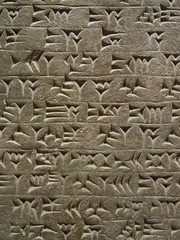 | 6 |
| 10780892721 | Epic of Gilgamesh | An epic poem from Mesopotamia, and among the earliest known works of literary writing. Importance- Paved ways for other form of literary writings |  | 7 |
| 10781016734 | Code of Hammurabi | A collection of 282 laws. One of the first (but not THE first) examples of written law in the ancient world. Importance- helped give order and control over Babylonia. |  | 8 |
| 10781052993 | Phonecians | A group of people who became great sailors and merchants. They build fine ships from cedar wood and sailed to distant places. There most famous export (item they traded) was purple cloth. They also gave us the first alphabet, a system of writing containing signs that stood for single sounds. importance- they invented the first alphabet. |  | 9 |
| 10784381772 | Hebrews | A smaller early civilization whose development of a monotheistic faith that provided the foundation of modern Judaism, Christianity, and Islam assured them a significant place in world history Importance- Shaped current Judaism, and christianity. |  | 10 |
| 10784419963 | Monotheism | belief in only one god Importance- shaped modern religions |  | 11 |
| 10784442875 | Jewish Dispora | the scattering of the Jewish people outside their homeland, beginning in 586 B.C.E. Importance- spread ideas of Judasim |  | 12 |
| 10791839662 | Pharoh | A ruler of ancient Egypt Importance-set up government for centuries to come |  | 13 |
| 10791915504 | Hatshepsut and Cleopatra | Female pharaohs of Egypt Importance- empowered women and made women more important and respect |  | 14 |
| 10792074551 | Mummification | The preservation of dead bodies by embalming and wrapping them in cloth importance- had religious importance and helps historians understand egypt |  | 15 |
| 10807800788 | Hiroglyphics | Designating or pertaining to a pictographic script, particularly that of the ancient Egyptians, in which many of the symbols are conventionalized, recognizable pictures of the things represented Importance- had religious importance, writing on graves helped historians understand Egyptians and their life |  | 16 |
| 10807807926 | Papyrus | A reed that grows along the banks of the Nile River in Egypt. From it was produced a coarse, paper like writing medium used by the Egyptians and many other peoples in the ancient Mediterranean and Middle East. Importance- historians can gain knowledge about Egypt because they wrote information down. |  | 17 |
| 10807818814 | Harappa and Mohenjo-Daro | Major urban complexes of Harappan civilization; laid out on planned grid pattern. importance-largest city of the Indus valley civilization |  | 18 |
| 10807832863 | Aryans | nomads from Europe and Asia who migrated to India and finally settled; vedas from this time suggest beginning of caste system Importance- they developed a language called Sanskrit that was the base of many languages, including Spanish and Greek |  | 19 |
| 10808076643 | Sanskrit | (Hinduism) an ancient language of India (the language of the Vedas and of Hinduism) Importance- base of many languages including English, Spanish, and Greek |  | 20 |
| 10808100233 | Vedas | Ancient Sanskrit writings that are the earliest sacred texts of Hinduism. Importance- laid out Vedic religion |  | 21 |
| 10808141137 | Brahma | A Hindu god considered the creator of the world. Importance- Goal was to join Brahma by doing good deeds, so people were kinder and better. |  | 22 |
| 10808181970 | Dharma | In Hindu belief, a person's religious and moral duties Importance- laid out rules for Hinduism |  | 23 |
| 10808206075 | Karma | The belief that actions in this life, whether good or bad, will decide your place in the next life. Importance- Hindus strived to get good karma causing a better society |  | 24 |
| 10808360669 | Moksha | The Hindu concept of the spirit's 'liberation' from the endless cycle of rebirths. Importance- Hindus wanted to achieve Mocksha so they did good things |  | 25 |
| 10808399471 | Shang Dynasty | (1766-1122 BCE) The Chinese dynasty that rose to power due to bronze metalurgy, war chariots, and a vast network of walled towns whose recognized this dynasty as the superior. Importance-china achieved many intellectual achievements, and cultural achievements |  | 26 |
| 10808449450 | Mandate of Heaven | a political theory of ancient China in which those in power were given the right to rule from a divine source Importance- made people more loyal to the king |  | 27 |
| 10808526894 | Zhou Dynasty | A decentralized Chinese dynasty in China because of the massive size, and whose emperor was the first to claim to be a link between heaven and earth. Iron metallurgy increased in this dynasty. Importance- Changed war with iron, increased China's sized, and the use of coins started |  | 28 |
| 10808618863 | Chavin | The first major urban civilization in South America (900-250 B.C.E.). Its capital was located high in the Andes Mountains of Peru. Chavin became politically and economically dominant in a densely populated region. Importance- started metallurgy, and made fishnets made of copper |  | 29 |
| 10808649748 | Olmec | Mesoamerican civilization in lower Mexico around 1500 BCE to about 400 BCE focused. Most remembered for their large stone heads. Importance- Core of all american civilizations. |  | 30 |


