

Flashcards
AP World History Strayer Chapter 17 Vocabulary Flashcards
Terms : Hide Images
| 9056310725 | Steam Engine | *Definition:* External combustion engine where heat is used to raise steam. *Significance:* Allowed increased productivity and made Industrial Revolution possible (limitless source of power). |  | 0 |
| 9056310726 | Indian Cotton Textiles | *Definition:* Well made, inexpensive cotton textiles from India. *Significance:* Catalyst for British textile Industry to industrialize. |  | 1 |
| 9056310727 | Middle-class values | *Definition:* Frowned upon heavy drinking and women were fond of fashion, Education necessary. *Significance:* Characterised middle-class culture and respectability. | 2 | |
| 9056310728 | Lower Middle-class | *Definition:* Belief in fate, fortune, and good luck, dependent on peers rather than an individual. *Significance:* Service jobs that were more than 20% of Britain's population and gave women opportunity to work. |  | 3 |
| 9056310729 | Ellen Johnston | *Definition:* Working class female who labored and wanted to become a poet. *Significance:* Insight to women's lives in the 1800s for the middle class. |  | 4 |
| 9056310730 | Karl Marx | *Definition:* Founder of modern communism. *Significance:* Conclusion of capitalism as unstable and doomed, thus creating socialist and communist views. It would end the conflict of rich and poor. |  | 5 |
| 9056310731 | Labour Party | *Definition:* Political party formed in Great Britain focusing on multiculturalism, diversity, tolerance, protecting social welfare. *Significance:* Provided alternative to Marxism. |  | 6 |
| 9056310732 | Socialism in the United States | *Definition:* Socialist party grew in the 1900's, critiquing the economic system of the United States urged reform and endorsed small scale economy. *Significance:* Minor political movement and gained 6% votes in the election. | 7 | |
| 9056310733 | Progressives | *Definition:* Reformers who worked to stop unfair practices by businesses and improve the way the government works. *Significance:* Advocated reform measures to correct ills of industrialization (1750 - 1914). | 8 | |
| 9056310734 | Russian Revolution of 1905 | *Definition:* Spontaneous rebellion after defeating at hand of Japan 1905. *Significance:* It was suppressed but it forced the government to make substantial reforms. | 9 | |
| 9056310735 | Latin America Export boom | *Definition:* Large scale increase in exports (raw) to industrialized countries. *Significance:* Benefitted middle-class and upper-class. |  | 10 |
| 9056310736 | Mexican Revolution | *Definition:* Bitter and bloody conflict between middle-class Mexicans who joined with peasants and workers against dictator Porfirio Diaz. *Significance:* Created a new, more democratic political order. |  | 11 |
| 9056310737 | Dependent Development | *Definition:* Theory that poor countries can still develop economically, but only in ways shaped by reliance on wealthier countries. *Significance:* Term used to describe Latin America's economic growth dependent on European and North American prosperity and decisions. |  | 12 |
| 9056337654 | Luddites | destroyed many new machines that were new and more effective, threatening the livelihoods of the workers. Named after a mythological Robin Hood-like figure. Some who were suspected of being this were killed. In some ways predicted the future of industrialism and the demands of workers | 13 | |
| 9056376484 | caudillos | violent, enabled, military strongmen who achieved power as liberal and conservative factions fought in Latin America | 14 |
AP World History Flashcards
Terms : Hide Images
| 7378352767 | 8000 B.C.E. - 600 B.C.E. | Technological and Environmental Transformations | 0 | |
| 7378352768 | 600 B.C.E. - 600 C.E. | Organization and Reorganization of Human Societies | 1 | |
| 7378352769 | 600 C.E. - 1450 C.E. | Regional and Interregional Interactions | 2 | |
| 7378352770 | 1450 C.E. - 1750 C.E. | Global Interactions | 3 | |
| 7378352771 | 1750 C.E. - 1900 C.E. | Industrialization and Global Integration | 4 | |
| 7378352772 | 1900 C.E. - Present | Accelerating Global Change and Realignments | 5 | |
| 7436218211 | Period 1 | 8000 B.C.E. - 600 B.C.E | 6 | |
| 7436218212 | Period 2 | 600 B.C.E - 600 C.E. | 7 | |
| 7436218213 | Period 3 | 600 C.E. - 1450 C.E. | 8 | |
| 7436218214 | Period 4 | 1450 C.E. - 1750 C.E. | 9 | |
| 7436218215 | Period 5 | 1750 C.E. - 1900 C.E. | 10 | |
| 7436218216 | Period 6 | 1900 C.E. - Present | 11 |
Friedland APES Chapter 9 Flashcards
Terms : Hide Images
| 9148100732 | Aquifers | Permeable layers of rock and sediment that contain groundwater in many small spaces. |  | 0 |
| 9148100733 | Unconfined Aquifer | Water can flow easily in and out of the aquifer. Porous rock covered by soil | | 1 |
| 9148100734 | Confined Aquifer | Aquifers covered by an impermeable and confining layer impeding water flow in or out. | | 2 |
| 9148100735 | Water Table | Uppermost aquifer layer where water fully saturates the rock or soil. |  | 3 |
| 9148100736 | Groundwater Recharge | Water from precipitation percolates through soil and into aquifer. If confined, can't recharge. |  | 4 |
| 9148100737 | Springs | Water from some aquifers naturally comes up, natural source of freshwater |  | 5 |
| 9148100738 | Artesian Wells | Drilled hole in a confined aquifer releases pressure and pushes water up. |  | 6 |
| 9148100739 | Cone of Depression | Area where there's no longer any groundwater, caused by well overuse, eventually will go dry. |  | 7 |
| 9148100740 | Saltwater intrusion | Lessened pressure from over-pumping so salt water infiltrates and makes well water salty. |  | 8 |
| 9148100741 | Floodplain | Land adjacent to river where excess water spreads onto. |  | 9 |
| 9148100742 | Oligotrophic | Lakes with low productivity because of little nutrients such as phosphorus and nitrogen. |  | 10 |
| 9148100743 | Mesotrophic | Lakes with moderate levels of productivity |  | 11 |
| 9148100744 | Eutrophic | Lakes with high levels of productivity |  | 12 |
| 9148100745 | Impermeable Surfaces | Pavement, buildings, etc. Doesn't allow water penetration, water then runs into sewers and streams. Excess water causes floods. |  | 13 |
| 9148100746 | Levee | Enlarged bank on each side of river to prevent flooding |  | 14 |
| 9148100747 | Dikes | Similar to levees but to prevent ocean waters from flooding coasts that are under sea level. |  | 15 |
| 9148100748 | Dam | Barrier that runs across a river/stream to control water flow |  | 16 |
| 9148100749 | Reservoir | Large body of water stored behind a dam. Held for consumption, generating electricity, flood control, or recreation. |  | 17 |
| 9148100750 | Fish Ladders | Sets of stairs with water flowing over them to have fish migrate despite dams. |  | 18 |
| 9148100751 | Aqueducts | Canals or ditches used to carry water between locations. Transports water to dry areas. |  | 19 |
| 9148100752 | Desalination | Removes salt from salt water to make fresh water. |  | 20 |
| 9148100753 | Distillation | Desalination method. Seawater flows in, heated to create steam, cool seawater in condensing coil causes steam to condense. Brine and fresh water then flows out. |  | 21 |
| 9148100754 | Reverse Osmosis | Desalination method. Seawater flows in, pressure applied, water goes through semipermeable membrane, salt can't. Water and brine flows out. |  | 22 |
| 9148100755 | Hydroponic Agriculture | Cultivation under greenhouse conditions with roots in nutrient rich solution, and not soil. |  | 23 |
| 9148100756 | Water footprint | The total daily per capita use of freshwater. |  | 24 |
| 9148100757 | Gray water | Wastewater from baths, showers, bathrooms, and washing machines. |  | 25 |
| 9148100758 | Contaminated water | Wastewater from toilets, kitchen sinks, and dishwashers. |  | 26 |
AP Language Set B Flashcards
Terms : Hide Images
| 10734267280 | STATUS QUO | the existing condition or state of affairs | 0 | |
| 10734267281 | ACERBIC | bitter, sharp in taste or temper | 1 | |
| 10734267282 | CRITICAL | finding fault | 2 | |
| 10734267283 | CAUSTIC | (adj.) able to burn or eat away by chemical action; biting, sarcastic | 3 | |
| 10734267284 | GUISE | outward appearance; false appearance | 4 | |
| 10734267285 | SEMBLANCE | a likeness; an outward appearance | 5 | |
| 10734267286 | DISPARAGE | regard or represent as being of little worth | 6 | |
| 10734267287 | PROSCRIBE | to forbid | 7 | |
| 10734267288 | APHORISM | a concise statement of a truth or principle | 8 | |
| 10734267289 | SINE QUA NON | an essential or indispensable element or condition | 9 | |
| 10734267290 | AFFLUENT | rich; prosperous; wealthy | 10 | |
| 10734267291 | ILLUSORY | deceptive; false; misleading | 11 | |
| 10734267292 | DISPARATE | fundamentally different; entirely unlike | 12 | |
| 10734267293 | VINDICATE | clear from hint or charge of wrongdoing; to justify | 13 | |
| 10734267294 | APLOMB | confidence without arrogance | 14 | |
| 10734267295 | AUSPICIOUS | favorable; promising | 15 | |
| 10734267296 | HARANGUE | long, passionate, ranting speech (diatribe) | 16 | |
| 10734267297 | DISSENT | difference of opinion (implies refusal to assent and/or withholding consent) | 17 | |
| 10734267298 | UBIQUITOUS | present, appearing, or found everywhere | 18 | |
| 10734267299 | PARADIGM | model or pattern; worldview, set of shared assumptions, values, etc. | 19 | |
| 10734267300 | TRAVESTY | a grotesque or grossly inferior imitation (often unintentional) | 20 | |
| 10734267301 | CREDULOUS | too trusting; gullible | 21 | |
| 10734267302 | UNTENABLE | impossible to defend or justify | 22 | |
| 10734267303 | OPULENT | luxurious; grandiose | 23 | |
| 10734267304 | TACIT | understood or implied without being stated | 24 |
AP World History Dates Flashcards
Terms : Hide Images
| 6763465918 | Olmecs | 1200-400 BC |  | 0 |
| 6763474549 | Indus Valley | 300-1500 BC |  | 1 |
| 6763506820 | Sumer | 5000-3000 BC |  | 2 |
| 6763500065 | Rome - Empire | 31 BC-400 CE |  | 3 |
| 6763609530 | Rome - Republic | 500-31 BC |  | 4 |
| 6763504454 | Assyrians | 911-612 BC |  | 5 |
| 6763492971 | Old Kingdom Egypt | 2700-2200 BC |  | 6 |
| 6763477673 | Middle Kingdom Egypt | 2000-1600 BC | 7 | |
| 6763480533 | New Kingdom Egypt | 1500-1100 BC | 8 | |
| 6763483723 | Shang | 1800-1100 BC |  | 9 |
| 6763513759 | Zhou | 1100-200 BC |  | 10 |
| 6763515595 | Han | 200 BC-200 CE |  | 11 |
| 6763517481 | Mauryan | 300-200 BC |  | 12 |
| 6763523104 | Achaemenid | 500-400 BC |  | 13 |
| 6763529249 | Life of Confucius | 500 BC | 14 | |
| 6763529250 | Life of Buddha | 500 BC | 15 | |
| 6763531784 | Warring States Period | 400-200 BC | 16 | |
| 6763542595 | Life of Alexander the Great | 300 BC | 17 | |
| 6763545418 | Beginning of the Silk Road | 200 BC |  | 18 |
| 6763545419 | Life of Jesus | 1-31 CE | 19 | |
| 6763547969 | Jainism Founded | 500 BC | 20 | |
| 6763551057 | Delian League | 400 BC |  | 21 |
| 6763551058 | Bantu Migrations | 3000 BC |  | 22 |
| 6763558388 | Bronze Metallurgy in Mesopotamia | 3000-1200 BC | 23 | |
| 6763562738 | Iron Metallurgy In Anatolia | 1200 BC | 24 | |
| 6763566741 | Chavin | 900-300 BC | 25 | |
| 6763568615 | Hittites | 1750-1200 BC |  | 26 |
| 6763570513 | Celts | 500 BC | 27 | |
| 6763572119 | Maya | 300-800 CE |  | 28 |
| 6763574392 | Moche | 100-800 CE |  | 29 |
| 6763579631 | Ancient Israel | 1020-930 BC | 30 | |
| 6763595442 | Myceneans | 1600-1200 BC | 31 | |
| 6763600217 | Phoenicians | 1200-800 BC |  | 32 |
| 6763626863 | Gupta | 300-500 |  | 33 |
| 6763626864 | Inca | 1400-1500 |  | 34 |
| 6763629168 | Aztec | 1300-1500 |  | 35 |
| 6763631300 | Mongols | 13th century |  | 36 |
| 6763634177 | Sultanate of Delhi | 1200-1500 |  | 37 |
| 6763637064 | Ghana | 500-1600 |  | 38 |
| 6763639239 | Sui | 500-600 |  | 39 |
| 6763639241 | Tang | 600-900 | 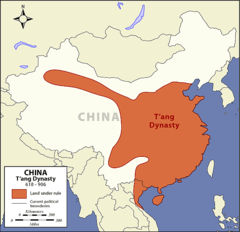 | 40 |
| 6763641936 | Song | 900-1300 |  | 41 |
| 6763644318 | Yuan | 1300-1400 |  | 42 |
| 6763654093 | Ming | 1400-1600 |  | 43 |
| 6763656816 | Umayyad | 700-800 |  | 44 |
| 6763660648 | Abbasid | 800-1300 |  | 45 |
| 6763663560 | Muhammad | 600 | 46 | |
| 6763665007 | Charlemagne | 800 | 47 | |
| 6763667221 | Ivan III | 1400 | 48 | |
| 6763669019 | Tamerlane | 1300 | 49 | |
| 6763672284 | Islam Spreads | 600-1500 |  | 50 |
| 6763675896 | Zheng He | 1400 |  | 51 |
| 6763677693 | Crusades | 1096 |  | 52 |
| 6763685881 | Spread of Bubonic Plague | 1350 |  | 53 |
| 6763685882 | Champa Rice | 1000-1300 | 54 | |
| 6763698220 | Fall of Qing | 1920 | 55 | |
| 6763702517 | Fall of Mughals | 1710 | 56 | |
| 6763704398 | Industrialism in England | 1700-1850 | 57 | |
| 6763708005 | Industrialism in Europe and USA | 1800's | 58 | |
| 6763710897 | Industrialism in Japan | 1890-1945 | 59 | |
| 6763717151 | Emancipation of Serfs | 1860 |  | 60 |
| 6763719350 | Passage of the 13th Amendment | 1865 | 61 | |
| 6763721335 | End of Atlantic Slave Trade | 1800's | 62 | |
| 6763723300 | Opium Wars | 1840-1842 | 63 | |
| 6763725457 | Taiping Rebellion | 1853-1863 | 64 | |
| 6763727707 | Simon Bolivar | 1780-1830 | 65 | |
| 6763729649 | Benito Juarez | 1806-1870 | 66 | |
| 6763733360 | French Revolution | 1790-1800 | 67 | |
| 6763735685 | Haitian Revolution | 1790-1800 | 68 | |
| 6763740730 | Meiji Restoration | 1870 | 69 | |
| 6763743867 | Congress of Vienna | 1814-1815 |  | 70 |
| 6763750182 | American War of Independence | 1776-1780 | 71 | |
| 6763754450 | Self-Strengthening Movement in China | 1860-1895 | 72 | |
| 6763759081 | Tanzimat in Ottoman Empire | 1040-1880 | 73 | |
| 6763760870 | Suez Canal | 1869 |  | 74 |
| 6763763215 | Panama Canal | 1910 |  | 75 |
| 6763766974 | Colonization of Australia | 1790 | 76 | |
| 6763766975 | Shaka Zulu | 1780-1830 | 77 | |
| 6763774105 | Colonization of Egypt | 1880 |  | 78 |
| 6763779526 | Battle of Adowa (Ethiopia v. Italy) | 1890 |  | 79 |
| 6763782088 | The First Railroads in Europe | 1830 | 80 | |
| 6763784652 | Mexican Revolution | 1810-1820 | 81 | |
| 6763786902 | Sepoy Rebellion | 1857-1858 | 82 | |
| 6763788683 | Crimean War | 1854-1856 | 83 | |
| 6763790254 | Berlin West Africa Conference | 1885 | 84 | |
| 6763818379 | Balfour Declaration | 1917 | 85 | |
| 6763824647 | Passage of the 19th Amendment | 1920 | 86 | |
| 6763828007 | Partition of India and Pakistan | 1947 | 87 | |
| 6763834875 | WWI | 1914-1918 | 88 | |
| 6763837828 | WWII | 1939-1945 | 89 | |
| 6763841095 | May Fourth Movement | 1919 | 90 | |
| 6763845441 | Treaty of Versailles | 1919 | 91 | |
| 6763851182 | The Long March | 1934-1935 | 92 | |
| 6763853883 | Bombing of Pearl Harbor | 1941 | 93 | |
| 6763856254 | Founding of UN | 1945 | 94 | |
| 6763858578 | Berlin Wall is Built | 1961 | 95 | |
| 6763860713 | US Stock Market Crash | 1929 | 96 | |
| 6763877511 | Russian Revolution | 1917 | 97 | |
| 6763880863 | CIA Coup d'Etat in Guatemala | 1954 | 98 | |
| 6772664214 | Founding of the People's Republic of China | 1949 | 99 | |
| 6772666857 | Decolonization of Ghana | 1957 | 100 | |
| 6772673170 | Vietnam War | 1955-1977 | 101 | |
| 6772676337 | Life of Gandhi | 1864-1948 | 102 | |
| 6772692137 | Indian Independence | 1947 | 103 | |
| 6772707494 | Formation of NATO | 1949 | 104 | |
| 6772711893 | Korean War | 1950-1953 | 105 | |
| 6772727373 | Formation of Israel | 1948 | 106 | |
| 6772734675 | Algerian War of Independence | 1954-1962 | 107 | |
| 6772755698 | Great Leap Foreword | 1958-1962 | 108 | |
| 6772763296 | Cuban Missile Crisis | 1962 | 109 | |
| 6772768608 | Cultural Revolution | 1966-1976 | 110 | |
| 6772776445 | Reign of Pol Pot | 1975-1979 | 111 | |
| 6772795192 | Soviet Invasion of Afganistan | 1979-1989 | 112 | |
| 6772800870 | Iranian Revolution | 1978-1979 | 113 | |
| 6772814273 | First Gulf War | 1990-1991 | 114 | |
| 6772820028 | Second Gulf War | 2003-2011 | 115 | |
| 6772829136 | Deng Xiaoping comes to power | 1978 | 116 | |
| 6772837766 | Peron is Elected President of Argentina | 1946 | 117 | |
| 6772862328 | Fall of the Berlin Wall | 1989 | 118 | |
| 6772865990 | Fall of USSR | 1991 | 119 | |
| 6772871131 | End of Apartheid | 1990s | 120 | |
| 6772878260 | 9/11 | September 11, 2001 | 121 |
AP Terms List #9 Flashcards
Terms : Hide Images
| 8154257724 | argument | a process of reasoned inquiry; a persuasive discourse resulting in a coherent and considered movement from a claim to a conclusion | 0 | |
| 8154267184 | claim of fact | asserts that something is true or not | 1 | |
| 8154279493 | claim of policy | proposes a change | 2 | |
| 8154281513 | claim of value | argues that something is good or bad, right or wrong | 3 | |
| 8154292497 | classical oration | five-part argument used by rhetoricians (know the 5 parts!) | 4 | |
| 8154298830 | deduction | a logical process whereby one reaches a conclusion by starting with a general principle or universal truth (major premise) and applying it to a specific case (minor premise) | 5 | |
| 8154312728 | induction | a logical process whereby the writer reasons from particulars to universals, using specific cases in order to draw a conclusion, which is also called a generalization | 6 | |
| 8154325847 | syllogism | a logical structure that uses the major premise and minor premise in order to reach a necessary conclusion | 7 | |
| 8154338500 | closed thesis | a statement of the main idea of the argument that also previews the major points the writer intends to make | 8 | |
| 8154341700 | open thesis | an open thesis is one that does not list all the points the writer intends to cover in the essay | 9 |
Models AP HuG Flashcards
Terms : Hide Images
| 7157648686 | Core-Periphery Model | A model that describes the core countries have overall power, and the semi-peripheral and peripheral have lower political, economic, and social power Peripheral and Semi-Peripheral depend on developed core countries for the capital while, Core countries use cheap labor from semi-peripheral and peripheral. All centered around the core. |  | 0 |
| 7157648687 | Peters Projection | maintains the area, but distorts the shape. The area accurate map maintains the land size of countries but creates a shape not true to the actual shape of the land. |  | 1 |
| 7157648688 | Mercator Projection | the direction is true, but the size and shape are distorted. |  | 2 |
| 7157648689 | Goodes Homosline | Maintains area but divides the oceans up distorting the direction |  | 3 |
| 7157648690 | Robinson | Equally distorts direction, distance, shape, and area (SADD) principles. | 4 | |
| 7157648691 | Scale | Scale is the relationship between a distance portrayed on a map and the same distance on the Earth. | 5 | |
| 7157648692 | Fuller Projection | The shape and size are accurate but the direction is completely lost |  | 6 |
| 7157648693 | Isoline Map | Map that shows lines or area connecting points of equal value |  | 7 |
| 7157648694 | Cartogram | size of the map equals the value | 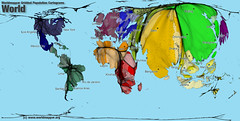 | 8 |
| 7157648695 | Dot Density Map | number of dots equals the frequency of the data. more dots, more frequently it occurs in the area and vice versa |  | 9 |
| 7157648696 | Proportional Symbol map | Symbol size equal value. Bigger dots typically mean larger value and vice versa |  | 10 |
| 7157648697 | Chloropleth Map | Shade of the map indicated the density or value (colors too) |  | 11 |
| 7157648698 | Malthus Population Catastrophe | He predicted that global population increase and the food available could not sustain the growing population |  | 12 |
| 7157648699 | Neo Malthusians | Theory that agrees with Malthus but also says that we are also depleting natural resources with the growing population and accounts for the massive population growth in least developed countries. And says we need to control population growth but is hard in LDCs because of lack of medical resources. CONTRACEPTION | 13 | |
| 7157648700 | Boserup's Hypothesis of Population (anti-Malthusian) | Population growth stimulates the advances is agriculture meaning that more food will be produced when faced with the challenge of a growing population. Contradicts malthusians |  | 14 |
| 7157648701 | Population Pyramid Components | -shows the age and genders of a given population in bar graph form. Age groups typically show five years (known as cohorts) . -Shape of the graph can vary due to birth rates and death rates. -dependency ratio can be determined ( this is the number of too young or too old compared to the working class cohorts, the working class cohorts have to support the too young or too old.) |  | 15 |
| 7157648702 | Population Pyramid Example Shapes | There are five stages to the population pyramid that make unique shapes. 1. Stage one is rapid expansion and has high birth rates and high death rates, mostly found super least developed countries. life expectancy is very low 2. Stage two is still expansion at higher rates characterized by still high birth rate but fall in death rate by medical supplies becoming more common. Still is more least developed countries transitioning into a more stable country 3. declining birth rate and lower death rate, more people are starting to live to an older age 4. Low birth rate and low death rate, starting to level out more and will have high dependency ratio 5. Birth rate has fallen below death rate and the population has started declining in the lower cohorts STAGE 1 AND 2 CAN BE COMBINED AS ONE |  | 16 |
| 7157648703 | Demographic Transition Model | It is used to explain and predict human population growth. It assumes that ALL countries go through four stages of population growth. It measures crude birth rate, crude death rate, and the population of a country. Stage 1-low growth- because of the high death rate even though it has a high birth rate. (all countries have passed this) Stage2- high growth-High birth rate, declining death rate, increasing rate of natural increase (African countries) Stage 3-moderate growth- declining birth rates, declining death rates, decreasing rate of natural increase but still population growth (latin America countries) stage 4- low growth- birth rate equals death rate== usually service based industries, stable rate of growth (Western European Nations) stage 5- declining rate of natural increase | 17 | |
| 7157648704 | Demographic Transition Model Visual | The visual in one graph through the five stages |  | 18 |
| 7157648705 | Epidemiologic Transition Model | Focuses on the cause of each step in the Demographic transition model Stage 1-infectious diseases and famine- ((plague in the1300s killed 40 percent of Europeans)) Stage 2- epidemic and contagious diseases by overcrowding. Less pandemics because semi-improved health conditions (19th-century cholera) Stage 3- Human created diseases like cardio and cancer stage 4- humans live longer with the same diseases from stage three because better, longer treatments | 19 | |
| 7157648706 | Epidemiologic Transition Model | The visuals for ETM As the stages increase in picture, the death rates decrease due to medical advances |  | 20 |
| 7157648707 | Gravity Model of Spatial Interaction | 1)Measures the interactions between two places 2) Compares the distance between two cities to figure how much pulls for migration MAIN IDEA -big places have a larger pull -places closer together have a greater attraction so more migration between the two The formula is POP 1 * POP 2 / distance between two cities (subtract) ^2 ( then raise two second power) |  | 21 |
| 7157648708 | Ravenstein's Laws of Migration | created by english geographer, stated his principles are the basic principles for all migrations 1. most migrants go short distances if traveling in the same country. this refers back to distance decay( interactions increase or decrease when the distance between two places decreases or increases) 2. If a migrant is going to travel a long distance, it is most likely for a large city )this refers to gravity model because bigger places have a bigger pull) 3. rural populations are most likely to move to urban populations for better opportunities especially with jobs 4. individuals are more likely to migrate then families. Easier to pick yourself up and move then with family ( young children and older people) 5. every migration to a place causes a counterstream (movement that runs opposite of migration) 6. most migrants are young males (looking for work to support their families ) |  | 22 |
| 7157648709 | Zelinsky Model of Migration Transition | Based on the demographic transition model ! each stage in the DTM has a unique pattern of migration. Stage 1: no migration, just movement that is cyclic or seasonal Stage 2: has the MOST migration because people are moving from rural farms to urban cities in search of work and people will move internationally. Usually people from stage two will move to stage three and four nations Stage 3 and 4: internal migration (within the nation), From cities to suburbs! |  | 23 |
| 7157648710 | Zelinsky Model of Migration Transition Visual | Shows three stages around the world and their chain migrations movements |  | 24 |
| 7157648711 | Indo-European Language | Indo European is the worlds largest family in languages There are 8 branches in the indo european family. 1. Indo-Iranian (south Asia)- HAS THE MOST SPEAKERS IN THE WORLD 2. Romance (Southwest Europe and Latin America)- MEANS IT COMES FROM LATIN 3. Germanic (Northwestern Europe and North America)- 4. Balto-Slavic (Eastern Europe) 5. Albanian 6. Armenian 7. Greek 8. Celtic English comes from the west germanic group. |  | 25 |
| 7157648712 | I-E Language Diffusion Theories (Agriculture, Conquest) | -- believed the Indo-European languages all came from Proto-Indo-European--- Two theories of diffusion: 1. Conquest theory - from the Kurgan hearth in steppe regions ( warriors who conquered asia and europe spreading the language) 2. Agricultural migration theory - from the Anatolian hearth in Turkey (peaceful farmers, spread language by trade and agriculture) | 26 | |
| 7157648713 | Domino Theory | It was thought if one region became communistic, then the ideal would diffuse to the surrounding countries and then those countries would become communistic and so on. PROMOTED BY THE US | 27 | |
| 7157648714 | Heartland Theory | Theory proposed that whoever controls eastern Europe controls the heartland, who then controls the world island. PRO WORLD DOMINATION Ultimately it's whoever controlled eurasia, would then control its peripheral countries and then the entire world island (Asia, europe) |  | 28 |
| 7157648715 | Rimland Theory | The opposite of heartland theory, not the heart of the world island! whoever controls the coastal area will control the world island, which in then says will control the world. | | 29 |
| 7157648716 | Rank Size Rule | Helps determine the urban hierarchy -The nth largest city's population size in a region is 1/n the size of the region's largest city population | 30 | |
| 7157648717 | World Systems Theory (Wallerstein) | The theory that stated if the developed world changed, it would ultimately cause a change in the developing world. (HAS A THREE TIER SYSTEM THAT SHOWS THIS) Core / semi-peripheral/ peripheral Core exploits peripheral by using their labor and natural materials peripheral are dependent core for MONEYYYY | 31 | |
| 7157648718 | WST visual | Shows the ranking and hierarchy |  | 32 |
| 7157648719 | von Thünen's Agricultural Model | Model that shows products and their proximity to the market. It's located in rings with the central city the inner core. ITS BASICALLY HOW THE FARMLAND WILL BE USED IN PROXIMITY TO THE CITY. The order the rings are in are based on how perishable the products is (needs to be super close to market) and how expensive it was to transport. Inner-market 1st ring-dairy and market gardening 2nd ring- forestry (heavy logs) 3rd ring- field crops(didn't spoil and light to transport) 4th ring- animal grazing cause land is cheap FIRST THREE RINGS ARE INTENSIVE LAST RING IS EXTENSIVE | 33 | |
| 7157648720 | von Thunen visual | CONCENTRIC RINGSSSS |  | 34 |
| 7157648721 | First Agricultural Revolution | AKA KNOWN AS NEOLITHIC REVOLUTION the switch 12,000 years ago from hunting and gathering (very nomadic) to settling down and growing crops (also using animals for livestock) and they realized that seeds could be used to grow foooood |  | 35 |
| 7157648722 | Second Agricultural Revolution | Around the 17th century Europe AGRICULTURE BOOMED ****was before the industrial revolution innovations made it easier for farmers to use less land and labor but produce the same amount of food. (tractor, cotton gin, plows) |  | 36 |
| 7157648723 | Third Agricultural Revolution | AKA GREEN REVOLUTION 1960s-1970s-enough food to feed the whole world -science advances (better fertilizers, better seeds) -Genetically modified foods came into play- created desirable traits in seeds by altering genes to make the "perfect crop" -big agribusiness helping globalize the world -poor countries got behind though because they could not afford the technologies - |  | 37 |
| 7157648724 | Liberal Models of Development (self-sufficiency / international trade | *All nations can develop theory * 1. Self Sufficiency spin on LMD- (used by China, India, Eastern European and African Nations) -money within the country will be spent EVENLY within all sectors of the country so the country will grow together. -businesses are kept LOCAL or NATIONAL -NO INTERNATIONAL TRADE -USES TRADE BARRIERS TO PREVENT INTERNATIONAL TRADE 2. International Trade spin on LMD -countries see what they have in abundance of and trade with other nations that want it. SUPPLY AND DEMAND ON INTERNATIONAL LEVEL | 38 | |
| 7157648725 | Structuralist Model of Development (dependency theory) | Theory that the world will never let the Least developed nations fully develop like the current modern day countries. KEEPING THEM DOWN -says that they will never be able to catch up with the big boys resource and tech wise | 39 | |
| 7157648726 | New International Division of Labor | the process of developed countries' jobs going to least developed countries because they have cheaper labor and fewer regulations. -Multinational companies- are focusing on low-cost production in LDCs and high profits in MDCs -Outsourcing- allows a company to relocate some or all of its production to cheaper locations (DOESNT HAVE TO BE OUT OF THE COUNTRY) -Offshore companies- do the vast majority of their business (production) outside of their home nation |  | 40 |
| 7157648727 | Rostow's Stages of Growth (Modernization Model) | The model that shows how each country develops when it goes through the stages (stages of the DTM similar) 1. STAGE ONE-TRADITIONAL SOCIETY -not started development -money is focused on military and religion -subsistence (feed your own family) agriculture 2. STAGE TWO-PRECONDITIONS FOR TAKEOFF -external influences start up some economic activity -country follows educated elitist and invest in technology and infrastructure -making the bones of a country 3. STAGE THREE-TAKE OFF -rapid growth in one area BUT other areas remain the same ole same ole 4. STAGE FOUR-DRIVE TO MATURITY -workers are skilled and educated -economic activities spread to all sectors of industry and market 5. STAGE FIVE-MASS CONSUMPTION -economic shift from industry to services |  | 41 |
| 7157648728 | Fordism | Transformed industrial ways--MASS PRODUCTION--- one task is done by one person in a process over and over again |  | 42 |
| 7157648729 | Post-Fordism | TEAM WORK MAKES THE DREAM WORK modern day spin on fordism where a team of people are assigned a task -very flexible -team performs a variety of task |  | 43 |
| 7157648730 | Location Interdependence Theory (Hotelling) | PROFIT MAXIMIZATION THEORY -Best location was next to competitors or IN THE MIDDLE OF THE MARKET because it draws a larger amount of customers in because customers will go to the closest market possible |  | 44 |
| 7157648731 | Weber Model of Industrial Location (Least Cost Theory) | FOCUSED ON PRODUCTION PRICE MINIMIZATION -Model that showed where industries should locate their factories relative to the market or source of raw materials. -three parts that affect where it should locate 1. labor 2. transportation 3. agglomeration 1. labor-locate where labor is the cheapest 2. bulkgaining industries should locate closer to the market because the heaviest material will be at the end of production.......bulk reducing industries locate near the raw material because it loses weight as production goes on 3. agglomeration helps by having similar industries to share similar equipment, talent, and workers | 45 | |
| 7157648732 | Weber visual | ITS LOCATED NEAR THE HEAVIER MATERIAL< WATER |  | 46 |
| 7157648733 | Profit Maximization (Losch's Zone of Maximization) | CALCULATES WHAT REGION WILL CREATE THE MOST PROFIT. AREA WITH THE GREATEST AMOUNT OF INCOME-COST OF PRODUCTION . -zone of profitability is where the business can make money -doesn't always work due to the substitutional principle |  | 47 |
| 7157648734 | Bid-Rent Theory (Land Rent) | -BIG BUSINESSES (RETAIL) WILL SPEND LOTS OF MONEEEY TO GET THE BEST SPOT NEAR THE CENTRAL BUSINESS DISTRICT. -manufacturing doesn't need to be close to CBD so they will pay cheaper prices of land farther away from CBD -suburbs pay the cheapest price because they are farthest away from CBD |  | 48 |
| 7157648735 | Bid-Rent visual | Farther away? lower price closer to the CBD? mpre expensive | | 49 |
| 7157648736 | Borchert's Model of Urban Evolution | Predict the growth and evolution of cities based on innovative ideas around five phases of transportation STAGE 1:sailboats and wagons! main way of transportation from 1790-1830 STAGE 2: iron horse transportation 1830-1870 STAGE 3: steel horse transportation 1870-1920 STAGE 4: auto and air 1920-1970(planes, cars) STAGE 5: high technology (jets, supercars, rockets) | 50 | |
| 7157648737 | Central Place Theory (Christaller) | Explained the patterns of urban land use!! -CENTRAL PLACES PROVIDED FOR PEOPLE IN THE SURROUNDING RURAL AREA -THRESHOLD is the minimum amount of people needed to exist in that area -range is the maximum distance a person will travel to go to the business -more unique a business is, the higher the threshold and range -have a hierarchy of village, town , city and central place (hence the dots within the hexagons) | 51 | |
| 7157648738 | CPT Visual | red dot is central city surrounded by the city, towns, and villages in HEXAGON shape |  | 52 |
| 7157648739 | Concentric Circle (Burgess) | Theory that has concentric rings around the central business district. -each ring has consistently the same type of things in them -2nd ring is industry and slums (real close to the central business district) -3rd ring is the working class ring (easy travel distance to factories) -4th ring is middle-class house, farther away from city because they have enough money to pay for commute but are not quite in the commuter zone -rich people zone or commuter zone, people can afford to commute and typically have nice houses | 53 | |
| 7157648740 | Concentric Model visual | rings grow out from central business district |  | 54 |
| 7157648741 | Sector Model (Hoyt) | City grows out from the central business district in wedges. Usually due to transportation advances -middle class around the high end people -low class people around the manufacturing and industry sector | 55 | |
| 7157648742 | Sector model visual | Central district is in the middle -wedges grow out from the CBD |  | 56 |
| 7157648743 | Peripheral Model | central business district is surrounds by suburbs and businesses all tied together by a beltway that surrounds the city, suburbs, and businesses. beltway will lead out to a commerical strip and edge cities | 57 | |
| 7157648744 | Peripheral model visual | EDGE CITIES ON THE PERIPHERAL |  | 58 |
| 7157648745 | Multiple-Nuclei Model | The central business district is not the only focal point that people will surround around. There will be other multiple nodes like airports and universities. -people will move towards some nodes while avoiding others | 59 | |
| 7157648746 | Multiple-Nuclei visual | SEE THE MULTIPLE NODES THAT PEOPLE WILL CROWD AROUND |  | 60 |
| 7157648747 | Urban Realms Model | how a metropolis is spread out, realms link together and surround the central city which forms this gigantic metropolis -each realm is a seperate political, social, and economic entity linked together | 61 | |
| 7157648748 | Urban realms visual | multiple realms hook onto another and form the glob of a metropolis in picture |  | 62 |
| 7157648749 | Latin American Cities Model | The center is the central business district the spine that comes off the central business district is for the wealthy, usually contains commercial residentials. Zone of maturity is the surrounding part of the central business district that has "matured" meaning all the infrastructure is complete and is well functioning. Zone of Situ accretion is the middle between the zone of maturity and the squatter settlements. It isn't really poor, but it's not fully developed. Zone of peripheral squatter settlements is the outermost ring farthest away from the central business district. It usually has little to no infrastructure and is a very poor region consisting of squatter homes | 63 | |
| 7157648750 | Latin American cities visual | Middle class usually surronds both sides of the elite spine. |  | 64 |
| 7157648751 | SE Asian Cities Model | This model lacks a central business district, but it does have a port that shares many characteristics of a central business district. Zones surrounding the port are western commercial zone, government zone, alien commercial zone, and high-class zones. Mainly in the most developed parts of the city. Then there are squatter areas and suburbs on the next to last ring of the model, and finally on the outer level gardening zone (because land it cheapest away from port) Some industries are building on the very peripheral of the city | 65 | |
| 7157648752 | SE Asian cities visual | Mixed land use zones are usually a mixture of commercial and "tradition central business district" |  | 66 |
| 7157648753 | African Cities Model | Contains three main central business districts that cluster in the middle of the city : traditional-single story buildings with traditional arch, colonial-vertical development, and market-open air, informal. Lack a lot of infrastructures so there are few roads but the main one does go through the three CBDs. Ethnic and mixed neighborhoods surround three CBDs which are then the squatter settlements are the informal townships. | 67 | |
| 7157648754 | African cities visual | Moves from the richest in the center to the poorest on the peripheral part of the city |  | 68 |
APES Flashcards
Terms : Hide Images
| 10726277550 | tradgedy of the commons | a term used in social science to describe a situation in a shared-resource system where individual users acting independently according to their own self-interest behave contrary to the common good of all users by depleting or spoiling that resource through their collective action. | 0 | |
| 10726292542 | Dieback | a condition in which a tree or shrub begins to die from the tip of its leaves or roots backward, owing to disease or an unfavorable environment. | 1 | |
| 10726305197 | contraceptive | a device or drug serving to prevent pregnancy. | 2 | |
| 10726315924 | Emmigration | the act of leaving one's own country to settle permanently in another; moving abroad | 3 | |
| 10726319591 | Immigration | the action of coming to live permanently in a foreign country. | 4 | |
| 10726510152 | Family Planning | planning on how many kids, and when you want to have them. | 5 | |
| 10726527240 | Baby Boom | a temporary marked increase in the birth rate, especially the one following World War II. | 6 | |
| 10726545518 | GDP | Gross Domestic Product: the total value of goods produced and services provided in a country during one year. | 7 | |
| 10726574849 | GNP | Gross national product: a temporary marked increase in the birth rate, especially the one following World War II. | 8 | |
| 10726613943 | Per Capita | for each person; in relation to people taken individually. | 9 | |
| 10726626415 | age stucture | description of how many individuals fit into particular age categories; determines those of reproductive age/size of next generation | 10 | |
| 10726669922 | Migration | Movement into or out of specific areas | 11 | |
| 10726675112 | infant mortality rate | # of babies per/1,000 who die before their first birthday | 12 | |
| 10726709504 | The GDP divided by the countries total population at mid year. | Per Capita GDP | 13 | |
| 10726730017 | Doubling Time Formula | 70/growth rate | 14 | |
| 10726745815 | Natural Capital | The world's stocks of natural assets which include geology, soil, air, water and all living things. | 15 | |
| 10726764575 | RFR (replacement fertility rate) | Replacement Fertility Rate: The average number of children born per woman at which a population exactly replaces itself from one generation to the next, without migration. | 16 | |
| 10726804892 | Graying Population | Graying Population: Population ageing is an increasing median age in the population of a region due to declining fertility rates and/or rising life expectancy. | 17 | |
| 10726826656 | I=PAT | Impact = Population x Affluence x Technology | 18 | |
| 10726831514 | Enviornmental Degradation | The deterioration of the environment through depletion of resources such as air, water and soil; the destruction of ecosystems; habitat destruction; the extinction of wildlife; and pollution. | 19 | |
| 10726853763 | Ecosystem Services | The many and varied benefits that humans freely gain from the natural environment and from properly-functioning ecosystems. | 20 | |
| 10726871000 | Growth Rate Formula | (Crude birth rate + immigration rate) - (Crude death rate + emigration rate) = Growth rate | 21 | |
| 10726912722 | Planetary Management | The intentional global-scale management of Earth's biological, chemical and physical processes and cycles (water, carbon, nitrogen, sulfur, phosphorus, and others). | 22 | |
| 10726937302 | ecological footprint | The impact of a person or community on the environment, expressed as the amount of land required to sustain their use of natural resources. | 23 | |
| 10726944729 | Biocapacity | an estimate of its production of certain biological materials such as natural resources, and its absorption and filtering of other materials such as carbon dioxide from the atmosphere. | 24 | |
| 10726973514 | Baby-Bust Generation | A temporary marked decrease in the birth rate. Consists of people born between 1965 and 1976 | 25 | |
| 10727009673 | world growth rate | 1.09% | 26 | |
| 10727054002 | graying population | Evidenced by a population pyramid showing a higher number of older, or elderly, people in its projection than younger, working-age people. The pyramid is top-heavy. | 27 | |
| 10727119953 | Linear Growth | Growth in which a quantity increases by some fixed amount during each unit of time. | 28 | |
| 10727128670 | population density | Number of individuals per unit area | 29 | |
| 10727147847 | Population Growth Momentum | population growth at the national level that would occur even if levels of childbearing immediately declined to replacement level. For countries with above-replacement fertility | 30 | |
| 10727170611 | Dispersion | the pattern of distribution of individuals within a habitat. | 31 | |
| 10727185588 | low-throughput economy | Economy based on working with nature by recycling and reusing discarded matter; preventing pollution; conserving matter and energy resources by reducing unnecessary waste and use; and building things that are easy to recycle, reuse, and repair. | 32 | |
| 10727204288 | sustainable yield | Ecological yield that can be extracted without reducing the base of capital itself, the surplus required to maintain nature's services at the same or increasing level over time. Example, in fisheries the basic natural capital decreases with extraction, but productivity increases; so the sustainable yield is within the ranch that the natural capital together with production are able to provide satisfactory yield. | 33 | |
| 10727216061 | renewable resource | A natural resource that can be replaced at the same rate at which the resource is consumed | 34 | |
| 10727219570 | nonrenewable resource | Something produced in nature more slowly than it is consumed by humans | 35 | |
| 10727231004 | enviornmental ethics | A search for moral values and ethical principles in human relations with the natural world. | 36 | |
| 10727234429 | economic poverty | a lack of money and other resources | 37 | |
| 10727251247 | exponential growth | growth whose rate becomes ever more rapid in proportion to the growing total number or size. | 38 | |
| 10727264044 | China's One Child Policy | - Law created in 1979 to slow down population growth and to prevent overpopulation | 39 | |
| 10727284011 | Full-cost pricing | Pricing method that uses all relevant variable costs in setting a product's price and allocates those fixed costs not directly attributed to the production of the priced item. | 40 | |
| 10727331609 | Natural Income | Natural Income is the annual yield from such sources of natural capital | 41 | |
| 10727377057 | Enviornmental policy | Official rules concerning the environment that are implemented by the government | 42 | |
| 10727381779 | developing countries | a poor agricultural country that is seeking to become more advanced economically and socially. | 43 | |
| 10727396236 | enviornmental worldview | How people think the world works, where they fit, and ethics. | 44 | |
| 10727413006 | cultural carrying capacity | the maximum number of people who could live in reasonable freedom and comfort indefinitely, without decreasing the ability of the earth to sustain future generations. | 45 | |
| 10727451826 | crude birth rate | The total number of live births in a year for every 1,000 people alive in the society. | 46 | |
| 10727451827 | crude death rate | The total number of deaths in a year for every 1,000 people alive in the society. | 47 |
Pages

Need Help?
We hope your visit has been a productive one. If you're having any problems, or would like to give some feedback, we'd love to hear from you.
For general help, questions, and suggestions, try our dedicated support forums.
If you need to contact the Course-Notes.Org web experience team, please use our contact form.
Need Notes?
While we strive to provide the most comprehensive notes for as many high school textbooks as possible, there are certainly going to be some that we miss. Drop us a note and let us know which textbooks you need. Be sure to include which edition of the textbook you are using! If we see enough demand, we'll do whatever we can to get those notes up on the site for you!
