AP Notes, Outlines, Study Guides, Vocabulary, Practice Exams and more!

ap world history ch.16-19 Flashcards

Terms : Hide Images
5642944301charlemagne(768-814 CE) Crowned king in 800 CE by the pope; can be compared to Harsha; brought back unified rule to Europe only during his life; used the missi dominici to check up on imperial officials.0
5642949278Medievelmiddle ages in europe the period of history in between ancient and modern times1
5642956686Byzantine Empire(330-1453) The eastern half of the Roman Empire, which survived after the fall of the Western Empire at the end of the 5th century C.E. Its capital was Constantinople, named after the Emperor Constantine.2
5642965571Kieven Russianame of Russia that is split into 2 parts3
5642968424Great Western SchismA division in the Latin (Western) Christian Church between 1378 and 1417, when rival claimants to the papacy existed in Rome and Avignon. (p. 411)4
5642970289ManorIn medieval Europe, a large, self-sufficient landholding consisting of the lord's residence (manor house), outbuildings, peasant village, and surrounding land.5
5642972312SerfIn medieval Europe, an agricultural laborer legally bound to a lord's property and obligated to perform set services for the lord.6
5642974431VassalA lord who was granted land in exchange for service and loyalty to a greater lord7
5642977329PapacyThe central administration of the Roman Catholic Church, of which the pope is the head.8
5642982908Holy Roman EmpireLoose federation of mostly German states and principalities, headed by an emperor elected by the princes. It lasted from 962 to 1806.9
5642989406Investiture ControversyDispute between the popes and the Holy Roman Emperors over who held ultimate authority over bishops in imperial lands.10
5642991652MonasticismA way of life in which men and women withdraw from the rest of the world in order to devote themselves to their faith11
5642994554Horse CollarHarnessing method that increased the efficiency of horses by shifting the point of traction from the animal's neck to the shoulders; its adoption favors the spread of horse-drawn plows and vehicles.12
5642997033CrusadesA series of holy wars from 1096-1270 AD undertaken by European Christians to free the Holy Land from Muslim rule.13
5643000511Fiefland granted by a lord to a vassal in exchange for loyalty and service14
5643003291Gothic CathedralLarge churches originating in twelfth-century France; built in an architectural style featuring pointed arches, tall vaults and spires, flying buttresses, and large stained-glass windows.15
5643006827Three-field systemA rotational system for agriculture in which one field grows grain, one grows legumes, and one lies fallow. It gradually replaced two-field system in medieval Europe.16
5643006828Black DeathA deadly plague that swept through Europe between 1347 and 135117
5643009699Water wheelA mechanism that harnesses the energy in flowing water to grind grain or to power machinery. It was used in many parts of the world but was especially common in Europe from 1200 to 1900.18
5643013973Hanseatic Leaugenorth european trade network, increasing connections and capitalism19
5643016409GuildA medieval organization of crafts workers or trades people.20
5643019723PilgrimageA journey to a place considered sacred for religious purposes.21
5643022244UniversitiesThey played a major role in spreading Renaissance ideas from Italy to northern Europe22
5643024162ScholasticismA philosophical and theological system, associated with Thomas Aquinas, devised to reconcile Aristotelian philosophy and Roman Catholic theology in the thirteenth century.23
5643026530St.Thomas Aquinas24
5643032728Printing PressA mechanical device for transferring text or graphics from a woodblock or type to paper using ink. Presses using movable type first appeared in Europe in about 1450.25
5643032730Reconquesta series of campaigns by Christian states to recapture territory from the Muslims (Moors), who had occupied most of the Iberian Peninsula in the early 8th century26
5643036081Hundred Years WarSeries of campaigns over control of the throne of France, involving English and French royal families and French noble families.27
5693799262what happened to Roman society after the breakdown of Roman empire?28
5693808810How was the church a unifying force during the dark ages?The church was a light because they spread faith and lived the teachings of Christ. The monks evangelized the invading tribes. They a,so taught the faith and maintained the culture by teaching many subjects when there was little government structure after the fall of Rome. The church was a sign of hope and stability during medieval times29
5693815719What were the various roles castles played during the dark ages?30
5693827472Describe the code of chivalry. What were the requirements of knights under this code?The code of chivalry is a code of ethics that the knights must follow. The code tells the knights about how they must act in an honorable, modest kind of manner. For example they had to defend the Church and defenseless people, treat their prisoners like honored guests, and treat aristocratic women with tenderness and respect.31
5693857703What were some motives for Viking expansion in Europe?Mein Kampf- believes people need more land/ raw materials in east; killed other Slavic pops. (nationalism) and repopulate w/ Germans; starve Slavic people to give food for Germans32
5693883540Why was the Norman Conquest of England such a pivotal even in English history?Because it makes a France vassal the king of England33
5693931056Describe the three primary elements that characterized feudalism.34
5693941551Describe some of the crimes that took place during the Middle Ages in Europe.35
5694027349define the word heresy(n.) an opinion different from accepted belief; the denial of an idea that is generally held sacred36
5694040092What were the punisments for witches during the Middle Ages?37
5694043909What were the causes of the Crusades?38
5694049253What caused the disintergration of the Kieven State39
5694054918What were the effects of Mongol invasion of Russia40
5694064739Discuss the rule and impact of the Vikings in meidivel Europe41
5694071972How did the institution of feudalism develop,and how did it operate42
5694079214Discuss marriage practices in Medieval Europe. How did they vary by class, and how was marriage experienced differently by men and women?43
5694092517What functions did monasteries and nunneries serve?44
5694098241What were some of the challenges that the Christian Church underwent from Roman times to the Middle Ages?45
5694102560Compare and contrast the role and position of women in Latin Europe and the Byzantine Empire.46
5694105535Discuss European attempts at agricultural expansion. Why was it attempted, what was the process involved, and how successful was it? What new agricultural technologies developed during the Middle Ages?47
5694113703Describe the institution of the university. How did it arise, and it ways was it similar to or different from Islamic madrasa? When did the first universities develop in Europe? Besides religion, what topics did these universities teach and where did the knowledge come from?It focuses on educating and training soldiers and leaders on the key knowledge, skills and attributes required to operate in any environment.48
5694117299Discuss the attempts of King John of England at absolute control. Was he successful? Why, or why not?49
5694125672Who extended the system of feudalism into England and from what people was he descended from?50
5694130238Where was the Hanseactic League and what was its purpose? What was the purpose of a guild?51

Ap World History Flashcards

Period 1 - Technological and Environmental Transformations, c. 8000 BCE to c. 600 BCE, Period 2 - Organization and Reorganization of Human Societies, c. 600 BCE to c. 600 CE, Period 3 - Regional and Transregional Interactions, c. 600 CE to c. 1450 CE, Period 4 - Global Interactions, c. 1450 CE to c. 1750 CE, Period 5 - c. 1750 CE to c. 1900 CE, Period 6 - c. 1900 CE to present

Terms : Hide Images
9918917620Key Concept 1.1 Big Geography and the Peopling of the Earth-Archaeologists have found evidence that these people travelled around in small, foraging bands that were basically egalitarian. Because they had no consistently reliable source of food, they were almost always on the move.0
9918917621Key Concept 1.2 The Neolithic Revolution and Early Agricultural Societies- The practice of agriculture transformed the social and economic characteristics of human societies. It also changed the nature of the crops that were farmed.1
9918917622Key Concept 1.3 The Development and Interactions of Early Agricultural, Pastoral, and Urban Societies- Trade between these people spread ideas, technologies and even diseases. And as the needs of urban centers grew, the struggle for limited resources often led them to military conflict. And also, develop states, or governments, organized by bureaucracies and legitimized often by religious belief.2
9918917623Key Concept 2.1 The Development and Codification of Religious and Cultural Traditions- Rulers appealed to these belief systems to justify their actions; common ethical and ceremonial traditions gave cohesion to society.Also as, beliefs were rarely homogeneous and deviations, reform movements, and differing interpretations could challenge the social order.3
9918917624Key Concept 2.2 The Development of States and Empires- As empires acquired massive wealth, the unequal distribution of this wealth across social classes placed enormous pressure on the political and social order. Eventually, all of the classical civilizations could not deal with the problems created by their own internal or external crises.4
9918917625Key Concept 2.3 Emergence of Transregional Networks of Communication and Exchange- Luxury goods and raw materials traveled in caravans and on boats to distant markets. Traveling with them were belief systems, ideas, technology, culture and diseases.5
9918917626Key Concept 3.1 Expansion and Intensification of Communication and Exchange NetworksImproved transportation technologies and commercial practices led to an increased volume of trade, and expanded the geographic range of existing and newly-active trade networks. https://resourcesforhistoryteachers.wikispaces.com/Key+Concept+3.16
9918917627Key Concept 3.2 Continuity and Innovation of State Forms and Their InteractionsEmpires collapsed and were reconstituted; in some regions new state forms emerged. Following the collapse of empires, most reconstituted governments, including the Byzantine Empire and the Chinese dynasties — Sui, Tang, and Song — combined traditional sources of power and legitimacy with innovations better suited to the current circumstances. Source: https://resourcesforhistoryteachers.wikispaces.com/Key+Concept+3.27
9918917628Key Concept 3.3 Increased Economic Productive Capacity and Its ConsequencesInnovations stimulated agricultural and industrial production in many regions. Agricultural production increased significantly due to technological innovations. source: https://resourcesforhistoryteachers.wikispaces.com/Key+Concept+3.38
9918917629Key Concept 5.1 Industrialization and Global CapitalismIndustrialization fundamentally altered the production of goods around the world. It not only changed how goods were produced and consumed, as well as what was considered a "good," but it also had far-reaching effects on the global economy, social relations, and culture.9
9918917630Key Concept 5.2 Imperialism and Nation-State FormationIndustrializing powers established transoceanic empires.II. Imperialism influenced state formation and contraction around the world.III. New racial ideologies, especially Social Darwinism, facilitated and justified imperialism.10
9918917631Key Concept 5.3 Nationalism, Revolution, and ReformI.The rise and diffusion of Enlightenment thought that questioned established traditions in all areas of life often preceded the revolutions and rebellions against existing governments.II. Beginning in the eighteenth century, peoples around the world developed a new sense of commonality based on language, religion, social customs and territory. These newly imagined national communities linked this identity with the borders of the state, while governments used this idea to unite diverse populations.III. Increasing discontent with imperial rule propelled reformist and revolutionary movements11
9918917632Key Concept 6.1 Science and the Environment New Technologiesrapid scientific advances. New communication & transportation eliminated geographic distance. New scientific paradigms/ understandings of the world.12
9918917633Key Concept 6.2 Global Conflicts and their Consequences:Europe dominated c.1900 but empires decline. New political form increase by c.2000. Older land-based empires collapsed. Colonies achieved independence through either negotiation or armed struggle.13
9918917634Key Concept 6.3 New Conceptualizations of Global Economy, Society, & Culture. States responded to economic challenges in various waysCommunist states directed the economy & oversaw development of industry. US & W. Europe states played minimal role until Great Depression, when they took more active role.14

AP World History Strayer Chapter 8 Vocabulary Flashcards

Unit Three Part Three

Terms : Hide Images
11399345944Sui Dynasty*Definition:* Short dynasty between Han and Tang. *Significance:* Built Grand Canal, strengthened government, and introduced Buddhism to China.0
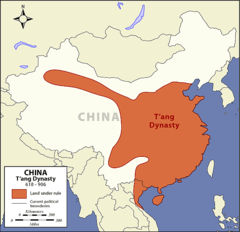
11399345945Tang Dynasty*Definition:* Dynasty often referred to as "China's Golden Age". (618 CE - 907 CE) *Significance:* China expands to Vietnam, Imperial examination perfected. New technologies (paper money, gunpowder, junks, etc...) through silk road.1
11399345946Song Dynasty*Definition:* (960 CE - 1279 CE) Started by Tai Zu. *Significance:* Million people there. Foot binding, magnetic compass, navy, and traded with India and Persia.2
11399345947Hangzhou*Definition:* Capital of later Song Dynasty. *Significance:* Permitted overseas trading with population exceeding 1 million.3
11399345948Economic Revolution*Definition:* Rapid population growth, economic speculation, increase in industrial production and innovations (Song dynasty). *Significance:* Made China "by far the richest, most skilled, and most populous country on Earth."4
11399345949Foot Binding*Definition:* Practice in Chinese society to mutilate women's feet to make them smaller. *Significance:* It was associated with images of female beauty and eroticism.5
11399345950Tribute System*Definition:* Chinese method of dealing with foreign lands and people that assumed subordination of all non-chinese authorities. They required all foreigners wanting access to China to pay tribute. *Significance:* System the attempted to regulate their relationships with Northern Nomads.6
11399345951Khitan/Jurchen People*Definition:* Nomadic people who established a state that included parts of Northern China. *Significance:* Was a nomadic group who "picked up the pieces" after collapse of Tang Dynasty.7
11399345952Silla Dynasty (Korea)*Definition:* First ruling dynasty to bring a measure of political unity to Korean Peninsula. *Significance:* Allied with China to bring political unity to the peninsula for the first time.8
11399345953Hangul*Definition:* Phonetic alphabet in Korea (14th century). *Significance:* Helped Korea move toward greater cultural independence.9
11399345954Shotoku Taishi*Definition:* Japanese statesman who launched the drive to make Japan into centralized bureaucratic state modeled on China. *Significance:* Launched a series of large-scale missions to China.10
11399345955Bushido*Definition:* "Way of the Warrior". *Significance:* A distinct set of values for Samurais.11
11399345956Chinese Buddhism*Definition:* Entered China through cultural accommodations. *Significance:* Useful to helping nomadic rulers govern northern China because it was foreign.12
11399345957Emperor Wendi*Definition:* Sui Emperor who patronized Buddhism. *Significance:* He was responsible for the monasteries constructed at the base of China's 5 sacred mountains.13
11399345958Trung Sisters*Definition:* Two sisters who began the Vietnam revolution against China *Significance:* They became a symbol for Vietnam to look towards during Chinese rule14
11399345959Chu nom*Definition:* The writing system of Vietnam *Significance:* United Vietnam even during times of civil war15

AP World History regions Flashcards

Terms : Hide Images
10453464011TurkeyMiddle East0
10453463445IsraelMiddle East1
10453463897Saudi ArabiaMiddle East2
10453463446IraqMiddle East3
10453468187EgyptMiddle East4
10453468830IndiaSouth Asia5
10453469231PakistanSouth Asia6
10453469737ChinaEast Asia7
10453473121North and South KoreaEast Asia8
10453474573JapanEast Asia9
10453474999MongoliaEast Asia10
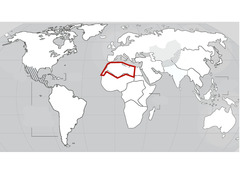
10453475502LibyaNorth Africa11
10453475823AlgeriaNorth Africa12
10453475824MoroccoNorth Africa13
10453477492Great BritainWestern Europe14
10453478657FranceWestern Europe15
10453480094GermanyWestern Europe16
10453480095AustriaWestern Europe17
10453480558ItalyWestern Europe18
10453480559SpainWestern Europe19
10453481725PortugalWestern Europe20
10453481726PolandEastern Europe21
10453482420UkraineEastern Europe22
10453482777HungaryEastern Europe23
10453482778SerbiaEastern Europe24
10453484245GreeceEastern Europe25
10453484246RussiaEastern Europe26
10453484739USANorth America27
10453484740CanadaNorth America28
10453489094MexicoLatin America29
10453489961ColombiaLatin America30
10453490496BrazilLatin America31
10453491349ArgentinaLatin America32
10453491350PeruLatin America33
10453492503HaitiLatin America34
10453493370CubaLatin America35
10453493760JamaicaLatin America36
10453495375AfghanistanCentral Asia37
10453495846IranCentral Asia38
10453495847ThailandSoutheast Asia39
10453496403CambodiaSoutheast Asia40
10453496404VietnamSoutheast Asia41
10453496714IndonesiaSoutheast Asia42
10453497172PhillipinesSoutheast Asia43
10453497173NigeriaSub-Saharan Africa44
10453497798GhanaSub-Saharan Africa45
10453498376LiberiaSub-Saharan Africa46
10453498377CongoSub-Saharan Africa47
10453498740SudanSub-Saharan Africa48
10453499829South AfricaSub-Saharan Africa49
10453500808ZimbabweSub-Saharan Africa50
10453508588EthiopiaEast Africa/Swahili Coast51
10453509605SomaliaEast Africa/Swahili Coast52
10453509606KenyaEast Africa/Swahili Coast53
10453510504TanzaniaEast Africa/Swahili Coast54
10453511206AustraliaAustralia/Oceania55
10453511207New ZealandAustralia/Oceania56

AP Statistics 1 Review Flashcards

Terms : Hide Images
5539436439IndividualsObjects described by a set of data0
5539436440VariableAny characteristic of an individual. Can take different values for different individuals1
5539436441Categorical VariablePlaces an individual into one of several groups or categories2
5539436442Quantitative VariableTakes numerical values for which it makes sense to find an average3
5539436443DistributionTells us what values the variable takes and how often it takes these values4
5539436444Pie Chart...5
5539436445Bar Graph (or Bar Chart)...6
5539436446Marginal DistributionDistribution of values of that variable among all individuals described by the table7
5539436447Conditional DistributionDescribes the values of that variable among individuals who have a specific value of another variable. There is a separate conditional distribution for each value of the other variable8
5539436448Frequencyhow often something happens9
5539436449Relative Frequencyhow often a specific event occurred compared to the total number of events10
5539436450Two-way Table...11
5539436451AssociationThere is association if knowing the value of one variable helps predict the other12
5539436452Segmented Bar Graph...13
5539436453Side by Side bar graph...14
5539436454Dot plot...15
5539436455Overall PatternDescribed by shape, center, and spread out, plus outliers16
5539436456ShapePeaks, clusters, gaps, outliers, symmetry, skews17
5539436457CenterMidpoint18
5539436458SpreadRange19
5539436459OutliersA value is an Outlier if it's more than 1.5 * IQR above the third quartile or below the first quartile20
5539436460Symmetrythe same on both sides of the center21
5539436461Skewlower on that side22
5539436462UnimodalOnly one mode, single peak23
5539436463BimodalTwo clear peaks24
5539436464MultimodalMore than two clear peaks25
5539436465Stem plot...26
5539436466Histogram...27
5539436467DepartureOutlier28
5539436468Modemost often occurring value29
5539436469MeanSum of all observations / number of observations30
5539436470MedianMidpoint, to find arrange value from smallest to largest and find the center, if the number of values is even there will be two centers, so find the average of the centers31
5539436471RangeSmallest value subtracted from largest value32
5539436472Interquartile Range (IQR)1/4 of the way up the values, so the median between the first value and median33
5539436473Second Quartile (Q2)Median34
5539436474Third Quartile (Q3)3/4 the way up the values, so the median between the median and last value35
5539436475Interquartile Range (IQR)First Quartile subtracted from the Third Quartile, Q3 - Q136
5548090476Five Number SummarySmallest observation, first Quartile, median, third quartile, largest observation, written from smallest to largest37
5548090477How to make a box plotA central box is drawn from the first Quartile to the third quartile A line in the box marks the median Lines (called whiskers) extend from the box out to the smallest and largest observations that are not outliers Outliers are marked with a special symbol such as an asterisk38
5548090478Standard deviationMeasures the typical distance of the values in a distribution from the mean Square root of the variance39
5548090479VarianceAverage squared deviation40
5548090480How to Organize a Statistics ProblemState: What's the question you're trying to answer? Plan: How will you go about answering the question? What statistical techniques does this problem call for? Do: Make graphs and carry out needed calculations. Conclude: Give your conclusion in the setting of the real-world problem.41
5548090210Five Number SummarySmallest observation, first Quartile, median, third quartile, largest observation, written from smallest to largest42
5548090211How to make a box plotA central box is drawn from the first Quartile to the third quartile A line in the box marks the median Lines (called whiskers) extend from the box out to the smallest and largest observations that are not outliers Outliers are marked with a special symbol such as an asterisk43
5548090212Standard deviationMeasures the typical distance of the values in a distribution from the mean Square root of the variance44
5548090213VarianceAverage squared deviation45
5548090214How to Organize a Statistics ProblemState: What's the question you're trying to answer? Plan: How will you go about answering the question? What statistical techniques does this problem call for? Do: Make graphs and carry out needed calculations. Conclude: Give your conclusion in the setting of the real-world problem.46

APES Flashcards

Terms : Hide Images
10969814165Law of conservation of mattermatter can be transformed from one type of substance into others, but it cannot be destroyed or created0
10969814896Radioactiveemitting or relating to the emission of ionizing radiation or particles.(radioactive decay)1
10969814897Half-lifeThe amount of time it takes for 50% of the atoms to give off radiation and decay2
10969815944Acid and Baseacidic solutions: ph greater than 7 basic solutions: pH = 7 (pure water)3
10969816800Organic compoundcarbon (and hydrogen atoms joined by bonds and may include other elements) - such as nitrogen, oxygen, sulfur, and phosphorus4
10969816807Inorganic compoundlack carbon-carbon bonds5
10969817963Polymerlong chains of carbon molecules - the building blocks of life - three types (proteins, nucleic acids, carbohydrates)6
10969818613Macromolecule-large sized molecules - types: DNA, RNA, cellulose, hemoglobin, protein, nucleic acids, and carbohydrates7
10969819965Kinetic Energyenergy of motion - thermal, light, sound, electrical, subatomic particles8
10969820945Potential Energyenergy of position - nuclear, mechanical energy, chemical bonds - chemical energy=potential energy held in the bonds between atoms (key for biological systems)9
10969824596First law of thermodynamicsEnergy can change forms, but it cannot be created or destroyed.(conserving energy) -ex: cellular respiration - potential energy in sugar molecules is released heat during exercise - sun's energy is converted into chemical by photosynthesis - solar radiation from sun is reflected by clouds or converted into heat once it is absorbed by the earths surface - 16% of the energy from gas makes a car move, 84% is lost as heat and mechanical energy10
10969825189Second law of thermodynamicsenergy changes from a more-ordered to a less-ordered state - imputing energy from the outside the system increase order - photosynthesis uses the light dependent reactions and Calvin cycle to fuse CO2 and H2O into glucose C6H12O6 - liquid water will evaporate into gas at room temperature - while playing Jenga, the blocks will eventually find themselves scattered on the table or floor11
10969825190Photosynthesisthe process of turning the sun's diffuse light energy into concentrated chemical energy. (Sunlight converts carbon dioxide and water into sugars)12
10969826114Cellular Respirationthe process by which a cell uses the chemical reactivity of oxygen to split glucose into its constituent parts, water and carbon dioxide, and thereby release chemical energy that can be used to form chemical bonds or to perform other tasks within the cell (when an animal like a deer eats the leaves of a plant)13
10969826115Chemosynthesisuses energy vents and potential in hydrogen sulfide to produce sugar14
10969826834Coreat earth's center is a dense core consisting mostly of iron, solid in the inner core and molten in the outer core.15
10969826835MantleThe layer of hot, solid material between Earth's crust and core. (elastic rock) -asthenosphere: very soft or melted rock16
10969827527Crust - (lithosphere)the harder rock above the asthenosphere is what we know as the lithosphere. The lithosphere includes both the uppermost mantle and the entirety of Earth's third major layer, the crust, the thin, brittle, low-density layer of rock that covers Earth's surface.17
10969828393Plate tectonicsThe theory that pieces of Earth's lithosphere are in constant motion, driven by convection currents in the mantle.18
10969828805Divergent boundarytectonic plates push apart from one another as magma (rock heated to a molten, liquid state) rises upward to the surface, creating new lithosphere as it cools. (Slicing across the floors of the world's oceans)19
10969829321Convergent boundarywhere two plates converge or come together, can give rise to different outcomes20
10969830476Transform boundarywhen two plates meet, might slip and grind along one another. This movement creates friction that generates earthquakes.21
10969831140Rock cyclerocks and minerals that comprise them are heated, melted, cooled, broken down, and reassembled in a very slow process22
11158556740SubductionAn example of the convergant plate boundary (where plates collide) -it is when the oceanic plates slides beneath continental crust A. The Cascades, Andes Mountains B. Magma erupts through the surface in volcanoes23
11158556741Subduction zonesplaces where plates are pushed down into the upper mantle - generate tsunamis when there is a sudden downward movement of crust - volcanoes are associated in these zones - they represent places on earth where rock is "recycled" to magma24
11158556742Properties of Water-dissolves other molecules that are vital for life -less dense ice floats on water -it is a neutral solution -water absorbs heat with only small changes in its temperature -waters strong cohesion allows transport of nutrients and waste (comes from its hydrogen bonds) -its polar nature allows it to act as a good solvent -can donate or accept h+ ions25
11158556743Hydrogen bondsweak attraction between a hydrogen atom and another atom - hydrogen bonds connect positive regions of 1 water molecule to negative regions of another molecule26
11158556744Solar RadiationUsing solar radiation to produce food -autotrophs (primary producers): organisms that produce their own food --green plants, algae, Cyanobacteria- -photosynthesis: turning the sun's light energy too chemical energy27
11158556745Polymerizationjoining monomers to form a polymer -ethylene being assembled into the plastic #1, PETE -diagram monomers being linked in plant tissue to form starch molecules -creating the nucleotide backbone in the DNA structure -(PVC) is created by joining long chains of vinyl chloride together28

Population Ecology AP Bio Flashcards

Terms : Hide Images
10467555171Uniform distributionresults from intense competition of antagonism between individuals0
10467557088Random distributionoccurs when there is no competition, antagonism, or tendency to aggregate.1
10467618337Clumpingis the most common distribution because environment conditions are seldom uniform.2
10467623533Adaptive radiationthe diversification of a group of organisms into forms filling different ecological niches.3
10467680984Logistic population growthoccurs when the growth rate decreases as the population reaches carrying capacity (represented by an S shaped curve on a graph)4
10467685320Carrying capacityis the maximum number of individuals in a population that the environment can support.5
10467690763Exponential population growthwhen the resources availability is unlimited in the habitat, the population grows at a constant rate. (represented by a J shaped curve on a graph)6
10467909549Disruptive selectionextreme traits are favored over intermediate traits7
10467911379Stabilizing selectionintermediate traits are favored over extreme traits8
10467917634Directional selectiona single phenotype is favored causing a shift in one direction towards one of the two extreme phenotypes.9

AP World History Religions Flashcards

Ap world hosts religions

Terms : Hide Images
11081616453Why did we develop belief systems?Because humans have always needed to understand natural phenomenon. We want to explain the world around us.0
11081616454PolytheismBelief in many gods1
11081616455MonotheismBelief in one God2
11081616456Animism-They practice nature worship -They believe that everything has a spirit -They communicated with and showed respect to ancestors. -It is practiced worldwide but mostly in Africa and the Americas.3
11081616457ShintoA Japanese religion whose followers believe that all things in the natural world are filled with divine spirits -"Way of the Gods" -Founded around the year 500 BCE -The Emperor of Japan was considered to be divine and a direct descendant of the Sun Goddess.4
11081616458HinduismA religion and philosophy developed in ancient India, characterized by a belief in reincarnation and a supreme being who takes many forms. -Polytheistic -A result of cultural diffusion between the Aryans and other native people in India. -Practiced in India -The Vedas, Upanishads, etc.. were all significant writings.5
11081616459BrahmaThe term for the Supreme God and Universal Soul in Hinduism.6
11081616460ReincarnationIn Hinduism and Buddhism, the process by which a soul is reborn continuously until it achieves perfect understanding Basically Samsara7
11081616461Karma(Hinduism and Buddhism) the effects of a person's actions that determine his destiny in his next incarnation (life)8
11081616462DharmaFulfilling one's duty in life9
11081616463Caste SystemA Hindu social class system that controlled every aspect of daily life10
11081616464Judaism-A religion with a belief in one god (Monotheistic) -It originated with Abraham and the Hebrew people. -Practiced worldwide but most Jews are in Israel. -They have 10 commandments11
11081616465BuddhismA religion founded in India by Siddhartha Gautama which teaches that the most important thing in life is to reach peace by ending suffering.12
11081616466The Four Noble TruthsThe core of the Buddhist teaching. There is suffering. There is a cause to suffering. There is an end to suffering. The is a path out of suffering (the Noble 8-fold path). 1. Life is full of pain and suffering 2. human desire causes this suffering 3. By putting an end to desire, humans can end suffering 4. Humans can end desire by following the Eightfold Path13
11081616467The Eightfold Path1. Know that suffering is caused by desire 2. Be selfless and love all life 3. Do not lie, or speak without a cause 4. Do not kill, steal, or commit other unrighteous acts 5. Do not do things which promote evil 6. Take effort to promote righteousness 7. Be aware of your physical actions, state of mind, and emotions. 8. Learn to meditate.14
11081616468ConfucianismA philosophy that adheres to the teachings of the Chinese philosopher Confucius. It shows the way to ensure a stable government and an orderly society in the present world and stresses a moral code of conduct.15
11081616469Five Relationships in Confucianism:- Ruler to ruled - Father to Son - Older brother to Younger brother - Husband to Wife - Friend to Friend16
11081616470Taoism or Daoisman ideology whose central theme is the Way, a philosophy teaching that eternal happiness lies in total identification with nature and deploring passion, unnecessary invention; simple life of individuals -Ying and Yang is used to illustrate the natural harmony in the world.17
11081616471ChristianityA monotheistic system of beliefs and practices based on the Old Testament and the teachings of Jesus as embodied in the New Testament and emphasizing the role of Jesus as savior. -Also has the Ten Commandments -Believe in the Holy Trinity Christians take part in sacraments.18
11081616472IslamA religion based on the teachings of the prophet Mohammed which stresses belief in one god (Allah), Paradise and Hell, and a body of law written in the Quran. Followers are called Muslims.19
11081616473The Five Pillars of Islam1. Confession of Faith 2. Prayer 3. Charity 4. Fasting 5. Pilgrimage20
11081616474Zoroastrianism- A dualistic faith, this means they believe in two gods representing good and evil -It was very important during the Sassanid Persian Dynasty.21
11081616475LegalismChinese philosophy developed by Hanfeizi; taught that humans are naturally evil and therefore need to be ruled by harsh laws22

AP World History Map Flashcards

Terms : Hide Images
10496290920The AmericasSouth and North America0
10496299593Africa1
10496301478Asia2
10496302713Oceania3
10496304410Europe4
10496307624North America5
10496307625Mexico6
10496308095The Carribian7
10496310202Latin America and mesoamerica8
10496312743South africa9
10496313532East Africa10
10496313533Central africa11
10496313895West Africa12
10496313896North Africa13
10496314768Middle East14
10496317470Central Asia15
10496317471South Asia16
10496318186East Asia17
10496318187Southeast Asia18

Pages

Subscribe to CourseNotes RSS

Need Help?

We hope your visit has been a productive one. If you're having any problems, or would like to give some feedback, we'd love to hear from you.

For general help, questions, and suggestions, try our dedicated support forums.

If you need to contact the Course-Notes.Org web experience team, please use our contact form.

Need Notes?

While we strive to provide the most comprehensive notes for as many high school textbooks as possible, there are certainly going to be some that we miss. Drop us a note and let us know which textbooks you need. Be sure to include which edition of the textbook you are using! If we see enough demand, we'll do whatever we can to get those notes up on the site for you!