AP Notes, Outlines, Study Guides, Vocabulary, Practice Exams and more!

AMSCO AP US History Chapter 12 Flashcards

AMSCO United States History 2015 Edition, Chapter 12 Territorial and Economic Expansion, 1830-1860

Terms : Hide Images
9803072600manifest destinyThe belief that the United States had a divine mission to extend its power and civilization across the breadth of North America. (p. 230)0
9803072601industrial technologyAfter 1840, industrialization spread rapidly throughout most of the Northeast. New factories produced shoes, sewing machines, ready-to-wear clothing, firearms, precision tools, and iron products for railroads and other new products. (p. 238)1
9803072602Elias HoweThe U.S. inventor of the sewing machine, which moved much of clothing production from homes to factories. (p. 238)2
9803072603Samuel F. B. MorseIn 1844, he invented the electric telegraph which allowed communication over longer distances. (p. 238)3
9803072639railroadsIn the 1840s and the 1850s, this industry expanded very quickly and would become America's largest industry. It required immense amounts of capital and labor and gave rise to complex business organizations. Local and state governments gave the industry tax breaks and special loans to finance growth. (p. 238)4
9803072604Panic of 1857Financial crash which sharply lowered Midwest farmers prices and caused unemployment in the Northern cities. The South was not affected as much because cotton prices remained high. (p. 239)5
9803072605Great American DesertIn the 1850s and 1860s, the arid area between the Mississippi River and the Pacific Coast, was known by this name. (p. 236)6
9803072606mountain menThe first non-native people to open the Far West. These fur trappers and explorers included James Beckwourth, Jim Bridger, Kit Carson, and Jedediah Smith. (p. 237)7
9803072640Far WestIn the 1820s, the Rocky Mountains were known by this name. (p. 237)8
9803072607overland trailsThe wagon train trails that led from Missouri or Iowa to the west coast. They traveled only 15 miles per day and followed the river valleys through the Great Plains. Months later, the wagon trains would finally reach the foothills of the Rockies or face the hardships of the southwestern deserts. The final challenge was to reach the mountain passes before the first heavy snows. Disease was even a greater threat than Indian attack. (p. 237)9
9803072608mining frontierThe discovery of gold in California in 1848 caused the first flood of newcomers to the West. A series of gold strikes and silver strikes in what became the states of Colorado, Nevada, Idaho, Montana, Arizona, and South Dakota kept a steady flow of hopeful young prospectors pushing into the West. (p. 237)10
9803072641gold rushCalifornia's population soared from 14,000 in 1848 to 380,000 in 1860, primarily because of this event. (p. 237)11
9803072642silver rushThe discovery of silver in Colorado, Nevada, the Black Hills of the Dakotas, and other western territories, created a mining boom. (p 237)12
9803072609farming frontierIn the 1830s and 1840s pioneer families moved west to start homesteads and begin farming. Government programs allowed settlers to purchase inexpensive parcels of land. (p. 237)13
9803072610urban frontierWestern cities that arose as a result of railroads, mineral wealth, and farming. They included San Francisco, Denver, and Salt Lake City. (p. 238)14
9803072611federal land grantsIn 1850, the U.S. government gave 2.6 million acres of federal land to build the Illinois Central railroad from Lake Michigan to Gulf of Mexico. (p. 238)15
9803072612John TylerHe was elected Vice President, then he became the tenth president (1841-1845) when Benjamin Harrison died. He was responsible for the annexation of Mexico after receiving a mandate from Polk. He opposed many parts of the Whig program for economic recovery. (p. 231)16
9803072613Oregon territoryThis was a vast territory on the Pacific coast that stretched as far north as the Alaskan border. Originally the United States was interested in all the territory, but in 1846 Britain and the U.S. agreed to divide the territory at the 49th Parallel, today's border between Canada and the United States. (p. 232)17
9803072614Fifty-four Forty or FightThe slogan of James K. Polk's plan for the Oregon Territory. They wanted the border of the territory to be on 54' 40° latitude (near present-day Alaska) and were willing to fight Britain over it. Eventually, 49 degrees latitude was adopted as the northern border of the United States, and there was no violence. (p. 232)18
9803072615James K. PolkThe eleventh U.S. president from 1845 to 1849. He was a slave owning southerner dedicated to Democratic party. In 1844, he was a "dark horse" candidate for president, and a protege of Andrew Jackson. He favored American expansion, especially advocating the annexation of Texas, California, and Oregon. (p. 232)19
9803072616Wilmot ProvisoIn 1846, the first year of the Mexican War, this bill would forbid slavery in any of the new territories acquired from Mexico. the bill passed the House twice, but was defeated in the Senate. (p. 234)20
9803072617Franklin PierceIn 1852, he was elected the fourteenth president of the United States. (p. 236)21
9803072618Ostend ManifestoThe United States offered to purchase Cuba from Spain. When the plan leaked to the press in the United States, it provoked an angry reaction from antislavery members of Congress, forcing President Franklin Pierce to drop the plan. (p. 235)22
9803072619TexasIn 1823, Texas won its national independence from Spain. The annexation of this state was by a joint resolution of Congress, supported by President-elect James Polk. This annexation contributed to the Mexican War because the border with Mexico was in dispute. Land from the Republic of Texas later became parts of New Mexico, Colorado, Oklahoma, Kansas, and Wyoming. (p. 233)23
9803072620Stephen AustinIn the 1820s, his father had obtained and large land grant in Texas. He brought 300 families from Missouri to settle in Texas. (p. 231)24
9803072621Antonio Lopez de Santa AnnaIn 1834, he established himself as dictator of Mexico and attempted to enforce Mexico's laws in Texas. In March 1836 a group of American settlers revolted and declared Texas to be an independent republic. He then led an army which attacked the Alamo in San Antonio, killing all the American defenders. Shortly after that, Sam Houston led an army that captured him and he was forced to sign a treaty that recognized the independence of Texas. (p. 231)25
9803072622Sam HoustonIn March 1836, he led a group of American settlers that revolted against Mexico and declared Texas to be an independent republic. He led an army that captured Santa Anna and forced him to sign a treaty that recognized Texas as an independent republic. As the first president of the Republic of Texas, he applied to the U.S. government for Texas to be added as a new state. It was many years before the U.S. would act to add Texas as a state. (p. 231)26
9803072623AlamoThe mission and fort that was the site of a siege and battle during the Texas Revolution, which resulted in the massacre of all its defenders. The event helped galvanize the Texas rebels and led to their victory at the Battle of San Jacinto. Eventually Texas would join the United States. (p. 231)27
9803072624Aroostook WarIn the early 1840s, there was a dispute over the the British North America (Canada) and Maine border. Open fighting broke out between rival groups of lumbermen. The conflict was soon resolved by the Webster-Ashburton Treaty of 1842. (p. 231)28
9803072625Webster-Ashburton TreatyIn this 1842 treaty US Secretary of State Daniel Webster and British ambassador Lord Alexander Ashburton created a treaty splitting New Brunswick territory into Maine and British Canada. It also settled the boundary of the Minnesota territory. (p. 232)29
9803072643Rio Grande; Nueces RiverIn the 1840s the United States believed the southern Texas border was the Rio Grande River. Mexico believed the border was further north on the Nueces River. (p. 233)30
9803072626Mexican War (1846-1847)A war between the United States and Mexico from 1846 to 1848. President James Polk attempted to purchase California and the New Mexico territories and resolve the disputed Mexico-Texas border. Fighting broke out before the negotiations were complete and the war lasted about two years, ending when the United States troops invaded Mexico City. (p. 233-235)31
9803072627Zachary TaylorIn 1845, this U.S. general, moved his troops into disputed territory in Texas, between the Nueces and Rio Grande Rivers. Eleven of his soldiers were killed by Mexican troops and President James Polk used the incident to justify starting the Mexican War. He used of force of 6,000 to invade northern Mexico and won a major victory at Buena Vista. In 1848, he was elected president. (p. 233, 234)32
9803072628Winfield ScottThis U.S. general invaded central Mexico with an army of 14,000. They took the coastal city of Vera Cruz and then captured Mexico City in September 1847. (p. 234)33
9803072629Stephen KearneyThis U.S. general led a small army of less than 1,500 that succeeded in taking Santa Fe, the New Mexico territory, and southern California during the Mexican War. (p. 234)34
9803072630John C. FremontIn June 1846, he overthrew Mexican rule in northern California and proclaimed California to be an independent republic, the Bear Flag Republic. (p. 234)35
9803072631California; Bear Flag RepublicIn June 1846, John C. Fremont quickly overthrew Mexican rule in Northern California to create this independent republic. (p. 234)36
9803072632Treaty of Guadalupe HidalgoIn 1848, this treaty ended the Mexican War. Under its terms, Mexico recognized the Rio Grande as the border with Texas, Mexico ceded the California and New Mexico territories to the United States. The United States agreed to pay Mexico $15 million and assumed responsibility for any claims of American citizens against Mexico. (p. 234)37
9803072633Mexican CessionHistorical name for the former Mexican provinces of California and New Mexico that were ceded to the U.S. by Mexico in 1848 under the Treaty of Guadalupe Hidalgo. (p 234)38
9803072634Walker ExpeditionAn expedition by a Southern adventurer who unsuccessfully tried to take Baja California from Mexico in 1853. He took over Nicaragua in 1855 to develop a proslavery empire. His scheme collapsed when a coalition of Central American countries invaded and defeated him, and he was executed. (p. 236)39
9803072635Clayton-Bulwer TreatyAn 1850 treaty between the U.S. and Great Britain agreeing that neither country would attempt to take exclusive control of any future canal route in Central America. (p. 236)40
9803072636Gadsden PurchaseIn 1853, the U.S. acquired land (present day southern New Mexico and Arizona) from Mexico for $10 million. (p. 236)41
9803072644foreign commerceIn the mid-1800s, the growth in manufactured goods as well as in agriculture products (Western grains and Southern cotton) caused a significant growth of exports and imports. (p. 238, 239)42
9803072645exports and importsIn the mid-1800s, the U.S. was exporting primarily manufactured goods and agriculture products such as Western grains and Southern cotton. Imports also increased during this period. (p. 238, 239)43
9803072637Matthew C. Perry; JapanCommodore of the U.S. Navy who was sent to force Japan to open up its ports to trade with the U.S. (p. 239)44

AMSCO AP US History Chapter 17 Flashcards

AMSCO United States History 2015 Edition Chapter 17 The Last West and the New South, 1865-1900

Terms : Hide Images
9803097091The Great American DesertName given to lands between the Mississippi and the Pacific Coast before 1860. There was very little rainfall in this area and the conditions were poor for settlement. (p. 339)0
9803097112100th meridianThe plains west of this meridian had few trees and usually received less than 15 inches of rain per year. This meridian crosses near the middle of Nebraska. (p. 339)1
9803097092buffalo herdsThese animals were essential to the nomadic Native American tribes. In early 19th century there were 15 million of these animals on the Great Plains, but by 1900 they were nearly wiped out. (p. 339)2
9803097113Great PlainsThe region west of the Mississippi River and east of the Rocky Mountains. (p. 339)3
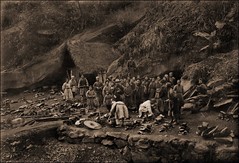
9803097114mineral resourcesFrom 1848 to the 1890s, gold and silver strikes occurred in what became the states of California, Colorado, Nevada, Montana, Arizona, and South Dakota. (p. 340)4
9803097115mining frontier, boomtownsIn 1848, the discovery of gold in California caused the first flood of newcomers to the territory. Gold and silver were later discovered in many other areas of the west. These discoveries caused towns to grow up very quickly, then often lose population and collapse after the mining was no longer profitable. (p. 340)5
9803097093Chinese Exclusion Act of 1882In the 1860s, about one-third of the western miners were Chinese immigrants. Native-born Americans resented the competition of these immigrants. In 1862, this act was passed to prohibit further immigration by Chinese laborers to the United States. (p. 341)6
9803097116commercial citiesA few towns that served the mines, such as San Francisco, Sacramento, and Denver, grew into prosperous cities. (p. 341)7
9803097094longhorns, vaquerosThe name for the cattle which were brought to Texas from Mexico. The name for the Mexican cowboys who raised and rounded up the cattle in Texas. (p. 341)8
9803097117cattle drivesMoving the cattle from Texas to railroad towns in Kansas. (p. 342)9
9803097118barbed wireThese fences became common, they cut off the cattle's access to the open range. (p. 342)10
9803097095Joseph GliddenHe invented barbed wire to help farmers fence in their lands on the plains. (p. 342)11
9803097119Homestead ActIn 1862, this act offered 160 acres of public land free to any family that settled on it for 5 years. (p. 342)12
9803097120dry farmingThis technique along with deep-plowing enabled settlers to survive on the Great Plains. (p. 342)13
9803097121Great Plains tribesThese nomadic tribes, such as the Sioux, Blackfoot, Cheyenne, Crow, and Comanche, had given up farming in colonial times after the introduction of the horse by the Spanish. By the 1700s, they had become skillful horse riders and their lives centered on hunting buffalo. (p. 343)14
9803097122Southwest tribesThese tribes in the Southwest, such as Navajo and Apache adopted a settled life, raising crops and livestock, and producing arts and crafts. (p. 343)15
9803097123federal treaty policiesThe Indian Appropriation Act of 1871 ended recognition of tribes as independent nations by the federal government and nullified previous treaties made with the tribes. (p. 345)16
9803097124causes of Indian warsIn the late 19th century, the settlement of the thousands of miners, ranchers, and homesteaders on American Indian lands led to violence. (p. 344)17
9803097096Little Big HornIn 1876, the Sioux Indians, led by Crazy Horse and Sitting Bull, massacred the U.S. 7th Cavalry led by General Custer. This was the last major battle between the U.S. Army and the American Indians. (p. 345)18
9803097097assimilationistsThe idea that Native Americans should be integrated into American society by becoming educated, adopting American culture, customs, and Christianity. (p. 345)19
9803097098Helen Hunt JacksonThe author of "A Century of Dishonor", which created sympathy for Native Americans, but also generated support for ending American Indian culture through assimilation. (p. 345)20
9803097099Dawes Act of 1887This act supported the idea of assimilation of the American Indians. It divided tribal lands into plots of up to 160 acres. U.S. citizenship was granted to those who stayed on the land for 25 years and adopted the habits of American life. (p. 345)21
9803097100Ghost Dance movementThis religious movement was a last effort of Native Americans to resist U.S. government domination and drive whites from their ancestral lands. In an effort to suppress the movement, at the Battle of Wounded Knee more that 200 American Indians were killed. This battle marked the end of the Indian Wars. (p. 345)22
9803097125Indian Reorganization Act of 1934In 1934, this act promoted the re-establishment of tribal organization and culture. Today, more than 3 million American Indians, belonging to 500 tribes, live within the United States. (p. 346)23
9803097126Mexican War aftermathAfter the Mexican War ended in 1848, the Spanish-speaking landowners in California and the Southwest were guaranteed their property rights and granted citizenship. However, drawn-out legal proceeding after resulted in the sale or la of lands to new Anglo arrivals. (p. 346)24
9803097127Spanish-speaking areasIn 1848, the New Mexico territories, border towns, and the barrios of California were dominant spanish-speaking regions. (p. 346)25
9803097128Migration for jobsMexican Americans moved to find work, such as the sugar beet fields and mines of Colorado, and the building of western railroads. (p. 346)26
9803097129deforestationThe conservation movement was sparked by removal of large number of trees. (p. 346)27
9803097130Yellowstone, YosemiteIn 1872, this area of Wyoming was declared the first national park. In 1864 this area in California was declared a state park, later it became a national park. (p. 346)28
9803097131Department of the InteriorCarl Schurz, as Secretary of the Interior in the 1880s, advocated the creation of a forest reserves and a federal forest service to protect federal lands from exploitation. (p. 347)29
9803097132conservationists and preservationistsConservationist believed in scientific management and regulated use of natural resources, preservationists went a step further, and aimed to preserve natural areas from human interference. (p. 347)30
9803097133Forest Reserve Act of 1891This act withdrew federal timberland from development and regulated their use. (p. 347)31
9803097134Forest Management Act of 1897This act withdrew federal timberland from development and regulated their use. (p. 347)32
9803097135John Muir, Sierra ClubIn 1892, he founded this organization, with the goal of preserving some natural areas from human intervention. (p. 347)33
9803097101New SouthAfter the Civil War, the South was in a period of recovery. There was a new vision for a self-sufficient southern economy built on economic diversity and laissez-faire capitalism. (p. 347)34
9803097102Henry GradyJournalist from Georgia who coined the phrase "New South". Promoted his ideas through the Atlanta Constitution, as editor. (p. 347)35
9803097136Birmingham steelThis Southern city developed into one the nation's leading steel producers. (p. 347)36
9803097137Memphis lumberThis Southern city prospered as the center of the South's growing lumber industry. (p. 347)37
9803097138Richmond tobaccoThis Southern city became the capital of the nation's tobacco industry. (p. 347)38
9803097139integrated rail networkAfter the Civil War, the Southern railroad companies rapidly converted to standard-guage rails, which integrated them into the national rail system. (p. 347)39
9803097140agriculture's dominanceDespite progress and growth after the Civil War, the South remained a mostly agricultural based economy. (p. 347)40
9803097141sharecropping; tenant farmersAfter the Civil War, most Southerners of both races remained in traditional roles and barely got by from year to year as sharecroppers and farmers. (p. 348)41
9803097103George Washington CarverAn African-American scientist, who promoted planting of diverse crops such as peanuts, sweet potatoes, and soybeans. (p. 348)42
9803097142Tuskegee InstituteAn industrial and agricultural school established by Booker T. Washington to train blacks. (p. 348)43
9803097143white supremacistsThis group favored separating (segregating) public facilities, as a means of treating African American as social inferiors. (p. 349)44
9803097144Civil Rights Cases of 1883In 1883, the Supreme Court ruled that Congress could not legislate against the racial discrimination practiced by private citizens, which included public businesses. (p. 349)45
9803097104Plessy v. FergusonAn 1896, Supreme Court landmark case, which ruled that separate but equal accommodations in public places were constitutional and did not violate the 14th amendment. (p. 349)46
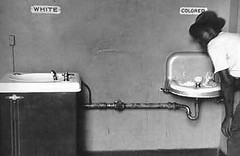
9803097105Jim Crow lawsIn the 1870s, the South passed segregation laws which required separate washrooms, drinking fountains, park benches, and most other public facilities, for blacks and whites. (p. 349)47
9803097145literacy tests, poll taxes, grandfather clausesAfter Reconstruction, various political and legal devices were created to prevent southern blacks from voting.48
9803097146white primaries, white juriesAfter Reconstruction, discrimination took many forms. Political party primaries were created for whites only, and African Americans were barred from serving on juries. (p. 349)49
9803097147lynch mobsIn the 1890s, more than 1,400 African American men were lynched (hung by a mob without trial) by Southerns.50
9803097148economic discriminationAfter Reconstruction, economic discrimination was widespread in the South. Most African Americans were kept out of skilled trades and factory jobs. African Americans remained in farming and low-paying domestic work. (p. 349)51
9803097149African American migrationIn 1894, the International Migration Society was formed to help blacks emigrate to Africa. Other blacks moved to Kansas and Oklahoma. (p. 350)52
9803097106Ida B. WellsShe was the editor of a black newspaper, she campaigned against lynching and Jim Crow laws. (p. 349)53
9803097107Booker T. WashingtonFamous African-American, who established an industrial and agricultural school for African Americans in 1881. He taught the virtues of hard work, moderation, and economic self-help. In 1900, he organized the National Negro Business League to support businesses owned by African Americans. (p. 350)54
9803097150economic cooperationBooker T. Washington's National Negro Business League emphasized racial harmony and economic cooperation. (p. 350)55
9803097151markets and farmersIn the late 1800s, farming became increasingly commercialized and specialized. They became dependent on large and expensive machinery and small, marginal farms were often driven out of business. (p. 350)56
9803097152crop price deflationAfter the Civil War, increased American and foreign food production caused a downward pressure on prices. For instance, corn per bushel prices, went from $.78 in 1867 to .$.28 in 1889. (p. 351)57
9803097153railroads and middlemenRailroads and middlemen were able to charge high or discriminatory rates in the food supply chain because they had little competition. (p. 351)58
9803097154National Grange MovementIn 1868, this organization was created primarily as a social and educational help for farmers. (p. 351)59
9803097155cooperativesGrangers established these business, owned and run by the farmers, to save the costs charged by middlemen. (p. 351)60
9803097156Granger lawsIn some states, the Grangers, with help from local businesses, successfully lobbied their state legislatures to pass laws regulating the rates charged by railroads and elevators. (p. 351)61
9803097108Munn v. IllinoisSupreme Court case in 1877, which upheld the right of a state to regulate businesses of a public nature, such as railroads. (p. 352)62
9803097109Wabash v. IllinoisSupreme Court case in 1886, which ruled that individual states could not regulate interstate commerce. (p. 352)63
9803097110Interstate Commerce CommissionThe first federal regulatory agency created to regulate interstate commerce which had the power to investigate and prosecute pools, rebates, and other discriminatory practices. (p. 352)64
9803097111Ocala Platform of 1890In 1890, a national organization of farmers, called the National Alliance, met in Florida to address the problems of rural America. It fell short of becoming a political party, but many of the reform ideas would become part of the Populist movement. (p. 352)65
9803097157census of 1890The census of 1890 declared that except for a few pockets, the entire frontier had been settled. (p. 343)66
9803097158Frederick Jackson Turner, "The Significance of the Frontier in American History"He argued that 300 years of frontier experience had shaped American culture by promoting independence and individualism. (p. 343)67
9803097159role of cities, "Nature's Metropolis"Book written by William Cronon, it argued that the frontier and cities grew up together, they were dependent on each other. (p. 353)68

AMSCO AP US History Chapter 29 Flashcards

AMSCO United States History 2015 Edition, Chapter 29 Limits of a Superpower, 1969-1980

Terms : Hide Images
9803147658Henry KissingerNixon's national security adviser, he later become secretary of state during Nixon's second term. He helped Nixon to fashion a realistic foreign policy that generally succeeded in reducing the tensions of the Cold War. (p. 625)0
9803147659VietnamizationPresident Nixon announced that he would gradually withdraw U.S. troops from Vietnam and give the South Vietnamese the money, the weapons, and the training that they needed to take over the full conduct of the war. Under this policy, U.S. troops in South Vietnam went from over 540,000 in 1969 to under 30,000 in 1972. (p. 626)1
9803147660Nixon DoctrineThis doctrine declared that Asian allies would receive U.S. support but without the extensive use of U.S. ground forces. (p. 626)2
9803147661Kent StateIn April 1970, President Nixon expanded the war by using U.S. forces to invade Cambodia. A nationwide protest against this action on U.S. college campuses resulted in the killing of four youths by National Guard troops at Kent State in Ohio. (p. 626)3
9803147662My LaiThe American public was shocked to learn about a 1968 massacre of women and children by U.S. troops in the Vietnamese village of My Lai. (p. 626)4
9803147663Pentagon PapersThe New York Times published the Pentagon Papers, a secret government history documenting the mistakes and deceptions of government policy-makers in dealing with Vietnam. (p. 626)5
9803147664Paris Accords of 1973In January 1973, the North Vietnamese agreed to an armistice, in which the United States would withdraw the last of its troops and get back over 500 prisoners of war (POWs). The agreement also promised a cease-fire and free elections. However, the armistice did not end the war, but it allowed the United States to extricate itself. (p. 627)6
9803147665detentePresident Nixon and Kissinger strengthened the U.S. position in the world by taking advantage of the rivalry between the two Communist giants, China and the Soviet Union. Their diplomacy was praised for bringing about detente, a reduction of Cold War tensions. (p. 627)7
9803147666China visitAfter a series of secret negotiations with Chinese leaders, in February of 1972 Nixon astonished the world by traveling to Beijing to meet with Mao Zedong, the leader of Communist China. His visit initiated diplomatic exchanges that ultimately led to U.S. recognition of the Communist government. (p. 627)8
9803147681antiballistic missilesPresident Nixon used his new relationship with China to put pressure on the Soviets to agree to a treaty limiting antiballistic missiles (ABMs). (p. 627)9
9803147667Strategic Arms Limitation TalksPresident Nixon used his new relationship with China to put pressure on the Soviets to agree to a treaty limiting antiballistic missiles (ABMs), a new technology that would have expanded the arms race. After the first round of Strategic Arms Limitations Talks (SALT I), U.S. diplomats secured Soviet consent to a freeze on the number of ballistic missiles carrying nuclear warheads. While this agreement did not end the arms race, it was a significant step toward reducing Cold War tensions and bringing about detente. (p. 627)10
9803147668Middle East War (1973)On October 6, 1973, the Syrians and Egyptians launched a surprise attack on Israel in an attempt to recover the lands lost in the Six-Day War of 1967. President Nixon ordered the U.S. nuclear forces on alert and airlifted almost $2 billion in arms to Israel to stem their retreat. The tide of battle quickly shifted in favor of the Israelis. (p. 631)11
9803147669OPEC; oil embargoAfter October 1973 Arab Israel War, the Arab members of the Organization of Petroleum Exporting Countries (OPEC) placed an embargo on oil sold to Israel's supporters. The embargo caused a worldwide oil shortage and long lines at gas stations in the United States. (p. 631)12
9803147670New FederalismIn a program known as revenue sharing, or the New Federalism, Congress approved giving local governments $30 billion in block grants over five years to address local needs as they saw fit. Republicans hoped revenue sharing would check the growth of the federal government and return responsibility to the states, where it had rested before the New Deal. (p. 628)13
9803147671stagflationThe U.S. economy in the 1970s faced an unusual combination of economic slowdown and high inflation. To slow inflation, President Nixon at first tried to cut federal spending. When this policy contributed to a recession and unemployment, he adopted Keynesian economics and deficit spending. He surprised the nation by imposing a 90-day wage and price freeze. Next, he took the dollar off the gold standard, which helped to devalue it relative to foreign currencies. (p. 628)14
9803147672southern strategyHaving received just 43 percent of the popular vote in 1968, President Nixon was well aware of being a minority president. To win over the South, he asked the federal courts in that region to delay integration plans and busing orders. He also nominated two southern conservatives to the Supreme Court. The Senate refused to confirm them, and the courts rejected his requests for delayed integration. Nevertheless, his strategy played well with southern white voters. (p. 629)15
9803147682wage and price controlsIn 1971, President Nixon imposed a 90-day wage and price freeze to slow inflation. (p. 628)16
9803147683off the gold standardIn 1971, President Nixon took the U.S. off the gold standard, which helped to devalue the U.S. dollar relative to foreign currencies. (p. 628)17
9803147684cost of living indexedIn 1972, Congress approved automatic increases for Social Security benefits based on the rise in the cost of living. (p. 628)18
9803147685Title IXIn 1972, Congress passed this statue to end sex discrimination in schools that received federal funding. (p. 628)19
9803147673Burger CourtIn 1969, President Nixon appointed Warren E. Burger of Minnesota as chief justice to succeed the retiring Earl Warren. The Burger Court was more conservative than the Warren Court, but some of its decisions angered conservatives. (p. 629)20
9803147686Roe v. WadeIn 1973, the Supreme Court struck down many state laws prohibiting abortions as a violation of a women's right to privacy. (p. 629)21
9803147687election of 1972In the 1972 presidential election Richard Nixon easily won a second term by defeating Democratic Senator George McGovern of South Dakota. Nixon won every state except Massachusetts. (p. 629)22
9803147674George McGovernIn 1972, this Democratic Senator from South Dakota was a very liberal, antiwar, antiestablishment candidate for president. He was defeated easily by Richard Nixon. (p. 629)23
9803147675Watergate cover-upIn June 1972, a group of men hired by Nixon's reelection committee were caught breaking into the offices of the Democratic national headquarters in the Watergate complex. This break-in and attempted bugging were only part of a series of illegal activities. No proof demonstrated that Nixon had ordered the illegal activities. However, it was shown that Nixon participated in the illegal cover up of the scandal. (p. 630)24
9803147688plumbersThe president's aides created this group to stop leaks to the press as well as to discredit opponents. (p. 630)25
9803147689enemies listThe White House created this list of prominent Americans who opposed Nixon or the Vietnam War. (p. 630)26
9803147690United States v. NixonIn the last days of the Watergate scandal, the court denied Nixon's claims to executive privilege and ordering him to turn over the Watergate tapes. (p. 629)27
9803147676War Powers ActIt was found that President Nixon had authorized 3,500 secret bombing raids in Cambodia, a neutral county. In November 1973, after a long struggle, Congress finally passed this act over Nixon's veto. This law required Nixon and any future president to report to Congress within 48 hours after taking military action and to obtain Congressional approval for any military action lasting more than 60 days. (p. 631)28
9803147677impeachment and resignationThe start of impeachment hearings in the House forced Nixon to eventually turn over the Watergate tapes, tape recordings of Nixon in his office. The tapes clearly implicated Nixon in the cover-up. The House Judiciary Committee voted three articles of impeachment: (1) obstruction of justice, (2) abuse of power, and (3) contempt of Congress. On August 9, 1974 Nixon resigned. (p. 632)29
9803147691imperial presidencyCold War presidents had used national security, secrecy, executive privileged, and the mystique of the office to concentrate power into the White House. (p. 640)30
9803147678Gerald FordAs vice president, he became president when Richard Nixon resigned on August 1, 1974. He was a likeable and unpretentious man, but his ability to be president was questioned by many in the media. (p. 632)31
9803147692pardon of NixonIn his first month in office President Gerald Ford granted Richard Nixon a full and unconditional pardon for any crime he might have committed in office. (p. 632)32
9803147693reform of CIAFormer Congressman George H. W. Bush was appointed by President Ford to reform this agency after it had been accused of assassinating foreign leaders. (p. 633)33
9803147694fall of SaigonIn April 1975, the U.S supported government in Saigon fell and Vietnam became one country under Communist rule. (p. 633)34
9803147679Cambodia genocideIn 1975, the U.S. supported government in Cambodia fell to the Khmer Rouge, a radical Communist faction that killed over one million of its people in an effort to rid the country of western influence. (p 633)35
9803147695battle over inflationIn 1979-1980, inflation seemed completely out of control and reached the unheard of rate of 13 percent. (p. 636)36
9803147680BicentennialIn 1976 the United States celebrated its 200th birthday. (p. 633)37
9803147696election of 1976In 1976 presidential election Democrat James Earl (Jimmy) Carter won a close election by defeating Gerald Ford. He was helped by running as an outsider and the voters memory of Watergate. (p. 634)38
9803147697James Earl (Jimmy) CarterHe was elected president in 1976. He was a former Democratic governor of Georgia. (p. 634)39
9803147698human rightsPresident Carter championed the cause of human rights around the world. He opposed the all-white oppressive governments of South Africa and Rhodesia. He cut aid to Argentina and Chile for their human rights violations. (p. 634)40
9803147699Panama Canal TreatyIn 1978, the Senate ratified a treaty that would gradually transfer control of the Panama Canal from the U.S. to Panama. (p. 634)41
9803147700Camp David AccordsIn September 1978, President Carter arranged for leader of Egypt and Israel to met at the Camp David presidential retreat to provide a framework for a peace settlement between the two countries. (p. 635)42
9803147701Iranian hostage crisisIn November 1979, Iranian militants seized the U.S. embassy in Tehran, Iran and held more than 50 of the U.S. staff as hostages. The hostage crisis dragged on for the rest of Carter's presidency. (p. 635)43
9803147702recognition of ChinaIn 1979, the U.S. ended its official recognition of the Chinese government in Taiwan and completed an exchange of ambassadors with the People's Republic of China. (p. 635)44
9803147703Soviet Afghanistan invasionIn December 1979, Soviet troops invaded Afghanistan, an action that ended a decade of improving U.S.-Soviet relations. (p. 635)45
9803147704Paul Volcker, high interest ratesIn 1980, the chairman of the Federal Reserve Board pushed interest rates to 20 percent in order to combat inflation. (p. 636)46
9803147705malaise speechIn 1979, President Jimmy Carter gave a speech in which he blamed the U.S. problems on a "moral and spiritual crisis". (p. 636)47
9803147706cultural pluralismThe U.S. population became more racial diverse and diverse ethnic and cultural groups strove to celebrate their unique traditions. (p. 637)48
9803147707impact of 1965 immigration lawThe end of ethnic quotas favoring Europeans opened the United States to immigrants from all parts of the world. (p. 637)49
9803147708Immigration Reform and Control Act of 1986This act penalize employers for hiring immigrants who had entered the country illegally or had overstayed their visas, while granting amnesty to undocumented immigrants arriving by 1982. (p. 637)50
9803147709Hispanic AmericansIn 2000, they became the country's largest minority group. (p. 637)51
9803147710Cesar ChavezIn 1975, as leader of the United Farm Workers Organization he organized boycotts and eventually gained collective bargaining rights for farm workers. (p. 637)52
9803147711American Indian MovementTo achieve American Indian self-determination and revival of tribal traditions this organization was founded in 1968. (p. 638)53
9803147712Indian Self-Determination ActIn 1975, this act gave American Indian reservations and tribal lands greater control over internal programs, education, and law enforcement. (p. 638)54
9803147713gaming casinosThe American Indians attacked widespread unemployment and poverty on reservations by building these facilities. (p. 638)55
9803147714Asian AmericansIn the 1980s, this group became the fastest growing minority population. (p. 639)56
9803147715gay liberation movementBy the mid 1970s, homosexuality was no longer classified as a mental illness and the federal Civil Service ended its ban on unemployment of homosexuals. (p. 639)57
9803147716Earth DayIn 1970, this annual celebration day, was created to show concerns about pollution and the destruction of the natural environment. (p. 639)58
9803147717Exxon Valdez accidentIn 1989, this oil tanker ran aground and created a massive oil spill off the coast of Alaska. (p. 639)59
9803147718Three Mile IslandIn 1979, this nuclear power plant accident in Pennsylvania turned public opinion against nuclear power. (p. 639)60
9803147719Chernobyl meltdownIn 1986, this nuclear plant in the Soviet Union exploded killing many people. (p. 639)61
9803147720Clean Air ActIn 1970, Congress passed this act to protect the air. (p. 639)62
9803147721Environmental Protection Agency (EPA)In 1970, Congress created this agency to protect the environment. (p. 639)63
9803147722Clean Water ActIn 1972, Congress passed this act to protect the water. (p. 639)64
9803147723Environmental SuperfundIn 1980, Congress created this fun to clean up toxic dumps, such as Love Canal in New York state. (p. 639)65
9803147724Endangered Species ActIn 1973, Congress passed this act to protect endangered species. (p. 639)66

AMSCO AP US History Chapter 23 Flashcards

AMSCO United States History 2015 Edition, Chapter 23 The Modern Era of the 1920s

Terms : Hide Images
9803121807Warren HardingIn November 1920, he was elected the 29th president of the United States. He was a Republican whose slogan was: "Return to Normalcy". His term was marked by scandals and corruption, although he was never implicated in any of the scandals. In August 1923, he died while traveling in the West. (p. 475-476)0
9803121808Charles Evans HughesA former presidential candidate and Supreme Court justice who was appointed secretary of state by President Warren G. Harding. (p. 476)1
9803121809Andrew MellonA Pittsburgh industrialist and millionaire who was appointed secretary of the treasury by President Harding in 1921 and served under Coolidge and Hoover. (p. 476)2
9803121810Harry DaughertyAttorney General under President Harding who accepted bribes for agreeing not to prosecute certain criminal suspects. (p. 476)3
9803121811Albert FallSecretary of the Interior during Harding's administration. He was convicted of accepting bribes for granting oil leases near Teapot Dome, Wyoming. (p. 476)4
9803121812Teapot DomeA government scandal involving a former United States Navy oil reserve in Wyoming that was secretly leased to a private oil company in 1921. (p. 476)5
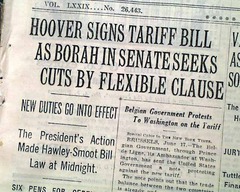
9803121813Fordney-McCumber Tariff ActThis tariff passed in 1922, raised tariffs on foreign manufactured goods by 25 percent. It helped domestic manufacturers, but limited foreign trade, and was one cause of the Great Depression of 1929. (p. 476, 488)6
9803121814Bureau of the BudgetFormed in 1921, this bureau created procedures for all government expenditures to be placed in a single budget for Congress to annually review and vote on. (p. 476)7
9803121815Calvin CoolidgeAs vice president, he became president when Warren Harding died in August 1923. He won the presidential election of 1924, but declined to run in 1928. He was a Republican who believed in limited government. He summarized his presidency and his era with the phrase: "The business of America is business". (p. 477)8
9803121816Herbert HooverWhen Calvin Coolidge decide not to run for president in 1928, he was the Republican presidential nominee. He promised to extend "Coolidge Prosperity", and won the election. (p. 477)9
9803121817Alfred E. SmithHe was the Democratic presidential candidate in the 1928 presidential election. He was the former governor of New York and his opponent in the presidential race was Republican Herbert Hoover. As a Roman Catholic and opponent of Prohibition, he appealed to immigrant urban voters. (p. 477)10
9803121818business prosperityFrom 1919 to 1929, manufacturing output rose a spectacular 64 percent due to increased productivity, energy technologies, and governmental policy which favored the growth of big business. (p. 478)11
9803121819standard of livingDuring the 1920s, the standard of living (physical things that make life more enjoyable) improved significantly for most Americans. Indoor plumbing and central heating became commonplace. By 1930, two-thirds of all homes had electricity. (p. 477)12
9803121820scientific managementA system of industrial management created and promoted in the early twentieth century by Frederick W. Taylor. It emphasized time-and-motion studies to improve factory performance. (p. 478)13
9803121821Henry FordBy 1914, he had perfected a system for manufacturing automobiles using an assembly line. (p. 478)14
9803121822assembly lineIn a factory, an arrangement where a product is moved from worker to worker, with each person performing a single task in the making of the product. (p. 478)15
9803121823open shopA company with a labor agreement under which union membership cannot be required as a condition of employment. (p. 479)16
9803121824welfare capitalismAn approach to labor relations in which companies voluntarily offer their employees improved benefits and higher wages in order to reduce their interest in joining unions. (p. 479)17
9803121825consumerismIn the 1920s, consumerism was fueled by: homes with electricity, electrical appliances, affordable automobiles, increased advertising, and purchasing on credit. (p. 478)18
9803121826electric appliancesIn the 1920s, refrigerators, stoves, vacuum cleaners, and washing machines became very popular as prices dropped due to reduced production costs and as electrical power to run them became more available. (p. 478)19
9803121827impact of the automobileIn the 1920s, this product had the largest impact on society. It caused a growth of cities and suburbs, and workers no longer needed to live near their factories. It provided job opportunities and was a much more efficient way of transportation. (p. 479)20
9803121828jazz ageName for the 1920s, because of the popularity of jazz, a new type of American music that combined African rhythms, blues, and ragtime. (p. 480)21
9803121829radio, phonographsAllowed mostly young people to listen to recorded music. The first radio station went on the air in 1920. Previously, newspapers had been the only form of mass communications. (p. 480)22
9803121830national networksNationwide radio networks enabled people all over the country to listen to the same news, sports, soap operas, quiz shows and comedies. (p. 480)23
9803121831HollywoodThe movie industry was centered here. The industry grew rapidly in the 1920s. Sound was introduced to movies in 1927. By 1929 over 80 million movie tickets were sold each week. (p. 480)24
9803121832movie starsIn the 1920s, sexy and glamorous movie stars such as Greta Garbo and Rudolf Valentino we idolized by millions. (p. 480)25
9803121833popular heroesAmericans shifted role models from politicians to sports heroes and movie stars. Sports heros included Jack Dempsey, Jim Thorpe, Babe Ruth, and Bobby Jones. However, the most celebrated was Charles Lindbergh who flew from Long Island to Paris in 1927. (p. 480)26
9803121834movie palacesOrnate, lavish single-screen movie theaters that emerged in the 1910s in the United States. (p. 480)27
9803121835role of womenIn the 1920s, the traditional separation of labor between men and women continued. Most middle-class women expected to spend their lives as homemakers and mothers. (p. 480)28
9803121836Sigmund FreudAustrian psychiatrist who originated psychoanalysis. (p. 481)29
9803121837morals and fashionsIn the 1920s, movies, novels, automobiles, and new dances encouraged greater promiscuity. Young women shocked their elders by wearing dresses hemmed at the knee (flapper look), cutting their hair short, smoking cigarettes, and driving cars. (p. 481)30
9803121838Margaret SangerShe founded American Birth Control League; which became Planned Parenthood in the 1940s. She advocated birth control awareness. (p. 481)31
9803121839high school educationIn the 1920s, universal high school education became a new American goal. By 1930, the number of high school graduates had doubled to over 25 percent of school-age adults. (p. 481)32
9803121840consumer cultureIn the 1920s, many writers were disillusioned with the materialism of the business oriented culture. (p. 481)33
9803121841Frederick Lewis AllenIn 1931, he wrote "Only Yesterday", a popular history book that portrayed the 1920s as a period of narrow-minded materialism. (p. 489)34
9803121842Only YesterdayA 1931 history book that portrayed the 1920s as a period of narrow-minded materialism in which the middle class abandoned Progressive reforms, embraced conservative Republican policies, and either supported or condoned nativism, racism, and fundamentalism. (p. 489)35
9803121843Gertrude SteinAmerican writer of experimental novels, poetry, essays, operas, and plays. She called the disillusioned writers of the 1920s, a "lost generation". (p. 481)36
9803121844Lost GenerationGroup of writers in 1920s, who shared the belief that they were lost in a greedy and materialistic world that lacked moral values. Many of them moved to Europe. (p. 481)37
9803121845F. Scott FitzgeraldA novelist and chronicler of the jazz age. His wife, Zelda and he were the "couple" of the decade. His novel, "The Great Gatsby" is considered a masterpiece about a gangster's pursuit of an unattainable rich girl. (p. 481)38
9803121846Ernest HemingwayOne of the most popular writers of the 1920s, he wrote "A Farewell to Arms". (p. 481)39
9803121847Sinclair LewisAmerican writer of the 1920s. He became the first American to receive a Nobel Prize in Literature. (p. 481)40
9803121848Ezra PoundExpatriate American poet and critic of the 1920s. (p. 481)41
9803121849T. S. EliotThomas Stearns Eliot was an essayist, publisher, playwright, literary and social critic, and one of the twentieth century's major poets. (p. 481)42
9803121850Eugene O'NeillAn American playwright of the 1920s. (p. 481)43
9803121851industrial designThe fusion of art and technology during the 1920s and 1930s created the new profession of industrial design. (p. 482)44
9803121852Art DecoThe 1920's modernistic art style that captured modernistic simplification of forms, while using machine age materials. (p. 482)45
9803121853Edward HopperA twentieth-century American painter, whose stark realistic paintings often convey a mood of solitude and isolation in common urban settings. (p. 482)46
9803121854regional artistsThomas Benton and Grant Wood celebrated the rural people and scenes of the American heartland. (p. 482)47
9803121855Grant WoodAn American Regional artist who focused on rural scenes in Iowa. He is best known for his painting "American Gothic". (p. 482)48
9803121856George GershwinHe was the son of Russian-Jewish immigrants. He blended jazz and classical music to produce "Rhapsody in Blue" and folk opera "Porgy and Bess". (p. 482)49
9803121857northern migrationBy 1930, almost 20 percent of African Americans out of the Southern United States to the North. (p. 482)50
9803121858Harlem RenaissanceThe largest African American community of almost 200,000 developed in the Harlem section of New York City. It became famous in the 1920s for its talented actors, artists, musicians, and writers. This term describes this period. (p. 483)51
9803121859Countee CullenA leading 1920s African American poet from Harlem. (p. 483)52
9803121860Langston HughesA leading 1920s African American poet from Harlem. (p. 483)53
9803121861James Weldon JohnsonA leading 1920s African American author from Harlem. (p. 483)54
9803121862Claude McKayA leading 1920s African American poet from Harlem. (p. 483)55
9803121863Duke EllingtonA leading 1920s African American jazz great from Harlem. (p. 483)56
9803121864Louis ArmstrongA leading 1920s African American jazz trumpeter from Harlem. (p. 483)57
9803121865Bessie SmithA leading 1920s African American blues singer from Harlem. (p. 483)58
9803121866Paul RobesonA leading 1920s African American singer from Harlem. (p. 483)59
9803121867Back to Africa movementEncouraged those of African descent to return to Africa. (p. 483)60
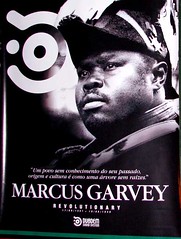
9803121868Marcus GarveyAfrican American leader during the 1920s who founded the Universal Negro Improvement Association and advocated mass migration of African Americans back to Africa. He was deported to Jamaica and his movement collapsed. (p. 483)61
9803121869black prideMany African American leaders agreed with Marcus Garvey's ideas on racial pride and self-respect. This influenced another generation in the 1960s. (p. 483)62
9803121870modernismThey took a historical and critical view of certain Bible passages and believed that they could accept Darwin's theory of evolution without abandoning their religion. (p. 483)63
9803121871fundamentalismA Protestant Christian movement emphasizing the literal truth of the Bible and opposing religious modernism (p. 483)64
9803121872revivalists: Billy Sunday, Aimee Semple McPhersonLeading radio evangelists such as Billy Sunday and Aimee Semple McPherson preached a fundamentalist message. (p 484)65
9803121873Scopes trialA 1925 Tennessee court case in which Clarence Darrow and William Jennings Bryan argued the issue of teaching evolution in public schools. (p. 484)66
9803121874Clarence DarrowA famed criminal defense lawyer, he defended John Scopes, a teacher who taught evolution in his Tennessee classroom. (p. 484)67
9803121875Volstead ActThe federal law of 1919 that established criminal penalties for manufacturing, transporting, or possessing alcohol. (p. 484)68
9803121876rural vs. urbanIn the 1920s, in the urban areas it was common to ignore the law and drink liquor in clubs or bars known as speakeasies. (p 484)69
9803121877organized crimeIn the 1920s, organized crime became big business, as bootleggers transported and sold liquor to many customers. (p. 484)70
9803121878Al CaponeA famous Chicago gangster who fought for control of the lucrative bootlegging (liquor) trade. (p. 484)71
980312187921st AmendmentThe amendment which ended the prohibition of alcohol in the United States, it repealed the 18th amendment. (p. 485)72
9803121880quota laws of 1921 and 1924Laws passed to limit immigration. (p. 485)73
9803121881Sacco and Vanzetti CaseA criminal case of two Italian men who were convicted of murder in 1921. They were prosecuted because they were Italians, atheists, and anarchists. After 6 years of appeals they were executed in 1927. (p. 485)74
9803121882Ku Klux KlanA secret society created by white southerners in 1866. They used terror and violence to keep African Americans from exercising their civil rights. (p. 486)75
9803121883Birth of a NationA popular silent film, which portrayed the KKK during Reconstruction as heros. (p. 486)76
9803121884blacks, Catholics and JewsThe KKK directed hostility toward these groups in the North. (p. 486)77
9803121885foreigners and CommunistsDuring the 1920s, widespread disillusionment with World War I, communism in the Soviet Union, and Europe's post war problems made Americans fearful of being pulled into another foreign war. (p. 486)78
9803121886disarmamentRepublican presidents of the 1920s tried to promote peace and also to scale back defense expenditures by arranging disarmament treaties (reduction in military equipment). (p. 486)79
9803121887Washington ConferenceA 1921 conference that placed limits on naval powers, respect of territory in the Pacific, and continued the Open Door policy in China. (p. 487)80
9803121888Five-Power Naval TreatyA 1922 treaty resulting from the Washington Armaments Conference that limited to a specific ratio the carrier and battleship tonnage of each nation. The five countries involved were: United States, Great Britain, Japan, France, and Italy. (p. 487)81
9803121889Nine-Power China TreatyA 1922 treaty affirming the sovereignty and territorial integrity of China as previously stated in the Open Door Policy. (p. 487)82
9803121890Kellogg-Briand TreatyThis treaty of 1928 renounced the use of force to achieve national ends. It was signed by Frank Kellogg of the United States and Aristide Briand of France, and most other nations. The international agreement proved ineffective. (p. 487)83
9803121891Latin America policyIn 1927, the United States signed an agreement with Mexico protecting U.S. interests in Mexico. (p. 487)84
9803121892war debtsDuring World War I the United States had loaned more than $10 billion to the Allies. After the war, the United States insisted that they pay back all the debt. Great Britain and France objected because they suffered much greater losses during the war than the United States. (p. 488)85
9803121893reparationsAs part of the Treaty of Versailles, Germany was ordered to pay $30 billion in reparations to the Allies. (p. 488)86
9803121894Dawes PlanA 1924 plan, created by Charles Dawes in which the United States banks would lend large sums to Germany. Germany would use the money to rebuild its economy and pay reparations to Great Britain and France. Then Great Britain and France would pay their war debts to the United States. After the 1929 stock market crash, the loans to Germany stopped. (p. 488)87

AMSCO AP US History Chapter 7-11 Flashcards

AMSCO United States History 2015 Edition, Chapter 7 The Age of Jefferson, 1800-1816

Terms : Hide Images
9824029243Thomas JeffersonHe was George Washington's first secretary of state. A Democrat-Republican, he was the nation's third president from 1801 to 1809. He stressed the basic principles of constitutional government and limited central government.0
9824029244Louisiana PurchaseIn 1803, President Thomas Jefferson purchased the Louisiana territory from France for $15 million. The purchase more that doubled the size of the United States1
9824029245war hawksThey argued that war with Britain was the only way to defend American honor, gain Canada, and destroy American Indian resistance on the frontier. (p. 139)2
9824029246Henry ClayIn 1810, he was a Kentucky member of the House of Representatives. He was a war hawk who argued for war with Britain. (p. 139)3
9824029247John C. CalhounIn 1810, he was a South Carolina member of the House of Representatives. He was a war hawk who argued for war with Britain. (p. 139)4
9824029248TecumsehThis Shawnee warrior, who along with his brother, attempted to unite all American Indian tribes east of the Mississippi River. (p. 138)5
9824029440ProphetThis Shawnee religious leader, who along with his brother, attempted to unite all American Indian tribes east of the Mississippi River. (p. 138)6
9824029249William Henry HarrisonIn 1811, this governor of the Indiana Territory, destroyed Shanee headquarters and put an end to Tecumseh's efforts to form an American Indian confederacy. (p. 138)7
9824029250Battle of TippecanoeAn 1811 battle, where U.S. troops led by William Henry Harrison did battle against American Indians led by Tecumseh. (p. 138)8
9824029251strict interpretation of ConstitutionPresident Thomas Jefferson was committed to a strict interpretation of the Constitution and rejected that the government could create a bank or that a president could purchase foreign land.9
9824029252John MarshallThis Federalist Chief Justice of the Supreme Court served in the position for 34 years. His decisions in landmark cases generally strengthened the federal government, often at the expense of states rights. (p. 134)10
9824029253judicial reviewIn 1803, Marbury v. Madison case, the Marshall court established the doctrine of judicial review by ruling that a law passed by Congress was unconstitutional. From this point on, the Supreme Court could overrule the legislative or executive branches if they believed a law was unconstituional. (p. 134)11
9824029441Marbury v. MadisonA Supreme Court case in 1803 where Chief Justice John Marshall ruled that a law passed by Congress was unconstitutional. This established the doctrine of judicial review12
9824029254Aaron BurrHe was Thomas Jefferson's vice president from 1801 to 1804. He killed Alexander Hamilton in a duel. In 1806 was tried for treason because of a plan to capture Mexico13
9824029256Hartford Convention (1814)Bitterly opposed to the the War of 1812, some radical Federalist in the Northeast wanted to secede from the United States, but it was rejected.14
9824029257Napoleon BonaparteIn the War of 1812 the United States based their hope for victory on Napoleon successfully fighting the British in Europe. However, in the spring of 1814, Napoleon's losses enabled the British to increase their forces in North America. (p. 141)15
9824029258Toussaint I'OuvertureHe led a rebellion against French rule on the island of Santo Domingo (Haiti) which resulted in heavy French losses. (p. 132)16
9824029259Barbary piratesPresident Jefferson stopped paying them tribute, and the U.S. fought the Barbary Wars from 1801 to 1805. There was no decisive victory but it did offer some protection to U.S. ships in the region. (p. 136)17
9824029261impressmentThe British practice of taking American sailors from American ships and forcing them to serve in the British navy. (p. 136)18
9824029263Embargo Act (1807)In 1807, this act prohibited American trading ships from sailing to any foreign port. It was meant to force Britain and France to change their policies. The embargo backfired and brought greater economic hardship to the United States than Britain.19
9824029264James MadisonThe fourth President of the United States from 1809 to 1817. A Democrat-Republican and a close friend of Thomas Jefferson. A member of the Continental Congress and the Constitutional Convention, he strongly supported ratification of the Constitution. He was a contributor to The Federalist Papers. His presidency was marked by the War of 1812. (p. 137)20
9824029265Nonintercourse Act (1809)In 1809, this act provided that America could now trade with all nations except Britain and France. (p. 137)21
9824029267War of 1812A war between the United States and Great Britain caused by American outrage over the impressment of American sailors by the British and British aid to the Indians attacking the Americans on the western frontier.22
9824029268Old IronsidesThe nickname for the U.S. warship, USS Constitution. In 1812, it raised American morale by sinking a British ship off the coast of Nova Scotia. (p. 140)23
9824029274Andrew JacksonIn the War of 1812 this U.S. general defeated the Creek nation at the Battle of Horseshoe Bend. The British were trying to control the Mississippi River and he defeated them at the Battle of New Orleans. He would later become the seventh president of the United States. (p. 141)24
9824029276Creek NationThis American Indian tribe was an important British ally in the War of 1812 until being defeated by Andrew Jackson. (p. 141)25
9824029277Battle of New OrleansOn January 8, 1815, General Andrew Jackson led U.S. troops that defeated the British at New Orleans. At that time communications were much slower and the armies did not know that the Treaty of Ghent had ended the war two weeks earlier. (p. 141)26
9824029278Treaty of Ghent (1814)The peace treaty that ended the War of 1812. The terms halted fighting, returned all conquered territory to the prewar claimant, and recognized the pre war boundary between Canada and the United States. (p. 141)27
9824029279Lewis and Clark ExpeditionIn 1804, Captain Meriwether Lewis and Lieutenant William Clark left St. Louis, Missouri on an expedition to the Pacific coast. They travelled up the Missouri River to the Great Divide, and then down the Columbia River to the Pacific Ocean. the expedition provided greater scientific knowledge of the region, stronger claims to the Oregon Territory, better relationships with the American Indians, and more accurate maps. (p. 134)28
9824029280Francis Scott KeyHe wrote our national anthem while observing the British attack on Fort McHenry in Baltimore. (p. 141)29
9824029442The Star Spangled BannerThe United States national anthem composed by Francis Scott Key in 1814. (p. 141)30
9824029281utopian communitiesOver one hundred of these experimental communities were started in the 1820s to 1860s period. (p. 210)31
9824029282ShakersThis early religious communal movement held property in common and separated men and women. (p. 210)32
9824029444Robert OwenA Welsh industrialist and reformer who founded the New Harmony community. (p. 210)33
9824029445New HarmonyNonreligious experimental socialist community founded to solve problems of inequity and alienation caused by the Industrial Revolution. (p. 210)34
9824029283Oneida communityThis community, started in 1848, was dedicated to social and economic equality. They shared property and spouses, and prospered by manufacturing silverware. (p. 210)35
9824029284Charles Fourier phalanxesIn the 1840s, this French socialist, advocated that people share working and living arrangements in communities. He wanted to solve problems of competitive society, but Americans were too individualistic. (p. 210)36
9824029285Horace MannHe was the leading advocate of the public school movement. (p. 213)37
9824029286temperanceReformers targeted alcohol as the cause of social ills. The movement started by using moral exhortation, then shifted to political action.38
9824029287American Temperance SocietyFounded in 1826, by Protestant ministers and others, they encouraged total alcohol abstinence. (p. 212)39
9824029289Women's Christian Temperance UnionIn the late 1870s, this women's organization was part of the temperance movement. (p. 212)40
9824029290asylum movementIn the 1820s and 1830s, this movement sought to improve the conditions for criminals, emotionally disturbed people, and paupers.41
9824029291Dorothea DixA reformer who was responsible for improving conditions in jails, poorhouses and insane asylums throughout the U.S. and Canada.42
9824029294penitentiariesThese institutions took the place of crude jails. They believed that structure and discipline would bring about moral reform. (p. 213)43
9824029296public school movementIn the 1840s, this movement to provide free education for all children spread rapidly throughout the nation. (p. 213)44
9824029299American Colonization SocietyFounded in 1817, this organization transported free black people to an African colony. This appealed to moderates, racists, and politicians. However, only 12,000 people were actually settled in Africa. (p. 215)45
9824029300American Antislavery SocietyThe organization was founded in 1833 by William Lloyd Garrison and others. They advocated the immediate abolition of all slavery in every state. (p. 215)46
9824029301abolitionism William Lloyd Garrison; The LiberatorIn 1831, he started the radical abolitionist movement with the "The Liberator" newspaper. He advocated the immediate abolition of all slavery in every state. (p. 215)47
9824029303Frederick Douglass; The North StarIn 1847, this former slave started the antislavery journal, "The North Star". (p. 215)48
9824029304Harriet TubmanFamous abolitionist, born a slave, she assisted fugitive slaves to escape to free territory. (p. 215)49
9824029306Sojourner TruthA United States abolitionist and feminist who was freed from slavery and became a leading advocate for the abolition of slavery and the rights of women. (p. 215)50
9824029308David WalkerAn African American who advocated the most radical solution to the slavery question. He argued, that slaves should take action themselves by rising up in revolt against their owners. (p. 215)51
9824029310Nat TurnerIn 1831, he led the largest slave rebellion in which 55 whites were killed. (p. 215)52
9824029311antebellum periodThe period before the Civil War started in 1861. (p. 207)53
9824029313transcendentalistsThey encouraged a mystical and intuitive way of thinking to discover the inner self and look for essence of God in nature. They valued individualism and supported the antislavery movement. (p. 209)54
9824029314Ralph Waldo Emerson, "The American Scholar"The best known transcendentalist, his essays and lectures expressed the individualistic and nationalistic spirit of Americans. He urged self-reliance, and independent thinking. (p. 209)55
9824029315Henry David Thoreau, "Walden", "On Civil Disobedience"A pioneer ecologist and conservationist. He was an advocate of nonviolent protest against unjust laws. (p. 209)56
9824029317feministsThe term for advocates of women's rights. (p. 214)57
9824029318Margaret FullerA feminist, writer, and editor in the women's movement. (p. 210)58
9824029324Hudson River schoolIn the 1830s, this genre of painting founded in the Hudson River area, portrayed everyday life of ordinary people in the natural world. (p. 211)59
9824029325Washington IrvingThis author wrote fiction using American settings. (p. 211)60
9824029326James Fenimore CooperThis author wrote novels that glorified the frontiersman as nature's nobleman. (p. 211)61
9824029327Nathaniel HawthorneAuthor of "The Scarlet Letter", which questioned the intolerance and conformity in American life. (p. 211)62
9824029330Second Great AwakeningA religious movement that occurred during the antebellum period. It was a reaction against rationalism (belief in human reason). It offered the opportunity of salvation to all. (p. 207)63
9824029331Timothy DwightPresident of Yale College, he helped initiate the Second Great Awakening. His campus revivals inspired many young men to become evangelical preachers. (p. 207)64
9824029332revivalism; revival camp meetingsIn the early 1800s, this movement was a reaction against the rationalism of the Enlightenment. Successful preachers were audience-centered and easily understood by the uneducated. (p. 207)65
9824029334Church of Jesus Christ of Latter-Day Saints; MormonsFounded by Joseph Smith in 1830. It was based on the Book of Mormon which traced a connection between the American Indians and the lost tribes of Israel. After Joseph Smith was murdered, Brigham Young led the religious group to establish the New Zion on the Great Salt Lake in Utah. (p. 208)66
9824029337women's rights movementWomen started this movement because they resented the way men relegated them to secondary roles in the reform movements. (p. 214)67
9824029338cult of domesticityAfter industrialization occurred women became the moral leaders in the home and educators of children. Men were responsible for economic and political affairs. (p. 214)68
9824029339Grimke sistersTwo sisters, born in South Carolina, they objected to male opposition to their antislavery activities. (p. 214)69
9824029341Lucretia MottA women's rights reformer who was not allowed to speak at an antislavery convention. (p. 214)70
9824029342Elizabeth Cady StantonA women's rights reformer who was not allowed to speak at an antislavery convention. (p. 214)71
9824029343Seneca Falls ConventionIn 1848, this was the first women's rights convention in U.S. history. They wrote a "Declaration of Sentiments", modeled after the Declaration of Independence, which declared all men and women equal and listed grievances. (p. 214)72
9824029344Susan B. AnthonySocial reformer who campaigned for womens rights, the temperance, and was an abolitionist. She helped form the National Woman Suffrage Association. (p. 214)73
9824029345Indian Removal ActIn 1830, this act forced the resettlement of thousands of Native Americans west of the Mississippi. (p. 195)74
9824029347Worcester v. GeorgiaIn 1832, this Supreme Court case ruled that the laws of Georgia had no force within the Cherokee territory. However, President Jackson sided with Georgia and the decision could not be enforced without Jackson's support. (p 196)75
9824029348Cherokee trail of tearsIn 1838, the U.S. Army forced 15,000 Cherokees to leave Georgia and march to Oklahoma. 4,000 Cherokees died on the trip. (p. 196)76
9824029349Bank of the United StatesIn 1832, President Andrew Jackson vetoed this bank's recharter bill, denouncing the bank as a private monopoly that enriched the wealthy and foreigners. (p. 197)77
9824029354Panic of 1837Just as Martin Van Buren became the president, the country suffered a financial panic as many banks closed their doors. (p. 199)78
9824029355Martin Van BurenHe won the 1836 presidential election as a Democratic. He had been Andrew Jackson's vice president. (p. 198)79
9824029356common manBetween 1824 and 1840, the middle and lower classes became more involved in politics. Several factors contributed to this including new suffrage laws, changes in political parties and campaigns, improved education, and increased newspaper circulation. (p. 192)80
9824029357universal white male sufferageIn the 1810s, new Western states adopted state constitutions that allowed all white males to vote and hold office. Most Eastern states soon followed suit. Voting for president rose from about 350,000 in 1824 to 2.4 million in 1840. (p. 192)81
9824029358party nominating conventionIn the 1830s, caucuses were replaced by this public process of nominating candidates in a large hall. (p. 192)82
9824029364spoils systemPresident Andrew Jackson appointed people to federal jobs strictly according to whether they had campaigned for the Democratic party. Previous office holders were fired and replaced with a loyal Democrat. (p. 193)83
9824029366Henry ClayHe was secretary of state under President John Quincy Adams. He was President Andrew Jackson's chief opponent. In 1832, he challenged Jackson by persuading Congress to pass a bank-recharter bill. (p. 197)84
9824029367corrupt bargainThe term that President Andrew Jackson and followers called the Adams and Clay deal of the 1824 election. The House of Representatives had to choose the president and Henry Clay used his influence have John Quincy Adams elected. (p. 194)85
9824029368John Quincy AdamsIn 1824, he was elected president. Henry Clay used his influence in the House of Representatives to provide him with enough votes to win the election. Clay was made secretary of state. (p. 194)86
9824029369Tariff of 1828; tariff of abominationsIn 1828, during President John Quincy Adams' term, Congress created a new tariff law which pleased northern manufacturers, but alienated southern planters. (p. 194)87
9824029371Andrew JacksonHe won the 1828 presidential election easily, winning every state west of the Appalachians. He was know as "Old Hickory" and presented himself as a comman man. (p. 195)88
9824029374states' rightsPresident Andrew Jackson favored this form of power for the state governments. (p. 196)89
9824029375nullification crisisIn 1832, South Carolina passed a resolution forbidding the collection of tariffs in the state, which was nullifying a federal law at the state level. President Jackson threatened South Carolina with the use of federal troops and a compromise was reached. (p. 197)90
9824029377John C. CalhounHe was Andrew Jackson's vice president, but he opposed Jackson on nullification theory. He advanced the theory that a state had the right to declare a federal law null and void. (p. 196)91
9824029379two-party systemThis system developed in the 1820s. Supporters of Andrew Jackson were Democrats, while supporters of Henry Clay were Whigs. (p. 197)92
9824029380DemocratsIn the 1820s, this party was led by President Andrew Jackson. It harked back to the old Republican party of Thomas Jefferson. (p. 197)93
9824029381WhigsIn the 1820s, this party was led by Henry Clay. It was similar to the old Federalist party of Alexander Hamilton. (p. 197)94
9824029384sectionalismLoyalty to a particular region of the country. (p. 173)95
9824029385NativistsNative-born Americans who reacted strongly against the immigrants, they feared the newcomers would take their jobs and weaken the culture of the Protestant and Anglo majority. (p. 176)96
9824029451Know-Nothing PartyNativists, also known as the American party. (p. 176)97
9824029452Free African AmericansBy 1860 as many as 250,000 African Americans in the South were free citizens. Most of them lived in the cities where they could own property. However, they were not allowed to vote or work in most skilled professions. (p. 179)98
9824029461urbanizationEarly 19th century urban working class neighborhoods featured crowded housing, poor sanitation, infectious diseases, and high rates of crime. (p. 174)99
9824029465Tammany HallNew York City's Democratic organization. (p. 176)100
9824029392Eli WhitneyThe United States inventor of the mechanical cotton gin, which made cotton affordable throughout the world. (p. 178)101
9824029394Denmark VeseyIn 1822, he led a major slave uprising which was quickly and violently suppressed. However, it gave hope to enslaved African Americans, drove Southern states to tighten already strict slave codes, and demonstrated to many the evils of slavery. (p. 179)102
9824029395Nat TurnerIn 1831, he led a major slave uprising. (p. 179)103
9824029468slave codesIn parts of the Deep South, slaves made up nearly 75 percent of the population. Fearing slave revolts, laws were passed which restricted blacks movements and education. (p. 178)104
9824029469unionsFor a brief period in the 1830s an increasing number of urban workers joined unions and participated in strikes. (p. 174)105
9824029470Commonwealth v. HuntIn 1842, the Massachusetts Supreme Court ruled that peaceful unions had the right to negotiate labor contracts with employers. (p. 174)106
9824029397Cyrus McCormickUnited States inventor and manufacturer of a mechanical reaper, which made farms more efficient. (p. 175)107
9824029398John DeereUnited States inventor of the steel plow, which made farms more efficient. (p. 175)108
9824029399Daniel WebsterA senator, who warned that sectionalism was dangerous for the United States. (p. 173)109
9824029400Era of Good FeelingsTerm to describe James Monroe's period as president (1817-1825). The Democratic-Republican party dominated politics. On the surface everything looked fine, however there were conflicts over tariffs, the national bank, internal improvements, and public land sales. (p. 150)110
9824029401sectionalismThe Era of Good Feelings was damaged by the sectional controversy of the Missouri Compromise. Sectionalist tension over slavery became apparent during this period (1817-1825). (p. 150, 157)111
9824029406protective tariffA tax on imported goods that is intended to protect a nation's businesses from foreign competition. (p. 151)112
9824029407Henry Clay; American SystemHis proposed plan for advancing the nation's economic growth consisted of three parts: 1) protective tariffs, 2) a national bank, and 3) internal improvements. The internal improvements, to be funded by the national government, were not approved because James Monroe felt that the Constitution did not allow it. (p. 152)113
9824029408Second Bank of the United StatesThis institution was chartered in 181. It became unpopular after being blamed for the Panic of 1819. Suspicion of corruption and mismanagement haunted it, until its charter expired in 1836. (p. 152)114
9824029409Panic of 1819In 1819, this was the first major financial panic since the Constitution had been ratified. Many state banks closed, and unemployment, bankruptcies, and imprisonment for debt increased sharply. the depression was most severe in the West, where many people had speculated on land. (p. 153)115
9824029411National (Cumberland) RoadA paved highway that extended more than a thousand miles from Maryland to Illinois. It was built using state and federal money over many years (1811-1852). One of the few roads crossing state boundaries. (p. 161)116
9824029412Erie CanalA New York canal, completed in 1825, that linked the economies of western and eastern cities. It lead to more canal building, lower food prices in the East, more settlers in the West, and stronger economic ties between the regions. (p. 161)117
9824029413Robert Fulton; steamboatsIn 1807, he built a boat powered by a steam engine. Commercial steamboat lines soon made river shipping faster and cheaper. (p. 161)118
9824029414railroadsA major economic development of the 1820s. By the 1830s they were competing directly competing with canals as a method for carrying passengers and freight. Towns such as Cleveland, Cincinnati, Detroit, and Chicago soon became booming commercial centers. (p. 161)119
9824029415Eli Whitney; interchangeable partsIn 1793, he built the first cotton gin, which would have a huge impact on the Southern economy. During the War of 1812 he devised a system to make rifles with mass produced interchangeable parts. (p. 162)120
9824029416corporationsIn 1811, New York state passed a law that made it easier for business to incorporate and raise capital by selling shares of stock. Owners of a corporation only risked the money they had invested in a venture. This allowed large sums of money to be raised to build factories, canals, and railroads. (p. 162)121
9824029417Samuel SlaterBritish-born textile producer and one of the first industrialists in America. In 1791, he helped establish the nation's first factory using cotton spinning machine technology. (p. 162)122
9824029418factory systemIn the 1820s, New England emerged as the country's leading manufacturing center because of abundant water power to drive machinery and seaports to ship goods. (p. 162)123
9824029419Lowell System; textile millsThe system that recruited young farm women to work in textile mills and house them in company dormitories. (p. 163)124
9824029424market revolutionThis revolution was a result of specialization on the farm, growth of the cities, industrialization, and the development of modern capitalism. It brought the end of self-sufficient households and a growing interdependence among people. (p. 164)125
9824029425John MarshallChief Justice of the Supreme Court from 1801 to 1835. A Federalist, whose decisions favored the central government and the rights of property against advocates of state's rights. Several of his decisions became landmark ruling that defined the relationship between the central government and the states. (p. 153)126
9824029426Fletcher v. Peck. This was the first time that the Supreme Court declared a state law to be unconstitutional and invalid. (p. 154)127
9824029427McCulloch v. MarylandThis 1819 Supreme Court case, ruled that states could not tax a federal institution, the Bank of the United States. The court ruled that, even though no clause in the Constitution specifically mentions a national bank, the Constitution gives the federal government the implied power to create one. (p. 154)128
9824029430implied powersEven though a power is not specifically stated in the Constitution, it may be possible for the federal government to exercise a power. (p. 154)129
9824029432Missouri CompromiseAn 1820 compromise, that allowed Missouri to join the Union as a slave state, and Maine to join as a free state. It also established a line across the southern border of Missouri (36°,30') stating that except for the state of Missouri, all states north of that line must be states without slavery. (p. 157)130
9824029438Monroe DoctrineAn 1823 doctrine by President James Monroe, warning European powers to refrain from seeking any new territories in the Americas. The United States largely lacked the power to back up the pronouncement, which was actually enforced by the British, who sought unfettered access to Latin American markets. (p. 158)131

AP US History: American Pageant Chapter 13 Flashcards

Terms : Hide Images
7896517910Andrew JacksonThe seventh President of the United States (1829-1837), who as a general in the War of 1812 defeated the British at New Orleans (1815). As president he opposed the Bank of America, objected to the right of individual states to nullify disagreeable federal laws, and increased the presidential powers.0
7896517911John C. CalhounThe writer of The South Carolina Exposition, vice president under both John Quincy Adams and Andrew Jackson; he wrote Exposition and Protest and led the nullification fight in 1832 and 1833. As senator and vice president, he was the leading voice for southern states' rights from 1828 to 1850.1
7896517912Henry ClayInfluential Speaker of the House who greatly influenced the decision in the election of 1824 Man who composed the Compromise Tariff of 18302
7896517913Martin Van BurenJackson's successor, Served as secretary of state during Andrew Jackson's first term, vice president during Jackson's second term, and won the presidency in 18363
7896517914John Quincy AdamsSecretary of State, He served as sixth president under Monroe. In 1819, he drew up the Treaty in which Spain gave the United States Florida in exchange for the United States dropping its claims to Texas. The Monroe Doctrine was mostly his work.4
7896517915Daniel WebsterFamous American politician and orator. he advocated renewal and opposed the financial policy of Jackson. Many of the principles of finance he spoke about were later incorporated in the Federal Reserve System. Would later push for a strong union.5
7896517916Nicholas BiddlePresident of the Second Bank of the United States; he struggled to keep the bank functioning when President Jackson tried to destroy it.6
7896517918Stephen AustinMan chosen to receive Texas, Original settler of Texas, granted land from Mexico on condition of no slaves, convert to Roman Catholic, and learn Spanish,, the state capitol of Texas was named after him; he was the man the brought the first Americans into Texas because he was granted permission by the Mexicans. Leader of Texas settlers in 18207
7896517919William Henry Harrisonwas an American military leader, politician, the ninth President of the United States, and the first President to die in office. His death created a brief constitutional crisis, but ultimately resolved many questions about presidential succession left unanswered by the Constitution until passage of the 25th Amendment. Led US forces in the Battle of Tippecanoe.8
7896517920Sam HoustonEx-governor of Tennessee, led the Texas Rebellion, United States politician and military leader who fought to gain independence for Texas from Mexico and to make it a part of the United States (1793-1863)9
7896517922Santa AnnaMexican dictator during the Texas Rebellion, Mexican general who tried to crush the Texas revolt and who lost battles to Winfield Scott and Zachary Taylor in the Mexican War (1795-1876)10
7896517923Black HawkIndian chief who led tribes to resist eviction, Sauk leader who in 1832 led Fox and Sauk warriors against the United States (1767-1838)11
7896517930spoils systemthe system of employing and promoting civil servants who are friends and supporters of the group in power12
7896517937corrupt bargainIn the election of 1824, none of the candidates were able to secure a majority of the electoral vote, thereby putting the outcome in the hands of the House of Representatives, which elected John Quincy Adams over rival Andrew Jackson. Henry Clay was the Speaker of the House at the time, and he convinced Congress to elect Adams. Adams then made Clay his Secretary of State.13
7896517938Tariff of Abominations1828 - Also called Tariff of 1828, it raised the tariff on imported manufactured goods. The tariff protected the North but harmed the South; South said that the tariff was economically discriminatory and unconstitutional because it violated state's rights.14
7896517944Trail of TearsThe Cherokee Indians were forced to leave their lands. They traveled from North Carolina and Georgia through Tennessee, Kentucky, Illinois, Missouri, and Arkansas-more than 800 miles (1,287 km)-to the Indian Territory. More than 4, 00 Cherokees died of cold, disease, and lack of food during the 116-day journey.15
7896517945panic of 1837Ecnomic downturn caused by loose lending practices of stat banks' and overspeculation. Martin Van Buren spent most of his time in office attempting to stablize and lessen the economic situation16

AP US History Period 7 (1890-1945) Flashcards

Terms : Hide Images
8548584709The Great DepressionThe deepest and longest-lasting economic downturn in the history of the Western industrialized world. In the United States, the Great Depression began soon after the stock market crash of October 1929, which sent Wall Street into a panic and wiped out millions of investors.0
8548584710Progressive EraA period of widespread social activism and political reform across the United States, from the 1890s to 1920s.1
8548584711ProhibitionA nationwide constitutional ban on the production, importation, transportation and sale of alcoholic beverages that remained in place from 1920 to 1933.2
8548584712Women's suffrageThe women's right to vote, granted by the 19th amendment to the U.S. Constitution (1920).3
8548584713preservationistsThose who attempt to maintain in their present condition areas of the Earth that are so far untouched by humans.4
8548584714conservationistsThose who advocate for the sustainable use and management of natural resources including wildlife, water, air, and earth deposits, both -- renewable and non-renewable.5
8548584715Welfare StateA system whereby the government undertakes to protect the health and well-being of its citizens, especially those in financial or social need, by means of grants, pensions, and other benefits. The foundations for the modern welfare state in the US were laid by the New Deal programs of President Franklin D. Roosevelt.6
8548584716LiberalismA viewpoint or ideology associated with free political institutions and religious toleration, as well as support for a strong role of government in regulating capitalism and constructing the welfare state.7
8548584717mass mediaDiversified mediatechnologies that are intended to reach a large audience by mass communication.8
8548584718The Great MigrationThe movement of 6 million African-Americans out of the rural Southern United States to the urban Northeast, Midwest, and West that occurred between 1910 and 1970.9
8548584719imperialistA policy of extending a country's power and influence through diplomacy or military force.10
8548584720isolationismA category of foreign policies institutionalized by leaders who asserted that their nations' best interests were best served by keeping the affairs of other countries at a distance.11
8548584721Spanish-American WarA conflict fought between Spain and the United States in 1898. Hostilities began in the aftermath of sinking of the USS Maine in Havana harbor leading to American intervention in the Cuban War of Independence.12
8548584722Treaty of VersaillesOne of the peace treaties at the end of World War I. It ended the state of war between Germany and the Allied Powers. Signed on 28 June 1919, exactly five years after the assassination of Archduke Franz Ferdinand.13
8548584723League of NationsAn intergovernmental organization founded on 10 January 1920 as a result of the Paris Peace Conference that ended the First World War. It lacked an armed force to enforce policy and was not joined by the United States.14
8548584724fascismAn authoritarian and nationalistic right-wing system of government and social organization.15
8548584725totalitarianismA political system where the state recognizes no limits to its authority and strives to regulate every aspect of public and private life wherever feasible.16
8548584726Axis PowersGermany, Italy, and Japan, which were allied before and during World War II.17
8548584727Allied PowersU.S., Britain, France, which were allied before and during World War II.18
8548584728Nazi Concentration CampA guarded compound for the detention or imprisonment of aliens, members of ethnic minorities, political opponents. Primarily Jewish Europeans during WWII.19
8548584729HolocaustA genocide in which Adolf Hitler's Nazi Germany and its collaborators killed about six million Jews and members from other fringe social groups during World War II.20
8548584730Internment of Japanese AmericansForced relocation and incarceration in camps in the interior of the U.S. of between 110,000 and 120,000 people of Japanese ancestry who had lived on the Pacific coast.21
8548584731Pacific "Island Hopping"A military strategy employed by the Allies in the Pacific War against Japan and the Axis powers during World War II. The idea was to bypass heavily fortified Japanese positions and instead concentrate the limited Allied resources on strategically important islands that were not well defended but capable of supporting the drive to the main islands of Japan.22
8548584732D-DayThe landing operations on Tuesday, 6 June 1944 of the Allied invasion of Normandy in Operation Overlord during World War II.23
8548584733atomic bombA "fission" bomb dropped on Nagasaki and Hiroshima at the end of World War II.24
8548584734americanizationThe process of assimilating American character, manner, ideals, culture, and so on.25
8548584735sphere of influenceThe territory of weaker states where a powerful state exercises the dominant control.26
8548584736partitionIn politics, the act of dividing a weaker territory or government among several more powerful states.27
8548584737bellicoseDisposed to fight or go to war.28
8548584738banana republicA disparaging term for the small nations of Central America, with particular reference to their political instability and poor, single-crop economies.29
8548584739progressiveIn politics, one who believes in continuing progress, improvement, or reform.30
8548584740exposéA disclosure or revelation considered embarrassing to those involved.31
8548584741direct primaryIn politics, the nomination of a party's candidates for office through a special election of that party's voters.32
8548584742initiativeIn politics, the procedure whereby voters can, through petition, present proposed legislation directly to the electorate.33
8548584743referendumThe submission of a law, proposed or already in effect, to a direct vote of the electorate.34
8548584744recallIn politics, a procedure for removing an official from office through popular election or other means.35
8548584745insubordinationDeliberate disobedience to proper authority.36
8548584746entrepreneurshipThe process whereby an individual initiates a business at some risk in order to expand it and thereby earn a profit.37
8548584747self-determinationIn politics, the right of a people (usually based on ethnicity) to shape its own national identity and form a government, without outside coercion of influence.38
8548584748graduated income taxA tax on income in which the taxation rates are progressively higher for those whit higher income.39
8548584749levyA forcible tax or other imposition.40
8548584750enclaveA small territory surrounded by foreign or hostile territory. Enclaves were common among newly-arrived immigrant groups (e.g. "Chinatown" in San Francisco).41
8548584751censorAn official who examines publications, mail, literature, and so forth in order to remove or prohibit the distribution of material deemed dangerous or offensive.42
8548584752Northern Securities Co. v. U. S. (1904)Re-established the authority of the federal government to fight monopolies under the Sherman Anti-Trust Act.43
8548584753Muller v. Oregon (1908)First case to use the "Brandeis brief"; recognized a 10-hour work day for women laundry workers on the grounds of health and community concerns.44
8548584754Schenck v. U. S. (1919)Unanimously upheld the Espionage Act of 1917 which declared that people who interfered with the war effort were subject to imprisonment; declared that the 1st Amendment right to freedom of speech was not absolute; free speech could be limited if its exercise presented a "clear and present danger."45
8548584755Korematsu v. U. S. (1941)The court upheld the constitutionality of detention camps for Japanese-Americans during World War 2.46
8548584756belligerent(adj.) given to fighting, warlike; combative, aggressive; (n.) one at war, one engaged in war47
8548584757Open Door PolicyThe policy that China should be open to trade with all of the major powers, and that all, including the United States, should have equal right to trade there. This was the official American position toward China as announced by Secretary of State John Hay in 1899.48
8548584758socialismAn economic and governmental system based on public ownership of the means of production and exchange.49
8548584759Eugene DebsProminent socialist leader (and five time presidential candidate) who founded the American Railroad Union and led the 1894 Pullman Strike50
8548584760Roosevelt CorollaryRoosevelt's 1904 extension of the Monroe Doctrine, stating that the United States has the right to protect its economic interests in South And Central America by using military force.51
8548584761Industrial Workers of the World (IWW)Founded in 1905, this radical union, also known as the Wobblies aimed to unite the American working class into one union to promote labor's interests. It worked to organize unskilled and foreign-born laborers, advocated social revolution, and led several major strikes. Stressed solidarity.52
8548584762Pure Food and Drug ActForbade the manufacture or sale of mislabeled or adulterated food or drugs, it gave the government broad powers to ensure the safety and efficacy of drugs in order to abolish the "patent" drug trade. Still in existence as the FDA.53
8548584763Teddy RooseveltTwenty-sixth president of the United States; he focused his efforts on trust busting, environment conservation, and strong foreign policy.54
8548584764William Taft27th president of the U.S.; he angered progressives by moving cautiously toward reforms and by supporting the Payne-Aldrich Tariff; he lost Roosevelt's support and was defeated for a second term.55
8548584765Triangle Shirtwaist FireMarch 1911 fire in New York factory that trapped young women workers inside locked exit doors; nearly 50 ended up jumping to their death; while 100 died inside the factory; led to the establishment of many factory reforms, including increasing safety precautions for workers56
8548584766segregationSeparation of people based on racial, ethnic, or other differences. Common in the South after the Civil War through the 1960s.57
8548584767Harlem RenaissanceBlack literary and artistic movement centered in Harlem that lasted from the 1920s into the early 1930s that both celebrated and lamented black life in America; Langston Hughes and Zora Neale Hurston were two famous writers of this movement.58
8548584768Fourteen PointsThe war aims outlined by President Wilson in 1918, which he believed would promote lasting peace; called for self-determination, freedom of the seas, free trade, end to secret agreements, reduction of arms and a league of nations.59
8548584769Red ScareA social/political movement designed to prevent a socialist/communist/radical movement in this country by finding "radicals," incarcerating them, deporting them, and subverting their activities. Periods of Red Scare occurred after both World Wars in the United States.60
8548584770Sedition ActA law passed by Congress in 1918 (during World War I) to make it illegal to say anything disloyal, profane, or abusive about the government or the war effort in WWI. Seen as a military necessity by some for effectively fighting in WWI.61
8548584771Emergency Quota ActA government legislation that limited the number of immigrants from Europe which was set at 3% of the nationality currently in the U.S. It greatly limited the number of immigrants who could move to the U.S. And it reflected the isolationist and anti-foreign feeling in America as well as the departure from traditional American ideals.62
8548584772Scopes TrialAlso known as the Scopes Monkey Trial; 1925 court case argued by Clarence Darrow and William Jennings Bryan in which the issue of teaching evolution in public schools was debated. Highlighted the growing divide between rural (more conservative) and urban (more liberal) interests in the United States.63
8548584773Sacco and Vanzetti TrialNicola Sacco and Bartolomeo Vanzetti were Italian immigrants charged with murdering a guard and robbing a shoe factory in Braintree, Massachusetts. The trial lasted from 1920-1927. Convicted on circumstantial evidence; many believed they had been framed for the crime because of their anarchist and pro-union activities.64
8548584774Kellog-Briand PactIdealistic agreement signed in 1928 in which nations agreed not to pose the threat of war against one another.65
8548584775Herbert HooverRepublican president at the outset of the Great Depression. As a Republican, he believed that the federal government should not interfere in economic problems; the severity of the Great Depression forced his hand to provide some federal assistance to those in need, but he mostly left these efforts to the states.66
8548584776Smoot-Hawley TariffOne of Herbert Hoover's earliest efforts to protect the nation's farmers following the onset of the Great Depression. Tariff raised rates to an all-time high.67
8548584777Platt AmendmentThis amendment to the new Cuban constitution authorized U.S. intervention in Cuba to protect its interests. Cuba pledged not to make treates with other countries that might compromise its independence, and it granted naval bases to the United States, most notable being Guantanamo Bay.68
8548584778Indian Reorganization ActGovernment legislation that allowed the Indians a form of self-government and thus willingly shrank the authority of the U.S. government. It provided the Indians direct ownership of their land, credit, a constitution, and a charter in which Indians could manage their own affairs.69
8548584779Zoot Suit RiotsA series of riots in 1944 during World War II that broke out in Los Angeles, California, between Anglo American sailors and Marines stationed in the city, and Latino youths, who were recognizable by the zoot suits they favored.70
8548584780Yalta ConferenceFDR, Churchill and Stalin met at Yalta. Russia agreed to declare war on Japan after the surrender of Germany and in return FDR and Churchill promised the USSR concession in Manchuria and the territories that it had lost in the Russo-Japanese War.71
8548584781William Jennings BryanUnited States lawyer and politician who advocated free silver and prosecuted John Scopes (1925) for teaching evolution in a Tennessee high school (1860-1925).72
8548584782Woodrow Wilson(1856-1924) President of the United States (1913-1921) and the leading figure at the Paris Peace Conference of 1919. He was unable to persuade the U.S. Congress to ratify the Treaty of Versailles or join the League of Nations.73
8548584783United NationsAn international organization formed after WWII to promote international peace, security, and cooperation.74
8548584784communismA political theory derived from Karl Marx, advocating class war and leading to a society in which all property is publicly owned and each person works and is paid according to their abilities and needs.75
8548584785Bolshevik RevolutionThe overthrow of Russia's Provisional Government in the fall of 1917 by Lenin and his Bolshevik forces, made possible by the government's continuing defeat in the war, its failure to bring political reform, and a further decline in the conditions of everyday life.76

AP US History Chapter 1 Flashcards

Summer Homework Assignemnt

Terms : Hide Images
7157221997The geologically oldest mountains in North America areThe Appalachians0
7157221998The Indian peoples of the Americas wereDivided into many diverse cultures speaking more than 2000 different languages1
7157221999The Iroquois Confederacy remained a strong political and military influence untilThe American revolution2
7157222000One of the important factors that first stimulated European interest in trade a discovery wasThe Christian Crusaders who brought back a taste for the silks and spices of Asia3
7157222001Among the most important American Indian products to spread to the old world wereFoodstuffs such as maize, beans, and tomatoes4
7157222002The primary staples of Indian agriculture wereMaize, beans, and squash5
7157222003The number of Indians in North America at the time Columbus arrive was approximately20 million6
7157222004The Portuguese were the first to enter the slave trade and establish large-scale plantations using slave labor inThe Atlantic sugar islands7
7157222005Much of the impetus for Spanish exploration in pursuit of glory in the early 1500s came from Spain's recentThe national unification expulsion of the Muslim Moors8
7157222006A crucial political development that pave the way for European colonization of America wasThe rise of the centralized national monarchies such as that of Spain9
7157222007The primary reason for the drastic decline in the Indian population after the encounter with the Europeans wasThe Indians' lack of resistance to European diseases such as smallpox and malaria10
7157222008Cortés and his men were able to conquer the Aztec capital Tenochtitlán partly becauseThe Aztec ruler Montezuma believe that Cortés was a God whose return had been predicted (the entire movie of road to El Dorado)11
7157222009The primary early colonial competitor with Spain in the Americas wasPortugal12
7157222010The believes that the Spanish only killed, tortured, install in the Americas, while contributing nothing good, is calledThe Black Legend13
7157222011ID: extended. When glaciers covered most of the north American continentThe Ice Age14
7157222012ID: staple crop that formed the economic foundation of Indian civilizationsMaize (corn)15
7157222013ID: important Mississippian culture site, near present-day East St. Louis, IllinoisCahokia16
7157222014ID: first European nation to send explores around the west coast of AfricaThe Portuguese17
7157222015ID: flourishing west African kingdom that had its capital and University at TimbuktuMali18
7157222016ID: mistaken term that the first European explorers gave to the American lands because of the false belief that they were off the coast of AsiaIndians19
7157222017ID: animal introduced by Europeans that transformed the Indian way of life on the great plainsHorses20
7157222018ID: name one of the major European diseases that devastated native American populations after 1492Smallpox; yellow fever21
7157222019ID: disease originating in the Americas that was transmitted back to the Europeans after 1492Syphilis22
7157222020ID: treaty that proclaimed a Spanish title to land in the Americas by dividing them with PortugalTordesillas23
7157222021ID: wealthy capital of the Aztec empireTenochtitlan24
7157222022ID: person of mixed European and Indian ancestryMestizo25
7157222023ID: Indian uprising in New Mexico caused by Spanish efforts to suppress Indian religionPope's Rebellion26
7157222024ID: Indian people of the Rio Grande Valley who were Krully oppressed by the Spanish conquerorsPueblos27
7157222025ID: Roman Catholic religious order of friars that organized a chain of missions in CaliforniaFather Serra's brown Robed Franciscan Friars (Tried to convert Indians to Catholicism)28

AMSCO AP US History Chapter 15 Flashcards

AMSCO United States History 2015 Edition, Chapter 15 Reconstruction, 1863-1877

Terms : Hide Images
8453280175Jay GouldIn 1869, this Wall Street financier obtained the help of President Grant's brother in law, to corner the gold market. The Treasury Department broke the scheme, but after he had already made a huge profit. (p. 300)0
8453280177William (Boss) TweedThis New York City politician, arranged schemes that allowed he and his cronies to steal about $200 million dollars from New York. He was eventually sentenced to prison in 1871. (p. 301)1
8453280180Thomas NastNew York Times political cartoonist who exposed the abuses of the "Boss" Tweed ring. Tweed was eventually arrested and imprisoned in 1871. (p. 310)2
8453280182Horace GreeleyIn the presidential election of 1872, both the Liberal Republicans and the Democrats made this newspaper editor their nominee. He lost the election to Ulysses S. Grant, he died just days before the counting of the electoral vote count. (p. 301)3
8453280186Rutherford B. HayesHe won the presidential election of 1876, which was a highly contested election. He was a Republican governor from Ohio. (p. 302)4
8453280187Samuel J. TildenIn the presidential election of 1876, this New York reform governor was the Democrat nominee. He had gained fame for putting Boss Tweed behind bars. He collected 184 of the necessary 185 electoral votes, but was defeated by Rutherford B. Hayes, when all of the electoral votes from the contested states of South Carolina, Florida, and Louisiana went to Hayes. (p. 303)5
8453280192Andrew JohnsonThe 17th President of the United States from 1865 to 1869. This Southerner from Tennessee was Lincoln's vice president, and he became president after Lincoln was assassinated. He opposed radical Republicans who passed Reconstruction Acts over his veto. The first U.S. president to be impeached, he survived the Senate removal by only one vote. (p. 297)6
8453280197Charles SumnerThe leading Radical Republican in the Senate from Massechusetts. (p. 295)7
8453280198Thaddeus StephensThis Pennsylvania Congressman was a Radical Republican. He hoped to revolutionize Southern society through an extended period of military rule in which blacks would be free to exercise their civil rights, receive education, and receive lands confiscated from planter class. (p. 295)8
8453280199Benjamin WadeRadical Republican who endorsed woman's suffrage, rights for labor unions, and civil rights for northern blacks. (p. 295)9
8453280202Edwin StantonHe was President Andrew Johnson's secretary of war. President Johnson believed the new Tenure of Office Act was unconstitutional and he challenged the law, by dismissing him from his position. This led to Johnson's impeachment. (p. 297)10
8453280206Blanche K. BruceDuring the Reconstruction era, he represented Mississippi as a Republican U.S. Senator, from 1875 to 1881. He was the first black to serve a full term in the Senate. (p. 298)11
8453280207Hiram RevelsDuring the Reconstruction era, this black politician, was elected to the Mississippi senate seat that had been occupied by Jefferson Davis before the Civil War. (p. 298)12

AP US History "Packet of Doom" Political Parties Flashcards

Terms : Hide Images
6189822530Democratic-RepublicansStates' rights. • Strict interpretation of the Constitution. • Agriculture and rural life. • Strongest in South and West. • Sympathy with France. • Civil liberties and trust in the people.0
6189822531Federalists• Strong central government. • Loose interpretation of the Constitution. • Commerce and manufacturing. • Strongest in Northeast. • Close ties with Britain. • Order and stability.1
6189822532Democrats• Party of tradition. • Looked backward to the past. • Spoke to the fears of Americans. • Opposed banks and corporations. • Opposed state-legislated reforms. • Preferred individual freedom of choice. • Were Jeffersonian agrarians who favored farms, rural independence, states' rights, and the right to own slaves. • Favored rapid territorial expansion. • Believed in progress through external growth.2
6189822533Whigs• Party of modernization. • Looked forward to the future. • Spoke to the hopes of Americans. • Promoted economic growth, especially transportation and banks. • Advocated state-legislated reforms such as temperance, public schools, and prison reform. • Favored industry, urban growth, and federal government. • Favored gradual territorial expansion. • Believed in progress through internal growth.3
6189822534Liberty Party• Abolitionist party that ran candidate James Birney for President in 1844. • Won only 2% of the vote but drew votes away from the Whigs, especially in New York.4
6189822535Free Soil Party• Not abolitionist, but opposed to the expansion of slavery in the territories. • Won 10% of the popular vote with Martin Van Buren as their candidate in 1848. • Lost 50% of their support in 1852, when they repudiated the Compromise of 1850.5
6189822536American Party• The "Know Nothing" Party. • Nativist party based on opposition to immigration and a focus on temperance. • Ran Millard Fillmore in 1856 and won 21% of the popular vote. • Republican Party absorbed them in 1856.6
6189822537Whigs (Mid-19th century)• Southern "Cotton" Whigs eventually drifted into the Democratic Party. • Northern "Conscience" Whigs moved to new parties such as the Free Soil Party, and later, the Republican Party7
6189822538Republican Party• Formed in 1854 by a coalition of Independent Democrats, Free Soilers, and Conscience Whigs united in opposition to the Kansas-Nebraska Bill. • Stressed free labor and opposed the extension of slavery in the territories. • Moderates like Abraham Lincoln opposed slavery on "moral" grounds, while admitting that slavery had a "right" to exist where the Constitution originally allowed it to exist. • John C. Fremont was the first Republican candidate in the election of 18568
6189822539Democrats (election of 1860)• Split at the 1860 party convention, when a platform defending slavery was defeated and Deep South delegates walked out. • At a splinter convention, Stephen Douglas of Illinois was nominated as a candidate on a platform opposing any Congressional interference with slavery. • Deep South delegates met and nominated John Breckenridge of Kentucky as a candidate on a pro-slavery platform.9
6189822540Republicans (election of 1860)• The Republicans, by this time decidedly opposed to slavery, drew in northerners with a platform favoring the Homestead Act, protective tariffs, and transportation improvements. • Opposed the extension of slavery but defended the right of states to control their own "domestic institutions." • Abraham Lincoln was nominated as the candidate on the third ballot.10
6189822541Republicans and Democrats• The main parties blur during this period, with loyalties determined primarily by regional, religious, and ethnic differences as opposed to political platforms. • Voter turnout for elections averaged over 78 percent (60 to 80 percent in off years). • Both parties were pro-business, opposed to any type of economic radicalism or reform, and supportive of "sound currency" and the economic status quo. • Federal government and, to some extent, state governments tended to do very little. • Republicans dominated the Senate; Democrats dominated the House of Representatives. • Republican splinter groups include the Stalwarts, Halfbreeds, and Mugwumps.11
6189822542Populist Party• Formed in 1891 by remnants of the Farmers' Alliances. • Sported a long list of demands that included the free coinage of silver, government ownership of the railroads, telegraphs, and telephone lines, a graduated income tax, the direct election of U.S. senators, and the use of initiative, referendum, and recall. • The party eventually faded because the farmers' situation improved in the late 1890s, and also because its political agenda was absorbed by the Republicans and Democrats.12
6189822543Progressive Era• There were three "Progressive" Presidents - Theodore Roosevelt (Republican), William Howard Taft (Republican), and Woodrow Wilson (Democrat). • Believed that the laissez-faire system was obsolete, yet supported capitalism. • Applied the principles of science and efficiency to economics, social institutions, and politics. • Viewed government as a key player in creating an orderly, stable, and improved society. • Generally positive in outlook. Believed that the government had the power to combat special interests and work for the good of the community, state, and nation. • The political party system was singled out as corrupt, outmoded, inefficient, and undemocratic. • Believed corruption could be diminished by putting more power in the hands the people, as well as non-elected professional officials. • Adopted many Populist causes, including the referendum, the initiative, and the direct election of Senators. • Progressive Amendments to the U.S. Constitution = 16th, 17th, 18th, and 19th Amendments.13
6189822544Republican Era• Presidents Harding, Coolidge, and Hoover. • Position of the government was decidedly pro-business. Though conservative, the government did experiment with new approaches to public policy. • Supported an American culture that was increasingly urban, industrial, and consumer-oriented. • Conflicts surfaced regarding immigration restriction, Prohibition, and race relations.14
6189822545The Democratic Political Legacy of the New Deal• Democrats established a power base with the support of ethnic groups, city dwellers, organized labor, blacks, and a broad section of the middle class. • Increased expectations and acceptance of government involvement in American life. • Made the federal government a protector of interest groups and a mediator of competition. • Regulated American business to protect it from the excesses and problems of the past. • Fair Deal of the post-war Truman administration continued the trend in governmental involvement with expanded Social Security benefits, an increase of the minimum wage, a full employment program, slum clearance, public housing, and government sponsorship of scientific research. • In 1948, the liberal Democratic coalition split into the two branches detailed below.15
6189822546Post-World War II Politics (Democrats)Maintained their power base of organized labor, urban voters, and immigrants. • As the post-war period progressed, advocated larger roles for the federal government in regulating business. • By the 1960s, advocated extensive governmental involvement in social issues like education and urban renewal. • Became associated with the civil rights movement and championed the Civil Rights Act and the Voting Rights Act.16
6189822547Post-World War II Politics (Republicans)• The Republicans accused the Democrats of being "soft" on Communism. • Promised to end the Korean War. • Conservative Southern Democrats, the "Dixiecrats," increasingly associated themselves with Republican candidates opposing civil rights legislation.17
6189822548Nixon's New Federalism (Democrats)• By the 1960s, was fragmented and seemingly incapable of dealing with the social and political turmoil caused by the Vietnam War. • In the post-Vietnam period, Democrats advocated the extension of civil rights, "reproductive rights" (birth control and abortion rights), fair housing legislation, etc.18
6189822549Nixon's New Federalism (Republican)Opposition to the Vietnam War and growing federal social programs "converted" Democrats in increasing numbers. • Defended the supposed "silent majority." • Advocated a policy of cutting back federal power and returning that power to the states. This was known as the "New Federalism.19
6189822550Reagan and the New Right (Democrats)• Supported environmental legislation, limits on economic development, and an end to the production of nuclear weapons and power plants. • The pro-choice movement emerged during the 1980s to defend a woman's right to choose. • Affirmative action - the use of racial quotas to "balance" the workforce - was supported by the Democrats.20
6189822551Reagan and the New Right (Republicans)• Spurred on by the rise of Evangelical Christianity, the South began voting Republican. • Ethnic suburbanites and young conservatives formed a "New Right" supporting Reagan on a "law and order" platform. • Advocated stricter crime, drugs, and porn laws, opposed abortion, supported an increase in defense spending, and supported tax cuts. • Reagan curbed the government expansion but did not reduce its size or the scope of its powers.21

Pages

Subscribe to CourseNotes RSS

Need Help?

We hope your visit has been a productive one. If you're having any problems, or would like to give some feedback, we'd love to hear from you.

For general help, questions, and suggestions, try our dedicated support forums.

If you need to contact the Course-Notes.Org web experience team, please use our contact form.

Need Notes?

While we strive to provide the most comprehensive notes for as many high school textbooks as possible, there are certainly going to be some that we miss. Drop us a note and let us know which textbooks you need. Be sure to include which edition of the textbook you are using! If we see enough demand, we'll do whatever we can to get those notes up on the site for you!