AP Notes, Outlines, Study Guides, Vocabulary, Practice Exams and more!

AP Government Chapter 9 Flashcards

Terms : Hide Images
5436443994NominationThe official endorsement of a candidate for office by a political party.0
5436469549Campaign StrategyThe master game plan candidates lay out to guide their electoral campaign.1
5436475129National Party ConventionThe supreme power within each of the parties. Meets every four years to nominate the party's presidential and vice presidential candidates and to write the party's platform.2
5436495892McGovern-Fraser CommissionA commission formed at the 1968 Democratic Convention in response to demands for reform by minority groups and others who sought better representation.3
5436502326SuperdelegatesNational Party leaders who automatically get a delegate slot at the national party convention.4
5436507512CaucusA system for selecting convention delegates used in about a dozen mostly rural states in which voters must show up at a set time and attend an open meeting to express their presidential preference.5
5436517421Presidential PrimariesElections in which a state's voters go to the polls to express their preference for a party's nominee for president.6
5436560540FrontloadingThe recent tendency of states to hold primaries early in the calendar in order to capitalize on media attention.7
5436580662National PrimaryA proposed nationwide primary that would replace the current system of caucuses and presidential primaries.8
5436594366Regional PrimaryA proposed series of primaries held in each geographic region that would replace the current system of caucuses and presidential primaries.9
5436603949Party PlatformA political party's statement of its goals and policies for the next four years. Drafted prior to the party convention by a committee whose members are chosen in rough proportion to each candidate's strength. Best formal statement of a party's beliefs.10
5436666415Direct MailA method of raising money for a political cause or candidate in which information and requests for money are sent to people whose names appear on list of those who have supported similar views or candidates in the past.11
5436695599Federal Election Campaign ActA law passed in 1974 for reforming campaign finances. The act created the Federal Election Commission, provided public financing for presidential primaries and general elections, limited presidential campaign spending, required disclosure, and attempted to limit contributions.12
5436731461Federal Election CommissionA six member bipartisan agency created by the Federal Election Campaign Act of 1974. Administers and enforces campaign finance laws.13
5436834505Presidential Election Campaign FundMoney from the $3 Federal Income tax check-off goes into this fund, which is then distributed to qualified candidates to subsidize their presidential campaigns.14
5436933189Matching FundsContributions of up to $250 are matched from the Presidential Election Campaign Fund to candidates for the presidential nomination who qualify and agree to meet various conditions, such as limiting their overall spending.15
5436949978Soft MoneyPolitical contributions ear-marked for party-building expenses at the grass-roots level or for generic party advertising. Unlike money that goes to the campaign of a particular candidate, such party donations are not subject to contribution limits. For a time, such contributions were unlimited until they were banned by the McCain-Feingold Act.16
5436982101527 GroupsIndependent political groups that are not subject to contribution restrictions because they do not seek the election of particular candidates. Section 527 of the tax code specifies that contributions to such groups must be reported to the IRS.17
5436994167501c GroupsGroups that are exempted from reporting their contributions and can receive unlimited contributions. Section 501c of the tax code specifies that such groups cannot spend more than half their funds on political activities.18
5437006444Political Action CommitteesFunding vehicles created by the 1974 campaign finance reforms. A corporation, union, or some other interest group can create one and register it with the Federal Election Commission, which will meticulously monitor its expenditures.19
5437021596Selective PerceptionThe phenomenon that people's beliefs often guide what they pay the most attention to and how they interpret events.20

Europe Map AP Human Flashcards

Terms : Hide Images
6447008271SpainCapital- Madrid0
6447009739FranceCapital- Paris1
6447014520PortugalCapital- Lisbon2
6447018179EnglandCapital- London3
6447018874IrelandCapital- Dublin4
6447021040ItalyCapital- Rome5
6447023704NorwayCapital- Oslo6
6447025606SwedenCapital- Stockholm7
6447026786FinlandCapital- Helsinki8
6447028856DenmarkCapital- Copenhagen9
6447029784GermanyCapital- Berlin10

AP Biology Chapter 7 Flashcards

Terms : Hide Images
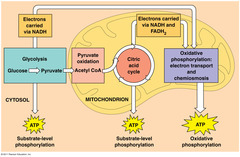
5580006873glycolysisthe process of turning sugars into the 3-carbon molecule pyruvate0
5580013785ATPadenosine triphosphate - the ideal molecule for energy storage; consists of ribose, adenine, and three phosphates1
5580015875ADPadenosine diphosphate; consists of ribose, adenine, and two phosphates2
5580021331oxidationthe act of losing electrons3
5580022869reductionthe act of gaining electrons4
5580022870respirationa process in living organisms involving the production of energy, typically with the intake of oxygen and the release of carbon dioxide from the oxidation of complex organic substances.5
5580033053aerobic respirationrespiration involving oxygen6
5580033897anaerobic respirationrespiration lacking oxygen7
5580160898obligate anaerobean organism that only uses fermentation; cannot survive in the presence of oxygen8
5580125334facultative anaerobean organism that uses anerobic respiration when necessary9
5580036178fermentationthe partial degradation of of sugars or other organic molecules without oxygen10
5580039174alcohol fermentationfermentation resulting in alcoholic substances11
5580040969lactic acidthe end product of lactic acid fermentation12
5580049957acetyl coenzyme Athe combination of coenzyme A and pyruvate that allows pyruvate to enter the citric acid cycle13
5580057543Kreb's (citric acid) cyclepyruvate molecules from glucose are further broken down into carbon dioxide; the nonpolar covalent bonds that are broken produce ATP; occurs in the mitochondria14
5580066963electron transport chainelectrons are carried to and from protein complexes; the electrons lose energy and the enrgy is used to pump H+ ions across the membrane to make a chemical gradient15
5580074667matrixthe part of a mitochondrion where organic molecules are oxidized16
5580078475hydrogen acceptora molecule with a positive charge (an extra H+ ion) that accepts electrons, creating a molecule with a neutral charge (an extra H atom)17
5580082760coenzymean organic molecule that helps an enzyme catalyze a reaction (nonproteins)18
5580085162NAD+an electron carrier (coenzyme)19
5580087320electrochemical gradienta combination of chemical gradient (substances of different concentrations across a membrane) and an electrical gradient (different charges across a membrane); created with H+ in cellular respiration20
5580095742proton pumpa protein complex that uses energy from "falling" electrons in the ETC to pump H+ across a membrane21
5580097373cristaethe partitions created by the folded inner membrane of a mitochondrion22
5580104125chemical energythe potential energy available for release in chemical reactions23
5580107200dehydrogenasean enzyme that removes H atoms in the ETC24
5580114608chemiosmosisthe movement of ions across a semipermeable membrane down the electrochemical gradient25
5580118024ATP synthasethe enzyme that phosphorylates ADP to create ATP using energy from H+ ions flowing down the gradient into the mitochondrion26
5580122101electronegativitythe affinity an atom has for electrons27
5580129272deaminationthe removal of an amino group from a compound28
5580131493oxidizing agentthe molecule that gains electrons, oxidates other molecule29
5580132473reducing agentthe molecule that loses electrons, reduces other molecule30
5580137664proton-motive forcethe H+ gradient that has the capacity to perform work31
5580140795cytochromean electron carrier; consists of heme and other components32
5580148012G3Pa 3-carbon intermediate between sugars and pyruvate33
5580151413pyruvatea 3-carbon molecule that is the first stable intermediate in cellular respiration34

AP Biology Neuron Flashcards

Terms : Hide Images
8936331619dendritesBranchlike parts of a neuron that are specialized to receive information.0
8936331620axonA threadlike extension of a neuron that carries nerve impulses away from the cell body.1
8936331621myelin sheathA layer of fatty tissue segmentally encasing the fibers of many neurons; enables vastly greater transmission speed of neural impulses as the impulse hops from one node to the next.2
8936331622Schwann cellsSupporting cells of the peripheral nervous system responsible for the formation of myelin.3
8936331623depolarizationThe process during the action potential when sodium is rushing into the cell causing the interior to become more positive; voltage change that occurs when the difference in charge across a membrane decreases4
8936331624axon terminalsBranched endings of an axon that transmit messages to other neurons5
8936331625nodes of ranvierGaps in the myelin sheath to which voltage-gated sodium channels are confined;6
8936331626cell bodyLargest part of a typical neuron; contains the nucleus and much of the cytoplasm7
8936331627membrane potentiala difference in electrical charge between the cytoplasm (negatively charged) and the extracellular fluid (positively charged)8
8936331628resting potentiala neuron in its unstimulated state9
8936331629-70mVa neuron in its resting state has a membrane potential of ________10
8936331630sodium-potassium pumpa carrier protein that uses ATP to actively transport sodium ions out of a cell and potassium ions into the cell, maintaining neuron polarization11
8936331632gated-ion channelA channel in the plasma membrane for one specific ion, such as sodium or calcium12
8936331633sodium-ion channelwhen stimulated, the result is a decrease in polarization to about -60mV13
8936331634hyperpolarizationThe movement of the membrane potential of a cell away from rest potential in a more negative direction.14
8936331635action potentialA neural impulse; a brief electrical charge that travels down an axon. The action potential is generated by the movement of positively charged atoms in and out of channels in the axon's membrane.15
8936331636calcium-gated channelsimportant for release of neurotransmitters16

AP European History art Flashcards

Terms : Hide Images
6735750827pre-renaissance artno perspective or attention to detail unrealistic gold leaf religious0
6735750828renaissance artemphasis on proportion and perspective effort to look 3D and realistic introduction of secular, but majority is religious1
6735750830Leonardo Da Vinci, most famous workMona Lisa2
6735750831Leonardo Da Vinci, renaissance frescoThe Last Supper3
6735750832Sandro Botticelli, renaissanceThe Birth of Venus4
6735750833Donato di Donatello, renaissance bronzeYoung David5
6735750834Michelangelo, renaissance frescoSistine Chapel6
6735750835Michelangelo, renaissance marbleDavid7
6735750836Raphael Sanzio, Renaissance FrescoSchool of Athens8
6735750837Northern Renaissancevisual reality and accurate portrayal of detail is a reraction to the southern renaissance and is much more secular9
6735750838Jan von EyckGiovanni and His Bride with the incredible invereted mirror and his breath taking picturesque style10
6735750839MannerismPost Renaissance (1520's) delibererate distortion of proportion11
6735750840Domenikos Theotocopoulos, mannerism El GrecoLaocoon12
6735750841Baroqueeaggerated motion,drama, tension, euberance, and grandeur from ssculpture, painting, literature and music EMBRACES catholic reform movement13
6735750842Gian Lorenzo Berini, baroqueThrone of St. Peter14
6735750843Artemisia Gentileschi, baroqueJudith Beheading Holofernes (not the actual, but pretty close. stupid quizlet)15
6735750844French Classicismadherence to certain rules of proportion and sobriety characteristic of the Baroque as it was practiced in Southern and Eastern Europe during the same period16
6735750845Nicholas Poussin, French Classicism landscapes and classical mythologyLes Bergers d'Arcadie17
6735750846Dutch Realismprimarily interested in the realistic portrayal of secular everyday life18
6735750847Rembrandt van Rijn, dutch realist self portraits at first, biblical tales towards end of lifeBathsheba with King David's Letter (ignore the labtop)19
6735750848Rococoemphasized grance and gentle action highly secular rejected strict geometric patterns fondness for curves worked well with baroque architecture20
6735750849Jean-Antoine Watteau, Rococo portraits of aristocratic life21
6735750850Johann Balthasar Neumann, Rococo architectChurch of the Vierzehnheiligen22
6735750851Neoclassicismstill prevalent in some places classical style and themes23
6735750853Jacques-Louis David, neoclassicist numerous themes from greek and roman hsitoryThe death of Socrates24
6735750854Jacques-Louis David, neoclassicistBonaparte Crossing the St. Bernard Pass25
6735750855Romanticisma painting should mirror the artist's vision of the world- it is a relfection of the artist's inner feelings a direct rejection of classical restraint on warmth, emotion and movement individualism-interest in the unique traits of each person romantic heroes and interest in the past love of nature26
6735750856Caspar David FriedichWanderer above sea of fog (and , romantic preoccupied with god and nature paintings tend to have mystery and mysticism themes)27
6735750857Joseph Mallord William Turner, romantic painted numerous landscapes, seascapes, sun rises/sets painted moods by using color and light28
6735750859Eugene Delacroix, romantic passion for color and historical subjectsLiberty Leading the People29
6735750860Realismdeal with ordinary characters from real life rather than romantic heroes in unusual settings deliberate rejection of romanticism30
6735750861Gustave Courbet, realist word realism first coined to describe one of his paintings subjects= factory workers, peasants, and wives of saloon keepersThe Young Bather31
6735750862Jean-Francois Millet, realist painted scenes from rural life, especially peasants in the fieldsThe Gleaners32
6735750864Impressionismprefer to paint in the country side not much detail, shown with color33
6735750865Claude Monet, impressionistThe Lily Pond34
6735750871Edgar Degas, impressionism founder of impressionism BALLERINAS35
6735750875Post Impressionismmore attention to structure and form use color and line to express inner feeling and produce a personal statement of reality rather than an imitation of objects shifted from objective reality to subjective reality36
6735750876Paul Cezanne, Post impressionist express underlying geometric structure and form of everything he paintedThe Card Players37
6735750877Vincent Van Gogh, post impressionist color acted as own form of language artists should paint what they feel38
6735750878Cubismuse of geometric designs as a visual stimuli to re-create reality in the viewer's mind39
6735750879Pablo Picasso, cubist40
6735750881abstract paintingjust a bunch of shapes and crap41
6735750882Wassily Kandinksky, abstract sought to avoid representation all together art should speak directly to the soul-in order to do so it must avoid any reference to visual reality and concentrate on color42
6735750883Dada movementemphasizes purposelessness of life anti-art contempt for western tradition43
6735750885Surrealismsought a world beyond the material, sensible world world of unconscious thought through the portrayal of fantasies, dreams or nightmares44
6735750887Salvador Dali, surrealistThe persistence of memory45

Chapter 4 AP New Flashcards

Terms : Hide Images
5225319563SubcontinentA large landmass that juts out from a continent0
5225321457Hindu KushThe Aryans passed through these mountains to reach the Indus Valley1
5225324927HimalayasThe world's highest mountain range, forming the northern border of the Indian subcontinent.2
5225326373Cultural SyncretismSocial process by which the beliefs and practices of two unique cultures mix and create new cultural characteristics3
5225329640Indus RiverA river in South Asia that flows from the Himalayas to the Arabian Sea., the location of the first river valley civilization of India4
5225331722Harappan SocietyIndia's first civilization which was characterized by highly advanced cities (well planned) and tools (copper and bronze) as well as other advancements in culture, agriculture, sewers, and infrastructure5
5225332343HarappaSite of one of the great cities of the Indus Valley civilization of the third millennium B.C.E. It was located on the northwest frontier of the zone of cultivation , and may have been a center for the acquisition of raw materials.6
5225334494Mohenjo DaroAlong with Harappa, major urban complex of the Harappan civilization; laid out on planned grid pattern7
5225337233AryansNomads from Europe and Asia who migrated to India and finally settled; Vedas from this time suggest beginning of caste system8
5225338341DravidiansOne of the main groups of indigenous people in India; probably descended from the Indus River culture that flourished at the dawn of Indian civilization over 4,000 yrs. ago9
5225340731VedasAncient Sanskrit writings that are the earliest sacred texts of Hinduism.10
5225341563Rig Vedaa collection of 1,028 Sanskrit hymns, composed around 1500 to 1000 B.C.E. yet written down around 1000 C.E. One of the most revealing sources about Indo-Europeans who settled in north India.11
5225343432SanskritThe primary sacred language of Hinduism12
5225348910Vedic Age1500-500 BCE. Period in Indian history marked by the immigration of Aryan peoples, transition to agriculture, and cattle as the major form of wealth. It was recorded in Sanskrit texts such as the Vedas. A golden age of classical Sanskrit literature. literary epics, poems, and songs were passed through oral tradition from the Indus to the Ganges.13
5225359681DasasAryan name for indigenous people of Indus valley region; regarded as socially inferior to Aryans, and were enemies of the Aryans.14
5225360966RajaAn Indian king or prince.15
5225362371PunjabA historical region in northwestern India and northern Pakistan16
5225363696Ganges RiverLocated in India, this river is considered sacred to Hindus and is used for spiritual cleansing, funeral rites, and other Hindu rituals.17
5225364477Caste systemA Hindu social class system that controlled every aspect of daily life, a set of rigid social categories that determined not only a person's occupation and economic potential, but also his or her position in society18
5225366072VarnaThe Hindu word for caste19
5225370009BrahminsThe priest varna of the caste system.20
5225370645KshatriyasThe warrior and aristocrat varna of the caste system.21
5225371246VaishyasThe artisan and merchant varna of the caste system.22
5225372337ShudrasThe landless peasants and serfs of the caste system.23
5225375664UntouchablesThe social division in Hindu society that fell in rank below the caste system; it was occupied by those who carried out undesirable occupations such as undertaking, butchering, and waste collection; called Dalits24
5225377740JatiA Hindu caste or distinctive social group of which there are thousands throughout India; a subcaste25
5225379177Lawbook of ManuWas written to set up guidelines for interactions in society; specifically husband/wife rules. An early Aryan work, reinforced the idea of male supremacy.26
5225386998SatiThe former Hindu practice of a widow throwing herself onto her husband's funeral pyre27
5225389570UpanishadsThese are the interpretations of the Vedic Hymns that Hindu teachers wrote down between 800 - 200 B.C.28
5225395288BrahmanA single spiritual power that Hindus believe lives in everything29
5225397264Samsarathe cycle of life and rebirth in Hinduism; reincarnation30
5225399444KarmaThe belief that your deeds and actions in this life, whether good or bad, will decide your place in the next life.31
5225400478DharmaIn Hinduism, the laws, duties, responsibilities and obligations that guide the behavior of each caste member.32
5225403381MokshaGoal of all Hindus; becoming liberated from the Samsara and at one with Brahman33

AP Psychology : Module 7 Flashcards

Terms : Hide Images
4804178307Descriptive statisticsDescribe a set of data0
4804181865histogrambar graph1
4804185842Central Tendencya single score that represents a whole set of scores.2
4804188371modemost frequently occurring score3
4804189311meanmost commonly reported4
4804190316medianthe midpoing5
4804192265skewed distributiona representation of scores that lack symmetry around their average value6
4804197557rangedifference between highest and lowest scores in distribution7
4804199206standard deviationa computed measure of how much scores vary around the median score8

AP Psychology: Development Psychology Flashcards

Terms : Hide Images
6111033021Developmental Psychologya branch of psychology that studies physical, cognitive, and social change throughout the life span.0
6111033022Zygotethe fertilized egg; it enters a 2-week period of rapid cell division and develops into an embryo.1
6111033023Embryothe developing human organism from about 2 weeks after fertilization through the second month.2
6111033024Fetusthe developing human organism from 9 weeks after conception to birth.3
6111033025Teratogensagents, such as chemicals and viruses, that can reach the embryo or fetus during prenatal development and cause harm.4
6111033026Fetal Alcohol Syndrome (FAS)physical and cognitive abnormalities in children caused by a pregnant woman's heavy drinking. In severe cases, symptoms include noticeable facial misproportions.5
6111033027Habituationdecreasing responsiveness with repeated stimulation. As infants gain familiarity with repeated exposure to a visual stimulus, their interest wanes and they look away sooner.6
6111033028Maturationbiological growth processes that enable orderly changes in behavior, relatively uninfluenced by experience.7
6111033029Cognitionall the mental activities associated with thinking, knowing, remembering, and communicating.8
6111033030Schemaa concept or framework that organizes and interprets information.9
6111033031Assimilationinterpreting our new experience in terms of our existing schemas.10
6111033032AccommodationDevelopment - adapting our current understandings (schemas) to incorporate new information.11
6111033033Sensorimotor Stagein Piaget's theory, the stage (from birth to about 2 years of age) during which infants know the world mostly in terms of their sensory impressions and motor activities. -object permanence -stranger anxiety12
6111033034Object Permanencethe awareness that things continue to exist even when not perceived.13
6111033035Preoperational Stagein Piaget's theory, the stage (from 2 to about 6 or 7 years of age) during which a child learns to use language but does not yet comprehend the mental operations of concrete logic. -egocentricism14
6111033036Conservationthe principle (which Piaget believed to be a part of concrete operational reasoning) that properties such as mass, volume, and number remain the same despite changes in the forms of objects.15
6111033037Egocentrismin Piaget's theory, the preoperational child's difficulty taking another's point of view.16
6111033038Theory of Mindpeople's ideas about their own and others' mental states—about their feelings, perceptions, and thoughts, and the behaviors these might predict.17
6111033039Concrete Operational Stagein Piaget's theory, the stage of cognitive development (from about 6 or 7 to 11 years of age) during which children gain the mental operations that enable them to think logically about concrete events. -understand conservation -math18
6111033040Formal Operational Stagein Piaget's theory, the stage of cognitive development (normally beginning about age 12) during which people begin to think logically about abstract concepts -morals19
6111033041Autism Spectrum Disordera disorder that appears in childhood and is marked by deficient communication, social interaction, and understanding of others' states of mind.20
6111033042Stranger Anxietythe fear of strangers that infants commonly display, beginning by about 8 months, peaks at 13 months.21
6111033043Attachmentan emotional tie with another person; shown in young children by their seeking closeness to the caregiver and showing distress on separation.22
6111033044Critical Periodan optimal period shortly after birth when an organism's exposure to certain stimuli or experiences produces proper development.23
6111033045Imprintingthe process by which certain animals form attachments during a critical period very early in life.24
6111033046Basic Trustaccording to Erik Erikson, a sense that the world is predictable and trustworthy; said to be formed during infancy by appropriate experiences with responsive caregivers.25
6111033047Self-Conceptall our thoughts and feelings about ourselves, in answer to the question, "Who am I?", by 15 months infants can recognize themselves in the mirror26
6111033048Pubertythe period of sexual maturation, during which a person becomes capable of reproducing.27
6111033049Primary Sex Characteristicsthe body structures (ovaries, testes, and external genitalia) that make sexual reproduction possible.28
6111033050Secondary Sex Characteristicsnonreproductive sexual characteristics, such as female breasts and hips, male voice quality, and body hair.29
6111033051Menarchethe first menstrual period.30
6111033052Identityour sense of self; according to Erikson, the adolescent's task is to solidify a sense of self by testing and integrating various roles.31
6111033053Social Identitythe "we" aspect of our self-concept; the part of our answer to "Who am I?" that comes from our group memberships.32
6111033054Intimacyin Erikson's theory, the ability to form close, loving relationships; a primary developmental task in late adolescence and early adulthood.33
6111033055Emerging Adulthoodfor some people in modern cultures, a period from the late teens to mid-twenties, bridging the gap between adolescent dependence and full independence and responsible adulthood.34
6111033056Menopausethe time of natural cessation of menstruation; also refers to the biological changes a woman experiences as her ability to reproduce declines.35
6111033057Cross-Sectional Studya study in which people of different ages are compared with one another.36
6111033058Longitudinal Studyresearch in which the same people are restudied and retested over a long period.37
6111033059Social Clockthe culturally preferred timing of social events such as marriage, parenthood, and retirement.38
6111033060Visual Preferencewe focus first on the face not the body39
6111033061Pruning Processshutting down of unused neural pathways and strengthens others (7 months and puberty)40
6111033062Infantile Amnesianot remembering things younger than 341
6111033063What is Piagets base?cognitive development42
6111033064Lev Vygotsky believed...childs mind grows through social interaction43
6111033065Harlow Study 1971showed us that we bond not through nourishment but through physical touch, displayed when the monkey clung to the soft mom and not the mom with food when scared44
6111033066Secure Attachmentchildren who show some distress when their caregiver leaves but are able to compose themselves and do something knowing that their caregiver will return. Children with secure attachment feel protected by their caregivers, and they know that they can depend on them to return.45
6111033067Insecure Attachmentavoidance of trusting relationships, extremely upset when left alone or don't even care46
6111033068Anxious/Ambivalent Attachmentextreme opposites on the reactive spectrum, cannot leave parent47
6111033069Romanian Deprivation Crisisbond between parent and child were weak because parents had so many kids and were put in mass orphanages, resulted in lower iq48
6111033070Daycare Influenceadvanced thinking and language but more aggressive and defiant49
6111033071Authoritarian Parentingvery strict, all rules50
6111033072Permissive Parentinglittle punishment, submissive51
6111033073Authoritative Parentingdemanding and responsive, expects obedience but will listen to child52
6111033074Uninvolved Parentinglack of affection or interest53
6111033075Preconventional Moral Thinking- Developed by Kohlberg9 and under, morals based on self interest and will do things if they get a reward54
6111033076Conventional Moral Thinkingearly adolescence, follow rules because they are told to by an authority figure or if it is "cool" or everyone is doing it55
6111033077Post Conventional Moral Thinkingadolescence, morals reflect personal beliefs and ethics56
6111033078Moral Actionif you are involved in the right thing you will develop high morals57
6111033079Moral Feelingemotions impact judgement58
6111033080Erik Eriksonpersonality influenced by social conflict59
6111033081Trust v. Mistrustinfancy, are you able to trust your caregiver for your needs60
6111033082Autonomy v. Doubttoddler, want to do things their own way, "NO", if they can't do things their own they will doubt themselves61
6111033083Initiative v. Guiltpre-k, "WHY?", want to understand world, will feel guilty if scolded62
6111033084Competence v. Inferiorityelementary, judgement between people, feels good or bad about themselves63
6111033085Identity v. Confusionadolescence, sense of self, sexuality, roles64
6111033086Intimacy v. Isolationyoung adult, balance work and love,if you cant find balance you never will65
6111033087Activity v. Stagnationmiddle adult, mid life crisis, "is everything in my life going as planned?"66
6111033088Integrity v. Despairlate adult, reflection on life, "I regret.."67
6111033089Telemereschromosomes that wear down from smoking and age, prevents neurogenesis68
6111033090Death Deferral Phenomenonspirit affects life expectancy; depression causes poor health and early death; more people die 2 days after Christmas than before69
6111033091Spermarchefirst ejaculation; usually occurs as a nocturnal emission70
6111033092Terminal Declinein last 3 or 4 years of life, cognitive decline typically accelerates; saying how near death someone is gives betters clue of person's mental ability71
6111033093Neurocognitive Disordermental erosion, dementia72
6111033094Alzheimersmemory deterioration, neurons that produce neurotransmitter acetylcholine die73
6111033095Prospective Memoryremembering time based and habitual tasks ex: walking by the grocery store you suddenly remember you need milk74

Learning AP Psychology Flashcards

Terms : Hide Images
7962100621LearningA relatively permanent (long-lasting) change in behavior that occurs because of experience is known as...0
7962100622Nonassociative learningLearning resulting from exposure to a single stimulus...1
7962100623HabituationAdapting to unchanging stimuli that decreases our responsiveness to the stimuli is known as...2
7962100624SensitizationAn increase in response to a stimulus - exaggerated responses to unexpected, potentially threatening sights or sounds...3
7962100625DishabituationOccurs when previously habituated stimulus is removed so you are no longer accustomed to the stimulus...4
7962100626DesensitizationThe decreased responsiveness to an aversive stimulus after repeated exposure...5
7962100627Associative learningLearning resulting from connecting two or more stimuli whether it is two stimuli or a response and its consequences...6
7962100628Classical conditioningA type of learning in which an organism comes to associate stimuli...7
7962100629Unconditioned stimulusA stimulus that unconditionally - naturally and automatically - triggers a response in classical conditioning...8
7962100630Unconditioned responseThe unlearned, naturally occurring response to the unconditioned stimulus in classical conditioning...9
7962100631Conditioned stimulusAn originally irrelevant stimulus that, after association with an unconditioned stimulus comes to trigger a conditioned response in classical conditioning...10
7962100632Conditioned responseThe learned response to a previously neutral (but now conditioned) stimulus in classical conditioning...11
7962100633Ivan PavlovWhat Russian scientists stumbled upon classical conditioning and set up the first experiment on it?12
7962100634Forward conditioningThe name for the conditioned timing sequence where the CS is presented before the US...13
7962100635Delay conditioningThe name for the conditioned timing sequence where the CS is present until the US begins...14
7962100636Trace conditioningThe name for the conditioning timing sequence where the CS is removed some time before the US is presented...15
7962100637AcquisitionThe initial stage in classical and operant conditioning that means, "learning" has occurred...16
7962100638ExtinctionThe diminishing of a conditioned response in both classical and operant conditioning...17
7962100639Spontaneous recoveryThe reappearance, after a pause, of an extinguished conditioned response...18
7962100640GeneralizationThe tendency for stimuli similar to the conditioned stimulus to elicit similar responses...19
7962100641DiscriminationIn classical conditioning, the learned ability to distinguish between a conditioned stimulus and stimuli that do not signal an unconditioned stimulus...20
7962100642Second-order conditioningThe type of conditioning involved where a CS that elicits a CR is briefly used as a US in order to condition a response to a new stimulus...21
7962100643Contiguity approachTheory for why classical conditioning works that states associations are made since the pairing of the neutral (eventual CS) and the natural (US) stimuli are paired in time and is backed by Pavlov and Watson...22
7962100644Contingency approachTheory for why classical conditioning works that states it is not when it is paired but that they (CS and US) get paired because the CS comes to predict the US...23
7962100645Robert RescorlaWho is the main proponent of the Contingency approach for why classical conditioning works?24
7962100646Conditioned taste aversionThis occurs when an animal associates the taste of a certain food with symptoms caused by a toxic, spoiled, or poisonous substance...25
7962100647Garcia EffectAnother name for CTA that is also described as an aversion or distaste for a particular taste or smell that was associated with a negative reaction (such as nausea or vomiting)...26
7962100648Aversive conditioningName for the conditioning involved where you reduce the appeal of behaviors one wants to eliminate by associating them with physical or psychological discomfort...27
7962100649John WatsonWho conducted the Baby Albert experiments with classical conditioning?28
8009364740Operant ConditioningLearning to associate a response (our behavior) and its consequence and thus to repeat acts followed by good results and avoid acts followed by bad results...29
8009364741Law of EffectRewarded behavior will more than likely occur again is known as...30
8009364742Edward ThorndikeWho proposed the "Law of Effect?"31
8009364743B.F. SkinnerRadical Behaviorist instrumental in operant conditioning thanks to his "box"...32
8009364744ShapingIn Operant conditioning, establishing a new response by reinforcing successive approximations to it is known as...33
8009364745ChainingIn Operant Conditioning, the reinforcing of a series of behaviors (each one with the opportunity to engage in the next one) to link together a NUMBER of separate behaviors into a more complex activity is known as...34
8009364746ReinforcerIn general, an event that follows a response and increases the later probability or frequency of that response is known as...35
8009364747Primary reinforcerAn innately reinforcing stimulus, such as one that satisfies a biological need is known as...36
8009364748Secondary reinforcerA stimulus that gains its reinforcing power by learning its value is known as...37
8009364749Positive reinforcementThe presentation of an event/item that strengthens or increases the likelihood of a behavior to occur is known as...38
8009364750Negative reinforcementIncreases the frequency of a behavior by taking something away...39
8009364751Escape learningA form of negative reinforcement where you are making a response in order to end an aversive stimulus (so already exposed to the aversive stimulus)...40
8009364752Avoidance learningA form of negative reinforcement where you are making a response in order to avoid exposure to an aversive (unpleasant) stimulus altogether (so "avoid" being confronted by the aversive stimulus)...41
8009364753PunishmentWhich of the following is used to decrease the probability of a response/behavior in the future?42
8009364754Positive punishmentWhat is used to get an individual to learn to stop a behavior by avoiding something unpleasant that will be "given" to them if they do the behavior?43
8009364755Negative punishmentWhat is used to get an individual to learn to stop a behavior by possibly taking away something pleasant from them if the behavior occurs?44
8009364756Omission trainingWhat is another name for negative punishment?45
8009364757ContinuousReinforcement schedule that reinforces for every response of the correct type...46
8009364758Fixed-ratioReinforcement schedule that reinforces following completion of a specific number of responses...47
8009364759Variable ratioReinforcement schedule that reinforces for an unpredictable number of responses that varies around a mean value...48
8009364760Fixed intervalReinforcement schedule that reinforces for the first response that follows a given delay since the previous reinforcement...49
8009364761Variable intervalReinforcement schedule that reinforces for the first response that follows an unpredictable delay (varying around a mean value) since the previous reinforcement...50
8009364762Learned helplessnessA condition of a human being or an animal in which it has learned to behave helplessly, even when the opportunity is restored for it to help itself by avoiding an unpleasant or harmful circumstance to which it has been subjected is known as...51
8009364763Martin SeligmanWho is known for his work on the theory of learned helplessness and writes self-help books and focused on Positive Psychology?52
8047976268Mirror NeuronsFrontal lobe neurons that fire when performing certain actions or when observing another's action which may enable imitation and empathy are...53
8047976269Vicarious learningWhat is another name for learning a behavior by observing another doing the behavior?54
8047976270Albert BanduraWho was instrumental in the study of observational learning/modeling?55
8047976271Latent learningLearning that becomes obvious only once a reinforcement is given for demonstrating it is known as...56
8047976272Edward TolmanWho is known for his work with latent learning and cognitive maps?57
8047976273Cognitive mapsMental representations of how something is like the environment around you, and is associated with latent learning, can be referred to as...58
8047976274Intrinsic motivationThe desire to perform a behavior effectively for its own sake is known as...59
8047976275Extrinsic motivationThe desire to perform a behavior to receive promised rewards or avoid threatened punishment is known as...60
8047976276Abstract learningUnderstanding concepts such as "tree" or "same" rather than learning simply to press a bar or peck a disk in order to secure a reward is known as...61
8047976277Insight learningOccurs when one suddenly realizes how to solve a problem...62
8047976278Wolfgang KohlerWho is known for his work with insight learning with his experiment with chimpanzees and bananas?63
8047976279Donald HebbWho proposed that human learning takes place by neurons forming new connections with one another or by the strengthening of connections that already exist?64
8047976280Eric KandelWho was the neuroscientist that helped discover neuromodulators by classical conditioning sea slug aplysia?65
8047976281NeuromodulatorsWhat strengthens the synapses between the sensory neurons and the motor neurons?66
8047976282Long-term potentiationA physiological change that correlates with a relatively stable change in behavior as a result of experience (or what neurons fire together, wire together) is known as...67

AP Terms Flashcards

Terms : Hide Images
6681715469AnalogyA comparison between two things, typically on the basis of their structure and for the purpose of explanation or clarification. An analogy can explain something unfamiliar by associating it with or pointing out its similarity to something more familiar. Analogies can also make writing more vivid, imaginative, or intellectually engaging. Example: "Structure of an atom is like a solar system. Nucleus is the sun and electrons are the planets revolving around their sun."0
6681699372AllegoryAllegory is a figure of speech in which abstract ideas and principles are described in terms of characters, figures and events. Example: "All the world's a stage, and all the men and women merely players; They have their exits and their entrances; And one man in his time plays many parts." (Shakespeare's As You Like It)1
6681710960AllusionA reference in literature, or in visual or performing arts, to a familiar person, place, thing, or event. Example: "This place is like a Garden of Eden." - This is a biblical allusion to the "garden of God" in the Book of Genesis.2
6681739350AnaphoraRepetition of a word, phrase, or clause at the beginning of two or more sentences in a row. This is deliberate form of repetition helps make the writer's point more coherent. MLK used anaphora in his famous "I Have a Dream" speech (1963).3
6681760993AnastropheA scheme in which normal word order is changed. This is used to put more emphasis on an object, place, or idea. Example: "Ask not what your country can do for you; ask what you can do for your country.4
6681773888AntithesisA statement in which two opposing ideas are balanced. The use of Antithesis is to better contrast two things. Example: "Love is an ideal thing, marriage a real thing."5
6681787621AntimetaboleThe repetition of words in an inverted order. This is used to sharpen a contrast. Example: "And so, my fellow Americans, ask not what your country can do for you; ask what you can do for your country" (JFK).6
6681799944AphorismA terse statement of known authorship which expresses a general truth or a moral principle. An aphorism can be a memorable summation of the author's point. Example: "If it ain't broke, don't fix it."7
6681830295ApostropheA figure of speech that directly addresses an absent or imaginary person or a personified abstraction, such as liberty or love. Example: "O Death, Where Is Thy Sting?"8
6681851917AssonanceRepetition of vowel sounds followed by different consonants in two or more stressed syllables. Example: "Go slow over the road" (repetition of the long o sound)9
6681888503AsyndetonThe deliberate omission of conjunctions from series of related independent clauses. The effect is to create a tight, concise, and forceful sentence. Example: All the orcs ate the food, broke the dishes, trashed the hall, beat the dogs to the shower.10
6681912570ChiasmusA statement consisting of two parallel parts in which the second part is structurally reversed. Chiasmus is used to create or heighten paradox. Example: "Susan walked in, and out rushed Mary."11
6695104968Circular ArgumentA sentence or argument that restates rather than proves. Thus, it goes in a circle. This is a propaganda technique that states a conclusion as part of the proof of the argument. Example: "Freedom of speech is for the common good because the expression of opinions is ultimately in the best interest of all."12
6695165121ConceitA fanciful expression, usually in the form of an extended metaphor or surprising analogy between seemingly dissimilar objects. A conceit displays intellectual cleverness as a result of the unusual comparison being made. Example: "The broken heart is a damaged china pot." (Note how completely unrelated a heart and a China pot are).13
6695218543ConnotationAll the meanings, associations, or emotions that a word suggests. For example, the words atrocious and crummy provoke different emotions while still meaning poor quality.14
6702306852EthosEthos is basically an appeal to credibility. The writer is seeking to convince you that he or she has the background, history, skills, and/or expertise to speak on the issue. Whenever you encounter an ethos argument, always ask yourself is the credibility is substantiated and valid. Example: An essay advocating policy changes on drug rehabilitation programs is more powerful if the person is a former addict or customer in a current rehab program.15
6702348697EuphemismThe use of an inoffensive word or phrase in place of a more distasteful one. A euphemism is used to replace another word or phrase that is thought of as too direct or rude. Example: "You are becoming a little thin on top." This lightly insinuates that someone is going bald.16
6702383152FallacyA fallacy is an erroneous argument dependent upon an unsound or illogical contention. Fallacies appear to make an argument reasonable, but falsely so. Some Fallacy appeals that are used are Ignorance, Popular Opinion, Circular Arguments, Illogical conclusions, Authority, and Attacking the Person.17
6702486656ConsonanceRepetition of a consonant sound within two or more words in close proximity. Example: "A Quietness distilled / As Twilight long begun, / Or Nature spending with herself / Sequestered Afternoon—" Here Emily Dickinson has relied on the consonant "n" to create the intended effect.18
6702504321AsideA device in which a character in a drama makes a short speech which is heard by the audience but not by other characters in the play. Asides are useful for giving the audience special information about the other characters onstage or the action of the plot. Example: In Shakespeare's Hamlet after the death of King of Denmark. The king's brother Claudius takes the charge of the throne. Moreover, Claudius marries king's wife. In the first Act of this play, when Claudius talks to Hamlet by calling him his son and nephew, Hamlet in response makes an aside by saying, "A little more than kin, and less than kind."19
6713368122AnecdoteA short account of an interesting event. An Anecdote is used at the beginning of a speech to gain the audience's attention. No Example :(20
6713395122CatharsisThe process of releasing, and thereby providing relief from, strong or repressed emotions. In literature, it is used for the cleansing of emotions of the characters. It can also be any other radical change that leads to emotional rejuvenation of a person. Example: "Here's to my love! [Drinks] O true apothecary! Thy drugs are quick. Thus with a kiss, I die. [Falls]"21
6713445282CacophonyIn literature, the term refers to the use of words with sharp, harsh, hissing and unmelodious sounds. A writer would choose words and arrange them in a cacophony order to produce an effect that is unmelodious, harsh and jarring that corresponds with the subject matter. Example: "And being no stranger to the art of war, I have him a description of cannons, culverins, muskets, carabines, pistols, bullets, powder, swords, bayonets, battles, sieges, retreats, attacks, undermines, countermines, bombardments, sea-fights..." In order to describe the destructive consequences of war,22
6713473233ConventionA rule or practice based upon general consent and upheld by society. For example, when we read a comic book, we accept that a light bulb appearing above the head of a comic book character means the character suddently got an idea.23
6713497782DenouncementThe falling action of a plot or the resolution; means untying so that the tangles of the plot are untied and mysteries are solved. A Denouncement can only occur in fiction. The denouement in The Great Gatsby happens when Nick decides to go back to Minnesota to get away from the rich people who are engaged in all those things which Nick thinks are part of the moral worthlessness in Gatsby's life.24
6713523776Dramatic MonolougeA poem in the form of a speech or narrative by an imagined person, in which the speaker inadvertently reveals aspects of their character while describing a particular situation or series of events. A Dramatic Monologue reveals details to about the speaker. No Example :(25
6713562392EllipsisEllipsis is a literary device that is used in narratives to omit some parts of a sentence or event, which gives the reader a chance to fill the gaps while acting or reading it out. It is usually written between the sentences as "...".26
6713572693EpiphoraThe repetition of a word or phrase at the end of several clauses. (Also known as epistrophe.) Epiphora is used to emphasize a certain idea. Example: The United States, as the world knows, will never start a war. We do not want a war. We do not now expect a war.27
6727196384EuphonyThe use of words and phrases that are distinguished as having a wide range of noteworthy melody or loveliness in the sounds they create. It can be used with other literary devices like alliteration, assonance and rhyme to create more melodic effects. Example: "Success is counted sweetest By those who ne'er succeed. To comprehend a nectar Requires sorest need.Not one of all the purple host Who took the flag to-day Can tell the definition, So clear, of victory, As he, defeated, dying, On whose forbidden ear The distant strains of triumph Break, agonized and clear!" (Success by Emily Dickinson) In this poem, Emily Dickinson has used soft and harmonious consonants to create euphony. For example, "s", "v" and "f" sounds are running throughout the poem. Such words are melodic in nature, hence they produce pleasing sounds.28
6727282405ExpositionA narrative device, often used at the beginning of a work that provides necessary background information about the characters and their circumstances. No Example :(29
6727290999Extended MetaphorAn extended metaphor, sometimes known as a conceit or sustained metaphor, is a metaphor that an author develops over the course of many lines or even an entire work of literature. An extended metaphor may act as a theme in the work of literature because it is repeated and changes forms as it reappears over and over again. Example: "All the world's a stage, And all the men and women merely players. They have their exits and their entrances, And one man in his time plays many parts, His acts being seven ages."30
6727316830FableA short tale, often with nonhuman characters, from which a useful lesson or moral may be drawn. Example: The tortoise and the hare teaches the Aphorism "Slow and steady wins the race."31
6727351444Imperative SentenceA type of sentence that gives advice or instructions or that expresses a request or command. Unlike an Hortative Sentence, an Imperative Sentence demands an action. Example: "Leave the gun, take the cannoli."32
6727351445Hortative SentenceA type of sentence that exhorts, urges, entreats, implores, or calls to action. Unlike an Imperative Sentence, a Hortative Sentence suggests rather than demands. Example: "Let's leave the gun and take the cannoli."33
6727481566Situational IronyIrony involving a situation in which actions have an effect that is opposite from what was intended, so that the outcome is contrary to what was expected. This is the opposite of what was expected and what happened. Example: The whole story of "The Wonderful Wizard of Oz" presents a case of the situational irony. Dorothy moves to the wizard in order to find a way to go her home just to learn that she was capable of doing so persistently. Scarecrow wished to become intelligent, but he discovers himself a perfect genius. Woodsman considers himself as not capable of love; nevertheless he learns that he has a good heart. Lion appears as a coward and then turns out to be an extremely fearless and courageous.34
6727494461Verbal IronyIrony in which a person says or writes one thing and means another, or uses words to convey a meaning that is the opposite of the literal meaning. This is SAYING the opposite of what was happening. Example: (See image)35
6727573418Dramatic IronyIrony that is inherent in speeches or a situation of a drama and is understood by the audience but not grasped by the characters in the play. This is used to heighten suspense (or humor) because the audience knows what is going to happen but does not know when it will. Example: "There's no art To find the mind's construction in the face: He was a gentleman on whom I built An absolute trust." (Macbeth by William Shakespeare) This is one of the best examples of dramatic irony. In this case, Duncun says that he trusts Macbeth not knowing about the prophecy of witches that Macbeth is going to be the king and that he would kill him. Audience, on the other hand knows about the prophecy.36
6727633987JargonJargon is a literary term that is defined as a use of specific phrases and words by writers in a particular situation, profession or trade. These specialized terms are used to convey hidden meanings accepted and understood in that field. Jargon examples are found in literary and non-literary pieces of writing. Unlike slang, jargons are developed and composed deliberately for the convenience of a specific section of society. We can see the difference in two sentences given below. "Did you hook up with him?" (Slang) "Getting on a soapbox" (Jargon)37
6727684916JuxtapositionWhen to contrasting IDEAS are put next to one another. This makes the one idea more dramatic. Example: "It was the best of times, it was the worst of times, it was the age of wisdom, it was the age of foolishness, it was the epoch of belief, it was the epoch of incredulity, it was the season of Light, it was the season of Darkness, it was the spring of hope, it was the winter of despair, we had everything before us, we had nothing before us, we were all going direct to Heaven, we were all going direct the other way..."38
6727747094LitotesAKA understatement A positive statement is expressed by double negatives. This dilutes the connotation over a certain thought. Example: After someone hires you, you might say, "Thank you, ma'am, you won't regret it." The negation is an understatement, of course - what you really mean is that your boss will be happy with your performance.39
6737079270LogosLogos is basically an appeal to reason. The writer is seeking to convince you that what he or she is stating is true based on a series of facts. n everyday life, arguments depend upon pathos and ethos besides logos. Example: "All men are mortal. Socrates is a man. Therefore, Socrates is mortal." (The Art of Rhetoric by Aristotle) Aristotle is using syllogistic arguments here, where some of the arguments or assertions remain unstated. Since Socrates is a man, therefore, he is mortal; all men are mortal so eventually, they will die. This is the logic presented here.40
6737152558Magic RealismA style in which occasional wildly improbable or impossible events occur in an otherwise realistic story Magic Realism prompts humorous and thought-provoking results More Info: http://www.shmoop.com/magic-realism/41
6737314973MaskAKA Persona It can be defined as a voice or an assumed role of a character that represents the thoughts of a writer or a specific person the writer wants to present as his mouthpiece. Example: "He was an old man who fished alone in a skiff in the Gulf Stream and he had gone eighty-four days now without taking a fish. In the first forty days a boy had been with him. But after forty days without a fish the boy's parents had told him that the old man was now definitely and finally salao, which is the worst form of unlucky....... The sail was patched with flour sacks and, furled, it looked like the flag of permanent defeat....." The first paragraph of this book sounds as if Hemingway himself is Santiago. Through the characterization of Santiago, Hemingway is expressing his belief in the struggle against unconquerable natural forces of the world. However, it is up to the persona (Santiago) to determine whether he wants to change his luck or not.42
6737364350MetonomyA figure of speech in which one word or phrase is substituted for another with which it is closely associated. The difference between Metonymy and Synecdoche is that Synecdoche focuses on a PART of a whole while metonymy can be anything used to represent the whole. Much like a metaphor, metonymy draws resemblance between two different things. Example: England decides to keep check on immigration. (England refers to the government.)43
6737440648Modes of DiscourseA term for the genre or the purpose for writing a certain work. The four traditional texts being Exposition, Narration, Description, Argumentation. No Examples :(44
6737518865MonolougeA long speech made by one performer or by one person in a group that is addressed to other characters on stage, not to the audience. that a single character presents in order to express his/her collection of thoughts and ideas aloud. Example: And indeed there will be time To wonder, 'Do I dare?' and, 'Do I dare?' Time to turn back and descend the stair, With a bald spot in the middle of my hair... In a minute there is time For decisions and revisions which a minute will reverse.' (The Lovesong of J. Alfred Prufrock by T.S Eliot) This entire poem is written in the form of a dramatic monologue in which the poet is trying to explore the causes of pain and suffering of insecure young man, who is confused about attending the party whether he should or not. Eliot reveals his thoughts to an audience how Prufrock feels that in case he goes to the party, it might disturb the entire universe.45
6749689198MotifA motif is an object or idea that repeats itself throughout a literary work. This is used to better help to explain the central idea of a literary work i.e. theme. Example: The central idea of the co-existence of good and evil in Harper Lee's "To Kill a Mocking Bird" is supported by several motifs. Lee strengthens the atmosphere by a motif of Gothic details i.e. recurrent images of gloomy and haunted settings, supernatural events, full moon etc. Another motif in the narrative is the small town life of Maycomb, which depicts goodness and pleasantness in life.46
6749724956OxymoronOxymoron is a figure of speech in which two opposite WORDS are joined to create an effect. Example: Open secret / Tragic comedy / Seriously funny / Awfully pretty47
6749877927ParableA metaphor or simile drawn from nature or common life and told in a simple story or riddle; it uses comparisons to teach a moral or lesson. Example: The Boy Who Cried Wolf48
6749912982ParadoxA statement that appears to be self-contradictory or opposed to common sense but upon closer inspection contains some degree of truth or validity. This encourages the audience to really consider what the author is trying to say. By doing this, it also drives their point further. Example: "I am nobody."49
6749983338ParallelismParallelism is the use of components in a sentence that are grammatically the same; or similar in their construction, sound, meaning or meter. This method adds balance and rhythm to sentences giving ideas a smoother flow and thus can be persuasive because of the repetition it employs. For example, "Alice ran into the room, into the garden, and into our hearts." We see the repetition of a phrase that not only gives the sentence a balance but rhythm and flow as well. This repetition can also occur in similar structured clauses e.g. "Whenever you need me, wherever you need me, I will be there for you."50

Pages

Subscribe to CourseNotes RSS

Need Help?

We hope your visit has been a productive one. If you're having any problems, or would like to give some feedback, we'd love to hear from you.

For general help, questions, and suggestions, try our dedicated support forums.

If you need to contact the Course-Notes.Org web experience team, please use our contact form.

Need Notes?

While we strive to provide the most comprehensive notes for as many high school textbooks as possible, there are certainly going to be some that we miss. Drop us a note and let us know which textbooks you need. Be sure to include which edition of the textbook you are using! If we see enough demand, we'll do whatever we can to get those notes up on the site for you!