AP Notes, Outlines, Study Guides, Vocabulary, Practice Exams and more!

AP Psychology: Psych Disorders Flashcards

Terms : Hide Images
6607651347Psychological Disorderdisturbance in ones cognition, emotions or behavior, interferes with daily functioning0
6607654416ADHDattention deficit hyperactivity disorder, extreme impulsivity, inattention, often overdiagnosed1
6607658698Medical Modelthe concept that diseases, in this case psychological disorders, have physical causes that can be diagnosed, treated, and, in most cases, cured, often through treatment in a hospital.2
6607660668Phillipe Pinelmental health patients should be taken care of, humane treatment3
6607664460DSM 5The Diagnostic and Statistical Manual of Mental Disorders, describes the criteria used to classify and diagnose mental disorders.4
6607665717MAUDis the disorder Maladaptive? Atypical? Unjustifiable? Disturbing?5
6607669353Anxiety Disordersdistressing, persistent anxiety or maladaptive behaviors that reduce anxiety.6
6607670826Generalized Anxiety Disorderpersistent, continually in a tense aroused state, long term7
6607676235Panic Disorderintense short anxiety episodes, accompanied with disabling effects8
6607677780Phobiairrational fear of something, maladaptive9
6607679783Obsessive Compulsive Disorderobsessive repeated thoughts with compulsions that interfere with life10
6607681578Post Traumatic Stress Disorderanxiety provoking memories of a traumatic experience, continuing for 4+ weeks11
6607684415Post Traumatic Growthpositive psychological changes as a result of struggling with extremely challenging circumstances and life crises12
6607685902Anxiety is.....(biologically)overarousal of the brain and neurotransmitters13
6607687535Normal behavior needs....mental function, self control and awareness, social relations and successfully engaged in working life14
6607690634Multiaxial ClassificationCategorization system used in DSM- IV-TR, in which the individual is assessed on 5 types of information in order to provide a more complete picture of the disorder and its context.15
6607691775Axis IClinical Disorder16
6607692532Axis IIpersonality disorders and mental disability17
6607693653Axis IIIGeneral Medical Conditions18
6607694574Axis IVPsychosocial and environmental problems19
6607694575Axis VGlobal Assessment of Functioning20
6607696202Major Depressive Disordertwo or more weeks of significantly depressed moods, feelings of worthlessness, and diminished interest or pleasure in most activities, withdrawn21
6607700638Dysthymic Disorder, Persistent Depressive Disordermildly depressed mood, more often then not for 2 years, more than a blue mood but not as intense as MDD22
6607703647Maniahyperactive extreme state, euphoric23
6607705219Bipolar Disorderaltering between mania and depression, manic depressive disorder24
6607707952Disruptive Mood Dysregulation Disordersevere recurrent temper outbursts along with a persistent irritable or angry mood25
6607710522Non Suicidal Self Injurydeliberate attempts to hurt oneself in nonlethal ways including cutting or burning ones skin26
6607711834Why do people self harm?relieves stress, coping, physical pain helps mask emotional pain27
6607713748Norepinephrineneurotransmitter, too much=mania28
6607714485Serotoninneurotransmitter, not enough=depression29
6607715639Explanatory StyleA person's characteristic way of explaining his experiences. Consistently attributing bad experiences to internal, global, and stable causes may increase vulnerability to depression.30
6607718177Somatoform Disordersphysical ailments with no biological cause, psychological disorder31
6607719221Hypochondriasisa somatoform disorder in which a person interprets normal physical sensations as symptoms of a disease ex: headache means a brain tumor32
6607722103Conversion Disordera person experiences very specific genuine physical symptoms for which no physiological basis can be found. Usually a severe stress repsonse33
6607725143Seasonal Affective Disorderrecurrent depressive episodes in a seasonal pattern34
6607726387Dissociative Amnesiaretrograde (past memory), no physical basis for memory loss35
6608015550Dissociative Fugueforget old identity and resume a new one36
6608017240Dissociative Identity Disordermultiple personalities, generally have been through trauma37
6608019522SchizophreniaA group of severe disorders characterized by disorganized and delusional thinking, disturbed perceptions, and inappropriate emotions and actions.38
6608022456Psychosisperson loses contact with reality, experiencing irrational ideas and distorted perceptions39
6608037920DelusionsFalse beliefs, often of persecution or grandeur, that may accompany psychotic disorders40
6608038450HallucinationsFalse sensory experiences, such as seeing something in the absence of an external visual stimulus.41
6608046059Flat Affecta lack of emotional responsiveness42
6608047601Positive Schizophreniapresence of symptoms such as hallucinations43
6608049116Negative Schizophreniaabsence of symptoms, toneless and expressionless, apathetic44
6608050279Catatoniaa state of unresponsiveness to one's outside environment, usually including muscle rigidity, staring, and inability to communicate, copy others movements45
6608050900Paranoid SchizophreniaA type of schizophrenia that is dominated by delusions of persecution along with delusions of grandeur.46
6608052615Disorganized Schizophreniatype of schizophrenia characterized by severely disturbed thought processes, frequent incoherence, disorganized behavior, and inappropriate affect.47
6608053293Catatonic Schizophreniaa type of schizophrenia marked by striking motor disturbances, ranging from muscular rigidity to random motor activity, often flat emotions48
6608054421Undifferentiated Schizophreniaa schizophrenic disorder that is characterized by a mixture of symptoms and does not meet the diagnostic criteria of any one type.49
6608055436Residual Schizophreniawithdrawl from having symptoms and not having them50
6608057953Chronic Schizophreniadevelops over time, harder to treat51
6608059404Acute Schizophreniarapid development generally following a stressful experience, easier to treat52
6608060984Antisocial Personalitylack of empathy, psychopath, will hurt others to obtain something they want53
6608063979Borderline Personalitylack of stability in interpersonal relationships, self-image, and emotion; impulsivity; angry outbursts; intense fear of abandonment; recurring suicidal gestures54
6608064626Histronic Personalityneed for attention, usually sexually provocative, exaggerated emotions55
6608067463Narcissistic Personalityinflated sense of self, lack empathy, not good with criticism, need admiration56
6608070517Biological concepts of Schizoprenia-thin cerebral tissue -increased brain activity in amygdala and thalamus -more dopamine57
6608072350AnorexiaAn eating disorder characterized by an obstinate and willful refusal to eat, a distorted body image, and an intense fear of being fat58
6608072806BulimiaAn eating disorder characterized by episodes of overeating, usually of high-calorie foods, followed by vomiting, laxative use, fasting, or excessive exercise.59
6608073304Binge Eatingan eating disorder in which people overeat compulsively60
660807330561

SAT Math Fundamentals Flashcards

Review basic math concepts directly tested on the SAT exam including: geometry theorems, "how to's" of algebra problems, an d graphing linear equations.

Go to http://sat.uworld.com to get a FREE subscription to practice high-quality SAT questions, paired with concise, easy to understand explanations.

Terms : Hide Images
7496662549Area of a Trapezoid0
7496662550Base Angles Theorem1
7496662551Triangle Congruence Theorems2
7496662552Central Angle Theorem3
7496662553How to Solve Polynomials in Factored Form ex. Solve for x: (x + 3)(2x - 5) = 04
7496662554How to a Quadratic Expression x² + bx + c ex. Factor x² + 4x + 35
7496662555Product Rule for Exponents ex. Find an expression equivalent to x²x⁵6
7496662556Slope7
7496662557How to factor a polynomial expression ex. Factor 2x + 6xy - 4xz8
7496662558Four Types of Slope9
7496662559Radian10
7496662560How to Combine Like Terms ex. Find an expression equivalent to 4x² - x + 3 - 2x + 2 - 8x²11

AP Biology: Photosynthesis Flashcards

Terms : Hide Images
6793007517Photosynthesis6CO₂ + 6H₂O + Light Energy -> C₆H₁₂O₆ + 6O₂0
6793024877PhotosynthesisCarbon Dioxide + Water + Light Energy -> Glucose + Oxygen1
6793030996LeavesMajor site of photosynthesis on a plant (part of plant).2
6793037719EpidermisOuter layer of cells on leaves that contain stromata.3
6793041075MesodermMiddle layer of cells in leaves that contain many chloroplasts.4
6793048253StromataOpenings in the epidermis of leaves that allow CO₂ to enter and O₂ and H₂O to exit as a vapor.5
6793058351RootPart of cell that absorbs water6
6793060995XylemPart of the cell that carries water up the plant from the roots.7
6793066446Autotrophic ProkaryotesThese types of cells lack chloroplasts and instead have chlorophyll built into their cytosol.8
6793078963Chloroplast9
6793082654ChloroplastThe organelle that is the major site for photosynthesis that contains chlorophyll.10
6793089643StromaThe portion of the choroplast that is contained within the inner membrane that has a low H+ concentration. Is the site of the calvin cycle. Also contains the thylakoids.11
6793098495ThylakoidA flattened membranous sac that contains chlorophyll located within the stroma of a chloroplast. Is the site of light reactions. An individual unit of a granum.12
6793106133Thylakoid SpaceThe space within the thylakoids that has a high H+ concentration.13
6793109602Thylakoid MembraneThe membrane that surrounds the thylakoids in the chloroplasts.14
6793118255Granum (Plural: Grana)A stack of thylakoids. One of these is joined to another by an elongated tube-like connection.15
6793129480Photosynthesis Light ReactionsIn this photosynthetic reaction, 2e- and 2H+ is taken from an H₂O molecule and light energy is used to boost them to higher energy levels. Some of this energy is used to make ATP and the rest of the high-energy molecules are attached to NADP+ molecules to make NADPH.16
6793157052Photosynthesis Calvin Cycle (Dark Reactions)In this photosynthetic reaction, ATP produced during light reactions is used. High energy e- and H+ molecules are taken from NADPH and are added to CO₂ molecules and glucose is produced "one carbon at a time" in the form CH₂O.17
6793195025Cyclic (Nonlinear) Electron Flow Light ReactionThe cyclic light reaction that uses only Photosystem I. This is a short circuit alternative path for photoexcited electrons typical in bacteria and some eukaryotes. 2e- molecules are excited by using light energy and are accepted by the 1° (primary) electron acceptor and then are passed down by other molecules to create an H+ gradient that allows for the production of ATP through chemiosmosis. Eventually the H+ molecules reach the bottom of the gradient to be excited and elevated once more. ETC is created over the thylakoid membrane.18
6793238004Photosystem IA photosystem that consists of a few 100 pigment molecules including chlorophyll a and b, and carotenoids. Uses the P700 reaction center to elevate electrons. Was discovered first, but functions second in linear electron flow.19
6793261898Chlorophyll AA specific form of chlorophyll used in photosynthesis. It is the principal photosynthetic pigment that absorbs violet-blue light and red-orange light.20
6793349857Chlorophyll BA specific form of chlorophyll used in photosynthesis. It is the accessory photosynthetic pigment that absorbs blue-green light and orange-yellow light.21
6793379080CarotenoidsA pigment used in photosynthesis. This substance both absorbs light (400-550nm, violet to green) and protects the chlorophyll from photodamage.22
6793320500P700 Reaction CenterThe reaction center that is present in photosystem I. The reaction center receives light energy that is absorbed by the chlorophyll and uses the energy to elevate the electrons. The number refers to the optimal wavelength of light that the reaction center absorbs.23
6793408425Noncyclic (Linear) Electron Flow Light ReactionThis noncyclic light reaction process utilizes both photosystem I and II. This is a linear light reaction common in plants. Photosystem II hydrolyzes water to produce .5O₂, 2H+, and 2e- molecules. The e- molecules are energized by the P680 reaction center and accepted by the 1° (primary) electron acceptor. The e- molecules move down and are accepted by other molecules. This creates an H+ gradient that is used to make ATP. When the e- molecules move down this first gradient and reach the bottom, they are accepted by the P700 reaction center and excited again. They are accepted by the 1° (primary) electron acceptor. The e- moves down again and creates another H+ gradient that's used to make more ATP. 2e- molecules along with H+ molecules are eventually accepted by NADP+ with the help of NADP+ reductase to form NADPH. ETCs are created over the thylakoid membranes.24
6793508367Photosystem IIA photosystem that utilizes chlorophyll a and b along with the P680 reaction center to excite electrons. Was discovered second, but functions first in linear electron flow.25
6793534054P680 Reaction CenterA reaction center present in photosystem II. The reaction center receives energy absorbed by chlorophyll and uses the energy to elevate electrons. The number refers to the optimal wavelength of light that it absorbs.26
6793559506Calvin Cycle (Dark Reactions)The portion of photosynthesis that occurs in the stroma in the absence of light. This process has 3 phases. Phase 1: Carbon Fixation, Phase 2: Reduction, Phase 3: CO₂ Acceptor Regeneration. This process creates glucose "1 carbon at a time" and "6 turns" of this cycle makes one glucose molecule.27
6793583547Phase 1 of the Calvin Cycle (Carbon Fixation, Per 1 Carbon)In this phase, an RuBP molecule accepts the CO₂ and RuBisCO fixes the carbon to the RuBP to form an unstable 6-carbon compound that breaks apart into two 3-PGA molecules. CO₂ becomes "fixed" from an inorganic form into organic molecules.28
6793722279Phase 1 of the Calvin Cycle (Carbon Fixation, Per 3 Carbon)In this phase, 3 RuBP molecules accept the 3 CO₂ molecules and RuBisCO fixes the carbon to the RuBP to form 3 unstable 6-carbon compounds that break apart into 6 3-PGA molecules. CO₂ becomes "fixed" from an inorganic form into organic molecules.29
6793640887Phase 2 of the Calvin Cycle (Reduction, Per 1 Carbon)The two 3-PGA molecules from the prior phase are converted into 2 DGPA molecules through the use of 2 ATP. The DGPA molecules are then converted into 2 3-PGAL molecules through the use of 2 NADPH molecules. The DGPA also lose a phosphorous molecule in the process of being converted into 3-PGAL. The ATP and NADPH molecules were produced in the light cycle.30
6793749621Phase 2 of the Calvin Cycle (Reduction, Per 3 Carbon)The six 3-PGA molecules from the prior phase are converted into 6 DGPA molecules through the use of 6 ATP. The DGPA molecules are then converted into 6 3-PGAL molecules through the use of 6 NADPH molecules. The DGPA also lose a phosphorous molecule in the process of becoming 3-PGAL. The ATP and the NADPH molecules were produced in the light cycle.31
6793701793Phase 3 of the Calvin Cycle (Regeneration, Per 1 Carbon)It takes 3 "turns" of the calvin cycle to fix enough net carbon to export 1 PGAL molecule, so therefore it takes 6 3-PGAL molecules to be present to export just one of them. After just 1 turn there are only 2 3-PGAL molecules, so the 2 molecules continue through the cycle until enough net carbon has been fixed to export one, which will be after 3 cycles.32
6793766806Phase 3 of the Calvin Cycle (Regeneration, Per 3 Carbon)After 3 "turns" from the 3 CO₂ molecules there are 6 3-PGAL molecules present. Of the 6 3-PGAL Molecules produced in the previous phase, one exits to produce glucose, and the other 5 go on to become 3 RuP. 3 ATP is used to convert the 3 RuP molecules into 3 RuBP that accepts CO₂ as it enters into the calvin cycle.33
67939160542 3-PGALThe amount of 3-PGAL molecules it takes to produce one glucose molecule in the calvin cycle.34
6793919528RuBP (Ribulose Diphosphate)This molecule accepts CO₂ that enters the calvin cycle with the help of the enzyme RuBisCO. It is regenerated in phase 3 of the calvin cycle.35
6793945792RuBisCO (RuBP Carboxylase)This enzyme fixes CO₂ that enters into the calvin cycle to RuBP to form an unstable 6-C compound.36
6794030442PGA (Phosohoglycerate)Two of these molecule result when the unstable 6-carbon molecule fixed by RuBisCO breaks apart.37
6794043535DGPA (Diphosphoglycerate)This molecule results when the molecule 3-PGA is phosphorylated by ATP.38
67940518533-PGAL (Glyceraldehyde 3-Phosphate)This molecule results when the molecule DGPA receives e- and H+ molecules from NADPH and loses a phosphate molecule.39
6794086657RuP (Ribulose Phosphate)This molecule results after 3-PGAL is formed and one is either exported or simply continues on to become this molecule. This molecule is phosphorylated by ATP to become RuBP in the regeneration phase of the calvin cycle.40
67941647413 TurnsThe amount of "turns" it takes to make 1 3-PGAL molecule.41
67941681236 TurnsThe amount of "turns" it takes to make 2 3-PGAL molecules (also the amount of turns to make one glucose molecule).42
6794183436PhotorespirationA problem with photosynthesis that occurs when the concentration of O₂ > CO₂ in the leaves. This occurs in dry, hot, and bright conditions. When this process happens, O₂ enters the calvin cycle and is accepted by RuBP instead of CO₂. When this occurs a 5-carbon compound is produced and 1 PGA enters the calvin cycle and a 2-carbon glycolate exits the chloroplast. This decreases productivity of the calvin cycle.43
6794222926C4 Plants (C₄ Plants)This type of plant fixes the problem of photorespiration by fixing CO₂ as a 4-carbon oxaloacetate molecule instead of a 6-carbon compound and also segregates the carbon fixation phase from the rest of the cycle. These types of plants also have a different molecule called PEP that fixes the carbon instead of RuBisCO that has a lower affinity for O₂. Ex. corn, sugarcane44
6794258874MesophyllLocation of carbon fixation in C₄ plants.45
6794272006Bundle-Sheath CellLocation of the rest of the calvin cycle (not fixation) in C₄ plants.46
6794280905CAM Plants (Crassulacean Acid Metabolism Plants)This type of plant fixes the problem of photorespiration by only opening its stomata at night, and keeping them closed in the day. As CO₂ enters the stomata, the concentration of organic acid increases. When the stomata closes, the organic acid is broken down and the CO₂ is released into the calvin cycle. Ex. cactus, pineapple.47
6794314499MesophyllLocation of calvin cycle within CAM plants.48
6794328870Water (Water (H₂O) -> Oxygen (O₂))The substance that is oxidized in photosynthesis.49
6794336984Carbon Dioxide (Carbon Dioxide (CO₂) -> Glucose (C₆H₁₂O₆))The substance that is reduced in photosynthesis.50
6794339405Absorption SpectrumThe amount of light that is absorbed and what light is absorbed.51
6794343285Action SpectrumThe wavelengths that are actually used in photosynthesis.52
6794352134WaterThis molecule's role in linear electron flow is to provide electrons that can be energized by light energy.53
6794361893Water (H₂O), Sunlight, ADP, P, NADP+These are the reactants of the light cycle of photosynthesis.54
6794364089Oxygen (O₂), ATP, NADPHThese are the products of the light cycle of photosynthesis.55
6794400062Carbon Dioxide (CO₂), ATP, NADPHThese are the reactants of the calvin cycle of photosynthesis.56
6794414736Glucose (C₆H₁₂O₆), ADP, P, NADP+These are the products of the calvin cycle of photosynthesis.57
67944360503 Carbon Dioxide (CO₂)For every 3-PGAL exported from the calvin cycle, how many CO₂ molecules enter?58
67944745499 ATPFor every 3-PGAL exported from the calvin cycle, how many ATP molecules are used?59
67944798466 NADPHFor every 3-PGAL exported from the calvin cycle, how many NADPH molecules are used?60
67944876816 Carbon Dioxide (CO₂)For every glucose produced by the calvin cycle, how many CO₂ molecules enter?61
679449764418 ATPFor every glucose produced by the calvin cycle, how many ATP molecules are used?62
679450095312 NADPHFor every glucose produced by the calvin cycle, how many NADPH molecules are used?63
6794576631Electromagnetic SpectrumThe spectrum of visible light.64
6794580342CuticleThe waxy coating on the epidemal surface of a plant that prevents water loss.65

AP Psych Ch. 7 Flashcards

Terms : Hide Images
6064536945Cognitionmental activities like thinking, problem solving, decision-making0
6064542963Thinkingmanipulation of mental representations of information1
6064548580Mental imagemental representation of spatial information or events2
6064559350Prototypethe best or most typical example of a concept3
6064566495Trial & errorproblem solving, attempting different solutions, eliminating those that do not work4
6064572934Algorithmproblem solving, involves a specific rule or procedure the produces the correct solution5
6064583884Heuristicrule of thumb problem solving strategy6
6064587946Insightsudden realization of solution to problem7
6064591892Intuitionsolving a problem without conscious awareness of the thought processes involved8
6064601344Availability heuristiclikelihood of event is estimated on basis of readily available information about other like events9
6064617565Representativeness heuristiclikelihood of event is estimated based on similarity to a prototype of event10
6064623512Functional fixednesstype of mental set, view objects as only able to function in their customary way11
6064631579Mental setpersist in solving problems with solutions that have worked in the past12
6064644557Whorfian hypothesisaka: linguistic relativity hypothesis, differences among languages can cause differences in thoughts13
6064664624Single feature modeldecision making, base decision on a single feature14
6064675414Additive modeldecision making, list most important factors, rank them15
6064684406Elimination modeldecision making, list criteria, cross off choices that don't meet all of the criteria16
6064720013Belief-bias effectaccept only evidence that conforms to belief17
6064723550Confimation biasseek out evidence that confirms existing belief18
6064734177Overestimation effectoverestimate the rarity of an event, when in actuality it is common19
6064749412Intelligenceglobal capacity to think rationally, act purposefully, and deal effectively with environment20
6064758197Binetfirst to develop a test to measure different mental abilities21
6064763707Termandeveloped IQ22
6064769317Wechslerdeveloped the first intelligence test for adults23
6064775413Achievementperson's level of knowledge24
6064782689Aptitudeperson's ability to benefit from further training25
6064789942Standardizationdevelop a norm for a test26
6064793803Reliabilitytest must produce similar scores on different occasions27
6064800472Validitytest measures what it is supposed to measure28
6064808194Average IQ85 to 115, 68% of population29
6064814937Spearmang factor of intelligence30
6064820475Thurstone7 primary mental abilities31
6064826560Gardnermultiple intelligences32
6064832518Sternbergtriarchic theory of intelligence33
6064846765Autism spectrum disorderdeficits in social communication & interaction and restricted behaviors & activities34
6064863577Heritabilitypercentage of variation within a given population due to heredity35
6064869807Stereotype threatnegative stereotype leads to lower performance36
6064890926Stereotype liftpositive stereotype leads to increased performance37

Ap Art History Prehistoric Flashcards

Terms : Hide Images
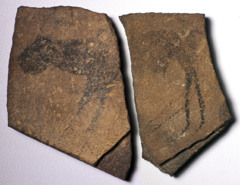
5878094659Apollo 11 StonesNamibia, Africa 25,500-25,300 B.C.E Charcoal on stone0
5878094660Great Hall of the BullsLascaux, France Paleolithic Europe 15,000-13,000 B.C.E Rock Painting1
5878094661Camelid Sacrum in shape of a canineTequixquiac, Mexico 14,000-7,000 B.C.E Bone2
5878094662Running Horned WomanTassili n'Ajjer, Algeria 6,000-4,000 B.C.E Pigment on Rock3
5878094663Beaker (Bushel) with ibex motifsSusa, Iran 4,200-3,500 B.C.E Painted terra cotta4
5878094664Anthropomorphic SteleArabian Peninsula 4,000 B.C.E Sandstone5
5878094665Jade CongLiangzhu, China 3,300-2,200 B.C.E Carved Jade (stone)6
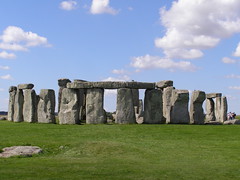
5878094666StonehengeWiltshire, UK Neolithic Europe 2,500-1,600 B.C.E Sandstone7
5878094667The Ambum StoneAmbum Valley, Enga Province Papus, New Guinea 1,500 B.C.E Greywacke8
5878094668Tlatilco Female FigurineCentral Mexico, site of Tlatilco 1,200-900 B.C.E Ceramic9
5878094669Terra Cotta FragmentLapita Solomon Islands 1,000 B.C.E Terra Cotta10

AP Kanji temp1 Flashcards

Terms : Hide Images
10099909163動くうごく to move0
10099909164みち road1
10099909165読むよむ to read2
10099909166背中せなか back3
10099909167心配しんぱい to worry4
10099909168買うかう to buy5
10099909169出発しゅっぱつ to depart6
10099909170反対はんたい against7
10099909171ご飯ごはん cooked rice8
10099909172ばん evening9
10099909173美しいうつくしい beautiful10

AP English--Argumentation Vocabulary Flashcards

Terms : Hide Images
5060657500ClaimA statement that you are asking another person to accept or at least understand. Ex: You should use a hearing aid.0
5060661036EvidenceSupport for your claim--the more concrete, the better Ex: Hearing aids help amplify sounds so that you can hear better.1
5060664244CounterargumentAt least one good reason why others might disagree or offer an alternative point of view Ex: With the use of a hearing aid, there will be technical difficulties with the device.2
5060674855RebuttalA reason why the counterclaim is not as strong as the Claim. Ex: There is a support desk that deals with technical problems. (If someone is offering the counterclaim that there maybe technical difficulties with the hearing aids.)3
5060680780AudienceAn intended audience is not necessary ; the writer is satisfied with "putting the truth out there."4
5060684276Argumentative ToneWriter maintains a tone of fairness and reasonableness. Their attitude remains respectful, tactful and formal.5
5060699149GroundsStatistical data or hard facts, plus the reasoning behind the claim. Ex: Over 70% of all people over 65 years have a hearing difficulty.6
5060702122WarrantThis is what links the grounds to a claim thus proving the grounds to be relevant. Ex: A hearing aid helps most people to hear better.7
5060707834QualifierSpecific words that limit how universally the claim applies. Examples, most, usually, every, always, sometimes. Ex: Hearing aids help most people.8
5060729225BackingSupport for an argument that gives additional support to the warrant by answering different questions. Ex: Hearing aids are available locally.9
5060751148Toulmin ModelA Model that includes a claim, a rebuttal, grounds, warrants, backing, and qualifiers.10

AP French- Les arts visuels Flashcards

Terms : Hide Images
5683768343les arts visuelsthe visual arts0
5683768344faire de la sculptureto make a sculpture1
5683768345un sculpteura sculptor2
5683768346une scultpurea sculpture3
5683768347une tapisseriea tapestry4
5683768348faire de la peintureto make a painting5
5683768349un tableau pop arta pop art painting6
5683768350un peintrea painter7
5683768351un tableaua painting8
5683768352faire un portraitto make a portrait9
5683768353prendre une phototo take a picture10
5683768354un paysagea landscape11
5683768355un portraita portrait12
5683768356un artistean artist13
5683768357photographierto photograph14
5683768358une nature mortea still life15
5683768359un photographea photographer16
5683768360un atelieran art studio17
5683768361une aquarellea watercolor18
5683768362les beaux-artsfine arts19
5683768363un chef'd'œuvrea masterpiece20
5683768364un dessina drawing21
5683768365une expositionan exhibition22
5683768366une galerie d'artan art gallery23
5683768367une œuvre d'arta work of art24
5683768368une photographiea photograph25
5683768369le stylethe style26
5683768370le sujetthe subject27
5683768371abstraitabstract28
5683768372cubistecubist29
5683768373impressionnisteimpressionist30
5683768374primitifprimitive31
5683768375sombresomber32
5683768376surréalistesurrealist33
5683768377vifbright34
5683768378un cinéastea film maker35
5683768379un danseura dancer36
5683768380un jongleura juggler37
5683768381un écrivaina writer38
5683768382un musiciena musician39
5683768383un créateura designer40
5683768384un acteuran actor41
5683768385un architectean architect42

Unit 7 Vocabulary AP Flashcards

Terms : Hide Images
5861948761exoneratev. to excuse or clear completely of a charge or accusation; to prove blameless ant. accusing0
5861953483expeditev. to make easier or quicker; to hasten1
5861956978forgov. to refrain or abstain from; to go without2
5861959152incoherentadj. impossible to explain or understand syn. abstruse3
5861963018incredulousadj. showing disbelief or doubt; skeptical; disbelieving syn. dubious, doubtful, diffident, insecure, timid, shy4
5861974278plebeiann. one of the common people of ancient Rome; a vulgar person adj. common, vulgar, crude tone words: burlesque5
5861987948provocationn. something that stirs up anger or excitement syn. inflammatory6
5861992036queryn. a question; v. to question; to inquire into syn. incredulous, questioning, skeptical, dubious7
5861997603secularadj. worldly or temporal rather than religious or sacred; not belonging to a religious order8
5862008481shibbolethn. any use of language, habit, or custom that distinguishes a class; a password; a distinctive slogan used by members of a group9
5862018405blitheadj. happy; joyful; carefree syn. contented, ecstatic, mirthful, giddy, casual, cheerful, elated, euphoric, exhilarated, gleeful, jocund, jovial10
5862031160cedev. to yield or give up; to transfer or render title to11
5862036912chagrinn. a feeling of disappointment, distress, or embarrassment syn. depressed, penitent, ignominious, abashed, anxious, elegiac, frustrated, gloomy, indignant, lugubrious12
5862051782debonairadj. graceful, charming, and smooth; seemingly carefree13
5862056690filialadj. of or expected from a son or daughter; of a parent's or parents' offspring14
5862060454interposev. to put between; to insert between parts; to interject during a conversation; to intervene15
5862068189intrinsicadj. belonging to a thing by its essential nature16
5862071885precipitatev. to cause something to happen; reckless; rash; acting hastily17
5862076640proficientadj. advanced in a particular art or science; skilled; expert; qualified18
5862080956remissionn. a release from a debt or duty; a lessening of intensity; a diminishing19

Pages

Subscribe to CourseNotes RSS

Need Help?

We hope your visit has been a productive one. If you're having any problems, or would like to give some feedback, we'd love to hear from you.

For general help, questions, and suggestions, try our dedicated support forums.

If you need to contact the Course-Notes.Org web experience team, please use our contact form.

Need Notes?

While we strive to provide the most comprehensive notes for as many high school textbooks as possible, there are certainly going to be some that we miss. Drop us a note and let us know which textbooks you need. Be sure to include which edition of the textbook you are using! If we see enough demand, we'll do whatever we can to get those notes up on the site for you!