AP Notes, Outlines, Study Guides, Vocabulary, Practice Exams and more!

AP Government Chapter 8 Flashcards

Terms : Hide Images
6681829117Party CompetitionThe battle of the parties for control of public offices. Ups and downs of the two major parties are one of the most important elements in American politics.0
6681829118Political PartyWomen and Men who share basic beliefs and and a label who are trying to control the government.1
6681829119Linkage InstitutionsThe channels through which people's concerns become political issues on the government's policy agenda. In the United States, they include elections, political parties, interest groups, and the media.2
6681829120Party ImageThe voter's perception of what the Republicans or Democrats stand for, such as conservatism or liberalism3
6681829121Rational-choice TheoryA popular theory in political science to explain the actions of voters as well as politicians. It assumes that individuals act in their own best interest, carefully weighing the costs and benefits of possible alternatives.4
6681829122Party IdentificationA citizen's self-proclaimed preference for one party or the other5
6681829123Ticket-splittingVoting with one party for one office and with another party for other offices. It has become the norm in American voting behavior.6
6681829124Party MachinesA type of political party organization that relies heavily on material inducements, such as patronage, to win votes and to govern.7
6681829125PatronageOne of the key inducements used by party machines. Jobs, promotions, or contracts based on this are given for political reasons rather than for merit or competence alone.8
6681829126Closed PrimariesElections to select party nominees in which only people who have registered in advance with the party can vote for that party's candidates, thus encouraging greater party loyalty.9
6681829127Open PrimariesElections to select party nominees in which voters can decide on Election Day whether they want to participate in the Democratic or Republican contests.10
6681829128Blanket PrimariesElections to select party nominees in which voters are presented with a list of candidates from all the parties. Voters can then select some Democrats and some Republicans if they like.11
6681829129National ConventionThe meeting of party delegates every four years to choose a presidential ticket and write the party's platform.12
6681829130National CommitteeOne of the institutions that keeps the party operating between conventions. It is composed of representatives from the states and territories.13
6681829131National ChairpersonThe person responsible for the day-to-day activities of the party and is usually hand-picked by the presidential nominee.14
6681829132CoalitionA group of individuals with a common interest upon which every political party depends.15
6681829133Party ErasHistorical periods in which a majority of voters cling to the party in power, which tends to win a majority of elections.16
6681829134Critical ElectionsAn electoral "earthquake" where new issues emerge, new coalitions replace old ones, and the majority party is often displaced by the minority party. Such periods are sometimes marked by a national crisis and may require more than one election to bring about a new party era.17
6681829135Party RealignmentThe displacement of the majority party by the minority party, usually during a critical election period.18
6681829136New Deal CoalitionA coalition forged by the Democrats, who dominated American politics from the 1930s the the 1960s. Its basic elements were the urban working class, ethnic groups, Catholics and Jews, the poor, Southerners, African Americans, and intellectuals.19
6681829137Party DealignmentThe gradual disengagement of people and politicians from the parties, as seen in party by shrinking party identification.20
6681829138Party NeutralityA term used to describe the fact that many Americans are indifferent toward the two major political parties.21
6681829139Third PartiesElectoral contenders other than the two major parties. Such in America are not unusual, but they rarely win elections.22
6681829140Winner-take-all-systemAn electoral system in which legislative seats are awarded only to candidates who come in first in their constituencies. In American presidential elections, the system in which the winner of the popular vote in a state receives all the electoral votes of the state.23
6681829141Proportional RepresentationAn electoral system used throughout most of Europe that awards legislative seats to political parties in proportion to the number of votes won in an election.24
6681829142Coalition GovernmentWhen two or more parties join together to form a majority in a national legislature. This form of government is quite common in the multiparty system of Europe25

AP Psychology Unit 5 Flashcards

Advanced Placement Psychology
Enterprise High School, Redding, CA
All terms from Myers Psychology for AP (BFW Worth, 2011)

Terms : Hide Images
8209868527consciousnessour awareness of ourselves and our environment.0
8209868528circadian rhythmthe biological clock; regular bodily rhythms (for example, of temperature and wakefulness) that occur on a 24-hour cycle.1
8209868529REM (rapid eye movement) sleeprapid eye movement sleep; a recurring sleep stage during which vivid dreams commonly occur. Also known as paradoxical sleep, because the muscles are relaxed (except for minor twitches) but other body systems are active.2
8209868530alpha wavesthe relatively slow brain waves of a relaxed, awake state.3
8209868531sleepperiodic, natural loss of consciousness—as distinct from unconsciousness resulting from a coma, general anesthesia, or hibernation. (Adapted from Dement, 1999.)4
8209868532hallucinationsfalse sensory experiences, such as seeing something in the absence of an external visual stimulus.5
8209868533delta wavesthe large, slow brain waves associated with deep sleep.6
8209868534NREM sleepnon-rapid eye movement sleep; encompasses all sleep stages except for REM sleep.7
8209868535insomniarecurring problems in falling or staying asleep.8
8209868536narcolepsya sleep disorder characterized by uncontrollable sleep attacks. The sufferer may lapse directly into REM sleep, often at inopportune times.9
8209868537sleep apneaa sleep disorder characterized by temporary cessations of breathing during sleep and repeated momentary awakenings.10
8209868538night terrorsa sleep disorder characterized by high arousal and an appearance of being terrified; unlike nightmares, these occur during Stage 4 sleep, within two or three hours of falling asleep, and are seldom remembered.11
8209868539dreama sequence of images, emotions, and thoughts passing through a sleeping person's mind. These are notable for their hallucinatory imagery, discontinuities, and incongruities, and for the person 's delusional acceptance of the content and later difficulties remembering it.12
8209868540manifest contentaccording to Freud, the story of the dream.13
8209868541latent contentaccording to Freud, the underlying meaning of a dream (as distinct from its manifest content).14
8209868542REM reboundthe tendency for REM sleep to increase following REM sleep deprivation (created by repeated awakenings during REM sleep).15
8209868543hypnosisa social interaction in which one person suggests to another that certain perceptions, feelings, thoughts, or behaviors will spontaneously occur.16
8209868544posthypnotic suggestiona suggestion, made during a hypnosis session, to be carried out after the subject is no longer hypnotized; used by some clinicians to help control undesired symptoms and behaviors.17
8209868545dissociationa split in consciousness, which allows some thoughts and behaviors to occur simultaneously with others.18
8209868546psychoactive druga chemical substance that alters perceptions and moods.19
8209868547tolerancethe diminishing effect with regular use of the same dose of a drug, requiring the user to take larger and larger doses before experiencing the drug's effect.20
8209868548withdrawalthe discomfort and distress that follow discontinuing the use of an addictive drug.21
8209868549physical dependencea physiological need for a drug, marked by unpleasant withdrawal symptoms when the drug is discontinued.22
8209868550psychological dependencea psychological need to use a drug, such as to relieve negative emotions.23
8209868551addictioncompulsive drug craving and use, despite adverse consequences.24
8209868552depressantsdrugs (such as alcohol, barbiturates, and opiates) that reduce neural activity and slow body functions.25
8209868553barbituratesdrugs that depress the activity of the central nervous system, reducing anxiety but impairing memory and judgment.26
8209868554opiatesopium and its derivatives, such as morphine and heroin; they depress neural activity, temporarily lessening pain and anxiety.27
8209868555stimulantsdrugs (such as caffeine, nicotine, and the more powerful amphetamines, cocaine, and Ecstasy) that excite neural activity and speed up body functions.28
8209868556amphetaminesdrugs that stimulate neural activity, causing sped-up body functions and associated energy and mood changes.29
8209868557methamphetaminesa powerfully addictive drug that stimulates the central nervous system, with sped-up body functions and associated energy and mood changes; over time, appears to reduce baseline dopamine levels.30
8209868558Ecstacy (MDMA)a synthetic stimulant and mild hallucinogen. Produces euphoria and social intimacy, but with short-term health risks and longer-term harm to serotonin-producing neurons and to mood and cognition.31
8209868559hallucinogenspsychedelic ("mind-manifesting") drugs, such as LSD, that distort perceptions and evoke sensory images in the absence of sensory input.32
8209868560LSDa powerful hallucinogenic drug; also known as acid (lysergic acid diethylamide).33
8209868561near-death experiencesan altered state of consciousness reported after a close brush with death (such as through cardiac arrest); often similar to drug-induced hallucinations.34
8209868562THCthe major active ingredient in marijuana; triggers a variety of effects, including mild hallucinations.35

AP Vocabulary List 1 Flashcards

Terms : Hide Images
5636192910brazenacting or done in a very open and shocking way without shame or embarrassment0
5636192911compunctiona feeling of guilt or regret1
5636192912dina loud, confusing mixture of noises that lasts for a long time2
5636194054edictan official order given by a person with power or by a government; law3
5636194055indiscretiona lack of good judgment or care4
5636195928perquisitesa privilege, gain, or profit incidental to regular wages or salary5
5636195929sepulchera place of burial6
5636195930supplianta person who asks for something in a respectful way from a powerful person or God; petitioner; pleader; solicitor7
5636196837tumulta state of noisy confusion or disorder8
5636196838maraudingroaming about and raid in search of plunder9

AP Biology Chapter 5 Flashcards

Terms : Hide Images
7327107608macromoleculea giant molecule formed by the joining of smaller molecules, usually by a dehydration reaction.0
7327107609Four classes of biological macromoleculesProteins, carbohydrates, nucleic acids, lipids1
7327107610polymera long molecule consisting of many similar or identical monomers linked together by covalent bonds.2
7327107611monomerthe subunit that serves as the building block of a polymer.3
7327107612dehydration synthesisa chemical reaction in which two molecules become covalently bonded to each other with the removal of a water molecule.4
7327107613hydrolysisa chemical reaction that breaks bonds between two molecules by the addition of water; functions in dis-assembly of polymers to monomers.5
7327107614proteina biologically functional molecule consisting of one or more polypeptides folded and coiled into a specific three-dimensional structure.6
7327107615Functions of proteinsstructural support, catalyst, transport, defense, movement, regulation7
7327107616amino acidan organic molecule possessing both a carboxyl and an amino group. The monomers of polypeptides. There are 20 different forms. Distinguished by side chains.8
7327107617peptide bondthe covalent bond between the carboxyl group on one amino acid and the amino group on another, formed by a dehydration reaction.9
7327107618Primary structurethe level of protein structure referring to the specific linear sequence of amino acids.10
7327107619secondary structureregions of repetitive coiling or folding of the polypeptide backbone of a protein due to hydrogen bonding between constituents of the backbone (not the side chains). Helix or pleated sheet.11
7327107620B pleated sheetprotein structure with two or more segments of the polypeptide chain link side by side (called B strands) connected by hydrogen bonds between parts of the two parallel segments of the polypeptide backbone.12
7327107621tertiary structurethe overall shape of a protein molecule due to interactions of amino acid side chains, including hydrophobic interactions, ionic bonds, hydrogen bonds, and disulfide bridges.13
7327107622amino acid side chainstypes of bonds/interactions in __________ : hydrophobic interactions, ionic bonds, hydrogen bonds and disulfide bridges14
7327107623quaternary structurethe particular shape of a complex, aggregate protein, defined by the characteristic three-dimensional arrangement of its constituent subunits, each a polypeptide.15
7327107624denaturationloss of a proteins normal 3D structure; can possibly be caused by pH and temperature which affect the ionic bonds, hydrogen bonds & hydrophilic interactions16
7327107625enzymea macromolecule serving as a catalyst, a chemical agent that increases the rate of a reaction without being consumed by the reaction. most of them are proteins.17
7327107626carbohydratea sugar (monosaccharide) or one of its dimers (disaccharides) or polymers (polysaccharides). Primarily C, H and O.18
7327107627What are the functions of carbohydratesfunction as energy source & structure19
7327107628monosaccharidethe simplest carbohydrate, active alone or serving as a monomer for disaccharides and polysaccharides. Also called simple sugars, they have formulas that are generally some multiple of CH2O (1:2:1).20
7327107629disaccharidea double sugar, consisting of two monosaccharides joined by a glycosidic linkage formed by a dehydration reaction.21
7327107630glycosidic linkagea covalent bond formed between two monosaccharides by a dehydration reaction.22
7327107631polysaccharidea polymer of many monosaccharides, formed by dehydration reactions.23
7327107632starcha storage polysaccharide in plants, consisting entirely of glucose monomers joined by x glycosidic linkages. Used for energy storage.24
7327107633glycogenan extensively branched glucose storage polysaccharide found in the liver and muscle of animals; the animal equivalent of starch.25
7327107634cellulosea structural polysaccharide of plant cell walls, consisting of glucose monomers joined by B glycosidic linkages. A type of plant starch.26
7327107635lipidsany of a group of large biological molecules, including fats, phospholipids, and steroids, that mix poorly, if at all, with water (hydrophobic). No true monomers.27
7327107636What are the three types of lipids?fats/oils, phospholipids & steroids28
7327107637fat/oila lipid consisting of three fatty acids lined to one glycerol molecule; also called a triacylglycerol or triglyceride. Function as energy storage.29
7327107638saturateda fatty acid in which all carbons in the hydrocarbon tail are connected by single bonds, thus maximizing the number of hydrogen atoms that are attached to the carbon skeleton.30
7327107639unsaturateda faty acid that has one or more double bonds betwen carbons in the hydrocarbon tail. such bonding reduces the number of hydrogen atoms attached to the carbon skeleton.31
7327107640fatty acida carboxylic acid with a long carbon chain. Vary in length and __________ linked to a glycerol molecule form a fat molecule, also called triglyceride.32
7327107641triglyceridea lipid consisting of three fatty acids linked to one glycerol molecule33
7327107642chitina structural polysaccharide, consisting of amino sugar monomers, found in many fungal cell walls and in the exoskeletons of all arthropods.34
7327107643trans fatan unsaturated fat, formed artificially during hydrogenation of oils, containing one or more trans double bonds.35
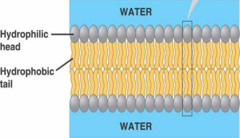
7327107644phospholipida lipid made up of glycerol joined to two fatty acids and a phosphate group. The hydrocarbon chains of the fatty acids act as nonpolar hydrophobic tails, while the rest of the molecule acts s a polar, hydrophilic head. They form bilayers that function as biological membrane.36
7327107645phospholipid bilayerfunction as membranes37
7327107646steroida type of lipid characterized by a carbon skeleton consisting of four fused rings with various chemical groups attached. Function as part of membranes or hormones.38
7327107647catalysta chemical agent that selectively increases the rate of a reaction without being consumed by the reaction.39
7327107648hydrophobica type of weak chemical interaction caused when molecules that do not mix with water coalesce to exclude water.40
7327107649disulfide bridgesa strong covalent bond formed when the sulfur of one cysteine monomer bonds to the sulfur of another cysteine monomer.41
7327107650polypeptidea polymer of many amino acids linked together by peptide bonds.42
7327107651nucleic acida polymer (polynucleotide) consisting of many nucleotide monomers; serves as a blueprint for proteins and, through the actions of proteins, for all cellular activities. the two types are DNA and RNA.43
7327107652nucleic acidfunctions as storage, transmission & use of genetic material44
7327107653nucleotidethe building block of a nucleic acid, consisting of a five-carbon sugar covalently bonded to a nitrogenous base and one or more phosphate groups.45
7327107654phosphodiester linkagebond between nucleotides in nucleotide chain to form polynucleotide46
7327107655polynucleotidea polymer consisting of many nucleotide monomers in a chain. The nucleotides can be those of DNA or RNA.47
7327107656pyrimidineone of two types of nitrogenous bases found in nucleotides, characterized by a six-membered ring. cytosine (c), thymine (T), and uracil (U)48
7327107657purinesone of two types of nitrogenous bases found in nucleotides, characterized by a six-membered ring fused to a five-membered ring. adenine (a) and guanine (G).49
7327107658RNAtransmission of information, consists of monomers with a ribose sugar and nitrogenous bases cytosine (C), guanine (G), adenine (A) & uracil (U). Single stranded.50
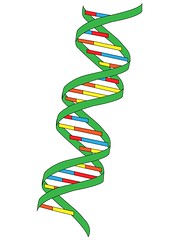
7327107659DNAa nucleic acid molecule, usually a double-stranded helix, in which each polynucleotide strand consists of nucleotide monomers with a deoxyribose sugar and the nitrogenous bases adenine (A), cytosine (C), guanine (G), and thymine (T); capable of being replicated and determining the inherited structure of a cell's proteins.51
7327107660deoxyribosethe sugar component of DNA nucleotides, having one fewer hydroxyl group than ribose, the sugar component of RNA nucleotides.52
7327107661ribosethe sugar component of RNA nucleotides.53
7327107662double helixthe form of native DNA, referring to its two adjacent antiparallel polynucleotide strands wound around an imaginary axis into a spiral shape.54
7327107663antiparallelreferring to the arrangement of the sugar-phosphate backbones in a DNA double helix (they run in opposite 5' -3' directions).55

AP Gov Ch. 5 Flashcards

Terms : Hide Images
9281701507Dred Scott v. Sandforda slave who had escaped to a free state enjoyed no rights as a citizen and congress has no authority to ban slavery in the territories0
9281701508Jim Crow Lawssegregationist laws Limited rights of blacks. Literacy tests, grandfather clauses and poll taxes limited black voting rights1
928170150913th Amendmentratified after the civil war that forbade slavery2
928170151014th amendment- privileges and immunities - due process of law - equal protection of the laws (first and only part of the constitution to invoke the idea of equality)3
928170151115th amendmentextend suffrage (voting) to african americans4
9281701512Classifications under the 14th amendment equal protection clause- principal tool for waging struggles for equality - laws, rules inevitably classify people... but they cannot violate the equal protection so... - how do courts whether a classification in a law or regulation is permissible or violates the equal protection clause? - supreme court established 3 levels of analysis called standards of review (strict scrutiny, intermediate scrutiny, reasonableness)5
9281701513strict scrutiny (inherently suspect)Supreme Court guideline for determining if government can make racial distinctions. According to this guideline, such distinctions are highly suspect and are allowed only if they are narrowly tailored to serve a compelling government interest and there is no other way to accomplish the purpose of the law. - racial and ethnic qualifications are under strict scrutiny6
9281701514intermediate scrutiny- classification based on gender - court presume them to be neither constitutional nor unconstitutional - such law must bear a substantial relationship to an important public purpose (draft)7
9281701515reasonableness- classification must bear a rational relationship to some legitimate governmental purpose - anyone who challenges classifications has the burden of proving that they are not reasonable but arbitrary (singles out specific people) - ex: states restricting right to vote to over 16 is reasonable8
9281701516Plessy v. Fergusonprovided constitutional justification for segregation -legalized state ordered segregation so long as the facilities for blacks and whites were equal9
9281701517Brown v. Board of Educationschool segregation is inherently unconstitutional because it violates the guarantee of equal protection - marked the end of legal segregation10
9281701518De Jure segregationsegregation by law - ex: "separate but equal"... blacks and whites allowed to be segregated as long as they were provided equal rights and conditions11
9281701519De Facto Segregationsegregation in practice - ex: whites voluntarily segregating themselves12
9281701520Civil Rights Act (6 provisions)1- racial discrimination illegal in places of public accommodation (hotels) 2- no discrimination in employment 3- create Equal Employment Opportunity Commission (EEOC) to enforce = protection against job discrimination 4- withhold grants from institutions that practice racial discrimination 5- strengthen voting rights legislation 6- authorized US justice dept. to initiate lawsuits to desegregate public schools and facilities13
928170152124th amendmentdeclared poll taxes void in federal elections (2 years later, voided poll taxes in state elections in Harper v. Virginia State Board)14
9281701522Voting Rights Act of 1965law designed to help end formal and informal barriers to African American suffrage. Under the law, many more African Americans registered to vote and the number of elected African American officials increased dramatically15
9281701523Korematsu v. United States-1944 Supreme Court case where the Supreme Court upheld the order providing for the relocation of Japanese Americans. It was not until 1988 that Congress formally apologized and agreed to pay $20,000 to each survivor.16
928170152419th Amendmentconstitutional amendment adopted in 1920 that guarantees women the right to vote17
9281701525Equal Rights Amendmentequality of rights under the law shall not be denied nor abridged (introduced, fell short, but then passed later)18
9281701526American with Disabilities Actrequired public facilities to make reasonable accommodations for people with disabilities and prohibits discrimination against these individuals in employment19
9281701527Affirmative actionspecial attention for members of some previously disadvantaged group (equal opportunity --> equal results)20
9281701528Regents of the University of California v. Bakkea state university may weigh race or ethnic background as one element in admissions but may not set aside places for members of particular racial groups21
9281701529Lawrence v. Texasoverturned Bowers v. Hardwick when it voided a Texas anti-sodomy law on the grounds that such laws are unconstitutional intrusions on the right to privacy22
9281701530DOMA- defense of marriage act - permits states to disregard same-sex marriages even if they are legal elsewhere in the United States23

AP Biology - Photosynthesis Flashcards

Terms : Hide Images
5685119774photoautotrophsorganisms that produce their own food using light energy - plants, protists, and algae0
5685119775mesophyllinner tissue of a leaf, contain chloroplasts1
5685119776stromafluid that fills the inner area of a chloroplast2
5685119777thylakoidsfound in stacks in the chloroplast where the light reactions occur3
5685119778granastacks of thylakoids4
5685119779chlorophyllpigment that absorbs light energy to power the light reactions of photosynthesis5
5685119780stomatapores in the epidermis of a leaf that allow water to leave the plant and carbon dioxide to enter it6
5685119781light reactionsreactions that use light energy, carbon dioxide and water to create ATP and NADPH for use in the calvin cycle; in thylakoid membrane; split H2O to make O27
5685119782NADP+an electron acceptor that is reduced and is used to fuel the calvin cycle8
5685119783calvin cyclethe series of reactions where ATP and NADPH are used to form G3P which is then used to form glucose and other organic molecules including amino acids and nucleic acids9
5685119784carbon fixationreactions that use co2 to make glucose10
5685119785absorption spectrumthe range of wavelengths absorbed by a particular pigment11
5685119786chloroplastthe organelle where photosynthesis takes place12
5685119787products of light reactionsNADPH + ATP + O213
5685119788reactants of calvin cycleNADPH + ATP + CO214
5685119789waterthis molecule splits and allows for an electron to be bumped up to the primary electron acceptor in photosystem II15
5685119790photosystem IIp680; the location of water splitting; forms ATP, O2 and NADPH; O2 is leftover; excess electrons reduce NADP to NADPH; regains electrons by splitting water16
5685119791p700this is the special chlorophyll that is located in photosystem I17
5685119792p680this is the special chlorophyll that is located in photosystem II18
5685119793chemoautotrophorganisms that produce their own food using inorganic materials - thermophilic bacteria19
5685119794guard cellsresponsible for opening and closing stomata20
5685119795photorespirationprocess where o2 gets substituted for CO2 in the calvin cycle21
5685119796c3 plantsthese plants have stomata open during the day and are most efficient in cool/moist conditions in normal light22
5685119797c4 plantsthese plants have stomata open during the day, but barely open on hot days, work best in high light/temps, use h20 better23
5685119798cam plantsthese plants only have stomata open at night, convert co2 to an acid that is then broken down during the day - work well in dry conditions24
5685119799photochemical reactionsreactions occurring in the thylakoid membrane where chlorophyll absorbs light energy and electrons are boosted to higher energy state25
5685119800photosystem structurepigment molecules bound to proteins; reaction center with primary electron receptor; 2 chlorophyll a molecules; Mg molecule;26
5685119801photosystem Ip700; cycles electrons; independent; only forms ATP through substrate level photophosphorylation27
5685119802photolysisthe O2 derived from oxygen in water during photosynthesis28

AP VOCAB Flashcards

Terms : Hide Images
6620364010AD hominem argumentAn argument that attacks the opposing speaker or another person rather than addressing the issue at hand. Part of speech: Adverb & Adjective Ex: Smoking is a bad habit.0
6620404017AntithesisAn opposition or contrast of ideas that is often expressed in balanced phrases or clauses. Part of speech: Noun Ex: We have a love and hate relationship1
6620459182ApotheosisWhen a character or thing is elevated to such high status that it appears Godlike, Part of speech: Noun Ex: John wick2
6620529910AppositiveA word or phrase that follows a noun or pronoun for or emphasis clarity. Appositives are usually surrounded by commas. Part of speech: Noun Ex: The big black boy, Matthew Stuckey, loves football and eating ribs.3
6620591432AssonanceA type of internal rhyming in which vowel sounds are repeated. Part of speech: Noun Ex: Sally sells seashell by the sea shore4
6620695146AsyndetonOccurs when the conjunctions (such as "and" or "but") that would normally connect a string of words, phrases, or clauses are omitted from a sentence. Part of speech: Noun Ex: I saw, I came, I conquered.5
6620728192BathosFalse or forced emotion that is often humorous. Part of speech: Noun Ex: He spent his final hour of life doing what he loved most: arguing with his wife.6
6629859995ContrastWriters often use contrasts, or oppositions, to elaborate ideas. This helps writers to expand on their ideas by allowing them to show both what a thing is and what is not. Part of speech: Verb/noun Ex: He is fat but runs very fast7
6629948001Elegiac, elegyWork of (music, literature, dance, or art) that expresses sorrow. It mourns the loss of something. Part of speech: Adjective Ex: F**k the world song8
6630012431Ethos (1)The characteristic spirit or ideal that informs a work.9
6630057609Ethos (2)Refers more generally to ethics, or values. In Rhetorical writing, authors often attempt to persuade readers by appealing to their sense of ethos, or ethical principles. Part of speech: Noun10
6630135059ExpositionRefers to writing or speech that is organized to explain. Part of speech: Noun Ex: Background info of a novel. You reading bout a serial killer, expo might explain how he became a killer.11
6630158636FictionA story or something that has been imagined or invented in the telling of the occurrence. Ex: Native Son12
6630193421Figurative LanguageIs an umbrella term for all uses of language that imply an imaginative comparison. Ex: The teacher is a mother hen.13
6630226004ForeshadowingA purposeful hint placed in a work of literature to suggest what may occur later in the story. Part of speech: Noun14
6654610041GrammarGrammar is a set of rules that specify how a given language is used effectively.15
6654621581Image, imageryIs a mental picture that is conjured by specific words and associations, but there can be auditory and sensory components to imagery as well. Ex: The room was so big that I could here my echo, it also had these dirty yellow blinds, and smelled like dog poop. It was so hot I could see my sweat evaporate! It was like I was in hell.16
6654632210Irony, IronicOccurs when a situation produces an outcome that is the opposite of what is expected. Ex: This is ironic because the dog is lost, but his name is lucky. If he was so "lucky" he wouldn't have gotten lost lol.17
6654656180JuxtapositionWhen two contrasting things--ideas, words, or sentence elements-- are placed next to each other for comparison. Part of speech: Noun Ex: Cody's intelligence with Zack's stupidity18
6654682297LogosRefers to the use of reason as a controlling principle in an argument. (Logic) Ex: Why would you want to buy a degree that is $12 when you can get a none name brand that cost half of that, and last longer.19
6654704437MetonymyIs a figure of speech in which something is referred to by using the name of something that is associated with it. Part of speech: Noun Ex: A crown is represented with royalty. Used as a metonymy for royal authority.20
6654718482MoodIs the prevailing or dominant feeling of work, scene, or event. Mood is similar to atmosphere. Part of speech: Adjective Ex: The bonsai trees gave the place a more welcoming, and serenity mood.21
6654746919OnomatopoeiaIs an effect created by words that have sounds that reinforce their meaning. Part of speech: Noun Ex: The gun went Bang when it splashed in the pool.22
6654763584OverviewAn overview is a brief summary of a whole work. Part of speech: Noun Ex: The story is going to be about a family who is crazy and kill each other, but at the end the dog eats all of their parts.23
6654770185OxymoronCombines two contradictory words in one expression. The result of this combination are unusual or thought provoking. Part of speech: Noun Ex: You big baby.24
6654828236Pacing, Narrative pacingIs the speed of a story's action, dialogue, or narration. Ex: 1985 was a slow pace story. Native son was fast pace25
6654856497ParadoxIs a seeming contradiction that in fact reveals some truth. Ex: Deep down, you're really shallow26
6654880047ParallelismRelies on the use of the same syntactical structures, (phrases clauses, sentences) in a series in order o develop an argument or emphasize an idea. Ex: we will be great. we will achieve greatness. we will not be beaten.27
6654900903ParodyAn effort to ridicule or make fun of a literary work or an author by writing an imitation of the work or of the author's style. Ex: Haunted house, Family Guy star wars28
6661439654PathosIs a sympathetic feeling of pity or compassion evoked by an artistic work. (emotion). Ex: Those dog shelter commercials, those hungry kids commercials29
6661455349PersonIs a grammatical term that describes the relationship of a writer or speaker to an audience by examining the pronouns that are used. Ex: First person (I, We) Second person (You, Both) Third person (They, She, He, It)30
6661482589PersonaIs the character created by the voice and narration of the speaker of a text. Ex: The voice I use to talk to my baby sister, the person who is Elmo31
6661523560PersonificationIs a figure of speech In which ideas or objects are described as having human qualities or personalities. Ex: I could feel the sun smiling at me as it shined bright on my skin.32
6661545998Point Of View (P.O.V)Is the particular perspective from which a story is told. EX: Stories may be told from the p.o.v of specific characters or a narrator. The narrator, in turn, may be a subjective narrator (who may or may not be involved in the story), or an all-knowing (omniscient) narrator. An omniscient narrator can tell the reader everything about the characters--even their inner feelings and thoughts.33
6661599075PunIs a play on words. A pun is created by using a word that has two different meanings, or using two different words with similar meanings, for a playful effect. Ex: what did one plant say to the other? "What's stomata?"34
6661635369RepetitionIs the reiteration of a word or phrase for emphasis. Ex: I will be successful, I will be self employed, I will be Stuckey35
6661695287Rhetoric, rhetorical purposeIs the art and logic of a written or spoken argument. Rhetorical writing is purposeful. Ex: Persuade the audience, to analyze, or to expose something or someone.36
6661842187Rhetorical, narrative, strategyIs a plan of action or movement to achieve a goal. In rhetorical, or writing, strategy describes the way an author organizes words, sentences, and overall argument In order to achieve a particular purpose. Ex: How the author organizes their writing37
6661898656Rhetorical, or stylistic, devicesAre the specific language tools that an author uses to carry out a rhetorical strategy, and thus achieve a purpose for writing. Ex: Allusion, diction, imagery, syntax, repetition38
6661976991Rhetorical questionIs a question that is asked for the sake of argument. No direct answer is provided; however, the probable answer to such question is usually implied in the argument Ex: Will you not do anything to stop domestic violence?39
6662019046SatireTo satire is to ridicule or mock ideas, persons, events, or doctrines, or to make fun of human foibles, or weakness. Ex: The debate between Clinton and Trump on the Conan show40
6662071594Selection of detailThe specific words, incidents, images, or events the author uses to create a scene or narrative.41
6662219101SimileCompares on thing with another using the words like or as. Ex: She fat as a horse42
6662245758SpeakerIs the narrator of a story, poem, or drama. The speaker should not be confused with the author, who creates the voice of the speaker, the speaker is a fictional persona. Ex: The speaker for Romeo and Juliet43
6662296731SyllogismIs a form of deductive reasoning in which pieces of evidence are used to create a new conclusion. Ex: Boys that wear green, red and yellow are gay. Kaleb wears those colors; therefore, Kaleb is gay44
6662456380SymbolIs something that stands for something else. Ex: Crown stands for royalty Literary symbols often refer to or stand for a complex set of ideas. Ex: in Lord of the flies the conk shell stands for authority45
6662569867SynonymA word that has the same, or nearly the same meaning as another word. Ex: small=petite, large=massive, cute=gorgeous46
6662588832syntaxRefers to the way words are arranged in a sentence. Ex: Matthew ate the cake that was old. The cake that Matthew ate was old.47
6662627045TensionIn a work of literature, is a feeling of excitement and expectation the reader or audience feels because of the conflict, mood, or atmosphere of the work. Ex: The Tension between Brian and Stevie were high because of what happened last week.48
6662694105TextureDescribes the way the elements of a work of prose or poetry are joined together. It suggest an association with the style of the author.49
6662780192ThemeIs usually considered the central idea. There can be more than one. Ex: The theme of Lion King is don't trust your uncle50
6662995616ToneIs the way the author presents a subject. A correct perception of the author's tone is essential to understanding a particular literary work. Ex: The tone of the story was angry and aggressive.51
6663190918UnderstatementWhen an authority assigns less significance to an event or thing than it deserves, the result is an understatement. Ex: That's just a puddle. (It's really a pool of water)52
6663321462Voice (2)Is also a grammatical term. A sentence can either be written in a passive or active voice. Ex: When the subject performs the action, the voice is active (I washed the car). When the subject is acted upon, the voice is passive ( The car was washed by me)53
6663376578ZeugmaRefers to a particular breech in a sentence. It occurs when a word is used with two adjacent words in the same construction, but only makes literal sense with one of them. Ex: The dog walks with four legs and an attitude.54

AP Lang List 2 Flashcards

Terms : Hide Images
6933254094Zealoushaving fervent or enthusiastic devotion0
6933254095Effusivedemonstrative; over-flowing.1
6933254096Derisivea ridiculing or mocking manner.2
6933254097Earnestshowing depth and sincerity; showing serious devotion.3
6933254098Didacticintended for instruction; instructive:4
6933254099Banaldevoid of freshness or originality.5
6933254100Irreverentshowing a lack of respect for people or things that are generally taken seriously.6
6933254101Jovialcheerful and friendly.7
6933254102Esotericintended for or likely to be understood by only a small number of people with a specialized knowledge or interest.8
6933254103Sardonicgrimly mocking or cynical.9

APES - Unit 5: Population Flashcards

Terms : Hide Images
5695179189Populationindividuals that belong to the same species and live in a given area at a particular time0
5695185916Communityall of the population of organisms within a given area1
5695193431Population Ecologystudy of factors that cause populations to increase or decrease2
5695209231Population Size (N)total number of individuals within a defined area at a given time3
5695216670Population Densitynumber of individuals per unit area at a given time (N/A)4
5695235023Population Distributiondescription of how individuals are distributed with respect to one another (Random, Uniform, Clumped)5
5695248762Sex Ratioratio of males to females in a population (M:F)6
5695255563Age Structuredescription of how many individuals fit into particular age categories in a population7
5695266059Limiting Resourceresource that a population cannot live without and that occurs in quantities lower than the population would require to increase in size.8
5695286029Density-dependent Factorfactor that influences an individual's probability of survival and reproduction in a manner that depends on the size of that population9
5695299757Carrying Capacity (K)limit of how many individuals in a population the environment can sustain10
5695319098Density-independent Factorfactor that has the same effect on an individual's probability of survival and the amount of reproduction at any population size11
5695339324Population Growth Modelsmathematical equations that can be used to predict population size at any moment in time12
5695351922Population Growth Ratenumber of offspring an individual can produce in a given time periods, minus the deaths of the individual or its offspring during the same time period13
5695365716Intrinsic Growth Rate (r)maximum potential for growth of a population under ideal conditions with unlimited resources14
5695381738Exponential Growth Modelgrowth model that estimates a population's future size (Nt) after a period of time (t), based on the intrinsic growth rate (r) and the number of reproducing individuals currently in the population (No)15
5695412596J-shaped Curvecurve of the exponential growth model when graphed16
5695422432Logistic Growth Modelgrowth model that describes a population whose growth is initially exponential, but slows as the population approaches the carrying capacity of the environment17
5695434865S-shaped Curveshape of the logistic growth model when graphed18
5695447027Die-offrapid decline in a population due to death19
5695457804K-selected Speciesspecies with a low intrinsic growth rate that causes the population to increase slowly until it reaches carrying capacity20
5695474739r-selected Speciesspecies that has a high intrinsic growth rate that causes the population to increase rapidly, which often leads to population overshoots and die-offs21
5695496220Type I Survivorship Curvepattern of survival over time in which there is high survival throughout most of the life span, but then individuals start to die in large numbers as they approach old age.22
5695533004Type II Survivorship Curvepattern of survival over time in which there is a relatively constant decline in survivorship throughout most of the life span.23
5695551216Type III Survivorship Curvepattern of survival over time which there is low survivorship early in life with few individuals reaching adulthood.24
5695568161CorridorStrips of natural habitat that connect populations25
5695573865Metapopulationsgroup of spatially distinct populations that are connected by occasional movements of individuals between them26
5695586308Inbreeding Depressionwhen individuals with similar genotypes- typically relatives- breed with each other and produce offspring that have an impaired ability to survive and reproduce27
5695612775Community Ecologystudy of interactions between species28
5695616826Symbiotic Relationshiprelationship between two species that live in close association with each other29
5695627651Competitionstruggle of individuals to obtain a shared limited resource30
5695642382Competitive Exclusion Principleidea stating that two species competing for the same limiting resource cannot coexist31
5695653997Resource Partitioningwhen two species divide a resource based on differences in their behavior or morphology32
5695672042Pedationinteraction in which one animal typically kills and consumes another animal33
5695678600Parasitoidspecialized type of predator that lays eggs inside other organisms- referred to as its host34
5695695662Parasitisminteraction in which one organism lives on or in another organism35
5695703421Pathogenparasite that causes diseases in its host36
5695714550Herbivoryinteraction in which an animal consumes a producer37
5695719894Mutualisminteraction between two species that increase the chances of survival or reproduction for BOTH species38
5695733418Commensalismrelationship between two species in which one species benefits and the other species is neither harmed nor helped39
5695750804Keystone Speciesspecies that plays a far more important role in its community than its relative abundance might suggest40
5695776703Ecosystem Engineerkeystone species that creates or maintains habitat from other species41
5695793895Ecological Successionpredictable replacement of one group of species by another group of species over time42
5695810307Primary Successionecological succession occurring on surfaces that are initially devoid of soil43
5695832972Secondary Successionsuccession of plant life that occurs in areas that have been disturbed but have not lost their soil44
5695848729Pioneer Speciesspecies that can colonize new areas rap[idly and grow well in full sunshine45
5695867930Theory of Island Biogeographytheory that demonstrates the dual importance of habitat size and distance in determining species richness46
5695921349Demographystudy of human populations and population trends47
5695925923Immigrationmovement of people into a country or region, from another country or region48
5695934998Emigrationmovement of people out of a country or region49
5695941587Crude Birth Rate (CBR)number of births per 1000 individuals per year50
5695949754Crude Death Rate (CDR)number of deaths per 1000 individuals per year51
5695956810Doubling Timenumber of years it takes a population to double52
5695978033Total Fertility Rate (TFR)estimate of the average number of children that each woman in a population will bear throughout her childbearing years53
5695992631Replacement-level FertilityTFR required to offset the average number of deaths in a population in order to maintain the current population size54
5696012555Developed Countrycountry with relatively high levels of industrialization and income55
5696023731Developing Countrycountry with relatively low levels of industrialization and income56
5696033734Life Expectancyaverage number of years that an infant born in a particular year in a particular country can be expected to live, given the current average life span and death rate of that country57
5696052528Infant Mortalitynumber of deaths of children under 1 year of age per 1000 live births58
5696060376Child Mortalitynumber of deaths of children under age 5 per 1000 live births59
5696074805Net Migration Ratedifference between immigration and emigration in a given year per 1000 people in a country60
5696091425Age Structure Diagramvisual representation of the number of individuals within specific age groups for a country, typically expressed for males and females61
5696121356Population Pyramidage structure diagram that is widest at the bottom and smallest at the top, typical of developing countries62
5696131665Population Momentumcontinued population growth after growth reduction measures have been implemented63
5696160132Theory of Demographic Transitiontheory that as a country moves from a subsistence economy to industrialization and increased affluence, it undergoes a predictable shift in population growth64
5696191229Affluencestate if having plentiful wealth including the possession of money, goods or property65
5696197138Family Planningpractice of regulating the number or spacing of offspring through the use of birth control66
5696211644IPAT Equationequation used to estimate the impact of the human lifestyle on the environment: Impact = population * affluence * technology67
5696233007Gross Domestic Product (GDP)measure of the value of all products and services produced in one year in one country68
5696244429Urban Areaan area that contains more than 385 people per square kilometer (1000 people / sq. mile)69

Pages

Subscribe to CourseNotes RSS

Need Help?

We hope your visit has been a productive one. If you're having any problems, or would like to give some feedback, we'd love to hear from you.

For general help, questions, and suggestions, try our dedicated support forums.

If you need to contact the Course-Notes.Org web experience team, please use our contact form.

Need Notes?

While we strive to provide the most comprehensive notes for as many high school textbooks as possible, there are certainly going to be some that we miss. Drop us a note and let us know which textbooks you need. Be sure to include which edition of the textbook you are using! If we see enough demand, we'll do whatever we can to get those notes up on the site for you!