AP Notes, Outlines, Study Guides, Vocabulary, Practice Exams and more!

AP bio summer study Flashcards

Terms : Hide Images
10311412194carnivoresmeat eaters0
10311412195herbivoresplant eaters1
10311412196omnivoresboth meat and plant eaters2
10311412197producersorganisms that make their own food = plants3
10311412198consumersanimals that eat plants or animals4
10311412199predatorsanimals that hunt other animals5
10311412200preyanimals that get hunted6
10311412201food chainthe flow of energy within an ecosystem7
10311412202ecosystemliving and nonliving resources in an area8
10311412203decomposeranimals that eat dead material9
10311412204hibernationwhen animals sleep during the winter to survive10
10311412205camouflagehow an animal blends in with its surroundings11
10311412206adaptationshow a plant or animal changes to survive12
10311412207migrationwhen animals move N or S due to the seasons13
10311412225overpopulationOccurs when the size of a population becomes larger than the carrying capacity of its ecosystem. It causes problems for other organisms in the ecosystem.14
10311412226cycleA series of events that happen over and over again.15
10311412227interactThe way two or more things affect one another16
10311412228livingBiotic; something that needs air, food, water and reproduces.17
10311412229nonlivingabiotic; something that does not need air, food or water18
10311412230populationA group of organisms of the same species populating a given area19
10311412231systemA collection of components organized to accomplish a specific function or set of functions.20
10311412232ConjunctivaLines inside of eyelids and connects to front of eye; produces mucus21
10311412233Lacrimal apparatus/glandProduces tears which protect, moisten, and lubricate the eys22
10311412234Extrinsic eye musclesResponsible for rotating the eyeball23
10311412235ScleraMakes up most of the fibrous layer; white24
10311412236CorneaClear anterior portion of fibrous layer25
10311412237ChoroidPosterior portion of vascular layer; nutrient-rich26
10311412238Ciliary bodyA circular muscle that relaxes or tightens to change the shape of the lens.27
10311412239IrisCircular and radial muscles that adjust the size of the pupil28
10311412240Optic discWhere the optic nerve leaves the eye; aka "blind spot"29
10311412241Rodsphotoreceptive cells that are adjusted for dim light; perceive gray tones30
10311412242Conesphotoreceptive cells that are adjusted for bright light; perceive colors31
10311412243Fovea centralisPart of retina with only cones; greatest visual acuity here32
10311412244CataractsWhen the lens becomes hard and opaque33
10311412245Aqueous humorBetween cornea and lens; supplies nutrients and maintains pressure34
10311412246vitreous humorGel-like, between lens and posterior; maintains eye shape35
10311412247Bipolar neurons and ganglion cellsProvide a pathway for visual information from photoreceptors to brain36
10311412248EyelashesLocated on the margin of the eyelids. Prevent foreign substances from entering the eye.37
10311412249MaculaArea surrounding the fovea near the center of the retina in the eye, which is the region of keenest vision.38
10311412250Glaucomaa condition of increased pressure within the eyeball, causing gradual loss of sight.39
10311412251MyopiaDifficulty focusing distant objects (nearsightedness)40
10311412252HyperopiaDifficulty focusing nearby objects (farsightedness)41
10311412253emmetropianormal condition of the eye. normal, perfect vision42
10311412254RhodopsinLight sensitive molecule/ pigment found in the rods and cones of the retina43
10311412255Suspensory LigamentsLong, thin fibers which connect the crystalline lens to the ring of ciliary muscles.44
10311412256astigmatismdefective curvature of the cornea or lens of the eye45
10311412257lacrimal fluidtears; maintains moisture on the anterior surface of the eyeball46
10311412258nasolacrimal ductempties lacrimal fluid into the nasal cavity47
10311412259fibrous tunicsclera and cornea (outermost layer)48
10311412260vascular tunicchoroid, ciliary body and lens, iris (middle layer)49
10311412261Sensory tunicRetina (Innermost layer)50
10311412262Tympanic Membrane (Ear Drum)Sound waves travel down auditory canal strike the fibrous membrane causing it to vibrate when hit by sound waves51
10311412263Malleus (Hammer)Bone #1; delivers sound vibrations to inner ear fluids; amplify sounds52
10311412264Incus (Anvil)Bone #2; delivers sound vibrations to inner ear fluids; amplify sounds53
10311412265Stapes (Stirrup)Bone #3; delivers sound vibrations to inner ear fluids; amplify sounds54
10311412266Tympanic CavityEqualizes air pressure around tympanic membrane; drainage of ear secretions55
10311412267Vestibular NerveCarries sensory information (balance and movement) to the brain56
10311412268Cochlear NerveTransfers auditory information from the cochlea to the brain57
10311412269Semicircular Canalsperceptions of sense of balance and position; does not affect hearing58
10311412270CochleaConverts stimulus from environment into nerve impulses for transmission to the brain59
10311412271Eustachian TubeEqualizes air pressure; allows the drainage of fluid (ear popping)60
10311412272Round WindowAids fluid motion in cochlea and helps maintain pressure61
10311412273Oval WindowVibrations from the ossicles (malleus, incus, stapes) are transferred to the cochlea via the oval window62
10311412274Auditory CanalSound waves sent down canal and amplified; secretes earwax to help canal from drying out63
10311412275PinnaCollect sound vibrations near the opening of the ear; direct sound into auditory canal64
10311412276Tropic hormonesstimulate certain endocrine glands to secrete hormones.65
10311412277Releasing homonespromotes the release of hormones by the anterior pituitary66
10311412278inhibiting hormonesinhibits the release of hormones by the anterior pituitary67
10311412279antidiuretic hormone- functions in limiting water loss in the kidneys - secreted by the posterior pituitary, produced in the hypothalamus68
10311412280oxytocin- controls milk secretion, regulates uterine contractions in birthing, influences maternal behaviors, pair bonding, and sexual activity - secreted by posterior pituitary, produced in hypothalamus69
10311412281growth hormonestimulates growth, division, and metabolic functions secreted by anterior pituitary70
10311412282Prolactinstimulates milk production by stimulating the mammary gland cells secreted by anterior pituitary71
10311412283follicle-stimulating hormoneconveys signals from the hypothalamus to the gonads secreted by anterior pituitary72
10311412284thyroid stimulating hormonestimulate the thyroid secreted by anterior pituitary73
10311412285adrenocorticotropic hormonestimulates the adrenal cortex secreted by anterior pituitary74
10311412286Melanocyte stimulating hormonefunctions in hunger, metabolism, and skin coloration secreted by anterior pituitary75
10311412287Endorphinsrelieve pain, reduce urine output, decrease respiration, produce euphoria - acts a as neurotransmitter and hormone76
10311412288Melatonin- participates in regulation of biological rhythms - secreted by pineal gland77
10311412289Triiodothyroninehormone produced in the thyroid that helps regulate metabolism (T3)78
10311412290ThyroxineHormone secreted from thyroid which acts as a catalyst; influences metabolic rate, growth, and development (T4)79
10311412291Calcitonin- lowers blood calcium levels - secreted by thyroid80
10311412292Parathyroid hormoneProduced by parathyroid. Targets bone and kidney to raise calcium level in blood.81
10311412293Glucagonhormone secreted by pancreas that raises blood glucose level82
10311412294Insulinhormone secreted by pancreas that lowers blood glucose level83
10311412295Epinephrinein response to stress: raises blood glucose levels, increases metabolic activities, changes vasodilation/vasoconstriction - secreted by adrenal medulla84
10311412296NorepinephrineA precursor of epinephrine that is secreted by the adrenal medulla and also released at synapses; A neurotransmitter involved in arousal, as well as in learning and mood regulation85
10311412297GlucocorticoidsRaise blood glucose level, secreted by adrenal cortex86
10311412298MineralocorticoidsRegulate solute concentrations by promoting reabsorption of sodium ion and potassium ion excretion; secreted by adrenal cortex87
10311412299Androgenssupport sperm formation, promote development and maintenance of male secondary sex characteristics; secreted by testes88
10311412300EstrogensStimulate uterine lining growth, promote development and maintenance of female secondary sex characteristics; secreted by ovaries89
10311412301Progestinspromote uterine lining growth; secreted by ovaries90
10311412302Prostaglandins- Stimulate smooth muscles of uterine wall to contract to help sperm reach egg - Cause uterine muscles to become more excitable at onset of childbirth to help induce labor - Act in immune system to promote inflammation and pain in response to injury - Regulate aggregation of platelets - modified fatty acids produced near target cells91
10311412303Testosteroneprimary androgen; develops seminal vesicles, epididymis, vas deferens; secreted by testes92
10311412304Ecdysonesteroid hormone in insects responsible for molting and metamorphosis93
10311412305Juvenile hormoneinsect hormone responsible for developmental staging94
10311412306Luteinizing Hormone- a gonadotropic hormone that is secreted by the anterior pituitary - Stimulates ovulation and corpus luteum formation (luteal phase) - stimulates testosterone production in Leydig cells95
10311412307Follicle stimulating hormonea hormone secreted by the anterior pituitary gland - promotes the formation of ova in follicle cells - promotes sperm maturation in seminiferous tubules and epididymis96
10311412308TropismA growth response that results in the curvature of whole plant organs toward or away from stimuli due to differential rates of cell elongation.97
10311412309phototropismGrowth of a plant shoot toward or away from light.98
10311412310AuxinA term that primarily refers to indoleacetic acid (IAA), a natural plant hormone that has a variety of effects, including cell elongation, root formation, secondary growth, and fruit growth.99
10311412311Gibberellinsany of a class of related plant hormones that stimulate growth in the stem and leaves, trigger the germination of seeds and breaking of bud dormancy, and (with auxin) stimulate fruit development.100
10311412312ABA CA plant hormone that slows down growth and promotes seed dormancy101
10311412313EthyleneThe only gaseous plant hormone. Among its many effects are response to mechanical stress, programmed cell death, leaf abscission, and fruit ripening.102
10311412314Leaf abscissionIs when a leaf drops its leaves103
10311412315Circadian rhythmsA physiological cycle of about 24 hours that is present in all eukaryotic organisms and that persists even in the absence of external cues.104
10311412316GravitroprismA response of a plant or animal to gravity.105
10311412317ThigmotropismA directional growth of a plant in response to touch.106
10311412318ThigmoRelating to touch107
10311412319Positive hydrotropismAllows a plant to access water108
10311412320AntherPart of the stamen where pollen is produced and stored109
10311412321FilamentPart of the stamen that holds up the anther110
10311412322StamenMale part of the flower111
10311412323StigmaSticky part of the pistil where the pollen attaches112
10311412324StyleTube like structure connecting the stigma to the ovary113
10311412325OvaryContains the ovules and when fertilised ripens into the fruit114
10311412326OvuleContains the eggs and when fertilized forms the seeds115
10311412327CarpelFemale part of the flower116
10311412328PetalFragrant and brightly colored to attract pollinators117
10311412329ReceptacleBase of the flower118
10311412330SepalModified leaf that protects the flower bud before opening119
10311412331PollenMale gamete made in anther, the grains on the anther.120
10311412332EggFemale gamete, made in the ovule121
10311412333NectaryProduces nectar to attract insects122
10311412334What does DNA stand for?Deoxyribonucleic acid123
10311412335DNAA long linear polymer found in the nucleus of a cell and formed from nucleotides and shaped like a double helix.124
10311412336NucleotideA building block of DNA, consisting of a five-carbon sugar covalently bonded to a nitrogenous base and a phosphate group.125
10311412337Deoxyribose sugarsugar used in DNA to make up the "backbone"126
10311412338Phosphate groupA chemical group made up of phosphorus and oxygen and that is a component part of the nucleotide unit127
10311412339Nitrogenous baseA nitrogen containing molecule that is a part of nucleotides128
10311412340Complementary Base to AdenineThymine129
10311412341Complementary Base to CytosineGuanine130
10311412342Backbone of DNA is made ofDeoxyribose sugar and phosphate131
10311412343Rungs of ladder are made ofNitrogen bases132
10311412344Double Helix2 strands of nucleotides which are twisted together133
10311412345The complimentary DNA strand of the following is: ATT TAA ACC GAGTAA ATT TGG CAC134
10311412346The complimentary DNA strand of the following is: GGG CCC AAA TTTCCC GGG TTT AAA135
10311412347Franklin and WilkinsUsed X-ray crystallography to develop images of DNA136
10311412348Watson and CrickDeveloped an accurate model of DNA137
10311412208Watson & CrickWatson & Crick -Used Chargraff's Rules and Rosalind Franklins X-Ray diffraction to proposed DNA as a right handed double helix in which the two strands are antiparellel & the bases are stacked on one another138
10311412209Double helixThe Shape of DNA139
10311412210Amino AcidsMonomer of proteins140
10311412211GeneA section of DNA that codes for a trait141
10311412212Nucleic AcidPolymer of nucleotides142
10311412213DeoxyriboseA five-carbon sugar that is a component of DNA nucleotides143
10311412349Nitrogenous BaseAdenine Guanine Cytosine and Thymine are called _____________144
10311412350TThe Base Pair A matches with145
10311412351CThe Base Pair G matches with146
10311412352Complementary BasesThe fact that A bonds with T and G with C shows that A and T and G and C are147
10311412353Rosalind FranklinBritish scientist who generated x-ray diffraction pictures of DNA, that provided evidence of of double helix data about DNA148
10311412354DNA Back BoneMade from Phosphate and Deoxiribose149
10311412355Cell CycleWhen a cell goes through a period of growth, development, and division150
10311412356reasons for cell divisionGrowth, Replacement, Repair, and Reproduction151
10311412357the length of the cell cycleUsually around 24 hours152
10311412358Growthbigger organisms need more cells, not bigger cells153
10311412359Replacementold, worn out cells must be replaced so the organism can continue to function. Different types of cells have different life spans154
10311412360RepairMany, but not all, damaged cells can be replaced as part of the healing process155
10311412361Examples of damaged cellsbroken bones, cuts, bruises156
10311412362Reproductionthe process by which an organism produces others of its same kind. Can be sexual or asexual157
10311412363Eukaryotic cellsthose with membrane bound organelles and nuclei158
10311412364Cytokinesiswhen the cell halves to form two daughter cells159
10311412365MitosisHow cell division is accomplished in eukaryotic cells160
10311412366phases of the cell cycleInterphase and the Mitotic Phase161
10311412367Interphasethe longest portion of most cells' lives, in which cells carry out their intended functions, organelles duplicate, chromosomes replicate into pairs of sister chromatids, joined at the centromere, and the cell grows162
10311412368ProphaseSpindle Fibers appear. Cell starts to break down.163
10311412369MetaphaseChromosomes start to condense. Chromosomes line up in the middle of the cell. It is the shortest phase.164
10311412370AnaphaseSister chromatids pull apart towards opposite ends of the cell. Cell begins to lengthen.165
10311412371TelophaseSpindles hide and break down. Nuclear membranes and nucleoli reappear.166
10311412372Diploid CellsCells that have pairs of chromosomes (2n)167
10311412373Haploid CellsCells that have half the pair of chromosomes (n)168
10311412374Stages of InterphaseG1, S, G2169
10311412375Interphase G1Rapid growth and replication of organelles170
10311412376Interphase SDNA is replicated171
10311412377Interphase G2Preparing the cell for cell division, all organelles have finished replication172
10311412378NucleusThis organelle is the control center of the cell. It contains the DNA.173
10311412379MitochondriaThis organelle is the powerhouse of the cell. This is where ATP (cell's energy currency) is made during cellular respiration.174
10311412380ChloroplastThis organelle contains chlorophyll, and is the location that photosynthesis occurs, which produces glucose from light energy.175
10311412381Endosymbiotic TheoryThe idea that mitochondria and chloroplasts are descendants of early prokaryotic cells that were engulfed, or taken in, by early eukaryotic cells.176
10311412382RibosomeThis organelle is the site where protein synthesis occurs. Protein synthesis is the process of making proteins.177
10311412383Endoplasmic ReticulumThis organelle transports proteins that have been made in the ribosomes, as well as making and transporting lipids. There are two types of this organelle (rough and smooth).178
10311412384Golgi ApparatusThis organelle modifies, sorts, and packages substances made by the cells (mostly proteins).179
10311412385LysosomeThis organelle contains digestive enzymes that are used to break down macro-molecules into smaller molecules. It can also destroy the cell, or cell parts, if it is wearing down and needs to be replaced.180
10311412386VacuoleThis organelle stores water, salts, proteins, and carbohydrates. In plant cells, it also provides support in the form of tugor pressure.181
10311412387CentriolesThis organelle helps the cell to divide. It is not found in plant cells.182
10311412388Cell MembraneThis organelle controls what goes into and out of the cell (kind of like a gate keeper). It also provides protection and support, and it has receptor molecules to respond to chemicals.183
10311412389Cell WallThis organelle is a rigid structure found around plant cells and some bacteria cells that strengthens the cell and provides support.184
10311412390CytoskeletonThis organelle is made of many microtubules and microfilaments, and it helps the cell maintain its shape.185
10311412391CytoplasmThis organelle is the jelly-like fluid that forms the interior space between all the other organelles. It gives the cell its shape.186
10311412392EukaryoteThis is one of the two major cell types. It has a nucleus and organelles. It is also the larger of the two cell types. Examples: Animals, Plants, Fungi187
10311412393ProkaryoteThis is one of the two major cell types. It has NO nucleus or organelles. It is also the smaller of the two cell types. Examples: Bacteria, Archaebacteria188
10311412394NucleolusThis organelle is where ribosomes are made. Located inside of the nucleus.189
10311412395CiliaThis organelle is a hair-like projection that can aid in movement.190
10311412214Integumentary SystemForms external body covering and protects deeper tissue from injury e.g. hair, skin & nails.191
10311412215Nervous SystemFast acting control system of the body, it responds to internal and external changes by activating appropriate muscles and glands. Brain, nerves & spinal cord.192
10311412216Skeletal SystemProtects and supports body organs, and provides a framework the muscles use to cause movement. Blood cells are formed within bones.193
10311412217Endocrine SystemGlands secrete hormones that regulate processes such as growth, reproduction, and nutrient use by body cells. Glands e.g. adrenal gland, pineal gland, ovary.194
10311412218Muscular SystemAllows manipulation of the environment, locomotion, and facial expression. Maintains posture & produces heat.195
10311412219Cardiovascular SystemBlood vessels transport blood, which carries oxygen, carbon dioxide, nutrients, wastes, etc. The heart pumps blood.196
10311412220Lymphatic SystemPicks up fluid leaked from blood vessels and returns it to blood. Disposes of debris in the lymphatic stream. Houses white blood cells involved in immunity.197
10311412221Respiratory SystemKeeps blood constantly supplied with oxygen and removes carbon dioxide.198
10311412222Urinary SystemEliminates nitrogenous wastes from the body.199
10311412223Reproductive SystemOverall function is the production of offspring.200
10311412224Digestive SystemBreaks down food into absorbable units that enter the blood for distribution to blood cells.201
10311412396prokaryotea cell without a nucleus that reproduces through fission202
10311412397eukaryotea cell that has membrane-bound organelles and reproduces through mitosis203
10311412406traits of cell types204
10311412398Hydroxyl groupIs polar due to electronegative oxygen. Forms hydrogen bonds with water, helping dissolve compounds such as sugars. Compound name: Alcohol (specific name usually ends in -ol )205
10311412399Carboxyl groupActs as an acid (can donate H+) because the covalent bond between oxygen and hydrogen is so polar. Compound name: Carboxylic acid, or organic acid206
10311412400Amino groupActs as a base; can pick up an H+ from the surrounding solution (water, in living organisms). Compound name: Amine207
10311412401Methyl groupAffects the expression of genes when on DNA or on proteins bound to DNA. Affects the shape and function of male and female sex hormones. Compound name: Methylated compound208
10311412402Sulfhydryl groupTwo —SH groups can react, forming a "cross-link" that helps stabilize protein structure. Hair protein cross-links maintain the straightness or curliness of hair; in hair salons, permanent treatments break cross-links, then re-form them while the hair is in the desired shape. Compound name: Thiol209
10311412403Carbonyl groupSugars with ketone groups are called ketoses; those with aldehydes are called aldoses. Compound name: Ketone (carbonyl group is within a carbon skeleton) or aldehyde (carbonyl group is at the end of a carbon skeleton)210
10311412404photosynthesis formula6CO2 + 6H2O —> C6H12O6 + 6O2211

AP Flashcards

Terms : Hide Images
8877877692Crimean War1854-1856 defeat of Russians by British and French. Russia had Sevastopol and used it to gain tax money and power in the Black Sea.0
8877877693Causes of Crimean WarOttoman Empire receding power and because of the India Trade, Britain and France helped support the Ottoman Empire.1
8877877694During Crimean WarRussia Navy beat Ottoman Empire and gain Moldavia and Walachia. FR and GB come in and Russia leaves. Then FR, GB, ITL go against Russia and Russia withdraws Sevastopol.2
8877877695Impact from Crimean WarNew technology, Disease killed a lot, Russia demilitarized Black Sea, Austria and Britain get isolation.3
8877877696Before Unification of GermanyRomanticism out Realism in4
8877877697RealpolitikDoing whatever to reach the goal. Game plan everyone accepts to work. (Ex. Machiavelli & Bismarck)5
8877877698CavourPrime Minister, wanted to create a strong state by finding allies and unifying the north. Provoked a war with Austrians and won taking all the north except Venetia.6
8878349851"Right leg in the boot at last"Garibaldi is presenting King Emanuel liberated Italian territory after a battle on the Volturno River. One of the final steps in unifying Italy.7
8878349852GaribaldiLeader of the red shirts and they crossed the Italian main land and marched north and united southern areas until the Papal States.8
8878349853Italian Unification1861-18709
8878349854German Unification187110
8878349855Schleswig and Holstein War1864-Prussia & Austria against Denmark; German nationalism supported Prussia11
8878349856Austro-Prussian War1866; 7 weeks long; Prussia and Italy against Austria. Austria lost and lost Venetia to Italy and this created the North German Confederation.12
8878349857Franco-Prussian War1870- France against Prussia; Bismarck faked France ambassador "insulting" Wilhelm and this causes France to Attack Prussia. Final stage of German unification.13
8878349858After the UnificationThe congress of Vienna developed five major powers including France, Austria, Prussia, Russia, and Britain.14

AP Euro: Industrial Revolution Flashcards

AP Euro important things for industrial revolution

Terms : Hide Images
5968872514Commercial Revolutionthe expansion of the trade and buisness that transformed European economies during the 16th and 17th centuries.0
5968974103Bessemer ProcessHenry Bessemer invented the process for producing modern flexible steele in 18561
5968927817EnglandNation where the Industrial Revolution began2
5968933445FranceGovernment Policies to Direct Industrialization while protecting traditional crafts.3
5968944460South and Eastern EuropeVery little industrialization because of poor transportation and resources.4
5968872515proto-industrializationPreliminary shift away from agricultural economy in Europe; workers become full- or part-time producers of textile and metal products, working at home but in a capitalist system in which materials, work orders, and ultimate sales depended on urban merchants; prelude to Industrial Revolution.5
5968872516cottage industryThis was the way form of work of the rural classes in which the costumer would give the worker materials and the worker would create the desirable product6
5968872517flying shuttlewas developed by John Kay, its invention was one of the key developments in weaving that helped fuel the Industrial Revolution, enabled the weaver of a loom to throw the shuttle back and forth between the threads with one hand7
5968872518spinning jennyThis machine played an important role in the mechanization of textile production. Like the spinning wheel, it may be operated by a treadle or by hand. But, unlike the spinning wheel, it can spin more than one yarn at a time. The idea for multiple-yarn spinning was conceived about 1764 by James Hargreaves, an English weaver. In 1770, he patented a machine that could spin 16 yarns at a time. (643, 727)8
5968960531Alfred Kruppa German steel manufacturer who eventually produced heavy guns for the Prussian army and sold all over Europe.9
5968872519water frame1780's; Richard Arkwright; powered by horse or water; turned out yarn much faster than cottage spinning wheels, led to development of mechanized looms10
5968872521Agricultural RevolutionThe transformation of farming that resulted in the eighteenth century from the spread of new crops, improvements in cultivation techniques and livestock breeding, and consolidation of small holdings into large farms from which tenants were expelled (600)11
5968872522Bank of Englandcreated in 1694 to ensure a stable money supply and to lay the foundation for a network of lending institutions12
5968872525Navigation ActsLaws that governed trade between England and its colonies. Colonists were required to ship certain products exclusively to England. These acts made colonists very angry because they were forbidden from trading with other countries.13
5968872526Corn LawsRevised in 1815 these laws didn't allow for importing of cheap grain, this gave way to great anger towards the landed aristocracy who imposed them for their own good. Their repeal signified the end of dominance by the landed nobility14
5968872527James WattScottish engineer and inventor whose improvements in the steam engine led to its wide use in industry (1736-1819)15
5968872528steam engine1760's; James Watt; engine powered by steam that could pump water from mines 3X as quickly as previous engines16
5968872529power looma loom operated mechanically, run by water putting the loom side by side wit hthe spinning machines in factories, changed workers job from running it to watching it, Invented in 1787, invented by Edward Cartwright , it speeded up the production of textiles17
5968872530heavy industryindustry that requires a large capital investment and that produces items used in other industries18
5968872532puddling furnaceThis invention allowed impurities to be removed from iron ore and production to speed up 15x.19
5968872533Transportation Revolutionrapid growth in the speed and convenience of transportation; in the United States this began in the early 1800s20
5968872534Duke of Bridgewater1st Industrial Canal21
5968872535John McAdama scottish engineer that equipped road beds with a layer of large stones for drainage and on top placed a layer of smoother rocks, prevented heavy wagons from sinking into the mud; first hard roads (all weather roads)22
5968872536Robert FultonAmerican inventor who designed the first commercially successful steamboat and the first steam warship (1765-1815)23
5968872538Crystal PalaceBuilding erected in Hyde Park, London, for the Great Exhibition of 1851. Made of iron and glass, like a gigantic greenhouse, it was a symbol of the industrial age.24
5968872540ZollvereinPrussian economic union, removed tariff barriers between German states, in step toward political unity25
5968872541petite bourgeoisielower middle class (shopkeepers and clerical staff etc.)26
5968872542proletariata social class comprising those who do manual labor or work for wages27
5968872543Friedrich Engelssocialist who wrote the Communist Manifesto with Karl Marx in 1848 (1820-1895)28
5968872544poorhousesemerged to provide work to those who were unemployed, conditions were often oppressive29
5968872545LudditesThese were the angry old cottage industry workers who lost their jobs and costumers to machines and as a result, they began to secretly destroy the machines30
5968872546Combination ActsThese were the laws passed by the Parliament that prohibited the English people from forming a union31
5968872548Chartistsseeking political democracy, universal male suffrage, est. controls over economic system to prevent exploitation ( think of German Peasant Revolt, Bread Roits, French Revolution) ; , Reformers who wanted changes like universal male suffrage; the secret ballot; and payment for members of Parliament, so that even workingmen could afford to enter politics. This group supported a document called the People's Charter.32
5968872549Saddler Commissioninvestigated working conditions helped initiate legislation to improve conditions in factories.33
5968872550Factory Act of 1833limited the factory workday for children between 9 and 13 to 8 hours and that of adolescents between 14 and 18 to 12 hours-made no effort to regulate hours of work for children at home or in small businesses-children under 9 were to be enrolled by schools to be established by factory owners-broke pattern of whole families working together in the factory because efficiency required standardized shifts for all workers34
5968872551Mines Act of 1842prohibited underground work for women, considered a scandal for women to work in the pits, prevented the fraternizing of sexes35
5968872552ManchesterThe city where the first major rail line ended.36
5968989928The Factory Act of 1847, also known as the Ten Hours Act was a United Kingdom Act of Parliament which restricted the working hours of women and young persons (13-18) in textile mills to 10 hours per day37
5968872553Irish Potato FamineDevastating famine that began in the 1840s. Led to decimation of the Irish population, the Irish diaspora, violent resistance to British control of Ireland, and the beginnings of Irish nationalism. also the beginning of the irish immigration to the US38

AP World Chapter 7 Flashcards

Terms : Hide Images
8087054602bedouinnomadic pastoralists of the Arabian peninsula with a culture based on herding camels and goats.0
8087054603shaykhsleaders of tribes and clans within bedouin society; usually possessed large herds, several wives, and many children.1
8087054604MeccaArabian commercial center; dominated by the Quraysh; the home of Muhammad and the future center of Islam.2
8087054605Umayyadclan of the Quraysh that dominated Mecca; later an Islamic dynasty.3
8087054606Quarayshtribe of bedouins that controlled Mecca in the 7th century C.E.4
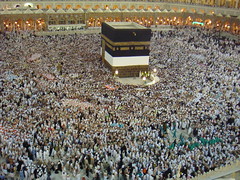
8087054607Ka'barevered pre-Islamic shrine in Mecca; incorporated into Muslim worship.5
8087054608Medinatown northeast of Mecca; asked Muhammad to resolve its intergroup differences; Muhammad's flight to Medina, the hijra, in 622 began the Muslim calendar.6
8087054609Muhammad(570-632); prophet of Allah; originally a merchant of the Quraysh.7
8087054610Abu BakrThe first caliph or leader of the Muslim faithful elected after Muhammad's death in 632. Renown for his knowledge of the nomadic tribes who then dominated the Islamic community.8
8087054611Khadijahthe wife of Muhammad.9
8087054612Qur'anthe word of god as revealed through Muhammad; made into the holy book of Islam.10
8087054613Alicousin and son-in-law of Muhammad; one of the orthodox caliphs; focus for the development of shi'ism.11
8087054614ummacommunity of the faithful within Islam.12
8087054615zakattax for charity obligatory for all Muslims.13
8087054616five pillarsthe obligatory religious duties for all Muslims: confession of faith, prayer, fasting during Ramadan, zakat, and hajj (pilgrimage to Mecca).14
8087054617RamadanIslamic month of religious observance requiring fasting from dawn to sunset.15
8087054618hajja Muslim's pilgrimage to the holy city of Mecca to worship Allah at the Ka'ba.16
8087054619caliphthe successor to Muhammad as head of the Islamic community.17
8087054620Ridda warswars following Muhammad's death; the defeat of rival prophets and opponents restored the unity of Islam.18
8087054621jihadsIslamic holy war.19
8087054622Copts, NestoriansChristian sects of Syria and Egypt; gave their support to the Arabic Muslims.20
8087054623Uthmanthird caliph; his assassination set off a civil war within Islam between the Umayyads and Ali.21
8087054624Battle of Siffinbattle fought in 657 between Ali and the Umayyads; led to negotiations that fragmented Ali's party.22
8087054625Mu'awiyafirst Umayyad caliph; his capital was Damascus.23
8087054626Sunnisfollowers of the majority interpretation within Islam; included the Umayyads.24
8087054627Shi'afollowers of Ali's interpretation of Islam.25
8087054628Karbalasite of the defeat and death of Husayn, the son of Ali.26
8087054629DamascusSyrian city that was capital of Umayyad caliphate.27
8087054630mawalinon-Arab converts to Islam.28
8087054631jizyahead tax paid by all non-Muslims in Islamic lands.29
8087054632dhimmis"the people of the book," Jews, Christians; later extended to Zoroastrians and Hindus.30
8087054633hadiths"traditions" of the prophet Muhammad; added to the Qur'an; form the essential writings of Islam.31
8087054634Abbasiddynasty that succeeded the Umayyads in 750; their capital was at Baghdad.32
8087054635Battle of the River Zab750; Abbasid victory over the Umayyads, near the Tigris. Led to Abbasid ascendancy.33
8087054636BaghdadAbbasid capital, close to the old Persian capital of Ctesiphon.34
8087054637wazirchief administrative official under the Abbasids.35
8087054638dhowsArab sailing vessels; equipped with lateen sails; used by Arab merchants.36
8087054639ayanthe wealthy, landed elite that emerged under the Abbasids.37

AP Unit 3 Vocabulary Flashcards

Terms : Hide Images
4991685654Linkage InstitutionInstitutions that connect citizens to government. The mass media, interest groups, and political parties are the three main linkage institutions.0
4991685655NarrowcastingThe modern media trend for TV and radio shows to target very narrow ideological audiences (ex. conservatives watch Glenn Beck and Bill O'Reilly); results in greater political polarization1
4991685656FactionGroup or clique within a larger organization; party strife and dissension2
4991685657Political PartyA group of individuals with broad common interests who organize to nominate candidates for office, win elections, conduct government, and determine public policy3
4991685658patronageGranting favors or giving contracts or making appointments to office in return for political support4
4991685659Party Dealignmentthe gradual disengagement of people and politicians from the parties, as seen in part by shrinking party identification.5
4991685660Third Partya party that challenges the two major parties6
4991685661Party PlatformA political party's statement of its goals and policies for the next four years. The platform is drafted prior to the party convention by a committee whose members are chosen in rough proportion to each candidate's strength. It is the best formal statement of a party's beliefs.7
4991685662ElectorateAll of the people entitled to vote in a given election8
4991685663Party RealignmentThe displacement of the majority party by the minority party, usually during a critical election period.9
4991685664Rational Choice TheoryA popular theory in political science to explain the actions of voters as well as politicians. It assumes that individuals act in their own best interest, carefully weighing the costs and benefits of possible alternatives.10
4991685665Critical ElectionsAn electoral "earthquake" where new issues emerge, new coalitions replace old ones, and the majority party is often displaced by the minority party. Such periods are sometimes marked by a national crisis and may require more than one election to bring about a new party era.11
4991685666Party Nominating ConventionThis was a new idea, where the candidates were no longer nominated by state legislatures or by a caucus, which only involved party leaders. With the idea of incorporating the common people, voters and politicians would gather in halls and nominate candidates. The anti-Masonic party was the first to hold one of these. It was more democratic because it allowed the common people to have a say.12
4991685667CaucusA meeting of local party members to choose party officials or candidates for public office and to decide the platform.13
4991685668Open PrimaryA primary election in which voters may choose in which party to vote as they enter the polling place14
4991685669Closed PrimaryA primary in which only registered members of a particular political party can vote15
4991685670Divided GovernmentGovernance divided between the parties, as when one holds the presidency and the other controls one or both houses of Congress.16
4991685671General Electionsregularly scheduled elections at which voters make the final selection of officeholders17
4991685672Swing statesStates that are not clearly pro-Republican or pro-Democrat and therefore are of vital interest to presidential candidates, as they can determine election outcomes18
4991685673Communication ActTurned the Federal Radio Commission into a larger Federal Communication Commission, with responsible for regulating the telephone and telegraph industry as well as the radio broadcasting industry19
4991685674Proportional RepresentationAn election system in which each party running receives the proportion of legislative seats corresponding to its proportion of the vote.20
4991685675Interest GroupAn organization of people sharing a common interest or goal that seeks to influence the making of public policy21
4991685676Frontloadingthe recent tendency of states to hold primaries early in the calendar in order to capitalize on media attention22
4991685677Iron TriangleA close relationship between an agency, a congressional committee, and an interest group23
4991685678Party CoalitionThe groups and interests that support a political party.24
4991685679electioneeringActivity that seeks to influence the outcome of an election. Independent electioneering (SuperPacs & 527s) is protected free speech and so cannot be limited by government.25
4991685680litigationlegal proceedings26
4991685681Electoral CollegeA group of people named by each state legislature to select the president and vice president27
4991685682Popular Votethe tally of each individual's vote within a given geographic area28
4991685683LobbyingA strategy by which organized interests seek to influence the passage of legislation by exerting direct pressure on members of the legislature.29
4991685684Public Interest Groupan organization that seeks a collective good that will not selectively and materially benefit group members30
4991685685Political Action CommitteeA committee set up by a corporation or interest group to raise and funnels money to political candidates. Donation amounts to PACs are limited by FECA rules (hard money).31
4991685686Super PACa PAC that can accept unlimited contributions from individuals, unions, corp, & assoc., & spend unlimited sums on indep. expenditures in fed election campaigns, provided that it does not contribute to or coordinate w/ parties or candidates.32
4991685687Economic Interest GroupA group with the primary purpose of promoting the financial interests of its members33
4991685688Hard MoneyPolitical contributions given to a party, candidate, or interest group that are limited in amount and fully disclosed.34
4991685689Soft MoneyCampaign contributions unregulated by federal or state law, usually given to parties and party committees to help fund general party activities.35
4991685690Federal Election CommissionA commission created by the 1974 amendments to the Federal Election Campaign Act to administer election reform laws. Its duties include overseeing disclosure of campaign finance information and public funding of presidential elections, and enforcing contribution limits.36
4991685691Citizens United v. FECA 2010 decision by the United States Supreme Court holding that independent expenditures are free speech protected by the 1st Amendment and so cannot be limited by federal law. Leads to creation of SuperPACs & massive rise in amount of third party electioneering (Citizens for a Better Tomorrow, Tomorrow)37
4991685692501(c)(3) Committeesnonprofit organization that is exempt from federal income tax if its activities have the following purposes: charitable, religious, educational, scientific, literary, testing for public safety, fostering amateur sports competition, or preventing cruelty to children or animals.38
4991685693527 Political Committeesorganizations created with the primary purpose of influencing electoral outcomes; the term is typically applied only to freestanding interest groups that do not explicitly advocate for the election of a candidate39
4991685694Free rider problemthe problem faced by interest groups when citizens can reap the benefits of interest group action without actually joining, participating in, or contributing money to such groups.40
4991685695BCRA (McCain Feingold Act)Bipartisan Campaign Reform Act of 2002 (BCRA, McCain-Feingold Act, The increased role of soft money in campaign financing, by prohibiting national political party committees from raising or spending any funds not subject to federal limits, even for state and local races or issue discussion; The proliferation of issue advocacy ads, by defining as "electioneering communications" broadcast ads that name a federal candidate within 30 days of a primary or caucus or 60 days of a general election, and prohibiting any such ad paid for by a corporation (including non-profit issue organizations such as Right to Life or the Environmental Defense Fund) or paid for by an unincorporated entity using any corporate or union general treasury funds. The decision in Citizens United v. FEC overturns this provision, but not the ban on foreign corporations or foreign nationals in decisions regarding political spending.41
4991685696High-tech politicsA politics in which the behavior of citizens and policymakers and the political agenda itself are increasingly shaped by technology.42
4991685697Mass MediaTelevision, radio, newspapers, magazines, the Internet, and other means of popular communication.43
4991685698Media EventA speech or photo opporutnity staged to give a politician's view on an issue44
4991685699Press Conferencean unrestricted session between an elected official and the press45
4991685700Investigative Journalismthe use of in-depth reporting to unearth scandals, scams, and schemes, at times putting reporters in adversarial relationships with political leaders46
4991685701Print Medianewspapers and magazines47
4991685702Electronic MediaTelevision, radio, and the Internet, as compared with print media.48
4991685703Selective ExposureThe process by which individuals screen out messages that do not conform to their own biases.49
4991685704ChainsNewspapers published by massive media conglomerates that account for over four-fifths of the nation's daily newspaper circulation. Often these control broadcast media as well.50
4991685705Beatsspecific locations from which news frequently emanates, such as Congress or the White House. Most top reporters work a particular beat, thereby becoming specialists in what goes on at that location51
4991685706Trial Balloonsan intentional news leak for the purpose of assessing the political reaction52
4991685707Sound BitesQuote or "snippet" from politician's speech used by media to represent whole speech. Used by candidates to spread message (slogan); Used by media to avoid serious (boring) discussion of issues.53
4991685708Talking HeadA shot of a person's face talking directly to the camera. Because this is visually unappealing, the major commercial networks rarely show a politician talking one-on-one for very long.54
4991685709Policy Entrepreneursactivists in or out of government who pull together a political majority on behalf of unorganized interests55
4991685710Party ImageThe voter's perception of what the Republicans or Democrats stand for, such as conservatism or liberalism56
4991685711Party IdentificationAn informal and subjective affiliation with a political party that most people acquire in childhood.57
4991685712Ticket SplittingVoting with one party for one office and with another party for other offices. It has become the norm in American voting behavior.58
4991685713Party Machinea centralized party organization that dominates local politics by controlling elections59
4991685714National Party ConventionA national meeting of delegates elected in primaries, caucuses, or state conventions who assemble once every four years to nominate candidates for president and vice president, ratify the party platform, elect officers, and adopt rules.60
4991685715National CommitteeDelegates who run party affairs between national conventions.61
4991685716National Party Chairpersonindividual elected by the national committee who manages the daily operations of the national party62
4991685717New Deal coalitioncoalition forged by the Democrats who dominated American politics from the 1930's to the 1960's. its basic elements were the urban working class, ethnic groups, Catholics and Jews, the poor, Southerners, African Americans, and intellectuals.63
4991685718Proportional representationAn election system in which each party running receives the proportion of legislative seats corresponding to its proportion of the vote.64
4991685719Coalition governmentA government controlled by a temporary alliance of several political parties65
4991685720Responsible party modelA view favored by some political scientists about how parties should work. According to the model, parties should offer clear choices to the voters, who can then use those choices as cues to their own preferences of candidates. Once in office, parties would carry out their campaign promises.66
4991685721Blue Dog DemocratsFiscally conservative Democrats who are mostly from the South and/or rural parts of the United States.67
4991685722Nominationthe official endorsement of a candidate for office by a political party. Generally, success in the nomination game requires momentum, money, and media attention.68
4991685723McGovern-Fraser CommissionA commission formed at the 1968 Democratic convention in response to demands for reform by minority groups and others who sought better representation.69
4991685724SuperdelegatesNational party leaders who automatically get a delegate slot at the Democratic national party convention.70
4991685725Invisible primaryInformal raising of support (and money) before first primaries71
4991685726Presidential primarieselections in which voters in a state vote for a candidate (or delegates pledged to him or her). Most delegates to the national party conventions are chosen this way.72
4991685727Direct mailA high-tech method of raising money for a political cause or candidate. It involves sending information and requests for money to people whose names appear on lists of those who have supported similar views or candidates in the past.73
4991685728Independent expendituresMoney spent by individuals or groups not associated with candidates to elect or defeat candidates for office.74
4991685729Federal election campaign actFirst major federal law (1971) to regulate federal elections. Created Federal Election Commission (FEC). Required disclosure of sources of campaign funds (transparency), set limits on contributions to candidates (individuals = $1000, PACs = $5000), spending limits for candidates, limits on independent expenditures.75
4991685730Selective perceptionthe phenomenon that people often pay the most attention to things they already agree with and interpret them according to their own predispositions76
4991685731suffrageThe right to vote77
4991685732Political efficacyThe belief that one's political participation really matters - that one's vote can actually make a difference78
4991685733Civic dutythe idea that citizens have a responsibility to help their country79
4991685734Voter registrationSystem designed to reduce voter fraud by limiting voting to those who have established eligibility to vote by submitting the proper documents.80
4991685735Motor Voter ActPassed in 1993, this act went into effect for the 1996 election. It requires states to permit people to register to vote at the same time they apply for their driver's license.81
4991685736Mandate theory of electionsThe idea that the winning candidate has a mandate from the people to carry out his or her platforms and politics. Politicians like the theory better than political scientists do.82
4991685737Policy votingelectoral choices that are made on the basis of the voters' policy preferences and on the basis of where the candidates stand on policy issues83
4991685738Battleground statesStates in which any major candidate could win and the outcome is too close to call84
4991685739PluralismA theory of government that holds that open, multiple, and competing groups can check the asserted power by any one group.85
4991685740hyperpluralismA theory of government and politics contending that groups are so strong that government is weakened86
4991685741Potential groupall the people who might be interest group members because they share some common interest87
4991685742Actual groupThat part of the potential group consisting of members who actually join.88
4991685743Collective goodsomething of value that cannot be withheld from a nonmember of a group, for example, a tax write-off or a better environment89
4991685744Free-rider problemThe problem faced by unions and other groups when people do not join because they can benefit from the group's activities without officially joining. The bigger the group, the more serious the problem.90
4991685745Selective benefitsGoods (such as information publications, travel discounts, and group insurance rates) that a group can restrict to those who pay their annual dues.91
4991685746Single-issue groupGroups that have a narrow interest, tend to dislike compromise, and often draw membership from people new to politics. These features distinguish them from traditional interest groups.92
4991685747ElectioneeringActivity that seeks to influence the outcome of an election. Independent electioneering (SuperPacs & 527s) is protected free speech and so cannot be limited by government.93
4991685748Union shopa provision found in some collective bargaining agreements requiring all employees of a business to join the union within a short period, usually 30 days, and to remain members as a condition of employment94
4991685749Right-to-work lawsState laws that provide that unions cannot impose a requirement that workers join the union as a condition of their employment.95
4991685750Public interest lobbiesorganizations that seek a collective good which does not only benefit their membership96

AP World Review: Foundations Flashcards

Terms : Hide Images
6657407426'Foundations' Dates8000 BCE to 600 BCE0
6709362021Foundations EraThis Era was characterized by the settlement of hunter gatherer peoples who discovered agriculture as a new source of food. Color: Green1
6738462721PastoralismThe branch of agriculture concerned with the raising of livestock.2
6688643427Neolithic RevolutionAlso known as the 'First Agricultural Revolution, people from various parts of the world learned purposeful cultivation crops for food instead of Hunting and Gathering.3
6699433163CivilizationA group of permanent settlements with a defined history and culture.4
6688657358Characteristics of a Civilization1. Record-keeping System 2. Job Specialization 3. Advanced Technology 4. Social Hierarchy 5. Urbanization5
6670177597Social Inequalities in Agricultural CivilizationsSurplus of food and materials in Agricultural societies led to the ability for some people to store up and amass wealth. This led to societies where some people had more than other. (Different from Hunter/Gatherer Societies where there was no surplus, and people only owned what they gathered themselves.)6
6671624873Patriarchy in Agricultural CivilizationsAs Agriculture became the main source of food, men who tended to work for on the fields were begun to be seen to be more important since they were the source of food. With surplus of food, women began having more babies, and were more busy childbearing for leadership roles. (Different from Hunter/Gatherer Societies where women were the main source of food, and tended to have less children, and thus, more time.)7
6671631040Unbalanced Diets in Agricultural SocietiesAlthough Agricultural Societies created surplus in food, these societies often only farmed one single crop as the main base of food. This led to the unhealthy diet of a mostly grain diet and because of the diet's reliance on one plant, this made them susceptible to famine. (Different from Hunter/Gatherer Societies where diets were made of wild fruits, vegetables, fish and hunted meat. This variety allowed healthier diets and safety from crop failure.)8
6695078530Permanent Settlement in Agricultural SocietiesPeople settled down, as agriculture allowed permanent sources of food in one place. With surplus food, urbanization took place, and societies began building large and permanent settlements. These became the base of the first civilizations. (Different from Hunter/Gatherer Societies where it was require to migrate constantly to new areas find new sources of food. Permanent Settlements without agriculture (or fishing) quickly depleted an area's food sources.)9
6699546403Record Keeping in Agricultural CivilizationsAs settlements grew, and wealth amassed, there became a need to keep record of foods, laws, jobs and trading. Every Civilization developed their own way of recording information.10
6715571619DomesticationProcess of changing/pacifying plants or animals for human use.11
6670148779Yellow River Civilization2000 BCE to 221 BCE. This was the beginnings of Chinese Civilization, which rang along the Yellow River. They were ruled by Heaven-supported dynasties. Their culture had a strong emphasis on family and patriarchal values.12
6670090804Mandate of HeavenChinese Belief System that explained Chinese Dynasties were 'allowed' to rule of China by Heaven. If there were problems, such as earthquakes or famine, it meant 'Heaven' was unhappy with the ruler, and it was the right of the people to revolt and bring up a new dynasty. This is how Dynasties in China changed.13
6670090805Early Chinese DynastiesDuring the Foundations Era, the Chinese Civilization was ruled by dynasties backed by the Mandate of Heaven. Shang: 1600 BCE to 1046 BCE Zhou: 1046 BCE to 221 CE14
6670223190Oracle Bones (Writing)The Ancient Chinese wrote on bones, and then cracked them with a hot poker. They often used this to predict the future.15
6670143774Indus Valley Civilization2000 BCE to 750 BCE A civilization along the Indus river whose geographic isolation meant it had little contact with other civilizations. Early Mathematics originated here.16
6699638985Indus Pictographs (Writing)The system of picture(ish) symbols used by the Indus people to record information. It has yet to be translated.17
6675439433The AryansNomadic tribes to the north of the Indus River Valley civilization that took over the Indus River Valley civilization. They had a complex social hierarchy which became the basis for Hinduism.18
6670143772Mesopotamian CivilizationsThe series of city-state based Civilizations and (later) empires founded around Mesopotamia. Examples are: Sumer (3500 BCE to 2370 BCE) Babylon (1792 BCE to 1595 BCE) Assyria (1305 BCE to 609 BCE)19
6688718839MesopotamiaAlso known as the Fertile Crescent, this region is between the Tigris and Euphrates rivers in modern day Iraq and became the breeding ground of many ancient Civilizations. The region was known for its unpredictable flooding, and settlements were often required to rebuild.20
6699737963City-StateAn independent city that controls the immediate area around it.21
6699768206Mesopotamian City-StatesMesopotamia, unlike Egypt or China developed into a series of competing City-States that warred with each other. Famous examples are Babylon, Ur, Sumer and Ninevah.22
6670183168Cuneiform (Writing)Mesopotamian writing system created in Sumer used to keep track of goods and trade. One of the oldest known examples of record-keeping.23
6670132171Hammurabi CodeEstablished by King Hammurabi, this ancient Babylonian law code that reinforced social hierarchy. From about 1754 BCE, it is one of the oldest deciphered writings of significant length.24
6670181002ZigguratsLarge structures made in Mesopotamian civilization used as temples and storehouses.25
6670143773Nile RiverThe Nile River is the longest river in the world and became the home of two distinct civilizations: Egypt and Meroe. The Nile was known for its regular/predictable flooding, which made nearby soil rich for farming.26
6695336674Ancient Egyptian CivilizationA technologically advanced civilization built along the Nile River, they were ruled by wealthy and 'godly' pharaohs that were blessed by the gods. They are also known for building large monuments of worship for their gods and pharaohs.27
6695357310PharaohsThe Kings/Queens of the Ancient Egyptians. They were often said to be blessed, or are the mortal incarnation of the gods. Pharaohs often commissioned large graves for themselves called 'Pyramids' to help them in their transition to the afterlife.28
6670183169Hieroglyphs (Writing)The Ancient Egyptian writing system.29
6700136550Nubian Civilization3400 BCE - 660 BCE. Egypt's southern neighbor, this distinct civilization often traded with Egypt, and other times invaded Egypt. They had a separate religion and culture.30
6675560494Bantu-Speaking PeoplesWest African nomads that migrated from the Niger and Benue River Valleys to the forests of South Africa due to the harsh Saharan climate.31
6677421757Bantu MigrationThe movement of the Bantu-Speaking Peoples from the Niger and Benue River Valleys to the forests of South Africa due to the harsh Saharan climate. This migration started at about 1000 BCE and ended at about 1700 CE.32
6670174327Olmec Civilization1000 BCE - 400 BCE This mesoamerican civilization developed on maize and beans in Southern Mexico. They most likely would lead to Aztec and Mayan culture. Little else is known about them.33
6700177096Chico Norte (Caral) Civilization3000 BCE to 1800 BCE. This civilization, which would later lead to the Incans. Developed in Southern Peru, they developed Quipus. Little is known about them.34
6670137599Quipu (Writing(ish))A method of record-keeping used by the Carans (and later Incans) and other ancient Andean civilizations, consisting of a system of knots.35

Elizabethan Poetry (Non-AP) Flashcards

Terms : Hide Images
6360298484Italian SonnetOften called the Petrarchan Sonnet, this sonnet consists of a rhymed octave and a rhymed sestet; the rhyme pattern abba abba is applies to the octave; the sestet employs a variety of rhyme patterns using two rhymes (ex. cdcdcd).0
6360298485Shakespearean SonnetAlso called the English Sonnet, this sonnet consists of three quatrains (each with a rhyme-scheme of its own) and the last two lines are a rhyming couplet. The typical rhyme-scheme for the English sonnet is ABAB CDCD EFEF GG1
6360298486Spenserian SonnetA sonnet consisting of three quatrains and a concluding couplet in iambic pentameter with an interlocking rhyme scheme of abab bcbd cdcd ee2
6360298487volta / turnThe place in a sonnet when the content changes from stating the problem to providing the solution.3
6360298488octaveA group of eight lines in a poem. In an Italian sonnet, it represents the "problem" of the poem.4
6360298489sestetA group of six lines in a poem. In an Italian sonnet, it represents the "solution" of the poem.5
6360298490pastoral poetryPoetry idealizing the lives of shepherds and country folk, although the term is often used loosely to include any poem featuring a rural aspect.6
6360298491Queen Elizabeth I of England(553-1603) The "virgin" queen who ruled England for 50 years and was one of the most successful monarchs in English History. She supported the arts, increased the treasury, supported the exploration of the New World, built up the military, and established the Church of England as the main religion in England.7
6360298492King Henry VIII of England(1491-1547) King of England, he split with the Catholic Church and declared himself head of the Church of England, or Anglican Church.8
6360298493The GlobeElizabethan theatre built in 1598 by Richard Burbage for Lord Chamberlain's Men9
6360298494The Lord Chamberlain's MenA company of actors for which Shakespeare wrote for most of his career. Richard Burbage played most of the lead roles, including Hamlet, Othello, King Lear, and Macbeth, while Shakespeare himself performed some secondary roles.10
6360298495William Shakespeare(1564 - 1616) English poet and playwright considered one of the greatest writers of the English language; works include Julius Caesar, Macbeth, Romeo and Juliet, and Hamlet.11
6360298496The Spanish ArmadaOne of the largest military fleets in the history of warfare which was sent to attack England in 1588. The smaller English fleet was able to defeat the armada by using its ease of maneuverability and ended Spain's domination of the Atlantic Ocean and made England the major naval power.12
6360298497Mary, Queen of ScotsMary Stuart was Queen of Scotland from 1542 to 1567 and Queen consort of France from 1559 to 1560. She previously claimed Elizabeth's throne as her own and was considered the legitimate sovereign of England by many English Catholics. Perceiving her as a threat, Elizabeth had her confined in various castles and manor houses in the interior of England. After eighteen and a half years in custody, Mary was found guilty of plotting to assassinate Elizabeth, and was subsequently executed.13
6360298500revenge tragedyA dramatic form popular during the Elizabethan Age in which the protagonist, usually directed by the ghost of a murdered family member or friend, inflicts retaliation upon a powerful villain (usually because the government or ruler can't or won't intervene). Notable features of the revenge tragedy include violence, bizarre criminal acts, intrigue, insanity, a hesitant protagonist, and the use of soliloquy. Thomas Kyd's Spanish Tragedy is the first example in English, and William Shakespeare's Hamlet is perhaps the best known.14
6360298501The Church of EnglandThe English church renounced papal authority when Henry VIII broke with Rome to secure an annulment from Catherine of Aragon. The English Reformation accelerated under Edward VI's regents before a brief restoration of Catholicism under Queen Mary I and Philip II of Spain. The Act of Supremacy of 1558 renewed the breach and the Elizabethan Settlement charted a course whereby the English church was to be both Catholic and Reformed.15
6360298502Queen Mary I of EnglandThe Queen of England and Ireland from 1553 until 1558. Her executions of Protestants led to the posthumous sobriquet "Bloody Mary". She was the only child of Henry VIII and his first wife Catherine of Aragon who survived to adulthood. In 1554, Mary married Philip of Spain, becoming queen consort after Philip's accession in 1556. Mary is remembered for her restoration of Roman Catholicism after the short-lived Protestant reign of her half-brother. During her five-year reign, she had over 280 religious dissenters burned at the stake. Her re-establishment of Roman Catholicism was reversed after her death in 1558 by her younger half-sister and successor Elizabeth I, daughter of Henry and Anne Boleyn.16
6360298516blank verseUnrhymed Iambic pentameter; the style of speech Shakespeare used with most of his main / noble characters.17
6360298517proseRegular, non-metered language; the style of speech Shakespeare used with most of his lower-class, comedic characters.18
6360298518iambic pentameterA common meter in poetry consisting of an unrhymed line with five feet or accents, each foot containing an unaccented syllable and an accented syllable.19
6360298519soliloquyA type of monologue in which a character talks to himself or herself (usually alone on stage) or reveals his or her thoughts without directly addressing a listener.20
6360298520monologueA long speech spoken by a character to himself, another character, or to the audience21
6360298521dialogueConversation between characters in a story or play22
6360298522asideA dramatic convention by which an actor directly addresses the audience but it is not supposed to be heard by the other actors on the stage.23
6360298523comic reliefAn amusing scene, incident, or speech introduced into serious or tragic elements, as in a play, in order to provide temporary relief from tension, or to intensify the dramatic action.24
6360298524punA joke exploiting the different possible meanings of a word or the fact that there are words that sound alike but have different meanings.25
6360298525extended metaphorA comparison between two unlike things that continues throughout a series of sentences in a paragraph or lines in a poem.26

AP Biology: Protein Synthesis Flashcards

Terms : Hide Images
8711815637AnticodonEnsures correct position of AA on ribosome0
8711815638A-siteCharged tRNA arrives with AA; anticodon confirms placement1
8711815639CodonDetermine AA; determined by DNA sequence2
8711815640EnhancerSpeed up transcription3
8711815641E-sitetRNA exits4
8711815642ExonJoined together during splicing the RNA transcript in order to create the mRNA5
8711815643Frameshift mutation1. Frameshift insertion mutation: base insertion of one or more bases 2. Frameshift deletion mutation: base deletion of one or more bases Changes triplet grouping of bases; codons regrouped; abnormal AA sequence; mutant protein6
8711815644HistoneTightly wind DNA into nucleosomes7
8711815645IntronRemoved during splicing of RNA transcript in order to make mRNA8
8711815646Lysogenic infectionHost intact; virus injects DNA; viral DNA inserted into host DNA genome; host divides with viral DNA9
8711815647Lyctic infectionBreaks host cell; virus injects DNA; host cell copies viral DNA and makes proteins; proteins assemble, forming new viruses; cell bursts, releasing new viruses10
8711815648mG capOn the 5' end of mRNA; to find ribosome when it leaves the nucleus11
8711815649MicroRNADNA INTERFERENCE; attaches to the mRNA and disturbs translation; tells enzyme complex to chop up the double stranded RNA to stop translation12
8711815650mRNATemporary copy of gene (not identical copy of gene; written in different language); determines AA sequence (codons)13
8711815651Nucleosomea structural unit of a eukaryotic chromosome, consisting of a length of DNA coiled around a core of histones.14
8711815652OperatorRepressor binding site15
8711815653Inducible operonNegative control; lack of nutrients -> turns off; default is to turn off; stops transgression of the lac protein16
8711815654Repressible operonTranscription is normal; substrate presence turns it off; repressor binding to operon always turns it off17
8711815655Point mutation1. Point nonsense mutation: premature stop of translation; results in no protein (BAD!!) 2. Point missense mutation: base substitutions; alters function of protein if there is a different amino acid18
8711815656Poly-A TailPrevents cytoplasm from eating the mRNA; added on 3' end for protection19
8711815657PromoterStart; RNA polymerase attaches to DNA20
8711815658P-sitePeptide bond joins AA and polypeptide chain grows21
8711815659SplicingRemoving non-coding parts22
8711815660Regulatory geneCodes for repressor; tells whether the operon is active or not23
8711815661RepressorTurns genes off; temporary stopper24
8711815662Reverse transcription1 RNA strand to 1 DNA to 2 DNA; DNA inserts into host genome -> provirus; transcribed into RNA -> viral protein -> assemblage -> leave to affect others the reverse of normal transcription, occurring in some RNA viruses, in which a sequence of nucleotides is copied from an RNA template during the synthesis of a molecule of DNA.25
8711815663RNA interferenceA biological process in which RNA molecules inhibit gene expression, typically by causing the destruction of specific mRNA molecules.26
8711815664RNA PolymeraseForms RNA polymers27
8711815665RNA ProcessingRNA Transcript to mRNA; in nucleus28
8711815666rRNA2 ribosomal subunits -> ribosomal complex29
8711815667TerminatorEnd of gene30
8711815668Transcription FactorTurn genes on31
8711815669TranscriptionForms mRNA; takes place in nucleus (bc DNA cant leave nucleus)32
8711815670TranslationForms polypeptide chain; in cytoplasm33
8711815671tRNACarries and transfers AA to polypeptide chain; end for AA attachment; anticodons34

AP World: Unit 6 Flashcards

Terms : Hide Images
6349389781NATONorth Atlantic Treaty Organization; France, US, and UK banded together in a system of collective defense and officially became nuclear weapon states0
6349401615Warsaw Pactbrought together the Soviet Union and Eastern European communist states under a military alliance rival to NATO1
6349403599Korean and Vietnamese WarsNorth Korean invasion of South Korea (1950) --> Chinese and US involvement in 3 year war (1950-1953) --> ended in standoff that left Korea still divided; perfect example of US "containing communism" (ie not letting it spread)2
6349424364Cuban Missile Crisisrevolutionary Fidel Castro came to power in 1959 (Cuba) --> Cuba nationalized US assets in Cuba --> US hostility and attempts to overthrow Castro --> pushed closer to Soviet Union --> began to think of self/revolution as Marxist --> Soviets are happy and afraid of losing Cuba to US --> Khrushchev (successor to Stalin) secretly gave nuclear missiles to Cuba (in order to discourage US action against Castro) --> discovered by US in Oct 1952 --> compromise negotiated by J.F. Kennedy3
6349524555Non-alignmentSoviet Union and U.S were both trying to acquire allies during the cold war but some countries (India) decided not to align with either side; others "played both sides" and used funding/guidance from both sides (Indonesia, Egypt)4
6349625350Military industrial complexterm coined by US president D. Eisenhower (1953-1961); "a coalition of the armed services, military research laboratories, and private defense industries that both stimulated and benefited from increased military spending and cold war tensions" (Strayer 1058); Soviet Union and US had own versions5
6358142794Indian National Congress (INC)established 1885; association of English educated Indians drawn mostly from the upper caste families; represented the beginning of a new kind of political protest (not rebellions, banditry, refusal to pay taxes); initially had difficulty gaining peasant followers; with Gandhi's philosophies appealing to a wide range of Indians, became a mass organization6
6358147999Mohandas Gandhialong with Nehru, considered "father of independent India"; born in India recovering from influenza epidemic and violent and repressive actions by the British; English-educated and not-very-successful lawyer-turned-leader protesting against racial segregation; developed concept of India that included Hindus and Muslims; "political philosophy, known as satyagraha (truth force), was a confrontational, though nonviolent approach to political action" (Strayer 1095); rose up in ranks of INC; drew support from wide spectrum of Indians; opposed modern industrial future7
6366814143All-Indian Muslim Leagueestablished as early as 1906; contradicted the Congress Party's claim to speak for all Indians; demanded separate electorates with a fixed number of seats for Muslims; Muslims are distinct minority → feared that their voices would not be heard, despite Gandhi's policy8
6366957025Muhammad Ali Jinnahleader of the Muslim League; argued that parts of India that had Muslim majority should have a separate political status, called Pakistan; did not agree with Gandhi, that India was one nation9
6367026912Afrikanerpolitically dominant section of the white community of South Africa; descended from early Dutch settlers (mid-17th century); term reflects image of "white Africans"; unsuccessfully sought independence from Britain (Boer War, 1899-1902) → feeling of hostility towards British10
6367036772Nelson Mandelaconsidered new and younger leader of ANC; launched nonviolent civil disobedience (boycotts, strikes, demonstrations, burning of hated passes that Africans were required to carry); arrested by South African government; released with compromise between South African nationalists and existing government11
6367074213Apartheidattempted to separate blacks from whites in every way possible while retaining Africans' labor power in the white-controlled economy; rigid "pass laws"; social segregation; "Bantustans" (native reserves); surprisingly ended without a racial bloodbath12
6367151306African National Congress (ANC)established 1912; "appealed to the liberal, humane, and Christian values that white society claimed" (Strayer 1100); 40 years, pursued moderate and peaceful protest; 1948; Afrikaner-lead Nationalist Party came to power and implemented apartheid = peaceful protest wasn't successful; legalized in discussion with African nationalists as an alternative to violent struggle; 1994, won in national elections and came to power13
6367153065Black Consciousness Movementactive opposition by primarily student groups; and effort to foster pride, unity and political awareness among South Africa's African majority (Strayer 1101); emphasized mobilizing women14
6367169007ManchukuoA puppet state that sections of Japanese military established after seizing Manchuria and acting independently of civilian authorities. This angered the Western powers and Japan withdrew from the League of nations and aligned with Germany and Italy.15
6367169987"Asia for Asians"when trying to create a Pacific Empire, the Japanese acted as "liberators and modernizers" to free the Asian continent from European dominance (really Japan was to extract the resources)16
6366852903Indian National Congress(INC) was a Congress Party of english educated Indians like lawyers and teachers from high caste Hindu families. They didn't want to overthrow the British, but wanted more inclusion in political and military life.17
6366857575Afrikaner(Boers) those who descended from Dutch settlers who were "white africans". They were permanent residents, not colonial intruders.18
6366863416African National Congress(ANC) Congress led by educated males in middle class Africa who didn't want to overthrow the rule. They wanted to be accepted as civilized people.19
6366910049The Brazilian Miraclerapid industrial growth in Brazil when the country produced 90% of it's own consumer goods. they took investments from foreign corporations. The economy was fine, but the people still suffered inequality and poverty.20

AP Biology Ecology Unit Flashcards

This is a study guide under the subject of Ecology [Coevolution and Ecological Succesion] for the AP Biology Test. Good luck!
Pt. 3

Pt. 2 is located here:
http://quizlet.com/863193/ap-biology-review-ecology-part-2-flash-cards/
------
Pt. 4 is located here:
http://quizlet.com/883172/ap-biology-review-ecology-part-4-flash-cards/

Terms : Hide Images
4960023374Aposematic colorationvery bright, often red or orange, coloration of poisonous animals as a warning that possible predators should avoid them0
4960023375Mullerian mimicrycopycat coloration where one harmless animal mimics the coloration of one that is poisonous1
4960023376Batesian Mimicry2 or more poisonous species resemble each other and gain an advantage from their combined numbers2
4960023377Ecological SuccessionThe change in the composition of species over time3
4960023378Pioneer SpeciesPlants and animals that are first to colonize a newly exposed habitat. [Opportunistic, r-selected species that have good dispersal capability]4
4960023379Primary SuccessionType of Succession that occurs on substrates that never previously supported living things. [IE volcanic islands or glaciers]5
4960023380Secondary SuccessionType of Succession that occurs where communities were entirely or partially destroyed by some kind of damaging event [IE floods or fire]6
4960023381Trophic LevelsOrganization of plants and animals in order to examine the production and utilization of energy7
4960023382Competitive Exclusion Principle (Gause's principle)When two species compete for exactly the same resources (or occupy the same niche), one is likely to be more successful. One species lives, the other is eliminated.8
4960023383Resource PartitioningSome species coexist in spite of apparent competition for the same resources.9
4960023384PredationForm of community interaction where an animal feeds on a plant or other animal10
4960023385SymbiosisTwo species that live together in close contact during a portion of their lives11
4960023386MutualismForm of symbiosis that is a relationship in which both species benefit.12
4960023387CommensalismmForm of symbiosis where one species benefits while the second is neither helped nor harmed13
4960023388ParasitismForm of symbiosis where the parasite benefits while the host is harmed.14
4960023389EcologyThe study of the distribution and abundance of organisms and their interactions with the world and others15
4960023390PopulationGroup of individuals all of the same SPECIES LIVING in the SAME AREA.16
4960023391CommunityGroup of populations living in the same area.17
4960023392EcosystemThis describes the interrelationships between the organisms in a community and the environment.18
4960023393BiosphereThis is composed of all the regions on the earth that contains living things. IE soil, oceans, lower 10 km of the atmosphere.19
4960023394Survivorship CurvesDescribes how mortality of individuals in a species varies during their lifetimes.20
4960023395Biotic PotentialMaximum growth rate of a population under ideal conditions, with unlimited resources and without growth restrictions21
4960023396Carrying CapacityMaximum number of individuals of a population that can be sustained by a particular habitat.22
4960023397Limiting FactorsElements that prevent a population from attaining its biotic potential.23
4960023398Density-Dependent Factors[a limiting factor] Agents whose limiting effect becomes more intense as the population density increases (IE parasites/disease, resources, toxic effect of waste products, and predation)24
4960023399Density-Independent Factor[a limiting factor] Occurs independently of the density of the population (IE natural disasters, climate change)25
4960023400r-selected speciesSpecies that exhibit rapid growth (J-shaped curve), where opportunistic species (grass/insects) quickly invade habitats, reproduce, and die. Offspring are small, mature fast, and require little care26
4960023401k-selected speciesSpecies where population size remains constant (IE humans) and produce a small number of relatively large offspring that require much care until maturation.27
4960023402Dominant speciesspecies that are the most abundant or that collectively have the highest biomass28
4960023403Keystone speciesnot abundant in a community; they exert major control over other species in the community29
4960023404Biological MagnificationOrganisms at higher trophic levels have greater concentrations of accumulated toxins stored in their bodies than those at lower trophic level30
4960023405Biomesdistribution depends on the amount of precipitation and temperature in an area31
4960023406Tropical Rain Forestabundant rainfall, stable temperatures and high humidity, most diversity of species of any biome on earth, high competition for sunlight32
4960023407Desertlow precipitation, temperature fluctuations are extreme, daytime surface temperatures are high and at night they are low, plants are drought-resistant33
4960023408Temperature Grasslandslow total annual rainfall, dry winters, wet summers, large grazers and variety of burrowing mammals34
4960023409Savannawarm year round, trees that are often thorny and have small leaves to adapt to dry conditions35
4960023410Chaparralrainy winters, dry summer, high plant diversity36
4960023411Taiga or Coniferous Forestdotted with lakes, ponds and bogs, very cold winters, largest terrestrial biome37
4960023412Temperature Broadleaf Forestmammals hibernate in the north, vertical layers and close canopy of trees38
4960023413Tundrahas permafrost that restricts growth of plant roots, cold temperatures, gets very little rainfall, abundance of insects, small biodiversity, migration of birds during the summer39
4960023415Plant Protectionthrough spines, thorns or chemical toxins that help to protect themselves from herbivores40

Pages

Subscribe to CourseNotes RSS

Need Help?

We hope your visit has been a productive one. If you're having any problems, or would like to give some feedback, we'd love to hear from you.

For general help, questions, and suggestions, try our dedicated support forums.

If you need to contact the Course-Notes.Org web experience team, please use our contact form.

Need Notes?

While we strive to provide the most comprehensive notes for as many high school textbooks as possible, there are certainly going to be some that we miss. Drop us a note and let us know which textbooks you need. Be sure to include which edition of the textbook you are using! If we see enough demand, we'll do whatever we can to get those notes up on the site for you!