AP Notes, Outlines, Study Guides, Vocabulary, Practice Exams and more!

AP Government Bureaucracy Flashcards

Review Questions

Terms : Hide Images
8740472563appropriationA legislative grant of money to finance a government program or agency0
8740472564authorization legislationlegislative permission to begin or continue a government program or agency1
8740472565bureaucracyA large, complex organization composed of appointed officials2
8740472566committee clearancethe ability of a congressional committee to review and approve certain agency decisions in advance and without passing a law3
8740472567competitive servicethe government offices to which people are appointed on the basis of merit, as ascertained by a written exam or by applying certain selection criteria4
8740472568discretionary authoritythe extent to which appointed bureaucrats can choose coarses of action and make policies that are not spelled out in advance by laws5
8740472569government by proxyWashington pays state and local governments and private groups to staff and administer federal programs6
8740472570iron triangleA close relationship between an agency, a congressional committee, and an interest group7
8740472571issue networkA policy-making alliance among loosely connected participants that comes together on a particular issue, then disbands.8
8740472572laissez-faireHands off. No government intervention in business.9
8740472573legislative vetoThe authority of Congress to block a presidential action after it has taken place. The Supreme Court has held that Congress does not have this power10
8740472574red tapeComplex bureaucratic rules and procedures that must be followed to get something done11
8740472575trust fundsFunds for government programs that are collected and spent outside the regular government budget12

AP Human Geography: Development Flashcards

AP Human Geography

Terms : Hide Images
9189318186DevelopmentA process of improvement in the material conditions of people through diffusion of knowledge and technology0
9189318187Fair tradeAlternative to international trade that emphasizes small businesses and worker owned and democratically run cooperatives and requires employers to pay workers fair wages, permit union organizing, and comply with minimum environmental and safety standards.1
9189318188Foreign direct investment (FDI)Investment made by a foreign company in the economy of another country2
9189318189Gender Empowerment Measure (GEM)Compares the ability of women and men to participate in economic and political decision making.3
9189318190Gender-Related Development Index (GDI)Compares the level of development of women with that of both sexes.4
9189318191Gross domestic product (GDP)The value of the total output of goods and services produced in a country in a given time period (normally 1 year).5
9189318192Human Development Index (HDI)Indicator of level of development for each country, constructed by United Nations, combining income, literacy, education, and life expectancy.6
9189318193Less Developed Country (LDC)A country that is at a relatively early stage in the process of economic development.7
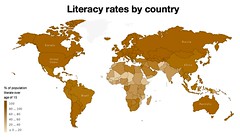
9189318194Literacy RateThe percentage of a country's people who can read and write.8
9189318195Millennium Development GoalsEight international development goals that all members of the United Nations have agreed to achieve by 20159
9189318196More Developed Country (MDC)A country that has progressed relatively far along a continuum of development.10
9189318197Primary sectorThe portion of the economy concerned with the direct extraction of materials from Earth's surface, generally through agriculture, although sometimes by mining, fishing, and forestry.11
9189318198ProductivityThe value of a particular product compared to the amount of labor needed to make it.12
9189318199Secondary sectorThe portion of the economy concerned with manufacturing useful products through processing, transforming, and assembling raw materials.13
9189318200Structural adjustment programEconomic policies imposed on less developed countries by international agencies to create conditions encouraging international trade, such as raising taxes, reducing government spending, controlling inflation, selling publicly owned utilities to private corporations, and charging citizens more for services.14
9189318201Tertiary sectorThe portion of the economy concerned with transportation, communications, and utilities, sometimes extended to the provision of all goods and services to people in exchange for payment.15
9189318202Transnational corporationA company that conducts research, operates factories, and sells products in many countries, not just where its headquarters or shareholders are located.16
9189318203Value addedthe gross value of the product minus the costs of raw materials and energy.17

AP Psychology AP Review Flashcards

Terms : Hide Images
9758412318psychologythe study of behavior and mental processes0
9758412319psychology's biggest questionWhich is more important in determining behavior, nature or nurture?1
9758412320psychology's three levels of analysisbiopsychosocial approach (looks at the biological, psychological, and social-cultural approaches together)2
9758412321biological approachgenetics, close-relatives, body functions3
9758412322evolutionary approachspecies - helped with survival (ancestors)4
9758412323psychodynamic approach(Freud) subconscious, repressed feelings, unfulfilled wishes5
9758412324behavioral approachlearning (classical and operant) observed6
9758412325cognitive approachthinking affects behavior7
9758412326humanistic approachbecoming a better human (behavior, acceptance)8
9758412327social-cultural approachcultural, family, environment9
9758412328two reasons of why experiments are importanthindsight bias + overconfidence10
9758412329types of research methodsdescriptive, correlational, and experimental11
9758412330descriptive methodscase study survey naturalistic observation (DON'T SHOW CAUSE/EFFECT)12
9758412331case studystudies one person in depth may not be typical of population13
9758412332surveystudies lots of people not in depth14
9758412333naturalistic observationobserve + write facts without interference15
9758412334correlational methodshows relation, but not cause/effect scatterplots show research16
9758412335correlation coefficient+ 1.0 (both increase) 0 (no correlation - 1.0 (one increases, other decreases)17
9758412336experimental methoddoes show cause and effect18
9758412337populationtype of people who are going to be used in experiment19
9758412338sampleactual people who will be used (randomness reduces bias)20
9758412339random assignmentchance selection between experimental and control groups21
9758412340control groupnot receiving experimental treatment receives placebo22
9758412341experimental groupreceiving treatment/drug23
9758412342independent variabledrug/procedure/treatment24
9758412343dependent variableoutcome of using the drug/treatment25
9758412344confounding variablecan affect dependent variable beyond experiment's control26
9758412345scientific methodtheory hypothesis operational definition revision27
9758412346theorygeneral idea being tested28
9758412347hypothesismeasurable/specific29
9758412348operational definitionprocedures that explain components30
9758412349modeappears the most31
9758412350meanaverage32
9758412351medianmiddle33
9758412352rangehighest - lowest34
9758412353standard deviationhow scores vary around the mean35
9758412354central tendencysingle score that represents the whole36
9758412355bell curve(natural curve)37
9758412356ethics of testing on animalsneed to be treated humanly basically similar to humans38
9758412357ethics of testing on humansconsent debriefing no unnecessary discomfort/pain confidentiality39
9758412358sensory neuronstravel from sensory receptors to brain40
9758412359motor neuronstravel from brain to "motor" workings41
9758412360interneurons(in brain and spinal cord) connecting motor and sensory neurons42
9758412552neuron43
9758412361dendritesreceive messages from other neurons44
9758412362myelin sheathprotects the axon45
9758412363axonwhere charges travel from cell body to axon terminal46
9758412364neurotransmitterschemical messengers47
9758412365reuptakeextra neurotransmitters are taken back48
9758412366excitatory charge"Let's do it!"49
9758412367inhibitory charge"Let's not do it!"50
9758412368central nervous systembrain and spinal cord51
9758412369peripheral nervous systemsomatic nervous system autonomic nervous system52
9758412370somatic nervous systemvoluntary movements53
9758412371autonomic nervous systeminvoluntary movements (sympathetic and parasympathetic nervous systems)54
9758412372sympathetic nervous systemarousing55
9758412373parasympathetic nervous systemcalming56
9758412374neural networksmore connections form with greater use others fall away if not used57
9758412375spinal cordexpressway of information bypasses brain when reflexes involved58
9758412376endocrine systemslow uses hormones in the blood system59
9758412377master glandpituitary gland60
9758412378brainstemextension of the spinal cord responsible for automatic survival61
9758412379reticular formation (if stimulated)sleeping subject wakes up62
9758412380reticular formation (if damaged)coma63
9758412381brainstem (if severed)still move (without purpose)64
9758412382thalamussensory switchboard (does not process smell)65
9758412383hypothalamusbasic behaviors (hunger, thirst, sex, blood chemistry)66
9758412384cerebellumnonverbal memory, judge time, balance emotions, coordinate movements67
9758412385cerebellum (if damaged)difficulty walking and coordinating68
9758412386amygdalaaggression, fear, and memory associated with these emotions69
9758412387amygdala (if lesioned)subject is mellow70
9758412388amygdala (if stimulated)aggressive71
9758412389hippocampusprocess new memory72
9758412390cerebrumtwo large hemispheres perceiving, thinking, and processing73
9758412391cerebral cortexonly in higher life forms74
9758412392association areasintegrate and interpret information75
9758412393glial cellsprovide nutrients to myelin sheath marks intelligence higher proportion of glial cells to neurons76
9758412394frontal lobejudgement, personality, processing (Phineas Gage accident)77
9758412395parietal lobemath and spatial reasoning78
9758412396temporal lobeaudition and recognizing faces79
9758412397occipital lobevision80
9758412398corpus callosumsplit in the brain to stop hyper-communication (eliminate epileptic seizures)81
9758412399Wernicke's areainterprets auditory and hearing82
9758412400Broca's areaspeaking words83
9758412401plasticityability to adapt if damaged84
9758412402sensationwhat our senses tell us85
9758412403bottom-up processingsenses to brain86
9758412404perceptionwhat our brain tells us to do with that information87
9758412405top-down processingbrain to senses88
9758412406inattentional blindnessfail to "gorilla" because attention is elsewhere89
9758412407cocktail party effecteven with tons of stimuli, we are able to pick out our name, etc.90
9758412408change blindnessgiving directions and person is changed and we don't notice91
9758412409choice blindnesswhen defending the choice we make, we fail to notice choice was changed92
9758412410absolute thresholdminimum stimulation needed in order to notice 50% of the time93
9758412411signal detection theorywe notice what is more important to us (rather hear a baby crying)94
9758412412JND (just noticeable difference)(Weber's law) difference between different stimuli noticed in proportion95
9758412413sensory adaptationtired of noticing (Brain says, "Been there, done that. Next?"96
9758412414rodsnight time97
9758412415conescolor98
9758412416parallel processingnotice color, form, depth, movement, etc.99
9758412417Young-Helmholtz trichromatic theory3 corresponding color receptors (RGB)100
9758412418Hering's opponent-process theoryafter image in opposite colors (RG, YB, WB)101
9758412419trichromatic + opponent-processYoung-Helmholtz -> color stimuli Hering -> en route to cortex102
9758412420frequency we hear mosthuman voice103
9758412421Helmoltz (hearing)we hear different pitches in different places in basilar membrane (high pitches)104
9758412422frequency theoryimpulse frequency (low pitches)105
9758412423Helmholtz + frequency theorymiddle pitches106
9758412424Skin feels what?warmth, cold, pressure, pain107
9758412425gate-control theorysmall fibers - pain large fibers - other senses108
9758412426memory of painpeaks and ends109
9758412427smellclose to memory section (not in thalamus)110
9758412428groupingGestalt make sense of pieces create a whole111
9758412429grouping groupsproximity similarity continuity connectedness closure112
9758412430make assumptions of placementhigher - farther smaller - farther blocking - closer, in front113
9758412431perception =mood + motivation114
9758412432consciousnessawareness of ourselves and the environment115
9758412433circadian rhythmdaily biological clock and regular cycle (sleep and awake)116
9758412434circadian rhythm pattern- activated by light - light sensitive retinal proteins signal brains SCN (suprachiasmatic nucleus) - pineal gland decreases melatonin117
9758412435What messes with circadian rhythm?artificial light118
9758412436The whole sleep cycle lasts how long?90 minutes119
9758412437sleep stagesrelaxed stage (alpha waves) stage 1 (early sleep) (hallucinations) stage 2 (sleep spindles - bursts of activity) (sleep talk) stage 3 (transition phase) (delta waves) stage 4 (delta waves) (sleepwalk/talk + wet the bed) stage 5 (REM) (sensory-rich dreams) (paradoxical sleep)120
9758412438purpose of sleep1. recuperation - repair neurons and allow unused neural connections to wither 2. making memories 3. body growth (children sleep more)121
9758412439insomniacan't sleep122
9758412440narcolepsyfall asleep anywhere at anytime123
9758412441sleep apneastop breathing in sleep124
9758412442night terrorsprevalent in children125
9758412443sleepwalking/sleeptalkinghereditary - prevalent in children126
9758412444dreaming (3)1. vivid bizarre intense sensory experiences 2. carry fear/survival issues - vestiges of ancestors' survival ideas 2. replay previous day's experiences/worries127
9758412445purpose of dreaming (5 THEORIES)1. physiological function - develop/preserve neural pathways 2. Freud's wish-fulfillment (manifest/latent content) 3. activation synthesis - make sense of stimulation originating in brain 4. information processing 5. cognitive development - reflective of intelligence128
97584124461. Can hypnosis bring you back in time? 2. Can hypnosis make you do things you wouldn't normally do? 3. Can it alleviate pain? 4. What state are you in during hypnosis? 5. Who is more susceptible?1. cannot take you back in time 2. cannot make you do things you won't do 3. can alleviate pain 4. fully conscious ((IMAGINATIVE PEOPLE MORE SUSCEPTIBLE))129
9758412447depressantsslows neural pathways130
9758412448alcohol((depressant)) disrupts memory formation (REM) lowers inhibition expectancy effect131
9758412449barbituates (tranquilizers)((depressant)) reduce anxiety132
9758412450opiates((depressant)) pleasure reduce anxiety/pain133
9758412451stimulantshypes neural processing134
9758412452methamphetamine((stimulant)) heightens energy euphoria affects dopamine135
9758412453caffeine((stimulant))136
9758412454nicotine((stimulant)) CNS releases neurotransmitters calm anxiety reduce pain affects (nor)epinephrine and dopamine137
9758412455cocaine((stimulant)) euphoria affects dopamine, serotonin, and norepinephrine138
9758412456hallucinogenexcites neural activity139
9758412457ecstasy((hallucinogen)) reuptake is blocked affects dopamine and serotonin140
9758412458LSD((hallucinogen)) affects sensory/emotional "trip" (+/-) affects serotonin141
9758412459marijuana((hallucinogen)) amplify sensory experience disrupts memory formation142
9758412460learningorganism changing behavior due to experience (association of events)143
9758412461types of learningclassical operant observational144
9758412462famous classical psychologistsPavlov and Watson145
9758412463famous operant psychologistSkinner146
9758412464famous observational psychologistsBandura147
9758412465classical conditioningoutside stimulus148
9758412466Pavlov's experimentStep 1: US (food) -> UR (salivation) Step 2: NS (bell) -> US (food) -> UR (salivation) Later... CS (bell) -> CR (salivation)149
9758412467Watson's experimentwhite rat was given to Little Albert Step 1: US (noise) -> UR (cry) Step 2: NS (rat) -> US (noise) -> UR (cry) Later... CS (rat) -> CR (cry)150
9758412468generalizationany small, white fluffy creature will make Albert cry now151
9758412469discriminateany large, white fluffy creature won't make Albert cry152
9758412470extinctionstop "treating" with conditioned response153
9758412471spontaneous recoverybring stimulus back after a while154
9758412472operant conditioningcontrol by organism155
9758412473Skinner's experimentoperant chamber / Skinner box (lead to shaping)156
9758412474shapingget animal closer to doing what you want them to do157
9758412475reinforcerswant to continue behavior (positive reinforcement: give money to do laundry) (negative reinforcement: do to avoid nagging)158
9758412476punishmentswant to stop behavior (positive reinforcement: smack) (negative reinforcement: take away phone)159
9758412477fixed ratiohappens a certain number of times (Starbucks punch card)160
9758412478variable ratiohappens an unpredictable number of times (winning the lottery)161
9758412479organism must do these (2 times)fixed ratio and variable ratio162
9758412480fixed intervalhappens at a certain time (mailman comes to the house at 10:00 AM)163
9758412481variable intervalhappens at any time (receive texts from friends)164
9758412482these things happen regardless (2 times)fixed interval and variable interval165
9758412483Which (fixed/variable) conditions better?variable166
9758412484criticisms of Skinnerdoesn't take into account intrinsic motivation167
9758412485intrinsic motivationdoing something for yourself, not the reward168
9758412486extrinsic motivationdoing something for reward169
9758412487Skinner's legacyuse it personally, at school, and at work170
9758412488famous observational experimentBandura's Bobo doll171
9758412489famous observational psychologistBandura172
9758412490mirror neurons"feel" what is observed happens in higher order animals173
9758412491Bobo doll experiment legacyviolent video games/movies desensitize us see good: do good see evil: do evil174
9758412492observational learningbiological behaviors work best175
9758412493habituationget used to it -> stop reacting176
9758412494examples for observational learninglectures and reading177
9758412495serotonin involved with memoryspeeds the connection between neurons178
9758412496LTP((long-term potentiation)) strengthens potential neural forming (associated with speed)179
9758412497CREBprotein that can switch genes on/off with memory and connection of memories180
9758412498glutamate involved with memoryneurotransmitter that enhances LTP181
9758412499glucose involved with memoryreleased during strong emotions ((signaling important event to be remembered))182
9758412500flashbulb memorytype of memory remembered because it was an important/quick moment183
9758412501amygdala (memory)boosts activity of proteins in memory-forming areas to fight/flight184
9758412502cerebellum (memory)forms and stores implicit memories ((classical conditioning))185
9758412503hippocampus (memory)active during sleep (forming memories) ((information "moves" after 48 hours))186
9758412504memorylearning over time contains information that can be retrieved187
9758412505processing stagesencoding -> storage -> retrieval188
9758412506encodinginformation going in189
9758412507storagekeeping information in190
9758412508retrievaltaking information out191
9758412509How long is sensory memory stored?seconds192
9758412510How long is short-term memory stored?less than a minute193
9758412511How many bits of information is stored in short-term memory?7194
9758412512How many chunks of information is stored in short-term memory?4195
9758412513How many seconds of words is stored in short-term memory?2196
9758412514short term memory goes to ______________working memory197
9758412515working memorymake a connection and process information to mean something198
9758412516working memory goes to _________________long-term memory199
9758412517How much is stored in long-term memory?LIMITLESS200
9758412518implicit memorynaturally do201
9758412519explicit memoryneed to explain202
9758412520automatic processingspace, time, frequency, well-learned information203
9758412521effortful processingprocessing that requires effort204
9758412522spacing effectspread out learning over time205
9758412523serial position effectprimary/recency effect206
9758412524primary effectremember the first things in a list207
9758412525recency effectremember the last things in a list208
9758412526effortful processing (4 things)1. recency effect 2. spacing effect 3. testing effect 4. serial position effect209
9758412527semantic encoding (1) meaning (2) how tomake meaning out of something --- chunk, hierarchy, or connect to you210
9758412528if we can't remember a memory...1. change memory to suit us 2. fill in the blanks with logical story211
9758412529misinformation effectnot correct information212
9758412530imagination inflationimagine or visualize something that isn't real213
9758412531source amnesiawhat is the truth? (is it a dream, story, memory, etc.?)214
9758412532primingassociation (setting you up)215
9758412533contextenvironment helps with memory216
9758412534state-dependencyyou may remember something if you go back to the state you were in (go back to high)217
9758412535mood-congruencyemotion will bring back similar emotional memories218
9758412536forgetting curveforget after 5 days forget after 5 years219
9758412537the forgetting curve was created byEbbinghaus220
9758412538proactive interferenceold information interferes with the new221
9758412539retroactive interferencenew information interferes with the old222
9758412540children can't remember before age __3223
9758412541Loftusconnected to abuse cases/childhood224
9758412542prototypesgeneralize225
9758412543problem-solving (4)trial + error algorithms heuristic (representative + availability) insight - "AHA!"226
9758412544against problem-solvingfixation227
9758412545mental setwhat has worked in the past228
9758412546functional fixednessonly way to do this is with this229
9758412547Chomsky (nature or nurture?)"born with language" (nature)230
9758412548Skinner (nature or nurture?)language is learned (nurture)231
9758412549grammar is _________universal232
9758412550phonemessmallest sound unit233
9758412551morphemessmallest meaning unit234

AP Vocabulary List 3 Flashcards

Terms : Hide Images
5636153741avocationan activity for enjoyment0
5636153742callousnot feeling or showing any concern about the problems or suffering of other people1
5636153743capriciouschanging often or quickly; not logical or reasonable2
5636155599disparitya great difference3
5636155600efficacythe power to produce a desired result or effect4
5636155601epistleformal, elegant letter; any of the letters to the early Christians that are part of the New Testament5
5636156559hospicea place that provides care for people who are dying; a place where travelers can stay6
5636156560impetusa force that causes something to be done or to become more active7
5636157971moribundno longer active or effective; close to failure8
5636159680vacillateto repeatedly change opinions or desires9

AP Euro Renaissance, AP Euro Renaissance Flashcards

Ethel wood book

Terms : Hide Images
7295572424Brunelleschi, Filippo(1377 - April 15, 1446) was one of the foremost architects and engineers of the Italian Renaissance. He is perhaps most famous for his studies of linear perspective and engineering the dome of the Florence Cathedral.0
7295572425Bruni, LeonardoFlorentine who first gave the name humanitas (humanity) to the learning of grammar, rhetoric, poetry, history, politics, and moral philosophy based on the Greek and Latin classics. Wrote about the history of Florence.1
7295572426Castiglione, BaldassareIn 1528, he published The Book of the Courtier, which many consider to be the most influential work on education of the Renaissance. The idea of the "Renaissance Man" was described by him to be virtuous, refined, and a student of the liberal arts - perfectly well suited to artistic, written and spiritual pursuits.2
7295572427city-statesthese trade rich cities of Italy in the 13th and 14th century expanded to become powerful city-states that dominated the political and economic life of the surrounding countryside.Lacked a central control and became independent states. By the 15th century, five states-Milan, Florence, Venice, the Papal States, and the Kingdom of Naples overshadowed the other smaller states and were in fierce competition with one another for economic and political power.3
7295572428the Courtier(1528), by Castiglione, it described the ideal courtier, or attendant at a court, as someone who had mastered the classics and several languages, and who could paint, sing, write poetry, advise and console his prince, as well as run, jump, swim, and wrestle.4
7295572429David18 foot sculpture by Michelangelo that stood for many years in the great square of Florence, and it has been one of the most popular sculptures in the world.5
7295572430dogeIn Venice during the Renaissance this was the chief executive elected for life by the Senate, a body which represented the nobility.6
7295572431Durer, AlbrechtLeading northern artist, a German who blended the northern and southern styles. He made two trips to Venice, where he studied the southern styles, but his work clearly re7
7295572432Erasmus, DesideriusDutch scholar. Began writing career with dialogues that he prepared for his students. These dialogues were intended to teach them how to speak and live well, and to exhibit good manners worthy of the gentlemen he wanted them to become. Wrote in Praise of Folly. Was a Catholic but his works were placed on the Index of Forbidden Books. Also, wrote about how Christian princes should rule.8
7295572433Ferdinand and IsabellaA king and queen of Spain in the late fifteenth and early sixteenth centuries. They united their country and sponsored the exploration of the New World by Christopher Columbus. Reduced the power of the great nobles when they filled the political bureaucracy including the royal council-with hidalgos, lesser aristocrats who owed their positions to the throne.9
7295572434Gutenberg, JohannGerman goldsmith and printer of Mainz, Germany. Developed movable type (although it had been invented in China and Korea) his printing press printed the bible.10
7295572435HumanismA Renaissance intellectual movement in which thinkers studied classical texts and focused on human potential and achievements.Most new works by Petrarch and Boccaccio were written in the vernacular and expressed the accomplishments of the individual.11
7295572436Inquisitiontribunal originally set up to monitor the sincerity of former Muslims and Jews who had converted (often by force) to Christianity.12
7295572437Italian Renaissance..., A period of intense artistic and intellectual activity, said to be a 'rebirth' of Greco-Roman culture. From roughly the mid-fourteenth to mid-fifteenth century followed by this movement spreading into the Northern Europe during 1400-160013
7295572438Machiavelli, Niccolo(1469-1527) Author of The Prince(16th century): emphasized realistic discussions of how to seize and maintain power; one of the most influential authors of the Italian Renaissance14
7295572439Medici, Cosimo de'Head of Medici family-supported by a few patrician families who helped to banish prominent members of the most powerful rival clans. Very "magnificent."15
7295572440Medici FamilyA wealthy merchant family that ruled over Florence as uncrowned rulers. Great patrons of the arts. Includes Cosimo and Lorenzo.16
7295572441Medici, Lorenzo de'Politician and promoted the family's power with his extravagant patronage of the arts17
7295572442Mona LisaA painting by Leonardo da Vinci of a woman with a mysterious smile. It is now of the most readily recognized paintings in the world. Reflects the humanist interest in individual facial expressions and in painting realistic landscapes as backgrounds18
7295572443"new monarchs"The term applied to Louis XI of France, Henry VII of England, and Ferdinand and Isabella of Spain, who strengthened their monarchical authority often by Machiavellian means.Emphasized royal majesty and authority over their subjects, and they suppressed opposition and rebellion. Still continued some middle age practices.19
7295572444Papal Statesruled by the pope and formed another important power during Renaissance Italy20
7295572445patriarchs , patriarchiesMale heads of the family in 15th century Italy. They arere societies dominated by men21
7295572446Petrarch(1304- 1374) He was the first great humanist thinker and a scholar of Latin. He used writing to consider the ebb and flow of his life and the human condition itself. He is known as the "Father of Humanism". Instrumental in standardizing the Florentine vernacular. Admired Cicero and valued St. Augustine. Also famous for his Italian verse, short sonnets.22
7295572447The PrinceA short political treatise about political power how the ruler should gain, maintain, and increase it. Machiavelli explores the problems of human nature and concludes that human beings are selfish and out to advance their own interests. He believed it was better to be feared than loved.23
7295572448Raphael(1483-1520) Italian Renaissance painter; he painted frescos, his most famous being The School of Athens. famous for his madonnas. Died young24
7295572449ReconquistaBeginning in the eleventh century, military campaigns by various Iberian Christian states to recapture territory taken by Muslims. In 1492 the last Muslim ruler was defeated, and Spain and Portugal emerged as united kingdoms.25
7295572450Renaissance1. the time period which Europe flourished and the rebirth the love of the classics 2. The great period of rebirth in art, literature, and learning in the 14th-16th centuries, which marked the transition into the modern periods of European history began in Italy26
7295572451"Renaissance Man"multi-talented, skilled in many areas: Arts, Math/Science, Music, Architecture. Example: Leonardo Da Vinci27
7295572452republicsin Italy during the Renaissance Italian states were divided into two categories. these were base on the old medieval communes. or associations with free men who sought complete political and economic independence from local nobles28
7295572453rhetoricFrom the Greek for "orator," this term describes the principles governing the art of writing and speaking effectively, eloquently, and persuasively.29
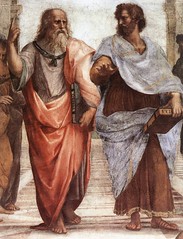
7295572454The School of AthensRaphael - Italian Renaissance fresco wall painting of Greek philosophers drawn to scale in accordance with the vantage point of the viewer. The placement, in the center of the archway, of Plato and Aristotle emphasizes the importance of these two central figures. Raphael shows his style of basic one-point perspective converging in a single vanishing point just behind Plato and Aristotle. The exception is the cube in the foreground which gives a two-point perspective. It easy to see, that with the removal of the figures, the building is symmetrically balanced.30
7295572455scholasticism and neoplatonismattempt to reconcile the beliefs and values of Christianity with the logical reasoning of Greek philosophy.31
7295572456secularismAn indifference to religion and a belief that religion should be excluded from civic affairs and public education32
7295572457Treaty of Lodia treaty between Milan, Naples, and Florence against Venice and the Papal States. It fell apart when Milan and Naples began to feud33
7295572458TudorsThe House of Lancaster and the House of York feuded over the throne for more than twenty years, until finally a compromis was reached when a new royal house-------emerged in 1485 by intermarriage between two warring families. Henry VII, the first of this dynasty. This dynasty would dominate England throughout the 16th century34
7295572459Van Eyck, JanAn important painter of the Northern Renaissance. He is credited with the first use of the oil glazing technique of painting. He is also known for the great detail in his work. His most famous work was the Arnolfini Wedding.35
7295572460VernacularEveryday language of ordinary people.36
7295572461Vinci, Leonardo da"Renaissance Man"- great artist, engineer, scientist, and inventor. He created the Mona Lisa.37
7295572462War of the Roses1455-1485; A war between the York family and Lancaster family of England for the crown. This struggle was ended when Henry Tudor, who was on the Lancaster side, won. He became Henry VII, the first Tudor king.38
7295572463Lorenzo VallaProved the Donation of Constantine to be a fake by using his expert Latin knowledge.39
7295572464Civic HumanismRenaissance movement/idea that emphasized that the duty of an intellectual was to live an active life for one's state.40
7295572465Neoplatonismstarted my Marsilio Ficino, an attempt to synthesize Christianity and Plato's philosophy41
7295572466Pico della Mirandolowrote of man's unlimited potential42
7295572467Pietro Vergerioadvocated the liberal studies in school43
7295572468Liberal Studiesan education that emphasized classics, philosopy, physical fitness and a well-rounded character.44
7295572469SavonarolaFrancsican friar45
7295572470BotticelliHe painted this46
7295572471Dante(1265-1321) Italian poet and Renaissance writer. His greatest work is The Divine Comedy.47
7295572472Bocciohe wrote the 'decameron' it served as a model for many books to follow48
7295572473Giottoartist at the end of the middle ages who created perspective49
7295572474Leon Battista Alberti1402-1472 accomplished humanist scholar, noted Florentine architect and builder50
7295572475Hanseatic League of MerchantsSuccessful trade group51
7295572476Three Estatesthe nobles (first estate), the clergy (second estate), and the commoners (third estate)52
7295572477CondottiereProfessional soldiers who commanded mercenaries; employed by the Italian city-states in the early Renaissance.53
7295572478Republic of VeniceEmbarked to protect food supply, scared Milan and Florence, who worked to stop the growth of Venice54
7295572479Duchy of MilanFrancesco Sforza conquered Milan55
7295572480Republic of FlorenceRuled by Cosimo de' Medici56
7295572481Kingdom of NaplesFought over by French and Aragonese57
7295572482Federigo da MontefeltroHumanist leader of Urbino58
7295572483Isabella d'EsteImportant political figure in Mantua, started a library59
7295572484Christine de PizanWrote "The City of Ladies"60
7295572485Sack of RomeSpanish took Rome61
7295572486Cesare BorgiaInspiration for Machiavelli's ideal leader62
7295572487CiceroPhilosopher who worked to stop the chaos in Rome's government; icon in humanism63
7295572488Vittorino da FeltreItalian humanist and teacher64
7295572489Francesco GuicciardiniHe was a political writer of the Renaissance, who wrote "The History of Italy"65
7295572490MasaccioArtist who painted "The Holy Trinity"66
7295572491The High Renaissance(1494-1520) - Art was blossoming67
7295572492King Louis XIFrench new monarch "the spider" who amassed power in devious ways (used taxing/taille)68
7295572493DonatelloA Florentine sculptor who was one of the first to use a realistic, lifelike style - created bronze David69
7295572494Henry VIIWas the English king who declared himself head of the Church of England70
7295572495Habsburgsimportant European royal house; 1438-1470 Holy Roman Empire thrown was occupied by them71
7295572496Ottoman TurksGroup that conquers Constantinople in 1453. Practices the Islamic religion.72

AP Psychology AP Review Flashcards

AP Test Review

Terms : Hide Images
9840719133psychologythe study of behavior and mental processes0
9840719134psychology's biggest questionWhich is more important in determining behavior, nature or nurture?1
9840719135psychology's three levels of analysisbiopsychosocial approach (looks at the biological, psychological, and social-cultural approaches together)2
9840719136biological approachgenetics, close-relatives, body functions3
9840719137evolutionary approachspecies - helped with survival (ancestors)4
9840719138psychodynamic approach(Freud) subconscious, repressed feelings, unfulfilled wishes5
9840719139behavioral approachlearning (classical and operant) observed6
9840719140cognitive approachthinking affects behavior7
9840719141humanistic approachbecoming a better human (behavior, acceptance)8
9840719142social-cultural approachcultural, family, environment9
9840719143two reasons of why experiments are importanthindsight bias + overconfidence10
9840719144types of research methodsdescriptive, correlational, and experimental11
9840719145descriptive methodscase study survey naturalistic observation (DON'T SHOW CAUSE/EFFECT)12
9840719146case studystudies one person in depth may not be typical of population13
9840719147surveystudies lots of people not in depth14
9840719148naturalistic observationobserve + write facts without interference15
9840719149correlational methodshows relation, but not cause/effect scatterplots show research16
9840719150correlation coefficient+ 1.0 (both increase) 0 (no correlation - 1.0 (one increases, other decreases)17
9840719151experimental methoddoes show cause and effect18
9840719152populationtype of people who are going to be used in experiment19
9840719153sampleactual people who will be used (randomness reduces bias)20
9840719154random assignmentchance selection between experimental and control groups21
9840719155control groupnot receiving experimental treatment receives placebo22
9840719156experimental groupreceiving treatment/drug23
9840719157independent variabledrug/procedure/treatment24
9840719158dependent variableoutcome of using the drug/treatment25
9840719159confounding variablecan affect dependent variable beyond experiment's control26
9840719160scientific methodtheory hypothesis operational definition revision27
9840719161theorygeneral idea being tested28
9840719162hypothesismeasurable/specific29
9840719163operational definitionprocedures that explain components30
9840719164modeappears the most31
9840719165meanaverage32
9840719166medianmiddle33
9840719167rangehighest - lowest34
9840719168standard deviationhow scores vary around the mean35
9840719169central tendencysingle score that represents the whole36
9840719170bell curve(natural curve)37
9840719171ethics of testing on animalsneed to be treated humanly basically similar to humans38
9840719172ethics of testing on humansconsent debriefing no unnecessary discomfort/pain confidentiality39
9840719173sensory neuronstravel from sensory receptors to brain40
9840719174motor neuronstravel from brain to "motor" workings41
9840719175interneurons(in brain and spinal cord) connecting motor and sensory neurons42
9840719367neuron43
9840719176dendritesreceive messages from other neurons44
9840719177myelin sheathprotects the axon45
9840719178axonwhere charges travel from cell body to axon terminal46
9840719179neurotransmitterschemical messengers47
9840719180reuptakeextra neurotransmitters are taken back48
9840719181excitatory charge"Let's do it!"49
9840719182inhibitory charge"Let's not do it!"50
9840719183central nervous systembrain and spinal cord51
9840719184peripheral nervous systemsomatic nervous system autonomic nervous system52
9840719185somatic nervous systemvoluntary movements53
9840719186autonomic nervous systeminvoluntary movements (sympathetic and parasympathetic nervous systems)54
9840719187sympathetic nervous systemarousal55
9840719188parasympathetic nervous systemcalming effect56
9840719189neural networksmore connections form with greater use others deteriorate if not used57
9840719190spinal cordexpressway of information bypasses brain when reflexes involved58
9840719191endocrine systemslow uses hormones in the blood system59
9840719192master glandpituitary gland60
9840719193brainstemextension of the spinal cord responsible for automatic survival61
9840719194reticular formation (if stimulated)sleeping subject wakes up62
9840719195reticular formation (if damaged)coma63
9840719196brainstem (if severed)still move (without purpose)64
9840719197thalamussensory switchboard (does not process smell)65
9840719198hypothalamusbasic behaviors (hunger, thirst, sex, blood chemistry)66
9840719199cerebellumnonverbal memory, judge time, balance emotions, coordinate movements67
9840719200cerebellum (if damaged)difficulty walking and coordinating68
9840719201amygdalaaggression, fear, and memory associated with these emotions69
9840719202amygdala (if lesioned)subject is mellow70
9840719203amygdala (if stimulated)Causes aggression71
9840719204hippocampusprocess new memory72
9840719205cerebrumtwo large hemispheres perceiving, thinking, and processing73
9840719206cerebral cortexonly in higher life forms74
9840719207association areasintegrate and interpret information75
9840719208glial cellsprovide nutrients to myelin sheath marks intelligence higher proportion of glial cells to neurons76
9840719209frontal lobejudgement, personality, processing77
9840719210parietal lobemath and spatial reasoning78
9840719211temporal lobeaudition and recognizing faces79
9840719212occipital lobevision80
9840719213corpus callosumsplit in the brain to stop hyper-communication (eliminate epileptic seizures)81
9840719214Wernicke's areainterprets auditory and hearing82
9840719215Broca's areaControls speech83
9840719216plasticityability to adapt if damaged84
9840719217sensationwhat our senses tell us85
9840719218bottom-up processingAnalysis that begins with basic senses and then works up to brain's interpretation86
9840719219perceptionwhat our brain tells us to do with that information87
9840719220top-down processingWhere we process info with higher thinking. We construct perceptions based on experience and expectations88
9840719221inattentional blindnessFailing to see visible objects when our attention is directed elsewhere89
9840719222cocktail party effecteven with tons of stimuli, we are able to pick out our name, etc.90
9840719223change blindnessgiving directions and person is changed and we don't notice91
9840719224choice blindnesswhen defending the choice we make, we fail to notice choice was changed92
9840719225absolute thresholdminimum stimulation needed in order to notice 50% of the time93
9840719226signal detection theorywe notice what is more important to us (rather hear a baby crying)94
9840719227JND (just noticeable difference)(Weber's law) difference between different stimuli noticed in proportion95
9840719228sensory adaptationtired of noticing (Brain says, "Been there, done that. Next?"96
9840719229rodsseeing at night97
9840719230conescolor98
9840719231parallel processingnotice color, form, depth, movement, etc.99
9840719232Young-Helmholtz trichromatic theory3 corresponding color receptors (RGB)100
9840719233Ewald Hering's opponent-process theoryafter image in opposite colors (RG, YB, WB)101
9840719234trichromatic + opponent-processYoung-Helmholtz -> color stimuli Hering -> en route to cortex102
9840719235frequency we hear mosthuman voice103
9840719236Helmoltz (hearing)we hear different pitches in different places in basilar membrane (high pitches)104
9840719237frequency theoryimpulse frequency (low pitches)105
9840719238Helmholtz + frequency theorymiddle pitches106
9840719239Skin feels what?warmth, cold, pressure, pain107
9840719240gate-control theorysmall fibers - pain large fibers - other senses108
9840719241memory of painpeaks and ends109
9840719242smellclose to memory section (not in thalamus)110
9840719243groupingGestalt make sense of pieces create a whole111
9840719244grouping groupsproximity similarity continuity connectedness closure112
9840719245make assumptions of placementhigher - farther smaller - farther blocking - closer, in front113
9840719246perception =mood + motivation114
9840719247consciousnessawareness of ourselves and the environment115
9840719248circadian rhythmdaily biological clock and regular cycle (sleep and awake)116
9840719249circadian rhythm pattern- activated by light - light sensitive retinal proteins signal brains SCN (suprachiasmatic nucleus) - pineal gland decreases melatonin117
9840719250What messes with circadian rhythm?artificial light118
9840719251The whole sleep cycle lasts how long?90 minutes119
9840719252sleep stagesrelaxed stage (alpha waves) stage 1 (early sleep) (hallucinations) stage 2 (sleep spindles - bursts of activity) (sleep talk) stage 3 (transition phase) (delta waves) stage 4 (delta waves) (sleepwalk/talk + wet the bed) stage 5 (REM) (sensory-rich dreams) (paradoxical sleep)120
9840719253purpose of sleep1. recuperation - repair neurons and allow unused neural connections to wither 2. making memories 3. body growth (children sleep more)121
9840719254insomniacan't sleep122
9840719255narcolepsyfall asleep anywhere at anytime123
9840719256sleep apneastop breathing in sleep124
9840719257night terrorsprevalent in children125
9840719258sleepwalking/sleeptalkinghereditary - prevalent in children126
9840719259dreaming (3)1. vivid bizarre intense sensory experiences 2. carry fear/survival issues - vestiges of ancestors' survival ideas 2. replay previous day's experiences/worries127
9840719260purpose of dreaming (5 THEORIES)1. physiological function - develop/preserve neural pathways 2. Freud's wish-fulfillment (manifest/latent content) 3. activation synthesis - make sense of stimulation originating in brain 4. information processing 5. cognitive development - reflective of intelligence128
98407192611. Can hypnosis bring you back in time? 2. Can hypnosis make you do things you wouldn't normally do? 3. Can it alleviate pain? 4. What state are you in during hypnosis? 5. Who is more susceptible?1. cannot take you back in time 2. cannot make you do things you won't do 3. can alleviate pain 4. fully conscious ((IMAGINATIVE PEOPLE MORE SUSCEPTIBLE))129
9840719262depressantsslow neural pathways130
9840719263alcohol((depressant)) disrupts memory formation (REM) lowers inhibition expectancy effect131
9840719264barbituates (tranquilizers)((depressant)) reduce anxiety132
9840719265opiates((depressant)) pleasure reduce anxiety/pain133
9840719266stimulantshypes neural processing134
9840719267methamphetamine((stimulant)) heightens energy euphoria affects dopamine135
9840719268caffeine((stimulant))136
9840719269nicotine (Juul)((stimulant)) CNS releases neurotransmitters calm anxiety reduce pain affects (nor)epinephrine and dopamine137
9840719270cocaine((stimulant)) euphoria affects dopamine, serotonin, and norepinephrine138
9840719271hallucinogenexcites neural activity139
9840719272ecstasy((hallucinogen)) reuptake is blocked affects dopamine and serotonin and frequently used at Coachella140
9840719273LSD((hallucinogen)) affects sensory/emotional "trip" (+/-) affects serotonin and is a song by A$AP Rocky141
9840719274Marijuana (Dank)((hallucinogen)) amplify sensory experience disrupts memory formation142
9840719275learningorganism changing behavior due to experience (association of events)143
9840719276types of learningclassical operant observational144
9840719277famous classical psychologistsIvan Pavlov and John Watson145
9840719278famous operant psychologistB.F. Skinner146
9840719279famous observational psychologistAlbert Bandura147
9840719280classical conditioningoutside stimulus148
9840719281Ivan Pavlov's experimentStep 1: US (food) -> UR (salivation) Step 2: NS (bell) -> US (food) -> UR (salivation) Later... CS (bell) -> CR (salivation)149
9840719282John Watson's experimentwhite rat was given to Little Albert Step 1: US (noise) -> UR (cry) Step 2: NS (rat) -> US (noise) -> UR (cry) Later... CS (rat) -> CR (cry)150
9840719283generalizationany small, white fluffy creature will make Albert cry now151
9840719284discriminateany large, white fluffy creature won't make Albert cry152
9840719285extinctionstop "treating" with conditioned response153
9840719286spontaneous recoverybring stimulus back after a while154
9840719287operant conditioningcontrol by organism155
9840719288B.F. Skinner's experimentoperant chamber / Skinner box (lead to shaping)156
9840719289shapingget animal closer to doing what you want them to do157
9840719290reinforcerswant to continue behavior (positive reinforcement: give money to do laundry) (negative reinforcement: do to avoid nagging)158
9840719291punishmentswant to stop behavior (positive reinforcement: smack) (negative reinforcement: take away phone)159
9840719292fixed ratiohappens a specific number of times160
9840719293variable ratiohappens an unpredictable number of times161
9840719294organism must do these (2 times)fixed ratio and variable ratio162
9840719295fixed intervalhappens at a certain time (mailman comes to the house at 10:00 AM)163
9840719296variable intervalhappens at any time164
9840719297these things happen regardless (2 times)fixed interval and variable interval165
9840719298Which (fixed/variable) conditions better?variable166
9840719299criticisms of B.F. SkinnerHe doesn't take into account intrinsic motivation167
9840719300intrinsic motivationdoing something for yourself, not the reward168
9840719301extrinsic motivationdoing something for reward169
9840719302B.F. Skinner's legacyuse it personally, at school, and at work170
9840719303famous observational experimentAlbert Bandura's Bobo doll171
9840719304famous observational psychologistAlbert Bandura172
9840719305mirror neurons"feel" what is observed happens in higher order animals173
9840719306Bobo doll experiment legacyviolent video games/movies desensitize us see good: do good see evil: do evil174
9840719307observational learningbiological behaviors work best175
9840719308habituationget used to it -> stop reacting176
9840719309examples of observational learninglectures and reading177
9840719310serotonin involved with memoryspeeds the connection between neurons178
9840719311LTP((long-term potentiation)) strengthens potential neural forming (associated with speed)179
9840719312CREBprotein that can switch genes on/off with memory and connection of memories180
9840719313glutamateneurotransmitter that enhances LTP181
9840719314glucose involved with memoryreleased during strong emotions ((signaling important event to be remembered))182
9840719315flashbulb memorytype of memory remembered because it was an important/quick moment183
9840719316amygdala (memory)boosts activity of proteins in memory-forming areas to fight/flight184
9840719317cerebellum (memory)forms and stores implicit memories ((classical conditioning))185
9840719318hippocampusactive during sleep (forming memories)186
9840719319memorylearning over time contains information that can be retrieved187
9840719320processing stagesencoding -> storage -> retrieval188
9840719321encodinginformation going in189
9840719322storagekeeping information in190
9840719323retrievaltaking information out191
9840719324How long is sensory memory stored?seconds192
9840719325How long is short-term memory stored?less than a minute193
9840719326How many bits of information is stored in short-term memory?7194
9840719327How many chunks of information is stored in short-term memory?4195
9840719328How many seconds of words is stored in short-term memory?2196
9840719329short term memory goes to ______________working memory197
9840719330working memorymake a connection and process information to mean something198
9840719331working memory goes to _________________long-term memory199
9840719332How much is stored in long-term memory?LIMITLESS200
9840719333implicit memorywhat you do naturally201
9840719334explicit memoryWhen the subject is intentionally trying to remember something and is consciously aware of doing so.202
9840719335automatic processingspace, time, frequency, well-learned information203
9840719336effortful processingprocessing that requires effort204
9840719337spacing effectspread out learning over time205
9840719338serial position effectprimary/recency effect206
9840719339primary effectremember the first things in a list207
9840719340recency effectremember the last things in a list208
9840719341effortful processing (4 things)1. recency effect 2. spacing effect 3. testing effect 4. serial position effect209
9840719342semantic encoding (1) meaning (2) how tomake meaning out of something --- chunk, hierarchy, or connect to you210
9840719343if we can't remember a memory we:1. change memory to suit us 2. fill in the blanks with logical story211
9840719344misinformation effectincorporating misleading information into one's memory of an event.212
9840719345imagination inflationimagine or visualize something that isn't real213
9840719346source amnesiawhat is the truth? (is it a dream, story, memory, etc.?)214
9840719347primingA person is exposed to info and is later tested to see whether the info affects behavior.215
9840719348contextenvironment helps with memory216
9840719349state-dependencyyou may remember something if you go back to the state you were in (go back to high)217
9840719350mood-congruencyemotion will bring back similar emotional memories218
9840719351forgetting curveforget after 5 days forget after 5 years219
9840719352the forgetting curve was created byHermann Ebbinghaus220
9840719353proactive interferenceold information interferes with the new221
9840719354retroactive interferencenew information interferes with the old222
9840719355children can't remember before age __3223
9840719356Elizabeth Loftusconnected to abuse cases/childhood224
9840719357prototypesgeneralize225
9840719358problem-solving (4)trial + error algorithms heuristic (representative + availability) insight - "AHA!"226
9840719359against problem-solvingfixation227
9840719360mental setwhat has worked in the past228
9840719361functional fixednessAn object only serves a single purpose229
9840719362Noam ChomskyBelieved humans have an inborn native ability to develop language230
9840719363B.F. SkinnerBelieved language is learned231
9840719364grammar is _________universal232
9840719365phonemessmallest sound unit233
9840719366morphemessmallest meaning unit234

AP Government Chapter 9 Flashcards

Terms : Hide Images
6734335013Presidential Election Campaign FundMoney from the $3 federal income tax check-off goes into this fund, which is then distributed to qualified candidates to subsidize their presidential campaigns.0
6734335015Political Action CommitteesFunding vehicles created by the 1974 campaign finance reforms. A corporation, union, or some other interest group can create these.1
6734335017Super PACswere made possible by the Supreme Court's Citizens United decision in 2010, which allowed unlimited spending by corporations, unions and individuals through these organizations, as long as the groups do not coordinate their spending with the candidates. Mn.2
6734335018General Electiona national or state election3
6734335019McCain-Feingold Actban soft money contributions, increase amount that individuals could give candidates from $1000 to $2000, prevented issue ads within 60 days of general elections4
6734335020NominationThe official endorsement of a candidate for office by a political party5
6734335021Campaign StrategyThe master game plan candidates lay out to guide their electoral campaign6
6734335022National Party ConventionMeets every four years to nominate candidates and write party platform7
6734335023CaucusA meeting of all state party leaders for selecting delegates to the national party convention8
6734335024Presidential PrimariesElections in which voters in a state vote for a candidate (or delegates pledged to him or her)9
6734335025McGovern-Fraser CommissionFormed at the 1968 Democratic convention in response to demands for reform by minority groups and others who sought better representation10
6734335026SuperdelegatesNational party leaders who automatically get a delegate slot at the national convention11
6734335027FrontloadingThe recent tendency for states to hold primaries early in the calendar in order to capitalize on media attention12
6734335028National PrimaryA proposal by critics of the caucuses and presidential primaries who would replace these electoral methods with a nationwide primary held early in the election year13
6734335029Regional PrimariesProposal to replace caucuses and primaries with a series of primaries held in each geographic area14
6734335030Party PlatformA political party's statement of its goals and policies for the next four years15
6734335031Direct MailA high-tech method of raising money for a political cause or candidate16
6734335032Federal Election Campaign ActCreated the Federal Election Commission17
6734335033Federal Election CommissionAdministers the campaign finance laws and enforces compliance with their requirements18
6734335036Selective PerceptionThe phenomenon that people often pay the most attention to things they already agree with and interpret them according to their own predispositions19
7957754722Hard Moneycontributions that are given directly to candidates for their campaigns for Congress or the White House, are in a limited amount, and must be reported20
7957754723Soft Moneyfunds given to parties or to other political organizations, in unlimited amounts, to be used for such "party-building activities"21

AP French Persuasive Essay Flashcards

vocab for the essay

Terms : Hide Images
9540275506À mon avisin my opinion0
9540275507Il paraît queit seems that1
9540275508je crois que/je trouve quei think (not subjunctive)2
9540275509je suis convaincu(e) quei am convinced that3
9540275510Par contreon the other hand4
9540275511je suis d'accordi agree5
9540275512il/elle a raisonhe or she is right6
9540275513l'auteur a tortthe author is wrong7
9540275514contrasterto contrast8
9540275515déduireto deduce9
9540275516expliquerto explain10
9540275517extrapolerextrapolate11
9540275518formulerto express an opinion12
9540275519justifierto justify13
9540275520montrerto show14
9540275521résumerto summarize15
9540275522soutenirsupport16
9540275523à titre d'exempleto quote an example17
9540275524c'est une question deit is a question of18
9540275525En ce cas-làin that case19
9540275526en conséquenceas a result20
9540275527le fait est quethe fact is that21
9540275528au contrairequite the opposite22
9540275529cela ditthat said23
9540275530cela a l'air d'êtrethat appears to be24
9540275531d'une part, d'autre parton one hand, on the other hand25
9540275532en réalitéin reality26
9540275533je ne trouve pas quei dont think that27
9540275534cependanthowever28
9540275535par contreon the other hand29
9540275536bien quealthough30
9540275537tandis quewhile31
9540275538toutefoisnevertheless32
9540275539donctherefore33
9540275540en résuméin summary34
9540275549En somme,All in all,35
9540275550En gros,Basically,36
9540275541Pour conclure,To conclude,37
9540275542pour toutes ces raisonsfor all these/those reasons38
9540275543à l'exception deexcept for39
9540275544tout d'abordfirst40
9540275545d'ailleursbesides41
9540275546de plusmoreover42
9540275547en faitin fact43
9540275551D'après le texteAccording to the text44
9540275552D'après la source numéro 2,According to Source number 245
9540275553Dans le graphique, on voit...In the graph, we see..46
9540275554Selon le texte, le clip audio, l'auteurAccording to the text, the audio clip, the author47

AP Vocabulary List 19 Flashcards

Terms : Hide Images
6166272071accordantagreeing; conforming; harmonious0
6166275202accoutermentspersonal clothing or accessories1
6166275203deportmentdemeanor; conduct; behavior2
6166275204expositionthe act of explaining or setting forth3
6166276844impugnto challenge as false; cast doubt upon; vilify4
6166276845imputeto attribute or ascribe5
6166278092parapeta defensive wall or elevation, as of earth or stone, in fortification6
6166278093pertinacityholding tenaciously to a purpose; resolute; stubborn; obstinate7
6166278094temperencemoderate or self-restraint in action or statement; self-control8
6166280119viandsarticles of food9

Pages

Subscribe to CourseNotes RSS

Need Help?

We hope your visit has been a productive one. If you're having any problems, or would like to give some feedback, we'd love to hear from you.

For general help, questions, and suggestions, try our dedicated support forums.

If you need to contact the Course-Notes.Org web experience team, please use our contact form.

Need Notes?

While we strive to provide the most comprehensive notes for as many high school textbooks as possible, there are certainly going to be some that we miss. Drop us a note and let us know which textbooks you need. Be sure to include which edition of the textbook you are using! If we see enough demand, we'll do whatever we can to get those notes up on the site for you!