

AP World History Chapter 17 Flashcards
Terms : Hide Images
| 8270882685 | Demographic Changes | - High American death rate - Many diseases brought from Europe: small pox, measles, influenza... - Malaria spread | 0 | |
| 8270893514 | Plants and animals to New World | - wheat, olives, rice, bananas - Cattle, pigs, sheep, pests - Horses were greatest impact | 1 | |
| 8270905634 | Plants and animals to old world | - Maize, potatoes, beans, squash, peanuts, dyes, cotton, tobacco | 2 | |
| 8270916615 | Spanish America State and Church | - Viceroy positions - Heavy state taxes on colonies - Mass conversions of natives - Formations of universities - Church used as banks | 3 | |
| 8270935996 | Batolome de Las Casas | Speaks out against forcing natives into labor | 4 | |
| 8270945060 | Colonial Economics | - Growth of Colonial cities - Silver mines were very profitable - Mercury amalgamation- method for extracting silver - Slavery rises- natives dying | 5 | |
| 8270963029 | Society in Colonial Latin America | - Wealthy creoles- born in European colonies - Ethnic divides - Native elites were able to communicate - Erosion of ethnic boundaries - More free blacks - Slave resistance more common - Mestizos and Mulatos | 6 | |
| 8270979761 | English and French colonies in the south | - Virginia company - Company settled in Jamestown - Indentured servants - John Smith steals food from natives - House of Burgesses | 7 | |
| 8270991977 | New england | - Pilgrims and puritans - escaping from religious execution - Massachusetts bay company - Family immigration - Poor agriculture-fur/timber/fish | 8 | |
| 8271010227 | Middle Atlantic Region | - Dutch west India company - Iroquois confederacy- powerful state alliance - English take over - Growth of Philadelphia | 9 | |
| 8271025222 | French America | - Fur trade - New France at Quebec - Courers de bois - Amerindian alliances - Firearms given to natives lead to animal depletion - Jesuits, missionaries - Population growth was slow | 10 |
AP World History Unit 4 Vocab Terms Flashcards
Klaw students, please use this set to review the Vocab.
Terms : Hide Images
| 6663665205 | Astrolabe | an instrument used by sailors to determine their location by observing the position of the stars and planets, also an early form of the sextant | 0 | |
| 6663665206 | Middle Passage | the forced voyage of enslaved Africans across the Atlantic Ocean to the Americas | 1 | |
| 6663665207 | Caravel | a small, highly maneuverable three-masted ship used by the Portuguese and Spanish in the exploration of the Atlantic. | 2 | |
| 6663665208 | Joint-Stock Company | business entity which is owned by shareholders. | 3 | |
| 6663665209 | Royal Chartered Monopoly Company | joint stock company that obtained a monopoly | 4 | |
| 6663665210 | Manchus | Northeast Asian peoples who defeated the Ming Dynasty and founded the Qing Dynasty in 1644, which was the last of China's imperial dynasties. | 5 | |
| 6663665211 | Mercantilism | an economic system (Europe in 18th C) to increase a nation's wealth by government regulation of all of the nation's commercial interests | 6 | |
| 6663665212 | Cash Crops | crops, such as tobacco, sugar, and cotton, raised in large quantities in order to be sold for profit, grown in the New World and sent back to Europe in the Triangle Trade. | 7 | |
| 6663665213 | Vodun | african religious ideas and practices among descendants of African slaves in Haiti. | 8 | |
| 6663665214 | Cult of Saints | in the Americas, it was the adoption of Christianity, but still keeping old old gods to match Christian ones | 9 | |
| 6663665215 | Lady of Guadalupe | a Indian version of Mary seen by an Indian, and is a example of the Cult of Saints | 10 | |
| 6663665216 | Sikhism | the doctrines of a monotheistic religion founded in northern India in the 16th century by Guru Nanak and combining elements of Hinduism and Islam | 11 | |
| 6663665217 | Divine Right | belief that a rulers authority comes directly from god. | 12 | |
| 6663665218 | Devshirme | in the Ottoman Empire, the policy of taking boys from conquered Christian peoples to be trained as Muslim soldiers | 13 | |
| 6663665219 | Peninsulares | Spanish-born, came to Latin America, ruled, and was the highest social class | 14 | |
| 6663665220 | Jesuits | members of the Society of Jesus, a Roman Catholic order founded by Ignatius Loyola in 1534. They played an important part in the Catholic Reformation and helped create conduits of trade and knowledge between Asia and Europe. | 15 | |
| 6663665221 | Kaozheng Movement | the Chinese equivalent of the Scientific Revolution | 16 | |
| 6663665222 | Shogun | the supreme military commander of Japan | 17 | |
| 6663665223 | Chattel Slavery | ownership of human beings; a system of bondage in which a slave has the legal status of property and so can be bought as sold like property | 18 | |
| 6663665224 | Indentured Servitude | person who agreed to work for a colonial employer for a specified time in exchange for passage to America. | 19 | |
| 6663665225 | Encomienda | a grant of land made by Spain to a settler in the Americas, including the right to use Native Americans as laborers on it | 20 | |
| 6663665226 | Hacienda | the main house on a ranch or large estate, usually a Plantation | 21 | |
| 6663665227 | Spanish Mita | way that colonial powers get goods they want without slaves/forced labor, bully countries into producing what they want them to | 22 | |
| 6663665228 | Daimyo | a japanese feudal lord who commanded a private army of samurai | 23 | |
| 6663665229 | Creoles | descendents of Spanish-born BUT born in Latin America; resented inferior social, political, economic status, second in power behind peninsulares | 24 | |
| 6663665230 | Commercial Entrepreneur | someone who started their own business in order to make a profit by selling goods | 25 | |
| 6663665231 | Zamindars | Hindu nobles, kept a portion of taxes paid by the local peasants, expected to forward the rest of their taxes from the land to the central government | 26 | |
| 6663665232 | Mestizo | a person of mixed Spanish and Native American ancestry | 27 | |
| 6663665233 | Mulatto | the term used in Spanish and Portuguese colonies to describe someone of mixed African and European descent. | 28 | |
| 6663665234 | Republica de Indios | Spanish America separates into two separate groups. Both have their own hereditary ability and have special treatment as a kind of aristocracy. The Indian nobility, however, dies out and Europeans move in and take over. | 29 | |
| 6663665235 | Janissary | member of elite fighting force comprised of christian slaves in the Ottoman Empire | 30 | |
| 6663665236 | Thirty Years War | a series of European wars that were partially a Catholic-Protestant religious conflict. It was primarily a batlte between France and their rivals the Hapsburg's, rulers of the Holy Roman Empire. (1618-1648) | 31 | |
| 6663665237 | Trading Post Empire | built initially by the Portuguese, these were used to control the trade routes by forcing merchant vessels to call at fortified trading sites and pay duties there. 16th Century. | 32 | |
| 6663665238 | Wahhabi Islam | major Islamic movement led by the Muslim theologian Abd al Wahhab (1703-1792) that advocated an austere lifestyle and strict adherence to the sharia or Islamic law, extremists, against new science | 33 | |
| 6663665239 | Yasak | a tribute that Russian rulers demanded from the native peoples of Siberia, most often in the form of fur | 34 |
Flashcards
Foundations - AP World History Flashcards
Terms : Hide Images
| 4851809759 | Paleolithic Age time period | About 12,000 BC | 0 | |
| 4851809760 | People during Paleolithic | Nomadic | 1 | |
| 4851809761 | Neolithic Age time period | About (8,000-) 15,000 BC to 600 BC | 2 | |
| 4851809762 | People during Neolithic | Begin to settle in communities, civilization begins to emerge | 3 | |
| 4851809763 | River Valley Civilizations time period | About 3,500 to 1,500 BC | 4 | |
| 4851809764 | Classical Civiliztions | About 1,000 BC to 600 CE (600 BC to 600 CE = acceptable) | 5 | |
| 4851809765 | River Valley Civ. characteristics | - complex irrigation systems - legal codes - money - art/written literature - social inequality | 6 | |
| 4851809766 | Mesopotamia - developed when | By 3,500 BCE | 7 | |
| 4851809767 | Mesopotamia - culture | - cuneiform - trade w/ Egypt/Indus river valley - advanced astronomy - polytheism - Kings = powerful, not divine | 8 | |
| 4851809768 | Mesopotamia - political organization | - city-states/warrior kings - Hammurabi's Code - Competition/frequent invasion = less politically stable than Egypt | 9 | |
| 4851809769 | Mesopotamia - social structure | - job specification - social classes - women = veils, upper class women less equal than lower | 10 | |
| 4851809770 | Egypt - developed when | By 3,000 BCE | 11 | |
| 4851809771 | Egypt - culture | - decorative arts/shipbuilding - some medical knowledge - less trade, less adv. in math/sci. than Mesopotamians - polytheism, pharaoh = god, afterlife - hieroglyphics | 12 | |
| 4851809772 | Egypt - political organization | - divine kingship, authoritarian gov. - generally stable gov. - bureaucracy, pharaoh's channel power through regional gov. | 13 | |
| 4851809773 | Egypt - social structure | - some social mobility through bureaucracy - priests = high status - women = higher status than Mesopotamia, importance on male/female relationships | 14 | |
| 4851809774 | Indus Valley - developed when | By 2,500 BCE | 15 | |
| 4851809775 | Indus Valley - culture | - writing system - trade w/ China/Mesopotamia - cruder weapons than Mesopotamia - pottery - polytheism - cities: Harappa/Mohenjo-Dara | 16 | |
| 4851809776 | Indus Valley - Political organization | - complex/centralized - large granaries suggest centralized control | 17 | |
| 4851809777 | Indus Valley - social structure | - priests = high status - strong class distinction - reverence of female fertility | 18 | |
| 4851809778 | Shang China - developed when | By 1,700 BCE | 19 | |
| 4851809779 | Shang China - culture | - oracle bones - complex pictorial language, highly valued, uniform, brings unity - bronze weapons/tools - geographical separation | 20 | |
| 4851809780 | Shang China - political organization | - centralized gov., emperor has power - job specializations | 21 | |
| 4851809781 | Shang China - social structure | - classes: warrior aristocrats, bureaucrats, farmers, slaves - women = wives/concubines/sometimes shamans | 22 | |
| 4851809782 | Meso and S America - developed when | By 1,200 BCE | 23 | |
| 4851809783 | M/S America - culture | - mesoamerica = Olmecs - highly dev. Astronomy - polytheism = important, shamans = healers - irrigation/drainage canals - stonework - well dev. Agriculture - unique geography = coast/mts./jungle | 24 | |
| 4851809784 | M/S America - political structure | Olmecs = not united politically | 25 | |
| 4851809785 | M/S America - social structure | - craft specialization - priests = high status - most people = farmers | 26 | |
| 4851809786 | Agricultural societies | Cultivate crops 8,000 BCE | 27 | |
| 4851809787 | Agricultural societies - tech development | Domestication of plants/animals, iron working, writing systems | 28 | |
| 4851809788 | Agricultural societies - main geographic locations | River valleys (Mesopotamia), Nile River valley, India, China, mesoamerica, Andes | 29 | |
| 4851809789 | Pastoral societies | Domestically animals 8,000 BCE | 30 | |
| 4851809790 | Pastoral societies - tech development | Domestication of horses/camels | 31 | |
| 4851809791 | Pastoral - main geographic locations | Steppes, grasslands, deserts, mountain ranges | 32 | |
| 4851809792 | Foraging societies | Hunting/gathering 35,000 BCE | 33 | |
| 4851809793 | Foraging societies - tech development | Baskets, hunting tools | 34 | |
| 4851809794 | Foraging - main geographic location | Everywhere until sedentary agricultural societies/empires take over fertile areas | 35 | |
| 4851809795 | Common features of Classical Civilizations | - patriarchy - agricultural based economy - complex gov. - expanding trade base | 36 | |
| 4851809796 | Greece - developed when | About 800-300 BCE | 37 | |
| 4851809797 | Greece - culture | - influence from Athens - valued education - political theory - celebration of individual - philosophy/science, logic - highly dev. in the arts/record keeping/ lang. - polytheism | 38 | |
| 4851809798 | Greece - political organization | - no centralized gov. - governing styles vary - tyrants > assembly - strong militia | 39 | |
| 4851809799 | Greece - social structure | -slavery - women = relative freedom, better treated, more equal (Sparta) - status depends on land holdings/sophistication | 40 | |
| 4851809800 | Rome - developed when | About 500 BCE - 476 CE (although eastern half continues for another thousand years) | 41 | |
| 4851809801 | Rome - culture | - perfection in military techniques - conquers, but doesn't oppress - organization/reward - art/lit./philosophy/science derivative from Greece - engineering/architecture (aqueduct/arches) - polytheism - Christianity dev. During empire period | 42 | |
| 4851809802 | Rome - political organization | - two eras = republic (rule by aristocracy, senate = most powerful, 2 consuls to rule) and empire (non-heredity emperor, extensive colonization/military conquest - rule of law not whim of political leader | 43 | |
| 4851809803 | Rome - social structure | - patricians vs. plebeians w/ middle class of merchants - wealth based on land ownership - patriarchy | 44 | |
| 4851809804 | China - develops when | About 500 BCE - 600 CE | 45 | |
| 4851809805 | China - culture | -Confucianism (dev. During late Zhou) - legalism/Taoism dev. - Buddhism appears, not yet influential - Great Wall - Han = "golden age" (trade: Silk Road, inventions: water mills/paper/compasses) - capital of Xi'an = most sophisticated, many large cities | 46 | |
| 4851809806 | China - political organization | - Zhou: Mandate of Heaven, dynastic cycle - political authority controlled by Confucian values, emperor in full control - Shi Huangdi: centralized political power, "1st real emperor" - Han: strong centralized gov. | 47 | |
| 4851809807 | China - social structure | - Family = basic unit of society, loyalty/obedience stressed - wealth based on land - social divide between rural and urban - patriarchy | 48 | |
| 4851809808 | India - culture | - Aryan religious stories = Vedas - Hinduism = dominate - Buddhism begins - great epic lit. - extensive trade | 49 | |
| 4851809809 | India - political structure | - lack of political unity - caste system - no need for strong gov. | 50 | |
| 4851809810 | India - social structure | - castes - decline in status of women during Gupta | 51 | |
| 4851809811 | The Silk Road | Overland trade route extended from W. China, across C. Asia, and the Mediterranean area. (Silk/horses) | 52 | |
| 4851809812 | The Indian Ocean Trade | Important set of water routes actively in place in the classical era. (African + Mid E. w/ India; India w/ SE Asia; SE Asia to Chinese port of Canton) | 53 | |
| 4851809813 | Saharan Trade | Connected people that lived with of the Sahara to the Mediterranean and Mid. E. Carry goods in camel caravans | 54 | |
| 4851809814 | Sub-Saharan Trade | Connected people S of the Sahara to the east and west of Africa, connected to Indian Ocean trade. | 55 |
Study Guide #14 AP World History Flashcards
Terms : Hide Images
| 5576966331 | What motivated European involvement in the world of Asian commerce? (Hint: 4 points) | - the desire for tropical spices (cinnamon, nutmeg, mace, cloves, and, above all, pepper) And other products such as Chinese silk, Indian cottons, rhubarb for medicinal purposes, emeralds, rubies, and sapphires were also in great demand. - The general recovery of European civilization following the disaster of the Black Death - a resentment of the Muslim monopoly on the flow of Indian Ocean products to Europe, and the dislike that many European powers had for Venice's role as intermediary in the trade. - They hoped to discover and ally with the mythical Christian kingdom of Prester John to continue the Crusades and combat a common Islamic enemy. | 0 | |
| 5576978298 | To what extent did the Portuguese realize their own goals in the Indian Ocean? (What did they create? Did they get to their goal? What was the outcome?) | Their original goal of creating a trading post empire that controlled the commerce of the Indian Ocean was at best only partially realized. They never succeeded in controlling much more than half the spice trade to Europe, and by 1600, their trading post empire was in steep decline. | 1 | |
| 5577000185 | The Portuguese gradually blended into the local populations of their strongholds in the Indian Ocean Basin. What was one main difference between the Spanish colonization of the Philippines and the Portuguese? | the Spanish converted Filipinos to Christianity while the Portuguese often blended into the local populations | 2 | |
| 5577003762 | To what extent did the British and Dutch trading companies change the societies they encountered in Asia? - Dutch The Dutch acted to control- On the Banda Islands- Ultimately- | - not only the shipping but also the production of cloves, cinnamon, nutmeg, and mace. - famous for their nutmeg, the Dutch killed, enslaved, or left to starve virtually the entire population of some 15,000 people and then replaced them with Dutch planters, using a slave labor force to produce the nutmeg crop. | 3 | |
| 5577011683 | To what extent did the British and Dutch trading companies change the societies they encountered in Asia? - British They established- British traders focused on- | - three major trading settlements during the seventeenth century: Bombay (now Mumbai), on India's west coast, and Calcutta and Mandras on the east coast. -Indian cotton textiles, which were becoming widely popular in England and it's American colonies. | 4 | |
| 5577021576 | What was Japan's response to the Europeans whom they saw as a threat? | They expelled Christian missionaries and violently suppressed the practice of Christianity. Shogunate authorities also forbade Japanese from traveling abroad and banned most European traders altogether, permitting only the Dutch, who appeared less interested in spreading Christianity, to trade at a single site. For two centuries, Japanese authorities closed the country off from Europe, maintaining trading ties with China and Korea. | 5 | |
| 5577024166 | Why was the silver trade so historically important? | Even more than the spice trade of Eurasia, it was the silver trade that gave birth to a genuinely global network of exchange, being one of the first major commodities to be exchanged on a genuinely global scale. This trade was the first direct and sustained link between the Americas and Asia, and it initiated a web of Pacific commerce that grew steadily over the centuries. Foreigners with silver could now purchase far more of China's silks and porcelains than before. | 6 | |
| 5577028369 | What impact did the discovery of the world's largest silver mine at Potosi have on the Native American miners? | The city's Native American miners worked in conditions so horrendous that some families held funeral services for men drafted to work the mines. | 7 | |
| 5577033470 | How did the discovery of the vast silver mines in South America affect Spain's position in Europe? | The precious metal vastly enriched the Crown, making Spain the envy of its European rivals during the sixteenth century. Spanish rulers could now pursue military and political ambitions in both Europe and the Americas far beyond the country's own resource base. Nonetheless, this vast infusion of wealth did not fundamentally transform the Spanish economy because it generated more inflation of prices than real economic growth. When the value of silver dropped, Spain lost its earlier position as the dominant Western European power. | 8 | |
| 5577043059 | In what ways did the Chinese response to the global silver economy differ from the Japanese response? Japan (4 points) | - Its military rulers, the Tokugawa shoguns, used silver-generated profits to defeat hundred of rival feudal lords and unify the country. - The shoguns allied with the country's vigorous merchant class to develop a market-based economy and to invest heavily in agricultural and industrial enterprises. - Japanese state created conservation program to combat their dwindling forests. - Millions of families took steps to have fewer children by practicing late marriages, contraception, abortion, and infanticide, resulting in a dramatic slowing of population growth. | 9 | |
| 5577045506 | In what ways did the Chinese response to the global silver economy differ from the Japanese response? China (4 points) | - To obtain the silver needed to pay their taxes, more and more people had to sell something- either their labor or their products. - Communities that devoted themselves to growing mulberry trees, on which silkworms fed, had to buy their rice from other regions. Thus, the Chinese economy became more regionally specialized. - (Especially southern) China's surging economic growth growth resulted in the loss of about half the area's forest cover as more and more land was devoted to cash crops. No Japanese-style conservation program emerged to address this growing problem. | 10 | |
| 5577048352 | What may have increased the demand for furs in the early modern era? | By 1500, European population growth and agriculture expansion had sharply diminished the supply of fur-bearing animals (e.g. beaver, rabbits, sable, marten, deer). Much of the early modern era witnessed a period of cooling temperatures and harsh winters aka "Little Ice Age." | 11 | |
| 5577054792 | Describe the POSITIVE impact of the fur trade on North American native societies. (3 points) | - ex. The Hurons annually exchanged thousands of pelts (mostly beaver), for copper pots, metal axes, knives, cloth, fire-arms, and alcohol. Many of the items were of real value, which strengthened the Hurons in their relationships with neighboring peoples. - Enhanced the authority of Huron chiefs by providing them with gifts to distribute among their followers. At least initially, competition among Europeans ensured that Native American leaders could negotiate reasonable prices for their goods. - Their important role in the lucrative fur trade provided protection for a while from the extermination, enslavement, or displacement that was the fate of native peoples in Portuguese Brazil. | 12 | |
| 5577057180 | Describe the NEGATIVE impact of the fur trade on North American native societies. (3 points) | - European borne diseases like influenza and smallpox wiped out entire populations. ex. about half of the Hurons perished. - generated warfare beyond anything previously known. Almost wiped out many species by over-hunting, - left Native Americans dependent on European goods without an ability to manufacture the goods, lost traditional craft making, brought alcohol with destructive effects. - Women lost authority and prestige as creators of food, clothing, utensils, and decorations from the hides of the animals their husbands caught. | 13 | |
| 5577066828 | How did the North American and Siberian fur trades differ from each other? What did they have in common? (3 points) | a.) The profitability of that trade in furs was the chief incentive for Russia's rapid expansion during the 16th and 17th centuries across Siberia, where the "soft gold" of fur-bearing animals was abundant. The trade of furs greatly enriched the Russian state, private merchants, trappers, and hunters included. b.) As disease took its toll, as indigenous people become dependent on Russian goods, as the settler frontier encroached on native lands, and as many species of fur-bearing mammals were seriously depleted. c.) Whereas several European nations competed in North America and generally obtained their furs through commercial negotiations with Indian societies, no such competition accompanied Russian expansion across Siberia. | 14 | |
| 5577070947 | What was slavery like in the Islamic world? | Although slaves were everywhere vulnerable "outsiders" to their masters' societies, in many places they could be assimilated into their owners' households, lineages, or communities. In some places, children inherited the slave status of their parents; elsewhere those children were free persons. The preference was for female slaves by a two-to-one margin. Not all slaves, however, occupied degraded positions. Some would acquire prominent military or political status. | 15 | |
| 5577073175 | What was distinctive about the Atlantic slave trade in the Americas? | The immense size of the traffic in slaves and its centrality to the economies of colonial America. It was largely based on plantation agriculture and treated slaves as a form of dehumanized property, lacking any rights in the society of their owners. Slave status was inherited across generations, with little hope in sight for the vast majority. Nowhere else was widespread slavery associated with societies affirming values of human freedom and equality. Atlantic slavery came to be identified wholly with Africa and with "blackness." | 16 | |
| 5577076395 | What caused the Atlantic slave trade to grow? Why was slavery a source of labor? | The new common sweetener known as sugar, in the Mediterranean world. Europeans craved the sweetener, and upon learning from the Arabs about sugarcane and the laborious techniques needed to produce it in a usable form, Europeans established sugar-producing plantations. Perhaps one of the first modern industries, it required huge capital investment, substantial technology, an almost factory-like discipline among workers, and a mass market of consumers to keep it going. The immense difficulty and danger of the work, the limitations attached to serf labor, and the general absence of wage workers all pointed to slavery as a source of labor for sugar plantations. | 17 | |
| 5577079383 | Why did Africa become the primary source of slave labor for plantation economies of the Americas? | Largely through a process of elimination; Slavic peoples were no longer available; Native Americans quickly perished from European diseases; marginal Europeans were Christians and therefore supposedly exempt from slavery; and European indentured servants who agreed to work for a fixed period in return for transportation, food, and shelter, were expensive and temporary. Africans, on the other hand, were skilled farmers; they had some immunity to both tropical and European diseases; they weren't Christians; they were relatively close at hand; and were readily available in large numbers through African-operated commercial networks. | 18 | |
| 5577081591 | What role did the Europeans play in the unfolding of the Atlantic Slave trade? (3 points) | - The European demand for slaves was clearly the chief cause, and from the point of sale on the African coast to the massive use of slave labor on American plantations, the entire enterprise was in European hands. - European demand elicited an African supply. - Europeans tried to exploit African rivalries to obtain slaves at the lowest possible cost, and the firearms they funneled into West Africa may well have increased the warfare from which so many slaves were derived. | 19 | |
| 5577085317 | What role did the Africans play in the unfolding of the Atlantic slave trade? (3 points) | - The entire enterprise was normally in African hands. Almost nowhere did Europeans attempt outright military conquest; instead they generally dealt as equals with local African authorities. - Africans brought slaves to the coast for sale to Europeans waiting on ships or in fortified settlements. - The slave trade connected with commerce in silver and textiles as it became part of an emerging worldwide network of exchange. | 20 | |
| 5577090443 | What regions in the Americas had the largest destination of slaves in the 18th century? | Caribbean and Brazil | 21 | |
| 5577093390 | In what different ways did the Atlantic slave trade transform African societies? (3 points) | 1. Permanent part of interacting Atlantic world 2. Slowed Africa's population growth at the time 3. Added positive economic change. 4. Political disruption. | 22 | |
| 5577094960 | Ferdinand Magellan | A Portuguese mariner sailing on behalf of the Spanish Crown, responsible for Spain's first encounter with the Philippines during the famous round-the-world voyage (1519-1521). | 23 | |
| 5577097928 | British/Dutch East India Companies | This company was given a charter by the English government giving them a trade monopoly and the right to wage war and govern conquered people./Due to their military might, the British and Dutch were able to overtake the Portuguese in the Indian Ocean trade arena. | 24 | |
| 5577097929 | Daimyo | Feudal lords of Japan who controlled their own samurai warriors./These warriors often found the military ingenuity of the European powers appealing. | 25 | |
| 5577097930 | Samurai | Warriors who were loyal to a feudal lord in Japan./The samurai helped feudal lords maintain conflict in Japan for many years. | 26 | |
| 5577097931 | Shogun | Supreme military commander who unified Japan politically./Shoguns began to think of the European influence as damaging to Japan. | 27 | |
| 5577100609 | Takagawa Shogunate | Shogun clan who believed that outside influences were bad for Japan and who closed off the country from Europe./While the Tokugawa kept Japan from trading with European countries, they maintained trade with China and Korea. | 28 | |
| 5577102769 | Manila | the colonial capital of the Philippines, and destination of annual Spanish shipments of silver, which were drawn from the rich mines of Bolivia, transported initially to Acapulco in Mexico, and from there shipped across the Pacific to the Philippines. This trade was the first direct and sustained link between the Americas and Asia, and it initiated a web of Pacific commerce that grew steadily over the centuries. | 29 | |
| 5577102770 | Potosi | silver mining town in Bolivia (1546) | 30 | |
| 5577104819 | African diaspora | The practice of capturing and transporting Africans out of Africa created a spread of African people across the Atlantic./These Africans changed the populations of the lands where they were enslaved and they brought with them their culture and traditions which influenced those societies in ways apparent even today. | 31 | |
| 5577106538 | Middle Passage | The Middle Passage was the trade route that moved Africans from their homes to lives of slavery in the Americas./About 14% of those taken died during the passage across the Atlantic while many others died during capture and transport to the African coast. | 32 |
AP World History Regions (Copy) Flashcards
World Regions in AP History Mr. Cooper
Terms : Hide Images
| 4778459925 | China | East Asia |  | 0 |
| 4778459926 | Japan | East Asia |  | 1 |
| 4778459927 | North Korea | East Asia |  | 2 |
| 4778459928 | South Korea | East Asia |  | 3 |
| 4778459929 | Vietnam | Southeast Asia |  | 4 |
| 4778459930 | Thailand | Southeast Asia |  | 5 |
| 4778459931 | Laos | Southeast Asia |  | 6 |
| 4778459932 | Indonesia | Southeast Asia |  | 7 |
| 4778459933 | Malaysia | Southeast Asia |  | 8 |
| 4778459934 | India | South Asia |  | 9 |
| 4778459935 | Pakistan | South Asia |  | 10 |
| 4778459936 | Bhutan | South Asia |  | 11 |
| 4778459937 | Bangladesh | South Asia |  | 12 |
| 4778459938 | Egypt | Middle East |  | 13 |
| 4778459939 | Saudi Arabia | Middle East |  | 14 |
| 4778459940 | Morocco | North Africa |  | 15 |
| 4778459941 | Israel | Middle East |  | 16 |
| 4778459942 | Iraq | Middle East |  | 17 |
| 4778459943 | Afghanistan | South Asia |  | 18 |
| 4778459944 | Russia | Russian Asia |  | 19 |
| 4778459945 | Mongolia | East Asia |  | 20 |
| 4778459946 | Kazakhstan | Central Asia |  | 21 |
| 4778459947 | Nigeria | West Africa |  | 22 |
| 4778459948 | Somalia | East Africa |  | 23 |
| 4778459949 | Democratic Republic of Congo | Central Africa |  | 24 |
| 4778459950 | Kenya | East Africa |  | 25 |
| 4778459951 | South Africa | South Africa |  | 26 |
| 4778459952 | Poland | Europe |  | 27 |
| 4778459953 | Slovakia | Europe |  | 28 |
| 4778459954 | Lithuania | Europe |  | 29 |
| 4778459955 | Croatia | Europe |  | 30 |
| 4778459956 | Spain | Europe |  | 31 |
| 4778459957 | United Kingdom | Europe |  | 32 |
| 4778459958 | Sweden | Europe |  | 33 |
| 4778459959 | Italy | Europe |  | 34 |
| 4778459960 | Germany | Europe |  | 35 |
| 4778459961 | Austria | Europe |  | 36 |
| 4778459962 | Canada | North America |  | 37 |
| 4778459963 | United States | North America |  | 38 |
| 4778459964 | Mexico | North America/Latin America |  | 39 |
| 4778459965 | Cuba | Caribbean |  | 40 |
| 4778459966 | Panama | Latin America |  | 41 |
| 4778459967 | Brazil | Latin America |  | 42 |
| 4778459968 | Argentina | Latin America |  | 43 |
| 4778459969 | Australia | Oceania |  | 44 |
| 4778459970 | New Zealand | Oceania |  | 45 |
| 4778459971 | Papua New Guinea | Oceania |  | 46 |
| 4778459972 | Greenland | North America |  | 47 |
| 4778459973 | Portugal | Europe |  | 48 |
| 4778459974 | Madagascar | East Africa |  | 49 |
| 4778459975 | Algeria | North Africa |  | 50 |
AP World History: Ancient World Flashcards
First set of words in the AP World History book by the Princeton Review.
Terms : Hide Images
| 9963737401 | Agriculture | The deliberate effort to modify a portion of Earth's surface through the cultivation of crops and the raising of livestock for sustenance or economic gain. | 0 | |
| 9963737402 | Agrarian | pertaining to land or its cultivation; Ex. agrarian reform, agrarian society | 1 | |
| 9963737403 | Bands/ Clans | extended family groups that generally lived together | 2 | |
| 9963737404 | Barbarian | without civilizing influences | 3 | |
| 9963737405 | Bureaucracy | system of managing government through departments run by appointed officials (not elected) | 4 | |
| 9963737406 | Civilization | a society in an advanced state of social development (e.g., with complex legal and political and religious organizations) | 5 | |
| 9963737407 | City-States | different sections of land owned by the same country but ruled by different rulers (e.g. Greece) | 6 | |
| 9963737408 | Classical | of or characteristic of a form or system felt to be of first significance before modern times | 7 | |
| 9963737409 | Domestication | process of changing plants or animals to make them more useful to humans | 8 | |
| 9963737410 | Economy | system by which goods and services are produced and distributed to meet people's needs | 9 | |
| 9963737411 | Egalitarian | a person who believes in the equality of all people | 10 | |
| 9963737412 | Emperor | supreme ruler of an empire | 11 | |
| 9963737413 | Empire | many territories, countries, or peoples controlled by one government (also just any territory ruled by an emperor) | 12 | |
| 9963737414 | Feudalism | a political system and a social system where by a powerful lord would offer "protection" in return for "service" | 13 | |
| 9963737415 | Foraging | the process of scavenging for food | 14 | |
| 9963737416 | Hierarchy | a series of ordered groupings of people or things within a system | 15 | |
| 9963737417 | Hierarchical | Of, relating to, or arranged in a hierarchy | 16 | |
| 9963737418 | Hunter-Gatherer | A hunter-gatherer society is one whose primary subsistence method involves the direct procurement of edible plants and animals from the wild, foraging and hunting without significant recourse to the domestication of either plants nor animals | 17 | |
| 9963737419 | Irrigation | supplying dry land with water by means of ditches, sprinklers, etc. | 18 | |
| 9963737420 | Monarchy | a government in which power is in the hands of a single person who usually inherits their power | 19 | |
| 9963737421 | Monotheism | belief in a single God | 20 | |
| 9963737422 | Neolithic | The New Stone Age from circa 8500 to 4500 BCE: The period of the Stone Age associated with the ancient Agricultural Revolution(s) | 21 | |
| 9963737423 | Nomadic | (of groups of people) tending to travel and change settlements frequently | 22 | |
| 9963737424 | Pastoral | relating to shepherds or herdsmen or devoted to raising sheep or cattle (e.g. pastoral peoples) | 23 | |
| 9963737425 | Paleolithic | The Old Stone Age from circa 750,00 to 500,000 years BCE to 8,500 years BCE: The period of the Stone Age associated with the evolution of humans and the development of minor tools | 24 | |
| 9963737426 | Philosophy | the rational investigation of questions about existence, knowledge, and ethics | 25 | |
| 9963737427 | Polytheism | belief in multiple Gods | 26 | |
| 9963737428 | River Valley | the fertile land surrounding a river- the first civilizations arose near them | 27 | |
| 9963737429 | Sedentary | remaining in one place | 28 | |
| 9963737430 | Settlement | the act of colonizing or a small group of people in a sedentary position | 29 | |
| 9963737431 | Subsistence | the necessities of life, the resources of survival | 30 | |
| 9963737432 | Surplus | a quantity much larger than is needed | 31 | |
| 9963737433 | Sustenance | the act of sustaining life by food or providing a means of subsistence | 32 | |
| 9963737434 | Theocracy | government run by religious leaders | 33 | |
| 9963737435 | Traditional | consisting of or derived from tradition; customary practices | 34 | |
| 9963737436 | Urbanization | the social process whereby cities grow and societies become more urban | 35 | |
| 9963737437 | Vassals | lesser lords who pledged their service and loyalty to a greater lord -- in a military capacity | 36 | |
| 9963737438 | Alexander the Great | king of Macedon, conqueror of Greece, Egypt, and Persia; founder of Alexandria (356-323 BC) |  | 37 |
| 9963737439 | Analects of Confucius | "something that is repeated" - a collection of Confucius' famous sayings | 38 | |
| 9963737440 | Bronze Age | a period between the Stone and Iron ages, characterized by the manufacture and use of bronze tools and weapons |  | 39 |
| 9963737441 | Calendar | a system of timekeeping that defines the beginning and length and divisions of the year | 40 | |
| 9963737442 | Code of Hammurabi | the set of laws drawn up by Babylonian king Hammurabi dating to the 18th century BC, the earliest legal code known in its entirety |  | 41 |
| 9963737443 | Cuneiform | One of the first written languages known: A system of writing in which wedge-shaped symbols represented words or syllables. It originated in Mesopotamia and was used initially for Sumerian and Akkadian but later was adapted to represent other languages of western Asia. | 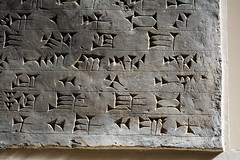 | 42 |
| 9963737444 | Democracy | a political system in which the supreme power lies in a body of citizens who can elect people to represent them | 43 | |
| 9963737445 | Eight Fold Path | Eight steps to end suffering and attain enlightenment according to Buddhist tradition. | 44 | |
| 9963737446 | Four Noble Truths | as taught by the Buddha, the four basic beliefs that form the foundation of Buddhism | 45 | |
| 9963737447 | Gothic Migrations | The Migration period, also called the Barbarian Invasions or German: Völkerwanderung (wandering of the peoples), was a period of human migration that occurred roughly between the years 300 to 700 CE in Europe, marking the transition from Late Antiquity to the Early Middle Ages. These movements were catalyzed by profound changes within both the Roman Empire and the so-called 'barbarian frontier'. Migrating peoples during this period included the Goths, Vandals, Bulgars, Alans, Suebi, Frisians, and Franks, among other Germanic and Slavic tribes. | 46 | |
| 9963737448 | Great Wall | a fortification 1,500 miles long built across northern China in the 3rd century BC | 47 | |
| 9963737449 | Han Dynasty | imperial dynasty that ruled China (most of the time from 206 BC to AD 220) and expanded its boundaries and developed its bureaucracy |  | 48 |
| 9963737450 | Hellenism | The ideals and principles that spread from Greece through much of the ancient world. Much of its influence such as philosophy, athletics, and architecture penetrated the Middle East. |  | 49 |
| 9963737451 | The Huns | Fierce warriors from Central Asia- First invaded southeastern Europe and then launched raids on nearby kingdoms | 50 | |
| 9963737452 | Indian Ocean Trade | connected to Europe, Africa, and China.; worlds richest maritime trading network and an area of rapid Muslim expansion. |  | 51 |
| 9963737453 | Iron Age | the period following the Bronze Age; characterized by rapid spread of iron tools and weapons | 52 | |
| 9963737454 | Jewish Diaspora | A "scattering" of the Jewish people | 53 | |
| 9963737455 | Legalism | In Chinese history, Legalism was one of the main philosophic currents during the Warring States Period- A philosophy of focusing on the text of written law to the exclusion of the intent of law, elevating strict adherence to law over justice, mercy and common sense |  | 54 |
| 9963737456 | Pax Romana | A period of peace and prosperity throughout the Roman Empire, lasting from 27 B.C. to A.D. 180. |  | 55 |
| 9963737457 | Pyramids | Huge stone tombs with four triangle-shaped walls that met in a point on top |  | 56 |
| 9963737458 | Roman Republic | The period from 507 to 31 B.C.E., during which Rome was largely governed by the aristocratic Roman Senate. | 57 | |
| 9963737459 | Roman Senate | a council of wealthy and powerful Romans that advised the city's leaders | 58 | |
| 9963737460 | Shang Civilization | China's first dynasty almost 2000 BCE | 59 | |
| 9963737461 | Shi Huang Di | harsh ruler who united China for the first time and used legalism in ruling (Qin China) |  | 60 |
| 9963737462 | Siddhartha Gautama | founder of Buddhism; born a prince; left his father's wealth to find the cause of human suffering; also know as Buddha |  | 61 |
| 9963737463 | Silk Road Trade | The most famous of the trading routes established by pastoral nomads connecting the Chinese, Indian, Persian, and Mediterranean civilizations; transmitted goods and ideas among civilization. |  | 62 |
| 9963737464 | The Torah | the most sacred text of Judaism | 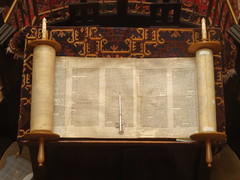 | 63 |
| 9963737465 | The Vedas of Hinduism | Aryan hymns originally transmitted orally but written down in sacred books from the 6th century B.C.E. |  | 64 |
| 9963737466 | Ziggurats | a temple or tomb of the ancient Assyrians, Sumerians, or Babylonians, having the form of a terraced pyramid of successively receding stories |  | 65 |
| 9963737467 | Christianity | Monotheistic religion born out of Judaism, preached by Jesus of Nazareth and later codified by his disciples. Persecuted by Romans early on; however, gained support under Constantine in the Rome. |  | 66 |
| 9963737468 | Buddhism | originally preached by Siddhartha and codified by his disciples into the sutras. Rejected Vedic rituals and the caste system. Spread throughout SE Asia and China and split into Mahayana(Buddha as a God, local gods tacked on as Bodhisativas) and Theravada(original, strict non-theistic version). | 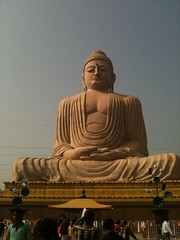 | 67 |
| 9963737469 | Asoka | Third ruler of the Mauryan Empire in India (r. 270-232 B.C.E.). He converted to Buddhism and broadcast his precepts on inscribed stones and pillars, the earliest surviving Indian writing. |  | 68 |
| 9963737470 | Hinduism | Term for a wide variety of beliefs and ritual practices that have developed in the Indian subcontinent since antiquity. It has roots in ancient Vedic, Buddhist, and south Indian religious concepts and practices. |  | 69 |
| 9963737471 | Trans Saharan | route across the sahara desert. Major trade route that traded for gold and salt, created caravan routes, economic benefit for controlling dessert, camels played a huge role in the trading |  | 70 |
| 9963737472 | Monsoons | Major winds in the Indian Ocean that blew into India for half the year, and blew away from India for the other half. Helped facilitate trade in the Indian Ocean. |  | 71 |
| 9963737473 | Sumerians | people who dominated Southern Mesopotamia through the end of the 3rd Millennium BCE. Responsible for the creation of irrigation technology, cuneiform, and religious conceptions. |  | 72 |
| 9963737474 | Indo-Europeans | Groups of people who came from the area north of the Caucasus mountains, which are between the Black and Caspian seas. Herded multiple animals. Rode into battle on chariots. The Indo-European language of Sanskrit, by the Aryans, are the basis of many languages today. Often accepted and adapted aspects of technology, religions, and social order of those with whom they came in contact. |  | 73 |
| 9963737475 | Before agriculture, men and women are believed to have a greater degree of equality. But after the rise of agriculture, most human societies became ________ as a result of greater male strength. | Patriarchal |  | 74 |
| 9963737476 | caste system | a set of rigid social categories that determined not only a person's occupation and economic potential, but also his or her position in society, there was virtually no social mobility |  | 75 |
| 9963737477 | Paleolithic | (Old Stone Age) a long period of human development before the development of agriculture |  | 76 |
| 9963737478 | Carthage | This city has existed for nearly 3,000 years, developing from a Phoenician colony of the 1st millennium BC into the capital of the Carthaginian Empire. Controlled commerce in the Mediterranean prior to the rise of Roman Power. The expanding Roman Republic took control of many of its outposts after the two Punic Wars. |  | 77 |
| 9963737479 | Hellenization | The spread of Greek language and culture (Hellenism) throughout the Mediterranean, starting with t he conquests of Alexander the Great. Upon Alexander's death at the age of thirty-three (323 B.C.E.), his realm was divided among his leading generals. During their reigns and those of their successors, Hellenism (i.e., Greek culture) continued to flourish in major urban centers around the eastern Mediterranean (less so in rural areas). People traveling to different areas could communicate with people of other kingdoms through Greek. More than at any time in previous history, the eastern Mediterranean that emerged in Alexander's wake experienced a form of cultural unity and cosmopolitanism (a "cosmopolite" is a "citizen of the world," as opposed to a person who belongs to only one locality). The Roman Empire arose in the context of the Hellenistic world and took full advantage of its unity, promoting the use of Greek language, accepting aspects of Greek culture, and even taking over features of the Greek religion, to the point that the Greek and Roman gods came to be thought of as the same, only with different names. This complex unity achieved culturally through Hellenization and politically through the conquests of Rome is summed up by the term Greco-Roman world. | 78 | |
| 9963737480 | Daoism | Chinese religion that believes the world is always changing and is devoid of absolute morality or meaning. They accept the world as they find it, avoid futile struggles, and deviate as little as possible from 'the way' or 'path' of nature. |  | 79 |
| 9963737481 | Bureaucrat | government official | 80 |
AP World history chapter 33 study questions Flashcards
Terms : Hide Images
| 6530851438 | summarize the economic, political, and cultural motives of nineteenth-century imperialists...to what extent did those motives overlap and to what extent did they conflict with one another? | overseas colonies offered source for raw materials, inspire nationalism, give place for overflow populations to go, take strategically beneficial spots for the military, convert to Christianity, civilize natives. | 0 | |
| 6530878980 | what were the principle tools of empire---the various technologies that gave the Europeans such an advantage? | maxim gun, steamships/railroads, telegraph | 1 | |
| 6530896172 | how did the British establish control over India in the early nineteenth century? how did the sepoy mutiny contribute to this process? | company rule (English east India company), Sepoy Mutiny (sepoys rise up after rumors of being issued rifles lubricated with pig and cow fat) resulted in the British abolishing the Mughal empire, exiled emperor to Burma, British abolish English East India Company in favor of direct rule, utilized a viceroy and used elite Indian civil service staffed by the British | 2 | |
| 6530993745 | what Asian states managed to maintain their sovereignty in the nineteenth century? why these states? | China, Thailand, Persia, Tibet, Afghanistan, Arabia, Siam, Japan... China- spheres of influence, politically autonomous but not economically; Siam- served as buffer state between Britain in Indian and French Indo-China; Japan-Meiji restoration helped Japan to master imperialism so they could avoid being conquered; Afghanistan-Russian and Britain desperately want Afghanistan | 3 | |
| 6531156516 | who were the major players in the scramble for Africa? what was the principle objective of this land-grab? | Britain and France= major players; develop commercial ventures, carve the continent into colonies, establish trading market, resources (especially rubber), missionary activity | 4 | |
| 6534374864 | compare the British conquest of South Africa with that of Egypt and Sudan. | South Africa: British outlaw slavery and disrupt Afrikaner financial viability and lifestyle and so they began to leave ("Great Trek") but when Brits discovered diamonds and gold they brought in a lot of miners who got in conflicts with the Afrikaners which accumulated into the Boer Wars Egypt and Sudan: Britain came into Egypt and Egypt began to rely heavily on them for finances to build up their army, eventually they got into debt and they had to charge high taxes, the taxing made citizens angry and there were uprisings so the British military came in to ensure the safety of British financial interests and make sure the Suez canal was constructed well | 5 | |
| 6534450968 | why were the great powers less interested in the Pacific Islands? What did they want from these islands? | they didn't want to go to the trouble of having to start outright colonies, mostly they just wanted to seek commercial opportunities and reliable bases for operation | 6 | |
| 6534466938 | What did the United States gain from the Spanish-American War? | US took control of Puerto Rico, Guam, Cuba, the Philippines (so that they didn't go to Japan or Germany) | 7 | |
| 6535011725 | where did the Japanese direct their ambitions as a new imperial power? how successful were they? | they wanted to get rid of the unequal treaties set on them by the US, vast expansion of the military; they were successful and established themselves as an imperial power that could run with the larger world players of the time | 8 | |
| 6535244317 | how did the imperial powers transform the economies of their colonies? | encouraged growers to grow cotton for export and not local consumption, built railroads, converted rain forests in Ceylon to tea plantations, rubber plantations | 9 | |
| 6535281384 | Summarize some of the significant migrations of the late nineteenth century. What were some typical destinations? | Europeans to South America, South Africa, US (including Hawaii), Japanese to Hawaii and Peru, Chinese to Cuba and Peru and Malaya and Austrailia | 10 | |
| 6535321536 | How did subject peoples resist colonial rule? how did imperialism foster conflicts within colonial societies? | they resisted colonial rule by boycotting European goods, organizing political parties and pressure groups, publishing anticolonial newspapers and magazines, and pursuing anticolonial policies through churches and religious groups; conflicts fostered by high taxes, tyrants of colonial rule, intro of European schools and education, requirements to grow certain crops/provide compulsory labor | 11 |
World History AP Greece and Rome Flashcards
Terms : Hide Images
| 4977414896 | Greek patriarchal society due to sporadic warfare | phalanx | 0 | |
| 4977414897 | what is a polis | a greek city-state | 1 | |
| 4977414898 | knossos was the descendants of the _______ | phoenicians | 2 | |
| 4977414899 | Sparta had what type of an government | Oligarchy | 3 | |
| 4977414900 | Mycenae | civilization on the mainland of Greece | 4 | |
| 4977414901 | the Trojan war was fought by _____ against ______in ______ | the Trojan war was fought by Mycenae against troy in asia minor | 5 | |
| 4977414902 | Homer | famous writer who wrote Trojan war stories and other mythology | 6 | |
| 4977414903 | The Iliad | written by Homer about the Trojan war | 7 | |
| 4977414904 | The Odyssey | written by Homer mythical story of journey to Odysseus | 8 | |
| 4977414905 | name some famous Greek poli | Athens Sparta Thebes Corinth | 9 | |
| 4977414906 | who conquers Greece during the Peloponnesian war | Philip ll of macedonia | 10 | |
| 4977414907 | Heodotus | father of history stressed research | 11 | |
| 4977414908 | what greek poli was most tolerant of women | sparta | 12 | |
| 4977414909 | who could vote in greek society | male citizens above the age of 30 | 13 | |
| 4977414910 | who fought in the Persian war | Greeks against the Persian empire | 14 | |
| 4977414911 | when did Athens begin their golden age | in the Battle of Thermopoly | 15 | |
| 4977414912 | jesus | founded christianity | 16 | |
| 4977414913 | what is the capital of Greece | Knossos | 17 | |
| 4977414914 | The temple for the goddess Athena | Parthenon | 18 | |
| 4977414915 | where was the Parthenon located | on acropolis overlooking the agora | 19 | |
| 4977414916 | agora | open air market place | 20 | |
| 4977414917 | All greeks believe in the same _____ | pantheon | 21 | |
| 4977414918 | who were plebians | farmers or slaves | 22 | |
| 4977414919 | Where were the Olympics held | mt.olympus | 23 | |
| 4977414920 | who was the famous general in rome that fought in the punic wars | Scipo Africanus | 24 | |
| 4977414921 | Peloponnesian war | Sparta declares war on Athens | 25 | |
| 4977414922 | the Peloponnesian war was a _____ war | civil | 26 | |
| 4977414923 | who received the ten commandments | mosses | 27 | |
| 4977414924 | Philip the ll | Macedonian king conquers Greece after Peloponnesian war. | 28 | |
| 4977414925 | what are the Hellenistic cultures | Egyptian,Persian,Indian,and mostly Greek cultures | 29 | |
| 4977414926 | what were the 2 social classes of roman republicans | plebians and patricians | 30 | |
| 4977414927 | Greek achievments | greek philosophy socratic method | 31 | |
| 4977414928 | what was the name of the civilization on the island of Crete | Minoan civilization | 32 | |
| 4977414929 | Thycydides | stressed the importance of not taking sides when repeating history | 33 | |
| 4977414930 | sophocles | famous play writer wrote antigone | 34 | |
| 4977414931 | _____ is the scattering of people | diaspora | 35 | |
| 4977414932 | romans believed they were________________ | destined for greatness | 36 | |
| 4977414933 | hippocrates | docter who established a code of conduct that all docters agreed to called Hippocratic oath | 37 | |
| 4977414934 | socrates | famous philosopher developed the socratic method challendged is students to think | 38 | |
| 4977414935 | who was Socrates favorite student | plato | 39 | |
| 4977414936 | what book did plato write | The republic | 40 | |
| 4977414937 | who was platos most famous student | Aristotle | 41 | |
| 4977414938 | who was Aristotle | famous greek philosopher student of plato believed humans ability to reason made humans superior to all species tutored alexander the great | 42 | |
| 4977414939 | who were the founders of rome said to be | Romulus and remus | 43 | |
| 4977414940 | where was rome founded | along the tiber river | 44 | |
| 4977414941 | who eventually overrun rome | the etruscans | 45 | |
| 4977414942 | who were the etruscans | warriors from the north of rome . overran rome | 46 | |
| 4977414943 | romans were _____ religion | polytheistic | 47 | |
| 4977414944 | how did the romans elect government officials | democratically | 48 | |
| 4977414945 | How did the geography of Greece differ from other areas | irregular coastline many natural harbors many islands very mountainous topography | 49 | |
| 4977414946 | what was the writing variation of the Phoenician alphabet | Linear a | 50 | |
| 4977414947 | who were patricians | landowners government and military | 51 | |
| 4977414948 | who was the famous general of carthage that fought in the punic wars | hannibal | 52 | |
| 4977414949 | how did rome aquire the whole Italian peninsula | anexation | 53 | |
| 4977414950 | when did rome form a republic | when rome ousted the etruscans | 54 | |
| 4977414951 | what is annexation | acquiring territory by coercion or threat or force | 55 | |
| 4977414952 | the romans built a vast | navy | 56 | |
| 4977414953 | what was the medditeranean sea refferd to as in 146BCE | MareNostrom "our sea" | 57 | |
| 4977414954 | How did the punic war conflict begin | rome began to dominate the Mediterranean sea | 58 | |
| 4977414955 | who was the punic war fought between | rome and carthage | 59 | |
| 4977414956 | Hellenistic achievments | Math Pythagoras Therom lever pully medicine hipocratic oath | 60 | |
| 4977414957 | who won all 3 of the punic wars | rome | 61 | |
| 4977414958 | how many punic wars were there | 3 | 62 | |
| 4977414959 | torah | jewish holy book | 63 | |
| 4977414960 | romes success proved that | Rome was the dominant power of the mediterranean | 64 | |
| 4977414961 | what was the apian way | the main gate into rome | 65 | |
| 4977414962 | what was the main gate into rome | the apian way | 66 | |
| 4977414963 | what was the laws of the twelve tables | code of law in the roman republic that subjected all patricians and plebians | 67 | |
| 4977414964 | principles of roman law were foundation for | US law | 68 | |
| 4977414965 | what is the roman government structure | consuls senate pratrecians censors | 69 | |
| 4977414966 | who was Julius ceasar | military general conquered gual very loyalbecame "dictator for life" | 70 | |
| 4977414967 | who was "dictator for life" | Julius Ceasar | 71 | |
| 4977414968 | what led to the decline of the senate | centralized power | 72 | |
| 4977414969 | Augustus Ceasar | Julius Ceasars nephew | 73 | |
| 4977414970 | what happens during the roman empire | rome expanded ins boundaries stretced from spain to palestine and from Britain to north Africa built hadrians wall had a golden age | 74 | |
| 4977414971 | what were the ten commandments | laws given to the jews | 75 | |
| 4977414972 | what did hadrians wall do | protected rome from barbarians | 76 | |
| 4977414973 | where were chariot races held | circus maximus | 77 | |
| 4977414974 | All greeks are _______ religion | polytheistic | 78 | |
| 4977414975 | aqueducts | carried water from mountains to cities | 79 | |
| 4977414976 | what was the purpose of bread and circuses | to distract people from noticing the insufficiencies of the government and keep them entertained | 80 | |
| 4977414977 | where was gladiator fighting held | the coliseum | 81 | |
| 4977414978 | what leader conquered Egypt Persia and stoped at the battle of Hydaspus River | Alexander the Great | 82 | |
| 4977414979 | who founded judaism | abraham | 83 | |
| 4977414980 | what is the Ides of March | the day Julius ceasar was assasinated | 84 | |
| 4977414981 | what was the pantheon | temple for the gods | 85 | |
| 4977414982 | Alexander the Great | took over Greece at age 23 after Philip ll was assasinated | 86 | |
| 4977414983 | where was Judaism founded | middle east | 87 | |
| 4977414984 | what is a covant | binding agreement | 88 |
Pages

Need Help?
We hope your visit has been a productive one. If you're having any problems, or would like to give some feedback, we'd love to hear from you.
For general help, questions, and suggestions, try our dedicated support forums.
If you need to contact the Course-Notes.Org web experience team, please use our contact form.
Need Notes?
While we strive to provide the most comprehensive notes for as many high school textbooks as possible, there are certainly going to be some that we miss. Drop us a note and let us know which textbooks you need. Be sure to include which edition of the textbook you are using! If we see enough demand, we'll do whatever we can to get those notes up on the site for you!
