AP Notes, Outlines, Study Guides, Vocabulary, Practice Exams and more!

AP World History Unit 2 Flashcards

Terms : Hide Images
4963974579Caste Systema class structure that is determined by birth. Loosely, it means that in some societies, if your parents are poor, you're going to be poor, too. Same goes for being rich0
4963974580PatriarchyA male dominated society1
4963974581MatriarchalA female dominated society2
4963974582Mandate of Heavenan ancient Chinese belief and philosophical idea that tiān (heaven) granted emperors the right to rule based on their ability to govern well and fairly.3
4963974583Silk Roadan ancient network of trade and cultural transmission routes that were central to cultural interaction through regions of the Asian continent connecting the West and East by merchants, pilgrims, monks, soldiers, nomads, and urban dwellers from China and India to the Mediterranean Sea4
4963974584Social Heirarchyhow individuals and groups are arranged in a relatively linear ladder5
4963974585Reincarnationthe rebirth of a soul in a new body.6
4963974586AssimilationThe process by which a person or persons acquire the social and psychological characteristics of a group7
4963974587MonotheisticThe belief in only one god8
4963974588Eightfold Paththe path to nirvana, comprising eight aspects in which an aspirant must become practiced: right views, intention, speech, action, livelihood, effort, mindfulness, and concentration.9
4963974589Zoroanstrianismone of the world's oldest monotheistic religions. It was founded by the Prophet Zoroaster in ancient Iran approximately 3500 years ago.10
4963974590Greek Philosophythe rational investigation of questions about existence and knowledge and ethics11
4963974591PolytheisticThe belief in many gods12
4963974592Legalismstrict adherence, or the principle of strict adherence, to law or prescription, especially to the letter rather than the spirit.13
4963974593Confucianisma system of philosophical and ethical teachings founded by Confucius and developed by Mencius.14
4963974594Buddhismis a nontheistic religion or philosophy (Sanskrit: dharma; Pali: धम्म dhamma) that encompasses a variety of traditions, beliefs and spiritual practices largely based on teachings attributed to Gautama Buddha, commonly known as the Buddha ("the awakened one").15
4963974595Islamthe religion of the Muslims, a monotheistic faith regarded as revealed through Muhammad as the Prophet of Allah.16
4963974596Judaisman ancient monotheistic religion, with the Torah as its foundational text (part of the larger text known as the Tanakh or Hebrew Bible), and supplemental oral tradition represented by later texts such as the Midrash and the Talmud.17
4963974597Christianitythe religion based on the person and teachings of Jesus of Nazareth, or its beliefs and practices.18
4963974598Daoisma philosophical, ethical or religious tradition of Chinese origin, or faith of Chinese exemplification, that emphasizes living in harmony with the Tao.19
4963974599Han Dynastyan empire in ancient China, that lasted from 206 b.c.e- 24 c.e.20
4963974600Persiaan empire located in modern day Iran but stretched as far as Egypt and Iraq.21
4963974601Guptaan empire located in northern India that lasted from 320-550 c.e.22
4963974602Ancient Egyptan empire that lasted for 3000 years23
4963974603Roman empirelocated in modern day Italy but expanded to outlying countries throughout its reign, it lasted from 201 b.c.e- 476 c.e.24
4963974604Mayalocated in modern day central america, it lasted from 1800 b.c.e- 250 c.e.25
4963974605StateA body of people living in a defined territory who have a government with the power to make and enforce law without the consent of any higher authority26
4963974606Empirean extensive group of states or countries under a single supreme authority.27
4963974607Hebrew ScripturesTorah, Old Testament28
4963974608Assyrian Empirethis empire covered much of what is now Mesopotamia, Syria, Palestine, Egypt, and Anatolia; its height was during the seventh and eighth centuries BCE.29
4963974609Babylonian EmpireEmpire in Mesopotamia which was formed by Hammurabi, the sixth ruler of the invading Amorites.30
4963974610Roman EmpireExisted from 27 BCE to about 400 CE. Conquiered entire Mediterranean coast and most of Europe. Ruled by an emperor. Eventually oversaw the rise and spread of Christianity.31
4963974611Sanskrit ScripturesAn ancient Indic language of India, in which the Hindu scriptures and classical Indian epic poems are written and from which many northern Indian languages are derived.32
4963974612Vedic ReligionsCore beliefs in sanskrit scriptures; Hinduism; influence of Indo-European traditions in the development of the social and political roles of a caste system; importance of multiple manifestations of Brahma to promote teachings about reincarnation.33
4963974613HinduismA religion and philosophy developed in ancient India, characterized by a belief in reincarnation and a supreme being who takes many forms34
4963974614Mauryan Empire(321-185 BCE) This was the first centralized empire of India whose founder was Chandragupta Maurya.35
4963974615AshokaLeader of the Mauryan dynasty of India who conquered most of India but eventually gave up violence and converted to Buddhism.36
4963974616Siddhartha Gautama (The Buddha)Means "Enlightened One." He is said to have renounced his worldly possessions and taught of a way to overcome suffering.37
4963974617Emperor ConstantineFounded Constantinople; best known for being the first Christian Roman Emperor; issued the Edit of Milan in 313, granting religious toleration throughout the empire.38
4963974618Buddha39
4963974619Shiva40
4963974620Brahma41
4963974621Vishnu42
4963974622Darius I43
4963974623Alexander the Great44
4963974624Parthenon45
4963974625Agora at Corinth46
4963974626Hoplite Armor47
4963974627Gupta Empire(320-550 CE) The decentralized empire that emerged after the Mauryan Empire, and whose founder is Chandra Gupta.48
4963974628Roman Columns49
4963974629Greek Columns50
4963974630Pantheon51
4963974631Aqueduct52
4963974632Colosseum53
4963974633Circus Maximus54
4963974634Christianity Rho Chi Symbol (Emperor Constantine)Religion?55
4963974635Indian Ocean Maritime System56
4963974636Silk Road57
4963974637Trans-Saharan Trade Route58
4963974638filial pietyIn Confucian thought, one of the virtues to be cultivated, a love and respect for one's parents and ancestors.59
4963974639monasticismA way of life in which men and women withdraw from the rest of the world in order to devote themselves to their faith60
4963974640shamanismThe practice of identifying special individuals (shamans) who will interact with spirits for the benefit of the community. Characteristic of the Korean kingdoms of the early medieval period and of early societies of Central Asia.61
4963974641animismBelief that objects, such as plants and stones, or natural events, like thunderstorms and earthquakes, have a discrete spirit and conscious life.62
4963974642ancestor venerationVeneration of the dead or ancestor reverence is based on the beliefs that the dead have a continued existence, and may possess the ability to influence the fortune of the living, the worship of deceased ancestors63
4963974643syncretic religionCombines two religious traditions into something distinctly new, while containing traits of both64
4963974644Persian EmpireGreatest empire in the world up to 500 BCE. Spoke an Indo-European language. A multi-ethnic and multi-religious empire. Fell to Alexander the Great.65
4963974645Qin Dynastythe Chinese dynasty (from 246 BC to 206 BC) that established the first centralized imperial government and built much of the Great Wall66
4963974646Han Dynasty(202 BC - 220 AD) dynasty started by Lui Bang; a great and long-lasting rule, it discarded the harsh policies of the Qin dynasty and adopted Confucian principles; rulers chose officials who passed the civil service exams rather than birth; it was a time of prosperity67
4963974647PhoeniciaSemitic-speaking Canaanites living on the coast of modern Lebanon and Syria in the first millennium B.C.E. Famous for developing the first alphabet, which was adopted by the Greeks.68
4963974648HellenisticOf or influenced by the Greek Empire. A type of culture typically referred to after the conquests of Alexander the Great.69
4963974649TeotihuacanA large central city in the Mesoamerican region. Located about 25 miles Northeast of present day Mexico City. Exhibited city planning and unprecedented size for its time. Reached its peak around the year 450.70
4963974650Mochecivilization of north coast of Peru (200-700 C.E.). An important Andean civilization that built extensive irrigation networks as well as impressive urban centers dominated by brick temples.71
4963974651ChacoAn urban center established by Anasazi located in southern New Mexico. There, they built a walled city with dozens of three-story adobe houses with timbered roofs. Community religious functions were carried out in two large circular chambers called kivas.72
4963974652Cahokiaan ancient settlement of southern Indians, located near present day St. Louis, it served as a trading center for 40,000 at its peak in A.D. 1200.73
4963974653PersepolisA complex of palaces, reception halls, and treasury buildings erected by the Persian kings Darius I and Xerxes in the Persian homeland. It is believed that the New Year's festival was celebrated here, as well as the coronations, weddings, and funerals of the Persian kings, who were buried in cliff-tombs nearby.74
4963974654Chang'anCapital of Tang dynasty; population of 2 million, larger than any other city in the world at that time.75
4963974655PataliputraThe captial of both Muryan and Gupta empires76
4963974656AthensA democratic Greek polis who accomplished many cultural achievements, and who were constantly at war with Sparta.77
4963974657CarthageCity located in present-day Tunisia, founded by Phoenicians ca. 800 B.C.E. It became a major commercial center and naval power in the western Mediterranean until defeated by the expanding Roman Republic in the third century B.C.E.78
4963974658AlexandriaCity on the Mediterranean coast of Egypt founded by Alexander. It became the capital of the Hellenistic kingdom of Ptolemy. It contained the famous Library and the Museum and was a center for leading scientific and literary figures in the classical and postclassical eras.79
4963974659ConstantinopleA large and wealthy city that was the imperial capital of the Byzantine empire and later the Ottoman empire, now known as Istanbul80
4963974660Silk Roadstrade routes stretching from China to the Mediterranean, which allowed for the exchange of goods and ideas from China to the Roman Empire81
4963974661Trans-Saharan Caravan RouteIslamic trade in West Africa was conducted by caravans of camels. According to Ibn Battuta, the explorer who accompanied one of the caravans, the average size was a thousand camels per caravan, with some being as large as 12,000.82
4963974662Indian Ocean Sea Laneslanes throughout the Indian Ocean connecting East Africa, southern Arabia, the Persian Gulf, India, Southeast Asia, and southern China83
4963974663Mediterranean Sea LanesTrade routes that connected the Mediterranean civilizations together. The need for a sea rout for trade in the region. Trade increased and diffusion of cultures occurred84
4963974664Qanat Systema traditional system of gravity-fed irrigation that uses gently sloping tunnels to capture groundwater and direct it to low-lying fields85
4963974665Shadufa mechanical device that consists of a long pole balanced on a crossbeam. It has a rope and bucket on one end and a weighted balance on the other. It is used for transferring water from the river to the fields.86
4963974666Jesus of Nazaretha teacher and prophet born in Bethlehem and active in Nazareth; his life and sermons form the basis for Christianity.87
4963974667Paul of TarsusA Pharisaic Jew who persecuted the Early Christian community; later, he had an experience of the Risen Christ and became the "Apostle to the Gentiles" writing numerous letters to the Christian communities.88
4963974668Greco-Roman PhilosophyIdeas that emphasized logic, empirical observation, and nature of political power and hierarchy.89
4963974669ZoroastrianismWhat religion?90
4963974670ChristianityWhat religion?91
4963974671corvee laborunpaid forced labor usually by lower classes, forced upon them by the government92
4963974672tributeMoney paid by one country to another in return for protection93

Important Technology in AP World History Flashcards

Terms : Hide Images
7243345652Beginnings of civilizations to 600 BCE (Mesopotamia, Egypt)Domestication of animals, agriculture, irrigation, dams, wheel, the sail, metal work, brick making, the arch, cities, govs, geometry, algebra, writing, calendars0
7243345653600 BCE - 600 CE (Persia)Coins1
7243345654600 BCE - 600 CE (India)Arabic numeral2
7243345655600 BCE - 600 CE (China)compass, wood pulp paper, porcelain, canals, horse collar, stirrup3
7243345656600 BCE - 600 CE (Mediterranean, Greece, Rome)Astrolabe, lateen sail, concrete, crop rotation)4
7243345657600 CE - 1450 (China)Paper money, block printing, gunpowder, firearms5
7243345658600 CE - 1450 (Europe)Mechanical clock, eye glasses, English longbow, wheeled plow6
7243345659600 CE - 1450 (North Africa)University7
72433456601450 - 1750 (Europe)Alphabetic movable type printing press, telescope, microscope, steam engine, factory textile machines8
72433456611750 - 1900 (Europe and US)Steam boat, steam locomotive, steel ships, steel-framed skyscrapers, machine gun, light bulb, telephone, radio, typewriter, movie projector, electric diesel and gasoline motors, cotton gin, sewing machine, steel plow, mechanical reaper, automobile9
72433456621900 to the present (Europe and US)Airplane, liquid fuel rocket, communications satellite, nuclear power, tv, transistor, electronic comp, Internet, penicillin, DNA10
7243347265Bronze AgeAge from 4,000 BCE, when bronze tools came into existence, to 1,500 BCE, when iron tools replaced them.11
7243349036BabylonAnother civilization in Mesopotamia; replaced Akkad, famous for King Hammurabi and the code named after him.12
7243350207Indus ValleyAnother civilization lasting from 2500-1500 BCE that was built along the banks of the Indus River system. Rather limited in contact with other cultures due to the huge mountain systems by it.13
7248942200RegionAn area distinguished by a unique combination of trends or features.14
7248980784Culturalof or relating to the ideas, customs, and interpersonal behavior of a society15

AP World History Final Flashcards

Terms : Hide Images
8312765831what is an astral opithecusfully bipedal hominids0
8312778689whats the difference between homoerectus and humanshomoerectus had smaller brains than humans1
8312791669what discover marks the transition from paolethic to Neolithicagriculture2
8312813976early state higher hierarchies where heightened by whatwritten laws3
8312830462whats the earliest Samerians writingspictographs4
8312846953how do Egyptian and Mesopotamian women compared in terms of propertyEgyptian control more property than the other5
8312864112Nile RiverThe river in which early kingdoms in Egypt were centered around.6
8325409294Euphrates RiverA river in southwestern Asia that flows through the southern part of the Fertile Crescent.7
8312870642in terms of Indians geography what region has been home to its biggest empireslow land plains in the river valleys8
8312884108what were the first crops developed in Indianwheat9
8312896392what else does the rigveta havegyms, ritual texts, and philosophical treatises10
8312910538know how Ashoka was influenced by BuddhismAshoka was consumed with remorse and revulsion at the horror of war11
8312916505first Chinese dynasty to have writing, work, metalShang12
8312920362what did Shang warrior made weapons frombronze13
8312924354ruled by fewoligarchy14
8312952997greeks polis containedagora or marketplace15
8312971551what were women Sparta to dothey had freedom don't train more active16
8312993942before the romans controlled Italy what other civilization built cities in southern Italy and SicilyGreeks17
8313010468according to romulus and remus what were decent fromgods18
8313022307according to Romulus who assisted him to rule RomeSenate19
8313039797what did the Rome built to have better communicationroads20
8313042664what was recorded on the 12 tableslaws21
8313048208at the end of the first triumvirate who did the Senate supportPompeii22
8313062835Augustus ended the age of civil wars in the empire victory at what battleActium23
8313085739which emperor transformed the principate established by Augusts in a hierarchy monarchyVespain24
8313096321what is the most political change by Diocletianthe Roman Empire in half25
8313107475what was Li-vo best known forwriting poetry26
8313115963what was the native religion of JapanShinto27
8313131580what technology what invented in China in 105 CEpaper28
8313136302what was built during Qin's ruleGreat Wall29
8313146427who was the emperial Chinese men military threatnomadic horses30
8313152233how they killed the nomadic horseskilled them with arrows31
8313160875under the ruler of the kusha king artitsgreek32
8313170345the northern way dynasty declared was languageChinese33

AP World History regions Flashcards

Terms : Hide Images
9870665537Latin America0
9870665538South America1
9870665539Mexico2
9870665540Mesoamerica3
9870665541Caribbean4
9870665542North America5
9870665543Southern Africa6
9870665544Central Africa7
9870665545West Africa8
9870665546North Africa9
9870665547East Africa10
9870665548Europe11
9870665549Central Asia12
9870665550Australia and Oceana13
9870665551Southeast Asia14
9870665552East Asia15
9870665553South Asia16
9870665554Middle East (or SW Asia)17

AP World History Dates Flashcards

Terms : Hide Images
97791094251500 BCEBeginning of Hinduism in India0
9779109426500 BCEBeginning of Confucianism, Buddhism, Daoism1
9779112192480-404 BCEGolden age of Athens, Greece2
9779112193500-44 BCERoman republic3
9779115447323 BCEAlexander the Great4
9779115448221 BCEQin unifies China5
9779129381200 BCE - 220 CEHan dynasty in China6
9779129382333 CERoman capital splits into Constantinople7
977912938344 BCERoman empire8
977913251732 CEBeginning of Christianity9
9779132561476-1000ishDark ages/medieval period10
9779136817527Justinians rule of Byzantine Empire11
9779136818589-618Sui dynasty and return of centralized rule to China12
9779140491622 BCEFounding of Islam13
9779158915732Battle of Tours (and Muslim move into France)14
9779164203750-1250Tang and Song Dynasty oversee Chinas "economic and commercial revolution"15
9779174607750-1258Abbasid dynasty (Islanmic golden age/ capital of Baghdad)16
9779174608790-1100Rise of the Vikings17
9779177973800Charlemagnes coronation18
97791779741054Great Schism in Christian Church (Roman Catholic and Eastern Orthodox)19
97791811091066Norman conquest of England20
97791811101095Beginning of Crusades21
97791811111200Rise of the Mongols (silk roads revitalizes, etc.)22
97791853771215Magna Carta signed (one of the first constitutions)23
97791853781258Mongols sack Baghdad/ end of Abbasid dynasty and golden age24
97791898371271-1295Travels of Marco Polo25
97791898381324Mansa Musas (Mali Empire) pilgrimage (hajj)26
97791953691325-1349Travels of Ibn Battuta27
97791953701347-1348Bubonic Plague in Europe28
97791991871400Renaissance (1400ish-1650) begins to formulate in northern Italy29
97792065301433End of Zheng He's Ming Dynasty voyages/ rise of Ottomans30
97794076961453Ottomans capture Constantinople (Istanbul)/ Ottoman Empire Formed31
97794076971492Columbus sail the ocean blue/ Columbian Exchange begins/ Reconquista of Spain32
97794111991494Treaty of tordesillas and division of new world33
97794141761517Martin Luther/ 95 thesis (Protestant reformation)34
97794141771521Cortez conquers the Aztecs35
97794173381543Copernicus publishes Celestial Spheres (1543-1700s, roughly, the start of the scientific revolution)36
97794173391600Japan unified under the towugawa shogunate37
97794939951607Establishment of Jamestown amd the British colonies in the Americas (east India company/ joint stock company)38
97795012331633Japan's closed door policy begins39
97795044481650-1800sAge of Enlightenment/ reason in Europe40
97795044491750Industrial revolution begins in England41
97795073341789French Revolution42
97795073351821Mexican independence (not revolution)43
97795073361823Monroe doctrine44
97795116801839-1842Opium war in China (imperial aggression by British to reverse flow of silver/bullion into China, as part of economic policy of mercantilism)45
97795116811853Commodore perry/ USA open Japan46
97795177661861Serfdom abolishes in Russia47
97795841141871Germany unified under Bismarck48
97795889821885Berlin conference -imperialism and the "scramble for Africa"49
97795891831910-1920Mexican Revolution50
97795940871914-1918WWI ( Panama Canal completeled in 1914)51
97795940881917Russian Revolution52
97795997041939-1945WWII53
97795997051947Truman doctrine/ Cold War begins ('49-'91), India/ Pakistan partition54
97796053611948Israel founded/ Gandhi assassinated55
97796053621949Peoples republic of China established56
97796102091962Cuban missile crisis (cold was era 1945-1991)57
97796138971979Iranian revolution (rise of Islam, jihad, etc.)58
97796138981989Tiananmen Square/ Fall of Berlin Wall59
977961769120019/11 Attacks60
9779745399World regions- a big picture view61
9779745400World regions- a closer look62

AP World 1450-1750 Review Flashcards

Terms : Hide Images
5700835558Age of ReasonEurope 17th and 18th centuries. aka - "The Enlightenment" - sought to apply the search for natural laws that were working so successfully in the Scientific Rev. to people and society in hopes of creating a perfect society and government based on the natural laws. Ex. If people are created equal - they all have the ability to reason and should be treated equally and be able to participate in gov't. Hobbes (men are born evil); Locke (men are born good); Montesquieu (separation of powers); and Rousseau (tabula rosa and what is good for the majority is good for the individual) - Voltaire "This is the best of all possible worlds" Led to: American; French and Latin American Revolutions - plus some Enlightened despots like Catherine the Great of Russia, Frederick II of Prussia and Maria Theresa of Austria0
5700835559Akbar the Great (Mughal India)(r.1556-1605) of Mughal Empire. Established absolute power of the emperor. TOLERANT of the many religions of his empire. Eliminated the jizya, a tax on Hindus and allowed Hindus to rise to powerful positions in his government. Modernized army and encouraged long distance trade. A patron of the arts.1
5700835560John Calvin1509 - 1564. Frenchman who developed a Christian sect known as Calvinism - believed in predestination and a strict sense of morality. Also believe that kings that do not follow God's laws give up their divine right... which didn't make him really popular with the French Kings... maybe why his followers were massacred 1572 in Paris2
5700835561Columbian Exchange- Exchange between the New and Old Worlds. Plants, foods, animals, people, resources and diseases were exchanged. - Over 90% of the the Aztecs are believed to have died within a century after the arrival of Europeans - in large part due to epidemics of small pox, measles and influenza... not to mention the burdens of the encomienda system. - the exchange of new foods led to a population increase around the world. Potatoes and corn especially helped Europe, Africa and Asia; goats, chickens, pigs, cows, and horses and wheat arrived in the Americas. - Populations forced to migrate -s such as the Africans (Middle Passage) - or chose to seeking economic opportunity or in North America religious freedom.3
5700835562Counter ReformationAttempt by the RCC to stop the spread of Protestant ideas and win back converts. - Council of Trent met in the mid 1500s and sought to reform the RCC and establish church doctrine. - Jesuits (Society of Jesus) and other church orders were formed. Played a significant role as missionaries, promoting Catholicism around the globe.4
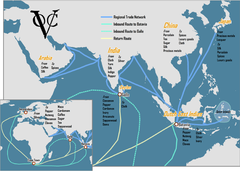
5700835563Dutch East India CompanyGov't controlled joint stock trading company, controlled the spice trade of the East Indies.5
5700835564Eastern OrthodoxChristian sect begun by the Great Schism in 1054, partly over church doctrine...like the order of the Holy Trinity and especially over the power of the Pope v. the Emperor. In the Orthodox Church the Byzantine Emperor appoints the head of the church. Byzantine monks (Cyril and Methodious) helped convert the Russians to Orthodoxy.6
5700835565Edict of Nantes1598 decree signed by Henry Iv of Navarre and the King of France. Granted rights to the Huguenots to end France's religious wars.7
5700835566Edict of Fountainbleu1685 Louis XIV revoked the Edict of Nantes, thus ending the religious freedom of the French Huguenots.8
5700835567Elizabeth I of Englandr. 1558-1603. Nicknamed the Virgin Queen - she never married and was known to use marriage negotiations to obtain alliances when needed. Ended the religious wars in England and Ireland, but did make the Church of England the official religion and forbid Catholics from holding office - also had her competitor Mary, Queen of Scots executed. Her forces defeated the Spanish Armada, and she licensed privateers to harass the Spanish caravels laden with New World silver and gold.9
5700835568Encomienda System- a feudal-like system that used forced labor, created by the Spanish in the New World to ensure a cheap labor supply. - a Spanish landowner (encomendero) was granted the Indians (encomienda) and he was expected to convert them to Christianity and provide for their health and safety, in return they were to provide him with labor. -natives were treated harshly and were overworked (sometimes to death), which led to the eventual importation of African slave labor. - Christian missionaries, like Bartholomew de las Casas, fought to end it.10
5700835569English Bill of RightsSigned in 1689 as King William and Queen Mary accepted the throne. Guaranteed certain rights to English citizens (a lot like ours 100 years later) and elections for Parliament and the people. -limited power of English monarchy - sharing it with the people and Parliament.11
5700835570European Explorationwidespread exploration of the world by Europeans (Spain, Portugal, England, France and the Netherlands) - led to the colonization of the Americas and the founding of trade outposts throughout the world. These efforts expanded trade and the global economy and promoted cross-cultural exchange, but also had devastating effects on conquered populations in many cases.12
5700835571Floating EmpiresIn an attempt to eliminate the Muslim middlemen from their trade with the east - the Spanish (vast lands in the Americas) and Portuguese (trading outposts in Africa and Asia, ex. Goa and Macau) sough out to find more direct trade routes, nicknamed the "floating empires" - they soon dominated the many major trading routes. The Dutch (Caribbean islands, Sri Lanka, South Africa, Dutch East Indies) become part of this as well. Britain emerges as these decline, esp. after the Seven Years War.13
5700835572Goa, IndiaIsland off the coast of India, base of Portuguese trade14
5700835573Gutenberg's Printing PressInvented by Johann Gutenberg in 1454; first book was the Gutenberg Bible. Changed private and public lives of Europeans. Literacy increased as price of books decreased and the quantity available increased. The RCC and its monks had less control over information, which contributed to both the Protestant Reformation and the Scientific Revolution.15
5700835574Hacienda Systemplantation system introduced to the Americas by Spanish settlers during the colonial era. - laborers were supposedly free and due a wage, but in precut the system allowed landowners to tie laborers (native Americans at first) tot he land through debt. In some parts of the Americas, this system lasted until the 20th century.16
5700835575Hapsburg SpainHapsburg Spain refers to the history of Spain over the 16th and 17th centuries (1505-1700), when Spain was ruled by the major branch of the Hapsburg dynasty. Under Hapsburg rule (esp. Charles V and Phillip II of Spain), Spain reached the zenith of its power. It was at that time the number one world power.17
5700835576Henry VIII (Tudor)(r.1509-1541) Left the RCC when the new Pope would not grant him a divorce from Catherine of Aragon (Spain) so that he could marry his pregnant mistress. - he established the Church of England (Anglican). The Act of Supremacy made the monarch the head of the church. - He was then able to claim the land and wealth of the RCC, which increased his power and encouraged future monarchs to try to rule with absolute authority.18
5700835577heliocentric theorythe idea that the earth and other planets revolve around the sun. Replaced the geocentric universe.19
5700835578Holy Roman EmpireLoose federation of mostly Germanic states, Begun in 800 CE with the coronation of Charlemagne, but not officially formed until 962 lasts until it is dissolved by Napoleon in 1806. It was later considered to be the first Reich, Bismarck's Germany the 2nd and Hitler proclaimed the 3rd.20
5700835579HuguenotsFrench Protestants (Calvinists). The Edict of Nantes freed them from persecution in France, in 1598. That persecution during the French Religious wars had led to St. Bartholomew's Day Massacre in 1572, in which 5,000 to 30,000 were killed.21
5700835580indulgencesSelling of forgiveness by the Catholic Church. It was common practice when the church needed to raise money. The practice led to the Reformation22
5700835581Commercial Revolution- changing nature of trade and business, following the Middle ages and the Bubonic Plague. - Began in Europe in early 1500s, nations competed to expand empires overseas. - led to establishment of joint-stock trading companies (to raise investment capital for overseas trade). Also banks and letters of credit and even insurance for trade merchandise. -It helped create large colonial empires for some European nations and great wealth, eventually its mercantilist policies gave rise to capitalism and the industrial revolution.23
5700835582Gunpowder EmpiresThe Ottoman Empire, Safavid and Mughal Empires were built with their newly acquired weapons in the 1500s. For example the Ottomans used cannons to take the Byzantine empire's capital - Constantinople.24
5700835583Inquisitionan ecclesiastical tribunal established by Pope Gregory IX circa 1232 for the suppression of heresy. It was active chiefly in northern Italy and southern France, becoming notorious for the use of torture. In 1542 the papal Inquisition was re-established to combat Protestantism, eventually becoming an organ of papal government. - Spanish Inquisition under the Torquemada was also extremely harsh and was used to find and persecute the Muslims and Jews that were being forced out of Spain during the Reconquista25
5700835584Janissary Corps- These troops were made up of elite soldiers who were enslaved through the devshirme system as boys and trained as a fighting force for the Ottoman sultan, begun in the late 14th century. - although they remained slaves, the eventually gained a high level of collective power. Once forbidden from marriage and having a family, this practice ended and corruption began. - They resisted attempts at reform and in 1826 many were massacred by the sultan.26
5700835585Jesuit OrderA Roman Catholic order founded by the Saint Ignatius of Loyola in 1534 to defend Catholicism against the Reformation and to do missionary work among the heathen.27
5700835586Martin Luther1517, this German monk posted the 95 Theses on the Church Door at Wittenberg, beginning the Protestant Reformation. - criticized the sale of indulgences (pardoning of sins)... with 95 reasons. - Believed faith in God alone would allow people to get into heaven, and that the Bible was the only source of religious truth. - Pope excommunicated him, he was backed by German Princes who like the idea of not paying any tithes to the RCC. - Printing Press was key to the spread of his ideas and the Reformation. - Started the Lutheran Church.28
5700835587Louis XIV (France)(r.1643-1715) SUN KING; claimed to rule by divine right, but if you were king by age five you'd probably think you were pretty special too... (ha ha). - Cardinal Richelieu, built a centralized bureaucracy, loyal to the king (not local lords) - Louis built the Palace of Versailles, to which the nobles were invited to stay (he can spy on them there and they will be to busy and broke to revolt). - Louis ruled with absolute power and never called a meeting of the Estates General, France's Law making body. He engaged in many wars which left France in debt. Both will contribute to the French Rev. in 1789. -also revoked the Edict of Nantes, which had offered religious protection to the Protestants of France (Huguenots).29
5700835588Manchu (Q'ing Dynasty)- A non-Han, invader from North of China, claimed the Mandate of Heaven in 1644 and ruled until 1911. - Manchu rulers were taught Confucianism and used its principles to govern China. Following the example of the Ming with a highly centralized system of scholar-bureaucrats. - under the Q'ing, trade with foreigners increased, particularly as demand for porcelain, silks and tea increased during this time. Until the Opium Trade of the 1800s began China maintained a favorable balance trade.30
5700835589Peter the Great (Russia)(r. 1682-1725) The modernizer and westernizer of Russia. Extended their borders to the Baltic Sea, then built a new capital there (St. Petersburg) to be their "Window on the West." Many peasants were forced to work on this and died, taxes increased to pay... -Built Russia's first navy and modernized the army. He centralized power into the hands of the czar, creating a new nobility for those loyal to him and reforming the Orthodox Church. - known for making the nobles and their ladies more western. Men forced to cut their beards and coats, women were required to leave their homes and attend the Russian court and dance.31
5700835590Philip II of SpainSon of Charles V and husband of Mary I (Bloody Mary) of England. King of Spain and Portugal. Also Naples and Sicily, the Netherlands and even England and Ireland briefly. He supported the Counter Reformation and sent the Spanish Armada to invade England in 1588 (likely storms helped the English win a victory). (r.1556-1598 for Spain)32
5700835591Potosi Silver MineCreated in 1545 in the viceroyalty of Peru, now Bolivia. It was so rich in silver that it is referred to as the rich mountain, and the Spanish made the city into their colonial mint for centuries. It was the basis for the wealth of the Spanish Colonial Empire.33
5700835592Protestant Reformationbegun by Martin Luther and his 95 Theses which urged the RCC to make reforms, including ending the sale of indulgences and better education of the priests. The RCC refused to admit the need for change. - movement spread across "Germany" to England (Henry VIII) and Switzerland (where John Calvin led the movement). - there were political and economic motives for leaders to join the Reformation. It created a round of religious wars in Europe, contributed to the Inquisition and eventually led the RCC to admit there was room for improvement and begin the Counter Reformation...34
5700835593Renaissance- meaning "rebirth," refers to the intellectual and artistic resurgence that began in Italy during the 14th and 15th centuries and spread throughout Western Europe. Humanist ideas became more widespread stressed a secular or nonreligious approach to the arts and sciences.35
5700835594Roman Catholic ChurchChristian Church based in the Vatican and presided over by a Pope and an episcopal hierarchy.36
5700835595Scientific Methodstate a problem, gather data, form a hypothesis, experiment and analyze to reach a conclusion...37
5700835596Scientific RevolutionBegun in the 17th century, scientists began to challenge the validity of classical ideas; the questioning spirit of the Renaissance and Reformation reflected the growing secularization of European society. - a key challenge to classical (and church) beliefs came with Copernicus and his belief in a heliocentric universe. Other scientist were inspired to experiment and search for natural laws for the universe too. - Galileo used a telescope and more math to prove Copernicus' theory,and taught about it. - Newton, created calculus, laws of motion, theory of universal gravitation and studied optics and light too.38
5700835597shogunHereditary military dictator of Japan. During the Tokugawa Shogunate, he held the power, not the emperor.39
5700835598silver or single whip systemPolicy put forth by the Ming in the 1570s requiring a single national tax and that they all be paid in silver. Silver made its way into China from both Japan and the Americas, resulting in enormous profits for both Spain and Japan.40
5700835599Straits of Malacca, Indonesiawell traveled stretch of water between Malaysia and Indonesia used for trade along the Spice Route41
5700835600Suleiman the Magnificent (Ottoman)r.1520-1566, expanded the empire into southern Europe (almost to Venice). Centralized the government,creating an efficient bureaucracy. - modernized the Ottoman army -known as the Lawgiver for improving the legal system- laws were based on the sharia (Islamic law) - known for religious tolerance and being a patron of the arts.42
5700835601Thirty Years War (1618-1648)Centered in Europe and resulted from the attempts of the Holy Roman Emperor to force his subjects to return to the Catholic Church. - Peace/Treaty of Westphalia (below) left a weakened Holy Roman Emperor.43
5700835602Tokugawa Bakufu System- A feudal, but centralized, (unlike western Europe's that was decentralized) regime of Japan, ruled by shoguns of the Tokugawa family. - Also known as the Edo Period (Edo the capital at that time, now is Tokyo. - He ruled from Edo castle from 1603 - 1868, when it was toppled by the Meiji Restoration. - known for its isolationism, no foreigners were allowed (just a few Dutch merchants in Nagasaki). - did end fighting between daimyo and their samurai, leading to peace and stability. Trade increased, which led to a wealthy merchant class (but without political power) - new crops led to population increase, peasants were eventually overtaxed to support their daimyo who had to live in Edo Castle (not unlike French nobility) - forced to open their ports in 1854, by Matthew Perry (US) and the Treaty of Kanagawa44
5700835603Treaty of Westphalia- Ended the Thirty Years War. - German States were granted their independence; Prussia emerged as most powerful. - began the nation-states of Europe; sovereign states were given the authority to themselves. Switzerland was independent and France added new territories.45
5700835604The VaticanThe residence of the Pope of the RCC. It is an independent state within the city of Rome.46
5700835605Zheng He (Ming China)an imperial eunuch and a Muslim, entrusted by the Ming emperor with a series of state voyages that took his gigantic treasure ships through the Indian Ocean, to the coasts of southern Asia, the Arabian peninsula and the east coast of Africa. - Click on the map to expand the view47
5700835606Treaty of TordesaillesCreated the Line of Demarkation in 1494, with which the Pope divided the world between Spain and Portugal, to prevent war in Europe. Obviously other European nations left out of the deal did not agree and neither did the new "subject states."48
5700835607social contractEnlightenment idea -that you have natural rights (life, liberty and property and that the government must protect these rights or else you have the right to overthrow it. Jefferson used this in our Declaration of Independence - as did many others as well.49
5700835608Safavid Empire- following the Battle of Chaldiran, fought against the Ottoman Turks in 1514, the Safavid family consolidated control over modern-day Iran and ruled until 1736. - established the Shiite sect of Islam as the official religion of the empire. - known as one of the three Gunpowder empires. - constant conflict with the Ottomans, coupled with increasingly stronger Russian empire to the north and the Mughal Empire to the south, led to its decline.50

AP World History religions and social philosophies Flashcards

Terms : Hide Images
5674396594LegalismHarsh punishments0
5674407310ConfucianismBased on unequal relationships -The analects(main book) -5 relationships -both sides of relationship use respect -ren -education VERY important -filial piety -NOT A RELIGION1
5674541009Daoism-Withdraw from social and political movements, be at harmony with nature -Laozi founder -Main book: Daodejing -All knowledge incomplete, decision made likely wrong -Don't try to change world -Extends belief in magic fortune telling2
5674754635HinduismIndia -no founder -diverse religion, variety of gods -Vedas(book of prayer, sacrifices, rituals) -Vedas written by Brahmans(Priests) -Philosophers, thinkers write Upanishads(focuses on internal/philosophical meanings of vedas) 1. All people have atman 2. reincarnation 3. Kharma 4. goal is to achieve Moksha -justifies Varna3
5675544860Buddhismbased on elimination of suffering -Achieve Nirvana -originates in India -Siddhartha Gantaura(the Buddha) founder -4 noble truths 1. Suffering is part of life 2. Suffering comes from wordly attachment 3. Individuals are responsible for their own spiritual development 4. Samsura 5. Accept impermanence 6. deaties exist, but not greater God 2 sects(schools 1. Therevada 2. Mahayana4
5675677173Greek Religionpolytheistic -Gods explain functions of the world -explained in stories(mythology) -No lasting significance5
5676217931SocratesFather of ethical/moral philosophy, socratic method(teach Plato, Aristotle6
5676234807DemocritusScientist, atomic theory, other worlds exist, world is round7
5676242899HippocratesDoctor, father of medicine, illness comes from imbalances in the body, not from the Gods(hippocratic oath)8
5676286388HerodotusFather of history, analysis of the past9
5676290046Platowrote "The Republic" best society is run by philosopher king and group of educated elite, founder of Western (European) political philosophy -creates the Academy10
5676328554AristotlePromoted "empirical observation" observe, experiment to find evidence, best gov.:mixture of monarchy, oligarchy, democracy11
5676350442Roman EmpireReligion based on Greek Gods, different names12
5676361593ChristianityOriginated in Middle East, in Roman province of Julaea -founded by Jesus -Claims he is son of God sent to forgive sins -Not supported by many Jews -Key principles of bible: 1. Jesus is son of God 2. Must believe and pray to Jesus for forgiveness of sin 3. Jesus' life and teachings recorded by his desciples 4. All people can be Christians 5. goal: forgiveness of sins leads to eternal life 6. teachings: love your neighbor, peace, forgive eachother Made religion of Rome by Emperor Theodosis I through the Edict of Thessalonica13

AP World History: Module 8 PK Review Flashcards

Terms : Hide Images
7964225857SahelBelt south of the Sahara; literally "coastland" in Arabic0
7964225858Sub-Saharan AfricaPortion of African continent lying south of the Sahara1
7964225859SteppeAn ecological region of grass- and shrub-covered plains that is treeless and too arid for agriculture.2
7964225860SavannaTropical or subtropical grassland. -Most extensive in sub-Saharan Africa but also present in South America.3
7964225861Tropical Rain ForestHigh-precipitation forest zones -Americas, Africa, and Asia lying between the Tropic of Cancer and the Tropic of Capricorn.4
7964225862Bantu MigrationsSpread south until they occupied most of Africa south of the equator. -originated in now modern Nigeria and Cameroon. - As part of an incremental process, their migrations were one of the most important in human history, spreading language, knowledge of agriculture and eventually, iron technology5
7964225863Hun Migrationspastoral nomads from the central Asian Steppes -also known as Hsiung-nu, - lived in dry areas where sedentary agriculture was not possible. -incursions into China, India and the Mediterranean played a major role in the fall of these classical empires.6
7964225864Bantularge group of sub-Saharan African languages and the people who speak them7
7964225865Germanic MigrationsIndo-European speakers who resided N of Rome and moved south, putting pressure on the Roman empire and spreading the Germanic language8
7964225866Polynesian MigrationsAustronesian-speaking people whose bawse maritime technology allowed them to establish settlements throughout Pacific ocean islands. -led to spread of language and agricultural knowledge -descendants built strong hierarchical chiefdoms in dense large island populations.Ex:Hawaii9
7964225867MonsoonSeasonal winds in the Indian Ocean caused by the differences in temperature between the rapidly heating and cooling landmasses of Africa and Asia and the slowly changing ocean waters. -These strong and predictable winds have long been ridden across the open sea by sailors, -the large amounts of rainfall that they deposit on parts of India, Southeast Asia, and China allow for the cultivation of several crops a year.10
7964225868Qanattype of underground irrigation canal between an aquifer on the Piedmont to a garden on an arid plain. -system is best known from Iran. -This is an old system of water supply from a deep well with a series of vertical access shafts. -still create a reliable supply of water for human settlements and irrigation in hot, arid, and semi-arid climates.11
7964225869Noriaa machine activated by water power and used for lifting water into a small aqueduct, for irrigation or for use in towns and villages. -commonly used for devices using the power of moving water12
7964225870Sakiamainly used for irrigation - mechanical water lifting device which uses buckets, jars, or scoops fastened either directly to a vertical wheel, or to an endless belt activated by such a wheel. The vertical wheel is itself attached by a drive shaft to a horizontal wheel, which is traditionally set in motion by animal power (oxen, donkeys, etc.)13
7964225871Shadufirrigation - hand-operated device for lifting water, invented in ancient times and still used in India, Egypt, and some other countries to irrigate land. -Typically it consists of a long, tapering, nearly horizontal pole mounted like a seesaw14
7964225872Effects of Disease on Empires15
7964225873Yurts/Gersportable felt huts of Turkish speaking nomadic people that lived in Altai Mountains(central asia) -moved east as trade became more important in Central Asia16
7964225874StirrupDevice for securing a horseman's feet, enabling him to wield weapons more effectively. -First evidence of the use of stirrups was among the Kushan people of northern Afghanistan17
7964225875Great TraditionsLiterate,well-established complex of religious and social beliefs and practices followed by diverse societies over broad area. -written language, common legal and belief systems, ethical codes, and other intellectual attitudes18
7964225876Small TraditionsNon-literate,localized customs and beliefs only followed by a single society.19
7964225877HellenizationDeliberate spread of Greek culture -Alexander the great(fan of Greek culture)20
7964225878BerbersNomads that transversed the Saharan desert -most important agents of trans-Saharan trade -camel caravans with Cairo as most imp destination(connected to other trade routes there)21
7964225879Silk Road Cultural DiffusionChariot warfare,stirrup,music,population diversity,Buddhism,Christianity,wealth.22
7964225880Indian Ocean Cultural diffusion-Lanteen sail:flattened triangle that allowed sailing far from the coast -Mixed trading class with broken homeland ties23
7964225881Saharan Trade Cultural DiffusionCamel saddle-domestication of camel for trade24
7964225882SogdianaA city in China on the Western part of central Asia. -far from capital, Chang'an(4 month trek) -silk road connected china and middle east across Central Asia25
7964225883ParthiansIranian ruling dynasty -helped foster silk road(they are in Central Asia)26
7964225884Silk RoadCaravan routes connecting China and the Middle East across Central Asia and Iran. - no single route, consisted of a series of passages with common stops along the way27
7964225885Indian Ocean Maritime Systemnetwork of seaports, trade routes, and maritime culture linking countries on the rim of the Indian ocean from Africa to Indonesia28
7964225886Trans-Saharan Caravan Routestrading network that linked North Africa to sub-Saharan Africa across the Sahara.29
7964225887Trans Saharan tradethis route connected people that lived south of the Sahara to the Mediterranean and the Middle East30
7964225888Sub-Saharan Tradeprobably inspired by the Bantu migration, and by the end of the classical era people south of the Sahara were connected to people in the eastern and southern parts of Africa -Connected to the Indian Ocean trade along the eastern coast of Africa, which in turn connected the people of sub-Saharan Africa to trade centers in Cairo and India31
7964225889Chinese goods-silk roadSilk-very popular(coveted by Roman woman) -Porcelain and paper -spices(important due to flavoring but also for drugs, anesthetics, and aphrodisiacs.)32
7964225890South east Asian goods-silk roadcinnamon, fine spices (cloves, nutmeat, mace, cardamom)33
7964225891South west Asian goods-silk roadsesame oil34
79642258923 Legs of Indian Ocean Trade-one connected eastern Africa and the Middle East with India - another connected India to Southeast Asia - final one linked Southeast Asia to the Chinese port of Canton35
7964225893Major goods-Trans-Saharangold, salt, slaves36
7964225894Classical Trade networkssilk road,Indian ocean trade,Saharan trade,sub-Saharan trade. - look up the rest ya lazy37
7964225895Mediterranean tradeThe Silk Road was probably the main trade route that goods were transported to and from the Mediterranean Sea38
7964225896TriremeGreek and Phoenician warship of the fifth and fourth centuries BCE. It was sleek and light, powered by 170 oars arranged in three vertical tiers -manned by skilled sailors, it was capable of short bursts of speed and complex maneuvers -Premiere warship : Athenian crews with constant practice became the best in the eastern Mediterranean39

Pages

Subscribe to CourseNotes RSS

Need Help?

We hope your visit has been a productive one. If you're having any problems, or would like to give some feedback, we'd love to hear from you.

For general help, questions, and suggestions, try our dedicated support forums.

If you need to contact the Course-Notes.Org web experience team, please use our contact form.

Need Notes?

While we strive to provide the most comprehensive notes for as many high school textbooks as possible, there are certainly going to be some that we miss. Drop us a note and let us know which textbooks you need. Be sure to include which edition of the textbook you are using! If we see enough demand, we'll do whatever we can to get those notes up on the site for you!