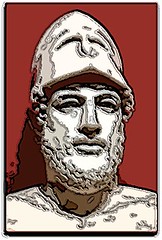
| 8623115547 | Mesopotamia | A region between the Tigris and Euphrates rivers that developed the first urban societies. In the Bronze Age this area included Sumer and the Akkadian, Babylonian and Assyrian empires, In the Iron Age, it was ruled by the Neo-Assyrian and Neo-Babylonian empires. | | 0 |
| 8623115548 | Fertile Crescent | The Tigris and Euphrates Rivers gave life to the first known agricultural villages in this area about 10,000 years ago and the first known cities about 5,000 years ago. Includes Mesopotamia, Palestine, and the Nile. | | 1 |
| 8623115549 | ziggurat | A temple tower of ancient Mesopotamia, constructed of square or rectangular terraces of diminishing size, usually with a shrine made of blue enamel bricks on the top | | 2 |
| 8623115550 | pictograms | A pictorial symbol or sign representing an object or concept. Used by many non-alphabetic written scripts. | | 3 |
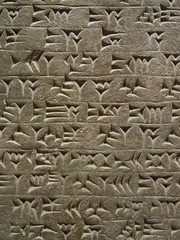
| 8623115551 | cuneiform | The earliest known form of writing, which was used by the Sumerians. The name derives from the wedge shaped marks made with a stylus into soft clay. Used from the 3000s BCE to the 100s BCE. | | 4 |
| 8623115552 | ideograms | A character or figure in a writing system in which the idea of a thing is represented rather than it's name (example: Chinese) | | 5 |
| 8623115553 | Xia | A legendary Chinese dynasty that was not believed to exist until relatively recently. Walled towns ruled by area-specific kings assembled armies, built cities, and worked bronze. Created pictograms which would evolve in to the first Chinese script. | | 6 |
| 8623115554 | Shang | An early Chinese dynasty. Not a unified Chinese state. Instead rulers and their relatives gave orders through a network of cities. Earliest evidence of Chinese writing comes from this period. | | 7 |
| 8623115555 | Zhou | Succeeded the Shang dynasty. Similar to the Shang And Xia dynastic periods in that China was fragmented politically. Yet, despite the lack of true centralization, this was one of the longest Chinese dynasties, lasting about 600 years. It left substantial written records, unlike the preceding dynasties. | | 8 |
| 8623115556 | Yellow River | Also known as the Huang-He. The second longest river in China. The majority of ancient Chinese civilizations originated in its valley. | | 9 |
| 8623115557 | Zoroastrianism | One of the first monotheistic religions, particularly one with a wide following. It was central to the political and religious culture of ancient Persia. | | 10 |
| 8623115558 | Hellenistic | Of or influenced by the Greek Empire. A type of culture typically referred to after the conquests of Alexander the Great. | | 11 |
| 8623115559 | Caste system | India's traditional social hierarchy. | | 12 |
| 8623115560 | Four Noble Truths | 1. Suffering is always present in life
2. Desire is the cause of suffering
3. Freedom from suffering can be achieved in nirvana
4. The Eightfold Path leads to nirvana |  | 13 |
| 8623115561 | Silk Road | Connected China, India, and the Middle East. Traded goods and helped to spread culture. | | 14 |
| 8623115562 | Empress Wu | the only woman to rule China in her own name, expanded the empire and supported Buddhism during the Tang Dynasty. | | 15 |
| 8623115563 | mantra | The repetition of mystic incantations in Hinduism and Buddhism. | | 16 |
| 8623115564 | Maya | Never an empire but an extensive and culturally advanced Mesoamerican society with many cities in the Yucatan. | | 17 |
| 8623115565 | Neo-Assyrian | The agressive Mesopotamian empire created after an Assyrian resurgence, which initiated a series of conquests until a combined attack by Medes and Babylon defeated them resulting in the Persian Empire. | | 18 |
| 8623115566 | Qin | 1st unified imperial Chinese dynasty | | 19 |
| 8623115567 | Rama | Incarnation of Hindu god Vishnu made famous in the Ramayana | | 20 |
| 8623115568 | Buddha | Means "Enlightened One." He is said to have renounced his worldly possessions and taught of a way to overcome suffering. | | 21 |
| 8623115569 | Apostle Paul | The man who was instrumental in its spreading Christianity beyond its early Jewish roots, particularly to the Greeks. | | 22 |
| 8623115570 | Epic of Gilgamesh | An epic poem from Mesopotamia, and among the earliest known works of literary writing. | | 23 |
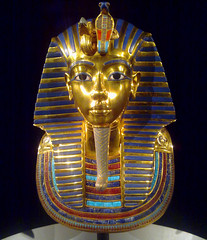
| 8623115571 | Hieroglyphics | designating or pertaining to a pictographic script, particularly that of the ancient Egyptians, in which many of the symbols are conventionalized, recognizable pictures of the things represented | | 24 |
| 8623115572 | Buddhism | a religion, originated in India by Buddha (Gautama) and later spreading to China, Burma, Japan, Tibet, and parts of southeast Asia, holding that life is full of suffering caused by desire and that the way to end this suffering is through enlightenment that enables one to halt the endless sequence of births and deaths to which one is otherwise subject. | | 25 |
| 8623115573 | Mandate of Heaven | A political theory developed during the Zhou Dynasty of ancient China in which those in power were believed to have the the right to rule from divine authority. | | 26 |
| 8623115574 | Confucianism | Chinese ethical and philosophical teachings of Confucius which emphasized education, family, peace, and justice | | 27 |
| 8623115575 | Daoism | Philosophy that teaches that everything should be left to the natural order; rejects many of the Confucian ideas but coexisted with Confucianism in China | | 28 |
| 8623115576 | Babylonian Empire | Empire in Mesopotamia which was formed by Hammurabi, the sixth ruler of the invading Amorites | | 29 |
| 8623115577 | Carthage | This city has existed for nearly 3,000 years, developing from a Phoenician colony of the 1st millennium BC into the capital of the Carthaginian Empire. The expanding Roman Republic took control of many of its outposts after the two Punic Wars. | | 30 |
| 8623115578 | Warring States Period | the period from 475 BC until the unification of China under the Qin dynasty, characterized by lack of centralized government in China. It followed the Zhou dynasty. | | 31 |
| 8623115579 | Zhou dynasty | the longest lasting Chinese dynasty, during which the use of iron was introduced. | | 32 |
| 8623115580 | Safavid | The _________ Empire that ruled Persia (Iran) between 1502-1736. | | 33 |
| 8623115581 | Sikh | A member of a religious community founded in the Punjab region of India. Developed in the 15th century. They believe in One Immortal Being and the teachings of ten Gurus, starting with Guru Nanak. |  | 34 |
| 8623115582 | Shakespeare | A popular English playwright and poet in the 16th century. | | 35 |
| 8623115583 | Colombian Exchange | The trading of various animals, diseases, and crops between the Eastern and Western hemispheres | | 36 |
| 8623115584 | Aztecs | Also known as Mexica, they created a powerful empire in central Mexico (1325-1521 C.E.). They forced defeated peoples to provide goods and labor as a tax. |  | 37 |
| 8623115585 | Babylon | The largest and most important city in Mesopotamia. It achieved particular eminence as the capital of the king Hammurabi in the eighteenth century B.C.E. and the Neo-Babylonian king Nebuchadnezzar in the sixth century B.C.E. (p. 29) |  | 38 |
| 8623115586 | Black Death | The common name for a major outbreak of plague that spread across Asia, North Africa, and Europe in the mid-fourteenth century, carrying off vast numbers of persons. | | 39 |
| 8623115587 | capitalism | The economic system of large financial institutions-banks, stock exchanges, investment companies-that first developed in early modern Europe. The belief that all people should seek their own profit gain and that doing so is beneficial to society. See Adam Smith, Wealth of Nations (1776). | | 40 |
| 8623115588 | Charlemagne | King of the Franks (r. 768-814); emperor (r. 800-814). Through a series of military conquests he established the Carolingian Empire, which encompassed all of Gaul and parts of Germany and Italy. Illiterate, though started an intellectual revival. |  | 41 |
| 8623115589 | Charles Darwin | English naturalist. He studied the plants and animals of South America and the Pacific islands, and in his book On the Origin of Species by Means of Natural Selection (1859) set forth his theory of evolution. |  | 42 |
| 8623115590 | Christopher Columbus | Genoese mariner who in the service of Spain led expeditions across the Atlantic, reestablishing contact between the peoples of the Americas and the Old World and opening the way to Spanish conquest and colonization. | | 43 |
| 8623115591 | Columbian Exchange | The exchange of plants, animals, diseases, and technologies between the Americas and the rest of the world following Columbus's voyages. |  | 44 |
| 8623115592 | Confucius | His doctrine of duty and public iservice had a great influence on subsequent Chinese thought and served as a code of conduct for government officials. Although his real name was Kongzi (551-479 B.C.E.). |  | 45 |
| 8623115593 | Hellenism | Greek culture spread across western Asia and northeastern Africa after the conquests of Alexander the Great. The period ended with the fall of the last major Hellenistic kingdom to Rome, but Greek cultural influence persisted until the spread of Islam. |  | 46 |
| 8623115594 | Indian Ocean | This area possessed the biggest network of sea-based trade in the postclassical period prior to the rise of Atlantic-based trade. | | 47 |
| 8623115595 | 220 CE | Date: End of Han Dynasty
(Hint: _20 CE) | | 48 |
| 8623115596 | 4th century CE | Date: Beginning of Trans-Saharan Trade Routes
(Hint: ___ century CE) | | 49 |
| 8623115597 | 632 CE | Date: Rise of Islam
(Hint: __2 CE) | | 50 |
| 8623115598 | 1095 CE | Date: First Crusade
(Hint: ___5 CE) | | 51 |
| 8623115599 | 1258 CE | Date: Mongols sack Baghdad
(Hint: __58 CE) | | 52 |
| 8623115600 | 1347 CE | Date: Black Death hits Europe
(Hint: ___7 CE) | | 53 |
| 8623115601 | 1502 | Date: Slaves begin moving to Americas (Hint: 1__2) | | 54 |
| 8623115602 | 476 CE | Date: Fall of Rome
(Hint: _76 CE) | | 55 |
| 8623115603 | Confucianism | The system of ethics, education, and statesmanship taught by Confucius and his disciples, stressing love for humanity, ancestor worship, reverence for parents, and harmony in thought and conduct. | | 56 |
| 8623115604 | Daoism | philosophical system developed by of Lao-tzu and Chuang-tzu advocating a simple honest life and noninterference with the course of natural events | | 57 |
| 8623115605 | Han Dynasty | imperial dynasty that ruled China (most of the time) from 206 BC to 221 and expanded its boundaries and developed its bureaucracy |  | 58 |
| 8623115606 | Tang Dynasty | dynasty often referred to as China's Golden age that reigned during 618 - 907 AD; China expands from Vietnam to Manchuria |  | 59 |
| 8623115607 | Incas | Ancient civilization (1200-1500AD) that was located in the Andes in Peru |  | 60 |
| 8623115608 | Silk Road | An ancient trade route between China and the Mediterranean Sea extending some 6,440 km (4,000 mi) and linking China with the Roman Empire. Marco Polo followed the route on his journey to Cathay. | | 61 |
| 8623115609 | Song Dynasty | During this Chinese dynasty (960 - 1279 AD) China saw many important inventions. There was a magnetic compass; had a navy; traded with india and persia (brought pepper and cotton); paper money, gun powder; landscape black and white paintings |  | 62 |
| 8623115610 | Trans Saharan trade | route across the sahara desert. Major trade route that traded for gold and salt, created caravan routes, economic benefit for controlling dessert, camels played a huge role in the trading | | 63 |
| 8623115611 | Vikings | one of a seafaring Scandinavian people who raided the coasts of northern and western Europe from the eighth through the tenth century. | | 64 |
| 8623115612 | Yellow River | English name for the Huang He River in the north of China where the first Chinese civilization emerged. | | 65 |
| 8623115613 | Zheng He | An imperial eunuch and Muslim, entrusted by the Ming emperor Yongle with a series of state voyages that took his gigantic ships through the Indian Ocean, from Southeast Asia to Africa. | | 66 |
| 8623115614 | realism | Major Western artistic style of the 19th century. Against Romanticism, precise imitation w/o alteration, personal experiences, peasants/ everyday people |  | 67 |
| 8623115615 | impressionism | Major Western artistic style that gained prominence in the second half of the 1800s and into the 1900s.Against Realism, visual impression of a moment, style that seeks to capture a feeling or experience, often very colorful. | 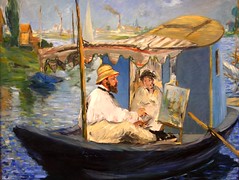 | 68 |
| 8623115616 | romanticism | Major Western artistic style of 1700s and 1800s.Against Neoclassicism, spontaneous, mysterious/ exotic, untamed/ powerful nature, embraces folklore and national traditions, glorification of heroes |  | 69 |
| 8623115617 | Mughal Empire | an Islamic imperial power that ruled a large portion of Indian subcontinent which began in 1526, invaded and ruled most of Hindustan (South Asia) by the late 17th and early 18th centuries, and ended in the mid-19th century. | | 70 |
| 8623115618 | Latin America | This region in the 19th century experienced a wave of independence movements following the American and French Revolutions. | | 71 |
| 8623115619 | Hinduism | The architecture of this 12th century temple complex of Angkor Wat in Cambodia shows the influence of what religious culture? |  | 72 |
| 8623115620 | Buddhism | This artistic ritual is related to what religion? |  | 73 |
| 8623115621 | Millennium | A historical period of 1000 years. | | 74 |
| 8623115622 | Century | A period of 100 years. | | 75 |
| 8623115623 | 1800s | The 19th century includes what years? | | 76 |
| 8623115624 | 1700s | The 18th century includes what years? | | 77 |
| 8623115625 | 1600s | The 17th century includes what years? | | 78 |
| 8623115626 | Hieroglyphics | Egyptian writing that involved using pictures to represent words. | | 79 |
| 8623115627 | Caste System | The system in old India that seperated the people into social categories, but based mostly on color with the Aryans always on the top of the social pyramid. | | 80 |
| 8623115628 | Karma | The belief that actions in this life, whether good or bad, will decide your place in the next life. | | 81 |
| 8623115629 | Shang Dynasty | (1766-1122 BCE) The Chinese dynasty that rose to power due to bronze metalurgy, war chariots, and a vast network of walled towns whose recognized this dynasty as the superior. | | 82 |
| 8623115630 | Zhou Dynasty | A decentralized Chinese dynasty in China because of the massive size, and whose emperor was the first to claim to be a link between heaven and earth. Iron metallurgy increased in this dynasty. | | 83 |
| 8623115631 | Mandate of Heaven | The Chinese belief that the emperor claimed to be the "son of heaven" and therefore has the right to rule. | | 84 |
| 8623115632 | Period of Warring States | The period in Chinese history (403-221 BCE) in which many different states emerged and were fighting for control of China. | | 85 |
| 8623115633 | Zoroastrianism | A religion that developed in early Persia and stressed the fight between the forces of good and the forces of evil and how eventually the forces of good would prevail. | | 86 |
| 8623115634 | Confucius | (551-479 BCE) A Chinese philosopher known also as Kong Fuzi and created one of the most influential philosophies in Chinese history. | | 87 |
| 8623115635 | Han Dynasty | (202 BCE-220 CE) This dynasty continued the centralization of the Qin Dynasty, but focused on Confucianism and education instead of Legalim. | | 88 |
| 8623115636 | Siddhartha | The founder of the religion Buddhism who believed that all life was suffering. Also known as the Buddha. | | 89 |
| 8623115637 | Four Noble Truths | All life invoves suffering; desire is the cause of suffering; elimination of desire brings an end to suffering; a disciplined life conducted life brings the elimination of desire. | | 90 |
| 8623115638 | Quran | The holy book of Muslims. | | 91 |
| 8623115639 | Smallpox | The overall deadliest known disease in the history of the world. In the 20th century alone there were approximately 500,000,000 people who died of this disease. | | 92 |
| 8623115640 | Tang Dynasty | (618-907 CE) The Chinese dynasty that was much like the Han, who used Confucianism. This dynasty had the equal-field system, a bureaucracy based on merit, and a Confucian education system. |  | 93 |
| 8623115641 | Sui Dynasty | (589-618 CE) The Chinese dynasty that was like the Qin Dynasty in imposing tight political discipline; this dynasty built the Grand Canal which helped transport the rice in the south to the north. |  | 94 |
| 8623115642 | Song Dynasty | (960-1279 CE) The Chinese dynasty that placed much more emphasis on civil administration, industry, education, and arts other than military. |  | 95 |
| 8623115643 | Neo-Confucianism | The Confucian response to Buddhism by taking Confucian and Buddhist beliefs and combining them into this. However, it is still very much Confucian in belief. | | 96 |
| 8623115644 | Junks | Chinese ships, particularly from the 1400s, are often called these. It was a sturdy Chinese ship design and the largest of its kind were treasures ships that could carry a thousand tons of cargo. |  | 97 |
| 8623115645 | Dhows | Large ships favored by Indian, Persian, and Arab sailors that could carry up to four hundred tons of cargo. |  | 98 |
| 8623115646 | Charlemagne | (768-814 CE) Crowned king in 800 CE by the pope; can be compared to Harsha; brought back unified rule to Europe only during his life; used the missi dominici to check up on imperial officials. |  | 99 |
| 8623115647 | Serfs | People who gave their land to a lord and offered their servitude in return for protection from the lord. | | 100 |
| 8623115648 | Mongols | People from Central Asia when united ended up creating the largest single land empire in history. | | 101 |
| 8623115649 | Genghis Khan | Also known as Temujin; he united the Mongol tribes into an unstoppable fighting force; created largest single land empire in history. |  | 102 |
| 8623115650 | Yuan Dynasty | (1279-1368 CE) The dynasty with Mongol rule in China; centralized with bureaucracy but structure is different: Mongols on top->Persian bureaucrats->Chinese bureuacrats. |  | 103 |
| 8623115651 | First Crusade | 1099 CE, Jerusalem fell the Christian crusaders; the only successful crusade. |  | 104 |
| 8623115652 | Bubonic Plague | Also called the Black Death; is believed to be the deadly disease that spread through Asia and Europe and killed more than a third of the people in parts of China and Europe. | | 105 |
| 8623115653 | Silk Road | A system of ancient caravan routes across Central Asia, along which traders carried silk and other trade goods. |  | 106 |
| 8623115654 | MIng Dynasty | Succeeded Mongol Yuan dynasty in China in 1368; lasted until 1644; initially mounted huge trade expeditions to southern Asia and elsewhere, but later concentrated efforts on internal development within China. | | 107 |
| 8623115655 | Columbian Exchange | The exchange of plants, animals, diseases, and technologies between the Americas and the rest of the world following Columbus's voyages. | | 108 |
| 8623115656 | Middle Passage | The voyage that brought enslaved Africans across the Atlantic Ocean to North America and the West Indies. | | 109 |
| 8623115657 | Ottoman Empire | Islamic state founded by Osman in northwestern Anatolia. After the fall of the Byzantine Empire, the Ottoman Empire was based at Istanbul (formerly Constantinople) from 1453-1922. It encompassed lands in the Middle East, North Africa, the Caucasus, and eastern Europe. | | 110 |
| 8623115658 | Foot Binding | Practice in Chinese society to mutilate women's feet in order to make them smaller; produced pain and restricted women's movement; made it easier to confine women to the household. | | 111 |
| 8623115659 | Safavids | A Shi'ite Muslim dynasty that ruled in Persia (Iran and parts of Iraq) from the 16th-18th centuries that had a mixed culture of the Persians, Ottomans and Arabs. | | 112 |
| 8623115660 | Mughal Empire | Muslim state (1526-1857) exercising dominion over most of India in the sixteenth and seventeenth centuries; a minority of Muslims ruled over a majority of Hindus. | | 113 |
| 8623115661 | Urbanization | During the nineteenth century, migrants were relocating towards cities. This process is called _______. | | 114 |
| 8623115662 | Hierarchies | A Social structure that organizes ranks people such as in a class system. | | 115 |
| 8623115663 | Akkad | Sargon of _____ began taking over Mesopotamian city-states in 2200BC to form the worlds first empire. | | 116 |
| 8623115664 | rituals | Rulers used religious ideas to legitimize their rule. In China emperors' public performance of Confucian _____ was an example of this. | | 117 |
| 8623115665 | Trade | By 1750 there were states on the rise (like European empires) and declining states (like the Ottomans and Mughals). This occurred because of change in global ____ patterns | | 118 |
| 8623115666 | Trans Atlantic Slave Trade | New Atlantic trade systems were made because of European empires in the Americas. This system was mainly from Africa to the Americas and mainly took people out of Africa. | | 119 |
| 8623115667 | Wine | Romans were very fond of this beverage and it was a major part of the Mediterranean economy and was assiminated by the places they conquered as they Romanized the Mediteranean region. | | 120 |
| 8623115668 | Small pox | As one of the earliest kinds of vaccinations, the people of Ancient China would swallow powdered fleas on infected cows to help prevent a popular disease, that is currently extinguished, known as ____ ____. | | 121 |
| 8623115669 | Indian Ocean | Between 1450-1750 in this body of water European empires (particularly the Portuguese and Dutch) had many interconnected trading posts and enclaves. | | 122 |
| 8623115670 | Influenza | The last global pandemic in history that killed millions was that of _______ in 1918. | | 123 |
| 8623115671 | Buddha | Means "Enlightened One." He is said to have found a path for overcoming suffering. | | 124 |
| 8623115672 | BCE | Dates that countdown backwards to the year zero. | | 125 |
| 8623115673 | CE | Represents dates after the year zero. Stands for Common Era. | | 126 |
| 8623115674 | Persian Wars | Two failed attempts by the Persian Empire in the 400s BCE to conquer the Greeks in the 400s BCE | | 127 |
| 8623115675 | Karma | A Hindu and Buddhist concept that by doing good to others, good will happen to you (and vise versa) | | 128 |
| 8623115676 | Daoism | Chinese religion from 500s BCE that emphasized following the mystical and indescribable "Way." It celebrated the chaos and contradictions of reality as well as the harmony of nature. The Yin and Yang symbolizes many aspects of this religion. |  | 129 |
| 8623115677 | Qin | Chinese dynasty in 200s BCE. Lasted 15 years. Unified Chinese kingdoms, built the Great Wall and its emperor was the legalistic Shi Huangdi. | | 130 |
| 8623115678 | Persian Empire | Greatest empire in the world up to 500 BCE. Spoke an Indo-European language. A multi-ethnic and multi-religious empire. Fell to Alexander the Great. |  | 131 |
| 8623115679 | Roman Empire | Existed from 27 BCE to about 400 CE. Conquiered entire Mediterranean coast and most of Europe. Ruled by an emperor. Eventually oversaw the rise and spread of Christianity. | | 132 |
| 8623115680 | Reincarnation | Hindu and Buddhist belief that souls are reborn into new bodies over and over. | | 133 |
| 8623115681 | Confucianism | Chinese belief system from 500s BCE that emphasized family loyalty, respecting elders, education, obedience, and ancestors. | | 134 |
| 8623115682 | Buddhism | Belief system that started in India in the 500s BC. Happiness can be achieved through removal of one's desires. Believers seek enlightenment and the overcoming of suffering. | | 135 |
| 8623115683 | Han | Chinese Dynasty (206 BCE - 220 CE) ruled a centralized and growing empire for 400 years. Complex centralized buraucracy with Civil service system based on Confucianism. Traded on Silk Road. | | 136 |
| 8623115684 | Americas | People in this region developed complex urban societies and empires without the benefit of large pack animals or Iron technology. | | 137 |
| 8623115685 | Middle East | Christianity first developed in Palestine on the Eastern Mediterranean Sea, which is in what general region of the world? http://farm4.staticflickr.com/3655/3333898964_b06a06dda7.jpg | | 138 |
| 8623115686 | Qing | The Chinese government is ruled by this ethnically Manchurian dynasty during this period. They attempted to hold on to pre-industrial ways and resisted foreign involvement in their country (without success). | | 139 |
| 8623115687 | Ottoman Empire | Called the "Sick Man of Europe" due to their slow imperial decline and inability to adapt to the new political and economic developments of this period. | | 140 |
| 8623115688 | Capitalism | An economic system based on private ownership of property. | | 141 |
| 8623115689 | Shogun | A general who ruled Japan in the emperor's name. |  | 142 |
| 8623115690 | Daimyo | A Japanese feudal lord who commanded a private army of samurai. |  | 143 |
| 8623115691 | Samurai | Class of warriors in feudal Japan who pledged loyalty to a noble in return for land. |  | 144 |
| 8623115692 | Ottoman Empire | Islamic state founded by Osman in northwestern Anatolia. After the fall of the Byzantine Empire, the Ottoman Empire was based at Istanbul (formerly Constantinople) from 1453-1922. It encompassed lands in the Middle East, North Africa, the Caucasus, and eastern Europe. |  | 145 |
| 8623115693 | Safavid Empire | Shi'ite Muslim dynasty that ruled Persia between 16th and 18th centuries. |  | 146 |
| 8623115694 | Mughal Empire | an Islamic imperial power that ruled a large portion of Indian subcontinent which began in 1526, invaded and ruled most of Hindustan (South Asia) by the late 17th and early 18th centuries, and ended in the mid-19th century. |  | 147 |
| 8623115695 | Qing Dynasty | (1644-1911 CE), the last imperial dynasty of China which was overthrown by revolutionaries; was ruled by the Manchu people: began to isolate themselves from Western culture. |  | 148 |
| 8623115696 | Serfdom | A type of labor commonly used in feudal systems in which the laborers work the land in return for protection but they are bound to the land and are not allowed to leave or to peruse their a new occupation. This was common in early Medieval Europe as well as in Russia until the mid 19th century. |  | 149 |
| 8623115697 | nation state | A state who's territory corresponds to that occupied by a particular ethnicity that has been transformed into a nationality. |  | 150 |