

AP World History Period 6 vocabulary Flashcards
Terms : Hide Images
| 6777605257 | African National Congress | ANC; South African political party formed in 1912; strongly opposed to apartheid | 0 | |
| 6777605258 | apartheid | "separateness"; a series of laws initiated by the Afrikaner National Party in South Africa which was designed to divide South African society by skin color and ethnicity; this system also reserved South Africa's resources for whites |  | 1 |
| 6777605259 | Ayatollah Ruholla Khomeini | lived from 1900 to 1989; religious leader of the Islamic Republic of Iran | 2 | |
| 6777605260 | Big Bang theory | theory which suggests that at some moment all matter in the universe was contained in a single point, which is considered the beginning of the universe | 3 | |
| 6777605261 | Vladimir Lenin | born Vladimir Ilyich Ulyanov; lived from 1870 to 1924; the leader of the Russian Soviet Federative Socialist Republic and premier of the Soviet Union |  | 4 |
| 6777605262 | Central Powers | one of the two warring factions in World War I; composed of Germany, Austria-Hungary, the Ottoman Empire and Bulgaria; also known as the Quadruple Alliance | 5 | |
| 6777605263 | Charles de Gaulle | lived from 1890 to 1970; French general and statesman who led French forces in World War II; served as the president of France from 1959 to 1969 |  | 6 |
| 6777605264 | Che Guevara | lived from 1928 to 1967; Argentine marxist revolutionary who was a major figure in the Cuban Revolution |  | 7 |
| 6777605265 | Chiang Kai-shek | lived from 1887 to 1975; Chinese military officer who was leader of the Guomindang; fled to Taiwan after the Chinese Communist Party came to power in China |  | 8 |
| 6777605266 | Chinese Revolution | prolonged communist movement in China and lasted from 1946 to 1950; resulted in the communist takeover of mainland China |  | 9 |
| 6777605267 | Cold War | a sustained state of political and military tension between members of NATO and members of the Warsaw Pact; dissolution of the Soviet Union was the end of this "conflict" | 10 | |
| 6777605268 | collectivization | also known as collective farming and communal farming; system in which the holdings of several farmers are run collectively as a unit; imposed by the government in the Soviet Union | 11 | |
| 6777605269 | command economy | a.k.a planned economy; the economic system in which decisions regarding production and investment are embodied in a plan formulated by a central authority, usually by a public body such as a government agency | 12 | |
| 6777605270 | containment | the United States policy to prevent the spread of communism abroad during the Cold War; a response to a series of moves by the Soviet Union to enlarge communist influence in Eastern Europe, China, Korea, Africa, and Vietnam | 13 | |
| 6777605271 | Cuban missile crisis | a 13-day confrontation in October 1962 between the Soviet Union and the United States; Soviet missiles moved to Cuban soil in an agreement by Fidel Castro and Nikita Khrushchev; U.S. responds by blockading Cuba; Khrushchev and U.S. President John F. Kennedy reach an agreement in which the Soviets would remove their missiles from Cuba in return for an American promise not to invade Cuba |  | 14 |
| 6777605272 | cultural imperialism | the practice of promoting or imposing one's culture on another, usually between powerful societies and less-powerful ones | 15 | |
| 6777605273 | Cultural Revolution | also known as the Great Proletarian Cultural Revolution; launched by Mao in the late 1960's; aimed to combat the capitalist tendencies he believed had penetrated even the highest ranks of the communist party itself; involved new policies to bring health care and education to the countryside and reinvigorate earlier efforts at rural industrialization under local control | 16 | |
| 6777605274 | decolonization | the process of the dissolution of colonial territories and the establishment of independent nations | 17 | |
| 6777605275 | Deng Xiaoping | lived from 1904 to 1997; successor to Mao Zedong; reformist who sought to incorporate The People's Republic of China into the world economy; dismantled collectivized farming, state enterprises given greater authority, welcomed foreign investment; crushed democracy movement in Beijing's Tiananmen Square |  | 18 |
| 6777605276 | environmentalism | ideology which regards the environmental concerns | 19 | |
| 6777605277 | European Economic Community | EEC; also known as the Common Market; founded in 1957; originally consisted of Italy, France, West Germany, Belgium, the Netherlands, and Luxembourg; expanded membership to almost all of Europe, including former communist states; renamed the European Union in 1994 | 20 | |
| 6777605278 | Fascism | political ideology which was intensely nationalistic; celebrated action and placed faith in charismatic leaders; and condemned individualism, liberalism, feminism, parliamentary democracy, and communism; adopted by Italy, Germany, and Japan in the years following World War I | 21 | |
| 6777605279 | Five Year Plan | a planned economy in which a committee came together to determine rations | 22 | |
| 6777605280 | fundamentalism | ideology which demands strict adherence to orthodox theological doctrines | 23 | |
| 6777605281 | Gamel Abdel Nasser | lived from 1918 to 1970; second President of Egypt from 1956 to 1970; planned the overthrow of the monarchy and sought to nationalize the Suez Canal | 24 | |
| 6777605282 | UN General Assembly | one of the six principal organs of the United Nations and the only one in which all member nations have equal representation; oversee the budget of the United Nations, appoint the non-permanent members to the Security Council, receive reports from other parts of the United Nations and make recommendations in the form of General Assembly Resolutions |  | 25 |
| 6777605283 | genocide | the systematic destruction of all or part of a racial, ethnic, religious or national group | 26 | |
| 6777605284 | Getulio Vargas | lived from 1882 to 1954; ruled Brazil from 1930 to 1945; discrediting of established export elites during the Great Depression leads to his dictatorship; supported the military; took steps to modernize Brazil's urban industrial sector | 27 | |
| 6777605285 | global warming | term which refers to the continuing rise in the average temperature of Earth's climate system; viewed as a result of human emissions of greenhouse gases | 28 | |
| 6777605286 | globalization of democracy | the spread of democracy throughout the world | 29 | |
| 6777605287 | Great Depression | economic depression as a result of the crash of the American stock market; lasted from 1929 until World War II; causes drop in world trade, loss of investment, and businesses unable to make profit; countries or colonies tied to exporting one or two products hardhit as the West consumed less; conditions resulting in the Great Depression led to widespread unemployment and social tensions | 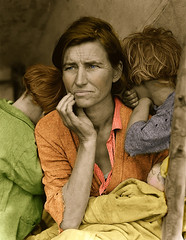 | 30 |
| 6777605288 | Great Leap Forward | lasted from 1958 to 1960; marked Mao's response to distortions of Chinese socialism; promoted smallscale industrialization in rural areas; tried to foster widespread and practical technological education for all rather than relying on a small elite of highly trained technical experts; envisioned an immediate transition to full communism in the "people's communes" rather than waiting for industrial development to provide the material basis for that transition; massive famine which followed temporarily discredited Mao's radicalism | 31 | |
| 6777605289 | Great Purges | also known as the Terror; period of immense paranoia in the Soviet Union of the late 1930's in which communist members accused each other being corrupted by capitalist ideals; enveloped tens of thousands of prominent communists, including all of Lenin's top associates, and millions more of ordinary peoples; based on suspicious associations in the past, denunciations by colleagues, connections to foreign countries, or bad luck; such people were arrested in the middle of the night, then tried and sentenced to either death or long harsh years in remote labor camps known as gulags; close to 1 million peoples executed between 1936 and 1941; additional 4 to 5 million people sent to the gulag, where they were forced to work in horrendous conditions and died in appalling numbers | 32 | |
| 6777605290 | Green Revolution | a series of research, and development, and technology transfer initiatives, occurring between the 1940s and the late 1960s, that increased agriculture production worldwide, particularly in the developing world | 33 | |
| 6777605291 | Adolf Hitler | lived from 1889 to 1945; leader of the Nazi party in Germany; chancellor of Germany from 1933 to 1945; dictator of Nazi Germany from 1934 to 1945 |  | 34 |
| 6777605292 | Ho Chi Minh | lived from 1890 to 1969; Vietnamese communist revolutionary leader; was prime minister (from 1945 to 1955) and president (from 1945 to 1969) of the Democratic Republic of Vietnam |  | 35 |
| 6777605293 | Holocaust | the mass murder of approximately six million Jews during World War II; a program of systematic state-sponsored murder by Nazi Germany; led by Adolf Hitler and the Nazi Party | 36 | |
| 6777605294 | International Monetary Fund | IMF; established in 1944 by the Bretton Woods Conference in New Hampshire; sought to promote market economies, free trade, and high growth rates | 37 | |
| 6777605295 | Indian National Congress | INC; organization established in 1885; gave expression to the idea of India as a single nation; played a major role in India's independence movement from British colonial rule | 38 | |
| 6777605296 | Iranian Cultural Revolution | lasted from 1980 to 198; a period following the Iranian Revolution where intellectuals of Iran were purged of Western and non-Islamic influences to bring it in line with Shia Islam; closed universities between 1980 and 1983, banned many books, and purged thousands of students and lecturers from schools | 39 | |
| 6777605297 | iron curtain | the heavily fortified border between Eastern and Western Europe | 40 | |
| 6777605298 | Islamic renewal | also referred to as Islamic revival; refers to a renewing of the Islamic religion throughout the Islamic world, that began roughly sometime in 1970s; sought greater religious piety and a growing adoption of Islamic culture | 41 | |
| 6777605299 | Jawaharlal Nehru | lived from 1889 to 1964; first Prime Minister of India and was a leading figure in the independence movement against British rule over India |  | 42 |
| 6777605300 | League of Arab States | a regional organization of Arab countries in and around North Africa, the Horn of Africa, and Southwest Asia; formed in Cairo in 1945 with six members: Egypt, Iraq, Transjordan (Jordan), Lebanon, Saudi Arabia and Syria; currently has 22 members | 43 | |
| 6777605301 | League of Nations | international peacekeeping organization founded as a result of the First World World; proposed by US president Woodrow Wilson; committed to the principle of "collective security" and intended to avoid the repetition of war | 44 | |
| 6777605302 | Mahatma Gandhi | lived from 1869 to 1948; leader of the Indian nationalist movement during British control over India; used nonviolent civil disobedience, such as hunger strikes |  | 45 |
| 6777605303 | Mao Zedong | lived from 1893 to 1976; Chinese communist revolutionary and leader of the People's Republic of China from its establishment 1949 to his death in 1976 |  | 46 |
| 6777605304 | Marshall Plan | plan which sought to rebuild and reshape devastated European economies; funneled Europe some $12 billion with numerous advisers and technicians; motivated by combination of humanitarian concern, a desire to prevent a new depression by creating overseas customers for American goods, and interest in undermining the growing appeal of European communist parties; required European nations to cooperate with one another |  | 47 |
| 6777605305 | Mikhail Gorbachev | born in 1931; last general secretary of the Soviet Union (1985 to 1991); passed reforms such as perestroika and policies such as glasnost which led to the dissolution of the Soviet Union |  | 48 |
| 6777605306 | military-industrial complex | the policy and monetary relationships which exist between legislators, national armed forces, and the military industrial base that supports them; include political contributions, political approval for military spending, lobbying to support bureaucracies, and oversight of the industry; most often used in reference to the system behind the military of the United States | 49 | |
| 6777605307 | Muhammad Ali Jinnah | lived from 1876 to 1948; founder of Pakistan and the leader of the All-India Muslim League until Pakistan's independence |  | 50 |
| 6777605308 | Munich Conference | a conference in Munich which permitted Nazi Germany's annexation of portions of Czechoslovakia along German borders mainly inhabited by German speakers; territory now known as "Sudetenland"; widely regarded as a failed act of appeasement toward Germany; agreement was signed in the early hours of 30 September 1938; agreement was signed by Germany, France, the United Kingdom, and Italy; Czechoslovakia not invited to the conference | 51 | |
| 6777605309 | Benito Mussolini | lived from 1883 to 1945; leader of the Italian National Fascist Party; prime minister of Italy from 1922 to 1943 |  | 52 |
| 6777605310 | Mustafa Kemal Ataturk | lived from 1881 to 1938; founder and the first President of the Republic of Turkey; passed a series of reforms to transform the former Ottoman Empire into a modern, secular, and democratic nation | 53 | |
| 6777605311 | North American Free Trade Agreement | NAFTA; regional alliance founded in 1993 and consists of Canada, Mexico, and the United States; the world's second largest free-trade zone | 54 | |
| 6777605312 | North Atlantic Treaty Organization | NATO; a military alliance based on the North Atlantic Treaty which was signed in 1949; alliance in which its member states agree to mutual defense in response to an attack by any external party; consists of 28 member states across North America and Europe |  | 55 |
| 6777605313 | Nazi Germany | a.k.a the Third Reich; lasted from 1933 to 1945; Germany under the leadership of Adolf Hitler and the Nazi Party | 56 | |
| 6777605314 | Nelson Mandela | lived from 1918 to 2013; South African anti-apartheid revolutionary and politician; President of South Africa from 1994 to 1999; served as President of the African National Congress from 1991 to 1997 |  | 57 |
| 6777605315 | New Deal | a series of reforms proposed by United States President Woodrow Wilson; lasted from 1933 to 1942; experimental combination of reforms seeking to restart economic growth and prevent similar failures in the future; reflected the thinking of British economist John Maynard Keynes; argued that government actions and spending programs could moderate recessions and depressions; consisted of immediate programs of public spending (for dams, highways, bridges, and parks) and long-term reforms, such as the Social Security system, minimum wage, and various relief and welfare programs | 58 | |
| 6777605316 | non-governmental organization | NGO; an organization that is neither a part of a government nor a conventional for-profit business | 59 | |
| 6777605317 | Nikita Khrushchev | lived from 1894 to 1971; leader of the Soviet Union from 1953 to 1964; responsible for the de-Stalinization of the Soviet Union and backing of the Soviet space program |  | 60 |
| 6777605318 | Osama bin Laden | lived from 1957 to 2011; Islamic militant who was the leader of the terrorist group al-Qaeda; mastermind behind the 9/11 attacks; played a key role in the US-backed effort to aid mujahideen who fought Soviet forces in Afghanistan |  | 61 |
| 6777605319 | al-Qaeda | "the base"; terrorist organization formerly headed by Osama bin Laden; behind the 9/11 attacks | 62 | |
| 6777605320 | Palestinian Liberation Organization | PLO; an organization founded in 1964 with the purpose of creating an independent State of Palestine | 63 | |
| 6777605321 | Pan-Arabism | an ideology proposing the unification of the countries of North Africa and West Asia from the Atlantic Ocean to the Arabian Sea, referred to as the Arab World | 64 | |
| 6777605322 | Pan-Africanism | an ideology which encourages the unity of Africans worldwide | 65 | |
| 6777605323 | HIV/AIDS epidemic | epidemic which was first discovered in 1981 among homosexual men and intravenous drug users in New York and San Francisco; eventually became widespread around the world, particularly sub-Saharan Africa; virus attacks and destroys the immune system, which causes a fatal disorder in the immune system; spread through sexual contact with an infected person, contact with contaminated blood, and transmission from mother to child during pregnancy and breastfeeding | 66 | |
| 6777605324 | ebola epidemic | an epidemic caused by the Ebola virus; symptoms include fever, throat and muscle pains, headaches, nausea, vomiting and diarrhea, and decreased functioning of the liver and kidneys; an 2014 outbreak in West Africa has led to a reported 142 deaths | 67 | |
| 6777605325 | influenza epidemic | an epidemic caused by the H1N1 influenza virus; lasted from 1918 to 1920; resulted in 50 to 100 million deaths, ranking it one of the most deadliest natural disasters in human history | 68 | |
| 6777605326 | perestroika | an economic program launched by Soviet leader Mikhail Gorbachev which freed state enterprises from government regulation, permitted small-scale private businesses, offered opportunities for private farming, and welcomed foreign investment in joint enterprises | 69 | |
| 6777605327 | glasnost | a Soviet policy established by Mikhail Gorbachev which permitted cultural and intellectual freedoms | 70 | |
| 6777605328 | post-modernism | a late 20th Century movement in the arts, architecture, and criticism; includes skeptical interpretations of culture, literature, art, philosophy, history, economics, architecture, fiction, and literary criticism | 71 | |
| 6777605329 | Potsdam Conference | a conference which was held from July 17 to August 2, 1945; participants include the Soviet Union, the United Kingdom, and the United States; gathered to decide how to punish Nazi Germany, sought to establish a post-war order, address peace treaty issues, and counter the effects of World War II | 72 | |
| 6777605330 | Prague Spring | a period of political liberalization in Czechoslovakia during the era of Soviet domination; began on January 5, 1968, when reformist Alexander Dubček was elected First Secretary of the Communist Party of Czechoslovakia, and continued until August 21 when the Soviet Union and other members of the Warsaw Pact invaded the country to halt the reforms | 73 | |
| 6777605331 | 1917 Russian Revolution | a collective term for the series of revolutions in 1917 which ousted Tsar Nicholas II and the tsarist autocracy and replaced it with the communist Bolshiveks | 74 | |
| 6777605332 | second-wave feminism | a period of feminist activity that first began in the United States in the early 1960s and eventually spread throughout the Western world; later became a worldwide movement that was strong in Europe and parts of Asia, such as Turkey and Israel; focused on sexuality, family, the workplace, reproductive rights, and various legal and de facto inequalities | 75 | |
| 6777605333 | UN Security Council | one of the six principal organs of the United Nations; in charge of the maintenance of international peace and security; this body is able to establish peacekeeping operations, establish international sanctions, and authorize military action through resolutions; the only UN body with the authority to issue binding resolutions to member states | 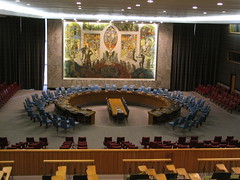 | 76 |
| 6777605334 | space race | lasted from 1955 to 1972; a competition between the Soviet Union and the United States for supremacy in spaceflight capability; pioneered advancements such as artificial satellites, as well as manned and unmanned missions into outer space | 77 | |
| 6777605335 | sphere of influence | a concept in which a state or organization has a level of cultural, economic, military, or political exclusivity, accommodating to the interests of powers outside the sphere; examples include European "semi-colony" of China | 78 | |
| 6777605336 | Joseph Stalin | lived from 1878 to 1953; the leader of the Soviet Union from 1922 to 1952; implemented a highly centralized command economy, which resulted in the transformation of Russian society from agrarian to industrialized; imprisoned millions in labor camps and deported many to remote areas; issued the Great Purges, in which hundreds of thousands, including many prominent communists, were executed |  | 79 |
| 6777605337 | theory of relativity | theory which is composed of special relativity and general relativity; proposed by Albert Einstein; proposes that measurements of various quantities are relative to the velocities of observers, space and time should be considered together and in relation to each other (Spacetime), and the speed of light is constant | 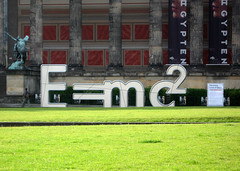 | 80 |
| 6777605338 | Third World | term which describes the countries that did not align with the Soviet Union or the United States | 81 | |
| 6777605339 | total war | war which requires the mobilization of each country's entire populations | 82 | |
| 6777605340 | transnational corporations | a.k.a multi-national corporation; an organization that owns or controls production or services facilities in one or more countries other than its home country | 83 | |
| 6777605341 | Treaty of Versailles | treaty which formally concluded the World War I in 1919; established the conditions for a World War II; Germany losses colonial empire and 15% of its European territory, required to pay heavy reparations to the winners, had its military forces severely restricted, and had to accept sole responsibility for the war; immense German resentment created from the treaty |  | 84 |
| 6777605342 | trench warfare | type of warfare using occupied fighting lines consisting largely of trenches, in which troops are significantly protected from the enemy's small arms fire and are substantially sheltered from artillery; resulted in enormous casualties while gaining or losing a few yards of ground during World War I |  | 85 |
| 6777605343 | Truman Doctrine | an international relations policy set by the U.S. President Harry Truman in a speech on March 12, 1947; stated that the U.S. would support Greece and Turkey with economic and military aid to prevent them from falling into the Soviet sphere; often referred to as the beginning of the US policy of containment |  | 86 |
| 6777605344 | United Nations | organization established in 1945 as a successor to the League of Nations; attempts to find solutions to global problems and deal with virtually any matter of concern to humanity |  | 87 |
| 6777605345 | Vietnam War | war which occurred in Vietnam, Laos, and Cambodia from 1956 to 1975; U.S. entered the war to prevent South Vietnam from becoming communist, as a result of its containment policy; Soviet Union backed Northern Vietnamese forces in an attempt to spread communism to Southeast Asia; resulted in the unification of Vietnam under a communist government and the spread of communism to Cambodia and Laos |  | 88 |
| 6777605346 | Weimar Republic | the federal republic and semi-presidential representative democracy established in 1919 in Germany to replace the imperial form of government after World War I; lasted until the Nazi Party rose to power in 1933; faced numerous problems, including hyperinflation, political extremists and continuing contentious relationships with the victors of World War I | 89 | |
| 6777605347 | Winston Churchill | lived from 1874 to 1965; British politician; Prime Minister of the United Kingdom from 1940 to 1945 and from 1951 to 1955 |  | 90 |
| 6777605348 | weapon of mass destruction | WMD; a weapon which has the capability to kill large numbers of people and decimate large swaths of land | 91 | |
| 6777605349 | Woodrow Wilson | lived from 1856 to 1924; 28th President of the United States (1913-1921); leader of the Progressive Movement; famous for his Fourteen Points, which sought to avoid another worldwide conflict |  | 92 |
| 6777605350 | Fourteen Points | a statement given on January 8, 1918 by United States President Woodrow Wilson declaring that World War I was being fought for a moral cause and called for postwar peace in Europe | 93 | |
| 6777605351 | World Bank | a United Nations international financial institution that provides loans to developing countries for capital programs; its primary goal is to reduce poverty | 94 | |
| 6777605352 | World War I | war which lasted from 1914 to 1918; also known as the Great War; pitted the Allies (United Kingdom, France, Russia, Italy, Japan, and the United States) and the Central Powers (Germany, Austria-Hungary, the Ottoman Empire, and Bulgaria); resulted in an Allied victory and Treaty of Versailles, which set the stage for another world war |  | 95 |
| 6777605353 | World War II | war which lasted from 1939 to 1945; pitted the Allied Powers (Soviet Union, United Kingdom, United States, China and France) against the Axis Powers (Germany, Japan, and Italy); resulted in an Allied victory, the creation of the United Nations, and set the stage for the Cold War |  | 96 |
| 6777605354 | World Trade Organization | WTO; established in 1994 by the 123 members of GATT; took over GATT activities in 1995; developed into a forum for settling international trade disputes | 97 | |
| 6777605355 | Yalta Conference | conference which lasted from February 4 to February 11, 1945; meeting attended by President Franklin D. Roosevelt, Prime Minister Winston Churchill and Premier Joseph Stalin for the purpose of discussing Europe's post-war reorganization; convened in the Livadia Palace near Yalta in Crimea |  | 98 |
| 6777605356 | Zionist Movement | the national movement of Jews and Jewish culture that supports the creation of a Jewish homeland in the territory defined as the Land of Israel |  | 99 |
| 6777605357 | Brazilian Solution | Combination of dictatorship, violent repression, and gov't promotion of industrialization in South American countries | 100 | |
| 6777605358 | Universal Declaration of Human Rights | A 1946 United Nations covenant binding signatory nations to the observance of specified rights. | 101 | |
| 6777605359 | nongovernmental organizations | Organizations that are not established or associated with any specific organizations. They may be recognized, however, they run on their own. Examples are Green Peace and Amnesty International. | 102 | |
| 6777605360 | Tiananmen Square | Site in Beijing where Chinese students and workers gathered to demand greater political openness in 1989. The demonstration was crushed by Chinese military with great loss of life. | 103 | |
| 6777605361 | keiretsu | Japanese business groups after the post-WWII dismantling of the zaibatsu. They are Alliances of corporations each often centered around a bank. They dominate the post-WWII Japanese economy. | 104 | |
| 6777605362 | Salvador Allende | The first Marxist politician elected president in the Americas. He was elected president of Chile in 1970 and overthrown by a US-backed military coup in 1973. | 105 | |
| 6777605363 | NATO | An international organization created in 1949 by the North Atlantic Treaty for purposes of collective security. | 106 | |
| 6777605364 | Warsaw Pact | An alliance between the Soviet Union and other Eastern European nations. This was in response to the NATO | 107 |
AP World History Chapter 22 Terms Flashcards
Terms : Hide Images
| 6729866467 | Al-Qaeda | a radical Sunni Muslim organization dedicated to the elimination of a Western presence in Arab countries and militantly opposed to Western foreign policy | 0 | |
| 6729884432 | Command economy | an economy in which production, investment, prices, and incomes are determined centrally by a government. | 1 | |
| 6729890193 | Compressed modernity | Rapid economic and political change that transformed the country into a stable nation with democratizing political institutions, a growing economy, and an expanding web of nongovernmental institutions. | 2 | |
| 6729909386 | Containment | American policy of resisting further expansion of communism around the world | 3 | |
| 6729914443 | Cultural globalization | the transmission of ideas, meanings and values around the world in such a way as to extend and intensify social relations. | 4 | |
| 6729922334 | Cultural imperialism | the economic, technological and cultural hegemony of the industrialized nations, which determines the direction of both economic and social progress, defines cultural values, and standardizes the civilization and cultural environment throughout the world. | 5 | |
| 6729956070 | Dependency theory | a model of economic and social development that explains global inequality in terms of the historical exploitation of poor nations by rich ones | 6 | |
| 6730137089 | European Union | An international organization of European countries formed after World War II to reduce trade barriers and increase cooperation among its members. | 7 | |
| 6730158635 | Fragmentation | divisions based on ethnic or cultural identity | 8 | |
| 6730200147 | Glasnost | A policy of Soviet leader Mikhail Gorbachev which called for more openness with the nations of West, and a relaxing of restraints on Soviet citizenry. | 9 | |
| 6730213624 | Global elite culture | At the beginning of the twenty-first century, the attitudes and outlook of well-educated, prosperous, Western-oriented people around the world, largely expressed in European languages, especially English. | 10 | |
| 6730232961 | Global pop culture | the entirety of attitudes, ideas, images, perspectives, and other phenomena that are within the mainstream of a given culture, especially Western culture of the early to mid-20th century and the emerging global mainstream of the late 20th and early 21st century. |  | 11 |
| 6730258998 | Globalization | Actions or processes that involve the entire world and result in making something worldwide in scope. | 12 | |
| 6730264701 | Green Revolution | The worldwide campaign to increase agricultural production from the 1940s to 60s, stimulated by new fertilizers and strains of wheat such as that by Norman Borlaug. The movement saved millions from starvation. | 13 | |
| 6730278839 | Household responsibility system | the system put into practice in China beginning in the early 1980s in which major decisions about agricultural production are made by individual farm families based on profit motive rather than by a people's commune or the government. | 14 | |
| 6730319375 | Human rights movement | a nongovernmental social movement engaged in activism related to the issues of human rights. | 15 | |
| 6730331486 | Saddam Hussein | Was a dictator in Iraq who tried to take over Iran and Kuwait violently in order to gain the land and the resources. He also refused to let the UN into Iraq in order to check if the country was secretly holding weapons of mass destruction. | 16 | |
| 6730362995 | Integration | Allows separate systems to communicate directly with each other | 17 | |
| 6730373841 | Nikita Khrushchev | A Soviet leader during the Cuban Missile Crisis. Also famous for denouncing Stalin and allowed criticism of Stalin within Russia. | 18 | |
| 6730522133 | LDC | Least Developed Country:also known as a developing country, a country that is at a relatively early stage in the process of economic development | 19 | |
| 6730528719 | MDC | Most Developed Country: sovereign state that has a highly developed economy and advanced technological infrastructure relative to other less industrialized nations | 20 | |
| 6730544709 | Market economy | an economy in which decisions regarding investment, production, and distribution are based on supply and demand, and prices of goods and services are determined in a free price system. | 21 | |
| 6730553527 | Marketization | the conversion of a national economy from a planned to a market economy. | 22 | |
| 6730655160 | Megacity | a metropolitan area with a total population in excess of ten million people | 23 | |
| 6730664416 | Mixed economy | an economic system combining private and public enterprise. | 24 | |
| 6730678864 | Modernism | A cultural movement embracing human empowerment and rejecting traditionalism as outdated. Rationality, industry, and technology were cornerstones of progress and human achievement. | 25 | |
| 6730687207 | Modernization model | model of economic development maintains that all countries go through five stages of development |  | 26 |
| 6730700092 | NAFTA | A trade agreement between Canada, the United States and Mexico that encourages free trade between these North American countries. | 27 | |
| 6730726675 | NGO | a not-for-profit organization that is independent from states and international governmental organizations. | 28 | |
| 6730736980 | Passive resistance | nonviolent opposition to authority, especially a refusal to cooperate with legal requirements. | 29 | |
| 6730748318 | Perestroika | Gorbachev's policy of "restructuring" which included reducing the direct involvement of the Communist Party leadership in the day to day governing of the nation. It was a decentralization of economic planning and controls | 30 | |
| 6730759652 | Preemption | The right of a federal law or a regulation to preclude enforcement of a state or local law or regulation. | 31 | |
| 6730781701 | Private business | a business company owned neither by non-governmental organizations nor by a relatively small number of shareholders | 32 | |
| 6730828288 | Privatization | To change from government or public ownership or control to private ownership or control. | 33 | |
| 6730837095 | Politicization of religion | the use of religious principles to promote political ends and vise versa | 34 | |
| 6730842807 | Vladimir Putin | elected president of Russia in 2000, launched reforms aimed at boosting growth and budget revenues and keeping Russia on a strong economic track. | 35 | |
| 6730884693 | Socialist market economy | The term used by the government of China to refer to the country's current economic system. It is meant to convey the mix of state control (socialism) and market forces (capitalism) that China is now following in its quest for economic development. The implication is that socialism will promote equality, while the market (especially the profit motive) will encourage people to work hard and foreign companies to invest. | 36 | |
| 6730896148 | SEZ | special economic zones; zones designed to attract foreign companies and investments to China | 37 | |
| 6730907052 | Stateless nations | a political term for ethnic/national group that does not possess its own state and is generally not the majority population in any nation state. | 38 | |
| 6730934145 | Supranational organizations | Organization of three or more states to promote shared objectives. | 39 | |
| 6730945533 | Tiananmen crisis | demonstration by students intellectuals criticizing corruption and demanding democratic reforms, government responded by sending army in to cease protests who killed hundreds of citizens | 40 | |
| 6730950152 | Universal Declaration of Human Rights | A 1948 statement in which the United Nations declared that all human beings have rights to life, liberty, and security. | 41 | |
| 6730953518 | WMD | Weapons of Mass Destruction | 42 | |
| 6730961387 | World Bank | an international financial institution that provides loans to countries of the world for capital programs. | 43 | |
| 6730968272 | WTO | an intergovernmental organization which regulates international trade. | 44 | |
| 6730973513 | Boris Yeltsin | President of the Russian Republic in 1991. Helped end the USSR and force Gorbachev to resign. |  | 45 |
Ap World History: Unit 4 Test Flashcards
Terms : Hide Images
| 5752905699 | Bartholome de las Casas | protested mistreatment of Indians in encomienda system; suggest African slaves should be used instead | 0 | |
| 5752905700 | Sociedad de castas | a social hierarchy that developed when multiracial societies are created consisting of Europeans, Indians, and Africans | 1 | |
| 5752905701 | viceroyalties | authority in colony on behalf of the king; start to replace conquistadors and encomienda system | 2 | |
| 5752905702 | encomienda system | grants from Spanish crown that gave natives to Europeans, Europeans were responsible for the natives, were to Christianize them, and could use them for labor, REALITY they were abused, not paid, and died in huge numbers | 3 | |
| 5752905703 | mita system | mandatory labor with small salaries (usually in silver mines), requires adult male Amerindians to work 2-4 months a year for Spanish, from an old Inca system of conscription labor | 4 | |
| 5752905704 | silver | silver mines required native forced labor, silver caused inflation in Spanish economy, most of the silver stayed in the New World | 5 | |
| 5752905705 | Potosi | located in Peru, where the largest silver mine is found | 6 | |
| 5752905706 | War of Spanish Succession | Charles II (last Hapsburg) died without an hier, French grand-nephew Philip of Anjou (Bourbon) named as hier in will, HRE and England fearful that Spain and France will be united under one Bourbon monarch | 7 | |
| 5752905707 | Bourbon Reforms | intended to strengthen the economy and make colonial governements more efficient, desire to revitalize Spain and make it a strong govt and economy, Remove groups that halted progress such as the Jesuits | 8 | |
| 5752905708 | Minas Gerais | where gold is found and then diamonds later, stimulates economy, increases need for slaves; the reason why we see slavery in Brazil | 9 | |
| 5752905709 | Pombaline Reforms | Marquis of Pombal wanted to increase Portugese economy by instituting economic reforms, stopped slavery in Portugal to ensure steady stream of slaves to Brazil only; in the end it reduced Portugal's trade imbalance with England | 10 | |
| 5752905710 | new spain | a colonial territory of the Spanish Empire, in the New World north of the Isthmus of Panama. It was established following the Spanish conquest of the Aztec Empire in 1521, and following additional conquests, it was made a viceroyalty | 11 | |
| 5752905711 | Nzinga Mvemba | the first African king to collaborate with Europeans and converts to Christianity; made the region of Kongo Christian with Portugese support | 12 | |
| 5752905712 | Senegambia | the region where initially slaves were mostly taken | 13 | |
| 5752905713 | West Central Africa | where slaves are primarily taken later on | 14 | |
| 5752905714 | Middle Passage | 12 million Africans shipped across the Atlantic, mortality rate on slave ships around 15-20%, mortality was high and fertility was low, cargo sizes varied, and incredibly traumatic | 15 | |
| 5752905715 | Triangular trade | European manufactured guns to Africans for slaves, Slaves transported from Africa to Americas, Slaves produce goods that are traded to Europe; made emerging capitalism central to Atlantic world | 16 | |
| 5752905716 | saltwater slaves | African-born slaves | 17 | |
| 5752905717 | creole slaves | American-born descendants of African slaves | 18 | |
| 5752905718 | Gun and slave cycle | Increase firepower allowed African states to expand over neighbors, producing more slaves, which they traded for European guns; resulted in unending warfare and disruption of societies through slave trade | 19 | |
| 5752905719 | Mfecane | Result of African Unification Process; period of chaos among the indigenous African communities in southern Africa; multiple civil wars and chaos between tribes | 20 | |
| 5752905720 | Angolo-Zulu Wars of 1879 | Battle between British Empire and Zulu Kingdom; despite some Zulu wins, the war resulted in a British victory and the end of the Zulu's kingdom's independence | 21 | |
| 5752905721 | Trans-Saharan, Red Sea, and East African Trade Routes | had been trading slaves for centuries throughout the Middle East and Northern Africa | 22 | |
| 5752905722 | El Mina | Dutch seized this region when Portugese no longer monopolize slave trade | 23 | |
| 5752905723 | Plantations | became the focus of African slave life, slaves performed many occupations | 24 | |
| 5752905724 | Janissaries | a class of warriors that were loyal to Sultan only, captured consctripted Christian boys that made up the bulk of the Ottoman infantry, controlled artillery and firearms; the most powerful componenent of the military | 25 | |
| 5752905725 | Constantinople | during this time it's called Istanbul, Ottomans restored this capital, sultans tried to beautify the capital, a commercial center | 26 | |
| 5752905726 | Isma'il | won territory victories and was declared shah (emperor) of the Safavid Empire | 27 | |
| 5752905727 | Battle of Chaldrian | Conflict with Ottoman Empire and Ottoman victory; Shi'ism was blocked from westward advancement | 28 | |
| 5752905728 | Abbas I (Abbas the Great) | Reached height of Safavid's strength and prosperity; wanted empire to be center for international trade and Islamic culture | 29 | |
| 5752905729 | Akbar | a Mughal ruler, had a vision for the empire and wanted to unite all of India, used warrior aristocrats (zamindars) ti run villages in newly established bureacracy | 30 | |
| 5752905730 | Din-i-Ilahi | Akbar invents this new faith, incorporates Islam and Hinduism to unify subjects | 31 | |
| 5752905731 | Taj Mahal | constructed by Shah Jahan as a tomb for Mumtaz Mahal, his most beloved wife | 32 | |
| 5752905732 | Aurangzeb | Shah Jahan's son, wanted to extend Mughal control all over India, wanted to get rid of Hinduism | 33 | |
| 5752905733 | Sikhism | became an anti-Muslim threat, a Hindu/Islam blend without a caste system | 34 | |
| 5752905734 | The Asian Sea Trading Network | Also known as the Indian Ocean Trade; stretched from the Middle East and Africa to East Africa, and was divided into 3 major zones: Arab, Indian, and Chinese | 35 | |
| 5752905735 | Straits of Malacca | One of the major intersections (choke points); able to choose admittance and taxes | 36 | |
| 5752905736 | Ming China | (1368-1644) Founded by Jo Yuanzhang, Neo-Confucian social dominance, declines when northern nomads (Manchus) invades | 37 | |
| 5752905737 | Hongwu | Originally Ju Yuanzhang, a military commander of peasant origins; returned China to Chinese imperial traditions by removing all Mongol influences, emperor of the Ming dynasty | 38 | |
| 5752905738 | Population increase in Ming | New crops introduced from New World, crops also introduced from Southeast Asia, caused commercialization to expand | 39 | |
| 5752905739 | Matteo Ricci and Adam Schall | Jesuit missionaries who targeted emperors and chief advisers using scientific knowledge and technical skills to convert the elite | 40 | |
| 5752905740 | Tokugawa Shogunate | An end to civil wars and start of political unity and centralization to Japan, Shogun is Tokugawa Ieyasu, isolationism was in placed | 41 | |
| 5752905741 | Tokugawa Ieyasu | Wins the contest for succession after Hideyoshi's death, shogun of Tokugawa, uses firearms and forced daimyos to give their land | 42 | |
| 5752905742 | Isolationism | Measures to restrict foreign activities in Japan in order to prevent European conquest such as outlawing Christianity, banning trade, and restricting foreign merchants | 43 | |
| 5752911695 | Christopher Columbus | a Spainish conquistador reached the Americas and thought he was in India; ultimately made 4 voyages | 44 | |
| 5752912341 | East India Trading Companies | joint stock and trade company; amass huge fortunes, created to pursue trade with South Asia and Southeast Asia, not regulated by government | 45 | |
| 5752913128 | Columbian Exchange | exchange between New World and Old World as a result of Columbus's contacts, Concerns: American food spreas plague?, not condoned in bible | 46 | |
| 5752913129 | Mercantilism | an economic theory popular during 17th & 19th; prosperity of anation dependent upon its capital, government should export more than import, use colonies to uport raw material from (minimizes costs) | 47 | |
| 5752914289 | Pope's line of Demarcation | Spain is eager to claim dominion over new land; pain won control of lands discovered west of the line, while Portugal gained rights to new lands to the east. |  | 48 |
| 5752914995 | Battle of Lepanto | Spanish fleet defeats Ottoman fleet; any hope of successful Muslim rivalry ended | 49 | |
| 5752914996 | Seven Years War | Britain and France fight in Europe and America over colonies; Britain wins and France loses alot of territory in the Americas | 50 | |
| 5753184929 | Martin Luther | posted "95 Theses" on church door, believed salvation was obtained only through faith in Christ, NOT on following Church practices; led the Protestant reformation | 51 | |
| 5753185574 | Louis XIV | the longest reigning monarch in history, stopped the French parliament and passed his own laws; a prime example of an absolute monarch | 52 | |
| 5753186936 | Wealth of Nations | laissez-faire (listen to do) economics, people act in self-interest and promote economic advance, government should not be involved in the economy | 53 | |
| 5753187606 | absolutism | absolute monarchy; divine right, strong army, high taxes to support wars, use bureaucracies | 54 | |
| 5753188484 | Protestant Reformation | a major 16th century European movement aimed initially at reforming the beliefs and practices of the Roman Catholic Church. Its religious aspects were supplemented by ambitious political rulers who wanted to extend their power and control at the expense of the Church | 55 | |
| 5753188485 | Counter Reformation | the Church's response to the Protestant Reformation; goal was to incite Catholic fervor into Europeans, assert personal relationship with Christ through Church | 56 | |
| 5753189436 | Italian Renaissance | challenged medieval-intellectual religious values, focused on humanism (secularism), wealthy city-states funded art | 57 | |
| 5753189437 | Northern Renaissance | intense religious devotion, artists travel to Italy, detailed realism (focus on nature), landscape/genre painting | 58 | |
| 5753190500 | Sicientific Revolution | 17th and 18th centuries: new ideas in science that laid foundations for modern scientific thought, create laws for nature based off of Greek and Islamic science | 59 | |
| 5753190501 | Enlightenment | categoriezes scientific revolution and spreads it; humans are good but education will make them better, reason is the key to truth, religions that rely blindly on faith and don't tolerate diversity are wrong | 60 | |
| 5753528509 | Peter I (Peter the Great) | one of the greatest Tsars in Russia, built up tsarist control over bureaucracy and military, shifts focus of expansion westward, bureaucrats based on merit rather than aristocratic status, revived tax system; known for modernization and westernization of Europe | 61 | |
| 5753530103 | Great Northern War | The war resulted in Sweden losing her imperial possessions in central Europe, and Russia under Peter the Great becoming a major power in the Baltic, secured an ice-free port (warm-water port) on Baltic Sea and created a navy | 62 | |
| 5753531349 | Peter the Great's Westernization | permanently changing Russia and providing a model from which westernization attempts elsewhere were based on. Westernization was used by Peter and his successors to promote Russia's expansionist empire without intending to transform Russia into a truly Western society. ; increased women's status and encouraged western-style attire | 63 | |
| 5753579630 | 1453 | Ottomans capture Constantinople | 64 | |
| 5753580306 | 1492 | Christopher Columbus reached Americas/Spanish Inquisition (Reconquista) | 65 | |
| 5753581925 | 1493 | Pope's Line of Demarcation | 66 | |
| 5753583552 | 1498 | Vasco de Gama reached India | 67 | |
| 5753584599 | 1502 | First African slave arrives in Americas | 68 | |
| 5753586050 | 1514 | Battle of Chaldiran | 69 | |
| 5753586947 | 1517 | Martin Luther posts "95 Theses" | 70 | |
| 5753588435 | 1571 | Battle of Lepanto | 71 | |
| 5753589182 | 1603 | Tokugawa Shogunate founded | 72 | |
| 5753590463 | 1642-1649 | English Civil War | 73 | |
| 5753592878 | 1756-1763 | Seven Years War | 74 | |
| 5753593348 | 1879 | Angolo-Zulu Wars | 75 |
AP World History Chapter 21 Flashcards
Terms : Hide Images
| 9296957474 | Aliæi nui | Hawaiian class of high chiefs. | 0 | |
| 9296957475 | Aztec Empire | powerful Indian empire founded on Lake Texcoco (Mexico) | 1 | |
| 9296957476 | Cahokia | Mississippian settlement near present-day East St. Louis, home to as many as 25,000 Native Americans | 2 | |
| 9296957477 | Chimu | regional Andean chiefdom that flourished from 800 to 1465 C.E.; fell to the Incas. | 3 | |
| 9296957478 | Chinampas | Raised fields constructed along lake shores in Mesoamerica to increase agricultural yields. | 4 | |
| 9296957479 | Chucuito | Kingdom dominating the highland regions of lake Titicaca | 5 | |
| 9296957480 | Huitzilopochtli | Aztec sun god | 6 | |
| 9297179551 | Inca empire | Empire in Peru. conquered by Pizarro, who began an empire for the Spanish in 1535 | 7 | |
| 9297181834 | Iroquois | A group of tribes speaking related languages living in the eastern Great Lakes region. | 8 | |
| 9297181835 | Marae | Polynesian temples with several terraced floors | 9 | |
| 9297185391 | Métis | People of mixed Native American and French Canadian descent | 10 | |
| 9297185392 | Oceania | The region of the world centered on the islands of the tropical Pacific Ocean | 11 | |
| 9297187166 | Quetzalcoatl | an Aztec deity represented as a plumed serpent | 12 | |
| 9297188609 | Quipu | An arrangement of knotted strings on a cord, used by the Inca to record numerical information. | 13 | |
| 9297188610 | Tenochtitlan | The captial city of the Aztecs. | 14 | |
| 9297190140 | Toltecs | powerful postclassic empire in central Mexico (900-1168 C.E.). It influenced much of Mesoamerica. | 15 | |
| 9297191559 | Yucatan | Peninsula in Central America, home of the Maya. | 16 |
World History World War 2 Flashcards
Terms : Hide Images
| 6097710303 | The assassination of Archduke Franz Ferdinand | This was the spark that started World War I. Archduke Ferdinand, the Austrian crown prince, was murdered on June 28, 1914, by a Serbian nationalist while visiting Sarajevo, Bosnia. Germany urged Austria-Hungary to fight and they went to war against Serbia; all of this due to Serbia wanting to expand |  | 0 |
| 6097710304 | Woodrow Wilson | This was the president who was elected in 1912, and led the US into WWI. Later wrote a plan for post-WWI peace known as the Fourteen Points. |  | 1 |
| 6097710305 | Austria-Hungary | This Central Power empire during WWI, started the war with their invasion of Serbia after the assassination of Archduke Ferdinand on June 28, 1914 . It was made up of Austria, Hungary and several other nations and territories. After World War I it split up into several nations. |  | 2 |
| 6097710306 | The Black Hand | This Serbian rebel group tassassinated Archduke Ferdinand after several failed attempts. |  | 3 |
| 6097710307 | Kaiser Wilhelm II of Germany | This German Emperor led the Germans during WWI. In 1918 he was forced to step down by German Generals. |  | 4 |
| 6097710308 | U-boats | This new machinery used by the Germans in sea warfare, to attack British and American supply ships in the North Sea and the Atlantic Ocean. |  | 5 |
| 6097710309 | Nationalism | This cause of World War I was based on an intense pride in one's nation. |  | 6 |
| 6097710310 | Allied Powers | This alliance during WWI included the United States, Great Britain, France, Russia and Italy (switched to the Allied Powers in 1915). (The blue countries of the East and West on map above) |  | 7 |
| 6097710311 | Wilson's Fourteen Points | This is the plan for post-World War I outlined by President Wilson in 1918. This plan called for self-determination (countries in Africa and Asia govern themselves), freedom of the seas, free trade, end to secret agreements, reduction of arms and a league of nations. |  | 8 |
| 6097710312 | Zimmerman Telegram | This intercepted note from the German foreign minister to the Mexican government offered, territories in Texas, Arizona and New Mexico for Mexico. The note also confirmed the new policy of unrestricted submarine warfare by Germany against the Allied Powers. This helped turn Americans against Germany in WWI. |  | 9 |
| 6097710313 | Lusitania | This British passenger ship was sunk by German U-boats in 1915, carrying civilians and ammunition to Britain from the U.S. The event turned American opinion against Germany. |  | 10 |
| 6097710314 | Trench Warfare | This style of warfare was common in WWI, due to the invention of the machine gun and heavy artillery. It included digging long trenches, separated by barbed wire and a no mans land. |  | 11 |
| 6097710315 | Armistice, 1918 | This was the agreement between the Allies and Central Powers that ended the fighting after WWI. It began at 11/11/1918 at 11:11 am. This marked a victory for the Allies and stated that the Central Powers lost. Germans would later look at this as "the stab in the back." |  | 12 |
| 6097710316 | Reparations | This term refers to the payments and transfers of property that Germany was required to make under the treaty of Versailles. |  | 13 |
| 6097710317 | League of Nations | This intergovernmental organization lasted from 1919-1946, was founded after the Paris Peace Conference. It did not work effectively to prevent WWII. |  | 14 |
| 6097710318 | War Guilt Clause | This clause of the Treaty of Versailles placed all blame for WWI with Germany and its allies. This forced Germany to pay reparations for World War I. |  | 15 |
| 6097710319 | Causes of World War I Imperialism | This cause of World War II resulted from the competition among European nations for colonies in Africa and Asia from 1880-1914. This created tension, especially between Germany and Great Britain. |  | 16 |
| 6097710320 | Causes of World War I Alliances | This was a major cause of WWI. Two major alliances formed the Triple Alliance (Germany, Austria, Italy) and the Triple Entente (France, England, Russia). This alliance system made world war likely, by drawing all countries into a small war. |  | 17 |
| 6097710321 | M.A.N.I.A. | These are the five main causes of World War I. Militarism, Alliances, Imperialism, Nationalism, and Assassination. | 18 | |
| 6097710322 | Triple Alliance | This alliance was made Germany, Austria-Hungary and Italy in the years before WWI. IN RED ABOVE |  | 19 |
| 6097710323 | Triple Entente | This alliance between Great Britain, France and Russia in the years before WWI. IN BLUE ABOVE | | 20 |
| 6097710324 | Balkan Region | Slavic Region of intense nationalism and imperial domination in mountains of south/eastern Europe - spark to set off powder keg of Europe. |  | 21 |
| 6097710325 | Central Powers | This was a major alliance at the 'center' of Europe during World War I, made up of Germany, Austria-Hungary, Bulgaria, and Ottoman Empire. It was formerly known as the Triple Alliance before the war. SHOWN ABOVE IN RED. | | 22 |
| 6097710326 | Allied Powers | This was a major alliance during World War I made up of Britain, France, Russia, and the United States. It was know n as the Triple Entente(a French word) before the war. | | 23 |
| 6097710327 | Western Front | This was a major front in World War I. A line of trenches and fortifications in World War I that stretched without a break from Switzerland to the North Sea. This is where most of the fighting happened in World War II. |  | 24 |
| 6097710328 | Shlieffen Plan | This was Germany's military plan at the outbreak of WWl. The plan was for troops to rapidly defeat France and move east to defeat Russia. |  | 25 |
| 6097710329 | Eastern Front | This was a front in WWI. The region of fighting happened along the German-Russian Border where Russians and Serbs battled Germans, Austrians, and Turks. | 26 | |
| 6097710330 | Gallipoli Campaign | This was a British military attack in 1915 during World War I against the Ottoman Empire at Dardanelles', to bring supplies to Russia. The mission failed with high casualties by the British as shown in movie with Mel Gibson called "Gallipoli." | 27 | |
| 6097710331 | Unrestricted Submarine Warfare | This was the policy that the Germans announced on January 1917 which stated that their submarines would sink any ship in the British waters. | 28 | |
| 6097710332 | Rationing | Restricting the amount of food and other goods people may buy during wartime to assure adequate supplies for the military | 29 | |
| 6097710333 | Propaganda | These are ideas or information that usually designed by a government to influence public opinion, often times to persuade a people to go to war. | 30 | |
| 6097710334 | Balkan Region | This area was considered "powder keg of Europe." It was an important area for the following reasons: ~Russia wanted access to Med. Sea ~Germany wanted rail link to Ottoman Emp. ~Austria-Hungary had control of Bosnia, accused Serbia of subverting rule over it | 31 | |
| 6097710335 | Armenian Genocide | When the government of the Ottoman Empire (Turks) killed 1 million Armenians in suspicion that they were working for Russia. | 32 | |
| 6097710336 | Ernest Hemingway | "Lost Generation" writer, spent much of his life in France, Spain, and Cuba during WWI, notable works include A Farewell to Arms | 33 | |
| 6097710337 | Pablo Picasso | Pablo Picasso, One of the artistic giants of the twentieth century. Helped found the Cubist and Abstract movements. During his life, 1881-1973, he worked in various media and is noted for scores of important works. His painting Guernica is one of the most powerful anti-war expressions of the modern era. |  | 34 |
| 6097710338 | Famine in Ukraine | Collect farms(collectivization) in the Ukraine resulted in massive famine in 1932-1933. In the USSR, 93 percent of peasant families had been forced onto collective farms. | 35 | |
| 6097710339 | The Great Purge | Josef Stalin's rein of terror on the Soviet Union, Time period when all opposition to the communist government under Stalin were sent to labor camps. | 36 | |
| 6097710340 | Gulags | gulags, Forced labor camps set up by Stalin in easter Russia. Dissidents were sent to the camps, where conditions were generally brutal. Millions died. | 37 | |
| 6097710341 | Collectivization | A system in which private farms were eliminated and the government created large-scale industrial farms known as collectives. | 38 | |
| 6097710342 | Under Stalin, life in the Soviet Union was characterized by | use of censorship and the secret police | 39 | |
| 6097710343 | How did the command economy function in the Soviet Union? | A central authority determined the type and quantity of goods to be produced | 40 | |
| 6097710344 | What does fascism stress? | glorification of the state above the individual; extreme nationalism | 41 | |
| 6097710345 | Characteristic of a totalitarian society. | freedom of speech, press and religion are denied | 42 | |
| 6097710346 | What type of political system did Lenin, Hitler and Mussolini establish in their countries? | totalitarianism | 43 | |
| 6097710347 | During the mid-1930s, which characteristic was common in Fascist Italy, Nazi germany and communist Russia? | one party system that denied basic human rights | 44 | |
| 6097710348 | What do fascism and communism have in common? | encourage strong nationalistic feelings, one party systems, disregard individual rights | 45 | |
| 6097710349 | How did the overseas colonies contribute to the Allied victory in World War I? | Colonies provided hundreds of thousands of troops. | 46 | |
| 6097710350 | Which single event ended the stalemate of trench warfare and resulted in the Allied Powers defeating Germany? | American financial support of Britain and France and the US intervention in the war in 1917. | 47 | |
| 6097710351 | Unrestricted Submarine Warfare | A policy that the Germans announced on January 1917 which stated that their submarines would sink any ship in the British waters. Resulted in entry of the US into World War I. | 48 | |
| 6097710352 | Militarism | This cause of World War I was a policy of building up strong armed forces to prepare for war. | 49 | |
| 6097710353 | Vladimir Lenin | Russian founder of the Bolsheviks and leader of the Russian Revolution and first head of the USSR (1870-1924) |  | 50 |
Quizlet for quiz on 1/10-Group AP World History and quiz 1/10 for World History Flashcards
Terms : Hide Images
| 8255928886 | Neolithic Era | Agricultural Revolution that took place around 10,000 B.C. Significant because this meant that human beings could grow crops. | 0 | |
| 8255928887 | Catal Hayuk | Early Neolithic city in India-7000 BC | 1 | |
| 8255931552 | Harappa | Early Neolithic city in India 7000 BC | 2 | |
| 8255931568 | Hatshepsut | Only female pharaoh of Egypt. Her brother destroyed her monuments when he came to the throne in protest. She was famous for spearheading trade in Egypt. 2500 B.C. | 3 | |
| 8255935820 | Akhenaton | Only pharaoh to worship one God. He founded Tel Amarna, and supported naturalistic art sculpture through Thutmose, his sculptor. Significant because he is the only pharaoh to be a monotheistic ruler. | 4 | |
| 8255981290 | Pastoralism | Grazing animals. Important in Savannah and desert areas, it is the basis of agriculture in Greece. | 5 | |
| 8255990892 | Shang-Chou Dynasties: China | China establishes bronze and jade working skills, and is settled as a series of kingdoms with single rulers. Taoism is important during this time, but warfare between Kingdoms is constant. The emperor Huang Ti eventually unites the kingdoms under one rule, but administration is weak. Huang Ti leaves behind the Terracotta warriors. 7000-2500 BC | 6 | |
| 8256024042 | Mesopotamia, Sumer, Assyria, Babylon Persia | Center of the Babylonian empire. Hammurabi establishes the earliest law code. This civilization is centered along the Tigris and Euphrates rivers. Establishes a mighty empire and competes for power with Egypt.-5000 BC-500 B.C. | 7 | |
| 8256042594 | Phoenicia | Ancient trading empire in what is now North Africa. This group of people are the ancestors to the Carthaginians and also give the West its alphabet. Important in that this group also spreads Greek culture to Rome. 1500 B.C. | 8 | |
| 8256064166 | Mycenae and Crete | Most ancient Greek civilizations. They are characterized by small kingdoms that fight. The saga of Helen of Troy is detailed in the Illiad. The archeologist Henry Schliemann found the remains of Mycenae in modern day Turkey in the 19th century. 1500 B.C. | 9 | |
| 8256095733 | Ancient Kingdom of Isreal | Kingdom whose history is detailed in the Torah or Old Testament. This tribal group believe in one God and prophets. Important because this tradition-Judaism, also gives birth to Christianity and Islam. 1500 B.C. | 10 | |
| 8256114159 | Hinduism | Traditional religion of India: Polytheistic, Indians believe in karma and caste. One's karma determines one's caste in the next life or reincarnation. One is also encouraged to do yoga and meditate. 7000 B.C. The language of this religion is Sanskrit | 11 | |
| 8256129435 | Buddhism | The Buddha, or Siddartha Gautama, rejects caste and seeks enlightment through meditation. If one meditates effectively, one is going to reach nirvana and will not have to be reincarnated. 600 B.C. | 12 | |
| 8256148879 | Taoism | Original nature belief of China. Life is a balance between Yin and Yang, and one meditates and lives an upright life in order to have a long life. In China this belief is mixed with Buddhism today. 7000 B.C. | 13 | |
| 8256171663 | Sparta and Athens | Two major city states of Greece. Athens is the center of classical Greek culture, and Sparta is a state that worships war. They fight a war against each other eventually-the Peloponnesian wars. They are important because together they express the essence of Greek classical culture, value of the individual, the scientific method, and the Olympic Games.-1000-400 B.C. | 14 | |
| 8256198238 | Alexander the Great's Empire | Alexander is King of Macedon and bursts out of modern day Turkey to conquer Egypt, Persia, Greece, and India briefly. Alexander founds a city in Egypt, Alexandria. His spread of Greek culture is called Hellenism. He dies from an arrow wound after only 12 years, leaving his brother Ptolemy to found a Greek dynasty of pharoahs called the Ptolemies. The last of this line is Cleopatra. 300-200 B.C. This empire is a model for Rome. | 15 | |
| 8256227943 | Roman Republic | The Roman Republic is born in 500 BC. It features Latin which is our alphabet today, the Senate, and and a Patrician and Plebian classes. The Romans live like Spartans, debate like Athenians, and worship the Greek gods. They conquer eventually all of Italy, Greece, Turkey, Northern Africa, Spain, Portugal, Romania, part of Eastern Europe, Great Britain, and Germany. 500 BC-0 (As a REPUBLIC | 16 | |
| 8256273346 | China: Dynastic Cycle | Chinese belief in the Mandate of Heaven: The Emperor is obliged to rule well. If he does not, anyone who wins the support of the Chinese people may take over. The Chinese believe that a government is good for about 250 years before usually an Emperor loses the Mandate of Heaven through bad government. 7000 BC-1913 AD | 17 | |
| 8256303330 | China the Chin (QIN) and Han dynasties | In these dynasties the Chinese established their Empire system. The Chin (QIN) established a strong leadship system of Emperors who rule absolutely. The Han moderated this through an exam system where the magistrates of the empire memorized the Chinese Confucian classics and took exams. This government system stays in place for longer than any other in system in World History. 500 BC-500 AD | 18 | |
| 8256343345 | Confucius | Most important philosopher in Chinese history. He advocates that educated men should rule the state, that families should be peaceful and that everyone should absolutely value education. These values still influence China today . These values are the center of exam system that runs China from 500 B.C. to 1912 AD. | 19 | |
| 8276890178 | Byzantine Empire | The Empire in the East that did not fall when Rome fell. It was centered in Constantinople. It followed the Greek Orthodox faith, and comprised all of modern Turkey, Greece, and influenced part of Russia and Yugoslavia. It ruled from 500 AD to about 1437, when it was taken over by the Islamic Ottoman Empire. | 20 | |
| 8276925113 | Mongol Empire | The largest land empire in world history. Ghenghis Khan began this empire by conquering China, Russia, and Persia through the power of the stirrup and the horse. It could not control all this territory for long, but in connecting China to the West, this empire helped inspire the West to explore the oceans, looking for ocean route to Mongol dominated China-1200-1450 | 21 | |
| 8276971953 | West African Kingdoms of Songhai, Mali and Ghana | These kingdoms were trading empires below the Sahara desert which connected trade from North Africa to the Islamic Empire. They were culturally mixed between Islamic and African culture, and won their wealth through the gold and salt trade.-800-1200 A.D. | 22 | |
| 8277022313 | Roman Empire | The Empire emerged through a civil war between Julius Caesar, Octavian, and Pompey and Brutus. Mark Antony, Octavian emerged as the Emperor Augustus. As an emperor Augustus established the Praetorian Guard as a military force and expanded the Empire. Eventually the Roman Empire comprised all of North Africa, Portugal, Spain, France, Switzerland, Italy, Belgium, part of Germany, England, Greece, Romania, Turkey and Egypt. 0-500 AD | 23 | |
| 8291146035 | Constantine | Roman Emperor who accepted Christianity after this religion helped him to win a battle. He moved the capital of the empire to Constantinople. He is responsible for the growth of the Roman empire in the East. 100-200 A.D. | 24 | |
| 8291195973 | Mauryan Empire | Largest ever empire to unite India. It spread from the north and comprised almost all the subcontinent. Its most famous king was Ashoka, who adopted Buddhism, and for the first time united India administratively. 332 B.CE-187 B.C.E | 25 | |
| 8291195974 | Gupta Empire | The Gupta empire was the second largest empire to ever to unite India. It also originated in the north. Hinduism dominated this empire, under the rule of its most powerful king, Chandragupta. 315-551 C.E> | 26 | |
| 8291198348 | Olmec Empire | Earliest Olmec civilization in Mexico dates from 5000 BC. Ancestor to the Aztec Empire. | 27 | |
| 8291198349 | Mayan Empire | Originates in Mexico, Belize, and Guatamala-has an advanced hieroglyphic language, and calendar. Inexplicably began to decline, around 1000 A.D. 500 AD-1200 A.D | 28 | |
| 8291201592 | Incan Empire | Originates in Peru and builds tropical cities. They dominate South America from 1438 to 1533. They also build an intricate infrastructure. | 29 | |
| 8291201593 | Aztec Empire | Aztec Empire is the most powerful to be established in Mexico. It is warrior based and features human sacrifice as part of its tradition. 1200-1500 | 30 | |
| 8291206452 | Islam and the Islamic Empire | ME: Saudi Arabia, Oman, Yemen, UAE Jordan, Lebanon, Iran/Iraq, Algeria, Libya, Egypt, Spain, and Portugual (1300) Believe in Muhammad, the five pillars, divided int Shia and Sunni. Their holiest city is Mecca. And the second holiest city is Jerusalem. | 31 | |
| 8291206453 | The Empire of Attila the Hun | The most successful invader of the Roman Empire as it is falling. His armies originate in Turkey and Germany. He almost conquers Rome in 332 A.D. but fails. | 32 | |
| 8291212757 | Nefertiti | wife of Akhenaton whose sculpture is very famous. | 33 | |
| 8291212758 | Ramses | The biblical pharoah of Moses | 34 | |
| 8291215831 | Cleopatra | The famous Egyptian Queen, the last who had affairs with Julius Caesar and Mark Antony to keep Egypt independent. She is the descendant of Ptolemy, the brother of Alexander the Great. 70 A.D. | 35 | |
| 8291226781 | China: , Sui, Tang, Song (SUNG) dynasties | These dynasties are considered the MOST advanced in Chinese history from the point of view of culture. As a result, China conquers Korea in the 800's, and also Chinese culture spreads to Japan. Buddhism grows in influence in each of the three dynasties. | 36 | |
| 8291230320 | China: Yuan Dynasty | The Mongol Empire in its Chinese guise. Kubilai Khan is the most famous of this dynasty that is completely Chinese. | 37 | |
| 8291236898 | Persia-from ROME TO ISLAM | Parthian dynasty (ROME) and the Sassanid Empire is independent of Rome Their religion is Zoroastianism. The worship of fire and one God. Taken over by Islam in 700 A.D. | 38 | |
| 8291251827 | Germanic Invasions | Angles, Jutes, Saxons, Lombards, Visigoths, and the Franks-tribes that invaded the Roman Empire in the West aiding in the fall of Rome in the West. 100-300 A.D. | 39 | |
| 8539358093 | Charlemagne | 800 AD King Charles the Great of France and England who had his capital at Aix en Chapelle or Aachen. He was crowned by the Pope, and established the only unified French German Kingdom in European history. He fostered literacy, Christianity, and built a basis for both the German and French kingdoms to emerge. He is important as the first independent king to emerge in Western Europe after the fall of Rome. | 40 | |
| 8539403743 | Alfred the Great | 870 AD King who helped to unify England. He fought the Danes, but also encouraged unity between the the Saxons and Danes. He is important as the king who encouraged literacy, unity under the Catholic Church, and the beginnings of the English Kingdom. | 41 | |
| 8539468739 | Henry II of England and France | 1170 AD The most powerful late medieval King in Europe, he ruled on half of France, and all of England. Henry II established more education in all of his territory, a unified administration, and helped to build state power in Western Europe. He is important because he fostered unity in a time of disunity in Western Europe, and helped to provide funds for roads and building projects. | 42 | |
| 8543770960 | Feudalism | System of Society with the King or Warrior on top owning serfs who work the land. In Europe, there were those that prayed, those that fought, and those that grew food. In Japan the samurai were the knights, and the lords were called daimyo. | 43 | |
| 8575532272 | Perspective | A technique of drawing from the Renaissance where lines are drawn from a vanishing point to create the illusion of three dimensions in a two dimensional space. 15th cent | 44 |
AP World History- Post Classical Islam Flashcards
Terms : Hide Images
| 4938325089 | Bedouin | -nomadic pastoralists (farmers) of the Arabian Peninsula -early followers of Islamic beliefs | 0 | |
| 4938337490 | Shaykhs | Leaders of each family clan | 1 | |
| 4938358468 | Mecca | -Home of the Umayyad clan -Home to Muhammad and the Ka'ba | 2 | |
| 4938362353 | Ka'ba | The holy shrine which stored religious artifacts for each clan | 3 | |
| 4938380483 | Medina | City where Muhammad seeked refuge | 4 | |
| 4938385332 | Allah | Only god of Islam | 5 | |
| 4938386486 | Muhammad | -Prophet of Islam -Had visions from Allah | 6 | |
| 4938396316 | Khadjah | wife of Muhammad | 7 | |
| 4938402145 | Qur'an | -Holy book of Islam -Journal of Muhammad's religious vision | 8 | |
| 4938406173 | Ali | -Cousin/Son-in-law of Muhammad -Shi'a believes he should be caliph | 9 | |
| 4938411737 | Umma | The community of the Islamic people | 10 | |
| 4938413843 | Zakat | A tax paid for charity | 11 | |
| 4938417329 | FIVE PILLARS OF ISLAM | 1. Confession of Faith 2. Pray 5x per day facing Mecca 3. Fast for Ramadan 4. Zakat 5. Hajj | 12 | |
| 4938426357 | Hajj | - A religious ceremony performed annually in which Muslim people are required to participate in at least once per lifetime - Walk around the Ka'ba in Mecca 7 times | 13 | |
| 4938434961 | Caliph | The religious and political leader of Islam | 14 | |
| 4938436831 | Abu Baker | The first caliph that succeeded after Muhammad | 15 | |
| 4938443254 | Ridda Wars | -The series of wars after the death of Muhammad -The Arabian rebels against Abu BAker | 16 | |
| 4938451678 | Jihad | Refers to the wars against unbelievers | 17 | |
| 4938455930 | Copts | A Christian sect in Egypt | 18 | |
| 4938467572 | Nestorians | A Christian sect found in Asia | 19 | |
| 4938469314 | Uthman | -The third caliph -First caliph from the Umayyad clan dynasty | 20 | |
| 4938480801 | Battle of Siffin | -The battle between Ali forces and the Umayyad dynasty -Resulted in fragmentation of Ali's party | 21 | |
| 4938494022 | Mu'awiya | Umayyad leader after the Battle of Siffin | 22 | |
| 4938498264 | Sunni | The group that believes the Umayyads should be have power | 23 | |
| 4938501682 | Shi'a | The group that believes a decendent of Muhammad should have power | 24 | |
| 4938505917 | Jizya | A tax that nonbelievers are required to pay | 25 | |
| 4938507698 | Dhimmi | -The people of the Islamic conquered lands -Were allowed to keep their religion as long as they followed the caliph | 26 | |
| 4938521630 | Abbasid | -The dynasty that followed the Umayyads -Killed off all remaining Umayyads (except one managed to run away) | 27 | |
| 4938532584 | Karbala | -The site of defeat and death of Ali's son, Husayn -Marked beginning of Shi'a | 28 | |
| 4938547647 | Damascus | The capital of Umayyad dynasty | 29 | |
| 4938551038 | Baghdad | The capital of the Abbasid dynasty | 30 | |
| 4939199368 | Dhow | Arab sailing vessels that sailed close to the coast for trading purposes | 31 | |
| 4939249536 | Ayan | The wealthy people who owned land under the Abbasid rule | 32 | |
| 4939267545 | Al-Mahdi | -The third Abbasid caliph -Attempted to reconcile relations between Shi'a and Sunni | 33 | |
| 4939280196 | Buyids | -A short dynasty in the 10th century -Invaded and captured Baghdad -ruled Abbasid empire under the name Sultan | 34 | |
| 4939325357 | Ulama | Orthodox religious scholars within Islam | 35 | |
| 4939333150 | Mongols | Central Asian nomadic people | 36 | |
| 4939337820 | Mamluks | Muslim slave warriors | 37 | |
| 4939355406 | Stateless societies | African societies lacking a form of government | 38 | |
| 4939398888 | Juula | -Arabic Merchants -Spread Islam throughout Africa | 39 |
Flashcards
AP World History Strayer Chapter 11 Flashcards
Terms : Hide Images
| 7013743921 | In what ways did pastoral societies differ from their agricultural counterparts? | - Pastoral societies supported smaller populations. - They generally lived in small/widely scattered encampments of kinfolk. -Pastoral societies generally offered women a high status, fewer restrictions, and a greater role in public life. - Pastoral societies were far more mobile. | 0 | |
| 7013756000 | In what ways did pastoral societies interact with their agricultural neighbors? | - Economically: nomades sought access to foodstuffs, manufactured goods, and luxury items available only from their agricultural neighbors. - Politically/Militarily: Pastoral peoples at times came together to extract wealth from agricultural societies through trading, raiding, and extortion. - Culturally: Members of some pastoral societies adopted religions of their agricultural neighbors. | 1 | |
| 7013774592 | In what ways did the Xiongnu, Arabs, Turks, and Berbers make an impact on world history? | *Xiongnu:* They had a revolution in nomadic life and transformed fragmented and egalitarian societies. They were centralized with hierarchical political system where rulers were divine and had a more pronounced social status. *Arabs:* They had the largest and most expansive religious tradition emerge (Islam). They also provided stock troops of Islamic expansion of Arab Empire. *Turks:* They carried Islam to new regions (North India and Anatolia). They had an important role in the heartland of Islam. Their power carved empires out of settled society. *Berbers:* They build Almoravid Empire (1000s) in Morocco. They conquered Spain and brought sophisticated Islamic culture there. | 2 | |
| 7013803773 | Identify the major steps in the rise of the Mongol Empire? | 1.) Chinggis Khan succeeded in bringing the Mongols together into the Great Mongol Nation. 2.) Khan held the alliance together by launching series of military campaigns against agricultural societies of Eurasia. 3.) Through Mongol world war, Khan and his successors constructed an empire that included China, Korea, Central Asia, Russia, much of Islamic Middle East, and parts of Eastern Europe. | 3 | |
| 7013819811 | How did Mongol rule change China? In what ways were the Mongols changed by China? | - Mongols united China. - Mongols took Chinese dynastic title, the Yuan, and moved their capital to a new capital city: " The City of Khan" (Beijing). - Mongols made use of Chinese administrative practices and techniques of taxation and postal system. - Mongol Khans made use of traditional Confucian ritual, which returned the favor with strong political support for the invaders. | 4 | |
| 7013835815 | How was Mongol rule in Persia different from that in China? | - Heavy taxation pushed Persian peasants off the land. - Mongol rulers in Persia were transformed far more than in China. For example, Mongols made extensive use of Persian bureaucracy. - Unlike China, Mongols who conquered Persia converted in large numbers to the local Muslim faith. - A number of Mongols turned to farming and married local people so when their rule in Persia collapsed, they weren't driven out like in China. | 5 | |
| 7013856280 | What was distinctive about the Russian experience of Mongol rule? | - Mongols conquered Russia but did not occupy it like in China and Persia. - Russia was still exploited, but Mongol impact was uneven. - The absence of direct Mongol rule meant Mongols were less influenced by Russians and didn't assimilate within Russian cultures. - Russia, unlike Persia or China, suffered repeated attacks from Mongols who maintained nomadic lifestyle in Caucus Mountains (only raided to loot and for slaves). | 6 | |
| 7013874510 | What kinds of cross-cultural interactions did the Mongol Empire generate/ | - It actively promoted international commerce. - Mongol trading circuit stretched from China to Near East (most of Eurasia). - Prompted diplomatic relationships across Eurasia. - Increased exchange in Eurasia with forcible transfer of thousands of skilled citizens. - Facilitated spread of religion and encouraged the exchange of ideas. | 7 | |
| 7013886102 | Disease changes societies. How might this argument apply to the plague? | - Loss of population due to plague created labor shortages that provoked conflict between scarce workers and rich. Workers undermined the practice of Serfdom in Europe. - Labor shortages also caused greater interest in technology innovations in Europe. This created more employment opportunities for women. - Plague caused significant disruptions to trade routes to east, and this trade disruption (with desire to avoid Muslim Intermediaries), provided incentives of Europeans to take to the sea in continuing effort to reach riches in Asia. | 8 |
Pages

Need Help?
We hope your visit has been a productive one. If you're having any problems, or would like to give some feedback, we'd love to hear from you.
For general help, questions, and suggestions, try our dedicated support forums.
If you need to contact the Course-Notes.Org web experience team, please use our contact form.
Need Notes?
While we strive to provide the most comprehensive notes for as many high school textbooks as possible, there are certainly going to be some that we miss. Drop us a note and let us know which textbooks you need. Be sure to include which edition of the textbook you are using! If we see enough demand, we'll do whatever we can to get those notes up on the site for you!
