

AP world history Flashcards
Terms : Hide Images
| 4765938216 | Olduvai gorge | A place in East Africa that has artifacts from the earliest hominids | 0 | |
| 4765938217 | Archaeology | The study of past societies through an analysis of what people have left behind them | 1 | |
| 4766008956 | Anthropologists | Experts who use artifacts and human fossils to determine how people lived their lives | 2 | |
| 4766008957 | Heinrich Schliemann | And early archaeologist from Germany who tried to prove homer story true he went and discovered the site of troy | 3 | |
| 4766008958 | Radiocarbon dating | A method of analysis that calculates the age of artifacts and fossils by measuring the amount of C 14 left in them | 4 | |
| 4766008959 | Thermoluminescence dating | A method of analysis the dates an object by measuring the light given off by electrons trapped in the soil surrounding it | 5 | |
| 4766008960 | Hominids | The earliest humanlike creatures that lived in Africa | 6 | |
| 4766008961 | Austrolopithicous | Southern apes they flourished in eastern and southern Africa and where the first hominids to make stone tools | 7 | |
| 4766008962 | Homo erectus | Upright human being a species that emerged about 1.5 million years ago they learn to use tools and fire and with her first hominids to leave Africa for Europe and Asia | 8 | |
| 4766008963 | Homo sapiens | Why is it human being a species that emerged around 250,000 years ago and marked the third stage of human development they have larger brains and are capable of abstract thought | 9 | |
| 4766008964 | Neanderthals | A type of Homo sapiens that made clothes from animal skins and seem to have been the first to bury their dead | 10 | |
| 4766008965 | Homo sapiens sapien | Wise wise human being a species that appeared in Africa between 150,000 and 200,000 years ago they were the first anatomically modern humans | 11 | |
| 4766008966 | Paleolithic age | Greek for old stone the early period of human history in which humans used simple stone tools and forage for food | 12 | |
| 4766008967 | Nomadic | People who move from place to place to follow plants cycle and animals | 13 | |
| 4766008968 | Neolithic age | . Beginning in 9000 B.C.E. during which humans obtain food by raising crops and animals and continue to use tools primarily of stone bone and wood Greek for new Stone Age | 14 | |
| 4766008969 | Neolithic Revolution | The shift from hunting of animals and gathering of food to keeping of animals and growing a food on a regular basis during the Neolithic age | 15 | |
| 4766008970 | Mesolithic age | Middle Stone Age the period from 10,000 to 7000 BC characterized by a gradual shift from a food gathering and hunting economy to a food producing one | 16 | |
| 4766008971 | Neolithic farming villages | Settlements that were more permanent and able to support larger populations due to the growing of crops on a regular basis | 17 | |
| 4766008972 | Bronze age | From around 3000 to 1200 BC characterized by the widespread use of bronze for tools and weapons Greece is this kind of civilization | 18 | |
| 4766008973 | Civilization | Density of population government division of labor technology writing | 19 | |
| 4766008974 | Stone tools | The first tools made that help humans cope with their environment | 20 | |
| 4766008975 | Catal Huyuk | A Neolithic farming town that is located in modern-day Turkey it is built very close together | 21 | |
| 4766008976 | Mesoamerica | Areas of Mexico and Central America that were civilized before the Spaniards arrived | 22 | |
| 4766008977 | Nile Valley | The river valley that molded Egypt civilization | 23 | |
| 4766008978 | Systemic agriculture | Keeping of animals and growing of food on a regular basis | 24 | |
| 4766008979 | Mediterranean | The center of everything for 4000 years | 25 | |
| 4766008980 | Earth mother's | Females were depicted giving birth or nursing a child they were seen as goddesses | 26 | |
| 4766008981 | Neolithic patterns | Permanent dwellings domesticated animals regular farming specialized occupation and men holding power are all part of the human story | 27 | |
| 4766043218 | Mary Leakey and Louis leaky | People who spend most of their lives searching for early hominids and artifacts at Olduvai gorge | 28 | |
| 4766043219 | Ice Age | Age the past a severe threat to human life began about 100,000 BC and reached coldest temperatures between 20,000 and 10,000 BC most of earth was covered in ice which caused lots of migration | 29 | |
| 4766043220 | Hunter/gatherer | Hunters were usually men who hunted large animals for food and clothing gathers were usually women who gathered berries | 30 | |
| 4766043221 | Selective breeding | The process by which humans of use animal breeding and plant breeding to develop specific characteristics | 31 | |
| 4766043222 | Mesopotamia | Valley between the Tigris and Euphrates river at the eastern end of the Fertile Crescent | 32 | |
| 4766043223 | City state | An independent political entity and the agricultural land around it that supports it | 33 | |
| 4766043224 | Ziggurat | A massive stepped tower upon which was the center of government and was used for storage | 34 | |
| 4766043225 | Theocracy | A government ruled by Divine authority | 35 | |
| 4766043226 | Empire | A large political unit that unifies different kinds of people under a single leader | 36 | |
| 4766043227 | Patriarchal | A society dominated by men | 37 | |
| 4766043228 | Polytheistic | The belief in many gods | 38 | |
| 4766043229 | Tribal | Of or the characteristics of a tribe | 39 | |
| 4766043230 | Complex culture | A group of cultural traits all interacted and dominated by one trait | 40 | |
| 4766043231 | Agricultural revolution | When man went from hunting and gathering to farming and raising animals | 41 | |
| 4766043232 | Lucy/Donald Johanson | Discovered the southern apes which was the oldest fossils | 42 | |
| 4766043233 | Anisim | That your Bhushan I was sold to plants in animate objects and natural phenomena | 43 | |
| 4766043234 | Pastoralism | The branch of agriculture concerned with the raising of livestock | 44 | |
| 4766043235 | Shamans | A person who communicated and had access and influence in the world of gods | 45 | |
| 4766043236 | Domesticating | To tame animals by generations of breeding | 46 | |
| 4766043237 | Characteristics of civilization | Density of population government division of labor technology and writing | 47 | |
| 4766043238 | Foraging | To search weekly for food or provisions | 48 |
AP World History outline Flashcards
Terms : Hide Images
| 4973358995 | Period 1 | Technology and Environment transformation | 0 | |
| 4973358996 | Period 2 | organization and reorganization of human societies | 1 | |
| 4973361172 | Period 3 | Reginal and interreginal interaction | 2 | |
| 4973361173 | Period 4 | Global interation | 3 | |
| 4973361174 | Period 5 | Industrializing and global integration | 4 | |
| 4973363483 | Period 6 | Accelerating global change and realignment | 5 |
World History World War 1 Flashcards
Terms : Hide Images
| 6343709278 | The assassination of Archduke Franz Ferdinand | This was the spark that started World War I. Archduke Ferdinand, the Austrian crown prince, was murdered on June 28, 1914, by a Serbian nationalist while visiting Sarajevo, Bosnia. Germany urged Austria-Hungary to fight and they went to war against Serbia; all of this due to Serbia wanting to expand |  | 0 |
| 6343709279 | Woodrow Wilson | This was the president who was elected in 1912, and led the US into WWI. Later wrote a plan for post-WWI peace known as the Fourteen Points. |  | 1 |
| 6343709280 | Austria-Hungary | This Central Power empire during WWI, started the war with their invasion of Serbia after the assassination of Archduke Ferdinand on June 28, 1914 . It was made up of Austria, Hungary and several other nations and territories. After World War I it split up into several nations. |  | 2 |
| 6343709281 | The Black Hand | This Serbian rebel group tassassinated Archduke Ferdinand after several failed attempts. |  | 3 |
| 6343709282 | Kaiser Wilhelm II of Germany | This German Emperor led the Germans during WWI. In 1918 he was forced to step down by German Generals. |  | 4 |
| 6343709283 | U-boats | This new machinery used by the Germans in sea warfare, to attack British and American supply ships in the North Sea and the Atlantic Ocean. |  | 5 |
| 6343709284 | Nationalism | This cause of World War I was based on an intense pride in one's nation. |  | 6 |
| 6343709285 | Allied Powers | This alliance during WWI included the United States, Great Britain, France, Russia and Italy (switched to the Allied Powers in 1915). (The blue countries of the East and West on map above) |  | 7 |
| 6343709286 | Wilson's Fourteen Points | This is the plan for post-World War I outlined by President Wilson in 1918. This plan called for self-determination (countries in Africa and Asia govern themselves), freedom of the seas, free trade, end to secret agreements, reduction of arms and a league of nations. |  | 8 |
| 6343709287 | Zimmerman Telegram | This intercepted note from the German foreign minister to the Mexican government offered, territories in Texas, Arizona and New Mexico for Mexico. The note also confirmed the new policy of unrestricted submarine warfare by Germany against the Allied Powers. This helped turn Americans against Germany in WWI. |  | 9 |
| 6343709288 | Lusitania | This British passenger ship was sunk by German U-boats in 1915, carrying civilians and ammunition to Britain from the U.S. The event turned American opinion against Germany. |  | 10 |
| 6343709289 | Trench Warfare | This style of warfare was common in WWI, due to the invention of the machine gun and heavy artillery. It included digging long trenches, separated by barbed wire and a no mans land. |  | 11 |
| 6343709290 | Armistice, 1918 | This was the agreement between the Allies and Central Powers that ended the fighting after WWI. It began at 11/11/1918 at 11:11 am. This marked a victory for the Allies and stated that the Central Powers lost. Germans would later look at this as "the stab in the back." |  | 12 |
| 6343709291 | Reparations | This term refers to the payments and transfers of property that Germany was required to make under the treaty of Versailles. |  | 13 |
| 6343709292 | League of Nations | This intergovernmental organization lasted from 1919-1946, was founded after the Paris Peace Conference. It did not work effectively to prevent WWII. |  | 14 |
| 6343709293 | War Guilt Clause | This clause of the Treaty of Versailles placed all blame for WWI with Germany and its allies. This forced Germany to pay reparations for World War I. |  | 15 |
| 6343709294 | Causes of World War I Imperialism | This cause of World War II resulted from the competition among European nations for colonies in Africa and Asia from 1880-1914. This created tension, especially between Germany and Great Britain. |  | 16 |
| 6343709295 | Causes of World War I Alliances | This was a major cause of WWI. Two major alliances formed the Triple Alliance (Germany, Austria, Italy) and the Triple Entente (France, England, Russia). This alliance system made world war likely, by drawing all countries into a small war. |  | 17 |
| 6343709296 | M.A.N.I.A. | These are the five main causes of World War I. Militarism, Alliances, Imperialism, Nationalism, and Assassination. | 18 | |
| 6343709297 | Triple Alliance | This alliance was made Germany, Austria-Hungary and Italy in the years before WWI. IN RED ABOVE |  | 19 |
| 6343709298 | Triple Entente | This alliance between Great Britain, France and Russia in the years before WWI. IN BLUE ABOVE | | 20 |
| 6343709299 | Balkan Region | Slavic Region of intense nationalism and imperial domination in mountains of south/eastern Europe - spark to set off powder keg of Europe. |  | 21 |
| 6343709300 | Central Powers | This was a major alliance at the 'center' of Europe during World War I, made up of Germany, Austria-Hungary, Bulgaria, and Ottoman Empire. It was formerly known as the Triple Alliance before the war. SHOWN ABOVE IN RED. | | 22 |
| 6343709301 | Allied Powers | This was a major alliance during World War I made up of Britain, France, Russia, and the United States. It was know n as the Triple Entente(a French word) before the war. | | 23 |
| 6343709302 | Western Front | This was a major front in World War I. A line of trenches and fortifications in World War I that stretched without a break from Switzerland to the North Sea. This is where most of the fighting happened in World War II. |  | 24 |
| 6343709303 | Shlieffen Plan | This was Germany's military plan at the outbreak of WWl. The plan was for troops to rapidly defeat France and move east to defeat Russia. |  | 25 |
| 6343709304 | Eastern Front | This was a front in WWI. The region of fighting happened along the German-Russian Border where Russians and Serbs battled Germans, Austrians, and Turks. | 26 | |
| 6343709305 | Gallipoli Campaign | This was a British military attack in 1915 during World War I against the Ottoman Empire at Dardanelles', to bring supplies to Russia. The mission failed with high casualties by the British as shown in movie with Mel Gibson called "Gallipoli." | 27 | |
| 6343709306 | Unrestricted Submarine Warfare | This was the policy that the Germans announced on January 1917 which stated that their submarines would sink any ship in the British waters. | 28 | |
| 6343709307 | Rationing | Restricting the amount of food and other goods people may buy during wartime to assure adequate supplies for the military | 29 | |
| 6343709308 | Propaganda | These are ideas or information that usually designed by a government to influence public opinion, often times to persuade a people to go to war. | 30 | |
| 6343709309 | Balkan Region | This area was considered "powder keg of Europe." It was an important area for the following reasons: ~Russia wanted access to Med. Sea ~Germany wanted rail link to Ottoman Emp. ~Austria-Hungary had control of Bosnia, accused Serbia of subverting rule over it | 31 | |
| 6343709310 | Armenian Genocide | When the government of the Ottoman Empire (Turks) killed 1 million Armenians in suspicion that they were working for Russia. | 32 | |
| 6343709327 | Militarism | This cause of World War I was a policy of building up strong armed forces to prepare for war. | 33 |
AP World History "-Isms" Flashcards
Terms : Hide Images
| 9893960213 | Absolutism | a form of government in which the ruler is an absolute dictator (not restricted by a constitution or laws or opposition etc.) |  | 0 |
| 9893960214 | Anarchism | a political theory favoring the abolition of governments |  | 1 |
| 9893960215 | Anti-Semitism | policies, views, or actions that harm or discriminate against Jews |  | 2 |
| 9893960216 | Chartism | the principles of a body of 19th century English reformers who advocated better social and economic conditions for working people |  | 3 |
| 9893960261 | Colonialism | -The practice of having and running colonies. |  | 4 |
| 9893960262 | Cubism- | the most influential artistic movement of the 20th century "Pablo Piccasso" typifies the form. Multi-veiw-point and three dimensional representations of objects, sometimes disassembled and reassembled in abstract ways. |  | 5 |
| 9893960263 | Dadaism | a nonsensical form of mostly visual arts that became popular beginning around 1916 as a response to the horrors of WWI. |  | 6 |
| 9893960217 | New Imperialism | Historians' term for the late-nineteenth- and early-twentieth-century wave of conquests by European powers and the United States, which were followed by the development and exploitation of the newly conquered territories. |  | 7 |
| 9893960218 | Owensim | Utopian socialist philosophy of 19th century social reformer ______ ________ and his followers and successors. Aimed for radical reform of society and is considered a forerunner of the cooperative movement. | 8 | |
| 9893960219 | Pan-Slavism | A movement to promote the independence of Slav people. Roughly started with the Congress in Prague; supported by Russia. Led to the Russo-Turkish War of 1877. |  | 9 |
| 9893960220 | Positivism | the form of empiricism that bases all knowledge on perceptual experience (not on intuition or revelation) |  | 10 |
| 9893960221 | Communism | a theory or system of social organization based on the holding of all property in common, actual ownership being ascribed to the community as a whole or to the state. |  | 11 |
| 9893960222 | Conservatism | a political or theological orientation advocating the preservation of the best in society and opposing radical changes |  | 12 |
| 9893960223 | Racism | discriminatory or abusive behavior towards members of another race |  | 13 |
| 9893960224 | Corporatism | a political system in which interest groups become an institutionalized part of the state or dominant political party;public policy is typically the result of negotiations among representatives of the state and key interest groups |  | 14 |
| 9893960225 | Realism | This was the new style of literature that focused on the daily lives and adventures of a common person. This style was a response to Romanticism's supernaturalism and over-emphasis on emotion |  | 15 |
| 9893960226 | Revisionism | Socialist thought that disagreed with Marx's formulation; believed that social and economic progress could be achieved through existing political institutions. |  | 16 |
| 9893960227 | Deism | The religion of the Enlightenment (1700s). Followers believed that God existed and had created the world, but that afterwards He left it to run by its own natural laws. Denied that God communicated to man or in any way influenced his life. |  | 17 |
| 9893960228 | Empiricism | the view that (a) knowledge comes from experience via the senses, and (b) science flourishes through observation and experiment. |  | 18 |
| 9893960229 | Existentialism | A philosophy that values human freedom and personal responsibility. A few well known _______ writers are Jean-Paul Satre, Soren Kierkegaard ("the father of _______"), Albert Camus, Freidrich Nietzche, Franz Kafka, and Simone de Beauvoir. |  | 19 |
| 9893960230 | Romanticism | An artistic and intellectual movement originating in Europe in the late 18th Century and characterized by a heightened interest in nature, emphasis on the individual's expression of emotion and imagination, departure from the attitudes and forms of classicism, and rebellion against established social rules and conventions. |  | 20 |
| 9893960231 | Social Darwinism | The application of ideas about evolution and "survival of the fittest" to human societies - particularly as a justification for their imperialist expansion. |  | 21 |
| 9893960232 | Socialism | a theory or system of social organization that advocates the vesting of the ownership and control of the means of production and distribution, of capital, land, etc., in the community as a whole. |  | 22 |
| 9893960233 | Utilitarianism | The theory, proposed by Jeremy Bentham in the late 1700s, that government actions are useful only if they promote the greatest good for the greatest number of people. |  | 23 |
| 9893960234 | Zionism | A worldwide movement, originating in the 19th century that sought to establish and develop a Jewish nation in Palestine. Since 1948, its function has been to support the state of Israel. |  | 24 |
| 9893960235 | Fabianism | a British intellectual socialist movement, whose purpose is to advance the principles of Social democracy via gradualist and reformist, rather than revolutionary means. It is best known for its initial ground-breaking work beginning late in the 19th century and continuing up to World War I. The society laid many of the foundations of the Labour Party and subsequently affected the policies of states emerging from the decolonisation of the British Empire, especially India. | 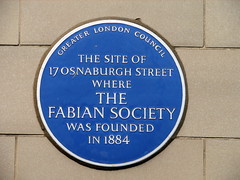 | 25 |
| 9893960236 | Fascism | A system of government characterized by strict social and economic control and a strong, centralized government usually headed by a dictator. First found in Italy by Mussolini. |  | 26 |
| 9893960237 | Feminism | the belief that women should possess the same political and economic rights as men |  | 27 |
| 9893960238 | Fourierism | founded by Charles Fourier. he believed that the industrial order ignored the passionate side of human nature. Social discipline ignored all the pleasures of human being naturally seek. He advocated phalanxes in which agrarian labor dominated and people could rotate tasks throughout the day |  | 28 |
| 9893960239 | Humanism | an intellectual movement at the heart of the Renaissance that focused on education and the classics |  | 29 |
| 9893960240 | Imperialism | A policy in which a strong nation seeks to dominate other countries poitically, socially, and economically. |  | 30 |
| 9893960264 | Isolationism | a policy of non-involvement in foreign affairs |  | 31 |
| 9893960241 | Impressionism | Major Western artistic style that gained prominence in the second half of the 1800s and into the 1900s.Against Realism, visual impression of a moment, style that seeks to capture a feeling or experience, often very colorful. |  | 32 |
| 9893960242 | Jansenism | A branch of Catholicism which resembled Protestantism. Emphasized need for God's grace in achieving salvation and the importance of original sin. Louis XIV took special actions to restrict the rights of this group and force them underground. | 33 | |
| 9893960243 | Liberalism | A political ideology that emphasizes the civil rights of citizens, representative government, and the protection of private property. This ideology, derived from the Enlightenment, was especially popular among the property-owning middle classes. |  | 34 |
| 9893960244 | Mannerism | Artistic movement against the Renaissance ideals of symetry, balance, and simplicity; went against the perfection the High Renaissance created in art. Used elongated proportions, twisted poese and compression of space. |  | 35 |
| 9893960245 | Marxism | the economic and political theories of ______ __________and Friedrich Engels that hold that human actions and institutions are economically determined and that class struggle is needed to create historical change and that capitalism will untimately be superseded |  | 36 |
| 9893960246 | Mercantilism | an economic system (Europe in 18th C) to increase a nation's wealth by government regulation of all of the nation's commercial interests |  | 37 |
| 9893960247 | Militarism | a political orientation of a people or a government to maintain a strong military force and to be prepared to use it aggresively to defend or promote national interests |  | 38 |
| 9893960248 | Modernism | practices typical of contemporary life or thought |  | 39 |
| 9893960249 | Nationalism | love of country and willingness to sacrifice for it |  | 40 |
| 9893960250 | Nazism | a form of socialism featuring racism and expansionism, The doctrines of nationalism, racial purity, anti-Communism, and the all-powerful role of the State. The National Socialist German Workers Party encouraged this and it was advocated by Adolf Hitler in Germany. |  | 41 |
| 9893960251 | Daoism | Chinese philosophy based on the teachings of Laozi; taught that people should turn to nature and give up their worldly concerns |  | 42 |
| 9893960252 | Confucianism | the system of ethics, education, and statesmanship taught by Confucius and his disciples, stressing love for humanity, ancestor worship, reverence for parents, and harmony in thought and conduct |  | 43 |
| 9893960253 | Legalism | In China, a political philosophy that emphasized the unruliness of human nature and justified state coercion and control. The Qin ruling class invoked it to validate the authoritarian nature of their regime |  | 44 |
| 9893960254 | Animism | Belief that objects, such as plants and stones, or natural events, like thunderstorms and earthquakes, have a discrete spirit and conscious life. |  | 45 |
| 9893960255 | Zoroastrianism | A religion originating in ancient Iran. It centered on a single benevolent deity-Ahuramazda, Emphasizing truth-telling, purity, and reverence for nature, the religion demanded that humans choose sides between good and evil |  | 46 |
| 9893960256 | Federalism | A system of government in which a written constitution divides power between a central, or national, government and several regional governments |  | 47 |
| 9893960257 | Centralism | denotes the concentration of a government's power into a centralized government. This takes away some of the powers of the states and puts more power into the hands of the executive leader | 48 | |
| 9893960258 | Feudalism | A political system in which nobles are granted the use of lands that legally belong to their king, in exchange for their loyalty, military service, and protection of the people who live on the land |  | 49 |
| 9893960265 | Protectionism- | government policy of insulating domestic industries from the world market through import tariffs and taxes. |  | 50 |
| 9893960259 | Manorialism | An economic system based on the manor and lands including a village and surrounding acreage which were administered by a lord. It developed during the Middle Ages to increase agricultural production. |  | 51 |
| 9893960260 | Radicalism | a political philosophy that emphasizes the need to find and eliminate the basic injustices of society; seek what they consider the roots of the economic, political, and social wrongs of society and demand immediate and sweeping changes to wipe them out; a belief that rapid, dramatic changes need to be made to existing society, usually think current system cannot be saved and must be overturned |  | 52 |
| 9893960266 | Protestantism | - religions born of protests to the practices of Catholicism |  | 53 |
AP world history Flashcards
Terms : Hide Images
| 7259021233 | Absolutism | -the acceptance of or belief in absolute principles in political, philosophical, ethical, or theological matters. -Having unrestricted power Ex: North Korea | | 0 |
| 7259021234 | Agriculture | -the science or practice of farming, including cultivation of the soil for the growing of crops and the rearing of animals to provide food, wool, and other products. -Using animals and plants in a system to get food Ex: Farms |  | 1 |
| 7259021235 | Aristocracy | -the highest class in certain societies, especially those holding hereditary titles or offices. - The most powerful social class Ex: Royalty in Britian |  | 2 |
| 7259021236 | BCE | -Before Common Era -Starting from the beginning of time all the way to the year 0 |  | 3 |
| 7259021237 | CE | -Common Era -From the year 0 to present day |  | 4 |
| 7259021238 | Bias | -prejudice in favor of or against one thing, person, or group compared with another, usually in a way considered to be unfair. -Having a strong opinion towards something Ex: Supremacist groups | 5 | |
| 7259021239 | Bureaucracy | -a system of government in which most of the important decisions are made by state officials rather than by elected representatives. -The officials make important decisions over elected officials Ex: The United States of america |  | 6 |
| 7259021240 | Capitalism | -an economic and political system in which a country's trade and industry are controlled by private owners for profit, rather than by the state. -People can own their own companies and make money their own way Ex: The way the US's economy is |  | 7 |
| 7259021241 | Chiefdom | -A chiefdom is a form of hierarchical political organization in non-industrial societies usually based on kinship -A government where the ruler is based on social status Ex: Some places in south America and Africa |  | 8 |
| 7259021242 | City-State | -a city that with its surrounding territory forms an independent state. -A region isolated from other regions, but is still part of the country Ex: Some places in Italy |  | 9 |
| 7259021243 | Civilization | -the society, culture, and way of life of a particular area. -A group of people that lives together to survive and advance Ex: Just about everywhere on the planet |  | 10 |
| 7259021244 | Classical Era | -Any of several periods of history noted for a particular style of art, architecture, literature or music termed classical -Any type of culture in the past that was famous at the time it was created |  | 11 |
| 7259021245 | Codify | -To arrange or put into order |  | 12 |
| 7259021246 | Colonization | -The action or process of settling among and establishing control over the indigenous people of an area. -Taking control over an area and the people in it for personal gain Ex: |  | 13 |
| 7259021247 | Commercial | -Something made or done with the intent to make a profit -A way to make money Ex: Advertisements on tv |  | 14 |
| 7259021248 | Contemporary Era | - describes the historical period from approximately 1945 to the present -1945 to present day | 15 | |
| 7259021249 | Contextualization | -to think about or provide information about the situation in which something happens -To say how something happened |  | 16 |
| 7259021250 | Corroboration | - to support or help prove -Something that helps or supports something else Ex:Evidence used in court systems |  | 17 |
| 7259021251 | Demography | -the composition of a particular human population -What a population is made up of Ex: A census |  | 18 |
| 7259021252 | Dynasty | -a line of hereditary rulers of a country -leadership passed down through families Ex: |  | 19 |
| 7259021253 | Early Modern Era | -between the end of the Middle Ages and the beginning of the Industrial Revolution -A time of many revolutions after the Middle ages |  | 20 |
| 7259021254 | Empire | -an extensive group of states or countries under a single supreme authority, formerly especially an emperor or empress -An area under control of one single person Ex: Some european kingdoms |  | 21 |
| 7259021255 | Ethnocentrism | -evaluation of other cultures according to preconceptions originating in the standards and customs of one's own culture. -Judging other cultures based on your own Ex: The United states culture |  | 22 |
| 7259021256 | Epidemic | -a widespread occurrence of an infectious disease in a community at a particular time. - A disease spread throughout a certain community Ex: The flu |  | 23 |
| 7259021257 | Forager | -to wander or go in search of provisions -To find supplies wherever you can Ex: Most animals and some Humans |  | 24 |
| 7259021258 | Globalization | -The process by which businesses or other organizations develop international influence or start operating on an international scale -When a business expands over many countries Ex: Mcdonalds |  | 25 |
| 7259021259 | Hierarchy | -a system or organization in which people or groups are ranked one above the other according to status or authority -A social order in society Ex: Places in India |  | 26 |
| 7259021260 | Imperialism | -a policy of extending a country's power and influence through diplomacy or military force -Taking over a country to use for personal gain Ex: South Africa | | 27 |
| 7259021261 | Indentured servant | - A person under contract to work for another person for a definite period of time -Someone who works for someone to fulfill a debt or contract |  | 28 |
| 7259021262 | Interregional | -relatinɡ to or occurring between different regions -Between regions Ex: Different states |  | 29 |
| 7259021263 | Kingdom | -a country, state, or territory ruled by a king or queen -A region ruled by one person Ex: Sweden |  | 30 |
| 7259021264 | Merchant | -a person or company involved in wholesale trade, especially one dealing with foreign countries or supplying merchandise to a particular trade -Someone who buys and sells goods Ex: Companies like Amazon | 31 | |
| 7259021265 | Modern Era | -a period beginning in the last quarter of the 20th century when information became easily accessible through publications and through the manipulation of information by computers and computer networks -The time period when computers first became accessible and we could get information from computers | 32 | |
| 7259021266 | Monotheism | -the doctrine or belief that there is only one God -Belief in one god or higher power Ex: Christianity |  | 33 |
| 7259021267 | Nation | -a large aggregate of people united by common descent, history, culture, or language, inhabiting a particular country or territory -An area with the same culture Ex: The united states |  | 34 |
| 7259021268 | Neolithic | -relating to or denoting the later part of the Stone Age, when ground or polished stone weapons and implements prevailed _-When early humans first learned to farm |  | 35 |
| 7259021269 | Nobility | -the group of people belonging to the noble class in a country, especially those with a hereditary or honorary title -Someone high in the social class Ex: Monarchs in Europe |  | 36 |
| 7259021270 | Nomad | -a member of a people having no permanent abode, and who travel from place to place to find fresh pasture for their livestock -People who wander to survive Ex: | 37 | |
| 7259021271 | Pandemic | - A disease spread over a whole country or the world -A disease spread over a large area Ex:Ebola |  | 38 |
| 7259021272 | Papacy | -the office or authority of the Pope -the popes power Ex: the pope controlling the catholic church |  | 39 |
| 7259021273 | Pastoral | - concerning or appropriate to the giving of spiritual guidance -leading someone spiritually Ex: Pastoral Advice |  | 40 |
| 7259021274 | Patriarchal | -relating to or characteristic of a system of society or government controlled by men. -Fatherly or manly |  | 41 |
| 7259021275 | Periodization | -Periodization is the process or study of categorizing the past -studying the past Ex: Historians | 42 | |
| 7259021276 | Polytheism | -the belief in or worship of more than one god. -believing in more than one god Ex: Hinduism |  | 43 |
| 7259021277 | Post- Classical Era | - the period of time that immediately followed ancient history and preceded modern history. -modern world |  | 44 |
| 7259021278 | Post-Modern Era | -after or in reaction to that which is modern -After a modern time |  | 45 |
| 7259021279 | Prehistoric | -Prehistory is the period of human activity between the use of the first stone tools c. 3.3 million years ago and the invention of writing systems -Before recorded history | 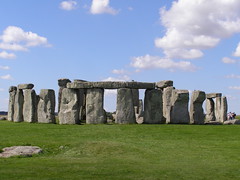 | 46 |
| 7259021280 | Revolution | -a forcible overthrow of a government or social order in favor of a new system -A change in order Ex: Technological revolution |  | 47 |
| 7259021281 | Rural | -in, relating to, or characteristic of the countryside rather than the town -Country or farmland Ex: Iowa |  | 48 |
| 7259021282 | Scribe | -a person who copies out documents, especially one employed to do this before printing was invented -Someone who records or copies documents Ex:Court reporter |  | 49 |
| 7259021283 | Sedentary agricultural | -Agriculture as practiced in one place by a settled farmer in which fields are not rotated is called sedentary agriculture -Farming where little work is required |  | 50 |
| 7259021284 | Serf | -an agricultural laborer bound under the feudal system to work on his lord's estate -Works for a noble for land |  | 51 |
| 7259021285 | Slave | -a person who is the legal property of another and is forced to obey them -Someone who is property of another person | 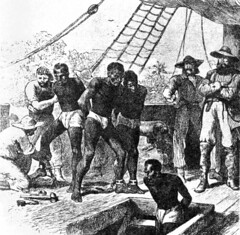 | 52 |
| 7259021286 | Socialism | -a political and economic theory of social organization that advocates that the means of production, distribution, and exchange should be owned or regulated by the community as a whole. -All businesses or organizations should be regulated by the community Ex: China | 53 | |
| 7259021287 | State | -the particular condition that someone or something is in at a specific time - How you are at a certain time | 54 | |
| 7259021288 | Stateless | -Image result for stateless society definition A stateless society is a society that is not governed by a state -Not governed specifically by a state government Ex:Some European countries |  | 55 |
| 7259021289 | Syncretism | -the amalgamation or attempted amalgamation of different religions, cultures, or schools of thought. -The mix of different cultures and ideas | 56 | |
| 7259021290 | Synthesis | -the combination of ideas to form a theory or system | 57 | |
| 7259021291 | Steppes | -a large area of flat unforested grassland in southeastern Europe or Siberia. - | 58 | |
| 7259021292 | Urban | -in, relating to, or characteristic of a city or town. -A city or town area Ex: | 59 |
AP World History Test Flashcards
Terms : Hide Images
| 8470354481 | Empire | Simply states, political systems that exercised forced power | 0 | |
| 8470354482 | Benefits of an Empire | •culture diffusion • order and organization •artistic development • new political system •peace and security •advancements •centralized government • competence trade •tolerance | 1 | |
| 8470354483 | Problems of a Empire | •violence • rebellion •mistreatment •oppression •social tension •too large •cultures can be lost •social discrimination •different systems | 2 | |
| 8470354484 | characteristics of an Empire | •standardization •long distance trading •large/vast territory •centralized government •diversity •expansionism •strong military | 3 | |
| 8470354485 | Achaemenid Empire | The Persian Empire established by Cyrus the Great Had tolerance for all the diffusion of cultures when he was conquering | 4 | |
| 8470354486 | Fall of Persian Empire | Rebellions and external/internal conflict invasions Greco-Persian Wars | 5 | |
| 8470354487 | Rulers of Persia | Cyrus-Darius-Xerxes-Darius lll- Alexander the Great | 6 | |
| 8470354488 | Minoans | •women had rights •no warfare •influences for Egypt and Mesopotamia •cultural diffusion •monarchy •centralized government •located on Crete •fertile soil •polytheistic •trading •Linear A writing •bureaucracy | 7 | |
| 8470354489 | Mycenaeans | •warfare •city states ruled by military rulers •bureaucracy •power by using violence •locates Peloponnesus Peninsula •polytheistic •Linear B •traders | 8 | |
| 8470354490 | Sparta | -Isolated bc in between mount taygetos -Focused on military power -Agoge system- prepared boys for military life -Gave little food and clothing to help them learn survival skills - oligarchy -agriculture -Helots- slaves | 9 | |
| 8470354491 | Athens | -patriarchal society -democracy -assembly of 500 -foreigner are citizens(only those born in Athens are citizens) -trade -strong navy -focused on education | 10 | |
| 8470354492 | Greco-Persian Wars | -1)Greeks revolt bc of high taxes, requires to serve in army, and were controlled harshly -2)Xerxes renewed war to avenge fathers death | 11 | |
| 8470354493 | Battles | Thermopylae: -time assemble at Salamis and evacuate Athens Salamis: -turning point of Persian Wars -naval battle Plates: -Persians slaughtered in camp bc trapped -final land battle | 12 | |
| 8470354494 | Golden Age of Athens | Time period after Persian Wars -advancements -peace and prosperity -empire expanding | 13 | |
| 8470354495 | Philosophers | Socrates: -need to explore world to see and educate your self Pluto: -didn't agree -believed that their should be king-philosophers | 14 |
AP World History Flashcards
Terms : Hide Images
| 7137066029 | B.C.E. | before (the) common era | 0 | |
| 7137066030 | C.E. | common era | 1 | |
| 7137066031 | Abdicate | to give up a position, right, or power | 2 | |
| 7137066032 | Accession | the act of coming into the possession of a right, title, office, etc. | 3 | |
| 7137066033 | Aesthetic | pertaining to beauty | 4 | |
| 7137066034 | Agrarian | concerning farms, farmers, or the use of land | 5 | |
| 7137066035 | Amenities | convenient features that helps to make life pleasant; social courtesies | 6 | |
| 7137066036 | Anarchy | a lack of government and law; confusion | 7 | |
| 7137066037 | Animism | the belief that all things are living | 8 | |
| 7137066038 | Antiquity | ancient times | 9 | |
| 7137066039 | Appeasement | Accepting demands in order to avoid conflict | 10 | |
| 7137066040 | Aristocracy | government headed by a privileged minority or upper class | 11 | |
| 7137066041 | Asceticism | Avoidance of indulgence | 12 | |
| 7137066042 | Assimilate | to absorb fully; to adopt as one's own; to adapt fully | 13 | |
| 7137066043 | Authoritarian | like a dictator | 14 | |
| 7137066044 | Autocracy | One leader has all of the power | 15 | |
| 7137066045 | Barbarism | the incorrect usage of words or forms of language | 16 | |
| 7137066046 | Bureaucracy | A large, complex organization composed of appointed officials | 17 | |
| 7137066047 | city-state | A city with political and economic control over the surrounding countryside | 18 | |
| 7137066048 | Civic | Having to do with the business of a town or community | 19 | |
| 7137066049 | Classical | An age marked by great achievements | 20 | |
| 7137066050 | Colonialism | The expansion and perpetuation of an empire. | 21 | |
| 7137066051 | Commerce | trade | 22 | |
| 7137066052 | Communal | used or shared in common by everyone in a group | 23 | |
| 7137066053 | Concubine | mistress; secondary wife | 24 | |
| 7137066054 | Conscription | military draft | 25 | |
| 7137066055 | cosmopolitan | Worldly or sophisticated | 26 | |
| 7137066056 | Coup | the violent overthrow of a government by a small group; a victorious accomplishment | 27 | |
| 7137066057 | Demography | the scientific study of population characteristics | 28 | |
| 7137066058 | Despot | a dictator with absolute power | 29 | |
| 7137066059 | Diaspora | A dispersion of people from their homeland | 30 | |
| 7137066060 | Dissent | to disagree | 31 | |
| 7137066061 | Dissident | someone who disagrees | 32 | |
| 7137066062 | Domestic | Having to do with the home | 33 | |
| 7137066063 | Dynasty | A series of rulers from the same family | 34 | |
| 7137066064 | Edict | An order issued by someone in authority | 35 | |
| 7137066065 | Egalitarian | A person who believes in the equality of all people | 36 | |
| 7137066066 | Elite | People of wealth and power | 37 | |
| 7137066067 | Emigrate | To leave one country or region and settle in another | 38 | |
| 7137066068 | Epic | A long narrative poem | 39 | |
| 7137066069 | Ethnocentric | based on the attitude tha one's group is superior | 40 | |
| 7137066070 | Feudalism | A system of government based on landowners and tenants | 41 | |
| 7137066071 | Genocide | Deliberate extermination of a racial or cultural group | 42 | |
| 7137066072 | Gentry | Wealthy landowning class | 43 | |
| 7137066073 | Guild | a group of merchants or craftspeople | 44 | |
| 7137066074 | Hierarchy | A group organized by rank | 45 | |
| 7137066075 | Hominids | Members of the group of the earliest human species or human like creatures | 46 | |
| 7137066076 | Homogeneous | of the same kind | 47 | |
| 7137066077 | Ideology | System of thought and belief | 48 | |
| 7137066078 | Imperial | of or relating to an empire | 49 | |
| 7137066079 | Indigenous | native | 50 | |
| 7137066080 | Infrastructure | The basic framework of a building or a system | 51 | |
| 7137066081 | Lineage | ancestry | 52 | |
| 7137066082 | Linguistic | pertaining to language | 53 | |
| 7137066083 | Manifest | clear or obvious to the eye or mind | 54 | |
| 7137066084 | Maritime | A humid air mass that forms over oceans; pertaining to the sea | 55 | |
| 7137066085 | Martial | Warlike | 56 | |
| 7137066086 | Matrilineal | of or based on kinship with the mother or the female line | 57 | |
| 7137066087 | Mercenary | a professional soldier hired by a foreign army | 58 | |
| 7137066088 | Monarchy | A government ruled by a king or queen | 59 | |
| 7137066089 | Monopoly | A market in which there are many buyers but only one seller. | 60 | |
| 7137066090 | Monotheism | Belief in one God | 61 | |
| 7137066091 | Mystical | a spiritual sense beyond human understanding | 62 | |
| 7137066092 | nation-state | state that is independent of other states | 63 | |
| 7137066093 | Neo | new | 64 | |
| 7137066094 | Neolithic | "New Stone Age" | 65 | |
| 7137066095 | Nomadic | wandering, moving about from place to place | 66 | |
| 7137066096 | Oligarchy | A government ruled by a few powerful people | 67 | |
| 7137066097 | Pantheon | A public building containing tombs or memorials of the illustrious dead of a nation | 68 | |
| 7137066098 | Papacy | The period in which a pope is in office (like a term) | 69 | |
| 7137092163 | Parliament | A body of representatives that makes laws for a nation | 70 | |
| 7137092164 | Pastoral | Having to do with the country | 71 | |
| 7137092165 | Patriarchal | Dominated by men. | 72 | |
| 7137092166 | Patrilineal | Descent through the male line | 73 | |
| 7137092167 | Patronage | the power to control appointments to office or the right to privileges. | 74 | |
| 7137092168 | Peasant | a poor farm worker | 75 | |
| 7137092169 | Pharaoh | A ruler of ancient Egypt | 76 | |
| 7137092170 | Piety | religious devotion | 77 | |
| 7137092171 | Polity | The form of government of a country or other organization | 78 | |
| 7137092172 | Polygamy | The practice of having more than one wife at a time | 79 | |
| 7137092173 | Polytheism | Belief in more than one god | 80 | |
| 7137092174 | Proselytize | to convert someone to a faith, belief, or cause | 81 | |
| 7137092175 | Provincial | lacking sophistication, narrow-minded | 82 | |
| 7137092176 | Regent | Person who acts as a temporary ruler | 83 | |
| 7137092177 | Republic | A form of government in which citizens choose their leaders by voting | 84 | |
| 7137092178 | rhetoric | Effective writing or speaking | 85 | |
| 7137092179 | Sedentary | (adj.) characterized by or calling for continued sitting; remaining in one place | 86 | |
| 7137092180 | Serf | A person who is bound to the land and owned by the feudal lord | 87 | |
| 7137092181 | Sharia | Islamic law | 88 | |
| 7137092182 | Sinification | Extensive adaptation of Chinese culture in other regions | 89 | |
| 7137092183 | State | a nation or territory considered as an organized political community under one government. | 90 | |
| 7137092184 | Steppe | A large area of flat unforested grassland in southeastern Europe or Siberia. | 91 | |
| 7137092185 | Stratification | the process in which sedimentary rocks are arranged in layers | 92 | |
| 7137092186 | Sub-saharan | Relating to Africa and the Sahara desert | 93 | |
| 7137092187 | subordinate | lower in rank or position | 94 | |
| 7137092188 | Succession | Series | 95 | |
| 7137092189 | Syncretism | a blending of beliefs and practices from different religions into one faith | 96 | |
| 7137092190 | Textiles | cloth items | 97 | |
| 7137092191 | Theocracy | A government controlled by religious leaders | 98 | |
| 7137092192 | Theology | the study of religion | 99 | |
| 7137092193 | Totalitarian | relating to an all-controlling government | 100 | |
| 7137092194 | tributary state | independent states that give money or tribute to another state | 101 | |
| 7137092195 | Tyranny | Cruel and oppressive government or rule | 102 | |
| 7137092196 | Urban | found or living in a city | 103 | |
| 7137092197 | Usurp | to take over; to seize power | 104 | |
| 7137092198 | Vernacular | Everyday language of ordinary people | 105 |
AP World History Chapter 18 Flashcards
Terms : Hide Images
| 6051760520 | The economic development of Latin America was heavily dependent on | foreign capital | 0 | |
| 6051760521 | Which of the following explains why industrialization first occurred in Europe? | European rulers fostered unusually close alliances with their merchant classes | 1 | |
| 6051760522 | Which of the following reflects an explanation for Europe's Industrial Revolution, which most historians criticize as Eurocentric and deterministic? | Unique features of European society, economy, or history gave it a long term advantage and head-start in industrializing | 2 | |
| 6051760523 | Which of the following arguments serves to counter the notion that European culture is inherently more suited to industry and technology? | Until about 1750, core areas of Europe, India, and China enjoyed similar levels of economic development | 3 | |
| 6051760524 | Which of the following has been offered as an explanation for why Britain was the first European country to industrialize? | The Scientific Revolution in Great Britain fostered technological innovation | 4 | |
| 6051760525 | In what way was the Industrial Revolution a global phenomenon by the end of the nineteenth century? | Even regions that failed to industrialize were impacted by industrialization | 5 | |
| 6051760526 | In nineteenth-century Britain, women from the laboring classes found jobs as | factory workers and domestic servants | 6 | |
| 6051760527 | How did the working class movement in Britain differ from the one in Russia? | It advocated a reformist program and a peaceful transition to socialism | 7 | |
| 6051760528 | Which of the following was a reason for the failure of socialism to take root in the United States? | The higher standard of living enjoyed by most American workers | 8 | |
| 6051760529 | Which of the following played a greater role in industrial development in Russia than in the United States or Western Europe? | The state | 9 | |
| 6051760530 | Industrialization led to violent social revolution only in | Russia | 10 | |
| 6051760531 | How did contact with other civilizations contribute to Europe's Industrial Revolution? | It enabled Europe to draw disproportionately on the world's resources | 11 | |
| 6051760532 | Which of the following describes the situation in Latin America after independence? | Politically, the area was plagued by internal divisions, regional revolts, and international wars | 12 | |
| 6051760533 | Which of the following accompanied industrialization wherever it occurred in the world? | Urbanization | 13 | |
| 6051760534 | Which of the following describes how the movement toward industrialization in the nineteenth century affected Latin America? | Latin America provided the food products, raw materials, and markets for industrializing countries | 14 | |
| 6051760535 | Which of the following describes how the Industrial Revolution unfolded? | It began independently in only one place, Great Britain | 15 | |
| 6051760536 | In the eighteenth century, how did the Industrial Revolution solve an emerging energy crisis? | It introduced the use of coal, oil, and natural gas as sources of fuel | 16 | |
| 6051760537 | How did Britain's geography affect its Industrial Revolution? | Coal and iron ore deposits were abundant and close to each other | 17 | |
| 6051760538 | Which of the following was a result of the Industrial Revolution? | An increase in production in mining, manufacturing, and services | 18 | |
| 6051760539 | Which of the following groups benefited the most from the Industrial Revolution in nineteenth-century Britain? | The middle classes | 19 | |
| 6051760540 | In nineteenth-century Britain, most members of the aristocracy derived their wealth from | landownership | 20 | |
| 6051760541 | Which of the following made global migration an appealing option for many Europeans during the nineteenth century? | The demand for labor overseas | 21 | |
| 6051760542 | Which of the following describes a feature of Karl Marx's vision of the society he predicted would emerge after the collapse of capitalism? | A society without classes and conflict | 22 | |
| 6051760543 | Which group in the United States in the early twentieth century pressed for reforms to correct the abuses of capitalist industrialization? | The Progressives | 23 | |
| 6051760544 | What was most of the European capital invested in Latin America used to finance? | Railroads | 24 | |
| 6051760545 | Which was the only country in Latin America to experience a nationwide revolution in the early twentieth century? | Mexico | 25 | |
| 6051760546 | Which of the following is a phrase that has been used to describe the form of economic growth in Latin America in the nineteenth and early twentieth centuries? | Dependent Development | 26 | |
| 6051760547 | Which of the following was a value associated with middle-class culture in the nineteenth-century Britain? | Hard Work | 27 | |
| 6051760548 | Which of the following was a factor that pushed many Europeans to immigrate in the nineteenth century? | The decline in peasant farming in their homelands | 28 |
AP World History Flashcards
Terms : Hide Images
| 7292914418 | settling down (first villages) | until about 10,000 B.C. groups migrated to and fro, but about 10,000 B.C. they settled into agricultural communities | 0 | |
| 7292969434 | Fertile crescent | also called the "Cradle of Civilization". Great agricultural region. also where the first villages emerged | 1 | |
| 7292974325 | Domesticated animals | in the Fertile Crescent, gazelles and goats were hunted but later the goat and sheep were domesticated as well as pigs in Turkey | 2 | |
| 7292980351 | Neolithic | "The New Stone Age". This is where villages started to emerge, and named for its tools not crops | 3 | |
| 7293018994 | Fertile Crescent bordering countries were what? | 1. Iraq 2. Iran 3. Jordan 4. Syria 5. Turkey | 4 | |
| 7293025309 | innovation | an explanation that has similar traits, objects, or techniques have appeared in many different regions, but have not been spread | 5 | |
| 7293032895 | Diffusion | The spread of ideas from culture to culture | 6 | |
| 7293036759 | Primary innovated areas (there are 7 of them) | 1. Nile 2. Indus 3. Huang He 4. Niger 5. Mexico 6. Andes Mountains 7. Mespotamia | 7 | |
| 7293044133 | Metalurgy | Era before the Bronze age | 8 | |
| 7293046937 | Diplomats | needed to negotiate trade with City-States | 9 | |
| 7293049512 | Tigris | one of the rivers in the "land of 2 rivers" and is also modern day Iran | 10 | |
| 7293053329 | Euphrates | one of the rivers in the "land of 2 rivers" and is also modern day Iran | 11 | |
| 7293062193 | what were some of the challenges faced for the Fertile Crescent? | 1. flooding 2. High temperatures | 12 | |
| 7293065260 | What were the 6 warring city-states | 1. kish 2. Uruk 3. Ur 4. Nippur 5. Lavash 6. Uma | 13 | |
| 7293070311 | what are Ziggurats | priest built structures, they built them on square or rectangular platforms. they also had sanctuary on top of these! and they could be up o 10 stories high | 14 | |
| 7293097137 | Pictograms | writing system where pictures represented words or phrases | 15 | |
| 7293099011 | Ideograms | writing system where characters are used to form words: includes Chinese and numerals | 16 | |
| 7293101368 | Epic of Gilgamesh | Sumerian Literature, Most complete version is found in Nineveh from about 750 BC, but the story dates back to 2,600 BC | 17 | |
| 7293106888 | Cuneiform | writing system developed by Sumerians where you carve marks into soft clay with a stylus | 18 | |
| 7293113059 | First system of writing was developed by who? | ancient Sumerians | 19 | |
| 7293114846 | the gift of the Nile was also known as what? | Eqypt | 20 | |
| 7293116438 | Settlements across the nile | by 3600 BC a string of villages had emerged across the nile | 21 | |
| 7293118948 | Walled towns | Emerged in Egypt by 3,300 BC. some where by the upper nile( Nagada and Hierakonopolis) | 22 | |
| 7293124343 | Hieroglyphics | writing system of Pictograms and Ideograms and also was called "sacred Carvings" | 23 | |
| 7293128232 | Unification of Egypt | around 3,100 BC Egypt became unified. All people became one single ethnicity. People came from all directions: Semites from the east desert, Phoenicians from the sea coast, Africans Nubia and heart of Africa and the Europeans from across the Mediterranean | 24 | |
| 7293140634 | Menes | often seen as the first king of Egypt but there is evidence supporting that there are kings from 200 years earlier | 25 | |
| 7293144576 | Memphis | Larger cities were political capitols. Memphis to was the north | 26 | |
| 7293147628 | Thebes | Larger cities were political capitols. Thebes to was the south | 27 | |
| 7293152890 | the old kingdom | Fell in 2,181 due to a drought and famine | 28 | |
| 7293155178 | the middle kingdom | established by Mentuhotep after he defeated rivals to the north and united the kingdom. Trade was revived. Fine arts and literature flourished. Ended with Nubian and Hyksos invation | 29 | |
| 7293162213 | The New Kingdom | Rose as an empire as Egypt asserted authority over Nubia and large regions of Palestine and Syria. This period is known for destruction and construction of Akhenaten | 30 | |
| 7293171187 | what are the 4 areas developed primary urbanization after sumer? | 1. yellow river valley 2. Mesopotamia 3. South American pacific coastal plains 4. Niger River valley of west Africa | 31 | |
| 7293203835 | Xia, Shang, Zhou Dynasties | Yangshao culture also known as the "Black pottery culture" shows neolithic patterns by 8,000 BC. Developed the flute. they had rice, wheat, and domesticated animals like dogs, pigs, goats. Yangshao lasted until 2,700 BC. Longshan culture comprised a more sophisticated Neolithic people. Had pottery on wheels, Domesticated sheep and cattle. Xia (2205-1766): evidence is sparse. Urbanization is under Shang (1766-256)BC: Consolidated city and state and left best archaeology remains and written records of early dynasty. Original dating suggest that the states succeeded one after another, but recent studies show that 3 dynasties may have co-existed in neighboring regions, one having more power and prestige than the other. Cities may have developed by the time of Shang. Capitols shifted frequently. Dynasty were wealthy, and controlled large work gangs. Sharp class distinctions included different cemeteries for wealthy and poor. Chinese cities were also religious centers with wings presiding over rituals and administration and warfare. Human and animal sacrifice for religion | 32 | |
| 7293268137 | Similarities of all 3 cities | 1. walled cities 2. political structures | 33 | |
| 7293269705 | who became more hierarchal while reducing power of women | Xia | 34 | |
| 7293278344 | Who were the leaders of the Xia meditated between | 1.world of spirits 2. men | 35 | |
| 7293282839 | Xia produced what? | 1. carved jade 2. bronze weapons and pictograms | 36 | |
| 7293284646 | Tia was one believed to be what? | Mythical | 37 | |
| 7293285973 | Shang controlled what? | Networks of cities from the capitol | 38 | |
| 7293291252 | Under shang | relatives controlled other cities and represented the kings interests and shared local harvest | 39 | |
| 7293301737 | Shang controlled what | 40,000 square miles | 40 | |
| 7293314240 | Shang shifted capitols how often? | frequently | 41 | |
| 7293316220 | family and novels under Shang lived within what? | city wall comprised of a palace and a ritual center | 42 | |
| 7293321243 | who were put outside the wall? | the residents, craftsmen, and cemeteries | 43 | |
| 7293325290 | where were the wealthy cemeteries | north | 44 | |
| 7293327065 | where were the poor cemeteries | south | 45 | |
| 7293327066 | capitol of middle period | huanbei- capitol of Shang, it dates to 1400 BC. has a 2 square mile enclosure with ramed earth walls. Bronze was discovered here | 46 | |
| 7293332552 | Anyang | the last Shang capitol. Last and most powerful center of shang. Was heavily farmed and looted with few artifacts. Excellent bronze was produced for ritual purposes but weapons enhanced power of Shang | 47 | |
| 7293341090 | Zhou | reduced Shang to a small warring power, produced written records. Developed mandate of heaven | 48 | |
| 7293347110 | what is the mandate of heaven? | the idea that only one legitimate power could control China. used to overthrow Shang | 49 |
Pages

Need Help?
We hope your visit has been a productive one. If you're having any problems, or would like to give some feedback, we'd love to hear from you.
For general help, questions, and suggestions, try our dedicated support forums.
If you need to contact the Course-Notes.Org web experience team, please use our contact form.
Need Notes?
While we strive to provide the most comprehensive notes for as many high school textbooks as possible, there are certainly going to be some that we miss. Drop us a note and let us know which textbooks you need. Be sure to include which edition of the textbook you are using! If we see enough demand, we'll do whatever we can to get those notes up on the site for you!
