AP Notes, Outlines, Study Guides, Vocabulary, Practice Exams and more!

AP US History - The Civil War Flashcards

Terms : Hide Images
5592756149Abraham Lincoln16th President0
5592756150The Impending Crisis of the SouthA book written by Hinton Helper. Helper hated both slavery and blacks and used this book to try to prove that non-slave owning whites were the ones who suffered the most from slavery. The non-aristocrat from N.C. had to go to the North to find a publisher that would publish his book.1
5592756151Freeport DoctrineIdea authored by Stephen Douglas that claimed slavery could only exist when popular sovereignty said so2
5592756152Crittenden Compromise1860 - attempt to prevent Civil War by Senator Crittenden - offered a Constitutional amendment recognizing slavery in the territories south of the 36º30' line, noninterference by Congress with existing slavery, and compensation to the owners of fugitive slaves - defeated by Republicans3
5592756153slave statesMissouri, Alabama, Mississippi, Louisiana, , Tennessee, Kentucky, Virginia, North Carolina, South Carolina, Maryland, Georgia, Delaware4
5592756154free statesMaine, Illinois, Indiana, Ohio, Vermont, Rhode Island, New York, New Hampshire, Massachusetts, Connecticut, New Jersey, Pennsylvania5
5592756155Battle of ChancellorsvilleThe Union was defeated again with the Confederacy being led by Robert E. Lee. General Thomas Stonewall Jackson was accidentally wounded here by one of his own men.6
5592756156Monitor vs. VirginiaAfter several hours of fighting neither ironclad was damaged but the monitor forced the Virginia to withdraw.7
5592756157Battle of Seven DaysMcClellan would not make a move. Jackson's army launched a June 25 attack on McClellan's right flank in what became known as (blank). Lee drove McClellan away from Richmond to a new fortified base on the James River8
5592756158Battle of Bull RunJuly 21, 1861. Va. (outside of D.C.) People watched battle. Thomas "Stonewall" Jackson: Confederate general, held his ground and stood in battle like a "stone wall." Union retreated. Confederate victory. Showed that both sides needed training and war would be long and bloody9
5592756159Battle of ShilohConfederate forces suprised union troops & drove them across the Tennesee river; union got backup and won the battle but it was one of the most bloody battles in the civil war10
5592756160Battle of GettysburgTurning point of the War that made it clear the North would win. 50,000 people died, and the South lost its chance to invade the North.11
5592756161Battle of AntietamCivil War battle in which the North suceedeed in halting Lee's Confederate forces in Maryland. Was the bloodiest battle of the war resulting in 25,000 casualties12
5592756162Battle of Vicksburg1863, Union gains control of Mississippi, confederacy split in two, Grant takes lead of Union armies, total war begins13
5592756163Battle of Chattanoogain the American Civil War (1863) the Union armies of Hooker, Thomas, and Sherman under the command of Ulysses S. Grant won a decisive victory over the Confederate Army under Braxton Bragg14
5592756164Battle of Chickamauga1863 Confederate army defeated the Union forces and forced the Union Army back into TN; Confederates did not follow up on Union retreat and they lost Chattanooga to the Union a short time later.15
5592756165Fort HenryFort Henry was Grant's first military success. The fort lay on the Tennessee River.16
5592756166Fort DonelsonGrant captured this fort on the Cumberland and because of the capture, all of Kentucky and most of western Tennessee came under Union control.17
5592756167Ulysses S. Grant..., an American general and the eighteenth President of the United States (1869-1877). He achieved international fame as the leading Union general in the American Civil War.18
5592756168Robert E. LeeA General for the confederates, fought many battles. One of his main plans towards the end of the civil war was to wait for a new president to come into office to make peace with. Fought Peninsular Campaign, 2nd battle of Bull Run, Antietam, Fredericksburg, Chancellorsville (with Jackson), and Gettysburg.19
5592756169Stonewall JacksonBrave commander of the Confederate Army that led troops at Bull Run. He died in the confusion at the Battle of Chancellorsville.20
5592756170William T. Shermanan American soldier, businessman, educator, and author. He served as a general in the Union Army during the American Civil War (1861-65), for which he received recognition for his outstanding command of military strategy and criticism for the harshness of the "scorched earth" policies that he implemented in conducting total war against the Confederate States21
5592756171Philip SheridanUnion General that marched through the Shenandoah Valley in Virginia, destroying farms, livestock, crops, and anything else in his path.22
5592756172Fort SumterFederal fort in the harbor of Charleston, South Carolina; the confederate attack on the fort marked the start of the Civil War23
5592756173"modern war"a total war in which involved nations direct all resources to producing material for waging war24
5592756174Anaconda Plan..., Union war plan by Winfield Scott, called for blockade of southern coast, capture of Richmond, capture Mississippi R, and to take an army through heart of south25
5592756175Stephen DouglasSenator from Illinois, author of the Kansas-Nebraska Act and the Freeport Doctrine, argues in favor of popular sovereignty26
5592756176popular sovereingtyIdea that government governs only with the consent of the people - the people have the power27
5592756177Whig partyAn American political party formed in the 1830s to oppose President Andrew Jackson and the Democrats, stood for protective tariffs, national banking, and federal aid for internal improvements28
5592756178Emancipation ProclamationA law issued by Lincoln freeing the slaves in the confederate states. This made the civil war a moral war to end slavery.29
5592756179Confederate economywas hurth by not having enough resources, north blocked water ports30
5592756180Union economySold government bonds, standard paper money ("greenbacks"), economic boom (manufacturing + agriculture)31
5592756181Clement VallandighamAn anti-war Democrat who criticized Lincoln as a dictator, called him "King Abraham". He was arrested and exiled to the South., Prominent Copperhead who was an ex-congressman from Ohio, demanded an end to the war, and was banished to the Confederacy32
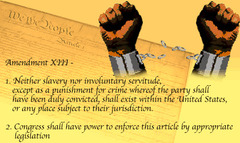
5592756182Amendments 13, 14, 15amendments to the U.S. Constitution which corrected slavery; 13th abolished slavery; 14th gave the former slaves citizenship; 15th gave the former slaves voting rights33
5592756183Andersonville..., The most infamous prison in the south. There was no shelter. There was a huge population, and there were food shortages, overcrowding, and disease that killed about 100 men a day during the summer months.34
5592756184George McClellanA general for northern command of the Army of the Potomac in 1861; nicknamed "Tardy George" because of his failure to move troops to Richmond; lost battle vs. General Lee near the Chesapeake Bay; Lincoln fired him twice.35
5592756185CopperheadsA group of northern Democrats who opposed abolition and sympathized with the South during the Civil War36
5592756186Morrill Act(1862) Federal law that gave land to western states to build agricultural and engineering colleges.37
5592756187Trent AffairIn 1861 the Confederacy sent emissaries James Mason to Britain and John Slidell to France to lobby for recognition. A Union ship captured both men and took them to Boston as prisonners. The British were angry and Lincoln ordered their release38
5592756188black codesLaws denying most legal rights to newly freed slaves; passed by southern states following the Civil War39
5592756189Freedmen's Bureau1865 - Agency set up to aid former slaves in adjusting themselves to freedom. It furnished food and clothing to needy blacks and helped them get jobs40
5592756190Tenure of Office Act1866 - enacted by radical congress - forbade president from removing civil officers without senatorial consent - was to prevent Johnson from removing a radical republican from his cabinet41
5592756191carpetbaggersA northerner who went to the South immediately after the Civil War; especially one who tried to gain political advantage or other advantages from the disorganized situation in southern states;42
5592756192Compromise of 1877..., Ended Reconstruction. Republicans promise 1) Remove military from South, 2) Appoint Democrat to cabinet (David Key postmaster general), 3) Federal money for railroad construction and levees on Mississippi river43
5592756193ScalawagsA derogatory term for Southerners who were working with the North to buy up land from desperate Southerners44
5592756194Andrew Johnson17th President of the United States, A Southerner form Tennessee, as V.P. when Lincoln was killed, he became president. He opposed radical Republicans who passed Reconstruction Acts over his veto. The first U.S. president to be impeached, he survived the Senate removal by only one vote. He was a very weak president.45
5592756195John Wilkes Booth..., was an American stage actor who, as part of a conspiracy plot, assassinated Abraham Lincoln, the 16th President of the United States, at Ford's Theatre in Washington, D.C. on April 14, 1865.46
5592756196Uncle Tom's Cabin..., Written by Harriet Beecher Stowe in 1853 that highly influenced england's view on the American Deep South and slavery. a novel promoting abolition. intensified sectional conflict.47
5592756197Charles SumnerA leader of the Radical republicans along with Thaddeus Stevens. He was from Massachusetts and was in the senate. His two main goals were breaking the power of wealthy planters and ensuring that freedmen could vote48
5592756198John C. Calhoun(1830s-40s) Leader of the Fugitive Slave Law, which forced the cooperation of Northern states in returning escaped slaves to the south. He also argued on the floor of the senate that slavery was needed in the south. He argued on the grounds that society is supposed to have an upper ruling class that enjoys the profit of a working lower class.49
5592756199Bleeding KansasA sequence of violent events involving abolitionists and pro-Slavery elements that took place in Kansas-Nebraska Territory. The dispute further strained the relations of the North and South, making civil war imminent.50
5592756200Radical RepublicansAfter the Civil War, a group that believed the South should be harshly punished and thought that Lincoln was sometimes too compassionate towards the South.51
5592756201impeachmentAn action by the House of Representatives to accuse the president, vice president, or other civil officers of the United States of committing "Treason, Bribery, or other high Crimes and Misdemeanors."52

AP US History Chapter 4 Terms Flashcards

Terms : Hide Images
7473919948Tenancy-To rent land,tenants are renters they farmed elite nobles and gentry Farms0
7473919949Competency-Ability for a family to keep their household independent through future generations, New Englanders wanted a farm that would provide a living for themselves and ample land for their children1
7473919950Household Mode of Production-Practice where families traded labor and goods -Helped New-England free holders survive on small farms -as the populations of New England swelled farmers developed the full potential of historian... Ex: farmers plowed fields of shoemakers in return for shoes or store credit. Mostly because currency was short and supply2
7473919951Squatters-People who illegally settle on land they do not own -Hoped to acquire it on legal terms -because in 1720 many new migrants became squatters because proprietors were overwhelmed with the demand for land3
7473919952Redemptioner-if possible form of indentured servant today that allowed for families to negotiate their own terms upon arrival -Family usually indentured one or more children while their parents set up a household of their own. This was a way to pay for the expensive trip to Rhine valley4
7473919953Enlightenment-Cultural movement in Europe -Used reason to reevaluate previous doctrines that were accepted in society -Caused people to think more logically and rationally -growing print culture flooded colonies with information and ideas at emphasize the power of human reason to understand and shape the world, the colonies grew more connected with Britain because the trans Atlantic trade shipping5
7473919954Pietism-Evangelical Christian movement. That stress the individuals personal relationship with God -Emphasized bible -it came to America for the British because of the transatlantic shipping thing -One of two biggest cultural movements in Europe6
7473919955Natural Rights-Rights that all people are entitled to -Life, liberty, property -it's a derive from the social context that people made to preserve their rights7
7473919956Deism-Belief that God created the universe then left it to run using natural laws -Adopted by small number of urban artisans, wealthy virginia planters, and seaport merchants -Was not an established religion but rather a way of thinking -Benjamin Franklin was a member and so was Thomas Paine8
7473919957Revival-Renewal of enthusiasm in Christian beliefs -occurred when German migrants carried over pietism to America9
7473919958Old Lights-Conservative ministers who opposed the enthusiasm displayed by evangelical preachers -they persuaded the legislature to prohibit evangelist from speaking to a congregation without a minister's permission -They did not like the newlights because they allowed women to speak in public10
7473919959New Lights-Evangelical preachers who believed that Christian faith was intellectual and emphasized spiritual rebirth -Allowed women to speak in public -refuse to be silenced by the old lights dozens of farmers and woman and artisans ran the country side condemning the old lights as unconverted and willingly accepting imprisonment. - Originated when Whitefield message made some listeners feel a new light, these are the peeps who are spreading Whitefield's message11
7473919960Consumer Revolution-Increase in consumption of manufactured goods -Raised living standards -Landed many consumers and colonies in debt -Increase in transatlantic trade made Americans more dependent on overseas credit and markets12
7473919961Regulators-Landowning protesters -Demanded the government provide western colonies with more courts, fairer taxation, and greater representation in the assembly -Ultimately failed to seize power from eastern elites but like the Paxton Boys in Pennsylvania the South Carolina regulators want attention to the back country13
7474732393Isaac newtonIn the centuries after Coppernick us, Isaac Newton, and his principal of mathematics 1687, use the sizes of mathematics and physics to explain the movement of the planets around the sun and invented calculus in the process. He was profoundly religious, in the long run his work undermined the traditional Christian understanding of the cosmos though14
7474732394John Lockenatural rights And English philosopher: a major contributor to the enlightenment. In his essay concerning human understanding 1690 he stressed impact on the environment and experience on human behaviors and beliefs ,Arguing that the characters of individuals and societies was not fixed but could be changed to education rational thought and purposeful action. Wrote the two treaties of government 169015
7474732395Benjamin Franklin-Did examplar of the American enlightenment. Born in Boston in 1706 to devout Calvinist, he grew to manhood during the print revolution. Apprenticed to his brother, a Boston printer, Franklin educated himself through vigorous reading -at 17, he fled to Philadelphia, where he found it the Pennsylvania Gazette, which became one of the colonies most influential newspapers. -he also formed a club of mutual improvement that Matt weekly to discuss morals, politics, or natural philosophy. These discussions, as well as enlightenment literature, shaped his way of thinking. Asked Franklin explained in his autobiography 1771 -he is a deist -came to question the morality of slavery, repudiated it once he recognized the parallels between racial bondage and the calling is political bondage to Britain. He was a one time slave owner for this reason. He popularize the practice outlook I'll be enlightenment and poor Richards almanac and 1732 to 1752 an annual publication. -he also founded the American philosophical society to promote useful knowledge -adopting this goal in his own life, he invented glasses, the Franken stove, and the lightning rod. -his book on electricity published in England in 1751 was called the greatest contribution to science since newtons discovery -inspired by Franklin, ambitious printers in America seaport cities publish newspapers and gentlemen's magazine, the first significant non-religious periodical to appear in the colonies -50 Scot-Irish took up arms and advanced to Philadelphia but was stopped by Ben Franklin who arranged a truce16
7474732396Jonathan EdwardsA minister in Northampton Massachusetts, encourage a revival there that spread two towns throughout the Connecticut River Valley. He guided and observe the process and then published an account entitled a faithful narrative of the surprising work of God, printed first in London 1737, that in Boston in 1738, and then in German and Dutch translations. It's publication history highlights the transatlantic network of correspondence that gave pietism much of its vitality17
7483345776George WhitefieldEnglish minister that transform the local revivals of Edwards and the Tennet into the great awakening. After his own personal awakening upon reading the German Resists.he became a follower of John Wesleyfounder of English methodism. 1739 he cared Wesley's favorite message to the Americas, where are you attracted a huge crowd from Georgia to Massachusetts18
7483411481TanagharissonTo maintain influence on the Ohio, the Iroquois sent two half kings one of which was.......... (an adopted Seneca), to Logstown, A trading town on the upper Ohio, we're Britain recognize them as leaders -after Washington's party fought on the French detachment, he rushed in and killed a French officer to ensure war (French and Indian war)19
7483421554William Pitt-emerged as the architect of the British war effort. He was a committed expansionist with the tongue of arrogance " I know that I can save this country and that I alone can." He boasted. A master strategist, he planned to cripple France by seizing its colonies (We had demographic advantages over the French) -to mobilize the colonies, he covered half the cost of the troops and supplied them with arms and equipment, at a cost of 1,000,000 pounds in a year -he also committed a fleet of British ship and 30,000 British soldiers to the conflict in America Fort Duquesne later renamed fort Pitt20
7483455916PontiacOttawa chief, encourage the French to return (to land taken by the English) said "I am French, and I want to die French." - inspired by Neolin, he led a major uprising in Detroit many Indians throughout the Great Lakes and Ohio Valley follow his example, seized nearly every British military garrison west of Fort Nigeria,besieged Fort Pitt and killed or captured more than 2000 sellers -after the siege had been stopped, Pontiac and his allies accepted the Brits as Political "fathers"21

AP US HISTORY CHAPTER 18 Flashcards

Chapter 18

Terms : Hide Images
56100305341. In order to maintain the two great political parties as vital bonds of national unity, early 19th century politicians a) decided to ban slavery from all United States territories b) decided to allow slavery into all U.S. territories c) avoided public discussion of slavery d) banished abolitionists from membership in either national party e) worked to make third parties almost impossibleC0
56100305352. The U.S.' victory in the Mexican American War resulted in a) renewed controversy over the issue of extending slavery into the territories b) a possible split in the Whig and Democrat parties over slavery c) the cession by Mexico of an enormous amount of land to the U.S. d) a rush of settlers to new American territory in California e) all of the aboveE1
56100305363.The Wilmot Proviso, if adopted, would have a) prevented the taking of any territory from Mexico b) required California to enter the Union as a slave state c) overturned the Fugitive Slave Law d) prohibited slavery in any territory acquired in the Mexican War e) all of the aboveD2
56100305374. The debate over slavery in the Mexican Cession a) threatened to split national politics along North-South lines b) nearly resulted in the return of the territory to Mexico c) resulted in the formation of the Republican party d) resulted in strong hostility to further expansion e) all of the aboveA3
56100305385. In 1848, the Free Soil party platform advocated all of the following except a) support of the Wilmot Proviso b) internal improvements c) free government homesteads for settlers d) opposition to slavery in the territories e) an end to slavery in the District of ColumbiaB4
56100305396. According to the principle of 'popular sovereignty.' The question of slavery in the territories would be determined by a) the most popular national leaders b) a national referendum c) congressional legislation d) a Supreme Court decision e) the vote of the people in any given territoryE5
56100305407. The public liked popular sovereignty because it a) stopped the spread of slavery b) fit in with the democratic tradition of self-determination c) provided a national solution to the problem of slavery d) supported the Wilmot Proviso e) upheld the principles of white supremacyB6
56100305418. In the 1848 presidential election, the Democratic and Whig parties a) lost to the Free Soil party b) addressed the issue of slavery c) remained silent on the issue of slavery d) abandoned the tactic of nominating military leaders e) were divided on the issue of admitting CaliforniaC7
56100305429. The key issue for the major parties in the 1848 presidential election was a) personalities b) slavery c) expansion d) Indian removal e) The economyA8
561003054310. The event that brought turmoil to the administration of Zachary Taylor was the a) passage of the Kansas-Nebraska Act b) influx of immigrants to the west coast c) attempt to acquire Cuba d) growth of lawlessness in California e) discovery of gold in CaliforniaE9
561003054411. The Free Soilers argued that slavery a) was unsuited to the West b) would cause more costly wage labor to wither away c) would, through its profits, enable small farmers to buy more land d) should be gradually abolished e) all of the aboveB10
561003054512. Of those people going to California during the gold rush, a) the majority had come from foreign nations b) slaves constituted a sizable minority c) the majority gained considerable financial rewards d) most were interested in free-soil farming e) a distressingly high proportion were lawless menE11
561003054613. The Free Soliers condemned slavery because a) of the harm it did to blacks b) of moral principles c) it destroyed the chances of free white workers to rise to self-employment d) it was the only way they had of combating the appeal of the Democratic party e) it damaged the national economyC12
561003054714. By 1850, the South a) was experiencing economic difficulties b) feared that slavery might be abolished in states where it already existed c) remained concerned about its weak voice in national government d) was relatively well off, p[politically and economically e) recognized that slavery expansion was overD13
561003054815. Harriet Tubman gained fame a) by helping slaves escape to Canada b) in the gold fields of California c) as an African-American antislavery novelist d) as an advocate of the Fugitive Slave Law e) by urging white women to oppose slaveryA14
561003054916. During the 1850s, slaves gained their freedom most frequently by a) running away b) persuading masters to free them c) rebellion d) use of federal laws e) self-purchaseE15
561003055017. John C. Calhoun's plan to protect the South and slavery involved a) a constitutional amendment permanently guaranteeing equal numbers of slave and free states b) southern secession from the Union c) support of Henry Clay's proposed concessions by both the North and the South d) repealing the president's veto power e) the election of two presidents, one from the North and one from the SouthE16
561003055118. Daniel Webster's famed Seventh of March speech in 1850 resulted in a) Senate rejection of a fugitive-slave law b) A shift toward compromise in the North c) Condemnation by northern commercial interests d) Charges of accepting bribes e) A movement to draft him for the presidencyB17
561003055219. In his Seventh of March speech, Daniel Webster a) attacked Henry Clay's compromise proposals b) called for a new, more stringent fugitive-slave law c) advocated a congressional ban on slavery in the territories d) proposed a scheme for electing two presidents, one from the North and one from the South, each having veto power e) became a hated figure in the SouthB18
561003055320. For his position in his Seventh of March speech, Daniel Webster was viciously condemned by a) northern Unionists b) northern banking and commercial interests c) abolitionists d) Henry Clay e) John C. CalhounC19
561003055421. The Young Guard from the North a) regarded preserving the Union as their top priority b) agreed fully with the Old Guard on the issue of slavery c) saw expansionism as a solution to the slavery question d) gave support to John C. Calhoun's plan for rescuing the Union e) were most interested in purging and purifying the UnionE20
561003055522. In the debates of 1850, Senator William H. Seward, as a representative of the northern Young Guard, argued that a) the Constitution must be obeyed b) John C. Calhoun's compromise plan must be adopted to preserve the Union c) Christian legislators must obey God's moral law d) Compromise must be achieved to preserve the Union e) African Americans should be granted their own territoryC21
561003055623. During the debate of 1850, ___________________ argued that there was a "higher law" than the Constitution that compelled him to demand the exclusion of slavery form the territories. a) William H. Seward b) Henry Clay c) Daniel Webster d) Stephen A. Douglas e) Zachary TaylorA22
561003055724.President Zachary Taylor unknowingly helped the cause of compromise in 1850 when he a) lead an invasion of Texas to halt its attempts to take part of New Mexico b) supported fellow southerner John C. Calhoun's plan for union c) died suddenly and Millard Fillmore became president d) ushered in a second Era of Good Feelings e) decided not to run for re-electionE23
561003055825. Southern delegates met at a convention in Nashville in the summer of 1850 to a) plan southern secession b) plan ways to acquire more slave territory c) propose a series of constitutional amendments d) denounce Daniel Webster as a traitor to the South e) condemn the compromises being worked out in CongressC24
561003055926. In the Compromise of 1850, Congress determined that slavery in the New Mexico and Utah territories was a) to be banned b) protected by federal law c) to be decided by popular sovereignty d) to be ignored until either territory applied for admission to statehood e) to be decided by the Mormon ChurchC25
561003056027. The most alarming aspect of the Compromise of 1850 to northerners was the decision concerning a) slavery in the District of Columbia b) slavery in the New Mexico and Utah territories c) the new Fugitive Slave Law d) settlement of the Texas-New Mexico boundary dispute e) continuation of the interstate slave tradeA26
561003056128. The Fugitive Slave Law included all of the flowing provisions except a) the requirement that fugitive slaves be returned from Canada b) denial of a jury trial to runaway slaves c) denial of fleeing slaves' right to testify on their own behalf d) the penalty of imprisonment for northerners who helped slaves to escape e) a higher payment if officials determined blacks to be runawaysE27
561003056229. Many northern states passed 'personal liberty' laws in response to the Compromise of 1850's provision regarding a) slavery in the District of Columbia b) slavery in the territories c) restriction son free blacks d) the interstate slave trade e) runaway slavesB28
561003056330. In light of future evidence, it seems apparent that in the Compromise of 1850 the South made a tactical blunder by a) allowing a ban on the slave trade in Washington, D.C. b) demanding a strong fugitive-slave law c) not insisting on federal protection of slavery in the territories d) allowing the admission of California as a free state e) allowing popular sovereignty in Nebraska territoryB29
561003056431. The fatal split in the Whig party in 1852 occurred over a) the nomination of General Winfield Scott or Daniel Webster b) slavery c) the Gadsden Purchase d) homestead laws e) the transcontinental railroad routeB30
561003056532. The election of 1852 was significant because it a) saw the victory of a pro-South northerner b) marked the return of issues-oriented campaigning c) saw the rise of purely national parties d) marked the end of the Whig party e) saw the emergence of an antislavery third partyA31
561003056633. For a short time in the 1850s, an American seized control of a) Nicaragua b) Cuba c) Japan d) El Salvador e) Puerto RicoA32
561003056734. The man who opened Japan to the U.S. was a) William Walker b) Franklin Pierce c) Lafcadio Hearn d) Clayton Bulwer e) Matthew ParryE33
561003056835. The prime objective of Manifest Destiny in the 1850s was a) Panama b) Nicaragua c) Cuba d) Hawaii e) The Dominican RepublicB34
561003056936. The U.S.' scheme to gain control of Cuba was stopped when a) Spain thereatened war b) northern free-soilers fiercely protested the effort c) U.S. leaders signed the Clayton-Bulwer Treaty d) Cuba refused to go along with the plan e) U.S. adventurers bungled their invasionE35
561003057037. The most brazen scheme for territorial expansion in the 1850s was expressed in the a) Clayton-Bulwer Treaty b) Wilmot Proviso c) Kansas-Nebraska Act d) Gadsden Purchase e) Ostend ManifestoD36
561003057138. Most American leaders believed that the only way to keep the new Pacific Coast territories from breaking away form U.S. control was a) to allow slavery in these areas b) to build a canal across Central America c) to grant the territories quick statehood d) to construct a transcontinental railroad e) to establish large naval bases in San DiegoC37
561003057239. A southern route for the transcontinental railroad seemed the best because a) northern areas were organized territories b) slave labor could be used to construct it c) the railroad would be easier to build in this area d) Mexican leader Santa Anna agreed to contribute money for the project e) It would firmly tie southern California to the UnionA38
561003057340. Stephen A. Douglas proposed that the question of slavery in the Kansas-Nebraska Territory be decided by a) popular sovereignty b) making Kansas a free territory and Nebraska a slave territory c) the Supreme Court d) admitting California, Kansas, and Nebraska to the Union as free states e) the winner of the next presidential electionE39
561003057441. Stephen A. Douglas's plans for deciding the slaveyr question in the Kansas-Nebraska scheme required repeal of the a) Compromise of 1850 b) Fugitive Slave Act c) Wilmot Proviso d) Northwest Ordinance e) Missouri CompromiseD40

AP US History: Time Periods Flashcards

Terms : Hide Images
66800032941491-1607Exploration and First Colonization0
66800057041607-1754English Colonization1
66800069771754-1763French and Indian War2
66800080821763-1776Road to the American Revolution3
66800096851776-1783The American Revolution4
66800113081787The U.S. Constitution is written5
66800120721787-1800Early Republic: Washington and Adams6
66800136411800Known as the Revolution; shift from Adams to Jefferson7
66800154301800-1816Age of Jefferson8
66800169861812-1815Second War for American Independence; aka War of 1812.9
66800204931824-1844Age of Jackson10
66800231001820-1860 CulturalEra of Social Reforms; the start of women's moments, anti-slavery movements, early religious movements.11
66800319341830-1860Territorial and Economic expansion; during this period new territories were purchased which further divided the nation.12
66800343001848-1861The Road to the Civil War13
66800368531861-1865The Civil War14
66800380381863-1877Reconstruction15
66800398041865-1898 RegionallyAgriculture shifted to the West, the South became industrialized and the North became specialized in steel, coal and oil.16
66800454041877-1900The Gilded Age politics; remember the presidents are overshadowed by individuals of great wealth; however this era is characterized by political corruption.17
66800516521865-1900Growth of Cities; increased immigration created large over crowed cities; working conditions were terrible.18
66800542681865-1914American Imperialism; Remember Imperialism is an international policy19
66800567501901-1918The Progressive Era; Remember Progressiveness is a domestic policy20
66800603801914-1918World War I; remember the US entered the war late.21
66800632291920The Roaring 20s22
66800639901929-1941The Great Depression23
6680065474October 29, 1929The Stock Market Crash24
6680065537December 7, 1941Attack of Pearl Harbor25
66800689781939-1945World War II26
66800711931945-1952Truman Administration; Cold War27
66800711941952-1960Eisenhower Administration; Cold War28
66800761901960-1968Kennedy and Johnson Administration; Cold War29
66800820081968-1974Nixon Administration; Cold War30
66800846151974-1976Ford Administration; Cold War31
66800892301976-1980Carter Administration; Cold War32
66804497481980-1988The Reagan Administration; Cold War33
66804559341964-1968 DomesticBlack Civil Rights Movement34
66804646231960-1975American physical involvement in Vietnam35
66804676931950-1953Korean War36
66804696831980sEra of Conservatism37
66804732911950sEra of Conformity; an era of returning the United States to normalcy after World War II; being different was bad.38
66804744941960s CultureCounterculture; defying society's norms, was in part a response to the conformity of the previous decade and to the great dislike of American involvement in Vietnam.39
66804890281918-1920First Red Scare; a fear that immigrants were bring communist values and ideas into the country; resulted in a period of restricted immigration.40
66804936311947-1957Second Red Scare; lead by Joseph McCarthy during which there was a hunt for communist inside the US government. Eventually this ended when McCarthy accused World War II veterans of being communists.41
66805210551945-1991The Cold War; a period of heightened tensions between the United States and the Soviet Union; proxy conflicts of: Berlin Airlift, Korean War, Cuban Missile Crisis, Vietnam War.42

AMSCO AP US History Chapter 14 Flashcards

AMSCO United States History 2015 Edition Chapter 14 The Civil War, 1861-1865

Terms : Hide Images
6925562222border statesDuring the Civil War the term for the the states of Delaware, Maryland, Kentucky and Missouri. Keeping these states in the Union was a primary political and military goal of President Lincoln. They were slave states, but did not secede. (p. 269)0
6925562223Confederate States of AmericaIn February 1861, representatives of South Carolina, Georgia, Florida, Alabama, Mississippi, Louisiana, and Texas met in Montgomery, Alabama to form this new country. After the attack on Fort Sumter, the states of Virginia, North Carolina, Tennessee, Arkansas also seceded and joined the Confederacy. The Confederate capital was moved to Richmond, Virginia. The Confederate Constitution was modeled after the U.S. Constitution, except that it provided a single six-year term for the president and gave the president an item veto (power to veto part of a bill). (p. 269, 270)1
6925562224Jefferson DavisHe served as President of the Confederate States during the Civil War. (p. 270)2
6925562225Alexander H. StephensHe served as vice president of the Confederate States of America during the Civil War. He acted in defense of states' rights, and even urged the secession of Georgia in response to the "despotic" actions of the Confederate government. (p. 270)3
6925562227greenbacksName given to paper money issued by the Union government during the Civil War. They bills were not redeemable for gold, which contributed to creeping inflation. (p. 280)4
6925562230Pacific Railway ActIn 1862, this act authorized the building of a transcontinental railroad over a northern route in order to link the economies of California and the western territories to the eastern states. (p. 281)5
6925562232Fort SumterA federal fort in the harbor of Charleston, South Carolina. It was cut off from vital supplies because the South controlled the harbor. President Lincoln announced that he was sending provisions to the Union fort. On April 12, 1861, Carolina guns opened on the Union, and the Civil War began. (p. 269)6
6925562233Bull RunIn July 1861, 30,000 federal troops marched from Washington D.C. to attack Confederate forces near Bull Run Creek at Manassas Junction, Virginia. In the first major battle of the Civil War, Union forces seemed close to victory, but then Confederate reinforcements counterattacked and sent the inexperienced Union troops in retreat. (p. 271)7
6925562234Thomas (Stonewall) JacksonIn July 1861, at the First Battle of Bull Run, this Confederate general counterattacked the Union and sent their troops in a retreat back to Washington D.C. (p. 271)8
6925562235Winfield ScottHe was the Union General-in-Chief at the start of the Civil War. (p. 271)9
6925562236Anaconda PlanThe Union's Civil War plan, created by General Winfield Scott. It called for the U.S. Navy to blockade Southern ports cutting off essential supplies from reaching the Confederacy. (p. 271)10
6925562237George McClellanThe commander of the Union army in the East. After extensive training of his army, he invaded Virginia in March 1862. The Union army was stopped as a result of brilliant tactical moves by the Confederate army. After five months he was forced to retreat to the Potomac, and was replaced by General John Pope. (p. 271). Ran against Lincoln in 1864.11
6925562238Robert E. LeeConfederate general who defeated the Union at the Second Battle of Bull Run. At the Battle of Antietam (in Maryland) he was unable to break through the Union line and had to retreat back to Virginia. At Fredericksburg, Virginia his army suffered 5,000 casualties compared to 12,000 casualties for the Union army. His army was finally defeated and he surrendered to Union General Grant at Appomattox Court House on April 9, 1865. (p. 272 273, 277, 278)12
6925562239AntietamThis battle took place in September 1862, when Confederate General Robert E. Lee moved his troops into Union territory in Maryland. The Union army met them at Antietam Creek, in Sharpsburg, Maryland. It was the bloodiest single-day battle in American history, with more than 22,000 killed or wounded. Unable to break through the Union lines the Confederate army retreated to Virginia. The win was important because it stopped the Confederate invasion of the North and gave Lincoln the victory he was waiting for. He could now act against slavery. (p. 273)13
6925562240FredericksburgOn December 13, 1862, General Ambrose Burnside launched a frontal attack on General Lee's strong position at this Virginia city. The Union army suffered 12,000 casualties (dead or wounded), while the Confederates only 5,000 casualties. (p. 273)14
6925562241Monitor vs. MerrimacFirst engagement ever between two iron-clad naval vessels. On March 9, 1862, the two ships battled for five hours, ending in a draw. This marked a turning point in naval warfare, wooden ships would be replaced by ironclad ones. (p. 273)15
6925562242Ulysses S. GrantIn early 1862, this Union general led his troops from Illinois to capture Fort Henry and Fort Donelson on the Cumberland River (branch of the Mississippi). These victoires opened up the state of Mississippi to attack by the Union. A Confederate army surprised him at Shiloh, Tennessee, but the his army held its ground and finally forced the Confederates to retreat after 23,000 total casualties. In July 1863, he captured Vicksburg, Mississippi and the Union now controlled the Mississippi River. In early 1864 Lincoln made him commander of all the Union armies. As General Robert E. Lee tried to flee to mountains with army of less than 30,000 men he cut off his army and forced them to surrender at Appomattox Court House. (p. 273, 274, 277, 278)16
6925562243ShilohMajor battle in the American Civil War, fought in 1862, in southwestern Tennessee. Confederate forces led by Albert Johnston launched a surprise attack against the Union army led by General Ulysses S. Grant. The Union army held its ground and finally forced the Confederates to retreat after 23,000 casualties (dead and wounded) on both sides. (p. 274)17
6925562244David FarragutHe led the Union navy when they captured New Orleans, in April 1862. (p. 274)18
6925562245GettysburgOn July 1, 1863, General Robert E. Lee led a Confederate army into Pennsylvania. He surprised the Union troops, and started the most crucial and bloodiest battle of the war. There were 50,000 casualties, but the Confederate army eventually retreated to Virginia, never to regain the offensive. (p. 277)19
6925562246VicksburgIn May 1863, Union General Ulysses S. Grant began an artillery bombardment of this Mississippi city, which last for seven weeks. On July 4, 1863, the Confederates finally surrendered the city, along with 29,000 soldiers. The Union now controlled the full length of the Mississippi River. (p. 277)20
6925562247Sherman's MarchUnion General William Tecumseh Sherman led a force of 100,000 troops on a destructive march through Georgia. Destroying everything in their path, they captured Atlanta, Georgia in September 1864, then marched into Savannah by that December, then they captured and burned Columbia, South Carolina in February 1865. (p. 277)21
6925562248Appomattox Court HouseSite of the surrender of the Confederate army led by Robert E. Lee to Union commander Ulysses S. Grant, on April 9, 1865. (p. 278)22
6925562249executive powerDuring the Civil War, President Abraham Lincoln acted in unprecedented ways, often without the approval of Congress. He called for 75,000 volunteers to stop the Confederacy, authorized spending for the war, and suspended habeas corpus. (p. 270)23
6925562250habeas corpusThis is the term for the constitutional right to be informed of charges and to be given a fair trial. During the Civil War Abraham Lincoln suspended this right, and arrested an estimated 13,000 people on suspicion of aiding the Confederates. (p. 279)24
6925562251insurrectionA term President Lincoln used, to describe the Confederacy actions at the start of the Civil War. (p. 269)25
6925562252Confiscation actsSeries of acts passed by the Union government, designed to liberate slaves in Confederate states. The second act in July 1862, freed slaves from anyone engaged in rebellion against the United States (Union). (p. 275)26
6925562253Emancipation ProclamationAfter the Battle of Antietam, on September 22, 1862, President Lincoln warned that enslaved people in all states still in rebellion on January 1, 1863 would be freed. He also urged the border states to draft plans for emancipation of slaves in their states. On January 1, 1863, Lincoln as promised issued this famous proclamation. This led to slaves joining the Union army and increased Union support from Europe. (p. 276)27
692556225413th AmendmentThis constitutional amendment, ratified in December 1865, forbade slavery and involuntary servitude in all states. (p. 276)28
6925562255Ex Parte MilliganIn 1866, the Supreme Court ruled that the government had acted improperly in Indiana where, certain civilians had been subject to a military trial during the war. The Court ruled that such trials could be used only when regular civilian courts were unavailable. (p. 279)29
6925562256draft riotsIn July 1863 riots against the draft erupted in New York City. Some 117 people were killed before federal troops and a temporary suspension of the draft restored order. (p. 280)30
6925562257CopperheadsNorthern Democrats who opposed the Civil War and wanted a negotiated peace. (p. 279)31
6925562258election of 1864In this presidential election, the Democrats nominated the popular General George McClellan. The Republicans renamed to the Unionist party, nominated President Abraham Lincoln. Abraham Lincoln won the election, however McClellan did win 45 percent of the popular vote. (p. 278)32
6925562259Trent AffairIn 1861, the Confederacy sent diplomats to Britain on a British steamer, to gain recognition for their government. A Union ship captured both men and took them as prisoners of war. The British threatened war if they were not released, and Lincoln gave into their demands. However, the diplomats were not able to get recognition for the Confederacy, from Britain or France. (p. 274)33
6925562260AlabamaA Confederate war ship purchased from Britain. It captured more than 60 Union merchant ships before being sunk off the coast of France. (p. 274)34
6925562261Laird ramsThese ships with iron rams could have been used against the Union's naval blockade. However, the Union persuaded the British government to cancel the sale of these ships to the Confederacy, rather than risk war with the Union. (p. 274)35
6925562262John Wilkes BoothAn American stage actor who, as part of a conspiracy plot, assassinated President Abraham Lincoln at Ford's Theatre in Washington, D.C., on April 14, 1865. (p. 278)36
6925562263segregated black troopsAlmost 200,000 African Americans joined the Union army during the Civil War. (p. 276)37
6925562264Massachusetts 54th RegimentAn all black regiment in the Civil War. (p. 276)38
6925562265women in the workplaceAs men went off to battle in the Civil War, women stepped into the labor vacuum, operated farms and took factory jobs customarily held by men. (p. 282)39
6925562266women in nursingDuring the Civil War women played a critical role as military nurses. (p. 282)40
6925562267war's long term effectsThe Civil War had long term effects on women. The field of nursing was now open to women for the first time. The enormous responsibilities undertaken by women gave impetus to the movement to obtain equal voting rights for women. (p. 282)41
69255622684 million freedmenWith the passage of the thirteenth amendment in 1865, 4 million African Americans were now free. (p. 282)42

AP US History Chapter 8 Flashcards

Terms : Hide Images
5407325595Articles of Confederationfirst national constitution cause major limitations for the national government0
5407397934Abigal Adamswife of John Adam wrote letters about women's right to JA during his term as president1
5407426643Shays' Rebellionfarmers who were not paid after fighting in the Revolutionary war took over courthouses to keep their farms from being foreclosed on2
5407444742Whiskey Rebellionrebellion over tax put on whiskey by the new federal government3
5407463932Northwest Ordinance of 1787selling of land to the west of the appalachian mountains by the government4
5407489512Alexander HamiltonFounding Father held the Annapolis Convention secretary of the treasury for George Washington5
5407497181Annapolis Conventionheld by Alexander Hamilton only 5 delegates came originally going to amend the Articles of Confederation6
5407514087New Jersey Planequal representation for each state (for Congress)7
5407519995Virgina Planrepresentation based on population (for Congress) system of checks and balances8
5407535298Great Compromise or the Connecticut CompromiseMix of the New Jersey Plan (Senate) and the Virginia Plan (House of Representatives) and the addition of the Constitution9
5407568479Three branches of governmentExecutive: President & VP Legislative: Congress (senate & house of representatives) Judicial: Supreme Court10
5407593547Anti-FederalistsAgainst the new constitution without a bill of rights11
5407601298Bill of RightsFirst ten amendments of the constitution put into effect in 179112
5407607781Federalistsfor the new constitution13
5407622413The Federalists PapersPropaganda for the new constitution written by James Madison, John Jay, and Alexander Hamilton14
5454747029Constitutionput into effect in 1788 rules set out for the new government15
5454770798Thomas Jeffersonsecretary of state for George Washington16
5496513009National Bankcreated by Hamilton to help regulate and strength17
5496557585national debtaccrued during the war handled by Hamilton18
5496562803Washington D.C.where the capital was moved to in order to be the house of the government19
5499095651French Revolutionhappened during the Washington Administration argued whether to support or not20
5499103471Citizen Edmond Genêtcame to the US to ask for support in the war21
5499107680Neutrality ProclamationUS declared to be "Friendly and impartial towards belligerent powers"22
5499116616Federalists (Political Party)favored a strong federal government23
5499122738Democratic-Republicansfollowers of Thomas Jefferson24
5499128323Whiskey Rebellionwestern Pennsylvania farmers resisted a tax of whiskey25
5499140467Treaty of San Lorenzo (Pinckney's Treaty)Spain agreed to try and prevent attacks on Western settlers from Native Americans26
5499158033executive privilegethe right of the president to withhold information when doing so would protect national security27
5499180581farewell adresswritten by Alexander Hamilton advised future presidents to "steer clear of permanent alliances with any portion of the foreign world"28

AP US History Jefferson and Jackson Flashcards

Terms : Hide Images
7814745011France's acquisition of Louisiana from Spainmade Americans eager to purchase New Orleans in order to protect their Mississippi River shipping.0
7814775338The Barbary pirates attacks on American shippingforced a reluctant Jefferson to send the US Navy into military action1
7814784135Haitian Revolutioncreated fear in American slave owners of a possible slave rebellion2
7814815340British impressment of American sailors and British armament of American IndiansWar of 18123
7814820777Marbury vs madisonled to the establishment judicial review4
7814826472Monroe Doctrinestop colonization and intervention of European nations in the Western Hemisphere5
7814842221Rush Bagot Treatydisarmament of the Great Lakes6
7814855495Jackson's rampage in to capture runaway slaves and banditsled to the Adams-Onis treaty which allowed the United States to acquire Florida7
7814867664Embargo Actcaused an economic downturn in the United States8
7814872317Hartford Conventionwas a Federalist request to impeded on Congress power, but wasn't enacted because the party died9
7814890176Treaty of Ghentprovided that the two sides would stop fighting and return to the status quo before the war10
7814909301A domestic consequence of the War of 1812 wasan increase in domestic manufacturing and economic independence11
7814921190Thomas Jeffersonstrong believer in strict constitution, states rights, and anti-militarism who was forced to modifysome of his principles in office12
7814936224War Hawksgroup in congress who wanted to acquire Canada and move the Indians further west, contributing to a declaration of war in 181213
7814956971Clay's American Systemrevive bank, roads and canals, tariffs14
7814971159Missouri Compromisecomponents were designed to strengthen American economy15
7814982430Impact of Marshall Court casesgives judicial review, gives central government power16
7814989675Spoil's Systemjob given on party loyalty, not merit17
7814997731Whigswanted the American system, a national bank, and internal improvements18
7815011364corrupt bargaina political deal in which Clay threw his support to Adams for a high office19
7815019257nullificationstates had the right to disregard federal laws to which they objected20
7815028607Force Billauthorized the President to send in the militaryto collect the tariff21
7815041551democratswanted states rights and a limited central government22
7815048981secretary of statethe office which president Adams appointed Henry Clay23
7815111472land speculationCaused the Panic of 181924

Amsco AP US History Chapter 19 Flashcards

Terms : Hide Images
5754191976Gilded AgeA name for the late 1800s, coined by Mark Twain to describe the tremendous increase in wealth caused by the industrial age and the ostentatious lifestyles it allowed the very rich. The great industrial success of the U.S. and the fabulous lifestyles of the wealthy hid the many social problems of the time, including a high poverty rate, a high crime rate, and corruption in the government.0
5754191977StalwartsA faction of the Republican party led by Conkling in the end of the 1800s. Supported the political machine and patronage. Conservatives who opposed civil service reform.1
5754191978Halfbreeds-Opposed the Stalwarts -Members of the republican party who favored reform-especially civil service reform. -Led by James G. Blaine of Maine, a congressman2
5754191979MugwumpsRepublicans who did not play the patronage game were ridiculed for "sitting on the fence." They had their "mugs" on one side of the fence and their "wumps" on the other.3
5754191980Pendleton ActPassed in 1883, an Act that created the Civil Service Commission so that hiring and promotion would be based on merit rather than patronage.4
5754191981Greenback PartyFormed in 1876 in reaction to economic depression, this party favored insurance of unsecured paper money to help farmers repay debts, the movement for free coinage of silver took the place of the greenback movement by the 1880's5
5754191982Crime of 1873The term used to refer to the passage of the Coinage Act of 1873. It fully embraced the Gold Standard. Western mining interests and others who wanted silver in circulation called the Act the "Crime of '73"6
5754191983Bland-Allison Act1878 - Authorized coinage of a limited number of silver dollars and "silver certificate" paper money. First of several government subsidies to silver producers in depression periods. Required government to buy between $2 and $4 million worth of silver. Created a partial dual coinage system referred to as "limping bimetallism." Repealed in 1900.7
5754191984billion-dollar CongressRepublican congress of 1890. Gave pensions to Civil War veterans, increased government silver purchases, and passed McKinley Tariff Act of 1890. First billion dollar budget.8
5754191985McKinley Tariff1890-Protective tariff which raised the tax on foreign products to a peacetime high of over 48%9
5754191986Sherman Silver Purchase ActIn 1890, an act was passed so that the treasury would by 4.5 million ounces of silver monthly and pay those who mined it in notes that were redeemable in either gold or silver. This law doubled the amount of silver that could be purchased under the Bland-Allison Law of 1878.10
5754191987Populist (People's) PartyFounded in 1892, advocated variety of reform issues, including free coinage of silver, income tax, postal savings, regulation of railroads, direct election of U.S. senators, referendums, initiatives, loans and warehouses for farmers and an 8 hr workday for workers11
5754191988Omaha PlatformPolitical agenda adopted by the populist party in 1892 at their Omaha, Nebraska convention. Called for unlimited coinage of silver (bimetallism), government regulation of railroads and industry, graduated income tax, and a number of election reforms.12
5754191989Panic of 1893Economic crisis that began when the RR industry faltered during the early 1890s, sparking the collapse of many related industries; confidence in the US dollar plunged and the depression lasted about four years. Unemployment reached 20%.13
5754191990Coxey's Army1893 - Group of unemployed workers led by Jacob Coxey who marched from Ohio to Washington to draw attention to the plight of workers and to ask for government relief (500 mil to create jobs). Government arrested the leaders and broke up the march in Washington.14
5754191991"Cross of Gold" speechSpeech given by Bryan at the Democratic convention; responsible for gaining Bryan popularity. To supporters of gold: "You shall not crucify mankind upon this cross of gold."15
5754191992free silverPolitical issue involving the unlimited coinage of silver, supported by farmers and William Jennings Bryan16
5754191993Dingley TariffPassed in 1897, the highest protective tariff in U.S. history with an average duty of 57%. It replaced the Wilson - Gorman Tariff, and was replaced by the Payne - Aldrich Tariff in 1909. It was pushed through by big Northern industries and businesses during McKinley's presidency.17

AP US History Semester 1 Flashcards

Terms : Hide Images
5555931109Federalist PartyFirst American political party formed by George Washington and led by Alexander Hamilton. They were in support of the Constitution, as it gave the government more power. They believed in national banks, tariffs, an elite ruling class, and good relations with Britain. They had major influences and impacts on out national government and its debt.0
5555931110Anti-Federalist PartyA group of members that opposed the creation of a stronger US federal government and the Constitution. They were led by Patrick Henry and Thomas Jefferson. They believed in a weak central government and strong state governments. They supported small farmers and landowners. They helped in preventing the Federalists from creating a political system like that of the British.1
5555931112Democratic PartyA political party that favors greater government action than its conservative opposition does, to direct and promote the welfare of the people in the republic it often governs. Formed by supporters of Andrew Jackson2
5555931113Republican PartyA political party that believed in equality among all men during the Civil War. They strongly opposed slavery. They favored national government. They were a voice against slavery.3
5555931114Whigs Partywere conservatives who supported government programs, reforms, and public schools. They called for internal improvements like canals, railroads, and telegraph lines.4
5555931117Populists Partywanted to increase the money supply with the free and unlimited coinage of silver and gold (16:1), use the interstate commerce act, organize cooperative marketing societies, and support Bryan in the '96 election5
5555931118Socialists PartyPolitical party formed in 1901 and committed to socialism- that is, government ownership of most industries.6
55559311191796 ElectionThomas Jefferson vs. John Adams. John Adams becomes President, Thomas Jefferson becomes vice-president7
55559311201800 ElectionElection for presidency between Thomas Jefferson and John Adams, with Jefferson pulling the win. Federalist John Adams was removed from office, so it is considered a Revolution, a great advantage for the Republicans. It ushered in a generation of Democratic-Republican rule and the eventual demise of the Federalist Party.8
5555931127Marbury v Madison 1803William Marbury had not had his commission delivered by Adams. Even though this was illegal on Adams part, Congress could not force Marbury to bring the documents. The court was able to form a basis for exercise of judicial review. It defined the boundary between the constitutionally separate executive and judicial branches. (date)9
5555931128McCulloch v Maryland 1819Maryland attempted to impede operation of a branch of the second bank of the US by imposing a tax on all notes of banks not chartered in Maryland. It established that Congress could implement the Constitution's powers, and state action couldn't impede valid constitutional exercises of power by the government. (date)10
5555931129Gibbons v Ogden 1824This case involved New York trying to grant a monopoly on waterborne trade between New York and New Jersey. Judge Marshal, of the Supreme Court, sternly reminded the state of New York that the Constitution gives Congress alone the control of interstate commerce. Marshal's decision was a major blow on states' rights. (date)11
5555931134AmistadSpanish slave ship dramatically seized off the coast of Cuba by the enslaved Africans aboard; the ship was driven ashore in Long Island and the slaves were put on trial; former president John Quincy Adams argued their case before the Supreme Court, securing their eventual release12
5555931135Dred Scott v Sanford 1857A slave went to court to try and get his citizenship and become free. The Court at first supported him, but then the Court decided they could not do anything because the slave was property. It showed that even though slaves had more rights now, they were still owned. (date)13
5555931136Plessy v Fergussoncase ruled that "separate but equal" public facilities were legal. reversed in Brown v Board of Ed. Racial segregation14
5555931137Original ColoniesThe 13 original states of the USA15
5555931138Appalachians to the MississippiArea of expansion in the eighteenth and early nineteenth century.16
5555931139Louisiana Purchase 1803The acquisition by the USA of France's claim to the territory of Louisiana. They paid $15 million. It doubled the size of the US, removed France's presence in the region, and it protected US trade access and free passage. (date)17
5555931140Floridaa state in southeastern United States between the Atlantic and the Gulf of Mexico, Owned by Spain, sold to US in pieces. The last and largest piece is Florida's peninsula sold in 181918
5555931141TexasDeclared their independence from the Republic of Mexico in 1836. Incorporated into the US in 1845. It amassed a large amount of land for the US, but caused tensions between the US and Mexico when finalized.19
5555931142Mexican Cession1848. Awarded as part of the Treaty of Guadalupe-Hidalgo after the Mexican American War. U.S. paid $15 million for 525,000 square miles.20
5555931143Gadsden Purchase 1853..A region of present day southern Arizona and southwestern New Mexico purchased by the US in a treaty. It proved the land necessary for a southern transcontinental railroad and attempted to resolve conflicts that lingered after the Mexican-American War. (date)21
5555931144Oregon CountryA dispute between the aspirations of Great Britain and the US occurred at this border. Both nations recognized only limited sovereign rights of the local indigenous nations. It became a part of the US policy of Manifest Destiny and westward expansion.22
5555931145Mississippi RiverLouisiana Purchase made America gain control of this. It provided means to get their goods to coastal markets.23
555593114636 30 lineAs a part of the Missouri Compromise, this line was drawn in the Louisiana Territory, which divided the North and South24
555593114754 40 lineSlogan used by Polk during the presidential elections of 1844 pronouncing his support for a US-owned Oregon with a border at 54' 40. Settled for 49' in 184625
5555931149Erie CanalA canal in New York running from Albany to Buffalo. It created a navigable water route from the Atlantic Ocean to the Great Lakes which gave the western states direct access tot he ocean without shipping goods downstream on Mississippi River.26
5555931150Rio Grande RiverMexico refused to sell California to US thinking that Texas' southern border was on the Nueces River; Polk and special envoy to Mexico City John Slidell, asserted that the border of TX is to the south, along the Rio Grande27
5555931156Anne HutchinsonPuritan spiritual adviser involved in Antimonian Controversy. She suggested that she experienced divine inspiration independently of the Bible or the clergy. She claimed to have received revelation. Antimoniasm.28
5555931157XYZ Affair 1797An American diplomatic commission was sent to France to negotiate problems that were threatening to break out into war, approached by agents who demanded bribes and a loan before formal negotiations could begin. It led to an undeclared war called the Quasi-War. (date)29
5555931160Boston Massacre 1770The killing of five colonists by British regulars. It was the culmination of the tensions in the American colonies. It made many colonists rally together to counter the evil British. Changed people's mind about the British. (date)30
5555931164Seneca Falls Convention 1848The first women's rights convention that advertised itself as a convention to discuss the social, civil, and religious condition and rights of women. It was seen as a continuing effort by women to gain for themselves a greater proportion of social, civil, and moral rights. (date)31
5555931166Panic of 1837A financial crisis in the US that touched off a major recession. Profits, prices, and wages went down while unemployment went up. Americans had to withdraw specie from domestic banks to pay commercial debts. Banks stopped trading specie and curtailed debts.32
5555931168Great AwakeningReligious Revival and evangelical religious movements in the 18th and 19th centuries. Spiritual renewal that swept the American colonies. It prepared America for its War of Independence and it taught people to be bold when confronting religious authority.33
5555931169Sons of LibertySuccessful colonial american group formed to protect the rights of the colonists and to take to the streets against the abuses of the British government. They undertook the Boston Tea Party. They played a key role in uniting the colonies in the struggle for independence.34
5555931170Boston Tea Party 1773Political protest by the Sons of Liberty. They destroyed an entire shipment of tea sent by the East India company in defiance of the Tea Act by throwing the chests into the sea. It showed that the American colonies had grown tired of arbitrary taxation by the British. (date)35
5555931171Popular SovereigntyA belief that ultimate power resides in the people. The people are able to vote for if they want slavery or not.36
5555931174Second Great AwakeningA Protestant revival movement as a reaction against skepticism, deism, and rationalism. It enrolled new members in existing denominations and led to the formation of new denominations. It revived the emotional side of religion, weakened church authority, and played a role in social reform.37
5555931180Bacon's Rebellion 1676A rebellion led by Nathaniel Bacon against the rule of governor, William Berkeley. Bacon was upset about him not being involved in fur trade, and other followers. (Date)38
5555931181French and Indian War 1754-1763Fought between the colonies of British America and New France, supported by military units from their parent countries. Hostilities intensified between the two as they both attempted to colonize land in the Ohio Valley. It marked the beginning of conflicts between Great Britain and the American colonists. (Dates)39
5555931182Revolutionary War 1775-1783War fought between the American colonies and England. American colonies won war and gained independence and British land in North America. (date)40
5555931183Shay's Rebellion 1787A rebellion in which ex-Revolutionary War soldiers attempted to prevent foreclosures of farms as a result of high interest rates and taxes. (date)41
5555931185War of 1812A military conflict between US and Britain brought about by trade restrictions, presentiment of sailors, British support of Indians, and interest in annexing territory. It resolved many issues which remain from the Revolution. Us proved that it had a right to be its own country.42
5555931186Nullification CrisisA sectional crisis with an ordinance declared by the power of the state that the Tariffs of 1828 and 1832 were unconstitutional and therefore void in South Carolina. It showed that the economic and political interests of the North and South were drifting, as they had opposing ideas.43
5555931191Lexington and Concord Battle"The Shot Heard Round the World"- The first battle of the Revolution in which British general Thomas Gage went after the stockpiled weapons of the colonists in Concord, Massachusetts.44
5555931188Mexican-American War 1846An armed conflict between the US and Mexico that started with the US annexation of Texas and was the result of a disagreement over where the Mexican-American border should be. the US received Mexican territory and it raised the question of slavery in the new territory. (date)45
5555931193Saratoga BattleA battle that took place in New York where the Continental Army defeated the British. It proved to be the turning point of the war. This battle ultimately had France to openly support the colonies with military forces in addition to the supplies and money already being sent.46
5555931194Yorktown BattleA win of the americans when the Americans set a trap for the British and General Cornwallis surrenders.47
5555931201Bull Run BattleWas the first meager battle of the civil war with the confederates winning against the north.48
5555931204Gettysburg Battle 1863A battle between the Union and the Confederacy. It involved the most casualties, and it is considered a turning point due to the ending of Lee's attempts to invade the North. (date)49
5555931208Treaty of Paris 1783It ended the American Revolution between Great Britain and the USA. It allowed enlarged boundaries for the USA. This was important because it ended the war, and began independence for the US. (date)50
5555931209Washington's Farewell AddressA letter written by George Washington. It is a statement of republicanism, warning Americans of the political dangers they must avoid if they are to remain true to their values.51
5555931210Jay's Treaty 1794A treaty between the US and Britain to avert war, resolve issues remaining with the Treaty of Paris, and facilitate 10 years of peaceful trade between the two countries. It created a tremendous uproar, as it failed to settle the issue of the British presentment of American merchant sailors. (date)52
5555931213Embargo Act 1807It made illegal any exports from the US. It was sponsored by Jefferson. The goal was to force Britain and France to respect American rights during the Napoleonic Wars. It increased capital and labor in the New England textile and other manufacturing industries, lessening America's reliance on England. (date)53
5555931219Monroe Doctrine 1823A US foreign policy regarding Latin American countries. It stated that further efforts by European nations to colonize land or interfere with states in North or South American would be viewed as acts of aggression. It directed a clear warning towards all foreign countries telling them to leave the US alone and to stop settling within the country's borders. (date)54
5555931221Articles of Confederation 1781Document signed among the 13 colonies to establish the USA as a confederation of sovereign states and serve as the first constitution. It provided direction for the Revolution, the ability to conduct diplomacy with Europe, and deal with territorial issues and Native American relations. (date)55
5555931222Constitutional Convention 1787A meeting in Philadelphia that produced a new constitution (date)56
5555931223Bill of RightsThe first ten amendments to the Constitution. They guarantee a number of personal freedoms, limits the government's power in judicial and other proceedings, and reserve some powers to the states and the public.57
5555931224New Jersey PlanA constitutional proposal that would have given each state one vote in a new congress58
55559312253/5 Compromise3 out of every 5 slaves will be counted as one citizen in order to determine representation in House of Representatives59
5555931226ImpeachmentAn action by the House of Representatives to accuse the president, vice president, or other civil officers of the United States of committing "Treason, Bribery, or other high Crimes and Misdemeanors."60
5555931228The Great CompromiseA state's representation in the House of Representation would be based on population; Two senators for each state; all bills would originate in the house; direct taxes on states were to be assessed according to population61
5555931229Slave TradeEuropean trade agreement with Africa dealing with slaves brought from Africa. Integral part of Triangle Trade between the Americas, Africa, and Europe.62
5555931230Federalist PapersA collection of articles and essays written by Hamilton, Madison, and Jay promoting the ratification of the Constitution. They outlined the form of government preferred by the Federalists and persuaded other states to ratify the Constitution.63
5555931231Amendment 11 1795A citizen of one state cannot sue another state in federal court (date)64
5555931232Amendment 12 1804Changes in manner of electing president and vice president; procedure when no presidential candidate receives electoral majority (date)65
5555931233Amendment 13 1864This abolished slavery and involuntary servitude, except as a punishment for crime. It formally released all slaves and prevented slavery to keep occurring. (date)66
5555931234Amendment 14 1868This granted citizenship to all persons born or naturalized in the US, which included former slaves. It defined citizenship within the US (date).67
5555931235Amendment 15 1870This stated that the rights of citizens to vote should not bed denied by the US in race or color. It allowed African American men to vote, though poll taxes and literacy tests still prevented them from doing so. (date)68
5555931236RatificationAn official approval.69
5555931237Checks and BalancesA system that allows each branch of government to limit the powers of the other branches in order to prevent abuse of power.70
5555931238Executive BranchBranch of government that enforces the laws71
5555931239Legislative BranchBranch of Gov't charged with creation of new laws.72
5555931240Judicial BranchGovernment department that interprets laws73
5555931241English Bill of Rights 1689King William and Queen Mary accepted this document. It guaranteed certain rights to English citizens and declared that elections for Parliament would happen frequently. By accepting this document, they supported a limited monarchy, a system in which they shared their power with Parliament and the people. (date)74
5555931242John LockeEnglish philosopher and physician regarded as one of the most influential of Enlightenment thinkers. He affected the development of epistemology and political philosophy. He contributed to the Enlightenment.75
5555931243Navigation ActsLaws that governed trade between England and its colonies. Colonists were required to ship certain products exclusively to England. These acts made colonists very angry because they were forbidden from trading with other countries.76
5555931244Proclamation Act 1763Issued by King George III following Great Britain's acquisition of French territory in North America. It forbade settlers from settling past a line drawn along the Appalachian Mountains. It organized Britain's empire and stabilized relations with Native Americans through trade, settlement, and land purchases. (date)77
5555931245Sugar Act 1764It reduced the tax to three pence (previously six pence). The tax was more enforced and it occurred on other goods like wine, coffee, and calico. It raised revenue for Britain through American colonists, not Europeans. (date)78
5555931246Stamp Act 1765An act of the Parliament of Great Britain that required the colonies have printed materials be produced on stamp paper. These were legal documents. It helped British troops who were stationed in North America, as the taxes went to their benefit. This angered the colonists. It was considered the last straw, leading to the Revolution. (date)79
5555931247Decalatory ActRepealed Stamp act due to massive boycotts on all trade. Said that congress has the same power in Britain as they do in America80
5555931248Judiciary Act 1789A law that established the federal court system and the number of Supreme Court justices and that provided for the appeal of certain state court decisions to the federal courts81
5555931249Land Ordinance 1785The goal was to raise money through the sale of land in the territory west of the states. It was important because it established the precedent by which the US would expand westward across North America by the admission of new states. (date)82
5555931250Northwest Ordinance 1787It created the Northwest territory from lands beyond the Appalachian Mountains, between Canada and the Great Lakes. Rather than the expansion of existing states and their established sovereignty, it establish admission for new states. (date)83
5555931251Bank of the USThe central bank of the nation designed to facilitate the issuance of a stable national currency and to provide a convenient means of exchange for the people. The bank was responsible for providing the nation economic stability.84
5555931255Compromise of 1850This admitted California as a free state while it also created fugitive slave laws to capture escaped slaves. It created a way for slaves to not be able to go to the North and be free. The North had to help the South.85
5555931262Intolerable Acts 1774A series of laws passed by the British Parliament after the Boston Tea Party intending to punish the Massachusetts colonists for their defiance. It was a wake up call for the colonies. The Boston harbor closed. England took over all governmental activities. (date)86
5555931263Virginia Resolution 1798Interposition to express the idea that the states have a right to interpose to prevent harm caused by unconstitutional laws. It let states decide the constitutionality of passed laws and it favored states' rights. (date)87
5555931264Missouri Compromise 1820It involved primarily the regulation of slavery in the western territories. It prohibited slavery in the Louisiana Territory north of the southern Missouri border. It became precedent for settling subsequent North and South disagreements over slavery and duty issues. (date)88
5555931265Process of ReconstructionReadmitting confederate states to the union. Rebuilding cities. Creating new infrastructure and new technology. Reuniting the nation.89
5555931266John SmithEnglish explorer who helped found the colony at Jamestown, Virginia90
5555931267John RolfeHe was one of the English settlers at Jamestown (and he married Pocahontas). He discovered how to successfully grow tobacco in Virginia and cure it for export, which made Virginia an economically successful colony.91
5555931268PocahontasA Powhatan woman (the daughter of Powhatan) who befriended the English at Jamestown and is said to have saved Captain John Smith's life (1595-1617)92
5555931269PowhatanAn Indian chieftain who dominated the peoples in the James River area. All the tribes loosely under his control came to be called Powhatan's confederacy. The colonists inaccurately called all of the Indians Powhatan.93
5555931270William BradfordA Pilgrim, the second governor of the Plymouth colony, 1621-1657. He developed private land ownership and helped colonists get out of debt. He helped the colony survive droughts, crop failures, and Indian attacks.94
5555931271SquantoNative American who helped the English colonists in Massachusetts develop agricultural techniques and served as an interpreter between the colonists and the Wampanoag.95
5555931272William PennAn English real estate entrepreneur, philosopher, and early Quaker. This man was significant because he fought religious oppression and founded the colony of Pennsylvania (1681).96
5555931273William BerkeleyA Governor of Virginia, appointed by King Charles I, of whom he was a favorite. He was governor from 1641-1652 and 1660-1677. Berkeley enacted friendly policies towards the Indians that led to Bacon's Rebellion in 1676.97
5555931274John WinthropA wealthy English Puritan lawyer. He was one of the leading figures in the founding of the Massachusetts Bay Colony, and the first governor of that region.98
5555931275Cotton Mather..., minister, part of Puritan New England important families, a sholar, one of first americans to pemote vaccination of smallpox when it was believed to be dangerous, strongly believed on witches, encouraged witch trials in salem99
5555931276Pontiacan Ottawa chief who opposed British expansion into the western Ohio Valley and began destroying British forts in a rebellion.100
5555931280Patrick HenryAmerican attorney, planter, and politician, who became known as an orator during the movement for independence in Virginia in the 1770s. He led the opposition to the Stamp Act. Give me liberty or give me death.101
5555931281Thomas Jefferson..., Virginian, architect, author, governor, and president. Lived at Monticello. Wrote the Declaration of Independence. Second governor of Virgina. Third president of the United States. Designed the buildings of the University of Virginia.102
5555931282George Washington1st President of the United States; commander-in-chief of the Continental Army during the American Revolution (1732-1799)103
5555931283Ben FranklinA delegate from Pennsylvania and proposed the "Albany Plan of the Union" as a way to strengthen colonies.104
5555931284John AdamsAmerica's first Vice-President and second President. Sponsor of the American Revolution in Massachusetts, and wrote the Massachusetts guarantee that freedom of press "ought not to be restrained."105
5555931285Abigail AdamsShe is important because of the many letters she wrote to her husband discussing government and politics.106
5555931286Samuel AdamsAmerican statesmen, political philosopher, and Founding Father of the US. He was a leader in the American Revolution, and he was one of the architects of the principles of American republicanism that shaped the political culture of the US107
5555931287Thomas GageBritish General who controlled Boston following the Boston Tea Party.108
5555931288John Burgoyne..., British general in the American Revolution who captured Fort Ticonderoga but lost the battle of Saratoga in 1777 (1722-1792)109
5555931289Charles CornwallisA British general, he lost to Nathaniel Green in one campaign. He was humiliated by his defeat in the colonies. He finally lost at the Battle of Yorktown, commonly known as the end of the war, in 1781.110
5555931291Nathan Hale1755-1776 Patriot hanged by the British as a spy in the American Revolution111
5555931292Thomas PaineAmerican Revolutionary leader and pamphleteer (born in England) who supported the American colonist's fight for independence and supported the French Revolution (1737-1809)112
5555931293Alexander Hamilton1789-1795; First Secretary of the Treasury. He advocated creation of a national bank, assumption of state debts by the federal government, and a tariff system to pay off the national debt.113
5555931294James Madison1808 and 1812; Democratic-Republican; notable events include the War of 1812, let the charter of the First Bank of the United States expire, but realized it was difficult to finance a war without the bank, so he chartered the 2nd Bank of the United States114
5555931295John Jay1st chief justice of the supreme court;(made the british give up there claim to the forts in the north, promised to reimburse they for the seized cargo); wrote the federalists papers115
5555931300William ClarkA skilled mapmaker and outdoorsman chosen to explore the Louisiana Territory.116
5555931302SacajaweaA Shoshone Indian woman whose language skills and knowledge of geography helped Lewis and Clark on their expedition.117
5555931304Francis Scott Key..., A washington lawyer who watched the all-night battle at Fort McHenry and showed his pride by writing what became the national anthem118
5555931306Raplh Waldo EmersonAn American essayist and lecturer. He was seen as a champion of individualism and a present critic of the countervailing pressures of society. He led the Transcendentalist movement.119
5555931307Walt WhitmanAmerican poet and transcendentalist who was famous for his beliefs on nature, as demonstrated in his book, Leaves of Grass. He was therefore an important part for the buildup of American literature and breaking the traditional rhyme method in writing poetry.120
5555931308Edgar Allen Poe(1809-1849). Orphaned at young age. Was an American poet, short-story writer, editor and literary critic, and is considered part of the American Romantic Movement. Best known for his tales of mystery and the macabre. Failing at suicide, began drinking. Died in Baltimore shortly after being found drunk in a gutter.121
5555931309Oliver PerryUnited States commodore who led the fleet that defeated the British on Lake Erie during the War of 1812122
5555931311Andrew JacksonSeventh president of the US. He opposed the national bank and did not support a strong federal government. He enforced the Indian Removal Act. He enforced the idea of a common man and sovereignty.123
5555931312Daniel WebsterA leading American senator representing Massachusetts and statesmen during the Second Party System who was a spokesman for American nationalism. A key Whig leader. He spoke for conservatives and led the opposition to Democrat Andrew Jackson and his Democratic Party.124
5555931314Henry ClayAmerican lawyer, politician, and skilled orator who represented Kentucky. He is important because he was the founder and leader of the Whig Party and a leading advocate of programs for modernizing the economy, like tariffs to eliminate international competition, a national bank, and internal improvements to promote canals, ports, and railroads.125
5555931316Nat TurnerAn African-American slave who led a slave rebellion of slaves and free blacks in Virginia that resulted in 60 white deaths. State legislators began to pass new laws to control slaves and free blacks more. They prohibited education, voting, and the right to bear arms.126
5555931320Frederick DouglasAn African-American social reformer and statesman who became a leader of the abolitionist movement. He stood as a living counter-example to slaveholders' arguments that slaves lacked the intellectual capacity to function as independent citizens.127
5555931321Hariet Beecher Stowe(1811-1896) Connecticut born abolitionist and author of best-selling 'Uncle Tom's Cabin', a novel that awakened millions of Northerners to the cruelty of slavery128
5555931323Harriet TubmanAn African-American abolitionist, humanitarian, and Union spy during the Civil War. They helped many slaves escape through the Underground Railroad.129
5555931335Abraham Lincoln16th President of the United States saved the Union during the Civil War and emancipated the slaves; was assassinated by Booth (1809-1865)130
5555931343William ShermanCommander of the Union forces that captured Atlanta in 1864, then marched through Georgia to the sea at Savannah.131
5555931345Robert E LeeAn American soldier who commanded the Confederate Army in the Civil War. He was such a great leader for the South. He was an honorable man, an expert in traditional warfare, and the North respected his demeanor.132
5555931346Andrew Johnson17th President of the United States was elected Vice President and succeeded Lincoln when Lincoln was assassinated; was impeached but acquitted by one vote (1808-1875)133
5555931347John Quincy Adams..., Secretary of State, He served as sixth president under Monroe. In 1819, he drew up the Adams-Onis Treaty in which Spain gave the United States Florida in exchange for the United States dropping its claims to Texas. The Monroe Doctrine was mostly Adams' work.134
5555931351Nathaniel BaconA planter who led a rebellion with one thousand other Virginians in 1676; the rebels were mostly frontiersmen forced toward the backcountry in search of fertile land135
5555931352Jonathan EdwardsA Congregationalist preacher of the Great Awakening who spoke of the fiery depths of hell.136
5555931354Crispus AttucksA free black man who was the first person killed in the Revolution at the Boston Massacre.137
5555931356Preston BrooksA hot tempered Congressman of South Carolina took vengeance in his own hands. He beat Sumner with a cane until he was restrained by other Senators. He later resigned from his position, but was soon reelected.138
5555931358JD Rockefellerestablishes standard oil company who joined with competing companies in trust agreements gained total control of oil industry.139
5555931359JP MorganAn influential banker and businessman who bought and reorganized companies. His US Steel company would buy Carnegie steel and become the largest business in the world in 1901140
5555931360Alexander GrahamAmerican inventor and educator; his interest in electrical and mechanical devices to aid people with hearing impairments led to the development and patent of the telephone141
5555931361Charles Darwin(1809—1882): British naturalist whose theory of evolution, in particular, the principles of natural selection and adaptation, and his theory of animal man, left an indelible and enduring transformational influence upon science in general and psychology in particular142
5555931362Frederick JacksonAmerican historian who said that humanity would continue to progress as long as there was new land to move into. The frontier provided a place for homeless and solved social problems.143
5555931363Mark TwainUnited States writer and humorist best known for his novels about Tom Sawyer and Huckleberry Finn144
5555931364Teddy RooseveltTwenty-sixth president of the United States; he focused his efforts on trust busting, environment conservation, and strong foreign policy.145
5604729246The "Southern Lady"Obeyed her husbands in all matters146
5604742659the greatest unification in the south was the followingrace147
5604749081this area had fewer citiesthe south148
5604755761the Southern planter classdominated the political, economic, and social life of the region149
5604775968by 1860 the states with the largest slave populationVirginia and South Carolina150
5604784833dangerous task were completed by the following groupimmigrant labors151
5604792589one effect of Nat Turners rebellion was the followingthe decline in the number of slaves freed in the south152
5604802838most important crop in the south in 1850cotton153
5604813202compared with white women of the north white women of the south would be consideredless educated154
5604822329this fighting style was largely vanished from the north but continued in the southdueling155
5604832270Andrew Jackson is described as the followingfrontier aristocrat156
5604838094the oldest political partydemocratic party157

Pages

Subscribe to CourseNotes RSS

Need Help?

We hope your visit has been a productive one. If you're having any problems, or would like to give some feedback, we'd love to hear from you.

For general help, questions, and suggestions, try our dedicated support forums.

If you need to contact the Course-Notes.Org web experience team, please use our contact form.

Need Notes?

While we strive to provide the most comprehensive notes for as many high school textbooks as possible, there are certainly going to be some that we miss. Drop us a note and let us know which textbooks you need. Be sure to include which edition of the textbook you are using! If we see enough demand, we'll do whatever we can to get those notes up on the site for you!