AP Notes, Outlines, Study Guides, Vocabulary, Practice Exams and more!

Ap Flashcards

Terms : Hide Images
8604194570NeocolonialismThe continued economic dependence of new states on their former colonial maters0
8604194571RimlandDitch American spykman. Power from control water/coats. Influenced the creation of NATO1
8604194572Berlin ConferenceRegulated European colonization and trade in Africa 1884-18852
8604194573Heartland TheoryPower comes from control of land. British geographer mackinder about 1900: way to global domination3
8604194574GlobalizationActions or processes that involve the entire world and result in making something worldwide in scope ex: economy4
8604194575GeopoliticsPolitics influenced by geographic factors5
8604194576BalkanizationEntire country explodes in ethnic conflict and new countries explode ex: Yugoslavia6
8604194577Ethnic cleansingProcess in which a more powerful ethnic group forcibly removes a less powerful one in order to create an ethiniclky homo. Region ex: Jews pushed out of Russia about 19007
8604194578GenocideIntent to destroy an ethnic, nathional, or religious group ex: holocast8
8604194579IrrendentismMovement of ppl to unite when they have been divided by a boundary ex: Palestine9
8604194580satellite stateCountry formally independent but under heavy control from another country ex: Poland by Germany in WW1110

AP Human Geography Flashcards

Terms : Hide Images
4747076743AcculturationThe process of changes in culture that result from the meeting of two groups, each of which retains distinct culture features.0
4747089252AssimilationThe process by which a group's cultural features are altered to resemble those of another more dominant group.1
4747093381BiosphereAll living organisms on Earth, including plants and animals, as well as microorganisms.2
4747100472CartographyThe science of making maps.3
4747112104ClimateThe long-term average weather condition at a particular location.4
4747123673ConcentrationThe spread of something over a given area.5
4747125932ConservationThe sustainable management of a natural resource.6
4747132190Contagious DiffusionThe rapid, wide-spread diffusion of a feature or trend throughout a population.7
4747140919Cultural EcologyA geographic approach that emphasizes human-environment relationships.8
4747149970Cultural LandscapeAn approach to geography that emphasizes the relationships among social and physical phenomena in a particular study area.9
4747156141CultureThe body of customary beliefs, social forms, and material traits that together constitute a group's distinct tradition.10
4747162597DensityThe frequency with which something exists within a given unit of area.11
4747166271DiffusionThe process of spread of a feature or trend from one place to another over time.12
4747169323Distance DecayThe diminished importance and eventual disappearance of a phenomenon with increasing distance from its origin.13
4747174612DistributionThe arrangement of something across Earth's surface.14
4747181770EcologyThe scientific study of ecosystems.15
4747188000EcosystemA group of living organisms and the abiotic spheres with which they interact.16
4747195421Environmental DeterminismA nineteenth-and early twentieth-century approach to the study of geography which argued that the general laws sought by human geographers could be found in the physical sciences. Geography was therefore the study of how the physical environment caused human activities.17
4747220428Expansion DiffusionThe spread of a feature or trend among people from one area to another in an additive process.18
4747225801Formal Region (or uniform region)An area in which everyone shares in common one or more distinctive characteristics.19
4747231249Functional Region (nodal region)An area organized around a node or focal point.20
4747235783Geographic Information System (GIS)A computer system that stores, organizes, analyzes, and displays geographic data.21
4747244911Global Positioning System (GPS)A system that determines the precise position of something on Earth through a series of satellites, tracking stations, and receivers.22
4747251989GlobalizationActions or processes that involve the entire world and result in making something worldwide in scope.23
4752512255Greenwich Mean Time (GMT)The time in the zone encompassing the prime meridian, or 0% longitude.24
4752519045HearthThe region from which innovative ideas originate.25
4752522138Hierarchical DiffusionThe spread of a feature or trend from one key person or node of authority or power to other persons or places.26
4752528397International Date LineAn arc that for the most part follows 180% longitude, although it deviates in several places to avoid dividing land areas. When the International Date Line is crossed heading east (toward America), the clock moves back 24 hours, or one entire day. When it is crossed heading west (toward Asia), the calendar moves ahead one day.27
4752543283LatitudeThe numbering system used to indicate the location of parallels drawn on a globe and measuring distance north and south of the equator (0%).28
4752549858LocationThe position of anything on Earth's surface.29
4752551373LongitudeThe numbering system used to indicate the location of meridians drawn on a globe and measuring distance east and west of the prime meridian (0%).30
4752572718Map ScaleThe relationship between the size of an object on a map and the size of the actual feature on Earth's surface.31
4752578275MeridianAn arc drawn on a map between the North and South poles.32
4752581394Nonrenewable ResourceSomething produced in nature more slowly than it is consumed by humans.33
4752583016ParallelA circle drawn around the globe parallel to the equator and at right angles to the meridians.34
4752586324PatternThe geometric or regular arrangement of something in a particular area.35
4752587955PlaceA specific point on Earth, distinguished by a particular characteristic.36
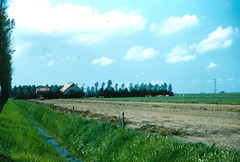
4752590128PolderLand that the Dutch have created by draining water from an area.37
4752591944PossibilismThe theory that the physical environment may set limits on human actions, but people have the ability to adjust to the physical environment and choose a course of action from many alternatives.38
4752596935Prime MeridianThe meridian, designated as 0% longitude, that passes through the Royal Observatory at Greenwich, England.39
4752603044ProjectionA system used to transfer locations from Earth's surface to a flat map.40
4752610506Relocation DiffusionThe spread of a feature or trend through bodily movement of people from one place to another.41
4752614000Remote SensingThe acquisition of data about Earth's surface from a satellite orbiting the planet or from other long-distance methods.42
4752617800Renewable ResourceSomething produced in nature more rapidly than it is consumed by humans.43
4752619621ScaleGenerally, the relationship between the portion of Earth being studied and Earth as a whole.44
4752991312SiteThe physical character of a place.45
4752993048SituationThe location of a place relative to another place.46
4752995499Space-Time CompressionThe reduction in the time it takes to diffuse something to a distant place as a result of improved communications and transportation systems.47
4753001106Spatial AssociationThe relationship between the distribution of one feature and the distribution of another feature.48
4753004683Stimulus DiffusionThe spread of an underlying principle even though a specific characteristic is rejected.49
4753024230SustainabilityThe use of Earth's renewable and nonrenewable natural resources in ways that do not constrain resource use in the future.50
4753029122SyncretismThe combining of elements of two groups into a new cultural feature.51
4753034119ToponymThe name given to a portion of Earth's surface.52
4753037445Transnational CorporationA company that conducts research, operates factories, and sells products in many countries, not just where its headquarters and shareholders are located.53
4753044191Uneven DevelopmentThe increasing gap in economic conditions between core and peripheral regions as a result of the globalization of the economy.54
4753050393Vernacular RegionAn area that people believe exists as part of their cultural identity.55

AP Biology Photosynthesis Flashcards

Chapter 10 Vocabulary for AP Biology

Terms : Hide Images
5607235816ChlorophyllGreen Pigment Main photosynthetic pigmnet Absorbs primarily violet-blue and red wavelengths0
5607235817Thylakoidsdense interconnected membranous sacs1
5607235818Granastacks of thylakoid2
5607235820Chloroplastsites of photosynthesis3
5607235821Photosynthesisconversion of light energy into chemical energy stored in sugar and other organic molecules4
5607235822Photosynthesis Equation6 CO2 + 6 H2O + light --> C6H12O6 + 6 O25
5607235823Carbon Dioxidesource of carbon and is considered inorganic carbon6
5607235824Electromagnetic SpectrumElectromagnetic Energy which travels in waves7
5607235825ColorsLight we see is reflected off objects and light we dont see is absorbed by objects8
5607235826WhiteAll colors reflected9
5607235827BlackAll colors absorbed10
5607235828Chlorophyll amain photosynthetic green pigment, absorbs primarily violet-blue and red wavelengths11
5607235830Carotenoidabsorbs blue and blue-green wavelengths; reflects orange/yellow Beta-Carotene; gives materials an orange color12
5607235831Light ReactionsOccur in thylakoid membrane and are also called light dependent reactions13
5607235833PhotosystemConsists of a reaction-center complex surrounded by light-harvesting complexes14
5607235835Photosystem 1Has P700 chlorophyll a in reaction-center complex15
5607235836Photosystem 2Has P680 chlorophyll a in reaction-center complex16
5607235838Calvin CycleLight-Independent reactions Occurs in stoma, does not use light directly17
5607235839RubiscoThe most abundant protein on Earth Carbon Fixation is catalyzed by Rubisco18
56072358411 Cycle of Calvin Cycle1 CO2 is fixed 3 ATP are used 2 NADPH are used 1 RuBP is regenerated 6 cycles needed to make 1 glucose molecule19

AP Psychology History & Approaches Flashcards

Terms : Hide Images
6504408780Empiricismthe view that knowledge originates in experience and that science should, therefore, rely on observation and experimentation0
6504408781Structuralism (School of Psychology)an early school of psychology that used introspection to explore the structural elements of the human mind1
6504408782Functionalism (School of Psychology)a school of psychology that focused on how our mental and behavioral processes function - how they enable us to adapt, survive, and flourish2
6504408783Experimental Psychology (Domain)the study of behavior and thinking using the experimental method3
6504408784Behaviorism (School of Psychology)the view that psychology (1) should be an objective science that (2) studies behavior without reference to mental processes; most research psychologists today agree with (1) but not with (2)4
6504408785Humanistic Psychology (Approach/Perspective)Emphasized the growth potential of healthy people and the individual's potential for personal growth5
6504408786Psychologythe science of behavior and mental processes6
6504408787Nature-Nurture Issuethe longstanding controversy over the relative contributions that genes and experience make to the development of psychological traits and behaviors; today's science sees traits and behaviors arising from the interaction of nature and nurture7
6504408788Levels of Analysisthe differing complementary views, from biological to psychological to social-cultural, for analyzing any given phenomenon8
6504408789Biopsychosocial (Approach/Perspective)an integrated approach that incorporates biological, psychological, and social-cultural levels of analysis9
6504408790Biological Psychology (Approach/Perspective)a branch of psychology that studies the links between biological (including neuroscience and behavior genetics) and psychological processes10
6504408791Evolutionary Psychology (Approach/Perspective)the study of the roots of behavior and mental processes using the principles of natural selection11
6504408792Psychodynamic Psychology (Approach/Perspective)a branch of psychology that studies how unconscious drives and conflicts influence behavior, and uses that information to treat people with psychological disorders12
6504408793Behavioral Psychology (Approach/Perspective)the scientific study of observable behavior, and its explanation by principles of learning13
6504408794Cognitive Psychology (Approach/Perspective)the scientific study of all the mental activities associated with thinking, knowing, remembering, and communicating14
6504408795Social-Cultural Psychology (Approach/Perspective)the study of how situations and cultures affect our behavior and thinking15
6504408796Psychometrics (Domain/Job)the scientific study of the measurement of human abilities, attitudes, and traits16
6504408797Basic Researchpure science that aims to increase the scientific knowledge base17
6504408798Development Psychology (Domain/Job)the scientific study of physical, cognitive, and social change throughout the life span18
6504408799Educational Psychology (Domain/Job)the study of how psychological processes affect and can enhance teaching and learning19
6504408800Personality Psychology (Domain/Job)the study of an individual's characteristic pattern of thinking, feeling, and acting20
6504408801Social Psychology (Domain/Job)the scientific study of how we think about, influence, and relate to one another21
6504408802Applied Researchscientific study that aims to solve practical problems22
6504408803Industrial-Organizational (I/O) Psychology (Domain/Job)the applications of psychological concepts and methods to optimizing human behavior in workplaces23
6504408804Human Factors Psychology (Domain/Job)the study of how people and machines interact and the design of safe and easily used machines and environments24
6504408805Counseling Psychology (Domain/Job)a branch of psychology that assists people with problems in living (often related to school, work, or marriage) and in achieving greater well-being25
6504408806Clinical Psychology (Domain/Job)a branch of psychology that studies, assesses, and treats people with psychological disorders26
6504408807Psychiatrya branch of medicine dealing with psychological disorders; practiced by physicians who often provide medical (i.e. drug) treatments as well as psychological therapy27
6504408808Forensic Psychology (Domain/Job)Apply psychological principles to legal issues.28
6504408809Experimental Psychology (Domain/Job)Work on research to add new knowledge to the field29
6504408810Wilhelm WundtFounder of scientific psychology Father of Psychology Structuralism30
6504408811G. Stanley HallFirst President of APA Structuralism31
6504408812Edward TitchenerStructuralism Student of Wundt32
6504408813Margaret Floy WashburnFirst woman to complete PhD in psychology Structuralism33
6504408814William Jameswrote Principles of Psychology Functionalism34
6504408815Mary Whiton CalkinsFirst woman president of the APA Functionalism35
6504408816Ivan PavlovBehavioral Approach Classical conditioning of dogs36
6504408817John WatsonBehavioral Approach Classical Aversive conditioning Little Albert Experiment37
6504408818BF SkinnerBehavioral Approach Operant Conditioning (rewards/punishment) Skinner Box (pigeons)38
6504408819Sigmund FreudPsychoanalysis (Father of)39
6504408820Jung Adler Horney KohutPsychodynamic Approach40
6504408821Carl RogersHumanistic Approach Unconditional Positive Regard41
6504408822Abraham MaslowHumanistic Approach Hierarchy of Needs42
6504408823Jean PiagetCognitive Approach Cognitive development in children43
6504408824Plato & DescartesBehavior is innate (nature)44
6504408825Aristotle & LockeBehavior results from experience (nurture)45

AP Psychologists Flashcards

Terms : Hide Images
6725618053Wilhelm WundtFather of Structuralism "Father of psychology" (established the first psychology laboratory in Germany) - study of mental processes - introspection0
6725625936E. B. TitchnerWundt's student Brought Structuralism to the USA1
6725635013Max WertheimerGestalt Psychologist Argued against dividing human thought and behavior into discrete structures Gestalt psychology tried to examine a person's total experience because the way we we experience the world is more than perception2
6725618054William JamesFounder of functionalism - studied how humans use perception to function in our environment3
6725650468Margaret Floy WashburnFirst woman to earn PhD in Psych4
6725655079Mary Whiton CalkinsStudent of William James Became first female President of APA Completed PhD at Harvard- didn't receive5
6725618060John B. WatsonBehavorist - Little Albert study in which baby was taught to fear a white rat6
6725618059Ivan PavlovBehavorist Classical Conditioning - trained dogs to salivate at the ringing of a bell7
6725618062B.F. SkinnerBehaviorist - Operant conditioning - Trained pigeons and rats8
6725618080Hermann Ebbinghaus- First person to study memory scientifically and systematically - used nonsense syllables and recorded how many times he had to study a list to remember it well - forgetting curve.9
6725618064Jean PiagetCognitive Development - Devleoped stage theory of cognitive development10
6725618071Erik EriksonNeo-Freudian - 8-stage theory of Psychosocial Development11
6725618069Lawrence KohlbergMoral Development - Stage theory of moral development12
6725618057Sigmund FreudFather of psychoanalysis - Believed that unconscious drives and desires guided people's actions.13
6725699452Lev VygotskyZone of Proximal Development Theory of mind14
6725618063Abraham MaslowHumanistic - "Hierarchy of Needs" and the concept of "self-actualization"15
6725618075Carl RogersHumanistic - founded client-centered therapy - emphasizes the unique quality of humans especially their freedom and potential for personal growth, unconditional positive regard16
6725718535Alfred AdlerNeo-Freudian Social tensions not sexual tensions Inferiority complex17
6725618073Carl JungNeo-Freudian - created concept of "collective unconscious" - wrote books on dream interpretation18
6725618074Karen HorneyNeo-Freudian - credited with founding women's psychology - criticized Freud's idea of penis envy, saying that it grew out of his assumption that men were superior to women19
6725618082Philip ZimbardoStanford Prison Experiment/Lucifer Effect - People take on the role of what they feel are proper for the situation20
6725618078Solomon AschSocial Psychology - conformity experiment -- people incorrectly reported lenghts of lines21
6725618081Stanley MilgramObedience to authority - had participants administer what they believed were dangerous electrical shocks to other participants22
6725754145Howard GardnerMultiple intelligences theory- IQ is too limited23
6725782217Spearmanintelligence is mainly a function of a general intelligence g-factor24
6725793232ThurstonIntelligence is a function of seven primary mental abilities25
6725618058Alfred BinetCreated first intelligence test (Binet-Simon scale)26
6725618055Francis Galton- developed the statistical concept of correlation - first to demonstrate "normal distribution" could be applied to intelligence27
6725618056Christian Von EhrenfelsFounder of Gestalt Psychology28
6725618065Charles DarwinEvolution by "natural selection" (the weaker die out) - wrote On the Origin of Species29
6725618066Phineas GageRailroad worker who survived a severe brain injury that dramatically changed his personality and behavior - case played a role in the development of the understanding of the localization of brain function30
6725618067Harry HarlowDevelopmental (Attachment Studies) - Studied attachment in monkeys with artificial mothers31

ap Flashcards

Terms : Hide Images
8617427951archeologistartifacts0
8617427952paleontologistfossils1
8617427953Christian J. Thomsen1832, danish archeologist na naghati sa tatlong yugto ang prehistory ng daigdig2
8617427954tatlong hati sa lumang batayanpanahon ng bato panahin ng brose panahin ng bakal3
8617427955tatlong hatiaan batay sa bagong batayanpanahon ng lumang bato panahon ng gitna o mesolitiko panahon ng bago4
8617427956kalaaunan ay hinati sa dalawang panahon ang prehistory ng taopanahon ng food gatherers at panahon ng food producers5
8617427957mga ginagamit ng archeologist sa pagkakategorya ng gamitRelative dating methods absolute dating methods6
8617427958Willian Frank Libbyamwrikanong chemist na nakatuklas ng paggamit ng carbon dating7
8617427959paleolitikogreek na salitang PALAIOS= luma at LITHOS/LITHIC= bato8
86174279609

AP Flashcards

Terms : Hide Images
8622866047Phoeniciansa thalassocratic ancient Semitic civilization that originated in the Eastern Mediterranean0
8622867759Carthagethe centre or capital city of the ancient Carthaginian civilization1
8622867760PolisGreek city-state2
8622869858sacrificegive the food to gods3
8622871633Persian WarsThe Greco-Persian Wars (also often called the Persian Wars) were a series of conflicts between the Achaemenid Empire of Persia and Greek city-states that started in 499 BC and lasted until 449 BC.4
8622871634triremeancient Greek or Roman galley or warship having three tiers of oars on each side5
8622872857Socratesa classical Greek (Athenian) philosopher credited as one of the founders of Western philosophy6
8622872858Peloponnesian Waran ancient Greek war fought by the Delian League led by Athens against the Peloponnesian League led by Sparta.7
8622874959AlexanderKing of Macedonia in northern Greece8
8622874960Roman Senatea political institution in ancient Rome. It was one of the most enduring institutions in Roman history, being established in the first days of the city (traditionally founded in 753 BC).9
8622877423Roman Republicthe era of ancient Roman civilization beginning with the overthrow of the Roman Kingdom, traditionally dated to 509 BC, and ending in 27 BC with the establishment of the Roman Empire.10
8622879880equitesclass of business people and landowners in ancient Rome who had wealth and power11
8622879881AugustusRoman statesman who established the Roman Empire and became emperor in 27 BC12
8622881090pax romanathe long period of relative peacefulness and minimal expansion by the Roman military force experienced by the Roman Empire after the end of the Final War of the Roman Republic and before the beginning of the Crisis of the Third Century.13
8622882548Romanizationthe conversion of writing from a different writing system to the Roman (Latin) script, or a system for doing so.14
8622882549aqueductA structure that carries water over long distances15
8622883618Byzantine EmpireThe Byzantine Empire, also referred to as the Eastern Roman Empire, was the continuation of the Roman Empire in the East during Late Antiquity and the Middle Ages, when its capital city was Constantinople (modern-day Istanbul, which had been founded as Byzantium).16
8622883619VedasAncient Sanskrit writings that are the earliest sacred texts of Hinduism.17
8622885198varnaa basic subdivision of humanity in the Hindu caste system18
8622886947karmathe effects that good or bad actions have on a person's soul19
8622886948Mauryan Empire(321-185 BCE) This was the first centralized empire of India whose founder was Chandragupta Maurya.20
8622887597Ashokaa ruler of the Mauryan Empire who converted to Buddhism21
8622889779steppesa vast, almost treeless plain in southeastern Europe or Asia22
8622890062savannaAn area of grassland with scattered trees and bushes23
8622889780BantuThe people who spread throughout Africa spreading agriculture, language, and iron.24

AP Environmental Science Review Flashcards

Terms from APES for the exam

Terms : Hide Images
9873660613First Law of ThermodynamicsEnergy is neither created nor destroyed, but may be converted from one form to another.0
9873660614Second Law of ThermodynamicsWhen energy is changed from one form to another, some useful energy is always degraded into lower quality energy (usually heat).1
9873660615Nuclear Fissionnuclei of isotopes split apart when struck by neutrons.2
9873660616Leachingremoval of dissolved materials from soil by water moving downwards through soil.3
9873660617Soil Conservation Methodsconservation tillage, crop rotation, contour plowing, organic fertilizers.4
9873660618Soil Salinizationin arid regions, water evaporates leaving salts behind. (ex. Fertile crescent, southwestern US)5
9873660619Hydrologic Cycle Componentsevaporation, transpiration, runoff, condensation, precipitation, and infiltration.6
9873660678Watershedall of the land that drains into a body of water7
9873660620Aquiferany water-bearing layer in the ground.8
9873660621Salt Water Intrusionnear the coast, overpumping of groundwater causes saltwater to move into the aquifer.9
9873660622La Nina"Normal" year, easterly trade winds and ocean currents pool warm water in the western Pacific, allowing upwelling of nutrient rich water off the West coast of South America.10
9873660623Nitrogen Fixationbecause atmospheric N cannot be used directly by plants, it must first be converted into ammonia by bacteria.11
9873660679Ammonificationdecomposers covert organic waste into ammonia.12
9873660624Nitrificationammonia is converted to nitrate ions (NO -).13
9873660625Assimilationinorganic N is converted into organic molecules such as DNA/amino acids & proteins.14
9873660626Denitrificationbacteria convert ammonia back into N.15
9873660627Phosphorusdoes not exist as a gas; released by weathering of phosphate rocks, it is a major limiting factor for plant growth. Phosphorus cycle is slow, and not atmospheric.16
9873660705Soil Profile17
9873660628Photosynthesisplants convert CO2 (atmospheric C) into complex carbohydrates (glucose C6H12O6).18
9873660629Aerobic Respirationoxygen consuming producers, consumers & decomposers break down complex organic compounds & convert C back into CO2.19
9873660630Bioticliving components of an ecosystem.20
9873660680Abioticnonliving components of an ecosystem21
9873660631Producer/Autotrophorganisms that make their own food—photosynthetic life.22
9873660632Trophic Levelsproducers → primary consumer → secondary consumer → tertiary consumer.23
9873660633Energy Flow through Food Webs10% of the usable energy is transferred to the next trophic level. Reason: usable energy lost as heat (2nd law), not all biomass is digested & absorbed, predators expend energy to catch prey.24
9873660634Primary successiondevelopment of communities in a lifeless area not previously inhabited by life (ex. lava).25
9873660681Secondary successionlife progresses where soil remains (ex. clear-cut forest, old farm).26
9873660635Mutualismsymbiotic relationship where both organisms benefit (e.g. clownfish and anemone)27
9873660636Commensalismsymbiotic relationship where one organism benefits & the other is unaffected (e.g. epiphytic plants, such as many orchids, that grow on trees)28
9873660637Parasitismrelationship in which one organism (the parasite) obtains nutrients at the expense of the host (e.g. mosquitoes and humans)29
9873660638Carrying Capacitythe number of individuals that can be sustained in an area.30
9873660639r-strategistreproductive strategy in which organisms reproduce early, bear many small, unprotected offspring (ex. insects, mice).31
9873660640K-strategistreproductive strategy in which organisms reproduce late, bear few, cared for offspring (ex. humans, elephants).32
9873660641Natural Selectionorganisms that possess favorable adaptations (through mutations) pass them onto the next generation.33
9873660643Doubling Time(rule of 70) doubling time equals 70 divided by average growth rate. (ex. a population growing at 5% annually doubles in 70 ÷ 5 = 14 years)34
9873660644Replacement Level Fertilitythe number of children a couple must bear to replace themselves (2.1 developed, 2.7 developing).35
9873660645World Populationslightly over 7.4 billion.36
9873660682Demographic Transition Modelpreindustrial, transitional, industrial, and postindustrial stages37
9873660646Preindustrial stagebirth & death rates high, population grows slowly, infant mortality high.38
9873660647Transitional stageAid from other countries and increase in industrialization lowers death rates (infant mortality). Birth rates high (from of the amount of people in the reproductive stage).39
9873660683Industrial stagedecline in birth rate, population growth slows.40
9873660648Postindustrial stagelow birth & death rates.41
9873660649Age Structure Diagramsbroad base → rapid growth; narrow base → negative growth (NPG); uniform shape → zero growth (ZPG)42
9873660684Most populous nations1)China 2)India 3)US 4)Indonesia43
9873660650Low Economic/Social Status of WomenMost important factor keeping population growth rates high.44
9873660651Methods to Decrease Birth RatesFamily planning, contraception, economic rewards & penalties.45
9873660652Composition of Water on Earth97.5% seawater, 2.5% freshwater. 0.023% readily available freshwater for use.46
9873660685Aquaculturefarming aquatic species, commonly salmon, shrimp, tilapia, oysters.47
9873660653Point Sourcefrom specific location such as pipe or smokestack48
9873660654Non-Point Sourcefrom over an area such as agricultural (farm) runoff, traffic.49
9873660655Eutrophicationrapid algal growth caused by an excess of nitrogen & phosphorus.50
9873660656Keystone Speciesspecies whose role in an ecosystem is important for the ecosystem to sustain itself (manatee, alligator, sea otter, etc)51
9873660657Indicator Speciesspecies that serve as early warnings that an ecosystem is being damaged (amphibians).52
9873660658Pesticide Consgenetic resistance, ecosystem imbalance, pesticide treadmill, persistence, bioaccumulation, and biological magnification.53
9873660686Genetically Modified Organisms (GMOs)new organisms created by altering the genetic material (DNA) of existing organisms; usually in an attempt to remove undesirable or create desirable characteristics in the new organism.54
9873660687Electricity Generationsteam, from water boiled by fossils fuels or nuclear energy, or falling water is used to turn a turbine and generate a generator.55
9873660688Coal Formationprehistoric plants buried undecomposed in oxygen-depleted water of swamps/bogs converted by heat and pressure.56
9873660659Nuclear Reactorconsists of a core, control rods, moderator, steam generator, turbine, containment building.57
9873660689Alternate Energy Sourceswind, solar, waves, biomass, geothermal, fuel cells58
9873660690Tropospherefirst layer of atmosphere 0-10 miles above the Earth's surface. Contains weather, greenhouse gases (bad ozone)59
9873660691Stratospheresecond layer of atmosphere 10-30 miles above the Earth's surface. Contains protective ozone layer (good ozone)60
9873660692Temperature Inversiona warm layer of air above a cooler layer traps pollutants close to the Earth's surface.61
9873660693Divergent plate boundariestectonic plates spreading apart, new crust being formed (Mid Ocean Ridge)62
9873660694Convergent plate boundariestectonic plates with the oldest crustal material on Earth moving together, one moving under another. Mineral deposits and volcanoes are most abundant at convergent plate boundaries (Volcanic arc like Japan)63
9873660695Transform Faulttectonic plates sliding past one another (San Andreas Fault Line)64
9873660696Most Endangered specieshave a small range, require large territory, have long generations, have very specialized niche, or live on an island65
9873660660Biomelarge distinct terrestrial region having similar climate, soil, plants & animals.66
9873660661Tropical Rain Forestscharacterized by the greatest diversity of species, believed to include many undiscovered species. Occur near the equator. Soils tend to be low in nutrients. Distinct seasonality: winter is absent, and only two seasons are present (rainy and dry).67
9873660662Temperate Forestsoccur in eastern North America, Japan, northeastern Asia, and western and central Europe. Dominated by tall deciduous trees. Well-defined seasons include a distinct winter. Logged extensively, only scattered remnants of original temperate forests remain.68
9873660663Boreal Forests or Taigarepresent the largest terrestrial biome. Dominated by needleleaf, coniferous trees. Found in the cold climates of Eurasia and North America: two-thirds in Siberia with the rest in Scandinavia, Alaska, and Canada. Seasons are divided into short, moist, and moderately warm summers and long, cold, and dry winters. Extensive logging may soon cause their disappearance.69
9873660664Temperate Shrub Landsoccurs along the coast of Southern California and the Mediterranean region. Characterized by areas of Chaparral-miniature woodlands dominated by dense stands of shrubs.70
9873660665Savannasgrassland with scattered individual trees. Cover almost half the surface of Africa and large areas of Australia, South America, and India. Warm or hot climates where the annual rainfall is 20-50 inches per year. The rainfall is concentrated in six or eight months of the year, followed by a long period of drought when fires can occur.71
9873660666Temperate Grasslandsdominated by grasses, trees and large shrubs are absent. Temperatures vary more from summer to winter, and the amount of rainfall is less than in savannas. Temperate grasslands have hot summers and cold winters. Occur in South Africa, Hungary, Argentina, the steppes of the former Soviet Union, and the plains and prairies of central North America.72
9873660667Desertscovers about one fifth of the Earth's surface and occur where rainfall is less than 50 cm/year. Most deserts occur at low latitudes, have a considerable amount of specialized vegetation, as well as specialized animals. Soils have abundant nutrients, need only water to become productive, and have little or no organic matter. Common disturbances include occasional fires or cold weather, and sudden, infrequent, but intense rains that cause flooding.73
9873660668Tundratreeless plains that are the coldest of all the biomes. Occur in the arctic and Antarctica. Dominated by lichens, mosses, sedges, and dwarfed shrubs Characterized by extremely cold climate, permanently frozen ground (permafrost) low biotic diversity, simple vegetation structure, limitation of drainage, short season of growth and reproduction.74
9873660669Wetlandsareas of standing water that support aquatic plants including marshes, swamps, and bogs. Reduce flooding. Species diversity is very high.75
9873660670Fresh Waterdefined as having a low salt concentration (less than 1%). Plants and animals are adjusted to the low salt content and would not be able to survive in areas of high salt concentration (i.e., ocean). There are different types of freshwater regions: ponds and lakes, streams and rivers, and estuaries.76
9873660671Oceansthe largest of all the ecosystems. The ocean regions are separated into separate zones: intertidal, pelagic, abyssal, and benthic. All four zones have a great diversity of species.77
9873660672Safe Drinking Water Actset maximum contaminant levels for pollutants that may have adverse effects on human health.78
9873660673Clean Water ActAim: to make all US waterways safe for fishing and swimming. set maximum permissible amounts of water pollutants that can be discharged into waterways. Require the repairment of damaged wetlands.79
9873660674Clean Air ActNAAQ set air quality standards. Set emission standards for cars, and limits for release of air pollutants.80
9873660675Montreal Protocolphase out of ozone depleting substances.81
9873660676Endangered Species Actidentifies threatened and endangered species in the US, and puts their protection ahead of economic considerations.82
9873660677Federal Insecticide, Fungicide, and Rodenticide Act (FIFRA)regulates the use and effectiveness of pesticides83
9873660697Herbicidea toxic chemical that kills plants84
9873660698Insecticidea toxic chemical that kills insects85
9873660699Rodenticidea toxic chemical that kills rodents86
9873660700Fungicidea toxic chemical that kills fungi87
9873660701Nicheorganism's job in the ecosystem of which it lives88
9873660702Invasive Speciesintroduced into an ecosystem and out-compete native species89
9873660703NOx, SO2, Pb, PM, O3, CO6 criteria air pollutants90
9873660704Top 4 indoor air pollutants in DEVELOPED countriesTobacco smoke, Formaldehyde, Radon Gas, Fine and Ultrafine Particulate Matter91

100 AP Language terms Flashcards

Allegory The device of using character and/or story elements symbolically to represent an abstraction in addition to the literal meaning. In some allegories, for example, an author may intend the characters to personify an abstraction like hope or freedom. The allegorical meaning usually deals with moral truth or a generalization about human existence.
Alliteration The repetition of sounds, especially initial consonant sounds in two or more neighboring words (as in "she sells sea shells"). Although the term is not frequently in the multiple choice section, you can look for alliteration in any essay passage. The repetition can reinforce meaning, unify ideas, supply a musical sound, and/or echo the sense of the passage.
Allusion A direct or indirect reference to something which is presumably commonly known, such as an event, book, myth, place, or work of art. Allusions can be historical, literary, religious, topical, or mythical. There are many more possibilities, and a work may simultaneously use multiple layers of allusion.
Ambiguity The multiple meanings, either intentional or unintentional, of a word, phrase, sentence, or passage.
Analogy A similarity or comparison between two different things or the relationship between them. An analogy can explain something unfamiliar by associating it with or pointing out its similarity to something more familiar. Analogies can also make writing more vivid, imaginative, or intellectually engaging.
Antecedent The word, phrase, or clause referred to by a pronoun. The AP language exam occasionally asks for the antecedent of a given pronoun in a long, complex sentence or in a group of sentences.

Terms : Hide Images
9875015606AllegoryThe device of using character and/or story elements symbolically to represent an abstraction in addition to the literal meaning. In some allegories, for example, an author may intend the characters to personify an abstraction like hope or freedom. The allegorical meaning usually deals with moral truth or a generalization about human existence. A story in which each aspect of the story has a symbolic meaning outside the tale itself.0
9875015607AlliterationThe repetition of sounds, especially initial consonant sounds in two or more neighboring words (as in "she sells sea shells"). Although the term is not frequently in the multiple choice section, you can look for alliteration in any essay passage. The repetition can reinforce meaning, unify ideas, supply a musical sound, and/or echo the sense of the passage.1
9875015608AllusionA direct or indirect reference to something which is presumably commonly known, such as an event, book, myth, place, or work of art. Allusions can be historical, literary, religious, topical, or mythical. There are many more possibilities, and a work may simultaneously use multiple layers of allusion.2
9875015609AmbiguityThe multiple meanings, either intentional or unintentional, of a word, phrase, sentence, or passage.3
9875015610AnalogyA similarity or comparison between two different things or the relationship between them. An analogy can explain something unfamiliar by associating it with or pointing out its similarity to something more familiar. Analogies can also make writing more vivid, imaginative, or intellectually engaging.4
9875015611AntecedentThe word, phrase, or clause referred to by a pronoun. The AP language exam occasionally asks for the antecedent of a given pronoun in a long, complex sentence or in a group of sentences. A question from the 2001 AP test as an example follows: "But it is the grandeur of all truth which can occupy a very high place in human interests that it is never absolutely novel to the meanest of minds; it exists eternally, by way of germ of latent principle, in the lowest as in the highest, needing to be developed but never to be planted."5
9875015612Antithesisthe opposition or contrast of ideas; the direct opposite.6
9875015613AphorismA terse statement of known authorship which expresses a general truth or a moral principle. (If the authorship is unknown, the statement is generally considered to be a folk proverb.) An aphorism can be a memorable summation of the author's point7
9875015614ApostropheA prayer like figure of speech that directly addresses an absent or imaginary person or a personified abstraction, such as liberty or love. It is an address to someone or something that cannot answer. The effect may add familiarity or emotional intensity. William Wordsworth addresses John Milton as he writes, "Milton, thou shouldst be living at this hour: England hath need of thee." Another example is Keats' "Ode to a Grecian Urn," in which Keats addresses the urn itself: rarely on an AP exam, but important when there. ALWAYS Pathos8
9875015615AtmosphereThe emotional nod created by the entirety of a literary work, established partly by the setting and partly by the author's choice of objects that are described. Even such elements as a description of the weather can contribute to the atmosphere. Frequently atmosphere foreshadows events. Perhaps it can create a mood.9
9875015616Caricaturea verbal description, the purpose of which is to exaggerate or distort, for comic effect, a person's distinctive physical features or other characteristics. Example: The pupils of her eyes are small; like a pebble of sand floating atop a can of blue paint.10
9875015618Colloquial/ColloquialismThe use of slang or informalities in speech or writing. Not generally acceptable for formal writing, colloquialisms give a work a conversational, familiar tone. Colloquial expressions in writing include local or regional dialect11
9875015620ConnotationThe non-literal, associative meaning of a word; the implied, suggested meaning. Connotations may involve ideas, emotions or attitudes12
9875015621DenotationThe strict, literal, dictionary definition of a word, devoid of any emotion, attitude, or color. (Example: the denotation of knife- a utensil for cutting - Connotation - knife - such as knife in the back - anger fear violence betrayal13
9875015622DictionRelated to style, diction refers to the writer's word choices, especially with regard to their correctness, clearness, or effectiveness. FOR AP EXAMSyou should be able to describe the uthors diction and understand how it compliments his purpose (along iwth imagery syntax, literary devices, etc)14
9875015623DidacticFrom the Greek, didactic literally means "teaching." Didactic words have the primary aim of teaching or instructing,especially the teaching of moral or ethical principles.15
9875015624EuphemismFrom the Greek for "good speech," euphemisms are a more agreeable or less offensive substitute for a generally unpleasant word or concept - POLITICALLY CORRECT16
9875015625Extended MetaphorA metaphor developed at great length, occurring frequently in or throughout a work.17
9875015626Figurative LanguageWriting or speech that is not intended to carry literal meaning and is usually meant to be imaginative and vivid18
9875015627Figure of speechA device used to produce figurative language. Many compare dissimilar things. Figures of speech include apotrophe hyperbole irony metaphor oxymoron paradox personification simile syneddoche understatement19
9875015629GenreThe major category into which a literary work fits. The basic divisions of literature are prose, poetry, and drama.However, genre is a flexible term; within these broad boundaries exist many subdivisions that are often called genresthemselves. For example, prose can be divided into fiction (novels and short stories) or nonfiction (essays, biographies,autobiographies, etc.). Poetry can be divided into lyric, dramatic, narrative, epic, etc. Drama can be divided into tragedy,comedy, melodrama, farce, etc. On the AP language exam, expect the majority of the passages to be from the following genres: autobiography, biography, diaries, criticism, essays, and journalistic, political, scientific, and nature writing. There may be fiction or poetry.20
9875015631HyperboleA figure of speech using deliberate exaggeration or overstatement. (The literal Greek meaning is "overshoot.") Hyperboles often have a comic effect; however, a serious effect is also possible. Often, hyperbole produces irony. The opposite of hyperbole is understatement.21
9875015632ImageryThe sensory details or figurative language used to describe, arouse emotion, or represent abstractions. On a physical level, imagery uses terms related to the five senses: visual, auditory, tactile, gustatory, and olfactory. On a broader and deeper level, however, one image can represent more than one thing. For example, a rose may present visual imagery while also representing the color in a woman's cheeks and/or symbolizing some degree of perfection. An author may use complex imagery while simultaneously employing other figures of speech, especially metaphor and simile. In addition, this term can apply to the total of all the images in a work. On the AP language exam, pay attention to how an author creates imagery and to the effect of this imagery.22
9875015633Inference/inferTo draw a reasonable conclusion from the information presented. When a multiple choice question asks for an inference to be drawn from a passage, the most direct, most reasonable inference is the safest answer choice. If an inference is implausible, it's unlikely to be the correct answer. Note that if the answer choice is directly stated, it is not inferred and it is wrong. You must be careful to note the connotation - negative or positive - of the choices. Adapted from V. Stevenson, Patrick Henry High School, and Abrams' Glossary of Literary Terms23
9875015634Invectivean emotionally violent, verbal denunciation or attack using strong, abusive language. (For example, in Henry IV, Part hill of flesh.")24
9875015635Irony/ironicThe contrast between what is stated explicitly and what is really meant, or the difference between what appears to be and what is actually true. Irony is often used to create poignancy or humor. In general, there are three major types of irony used in language: (1) verbal irony - when the words literally state the opposite of the writer's (or speaker's) meaning (2) situational irony - when events turn out the opposite of what was expected; when what the characters and readers think ought to happen is not what does happen (3) dramatic irony - when facts or events are unknown to a character in a play or piece of fiction but known to the reader, audience, or other characters in the work.25
9875015637MetaphorA figure of speech using implied comparison of seemingly unlike things or the substitution of one for the other, suggesting some similarity. Metaphorical language makes writing more vivid, imaginative, thought provoking, and meaningful.26
9875015638Metonymy(mĕtŏn′ ĭmē) A term from the Greek meaning "changed label" or "substitute name," metonymy is a figure of speech in which the name of one object is substituted for that of another closely associated with it. For example, a news release that claims "the White House declared" rather than "the President declared" is using metonymy; Shakespeare uses it to signify the male and female sexes in As You Like It: "doublet and hose ought to show itself courageous to petticoat." The substituted term generally carries a more potent emotional impact.27
9875015639MoodThe prevailing atmosphere or emotional aura of a work. Setting, tone, and events can affect the mood. Mood is similar to tone and atmosphere.28
9875015640NarrativeThe telling of a story or an account of an event or series of events.29
9875015641onomatopoeiaA figure of speech in which natural sounds are imitated in the sounds of words. Simple examples include such words as buzz, hiss, hum, crack, whinny, and murmur. If you note examples of onomatopoeia in an essay passage, note the effect.30
9875015642OxymoronFrom the Greek for "pointedly foolish," an oxymoron is a figure of speech wherein the author groups apparently contradictory terms to suggest a paradox. Simple examples include "jumbo shrimp" and "cruel kindness." This term does not usually appear in the multiple-choice questions, but there is a chance that you might find it in an essay. Take note of the effect that the author achieves with the use of oxymoron.31
9875015643ParadoxA statement that appears to be self-contradictory or opposed to common sense but upon closer inspection contains some degree of truth or validity. (Think of the beginning of Dickens' Tale of Two Cities: "It was the best of times, it was the worst of times....")32
9875015644ParallelismAlso referred to as parallel construction or parallel structure, this term comes from Greek roots meaning "beside one another." It refers to the grammatical or rhetorical framing of words, phrases, sentences, or paragraphs to give structural similarity. This can involve, but is not limited to, repetition of a grammatical element such as a preposition or verbal times, it was the age of wisdom, it was the age of foolishness, it was the epoch of believe, it was the epoch of incredulity....") The effects of parallelism are numerous, but frequently they act as an organizing force to attract the reader's attention, add emphasis and organization, or simply provide a musical rhythm. Adapted from V. Stevenson, Patrick Henry High School, and Abrams' Glossary of Literary Terms33
9875015645ParodyA work that closely imitates the style or content of another with the specific aim of comic effect and/or ridicule. It exploits peculiarities of an author's expression (propensity to use too many parentheses, certain favorite words, etc.) Well-written parody offers enlightenment about the original, but poorly written parody offers only ineffectual imitation. nuances of the newer work. Occasionally, however, parodies take on a life of their own and don't require knowledge of the original.34
9875015646PedanticAn adjective that describes words, phrases, or general tone that is overly scholarly, academic, or bookish (language that might be described as "show-offy"; using big words for the sake of using big words).35
9875015648PersonificationA figure of speech in which the author presents or describes concepts, animals, or inanimate objects by endowing them with human attributes or emotions. Personification is used to make these abstractions, animals, or objects appear more vivid to the reader.36
9875015649Point of viewIn literature, the perspective from which a story is told. There are two general divisions of point of view, and many subdivisions within those. (1) first person narrator tells the story with the first person pronoun, "I," and is a character in the story. This narrator can be the protagonist, a secondary character, or an observing character. (2) third person narrator relates the events with the third person pronouns, "he," "she," and "it." There are two main subdivisions to be aware of: a. third person omniscient, in which the narrator, with godlike knowledge, presents the thoughts and actions of any or all characters b. third person limited omniscient, in which the narrator presents the feelings and thoughts of only one character, presenting only the actions of all the remaining characters. In addition, be aware that the term point of view carries an additional meaning. When you are asked to analyze the author's point of view, the appropriate point for you to address is the author's attitude.37
9875015650Proseone of the major divisions of genre, prose refers to fiction and nonfiction, including all its forms. In prose the printer determines the length of the line; in poetry, the poet determines the length of the line.38
9875015651RepetitionThe duplication, either exact or approximate, of any element of language, such as a sound, word, phrase, clause, sentence, or grammatical pattern.39
9875015652RhetoricFrom the Greek for "orator," this term describes the principles governing the art of writing effectively, eloquently, and persuasively.40
9875015654SarcasmFrom the Greek meaning "to tear flesh," sarcasm involves bitter, caustic language that is meant to hurt or ridicule someone or something. It may use irony as a device, but not all ironic statements are sarcastic (that is, intended to ridicule). When well done, sarcasm can be witty and insightful; when poorly done, it is simply cruel.41
9875015655SatireA work that targets human vices and follies or social institutions and conventions for reform or ridicule. Regardless of whether or not the work aims to reform human behavior, satire is best seen as a style of writing rather than a purpose for writing. It can be recognized by the many devices used effectively by the satirist: irony, wit, parody, caricature, often humorous, is thought provoking and insightful about the human condition. Some modern satirists include Joseph Heller (Catch 22) and Kurt Vonnegut (Cat's Cradle, Player Piano).42
9875015659SyllogismFrom the Greek for "reckoning together," a syllogism (or syllogistic reasoning or syllogistic logic) is a deductive system of formal logic that presents two premises (the first one called "major" and the second called "minor") that inevitably lead to a sound conclusion. A frequently cited example proceeds as follows: major premise: All men are mortal. minor premise: Socrates is a man. conclusion: Therefore, Socrates is a mortal. A syllogism's conclusion is valid only if each of the two premises is valid. Syllogisms may also present the specific idea first ("Socrates") and the general second ("all men"). Adapted from V. Stevenson, Patrick Henry High School, and Abrams' Glossary of Literary Terms43
9875015660Symbol/symbolismGenerally, anything that represents itself and stands for something else. Usually a symbol is something concrete -- such as an object, action, character, or scene - that represents something more abstract. However, symbols (1) natural symbols are objects and occurrences from nature to symbolize ideas commonly associated with them (dawn symbolizing hope or a new beginning, a rose symbolizing love, a tree symbolizing knowledge). (2) conventional symbols are those that have been invested with meaning by a group (religious symbols such as a cross or Star of David; national symbols, such as a flag or an eagle; or group symbols, such as a skull and crossbones for pirates or the scale of justice for lawyers). (3) literary symbols are sometimes also conventional in the sense that they are found in a variety of works and are more generally recognized. However, a work's symbols may be more complicated, as is the jungle in Heart of Darkness. On the AP exam, try to determine what abstraction an object is a symbol for and to what extent it is successful in representing that abstraction.44
9875015661SyntaxThe way an author chooses to join words into phrases, clauses, and sentences. Syntax is similar to diction, but you can differentiate them by thinking of syntax as groups of words, while diction refers to the individual words. In the multiplechoice section of the AP exam, expect to be asked some questions about how an author manipulates syntax. In the essay section, you will need to analyze how syntax produces effects.45
9875015662ThemeThe central idea or message of a work, the insight it offers into life. Usually theme is unstated in fictional works, but in nonfiction, the theme may be directly state, especially in expository or argumentative writing.46
9875015663ThesisIn expository writing, the thesis statement is the sentence or group of sentences that directly expresses the author's opinion, purpose, meaning, or position. Expository writing is usually judged by analyzing how accurately, effectively,and thoroughly a writer has proven the thesis.47
9875015664ToneSimilar to mood, tone describes the author's attitude toward his material, the audience, or both. Tone is easier to determine in spoken language than in written language. Considering how a work would sound if it were read aloud can help in identifying an author's tone. Some words describing tone are playful, serious, businesslike, sarcastic, humorous, formal, ornate, sardonic, somber, etc.48
9875015666Litotesthe ironic minimalizing of fact, understatement presents something as less significant than it is. The effect can frequently be humorous and emphatic. Understatement is the opposite of hyperbole. Example: Jonathan Swift's A Tale of a Tub: "Last week I saw a woman flayed, and you will hardly believe how much it altered her person for the worse."49
9875015668Ad HominemAn attack on the person rather than the issue at hand - a common fallacy - common in elections50
9875015669Chiasmus'chi structure' unlike abab / language listed in an abba form: Ask not what your country Can do for you, But what you Can do for your country51
9875015670Malapropisma word humorously misused: Example, he is the AMPLE of her eye... instead of ' he is the APPLE of her eye,52
9875015671Parallelism (parallel syntax)a pattern of language that creates a rhythm of repetition often combined with some other language of repetition. Like a train gaining momentum. Ex: When you are right you cannot be too radical; when you are wrong, you cannot be too conservative.53
9875015673Slippery SlopeThis is the failure to provide evidence to support a claim that one event will lead to a catastrophic chain of events.54
9875015675EthosOne of the fundamental strategies of argumentation identified by Aristotle. Ethos is basically an appeal to credibility. The writer is seeking to convince you that he or she has the background, history, skills, and/or expertise to speak on the issue. Whenever you encounter an ethos argument, always ask yourself is the credibility is substantiated and valid. An essay advocating policy changes on drug rehabilitation programs is more powerful is the person is a former addict or customer in a current rehab program.55
9875015676JuxtapositionMaking on idea more dramatic by placing it next to its opposite. In art it is called chiaroscuro, where a bright white object is placed next to a black object and thus both are made more visible. My goodness is often chastened by my sense of sin, or The Gasoline savings from a hybrid car as compared to a standard car seem excellent until one compares the asking prices of the two vehicles. The juxtaposition of the asking prices shows that the savings are not as significant as they first appear.56
9875015677LogosAn appeal to reason. Logos is one of the fundamental strategies of argumentation identified by Aristotle. It occurs when a writer tries to convince you of the logic of his argument. writers may use inductive argumentation or deductive argumentation, but they clearly have examples and generally rational tome to their language. The problem with logos is that is can appear reasonable until you dissect the argument and then find fallacies that defeat the viability of the argument on the reader's eyes. Of course, that presupposes that the readers is able to identify the fallacies.57
9875015678PathosAn appeal to emotion. This is one of the fundamental strategies of argumentation identified by Aristotle. Typically, pathos arguments may use loaded words to make you feel guilty, lonely, worried, insecure, or confused. The easiest way to remember whats pathos arguments are is to see most advertising as a form of pathos argument.58
9875015680Rhetorical QuestionA question whose answer is assumed, a rhetorical question is designed to force the reader to respond in a predetermined manner and is a significant tool in the study of rhetoric. One of the most basic purposes for rhetorical questions is cheerleading. Rhetorical questions, therefor, propel an argument emotionally. They often look like extensions of a logical argument, but more often than not, they are setting you up to agree with the writer. As with a parallel syntax, rhetorical questions are excellent devices to use in the development of your own essay writing. As graders, we notice when you use them- if you use them to effectively nurture your argument. There are some types of rhetorical questions, but they always follow the same basic pattern: the writer ask herself something and then answers the question in the next sentence or paragraph. Another form is when the question functions as an ironic assault on the writer's adversaries. This kind if rhetorical question can have many uses, and you should notice its function whenever you encounter one in nonfiction prose. Who's afraid of the big bad wolf? Who's afraid of the jolly green giant? Are we? No!!!59
9875015681SimileA critical figure of speech in an argument when what is unknown is compared to something that is known using the word "like," "as," or "than" in order to better perceive its importance. Remember the ripple effect and look for patterns in similes and metaphors in any piece of nonfiction prose. The troll's fishing technique was like a mercenary throwing bombs in the water to catch trout.60
9875015692AnaphoraFigure of repetition that occurs when the first word or set of words in one sentence, clause, or phrase is/are repeated at or very near the beginning of successive sentences, clauses, or phrases; repetition of the initial words over successive phrases or clauses61
9875015694AnecdoteA brief story that illustrates or makes a point62
9875015697False authorityA fallacy in which a speaker or writer seeks to persuade not by giving evidence but by appealing to the respect people have for a famous person or institution.63
9875015699AssonanceRepetition of a vowel sound within two or more words in close proximity64
9875015700AsyndetonA series of words separated by commas (with no conjunction), e.g. "I came, I saw, I conquered." The parts of the sentence are emphasized equally; in addition, the use of commas with no intervening conjunction speeds up the flow of the sentence.65
9875015701ToneA speaker's, author's, or character's disposition toward or opinion of a subject.66
9875015702AudienceOne's listener or readership; those to whom a speech or piece of writing is addressed.67
9875015704Circular ReasoningOccurs when the believability of the evidence depends on the believability of the claim.68

Pages

Subscribe to CourseNotes RSS

Need Help?

We hope your visit has been a productive one. If you're having any problems, or would like to give some feedback, we'd love to hear from you.

For general help, questions, and suggestions, try our dedicated support forums.

If you need to contact the Course-Notes.Org web experience team, please use our contact form.

Need Notes?

While we strive to provide the most comprehensive notes for as many high school textbooks as possible, there are certainly going to be some that we miss. Drop us a note and let us know which textbooks you need. Be sure to include which edition of the textbook you are using! If we see enough demand, we'll do whatever we can to get those notes up on the site for you!