AP Notes, Outlines, Study Guides, Vocabulary, Practice Exams and more!

world history AP ch 5/6 MAP Flashcards

Terms : Hide Images
7912655263Zoroastrianismoriginated in Persia/ Mesopotamia0
7914760733Judah/ Jerusalemboth in modern day Israel1
7914778421Arabia2
7914795747Constantinoplepart of Byzantine Empire3
7914802317Arabian Sea4
7914806960South China Sea5
7914810980Red Sea6
7914817378Bay of Bengal7
7914824851Spread of Christianity8
7914832942Spread of Buddhism9

AP World History Strayer Chapter 6 Vocabulary Flashcards

Terms : Hide Images
7846022476Meroe*Definition:* City in southern Nubia that was the center of Nubian civilization. *Significance:* Governed by a female monarch. Gained its wealth through long-distance trade. Declined after Islam invaded.0
7846022477Axum*Definition:* Northern Ethiopian city that relied on highly productive agriculture with plow-based farming. *Significance:* A part at Adulis and used taxes to gain revenue from other empires. They didn't rely on hoe and digging stick.1
7846022478Piye*Definition:* 8th century BCE, Africa. Paid respect to gods for great victory. *Significance:* Reunified Egypt and conquered ruler and began to govern/lead war.2
7846022479Niger Valley Civilization*Definition:* City-based civilization in Niger valley. Noted for its lack of centralized state structure. *Significance:* Led to the uprising of jenne jeno3
7846022480Maya Civilization*Definition:* Mesoamerican civilization known for the only fully developed written language of the Pre-columbian Americas. *Significance:* Resembled the competing city-states of Mesopotamia and written language.4
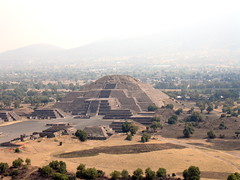
7846022481Teotihuacan*Definition:* Largest city of Pre-Columbian America that governed and/or influenced much of the surrounding region ("City of the gods"). *Significance:* Had long-distance trade which enabled them to live a more luxurious life.5
7846022482Chavin*Definition:* Andean town that was the center of a large Peruvian religious movement. *Significance:* Religious movement within class system of elites. Decline due to famine and drought.6
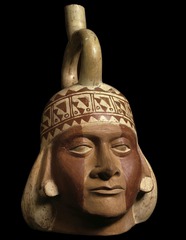
7846022483Moche*Definition:* Important regional civilization of Peru, governed by warrior-priests. *Significance:* Elites lived luxuriously, prisoners and poor were sacrificed in rituals.7
7846022484Wari and Tiwanaku*Definition:* Civilizations in Andes Mountains before Inca Empire. *Significance:* Almost opposites, the Wari used irrigation for agriculture and Tiwanaku farmed. The Wari depended on the Tiwanaku.8
7846022485Bantu Expansion*Definition:* Gradual migration of Bantu peoples from their homeland. *Significance:* Their ironworking and agricultural techniques gave them an advantage over gathering and hunting peoples.9
7846022486Chaco Phenomenon*Definition:* Name given to a major process settlement and social organization among the peoples of Chaco Canyon. *Significance:* Drought caused people to start depending on agriculture which made a large population develop.10
7846022487Mound Builders/Cahokia*Definition:* Members of a number of cultures that developed along the Mississippi that built large mounds that they buried people with their stuff under. *Significance:* Buried people with all their things in hopes to make it to the afterlife (only for wealthy people).11

AP World History Chapter 22 Flashcards

Terms : Hide Images
9297212834HumanistsEuropean scholars, writers, and teachers associated with the study of the humanities0
9297212835Hundred Years Warswar between France and England for the French throne; introduced new weapons1
9297214330Ibn BattutaArab traveler who described African societies and cultures in his travel records2
9297214331MingChinese dynasty (1368-1644) founded by Hongwu and known for its cultural brilliance.3
9297216165QadisMuslim judges who carried out the judicial functions of the state4
9297216166Spanish Inquisitionestablished in 1481 by Ferdinand and Isabela. an organization of priests that looked for and punished non-Christians in Spain5
9297219392YongleHongwu's successor in the Ming dynasty. Wrote an encyclopedia. Launched naval expeditions.6
9297228542HongwuFirst emperor of the Ming Dynasty, born a peasant, drove Mongols out of China7
9297230064Prince HenryPortuguese prince who started a school for sailors and sponsored early voyages of exploration8
9297231672Bartolomeu DiasPortuguese explorer who rounded the tip of Africa9
9297233234Little Ice AgeA period of cooling temperatures and harsh winters that lasted for much of the early modern era.10
9297234389Black DeathA deadly plague that swept through Europe between 1347 and 135111
9297235477Fernando and Isabelthe Spanish Inquisition was first established in 1478 by12
9297240111Christopher ColumbusFound the New World for Spain in 149213

AP WORLD: Chapter 2 Flashcards

Terms : Hide Images
7199511886Tigris and Euphratesin Southwest Asia, flow from modern-day Turkey through what is now Iraq to empty into the Persian Gulf.0
7199511887MesopotamiaThe area between the Tigris and Euphrates (comes from Greek word meaning "between rivers"1
7199512276Fertile Crescentoverlaps with Mesopotamia but also includes an area to the west, along the Mediterranean coast; contains moist and fertile land2
7199512277Carthagea Phoenician colony on the coast of North Africa; became a significant outpost in the region3
7199512278Saharaa desert in Northern Africa4
7199512793Kalaharia desert in Southern Africa5
7199512794Nile Riverbegins in the interior of Africa and flows north to empty into the Mediterranean Sea6
7199512795Desertificationthe creation of desert-like conditions7
7199513214Indus River Valleycivilizations of this area developed near water and became the core and foundation of later civilizations in the region8
7199513649Environmental DegradationEnvironmental degradation is the deterioration of the environment through depletion of resources such as air, water and soil; the destruction of ecosystems; habitat destruction; the extinction of wildlife; and pollution; probably caused the gradual decline and eventual disappearance of the Harappan and Mohenjo-Daro civilizations9
7199513650Deforestationclearance or clearing is the removal of a forest or stand of trees where the land is thereafter converted to a non-forest use; made the power and influence of the Kush weaken10
7199514039Huang He11
7199514040Chiang Jiang12
7199514427Loess13
7199514428Mesoamerica14
7199514429Maize15
7199514854Oceania16
7199514855Polynesia17
7199515775Polytheisticpeople who worship many gods (like in Sumer)18
7199515776Zigguratstemples and altars in large stepped pyramids that were built by the Sumerians; place of government and religious activities19
7199515777Astronomythe study of objects outside Earth's atmosphere20
7199516277Astrologypredicting the future by studying movements of stars and planets21
7199516278Hebrewslived in region of Canaan (present day Israel, Palestine, and Lebanon)22
7199517028Israelitesformerly known as Hebrews, now known as Jews23
7199517029Jewsformerly known as Hebrews and Israelites24
7199517529AbrahamCanaan was founded by this man who left Mesopotamia to settle there in approximately 2000 BC; Jews, Christians, and Muslims all trace their religious heritage to him25
7199517530Mosesthe Hebrews were led out of Egypt by him; split the Red Sea26
719951753110 Commandmentsa code of conduct that became very influential in areas dominated by Christianity27
7199517936Monotheisma belief in only one deity28
7199517937Jewish Diasporathe spreading of Jews throughout the Mediterranean world and Middle East29
7199517938Atenan Egyptian sun god30
7199518281Mummificationprocess involving the removal of the body's organs, drying the body with salt, and packing its insides and wrapping it with chemically treated cloth, and then the body was put in a sealed coffin31
7199518282AryansIndo-European speaking peoples originally from Central Asia; traveled from Persia through the Hindu Kush Mountains over a period of several centuries beginning in 1500 BC32
7199518742Hindithe Aryans developed a writing but system; while most literary and religious works were recorded in this language, they also had a commonly used tongue which would evolve into Hindi33
7199518743VedasSanskrit for "knowledge"; collection of Aryan religious hymns, poems, and songs34
7199519072Brahminproper priestly behavior outlined by the Rig-Veda35
7199519073Vedic Age800-400 BC; marked by the Aryans' growing awareness of Dravidian beliefs36
7199519582Brahma37
7199519583Dharmain order to escape the seemingly endless cycle of birth and rebirth, one must perform righteous duties and deeds, known as ones this; determines ones karma in the next life38
7199519584Karma39
7199520113Moksha40
7199520114Ancestor Veneration41
7199520115SumeriansA group of nomadic pastoralists who migrated into Mesopotamia sometime before 5000 BC; settled alongside people already living there42
7199520609Sumernomadic pastoralists that migrated into Mesopotamia before 5000 BC created this civilization43
7199520610UrukThe largest city in Sumer by 2700 BC with a population of 5000044
7199520611City-statesa city and the land it controls (typically covered several hundred square miles); began in Sumer45
7199521069Kingrules over a territory known as a kingdom46
7199521070Kingdomsa territory that is under the authority of a king47
7199521071Babylonians1900 BC; Persian people from what is now Iran invaded and took control of Mesopotamia. The invaders built a new capital city called Babylon48
7199521429Empirea territory that contains a diversity of cultures49
7199521430Phoenicianspeople who occupied parts of present-day Middle East around 3000 BC; developed a wide trade network across the Mediterranean Sea50
7199521431Old Kingdom2660-2160 BC; Egypt began developing a strong central government; king or queen known as Pharaoh51
7199521886Middle Kingdom2040-1786 BC; Mentuhotep II took power; moved capital to Thebes, reunited Egypt under a central government, reducing the power of the provincial governors and eventually gaining control over all of Egypt52
7199521887New Kingdom1570-1070 BC; Egypt had a new powerful army, pharaohs expanded southward into Nubia and north into Mesopotamia, through negotiation and conquest, Egypt gained access to highly prized resources such as bronze and wood53
7199522444Hyksosthese people of nomadic pastoralists invaded Egypt during the Middle Kingdom and ended that time era of Egypt54
7199522445Hittitesinvader of Egypt; had a military advantage over Egypt because of their use of iron tools and weapons55
7199522446Kushreemerged kingdom of Nubia around 2500 BC56
7199523068Axumin 340 AD Kush was conquered by this civilization; had an agricultural economy57
7199523069Dravidiansindigenous peoples of the India subcontinent; established two sophisticated urban centers in the Indus River Valley: Harappa and Mohenjo-Daro58
7199523070Harappaone of the two established sophisticated centers in the Indus River Valley59
7199523947Mohenjo-Daroone of the two established sophisticated centers in the Indus River Valley60
7199525466Chavin Civilization61
7199525467Olmec62
7199525468Easter Island63
7199525996Aboriginals64
7199525997Division of Laborthe assignment of different parts of a manufacturing process or task to different people in order to improve efficiency65
7199525998Bartera system by which one thing is exchanged for another66
7199526017HammurabiBabylonians' most powerful king; conquered all of Mesopotamia and ruled for more than 40 years (until about 1750 BC); abolished local governments and appointed officials who were responsible only to him67
7199526427Code of Hammurabi282 laws carved in stone monuments; made by Babylonians' most powerful king; one of the first instances of laws being put into writing for everyone to see68
7199526428King Menesunited Upper and Lower Egypt, which created a turning point in Egyptian history; established his capital at the city of Memphis69
7199526429Pharaoha king or queen in the Old Kingdom times of Egypt70
7199526813Theocratsrulers holding both religious and political power71
7199527386AkhenatonPharaoh of Egypt around 1350 BC; tried to change Egypt's religion; he called for the worship of one god, a sun god called Aten; such a change would create a dramatic change in the role of the priests72
7199527800Ramses the GreatPowerful Pharaoh who took the throne around 1290 BC; expanded the empire into Southwest Asia; built more temples and statues than any other pharaoh73
7199527801Xia Dynasty74
7199527802Dynasty75
7199528664Shang Dynasty76
7199528665Mandate of Heaven77
7199529186Zhuo Dynasty78
7199529187Patriarchalsociety dominated by men79
7199529499Feudalism80
7199544844Jared Diamond81
7199639612Cuneiformworld's first writing system; consisted of marks carved onto wet clay tablets82

ap world history Flashcards

Terms : Hide Images
8470458771Features of a civilization, reasons they are a patriarchal.-cities -complex institutions: government (priest kings), religion, economy. -record keeping -public works -specialized workers: leads to social class -art and monument architecture -trade Patriarchy: men ruled. Women were used as farmers ,pottery making, spinning and weaving. The ability to produce life gave Women respect.0
8470458772Mandate of Heaven-Created by Zhou -The belief that Heaven appoints a ruler to be Emperor, according to the virtue and meritorious behavior of that ruler. A ruler who was wicked and cruel to his subjects could lose the Mandate of Heaven. -Mandate of heaven was lost when a dynasty failed to provide economical balance among the people1
8470458773Qin Dynasty influence and accomplishments-reunified China after waring states period -extended empire northeast to Korea, and northwest pushing back nomadic people of the steppes -Qin Shihuangdi imposed a uniformal system of weights, measures, currency, standardized the length of acres for carts and written form of the Chinese language. -terracotta warriors2
8470458774Persians- reactions to different cultural traditions-Accepting towards non-persians. - Cyrus won gratitude from Jews, when in 592 he allowed those exiled in Babylon, Persia to return to their homeland and rebuild their temple in Jerusalem3
8470458775Ancient Greece- political set updirect democracy. -women, slaves, and foreigners, together far more than half of the population, were wholly excluded from political participation.4
8470458776City-states- examples of areas that were-Greece (athens, sparta) -mesopotamia -west african coast5
8470458777How did Confucian ideas influence China?-China's examination system -practice of ancestor veneration -only young wealthy men could afford an education -Filial piety - respect for family -Scholars - peasants - merchants6
8470458778How did Christianity change from foundation to about 500 years outSaint Paul began the transformation of Christianity into a world religion by taking mission trips to the Eastern Roman Empire. -Christianity developed a hierarchical organization as it spread.7
8470458779Korea and Japan similar with regards to ChinaKorea generally maintained its political independence while participating in China's tribute system.8
8470458780Golden Age of China during Tang and Song- why-golden age of: arts and literature, setting standards of excellence in pottery, landscape, painting, and ceramics. -why? rapid population growth9
8470458781Tang and Song- what happened during these dynasties and why-established patterns of Chinese life that endured into the 20th century. -fastest-ripening and drought resistant strain of rice from Vietnam. -expanded Sui's water canal system;10
8470458782Japan, Korea, Vietnam combine their traditions with Chinese cultures in what ways11
8470458783What replaced unfree labor after Rome's fallRome turned into early Europe with kings and a monarchy.12
8470458784Long term effect of Byzantine expansion while Justinian ruled-Great Schism in 1054 -eastern orthodox, roman catholic13
8470458785Long term effects on the Crusades-The political system was changed from Feudalism to Monarchy in Europe.14
8470458786Sufism features-mystical Islamic belief and practice in which Muslims seek to find the truth of divine love and knowledge through direct personal experience of God. - Sufism derives is inspiration from Islam. While the orthodox Muslims depend upon external conduct and blind observance of religious rituals, the Sufi saints seek inner purity. - The Sufis think that love and devotion are the only means of reaching God. -Devotion is more important than fast or prayer15
8470458787During High middle ages, what showed expansion (growth)-long-term rise in population -technological innovations- used for agriculture (horses to pull, and a new large plow, water mills, - new three field system of land -improved roads allowed for better commerce and trade.16
8470458788Describe western Europe after Rome fellSplit into wester hemisphere and byzantium. Byzantium lived on because it was at the wealthier half of rome.17
8470458789Christian in Axum came from which churchEgyptian coptic church18
8470458790Mongol rule in Russia- how were they affectedMongols did not invade Russia because it was not a developed civilization. Instead resided north of Russia and extracted resources and tribute.19
8470458791Historical reinterpretation of pastoral societies20
8470458792Areas that had pastoral societies and did not, why-not in americas because of the absence of large animals that could be domesticated precluded a herding economy. -vast grasslands of Inner Eurasia and sub-Saharan Africa, in the Arabian and Saharan desert, in the subarctic regions of the Northern Hemisphere, and in the high plateau of Tibet.21
8470458793Mongols contribution to globalizationCame into control of silk road and allowed for trade to flourish; eventually leading to the spread of the bubonic plague into the eurasian world22
8470458794Pastoral societies and ability to create empire23
8470458795Characteristics of pastoral societies-Nomadic. -Domesticated animals were key to the success of their societies. -Required some goods from developed civilizations24
8470458796Mongols in Russia, Persia, and ChinaRussia- Mongols did not live in. -did not occupy it as they had in Persia and China. Instead, Russian princes received appointment from the khan and were required to send substantial tribute to the Mongol capital at Sarai. Persia- Total destruction and havoc upon Persian societies. -Heavy taxation pushed Persian peasants off their land, while Mongol herds of sheep and goats, and Mongol neglect of fragile underground water channels, did extensive damage to Persian agricultural land. China- Destroyed northern half and invaded southern half; facilitated south china's government but did not assimilate into the chinas people's culture. Saw Chinese as a lesser people which eventually led to the revolution of china and the fall go mongol rule. - moved their capital from Karakorum in Mongolia to a new capital city known as Khanbalik, (present-day Beijing) the -Mongols forbade intermarriage and prohibited Chinese scholars from learning the Mongol script.25
8470458797Who gained technology and ideas because of the MongolsEurope; gunpowder26
8470458798Bantu migration-was not a conquest or invasion but rather a slow movement of people. -spread to eastern and southern Africa, taking their life ways with them.27
8470458799Features of a centralized government-Qin dynasty -In a more contemporary version, a central government is characterized by a variety of centralized functions with legislators being responsible for the laws that govern a particular country, yet the power is in the hands of the central government or, in the cases of dictatorship, of a single person.28
8470458800Ancient Mesopotamia- features of Civilization/ urbanization-Mesopotamian civilizations formed on the banks of the Tigris and Euphrates rivers in what is today Iraq and Kuwait. -cradle of civilization because some of the most influential early city-states and empires first emerged there -had a code of laws, called the Code of Hammurabi29
8470458801Rome's relationship with Mediterranean basin-vital trade link to other parts of the empire, especially the middle east and north africa -punic war: Rome vs Carthage for control of the island Sicily30
8470458802Roman trade-The main trading partners were in Spain, France, the Middle East and North Africa. Britain exported lead, woollen products and tin. In return, it imported from Rome wine, olive oil, pottery and papyrus. British traders relied on the Romans to provide security within the Empire.31
8470458803Hinduism-cultural belifs, influence-Evolved over time; no "founder" -Have dharma - moral duty leads to good karma -Reincarnated until moksha is reached -Caste System - Brahmins at the top and untouchables at the bottom - no mixture of castes32
8470458804Silk Road trade and Abbasid Culture-relay trade -linked pastoral and agricultural peoples -indirect trading connections linked the classical civilizations in an network of transcontinental exchange -prospered when large and powerful states provided security for merchants and travelers -flourished during the Byzantine Empire, the Muslim Abbasid Dynasty, and China Tang Dynasty -The Mongol Empire briefly encompassed almost the entire route of the Silk Road -The volume of trade on the silk roads were small (focused on luxury goods) - Abbasid oversaw the golden age of Islamic culture.33
8470458805Islamic cross-cultural interactions34
8470458806Black Death (bubonic plague)-Originating in Central Asia -Carried by rodents and transmitted by fleas to humans -Swelling of lymph nodes, high fever, and internal bleeding -claimed enormous numbers of human victims causing sharp contraction own Eurasian population for a century of more.35
8470458807mesoamericaMaya 300 - 900 CE - very advanced; agricultural economy; temples; polytheism; urban areas; trade; maize and beans; astronomy; written language • Aztecs 1400 - 1521 CE; militant warriors; conquered many; priestly class; human sacrifice; polytheistic religion; urban cities; millions of people; tribute state; written language; calendars • Inca 1400 - 1540 CE - South America Andes; clans; Cuzco capital; extensive roads; urban centers; polytheistic; sun worship; no written language; calendars36
8470458808What are the accomplishments of the song dynasty?-wrote encyclopedias and histories -poetry -developed a printing press -facilitated spread of literacy in Korea and Japan -gunpowder -most urbanized region in the world -champa rice -junks37

AP World History: Packet B, Module 3 Flashcards

Terms : Hide Images
4902874591Name two major paleolithic migrations.-Early Africans to Australia, the Middle East, Europe, and Asia -Asians across the land bridge to the Americas0
4902888359Shifting cultivation is often referred to as the what of agriculture?"Slash and burn"1
4902894205Where did shifting cultivation primarily develop?In the rain forests of Central and South America, West Africa, eastern and central Asia, and much of southern China and southeast Asia2
4902906274Pangaea was hypothesized by who?Alfred Wegener3
4902910743Pangaea broke apart and formed what two things?Continents and oceans4
4902917761How many parts did Pangaea consist of? What were the names of these two parts?2; Northern Laurasia and southern Gondwana5
4902931485What is Panthalassa?A vast, global ancient Pacific Ocean that surrounded Pangaea6
4902949707What is Beringia?It used to be a land bridge connecting Russia and Canada7
4902962714What is Pleistocene Epoch?It is the most recent Ice Age out of 58
4902996068What is the Holocene Epoch?It is the current period of geological time and notable for the Earth's warming trend allowing for agriculture to take place9
4903034097What is the definition of culture?Socially transmitted patterns of human action and expression10
4903042118What is the definition of history?The study of past events and changes in the development, transmission, and transformation of cultural practices11
4903052001The Stone Age is characterized by what?The production of tools from stone and other nonmetallic substances12
4903057192The Stone Age lasted from about when to when?2.6 million - 4,000 years ago13
4903063968During the Stone Age, not all tools were made out of stone, some were made out of what three types of material?Bone, wood, and skin14
4903072083What is the definition of paleolithic?The period of the Stone Age associated with the ancient Agricultural Revolution(s)15
4903075832Neolithic is associated with what?The origins of agriculture16
4903079997Neolithic is also known as the what?New Stone Age17
4903083983Name one benefit of cooking food.It makes meats and vegetables easier to digest18
4903105336Prehistory is before what year?3500 B.C.E19
4903109076How long did prehistory last?Millions of years20
4903112594What three things did early belief systems believe in?Spirits, sacred places, and an afterlife21
4903125131The early belief systems practiced what, which was in contrast to?Polydaemonism, polytheism22
4903141290What is polytheism?A belief in many gods23
4903145431What is polydaemonism?The belief in many spirits (not specific gods)24
4903153550What is a hominid?Human-like animals that would walk upright25
4903156821The earliest hominid lived around how many years ago? Where did they live?4.4 million years, in the humid forests of eastern and southern Africa26
4903168321What is a australopithecine?An extinct genus of hominids27
4903219900Homo Habilis lived roughly from when to when?2.8 million - 1.5 million years ago28
4903234844What hominid is known as "handy man" or "able man?"Homo Habilis29
4903249278Homo Erectus is an extinct species of hominid that lived throughout most of the _______________ _______________ epoch.Pleistocene geological30
4903256789The earliest fossil evidence of Homo Erectus dates back to ______________ years ago to _______________.1.9 million; 70,00031
4903244979What hominid is known as the "consciously thinking human?"Homo Sapien32
4903274167Homo Sapien Sapien is a subspecies of what?Homo Sapien33
4903279126What is a Neanderthal?A primate34
4903282230Neanderthal lived about how long ago?40,000 years35
4903285860Neanderthals were prevalent during the what period?Paleolithic36
4903294708Cro-Magnon is a common name that has been used to describe the first early modern what?Humans37
4903312446Who discovered the first fossilized Proconsul skull, an extinct ape now believed to be ancestral to humans?Mary and Louis Leakey38
4903316104Who was the Paleoanthropologist team that convinced the world that humans first evolved in Africa?Mary and Louis Leakey39
4903319357Who examined the palate of Zinjanthropus?Mary and Louis Leakey40
4903324491Who is Donald Johansen?An American paleoanthropologist41
4903330379Who is known for discovering the fossil of a female hominid australopithecine known as "Lucy" in the Afar Triangle region of Hadar, Ethiopia?Donald Johansen42
4903332982Where was "Lucy" found?In the Afar Triangle region of Hadar, Ethiopia43
4903335606Who is "Lucy?"The fossil of a female hominid australopithecine, a hominid who could walk upright and manipulate tools with her hands44
4903348551What is bipedalism?A form of terrestrial locomotion where an organism moves by means of its two rear limbs or legs45
4903355136The Paleolithic era is followed by _______________.Mesolithic46
4903362579The Mesolithic Period is also known as what?The Middle Stone Age47
4903366293Mesolithic cultures lasted in Europe until almost...3000 B.C.E48
4903376080The Mesolithic Period in human development between the end of the _______________ period and the beginning of the _______________ period.Paleolithic; Neolithic49
4903393014What is a patriarchy?A system of society or government in which the father or eldest male is head of the family and descent is traced through the male line50
4903411796Who are Foragers?People who support themselves by hunting, fishing, and gathering wild edible plants and insects51
4903416939Early foragers lived in _______________ that were big enough to defend themselves from predators and divide responsibility for food collection and preparation.Groups52
4903421945Pastoral nomadism is an alternative to what?Sedentary agriculture53
4903426495What is nomadism?The practice of moving frequently from one place to the other54
4903429512Pastoral nomadism was developed across the grassy plains of _______________ _______________ and nearby desert areas of the _______________ _______________ and the _______________.Central Eurasia; Arabian Peninsula; Sudan55
4903444842Paleolithic Social Structure - Authority was based on what?Family relationships56
4903447432Who took the leadership roles?Men57
4903450246Who were highly valued as gatherers?Women58
4903452821Labor was divided based on what?Gender59
4903454932What is egalitarianism?Believing in the principle that all people are equal and deserve equal rights and opportunities60
4903458038What is a kinship group?A family, clan, or other group based on kinship61
4903461074What was used as an organizational device in many traditional societies?Kinship62

AP World History Classical India CH.6 Flashcards

Ch. 6 vocab

Terms : Hide Images
7340489184monsoonrainy season in southern Asia when the southwestern monsoon blows, bringing heavy rains0
7340489185vedas (rig veda)sacred texts in the Hindu religion, they are a set of four collections of hymns and religious ceremonies transmitted by memory through the centuries by Aryan priests1
7340489186Karma(Hinduism and Buddhism) the effects of a person's actions that determine his destiny in his next incarnation2
7340489189Mahayana Buddhismone of two great schools of Buddhist doctrine emphasizing a common search for universal salvation especially through faith alone3
7340489192Mauryan EmpireThe first state to unify most of the Indian subcontinent. It was founded by Chandragupta Maurya in 324 B.C.E. and survived until 184 B.C.E. From its capital at Pataliputra in the Ganges Valley it grew wealthy from taxes. (184)4
7340489193Ashokaa ruler of the Mauryan Empire who converted to Buddhism5
7340489196Tamil kingdomkingdom on the southern tip of India; traded with the Roman Empire and China6
7340489197Gupta EmpireGolden Age of India; ruled through central government but allowed village power; restored Hinduism7
7340489199Malay peoplesA designation for peoples originating in south China and Southeast Asia who settled the Malay Peninsula, Indonesia, and the Philippines, then spread eastward across the islands of the Pacific Ocean and west to Madagascar. (p. 190)8
7340489200FunanAn early complex society in Southeast Asia between the first and sixth centuries C.E. It was centered in the rich rice-growing region of southern Vietnam, and it controlled the passage of trade across the Malaysian isthmus. (p. 191)9
7340489201varnaVarna are the four major social divisions: the Brahmin, the Kshatriya, the Vaishya, and the Shudra10
7340489202BrahminPriest class11
7340489203KshatriyaWarrior/administrator class12
7340489204VaishyaMerchant/farmer class13
7340489205ShudraLaborer class14
7340489206JatiRegional groups of people who have a common occupational sphere and who marry, eat, and generally interact with other members of their group15

AP World History Flashcards

Terms : Hide Images
4849726643Name a locally available plant or animal that was domesticated in MesopotamiaWheat0
4849730885Name a locally available plant or animal that was domesticated in Nile River ValleyCattle1
4849730886Name a locally available plant or animal that was domesticated in Sub-Saharan AfricaSesame2
4849730887Name a locally available plant or animal that was domesticated in Indus River ValleyMillet3
4849732685Name a locally available plant or animal that was domesticated in Yellow River ValleySoybeans4
4849732686Name a locally available plant or animal that was domesticated in Papua New GuineaRice5
4849734805Name a locally available plant or animal that was domesticated in MesoamericaMaize6
4849734806Name a locally available plant or animal that was domesticated in the AndesGuinea Pig7
4849755853AgricultureThe deliberate effort to modify a portion of Earth's surface through the cultivation of crops and the raising of livestock for sustenance8
4849765025IrrigationSupplying dry lands with water by means of ditches, sprinklers, etc9
4849776994DomesticationProcess of changing plants or animals to make them more useful to humans10
4849783624What effect did agriculture have on the environment?It overused the soil and overgrazed the land11
4849797109PastoralismAgricultural activity based on the raising of livestock to provide food, clothing, and shelter12
4849859638What impact did overgrazing have on Afro-Eurasian lands?Deforestation13
4849873981In what order did the following occur: Creation of permanent settlements and rise of cities, specialization of labor, more reliable and abundant food supplies, development of new classes of people including elites, increased population, agriculture and pastoralism1.) Agriculture and pastoralism 2.) Increased population 3.) Creation of permanent settlements and rise of cities 4.) Specialization of Labor 5.) More reliable and abundant food supplies 6.) Development of new classes of people including cities14
4853197587What impact did pottery have on agricultural production, trade, and/or transportation?Trade Allowed for larger quantities of food to be traded15
4853197588What impact did plows have on agricultural production, trade, and/or transportation?Agricultural production Allowed crops to be easily planted, allowing for more food16
4853197589What impact did woven textiles have on agricultural production, trade, and/or transportation?Trade Allowed more types of goods to be sold and people to travel in colder weather17
4853197590What impact did metallurgy have on agricultural production, trade and/or transportation?Trade Allowed more quality materials to be produced and traded18
4853197591What impact did wheels/wheeled vehicles have on agricultural production, trade, and/or transportation?Allowed more people and things to be transported through difficult environments19
4853197592PatriarchyA social organization where a male is the head of the family and the title is traced through the male's heritage20
4853197593Identify a core and foundational civilization developed in MesopotamiaBabylon21
4853197594Identify a core and foundational civilization developed in the Nile River ValleyEgypt22
4853197595Identify a core and foundational civilization developed in the Indus River ValleyIndia, Harappa, Mohenjo-Daro23
4853197596Identify a core and foundational civilization developed in the Yellow River ValleyShang hi China24
4853197597Identify a core and foundational civilization developed in MesoamericaAztecs, Maya, Olmec25
4853197598Identify a core and foundational civilization developed in the AndesInca Empire26
4853197599How did China's ruler (Xia and Shang) justify their power?Kings said they had a "Mandate of Heaven" that granted the ruler authority of legitimacy as long as they looked out for their people27
4853197600How did Egyptian civilization's rulers justify their power?Pharaohs claimed "divine authority" because they were thought of as a god responsible for the sun rising28
4853197601How did Mesopotamia's rulers justify their power?Kings were portrayed as a deity's early representative29
4853197602Explain how having greater access to resources, more food, and population growth lead to states taking over surrounding territories and statesThey already have many things to aid them in their effort so it makes it easy for them to defeat and take over other lands and become even more powerful30
4853197603Explain the impact of weapons (compound bow, iron weapons)Allowed people to attack or defend with better results. Also allowed people to engage others from a further distance31
4853197604Explain the impact of a mode of transportation (chariot, horseback riding)Allowed people to get around faster, carry more, easier way to move heavy things, and frees up a persons hands (to fight)32
4853271405Ziggurat •What civilization created it? •Approximately when it was created •Purpose it servesAncient Mesopotamia 2,100 BCE Associated with religion but true purpose is unknown33
4853271406Pyramid •What civilization created it? •Approximately when it was created •purpose it servesEgyptians 2,630 BCE Tombs for Pharaohs34
4853271407Terra Cotta Army •What civilization created it? •Approximately when it was created •purpose it servesAncient Chinese Qin dynasty 221 BCE Serve the emperor in the afterlife35
4853271408Giant Head •What civilization created it? •Approximately when it was created •Purpose it servesAncient Olmec Before 900 BCE Possibly to represent warriors, chieftain leaders, or a ruling dynasty36
4853271409Hieroglyphics •Civilization that created it •Unique characteristicEgypt Pictographs37
4853271410Cuneiform •Civilization that created it •Unique characteristicsSumerians Wedge-shaped writing38
4853271411Quipu •Civilization that created it •Unique characteristicsInca Knots tied in ropes39
4853271412Verdic religions •Theism •Relative location •Approximate founding •Religious text(s) •Key god(s) •Key figures/prophets •Moral philosophy/main idea•Polytheistic •From Iran and traveled to India •1,500 BCE •Vedas (in Sanskrit) •Indra (warlike god), Varuna (upholder of moral and cosmic laws), etc •No one person Perform rituals to gods40
4853271413Hebrew monotheism •Theism •Relative location •Approximate founding •Religious text(s) •Key god(s) •Key figures/prophets •Moral philosophy/main idea•Monotheism •Middle East (Israel) •2,000 BCE •Torah •God •Abraham credited with starting it, Jacob, Moses •God is omnipotent, Jews are especially chosen by God, Jews must follow God's laws, no real idea of eternal afterlife41
4853271414Zoroastrianism •Theism •Relative location •Approximate founding •Religious text(s) •Key god(s) •Key figures/prophets •Moral philosophy/main idea•Monotheism •Ancient Iran •1700-500 BCE •Grathas •Ahuramazda •Zoraster, Darius •Truth-telling, reverence for nature, purity42
4854805257What are some aspects about the code of Hammurabi that show it was an example of a developed legal code that reflected existing hierarchies and facilitated the rule of governments over people?It reflects on 3 social classes: the free, the class of dependent farmers and artisans, class of slaves43

Contemporary Era AP World History Set 5 (cards 50-66) Flashcards

Terms : Hide Images
7124539413Mikhail Gorbachev-USSR ruler after 1985; renewed attacks on Stalinism; urged reduction in nuclear armament; proclaimed policies of glasnost (openness or political liberation in the late 1980s; implied new freedom to comment and criticize) and perestroika (calling for economic restructuring in the late 80s; more leeway for private ownership and decentralized control in industry and agriculture) -policies helped bring about create ethnic tensions (nationalism) throughout the Soviet Union & the end of the USSR (Soviet Union ceased to exist on December 25, 1991)0
7124557128Yugoslavian Civil Wars-a series of violent conflicts spanning from 1991-2001 that took place in what was formerly the Socialist Federal Republic of Yugoslavia. -resulted in the break up of of Yugoslavia into five different independent nations: Slovenia, Croatia, Bosnia and Herzegovina, Macedonia, Montenegro, Serbia - Yugoslav wars were made up of six separate conflicts, leading to massive destruction and loss of life; Bosnian War: Bosnian Serbs refused to live under Bosnian Muslims, led to "ethnic cleansing" (the mass expulsion and killing of one ethic or religious group in an area by another ethnic or religious group in that area) of all non-Slavs; Kosovo: autonomous region with a large Albanian population, Serbia tried to protect Kosovar Serbs with with "ethnic cleansing"; 1999 NATO used military strikes against Serbia to help end the conflict -balkanization: process by which a state breaks down through conflicts among its ethnicities, not limited to the Balkan Peninsula1
7124588553Velvet Revolution/Velvet Divorce-Mass, peaceful protests in Czechoslovakia, led by Vaclev Havel, that culminated in the fall of communism in that country in November 1989. -Peaceful dissolution of Czechoslovakia into the Czech Republic and Slovakia due to nationalist & ethnic tensions, January 1st 19932
7124605413Lech Walesa-Polish politician, a former trade union and human rights activist, and also a former electrician; co-founded Solidarity, the Soviet bloc's first independent trade union (became a political party), instrumental in creation of the independent democratic Polish government (1989), served as President of Poland.3
7124620852Deng Xiaoping (1904-97)-Chinese communist leader of the People's Republic of China (1970-1997); made political, economic and social reforms, and tried incorporating elements of free enterprise; this helped domestic stability and economic growth, but also led to social inequalities and increased unemployment. -1976 he replaces Mao Zedong as leader of communist China -implemented Four Modernizations: were the attempt to promote trade/contact with the West; Introduces reforms in the areas of farming, industry, science, technology, and defense. -started Socialist Market Economy [the country's current economic system, a mix of state control (socialism) and market forces (capitalism) that China is now following in its quest for economic development; the idea is that socialism will promote equality, while the market (especially the profit motive) will encourage people to work hard and foreign companies to invest. -creation of Special Economic Zones (allowed more free market-oriented economic policies and flexible governmental measures, more attractive to investment)4
7124671107Tiananmen Square protests-1989 Chinese students staged pro-democratic demonstrations in Beijing's Tiananmen Square; govt. crushed the demonstrations brutally killing hundreds of protesters, reasserted strict government control5
7124687537Ronald Reagan (1911-2004)-U.S. president _81-89) renewed attacks on communism, advocated massive military spending, and established the "Strategic Defense Initiative" which provided nuclear bomb protection from the Soviet Union. -led a conservative movement against détente with the Soviet Union and the growth of the federal government; some people credit him with America's victory in the Cold War while others fault his insensitive social agenda and irresponsible fiscal policies. -meetings with Gorbachev were the first steps to ending the Cold War6
7124698906Margaret Thatcher (1925-2013)-first female prime minister of Britain (79-90), led the Conservatives back to power; advocated private industries, trade union reforms -like Reagan, advocated cutting taxes, govt. regulations, and govt. assistance to the poor as a way to promote economic growth7
7124718235Saddam Hussein (1937-2006)-hard-line dictatorial President of Iraq from 1979 until overthrown by an American-led invasion in 2003; repressed movements he deemed threatening to the stability of Iraq (Shia & Kurds) -Iran-Iraq War, 80-88 caused by long history of border disputes and fears of Shia insurgency among Iraq's long suppressed Shia majority, influenced by Iran's Islamic revolution -invasion of Kuwait in 1990 was repulsed in the Persian Gulf War in 1991.8
7124727255Nelson Mandela (1918-2013)-South African statesman, leader of the African national Congress (organization dedicated to obtaining equal voting and civil rights for black inhabitants of South Africa); spent 27 years in prison after conviction of charges while he helped spearhead the struggle against apartheid (policy of strict racial segregation imposed in South Africa to permit the continued dominance of the white minority) politically and economically president 1994-99; became the country's first black president in 19949
7124746337Iranian Cultural Revolution-1979 overthrow of the government of Shah Reza Pahlavi (leader since World War II, supported by Western governments and Western oil companies; tried to weaken the political influence of religion in Iran by limiting the role of the Islamic legal and academic experts) by Islamic Fundamentalists [favor "a literal and originalist interpretation" of the primary sources of Islam (the Quran and Sunnah), and seek to eliminate "corrupting" non-Islamic influences from every part of their lives] led by the Ayatollah Khomeini (Shi'ite philosopher and cleric) founding a Islamic theocratic state -beginning of problems with the US (held US citizens hostage) -women's rights restricted10
7124798601Khmer Rouge-group of Communist rebels who seized power in Cambodia in 1975, responsible for 1.5 to 3 million deaths -Cambodian Genocide the attempt of Khmer Rouge party leader "Pol Pot" to nationalize and centralize the peasant farming society of Cambodia, influenced by the Chinese Communist agricultural model; resulted in the devastation of over 25% of the country's population in just 3 years. -implemented re-education programs where they were taught communist thought & lifestyle.11
7124813433ETA (Basque Separatist Movement)-1958-2011; an armed Basque terrorist organization whose main opponents were Spain & France; desire of the Basque people to achieve greater independence.12
7124827218Irish Republican Army-militant organization of Irish nationalists who used terrorism and guerilla warfare in an effort to drive British forces from Northern Ireland and achieve a united independent Ireland13
7124831191Quebecois separatist movement-individuals who want Quebec separate from Canada. -led to the adoption of the French language of business, court judgments, laws, government regulations14
7124840238Biafra secessionist movement-when the western African state had unilaterally declared its independence from Nigeria in May 1967; constituted the former Eastern Region of Nigeria and was inhabited principally by Igbo people; ceased to exist as an independent state in January 1970.15
7124845619Palestinian Liberation Organization-political movement uniting Palestinian Arabs in an effort to create an independent state of Palestine -Yasser Arafat: chairman of the PLO from 1968, Palestinian president 1996-200416

Ap World History Flashcards

Terms : Hide Images
7400012057Sargon of Akkad :2370 - 2315 B.C.E0
7400016469Hammurabi : Known as "king of the four quarters of the world." Ruled in such that costs were even throughout his kingdom, unlike his predecessors . Created the Hammurabi's Code lead to cultural unity in Babylon.1792-1750 B.C.E.1
7400024669Nebuchadnezzar605-562 B.C.E.2
7400027573King David1000-970 B.C.E.3
7400032316King Solomon : Reigned after King David. Built an elaborate and cosmopolitan city in Jerusalem. Created a diplomatic and commercial relationship with Mesopotamians, Egyptians, and Arab peoples.970-930 B.C.E.4

Pages

Subscribe to CourseNotes RSS

Need Help?

We hope your visit has been a productive one. If you're having any problems, or would like to give some feedback, we'd love to hear from you.

For general help, questions, and suggestions, try our dedicated support forums.

If you need to contact the Course-Notes.Org web experience team, please use our contact form.

Need Notes?

While we strive to provide the most comprehensive notes for as many high school textbooks as possible, there are certainly going to be some that we miss. Drop us a note and let us know which textbooks you need. Be sure to include which edition of the textbook you are using! If we see enough demand, we'll do whatever we can to get those notes up on the site for you!