AP Notes, Outlines, Study Guides, Vocabulary, Practice Exams and more!

All of Pre-AP World History Flashcards

Terms : Hide Images
6862774947Where did Homo sapiens migrate toEurasia, Australia, and the Americas0
6862795131What is the meaning of the Paleolithic Era?Old Stone Age1
6862797996What were some advancements in the Paleolithic Era?Invented the first tools, made fire, lived in clans, developed oral language, created cave art.2
6862815667What is the meaning of the Neolithic Era?New Stone Age3
6862823158What did societies during the Neolithic Era create?Developed Agriculture, domesticated animals, used advanced tools, made pottery, developed weaving skills4
6862836393What is an example of an archaeological site in England that began during the Neolithic and was completed during the Bronze Age?Stonehenge5
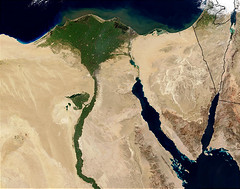
6862842267What were some River Valley Civilizations?Egypt, Mesopotamia/Sumer, Indian, Chinese6
6863235121What were the three West African Kingdoms?Ghana, Mali, Songhai7
6862848862Which group first had the idea of monotheism?The Hebrews/Jews8
6862854345What contains the records and beliefs of the Hebrews?The Torah9
6862857198Who led the Hebrews out of Egypt?Moses10
6862871101Where did Hieroglyphics come from?Egypt11
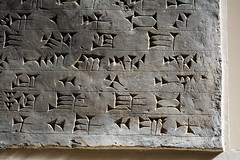
6862871102Where was Cuneiform created?Sumer12
6862872192Who created the AlphabetPhoenicians13
6862878961Which group of people invaded India and created a rigidly structured society (caste system)?The Aryans (Indo-Aryans)14
6862885176Which Indian Empire caused the Golden Age of classical Indian culture?Gupta Empire15
6862887996What are the main keys of Hinduism?Caste system, Belief in many forms of one deity, reincarnation into different caste systems, Karma, Vedas and Upanishads16
6862897931Who founded Buddhism?Siddhartha Guatama17
6862902764Who spread Buddhism from India to China and other parts of Asia?Asoka18
6862905868Which river was Classical China centered on?Huang He (Yellow river)19
6862909487Which ruler built The Great Wall?Qin Shi Huangdi20
6862913889What was the name of the trade route connecting China to other cultures?The Silk Road21
6862918127What were some example of contributions to Classical China?Civil service system, paper, porcelain, silk22
6862923577What are some contributions of Confucianism?Respect for elders, code of politeness, emphasis on education, ancestor worship (filial piety)23
6862930205What are some contributions of Taoism?Humility, simple life and inner peace, harmony with nature24
6862953464Where was Ancient Greece located?Between the Aegean and Mediterranean seas25
6862966582What was a Polis?Greek city state26
6862978419Who were two aristocrats who worked for reforms that led to democracy?Draco and Solon27
6862982720What were the Persian wars?War between Persia and Greece28
6862989872What was the alliance of Greek city states called?The Delian League29
6863003317Who was leader of Athens during its Golden Age?Pericles30
6863006896Where were the 3 major philosophers of Greece?Socrates, Plato, and Aristotle31
6863010970What were the 2 major drama playwriters?Aeschylus and Euripides32
6863013668What was the most famous Greek poet?Homer33
6863017077What were two of Homer's most famous works?The Iliad and The Odyssey34
6863022042Who is known as the father of history?Herodotus35
6863026953What are the three column types?Doric, Ionian, and Corinthian36
6863029396Who was the major contributor to science?Archimedes37
6863031301Who is the father of medicine?Hippocrates38
6863035849Who were two contributors to mathematics?Euclid and Pythagoras39
6863039990Who was Philip II of Macedonian's son?Alexander the Great40
6863052772Which civilization lasted from 700 BCE- 500 CERome41
6863055370What were the three main social classes of Rome?Patricians, Plebeians, and Slaves42
6863065277Which group of people had citizenship in Rome?Patrician and Plebeian men43
6863072437Who made up the First Triumvirate?Julius Caeser, Pompey the Great, and Marcus Licinius Crassus44
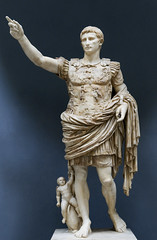
6863083993Who was Rome's First Emperor?Octavian who became Augustus Caeser45
6863088342Who did Augustus defeat in Egypt?Cleopatra and Marc Anthony46
6863092718How was Julius Caesar assassinated?Assassinated by Senators at a meeting hall47
6863120052What is the term for Roman Peace?The Pax Romana48
6863127310Who was Christianity led by?Jesus of Nazareth49
6863131298What is the name of someone who dies for their cause?Martyr50
6863136194Who adopted and legalized Christianity?Emperor Constantine51
6863141717What is the name of the dispersal of Jews?the Diaspora52
6863147218Who wrote the Aeneid?Virgil53
6863150070Who contributed to Roman science?Ptolemy54
6863153249What was the language of Rome?Latin55
6863154822What was the law code of Rome?The Twelve Tables56
6863164001What was the name of the war between Rome and Carthage?The Punic Wars57
6863169563What was the most precious color in Rome?Purple58
6863174062Why did the Punic wars happen?Rome and Carthage were in a competition for trade59
6863181069What was the name of the eastern side of the Roman Empire when the west fell to Barbarians?The Byzantine Empire60
6863184650Under which ruler did the Byzantine Empire reach its height in culture and prosperity?Emperor Justinian61
6863188185What was the form of Christianity in the Byzantine Empire?Greek Orthodox Christianity62
6863204181Who is the prophet of Islam?Muhammad63
6863206101Where was Muhammad born?Mecca64
6863211901What is the name of the Holy Book for Islam?Quran65
6863227391What was the only Christian African civilization?Axum/Aksum66
6863240917What were the three West African Civilizations?Ghana, Mali, Songhai67
6863243656What is the ethnic religion unique to Japan?Shinto68
6867614346Which mesoamerican civilization rules Chichen Itza?Mayan69
6867614347Which mesoamerican civilization ruled Tenochtitlan?Aztec70
6867614348Where was the Aztec civilization located?Arid valley in Central Mexico71
6867614349Machu Picchu belonged to which Mesoamerican civilization?Incan72
6867614350Which mesoamerican civilization was located in the Andes Mountains?Incan73
6867614351Which Russian threw off the mongols and centralized power in Moscow?Ivan the Great74
6867721105What is a fief?Land Grant75
6867721106What is a serf?A peasant confined to work in a manor76
6867721107Which pope crowned Charlemagne as Holy Roman Emperor?Pope Leo III77
6867721108Which four groups of people I cared Europe?Angles, Saxons, Magyars, and Vikings78
6867721109Where did the Vikings come from?Scandinavia79
6867721110Which Pope called for a "holy war" or Crusade?Pope Urban II80
6867721111In which Crusade was the city of Jerusalem captured?1st Crusade81
6867721112In which Crusade was there a treaty between Saladin and Richard I?3rd Crusade82
6867721113I'm which Crusade was Jerusalem taken back by the Muslims?2nd Crusade83
6867721114In which Crusade was Constantinople sacked?4th Crusade84
6867721115What were the impacts of the Black Death?Decline in population, scarcity of labor, led to the end of Feudalism, Decline of church influence, disruption of trade85
6867721116Which English king lead the Norman conquest and united most of England?William the Conqueror86
6867721117Which Frank established the Capetian dynasty?Hugh Capet87
6867721118Which English king signed the Magna Carta?King John88
6867721119What was the name of the mission to take back Spain from the Muslim moors?Spanish Reconquista89
6867755150What are the three important Italian cities?Florence, Venice, and Genoa90
6867755151Who wrote the Prince?Machiavelli91
6867755152What did the Prince believe in the power of a ruler?Absolute power92
6867755153Who painted the Sistine Chapel and created the David?Michelangelo93
6867755154Who wrote sonnets about his ideal woman Laura?Petrarch94
6867755155Who painted the Mona Lisa and The Last SupperLeonardo da Vinci95
6867755156Who wrote the praise of folly?Erasmus96
6867755157Who wrote Utopia?Sir Thomas More97

AP World History Mongols Flashcards

Terms : Hide Images
8479917511Ghengis KhanThe first great unifier and empire-builder of the Mongol people Tiltle bestowed upon him.0
8479917512Temujinwhich was the Real name of Ghengis Khan 1167-12271
8479917513HuleguIl-Khan of Persia and defeater of the Abbasid Dynasty2
8479917514KipchakKhanate of the Golden Horde (modern day western Russia)3
8479917515Yuan DynastyChinese dynasty formed principally from Mongol conquerors4
8479917516SteppeGeographical term for the great pasturelands of the Mongols which, through ill-suited for farming, were perfect for sustaining great herds. This is where Temujin was born5
8479917517OgodaiKhan whose death may have spared Europe--the Mongol leaders were required to return to the East in the midst of European conquest6
8479917518XiongnuPredecessors to the Mongos (~200BCE-200CE); long troubled the development of China7
8479917519BeijingModern name for Khanbalik, the capital of the Yuan dynasty8
8479917520BedouinDesert dwelling Arabs9
8479917521ModunPrecursor to Ghengis Khan as unifier of the nomadic peoples north of the Yellow River10
8479917522MoscowThe center of Russian power moved here from Kiev under Mongol rule11
8479917523Kublai KhanKhan whose rule of China was expansive and (relatively) enlightened; hosted Marco Polo12
8479917524PersiaArea where Mongol rule devastated the ecology; unlike most areas of the Empire, Mongols assimilated here, many converting to Islam13
8479917525KarakorumOriginal capital of the Mongols14
8479917526TolerantWord which might describe the Mongol attitude towards the diverse religions encountered across their expansive empire15
8479917527Khan"Leader"16
8479917528PastoralPeoples most focused on raising of herds, therefore they were often nomadic17
8479917529YurtWhat the Mongols lived in18
8479917530The bowThe Mongols' one/major technological contribution/innovation19
8479917531Mongolian EmpireLargest empire in world history.20

AP Literature Terms Flashcards

Terms : Hide Images
9787612805Allegorystory or poem in which characters, settings, and events stand for other people or events or for abstract ideas or qualities Ex. Animal Farm and Everyman0
9787640154Alliterationrepetition of the same or similar consonant sounds in words that are close together1
9787657966Allusionreference to someone or something that is known from history, literature, religion, politics, sports, science, or another branch of culture an indirect reference to something2
9787704059Anaphorarepetition of a word, phrase, or clause at the beginning of two or more sentences in a row deliberate form of repetition3
9787715761Anastropheinversion of the usual, normal, or logical order of the parts of a sentence purpose is rhythm, emphasis, or euphony4
9787729792Anecdotebrief story, told to illustrate a point or serve as an example of something, often shows character of an individual5
9787738643Antagonistopponent who struggles against or blocks the hero, or protagonist, in a story6
9787744419Antimetabolerepetition of words in successive clauses in reverse grammatical order "one should eat to live, not live to eat"7
9787767237Antithesisbalancing words, phrases, or ideas that are strongly contrasted, often by means of grammatical structure8

AP World History P.6 Chapter 2 Flashcards

Terms : Hide Images
7509570630Central Asian/Oxus civilizationA major First Civilization that emerged around 2200 B.C.E. in Central Asia along the Oxus or Amu Darya river in what is now northern Afghanistan. An important focal point for a Eurasian-wide system of intellectual and cultural exchange, it faded away about 1700 B.C.E.0
7509570631Code of HammurabiA series of laws publicized at the order of King Hammurabi of Babylon (d.1750 B.C.E.). Not actually a code, but a number of laws that proclaim the king's commitment to social order.1
7509570632Egypt: "The Gift of the Nile"The region would not have been able to support a significant human population without the Nile's annual inundation, which provided rich silt deposits and made agriculture possible.2
7509575971Epic of GilgameshThe most famous extant literary work from ancient Mesopotamia, it tells the story of one man's quest for immortality.3
7509583681Hatshepsut (pron. hat-shep-soot)Ancient Egypt's most famous queen; reigned 1472-1457 B.C.E.4
7509583682Mohenjo Daro/HarappaMajor cities of the Indus Valley civilization; both of which flourished around 2000 B.C.E.5
7509586613Norte Chico/CaralA region along the central coast of Peru, home of a civilization that developed in the period 3000-1800 B.C.E. Caral was the largest of some twenty-five urban centers that emerged in the area at that time.6
7509586614NubiaA civilization to the south of Egypt in the Nile Valley, noted for development of an alphabetic writing system and a major ironworking industry by 500 B.C.E.7
7509589865Olmec civilizationAn early civilization that developed along the coast of the Gulf of Mexico around 1200 B.C.E.8
7509589866PatriarchyLiterally "rule of the father"; a social system of male dominance.9
7509592348PharaohA king of Egypt. The term literally means "the palace" and only came into use in the New Kingdom, but it is generally employed in reference to all ancient Egyptian rulers.10
7509592349Rise of the StateA process of centralization that took place in the First Civilizations, growing out of the greater complexity of urban life in recognition of the need for coordination, regulation, adjudication, and military leadership.11
7509595345Uruk (pron. OOH-rook)The largest city of ancient Mesopotamia.12
7509595346Bronze AgeA period characterized by the use of bronze, proto-writing, and other early features of urban civilization. 3500 BCE - 1300 BCE. Bronze is made through mixing copper with an alloy such as tin. It is stronger and more durable than copper.13
7509598377Iron AgeThe start is considered by many to fall between around 1200 BCE to 600 BCE, depending on the region. In most parts of the world, its end is defined by the widespread adoption of writing, and therefore marks the transition from prehistory to history.14
7509598378AssyriansA major Mesopotamian East Semitic-speaking kingdom and empire of the ancient Middle East, existed as an independent state from perhaps as early as the 2600 BCE, until its collapse between 612 BCE and 599 BCE15
7509598379AkkaddiansWas the first ancient Semitic-speaking empire of Mesopotamia, centered in the city of Akkad and its surrounding region, also called Akkad in ancient Mesopotamia. The Akkadian Empire reached its political peak between the 24th and 22nd centuries BC, following the conquests by its founder Sargon of Akkad (2334-2279 BCE). Under Sargon and his successors, the Akkadian language was briefly imposed on neighboring conquered states.16
7509602089HittitesA member of an ancient people who established a powerful empire in Asia Minor and Syria, dominant from about 1900 to 1200 b.c.17
7509602090PhoeniciansThe extinct Semitic language of the Phoenicians.18
7509602091Shang DynastyThe Shang dynasty or Yin dynasty, according to traditional historiography, ruled in the Yellow River valley in the second millennium BC, succeeding the Xia dynasty and followed by the Zhou dynasty.19
7509602092Zhou DynastyThe Zhou dynasty was a Chinese dynasty that followed the Shang dynasty and preceded the Qin dynasty. The Zhou dynasty lasted longer than any other dynasty in Chinese history.20
7509605179CuneiformComposed of slim triangular or wedge-shaped elements, as the characters used in writing by the ancient Akkadians, Assyrians, Babylonians, Persians, and others.21
7509605180AlphabetThe letters of a language in their customary order.22

AP Literature Vocabulary Pt. 4 Flashcards

Terms : Hide Images
6739425302ParableA short story that has become an accepted part of a culture and used for religious or societal purposes; teaches a moral lesson0
6739425303ParadoxA statement that seems contradictory but is true1
6739425304SatireA literary style used to attack or ridicule an idea often for encouraging change2
6739428568Figurative LanguageLiterary devices that enable a writer to operate on levels rather than literal; examples include metaphor, simile3
6739428569PastoralA work of literature dealing with rural life4
6739430299RealismA manner of treating subject matter that presents a careful description of everyday life, usually of the lower and middle classes5
6739430300UnderstatementThe opposite of exaggeration/writer says less than intended6
6739432511AmbiguityUnclear or vagueness of meaning7
6739432512HyperboleAn exaggeration8
6739434994ImageryThe use of sensory images9
6739434995Rhetorical QuestionA question that does not require an answer10
6739438125SyntaxThe organization of language into meaningful structure or pattern of words11

AP English Language Vocabulary Flashcards

Vocabulary for AP English Language

Terms : Hide Images
8394697014Ad Hominem ArgumentAttacks the opposing speaker or another person rather than addressing the issues at hand0
8394697015AllegoryFictional work in which the characters represent ideas or concepts1
8394697016AlliterationThe repetition of consonant sounds, usually at the beginning of words2
8394697017AllusionA reference, usually oblique or faint, to another thing, idea, or person3
8394697018AmbiguityUncertain or indefinite; subject to more than one interpretation4
8394697019AnalogyThe correspondence or resemblance between two things that are essentially different5
8394697020AnecdoteA short story used to illustrate a point the author is making6
8394697021AntecedentEvery pronoun refers back to a previous noun or pronoun7
8394697022AntithesisAn opposition or contrast of ideas that is often expressed in balanced phrases or clauses8
8394697023ApostropheA figure of speech in which an absent person or personified object is addressed by a speaker9
8394697024AppositiveA word or phrase that follow a noun or pronoun for emphasis or clarity10
8394697025AssonanceA type of internal rhyming in which vowel souds are repeated11
8394697026AsyndetonWhen the conjunctions (such as "and" or "but") that would normally connect a string of words, phrases, or clauses are omitted from a sentence12
8394697027AtmosphereThe emotional feeling -or mood- of a place, scene, or event13
8394697028AttitudeThe feelings of a particular speaker or piece of writing toward a subject, person, or idea14
8394697029ContrastOppositions15
8394697030Colloquial LanguageSlang or common language that is informal16
8394697031ConnotativeThe interpretive level of a word based on associated images rather than the literal meaning17
8394697032Deductive ArgumentThe process of moving from a general rule to a specific example18
8394697033DictionAn author's choice of words19
8394697034DidacticWriting which has the purpose of teaching or instructing20
8394697035ElegyA work that expresses sorrow21
8394697036EllipsesIndicated by a series of three periods; shows that words have been omitted22
8394697037EthosRefers to generally ethics, or values23
8394697038EuphemismA mild or pleasant sounding expression that substitutes for a harsh, indelicate, or simply less pleasant idea24
8394697039ExpositionWriting or speech that is organized to explain25
8394697040Figurative LanguageAll uses of language that imply an imaginative comparison26
8394697041ForeshadowingA purposeful hint placed in a work of literature to suggest what may occur later in the narrative27
8394697042HyperboleA figure of speech in which exaggeration is used to achieve emphasis28
8394697043ImageryA mental picture that is conjured by specific words and associations29
8394697044Inductive ArgumentCreating a case by providing specific examples and drawing a conclusion based on the evidence they provide30
8394697045IronyWhen a situation produces and outcome that is the opposite of what is expected31
8394697046JuxtapositionWhen two contrasting things are placed next to each other for comparison32
8394697047LogosThe use of reason as a controlling principle in an argument33
8394697048MetaphorA figure of speech in which two unlike things are compared directly34
8394697049MetonymyA figure of speech in which something is referred to by using the name of something that is associated with it35
8394697050MoodThe prevailing or dominant feeling of a work, scene, or event36
8394697051OnomatopoeiaAn effect created by words that have sounds that reinforce their meaning37
8394697052OxymoronTwo contradictory words in one expression38
8394697053ParadoxA seeming contradiction that in fact reveals some truth39
8394697054ParallelismA literary technique that relies on the use of the same syntactical structures40
8394697055ParodyAn effort to ridicule or make fun of a literary work or an author by writing a comic imitation of the work41
8394697056PathosA sympathetic feeling of pity or compassion evoked by an artistic work42
8394697057Periodic SentencePresents the main clause at the end of the sentence, for emphasis43
8394697058PersonaThe character created by the voice and narration of the speaker of a text44
8394697059PersonificationA figure of speech in which ideas or objects are described as having human qualities or personalities45
8394697060Point of ViewThe particular perspective from which a story is told46
8394697061PunA play on words47
8394697062RepetitionThe reiteration of a word or phrase for emphasis48
8394697063RhetoricThe art and logic of a written or spoken argument to persuade, to analyze, or to expose49
8394697064Rhetorical StrategyThe way an author organizes words, sentences, and overall argument in order to achieve a particular purpose50
8394697065Rhetorical DevicesThe specific language tools that an author uses to carry out a rhetorical strategy (diction, imagery, or syntax)51
8394697066Rhetorical QuestionA question that is asked for the sake of argument52
8394697067SatireTo ridicule or mock ideas, persons, events, or doctrines53
8394697068Selection of DetailThe specific words, incidents, images, or events the author uses to create a scene or narrative54
8394697069SimileA commonly used figure of speech that compares one thing with another using the words "like" or "as"55
8394697070SpeakerThe narrator of a story, poem, or drama56
8394697071SyllogismA form of deductive reasoning in which pieces of evidence are used to create a new conclusion57
8394697072SymbolSomething that stands for something else58
8394697073SynonymA word that has the same, or nearly the same, meaning as another word59
8394697074SyntaxThe way words are arranged in a sentence60
8394697075TensionA feeling excitement and expectation the reader or audience feels because of the conflict, mood, or atmosphere of the work61
8394697076ThemeThe central idea62
8394697077ToneAttitude63
8394697078UnderstatementWhen an author assigns less significance to an event or thing than it deserves64
8394697079ZeugmaWhen a word is used with two adjacent words in the same construction, but only makes literal sense with one of them65

AP World History Regions Flashcards

Locating the regions in APWH on a map by the green dot!

Terms : Hide Images
8771180680North America0
8771180681Caribbean1
8771180682Latin America2
8771180683Central Africa3
8771180684East Africa4
8771180685East Asia5
8771180686Eastern Europe6
8771180687Middle East (Southwest Asia)7
8771180688South Africa8
8771180689South Asia9
8771180690Southeast Asia10
8771180691West Africa11
8771180692Western Europe12
8771198966Between North America and western europeAtlantic ocean region13
8771198967Below south asiaIndian ocean region14
8771198968AustraliaOceania15
8771198969Europe is divided intoWestwrn and Eastern Europe16
8771198970Bordering W and E Europe, Middle East, and North AfricaMediterranean region17

Pages

Subscribe to CourseNotes RSS

Need Help?

We hope your visit has been a productive one. If you're having any problems, or would like to give some feedback, we'd love to hear from you.

For general help, questions, and suggestions, try our dedicated support forums.

If you need to contact the Course-Notes.Org web experience team, please use our contact form.

Need Notes?

While we strive to provide the most comprehensive notes for as many high school textbooks as possible, there are certainly going to be some that we miss. Drop us a note and let us know which textbooks you need. Be sure to include which edition of the textbook you are using! If we see enough demand, we'll do whatever we can to get those notes up on the site for you!