AP Notes, Outlines, Study Guides, Vocabulary, Practice Exams and more!

AP World History Chapter 1 Flashcards

Chapter 1: From the Origins of Agriculture to the First Valley Civilizations, 8000-1500 B.C.E.

Terms : Hide Images
6818824666CivilizationAny group of people sharing a set of cultural traits.0
6818824667CultureBehaviors and belief systems that members of a social group share and pass along to family members.1
6818824668HistoryThe study of past events and changes in the development, transmission, and transformation of cultural practices.2
6818824669Stone AgeThe historical period characterized by the production of tools from stone and other nonmetallic substances. It was followed in some places by the Bronze Age.3
6818824670PaleolithicThe period of the Stone Age associated with the evolution of humans,it predates the Neolithic period.4
6818824671NeolithicThe period of the Stone Age associated with the ancient Agricultural Revolution,it follows the Paleolithic period.5
6818824672ForagersPeople who support themselves by hunting wild animals and gathering wild edible plants and insects.6
6818824673Agricultural RevolutionsThe change from food gathering to food production that occurred between ca. 8000 and 2000 B.C.E.,also known as the Neolithic Revolution.7
6818824674HoloceneThe geological era since the end of the Great Ice Age about 11,000 years ago.8
6818824675MegalithsStructures and complexes of very large stones constructed for ceremonial and religious purposes in Neolithic times.9
6818824676BabylonThe largest and most important city in Mesopotamia,it achieved particular eminence as the capital of the Amorite king Hammurabi in the eighteenth century B.C.E. and the Neo-Babylonian king Nebuchadnezzar in the sixth century B.C.E.10
6818824677SumeriansThe people who dominated southern Mesopotamia through the end of the third millennium B.C.E.,they were responsible for the creation of many fundamental elements of Mesopotamian culture-such as irrigation technology, cuneiform, and religious conceptions-taken over by their Semitic successors.11
6818824678SemiticFamily of related languages long spoken across parts of western Asia and northern Africa,in antiquity these languages included Hebrew, Aramaic, and Phoenician,the most widespread modern member of the Semitic family is Arabic.12
6818824679City-StateA small independent state consisting of an urban center and the surrounding agricultural territory. A characteristic political form in early .13
6818824680HammurabiAmorite ruler of Babylon (r. 1792-1750 B.C.E.). He conquered many city-states in southern and northern Mesopotamia and is best known for a code of laws, inscribed on a black stone pillar, illustrating the principles to be used in legal cases.14
6818824681ScribeIn the governments of many ancient societies, a professional position reserved for men who had undergone the lengthy training required to be able to read and write using cuneiforms, hieroglyphics, or other early, cumbersome writing systems.15
6818824682ZigguratA massive pyramidal stepped tower made of mudbricks,it is associated with religious complexes in ancient Mesopotamian cities, but its function is unknown.16
6818824683AmuletSmall charm meant to protect the bearer from evil,found frequently in archaeological excavations in Mesopotamia and Egypt, amulets reflect the religious practices of the common people.17
6818824684CuniformA system of writing in which wedge-shaped symbols represented words or syllables,it originated in Mesopotamia and was used initially for Sumerian and Akkadian but later was adapted to represent other languages of western Asia,because so many symbols had to be learned, literacy was confined to a relatively small group of administrators and scribes.18
6818824685PharaohThe central figure in the ancient Egyptian state,believed to be an earthly manifestation of the gods, he used his absolute power to maintain the safety and prosperity of Egypt.19
6818824686Ma'atEgyptian term for the concept of divinely created and maintained order in the universe,reflecting the ancient Egyptians' belief in an essentially beneficent world, the divine ruler was the earthly guarantor of this order.20
6818824687PyramidA large, triangular stone monument, used in Egypt and Nubia as a burial place for the king,the largest pyramids, erected during the Old Kingdom near Memphis with stone tools and compulsory labor, reflect the Egyptian belief that the proper and spectacular burial of the divine ruler would guarantee the continued prosperity of the land.21
6818824688MemphisThe capital of Old Kingdom Egypt, near the head of the Nile Delta,early rulers were interred in the nearby pyramids.22
6818824689ThebesCapital city of Egypt and home of the ruling dynasties during the Middle and New Kingdoms,Amon, patron deity of Thebes, became one of the chief gods of Egypt, monarchs were buried across the river in the Valley of the Kings.23
6818824690HieroglyphicsAn ancient Egyptian writing system in which pictures were used to represent ideas and sounds.24
6818824691PapyrusA reed that grows along the banks of the Nile River in Egypt,from it was produced a coarse, paper-like writing medium used by the Egyptians and many other peoples in the ancient Mediterranean and Middle East.25
6818824692MummyIn ancient Egypt the bodies of people who could afford mummification underwent a complex process of removing organs, filling body cavities, dehydrating the corpse with natron, and then wrapping the body with linen bandages and enclosing it in a wooden sarcophagus.26
6818824693HarappaSite of one of the great cities of the Indus Valley civilization of the third millennium B.C.E.,it was located on the northwest frontier of the zone of cultivation (in modern Pakistan), and may have been a center for the acquisition of raw materials, such as metals and precious stones, from Afghanistan and Iran.27
6818824694Mohenjo-DaroLargest of the cities of the Indus Valley civilization,it was centrally located in the extensive floodplain of the Indus River in contemporary Pakistan,little is known about the political institutions of Indus Valley communities, but the large-scale of construction at Mohenjo-Daro, the orderly grid of streets, and the standardization of building materials are evidence of central planning.28

AP Literature Vocab Flashcards

Terms : Hide Images
9646769578Masculine rhymeA rhyme ending on the final stressed syllable0
9646769579MelodramaA form of theater in which the hero is very good, the villain is very evil, and the heroine is very pure1
9646769580MetaphorA comparison or analogy that states one thing is another2
9646769581MeterRhythmic patterns of stressed and un-stressed syllables3
9646769582MetonymyA word that is used to stand for something else that it is associated with4
9646769583MotifA recurring element or device5
9646769584NemesisThe protagonist's archenemy or supreme and persistent difficulty6
9646769585OnomatopoeiaWords that sound like they mean7
9646769586OppositionTo have a pair of elements that contrast sharply, not necessarily in conflict8
9646769587OxymoronA phrase-like contradiction9
9646769588PalindromeA word or phrase that reads the same forward and back10
9646769589ParableA story that instructs11
9646769590ParadoxA situation or statement that seems to contradict itself, but on closer inspection, does not12
9646769591ParallelismRepeated syntactical similarities used for effect13
9646769592Parenthetical phraseA phrase set off by commas that interrupts the flow of a sentence with some added detail14
9646769593ParodyThe work that results when a specific work is exaggerated to ridiculousness15
9646769594PastoralA poem set in tranquil nature or even more specifically, about shepherds16
9646769595PathosLiterature that seeks to arouse and intensify sorrow, pity, or sympathy17
9646769596PersonificationGiving an inanimate object human qualities or form18
9646769597PlaintA poem or speech expressing sorrow19
9646769598The omniscient narratorA third-person narrator who knows the thoughts and feelings of all of the characters20
9646769599The limited omniscient narratorA third-person narrator who only reports what one character sees and thinks21
9646769600The objective, or camera-eye narratorA third-person narrator who tells a story without knowing the character's thoughts unless the character speaks of it22
9646769601The first-person narratorA narrator who is a character in the story and tells the tale from his or her point of view23
9646769602The stream consciousness techniqueLike a first-person narration, but instead of the characters telling the story, the author places the reader inside the main character's mind, making them know about all the character's thoughts24
9646859021SimilieA direct comparison between two things introduced by "like" or "as"25

AP Language list 9 Flashcards

Terms : Hide Images
5869202648CacophonyDissonance0
5869202649DisparateDissimilar, distinct on quality1
5869202650FabricateDevise, fake, make up2
5869202651FelicitousAppropriate, pleasant, well times3
5869202652IntransigentStubborn, uncompromising4
5869202653OstracismExclusion by general consent, isolation5
5869202654RedundancyRepetition6
5869202655RepudiateTo refuse, reject7
5869202656ServilePassive, submissive, people can walk over you8
5869202657TruculentFierce, savage9
5869202658Cacophany posNoun10
5869202659Disparate posAdj11
5869202660Fabricate posVerb12
5869202661Felicitous posAdj13
5869202662Intransigent posAdj14
5869202663Ostracism posNoun15
5869202664Redundancy posNoun16
5869202665Repudiate posVerb17
5869202666Servile posAdj18
5869202667Truculent posAdj19

AP Language Vocabulary Set 8 Flashcards

Terms : Hide Images
5148362071acquiesceto give in, to comply0
5148362072affinitya likeness, a natural relationship, a kinship1
5148362073blasphemousirreverent, profane2
5148362074buttressa support or prop3
5148362075circumspectcareful to consider consequences, cautious, prudent4
5148362076corroborationconfirmation5
5148362077depleteto use up gradually, to lessen in amount of value6
5148362078despoticruling oppressively and absolutely; tyrannical7
5148362079emaciatedvery thin (usually as a result of starvation), wasting away8
5148362080empiricalbased on observation or experiment and not on theory9
5148362081extraneousnot essential or vital10
5148362082fallowinactive, plowed but not sowed11
5148362083homogeneousof the same kind12
5148362084hyperboleobvious exaggeration13
5148362085incontrovertibleindisputable14
5148362086irascibleirritable, easily angered, cranky, cross15
5148362087laconicusing a minimum of words; concise to the point of seeming rude16
5148362088magnanimityhaving a lofty, generous, and courageous spirit17
5148362089obsequiousoverly attentive, like a sycophant, servile18
5148362090proliferationan increase in number, multiplication19
5148362091scrupulousvery principled, very careful and conscientious20
5148362092sublimeexalted. noble, uplifting21
5148362093surreptitioussecret, clandestine, stealthy22
5148362094veracitydevotion to the truth23
5148362095zealenthusiasm, fervor24

AP World History Strayer Chapter 8 Vocabulary Flashcards

Unit Three Part Three

Terms : Hide Images
7736199660Sui Dynasty*Definition:* Short dynasty between Han and Tang. *Significance:* Built Grand Canal, strengthened government, and introduced Buddhism to China.0
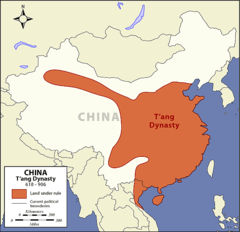
7736199661Tang Dynasty*Definition:* Dynasty often referred to as "China's Golden Age". (618 CE - 907 CE) *Significance:* China expands to Vietnam, Imperial examination perfected. New technologies (paper money, gunpowder, junks, etc...) through silk road.1
7736199662Song Dynasty*Definition:* (960 CE - 1279 CE) Started by Tai Zu. *Significance:* Million people there. Foot binding, magnetic compass, navy, and traded with India and Persia.2
7736199663Hangzhou*Definition:* Capital of later Song Dynasty. *Significance:* Permitted overseas trading with population exceeding 1 million.3
7736199664Economic Revolution*Definition:* Rapid population growth, economic speculation, increase in industrial production and innovations (Song dynasty). *Significance:* Made China "by far the richest, most skilled, and most populous country on Earth."4
7736199665Foot Binding*Definition:* Practice in Chinese society to mutilate women's feet to make them smaller. *Significance:* It was associated with images of female beauty and eroticism.5
7736199666Tribute System*Definition:* Chinese method of dealing with foreign lands and people that assumed subordination of all non-chinese authorities. They required all foreigners wanting access to China to pay tribute. *Significance:* System the attempted to regulate their relationships with Northern Nomads.6
7736199667Khitan/Jurchen People*Definition:* Nomadic people who established a state that included parts of Northern China. *Significance:* Was a nomadic group who "picked up the pieces" after collapse of Tang Dynasty.7
7736199668Silla Dynasty (Korea)*Definition:* First ruling dynasty to bring a measure of political unity to Korean Peninsula. *Significance:* Allied with China to bring political unity to the peninsula for the first time.8
7736199669Hangul*Definition:* Phonetic alphabet in Korea (14th century). *Significance:* Helped Korea move toward greater cultural independence.9
7736199670Shotoku Taishi*Definition:* Japanese statesman who launched the drive to make Japan into centralized bureaucratic state modeled on China. *Significance:* Launched a series of large-scale missions to China.10
7736199671Bushido*Definition:* "Way of the Warrior". *Significance:* A distinct set of values for Samurais.11
7736199672Chinese Buddhism*Definition:* Entered China through cultural accommodations. *Significance:* Useful to helping nomadic rulers govern northern China because it was foreign.12
7736199673Emperor Wendi*Definition:* Sui Emperor who patronized Buddhism. *Significance:* He was responsible for the monasteries constructed at the base of China's 5 sacred mountains.13
7736199674Trung Sisters*Definition:* Two sisters who began the Vietnam revolution against China *Significance:* They became a symbol for Vietnam to look towards during Chinese rule14
7736199675Chu nom*Definition:* The writing system of Vietnam *Significance:* United Vietnam even during times of civil war15

AP Literature Terms Flashcards

Terms : Hide Images
9758499497ActionThe bare events in a story and is not to be confused with plot.0
9758505300AllegoryAn extended story that is one-dimensional which creates a deeper meaning below the surface. The story makes sense on a literal level but also conveys a more significant meaning that is usually spiritual, moral, or political.1
9758549042AnthropomorphismA literary technique in which the author gives human characteristics to non-human objects.2
9758558685AphorismA short, pithy and instructive statement of the truth; e.g. "Powers tends to corrupt, and absolute power corrupts absolutely".3
9758589821ApostropheA literary device which consists of a rhetorical pause or digression to address a person directly.4
9758594687AssonanceThe close repetition of similar vowel sounds, in successive or proximate words, usually in stressed syllables; e.g. Twinkle twinkle little star5
9758604663Blank verseUnrhymed iambic pentameter6
9758614707CatastropheThe tragic conclusion or a story or play7
9758623914ConventionAn understanding between a reader and a writer about certain details of a story that do not need to be explained8
9758630653CoupletTwo rhyming lines in poetry9
9759547647Deus ex machinaA plot device that resolves conflict through means that seems unrelated to the story10
9759582912EpithetA picturesque tag or nickname associated with a certain character; e.g. Athena is "grey-eyed"11
9759630103HubrisRefers to excessive pride that usually leads to a hero's downfall12
9759641435Image-as-textThe use of pictures to convey messages13
9759650725Implied metaphorA metaphor embedded in a sentence rather than expressed directly as a sentence14
9759665448MalapropismA comic misuse of common words15
9759670933MeterRepeated patterns of stressed and unstressed syllables in poetry16
9759684564MoodThe atmosphere that pervades a literary work with the intention of evoking a certain emotion or feeling from the audience17
9759695870MotifOne of the key ideas or literary devices which supports the main theme of a literary work18
9759707163OdeA lyric poem of some length, usually of a serious or meditative nature and having an elevated style and formal stanzaic structure19
9759721620ParableA usually short fictitious story that illustrates a moral attitude or a religious principle20
9759729791PlotThe author's plan or scheme to accomplish some purpose. It is the unified structure of events and incidents which expresses the author's purpose.21
9759741390Post-modernismDescribes the pessimistic, contemporary worldview which began in the 1960s, rejecting tradition, resisting authority, and denying any final or enduring meaning and purpose in life22
9759753166ProseThe ordinary use of language, without the artistic embellishments of rhythm, meter or rhyme. In general usage, it is any form of language, written or spoken, which is not poetry.23
9759772979Rising actionThe events of a dramatic or narrative plot preceding the climax24
9759781482SonnetA fourteen-line lyric poem in predominantly iambic pentameter, with a formal rhyme scheme.25
9759784599StyleThe choices that writers or speakers make in language for effect26
9759787252SynedocheA figure of speech by which a part of something refers to the whole27
9759789874ToneThe writer's attitude, mood, or moral outlook toward the subject and/or readers.28
9759831862VoiceAn author's distinctive literary style, basic vision and general attitude toward the world.29

AP World History Flashcards

Terms : Hide Images
2825007914abdicateto give up high office formally or officially, especially the throne0
2825009265abhorrentarousing strong feelings of repugnance or disapproval1
2825011461accumulateto collect or obtain a large amount of something over a period of time2
2825013049adeptHighly proficient or expert at something3
2825024754agrariandominated by or relating to farming or rural life4
2825027784alleviateto make something such as pain or hardship more bearable or less severe5
2825030737ameliorateto make something better or become better6
2825033135Amerindiansame as native american7
2825034403analogousdescribes body parts and organs that have equivalent functions but that have evolved independently of one another in different plants or animals. (Ex. the wings of birds, bats, and insects are analogous.)8
2825063503analysisthe separation of something into its constituents in order to find out what it contains to examine individual parts or to study the structure of the whole; the examination of something in detail in order to understand it better or draw conclusions from it9
2825085610annexto take over territory and incorporate it it into another political entity.10
2825087572aptitudea natural tendency to do something well, especially one that can be further developed.11
2825089328arbitrarybased solely on personal wishes, feelings, or perceptions, rather than on objective facts, reasons or principles12
2825097701arbitrateintercede: act between parties with a view to reconciling differences.13
2825101769argumentationreasoning that proceeds methodically from a statement to a conclusion; the process of debating or discussing something14
2825110881aristocracypeople of noble families or the highest social class; government of a country by a small group of people, especially a hereditary nobility.15
2825140146assessto examine something in order to judge or evaluate it16
2825142228assimilationthe process of becoming part of or more like something greater17
2825143292authoritarianbelonging to or believing in a political system in which obedience to the ruling person or group is strongly enforced18
2825150287autonomouspolitically independent and self governing19
2825152964bureaucracyan administrative system, especially in a government , that divides work into specific categories carried out by special departments of non elected officials.20
2825162341capitalisman economic system based on the private ownership of the means of production and distribution of goods, characterized by a free competitive market and motivation by profit21
2825166465capitulateto surrender, especially under agreed conditions; to give in to an argument, request, pressure, or something unavoidable.22
2825169603cartelan alliance of business companies formed to control production, competition, and prices; a political alliance among parties or groups having common goals23
2825172300cataclysma sudden and violent upheaval or disaster that causes great changes in society24

Pages

Subscribe to CourseNotes RSS

Need Help?

We hope your visit has been a productive one. If you're having any problems, or would like to give some feedback, we'd love to hear from you.

For general help, questions, and suggestions, try our dedicated support forums.

If you need to contact the Course-Notes.Org web experience team, please use our contact form.

Need Notes?

While we strive to provide the most comprehensive notes for as many high school textbooks as possible, there are certainly going to be some that we miss. Drop us a note and let us know which textbooks you need. Be sure to include which edition of the textbook you are using! If we see enough demand, we'll do whatever we can to get those notes up on the site for you!