

Flashcards
Spanish AP Vocab Flashcards
Terms : Hide Images
| 5747014691 | acceder | to gain access to/to agree to |  | 0 |
| 5747014692 | actualizar | to update |  | 1 |
| 5747014693 | el analfabeto | illiterate |  | 2 |
| 5747014694 | aprendizaje | learning/training period |  | 3 |
| 5747014695 | aprobar | to pass a subject in school/to approve |  | 4 |
| 5747014696 | aprovechar | to make the most of |  | 5 |
| 5747014697 | la asignatura | assignment/subject/subject matter |  | 6 |
| 5747014698 | la calificación | grade |  | 7 |
| 5747014699 | el comportamiento | behavior/conduct/performance |  | 8 |
| 5747014700 | las destrezas | skill |  | 9 |
| 5747014701 | la dicotomía | dichotomy |  | 10 |
| 5747014702 | el/la docente | teacher |  | 11 |
| 5747014703 | entrarse de | to inform oneself |  | 12 |
| 5747014704 | entrenar | to trian |  | 13 |
| 5747014705 | el entrancamiento | stagnation |  | 14 |
| 5747014706 | excluir | to exclude |  | 15 |
| 5747014707 | la formación | education/training |  | 16 |
| 5747014708 | el formento | promotion/forment |  | 17 |
| 5747014709 | las formulas | formula |  | 18 |
| 5747014710 | la guadería | nursery school |  | 19 |
| 5747014711 | el ingenuo | nieve/ingeneous |  | 20 |
| 5747014712 | el ingreso | entrance/income |  | 21 |
| 5747014713 | la licenciatura | undergraduate degree |  | 22 |
| 5747014714 | las materias | subject/subject matter |  | 23 |
| 5747014715 | la matrícula | registration/enrollment |  | 24 |
| 5747014716 | la mochila | backpack |  | 25 |
| 5747014717 | el optativo | optional |  | 26 |
| 5747014718 | otorgar | to authorize/grant/allow |  | 27 |
| 5747014719 | la pedagogía | pedagogy/teaching |  | 28 |
| 5747014720 | perspicaz | shrewd prespective |  | 29 |
| 5747014721 | la polémica | controversy |  | 30 |
| 5747014722 | la potencia | power |  | 31 |
| 5747014723 | la prueba | quiz |  | 32 |
| 5747014724 | las razones | reasons |  | 33 |
| 5747014725 | el reposo | rest/repose |  | 34 |
| 5747014726 | el taller | workshop/shop |  | 35 |
| 5747014727 | testarudo | stubborn |  | 36 |
| 5747014728 | el título | a degree as in type of diploma |  | 37 |
AP Psychology Unit 6 Flashcards
Terms : Hide Images
| 8428331161 | learning | a relatively permanent change in an organism's behavior due to experience | 0 | |
| 8428331162 | habituation | an organism's decreasing response to a stimulus with repeated exposure to it | 1 | |
| 8428331163 | associative learning | learning that certain events occur together. The events may be two stimuli (as in classical conditioning) or a response and its consequences (as in operant conditioning) | 2 | |
| 8428331164 | classical conditioning | a type of learning in which one learns to link two or more stimuli and anticipate events | 3 | |
| 8428331165 | behaviorism | the view that psychology: (1) should be an objective science that (2) studies behavior without reference to mental processes. Most research psychologists today agree with (1) but not with (2) | 4 | |
| 8428331166 | unconditioned response (UR) | in classical conditioning, the unlearned, naturally occurring response to the unconditioned stimulus (US), such as salivation when food is in the mouth | 5 | |
| 8428331167 | unconditioned stimulus (US) | in classical conditioning, a stimulus that unconditionally - naturally and automatically - triggers a response | 6 | |
| 8428331168 | conditioned response (CR) | in classical conditioning, the learned response to a previously neutral (but now conditioned) stimulus (CS) | 7 | |
| 8428331169 | conditioned stimulus (CS) | in classical conditioned, an originally irrelevant stimulus that, after association with an unconditioned stimulus (US), comes to trigger a conditioned response | 8 | |
| 8428331170 | acquisition | in classical conditioning, the initial stage, when one links a neutral stimulus and an unconditioned stimulus so that the neutral stimulus begins triggering the conditioned response. In operant conditioning, the strengthening of a reinforced response | 9 | |
| 8428331171 | higher-order conditioning | a procedure in which the conditioned stimulus in one conditioning experience is paired with a new neutral stimulus, creating a second (often weaker) conditioned stimulus. (For example, an animal that has learned that a tone predicts food might then learn that a light predicts the tone and begin responding to the light alone.) (Also called Second-Order Conditioning) | 10 | |
| 8428331172 | extinction | the diminishing of a conditioned response; occurs in classical conditioning when a unconditioned stimulus (US) does not follow a conditioned stimulus (CS); occurs in operant condition when a response is no longer reinforced | 11 | |
| 8428331173 | spontaneous recovery | the reappearance, after a pause, of an extinguished conditioned response | 12 | |
| 8428331174 | generalization | the tendency, once a response has been conditioned, for stimuli similar to the conditioned stimulus to elicit responses | 13 | |
| 8428331175 | discrimination | in classical conditioning, the learned ability to distinguish between a conditioned stimulus and stimuli that do not signal an unconditioned stimulus | 14 | |
| 8428331176 | learned helplessness | the hopelessness and passive resignation an animal or human learns when unable to avoid repeated aversive events | 15 | |
| 8428331177 | respondent behavior | behavior that occurs as an automatic response to some stimulus | 16 | |
| 8428331178 | operant conditioning | a type of learning in which behavior is strengthened if followed by a reinforce or diminished followed by a punisher | 17 | |
| 8428331179 | operant behavior | behavior that operates on the environment, producing consequences |  | 18 |
| 8428331180 | law of effect | Thorndike's principle that behaviors followed by favorable consequences become more likely, or where behaviors followed by unfavorable consequences become less likely | 19 | |
| 8428331181 | operant chamber | in operant conditioning research, a chamber (also known as a Skinner box) containing a bar or key that an animal can manipulate to obtain food or water reinforce; attached devices record the animal's rate of bar pressing or key pecking | 20 | |
| 8428331182 | shaping | an operant conditioning procedure in which reinforcers guide behavior toward closer and closer approximations of the desired behavior | 21 | |
| 8428331183 | discriminative stimulus | in operant conditioning, a stimulus that elicits a response after association with reinforcement (in contrast to related stimuli not associated with reinforcement) | 22 | |
| 8428331184 | reinforce | in operant conditioning, any event that strengthens the behavior it follows | 23 | |
| 8428331185 | positive reinforcement | increasing behaviors by presenting positive stimuli, such as food. A positive reinforce in any stimulus that, when presented after a response, strengthens the response | 24 | |
| 8428331186 | negative reinforcement | increasing behaviors by stopping or reducing negative stimuli, such as shock. A negative reinforce is any stimulus that, when removed after a response, strengthens the response (negative reinforcement is not punishment) | 25 | |
| 8428331187 | primary reinforce | an innately reinforcing stimulus, such as one that satisfies a biological need | 26 | |
| 8428331188 | conditioned reinforcer | a stimulus that gains its reinforcing power through its association with a primary reinforce; also known as a secondary reinforce | 27 | |
| 8428331189 | continuous reinforcement | reinforcing the desired response every time it occurs | 28 | |
| 8428331190 | partial (intermittent) reinforcement | reinforcing a response only part of the time; results in slower acquisition of a response but much greater resistance to extinction than does continuous reinforcement | 29 | |
| 8428331191 | fixed-ratio schedule | in operant conditioning, a reinforcement schedule that reinforces a response only after a specified number of responses | 30 | |
| 8428331192 | variable-ratio schedule | in operant conditioning, a reinforcement schedule that reinforces a response after an unpredictable number of responses | 31 | |
| 8428331193 | fixed-interval schedule | in operant conditioning, a reinforcement schedule that reinforces a response only after a specified time has elapsed | 32 | |
| 8428331194 | variable-interval schedule | in operant conditioning, a reinforcement schedule that reinforces a response at unpredictable time intervals | 33 | |
| 8428331195 | punishment | an event that decreases the behavior that it follows | 34 | |
| 8428331196 | cognitive map | a mental representation of the layout of one's environment. (For example, after exploring a maze, rats act as if they have learned a cognitive map of it) | 35 | |
| 8428331197 | latent learning | learning that occurs but is not apparent until there is an incentive to demonstrate it | 36 | |
| 8428331198 | insight | a sudden and often novel realization of the solution to a problem | 37 | |
| 8428331199 | intrinsic motivation | a desire to perform a behavior effectively for its own sake | 38 | |
| 8428331200 | extrinsic motivation | a desire to perform a behavior to receive promised rewards or avoid threatened punishment | 39 | |
| 8428331201 | observational learning | learning by observing others (also social learning) | 40 | |
| 8428331202 | modeling | the process of observing and imitating a specific behavior | 41 | |
| 8428331203 | mirror neurons | frontal lobe neurons that fire when performing certain actions or when observing another doing so. The brain's mirroring of another's actions may enable imitation and empathy | 42 | |
| 8428331204 | prosocial behavior | positive, constructive, helpful behavior. The opposite of antisocial behavior | 43 | |
| 8428331205 | little albert | subject in John Watson's experiment, proved classical conditioning principles, especially the generalization of fear | 44 | |
| 8428331206 | Albert Bandura | researcher famous for work in observational or social learning including the famous Bobo doll experiment | 45 | |
| 8428331207 | John Garcia | Researched taste aversion. Showed that when rats ate a novel substance before being nauseated by a drug or radiation, they developed a conditioned taste aversion for the substance. | 46 | |
| 8428331208 | Ivan Pavlov | Russian physiologist who observed conditioned salivary responses in dogs (1849-1936) | 47 | |
| 8428331209 | Rosalie Rayner | graduate student of Watson and co-researcher for the famous Little Albert demonstration of classically conditioned emotion | 48 | |
| 8428331210 | Martin Seligman | researcher known for work on learned helplessness and learned optimism as well as positive psychology | 49 | |
| 8428331211 | B.F. Skinner | pioneer of operant conditioning who believed that everything we do is determined by our past history of rewards and punishments. he is famous for use of his operant conditioning aparatus which he used to study schedules of reinforcement on pidgeons and rats. | 50 | |
| 8428331212 | Edward Thorndike | Pioneer in operant conditioning who discovered concepts in intstrumental learning such as the law of effect. Known for his work with cats in puzzle boxes. | 51 | |
| 8428331213 | John Watson | behaviorism; emphasis on external behaviors of people and their reactions on a given situation; famous for Little Albert study in which a baby was taught to fear a white rat | 52 | |
| 8428331214 | biofedback | a technique that trains people to improve their health by controlling certain bodily processes that normally happen involuntarily, such as heart rate, blood pressure, muscle tension, and skin temperature. | 53 | |
| 8428331215 | observational learning | learning by observing others | 54 | |
| 8428331216 | aversion theory | Aversion therapy is a form of behavior therapy in which an aversive (causing a strong feeling of dislike or disgust) stimulus is paired with an undesirable behavior in order to reduce or eliminate that behavior. | 55 |
Consciousness AP Psychology Myers Flashcards
Advanced Placement Psychology
Enterprise High School, Redding, CA
All terms from Myers Psychology for AP (BFW Worth, 2011)
Terms : Hide Images
| 6406954657 | consciousness | our awareness of ourselves and our environment. |  | 0 |
| 6406954658 | circadian rhythm | the biological clock; regular bodily rhythms (for example, of temperature and wakefulness) that occur on a 24-hour cycle. |  | 1 |
| 6406954659 | REM (rapid eye movement) sleep | rapid eye movement sleep; a recurring sleep stage during which vivid dreams commonly occur. Also known as paradoxical sleep, because the muscles are relaxed (except for minor twitches) but other body systems are active. |  | 2 |
| 6406954660 | alpha waves | the relatively slow brain waves of a relaxed, awake state. | | 3 |
| 6406954661 | sleep | periodic, natural loss of consciousness—as distinct from unconsciousness resulting from a coma, general anesthesia, or hibernation. (Adapted from Dement, 1999.) |  | 4 |
| 6406954662 | hallucinations | false sensory experiences, such as seeing something in the absence of an external visual stimulus. |  | 5 |
| 6406954663 | delta waves | the large, slow brain waves associated with deep sleep. | | 6 |
| 6406954664 | NREM sleep | non-rapid eye movement sleep; encompasses all sleep stages except for REM sleep. | | 7 |
| 6406954665 | insomnia | recurring problems in falling or staying asleep. |  | 8 |
| 6406954666 | narcolepsy | a sleep disorder characterized by uncontrollable sleep attacks. The sufferer may lapse directly into REM sleep, often at inopportune times. |  | 9 |
| 6406954667 | sleep apnea | a sleep disorder characterized by temporary cessations of breathing during sleep and repeated momentary awakenings. |  | 10 |
| 6406954668 | night terrors | a sleep disorder characterized by high arousal and an appearance of being terrified; unlike nightmares, these occur during Stage 4 sleep, within two or three hours of falling asleep, and are seldom remembered. |  | 11 |
| 6406954669 | dream | a sequence of images, emotions, and thoughts passing through a sleeping person's mind. These are notable for their hallucinatory imagery, discontinuities, and incongruities, and for the person 's delusional acceptance of the content and later difficulties remembering it. |  | 12 |
| 6406954670 | manifest content | according to Freud, the story of the dream. |  | 13 |
| 6406954671 | latent content | according to Freud, the underlying meaning of a dream (as distinct from its manifest content). |  | 14 |
| 6406954672 | REM rebound | the tendency for REM sleep to increase following REM sleep deprivation (created by repeated awakenings during REM sleep). |  | 15 |
| 6406954673 | hypnosis | a social interaction in which one person suggests to another that certain perceptions, feelings, thoughts, or behaviors will spontaneously occur. |  | 16 |
| 6406954674 | posthypnotic suggestion | a suggestion, made during a hypnosis session, to be carried out after the subject is no longer hypnotized; used by some clinicians to help control undesired symptoms and behaviors. |  | 17 |
| 6406954675 | dissociation | a split in consciousness, which allows some thoughts and behaviors to occur simultaneously with others. |  | 18 |
| 6406954676 | psychoactive drug | a chemical substance that alters perceptions and moods. |  | 19 |
| 6406954677 | tolerance | the diminishing effect with regular use of the same dose of a drug, requiring the user to take larger and larger doses before experiencing the drug's effect. |  | 20 |
| 6406954678 | withdrawal | the discomfort and distress that follow discontinuing the use of an addictive drug. |  | 21 |
| 6406954679 | physical dependence | a physiological need for a drug, marked by unpleasant withdrawal symptoms when the drug is discontinued. |  | 22 |
| 6406954680 | psychological dependence | a psychological need to use a drug, such as to relieve negative emotions. |  | 23 |
| 6406954681 | addiction | compulsive drug craving and use, despite adverse consequences. |  | 24 |
| 6406954682 | depressants | drugs (such as alcohol, barbiturates, and opiates) that reduce neural activity and slow body functions. |  | 25 |
| 6406954683 | barbiturates | drugs that depress the activity of the central nervous system, reducing anxiety but impairing memory and judgment. |  | 26 |
| 6406954684 | opiates | opium and its derivatives, such as morphine and heroin; they depress neural activity, temporarily lessening pain and anxiety. |  | 27 |
| 6406954685 | stimulants | drugs (such as caffeine, nicotine, and the more powerful amphetamines, cocaine, and Ecstasy) that excite neural activity and speed up body functions. |  | 28 |
| 6406954686 | amphetamines | drugs that stimulate neural activity, causing sped-up body functions and associated energy and mood changes. |  | 29 |
| 6406954687 | methamphetamines | a powerfully addictive drug that stimulates the central nervous system, with sped-up body functions and associated energy and mood changes; over time, appears to reduce baseline dopamine levels. |  | 30 |
| 6406954688 | Ecstacy (MDMA) | a synthetic stimulant and mild hallucinogen. Produces euphoria and social intimacy, but with short-term health risks and longer-term harm to serotonin-producing neurons and to mood and cognition. |  | 31 |
| 6406954689 | hallucinogens | psychedelic ("mind-manifesting") drugs, such as LSD, that distort perceptions and evoke sensory images in the absence of sensory input. |  | 32 |
| 6406954690 | LSD | a powerful hallucinogenic drug; also known as acid (lysergic acid diethylamide). |  | 33 |
| 6406954691 | near-death experiences | an altered state of consciousness reported after a close brush with death (such as through cardiac arrest); often similar to drug-induced hallucinations. |  | 34 |
| 6406954692 | THC | the major active ingredient in marijuana; triggers a variety of effects, including mild hallucinations. |  | 35 |
| 6406954693 | Suprachiasmatic nucleus | (SCN) A cluster of neurons in the hypothalamus in the brain that governs the timing of circadian rhythms | 36 | |
| 6406954694 | Substance Use Disorder | Continued substance craving and use despite significant life disruption and/or physical risk. | 37 |
AP Biology Photosynthesis Flashcards
Chapter 10 Vocabulary for AP Biology
Terms : Hide Images
| 8870136873 | Chlorophyll | Green Pigment Main photosynthetic pigmnet Absorbs primarily violet-blue and red wavelengths |  | 0 |
| 8870136874 | Thylakoids | dense interconnected membranous sacs where the light reactions occur |  | 1 |
| 8870136875 | Grana | stacks of thylakoid | 2 | |
| 8870136876 | Granum | singular of grana | 3 | |
| 8870136877 | Chloroplast | sites of photosynthesis | 4 | |
| 8870136878 | Photosynthesis | conversion of light energy into chemical energy stored in sugar and other organic molecules |  | 5 |
| 8870136879 | Photosynthesis Equation | 6 CO2 + 6 H2O + light --> C6H12O6 + 6 O2 | 6 | |
| 8870136880 | Carbon Dioxide | source of inorganic carbon used in photosynthesis | 7 | |
| 8870136881 | Electromagnetic Spectrum | Electromagnetic energy which travels in waves |  | 8 |
| 8870136882 | Colors | Light we see is reflected off objects and light we don't see is absorbed by objects | 9 | |
| 8870136883 | White | All colors reflected | 10 | |
| 8870136884 | Black | All colors absorbed | 11 | |
| 8870136885 | Chlorophyll a | main photosynthetic green pigment, absorbs primarily violet-blue and red wavelengths | 12 | |
| 8870136886 | Pigment | a molecule that absorbs wavelengths in the visible light spectrum | 13 | |
| 8870136887 | Carotenoid | Group of pigments that absorb blue and blue-green wavelengths, appear orange, yellow, and red | 14 | |
| 8870136888 | Light Reactions | Occur in thylakoid membrane and are also called light dependent reactions | 15 | |
| 8870136889 | Photosystem | Consists of a reaction-center complex surrounded by light-harvesting complexes which split water to create electrons that get transferred to NADP+ to create NADPH and H+ which are used to create ATP | 16 | |
| 8870136890 | Light-Harvesting Complex | Contains chlorophyll a, chlorophyll b, and carotenoids (within the photosystem) that will trap light energy for use in the light reactions | 17 | |
| 8870136891 | Photosystem 1 | Has P700 chlorophyll a in reaction-center complex, thought to have evolved first because it can work alone to create primary acceptors, 2nd of the photosystems |  | 18 |
| 8870136892 | Photosystem 2 | Has P680 chlorophyll a in reaction-center complex, first of the photosystems. splits water into electrons, oxygen, and hydrogen ions | 19 | |
| 8870136893 | Cytochrome | Protein in the electron transport chain of the photosystems that transfers the electrons to create NADPH | 20 | |
| 8870136894 | Calvin Cycle | Light-Independent reactions Occurs in stoma, does not use light directly. Uses the enzyme Rubisco to create 2 molecules of G3P which is then either used to create glucose or recycled back into RuBP to restart the cycle |  | 21 |
| 8870136895 | Rubisco | The most abundant protein on Earth Carbon Fixation is catalyzed by Rubisco | 22 | |
| 8870136896 | Reduction | The carbon molecules made in Carbon Fixation are reduced into to G3P by adding the negative phosphate from a NADPH that can be used to make glucose or perform other processes | 23 | |
| 8870136897 | 1 Cycle of Calvin Cycle | 1 CO2 is fixed 3 ATP are used 2 NADPH are used 1 RuBP is regenerated 6 cycles needed to make 1 glucose molecule | 24 | |
| 8870136898 | C4 Photosynthesis | A method that bypasses photorespiration Happens in corn, sugarcane, and other plants in hot, dry environments Converts carbon dioxide to a 4-carbon intermediary which is then stored in bundle-sheath cells | 25 | |
| 8870136899 | C3 Plant | Plants that use the Calvin Cycle without creating carbon intermediaries, take in carbon dioxide through stomata. An enzyme called RuBisCO helps the carbon dioxide combine to make sugar. |  | 26 |
| 8870136900 | chlorophyll b | Pigment that absorbs light in the blue and orange light spectrum. Second major pigment used in plants. | 27 | |
| 8870136901 | CAM Plants | Plants that only open stomata at night. They convert carbon dioxide to malic acid which is then converted back into carbon dioxide during the day for the Calvin cycle | 28 |
Flashcards
AP Biology Photosynthesis Flashcards
Chapter 10 Vocabulary for AP Biology
Terms : Hide Images
| 5334790670 | Chlorophyll | Green Pigment Main photosynthetic pigmnet Absorbs primarily violet-blue and red wavelengths | | 0 |
| 5334790675 | Thylakoids | dense interconnected membranous sacs where the light reactions occur | | 1 |
| 5334790678 | Grana | stacks of thylakoid | 2 | |
| 5334790679 | Granum | singular of grana | 3 | |
| 5334790680 | Chloroplast | sites of photosynthesis | 4 | |
| 5334790681 | Photosynthesis | conversion of light energy into chemical energy stored in sugar and other organic molecules | | 5 |
| 5334790682 | Photosynthesis Equation | 6 CO2 + 6 H2O + light --> C6H12O6 + 6 O2 | 6 | |
| 5334790683 | Carbon Dioxide | source of inorganic carbon used in photosynthesis | 7 | |
| 5334790684 | Electromagnetic Spectrum | Electromagnetic energy which travels in waves | | 8 |
| 5334790685 | Colors | Light we see is reflected off objects and light we don't see is absorbed by objects | 9 | |
| 5334790686 | White | All colors reflected | 10 | |
| 5334790687 | Black | All colors absorbed | 11 | |
| 5334790688 | Chlorophyll a | main photosynthetic green pigment, absorbs primarily violet-blue and red wavelengths | 12 | |
| 5334790689 | Pigment | a molecule that absorbs wavelengths in the visible light spectrum | 13 | |
| 5334790690 | Carotenoid | Group of pigments that absorb blue and blue-green wavelengths, appear orange, yellow, and red | 14 | |
| 5334790691 | Light Reactions | Occur in thylakoid membrane and are also called light dependent reactions | 15 | |
| 5334790693 | Photosystem | Consists of a reaction-center complex surrounded by light-harvesting complexes which split water to create electrons that get transferred to NADP+ to create NADPH and H+ which are used to create ATP | 16 | |
| 5334790694 | Light-Harvesting Complex | Contains chlorophyll a, chlorophyll b, and carotenoids (within the photosystem) that will trap light energy for use in the light reactions | 17 | |
| 5334790695 | Photosystem 1 | Has P700 chlorophyll a in reaction-center complex, thought to have evolved first because it can work alone to create primary acceptors, 2nd of the photosystems | | 18 |
| 5334790696 | Photosystem 2 | Has P680 chlorophyll a in reaction-center complex, first of the photosystems. splits water into electrons, oxygen, and hydrogen ions | 19 | |
| 5334790697 | Cytochrome | Protein in the electron transport chain of the photosystems that transfers the electrons to create NADPH | 20 | |
| 5334790700 | Calvin Cycle | Light-Independent reactions Occurs in stoma, does not use light directly. Uses the enzyme Rubisco to create 2 molecules of G3P which is then either used to create glucose or recycled back into RuBP to restart the cycle | | 21 |
| 5334790701 | Rubisco | The most abundant protein on Earth Carbon Fixation is catalyzed by Rubisco | 22 | |
| 5334790702 | Reduction | The carbon molecules made in Carbon Fixation are reduced into to G3P by adding the negative phosphate from a NADPH that can be used to make glucose or perform other processes | 23 | |
| 5334790703 | 1 Cycle of Calvin Cycle | 1 CO2 is fixed 3 ATP are used 2 NADPH are used 1 RuBP is regenerated 6 cycles needed to make 1 glucose molecule | 24 | |
| 5334790704 | C4 Photosynthesis | A method that bypasses photorespiration Happens in corn, sugarcane, and other plants in hot, dry environments Converts carbon dioxide to a 4-carbon intermediary which is then stored in bundle-sheath cells | 25 | |
| 5334790706 | C3 Plant | Plants that use the Calvin Cycle without creating carbon intermediaries, take in carbon dioxide through stomata. An enzyme called RuBisCO helps the carbon dioxide combine to make sugar. | | 26 |
| 7856816320 | chlorophyll b | Pigment that absorbs light in the blue and orange light spectrum. Second major pigment used in plants. | 27 | |
| 7856823352 | CAM Plants | Plants that only open stomata at night. They convert carbon dioxide to malic acid which is then converted back into carbon dioxide during the day for the Calvin cycle | 28 |
AP Biology Chapter 1 Flashcards
Vocabulary: evolution, deoxyribonucleic acid (DNA), emergent properties, biosphere, ecosystems, community, population, organism, organs and organ systems, tissues, organelles, cell, molecule, eukaryotic cell, prokaryotic cell, gene, genome, negative feedback, positive feedback, adaptation, inductive reasoning, data, hypothesis, deductive reasoning, controlled experiment, dependent variable, independent variable, theory
Objectives:
After attending lectures and studying the chapter, the student should be able to:
1. Define biology.
2. List and explain the characteristics of life.
a. Define metabolism.
b. Define adaptation.
3. Distinguish between types of organisms by describing the differences between and
give examples of:
a. unicellular and multicellular organisms; and,
b. prokaryotic and eukaryotic organisms.
4. List and explain the levels of biological organization.
5. Relating to major concepts in biology, explain what is meant by:
a. "the cell is the basic structural and functional unit of all living things";
b. "the continuity of life depends on the inheritance of biological information";
c. "form fits function";
d. "the unity and diversity of life"; and,
e. "life forms change".
6. Explain why DNA is considered the molecule of inheritance in all organisms.
7. Define evolution.
a. Define population and give examples of characteristics of populations.
b. Explain evolution through natural selection.
c. Explain how adaptations come about through natural selection.
d. Explain why evolution is a central theme in biology.
8. Define science and explain why biology is a science.
9. Distinguish between inductive and deductive reasoning and explain how these
processes of logic are used in science.
10. List in order and explain the logical relationship between the steps of the
scientific method.
11. Explain the difference between hypothesis, theory, and law.
12. Explain the "if . . .
Terms : Hide Images
| 8397643229 | Evolution | Evolution is the process of change that has transformed life on Earth | 0 | |
| 8397643230 | DNA | Deoxyribonucleic acid: a long linear polymer found in the nucleus of a cell and formed from nucleotides and shaped like a double helix |  | 1 |
| 8397643231 | Biology | The scientific study of life | 2 | |
| 8397643232 | Emergent properties | New properties that arise with each step upward in the hierarchy of life, owing to the arrangement and interactions of parts as complexity increases. | 3 | |
| 8397643233 | Systems Biology | An approach to studying biology that aims to model the dynamic behavior of whole biological systems based on a study of the interactions among the system's parts. | 4 | |
| 8397643234 | Eukaryotic Cell | A type of cell with a membrane-enclosed nucleus and membrane-enclosed organelles. Organisms with eukaryotic cells (protists, plants, fungi, and animals) are called eukaryotes. |  | 5 |
| 8397643235 | Prokaryotic Cell | A type of cell lacking a membrane-enclosed nucleus and membrane-enclosed organelles. Organisms with prokaryotic cells (bacteria and archaea) are called prokaryotes. |  | 6 |
| 8397643236 | Gene | A discrete unit of hereditary information consisting of a specific nucleotide sequence in DNA (or RNA, in some viruses). | 7 | |
| 8397643237 | Gene expression | The process by which information encoded in DNA directs the synthesis of proteins or, in some cases, RNAs that are not translated into proteins and instead function as RNAs. | 8 | |
| 8397643238 | Genome | The genetic material of an organism or virus; the complete complement of an organism's or virus's genes along with its noncoding nucleic acid sequences. | 9 | |
| 8397643239 | Biosphere | The entire portion of Earth inhabited by life; the sum of all the planet's ecosystems. | 10 | |
| 8397643240 | Ecosystems | All the organisms in a given area as well as the abiotic factors with which they interact; one or more communities and the physical environment around them | 11 | |
| 8397643241 | Community | All the organisms that inhabit a particular area; an assemblage of populations of different species living close enough together for potential interaction. | 12 | |
| 8397643242 | Population | A group of individuals of the same species that live in the same area and interbreed, producing fertile offspring. | 13 | |
| 8397643243 | Organism | a creature such as a plant, animal or a single-celled life form, or something that has interdependent parts and that is being compared to a living creature | 14 | |
| 8397643244 | Organs | A specialized center of body function composed of several different types of tissues. | 15 | |
| 8397643245 | Organ Systems | A group of organs that work together in performing vital body functions. | 16 | |
| 8397643246 | Tissues | An integrated group of cells with a common structure, function, or both. | 17 | |
| 8397643247 | Organelles | Any of several membrane-enclosed structures with specialized functions, suspended in the cytosol of eukaryotic cells. | 18 | |
| 8397643248 | Cell | The part of a neuron that houses the nucleus and most other organelles. | 19 | |
| 8397643249 | Molecule | Two or more atoms held together by covalent bonds. | 20 | |
| 8397643250 | Negative Feedback | A form of regulation in which accumulation of an end product of a process slows the process; in physiology, a primary mechanism of homeostasis, whereby a change in a variable triggers a response that counteracts the initial change. | 21 | |
| 8397643251 | Positive Feedback | A form of regulation in which an end product of a process speeds up that process; in physiology, a control mechanism in which a change in a variable triggers a response that reinforces or amplifies the change. | 22 | |
| 8397643252 | Adaptation | Inherited characteristic of an organism that enhances its survival and reproduction in a specific environment. | 23 | |
| 8397643253 | Inductive Reasoning | Induction moves from a set of specific observations (humans require organic molecules, fish require organic molecules) to reach a general conclusion (all animals require organic molecules | 24 | |
| 8397643254 | Data | Recorded observations. | 25 | |
| 8397643255 | Hypothesis | A testable explanation for a set of observations based on the available data and guided by inductive reasoning. A hypothesis is narrower in scope than a theory. | 26 | |
| 8397643256 | Deductive Reasoning | A type of logic in which specific results are predicted from a general premise. | 27 | |
| 8397643257 | Controlled Experiment | An experiment in which an experimental group is compared with a control group that varies only in the factor being tested. | 28 | |
| 8397643258 | Dependent Variable | It is something that depends on other factors. | 29 | |
| 8397643259 | Independent Variable | It is a variable that stands alone and isn't changed by the other variables you are trying to measure. | 30 | |
| 8397643260 | Theory | An explanation that is broader in scope than a hypothesis, generates new hypotheses, and is supported by a large body of evidence. | 31 | |
| 8397643261 | What are the 7 Characteristics of Life? | 1. Order 2. Regulation 3. Energy Processing 4. Evolutionary Adaptation 5. Response to the Environment 6. Reproduction 7. Growth and Development |  | 32 |
| 8397643262 | Metabolism | The totality of an organism's chemical reactions, consisting of catabolic and anabolic pathways, which manage the material and energy resources of the organism. | 33 | |
| 8397643263 | Why is Biology a Science? | Biology is a science since it takes care to interpret the nature, according to the scientific method, which establishes the resolution of hypotheses raised by the researcher, by means of using different techniques for the creation of representative models of nature. | 34 | |
| 8397643264 | Distinguish between Inductive and Deductive Reasoning | Inductive reasoning derives generalizations from specific cases and deductive reasoning predicts specific outcomes from general premises. | 35 | |
| 8397643265 | What are the 7 steps of the Scientific Method? | 1. Observe 2. Research 3. Form a hypothesis 4. Test the hypothesis 5. Analyze results and draw conclusions 6. Report your findings 7. Conduct more research | 36 | |
| 8397643266 | What is the difference between hypothesis, theory and law? | The Difference between a Hypothesis a Theory and a Law there are very distinct. A hypothesis is a statement that can be tested. A theory is a statement that has not been tested. A Law is a statement that is relevant and is true. | 37 | |
| 8397643267 | What is the difference between observational and experimental investigations? | Observational investigations do not manipulate data | 38 | |
| 8397643268 | What is the difference between qualitative and quantitative data? | Quantitative data includes recorded measurements which can be organized into tables or graphs and qualitative data would include observations |  | 39 |
| 8397643269 | What is the relationship between the conclusion and the hypothesis? | The conclusion is a statement about the experiment's results. As a report of your data, it can't be considered wrong even if the results don't support your hypothesis. You have learned that your hypothesis does not answer your original research question. | 40 | |
| 8397643270 | What are the three domains by which all living organisms are classified? | Domain Bacteria Domain Archaea Domain Eukarya |  | 41 |
| 8397643271 | What are the 4 kingdoms in the Domain Eukarya? | Plantae Animalia Fungi Protista | 42 | |
| 8397643272 | What are Bacteria? | All unicellular prokaryotic (no nucleus) organisms with peptidoglycan in their cell walls | 43 | |
| 8397643273 | What is the Theory of Natural Selection? | A process in which individuals that have certain inherited traits tend to survive and reproduce at higher rates than other individuals because of those traits. | 44 | |
| 8397643274 | How do we distinguish between results(data) and conclusions? | Results are measurable data and a conclusion is a report about what you learned based on w the results | 45 | |
| 8397643275 | Concept 1.2: Why is evolution considered the core theme of biology? | Evolution accounts for the unity and diversity of life and it explains the most fundamental aspects of all life on earth. It accounts for the common features shared by all forms of life due to the descent from a common ancestor. | 46 | |
| 8397643276 | Concept 1.3: How could natural selection have led to the evolution of adaptations such as the thick, water conserving leaves of the mother of pearl plant? | Ancestors of this plant may have exhibited variation in how well their leaves conserved water. Because not much soil is present in the crevices where these plants are found, the variant plans that could conserve water may hav survived better and been able to produce more offspring. | 47 | |
| 8397643277 | Define Biology? What is the definition of Biology | Biology is the scientific study of life | 48 | |
| 8397643278 | What is the molecule that can account for both the unity and the diversity of life? | DNA | 49 | |
| 8397643279 | What is the appropriate term for an interacting group of individuals of a single type occupying a defined area? | A Population | 50 | |
| 8397643280 | How would you define a Eukaryotic cell? | A eukaryotic cell has membrane-enclosed organelles, the largest of which is usually the nucleus |  | 51 |
| 8397643281 | How would you define a prokaryotic cell? | A prokaryotic cell is simpler and usually smaller, and does not contain a nucleus or other membrane-enclosed organelles |  | 52 |
| 8397643282 | What is deductive reasoning? | Deductive reasoning uses general premises to make specific predictions | 53 | |
| 8397643283 | What are the 7 Properties/Characteristics of Life | 1. Order 2. Regulation 3. Energy Processing 4. Evolutionary Adaptation 5. Response to the Environment 6. Reproduction 7. Growth and Development | | 54 |
| 8397643284 | What is reductionism? | The approach of reducing complex systems to simpler components that are more manageable to study. | 55 | |
| 8397643285 | What are the 10 levels of Biological Organization? | 1. Biosphere 2. Ecosystem 3. Communities 4. Populations 5. Organisms 6. Organs and Organ Systems 7. Tissues 8. Cells 9. Organelles 10. Molecules |  | 56 |
| 8397643286 | Cell | The lowest level of organization that can perform all activities required for life |  | 57 |
| 8397643287 | What is a theory? | A theory is a statement that has not been tested | 58 | |
| 8397643288 | What is a law? | A Law is a statement that is relevant and is true. | 59 | |
| 8397643289 | What is a hypothesis? | A hypothesis is a statement that can be tested | 60 | |
| 8397643290 | What are data? | Data are recorded observations or items of information | 61 | |
| 8397643291 | Of the three domains Bacteria, Archaea, and Eukarya, which one is prokayotic? | Archaea | 62 | |
| 8397643292 | The energy used by most organisms for metabolism and growth ultimately comes from.... | The sun | 63 | |
| 8397643293 | Eukaryotic organisms that decompose dead organisms and absorb the nutrients are generally found in which kingdom? | Fungi | 64 | |
| 8397643294 | All the organisms on a campus make up... | a community | 65 |
AP World Chapter 15 Flashcards
Terms : Hide Images
| 8001522651 | African Diaspora | Name given to the spread of African peoples across the Atlantic via the slave trade |  | 0 |
| 8001529680 | Banda Islands | Infamous case of the Dutch forcibly taking control of the spice trade; nearly the entire population of these nutmeg-producing islands was killed or enslaved and then replaced with Dutch planters. |  | 1 |
| 8001545440 | Benin | West African kingdom(in what is now Nigeria)whose strong kings sharply limited engagement with the slave trade |  | 2 |
| 8001552610 | British/Dutch East India companies | Private trading companies chartered by the governments of England and the Netherlands around 1600; the were given monopolies on Indian Ocean trade, including the right to make war and to rule conquered peoples. | 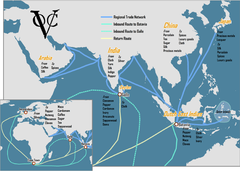 | 3 |
| 8001568805 | cartaz | A pass that the Portuguese required of all merchant vessels attempting to trade in the Indian Ocean. |  | 4 |
| 8001575216 | Dahomey | West African kingdom that became strong through its rulers' exploitation of the slave trade. |  | 5 |
| 8001583585 | daimyo | Feudal lords of Japan who ruled with virtual independence thanks to their bands of samurai warriors |  | 6 |
| 8001592329 | Hurons | Native American people of northeastern North America who were heavily involved in the fur trade. |  | 7 |
| 8001602733 | Indian Ocean commercial network | The massive, interconnected web of commerce in pre-modern times between the lands that bordered on the Indian Ocean (including East Africa, India, and Southeast Asia); the network was badly disrupted by Portuguese intrusion beginning around 1500. |  | 8 |
| 8001631365 | Little Ice Age | A period of cooling temperatures and harsh winters that lasted for much of the early modern era. |  | 9 |
| 8001635325 | Ferdinand Magellan | Portuguese mariner who commanded the first European (Spanish) fleet to circumnavigate the globe (1519-1521) |  | 10 |
| 8001643697 | Manila | Capital of the Spanish Philippines and a major multicultural trade city that already had a population of more than 40,000 by 1600. |  | 11 |
| 8001651390 | Middle Passage | Name commonly given to the journey across the Atlantic undertaken by African slaves being shipped to the Americas. |  | 12 |
| 8001657804 | piece of eight | Standard Spanish coin that became a medium of exchange in North America, Europe, India, Russia and West Africa as well as in the Spanish Empire; so called because it was worth 8 reales. |  | 13 |
| 8001669851 | Potosi | City that developed high in the Andes (in present-day Bolivia) at the site of the world's largest silver mine and that became the largest city in the Americas, with a population of some 160,000 in the 1570s. | 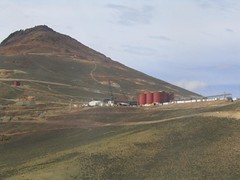 | 14 |
| 8001680275 | samurai | The warrior elite of medieval Japan. |  | 15 |
| 8001683612 | shogun | In Japan, a supreme commander |  | 16 |
| 8001687012 | silver drain | Term often used, along with "specie drain" to describe the siphoning of money from Europe to pay for the luxury products of the East, a process exacerbated by the fact that Europe had few trade goods that were desirable in Eastern markets; eventually the bulk of the world's silver supply made its way to China | 17 | |
| 8001717979 | soft gold | Nickname used in the early modern period for animal furs, highly values for their warmth and as symbols of elite status; in several regions, the fur trade generated massive wealth from those engaged in it. |  | 18 |
| 8001727669 | Spanish Philippines | An archipelago of Pacific islands colonized by Spain in a relatively bloodless process that extended for the century or so after 1565, a process accompanied by a major effort at evangelizaton; the Spanish named them the Philippine Islands in honor of King Philip II of Spain |  | 19 |
| 8001745089 | Tokugawa shogunate | Military rulers of Japan who successfully unified japan politically by the early 17th century and established a "closed door" policy toward European encroachments. |  | 20 |
| 8001758367 | trading post empire | Form of imperial dominance based on control of trade rather than on control of subject peoples. |  | 21 |
| 8001774105 | Atlantic Slave Trade | Lasted from 16th century until the 19th century. Trade of African peoples from Western African to the Americas. One part of the three-part economical system known as the Middle Passage of the Triangular Trade |  | 22 |
| 8001793772 | Vasco da Gama | Portuguese explorer. In 1497-1498 he led the first naval expedition from Europe to sail to India, opening an important commercial sea route. |  | 23 |
| 8001799538 | Calicut | A city of southwest India on the Malabar Coast, southwest of Bangalore. It was the site of Vasco da Gama's first landfall in India (1498) and was later occupied by Portuguese, British, French and Danish trading colonies | 24 | |
| 8001816067 | Tropical Spices | Cinnamon, nutmeg, mace, cloves, and pepper. Spices that Europeans wanted to flavor rotten meat and preserve foods. |  | 25 |
| 8001822716 | Prester John | A mythical Christian monarch whose kingdom supposedly had been cut off from Europe by the Muslim conquests; some thought he was Chinggis Khan |  | 26 |
| 8001832726 | Mindanao | Southern island of the Philippines; a Muslim area able to successfully resist Spanish conquest. |  | 27 |
| 8001838974 | Bombay | A port city on India's west coast colonized by the British. |  | 28 |
| 8001845815 | Wang Dayue | 18th century Chinese poet who bemoaned the ecological devastation that deforestation brought to southern China | 29 | |
| 8001855837 | Algonquians | North American people that lived in southern New York State, in what is now Long Island and the Hudson River Valley. |  | 30 |
| 8001864058 | Wage Labor | A system of payment whereby workers are compensated on the bases of a wage not tied to the quality of the raw materials, accidents, or other needs in the production process. | 31 | |
| 8001870282 | Chattel Slavery | Ownership of human beings; a system of bondage in which a slave has the legal status of property and so can be bought and sold like property. |  | 32 |
| 8001880040 | Indentured Servitude | An agreement to exchange labor for travel expenses an/or job training for a certain amount of time. | 33 | |
| 8001885454 | Plantation system | A system of agricultural production based on large-scale land ownership and the exploitation of labor and the environment. This system focused on the production of cash crops and utilized slave labor. |  | 34 |
| 8001895838 | Kongo | Central African state that began trading with the Portuguese around 1500; although their kings, such as King Alfonso I(r. 1506-1543), converted to Christianity, they nevertheless suffered from the slave trade. |  | 35 |
| 8001913305 | Manioc | The most important American crop introduced into Africa in the 16th century. |  | 36 |
| 8001924522 | Vice royalty of New Spain | The North American section of Spain's colonies established as a governing district by the Spanish king in the 1500s. | 37 | |
| 8001929503 | Vice royalty of Peru | A Spanish colonial administrative district that originally contained most of Spanish-ruled South America; governed from the capital of Lima | 38 |
Pages

Need Help?
We hope your visit has been a productive one. If you're having any problems, or would like to give some feedback, we'd love to hear from you.
For general help, questions, and suggestions, try our dedicated support forums.
If you need to contact the Course-Notes.Org web experience team, please use our contact form.
Need Notes?
While we strive to provide the most comprehensive notes for as many high school textbooks as possible, there are certainly going to be some that we miss. Drop us a note and let us know which textbooks you need. Be sure to include which edition of the textbook you are using! If we see enough demand, we'll do whatever we can to get those notes up on the site for you!
