AP Notes, Outlines, Study Guides, Vocabulary, Practice Exams and more!

AP Biology Chapter 2 Flashcards

Terms : Hide Images
7288466833Matter- Anything that takes up space and has mass - Composes organisms - Made up of elements0
7288466834Element- A substance that cannot be broken down to other substances by chemical reactions - 92 naturally occurring elements1
7288466835Compound- A substance consisting of two or more different elements combined in a fixed ratio - Has chemical and physical characteristics different from those of its elements - Ex. Water (H20) is a compound that has a 2:1 ratio2
7288466836Essential Elements- Elements that an organism needs to live a healthy life and reproduce3
7288466837Trace Elements- Elements that are required by an organism in small quantities. - Ex. in vertebrates iodine is an essential ingredient of a hormone produced by the thyroid gland.4
7288466838Toxic Elements- Some naturally occurring elements are toxic to organisms. - Some species have adapted to environments containing elements that are usually toxic. - Ex. Sunflowers can absorb lead, zinc and other heavy metals in concentrations that would kill other organisms.5
7288466839Atom- The smallest unit of matter that still retains the properties of an element. - Each element consists of a certain type of atom that is different from the atoms of any other element. - Most empty space6
7288466840Subatomic particles- Compose atoms. - Three relevant kinds: neutrons, protons and elections7
7288466841Proton- Charge: positive - Location: nucleus - Mass: 1 dalton8
7288466842Electron- Charge: negative - Location: orbits around the nucleus - Mass: so small that electrons are insignificant when computing the total mass of an atom9
7288466843Neutron- Charge: electrically neutral - Location: nucleus - Mass: 1 dalton10
7288466844Atomic Nucleus- The center of an atom - Has a positive charge due to the protons inside of it11
7288466845Atomic Number- Number of protons. - All atoms of a particular element have the same atomic number. - If an atom is neutral, the # of protons= # electrons12
7288466846Mass Number- Sum of the protons and neutrons in the nucleus of an atom.13
7288466847Atomic Mass- An approximation of the total mass of an atom. - Same number as the Mass Number.14
7288466848Isotope- Different atomic forms of the same element. - Same number of protons, different number of neutrons. - Behave identically in chemical reactions.15
7288466849Radioactive Isotope- Isotope where the nucleus decays spontaneously giving off particles and energy. - Decay will lead to a change in the number of protons, and the atom transforms to an atom of a different element.16
7288466850Energy- The capacity to cause change by doing work.17
7288466851Potential Energy- Energy that matter possesses because of its location or structure - Matter has a natural tendency to move to the lowest possible state of potential energy.18
7288466852Electrons & Potential Energy- The electrons of an atom have potential energy because of how they are arranged in relation to the nucleus. - Because negative electrons attract to the positive nucleus, it takes work to move an electron father away from the nucleus. - The farther away an electron is from the nucleus, the greater its potential energy. - An electron's potential energy is determined by its energy level.19
7288466853Electron Shells- Places of high probability of finding an electron. - First shell- lowest potential energy, and so forth - An electron can change its shell by absorbing/ loosing energy. - 1st shell holds 2 electrons, 2nd shell holds 8 electrons20
7288466854Electron Distribution & Chemical Properties- The chemical behavior of an atom is determined by the distribution of electrons in the atom's electron shells.21
7288466855Valence Electrons- The outermost electrons. - Chemical behavior depends mostly on valence electrons. - Atoms with the same number of electrons in their valence shells exhibit similar chemical behavior.22
7288466856Valence Shell- The outermost electron shell. - An atom with a completed valence shell is unreactive because it is stable (inert).23
7288466857Chemical Bonds- Bonds between atoms when they either share or transfer valence electrons. - The strongest kinds of chemical bonds are covalent and ionic bonds. - When bonds form, they make fill the atoms valence shell24
7288466858Covalent Bond- The sharing of a pair of valence electrons by two atoms.25
7288466859Molecule- Composed of 2 or more atoms held together by covalent bonds.26
7288466860Single Bond- A pair of shared electrons. - Represented by a single line27
7288466861Double bond- 2 shared pairs of valence electrons. - Represented by 2 lines28
7288466862Valence- Bonding capacity of an atom - Usually equals the number of electrons required to complete the atom;s outermost (valence shell)29
7288466863Electronegativity- The attraction of a particular atom for the electrons of a covalent bond. - The more electronegative an atom is, the more strongly it pulls shared electrons towards itself.30
7288466864Nonpolar covalent bond- A bond where the electrons are shared equally because the two atoms have the same electronegativity. - Ex. H2 is nonpolar31
7288466865Polar covalent bond- Bond where an atom is bonded to a more electronegative atom. - Electrons are not shared equally.32
7288466866Ionic Bond- Formed by the attraction of cations and anions. - Electrons are transfered. - Environment affects the strength of ionic bonds. - Dry salt crystal- bonds are very strong. - Salt crystal dissolved in water- bonds are waker because each ion is partially shielded by its interactions with water molecules.33
7288466867Ion- A charged atom (or molecule). - Electrons have either been lost or gained.34
7288466868Cation- Positively charged atom. - An electron has been lost.35
7288466869Anion- Negatively charged atom. - An electron has been gained.36
7288466870Ionic compounds/salts- Compounds formed by ionic bonds. - Does not consist of molecules, only elements.37
7288466871Advantages of weak chemical bonds- Two molecules can adhere temporarily by weak bonds. - Two molecules can come together, respond to one another in some way and then separate.38
7288466872Hydrogen bonds- Partial positive charge of a hydrogen atom that is covalently bonded to an electronegative atom allows the hydrogen to be attracted to a different electronegative atom nearby. - A hydrogen bond is the nonequivalent attraction between a hydrogen and an electronegative atom.39
7288466873Van deer Walls Interactions- Individually weak bonds that occur only when atoms and molecules are very close together. - Ex. Geckos can climb up walls because their toes have tiny hairs and there are van der Waals interactions between the hair tip molecules and the molecules of the wall's surface. Because they are so numerous they can support the Gecko's body.40
7288466874Molecular Shape- Determines how biological molecules recognize and respond to one another with specific. - Complementary molecules bind to each other. - Ex. Because opiates have similar shapes to endorphins, they bind to endorphin receptors in the brain.41
7288466875Chemical reactions- The making and breaking of chemical bonds, leading to changes in the composition of matter. - Matter is neither created nor destroyed, only rearranged. - Reactions are reversible.42
7288466876Reactants- Starting materials in a chemical reaction43
7288466877Products- The elements or compounds produced by a chemical reaction.44
7288466878Chemical equilibrium- The point at which the reactions offset one another exactly. - This is dynamic: reactions still occur, but with no effect on the concentrations of reactants and products. - Concentrations are stabilized at a ratio.45
7288466879Water's polarity- Unequal sharing of electrons and water's V- like shape make it a polar molecule. - The oxygen region has a partial negative charge. - Each hydrogen has a partial positive charge - Because of this, the hydrogen of one molecule is attracted to the oxygen of another molecule, forming a hydrogen bond.46
7288466880Cohesion of Water- Result of the hydrogen bonds that hold water together. - Contributes to the transport of water & dissolved nutrients.47
7288466881Adhesion- The clinging of one substance to another.48
7288466882Surface tension- A measure of how difficult it is to stretch or break the surface of a liquid. - Hydrogen bonds in water give it a very high surface tension.49
7288466883Moderation of temperature by water- Water moderates air temperature by absorbing heat from air that is warmer and releasing the stored heat to air that is cooler. - Water can absorb/release heat with a small change in temperature.50
7288466884Kinetic energy- Energy of motion.51
7288466885Thermal energy- The kinetic energy associated with the random movement of atoms or molecules. - Total thermal energy of matter depends on volume.52
7288466886Temperature- The average kinetic energy of molecules, regardless of volume.53
7288466887Heat- Thermal energy in transfer from one body of matter to another.54
7288466888Calorie- The amount of heat it takes to raise the temperature of 1 g of water by 1degree C.55
7288466889kilocalorie- (1,000 cal) is the quantity of heat required to raise the temperature of 1 kilogram of water by 1 degree C.56
7288466890Specific Heat- The amount of heat that must be absorbed or lost for 1 g of that substance to change its temperature of 1 degree C. - Aka how well a substance resists changing its temperature when it absorbs/releases heat. - Water has a unusually high specific heat (heat must be absorbed to break hydrogen bonds and released when they form)57
7288466891Evaporation/ Vaporization- Transformation from a liquid to a gas. - Even at low temperatures, fast molecules can escape (some move faster than others and temperature is an average).58
7288466892Heat of vaporization- The quantity of heat a liquid must absorb for 1g of it to be converted from the liquid to the gaseous state. - Water has a high heat of vaporization, because hydrogen bonds need to be broken.59
7288466893Evaporative Cooling- As a liquid evaporates, the surface of the liquid that remains behind cools down. - "Hottest" molecules leave as gas first. - Contributes to the stability of temperature in bodies of water and keeps organisms from overheating.60
7288466894Frozen Water- Water is less dense as a solid than as a liquid. - Water freezes because more and more of its molecules are moving too slowly to break hydrogen bonds. - 0 degree C, molecules are locked into a crystalline lattice, and hydrogen bonds keep them far away. - Floating ice is important so that lakes do not freeze solid.61
7288466895Solution- A liquid that is a completely homogeneous mixture of 2 or more substances.62
7288466896Solvent- The dissolving agent of a solution.63
7288466897Solute- The substance that is dissolved.64
7288466898Aqueous solution- Solution where water is the solvent.65
7288466899Hydration Shell- The sphere of water molecules around a dissolved ion. - Water molecules pull appart compounds by surrounding each ion and separating and shielding them from one another. - To be dissolved by water you must have ionic and polar regions.66
7288466900Hydrophilic- A substance that has an affinity for water. - Substances can be hydrophilic without actually dissolving (cotton).67
7288466901Hydrophobic- Substances that repel water. - They are nonionic and nonpolar or otherwise cannot form hydrogen bonds.68
7288466902Molecular mass- The sum of the masses of all the atoms in a molecule.69
7288466903Mole- Represents an exact number of objects - 6.02 * 10^23 - A mole of one substance has exactly the same number of molecules as a mole of any other substance.70
7288466904Dissociation of Water- A hydrogen atom leaves its electron behind and a hydrogen ion (H+) is transferred - The water molecule that lost a proton is now a hydroxide ion (OH-) and has a charge of 1- - The proton binds to the other water molecule making it a Hydronium ion (H30+)71
7288466905Acid- Substance that increases the hydrogen ion concentration of a solution. - When acids dissolve in water, they donate an additional H+ to the solution.72
7288466906Base- Substances that reduce the hydrogen ion concentration of a solution. - Some directly accept hydrogen ions (Ammonia) - Some dissociate to form hydroxide ions which combine with hydrogen ions and form water. - Basic solutions have a higher concentration of OH- than H+73
7288466907Strong Acid/Strong Base- Compounds that completely dissociate when mixed with water. - Hydrochloric acid is a strong acid. - Sodium hydroxide is a strong base.74
7288466908pH- The pH of a solution is the negative logarithm (base 10) of the hydrogen ion concentration.75
7288466909pH scale- pH declines as H+ concentration increases. - pH less than 7- acidic - pH above 7- basic - When the pH of a solution changes slightly, the actual concentrations of H+ and OH- in the solution change substantially (logs)76
7288466910Buffer- A substance that minimizes changes in the concentrations of H+ and OH- in a solution. - Accepts hydrogen ions when they are in excess, and donates them when they have been depleted. - Ex. carbonic acid and bicarbonate buffering system77
7288466911Acidification- Burning fossil fuels releases CO2 into the air, and when CO2 dissolves in seawater, it reacts with water to form carbonic acid which lowers ocean pH. - As seawater acidifies the extra hydrogen ions combine with carbonate ions to form bicarbonate ions and reduces the carbonate ion concentration. - This is bad, because carbonate ions are required for calcification by many marine organisms (reef-building corals and animals with shells).78

AP Government - Chapter 1 Flashcards

Terms : Hide Images
5866410540GovernmentA system that makes authoritative public policies made for society.0
5866410541PoliticsThe process by which government officials, as well as the policies they pursue, are chosen.1
5866410542The Policymaking System2
5866410543Linkage InstitutionsPolitical channels through which people's concerns become political issues on the policy agenda. (political parties, elections, interest groups, the media, etc.)3
5866410544Policy AgendaSeveral issues that capture the serious attention of political officials and other figures in politics at a given time.4
5866410545Collective GoodsGoods and services, such as clean water, that by nature cannot be denied to anyone.5
5866410546The 5 Basic Duties Each Government Should Perform1. Maintain a national defense. 2. Provide public goods and services. 3. Preserve order. 4. Socialize the young. 5. Collect taxes.6
5866410547Political CultureAn overall set of values widely shared within a society7
5866410548Single-Issue GroupsGroups that have a narrow interest on which their members tend to take an uncompromising stance.8
5866410549DemocracyA system of selecting policymakers and of organizing government so that policy represents and responds to the *public's* preferences.9
5866410550Traditional Democratic Theory1. Equality in voting. 2. Effective participation 3. Enlightened. understanding. 4. Citizen control of the agenda. 5. Inclusion10
5866410551PluralismDemocratic theory that states that the government is comprised of several different groups that compete to reach compromise, no one group dominating another.11
5866410552Elite and Class TheoryDemocratic theory that states that society is divided by class lines, with the upper class elite in power (Policies benefit those with money/power)12
5866410553HyperpluralismDemocratic theory that states that he government is comprised of several groups, all of which are too strong, which leads to muddled policy and gridlock --- the government suffers because of groups13
5866410554Challenges to DemocracyIncreased complexity of issues, limited participation in government, escalating campaign costs, and diverse political interests.14
58664105555 Elements of American Political Culture1. Liberty. 2. Egalitarianism. 3. Individualism. 4. Laissez-faire. 5. Populism.15

Learning (AP Psychology) Flashcards

Terms : Hide Images
8485303112Ivan PavlovContribution: developed the theory of "classical conditioning" while working with dogs Significance: Father of Classical Conditioning0
8485303113Classical ConditioningLearning that takes place when two or more stimuli are paired together UCS = UCR; NS + UCS = UCR; & CS = CR1
8485303114Unconditioned StimulusPart of Classical Conditioning It is the stimulus that triggers a natural reflexive response. Pavlov's Dogs: "Meat" Little Albert: "Loud noise"2
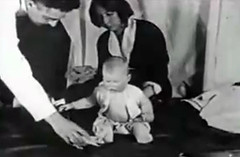
8485303115Conditioned StimulusPart of Classical Conditioning It initially has no effect but after conditioning, it triggers a natural reflexive response. Pavlov's Dogs: It was the "Bell" Little Albert: "White Mouse"3
8485303116ExtinctionClassical Conditioning: The disappearance of a behavior because CS no longer paired with the UCS Operant Conditioning: The disappearance of a behavior because it is no longer reinforced or punished4
8485303117Spontaneous RecoveryClassical Conditioning: When a previous CR returns after it has been extinguished Operant Conditioning: Occurs when a response begins again after extinction5
8485303118Stimulus GeneralizationClassical Conditioning: When the NS and the CS are different. (Example: Little Albert being afraid of any thing that is white and furry) Operant Conditioning: When a reinforced/punished behavior occurs in a setting/situation where it was NOT learned (Example: Not cursing at home or at school)6
8485303119Stimulus DiscriminationClassical Conditioning: When the NS and the CS are the same (Example: Little Albert being afraid of a white mouse) Operant Conditioning: When a reinforced/punished behavior occurs in a setting/situation where it was learned (Example: Cursing only at home because it is acceptable but not at school)7
8485303121Taste AversionsPsychologist: Garcia Defined: If you ingest an unusual food or drink and then become nauseous, you will probably develop an aversion to the food or drink. Significance: Violates the acquisition principles of classical conditioning8
8485303122Operant conditioningDefined: Learning is based on the association of one's behavior and its consequences. Consequences are reinforced or punished Example: You choose to break curfew based on the consequences9
8485303123Law of EffectPsychologist: Edward Thorndike Defined: if a behavior results in a satisfying consequence, it will likely be repeated whereas; if a behavior results in a unsatisfying consequence, it will NOT likely be repeated Example: If you complement your mother and she lets you stay out past curfew, you will complement her again10
8485303124B.F. SkinnerContributions: Invented the Operant chamber, aka his ________ box, to use in his research of animal learning. Significance: Father & Developer of Operant Conditioing11
8485303125Positive ReinforcementPart of Operant Conditioning Adding something to increase the likelihood of a behavior occuring again Example: Receiving $5 for every "A" in high school12
8485303126Negative ReinforcementPart of Operant Conditioning Increasing the likelihood of a behavior occurring again by removing a negative stimuli Example: Taking aspirin to relieve a headache13
8485303127Positive PunishmentPart of Operant Conditioning Adding something to decrease the likelihood of a behavior occurring again Example: Spanking and yelling14
8485303128Negative PunishmentPart of Operant Conditioning Removing something to decrease the likelihood of a behavior occurring again Example: Grounding15
8485303129ShapingPart of Operant Conditioning Positively reinforcing closer and closer approximations of a desird behavior to teach a new behavior16
8485303130Primary ReinforcersReinforcers that are rewarding such as food, water, rest, whose natural properties are reinforcing.17
8485303131Secondary ReinforcersDefined: Reinforcers that are rewarding because we learned that are reinforcing. Example: praise, money, the chance to play video games.18
8485303132Fixed-Ratio ScheduleDefined: schedule of reinforcement after a set number of responses. Example: Being paid for every 10 pizzas made19
8485303133Variable-Ratio ScheduleDefined: schedule of reinforcement after a varying number of responses. Example: playing a slot machine20
8485303134Fixed-Interval ScheduleDefined: schedule of reinforcement after a fixed amount of time has passed Example: cramming for an exam21
8485303135Variable-Interval ScheduleDefined: schedule of reinforcement after varying amounts of time Example: pop (surprise) quizzes in class22
8485303136Instinctive DriftDefined: when animals revert to instinctive behaviors rather than the operantly conditioned behaviors Examples: Rats will not walk backward, chickens won't hit a ball and run to first base, and pigeons won't flap wings for food.23
8485303137Observational LearningDefined: learn by watching others Example: BoBo Doll Study24
8485303138Latent LearningDefined: Learning that occurs but is not apparent until there is an incentive to demonstrate it Example: Tolman's rats would only complete the maze if there was cheese for them at the end of the maze25
8485303139Insight LearningDefined: suddenly knowing the solution to the problem Example: When taking a test and the previous answer comes to you without effort26
8485303140Acquisition of Classical ConditioningFrequency: the more often the CS and the US are paired together Timing: the CS is presented a half a second before the US27
8485303141Biological PredispositionDefined: humans and animals have predisposed fears that help us survive Examples; Phobia of heights keeps us away from danger28
8485303142Unconditioned ResponsePart of Classical Conditioning It is the unlearned, naturally occurring response to the stimulus Pavlov's Dogs: It was the "Salivating to the Meat" Little Albert: "Screaming at the Loud Noise"29
8485303143Associative LearningDefined: learn by putting together two events Example: Expect to hear thunder after viewing lightening30
8485303144HabituationDefined: An organisms decreasing response to a stimulus with repeated exposure to it Example: Your parents yell at you a lot and eventually you tune out their yelling31
8485303145WatsonContribution: applies Classical Conditioning to Humans through the "Little Albert" Experiment Significance: Creates "Behaviorism" Theory32
8485303146ThorndikeContribution: studied cats in puzzle boxes and recorded their behaviors Significance: Creates "Law of Effect" theory33
8485303147BanduraContribution: Studied how children mimic others behaviors and repeat that same behavior Significance: Creates "Observational Learning" Theory34
8485303148GarciaContribution: Demonstrated the significance of biological processes in classical conditioning Significance: Creates "Taste Aversions" theory35
8485303149SeligmanContribution: Used dogs to demonstrates the significance of cognitive processes in classical conditioning Significance: Creates "Learned Helplessness" theory36
8485303150TolmanContribution: demonstrated the significance of cognitive processes in operant conditioning by studying rats in mazes Significance: Creates the "Latent Learning" theory37
8485303152Pavlov's DogsFirst experiment that created and demonstrate the theory of classical conditioning38
8485303153Little AlbertFirst experiment to demonstrate how emotions can be classically conditioned in humans Provides a foundation for the "Behaviorism Theory"39
8485303154Conditioned ResponsePart of Classical Conditioning Occurs after conditioning when the conditioned stimulus (CS) triggers an innate response Pavlov's Dogs: It was the "Salivating to the Bell" Little Albert: "Screaming/Crying"40
8485303155Learned HelplessnessDefined: Exposure to inescapable and uncontrollable aversive (bad) events produces passive behavior Study: Seligman delivering shocks to dogs Example: If a student consistently fails math, they may start to give up or a sports team that consistently loses may start to belive they can't win41
8485303157Concerns regarding PunishmentIt does not teach the learner appropriate behavior and can also increase violent behavior in the learner42
8485303158Skinner BoxAlso known as: Operant Chamber Description: A chamber containing a bar or key that an animal (rat or pigeon) can manipulate in order to obtain a reward43
8485303159Immediate ReinforcerDefined: when you are immediately rewarded for a behavior (it's all about the short run) Example: skipping school and enjoying time with friends44
8485303160Superstitious BehaviorDefined: if a random reinforcement follows an event, the event will likely be repeated. Example: a lucky shirt, shoes, etc.45
8485303161Continuous Reinforcement ScheduleDefined: When every behavior is reinforced Example: a multiple choice test Significance: best for "establishing" a behavior46
8485303162Cognitive MapsDefined: having the ability or know how to accomplish a particular task Example: Tolman's rats knew how to complete the maze47
8485303163Intrinsic MotivationDefined: the desire to perform a behavior effectively and for its own sake—rewards can carry hidden costs. Example: reading books because you find them rewarding48
8485303164Extrinsic MotivationDefined: the desire to perform a behavior to receive external rewards or avoid threatened punishment. Example: reading a book because you need to get a good grade in your English class49
8485303165BoBo Doll StudyPsychologist: Bandura Description: Children watched (through a one way glass)a confederate play with the BoBo doll and then played with the BoBo doll in the same way as the confederate Significance: used to develop "observational learning"50
8485303166Mirror NeuronsDefined: frontal lobe neurons that fire when performing certain actions or when observing another doing so Example: explains why yawning is contagious51
8485303167DensensitizationDefined: after viewing a similar act/behavior, you become less emotionally responsive (indifferent or unaware) to the stimulus Example: The first murder on TV is shocking but becomes less shocking as you watch violent television52
8485303168Pro-Social ModelingDefined: People who show nonviolent, helpful behavior prompt similar behavior in others Significance: When parents help their grandparents, the children will likely do the same53
8485303169Anti-Social ModelingDefined: People show violent, selfish behavior prompts similar behaviors in others Significance: Watching violent TV prompts similar behaviors in others (pro-wrestling, etc.)54
8485303170BehaviorismPsychologist: John B. Watson Defined: a theory that made psychology an objective science by making it based on observable (and only observable) events, not the unconscious or conscious mind.55
8485303171Delayed ReinforcerDefined: when you complete a behavior but not awarded immediately (it's all about the long run) Example: getting good grades in school and attending class in order to get a good job in the future56
8485303172Partial Reinforcement ScheduleDefined: When a random behavior is reinforced Example: Fixed Ratio, Variable Ratio, Fixed Interval, Variable Interval Significance: best for "maintaining" a behavior57

AP Biology Chapter 8 Flashcards

Terms : Hide Images
6247699005Metabolismthe totality of an organisms chemical reactions that result from interactions between molecules within the cell0
6247699006metabolic pathwaya sequence of chemical reactions undergone by a compound in a living organism, start with substrate end with product1
6247699007catabolicbreaking a complex molecule down into its simpler parts, releasing energy. ie. cellular respiration2
6247699008anabolicusing energy to build complex molecules from simpler molecules. ie. protein synthesis3
6247699009Bioenergeticsthe study of how organisms manage their energy resources4
6247699010energycapacity to cause change, do work5
6247699011kinetic energyenergy of motion6
6247699012heat(thermal energy)kinetic energy associated with random movement of molecules7
6247699013potential energyenergy of position8
6247699014chemical energypotential energy available for release in a chemical reaction, energy within bonds9
6247699015thermodynamicsstudy of energy transformations10
6247699016closed systemisolated from surroundings, no energy transfer, cant work at equilibrium bc its exhausted its ability to do work. free energy at a min11
6247699017open systemnot isolated, energy and matter can be transferred between system and surroundings, ie. cells12
62476990181st law of thermodynamicsenergy of the universe is constant, cannot be created or destroyed, can only be transferred or transformed, conservation of energy13
62476990192nd law of thermodynamicsduring every energy transfer, some energy is unusable and often lost, every energy transfer or transformation increases the total entropy of the universe14
6247699020entropydisorder, randomness15
6247699021free energydelta G, energy that can do work when temperature and pressure are constant, related to change in enthalpy(delta H), change in entropy(delta S) and temperature in Kelvin(T). delta G = delta H - T delta S16
6247699022exergonic reactiona reaction with a net release of free energy, negative free energy, spontaneous17
6247699023endergonic reactiona reaction that absorbs free energy from its surroundings, non-spontaneous, positive free energy18
6247699024coupled reactionsthe use of exergonic processes to drive endergonic ones, the energy given off from the exergonic is absorbed by the endergonic19
6247699025ATPadenosine triphosphate, composed of ribose (5 carbon sugar), adenine (nitrogenous base), and 3 phosphate groups. Phosphate tail can be broken through hydrolysis to produce energy, ADP, and an inorganic phosphate20
6247699026phosphorylationhow ATP drives endergonic reactions, covalently bonding a phosphate with another molecule, such as as reactant21
6247699027catalysta chemical agent that speeds up chemical reactions without being consumed by the reaction22
6247699028enzymesa catalytic protein, speeds up metabolic reactions by lowering activation energy, very specific, reusable, unchanged by reaction23
6247699029activation energyinitial energy needed to start a chemical reaction, free energy for activating reaction, given off by heat24
6247699030induced fitbrings the chemical groups of the active site into positions that enhance their ability to catalyze the reaction, makes the enzyme more effective25
6247699031cooperativityanother type of allosteric activation, binds to one active site but locks ALL active sites open, allowing products to be constantly produced26
6247699032Substratethe REACTANT that an enzyme acts on27
6247699033Enzyme-Substrate Complexenzyme and substrate28
6247699034Active Siteregion on the enzyme where substrate binds29
6247699035Hydrogen and Ionic Bondssubstrate held in active site by WEAK interactions30
6247699036Lock and Keyactive site on enzyme fits substrate exactly31
6247699037If reaction doesnt need energy to start (exergonic)How do you know if a reaction is spontaneous?32
62476990383 kinds of cellular work done by ATPShuttle renewable and nonrenewable ENERGY, provide ENERGY for cellular functions, provide ENERGY for catabolic reactions33
6247699039Ways enzymes lower activation energycan do this by having a favorable environment, straining substrate molecules, orienting substrates correctly34
6247699040hydrolysishappens when phosphate leaves ATP to give energy to something else. This causes ATP to become ADP, produces water35
6247699041cofactorsnon-protein enzyme helpers ex. zinc, iron, copper36
6247699042coenzymesorganic enzyme helpers ex. vitamens37
6247699043Denatureabove a certain temp activity declines, protein unwinds38
6247699044Renaturecoils it back to normal after temp gets too high and the activity decreased39
6247699045Gene Regulationcell switches on or off the genes that code for specific enzymes40
6247699046Feedback inhibitionend product of a pathway that continues to produce product (positive) and then turns off (negative)41
6247699047negative feedback inhibitionaccumulation of end product slows the process that produces that amount -stop production42
6247699048positive feedback inhibitionend product speeds up production (less common)43
6247699049Allosteric Regulationcan accelerate or inhibit production and enzyme activity by attaching to another part of the protein. this changes the shape of the active site which inhibits substrates from bonding and producing more products44
6247699050Activatorone of the allosteric regulators, stabilizes and keeps active site open for production, wedges open45
6247699051Inhiibitorone of the allosteric regulators, doesnt allow active site to work or produce, wedges closed46
6247699052Competitive Inhibitorinhibitor that mimics original substrate by blocking the original substrate47
6247699053Noncompetetitive Inhibitorbind to another part of enzyme to change shape and block substrate from producing48
6247699054ways enzymes are affectsenvironment, pH, temp, salinity, chemicals that infuse enzyme, increase activity by increasing substrate concentration49
6247699055exergonicwhat reaction is spontaneous (-G)50
6247699056endergonicwhat reaction is not spontaneous (positive G)51

AP Psychology Personality Flashcards

Terms : Hide Images
9131520737Sigmund FreudFounder of psychoanalysis Originally a medical doctor and found that his patients were suffering from an illness with psycho-logical causes This led him to develop theories of the unconscious mind, psycho-sexual development and Psychoanalysis0
9131520738Psychoanalytic TheoryPsychologist: Sigmund Freud Behavior is due to unconscious motives and conflicts Early childhood experiences determine personality1
9131520739Unconscious Mind-foundation for the psychoanalytic theory -controls the phenomena of repressed feelings, automatic skills, subliminal perceptions, thoughts, habits and automatic reactions as well as possibly holding emotional complexes, phobias and desires.2
9131520740Idlocated in the unconscious present at birth Ruled by the "Pleasure Principle" and has no values, morality, or logic (animal instincts)3
9131520741Egolocated in both conscious, & unconscious Developed after birth, the self Ruled by the "Reality Principle" and balances the id and superego by being organized, rational, and postponing gratification4
9131520742SuperEgolocated in both conscious, & unconscious developed by age 5 Ruled by the "Morality Principle" and is the opposite of the Id because it is the internal, parental voice with rules and values5
9131520743Free AssociationA technique used to access the unconscious patient freely exposes his/her ideas, impressions, etc.6
9131520744Freudian SlipsSlips of the tongue that expose the unconscious7
9131520745Psychosexual Development- sequential and discontinuous stages with changing erogenous zone and conflict in each stage if conflict is not successful resolved, the result is fixation O.A.P.L.G (Oral, Anal, Phallic, Latency, Genital)8
9131520746Oral stageAge: 0-1 Erogenous Zone: Mouth Task: Oral Activities (sucking, chewing, biting, etc) Fixation: Smoking, Over-eating9
9131520747Anal stageAge: 1-3 Erogenous Zone: Anus Task: Potty Training Fixation: Anal retentive or Anal Expulsive10
9131520748Latency stageAge: 6 to puberty Erogenous Zone: None Task: develop relationships with same sex peers to strengthen gender identity Fixation: doesn't occur at this stage11
9131520749Phallic stageAge: 3-5 Erogenous Zone: Genitals Task: Gender Identity Fixation: Narcissism, Homosexuality12
9131520750Genital stageAge: Puberty to death Erogenous Zone: Genitals Task: Find a hetero-sexual relationship Fixation: doesn't occur at this stage but old conflicts will arise13
9131520752Electra Complexgirls sexually desire dad and hate mom but need to resolve this in order to develop a gender identity Phallic Stage of Psycho-sexual Development14
9131520753Oedipus Complexboys sexually desire mom and hate dad but need to resolve this in order to develop a gender identity Phallic Stage of Psycho-sexual Development15
9131520754Defense mechanisms- extreme measures protect the ego from threats; operate unconsciously and deny, falsify, or distinct reality - not successful coping strategies because they do not remove stressors16
9131520755Neo-FreudiansJung, Horney, Adler Believed that Freud put too much emphasis on sex and there needed to be more emphasis on social factors17
9131520756Collective unconsciousPsychologist: Carl Jung Defined: A warehouse of "instinctive memories" passed down to each generation and all humans share and is made up of archetypes18
9131520757ArchetypesDefined: Inherited universal concepts that create the Collective Unconscious Examples: Anima v. Animus, Mother v. Father, Persona v. Shadow, Hero v. Villain19
9131520758Basic AnxietyPsychologist: Karen Horney anxiety that is created by being born helpless. Most overcome this, those who don't develop neurotic personalities- aggressive, compliant, or withdrawn20
9131520759Womb envyPsychologist: Karen Horney Defined: women do not suffer from "penis envy" but are envious of male's superior status. Men are envious of a women's ability to have children and therefore, they compensate with other forms of achievement.21
9131520760Inferiority ComplexPsychologist: Alfred Adler Defined: people who compensate for feelings of inferiority (feeling like they're less than other people, not as good as others, worthless, etc.) by acting ways that make them appear superior.22
9131520761Projective TestsDescription: Provide ambiguous stimuli in order to trigger the projection of one's inner dynamics Strengths: Provide lots of information Weaknesses: highly subjective and has low reliability Tests: Rorschach Inkblot Test, & Thematic Apperception Test (TAT), Draw a Person test23
9131520762Rorschach Inkblot Testseeks to identify people's inner feelings and conflicts by analyzing their interpretations of 10 inkblots. Critics question the validity and reliability of the tests.24
9131520763Thematic Apperception Testpeople view ambiguous pictures and then make up stories about them. Presumably, their accounts reflect their interests and inner feelings.25
9131520764Humanistic PsychologistsCarl Rogers, Abraham Maslow Description: People develop their personality by trying to reach their full potential Strengths: model was built in a therapy setting Weaknesses: concepts are vague and subjective, individualistic and western based and naive because it fails to appreciate the reality of our capacity for evil26
9131520765Self-ConceptPsychologist: Carl Rogers Goal: Actualizing Tendency (full potential) Theory: A person has who they are, Real Self, and who they want to be, Ideal Self and a successful persoanlity has congruence People need genuineness (honesty), unconditional positive regard (love), and empathy (understanding) to develop a good persoanlity27
9131520766CongruenceA person's Real Self and Ideal Self can merge together Part of Roger's Self-Concept Theory28
9131520767IncongruenceWhen a person's Real Self and Ideal self do not match, causing anxiety. Part of Roger's Self-Concept Theory29
9131520768Unconditional positive regardDefined: receiving acceptance, value, and love from others without requirements Part of Roger's Self-Concept theory in which he says it is necessary to receive from others in order to develop a healthy personality30
9131520769EmpathyPeople will try to understand one's feelings and mirror it back to them Part of Roger's Self-Concept theory in which he says it is necessary to receive from others in order to develop a healthy personality31
9131520770Hierarchy of NeedsPsychologist: Abraham Maslow Description: Pyramid32
9131520771Trait TheoriesDescription: focuses on identifying how people typically behave but does NOT explain how personality developed Strengths: based on empirical evidence with factor analysis Weaknesses: people might behave differently based on the situation they are experiencing Tests: 16 Personality Factors (16 PF), 3 Dimensions, and Myers Briggs33
9131520772Factor analysis- a statistical procedure that identifies common factors among groups of items, to simplify a long list of items into a small number of dimensions -used with trait theories34
9131520773Self-Report InventoriesDescription: a questionnaire which is used to gauge a wide range of feelings and behaviors Strengths: empirically derived Weaknesses: social desirability-people can lie and manipulate the information Tests: MMPI, CPI, 16 PF35
9131520774MMPIMost extensively researched personality inventory. Used to assess mental health professions (police, nurses, doctors, pilots)36
9131520775Big Five Trait TheoryPsychologists: McCrae and Costa Description: OCEAN or CANOE Significance: traits are stable in adulthood, heritability accounts for 50% of personality and can be used to predict other personal attributes37
9131520776Openesscharacteristics such as imagination and insight, and those high in this trait also tend to have a broad range of interests38
9131520777Conscientiousnessinclude high levels of thoughtfulness, with good impulse control and goal-directed behaviors.39
9131520778Extraversioncharacterized by excitability, sociability, talkativeness, assertiveness and high amounts of emotional expressivenes40
9131520779Agreeablenessincludes attributes such as trust, altruism, kindness, affection and other pro-social behaviors.41
9131520780Neuroticismcharacterized by sadness, moodiness and emotional instability42
9131520781Social Cognitive Approach to PersonalityDescription: Personality is influenced between the interaction of a person's traits (including their thinking) and their social context Strengths: based on empirical evidence Weaknesses: minimizes the importance of one's inner traits, emotions, and unconscious motives Examples: Reciprocal Determinism, Locus of Control Psychologists: Bandura43
9131520782Reciprocal determinismPsychologist: Bandura Defined: Personality is developed by the interaction of behavioral, cognitive, and environmental factors. How it works: Everyone has a "self-system" of skills abilities and attitudes Self-Efficacy is what can change the system44
9131520783External Locus of ControlThe perception that chance or outside forces beyond your personal control determine your fate Effects: Pessimism and often learned helplesses45
9131520784Internal Locus of ControlThe perception that you control your own fate Effects: Optimism Optimism leads to longer lives with less illnesses but excessive optimism can also lead us to be blind to risks and overconfidence46
9131520785Self- efficacyDefined: the belief in your own ability to deal with different situations and accomplish specific goals It is NOT self esteem which is your general sense of self worth Consequences: people with high self-efficacy are able to succeed because they have an internal locus of control47
9131520786CompensationDefense Mechanism where people try to overcome feelings of inferiority in one area by striving to be superior in another area Major part of Alfred Adler's theory48

AP Biology: Biotechnology Flashcards

Terms : Hide Images
8075015225Recombinant DNADNA produced by combining DNA from different sources0
8075015226BiotechnologyA form of technology that uses living organisms, usually genes, to modify products, to make or modify plants and animals, or to develop other microorganisms for specific purposes.1
8075015227PlasmidsSmall rings of DNA found naturally in some bacterial cells in addition to the main bacterial chromosome. Can contain genes for antibiotic resistance, or other "contingency" functions.2
8075015228Gene CloningThe production of multiple copies of a gene.3
8075015229Restriction enzymesEnzyme that cuts DNA at a specific sequence of nucleotides4
8075015230Sticky endA single-stranded end of a double-stranded DNA restriction fragment.5
8075015231DNA LigaseA linking enzyme essential for DNA replication; catalyzes the covalent bonding of the 3' end of a new DNA fragment to the 5' end of a growing chain.6
8075015232Cloning vectorDNA molecules that can carry foreign DNA into a host cell and replicate there.7
8075015233Complimentary DNA (cDNA)is made from mRNA by reverse transcriptase8
8075015234polymerase chain reaction (PCR)A method of producing thousands of copies of DNA segment using the enzyme DNA polymerase9
8075015235gel electrophoresisProcedure used to separate and analyze DNA fragments by placing a mixture of DNA fragments at one end of a porous gel and applying an electrical voltage to the gel10
8075015236southern blottingA hybridization technique that enables researchers to determine the presence of certain nucleotide sequences in a sample of DNA.11
8075015237reverse transcriptase- PCRAn enzyme encoded by some certain viruses (retroviruses) that uses RNA as a template for DNA synthesis.12
8075015238Genetic profileAn individual's unique set of genetic markers, detected most often today by PCR or, previously, by electrophoresis and nucleic acid probes.13
8075016688TransposonA sequence of DNA that can move about the genome.14
8075035551Gene familiesGroups of closely related genes15
8075041540PseudogenesResult from mutations that cause a loss of function rather than an enhanced or new function.16

Pages

Subscribe to CourseNotes RSS

Need Help?

We hope your visit has been a productive one. If you're having any problems, or would like to give some feedback, we'd love to hear from you.

For general help, questions, and suggestions, try our dedicated support forums.

If you need to contact the Course-Notes.Org web experience team, please use our contact form.

Need Notes?

While we strive to provide the most comprehensive notes for as many high school textbooks as possible, there are certainly going to be some that we miss. Drop us a note and let us know which textbooks you need. Be sure to include which edition of the textbook you are using! If we see enough demand, we'll do whatever we can to get those notes up on the site for you!