AP Notes, Outlines, Study Guides, Vocabulary, Practice Exams and more!

AP language Flashcards

Terms : Hide Images
4522491616Pedanticsomeone who is concerned with precision, formalism, accuracy0
4522569652euphemisticidiomatic expression which loses its literal meanings and refers to something else in order to hide its unpleasantness (for example kick the bucket)1
5001426460pretentiouscharacterized by assumption of dignity or importance, especially when exaggerated or undeserved2
5001426461sensuousperceived by or affecting the senses3
5001428325exactnot approximated in any way; precise.4
5001428326culturedexcellent in arts, letters, manners, scholarly pursuits, etc5
5001428327plainFree from obstructions; open; clear6
5001430837literalollowing the words of the original very closely and exactly7
5001430838poeticthe art of rhythmical composition, written or spoken, for exciting pleasure by beautiful, imaginative, or elevated thoughts8
5001432589moralisticmessage conveyed or a lesson learned from a story, a poem9
5001432590slanguse of informal words10
5001434119esotericprivate; secret; confidentia11
5001434120symbolican object or person has a meaning other than the literal meaning12
5001436336simpleeasily understood or done13
5001436337figurativeuse words r expressions with a meaning that is different from the literal interpretation14
5001437526bombastican important sounding language that is meaning less15
5001437527abstrusehard to understand16
5001440254grotesqueempathy and disgust17
5001440255vulgarCrudely indecent18
5001441629scholarlyinvolving or relating to serious academic study19
5001441630technicalrelating to a particular subject art, or craft20
5001442900insipidlacking vigor ir intrest21
5001442901precisemarked by exactness22
5001444369learnedhaving much knowledge acquired by study23
5001444370tritelacking originality24
5001444371obscurenot discovered or known about25

AP English Language Vocabulary Flashcards

Terms : Hide Images
6945361766Abstractexisting as a thought or an idea, but not having any physical or concrete existence ex: Love0
6945386865Active Voicesubject is doing the action ex: The pitcher threw the ball1
6945395869Adagetraditional saying expressing a common experience or observation ex: a penny saved is a penny earned2
6945401268Ad Hominemappealing to one's prejudice, emotions, or special interests rather than to one's intellect or reason ex: " How can you argue your case for vegetarianism when you are enjoying your steak?"3
6945412300Agnominationa paranomasia, or allusion of one word to another ex: alliteration4
6945429232Allegorya story, poem, or picture that can be interpreted to reveal a hidden meaning, typically a moral or political one ex: ex- US president G.W. Bush used the term "Axis of Evil" for three countries5
6945441297Alliterationhaving the same consonant sound or sound group; vowel sound that may differ from syllable to syllable ex: Alice's aunt ate apples and acorns around August6
6945458840Allusionthe making of a casual or indirect reference to ex: Iago hints at Desdemona cheating on Othello7
6945463674Ambiguitydoubtfulness or uncertainty or meaning or intention ex:8
6945476030Anachronismsomeone or something not in their historical or chronological time9
6945502270Analogya similarity between like features of two things10
6945506757Anaylsisthe separating of any material or abstract entity into its constituent elements11
6945520162Anaphorarepetition of a word or words at the beginning of two or more successive verses, clauses, or sentences12
6945550437Anecdotea short account of a particular incident or event13
6945581588Annotate/Annotationto supply with critical or explanatory notes; comment in notes14
6945596993Antagonista person who is opposed to, struggles against, or competes with another; opponent; adversary15
6945606758Antanaclasisa form of speech which the key word is repeated and used in a different, sometimes contrary, for a play on words16
6987722998Antiprosopopoeiafigure of speech when an imaginary or absent person is speaking or acting17
6988082178AntiheroA protagonist or notable figure who is conspicuously lacking in heroic qualities18
6988082179Antithesisa direct opposite, a contrast19
6988082180Apophasismention by denial; claiming not to notice20
6988082181Aphorism/Aphorismconcise statement of a principle21
6988082182Apostrophea mark used to indicate the omission of letters or figures, the possessive case or plural of letters22
6988082183Appeal to traditionHistorical preferences of the people, either in general or to a specific individual23
6988082184Archaismuse of an older or obsolete form24
6988082185Archetypeoriginal model or pattern on which all other things of the same kind are based25
6988082186Argumentthe act or process of reasoning, or discussing26
6988082187Assonancerepetition of vowels without repetition of constants27
6988082188Asyndetonthe omission or absence of a conjunction between parts of a sentence.28
6988082189Audiencea Group of listeners or spectators29
6988106610Bandwagona particular activity or cause that has suddenly become fashionable or popular30
7005479442Canon (canonical)a regulation or dogma by a church council31
7005578087Caricaturean exaggerated portrayal of one's features32
7005578088CatalogingComplete enumeration of items arranged systematically with descriptive details33
7005578089Characterizationthe artistic representation of human character or motives34
7005578090Chiasmusa reversal in the order of words in two otherwise parallel phrases35
7005578091ClimaxMost exciting moment of the story; turning point36
7005578092Closurean act of closing or ending37
7005578093Colloquialism (Language)an expression38
7005578094Concretenaming a real thing or class of things39
7005578095Conflicta perceived incompatibility of actions, goals, or ideas40
7005578096Cannotationsomething suggested by a word or thing41
7005578097Contexta word or passage that can throw light on its meaning42
7005578098Contradictiona preposition, statement, or phrase that asserts/implies both truth and falsity of something43
7005578099Contrastcompare or appraise in respect of differences44
7005578100Conventionallacking originality, spontaneity, and individuality45
7005578101Deductionan act of taking away46
7005578102Denotionan act or process of denoting47
7005578103Denouementoutcome; unraveling of the plot of a play or work of literature48
7005578104Diatribea bitter and prolonged verbal attack49
7005578105Dictionchoice of words in regards to correctness, clearness, or effectiveness50
7005578106Digressionact of straying from the main point51
7094198190Either/Or Fallacyonly two possible solutions: one desirable and one not ex: political debates52
7109829751Elegy/Elegiactwo dactylic hexameter lines the second of which lacks the Ardis in the third and sixth feet ex: elegy53
7109829752Ellipsisomission of one or more words that are understood but supplied to make grammatically complete ex: "Begin when ready" means "Begin when you are ready"54
7109829753Epica long narrative poem telling of a hero's deeds ex: Odyssey55
7109829754Epigraphthe use of a quotation at the beginning of a work that hints at its theme ex: beginning of To Kill a Mockingbird, Harper Lee uses the quote "Lawyers, I suppose, were children once" by Charles Lamb56
7109867088Epiphanya moment of great insight; revelation ex: reverting to a religion?57
7109867089Epistrophethe repetition of a word at the end of successive clauses or sentences58
7109867090Ethosthe character, personality, or moral values specific to a person, group, time period, etc. ex: business meetings59
7109867091Euphemismsubstitution of an inoffensive term for one that is offensive ex: Cougar60
7109867092Evidencesomething that helps prove who committed the crime ex: gloves in the O.J. Simpsons trial61
7109867093Expositionsetting fourth of a meaning or purpose ex: Louis and Clark62
7109903448Fallacy(n.) a false notion or belief; an error in thinking ex: Appeal to Ignorance, Authority, Popular Opinion, etc...63
7109903449Faulty Causalityassumption that because one event follows another, the first event cause the later event ex: "because a rooster is crowing before sunrise, the rooster is the cause for sunrise64
7109953177Flashbackwhen a portion of the story goes back in time ex: The Arrow, Once Upon a Time, etc...65
7109953178Foilto prevent from attaining an end ex: Katniss and Peta choosing to eat the poison berries instead of killing one of them66
7109953179Foreshadowthe use of clues to suggest events that will happen later in the plot ex: Iago saying Othello and Desdemona will not be together in the end67
7109953180Genrea division or type of literature ex: Pop, Soul, Narrative, Poem, etc...68
7110280269Heroa person who is admired for great bravery or fine qualities ex: Superman, Flash, firefighter, etc...69
7110280270Hubrisexcessive pride or self-confidence ex: someone who is arrogant70
7110280271Hyperboleextreme exaggeration ex: saying "it took you a million years", when it took them 2 minutes71
7110371576Iambic Pentametera line of verse consisting of one short syllable followed by one long syllable ex: Two households, both alike in dignity72
7110371577Imageryvisually descriptive or figurative language ex: "the rose was a delicate shade of red"73
7110371578Inductionmethod of reasoning that moves specific instances to general conclusion ex: crime investigation which leads to a conviction74
7110371579Inductive Error75
7110582441Inversiona reversal of the usual order of words to achieve some kind of emphasis. ex: "where in the world were you", "how wonderful the weather is today"76
7110582442Irony: Verbala person says or writes one thing and means another ex: "I'm catching z's", "It's lit"77
7110582443Irony: Dramaticspeeches or situations of drama when the audience knows something the characters don't ex: In Othello, Othello trusts Iago without knowing that Iago plans on killing him, but the audience knows78
7110582444Irony: Situationaloutcome is significantly different from what was expected or considered appropriate ex: a fire station burns down or posting on Facebook how useless Facebook is79
7110646386Jargonthe specialized language or vocabulary of a particular group or profession ex: German, Japanese, etc...80
7110646387Juxtapositionplacement of two things closely together to emphasize comparisons or contrasts ex: light & dark, angels & demons81
7110646388Logosappeal to logic or reason ex: presenting a PowerPoint on why air pollution is bad giving researched evidence82
7110646389Loose Sentencesa complex sentence in which the main clause comes first and the subordinate clause follows ex: I went to the movies, bought candy, and shopped at the mall83
7110911954Metaphora comparison without using like or as ex: Her eyes were fireflies84
7110911955Metera regular pattern of stressed and unstressed syllables in a line of poetry ex: Qualitative and Quantitative Meter85
7110911956Metonymysubstituting the name of one object for another object closely associated with it ex: the pen is mightier than the sword86
7110911957Monologue(n.) a speech by one actor; a long talk by one person ex: Othello87
7110911958Moodfeeling or atmosphere that a writer creates for the reader ex: Romantic, Indifferent, Cheerful, etc...88
7110911959Motifa recurring theme, subject or idea ex: "To Kill a Mockingbird" the town of Maycomb represents goodness and despair89
7110911960Narrativethe telling of a story or an account of an event or series of events. ex: Red Riding Hood, The Three Little Pigs, etc...90
7110911961Narrator vs. Speakerone narrates a story while the other one makes speeches to an audience ex: Speaker: president, ambassador Narrator: storyteller91
7110911962Neologismnew word or expression ex: "Lit", "fam", "memes"92
7110911963Non Sequitursomething that does not logically follow ex: "I would have come sooner but I got in a fist fight with a chair"93
7110911964Onomatopoeiaa word that imitates the sound it represents. ex: "BOOM!", "CLING!"94
7110911965Oversimplificationtrying to provide a simple solution to a complex problem ex: government cases95
7110985756Oxymorona figure of speech in which apparently contradictory terms appear in conjunction ex: civil war, freezer burn, pretty ugly, etc...96
7113721220Panegyricelaborate praise; formal hymn of praise ex: a letter praising how wonderful your mom is97
7113721221Paradoxa contradiction or dilemma ex: you can save money by spending it98
7113721222Parallel Structurethe repetition of words or phrases that have similar grammatical structures ex: "Those who write clearly have readers; those who write obscurely have commentators"( Attributed to Albert Camus)99
7113721223Parodya text which imitates another in a ridiculous manner ex: caricature100
7113721224Passive Voicesubject of the verb is acted on by the verb ex: The ball was thrown by the pitcher101
7113721225Pathosappeal to emotion ex: sad animal abuse commercials102
7113721226Periodic Sentencesentence whose main clause is withheld until the end ex: With a blood curdling scream and claws outstretched , the eagle went after the rabbit103
7113721227Periphrasisusing longer words to say something that could be used with shorter words ex: "I am going to" can mean " I will"104
7113721228Personaindividual's characteristic pattern of thinking, feeling, and acting. ex: business men tend to want people to think they are powerful,successful,charitable105
7113721229Personificationgiving of human qualities to an animal, object, or idea ex: the tree leaves whistle in the wind106
7113721230Perspectiveone way of looking at things ex: debates, Socratic seminars107
7113721231Persuasionwriting used to influence the reader to think or act in a specific way ex: presidential campaigns108
7113721232Plagiarismtaking credit for someone else's writing or ideas ex: not citation109
7113721233Plotthe sequence of events in a story ex: "To Kill a Mockingbird"110
7113721234Polemiccontroversy; argument; verbal attack ex: (presidential) debates111
7113721235Polysyndetondeliberate use of many conjunctions ex: I went to the store to buy apples, and bananas, and sunscreen, and pineapples, but I forgot the chocolate and green beans.112
7113721236Premisean assumption; the basis for a conclusion ex: preceded by the words "because, for, since, on the ground that..."113
7113721237Prosewritten or spoken language in its ordinary form, without metrical structure. ex: "The woods are lovely, dark and deep. But I have promises to keep, And miles to go before I sleep (2x)"114
7113721238Protagonistthe main character ex: Othello, Katniss115
7113721239Puna humorous play on words ex: Have a pug-tastic day!116
7115179972Quatrain/Coupleta stanza of four lines ex: a,b,a,b117
7115179973Repetitionrepeated use of sounds, words, or ideas for effect and emphasis ex: We could have it all (3x)118
7115179974Rhetoricthe art of persuasion; effective speaking or writing ex: pathos, logos, ethos119
7115179975Rhetorical Questionsquestions that require no answer ex: "Is the Pope Catholic"120
7115179976Rhymethe repetition of sounds at the ends of words ex: "The dog is read, It likes eating bread"121
7115179977Satireusing humor to expose something or someone to ridicule ex: The Scary Movie, "Weekend Update"(SNL)122
7115179978Schemea plan ex: Sherlock Holmes' rivals alway made these123
7115179979Sermona talk on a religious or moral subject ex: preaches124
7115179980Settingwhere and when the story takes place ex: Gotham City125
7115179981Similea comparison using "like" or "as" ex: I'm as flawless as Beyoncé126
7115179982Slippery Slopeone thing inevitably leads to another unintended consequence ex: yanking your phone out of someone's hand but then smacking the person behind you in the face127
7115179983SoliloquyA long speech expressing the thoughts of a character alone on stage ex: Iago had a few of these in "Othello"128
7115179984Sonnet14 line poem ex: No Second Glance by Wolf White129
7115179985Stanzaa group of lines in a poem ex: Green Eggs and Ham130
7115179986Stream of Consciousnessa style of writing that portrays the inner (often chaotic) workings of a character's mind ex: Iago script read131
7115179987StyleA basic and distinctive mode of expression ex: Epic, Imagery, etc...132
7115179988Subplota minor plot that relates in some way to the main story ex: Rivalry between the Capulets and Montague in "Romeo and Juliet"133
7115179989Syllogisma form of deductive reasoning with a major premise, a minor premise, and a conclusion ex: 1. All dogs have four legs 2. Clifford is a dog 3. All dogs have four legs134
7115179990Symbol/ Symbolismuse of symbols to represent ideas or qualities ex: mockingbird pin135
7115179991Synecdocheusing one part of an object to represent the entire object ex: "The world treated him badly" is shorted for "The whole world did not treat badly only one part136
7115179992Syntaxsentence structure ex: Subject Verb Agreement137
7115179993Themecentral idea of a work of literature ex: Good vs. Evil138
7115179994Thesis Statementa statement or sentence that states the purpose of a paper or essay ex: Rock candy is made from these ingredients139
7115343816Tonethe general character or attitude of a place, piece of writing, situation, etc. ex: Cheerful, Sarcastic140
7115343817Transitiona change from one state or condition to another ex: going from cat food to dog food141
7115343818Tricolona sentence with three equally distinct and equally long parts ex: Dave went home; Billy was sleeping; Dave watched tv next to Billy142
7115343819Tropesa word or expression used in a figurative sense ex: puns, metonymy143
7115343820Understatementa statement that says less than what is meant ex: We need food144
7115343821Utopiaan imagined place or state of things in which everything is perfect. ex: The Giver145
7115343822Dystopiaimaginary place where living conditions are dreadful ex: Hunger Game Districts146
7115343823Verse:Blank, Freeverse without rhyme ex: a,b,c,e147
7115343824Voicedistinctive style or manner of expression of the writer ex: tone148
71153438251st person POVone of the characters is telling the story; uses pronouns I, my, we, us ex: I , my, we, us149
71153438262nd person POVaddresses readers or listeners directly ex: you, your, yours150
71153438273rd person Limited POVthe narrator only knows the thoughts and feelings of one character ex: Tim was mad at Shay. He blamed her.151
71153438283rd person Omniscient POVnarrator knows everything that is happening ex: Shay knew Tim would be mad, but she wanted to live her own life152

AP World History-Chp 6 + 8 Vocab Flashcards

Terms : Hide Images
7418631152MesoamericaRegion in central Mexico to Honduras/El Salvador0
7418639561Colossal Human HeadsSculpted heads of religious figures or rulers; from the Olmec civilization1
7418663221KaminaljuyuMayan Village located near present day Guatemala City; ceremonial center2
7418673415Teotihuacanlarge Mayan city in central Mexico, ceremonial center3
7418679206TikalMost important Mayan political center, was really wealthy and had many pyramids4
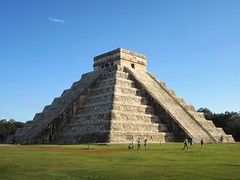
7420113773Chichen ItzaA mayan city that wanted to reduce hostility and arrange a large political structure. Took in captives of war instead of punishing them.5
7420153541Popol VuhA Mayan myth that states gods created humans out of maize and water, which made their flesh and blood.6
7420162625Bloodletting RitualsMayans believed if you spilled blood then you may communicate with ancestors and gods.7
7420172096MochicaGroup of people located in northern Peru who had no writing, made pottery and were killed off due to climate.8
7420188679LapitaEarliest Austronesian migrants to sail into pacific ocean. Had agriculturally based villages and made pottery.9
7435399331EunuchMan who's castrated10
7435399332Zhou DynastyLongest lasting Chinese dynasty that founded the thoughts of Confucianism, Daoism, and legalism11
7435399333Qin DynastyDynasty that unified China12
7435399334Confucianisma belief system based on the ideas of the Chinese thinker Confucius about social ordering13
7435399335Period of Warring StatesLast centuries of Zhou dynasty; divided region14
7435399336Daoism/TaoismChinese philosophy, doing nothing is best, harmony with nature15

AP Literature Vocabulary Set 5 Flashcards

Terms : Hide Images
7145185600envoy(n.) a diplomatic agent; any accredited messenger or representative0
7145186910indolent(adj.) averse to activity, effort, or movement; having a disposition to avoid exertion; slothful1
7145189441censorious(adj.) severely critical, faultfinding, carping2
7145191517venal(adj.) willing to sell one's influence, especially in return for a bribe; open to corrupt influence and especially bribery3
7145193403peremptory(adj.) leaving no opportunity for denial or refusal, imperative; imperious or dictatorial4
7145198133trepidation(n.) tremulous fear, alarm, or agitation; trembling or quivering movement5
7145199988keen(adj.) sharp, piercing; very perceptive or mentally sharp6
7145206420stoic(adj.) impassive; characterized by a calm, austere fortitude befitting the Stoics; indifferent to pleasure or pain7
7145210040implore(v.) to call upon for aid; beseech, beg8
7145212283brevity(n.) shortness of duration; shortness or conciseness of expression9

100 AP Language Challenge List Flashcards

Allegory The device of using character and/or story elements symbolically to represent an abstraction in addition to the literal meaning. In some allegories, for example, an author may intend the characters to personify an abstraction like hope or freedom. The allegorical meaning usually deals with moral truth or a generalization about human existence.
Alliteration The repetition of sounds, especially initial consonant sounds in two or more neighboring words (as in "she sells sea shells"). Although the term is not frequently in the multiple choice section, you can look for alliteration in any essay passage. The repetition can reinforce meaning, unify ideas, supply a musical sound, and/or echo the sense of the passage.
Allusion A direct or indirect reference to something which is presumably commonly known, such as an event, book, myth, place, or work of art. Allusions can be historical, literary, religious, topical, or mythical. There are many more possibilities, and a work may simultaneously use multiple layers of allusion.
Ambiguity The multiple meanings, either intentional or unintentional, of a word, phrase, sentence, or passage.
Analogy A similarity or comparison between two different things or the relationship between them. An analogy can explain something unfamiliar by associating it with or pointing out its similarity to something more familiar. Analogies can also make writing more vivid, imaginative, or intellectually engaging.
Antecedent The word, phrase, or clause referred to by a pronoun. The AP language exam occasionally asks for the antecedent of a given pronoun in a long, complex sentence or in a group of sentences.

Terms : Hide Images
6647902313AllegoryThe device of using character and/or story elements symbolically to represent an abstraction in addition to the literal meaning. In some allegories, for example, an author may intend the characters to personify an abstraction like hope or freedom. The allegorical meaning usually deals with moral truth or a generalization about human existence. A story in which each aspect of the story has a symbolic meaning outside the tale itself.0
6647902314AlliterationThe repetition of sounds, especially initial consonant sounds in two or more neighboring words (as in "she sells sea shells"). Although the term is not frequently in the multiple choice section, you can look for alliteration in any essay passage. The repetition can reinforce meaning, unify ideas, supply a musical sound, and/or echo the sense of the passage.1
6647902315AllusionA direct or indirect reference to something which is presumably commonly known, such as an event, book, myth, place, or work of art. Allusions can be historical, literary, religious, topical, or mythical. There are many more possibilities, and a work may simultaneously use multiple layers of allusion.2
6647902316AmbiguityThe multiple meanings, either intentional or unintentional, of a word, phrase, sentence, or passage.3
6647902317AnalogyA similarity or comparison between two different things or the relationship between them. An analogy can explain something unfamiliar by associating it with or pointing out its similarity to something more familiar. Analogies can also make writing more vivid, imaginative, or intellectually engaging.4
6647902318AntecedentThe word, phrase, or clause referred to by a pronoun. The AP language exam occasionally asks for the antecedent of a given pronoun in a long, complex sentence or in a group of sentences. A question from the 2001 AP test as an example follows: "But it is the grandeur of all truth which can occupy a very high place in human interests that it is never absolutely novel to the meanest of minds; it exists eternally, by way of germ of latent principle, in the lowest as in the highest, needing to be developed but never to be planted."5
6647902319Antithesisthe opposition or contrast of ideas; the direct opposite.6
6647902320AphorismA terse statement of known authorship which expresses a general truth or a moral principle. (If the authorship is unknown, the statement is generally considered to be a folk proverb.) An aphorism can be a memorable summation of the author's point7
6647902321ApostropheA prayer like figure of speech that directly addresses an absent or imaginary person or a personified abstraction, such as liberty or love. It is an address to someone or something that cannot answer. The effect may add familiarity or emotional intensity. William Wordsworth addresses John Milton as he writes, "Milton, thou shouldst be living at this hour: England hath need of thee." Another example is Keats' "Ode to a Grecian Urn," in which Keats addresses the urn itself: rarely on an AP exam, but important when there. ALWAYS Pathos8
6647902322AtmosphereThe emotional nod created by the entirety of a literary work, established partly by the setting and partly by the author's choice of objects that are described. Even such elements as a description of the weather can contribute to the atmosphere. Frequently atmosphere foreshadows events. Perhaps it can create a mood.9
6647902323Caricaturea verbal description, the purpose of which is to exaggerate or distort, for comic effect, a person's distinctive physical features or other characteristics. Example: The pupils of her eyes are small; like a pebble of sand floating atop a can of blue paint.10
6647902324ClauseA grammatical unit that contains both a subject and a verb. An independent, or main, clause expresses a complete thought and can stand alone as a sentence. A dependent, or subordinate clause, cannot stand alone as a sentence and must be accompanied by an independent clause. The point that you want to consider is the question of what or why the author subordinates one element should also become aware of making effective use of subordination in your own writing.11
6647902325Colloquial/ColloquialismThe use of slang or informalities in speech or writing. Not generally acceptable for formal writing, colloquialisms give a work a conversational, familiar tone. Colloquial expressions in writing include local or regional dialect12
6647902326Literary ConceitA fanciful expression, usually in the form of an extended metaphor or surprising analogy between seemingly dissimilar objects Displays intellectual cleverness through unusual comparisons that make good sense13
6647902327ConnotationThe non-literal, associative meaning of a word; the implied, suggested meaning. Connotations may involve ideas, emotions or attitudes14
6647902328DenotationThe strict, literal, dictionary definition of a word, devoid of any emotion, attitude, or color. (Example: the denotation of knife- a utensil for cutting - Connotation - knife - such as knife in the back - anger fear violence betrayal15
6647902329DictionRelated to style, diction refers to the writer's word choices, especially with regard to their correctness, clearness, or effectiveness. FOR AP EXAMSyou should be able to describe the uthors diction and understand how it compliments his purpose (along iwth imagery syntax, literary devices, etc)16
6647902330DidacticFrom the Greek, didactic literally means "teaching." Didactic words have the primary aim of teaching or instructing,especially the teaching of moral or ethical principles.17
6647902331EuphemismFrom the Greek for "good speech," euphemisms are a more agreeable or less offensive substitute for a generally unpleasant word or concept - POLITICALLY CORRECT18
6647902332Extended MetaphorA metaphor developed at great length, occurring frequently in or throughout a work.19
6647902333Figurative LanguageWriting or speech that is not intended to carry literal meaning and is usually meant to be imaginative and vivid20
6647902334Figure of speechA device used to produce figurative language. Many compare dissimilar things. Figures of speech include apotrophe hyperbole irony metaphor oxymoron paradox personification simile syneddoche understatement21
6647902335Generic conventionsThis term describes traditions for each genre. These conventions help to define each genre; for example, and differentiate an essay they differentiate they differentiate an essay and journalistic writing or an autobiography and political writing. On the AP language exam,try to distinguish the unique features of a writer's work from those dictated by convention.22
6647902336GenreThe major category into which a literary work fits. The basic divisions of literature are prose, poetry, and drama.However, genre is a flexible term; within these broad boundaries exist many subdivisions that are often called genresthemselves. For example, prose can be divided into fiction (novels and short stories) or nonfiction (essays, biographies,autobiographies, etc.). Poetry can be divided into lyric, dramatic, narrative, epic, etc. Drama can be divided into tragedy,comedy, melodrama, farce, etc. On the AP language exam, expect the majority of the passages to be from the following genres: autobiography, biography, diaries, criticism, essays, and journalistic, political, scientific, and nature writing. There may be fiction or poetry.23
6647902337HomilyThis term literally means "sermon," but more informally, it can include any serious talk, speech, or lecture involving moral or spiritual advice.24
6647902338HyperboleA figure of speech using deliberate exaggeration or overstatement. (The literal Greek meaning is "overshoot.") Hyperboles often have a comic effect; however, a serious effect is also possible. Often, hyperbole produces irony. The opposite of hyperbole is understatement.25
6647902339ImageryThe sensory details or figurative language used to describe, arouse emotion, or represent abstractions. On a physical level, imagery uses terms related to the five senses: visual, auditory, tactile, gustatory, and olfactory. On a broader and deeper level, however, one image can represent more than one thing. For example, a rose may present visual imagery while also representing the color in a woman's cheeks and/or symbolizing some degree of perfection. An author may use complex imagery while simultaneously employing other figures of speech, especially metaphor and simile. In addition, this term can apply to the total of all the images in a work. On the AP language exam, pay attention to how an author creates imagery and to the effect of this imagery.26
6647902340Inference/inferTo draw a reasonable conclusion from the information presented. When a multiple choice question asks for an inference to be drawn from a passage, the most direct, most reasonable inference is the safest answer choice. If an inference is implausible, it's unlikely to be the correct answer. Note that if the answer choice is directly stated, it is not inferred and it is wrong. You must be careful to note the connotation - negative or positive - of the choices. Adapted from V. Stevenson, Patrick Henry High School, and Abrams' Glossary of Literary Terms27
6647902341Invectivean emotionally violent, verbal denunciation or attack using strong, abusive language. (For example, in Henry IV, Part hill of flesh.")28
6647902342Irony/ironicThe contrast between what is stated explicitly and what is really meant, or the difference between what appears to be and what is actually true. Irony is often used to create poignancy or humor. In general, there are three major types of irony used in language: (1) verbal irony - when the words literally state the opposite of the writer's (or speaker's) meaning (2) situational irony - when events turn out the opposite of what was expected; when what the characters and readers think ought to happen is not what does happen (3) dramatic irony - when facts or events are unknown to a character in a play or piece of fiction but known to the reader, audience, or other characters in the work.29
6647902343Loose sentence/non-periodic sentenceA type of sentence in which the main idea (independent clause) comes first, followed by dependent grammatical units such as phrases and clauses. If a period were placed at the end of the independent clause, the clause would be a complete sentence. A work containing many loose sentences often seems informal, relaxed, or conversational. Generally, loose sentences create loose style. The opposite of a loose sentence is the periodic sentence. Example: I arrived at the San Diego airport after a long, bumpy ride and multiple delays. Could stop at: I arrived at the San Diego airport.30
6647902344MetaphorA figure of speech using implied comparison of seemingly unlike things or the substitution of one for the other, suggesting some similarity. Metaphorical language makes writing more vivid, imaginative, thought provoking, and meaningful.31
6647902345Metonymy(mĕtŏn′ ĭmē) A term from the Greek meaning "changed label" or "substitute name," metonymy is a figure of speech in which the name of one object is substituted for that of another closely associated with it. For example, a news release that claims "the White House declared" rather than "the President declared" is using metonymy; Shakespeare uses it to signify the male and female sexes in As You Like It: "doublet and hose ought to show itself courageous to petticoat." The substituted term generally carries a more potent emotional impact.32
6647902346MoodThe prevailing atmosphere or emotional aura of a work. Setting, tone, and events can affect the mood. Mood is similar to tone and atmosphere.33
6647902347NarrativeThe telling of a story or an account of an event or series of events.34
6647902348onomatopoeiaA figure of speech in which natural sounds are imitated in the sounds of words. Simple examples include such words as buzz, hiss, hum, crack, whinny, and murmur. If you note examples of onomatopoeia in an essay passage, note the effect.35
6647902349OxymoronFrom the Greek for "pointedly foolish," an oxymoron is a figure of speech wherein the author groups apparently contradictory terms to suggest a paradox. Simple examples include "jumbo shrimp" and "cruel kindness." This term does not usually appear in the multiple-choice questions, but there is a chance that you might find it in an essay. Take note of the effect that the author achieves with the use of oxymoron.36
6647902350ParadoxA statement that appears to be self-contradictory or opposed to common sense but upon closer inspection contains some degree of truth or validity. (Think of the beginning of Dickens' Tale of Two Cities: "It was the best of times, it was the worst of times....")37
6647902351ParallelismAlso referred to as parallel construction or parallel structure, this term comes from Greek roots meaning "beside one another." It refers to the grammatical or rhetorical framing of words, phrases, sentences, or paragraphs to give structural similarity. This can involve, but is not limited to, repetition of a grammatical element such as a preposition or verbal times, it was the age of wisdom, it was the age of foolishness, it was the epoch of believe, it was the epoch of incredulity....") The effects of parallelism are numerous, but frequently they act as an organizing force to attract the reader's attention, add emphasis and organization, or simply provide a musical rhythm. Adapted from V. Stevenson, Patrick Henry High School, and Abrams' Glossary of Literary Terms38
6647902352ParodyA work that closely imitates the style or content of another with the specific aim of comic effect and/or ridicule. It exploits peculiarities of an author's expression (propensity to use too many parentheses, certain favorite words, etc.) Well-written parody offers enlightenment about the original, but poorly written parody offers only ineffectual imitation. nuances of the newer work. Occasionally, however, parodies take on a life of their own and don't require knowledge of the original.39
6647902353PedanticAn adjective that describes words, phrases, or general tone that is overly scholarly, academic, or bookish (language that might be described as "show-offy"; using big words for the sake of using big words).40
6647902354Periodic sentenceThe opposite of loose sentence, a sentence that presents its central meaning in a main clause at the end. This independent clause is preceded by a phrase or clause that cannot stand alone. The effect of a periodic sentence is to add emphasis and structural variety. It is also a much stronger sentence than the loose sentence. (Example: After a long, bumpy flight and multiple delays, I arrived at the San Diego airport.)41
6647902355PersonificationA figure of speech in which the author presents or describes concepts, animals, or inanimate objects by endowing them with human attributes or emotions. Personification is used to make these abstractions, animals, or objects appear more vivid to the reader.42
6647902356Point of viewIn literature, the perspective from which a story is told. There are two general divisions of point of view, and many subdivisions within those. (1) first person narrator tells the story with the first person pronoun, "I," and is a character in the story. This narrator can be the protagonist, a secondary character, or an observing character. (2) third person narrator relates the events with the third person pronouns, "he," "she," and "it." There are two main subdivisions to be aware of: a. third person omniscient, in which the narrator, with godlike knowledge, presents the thoughts and actions of any or all characters b. third person limited omniscient, in which the narrator presents the feelings and thoughts of only one character, presenting only the actions of all the remaining characters. In addition, be aware that the term point of view carries an additional meaning. When you are asked to analyze the author's point of view, the appropriate point for you to address is the author's attitude.43
6647902357Proseone of the major divisions of genre, prose refers to fiction and nonfiction, including all its forms. In prose the printer determines the length of the line; in poetry, the poet determines the length of the line.44
6647902358RepetitionThe duplication, either exact or approximate, of any element of language, such as a sound, word, phrase, clause, sentence, or grammatical pattern.45
6647902359RhetoricFrom the Greek for "orator," this term describes the principles governing the art of writing effectively, eloquently, and persuasively.46
6647902360Rhetorical modesThis flexible term describes the variety, the conventions, and the purposes of the major kinds of writing. The four most common rhetorical modes (often referred to as "modes of discourse") are as follows: (1) The purpose of exposition (or expository writing) is to explain and analyze information by presenting an idea, relevant evidence, and appropriate discussion. The AP language exam essay questions are frequently expository topics. (2) The purpose of argumentation is to prove the validity of an idea, or point of view, by presenting sound reasoning, an additional aim of urging some form of action. (3) The purpose of description is to recreate, invent, or visually present a person, place, event or action so that the reader can picture that being described. Sometimes an author engages all five senses in description; good descriptive writing can be sensuous and picturesque. Descriptive writing may be straightforward and objective or highly emotional an subjective. (4) The purpose of narration is to tell a story or narrate an event or series of events. This writing mode frequently uses the tools of descriptive writing. Adapted from V. Stevenson, Patrick Henry High School, and Abrams' Glossary of Literary Terms47
6647902361SarcasmFrom the Greek meaning "to tear flesh," sarcasm involves bitter, caustic language that is meant to hurt or ridicule someone or something. It may use irony as a device, but not all ironic statements are sarcastic (that is, intended to ridicule). When well done, sarcasm can be witty and insightful; when poorly done, it is simply cruel.48
6647902362SatireA work that targets human vices and follies or social institutions and conventions for reform or ridicule. Regardless of whether or not the work aims to reform human behavior, satire is best seen as a style of writing rather than a purpose for writing. It can be recognized by the many devices used effectively by the satirist: irony, wit, parody, caricature, often humorous, is thought provoking and insightful about the human condition. Some modern satirists include Joseph Heller (Catch 22) and Kurt Vonnegut (Cat's Cradle, Player Piano).49
6647902363StyleThe consideration of style has two purposes: (1) An evaluation of the sum of the choices an author makes in blending diction, syntax, figurative language, and other We can analyze and describe an author's personal style and make judgments on how appropriate it is to the author's purpose. Styles can be called flowery, explicit, succinct, rambling, bombastic, commonplace, incisive, laconic, etc. (2) Classification of authors to a group and comparison of an author to similar authors. By means of such classification and comparison, we can see how an author's style reflects and helps to define a historical period, such as the Renaissance or the Victorian period, or a literary movement, such as the romantic, transcendental, or realist movement.50
6647902364Subject complementThe word (with any accompanying phrases) or clause that follows a linking verb and complements, or completes, the subject of the sentence by either (1) renaming it (the predicate nominative) or (2) describing it (the predicate adjective). These are defined below: (1) the predicate nominative - a noun, group of nouns, or noun clause that renames the subject. It, like the predicate adjective, follows a linking verb and is located in the predicate of the sentence. Example: Julia Roberts is a movie star. movie star = predicate nominative, as it renames the subject, Julia Roberts (2) the predicate adjective -- an adjective, a group of adjectives, or adjective clause that follows a linking verb. It is in the predicate of the sentence, and modifies, or describes, the subject. Example: Warren remained optimistic. optimistic = predicate adjective, as it modifies the subject, Warren51
6647902365Subordinate clauseLike all clauses, this word group contains both a subject and a verb (plus any accompanying phrases or modifiers), but unlike the independent clause, the subordinate clause cannot stand alone; it does not express a complete thought. Also called a dependent clause, the subordinate clause depends on a main clause (or independent clause) to complete its meaning. Easily recognized key words and phrases usually begin these clauses. For example: although, because, unless, if, even though, since, as soon as, while, who, when, where, how and that. Example: Yellowstone is a national park in the West that is known for its geysers. underlined phrase = subordinate clause52
6647902366SyllogismFrom the Greek for "reckoning together," a syllogism (or syllogistic reasoning or syllogistic logic) is a deductive system of formal logic that presents two premises (the first one called "major" and the second called "minor") that inevitably lead to a sound conclusion. A frequently cited example proceeds as follows: major premise: All men are mortal. minor premise: Socrates is a man. conclusion: Therefore, Socrates is a mortal. A syllogism's conclusion is valid only if each of the two premises is valid. Syllogisms may also present the specific idea first ("Socrates") and the general second ("all men"). Adapted from V. Stevenson, Patrick Henry High School, and Abrams' Glossary of Literary Terms53
6647902367Symbol/symbolismGenerally, anything that represents itself and stands for something else. Usually a symbol is something concrete -- such as an object, action, character, or scene - that represents something more abstract. However, symbols (1) natural symbols are objects and occurrences from nature to symbolize ideas commonly associated with them (dawn symbolizing hope or a new beginning, a rose symbolizing love, a tree symbolizing knowledge). (2) conventional symbols are those that have been invested with meaning by a group (religious symbols such as a cross or Star of David; national symbols, such as a flag or an eagle; or group symbols, such as a skull and crossbones for pirates or the scale of justice for lawyers). (3) literary symbols are sometimes also conventional in the sense that they are found in a variety of works and are more generally recognized. However, a work's symbols may be more complicated, as is the jungle in Heart of Darkness. On the AP exam, try to determine what abstraction an object is a symbol for and to what extent it is successful in representing that abstraction.54
6647902368SyntaxThe way an author chooses to join words into phrases, clauses, and sentences. Syntax is similar to diction, but you can differentiate them by thinking of syntax as groups of words, while diction refers to the individual words. In the multiplechoice section of the AP exam, expect to be asked some questions about how an author manipulates syntax. In the essay section, you will need to analyze how syntax produces effects.55
6647902369ThemeThe central idea or message of a work, the insight it offers into life. Usually theme is unstated in fictional works, but in nonfiction, the theme may be directly state, especially in expository or argumentative writing.56
6647902370ThesisIn expository writing, the thesis statement is the sentence or group of sentences that directly expresses the author's opinion, purpose, meaning, or position. Expository writing is usually judged by analyzing how accurately, effectively,and thoroughly a writer has proven the thesis.57
6647902371ToneSimilar to mood, tone describes the author's attitude toward his material, the audience, or both. Tone is easier to determine in spoken language than in written language. Considering how a work would sound if it were read aloud can help in identifying an author's tone. Some words describing tone are playful, serious, businesslike, sarcastic, humorous, formal, ornate, sardonic, somber, etc.58
6647902372TransitionA word or phrase that links different ideas. Used especially, although not exclusively, in expository and argumentative writing, transitions effectively signal a shift from one idea to another. A few commonly used transitional words or phrases are furthermore, consequently, nevertheless, for example, in addition, likewise, similarly, on the contrary, etc. More sophisticated writers use more subtle means of transition.59
6647902373Understatementthe ironic minimalizing of fact, understatement presents something as less significant than it is. The effect can frequently be humorous and emphatic. Understatement is the opposite of hyperbole. Example: Jonathan Swift's A Tale of a Tub: "Last week I saw a woman flayed, and you will hardly believe how much it altered her person for the worse."60
6647902374Witin modern usage, intellectually amusing language that surprises and delights. A witty statement is humorous, while suggesting the speaker's verbal power in creating ingenious and perceptive remarks. Wit usually uses terse language that makes a pointed statement. Historically, wit originally meant basic understanding. Its meaning evolved to include speedof understanding, and finally, it grew to mean quick perception including creative fancy and a quick tongue to articulate an answer that demanded the same quick perception.61
6647902375Ad HominemAn attack on the person rather than the issue at hand - a common fallacy - common in elections62
6647902376Chisamus'chi structure' unlike abab / language listed in an abba form: Ask not what your country Can do for you, But what you Can do for your country63
6647902377Malapropisma word humorously misused: Example, he is the AMPLE of her eye... instead of ' he is the APPLE of her eye,64
6647902378Parallelism (parallel syntax)a pattern of language that creates a rhythm of repetition often combined with some other language of repetition. Like a train gaining momentum. Ex: When you are right you cannot be too radical; when you are wrong, you cannot be too conservative.65
6647902379Poisoning the WellDiscrediting a person's claim by presenting unfavorable information (true or false) about the person. Person B attacking Person A before Person A can make his/her claim. Example: 'John, an abusive alcoholic, will now give his argument for the legalization of public drinking'.66
6647902380Slippery SlopeThis is the failure to provide evidence to support a claim that one event will lead to a catastrophic chain of events.67
6647902381straw manWhen a writer argues against a claim that nobody actually holds or is universally considered weak.68
6647902382EthosOne of the fundamental strategies of argumentation identified by Aristotle. Ethos is basically an appeal to credibility. The writer is seeking to convince you that he or she has the background, history, skills, and/or expertise to speak on the issue. Whenever you encounter an ethos argument, always ask yourself is the credibility is substantiated and valid. An essay advocating policy changes on drug rehabilitation programs is more powerful is the person is a former addict or customer in a current rehab program.69
6647902383JuxtapositionMaking on idea more dramatic by placing it next to its opposite. In art it is called chiaroscuro, where a bright white object is placed next to a black object and thus both are made more visible. My goodness is often chastened by my sense of sin, or The Gasoline savings from a hybrid car as compared to a standard car seem excellent until one compares the asking prices of the two vehicles. The juxtaposition of the asking prices shows that the savings are not as significant as they first appear.70
6647902384LogosAn appeal to reason. Logos is one of the fundamental strategies of argumentation identified by Aristotle. It occurs when a writer tries to convince you of the logic of his argument. writers may use inductive argumentation or deductive argumentation, but they clearly have examples and generally rational tome to their language. The problem with logos is that is can appear reasonable until you dissect the argument and then find fallacies that defeat the viability of the argument on the reader's eyes. Of course, that presupposes that the readers is able to identify the fallacies.71
6647902385PathosAn appeal to emotion. This is one of the fundamental strategies of argumentation identified by Aristotle. Typically, pathos arguments may use loaded words to make you feel guilty, lonely, worried, insecure, or confused. The easiest way to remember whats pathos arguments are is to see most advertising as a form of pathos argument.72
6647902386Predicate AdjectiveAm adjective that follows a linking web and modifies the subject of the sentence. The gigantic whirlpool was inky black, and there was no moon.73
6647902387Rhetorical QuestionA question whose answer is assumed, a rhetorical question is designed to force the reader to respond in a predetermined manner and is a significant tool in the study of rhetoric. One of the most basic purposes for rhetorical questions is cheerleading. Rhetorical questions, therefor, propel an argument emotionally. They often look like extensions of a logical argument, but more often than not, they are setting you up to agree with the writer. As with a parallel syntax, rhetorical questions are excellent devices to use in the development of your own essay writing. As graders, we notice when you use them- if you use them to effectively nurture your argument. There are some types of rhetorical questions, but they always follow the same basic pattern: the writer ask herself something and then answers the question in the next sentence or paragraph. Another form is when the question functions as an ironic assault on the writer's adversaries. This kind if rhetorical question can have many uses, and you should notice its function whenever you encounter one in nonfiction prose. Who's afraid of the big bad wolf? Who's afraid of the jolly green giant? Are we? No!!!74
6647902388SmileA critical figure of speech in an argument when what is unknown is compared to something that is known using the word "like," "as," or "than" in order to better perceive its importance. Remember the ripple effect and look for patterns in similes and metaphors in any piece of nonfiction prose. The troll's fishing technique was like a mercenary throwing bombs in the water to catch trout.75
6647902389rhetorical appealthe persuasive devices by which a writer tries to sway an audience's attention and response to any given work. See logos, ethos, and pathos.76
6647902390concrete detailStrictly defined, concrete refers to nouns that name physical objects, -a bridge. a book, or a coat. Concrete nouns are the opposite of abstract nouns (which refer to concepts like freedom and love). However, as used in the essay portion of the AP Language and Composition Exam. this term has a slightly different connotation. The direc tions may read sometbing like this: "Provide concrete details that will convince the reader." This means that your essay should include details in the passage; at times, you' ll be allowed I() provide details from your own life (readings, obser· vations, experiences, and so forth).77
6647902391descriptive detailWhen an essay uses this phrase, look for the writer's sensory description. Descriptive detail appealing to the visual sense is usually tbe most predominant, but don't overlook other sensory details. As usual, after you identify a passage's descriptive details, analyze their effect.78
6647902392devicesThe figures of speecb, syntax, diction, and other stylistic elements that collectively produce a particular artistic effect.79
6647902393narrative devicesThis term describes the tools of the storyteller (also used in nonfiction), such as ordering events so that they build to a climactic moment or withholding infomlation until a crucial or appropriate momcnt when revealing it creates a desired effect On the essay portion of the exam, this lerm may also apply to biographical and autobiographical writing.80
6647902394narrative techniquesThe style of telling the "story," even if the passage is nonfiction. Concentrate on the order of events and on their detail in evaluating a writer's technique.81
6647902395sentence structureWhen an essay question asks you to analyze sentence structure, look at the type of sentences the author uses. Remember that the basic sentence structures are simple, compound, and complex and variations created with sentence combining. Also consider variation or lack of it in sentence length, any unusual devices in sentence construction, such as repetition or inverted word order, and any unusual word or phrase placement with all devices, be prepared to discuss the effect of the sentence structure. For example, a series of short, simple sentences or phrases can produce a feeling of speed and choppiness. which may suit the author's purpose.82
6647902396stylistic devicesAn essay prompt that mentions stylistic devices is asking you to note and analyze all of the elements in language that contribute to style-such as diction, syntax, tone, attitude, figures of speech, connotations, and repetition.83
6647902397Ad hominem argumentAn argument attacking an individual's character rather than his or her position on an issue84
6647902398AnadiplosisFigure of repetition that occurs when the last word or terms in one sentence, clause, or phrase is/are repeated at or very near the beginning of the next sentence, clause, or phrase.85
6647902399AnaphoraFigure of repetition that occurs when the first word or set of words in one sentence, clause, or phrase is/are repeated at or very near the beginning of successive sentences, clauses, or phrases; repetition of the initial words over successive phrases or clauses86
6647902400Anathema(n.) an object of intense dislike; a curse or strong denunciation (often used adjectivally without the article)87
6647902401AnecdoteA brief story that illustrates or makes a point88
6647902402Antimeriathe substitution of one part of speech for another89
6647902403AntimetaboleFigure of emphasis in which the words in one phrase or clause are replicated, exactly or closely, in reverse grammatical order in the next phrase or clause; a chiasmus on the level of words (A-B, B-A). For example, "And so, my fellow Americans, ask not what your country can do for you; ask what you can do for your country" (JFK).90
6647902404Appeal to authorityA fallacy in which a speaker or writer seeks to persuade not by giving evidence but by appealing to the respect people have for a famous person or institution.91
6647902405Argumentationone of the four forms of discourse which uses logic, ethics, and emotional appeals (logos, ethos, pathos) to develop an effective means to convince the reader to think or act in a certain way.92
6647902406AssonanceRepetition of a vowel sound within two or more words in close proximity93
6647902407AsyndetonA series of words separated by commas (with no conjunction), e.g. "I came, I saw, I conquered." The parts of the sentence are emphasized equally; in addition, the use of commas with no intervening conjunction speeds up the flow of the sentence.94
6647902408attitudeA speaker's, author's, or character's disposition toward or opinion of a subject.95
6647902409audienceOne's listener or readership; those to whom a speech or piece of writing is addressed.96
6647902410Balanced sentenceA sentence in which words, phrases, or clauses are set off against each other to emphasize a contrast97
6647902411Begging the questionOften called circular reasoning, __ occurs when the believability of the evidence depends on the believability of the claim.98

Forces- Pre AP Physics Flashcards

Terms : Hide Images
5325540165Net Forcenet force is the remaining force that produces any acceleration of an object when all opposing forces have been canceled out. Opposing forces decrease the effect of acceleration, lowering the net force of acceleration acting on an object reference.com0
5325543514Tensionthe pulling force transmitted axially by means of a string, cable, chain, or similar one-dimensional continuous object, or by each end of a rod, truss member, or similar three-dimensional object reference.com1
5325543525Weightthe force of gravity on the object and may be defined as the mass times the acceleration of gravity, w = mg http://hyperphysics.phy-astr.gsu.edu/hbase/mass.html2
5325548315Frictional Forcea force that is created whenever two surfaces move or try to move across each other. Friction always opposes the motion or attempted motion of one surface across another surface. Friction is dependant on the texture of both surfaces. http://regentsprep.org/REGENTS/PHYSICS/PHYS01/FRICTION/DEFAULT.HTM3
5325548316Normal Forcethe support force exerted upon an object that is in contact with another stable object http://www.physicsclassroom.com/class/newtlaws/Lesson-2/Types-of-Forces4
5325552758Centripetal Forcea force that pulls an object moving in a circular path toward the center of its path http://www.merriam-webster.com/dictionary/centripetal%20force5
5325552759Spring Forcethe force exerted by a compressed or stretched spring upon any object that is attached to it. An object that compresses or stretches a spring is always acted upon by a force that restores the object to its rest or equilibrium position. http://www.physicsclassroom.com/class/newtlaws/Lesson-2/Types-of-Forces6
5325558519Air Resistance Forcethe frictional force air exerts against a moving object. As an object moves, air resistance slows it down. The faster the object's motion, the greater the air resistance exerted against it. http://kids.britannica.com/comptons/article-311830/force7
5325558520Applied Forcea force that is applied to an object by a person or another object. If a person is pushing a desk across the room, then there is an applied force acting upon the object. The applied force is the force exerted on the desk by the person. http://www.physicsclassroom.com/class/newtlaws/Lesson-2/Types-of-Forces8
5325564430Free Body Diagramdiagrams used to show the relative magnitude and direction of all forces acting upon an object in a given situation. A free-body diagram is a special example of the vector diagrams that were discussed in an earlier unit. http://www.physicsclassroom.com/class/newtlaws/Lesson-2/Drawing-Free-Body-Diagrams9
5456175281coefficient of frictionthe ratio between the force necessary to move one surface horizontally over another and the pressure between the two surfaces google.com10
5456189314static frictionthe friction that exists between a stationary object and the surface on which it's resting physicsclassroom.com11
5456202043kinetic frictionthe amount of retarding force between two objects that are moving relative to each other. physicsclassroom.com12

AP World History Explorers Flashcards

Terms : Hide Images
3792438694Leif Erikson-999 -sailed for Norway -first European to set foot on North America (Vinland)0
3792448339Marco Polo-1271-1294 -sailed for Italy -journey on silk road, traded and collected jewels, travels were written down1
3792454574Bartolomeu Dias-1487 -sailed for Portugal -sailed down to Cape of Good Hope "cape of bad storms" and accidentally discovered Cape of Good Hope because of storm2
3792463160Christopher Colombus-1492-1493 -4 voyages -sailed for spain -established first permanent settlement in NA3
3792475444Amerigo Vespucci-1497, 1499, 1501, 1503, 1507 -sailed for Spain/Portugal -found Venezuela, explored Brazil, discovered Rio De Janeiro, America was named after him4
3792505239John Cabot (Giovanni Caboto)-1497 -sailed for England -claimed land in Canada (thought it was Asia), second voyage failed he went MIA, he got glory from King because claiming land helped England rise to power5
3792517420Vasco Da Gama-1498 -sailed for Portugal -first person to make it to India by going around the tip of Africa6
3792525630Vasco De Balboa-1510, 1514 -sailed for Spain -known for establishing establishments in SA -crossed Isthmus of Panama to the Pacific Ocean7
3792543313Juan Ponce De Leon-1493-1521 -sailed for Spain -explored FL, then traveled to new world -1506 discovered Puerto Rico8
3792556638Ferdinand Magellan-1519-1522 -sailed for Spain -led the first circumnavigation of the earth -his crew was eaten by cannibalistic tribes9
3792570709Hernando Cortes-1504, 1519-1521 -Sailed for spain -conquered Aztecs in 1521 and claimed significant portions of Mexico for the Spanish empire10
3792611932Giovanni De Verrazzano-1524, 1528 -sailed for France -found the Bay of NY -crew was eaten by cannibalistic tribes11
3792647143Francisco Pizzarro-1513-1514, 1532 -sailed for Spain -conquered Incans, mayor of Panama -founded Lima, Peru -made lots of $ off of Silver12
3792660607Jasques Cartier-1534 -sailed for France -founded Newfoundland13
3792667923Hernando De Soto-1539-1541 -sailed for Spain -explored much of South East FL, discovers mouth of Mississippi River, got lost and may have come to Pcola14
3792677142Francisco Vasquez De Coronado-1540-1542 -sailed for Spain -first Spaniard to explore north region of Mexico , discovered Grand Canyon15
3792688067Tristan De Luna y Arellano-1559 -sailed for Spain -credited to have America's first settlement- purpose was to establish port16
3792694772Sir Francis Drake-1578 -sailed for England -circumnavigated globe (landed in California) and defeated Spanish army17
3792702524Samuel De Champlain-1603-1615 -sailed for France -established government in Quebec, mapped Great Lakes, founder of New France, established fur trade18
3792711345Zheng He-1405-1433 -sailed for China -only Chinese explorer, went to SE Asia & African coast to establish Chinese presence19

AP Spanish Language + Culture Common Expressions Flashcards

Terms : Hide Images
7172778614al princípioat the beginning0
7172778615a partir debeginning with1
7172778616como punto de partidaas a starting point2
7172778617en primer lugarin the first place3
7172778618en segundo/tercer lugarin the second, third place4
7172778619para empezar/comenzarto begin5
7172778620primerofirst6
7172778621a causa debecause of/due to7
7172778622actualmentecurrently8
7172778623ahora mismoright now9
7172778624al considerarconsidering10
7172778625a mi parecerto me it seems11
7172778626a pesar de tododespite all this12
7172778627claroof course13
7172778628comoas/because14
7172778629de ninguna manerain no way15
7172778630de todos modosanyway16
7172778631en cuanto aregarding/in regard to17
7172778632en la actualidadin actuality18
7172778633en realidadin reality19
7172778634en vista de quein view of/given that/in light of20
7172778635es cierto queit's true that21
7172778636es seguro queit's sure that22
7172778637hace pocorecently23
7172778638hasta el momentoso far24
7172778639hasta la fechaso far/thusfar25
7172778640hay que tomar en cuanto quemust be taken into account26
7172778641hoy díatoday27
7172778642la verdad esthe truth is28
7172778643lo esencial esthe essential thing is29
7172778644lo importante esthe important thing is30
7172778645lo que importa eswhat matters is31
7172778646sin dudawithout a doubt32
7172778647sobre todoabove all/especially33
7172778648ademásadditionally34
7172778649a la misma vezat the same time35
7172778650al mismo tiempoat the same time36
7172778651asimismoalso37
7172778652con respecto awith respect to38
7172778653conforme ain accordance with39
7172778654contestar queanswer to/that40
7172778655de aquí en adelantehenceforth41
7172778656de hechoin fact42
7172778657el caso esthe fact is that43
7172778658el hecho de quethe fact that44
7172778659en otras palabrasin other words45
7172778660entoncesthen/therefore46
7172778661es decir quethat is to say47
7172778662específicamentespecifically48
7172778663igualmenteequally49
7172778664las razones por lasthe reason why50
7172778665mientraswhile/during51
7172778666mientras tantomeanwhile52
7172778667o seathat is,53
7172778668para continuarto continue54
7172778669para ejemplificarto exemplify55
7172778670para ilustrarto illustrate56
7172778671por añadidurain addition57
7172778672por esothat's why58
7172778673por ejemplofor example59
7172778674principalmenteprimarily60
7172778675tambiénalso61
7172778676tampoconeither/nor/either62
7172778677al contrario deon the contrary63
7172778678de la misma manerathe same way64
7172778679en vez deinstead of65
7172778680no obstantehowever/nontheless66
7172778681por otro ladoon the other hand67
7172778682sin embargonevertheless/however68
7172778683a causa de quebecause of69
7172778684al parecerapparently70
7172778685así quethus/so71
7172778686como resultado deas a result of72
7172778687por consiguientetherefore/consequently73
7172778688puesto quesince/given that74
7172778689al fin y al caboin the end, when all is said and done75
7172778690ante todofirst, first of all76
7172778691en conclusiónin conclusion77
7172778692en definitivain conclusion, definitely78
7172778693en resumenin summary79
7172778694finalmentefinally80
7172778695para concluirto conclude81
7172778696por últimolastly82
7172778697por siguienteconsequently, thus83

AP English Literature Terms Flashcards

sources of definitions are The Princeton Review (TPR) and Barron's AP study guides. and class notes that Mr. Enns distributed :)

Terms : Hide Images
6651114438abstractan abbreviated synopsis of a longer work of scholarship or research0
6651114439adagea saying/proverb containing a truth based on experience and often couched in metaphorical language1
6651114440allegorya story in which the narrative/characters carry an underlying symbolic, metaphorical or possibly an ethical meaning2
6651114441alliterationthe repetition of one or more initial consonant in a group of words or lines of poetry or prose. writers use this for ornament or for emphasis3
6651114442allusiona reference to a person, place, or event meant to create an effect or enhance the meaning of an idea4
6651114443ambiguitya vagueness of meaning; a conscious lack of clarity meant to evoke multiple meanings and interpretation5
6651114444anachronisma person, scene, event, or other element in literature that fails to correspond with the time/era in which the work is set6
6651114445analogya comparison that points out similarities between two dissimilar things7
6651114446annotationa brief explanation,summary, or evaluation of a text or work of literature8
6651114447antagonista character or force in a work of literature that, by opposing the protagonist produces tension or conflict9
6651114448antithesisa rhetorical opposition or contrast of ideas by means of a grammatical arrangement of words, clauses, or sentences10
6651114449aphorisma short, pithy statement of a generally accepted truth or sentiment11
6651114450Apollonianin contrast to Dionysian, it refers to the most noble, godlike qualities of human nature and behavior12
6651114451apostrophea locution that addresses a person/personified thing not present13
6651114452archetypean abstract or ideal conception of a type; a perfectly typical example; an original model/form14
6651114453assonancethe repetition of two or more vowel sounds in a group of words or lines in poetry and prose15
6651114454ballada simple narrative verse that tells a story that is sung or recited; a long narrative poem, usually in very regular meter and rhyme, typically has a naive folksy quality16
6651114455barda poet, in olden times, a performer who told heroic stories to musical accompaniment17
6651114456bathosthe use of insincere or overdone sentimentality18
6651114457belle-lettresthe French term for the world of books, criticism, and literature in general19
6651114458bibliographya list of works cited or otherwise relevant to a subject or other work20
6651114459Bildungsromana German word referring to a novel structured as a series of events that take place as the hero travels in quest of a goal21
6651114460blank versepoetry written in iambic pentameter, the primary meter used in English poetry and the works of Shakespeare and Milton. its lines generally do not rhyme22
6651114461bombastinflated, pretentious language used for trivial subjects23
6651114462burlesquea work of literature meant to ridicule a subject; a grotesque imitation; a broad parody and exaggerates it into ridiculousness24
6651114463cacophonygrating, inharmonious sounds25
6651114464caesuraa pause somewhere in the middle of a verse, often (but not always marked by punctuation)26
6651114465canonthe works considered most important in national literature or period; works widely read and studied27
6651114466caricaturea grotesque likeness of striking qualities in persons and things; a portrait that exaggerates a facet of personality28
6651114467carpe diem"seize the day"29
6651114468catharsisa cleansing of the spirit brought about by the pity and terror of a dramatic tragedy30
6651114469classica highly regarded work of literature or other art form that has withstood the test of time, similar to canon31
6651114470classicismderiving from the orderly qualities of ancient Greek and Roman culture; implies formality, objectivity, simplicity and restraint32
6651114471climaxthe high point, or turning point, of a story/play33
6651114472novela tale in which a young protagonist experiences an introduction to adulthood. the character may develop understanding via disillusionment, education, doses of reality, or any other experiences that alter his/her emotional/intellectual maturity. e.g. Invisible Man34
6651114473conceita witty or ingenious thought; a diverting or highly fanciful idea, often stated in figurative language; a startling or unusual metaphor, or a metaphor developed and expanded upon several lines35
6651114474anticlimaxthis occurs when an action produces far smaller results than one had been led to expect, it is frequently comic in effect36
6651114475antiheroa protagonist who is markedly unheroic: morally weak, cowardly, dishonest, or any number of other unsavory qualities37
6651114476asidea speech (usually just a short comment) made by an actor to the audience, as though momentarily stepping outside of the action on stage38
6651114477aspecta trait of characteristic, as in "an aspect of the dew drop"39
6651114478atmospherethe emotional tone or background that surrounds a scene40
6651114479black humorthis is the use of disturbing themes in comedy. e.g. two tramps comically debating over which should commit suicide first, and whether the branches of a tree will support their weight41
6651114480cadencethe beat or rhythm of poetry in a general sense42
6651114481cantois a divider in long poems, much like chapters in a novel43
6651114482coinagea.k.a. neologism, inventing a word44
6651114483colloquialismthis is a word or phrase used in everyday conversational English that isn't a part of accepted "schoolbook" English45
6651114484controlling imagewhen an image dominates and shapes the entire work46
6651114485metaphysical conceita type of conceit that occurs only in metaphysical poetry47
6651114486connotationthe suggest or implied meaning of a word/phrase48
6651114487consonancethe repetition of two or more consonant sounds within a group of words or a line of poetry49
6651114488coupleta pair of lines that end in rhyme50
6651114489heroic couplettwo rhyming lines in iambic pentameter are called this51
6651114490denotationthe literal, dictionary definition of a word52
6651114491denouementthe resolution that occurs at the end of a play or work or fiction53
6651114492deus ex machinain literature, the use of an artificial device or gimmick to solve a problem54
6651114493Dionysianas distinguished from Apollonian, the word refers to sensual, pleasure seeking impulses55
6651114494dictionthe choice of words in oral and written discourse56
6651114495syntaxthe ordering and structuring of the words in a sentence57
6651114496dirgea song for the dead, its tone is typically slow, heavy, and melancholy58
6651114497dissonancethe grating of incompatible sounds59
6651114498doggerelcrude, simplistic verse, often in sing-song rhyme60
6651114499dramatic ironywhen the audience knows something that the characters in the drama do not61
6651114500dramatic monologuewhen a single speaker in literature says something to a silent audience62
6651114501elegya poem or prose selection that laments or meditates on the passing/death of something/someone of value63
6651114502elementsthe basic techniques of each genre of literature. IN SHORT STORY: characters, irony, theme, symbol, plot, setting. IN POETRY: figurative language, symbol, imagery, rhythm, rhyme. IN DRAMA: conflict, characters, climax, conclusion, exposition, rising action, falling action, props. IN NONFICTION: argument, evidence, reason, appeals, fallacies, thesis.64
6651114503ellipsisthree periods (...) indicating the omission of words in a thought or quotation65
6651114504empathya feeling of association or identification with an object/person66
6651114505end stoppeda term that describes a line of poetry that ends with a natural pause often indicated by a mark of punctuation67
6651114506enjambmentthe continuation of a syntactic unit from one line or couplet of a poem to the next with no pause68
6651114507epican extended narrative poem that tells of the adventures and exploits of a hero that is generally larger than life and is often considered a legendary figure69
6651114508mock epica parody form that deals with mundane events and ironically treats them as worthy of epic poetry70
6651114509epitaphlines that commemorate the dead at their burial place. usually a line or handful of lines, often serious or religious, but sometimes witty and even irreverent71
6651114510epigrama concise but ingenious, witty and thoughtful statement72
6651114511euphonywhen sounds blend harmoniously; pleasing, harmonious sounds73
6651114512epithetan adjective or phrase that expresses a striking quality of a person or thing74
6651114513eponymousa term for the title character of a work of literature75
6651114514euphemisma mild or less negative usage for a harsh or blunt term76
6651114515exegesisa detailed analysis or interpretation of a work of literature77
6651114516exposea piece of writing that reveals weaknesses, faults, frailties, or other short comings78
6651114517explicitto say or write something directly and clearly79
6651114518explicationthe interpretation/analysis of a text80
6651114519extended metaphora series of comparisons between two unlike objects that occur over a number of lines81
6651114520fablea short tale often featuring nonhuman character that act as people whose actions enable the author to make observations or draw useful lessons about human behavior. i.e Orwell's "Animal Farm"82
6651114521falling actionthe action in a play or story that occurs after the climax and that leads to the conclusion and often to the resolution of the conflict83
6651114522fantasya story containing unreal, imaginary features84
6651114523farcea comedy that contains an extravagant and nonsensical disregard of seriousness, although it may have a serious, scornful purpose85
6651114524figurative languagein contrast to literal language, this implies meanings. It includes devices such as metaphors, similes, and personification, etc.86
6651114525foila secondary character whose purpose is to highlight the characteristics of a main character, usually by contrast87
6651114526first person narrativea narrative told by a character involved in the story, using first-person pronouns such as "I" and "we"88
6651114527flashbacka return to an earlier time in a story or play in order to clarify present actions or circumstances i.e. Invisible Man89
6651114528foreshadowingan event or statement in a narrative that suggests, in miniature, a larger event that comes later90
6651114529footthe basic rhythmic unit of a line in poetry. it is formed by a combination of two or three syllables, either stressed or unstressed91
6651114530framea structure that provides premise or setting for a narrative92
6651114531free versea kind of poetry without rhymed lines, rhythm or fixed metrical feet93
6651114532genrea term used to describe literary forms, such as novel, play, and essay94
6651114533Gothic novela novel in which supernatural horrors and an atmosphere of unknown terror pervades the action. i.e. "Frankenstein"95
6651114534haranguea forceful sermon, lecture, or tirade96
6651114535hubristhe excessive pride/ambition that leads to the main character's downfall97
6651114536hyperboleexaggeration/deliberate overstatement98
6651114537humanisma belief that emphasizes faith and optimism in human potential and creativity99
6651114538implicitto say or write something that suggests and implies but never says it directly or clearly100
6651114539in medias resLatin for "in the midst of things"; a narrative that starts not at the beginning of events but at some other critical point101
6651114540idylla lyric poem or passage that describes a kind of ideal life or place102
6651114541imagea word or phrase representing that which can be seen, touched, tasted, smelled or felt103
6651114542inversionswitching customary order of elements in a sentence or phrase. when done badly it can give a stilted, artificial look-at-me-I'm-poetry feel to the verse. type of syntax104
6651114543ironya mode of expression in which the intended meaning is the opposite of what is stated, often implying ridicule or light sarcasm105
6651114544invectivea direct verbal assault; a denunciation. i.e. Candide106
6651114545kenninga device employed in Anglo-Saxon poetry in which the name of a thing is replaced by one of its functions/qualities, as in "ring-giver" for king and "wale-road" for ocean107
6651114546lamenta poem of sadness or grief over the death of a loved one or over some other intense loss108
6651114547lampoona satire109
6651114548light versea variety of poetry meant to entertain or amuse, butt sometimes with a satirical thrust110
6651114549loose sentencea sentence that is complete before its end. follows customary word order of English sentences i.e. subject-verb-object111
6651114550periodic sentencea sentence not grammatically complete until it has reached its final phrase; sentence that departs from the usual word order of English sentences by expressing its main thought only at the end112
6651114551lyricpersonal, reflective poetry that reveals the speaker's thoughts and feelings about the subject; the word is used to describe tone, it refers to a sweet, emotional melodiousness113
6651114552melodramaa form of cheesy theater in which the hero is very, very good, the villain mean and rotten, and the heroine oh-so-pure.114
6651114553litotesa form of understatement in which the negative of the contrary is used to achieve emphasis or intensity115
6651114554maxima saying or proverb expressing common wisdom or truth116
6651114555metaphora figure of speech that compares unlike objects117
6651114556metaphysical poetrythe work of poets, particularly those of 17th c., that uses elaborate conceits, is highly intellectual, and expresses the complexities of love and life118
6651114557meterthe pattern of stressed and unstressed syllables found in poetry119
6651114558metonymya figure of speech that uses the name of one thing to represent something else with which it is associated. e.g. "The White House says..."120
6651114559modethe general form, pattern, and manner of expression of a work of literature121
6651114560montagea quick succession of images/impressions used to express an idea122
6651114561moodthe emotional tone in a work of literature123
6651114562nemesisthe protagonist's archenemy or supreme and persistent difficulty124
6651114563objectivitythis treatment of a subject matter is an impersonal/outside view of events125
6651114564subjectivitythis treatment of a subject matter uses the interior/personal view of a single observer and is typically colored with that observer's emotional responses126
6651114565onomatopoeiawords that sound like what they mean127
6651114566morala brief and often simplistic lesson that a reader may infer from a work of literature128
6651114567motifa phrase, idea, event that through repetition serves to unify or convey a theme in a work of literature.129
6651114568museone of the ancient Greek goddesses presiding over the arts. the imaginary source of inspiration for an artist or writer130
6651114569mythan imaginary story that has become accepted part of the cultural or religious tradition of a group/society. often used to explain natural phenomena.131
6651114570narrativea form of verse or prose that tells a story132
6651114571naturalisma term often used as a synonym for "realism"; also a view of experiences that is generally characterized as bleak and pessimistic133
6651114572non sequitura statement or idea that fails to follow logically from the one before134
6651114573novel of mannersa novel focusing on and describing the social customs and habits of a particular social group135
6651114574odea lyric poem usually marked by serious, respectful and exalted feelings toward the subject.136
6651114575omniscient narratora narrator with unlimited awareness, understanding, and insight of characters, setting, background, and all other elements of the story137
6651114576oxymorona phrase composed of opposites; a contradiction. juxtaposition of contradictory element to create a paradoxical effect138
6651114577oppositionone of the most useful concepts in analyzing literature. it means that you have a pair of elements that contrast sharply.139
6651114578ottava rimaan eight-line rhyming stanza of a poem140
6651114579parablelike a fable or an allegory, it's a story that instructs; a story consisting of events from which a moral or spiritual truth may be derived141
6651114580paradoxa statement that seems self-contradictory yet true142
6651114581parallelismrepeated syntactical similarities used for effect143
6651114582parodyan imitation of a work meant to ridicule its style and subject144
6651114583paraphrasea version of a text put into simpler, everyday, words145
6651114584pastorala work of literature dealing with rural life146
6651114585pathetic fallacyfaulty reasoning that inappropriately ascribes human feelings to nature or nonhuman objects147
6651114586pathosthat element in literature that stimulates pity or sorrow148
6651114587pentametera verse with five poetic feet per line149
6651114588personathe role/facade that a character assumes or depicts to a reader, viewer, or the world at large; the narrator in a non-first-person novel150
6651114589personificationgiving an inanimate object human like qualities or form151
6651114590plotthe interrelationship among the events in a story, including exposition, rising action, climax, falling action and resolution152
6651114591picaresque novelan episodic novel about a roguelike wanderer who lives off his wits. e.g. "Don Quixote", "Moll Flanders"153
6651114592plainta poem or speech expressing sorrow154
6651114593point of viewthe perspective from which the action of a novel in presented.155
6651114594omniscient narrator3rd person narrator who sees like God into each character's mind and understands all the action going on.156
6651114595limited omniscient narrator3rd person narrator who generally reports only what one character (usually the main) sees, and who only reports the thoughts of that one privileged character.157
6651114596objective narrator3rd person narr. who only reports on what would be visible to a camera, doesn't know what the character is thinking unless the character speaks of it.158
6651114597first person narratorthis is a narrator who is a character in the story and tells the tale from his/her POV. when the narrator is crazy, a liar, very young, or for some reason not entirely credible, the narrator is "unreliable"159
6651114598prosodythe grammar of meter and rhythm in poetry160
6651114599protagonistthe main character in a work of literature161
6651114600preludean introductory poem to a longer work of verse162
6651114601punthe usually humorous use of a word in such a way to suggest two or more meanings163
6651114602pseudonymalso called "pen name", a false name or alias used by writers. i.e Mark Twain (Samuel Clemens) George Eliot (Mary Ann Evans) George Orwell (Eric Blair)164
6651114603quatriana four-line poem or a four-line unit of a longer poem165
6651114604refraina line or set of lines repeated several times over the course of a poem166
6651114605requiema song of prayer for the dead167
6651114606realismthe depiction of people, things, and events as they really are without idealization or exaggeration for effect168
6651114607rhetoricthe language of a work and its style; words, often highly emotional, used to convince or sway an audience169
6651114608rhetorical questiona question that suggests an answer. in theory, the effect is that it causes the listener to feel they have come up with the answer themselves170
6651114609rhapsodyan intensely passionate verse or section of verse, usually of love or praise171
6651114610rhymethe repetition of similar sounds at regular intervals, used mostly in poetry172
6651114611rhyme schemethe patterns of rhymes within a given poem i.e. abba173
6651114612rhythmthe pattern of stressed and unstressed syllables that make up a line of poetry. similar to meter174
6651114613romancean extended narrative about improbable events and extraordinary people in exotic places175
6651114614sarcasma sharp, caustic expression or remark; a bitter jibe or taunt176
6651114615satirea literary style used to poke fun at, attack or ridicule an idea, vice, or foible, often for the purpose of inducing change. great subjects for this include hypocrisy, vanity and greed, especially if those characteristics have become institutionalized in society177
6651114616similefigurative comparison using the words "like" or "as"178
6651114617settingthe total environment for the action in a novel/play. it includes time, place, historical milieu, and social, political and even spiritual circumstances179
6651114618sentimentala term that describes characters' excessive emotional response to experience; also nauseatingly nostalgic and mawkish180
6651114619sentimenta synonym for "view" or "feeling"; also refined and tender emotion in literature181
6651114620scansionthe act of determining the meter of a poetic line.182
6651114621sonneta popular form of verse consisting of fourteen lines and a prescribed rhyme scheme. two types: Shakespearean and Petrarchan183
6651114622soliloquya speech spoken by a character alone on stage. meant to convey the impression that the audience is listening to the character's THOUGHTS. unlike an aside, it is not meant to imply that the actor acknowledges the audience's presence184
6651114623stanzaa group of lines in verse, roughly analogous in function to the paragraph in prose; a group of two or more lines in poetry combined according to subject matter, rhyme, or some other plan185
6651114624stream of consciousnessa style of writing in which the author tries to reproduce the random flow of thoughts in the human mind, e.g. Ernest Hemingway186
6651114625stock charactersstandard or cliched character types: the drunk, the miser, the foolish girl, etc.187
6651114626suggestto imply, infer indicate. goes along with the concept of implicit188
6651114627stylethe manner in which an author uses and arranges words, shapes ideas, forms sentences and creates a structure to convey ideas189
6651114628subplota subordinate or minor collection of events in a novel or play, usually connected to the main plot190
6651114629subtextthe implied meaning that underlies the main meaning of a work of literature191
6651114630summarya simple retelling of what you've just read. what you DON'T want to do in the Open Essay section :)192
6651114631symbolisma device in literature where an object represents an idea193
6651114632synecdochea figure of speech in which a part signifies the whole or the whole signifies the part194
6651114633themethe main idea or meaning, often an abstract idea upon which a work of literature is built195
6651114634thesisthe main position of an argument. the central contention that will be supported196
6651114635tonethe author's attitude toward the subject being written about. it's the characteristic emotion that pervades a work or part of a work197
6651114636tragic flawin a tragedy, this is the weakness of a character in an otherwise good individual that ultimately leads to his demise198
6651114637tragedya form of literature in which the hero is destroyed by some character flaw and a set of forces that cause the hero considerable anguish, or even death199
6651114638travestya grotesque parody200
6651114639truisma way-too-obvious truth201
6651114640utopiaan idealized place. imaginary communities in which people are able to live in happiness, prosperity and peace. Sir Thomas More came up with this idea.202
6651114641verbal ironya discrepancy between the true meaning of a situation and the literal meaning of the written or spoken words203
6651114642versea synonym for poetry. also a group of lines in a song or poem; also a single line of poetry204
6651114643verisimilitudesimilar to the truth; the quality of realism in a work that persuades readers that they are getting a vision of life as it is205
6651114644versificationthe structural form of a line of verse as revealed by the number of feet it contains. i.e. monometer = 1 foot; tetrameter = 4 feet; pentameter = 5 feet, etc.206
6651114645villanellea French verse form calculated to appear simple and spontaneous but consisting of 19 lines and a prescribed pattern of rhymes207
6651114646voicethe real or assumed personality used by a writer or speaker. a verb is in the active voice when it expresses an action performed by its subject. a verb is in the passive voice when it expresses an action performed upon its subject or when the subject is the result of the action. Active: The crew raked the leaves. Passive: The leaves were raked by the crew.208
6651114647witthe quickness of intellect and the power and talent for saying brilliant things that surprise and delight by their unexpectedness; the power to comment subtly and pointedly on the foibles of the passing scene209
6651114648zeugmathe use of a word to modify two or more words, but used for different meanings. "He close the door and his heart on his lost love."210
6651114649anastropheinversion of the natural or usual word order211
6651114650parenthesisinsertion of some verbal unit in a position that interrupts the normal syntactical flow of the sentence212
6651114651appositionplacing side by side two coordinate elements, the second of which serves as an explanation or modification of the first. "The mountain was the earth, her home."213
6651114652ellipsisdeliberate omission of a word or words which are readily implied by context214
6651114653asyndetondeliberate omission of conjunctions between a series of related clauses. used to produce a hurried rhythm in the sentence.215
6651114654polysyndetonthe deliberate use of many conjunctions. its effect is to slow down the rhythm of the sentence216
6651114655anaphorarepetition of the same words or group of words at the beginning of successive clauses. e.g. "I have a dream..."217
6651114656epistropherepetition of the same word or group of words at the ends of successive clauses "When we first came we were very many and you were very few. Now you are many and we are getting very few."218
6651114657epanalepsisrepetition at the end of a clause of the word that occurred at the beginning of the clause. "Blood hat bought blood, and blows have answer'd blows"219
6651114658anadiplosisrepetition of the last word of one clause at the beginning of the following clause. "The crime was common, common be the pain."220
6651114659climaxthe arrangement of words, phrases, or clauses in an order of importance221
6651114660antimetabolerepetition of words, in successive clauses, in reverse grammatical order. "Ask not what your country can do for you; ask what you can do for your country."222
6651114661chiasmusreversal of grammatical structures in successive phrases or clauses. "Exalts his enemies, his friends destroys."223
6651114662polyptotonrepetition of words derived from the same root. "But in this desert country they may see the land being rendered USELESS by OVERUSE."224
6651114663antanaclasisrepetition of a word in two different senses. "Your argument is sound, nothing but sound."225
6651114664paronomasiause of words alike in sound but different in meaning. "ask for me tomorrow and you will find me a GRAVE man."226
6651114665syllepsisthe use of a word understood differently in relation to two or more other words, which it modifies/governs. "The ink, like our pig, keeps running out of the pen."227
6651114666anthimeriathe substitution of one part of speech for another "I'll UNHAIR they head."228
6651114667periphrasissubstitution of a descriptive word or phrase for a proper name or of a proper name for a quality associated with the name. "They do not escape JIM CROW; they merely encounter another, not less deadly variety."229
6651114668autobiographyan account of a person's own life230
6651114669dialecta way of speaking that is characteristic of a particular region/group of people231
6651114670epiphanyin a literary work, a moment of sudden insight/revelation that a character experiences232
6651114671essaya short piece of non-fiction prose that examines a single subject from a limited POV233
6651114672suspensethe uncertainty/anxiety we feel about what is going to happen next in a story234

Pages

Subscribe to CourseNotes RSS

Need Help?

We hope your visit has been a productive one. If you're having any problems, or would like to give some feedback, we'd love to hear from you.

For general help, questions, and suggestions, try our dedicated support forums.

If you need to contact the Course-Notes.Org web experience team, please use our contact form.

Need Notes?

While we strive to provide the most comprehensive notes for as many high school textbooks as possible, there are certainly going to be some that we miss. Drop us a note and let us know which textbooks you need. Be sure to include which edition of the textbook you are using! If we see enough demand, we'll do whatever we can to get those notes up on the site for you!