

AP Language Flashcards
Terms : Hide Images
| 5929152642 | Asyndeton | The omission of conjunctions between related clauses (I came, i saw, i conquered) | 0 | |
| 5929170198 | Polysyndeton | Use of many conjunctions in a sentence or clause (We lived and laughed and loved and left) | 1 | |
| 5929179041 | Antithesis | Juxtaposition of contrasting words or ideas often in parallel structure. (Place your virtues on a pedestal; put your vices under a rock) | 2 | |
| 5929201553 | Cataloguing | Listing | 3 | |
| 6076368963 | Anaphora | Repetition of words or a group of words at the beginning of successive clauses. | 4 | |
| 6076408406 | Mesodiplosis | Repetition of words in the middle of successive clauses | 5 | |
| 6076448215 | Epistrophe | Repetition of words in the end of successive clauses | 6 | |
| 6477322656 | Anadiplosis | Repetition of the last word or clause of one clause at the beginning of the following clause. (I am Sam, Sam I am) | 7 | |
| 6477346504 | Antimetabole | Repetition of words in successive classes in reverse grammatical order (Ask not what your country can do for you, ask what you can do for your country.) | 8 | |
| 6477369413 | Anthimeria | One part of speech - for example, a noun - substituting for another - for example, a verb (We facetimed each other) | 9 |
AP Literature Flashcards
Terms : Hide Images
| 4147566967 | Allusion | A reference to a person, place or event meant to create an effect or enhance the meaning of an idea | 0 | |
| 4386153754 | Allegory | A story in which the narrative or characters carry an underlying symbolic, metaphorical or possibly an ethical meaning | 1 | |
| 4386153755 | Alliteration | The repetition of one or more initial consonants in a group of words or lines of poetry or prose | 2 | |
| 4386153756 | Ambiguity | A vagueness of meaning; a conscious lack of clarity meant to evoke multiple meanings and interpretation | 3 | |
| 4386153758 | Analogy | A comparison that points out similarities between two dissimilar things | 4 | |
| 4386153761 | Antithesis | A rhetorical opposition or contrast of ideas by means of a grammatical arrangement of words, clauses or sentences | 5 | |
| 4386153764 | Archetype | An abstract or ideal conception of a type; a perfectly typical example; an original or form | 6 | |
| 4386153765 | Assonance | The repetition of two or more vowel sounds in a group of words or lines in poetry and prose | 7 | |
| 4147566969 | Ballad | A simple narrative verse that tells a story that is sung and recited | 8 | |
| 4147566971 | Bathos | The use of insincere or overdone sentimentally | 9 | |
| 4147566972 | Bibliography | A list of works cited or otherwise relevant to a subject or other work | 10 | |
| 4147566974 | Blank verse | Poetry written in iambic pentameter, the primary meter used in English poetry and the works of Shakespeare and Milton | 11 | |
| 4202077009 | End rhyme | The repetition of identical sounds at the end of successive lines | 12 | |
| 4202077018 | Classic | A highly regarded work of literature or other art form that had withstood the test of time | 13 | |
| 4202204133 | Climax | The high point, or turning point, of a story or play. | 14 | |
| 4212997884 | Coming of age story/ novel | A tale in which a young protagonist experiences an introduction to adulthood | 15 | |
| 4212997886 | Connotation | The suggested or implied meaning of a word or phrase | 16 | |
| 4212997887 | Consonance | The repetition of two or more consonant sounds in a grounding words or a line of poetry | 17 | |
| 4212997889 | Denotation | The dictionary definition of a word | 18 | |
| 4213053609 | Dénouement | The resolution that occurs at the end of a play or work of fiction | 19 | |
| 4213144275 | Diction | The choice of words in speech and writing | 20 | |
| 4213269392 | Dramatic irony | A circumstance in which the audience or reader knows more about a situation than a character | 21 | |
| 4213269393 | Elegy | A poem or prose selection that laments or mediates on the passing or death of something or someone of value | 22 | |
| 4214485957 | Empathy | A feeling of association or identification with an object or person | 23 | |
| 4214485960 | Epic | An extended narrative poem that tells of the adventures and exploits of a hero that is generally larger than life and is often considered a legendary figure | 24 | |
| 4214485961 | Epigram | A concise but ingenious, witty, and thoughtful statement | 25 | |
| 4214591896 | Eponymous | A term for the title character of a work of literature | 26 | |
| 4214591899 | Exposition | The background and events that read to the presentation of the main idea or purpose of a work of literature | 27 | |
| 4214607347 | Fable | A short take often featuring nonhuman characters that act as people whose actions enable the author to make observations or draw useful lessons from human behavior | 28 | |
| 4214873325 | Fantasy | A story containing unreal, imaginary features | 29 | |
| 4214938791 | Figure of speech, figurative language | In contrast to literal languages, this implies meanings. Includes metaphors, similes, and personification among many others | 30 | |
| 4214938792 | First person narrative | A narrative told by a character involved in a story idiot first person pronouns such as I and we | 31 | |
| 4215038757 | Flashback | A return to an earlier time in a story or play in order to clarify present action or circumstances | 32 | |
| 4215038758 | Foil | A minor character whose personality or attitude contrasts with that of the main character | 33 | |
| 4215038760 | Foreshadowing | Providing hints of things to come in a story or play | 34 | |
| 4215038761 | Frame | A structure that provides premise or setting for a narrative | 35 | |
| 4215038762 | Free verse | A kind of poetry without rhymed lines , rhythm, or fixed mete rival feet | 36 | |
| 4215038763 | Genre | A term used to describe literary forms | 37 | |
| 4386153770 | Hyperbole | Overstatement; gross exaggeration for rhetorical effect | 38 | |
| 4386153772 | Image | A word or phrase representing that which can be seen, touched, tasted, smelled, or felt | 39 | |
| 4386153774 | Indirect quotation | A rendering of a quotation in which actual words are not stated but only approximated or paraphrased | 40 | |
| 4386153775 | Irony | A mode of expression in which the intended meaning is the opposite of what is stated, often implying ridicule or light sarcasm; a state of affairs or events that is the reverse of what might have been expected | 41 | |
| 4386153780 | Loose sentence | A sentence that follows the customary word order of English sentences | 42 | |
| 4386153781 | Lyric poetry | Personal reflective poetry that reveals the speakers thoughts and feelings about the subject | 43 | |
| 4386153783 | Melodrama | A literary form in which events are exaggerated in order to create an extreme emotional response | 44 | |
| 4386153784 | Metaphor | A figure of speech that compares unlike objects | 45 | |
| 4386153786 | Meter | The pattern of stressed and unstressed syllables found in poetry | 46 | |
| 4386153792 | Mood | The emotional tone in a work of literature evoked through the authors diction, choice of details, themes, settings, events and more | 47 | |
| 4386153793 | Moral | A brief and often simplistic lesson that a reader may infer from a work of literature | 48 | |
| 4411599344 | Myth | An imaginary story that has become an accepted part of the cultural or religious tradition of a group or socieyy | 49 | |
| 4411599345 | Narrative | A form of verse or prose that tells a story, often with a beginning, middle and end | 50 | |
| 4411599346 | Ode | A lyric poem usually marked by serious, respectful and exalted feelings toward the subject | 51 | |
| 4411599347 | Omniscient narrator | A narrator with unlimited awareness, understanding and insight of characters, setting, background and all other elements of the sykry | 52 | |
| 4411599348 | Onomatopeia | The use of words whose sounds suggest meaning | 53 | |
| 4411599349 | Oxymoron | A term consisting of contradictory elements juxtaposed to create a paradoxical effect | 54 | |
| 4411599350 | Paradox | A statement that seems self contradictory but is nevertheless true | 55 | |
| 4411599351 | Paraphrase | A version of text put into simple everyday words | 56 | |
| 4411599352 | Periodic sentence | A sentence that departs from the usually word order of English sentences by expressing its main thought only at the end | 57 | |
| 4411599353 | Personification | A figure of speech in which objects and animals are given human characterisyics | 58 | |
| 4411599354 | Plot | The interrelationship among the events in a story | 59 | |
| 4411599355 | Point of view | The relation in which a narrator of speaker stands to the story or subject matter of a poem | 60 | |
| 4411599356 | Protagonist | Main character in a work of literature | 61 | |
| 4411599357 | Pun | A humorous play on words using similar sounding or identical words to suggest different meanings | 62 | |
| 4411599358 | Realism | The depiction of people, things, and events as they really are without idealization or exaggeration for effect | 63 | |
| 4411599359 | Rhetoric | The language of a work and it style; words, often highly emotional, used to convince or sway an audience | 64 | |
| 4411599360 | Rhetorical question | A question that has the expected answer built in so that it either requires no response or the response is self evident | 65 | |
| 4411599361 | Rhetorical stance | Language that conveys a speakers attitudes or opinion with regard to a particular subjecy | 66 | |
| 4411599362 | Rhyme | The repetition of similar sounds at regular intervals, used mostly in poetry | 67 | |
| 4411599363 | Rhyme scheme | The pattern of rhymes within a given poem | 68 | |
| 4411599364 | Rhythm | The pattern of stressed and unstressed syllables that make up a line of poetry | 69 | |
| 4411599365 | Satire | A literary style used to poke fun at , attack or ridicule an idea vice or foible often for purpose of inducing change | 70 | |
| 4411599366 | Setting | The total environment for the action in a novel or play | 71 | |
| 4411599367 | Simile | A figurative comparison using the words like or as | 72 | |
| 4411599368 | Sonnet | A popular form of verse consisting of fourteen lines and a prescribed rhyme scheme | 73 | |
| 4411599369 | Stanza | A group of two or more lines in poetry combined according to subject matter, rhyme or some other plan | 74 | |
| 4411599370 | Style | The manner in which an author uses and arranges words, shapes ideas, forms sentences and creates a structure to convey ideas | 75 | |
| 4411599371 | Subplot | A subordinate or minor collection of events Ina novel or play, usually connected to the main plot | 76 | |
| 4411599372 | Symbolism | The use of one object to evoke ideas and associations not literally part of original object | 77 | |
| 4411599373 | Syntax | The arrangement of the words in a sentence | 78 | |
| 4411599374 | Theme | The main idea or Meaning, often an abstract idea upon which a work of literature is built | 79 | |
| 4411599375 | Tone | The authors attitude toward the subject being written about | 80 | |
| 4411599376 | Tragedy | A form of Literature in which the hero is destroyed by some character flaw and a set of force that cause th hero considerable anguish | 81 | |
| 4411599377 | Verse | A synonym for poetry | 82 | |
| 4411599378 | Voice | The real or assumed personality used by a writer or speaker | 83 | |
| 4386376800 | Myth | An imaginary story that has become an accepted part of the cultural or religious tradition of a group or socieyy | 84 | |
| 4386376801 | Narrative | A form of verse or prose that tells a story, often with a beginning, middle and end | 85 | |
| 4386376802 | Ode | A lyric poem usually marked by serious, respectful and exalted feelings toward the subject | 86 | |
| 4386376803 | Omniscient narrator | A narrator with unlimited awareness, understanding and insight of characters, setting, background and all other elements of the sykry | 87 | |
| 4386376804 | Onomatopeia | The use of words whose sounds suggest meaning | 88 | |
| 4386376805 | Oxymoron | A term consisting of contradictory elements juxtaposed to create a paradoxical effect | 89 | |
| 4386376806 | Paradox | A statement that seems self contradictory but is nevertheless true | 90 | |
| 4386376807 | Paraphrase | A version of text put into simple everyday words | 91 | |
| 4386376808 | Periodic sentence | A sentence that departs from the usually word order of English sentences by expressing its main thought only at the end | 92 | |
| 4386376809 | Personification | A figure of speech in which objects and animals are given human characterisyics | 93 | |
| 4386376810 | Plot | The interrelationship among the events in a story | 94 | |
| 4386376811 | Point of view | The relation in which a narrator of speaker stands to the story or subject matter of a poem | 95 | |
| 4386376812 | Protagonist | Main character in a work of literature | 96 | |
| 4386376813 | Pun | A humorous play on words using similar sounding or identical words to suggest different meanings | 97 | |
| 4386376814 | Realism | The depiction of people, things, and events as they really are without idealization or exaggeration for effect | 98 | |
| 4386376815 | Rhetoric | The language of a work and it style; words, often highly emotional, used to convince or sway an audience | 99 | |
| 4386376816 | Rhetorical question | A question that has the expected answer built in so that it either requires no response or the response is self evident | 100 | |
| 4386376817 | Rhetorical stance | Language that conveys a speakers attitudes or opinion with regard to a particular subjecy | 101 | |
| 4386376818 | Rhyme | The repetition of similar sounds at regular intervals, used mostly in poetry | 102 | |
| 4386376819 | Rhyme scheme | The pattern of rhymes within a given poem | 103 | |
| 4386376820 | Rhythm | The pattern of stressed and unstressed syllables that make up a line of poetry | 104 | |
| 4386376821 | Satire | A literary style used to poke fun at , attack or ridicule an idea vice or foible often for purpose of inducing change | 105 | |
| 4386376822 | Setting | The total environment for the action in a novel or play | 106 | |
| 4386376823 | Simile | A figurative comparison using the words like or as | 107 | |
| 4386376824 | Sonnet | A popular form of verse consisting of fourteen lines and a prescribed rhyme scheme | 108 | |
| 4386376825 | Stanza | A group of two or more lines in poetry combined according to subject matter, rhyme or some other plan | 109 | |
| 4386376826 | Style | The manner in which an author uses and arranges words, shapes ideas, forms sentences and creates a structure to convey ideas | 110 | |
| 4386376827 | Subplot | A subordinate or minor collection of events Ina novel or play, usually connected to the main plot | 111 | |
| 4386376828 | Symbolism | The use of one object to evoke ideas and associations not literally part of original object | 112 | |
| 4386376829 | Syntax | The arrangement of the words in a sentence | 113 | |
| 4386376830 | Theme | The main idea or Meaning, often an abstract idea upon which a work of literature is built | 114 | |
| 4386376831 | Tone | The authors attitude toward the subject being written about | 115 | |
| 4386376832 | Tragedy | A form of Literature in which the hero is destroyed by some character flaw and a set of force that cause th hero considerable anguish | 116 | |
| 4386376833 | Verse | A synonym for poetry | 117 | |
| 4386376834 | Voice | The real or assumed personality used by a writer or speaker | 118 |
AP language vocabulary set I Flashcards
Terms : Hide Images
| 2455143273 | Irony | There are three types: 1. Verbal: the use of words to mean something different than what the person actually means or says they mean. 2. Situational: the difference between what is expected to happen and actuality. 3. Dramatic: when the audience is more aware of what is happening than the characters. | 0 | |
| 2455143274 | Syntax | The arrangement of words and phrases to create well-formed sentences in a language. | 1 | |
| 2455143275 | Anecdote | 1. A short and amusing or interesting story about a real incident or person. 2. An account regarded as unreliable or hearsay. | 2 | |
| 2455143276 | Impressionistic | Involving general feelings or thoughts rather than specific knowledge or facts. | 3 | |
| 2455143277 | Moralistic | Having or showing strong opinions about what is right behavior and what is wrong behavior. | 4 | |
| 2455143278 | Flourish | A dramatic or fancy way of doing something. | 5 | |
| 2455143279 | Proposition | 1. The point to be discussed or maintained in argument usually stated in sentence form near the outset. 2. An expression in language or signs of something that can be believed, doubted, or denied or is either true or false. | 6 | |
| 2455143280 | Metaphor | A word or phrase for one thing that is used to refer to another thing in order to show or suggest that they are similar. | 7 | |
| 2455143281 | Simile | A figure of speech in which two unlike things are explicitly compared ("like"/"as"). | 8 | |
| 2455143282 | Analogy | A comparison between two things, typically on the basis of their structure and for the purpose of explanation or clarification. | 9 | |
| 2455143283 | Paradox | A statement or proposition that, despite sound (or apparently sound) reasoning from acceptable premises, leads to a conclusion that seems senseless, logically unacceptable, or self-contradictory. | 10 | |
| 2455143284 | Satire | The use of humor, irony, exaggeration, or ridicule to expose and criticize people's stupidity or vices. | 11 | |
| 2455143285 | Personification | The attribution of human nature or character to animals, inanimate objects, or abstract notions, especially as a rhetorical figure. | 12 | |
| 2455143286 | Contrast | The state of being strikingly different from something else, typically something in juxtaposition or close association. | 13 | |
| 2455143287 | Qualify | Make (a statement or assertion) less absolute; add reservations to. | 14 | |
| 2455143288 | Syllogism | An instance of a form of reasoning in which a conclusion is drawn (whether validly or not) from two given or assumed propositions (premises), each of which shares a term with the conclusion, and shares a common or middle term not present in the conclusion (e.g., "all dogs are animals; all animals have four legs; therefore all dogs have four legs"). | 15 | |
| 2455143289 | Direct quotation | Report of the exact words of an author or speaker. | 16 | |
| 2455143290 | Summary | A brief statement or account of the main points of something. | 17 | |
| 2455143291 | Footnote | A piece of information printed at the bottom of the page. | 18 | |
| 2455143292 | Generalization | A general statement or concept obtained by inference from specific cases. | 19 | |
| 2455143293 | Empirical | Based on, concerned with, or verifiable by observation or experience rather than theory or pure logic. | 20 | |
| 2455143294 | Deduction | The inference of particular instances by reference to a general law or principle. | 21 | |
| 2455143295 | Conjecture | An opinion or conclusion formed on the basis of incomplete information. | 22 | |
| 2455143296 | Allusion | An expression designed to call something to mind without mentioning it explicitly; an indirect or passing reference. | 23 | |
| 2455143297 | Symbol | Something used for or regarded as representing something else; a material object representing something, often something immaterial; emblem, token, or sign. | 24 | |
| 2455143298 | Aesthetic | 1. Concerned with beauty or the appreciation of beauty. 2. A set of principles underlying and guiding the work of a particular artist of artistic movement. | 25 | |
| 2455143299 | Treatise | A systematic exposition or argument in writing including a methodical discussion of the facts and principles involved and conclusions reached. | 26 | |
| 2455143300 | Fallacy | A failure in reasoning that renders an argument invalid. | 27 | |
| 2455143301 | Thesis | A proposition stated or put forward for consideration, especially one to be discussed and proved or to be maintained against objections. | 28 | |
| 2455143302 | Antithesis | A person or thing that is the direct opposite of someone or something else. | 29 |
AP English Language and Comp Tone Words Set 2 Flashcards
Terms : Hide Images
| 5897281061 | ludicrous | adj. ridiculous, laughable, outlandish, silly |  | 0 |
| 5897295429 | sardonic | adj. scornfully or cynically mocking; sarcastic; disdainfully or skeptically humorous |  | 1 |
| 5897306120 | satiric | adj. characterized by satire; characterized by use of irony, sarcasm, ridicule, or the like, in exposing, denouncing, or deriding vice, folly, etc. |  | 2 |
| 5897336048 | wry | adj. cleverly and often ironically or grimly humorous; bitterly or disdainfully ironic or amusing |  | 3 |
| 5897352050 | indignant | adj. feeling or showing anger because of something unjust or unworthy |  | 4 |
| 5897412898 | inflammatory | adj. tending to arouse anger, hostility, passion; tending to excite political disorder or insurrection |  | 5 |
| 5897486220 | vexed | adj. irritated, annoyed; distressed |  | 6 |
| 5897501962 | euphoric | adj. experiencing or marked by overwhelming usually pleasurable emotion; intensely happy or confident |  | 7 |
| 5897515092 | whimsical | adj. unpredictable; prone to sudden illogical changes of mind, ideas, or actions; given to extravagant, fanciful, or excessively playful expression |  | 8 |
| 5897553058 | bemused | adj. preoccupied, deep in thought; suffering from mental confusion | 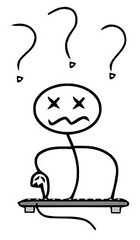 | 9 |
| 5897562430 | expectant | adj. having expectations; having or showing signs of eagerly awaiting something |  | 10 |
| 5897579247 | antagonistic | adj. acting in opposition; hostile; marked by ill will | 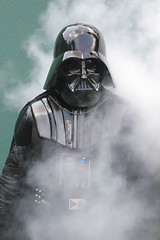 | 11 |
| 5897587114 | belligerent | adj. warlike; feeling or displaying eagerness to fight; hostile |  | 12 |
| 5897614238 | vitriolic | adj. caustic, scathing; virulence of feeling or of speech |  | 13 |
| 5897626924 | apprehensive | adj. uneasy or fearful about the future; viewing the future with anxiety or alarm |  | 14 |
Flashcards
Ap Literature Vocabulary Flashcards
Terms : Hide Images
| 4765736290 | Schism | division or disunion, especially into mutually opposed parties. | 0 | |
| 4765736291 | motif | a recurring subject, theme, idea, etc., especially in a literary, artistic, or musical work. | 1 | |
| 4765736292 | rationalism | the principle or habit of accepting reason as the supreme authority in matters of opinion, belief, or conduct. | 2 | |
| 4765736293 | nihilism | rejection of established laws and institutions. | 3 | |
| 4765736294 | irony | the use of words to convey a meaning that is the opposite of its literal meaning | 4 | |
| 4765736295 | heresy | opinion or doctrine at variance (different) with the orthodox or accepted doctrine, especially of a church or religious system. | 5 | |
| 4765736296 | diction | style of speaking or writing as dependent upon choice of words | 6 | |
| 4765736297 | detail | particulars collectively | 7 | |
| 4765736298 | dichotomy | division into two parts, kinds, etc.; subdivision into halves or pairs. | 8 | |
| 4765736299 | syntax | The study of the patterns of formation of sentences and phrases from words. | 9 | |
| 4765736300 | structure | mode of building, construction, or organization; arrangement of parts, elements, or constituents | 10 |
AP Human Geography: Language Flashcards
Language
Terms : Hide Images
| 6805262116 | Dialect | A particular form of a language that is particular to a specific region or social group. |  | 0 |
| 6805262117 | Extinct Language | An extinct language is a language that no longer has any speakers, or that is no longer in current use. |  | 1 |
| 6805262118 | Ideogram | A written character symbolizing the idea of a thing without indicating the sounds used to say it. An Example: 6 (six) |  | 2 |
| 6805262119 | Isogloss | A geographic boundary line delimiting the area in which a given linguistic feature occurs. |  | 3 |
| 6805262120 | Isolated Language | a natural language with no demonstrable genealogical (or "genetic") relationship with other languages; that is, one that has not been demonstrated to descend from an ancestor common with any other language. i.e A language family with only one language. |  | 4 |
| 6805262121 | Language Branch | A Subsection of a Language Family. i.e The Romance "-------" of the Indo-European language family. |  | 5 |
| 6805262122 | Language | The method of human communication, either spoken or written, consisting of the use of words in a structured and conventional way. |  | 6 |
| 6805262123 | Language Group | A Collection of languages within a branch that share a common origin in the relatively recent past and display relatively few differences in grammar and vocabulary. |  | 7 |
| 6805262124 | Language Family | A collection of languages related to each other through a common ancestor long before recorded history |  | 8 |
| 6805262125 | Indo European language family | Largest language family that includes English and most other languages in the Western Hemisphere. Also used in South and Southwest Asia. |  | 9 |
| 6805262126 | Sino-Tibetan Language Family | 2nd largest language family. Includes Madarin, Thai, Cantonese and Burmese |  | 10 |
| 6805262127 | Lingua Franca | A Language mutually understood and commonly used in trade by people who have different native languages |  | 11 |
| 6805262128 | Literary Tradition | A Language that is written as well as spoken | 12 | |
| 6805262129 | Monolingual | The condition of being able to speak only a single language |  | 13 |
| 6805262130 | Bilingual | The ability to speak two languages |  | 14 |
| 6805262131 | Multilingual | The ability to speak multiple languages |  | 15 |
| 6805262132 | Official Language | The language adopted for use by the government for the conduct of business and publication of documents. |  | 16 |
| 6805262133 | Pidgin Language | A Form of speech that adopts a simplified grammar and limited vocabulary of a lingua franca, used for communications among speakers of two different languages. |  | 17 |
| 6805262134 | Standard Language | The form of a language used for official government business, education, and mass communications. |  | 18 |
| 6805262135 | Trade Language | A language, especially a pidgin, used by speakers of different native languages for communication in commercial trade. |  | 19 |
| 6805262136 | Vernacular | Using a language or dialect native to a region or country rather than a literary, cultured, or foreign language. It is usually the language of the common people. | 20 | |
| 6805262137 | Creole | a mother tongue formed from the contact of two languages through an earlier pidgin stage |  | 21 |
| 6805262138 | Denglish | The term is used in all German-speaking countries to refer to the increasingly strong influx of macaronic (slang) English or pseudo-English vocabulary into German. |  | 22 |
| 6805262139 | Franglais | a form of French using many words and idioms borrowed from English. |  | 23 |
| 6805262140 | Ebonics | American black English regarded as a language in its own right rather than as a dialect of standard English |  | 24 |
| 6805262141 | Spanglish | a hybrid language combining words and idioms from both Spanish and English, especially Spanish speech that uses many English words and expressions. |  | 25 |
| 6805262142 | Institutional Language | Professional language (not slang) | 26 | |
| 6805262143 | Developing Language | Language used daily for face-to-face communication, includes a standard written expression, but not used by people all the time | 27 | |
| 6805262144 | Vigorous Language | Language used daily by all ages but doesn't include a written expression | 28 | |
| 6805262145 | Subdialect | Broken down version of dialects, usually very close to each other but may differ in pronunciation of local words. | 29 | |
| 6805262146 | Received Pronunciation | the standard form of British English pronunciation, based on educated speech in southern England. | 30 | |
| 6805262147 | Vulgar Latin | Informal Latin spoken by common folk (farmers, soldiers, etc.) in classical times | 31 |
Flashcards
AP English Language Vocabulary Flashcards
Vocabulary for AP English Language
Terms : Hide Images
| 5757536877 | Allegory | Fictional work in which the characters represent ideas or concepts(Purpose: Convey difficult idea through an in-depth metaphorical narrative) | 0 | |
| 5757536878 | Alliteration | The repetition of consonant sounds, usually at the beginning of words |  | 1 |
| 5757536879 | Allusion | A reference, usually oblique or faint, to another thing, idea, or person; often times authors use biblical references. | 2 | |
| 5757536880 | Ambiguity | Uncertain or indefinite; subject to more than one interpretation. | 3 | |
| 5757536881 | Analogy | The correspondence or resemblance between two things that are essentially different(Ex: medicine : illness :: law : anarchy) | 4 | |
| 5757536882 | Anaphora | repetition of a word, phrase, or clause at the beginning of two or more sentences in a row(Ex: "This blessed plot, this earth, this realm, this England,This nurse, this teeming womb of royal kings [. . .]This land of such dear souls, this dear dear land,") from Act 2 Scene 1 of "Richard II" | 5 | |
| 5757536883 | Antecedent | Every pronoun refers back to a previous noun or pronoun(Ex: The weather is great today; let's make the most of it by going to the beach.) | 6 | |
| 5757536884 | Antimetabole | Half of expression is balanced, other half is backwards.(Ex: "Eat to live, not live to eat." - Socrates) | 7 | |
| 5757536885 | Antithesis | An opposition or contrast of ideas that is often expressed in balanced phrases or clauses(Ex: Man proposes, God disposes.) | 8 | |
| 5757536886 | Apostrophe | A figure of speech in which an absent person or personified object is addressed by a speaker(Ex: "Twinkle Twinkle Little Star") | 9 | |
| 5757536887 | Appositive | A word or phrase that follow a noun or pronoun for emphasis or clarity(Purpose(s): Provide essential or non-essential information, Gives meanings to sentences in different texts, etc) | 10 | |
| 5757536888 | Archaic Diction | the use of words that are old-fashioned or no longer commonly used(Ex: "steed" instead of "horse" or "stallion") | 11 | |
| 5757536889 | Asyndeton/ Polysyndeton | Commas used (with no conjunction) to separate a series of words. The parts are emphasized equally when the conjunction is omitted; in addition, the use of commas with no intervening conjunction speeds up the flow of the sentence. X, Y, Z as opposed to X, Y, and Z.(Ex: "Without looking, without making a sound, without talking" from Sophecles' "Oedipus at Colonus") | 12 | |
| 5757536890 | Atmosphere | The emotional feeling -or mood- of a place, scene, or event(Purpose: Create emotional effects) | 13 | |
| 5757536891 | Caricature | A grotesque or exaggerated likeness of striking qualities in persons and things( Purpose: Portray important political or artistic ideas) | 14 | |
| 5757536892 | Clause | A structural element of a sentence, consisting of a grammatical subject and a predicate(Ex: Ghost stories are a lot of fun, if you tell them late at night with the lights off.) | 15 | |
| 5757536893 | Chiasmus | Arrangement of repeated thoughts in the pattern of X Y Y X. It is often short and summarizes a main idea(Ex: "Never let a Fool Kiss You or a Kiss Fool You.") | 16 | |
| 5757536894 | Colloquial Language | Slang or common language that is informal(Ex: "That totally grossed me out.") | 17 | |
| 5757536895 | Conceit | A witty or ingenious thought; a diverting or highly fanciful idea, often stated in figurative language(Ex: "Love is like an oil change.") | 18 | |
| 5757536896 | Connotative | The interpretive level of a word based on associated images rather than the literal meaning(Ex: "Wall Street" = wealth and power) | 19 | |
| 5757536897 | Denotation | the literal or dictionary meaning of a word(Ex: Dog suggests an ugly face.) | 20 | |
| 5757536898 | Diction | An author's choice of words(Purpose: Create & convey a typical mood, tone and atmosphere) | 21 | |
| 5757536899 | Didactic | Writing which has the purpose of teaching or instructing(Ex: Religious texts(teach us about the reality of God)) | 22 | |
| 5757536900 | Euphemism | A mild or pleasant sounding expression that substitutes for a harsh, indelicate, or simply less pleasant idea(Ex: Correctional facility instead of jail) | 23 | |
| 5757536901 | Exigence | An issue, problem, or situation that causes or prompts someone to write or speak(Ex: PSAs about particular health issues) | 24 | |
| 5757536902 | Extended Metaphor | A series of comparisons between two unlike objects(Ex: Bobby Holloway says my imagination is a three-hundred-ring circus. Currently I was in ring two hundred and ninety-nine, with elephants dancing and clowns cart wheeling and tigers leaping through rings of fire. The time had come to step back, leave the main tent, go buy some popcorn and a Coke, bliss out, cool down." (Dean Koontz, Seize the Night. Bantam, 1999)) | 25 | |
| 5757536903 | Figurative Language | All uses of language that imply an imaginative comparison(Ex: Personification) | 26 | |
| 5757536904 | Figure of Speech | A device used to produce figurative language(Ex: Metaphor) | 27 | |
| 5757536905 | Genre | The major category into which a literary work fits. The basic divisions of literature are prose, poetry, and drama(Ex: Non-fiction) | 28 | |
| 5757536906 | Homily | Includes any serious talk, speech, or lecture involving moral or spiritual advice(Purpose: Convey moral lesson, mainly a religious one) | 29 | |
| 5757536907 | Hyperbole | A figure of speech in which exaggeration is used to achieve emphasis(Ex: Your suitcase weighs a ton!) | 30 | |
| 5757536908 | Imagery | A mental picture that is conjured by specific words and associations(Purpose: Generate a vibrant presentation of a scene that appeals to as many of the reader's senses as possible) | 31 | |
| 5757536909 | Inference | To draw a reasonable conclusion from the information presented(Ex: Norman sees cookie crumbs on the floor and chocolate around his son's mouth. Norman infers that his son must have eaten some cookies from the cookie jar.) | 32 | |
| 5757536910 | Inversion | reversal of the usual or natural order of words; anastrophe(Ex: Where in the world were you?) | 33 | |
| 5757536911 | Invective | An emotionally violent, verbal denunciation or attack using strong, abusive language(Ex: Chicken for coward) | 34 | |
| 5757536912 | Irony | When a situation produces and outcome that is the opposite of what is expected(Ex: The name of Britain's biggest dog was "Tiny".) | 35 | |
| 5757536913 | Juxtaposition | When two contrasting things are placed next to each other for comparison(Ex: Milton's "Paradise Lost" - God(good) and Satan(bad)) | 36 | |
| 5757536914 | Litotes | A form of understatement in which the negative of the contrary is used to achieve emphasis or intensity(Ex: New York is not an ordinary city.) | 37 | |
| 5757536915 | Non-periodic sentence | A type of sentence in which the main idea (independent clause) comes first, followed by dependent grammatical units such as phrases and clauses(Ex: I went to the movies yesterday, bought candy, and shopped at the mall.) | 38 | |
| 5757536916 | Metaphor | A figure of speech in which two unlike things are compared directly(Ex: My brother was boiling mad.) | 39 | |
| 5757536917 | Metonymy | A figure of speech in which something is referred to by using the name of something that is associated with it(Ex: Let me give you a hand; hand means help) | 40 | |
| 5757536918 | Mood | The prevailing or dominant feeling of a work, scene, or event(Purpose: Evoke various emotional responses in readers and ensure their emotional attachment as they read the book) | 41 | |
| 5757536919 | Narrative | The telling of a story or an account of an event or series of events(Purpose: Gain a deep insight of culture and develop some sort of understanding towards it) | 42 | |
| 5757536920 | Onomatopoeia | An effect created by words that have sounds that reinforce their meaning(Ex: Moo!) | 43 | |
| 5757536921 | Oxymoron | Two contradictory words in one expression(Ex: jumbo shrimp) | 44 | |
| 5757536922 | Paradox | A seeming contradiction that in fact reveals some truth(Ex: "I can resist anything but temptation" - Oscar Wilde) | 45 | |
| 5757536923 | Parallelism | A literary technique that relies on the use of the same syntactical structures(Ex: John likes to play tennis, bake cake, and read books.) | 46 | |
| 5757536924 | Parody | An effort to ridicule or make fun of a literary work or an author by writing a comic imitation of the work(Ex: SNL) | 47 | |
| 5757536925 | Pedantic | An adjective that describes words, phrases, or general tone that is overly scholarly, academic, or bookish(Purpose: Teach something in a complicated manner) | 48 | |
| 5757536926 | Periodic Sentence | Presents the main clause at the end of the sentence, for emphasis(Ex: Unable to join the others at the dance because of my sprained ankle, I went to a movie.) | 49 | |
| 5757536927 | Persona | The character created by the voice and narration of the speaker of a text(Purpose: Express ideas due to some restrictions, such as no talking) | 50 | |
| 5757536928 | Personification | A figure of speech in which ideas or objects are described as having human qualities or personalities(Ex: The flowers danced in the gentle breeze.) | 51 | |
| 5757536929 | Point of View | The particular perspective from which a story is told(Ex: 1st person - " I tell myself to focus while I am reading a book.") | 52 | |
| 5757536930 | Prose | One of the major divisions of genre; refers to fiction and nonfiction, including all its forms, because they are written in ordinary language and most closely resemble everyday speech(Ex: "It was a bright cold day in April, and the clocks were striking thirteen." 1984 - George Orwell) | 53 | |
| 5757536931 | Repetition | The reiteration of a word or phrase for emphasis(Ex: "Because I do not hope to turn again Because I do not hope Because I do not hope to turn..." - "Ash Wednesday") | 54 | |
| 5757536932 | Rhetoric | The art and logic of a written or spoken argument to persuade, to analyze, or to expose(Ex: Ethos, Logos, Pathos) | 55 | |
| 5757536933 | Ethos | Form, Manner(Purpose: Musician starring in a dog commercial) | 56 | |
| 5757536934 | Pathos | Force, Emotion(Ex: Empathizing with a friend who lost a family member) | 57 | |
| 5757536935 | Logos | Idea, Message(Ex:Facts, Charts, Tables used to support that abortion rates correlates with crime rates) | 58 | |
| 5757536936 | Rhetorical Modes(exposition, argumentation, description, narration) | The flexible term describes the variety, the conventions, and the purposes of the major kinds of writing(Ex: Journal entry = description) | 59 | |
| 5757536937 | Rhetorical Question | A question that is asked for the sake of argument(Ex: " Why not?") | 60 | |
| 5757536938 | Sarcasm | Use of bitter, caustic language that is meant to hurt or ridicule someone or something. It may use irony as a device(Ex: " Friends, countrymen, lend me your ears." - Julius Caesar) | 61 | |
| 5757536939 | Satire | To ridicule or mock ideas, persons, events, or doctrines(Ex: The Daily Show) | 62 | |
| 5757536940 | Semantics | The branch of linguistics that studies that meaning of words, their historical and psychological development, their connotations, and their relation to one another(Ex: A water pill at first glance could be a pill with water in it; but, it is understood to be a diuretic that causes a person to lose water from his body.) | 63 | |
| 5757536941 | Periodic Sentence | Sentence with main clause or predicate at the end(Ex: In opening minds, instilling values, and creating opportunities, education has no equal.) | 64 | |
| 5757536942 | Cumulative Sentence | Sentence with an independent clause elaborated by modifying clauses or phrases(Ex: "I write this at a wide desk in a pine shed as I always do these recent years, in this life I pray will last, while the summer sun closes the sky to Orion and to all the other winter stars over my roof." (Annie Dillard, An American Childhood, 1987)) | 65 | |
| 5757536943 | Hortative Sentence | Sentence urging to some conduct or course of action(Ex: Before Tom Daley is about to dive into the pool, his coach may say, "All of your training and hard work will pay off; you will be great.") | 66 | |
| 5757536944 | Imperative Sentence | Sentence that also functions as a direct command (Ex: Clear this desk by tomorrow!) | 67 | |
| 5757536945 | Simile | A commonly used figure of speech that compares one thing with another using the words "like" or "as"(Ex: Jake is as slow as a turtle.) | 68 | |
| 5757536946 | Style | An evaluation of the sum of the choices an author makes in blending diction, syntax, figurative language, and other literary devices(Purpose: Create a certain impact on the readers based on one's style) | 69 | |
| 5757536947 | Subject Complement(predicate nominative and predicate adjective) | The word that follows a linking verb and completes the subject by renaming or describing it(Ex: Brandon is a great player.) | 70 | |
| 5757536948 | Subordinate Clause | Like all clauses, it contains both a subject and a verb (plus any accompanying phrases or modifiers), but unlike the independent clause, the subordinate clause cannot stand alone; it does not express a complete thought. Also called a dependent clause, the subordinate clause depends on a main clause (or independent clause) to complete its meaning(Ex: After John played tennis) | 71 | |
| 5757536949 | Syllogism | A form of deductive reasoning in which pieces of evidence are used to create a new conclusion(Ex: "All dogs are canine. Tommy is a dog. Therefore, Tommy is a canine.") | 72 | |
| 5757536950 | Symbol | Something that stands for something else(Ex: Dove = peace) | 73 | |
| 5757536951 | Synedoche | a figure of speech that utilizes a part as representative of the whole(Ex: "gray beard" = old man) | 74 | |
| 5757536952 | Synesthesia | describing one kind of sensation in terms of another ("a loud color," "a sweet sound") | 75 | |
| 5757536953 | Syntax | The way words are arranged in a sentence(Ex: "I cannot go out." vs. "Go out I cannot.") | 76 | |
| 5757536954 | Theme | The central idea(Ex: love and friendship in "Pride and Prejudice") | 77 | |
| 5757536955 | Thesis | The sentence or group of sentences that directly expresses the author's opinion, purpose, meaning, or proposition(Purpose: To inform audience about main idea) | 78 | |
| 5757536956 | Trope vs Schemes | The use of a word, phrase, or image in a way not intended by its normal signification; A change in standard word order or pattern(Ex(scheme): "I have a Dream" speech) | 79 | |
| 5757536957 | Tone | Attitude(Purpose: Decide how readers should read a literary piece and how they should feel while reading it) | 80 | |
| 5757536958 | Understatement | When an author assigns less significance to an event or thing than it deserves(Ex: " He is not too thin" when describing an obese person) | 81 | |
| 5757536959 | Wit | In modern usage, intellectually amusing language that surprises and delights. Usually uses terse language that makes a pointed statement(Ex: "It is a truth universally acknowledged that a young man in possession of a good fortune must be in want of a wife." - Pride and Prejudice by Jane Austen) | 82 | |
| 5757536960 | Zeugma | When a word is used with two adjacent words in the same construction, but only makes literal sense with one of them(Ex: "The farmers in the valley grew potatoes, peanuts, and bored." - Wunderland) | 83 |
Pages

Need Help?
We hope your visit has been a productive one. If you're having any problems, or would like to give some feedback, we'd love to hear from you.
For general help, questions, and suggestions, try our dedicated support forums.
If you need to contact the Course-Notes.Org web experience team, please use our contact form.
Need Notes?
While we strive to provide the most comprehensive notes for as many high school textbooks as possible, there are certainly going to be some that we miss. Drop us a note and let us know which textbooks you need. Be sure to include which edition of the textbook you are using! If we see enough demand, we'll do whatever we can to get those notes up on the site for you!
