AP Notes, Outlines, Study Guides, Vocabulary, Practice Exams and more!

AP ART HISTORY WORKS AND DATES Flashcards

Prehistoric Art
Ancient Near-Eastern Art
Egyptian Art
Aegean Art
Greek Art
Etruscan Art
Roman Art
Early Christian, Early Jewish, and Byzantine Art
Islamic Art
Asian Art
Early Medieval Art
Romanesque Art
Gothic Art

Terms : Hide Images
69797110Woman of WillendorfPrehistoric (Paleolithic). 28,000-21,000 BCE. Limestone. Austria. (symbol of fertility)0
69797111Caves at AltamiraPrehistoric (Upper Paleolithic). 12,500 BCE. Limestone. Spain. (bison)1
69797114Caves at Peche-MerlePrehistoric (Upper Paleolithic). 15,000 BCE (hands), 25,000-24,000 BCE (horse). Limestone. France.2
69797115Lascaux CavesPrehistoric (Paleolithic). 15,000 BCE. Limestone. Southern France. (cows, bulls, horses, deer)3
69797116StonehengePrehistoric (Neolithic). 21,000 BCE. Stone. Wiltshire, England. (burial site, post and lintels, mortise and tennon, cromlech: menhir and megalith)4
69797117Tell Asmar StatuesAncient Near Eastern (Sumer). 2700 BCE. Limestone, Alabaster, and Gypsum. Baghdad. (meant to offer prayers)5
69797118Standard of UrAncient Near Eastern (Sumer). 2600 BCE. Panel inlayed, Lapis Lazuli, Limestone. London.6
69797119Ziggurat of UrAncient Near Eastern (Sumer). 2100 BCE. Mud Brick. Ur, Iraq. (for moon god Nanna, had temple at top)7
69797120Victory Stele of Naram SinAncient Near Eastern (Akkadian). 2254-2218 BCE. Sandstone. Louvre, Paris. (Depicted victory over Lullubi, blessed by gods but accomplished by Naram Sin wearing crown of divinity).8
69797121Stele of HammurabiAncient Near Eastern (Babylonian). 1780 BCE. Basalt. Louvre, Paris. (earliest written law code: 300 law entries, sun god Shamash hands Hammurabi a rope, a ring, a rod)9
69797122Ishtar GateAncient Near Eastern (Neo-Babylonian). 575 BCE. Glazed Brick. Berlin. (sacred animals guard entrance: lions, dragons, bulls. not used for warfare, but decoration).10
69797123Lion GateAncient Near Eastern (Hittite). 1400 BCE. Stone. Hattusa, Turkey. (guardian animals: lion, entrance).11
69797124LamassuAncient Near Eastern (Assyrian). 700 BCE. Limestone. Louvre, Paris. (human headed winged bull with 5 legs, wards off visible and invisible enemies, stability=eternity)12
69797125Lion HuntAncient Near Eastern (Assyrian). 640 BCE. Gypsum. London. (shallow relief, emotion in lion getting stabbed, no emotion in king killing it, sign of control/power).13
69797126Palace at PersepolisAncient Near Eastern (Persian). 500 BCE. Mud brick with stone facing. Iran. (giant lamassu gates, capital city built by Darius I and Xerxes I and destroyed by Alexander the Great, bell shaped base lotus blossom, bull head capitals)14
69797127Jar with River SceneEgyptian (Predynastic). 3500-3400 BCE. Painted Clay. Hierakonpolis. (symbolism>realism. depicts boomerang shaped boat with oars on Nile river..ferry to after life?)15
69797128Narmer PaletteEgyptian (Early Dynastic, Dynasty 1). 3000 BCE. Mudstone. Hierakonpolis. (Narmer wears crown of Upper Egypt and bull's tail (strength) triumphing over foes and holds rope around head with papyrus (lower egypt) HoS. Horus:falcon god. barefoot:sacred ground. 3 registers on back side and used to make makeup).16
69797129Stepped Pyramid of DjoserEgyptian (Old Kingdom, Dynasty 3). 2630-2575 BCE. Created by Imhotep. Sandstone. Saqqara. (6 unequal steps: stairway to heavens? solid, except burial chamber below grounds believed ka inhabited it)17
69797130Great Pyramids of GizaEgypt (Old Kingdom, Dynasty 4). 2575-2450 BCE. Limestone. Giza Plateau. Made for Khufu (Horizon), Khafre (Great), Menkaure (Divine). (each includes attached mortuary temple. pharaohs buried inside pyramids, cardinal direction)18
69797131The Great SphinxEgyptian (Old Kingdom, Dynasty 4) 2500 BCE. Lime/sandstone. Giza Plateau. Guards Necropolis (city of dead) aka Pyramids. (Carved in situ, body of lion, head of pharaoh/god: Khafre or Ra. beard is in brit museum)19
69797132KhafreOld Kingdom Egypt Dynasty 4. 2500 BCE. Diorite. Cairo. (frontal, symmetrical, rigid, eternal, no negative space, Horus falcon god attached. Ka statue)20
69797133Menkaure and his WifeOld Kingdom Egypt Dynasty 4. 2490-2472 BCE. Slate. (no neg space, idealized bods, staring outwards into eternity, gentle embrace, both same height: importance?)21
69797134Seated ScribeOld Kingdom Egypt Dynasty 5. 2450-2325 BCE. Limestone, Louvre. (realistic/lifelike, red ochre, eyes are crystal more engaging)22
69797135Sensuret IIIMiddle Kingdom Egypt Dynasty 12. 1878-1818 BCE. Red/Yellow Quartzite or Stone. (depict pharaoh in emotional state, sunken cheeks dropping eyelids, tired: burden of rule but makes it through hardships)23
69797136Tombs of Beni HasanMiddle Kingdom Egypt Dynasty 12. 1985-1795 BCE. Rock cut. (Stylistic>structural. Reserve columns, don't bear weight, tombs made for kings/queens or wealthy/noble)24
69797137Mortuary Temple of HatshepsutNew Kingdom Egypt Dynasty 12. 1473-1458 BCE. Deir el-Bahri. (temple is coordinated with cliffs surrounding it, celebrates achievement of a woman)25
69797138Temple of Ramses II at Abu SimbelNew Kingdom Egypt Dynasty 19. 1279-1213 BCE. Rock Cut tomb. (4 statues of Ramses II carved in situ w/small statues of Nefertari, sun god is visible)26
69797139AkhenatenAMARNA. New Kingdom Egypt Dynasty 18. 1353-1336 BCE. Sandstone. (curving contours, no rigidity. Epicene (nongenderspecific) body. NOT idealized.27
69797140NefertitiAMARNA. New Kingdom Egypt Dynasty 18. 1353-1336 BCE. Limestone. Possibly created by Thutmose as it was found in his workshop (Wife of Akhenaten, very realistic/soft features)28
69797141Akhenaten and FamilyAMARNA. New Kingdom Egypt Dynasty 18. 1353-1336 BCE. Painted Limestone Relief. (sunken relief kinda 3D, A and N sit on cushioned thrones w 3 daughters, elongated heads, show connection between kids and parents, not idealized or rigid, Aten holds ankhs: breath of life)29
69797142Coffin/Death Mask of TutankhamenNew Kingdom Egypt Dynasty 18. 1332-1322 BCE. Mask: Gold enamel with stones. Coffin: Gold inlaid with glass and stones. Lapis Lazuli. (discovered by Howard Carter in 1922. Tut found inside with 143 objects.)30
69797143Judgement before OsirisNew Kingdom Dynasty 19. 1285 BCE Book of Dead. Painted Papyrus. Used Conflation (Anubis aka God of embalming leads deceased to determine sins heavier than feather, Thoth writes in hieroglyphics, Osiris is enthrones Horus presents deceased.)31
69797144Mummy of Young BoyRoman Period but lol Egypt. 100-120 CE. Linen Wrappings with stucco buttons and portrait on wood. Although Egypt was conquered by Rome this depicts that Egyptian practices were continued.32
69797145Cycladic FigurinesAegean (Cycladic). 2500 BCE. Marble. Athens. Both small, geometric shapes. Male: always doing something. EX: harpist, idea of harpist than depiction, holds harp. Female: outnumber male figurines, nude, found in graves, Idea > depiction. pelvic triangle & meant to lie on back33
69797146Palace at KnossosAegean (Minoan). 1700-1400 BCE. Crete. stone, wood, paint. Columns: wood, mostly painted red. megaton design with black capitals. (meant for meeting place)34
69797147Snake GoddessAegean (Minoan) 1600 BCE. Faience. Crete. Thin waist, exposed chest, layered ruffled skirt and apron and wide eyed (lol like sumerians) holds snakes and cat on head.35
69797148Young Girl Gathering Saffron FlowersAegean (Minoan). Akrotiri Wall Painting. 1600 BCE. depicts girl coming of age ritual, thin waist, bare chest, ruffled clothes, shaved head with hair growing (like pepper from ahs) gathering saffron used for dye, flavoring, or menstrual cramps. colors: blue, red, yellow ochre.36
69797149Bull Leaping (Toreador Fresco)Aegean (Minoan) 1550-1450 BCE. Crete. Wall Painting from Palace at Knossos (reconstructed). Geometric border, typical clothing and pinched waist, ORGANIC shapes. asserted manhood. men depicted darker. no ground or straight lines.37
69797150Spring FrescoAegean (Minoan) 2500 BCE. Wall Painting from Akrotiri. Pure landscape with wavy and pulsating lines and bright colors celebrating life and nature.38
69797151Harvester VaseAegean (Minoan) 1650-1450 BCE. Steatite. Rowdy scene of men marching to drum, not orderly but overlapping. Much emotion not idealized. EX of rhyton (poured liquids during religions ceremonies)39
69797152Octopus FlaskAegean (Minoan) 1500-1450 BCE. Ceramic. Crete. Organic shape, as if flask was made for octopus' tentacles. very graceful and harmonious with sea creatures and energy of natural forms.40
69797381Vapheio CupAegean (Minoan) 1650-1450 BCE. Gold. EX of Repousse, men depicted capturing bulls. much masculinity and energy. olive trees: sacred grove.41
69797382Great Citadel at MycenaeAegean (Mycenaean). 1600-1200 BCE. Reconstruction. Cyclopean architecture. Lion Gate protects entrance to palace. Red colored megaron columns with black capitals. Much landscape.42
69797383Lion GateAegean (Mycenaean) 1250 BCE. Greece. Stone. (post and Lintel doorway with corbel/relieving arch. Minoan column between guardian animals (lion) no mortar).43
69797384"Treasury" of AtreusAegean (Mycenaean) 1300-1200 BCE. Greece. Stone. by Tholos. (cyclopean construction, corbel arch entrance, precise stonework, possibly a tomb?)44
69797385Funerary Mask aka "Death Mask of Agamemnon"Aegean (Mycenaean) 1600 BCE. Gold. Athens. REPOUSSE (punched from back, opposite of chasing). Probably altered (mustache was not Mycenaean)found in 1876 in royal shaft. Had curlycue ears and slit eyes.45
69797386Warrior VaseTRANSITION PIECE. Aegean (Mycenaean) 1300-1100 BCE. Ceramic. Woman bid farewell to men going to war, unemotional, more symbolic (woman's raised arm) Very different than Harvester Vase. Greek-styled spears, nonrealistic.46
69797387Funerary VesselGreek (Geometric Period) 750-735 BCE. Ceramic. Athens. (krater vessel, top register: deceased is cremated/surrounded by mourners, lower reg: chariots and warriors in procession. focused on LIVING)47
69797388Dying WarriorsGreek (Archaic Period) 500-480 BCE. From Temple of Aphaia at Aegina. Marble. West: 500-480, statue has archaic smile, idealized form, little sense of struggle/pain. East: 490-489, twisted body, realistic, more emotion and sense of pain. Attempt to evoke Pathos by the depiction of the ideaaof dying warrior (west).48
69797389KourosGreek (archaic) . 600 BCE. Marble. (General representation, grave marker, rigid like egyptian, nude with freed arms and legs (not attached to body). knotted hair with eyes wide open, shoulders broader than hips. idealized).49
69797390Anavysos KourosGreek (archaic) 530 BCE. Marble with paint. hands clenched, nude, SLIGHT Archaic smile, freed, more lifelike/proportionate, round not rigid, eyes open and large. still a "type"50
69797391"Peplos" KoreGreek (Archaic) 530 BCE. Marble. From Acropolis (remember calf bearer too, 560 bCE) Rounded body, clothed woman, accurate anatomy with archaic smile, type rather than specific. knotted hair51
69797392"Kritios" BoyGreek (Classical) TRANSITIONAL. 480 BCE, Athens, Marble. Contrapposto, hair and eyes suggest archaic (knotted and large) suggested archaic smile, with blank look, angle.d52
69797394Riace WarriorsGreek (Classical) 460-450 BCE. Bronze. Idealized physiques (faces look older than bods suggest) Contrapposto, eyeballs not part of statue. possibly holding weapons. nude. hollow. depiction of a person53
69797395Doryphoros "Spear Bearer"Greek (Classical) 450-440 BCE. Marble copy. Made by Polykleitos. Contrapposto, canon of proportions and ideal symmetry. broad shoulders, v muscular, thick torso, averted gaze. probs held spear.54
69798070Discobolos "Discus Thrower"Greek (Classical) 450 BCE. Marble copy. made by Myron. Contrapposto. thick torso. heroic bod. hella negative space. depicts fluidity and motion. expressionless: dedicated to action.55
69798071Acropolis "high city"Greek (Classical) 447-400 BCE. Athens. Made by Calibrates and Iktinose. Propylaia: gateway to Parthenon: dedicated to Athena/used for festivals. •447-432 BCE •constructed under reign of Pericles, doric temple with ionic elements (capital/frieze interior) •Lapith Fighting A Centaur (doric frieze, 447-432) •Elgin Marbles (438-432) ºErechtheion (421-405 BCE) honors kind Erechthus who promoted Athena. Contains Caryatids (women shaped columns) asymmetrical56
69798072The "Elgin Marbles" (3 Goddesses)Greek (Classical) 438-432 BCE. Marble. From the Parthenon. East Pediment of Parthenon. Introduced WET DRAPERY. figures are connected. possible depiction of Athena's birth from Zeus' head57
69798073Aphrodite of KnidosGreek (Late Classical) 350-340 BCE. Made by Praxiteles (Marble copy). Contrapposto. first depiction of a woman nude. (Aphrodite is bathing:humanizing gods) Suggests S-Curve. Transitional to Hellenistic. assembled from different copies58
69798074Hermes and the Infant DionysosGreek (Late Classical) 340 BCE. Marble copy. Praxiteles. S-Curve. Canon of proportions : head is 1/8 of body. more slender, but emphasis on texture: curly hair, smooth skin59
69798075Apoxyomenos "Scraper"Greek (Late Classical) 330 BCE. Made by Lysippos: marble copy. must walk around to see whole thing. small head. scraping oil off body. COntrapposto.60
69798076Statue of an Old WomanHellenistic Greek. 150-100 BCE. Marble copy. EXTREME REALISM: old age-very hellenistic. body is old like face. offering to dionysis? wet drapery61
69798077Aphrodite of Melos (Venus de Milo)Hellenistic Greek 150-125 BCE. Marble. Elegance, S-Curve. arms are missing, good have held attribute (apple or mirror) soft form with gentle shadows.62
69798078Laocoon and his SonsHellenistic Greek. 1st century BCE. Rhodes Sculptors. Marble. snakes attacking trojan priest and sons to stop from warning about horse trick. Extreme realism, emotion is expressed: pain. HELLA NEGATIVE SPACE. HEROIC BODS.63
69798079Apollo from VeiiEtruscan. 510-500 BCE. Terra-Cotta. Pediment-peak statue. more energetic (stride forward) clothed, Greek Archaic Smile64
69798080Tomb of the ReliefsEtruscan. 300 BCE. Mudbrick and Wood. Cerveteri, Rome. Looks like house layout of Etruscan home.65
69798119Tomb of the TricliniumEtruscan 480-470 BCE. Painted. AKA Tomb of the Leopards. From Tarqinia. Depicts Celebration with high energy. Geometric pattern.66
69798120Reclining Couple on a SarcophagusEtruscan. 520 BCE. Terra Cotta. from Cerveteri. Very welcoming/engaging, welcome you in, robs held wine or good. More focus on upper body than legs.67
69798121Ficoroni CastaEtruscan. 350-300 BCE. Bronze. Depicts scene from mythology: Argonautica. Etched work filled with white to stand out. three small figures on top were added after sculpted.68
69798122Chimera of ArezzoEtruscan. 400-350 BCE. Bronze. Florence. Composite animal: lion head and body, goat head, snake for tail. Depicted to attack/flee. VERY Emotional: angry snarling. Anatomy was very precise almost accurate.69
69798123Capitoline WOlfEtruscan. 500 BCE? Bronze. Not accurate depiction of wolf, but detailed. emotion: snarling. wolves don't have manes. Story of Romulus and Remus (founders of Rome, figures added during Renaissance) and She-Wolf. Controversy: dating is not for certain, suggests 13th century at latest.70
69798125House of the VettiiRoman. 2nd century BCE-1st century CE. Pompeii. Peristyle Garden with Cubicula. very few windows (light comes from atrium and peristyle). typical Roman home, narrow and between shops, private.71
69798126Maison Carree (Square House)Roman. 1 CE. Stone. Niemes, France. Roman temple with Corinthian Capitals on free standing columns and engaged columns. 1 cella, not 3 like etruscan.72
69798127Pont Du GardRoman. 16 BCE. Stone. Aqueduct using Ashlar Masonry aka no mortar. Brought water to Niemes France. Arches get smaller as ascending.73
69798130Ara Pacis Augustae ("Altar of Augustine Peace")Roman. 13-9 BCE. Marble. Rome. Shows peace and stability brought to Gauls). Commemorated Augustus' successful establishment of Roman Rule in Gaul. Depicts individuals in reliefs in a specific event at a specific time.74
69798131The Colosseum (Flavian Amphitheater)Roman. 72-80 CE. Rome. Concrete core in Brick covered in a limestone known as travertine. Rows of arches on top of each other with engaged columns: Tuscan, Ionic, Corinthian, Flattened Corinthian. with barrel and groin vaults. Used for violent sports.75
69798132The PantheonRoman. 118-125 CE. Rome. Dedicated to gods of ROme. Marcus Agrippa apparently built it. Round AND Square. contains porch with Corinthian capitals.76
69798135Arch of TitusRoman. 81 CE. Concrete and White Marble. Triumphal arch. Constructed by Domitian to commemorate his older brother Titus' capture of Jerusalem from Jewish rebels in 70 CE. Depicts large menorah on the relief. Composite engaged columns, corinthian capitals with volutes. Barrel vaults. linear perspective. Used to have golden chariot above it as a sign of victory77
69798136Column of TrajanRoman. 113-116 CE. Marble. Covered n reliefs commemorating Trajan's victory over Dacians.78
69798137Basilica of Maxentius and ConstantineRoman. 306-312 CE. Known as Basilica Nova. Contained sculpture of Constantine. Last gov building constructed in Rome. Covered with groin vaults and barrel vaults. everything directed towards Constantine's sculpture in apse.79
69798138Arch of ConstantineRoman. 312-315 CE. Rome. Commemorates victory over Maxentius in 312 Ce. (in hoc signo vinces). Contains spolia to link COnstantine to other older emperors bc he wanted to be remembered and great as they were. Wanted to show imperial/power. New friezes were done in situ. Blocky/less realistic. Also commemorates the fact that Christianity became legal bc of the cross worn on the soldiers.80
69798139Marcus AureliusRoman. 175 CE. Bronze. Equestrian statue. Thought to have been Constantine at one point. Peaceful Authority. not proportionate, too big for horse.81
69798140Synagogue of Dura EuroposJewish. 245-256 CE. Frescos. Best preserved Jewish art sit. depicts Bible stories. Preserved to protect Dura Europos. niche in wall.82
69798141Floor of Beth Alpha SynagogueJewish. 6th Century. Galilee, Israel. Mosaic. Floor is geometric in designs with depictions of things like a menorah.83
69798143Good Shepherd ImagesChristian. Marble: 250-300 CE. Earliest depictions of Christ in Christian statuary bc did not want to be accused of idolatry, X composition with calf over shoulder. Fresco: 4th Century Ce. Catacomb of Saint Peter and Marcellino. Symbolism of good Shepherd in lunette (circle w image in it). Orant figure. evokes roman pompeiian style. Mosaic: 425 CE. Ravenna, Italy. from Mausoleum of Galla PLacidia. Depicts victory over death symbolized by gross. Shows Christ as imperial, purple and gold with golden halo. Depicts Lost Sheep parable.84
69798144Sarcophagus of Junius BassusChristian. Marble 359 CE. Rome. Christ is enthroned in this. Seen as Philosopher. Rome baptized on deathbed.Depict Adam and Eve being exiled from Paradise which is a parallel to the enthronement symbolizing Jesus' redemption85
69798145Old St. Peter'sChristian. Built in 320 (after Christianity became accepted) CE Torn Down 1600 CE. Axially planned. Symbolized Christianity's Victory over paganism. Simple outside, fancy inside. glass mosaics wit wooden coffered ceiling.86
69798146Santa CostanzaEarly Christian. 337-351 CE. Centrally planned. Barrel vaulted side aisles support dome ceiling. Simple outside fancy inside reflecting soul. 12 columns:12 apostles. Mosaics of grapes and wine.87
69798147Mausoleum of Gala PlacidiaChristian. 425 CE. Ravenna, ROme. Originally a chapel before. Central and Axial plan. Plain exterior and richly decorated interior. (Good Shepherd Mosaic 425 CE). Depicts path of redemption from sin.88
69798148Paris PsalterByzantine. 950-970 CE. Era of Classicism. Bight colors. usually on vellum89
69798150PantocraterByzantine. 11 Century Church of Dormition. Closed book with cross (Christ the teacher) the OR 1180-1190 Cathedral of Monreale. hierarchy of scale, gold, stern, open book with blessing (Christ creator)90
69798151Vladimir VirginByzantine. Early 12th Century. icon. tempera paint on wood. Depicts emotion: tenderness and affection. Lack of Realism in proportion. Moscow.91
69798152Harbaville TriptychByzantine. 950 Ce. Ivory. Christ is in middle, enthroned. hands of people are covered as sign of respect. angels in medallions. Symmetry is very careful. Deep undercutting. Figures are labelled.92
69798153Hagia Sophia (Holy Wisdom)Byzantine. 532-537 CE. Built by Arthemius of Tralles and Isidorus of Miletus. Gold. Rectangular/square. Dome pressure on pendentives, bigger interior space. Ribbed dome: halo of light. Combines Cntral and Axial plans of Early Christian Tradition. Commissioned by Justinian and Theodora. also has hella windows.93
69798154San VitaleByzantine. 526-547 CE. Ravenna. Centrally planned with thin columns and an axial styled apse. Octagonal structure. simple bricks but ornamental on inside with mosaics of Justinian and Theodora.94
69798155St. Basil's CathedralBY Barma and Postnik in Moscow. 1555-1561 CE.95
69798156St. Mark's Cathedral1063 CE. 5 domes.Byzantine.96
69798157Dome of the RockIslamic. 687-691 CE. Jerusalem, Israel. Domed wooden octagon. on site of Temple of Herod the Great where Muhammad is said to have ascended. NOT MOSQUE: Pilgrimage Site. Covered in arabesques and calligraphic tile designs. Contains Qur'an verses in blue and gold. Columns taken from roman monuments. Centrally planned97
69798158Great MosqueIslamic. 8th-10th century. Cordoba, Spain. Double Arched columns with alternating color bands. bright light and airy. HYPOSTYLE MOSQUE: no central focus no worship here.arabesques. elaborate squints support dome over mihrab. columns are also spolia.98
69798159Court of LionsIslamic. Alhambra Palace in Spain in 1354-1391 CE. Palace for Sultans (Moors) Muqarnas DOme.99
69798160Mosque of Selim IIIslamic. 1568-1575 CE. Modeled after Hagia Sophia. Very thin/tall minarets with many windows. very bright. Mosaics. octagonal interior with 8 pillars and arches with alternating bands of color. open interior.100
69798161Shiva Nataraja (Lord of the Dance)Indian. 1200 CE. Bronze. Bhakti movement stressing relationship between humans and deities. depicts shiva dancing in ring of fire.101
69798162Jahangir and Shah AbbasMade by Nadir al-Zaman. Indian. 1618 CE. watercolor, gold, and ink on paper. arrival of islam in the mughal empire. except unlike islam it depicts humans102
69798163Taj MahalIndian. 1631-1648. Built as memorial to Shah Jahan's wife Mumtaz Mahal. Islamic influence, but not minarets and not a mosque. no forecourt for faithful to gather either.103
69798164Angkor WatIndian. 1300 CE. Cambodia. Hindu Temple showing "mountain design"104
69798165Nanchan TempleChinese. Tang Dynasty. 782 CE. Shanxi. Chinese wood frame architecture. Depicts religious tolerance. made of wood. Pagoda.105
69798166Travelers among Mountains and StreamsBy Fan Kuan. Chinese. Song Dynasty. hanging scroll ink and colors on silk. 1200 CE. Tradition depicting landscape painting. MIDDLE GROUND focus goes from bottom darkness to top of cliff. Avoids linear perspective106
69798168Monk SewingJapanese. Attribute to Kao Ninga. Kamakura period 1300 Ce. Expresses Zen spirit. emphasis of simplicity.107
69798807Rock Garden at Ryoan-JiJapanese. Kyoto. 1480. Can mean everything and nothing. VERY ZEN. Trees and colors outside of garden are exclaimed to be "borrowed scenery" Depicts simplicity and acceptance of anything108
69798809Great Wave Off KanagawaMade by Katsushika Hokusi. Japanese. 1831 Ce. Polychrome woodblock print on paper. Depicts Mount Fuji as well as boats with people on it appearing to almost be encompassed by waves that seem to have fingers on it. waves purposefully look like Mountain.109
69798810Picnic at the Lotus PondBy Sin Yunbok. Korean. Joseon Dynasty. 1775. Ink and colors on paper. Genre Painting depicting every day life. Korean gentleman enjoying themselves with gisaeng (female entertainers)110
69798811Sutton Hoo Ship BurialEarly Medieval (Saxon) 600-650 CE. gold garnet enamel. purse cover and shoulder clasp. depicts abstract designs based on animals: animal style. interlacing, cloisonne (labor intensive, sign of high status)111
69798812Lindesfarne GospelsEarly Medieval (hiberno saxon) 700 CE. tempura on vellum St. Matthew depiction. Angel is symbol of matthew. man behind curtain is possibly moses or Christ or divine intervention from God. Byzantine-like. St. Matthew is labeled, Angel's hand is covered. flattened linear elements and unrealistic cloth. gospel writing pose as if a burden.112
69798813Chi-Rho-Iota Page from Gospel of MatthewEarly medieval (hiberno saxon) 800 ce. Tempera on vellum. Dense interlacing and abstract forms of animals. XPI: first letters of christ's name in Greek. Illuminated manuscript. Book of Kells113
69798814Treasures from Oseberg Ship BurialWood. Early Medieval (Viking Art) 834 Ce. Animal Head Posts: staring eyes with expressions of snarling. Interlacing patterns and geometric designs. Oseberg Buddha: not really a buddha, also has celtic knot work and cross on it. Viking Boat: believed to be from burial ship of 2 high status women, symbolic.114
69798815Equestrian Statue of Carolingian RulerEarly Medieval (Carolingian) Bronze. 9th century, Louvre. Orb symbolized domination over world. Thought to be Charles the Bald instead of Charlemagne himself. Has mustache (Celtic influence) too large for horse. Drapery115

APUSH Period 6 People and Groups Flashcards

People and Groups in Period 6 of APUSH

Terms : Hide Images
867856449Cornelius VanderbiltWho built one of the first interregional railroads network and combined the lines in New York with those in the Midwest?0
867856450George PullmanWho was the inventor of luxerious sleeping cars?1
867856452George WestinghouseWho was the inventor of the air brake?2
867856453Alexander Graham BellWho was the inventor of the telephone?3
867856456Thomas EdisonWho was the man who perfected the incandescent lightbulb?4
867856458Andrew CarnegieWho was the man who manufactured steel in Pittsburgh? He mastered vertical integration.5
867856459John P. MorganWho was the man who started United States Steel? He owned ⅓ of the nation's railroads, shipping, and insurance companies.6
867856460John D. RockefellerWho was the man who created Standard Oil? He perfected the oil refinement process. He also created the trust.7
867856461Rowland Hussey MacyWho was the man who started the department store in New York?8
867856462Sears Roebuck and Montgomery WardWho were the two men who created a catalog of items for the rural community?9
867856465Adam SmithWho wrote The Wealth of Nations about laissez-faire economics?10
867856466William Graham SumnerWho took the ideas of Darwin and applied them to society?11
867856468Henry GeorgeWho published Progress and Poverty?12
867856469Edward BellamyWho wrote Looking Backward 2000-1887?13
867856470Henryn Demarest LloydWho wrote Wealth Against Commonwealth14
867856471Karl MarxWho was the man who came up with the ideas of Socialism?15
867856473Laurence GronlundWho was the man who brought Socialism to America?16
867856478Oliver H. KelleyWho was the founder of the National Grange?17
867856479Uriah S. StephensWho founded the Knights of Labor?18
867856480Samuel GompersWho founded the American Federation of Labor?19
867856481"Big Bill" HaywoodWho founded the Industrial Workers of the World?20
867856482Richard OlneyWho issued the injunction to stop the Pullman Strike?21
867856483Horatio AlgerWho was the author of many "Rags to Riches" stories?22

WWII Flashcards

holt american anthem reconstruction to the present

Terms : Hide Images
140930081Totalitarianisma form of government in which the ruler is an absolute dictator (not restricted by a constitution or laws or opposition etc.)0
140930082fascisma political system headed by a dictator that calls for extreme nationalism and racism and no tolerance of opposition1
140930083appeasementSatisfying the demands of dissatisfied powers in an effort to maintain peace and stability.2
140930084Adolf hitlerLeader of the Nazi Party and the Third Reich in Germany during World War II.3
140930085Benito mussolinihead of the Italian Fascist party. Mussolini was known as El Duce and was leader of Italy, the first Fascist regime, during World War II.4
140930086Hideki tojoPrime minister of Japan during World War II5
140930087German conquests before WWII (know in order)austria, czeckslovakia,6
140930088invasion of poland begins WWII (know the date!)on september 1st, 1939 germany sent a prisoner in a german uniform into poland and then shot him and blamed it on poland and attacked7
140930089Japanese advances before WWII (especially nanjing)Japan attacked china and killed 200,000 to 300,000 civilians in the capitol nanjing8
140930090neutrality actsOriginally designed to avoid American involvement in World War II by preventing loans to those countries taking part in the conflict; they were later modified in 1939 to allow aid to Great Britain and other Allied nations.9
140930091cash and carrypolicy adopted by the United States in 1939 to preserve neutrality while aiding the Allies. Britain and France could buy goods from the United States if they paid in full and transported them.10
140930092lend-lease actApprove by Congress in March 1941; The act allowed America to sell, lend or lease arms or other supplies to nations considered "vital to the defense of the United States."11
140930093atlantic charter1941-Pledge signed by US president FDR and British prime minister Winston Churchill not to acquire new territory as a result of WWII amd to work for peace after the war12
140930094alliesGroup of nations, including the United States, Britain, and the Soviet Union, who opposed the Axis powers13
140930095axisgermany, japan, italy14
140930096blitzkrieg"Lighting war", typed of fast-moving warfare used by German forces against Poland n 193915
140930097bushidoThis was the code that Japanese samauri's follwed. It was their code, and way of believing. A samaurai was expected to show reckless courage.16
140930098kamikazeJapanese suicide pilots who loaded their planes with explosives and crashed them into American ships.17
140930099battle of britainan aerial battle fought in World War II in 1940 between the German Luftwaffe (air force), which carried out extensive bombing in Britain, and the British Royal Air Force, which offered successful resistance.18
140930100pearl harborbase in hawaii that was bombed by japan on December 7, 1941, which eagered America to enter the war19
140930101battle of the atlanticLong-Lasting WWII naval war to control Atlantic Ocean trade routes20
140930102battle of stalingradUnsuccessful German attack on the city of Stalingrad during World War II from 1942 to 1943, that was the furthest extent of German advance into the Soviet Union.21
140930103operation torchCodename for allied invasion of North Africa from November 1942 to September 194322
140930104D-DayJune 6, 1944 - Led by Eisenhower, over a million troops (the largest invasion force in history) stormed the beaches at Normandy and began the process of re-taking France. The turning point of World War II.23
140930105battle of the bulgeDecember, 1944-January, 1945 - After recapturing France, the Allied advance became stalled along the German border. In the winter of 1944, Germany staged a massive counterattack in Belgium and Luxembourg which pushed a 30 mile "bulge" into the Allied lines. The Allies stopped the German advance and threw them back across the Rhine with heavy losses.24
140930106VE dayMay 8, 1945; victory in Europe Day when the Germans surrendered25
140930107Bataan death marchApril 1942, American soldiers were forced to march 65 miles to prison camps by their Japanese captors. It is called the Death March because so may of the prisoners died en route.26
140930108battle of midwayU.S. naval victory over the Japanese fleet in June 1942, in which the Japanese lost four of their best aircraft carriers. It marked a turning point in World War II.27
140930109battle of iwo jimaAmerican battle on Japanese territory in which 30,000 marines helped assist in amphibious assaults. Involved the US's territorial claim of Mount Suribachi to defeat the Japanese28
140930110manhattan projectcode name for the secret United States project set up in 1942 to develop atomic bombs for use in World War II29
140930111atomic bombing of japanhiroshima august 6 nakasaki august 930
140930112VJ day"Victory over Japan day" is the celebration of the Surrender of Japan, which was initially announced on August 15, 194531
140930113rationingTaking items that are in short supply and distributing them according to a system. For instance, during World War II, gas, sugar, and butter were a few of the items rationed in the United States.32
140930114rosie the riveterA propaganda character designed to increase production of female workers in the factories. It became a rallying symbol for women to do their part.33
140930115propagandainformation that is spread for the purpose of promoting some cause34
140930116japanese internmentJapanese and Japanese Americans from the West Coast of the United States during WWII. While approximately 10,000 were able to relocate to other parts of the country of their own choosing, the remainder-roughly 110,000 me, women and children-were sent to hastly constructed camps called "War Relocation Centers" in remote portions of the nation's interior.35
140930117franklin rooseveltthe 32nd president of the United States. He was president from 1933 until his death in 1945 during both the Great Depression and World War II. He is the only president to have been elected 4 times, a feat no longer permissible due to the 22nd Amendment to the Constitution.36
140930118harry trumanThe 33rd U.S. president, who succeeded Franklin D. Roosevelt upon Roosevelt's death in April 1945. Truman, who led the country through the last few months of World War II, is best known for making the controversial decision to use two atomic bombs against Japan in August 1945. After the war, Truman was crucial in the implementation of the Marshall Plan, which greatly accelerated Western Europe's economic recovery.37
140930119joseph stalindictator of the Soviet Union; worked with US during WWII, but escalated Cold War38
140930120winston churchillBritain's new prime minister during WWII who pleaded for US aid39
140930121dwight eisenhowerUnited States general who supervised the invasion of Normandy and the defeat of Nazi Germany40
140930122mein kampfBook writen by Hitler where he outlines his beliefs: Germans are a superior race, The Treaty of Versailles treated Germany unfairly and that a crowed Germany needed the lands of Eastern Europe and Russia41
140930123nuremberg lawsestablished legal basis in Nazi Germany for discrimination against Jews.42
140930124kristallnachtNight of Broken Glass, Nov 9 1938 night when the Nazis killed or injured many jews & destroyed many jewish propertys43
140930125ghettoa poor densely populated city district occupied by a minority ethnic group linked together by economic hardship and social restrictions44
140930126concentration campsprison camps used under the rule of Hitler in Nazi Germany. Conditions were inhuman, and prisoners, mostly Jewish people, were generally starved or worked to death, or killed immediately.45
140930127final solutionfinal solution of the Jewish question-murder of every single Jew-had begun-mass arresting, and trafficking of Jews to the concentration camps-mass killings occurred as well in the gas chambers46
140930128nuremberg trialsTrials of the Nazi leaders, showed that people are responsible for their actions, even in wartime47

Campbell Biology 9th Edition - Chapter 2 Flashcards

The Chemical Context of Life

Terms : Hide Images
1200514761matteranything that has mass and takes up space0
1200514762elementany substance that cannot be broken down into simpler substances1
1200514763compounda substance made up of atoms of two or more different elements joined by chemical bonds2
1200514764essential elementselements required for an organism to survive, grow, and reproduce.3
1200514765trace elementsrequired by an organism in only minute quantities4
1200514766atomic numberthe number of protons in the nucleus of an atom5
1200514767mass numberthe sum of the numbers of protons and neutrons in the nucleus of an atom6
1200514768van der Waals interactionsweak attractions between molecules or parts of molecules that are brought about by localized charge fluctuations.7

Biology Campbell 9th Edition Chapter 1 Flashcards

Chapter 1 from Campbell Biology 9th Edition, terms and assorted topics.

Terms : Hide Images
1688326067BiologyThe scientific study of life.0
16883260685 Characteristics of Life1. Cellular Organization 2. Metabolism 3. Homeostasis 4. Growth and Reproduction 5. Heredity1
1688326069when the earth formed4.8 billion years ago2
1688326070When abiogenesis occurred3.5 billion years ago3
1688326071ProkaryotesCells that have limited internal structure, lacking external appendages and a nucleus.4
1688326072two types of prokaryotes1. Archaebacteria 2. Bacteria5
1688326073When eukaryotic cells appeared1.5 billion years ago6
16883260743 Main Domains1. Archae 2. Bacteria 3. Eukarya7
16883260756 Kingdoms1. Eubacteria 2. Archaebacteria 3. Protista 4. Fungi 5. Plantae 6. Animalia8
1688326076Cellular OrganizationA characteristic of all living organisms to be comprised of at least one cell.9
1688326077MetabolismA characteristic of all living organisms to process energy that powers other processes.10
1688326078HomeostasisA characteristic of all living things to maintain stable internal environments to optimize conditions for metabolism and other processes.11
1688326079Growth and ReproductionA characteristic of all living organisms to have the capacity for growth and reproduction.12
1688326080HeredityA characteristic of all organisms to pass genetic information across generations from parents to offspring.13
1688326081AtomSmallest structure that makes up life.14
1688326082MoleculeTwo or more atoms joined together.15
1688326083OrganellesStructures within a cell that are organized to perform specific cellular functions.16
1688326084CellsSmallest structures that can carry out all the processes of life.17
1688326085BioticAll living components located in a particular area.18
1688326086AbioticAll non-living components located in a particular area.19
1688326087SpeciesA population or group of populations whose members have the potential to interbreed in nature and produce viable fertile offspring.20
1688326088DNA (Deoxyribonucleic Acid)The genetic code of life.21
1688326089AdaptationA characteristic that improves an organism's ability to survive and reproduce in a particular environment.22
1688326090EvolutionThe modification of populations over time.23
1688326091RegulationA characteristic that regulates an organism's internal and external environment to survive and reproduce. (Homeostasis)24
1688326092what causes regulationIncreases or decreases in stimuli, feedback mechanisms.25
1688326093Negative FeedbackA primary mechanism of homeostasis, whereby a change in a physiological variable triggers a response that counteracts the initial change.26
1688326094Positive FeedbackA physiological control mechanism in which a change in some variable triggers mechanisms that amplify the change.27
1688326095two ways organisms acquire energy1. Cellular Respiration 2. Photsynthesis28
188348242529

APUSH - Chapter 28: Progressivism and the Republican Roosevelt - American Pageant, 15th Edition Flashcards

American Pageant, 15th Edition

Terms : Hide Images
2101439554BallingerPinchot Affair - Ballinger, who was the Secretary of Interior, opened public lands in Wyoming, Montana, and Alaska against Roosevelt's conservation policies. Pinchot, who was the Chief of Forestry, supported former President Roosevelt and demanded that Taft dismiss Ballinger. Taft, who supported Ballinger, dismissed Pinchot on the basis of insubordination. This divided the Republican Party.0
2101439555Meat Inspection ActPassed in 1906. It stated that the preparation of meat shipped over state lines would be subject to federal inspection. Part of the Progressive reforms, which helped out the consumer.1
2101439556Pure Food and Drug ActIt was created in 1906 and was designed to prevent the adulteration and mislabeling of foods and pharmaceuticals. It was made to protect the consumer.2
2101439557Newlands ActCongressional response to Theodore Roosevelt in 1902. Washington was to collect money from sales of public lands in western states and use funds for development of irrigation projects3
2101439558Dollar diplomacyTaft's foreign policy which replaced "bullets with dollars"; involved investors instead of military. Eventually worked better in Latin America than China.4
2101439559Payne/Aldrich ActSigned by Taft in March of 1909 in contrast to campaign promises. Was supposed to lower tariff rates but Senator Nelson N. Aldrich of Rhode Island put revisions that raised tariffs. This split the Republican party into progressives (lower tariff) and conservatives (high tariff).5
2101439560Seventeenth AmendmentThe Seventeenth Amendment was adopted in 1913 shortly after "direct primaries" were adopted. U.S. Senators were previously chosen by state legislators who were controlled by political machines. These Senators were known for dealing with mainly business matters in politics. The 17th Amendment stated that Senators were now elected by popular vote from the citizens.6
2101439561Eighteenth AmendmentAmendment forbids the sale and manufacture of liquor and made it illegal in 1919.7
2101439562Elkins ActThe Elkins Act of 1903 was an act passed by Congress against the Railroad industries. It was specifically targeted at the use of rebates. It allowed for heavy fining of companies who used rebates and those who accepted them. It is part of the Progressive Reform movement.8
2101439563Hepburn Act1906... This Act was signed by Teddy Roosevelt to give the ICC the right to set rates that would be reasonable. It also extended the jurisdiction of the ICC to cover express, sleeping car, and pipeline companies. It prohibited free passes and rebates. It was the first time in U.S. history that a government agency was given power to establish rates for private companies.9
2101439564Northern Securities CaseThe Northern Securities Company was a holding company in 1902. The company was forced to dissolve after they were challenged by Roosevelt, his first trust-bust.10
2101439565Initiativethe process of petitioning a legislature to introduce a bill. It was part of the Populist Party's platform in 1891, along with referendum and recall. These all intended to make the people more responsible for their laws and allow them to make political decisions rather than the legislature.11
2101439566ReferendumWhen citizens vote on laws instead of the state or national governments. The referendum originated as a populous reform in the populist party, but was later picked up by the progressive reform movement.12
2101439567RecallThe people could possibly remove an incompetent politician from office by having a second election.13
2101439568RecallA second election could be called by the people, and could possibly remove an incompetent politician from office.14
2101439569conservationMovement in America to begin preserving natural resources and stop the rapid destruction of these resources and land.15
2101439570MuckrakersMuckrakers- nickname given to young reporters of popular magazines. These magazines spent a lot of money on researching and digging up "muck," hence the name muckrakers. This name was given to them by Pres. Roosevelt... 1906. These investigative journalists were trying to make the public aware of problems that needed fixing.16
2101439571Robert M. La FolleteGovernor of Wisconsin nicknamed " Fighting Bob" who was a progressive Republican leader. His "Wisconsin Idea" was the model for state progressive government. He used the "brain trust", a panel of experts, to help him create effective, efficient government. He was denied the nomination for the Republicans in favor of Theodore Roosevelt.17
2101439572Hiram JohnsonA progressive reformer of the early 1900s. He was elected the republican governor of California in 1910, and helped to put an end to trusts. He put an end to the power that the Southern Pacific Railroad had over politics.18
2101439573Charles Evans HughesA reformist Republican governor of New York, who had gained fame as an investigator of malpractices by gas and insurance companies and by the coal trust. He later ran against Wilson in the 1916 election.19
2101439574Upton SinclairHe was the author of the sensational novel, THE JUNGLE, published in 1906. His intention was to describe the conditions of canning factory workers. Instead, Americans were disgusted by his descriptions of dirty food production. His book influenced consumers to demand safer canned products.20
2101439575William Howard TaftIn the 1908 election Taft was chosen over William Jennings Bryan to succeed Roosevelt. As president he approached foreign policy by using America's wealth to negotiate politically. He also brought suits against 90 trusts during his administration. Due to his lack of political skills, he helped divide the Republican Party.21
2101439576Henry Demarest LloydHe wrote the book "Wealth Against Commonwealth" in 1894. It was part of the progressive movement and the book's purpose was to show the wrong in the monopoly of the Standard Oil Company.22
2101439577Jacob RiisJacob Riss was a reporter for the New York Sun. He was a photo journalist. His book HOW THE OTHER HALF LIVES detailed life in the slums. He was trying to bring attention to the situation of the poor to bring about some sort of change.23
2101439578Ida TarbellIda Tarbell was a "Muckraker" who wrote in the magazine McClure's (1921). As a younger woman, in 1904, Tarbell made her reputation by publishing the history of the Standard Oil Company, the "Mother of Trusts."24

The American Pageant: Chapter 27: Empire and Expansion Flashcards

Terms : Hide Images
731372032Anti-Imperialist League(1898-1921) A diverse group formed in order to protest American colonial oversight in the Philippines. It included university presidents, industrialists, clergymen, and labor leaders. Strongest in the Northeast, this group was the largest lobbying organization on a U. S. foreign policy issue until the end of the 19th century. It declined in strength after the U. S. signed the Treaty of Paris (which approved the annexation of the Philipines), and especially after hostilities broke out between Filipino nationalists and American forces.0
731372033Big Sister Policy(1880's) A foreign policy of Secretary of State James G. Blaine aimed at rallying Latin American nations behind American leadership and opening Latin American markets to Yankee traders. The policy bore fruit in 1889, when Blaine presided over the First International Conference of American States.1
731372034Boxer Rebellion(1900) An uprising in China directed against foreign influence. It was suppressed by an international force of some 18,000 soldiers, including several thousand Americans. This event paved the way for the revolution of 1911, which led to the establishment of the Republic of China in 1912.2
731372035Foraker Act(1900) Sponsored by Senator Joseph B. Foraker, a Republican from Ohio, this accorded Puerto Ricans a limited degree of popular government. It was the first comprehensive congressional effort to provide for governance of territories acquired after the Spanish American War, and served as a model for a similar act adopted for the Philippines in 1902.3
731372036Great RapprochementAfter decades of occasionally "twisting the lion's tail", American diplomats began to cultivate close, cordial relations with Great Britain at the end of the 19th century- a relationship that would intensify further during WWI.4
731372037Hay-Paunceforte Treaty(1901) A treaty signed between the United States and Great Britain, giving Americans a free hand to build a canal in Central America. The treaty nullified the Clayton-Bulwer Treaty of 1850, which prohibited the British or U. S. from acquiring territory in Central America.5
731372038Insular Cases(1901-1904) Beginning in 1901, a badly divided Supreme Court decreed in these cases that the Constitution did not follow the flag. In other words, Puerto Ricans and Filipinos would not necessarily enjoy all American rights.6
731372039insurrectosCuban insurgents who sought freedom from colonial Spanish rule. Their destructive tactics threatened American economic interests in Cuban plantations and railroads.7
731372040Maine(1898) American battleship dispatched to keep a "friendly" watch over Cuba in early 1898. It mysteriously blew up in Havana harbor on February 15, 1898, with a loss of 260 sailors. Later evidence confirmed that the explosion was accidental, resulting from combustion in one of the ship's internal coal bunkers. But many Americans, eager for war, insisted that it was the fault of a Spanish submarine mine.8
731372041McKinley Tariff(1890) Shepherded through Congress by President William McKinley, this tariff raised duties on Hawaiian sugar and set off renewed efforts to secure the annexation of Hawaii to the United States.9
731372042Open Door note(1899-1900) A set of diplomatic letters in which Secretary of State John Hay urged the great powers to respect Chinese rights and free and open competition within their spheres of influence. The notes established the "Open Door Policy", which sought to ensure access access to the Chinese market for the U. S., despite the fact that the U. S. did not have a formal sphere of influence in China.10
731372043Platt Amendment(1901) Following its military occupation, the U. S. successfully pressured the Cuban government to write this amendment into its constitution. It limited Cuba's treaty-making abilities, controlled its debt, and stipulated that the United States could intervene militarily to restore order when it saw fit.11
731372044Roosevelt Corollary(1904) A brazen policy of "preventive intervention" advocated by Theodore Roosevelt in his Annual Message to Congress in 1904. Adding ballast to the Monroe Doctrine, his corollary stipulated that the U. S. would retain a right to intervene in the domestic affairs of Latin American nations in order to restore military and financial order.12
731372045Root-Takahira agreement(1908) Signed on November 30, 1908, the U. S. and Japan agreed to respect each other's territorial possessions in the Pacific and to uphold the Open Door in China. The Agreement was credited with easing tensions between the two nations, but it also resulted in a weakened American influence over further Japanese hegemony in China.13
731372046Rough Riders(1898) Organized by Theodore Roosevelt, this was a colorful, motley regiment of Cuban war volunteers consisting of western cowboys, ex-convicts, and effete Ivy Leaguers. Roosevelt emphasized his experience with the regiment in subsequent campaigns for Governor of New York and Vice-President under William McKinley.14
731372047Teller Amendment(1898) A proviso to President William McKinley's war plans that proclaimed to the world that when the U. S. had overthrown Spanish misrule, it would give Cuba its freedom. The amendment testified to the ostensibly "anti-imperialist" designs of the initial war plans.15

AMERICAN PAGEANT APUSH Chapter 26 The Great West and the Agricultural Revolution 1865-1896 Flashcards

Terms : Hide Images
2008415319I. The Clash of Cultures on the Plains...0
2100524182OBJECTIVE: 1 Describe the nature of the cultural conflicts and battles that accompanied the white American migration into the Great Plains and the Far West.1
2008514762This transformed the Sioux and Cheyenne from crop-growing villagers into nomadic hunters.Spanish horses2
2008436814This provided food, clothing, shelter, and other important items to the native-Americans way of life in the Great Plains.the Buffalo3
2008476106This established boundaries for the territory of tribes and attempted to separate the Indians into two great "colonies."the reservation system4
2008481745This is where the federal government signed two treaties with the "chiefs" of various "tribes" in 1851 and again in 1853. These treaties marked the beginning of the reservation system.Fort Laramie 1851 Fort Atkinson 18535
2008534590Many battles waged between the Indians and the U. S. Army after the Civil War in the West. The Army was made up of many immigrants and 1/5 were African-Americans which were "dubbed" -Buffalo Soldiers6
2008544573II. Receding Population...7
2100526482OBJECTIVE: 2 Explain the development of federal policy towards Native Americans in the late 19th century.8
2008554520Many savage clashes occurred in the West. In 1864, Colonel J. M. Chivington's militia massacred in cold blood some 400 Indians who apparently they had been promised immunity.Sand Creek Massacre9
2008580946In 1866 a Sioux war party attempted to block construction of the Bozeman Trail to the Montana goldfields. Captain William J. Fetterman's command of 81 soldiers was attacked, killed, and mutilated in Wyoming's Bighorn MountainsFetterman's Massacre10
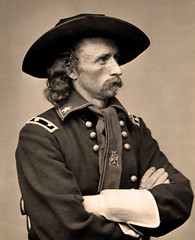
2008632344This General and 250 soldiers of the 7th Cavalry was defeated by Sitting Bull and others at the Battle of the Little Big Horn River in 1876.Colonel George Armstrong Custer11
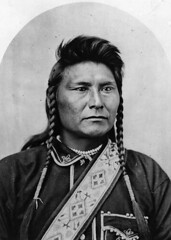
2008641573Leader of the Nez Perce tribe who conducted a brilliant but unsuccessful military campaign in 1877. On his surrender he said "I shall fight no more forever."Chief Joseph12
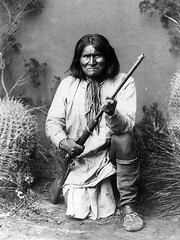
2008653846Famous Indian leader who led the Apache's tribes of Arizona and New Mexico.Geronimo13
2008662502The three factors that led to the defeat of the Indians in the west.Locomotives - disease - extinction of the Buffalo14
2008672467IV. Bellowing Herds of Bison...15
2008683364When the Civil War closed there were more than 15 million Buffalo on the Great Plains. By 1885 there were fewer thana thousand16
2008685002V. The End of the Trail...17
2008701598The author of a book A Century of Dishonor that in 1881 chronicled the dismal history of Indian-white relations.Helen Hunt Jackson18
2008706806This novel by Helen Hunt Jackson was centered around the cruel mistreatment of Indians in California.Ramona19
2008725163The name of the plan to make Native Americans part of white culture.Assimilation20
2008735940In the 19th century some advocated kind treatment of the Indians really had no more respect for traditional Indian culture than those who sought to exterminate them.humanitarians21
2008765003This ritual was supposed to restore Native Americans way of life but it made the U.S. Army nervous.the Ghost Dance22
2008767658The name of the medicine man that started the Ghost DanceWovoka23
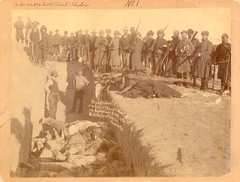
2008792372In 1890 this resulted when the U. S. Army fired cannons on 350 starving, freezing Sioux; within minutes, 300 of them were dead.Battle of Wounded Knee24
2008802540This law intended to assimilate the Indians by breaking up American reservations.1887 the Dawes Severalty Act25
2008894924In 1879 in Pennsylvania, this was founded to teach Native American children how to behave like Whites.the Indian Carlisle School26
2008821614All Indians were not granted this until 1924citizenship27
2008862095The Act that eventually and partially tried to restore the tribal basis of Indian life.the Indian Reorganization Act (the "Indian New Deal") 193428
2008870534VI. Mining: From Dishpan to Ore Breaker...29
2100530545OBJECTIVE : 3 Analyze the brief flowering and decline of the cattle and mining frontiers, and the settling of the arid west by small farmers increasingly engaged with a worldwide economy.30
2008967814The largest single source of silver and gold deposits in the frontier of the West in 1860 - 1890 that brought wealth and statehood to NevadaComstock Lode31
2009884687The name of those who made way out to these mining ventures at this time."fifty-niners"32
2009244077These "Helldorados" sprouted from the desert sands like magicboomtowns33
2009268582These groups performed early justice which proved to be a crude semblance of order in these towns.vigilance committees34
2009292792This "boom and bust" life cycle of towns in the west came to be called this once the mines dried up such as Virginia City, Nevada."ghost towns"35
2009314903This played an important role in attracting the substantial white population to the West.the mining industry36
2009339322Type of mining that uses high pressure water to wash away entire hillsides in order to search for deposits.Hydraulic Mining37
2009347709VII. Beef Bonanzas and the Long Drive...38
2009367442General term for the three month herding of cattle from the grassy plains to the railroad terminals of Kansas, Nebraska, and Wyoming.Long-drive39
2009442315Many ranchers began using this to enclose their ranches.barbed wire40
2009464118Many American cowboys learned their trade from Mexican cowboys called:vaqueros41
2009481059A major cattle route from San Antonio, Texas through Oklahoma to Abilene, KansasChisholm Trail42
2009507836VIII. the Farmers Frontier...43
2009522752Act that offered free land to western settlersHomestead Act 186244
2009598405A frontier home, usually dug into a hill or made from sodSoddy45
2009669668Explorer and geoligist who warned that traditional agriculture could not succeed west of the 100th meridian.John Wesley Powell46
2009698446This lead to a temporarily successful method in farming where frequent shallow cultivation was applied. However, this helped contribute to the "Dust Bowl" of the Great depression."dry farming"47
2009723689He perfected barbed wire in 1874 which allowed fences to be built in a dry treeless region.Joseph Glidden48
2009772414IX. The Far west Comes of Age...49
2009861623In an attempt to encourage people to settle the west. In 1889, this territory offered a major land giveaway in which 2 million acres of land was given away in 24 hours.Oklahoma land giveaway 1889 = "eighty-niners"50
2009894367Became the "Sooner State in 1907.Oklahoma51
2009905739X. The Fading Frontier...52
2100533542OBJECTIVE: 4 Summarize Frederick Jackson Turner's thesis regarding the significance of the frontier in American history, describe its strengths and weaknesses, and indicate the ways in which the American West became and remains a distinctive region of the United States.53
2009914998In 1890, the superintendent of the census bureau announced that this no longer existed.the Western Frontier Line54
2009955264The closing of the American frontier line inspired this writer to produce the inspiring influential essay: "The Significance of the Frontier in American History" in 1893.Frederick Jackson Turner55
2010039334This was created in 1872 to preserve vanishing resources and to establish a national park.Yellowstone National Park56
2010065789This theory that the West dampened class conflict, while exaggerated, did have some validity because free western land did attract many immigrants to the West who might have crowded urban job markets.safety valve theory57
2010104178XI. The Farm Becomes a Factory...58
2100534483OBJECTIVE: 5 Describe the economic forces that drove farmers into debt, and describe how the Populist Party organized to protest their oppression, attempted to forge an alliance with urban workers, and vigorously attacked the two major parties after the onset of the depression of the 1890s.59
2010113894This is what high prices persuaded farmers to concentrate on growing.single "crash crops" such as wheat or corn60
2010140116In 1872, Montgomery Ward and Sears Roebuck introduced this as a way to reach farmers.mail-oder catalog61
2010176992This inventor dramatically sped up the process of harvesting wheat with his reaper in 1837.Cyrus McCormick62
2010210869This amazing system which included farming, banking, and industry in the postwar years was efficient but led to many farming foreclosures.mechanization of agriculture63
2010232153To make more money this led farmers to create these in order to make more money.bonanza farms64
2010292961XII. deflation Dooms the Debtor...65
2010321517In the 1880s and 90s, the volume of agricultural goods ___, and the price received for the goods ____.increased decreased66
2010325855Farmers also felt that this had deflated causing them to have to pay back more for their loans.currency67
2010341430This increased problem led to more than 100,000 farmers could not pay on this 8 to 40 percent interest rate.mortgages68
2010351523XIII. Unhappy Farmers...69
2010358517This bug also plagued farmers at the turn of the 20th century.grasshoppers70
2010372033This protected U.S. industrialists, but did nothing for farmers who had to compete on an unregulated world market.tariffs71
2010396870Farmers were at the mercy of middlemen as well as their shipping rates. To this point farmers had failed to organizerailroads72
2010399226XIV. The Farmers Take Their Stand...73
2019408273this currency had been pulled out of circulation after the Civil War causing farmers to lose money.greenbacks74
2019408274This organization was organized by farmers after the Civil War in 1867.the National Grange of the Patrons of Husbandry75
2019408275the Grange was created byOliver Hudson Kelley social and educational issues76
2019408276By 1870 however, the Grange began to fight against thisthe railroads77
2019408277Granger laws however were defeated in this Supreme Court case decisionWabash decision (1886)78
2019408278this party formed in 1878 and elected 14 members to Congress and in the Presidential election of 1880, ran General James B. Weaver, even though he only got 3% of the popular vote.Greenback Labor Party79
2019421799XV. Prelude to Populism...80
2020066491Farmers formed this organization to fight the railroads in the late 1870s in Texas.the Farmers' Alliance81
2020066492This organization was created by blacks in the 1880s in the South who had been excluded by the Farmers' Alliance.Colored Farmers National Alliance and by 1890 had over 250,000 members82
2020108435This political party emerged out of the Farmers' Alliance in 1892.Populists - People's Party *direct election of senators - secret ballots - graduated income tax - silver . . . . . . .83
2020210747XVI. Coxey's Army and the Pullman Strike...84
2020210748This panic helped to strengthen the Populist cause in the 1890s.the Panic of 189385
2020210749This famous "General" and his "army" marched on Washington D. C. in order to demand that the government relieve unemployment with a public works program."General" Jacob S. Coxey Coxey and his "lieutenants" were arrested for walking on the grass86
2041911927Inventor of the the sleeping cars whose workers went on strike in Chicago.George Pullman87
2041955680This President justified federal intervention into the Pullman strike of 1894 on the grounds the strike was preventing the transit of U.S. mail.Grover Cleveland.88
2042039355The federal court issued this marking the first time in which this was used against strikers.court injunction89
2042060469XVII. Golden McKinley and Silver Bryan...90
2100542840OBJECTIVE: 6 Describe the Democratic party's revolt against President Cleveland and the rise of the insurgent William Jennings Bryan's free silver campaign.91
2100541972OBJECTIVE: 7 Explain why William McKinley proved able to defeat Bryan's populist campaign and how the Republicans' triumph signaled the rise of urban power and the end of the third party system in American politics.92
2042091398The Depression of the 1890s and episodes like the Pullman Strike made this election shape up as a battle between down and out workers and farmers and establishment conservatives.the Election of 189693
2042108489This became the major issue of the 1896 election.Gold or silver94
2042125098He was the Republican candidate in the 1896 election.William McKinley95
2042163622He was an Ohioan and organized McKinley's 1896 campaign and provided a huge amount of money to the McKinley campaign.Mark Hanna Mckinley's campaign amassed $16 million96
2042173025He was the only president to serve two nonconsecutive terms as president. He was also tarnished by the economic depression of the 1890s as well as his position against the strikers in the Pullman strike.Grover Cleveland 22nd and 24th97
2042248964He delivered this famous "cross of gold" speech to the 1896 at the Democratic convention. This speech got him nominated the next day.William Jennings Bryan98
2042293227XVIII. Class Conflict...99
2042334076He went on to win the election of 1896 271 to 176.William McKinley100
2042407256McKinley's victory ushered in this new political era dominated by Republican presidents for 16 consecutive years.fourth party system101
2042412261XIX. Republican Stand-pattism Enthroned...102
2042479418This was passed in 1900 over last-ditch silverite opposition. It provided that paper currency be redeemed freely in gold.Gold Standard Act of 1900103
2047434279The End...104

The American Pageant: Chapter 26: The Great West and the Agricultural Revolution Flashcards

Terms : Hide Images
731349334Dawes Severalty Act(1887) An act that broke up Indian reservations and distributed land to individual households. Leftover land was sold for money to fund U. S. government efforts to "civilize" Native Americans. Of 130 million acres held in Native American reservations before the Act, 90 million were sold to non-Native buyers.0
731349335fourth party system(1896-1932) A term scholars have used to describe national politics from 1896-1932, when Republicans had a tight grip on the White House and issues such as industrial regulation and labor concerns became paramount, replacing older concerns such as civil service reform and monetary policy.1
731349336Gold Standard Act(1900) An act that guaranteed that paper currency would be redeemed freely in gold, putting an end to the already dying "free silver" campaign.2
731349337Homestead Act(1862) A federal law that gave settlers 160 acres of land for about 30$ if they lived on it for five years and improved it by, for instance, building a house on it. The act helped make land accessible to hundreds of thousands of westward-moving settlers, but many people also found disappointment when their land was infertile, or they saw speculators grabbing up the best land.3
731349338Battle of Little Bighorn(1876) A particularly violent example of warfare between whites and Native Americans in the late 19th century, also known as "Custer's Last Stand". In two days, June 25 and 26, 1876, the combined forces of over 2,000 Sioux, Cheyenne, and Arapaho Indians defeated and killed more than 250 U. S. soldiers, including Colonel George Custer. The battle came as the U. S. government tried to compel Native Americans to remain on the reservations and Native Americans tried to defend territory from white gold-seekers. This Indian advantage did not last long, however, as the union of these Indian fighters proved tenuous and the United States Army soon exacted retribution.4
731349339mechanization of agricultureThe development of engine-driven machines, like the combine, which helped to dramatically increase the productivity of land in the 1870's and 1880's. This process contributed to the consolidation of agricultural business that drove many family farms out of existence.5
731349340mining industryAfter gold and silver strikes in Colorado, Nevada, and other western territories in the second half of the 19th century, fortune seekers by the thousands rushed to the West to dig. These metals were essential to U. S. industrial growth and were also sold into world markets. After surface metals were removed, people sought ways to extract ore from underground, leading to the development of heavy mining machinery. This, in turn, led to consolidation of the industry, because only big companies could afford to buy and build the necessary machines.6
731349341PopulistsOfficially known as the People's party, the Populists represented Westerners and Southerners who believed that U. S. economic policy inappropriately favored Eastern businessmen instead of the nation's farmers. Their proposals included nationalizing the railroads, creating a graduated income tax, and most significantly the unlimited coinage of silver.7
731349342Pullman strike(1894) An 1894 strike by railroad workers upset by drastic wage cuts. The strike was led by socialist Eugene Debs, but not supported by the AFL. Eventually President Grover Cleveland intervened and federal troops forced an end to the strike. The strike highlighted both divisions within labor and the government's new willingness to use armed force to combat work stoppages.8
731349343reservation systemThe system that allotted land with designated boundaries to Native American tribes in the West, beginning in the 1850's and ending with the Dawes Severalty Act of 1887. Within these reservations, most land was used communally, rather than owned individually. The U. S. government encouraged and sometimes violently coerced Native Americans to stay on the reservations at all times.9
731349344Battle of Wounded Knee(1890) A battle between the U. S. Army and the Dakota Sioux, in which several hundred Native Americans and 29 U. S. soldiers died. Tensions erupted violently over two major issues: the Sioux practice of the "Ghost Dance", which the U. S. government had outlawed, and the dispute over whether the Sioux reservation land would be broken up because of the Dawes Act.10

AP Biology: Chapter 22 Flashcards

Vocabulary words from the AP Edition of Campbell Biology, Chapter 22.

Terms : Hide Images
199580524evolutiondescent with modification0
199580525fossilsthe remains or traces of organisms from the past1
199580526paleontologythe study of fossils2
199580527catastrophismevents in the past occurred suddenly and were caused by mechanisms different from those operating in the present3
199580528uniformitarianismmechanisms of change are constant over time4
199580529adaptationsinherited characteristics of organisms that enhance their survival and reproduction in specific environments5
199580530natural selectiona process in which individuals that have certain inherited traits tend to survive and reproduce at higher rates than other individuals because of said traits6
199580531artificial selectionhuman modification of other species over many generations by selecting and breeding individuals that possess desired traits7
199580532homologysimilarity resulting from common ancestry8
199580533homologous structuresrepresent variations on a structural theme that was present in their common ancestor9
199580534vestigal structuresremnants of features that served important functions in the organism's ancestors10
199580535evolutionary treea diagram that reflects evolutionary relationships among groups of organisms11
199580536convergent evolutionthe independent evolution of similar features in different lineages12
199580537analogous featuresshare similar function, but not common ancestry13
199580538homologous featuresshare common ancestry, but not necessarily similar function14
199580539biogeographythe geographic distribution of species15
199580540endemicfound nowhere else in the world16

Pages

Subscribe to CourseNotes RSS

Need Help?

We hope your visit has been a productive one. If you're having any problems, or would like to give some feedback, we'd love to hear from you.

For general help, questions, and suggestions, try our dedicated support forums.

If you need to contact the Course-Notes.Org web experience team, please use our contact form.

Need Notes?

While we strive to provide the most comprehensive notes for as many high school textbooks as possible, there are certainly going to be some that we miss. Drop us a note and let us know which textbooks you need. Be sure to include which edition of the textbook you are using! If we see enough demand, we'll do whatever we can to get those notes up on the site for you!