

AP Human Geography: Language Flashcards
Language
Terms : Hide Images
| 6122611711 | Accent | A distinctive mode of pronunciation of a language, especially one associated with a particular nation, locality, or social class. | 0 | |
| 6122611712 | Dialect | A particular form of a language that is particular to a specific region or social group. |  | 1 |
| 6122611713 | Esperanto | An artificial language devised in 1887 as an international medium of communication, based on roots from the chief European languages. |  | 2 |
| 6122611714 | Extinct Language | An extinct language is a language that no longer has any speakers, or that is no longer in current use. |  | 3 |
| 6122611715 | Ideogram | A written character symbolizing the idea of a thing without indicating the sounds used to say it. An Example: 6 (six) |  | 4 |
| 6122611716 | Isogloss | A geographic boundary line delimiting the area in which a given linguistic feature occurs. |  | 5 |
| 6122611717 | Isolated Language | a natural language with no demonstrable genealogical (or "genetic") relationship with other languages; that is, one that has not been demonstrated to descend from an ancestor common with any other language. i.e A language family with only one language. |  | 6 |
| 6122611718 | Language Branch | A Subsection of a Language Family. i.e The Romance "-------" of the Indo-European language family. |  | 7 |
| 6122611719 | Language | The method of human communication, either spoken or written, consisting of the use of words in a structured and conventional way. |  | 8 |
| 6122611720 | Language Group | A Collection of languages within a branch that share a common origin in the relatively recent past and display relatively few differences in grammar and vocabulary. |  | 9 |
| 6122611721 | Language Family | A collection of languages related to each other through a common ancestor long before recorded history |  | 10 |
| 6122611722 | Indo European language family | Largest language family that includes English and most other languages in the Western Hemisphere. Also used in South and Southwest Asia. |  | 11 |
| 6122611723 | Sino-Tibetan Language Family | 2nd largest language family. Includes Madarin, Thai, Cantonese and Burmese |  | 12 |
| 6122611724 | Lingua Franca | A Language mutually understood and commonly used in trade by people who have different native languages |  | 13 |
| 6122611725 | Literary Tradition | A Language that is written as well as spoken | 14 | |
| 6122611726 | Monolingual | The condition of being able to speak only a single language |  | 15 |
| 6122611727 | Bilingual | The ability to speak two languages |  | 16 |
| 6122611728 | Multilingual | The ability to speak multiple languages |  | 17 |
| 6122611729 | Official Language | The language adopted for use by the government for the conduct of business and publication of documents. |  | 18 |
| 6122611730 | Orthography | The conventional spelling system of a language. |  | 19 |
| 6122611731 | Pidgin Language | A Form of speech that adopts a simplified grammar and limited vocabulary of a lingua franca, used for communications among speakers of two different languages. |  | 20 |
| 6122611732 | Standard Language | The form of a language used for official government business, education, and mass communications. |  | 21 |
| 6122611733 | Toponym | a place name or a word derived from the name of a place |  | 22 |
| 6122611734 | Trade Language | A language, especially a pidgin, used by speakers of different native languages for communication in commercial trade. |  | 23 |
| 6122611735 | Vernacular | Using a language or dialect native to a region or country rather than a literary, cultured, or foreign language. It is usually the language of the common people. | 24 | |
| 6122611736 | Creole | a mother tongue formed from the contact of two languages through an earlier pidgin stage |  | 25 |
| 6122611737 | Denglish | The term is used in all German-speaking countries to refer to the increasingly strong influx of macaronic (slang) English or pseudo-English vocabulary into German. |  | 26 |
| 6122611738 | Franglais | a form of French using many words and idioms borrowed from English. |  | 27 |
| 6122611739 | Ebonics | American black English regarded as a language in its own right rather than as a dialect of standard English |  | 28 |
| 6122611740 | Spanglish | a hybrid language combining words and idioms from both Spanish and English, especially Spanish speech that uses many English words and expressions. |  | 29 |
AP World History Strayer Chapter 9 Vocabulary Flashcards
Terms : Hide Images
| 11493890345 | Qur'an | *Definition:* Islamic sacred book of Muhammad's life and message. *Significance:* The word of God that the Muslims believe and follow. |  | 0 |
| 11493890346 | Umma | *Definition:* The entire community of Muslims bound together by ties of religion. *Significance:* Goal of creating a just and moral society where all believers are community (equality). |  | 1 |
| 11493890347 | Pillars of Islam | *Definition:* (1) Allah is the one true God. (2) 5 daily prayers. (3) Charitable. (4) Fast of Ramadan. (5) Hajj. *Significance:* Rules followed every day. The lifestyle to be good and responsible as a Muslim. |  | 2 |
| 11493890348 | Hijra | *Definition:* Muhammad fled from Mecca to Medina. *Significance:* Other merchants didn't appreciate Muhammed, so he left to Medina (another holy place). He came back to Mecca to reconquer it later. |  | 3 |
| 11493890349 | Sharia | *Definition:* Islamic law based on teachings of the Qur'an. *Significance:* It's the foundation of Muslim Law and how Muslims live their lives (with the Ulama as the judge). |  | 4 |
| 11493890350 | Jizya | *Definition:* Poll tax paid by non-Muslims (minority groups) within Muslim empire. *Significance:* Allowed religious freedom through taxes. Christians and Jews were allowed within the empire because Muslims wanted more trading opportunities. | 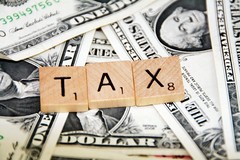 | 5 |
| 11493890351 | Ulama | *Definition:* Doctors of Muslim religion and law. *Significance:* Religiously trained scholars and authorities to look to for Qur'an and Muslim faith. | 6 | |
| 11493890352 | Umayyad Caliphate | *Definition:* 2nd of the 4 major caliphates (rule/reign of chief Muslim ruler). *Significance:* Construction of Mosques to symbolize imperial power. It was short lived because of the favor of Arabs. |  | 7 |
| 11493890353 | Abbasid Caliphate | *Definition:* 3rd of the 4 major caliphates. *Significance:* Founded the city of Baghdad, the capital of the "Golden Age" (enlightenment and prosperity). |  | 8 |
| 11493890354 | Sufism | *Definition:* Mystical system of Sufis, an ascetic Muslim sect. *Significance:* Belief and practice in which Muslims seek to find divine love and knowledge through a direct personal relationship with God. (Response to the materialism of leaders). |  | 9 |
| 11493890355 | Al-Ghazali | *Definition:* Islamic thinker who was a scholar. He argued for rationale. *Significance:* He believed that rational philosophy alone could never enable believers to know about Allah. They must know in their heart. (Caused Sufism). |  | 10 |
| 11493890356 | Ibn Battuta | *Definition:* Visited West Africa and criticized the Muslim practices there. *Significance:* Detailed account of visits to Islamic lands, and documented travels. He provided insight. |  | 11 |
| 11493890357 | Timbuktu | *Definition:* Port city of Mal by the Niger River. *Significance:* Contained library and university. It was the center of Islamic religious and intellectual life. |  | 12 |
| 11493890358 | Mansa Musa | *Definition:* Ruler of Kingdom of Mali (Muslim) sought to expand kingdom for gold. *Significance:* He showed pride and ignorance of Islamic law. He elevated Mali's status in the Islamic world. |  | 13 |
| 11493890359 | al-Andalus | *Definition:* Chief site of Islamic encounter with Christian Europe (conquered by Arab and Berber forces). *Significance:* Muslims, Christians, and Jews contributed to culture. A place of harmony and tolerance (75% converted to Islam). |  | 14 |
| 11493890360 | Madrassas | *Definition:* (11th century) Formal colleges, offered more advanced instructions in Qur'an and sayings of Muhammad. It was the informal teachings with text memorization. *Significance:* Another way Ulama passed on teachings of the faith, and important knowledge of the faith. |  | 15 |
| 11493890361 | House of Wisdom | *Definition:* Baghdad, the center for research and translation of scientific, medical, and philosophical texts. *Significance:* Islamic ideas circled the world, and Greek information was being translated into Arabic. |  | 16 |
| 11493890362 | Ibn Sina | *Definition:* Writer in almost all fields of science and philosophy. *Significance:* Set standards for medical practice in Islamic and Christian worlds. Accurately diagnosed many disease and found treatments, and revolutionary writings. |  | 17 |
| 11493890363 | Sufism | 18 |
Flashcards
Flashcards
AP Language Study Set Flashcards
Terms : Hide Images
| 6773500081 | ad hominem fallacy | attacks the person instead of the argument | 0 | |
| 6773506728 | allegory | a story, poem, or picture that can be interpreted to reveal a hidden meaning, typically a moral or political one | 1 | |
| 6773511826 | alliteration | repetition of beginning sounds | 2 | |
| 6773513481 | allusion | a passing reference to a work of literature or historical event | 3 | |
| 6773515911 | ambiguity | uncertainty or inexactness of meaning in language | 4 | |
| 6773521656 | analogy | a comparison between two things, typically for the purpose of explanation or clarification | 5 | |
| 6773526811 | anecdote | a short and amusing or interesting story about a real incident or person | 6 | |
| 6773532202 | antecedent | the word a pronoun replaces | 7 | |
| 6773532203 | antithesis | a figure of speech in which an opposition or contrast of ideas is expressed by parallelism of words that are the opposites of, or strongly contrasted with, each other | 8 | |
| 6773539215 | aphorism | a pithy observation that contains a general truth, such as, "if it ain't broke, don't fix it." | 9 | |
| 6773551588 | apostrophe | a figure of speech in which the writer or speaker addresses an imaginary person or one who is not there | 10 | |
| 6773554704 | anadiplosis | a rhetorical device in which a writer or speaker uses a word near the end of the clause and then repeats that word to begin the next clause. Anadiplosis is used to bring attention to a specific thing or concept | 11 | |
| 6773558434 | assonance | repetition of a vowel soun d | 12 | |
| 6773560544 | backing | support for an argument which typically includes facts, statistics, or examples | 13 | |
| 6773565904 | bandwagon appeal | also known as the ad populum fallacy. Can appeal to patriotism, loyalty, or religious fervor. | 14 | |
| 6773575368 | begging the question | also known as circular reasoning, doesn't actually support the argument, but just re-states it. | 15 | |
| 6773588237 | chiasmus | a rhetorical or literary figure in which words, grammatical constructions, or concepts are repeated in reverse order, in the same or a modified form. For example, "Don't count the days; make the days count." | 16 | |
| 6773597010 | claim | a point or assertion in an argument | 17 | |
| 6773630869 | claim of fact | posits whether something is true or untrue, but there must always be room for controversy | 18 | |
| 6773632391 | claim of value | establishes standards of evaluation or advantage | 19 | |
| 6773651181 | claims of policy | proposes a clear course of action | 20 | |
| 6773658809 | clause | a unit of grammar which ranks below a sentence and includes both a subject and a verb | 21 | |
| 6773662560 | colloquialism | a word or phrase that is not formal or literary, typically one used in ordinary or familiar conversation | 22 | |
| 6773666734 | conceit | an extended metaphor | 23 | |
| 6773668325 | connotation | the associations a word produces | 24 | |
| 6773671148 | consonance | repetition of consonant sounds | 25 | |
| 6773674199 | deductive reasoning | "top-down" logic, or the process of reasoning from one or more statements (premises) to reach a logically certain conclusion | 26 | |
| 6773678844 | denotation | the dictionary definition of a word | 27 | |
| 6773680223 | diction | refers to word choice; can be formal or informal | 28 | |
| 6773683103 | didactic | meant to teach a lesson | 29 | |
| 6773685283 | ethos | created by choosing language that is appropriate for the audience and topic, making yourself sound fair or unbiased, introducing your expertise or pedigree, etc. | 30 | |
| 6773745164 | irony | when the unexpected happens | 31 | |
| 6773697210 | euphemism | a mild or indirect word or expression substituted for one considered to be too harsh or blunt when referring to something unpleasant or embarrassing | 32 | |
| 6773704693 | figurative language | not literal; includes techniques such as simile, metaphor, and personification | 33 | |
| 6773706316 | foreshadowing | hints or clues of what's to come | 34 | |
| 6773708777 | genre | a type of style of writing | 35 | |
| 6773712498 | hasty generalization | makes a general assumption based on one or two experiences. Stereotyping and sexism often fall into this category | 36 | |
| 6773725617 | hyperbole | extreme exaggeration | 37 | |
| 6773717137 | Horatian satire | mild or humorous criticism of human folly | 38 | |
| 6773725618 | imagery | sensory detail -- especially visual detail -- in literature | 39 | |
| 6773732248 | inductive reasoning | logic based on observation or generalization | 40 | |
| 6773738216 | inference | a conclusion reached on the basis of evidence and reasoning | 41 | |
| 6773747440 | Juvenalian satire | provokes dark humor and criticizes corruption | 42 | |
| 6773752028 | juxtaposition | the fact of two things being seen or placed close together, often with contrasting effect | 43 | |
| 6773760307 | litotes | ironical understatement in which an affirmative is expressed by the negative of its contrary (e.g., you won't be sorry, meaning you'll be glad) | 44 | |
| 6773763845 | logos | appeals to logic using facts, statistics, historical examples, etc. | 45 | |
| 6773768205 | loose sentence | also called a cumulative sentence, a type of sentence in which the main idea (independent clause) is elaborated by the addition of modifying phrases or clauses | 46 | |
| 6773779327 | syllogism | a type of logical deduction involving a major premise, a minor premise, and a conclusion | 47 | |
| 6773787624 | metonymy | when a related object stands for the thing itself (ex: "the crown" to refer to the monarch) | 48 | |
| 6773799228 | mood | the feeling created in the reader or audience | 49 | |
| 6773801775 | narrative | a spoken or written account; a story | 50 | |
| 6773801776 | non sequitor | a conclusion or statement that does not logically follow from the previous argument or statement | 51 | |
| 6773814562 | onomatopoeia | the formation of a word from a sound associated with what is named (e.g., cuckoo, sizzle) | 52 | |
| 6773824294 | oxymoron | a figure of speech in which apparently contradictory terms appear in conjunction (e.g., faith unfaithful kept him falsely true) | 53 | |
| 6773828961 | paradox | a seemingly absurd or self-contradictory statement or proposition that when investigated or explained may prove to be well founded or true | 54 | |
| 6773837068 | parody | an imitation of the style of a particular writer, artist, or genre with deliberate exaggeration for comic effect | 55 | |
| 6773842788 | pathos | can be developed by using meaningful language, emotional tone, emotion evoking examples, stories of emotional events, and implied meanings | 56 | |
| 6773849800 | pedantic | narrowly, stodgily, and often ostentatiously learned | 57 | |
| 6773857388 | periodic sentence | in rhetoric, a complex sentence in which the main clause is left unfinished until the end in order to create the effect of anticipation or suspense | 58 | |
| 6773863131 | personification | human characteristics given to non-human entities | 59 | |
| 6773869361 | post hoc, ergo propter hoc | literally "after, therefore because of," this logical fallacy implies cause and effect where none exists | 60 | |
| 6773873446 | fallacy | a mistaken belief, especially one based on unsound argument | 61 | |
| 6773879458 | predicate adjective | an adjective appearing in the predicate of a sentence or clause and modifying the grammatical subject of the sentence or clause. Typically, a predicate adjective follows the verb to be, but it could also follow a linking verb | 62 | |
| 6773885129 | predicate nominative | a noun or pronoun that follows a linking verb that restates or stands for the subject. For example: Mary is my sister | 63 | |
| 6773889547 | prose | regular writing or speech; not poetic | 64 | |
| 6773891919 | qualifier | a word or phrase that changes how absolute, certain or generalized a statement is | 65 | |
| 6773900832 | rebuttal | a refutation or contradiction | 66 | |
| 6773904784 | shift | a change in mood, tone, or message | 67 | |
| 6773908719 | simile | a comparison between two unlike things using the words "like" or "as" | 68 | |
| 6773910779 | symbol | something which stands for both itself and something else | 69 | |
| 6773913216 | synecdoche | when the part stands for the whole, or vice versa | 70 | |
| 6773916747 | syntax | sentence structure, organization, and type | 71 | |
| 6773918575 | understatement | the presentation of something as being smaller, worse, or less important than it actually is | 72 | |
| 6773923176 | tone | the speaker's attitude toward the subject | 73 | |
| 6773925539 | polysyndeton | the use of several conjunctions in quick succession | 74 | |
| 6773930368 | asyndeton | the absence of conjunctions where they would normally be present | 75 | |
| 6773932284 | zeugma | a figure of speech in which a word applies to two others in different senses (e.g., John and his license expired last week) or to two others of which it semantically suits only one (e.g., with weeping eyes and hearts) | 76 | |
| 6773939826 | jargon | a type of diction which involves special words or expressions that are used by a particular profession or group and are difficult for others to understand | 77 | |
| 6773952696 | false dilemma | also known as false dichotomy; presents an either/or situation where none exists | 78 | |
| 6773962982 | equivocation | uses a word or phrase to join together two arguments that don't belong together | 79 | |
| 6773957442 | straw man fallacy | creates a false opponent and tears that person down | 80 | |
| 6773971018 | anaphora | the repetition of a word or phrase at the beginning of successive clauses | 81 | |
| 6773977111 | enumeratio | a figure of amplification in which a subject is divided into constituent parts or details, and may include a listing of causes, effects, problems, solutions, conditions, and consequences; the listing or detailing of the parts of something | 82 | |
| 6773992691 | amplification | a rhetorical device writers use to embellish a sentence or statement by adding further information | 83 |
AP World History MIDTERM Flashcards
Terms : Hide Images
| 11826778220 | Syncretism | a blending of beliefs and practices from different religions into one faith | 0 | |
| 11826778221 | Specialization of Labor | To train or specialize people in certain areas of work so that people can accomplish tasks quicker | 1 | |
| 11826778222 | Hunter / Gatherer | People who hunt animals and gather wild plants, seeds, fruits, and nuts to survive | 2 | |
| 11826778223 | Domestication | the taming of animals for human use, such as work or as food | 3 | |
| 11826778224 | Pastoral Nomadism | A form of subsistence agriculture based on herding domesticated animals. | 4 | |
| 11826778225 | Filial Piety | In Confucian thought, one of the virtues to be cultivated, a love and respect for one's parents and ancestors. | 5 | |
| 11826778226 | Confucius | (551-479 BCE) A Chinese philosopher known also as Kong Fuzi and created one of the most influential philosophies in Chinese history. | 6 | |
| 11826778227 | Qin and Han Dynasty | unify China and establish a centralized empire, which endures and evolves down through 20th century | 7 | |
| 11826778228 | Daoism | A religion in China which emphasizes the removal from society and to become one with nature. | 8 | |
| 11826778229 | Bureaucracy | a system of government in which most of the important decisions are made by state officials rather than by elected representatives. | 9 | |
| 11826778230 | Patriarchy | a system of society or government in which the father or eldest male is head of the family and descent is traced through the male line. | 10 | |
| 11826778231 | Silk Road | Connected China, India, and the Middle East. Traded goods and helped to spread culture. | 11 | |
| 11826778232 | Monsoons | seasonal wind patterns that cause wet and dry seasons | 12 | |
| 11826778233 | Reincarnation | In Hinduism and Buddhism, the process by which a soul is reborn continuously until it achieves perfect understanding | 13 | |
| 11826778234 | Vedas and Upanishads | Sacred writings of Hinduism interpreted by priests called Brahman. | 14 | |
| 11826778235 | Caste System | a set of rigid social categories that determined not only a person's occupation and economic potential, but also his or her position in society | 15 | |
| 11826778236 | Ashoka | Third ruler of the Mauryan Empire in India (r. 270-232 B.C.E.). He converted to Buddhism and broadcast his precepts on inscribed stones and pillars, the earliest surviving Indian writing. (p. 184) | 16 | |
| 11826778237 | Karma | (Hinduism and Buddhism) the effects of a person's actions that determine his destiny in his next incarnation | 17 | |
| 11826778238 | Gupta and Mauryan dynasty | were the most successful empires of Ancient India. | 18 | |
| 11826778239 | Hinduism | A religion and philosophy developed in ancient India, characterized by a belief in reincarnation and a supreme being who takes many forms | 19 | |
| 11826778240 | Buddhism | the teaching of Buddha that life is permeated with suffering caused by desire, that suffering ceases when desire ceases, and that enlightenment obtained through right conduct and wisdom and meditation releases one from desire and suffering and rebirth | 20 | |
| 11826778242 | Zoroastrianism | A religion that developed in early Persia and stressed the fight between the forces of good and the forces of evil and how eventually the forces of good would prevail. | 21 | |
| 11826778243 | Hellenistic Period | that culture associated with the spread of Greek influence as a result of Macedonian conquests; often seen as the combination of Greek culture with eastern political forms | 22 | |
| 11826778244 | Roman Republic | Government ruled by a senate, spoke Latin, and borrowed heavily from Greek culture. They militarily expanded their territory for centuries but the senate eventually was overthrown by an imperial system. | 23 | |
| 11826778245 | Polis | A city-state in ancient Greece. | 24 | |
| 11826778246 | Aristotle, Socrates, Plato | Greek philosophers | 25 | |
| 11826778247 | Peloponnesian War | (431-404 BCE) The war between Athens and Sparta that in which Sparta won, but left Greece as a whole weak and ready to fall to its neighbors to the north. | 26 | |
| 11826778248 | Polynesia | a subregion of Oceania, made up of more than 1,000 islands scattered over the central and southern Pacific Ocean. | 27 | |
| 11826778249 | Animism | The belief that bodies of water, animals, trees, and other natural objects have spirits | 28 | |
| 11826778250 | Bedouin Culture | focus on poetry - shared orally, no written lang. religion was blend of animism and polytheism recognized Allah, who was adopted into islam gods associatred w/ night - cool, dew, shelter, etc religion little to do with ethics - had code of honor | 29 | |
| 11826778251 | Mecca and Medina | Islamic holy cities; Mecca is the birthplace of Muhammad and the city all Muslims turn to in prayer; Medina is where Muhammad was first accepted as the Prophet, and where his tomb is located | 30 | |
| 11826778252 | Muhammad | the Arab prophet who founded Islam (570-632) | 31 | |
| 11826778253 | Qur'an | the Islamic sacred book, believed to be the word of God as dictated to Muhammad by the archangel Gabriel and written down in Arabic. | 32 | |
| 11826778254 | Crusades | A series of holy wars from 1096-1270 AD undertaken by European Christians to free the Holy Land from Muslim rule. | 33 | |
| 11826778255 | Golden Age of Islam | A time during the Abbasid Dynasty (with a capital in Baghdad) when the arts and intellectualism were flourishing. Astronomy, surgery, etc. were all having inventions in their fields, and Baghdad was a center of intellectualism. | 34 | |
| 11826778256 | Black Death | the epidemic form of bubonic plague experienced during the Middle Ages when it killed nearly half the people of western Europe | 35 | |
| 11826778257 | Stateless Societies | cultural groups in which authority is shared by lineages of equal power instead of being exercised by a central government | 36 | |
| 11826778258 | Songhay Kingdom | The Songhay people dominated the middle reaches of the Niger valley. Songhay became an independent state in the seventh century. By 1010, the rulers were Muslims and had a capital at Gao. Songhay won freedom from Mali by the 1370s and prospered as a trading state. An empire was formed under Sunni Ali (1464-1492), a great military leader, who extended rule over the entire middle Niger valley. He developed a system of provincial administration to secure the conquests. Sunni Ali's successors were Muslim rulers with the title of askia; by the mid-sixteenth century, their state dominated the central Sudan. Daily life followed patterns common in savanna states; Islamic and indigenous traditions combined. Men and women mixed freely; women went unveiled and young girls at Jenne were naked. Songhay remained dominant until defeated by Moroccans in 1591. Other states that combined Muslim and pagan ways rose among the Hausa of northern Nigeria. In the fourteenth century, the first Muslim ruler of Kano made the Hausa city a center of Muslim learning. Along with other Hausa cities, Kano followed the Islamic-indigenous amalgam present in the earlier grasslands empires. Traders and other Muslims widely spread influences, even in regions without Islamic states. | 37 | |
| 11826778259 | Benin | a kingdom that arose near the Niger River delta in the 1300s and became a major West African state in the 1400s | 38 | |
| 11826778260 | Kievan Rus | A monarchy established in present day Russia in the 6th and 7th centuries. It was ruled through loosely organized alliances with regional aristocrats from. The Scandinavians coined the term "Russia". It was greatly influenced by Byzantine | 39 | |
| 11826778262 | Empress Wu | Tang ruler 690-705 CE in China; supported Buddhist establishment; tried to elevate Buddhism to state religion; had multistory statues of Buddha created | 40 | |
| 11826778263 | Zen Buddhism | Known as Chan Buddhism in China; stressed meditation and the appreciation of natural and artistic beauty | 41 | |
| 11826778264 | Neo-Confucianism | term that describes the resurgence of Confucianism and the influence of Confucian scholars during the T'ang Dynasty; a unification of Daoist or Buddhist metaphysics with Confucian pragmatism | 42 | |
| 11826778265 | Grand Canal | Built in 7th century during reign of Yangdi during Sui dynasty; designed to link the original centers of Chinese civilization on the north China plain with the Yangtze river basin to the south; nearly 1200 miles long. | 43 | |
| 11826778266 | Junks | Chinese ships, particularly from the 1400s, are often called these. It was a sturdy Chinese ship design and the largest of its kind were treasures ships that could carry a thousand tons of cargo. | 44 | |
| 11826778267 | Champa Rice | Quick-maturing rice that can allow two harvests in one growing season. Originally introduced into Champa from India, it was later sent to China as a tribute gift by the Champa state (as part of the tributary system.) | 45 | |
| 11826778268 | Foot binding | Chinese practice of tightly wrapping girls' feet to keep them small, begun in the Tang dynasty; an emphasis on small size and delicacy was central to views of female beauty. | 46 | |
| 11826778269 | Sinification | spread of Chinese culture | 47 | |
| 11826778270 | Taika Reforms | Attempt to remake Japanese monarch into an absolute Chinese-style emperor; included attempts to create professional bureaucracy and peasant conscript army. | 48 | |
| 11826778271 | Tales of the Genji | argued the heritage of ancient Japan was one of natural spontaneity in feelings and spirit -ran counter to imported Chinese Confucianism | 49 | |
| 11826778272 | Samurai | Class of warriors in feudal Japan who pledged loyalty to a noble in return for land. | 50 | |
| 11826778273 | Shogunate | The japanese system of centralized government under a shogun, who exercised actual power while the emperor was reduced to a figurehead. | 51 | |
| 11826778274 | Daimyo | A Japanese feudal lord who commanded a private army of samurai | 52 | |
| 11826778275 | Silla Dynasty | The dynasty in Korea that rallied to prevent Chinese domination in the seventh century CE. | 53 | |
| 11826778276 | Trung Sisters | leaders of a rebellion in Vietnam against Chinese rule in 39 CE; demonstrates importance of women in Vietnamese society | 54 | |
| 11826778277 | Feudalism | A political system in which nobles are granted the use of lands that legally belong to their king, in exchange for their loyalty, military service, and protection of the people who live on the land | 55 | |
| 11826778278 | Manors | Large farm estates of the Middle Ages that were owned by nobles who ruled over the peasants living in the land | 56 | |
| 11826778279 | Trade Guilds | the Medieval equivalent to modern-day unions, which protected the rights of tradespeople and craftsmen throughout much of Europe. They served as producers of cycle plays at such events as the Corpus Christi festivals. | 57 | |
| 11826778280 | Hanseatic League | An economic and defensive alliance of the free towns in northern Germany, founded about 1241 and most powerful in the fourteenth century. | 58 | |
| 11826778281 | Columbian Exchange | An exchange of goods, ideas and skills from the Old World (Europe, Asia and Africa) to the New World (North and South America) and vice versa. | 59 | |
| 11826778282 | Battle of Lepanto | (1571) Spain defeated the Turkish navy off the coast of Greece-ended Ottoman threat in Mediterranean, Turkish sea power was destroyed in 1571 by a league of Christian nations organized by the Pope | 60 | |
| 11826778283 | Mercantilism | An economic policy under which nations sought to increase their wealth and power by obtaining large amounts of gold and silver and by selling more goods than they bought | 61 | |
| 11826778284 | 1492 | Columbus/Reconquista of Spain | 62 |
AP Literature and Comp Vocab 1 Flashcards
Terms : Hide Images
| 9869964738 | Imagery | The use of figurative language to represent objects, actions and ideas in such a way that it appeals to our physical senses. | 0 | |
| 9869971656 | Alliteration | A stylistic device in which a number of words, having the same first consonant sound, occur close together in a series. | 1 | |
| 9869979354 | Consonance | Type of Alliteration: Consonant Sounds. | 2 | |
| 9869979355 | Assonance | Type of Alliteration: Vowel Sounds (Usually within words). | 3 | |
| 9869987267 | Diction | The style of speaking or writing determined by the choice of words. | 4 | |
| 9869989812 | Denotation | The dictionary definition of a word. | 5 | |
| 9869989813 | Connotation | Refers to a meaning that is implied by or associated with a word apart from the thing which it describes explicitly. Words carry cultural and emotional associations or meanings. | 6 | |
| 9869991900 | End-stopped Line | A poetic device in which a pause comes at the end of a syntactic unit (sentence, clause or phrase); this pause can be expressed in writing as a punctuation mark such as a colon, semi-colon, period or full stop. | 7 | |
| 9869994508 | Slant Rhyme/Half-Rhyme | A rhyme in which the stressed syllables of ending consonants match, however the preceding vowel sounds do not match. | 8 | |
| 9869994509 | Internal Rhyme | Metrical line in which middle words and end words rhyme with each other. It is also called middle rhyme, since it comes in the middle of lines ("Once upon a midnight dreary, while I pondered, weak and weary") | 9 |
Flashcards
Ap Flashcards
Terms : Hide Images
| 5633529296 | implicit memory | retention independent of conscious recollection | 0 | |
| 5633534185 | explicit memory | memory of facts and experiences that one van consciously know and declare | 1 | |
| 5633555382 | hippocampus | neural center that is located in the limbic center | 2 | |
| 5688261028 | recall | a measure of memory in which the person must retrieve information learned earlier fill in the blank test | 3 | |
| 5688284466 | recognition | measure of memory in which the person need only identify items previously learned multiple choice test | 4 | |
| 5688294866 | relearning | measure of memory that assesses the amount of time saved when learning material a second time | 5 | |
| 5688307636 | priming | activation, often unconsciously of particular associations in memory | 6 | |
| 5688317787 | deja vu | the eerie sense of "ive experienced this before" | 7 | |
| 5688333028 | mood congruent memory | tendency to recall experiences that are consistent with ones current good or bad mood | 8 | |
| 5688353741 | proactive interference | disruptive effect of prior learning on the recall of new information | 9 | |
| 5688371783 | retroactive interference | disruptive effect of new learning on the recall of old information | 10 | |
| 5688382944 | repression | psychoanalytic theory, the basic defense mechanism that banishes from consciousness, anxiety arousing thoughts, feelings, and memories | 11 | |
| 5688406727 | misinformation effect | incorporating misleading information into ones memory of an event | 12 | |
| 5688419677 | source amnesia | attributing to the wrong source, an event we have experienced, heard about, read about, or imagined | 13 | |
| 5703739692 | Absent mindedness | sin of forgetting, inattention to details leads to encoding failure, our mind is elsewhere when we lay down the car keys | 14 | |
| 5703793053 | transcience | sin of forgetting, storage decay over time, after we part ways with former classmates, unused information fades | 15 | |
| 5703815772 | blocking | sin of forgetting, inaccessibility of stored information, ( ex when something is on the tip of your tongue ) | 16 | |
| 5703837534 | misattribution | sin of distortion, confusing the source of information (putting words in someone elses mouth) | 17 | |
| 5703861464 | suggestibility | the lingering effects of misinformation (did mr jones touch your private parts? later becomes a childs false memory ) | 18 | |
| 5703886854 | bias | Sin of distribution, belief colored recollections (current feelings towards a friend may color our recalled initial feelings | 19 | |
| 5703905488 | persistence | sin of intrusion, unwanted memories (being haunted by images of sexual assault) | 20 |
Pages

Need Help?
We hope your visit has been a productive one. If you're having any problems, or would like to give some feedback, we'd love to hear from you.
For general help, questions, and suggestions, try our dedicated support forums.
If you need to contact the Course-Notes.Org web experience team, please use our contact form.
Need Notes?
While we strive to provide the most comprehensive notes for as many high school textbooks as possible, there are certainly going to be some that we miss. Drop us a note and let us know which textbooks you need. Be sure to include which edition of the textbook you are using! If we see enough demand, we'll do whatever we can to get those notes up on the site for you!
