AP Notes, Outlines, Study Guides, Vocabulary, Practice Exams and more!

AP World History Africa + Spread of Islam Flashcards Flashcards

Terms : Hide Images
7647424276Mansa MusaMeccan King, crossed Sahara0
7647426618HajjPilgrimage to Mecca1
7647432501Effects of IslamTrade + long-distance commerce2
7647442289State-building (Mali, Songhay)Military power, not ethic/cultural unity3
7647450256African societiesDiverse - centralized states, stateless societies4
7647458987Stateless societiesKinship, family council5
7647884628Stateless societies vs. statesLacking political power + authority6
7647481550Bantu peopleInvented main African language7
7647485299Animistic religionSoul/spirit in anything8
7647520042African economiesSpecialization, merchants controlled trade9
7647529569Cyrene, CarthageTrading centers10
7647537711IfriqiyaRoman word for Africa11
7647540458Almoravids and AlmohadisReformist groups, launched jihad12
7647545619JihadHoly war to protect faith13
7647549250Benefits of IslamBeliever equality, reinforced Arab kings' authority14
7647571278Christian kingdoms in AfricaNubia and Ethiopia15
7647581372AxumEthiopian kingdom, Christian outpost16
7647588884Africa coasts of contactAtlantic, Indian Ocean, savanna on edge of Sahara17
7647596914GhanaFirst known kingdom in sub-Saharan West Africa (790-1240)18
7647605081Ghana tradeExchanged gold for salt/dates from Sahara19
7647611266Sudanic kingdomsTakrur, Gao20
7647613610Similarites of Sudanic statesPatriarch/council of elders, had conquest states21
7647889654CoptsChristian sect of Egypt, preferred Islam to Byzantines22
7647897175SundiataFounded Mali empire, great leader, "Lion Prince"23
7647906643JuulaMalinke merchants, carried out trade throughout Mali empire24
7647916450GriotsKeepers of traditions and advisors to Mali kings25
7647921251Ibn BatutaArab traveler, described African cultures + societies26
7647929545TimbuktuNiger River city, major part of trans-Saharan trade + Islamic learning center27
7647942093ShariaIslamic code of law from Koran and Mohammed28
7647949059ZanjArabic term for East African coast29
7647953961Great ZimbabweTrading center + state capital between 1250-145030
7647984382NokWest Africa's earliest known culture, pre-Nigeria31
7647996813Characteristics of NokFirst people to smelt iron, realistic + highly stylized terra-cotta objects32
7648008463KongoFounded in 13th century, flourishing by 15th33
7648014539Characteristics of KongoAgriculture-based, hereditary monarchy ruled34
7648022618Secret societiesWest african societies, initiated boys and girls into adulthood35
7648032070SwahiliBantu language with Arabic words36
7648035509BantuMigrated through central + southern Africa37
7648043182Kingdoms of the GrasslandsGhana, Songhay, Mali38
7648059750Mali EmpireStrong West African empire from 1240-150039
7648067995Mali Empire characteristicsMany mosques and universities, gold-salt trade40
7648079053Fall of Mali EmpireLack of strong rulers who could govern well41
7648105990SonghaySucceeded Mali; controlled middle reaches of Niger valley42
7648111299Songhay originsOriginally independent kingdom under Berber dynasty; capital at Gao; reached imperial status under Sunni Ali43
7648122103Songhay trade productsGold and salt (almost equal in value)44
7648139860Mwene MutapaKing of Great Zimbabwe, made rapid expansion45
7648148102Successes of Mwene MutapaDominated over sources of gold, exported textiles and impressed Europeans with iron weapons46

AP World History Period 1 Flashcards

From Hunting and Gathering to Civilizations, 2.5 million-1000 B.C.E.: Origins
Original from MrsBHatchTEACHER

Terms : Hide Images
10699174128hunting and gatheringMeans of obtaining subsistence by humans before the mastery of sedentary agriculture; normally typical of tribal social organization0
10699174129civilizationSocieties with reliance on sedentary agriculture, ability to produce food surpluses, and existence of nonfarming elites, along with merchant and manufacturing groups1
10699174130neolithicThe New Stone Age between 8000 and 5000 B.C.E.; period in which adaptation of sedentary agriculture occurred; domestication of plants and animals accomplished2
10699174131nomadic societieslivestock hearding societies that do not have a permanent settlement. normally found on the fringes of civilized (urban) societies; commonly referred to as "barbarian" by civilized societies3
10699174132cultureCombination of ideas, objects, and patterns of behavior that result from human social interaction4
10699174133agrarian revolutionOccurred between 8000 and 5000 B.C.E.; transition from hunting and gathering to sedentary agriculture5
10699174134pastoralismA nomadic agricultural lifestyle based on herding domesticated animals; tended to produce independent people capable of challenging sedentary agricultural societies6
10699174135Catal HuyukEarly urban culture/civiization based on sedentary agriculture; located in modern southern Turkey; larger in population than Jericho, had greater degree of social stratification7
10699174136Bronze AgeFrom 4000 to 3000 B.C.E.; increased use of plow, metalworking; development of wheeled vehicles, writing8
10699174137MesopotamiaLiterally "between the rivers"; the civilization that arose in the alluvial plain of the Tigris-Euphrates river valleys9
10699174138potter's wheelA technological advance in pottery making; invented circa 6000 B.C.E.; encouraged faster and higher-quality ceramic pottery products10
10699174139SumeriansPeople who migrated into Mesopotamia circa 4000 B.C.E.; created the first civilization within the region; organized area into city-states11
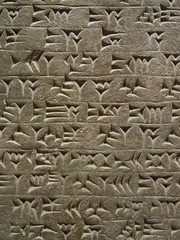
10699174140cuneiformA form of writing developed by the Sumerians using a wedge-shaped stylus and clay tablets12
10699174141city-stateA form of political organization typical of Mesopotamian civilization; consisted of agricultural hinterlands ruled by an urban-based king13
10699174142ziggurata massive tower building usually associated with Mesopotamian temple connections14
10699174143Babylonian EmpireUnified all of Mesopotamia circa 1800 B.C.E.; collapsed due to foreign invasion circa 1600 B.C.E.15
10699174144HammurabiThe most important Babylonian ruler; responsible for codification of the law16
10699174145PharaohThe term used to denote the kings of ancient Egypt; the term, "great house" refers to the palace of the pharaohs17
10699174146pyramidsMonumental architecture typical of Old Kingdom Egypt; used as burial sites for pharaohs18
10699174147hieroglyphsForm of writing developed in ancient Egypt; more pictorial than Mesopotamian cuneiform19
10699174148KushAfrican state that developed along the upper reaches of the Nile circa 1000 B.C.E.; conquered Egypt and ruled it for several centuries20
10699174149monotheismThe exclusive worship of one god; introduced by Jews into Middle Eastern civilization21
10699174150PhoeniciansSeafaring civilization located on the shores of the eastern Mediterranean; established colonies throughout the Mediterranean22
10699174151Harappa and Mohenjo DaroMajor urban complexes of Harappan civilization; laid out on planned grid pattern23
10699174152AryansIndo-European nomadic, warlike, pastorialists who replaced Harappan civilization24
10699174153Huanghe (Yellow) River BasinSite of the development of sedentary agriculture in China25
10699174154Shang1st Chinese dynasty (after the legendary Xia)26
10699174155OraclesShamans or priests in Chinese society who foretold the future through interpreting animal bones cracked by heat; inscriptions on bones led to Chinese writing27
10699174156ideographic writingPictograph characters grouped together to create new concepts; typical of Chinese writing28
10699174157Big GeographyA term that draws attention to the global nature of world history.29
10699174158PaleolithicThe period that ended about 3,000 years after the end of the last Ice Age, it lasted until about 10,000 years ago. (Old Stone Age) The period of the Stone Age associated with the evolution of humans. It predates the Neolithic period.30
10699174159Human migration during Paleolithic eramovement of humans from Africa to Eurasia, Australia, and the Americas31
10699174160eglitarianequality among people (no social levels)32
10699174161toolsHumans developed a wider range of ____ specially adapted to different environments from tropics to tundra33
10699174162Neolithic Revolutionperiod of change from hunter-gatherer lifesyle to agricultural lifestyles associated with domestication, farming, and settlement34
10699174163patriarchyfather based/male dominated society35
10699174164climatic changePermanent agricultural villages emerged first in the lands of the eastern Mediterranean, possibly as a response to what?36
10699174165weaponsPastoralists were often the developers and disseminators of of ____ and forms of transportation that transformed warfare in agrarian civilizations37
10699174166horsesname one mode of new transportation by the pastoralists38
10699174167artElites, both political and religious, promoted ____.39
10699174168record-keeping systems___ arose independently in all early civilization sand subsequently were diffused40
10699174169Nile RiverThis river flooded regularly.41
10699174170Tigris RiverThis river's floods were unpredictable.42
10699174171MesopotamianUnpredictable weather patterns affected the development of the _____ civilization.43
10699174172Egyptian_______art demonstrated little change for nearly 1000 years.44
10699174173Nubia and KushKingdoms upriver from Egypt.45
10699174176Standard of Ur46
10699174177Harappan King or Priest Figure47
10699174174JerichoOne of the earliest cities: located in modern Israel.48
10699174175Catal-HyoukOne of the earliest cities: located in modern Turkey.49

Ap Human Geography-Chapter 6-Language Flashcards

Terms : Hide Images
11488778044languageA set of sounds, combination of sounds, and symbols that are used for communication.0
11488778045mutual intelligibilityThe ability of two people to understand each other when speaking.1
11488778046standard languageThe variant of a language that a country's political and intellectual elite seek to promote as the norm for use in schools, government, the media, and other aspects of public life.2
11488778047dialectsLocal or regional characteristics of a language. While accent refers to the pronunciation differences of fa standard language, a dialect, in addition to pronunciation variation, has distinctive grammar and vocabulary.3
11488778048dialect chainsA set of contiguous dialects nearest to each other at any place in the chain are most closely related.4
11488778049isoglossA geographic boundary within which a particular linguistic feature occurs.5
11488778050language familiesGroup of languages with a shared but fairly distant origin.6
11488778051subfamiliesDivisions within a language family where the commonalities are more definite and the origin is more recent.7
11488778053Protho-Indo-EuropeanLinguistic hypothesis proposing the existence of an ancestral Indo-European language that is the hearth of the ancient Latin, Greek, and Sanskrit languages which hearth would link modern languages from Scandinavia to North Africa and from North America through parts of Asia to Australia.8
11488778054backward reconstructionThe tracking of sound shifts and hardening of consonants "backward" toward the original language.9
11488778055extinct languageLanguage without any native speakers.10
11488778058language divergenceThe opposite of language convergence; a process suggested by German linguist August Schleicher whereby new languages are formed when a language brakes into dialects due to lack of spatial interaction among speakers of the language and continued isolation eventually causes the division of the language into discrete new languages.11
11488778059language convergenceThe collapsing of twill languages into one resulting from the consistent spatial interaction off peoples with different languages; the opposite of language divergence.12
11488778060conquest theorythe theory that early Proto-Indo-European speakers spread westward on horseback, overpowering earlier inhabitants and beginning the diffusion and differentiation of Indo-European tounges13
11488778063Romance languagesLanguages (French, Spanish, Italian, Romanian, and Portuguese) yhat lie in tge areas that were once controlled by the Roman Empire but were not subsequently overwhelemed.14
11488778064Germanic languagesLanguages (English, German, Danish, Norwegian, and Swedish) thay reflect the expansion of peoples out if Northern Europe to the West and South.15
11488778065Slavic languagesLanguages (Russian, Polish, Czech, Slovak, Ukranian, Slovenian, Serbo-Croatian, and Bulgarian) that developed as the Slavic people migrated from a base in oresent day Ukraine close to 2000 years ago.16
11488778066lingua francaA term deriving from "Frankish language" and appliying to a lounge spoken in ancient mederteranian ports that consisted of a mixture of Italian, french, greek, spanish, and even some Arabic. Today it refers to a "common language" a language used among speakers of different languages for the purposes of trade and commerce.17
11488778067pidgin languageWhen parts of two or more languages are combined in a simplified structure or vocabulary.18
11488778068Creole languageA language that began as a pidgin language but was later adopted as the mother tongue by a people in place of the mother tongue.19
11488778069monolingual statesContries in which only one language is spoken.20
11488778070multilingual statesCountries in which more than i e language is spoken.21
11488778071official languageIn multilingual countries the language selected, often by the educated and politically powerful elite, to promote internal cohesion; usally the language of court's and government.22
11488778072global languageThe language used most commonly around the world; defined on the baises of either the number of speakers of the language, or prevalence of use in commerce or trade.23
11488778074toponymPlace name.24
11488833308Proto-EurasiaticLinguistic hypothesis proposing the existence of a language or group of languages that predated, and gave rise to, Proto-Indo-European and other language families with Eurasian origins.25
11488841415cognateA word that has the same linguistic derivation as another word26

AP World History Period 1-Midterm Review Flashcards

From Hunting and Gathering to Civilizations, 2.5 million-1000 B.C.E.: Origins
Original from MrsBHatchTEACHER

Terms : Hide Images
7576829127hunting and gatheringMeans of obtaining subsistence by humans before the mastery of sedentary agriculture; normally typical of tribal social organization0
7576829128civilizationSocieties with reliance on sedentary agriculture, ability to produce food surpluses, and existence of nonfarming elites, along with merchant and manufacturing groups1
7576829130nomadic societieslivestock hearding societies that do not have a permanent settlement. normally found on the fringes of civilized (urban) societies; commonly referred to as "barbarian" by civilized societies2
7576829131cultureCombination of ideas, objects, and patterns of behavior that result from human social interaction3
7576829132agrarian revolutionOccurred between 8000 and 5000 B.C.E.; transition from hunting and gathering to sedentary agriculture4
7576829133pastoralismA nomadic agricultural lifestyle based on herding domesticated animals; tended to produce independent people capable of challenging sedentary agricultural societies5
7576829134Catal HuyukEarly urban culture/civiization based on sedentary agriculture; located in modern southern Turkey; larger in population than Jericho, had greater degree of social stratification6
7576829135Bronze AgeFrom 4000 to 3000 B.C.E.; increased use of plow, metalworking; development of wheeled vehicles, writing7
7576829136MesopotamiaLiterally "between the rivers"; the civilization that arose in the alluvial plain of the Tigris-Euphrates river valleys8
7576829138SumeriansPeople who migrated into Mesopotamia circa 4000 B.C.E.; created the first civilization within the region; organized area into city-states9
7576829139cuneiformA form of writing developed by the Sumerians using a wedge-shaped stylus and clay tablets10
7576829140city-stateA form of political organization typical of Mesopotamian civilization; consisted of agricultural hinterlands ruled by an urban-based king11
7576829141ziggurata massive tower building usually associated with Mesopotamian temple connections12
7576829142Babylonian EmpireUnified all of Mesopotamia circa 1800 B.C.E.; collapsed due to foreign invasion circa 1600 B.C.E.13
7576829143HammurabiThe most important Babylonian ruler; responsible for codification of the law14
7576829144PharaohThe term used to denote the kings of ancient Egypt; the term, "great house" refers to the palace of the pharaohs15
7576829145pyramidsMonumental architecture typical of Old Kingdom Egypt; used as burial sites for pharaohs16
7576829146hieroglyphicsForm of writing developed in ancient Egypt; more pictorial than Mesopotamian cuneiform17
7576829148monotheismThe exclusive worship of one god; introduced by Jews into Middle Eastern civilization18
7576829149PhoeniciansSeafaring civilization located on the shores of the eastern Mediterranean; established colonies throughout the Mediterranean19
7576829150Harappa and Mohenjo DaroMajor urban complexes of early Indian civilization; laid out on planned grid pattern20
7576829151AryansIndo-European nomadic, warlike, pastorialists who replaced Harappan civilization21
7576829152Huanghe (Yellow) River BasinSite of the development of sedentary agriculture in China22
7576829153Shang1st Chinese dynasty (after the legendary Xia)23
7576829154OraclesShamans or priests in Chinese society who foretold the future through interpreting animal bones cracked by heat; inscriptions on bones led to Chinese writing24
7576829158Human migration during Paleolithic eramovement of humans from Africa to Eurasia, Australia, and the Americas25
7576829159egalitarianequality among people (no social levels)26
7576829161Neolithic Revolutionperiod of change from hunter-gatherer lifesyle to agricultural lifestyles associated with domestication, farming, and settlement27
7576829162patriarchyfather based/male dominated society28
7576829175JerichoOne of the earliest cities: located in modern Israel.29

AP World History - Period 3 Flashcards

The Post-Classical World, 500-1450

Terms : Hide Images
11365020789Bedouinnomadic pastoralists of the Arabian peninsula with a culture based on herding camels and goats0
11365020790MeccaArabian commercial center; dominated by the Quraysh; the home of Muhammad and the future center of Islam1
11365020791Medinatown northeast of Mecca; asked Muhammad to resolve its intergroup differences; Muhammad's flight to Medina, the hijra, in 622 began the Muslim calendar2
11365020792Umayyadclan of the Quraysh that dominated Mecca; later an Islamic dynasty3
11365020793Muhammad(570-632); prophet of Allah; originally a merchant of the Quraysh4
11365020794Qur'anthe word of god as revealed through Muhammad; made into the holy book of Islam5
11365020795Ummacommunity of the faithful within Islam6
11365020796Five Pillarsthe obligatory religious duties for all Muslims; confession of faith, prayer, fasting during Ramadan, zakat, and hajj (pilgrimage to Mecca)7
11365020797Caliphthe successor to Muhammad as head of the Islamic community8
11365020798Alicousin and son-in-law of Muhammad; one of the orthodox caliphs; focus for the development of shi'ism9
11365020799Abu Bakrsucceeded Muhammad as the first caliph10
11365020800JihadIslamic holy war11
11365020801Sunnisfollowers of the majority interpretation within Islam; included the Umayyads12
11365020802Shi'afollowers of Ali's interpretation of Islam13
11365020803Mawalinon-Arab converts to Islam14
11365020804Dhimmis"the people of the book"-- Jews, Christians; later extended to Zoroastrians and Hindus15
11365020805Abbasidsdynasty that succeeded the Umayyads in 750; their capital was at Baghdad16
11365020806Hadiths"traditions" of the prophet Muhammad; added to the Qur'an, form the essential writings of Islam17
11365020807Wazirchief administrative official under the Abbasids18
11365020808DhowsArab sailing vessels; equipped with lateen sails; used by Arab merchants19
11365020809Seljuk Turksnomadic invaders from central Asia; staunch Sunnis; ruled from the 11th c. in the name of the Abbasids20
11365020810Crusadesinvasions of western Christians into Muslim lands, especially Palestine; captured Jerusalem and established Christian kingdoms enduring until 129121
11365020811UlamaIslamic religious scholars; pressed for a more conservative and restrictive theology; opposed to non-Islamic thinking22
11365020812SufisIslamic mystics; spread Islam to many Afro-Asian regions23
11365020813Mongolscentral Asian nomadic peoples; captured Baghdad in 1258 and killed the last Abbasid caliph24
11365020814Chinggis Khan(1162-1227); Mongol ruler; defeated the Turkish Persian kingdoms25
11365020815MamluksRulers of Egypt; descended from Turkish slaves26
11365020816Arabic numeralsIndian numerical notation brought by the Arabs to the West27
11365020817Shrivijayatrading empire based on the Malacca straits; its Buddhist government resisted Muslim missionaries; when it fell, southeastern Asia was opened to Islam28
11365020818Malaccaflourishing trading city in Malaya; established a trading empire after the fall of Shrivijaya29
11365020819Malistate of the Malinke people centered between the Senegal and Niger rivers30
11365020820Mansatitle of the ruler of Mali31
11365020821Ibn BattutaArab traveler throughout the Muslim world32
11365020822Sundiatacreated a unified state that became the Mali empire; died in 126033
11365020823Songhaysuccessor state to Mali; dominated middle reaches of the Niger valley; capital at Gao34
11365020824East African trading portsurbanized commercial centers mixing African and Arab cultures; included Mogadishu, Mombasa, Malindi, Kilwas, Pate, and Zanzibar35
11365020825Great Zimbabwewith massive stone buildings and walls, incorporates the greatest early buildings in sub-Saharan Africa36
11365020826Greek FireByzantine weapon consisting of mixture of chemicals that ignited when exposed to water; used to drive back the Arab fleets attacking Constantinople37
11365020827Iconsimages of religious figures venerated by Byzantine Christians38
11365020828Iconoclasmthe breaking of images; religious controversy of the 8th c; Byzantine emperor attempted, but failed, to suppress icon veneration39
11365020829ManzikertSeljuk Turk victory in 1071 over Byzantium; resulted in loss of the empire's rich Anatolian territory40
11365020830Cyril and MethodiusByzantine missionaries sent to convert eastern Europe and Balkans; responsible for creation of Slavic written script called Cyrillic41
11365020831Kievcommercial city in Ukraine established by Scandinavians in 9th c; became the center for a kingdom that flourished until 12th c42
11365020832Ruriklegendary Scandinavian, regarded as founder of Kievan Rus' in 85543
11365020833Vladmir Iruler of Kiev (980-1015); converted kingdom to Orthodox Christianity44
11365020834Russian OrthodoxyRussian form of Christianity brought from Byzantine Empire45
11365020835TatarsMongols who conquered Russian cities during the 13th c; left Russian church and aristocracy intact46
11365020836Middle Agesthe period in western European history between the fall of Roman Empire and the 15th c47
11365020837Gothican architectural style developed during the 13th and 14th c in western Europe; featured pointed arches and flying buttresses as external support on main walls48
11365020838Vikingsseagoing Scandinavian raiders who disrupted coastal areas of Europe from the 8th to 11th c; pushed across the Atlantic to Iceland, Greenland, and North America; formed permanent territories in Normandy and Sicily49
11365020839Manorialismrural system of reciprocal relations between landlords and their peasant laborers during the Middle Ages; peasants exchanged labor for use of land and protection50
11365020840Serfspeasant agricultural laborers within the manorial system51
11365020841Three-field systempractice of dividing land into thirds, rotating between two different crops and pasturage-- an improvement making use of manure52
11365020842ClovisKing of the Franks; converted to Christianity circa 49653
11365020843Carolingiansroyal house of Franks from 8th c to 10th c54
11365020844Charles Martelfirst Carolingian king of the Franks; defeated Muslims at Tours in 73255
11365020845CharlemagneCarolingian monarch who established large empire in France and Germany circa 80056
11365020846Holy Roman Emperorspolitical heirs to Charlemagne's empire in northern Italy and Germany; claimed title of emperor but failed to develop centralized monarchy57
11365020847Feudalismpersonal relationship during the Middle Ages by which greater lords provided land to lesser lords in return for military service58
11365020848Vassalsmembers of the military elite who received land or a benefice from a lord in return for military service and loyalty59
11365020849William the Conquerorinvaded England from Normandy in 1066; established tight feudal system and centralized monarchy in England60
11365020850Magna CartaGreat charter issued by King John of England in 1215; represented principle of mutual limits and obligations between rulers and feudal aristocracy, and the supremacy of law61
11365020851Parliamentsbodies representing privileged groups; institutionalized the principle that kings ruled with the advice and consent of their subjects62
11365020852Hundred Years Warconflict between England and France over territory (1337-1453) Established a since of Nationalism with each country. Joan of Arc united the French and promoted French patriotism.63
11365020853Pope Urban IIorganized the first Crusade in 1095; appealed to Christians to free the Holy Land from Muslim control64
11365020854Investiturethe practice of appointment of bishops; Pope Gregory attempted to stop lay investiture, leading to a conflict with the Holy Roman Emperor Henry IV65
11365020855Gregory VII11th c pope who attempted to free church from secular control; quarreled with Holy Roman Emperor Henry IV over practice of lay investiture of bishops66
11365020856Thomas Aquinascreator of one of the great syntheses of medieval learning; taught at University of Paris; author of Summas; believed that through reason it was possible to know much about natural order, moral law, and nature of God67
11365020857Scholasticismdominant medieval philosophical approach; so-called because of its base in the schools or universities; based on use of logic to resolve theological problems68
11365020858Hanseatic Leaguean organization of north German and Scandinavian cities for the purpose of establishing a commercial alliance69
11365020859Guildsassociations of workers in the same occupation in a single city; stressed security and mutual control; limited membership, regulated apprenticeships, guaranteed good workmanship; held a privileged place in cities70
11365020860Black Deathbubonic plague that struck Europe in the 14th c; significantly reduced Europe's population; affected social structure; decimated populations in Asia71
11365020861Period of the Six Dynastiesera of continuous warfare (220-589) among the many kingdoms that followed the fall of the Han72
11365020862Jinshititle given students who passed the most difficult examinations; became eligible for high office73
11365020863Mahayana (Pure Land) Buddhismemphasized salvationist aspects of Chinese Buddhism; popular among the masses in East Asia74
11365020864WuzongTang emperor (841-847); persecuted Buddhist monasteries and reduced influence of Buddhism in favor of Confucianism75
11365020865Southern Songsmaller surviving dynasty (1127-1279); presided over one of the greatest cultural reigns in world history. Fell to the Mongols in 1276 and eventually taken over in 1279.76
11365020866Grand Canalgreat canal system begun by Yangdi; joined Yellow River region to the Yangtze basin77
11365020867JunksChinese ships equipped with watertight bulkheads, stern-post rudders, compasses, and bamboo fenders; dominant force in Asian seas east of the Malayan peninsula78
11365020868Flying moneyChinese credit instrument that provided vouchers to merchants to be redeemed at the end of a venture; reduced danger of robbery; an early form of currency79
11365020869Footbindingmale imposed practice to mutilate women's feet in order to reduce size; produced pain and restricted movement; helped to confine women to the household; seen a beautiful to the elite.80
11365020870Taika reformsattempt to remake Japanese monarch into an absolutist Chinese-style emperor; included attempts to create professional bureaucracy and peasant conscript army81
11365020871Fujiwaramid-9th c Japanese aristocratic family; exercised exceptional influence over imperial affairs; aided in decline of imperial power82
11365020872Bushiregional warrior leaders in Japan; ruled small kingdoms from fortresses; administered the law, supervised public works projects, and collected revenues; built up private armies83
11365020873Samuraimounted troops of the bushi; loyal to local lords, not the emperor84
11365020874Seppukuritual suicide in Japan; also known as hari-kiri; demonstrated courage and was a means to restore family honor85
11365020875Gempei warsWaged for 5 years from 1180-1185, on the island of Honshu between Taira and Minamoto families; resulted in the destruction of Taira and also resulted in the feudal age86
11365020876Bakufumilitary government established by the Minamoto following Gempei wars; centered at Kamakura; retained emperor, but real power resided in military government and samurai87
11365020877Shogunsmilitary leaders of the bakufu88
11365020878Daimyoswarlord rulers of small states following Onin war and disruption of Ashikaga shogunate; holding consolidated into unified and bounded mini-states89
11365020879Sinificationextensive adaptation of Chinese culture in other regions90
11365020880Yidynasty (1392-1910); succeeded Koryo dynasty after Mongol invasions; restored aristocratic dominance and Chinese influence91
11365020881Trung Sistersleaders of a rebellion in Vietnam against Chinese rule in 39 CE; demonstrates importance of women in Vietnamese society92
11365020882Khmers and ChamsIndianized Vietnamese peoples defeated by northern government at Hanoi93
11365020883Nguyensouthern Vietnamese dynasty with capital at Hue that challenged northern Trinh dynasty with center at Hanoi94
11365020884Chinggis Khanborn in 1170s; elected supreme Mongol ruler (khagan) in 1206; began the Mongols rise to world power; died 122795
11365020885Shamanistic religionMongol beliefs focused on nature spirits96
11365020886Batugrandson of Chinggis Khan and ruler of Golden Horde; invaded Russian in 123697
11365020887Golden Hordeone of four regional subdivisions of the Mongol Empire after death of Chinggis Khan; conquered and ruled Russua during the 13th and 14th c98
11365020888Ilkhan khanateone of four regional subdivisions of the Mongol empire after the death of Chinggis Khan; eventually included much of Abbasid empire99
11365020889Hulegugrandson of Chinggis Khan and rule of Ilkhan khanate; captured and destroyed Abbasid Baghdad100
11365020890MamluksMuslim slave warriors; established dynasty in Egypt; led by Baibars defeated Mongols in 1260101
11365020891Kubilai Khangrandson of Chinggis Khan; conquered China; established Yuan dynasty in 1271102
11365020892White Lotus Societysecret religious society dedicated to overthrow of Yuan dynasty103
11365020893Ottoman EmpireTurkish empire established in Asia Minor and eventually extending through the Middle East and the Balkans; conquered Constantinople in 1453 and ended Byzantine Empire104
11365020894Ming Dynastyreplaced Mongal Yuan dynasty in China in 1368; lasted until 1644; initially mounted large trade expeditions to southern Asia and Africa; later concentrated on internal development within China105
11365020895Ethnocentrismjudging foreigners by the standards of one's own group; leads to problems in interpreting world history106
11365020896Muhammad's primary historical achievementspread of Islam107
11365020910Silk Road Trade system108
11365020911Kingdom of Mali109
11365020897Inca and Rome both hadextensive road systems110
11365020898Important continuity in social structure of states and empires 600-1450land holding aristocracies, patriarchies, peasant systems still in place111
11365020899Champa Ricetributary gift from Vietnam to China, led to population increase112
11365020900Diasporic communitiesmerchant communities that introduced their own cultures into other areas113
11365020901Trans Saharan tradeDominated my Muslims in 13th century after rise of Islamic caliphates..114
11365020902Effect of Muslim conquestscollapse of other empires, mass conversion115
11365020903Tang Dynastyfollowed Sui, established tributary states in Vietnam and Korea, influence Japan, Established strong Buddhist and Confucian presence116
11365020904Black Deathplague that originated with Mongols, led to mass population decrease in Europe, later weakened faith in Christian church and increased the power of serfs/peasants. Led partly to fall of Feudal structures in Europe.117
11365020912Indian Ocean Maritime Trade118
11365020905Cities that rose during this time due to increased tradeNovgorod, Constantinople, Timbuktu119
11365020906Timbuktutrade center of Mali, cosmopolitan city that saw the blending of many different cultures and people120
11365020907New forms of monetizationChecks, Bills of Exchange121
11365020913Bantu Migrations122
11365020908footbindingbegan during Tang/Song era, demonstrates objectification and oppression of women, abolished during Yuan and brought back during Ming123
11365020909Marco Polotraveler/merchant from Europe who spend 17 years at court of Kublai Khan124

Period 2 Important People Flashcards

Terms : Hide Images
11240398737Alexander the GreatKing of Macedonia in northern Greece. Between 334 and 323 B.C.E. he conquered the Persian Empire, reached the Indus Valley, founded many Greek-style cities, and spread Greek culture across the Middle East.0
11240398738AristotleGreek philosopher and scientist. A pupil of Plato and tutor to Alexander the Great, in 335 BC he founded a school and library (the Lyceum) outside Athens. His surviving written works constitute a vast system of analysis, including logic, physical science, zoology, psychology, metaphysics, ethics, politics, and rhetoric. He established the inductive method of reasoning and proposed a system for the classification of plants and animals.1
11240398739Ashoka (Asoka)Third ruler of the Mauryan Empire in India. He converted to Buddhism and broadcast his precepts on inscribed stones and pillars, the earliest surviving Indian writing.; grandson of Chandragupta Maurya; extended conquests of the dynasty; converted to Buddhism and sponsored its spread throughout his empire2
11240398740Julius CaesarNephew of the general Marius, and himself a reform-minded general of Rome, responsible for conquest of Gaul in the 50s of the 1st century B.C.E.; brought his army back to Rome and overthrew the republic in 49 B.C.E.; claimed himself a life-time dictator in 46 B.C.E., but was assassinated by the wealthy elite class in 44 B.C.E.3
11240398741Chandragupta Maurya-Founder of Maurya dynasty; established first empire in Indian subcontinent; first centralized government since Harappan civilization; -A leader who exploited the turmoil that Alexander the Great left when he attacked India. He overthrew the Magadha empire and expanded his own empire into Greek Bactria4
11240398742Confucius-(551-479 BCE) A Chinese philosopher known also as Kong Fuzi and created one of the most influential philosophies in Chinese history; -Western name for the Chinese philosopher Kongzi. His doctrine of duty and public service had a great influence on subsequent Chinese thought and served as a code of conduct for government officials.5
11240398743Constantine-Emperor of the Roman Empire who moved the capital to Constantinople. He eventually converted to Christianity as well. -(312-337) Strong emperor toward the end of the Roman Empire who tried with some success to reverse the tide of its ultimate fall. Constantine moved the capital away from Rome to Constantinople and allowed freedom of worship for Christians with the Edict of Milan.6
11240398744Cyrus the Great-A remarkable leader who managed to reunite he Persian Empire in a powerful kingdom. -Established massive Persian empire across the norhtern Mediterranean and into northwestern India by 500 BCE; successor state to Mesopotamian empires7
11240398745Darius |-The great king of Persia. He was able to become a king after a year of a civil war following the death of someone. He is responsible for the expansion of Persia. He made a province in western India and expanded Persia as far north as Macedonia.Persian ruler who brought order to the Persian Empire. He also built roads; established a postal system; and standardized weights, measures, and coinage -Emperor who allowed the Jews to return to Jerusalem and rebuild it.8
11240398746Emperor Wu-Emperor under the Han Dynasty that wanted to create a stronger central government by taking land from the lords, raising taxes and places the supply of grain under the government's control -He came to be an emperor as a teenager, and he did much to increase his power. He launched military operations, abandoned the policy of appeasing the Xiongnu, built up the military (especially Calvary) and went on offense.9
11240398747Galen of PergamumThe personal physician to the emperor Marcus Aurelius, who was born in Pergamon (now modern Turkey), studied medicine in Alexandria, and traveled in Egypt where he learned about Indian and African remedies. He believed that illness was due to an imbalance of the four humors. His systematic approaches to balancing the humors through bloodletting or consuming certain foods was the basis for modern medicine for over a thousand years. It was only discredited in the 1800s. He regularly prescribed wine and wine-based remedies for the emperor.10
11240398748Siddhartha GautamaFounder of Buddhism who tried to find the source of suffering. He achieved enlightenment and made the Noble Eight-fold Path and the Four Noble Truths11
11240398749Han Fei ZiCollected Legalist ideas and synthesized them in a collection of powerful essays on statecraft. Strengthen and expand the state at all costs. The state's power derived from agriculture and the armed forces. Need to have strict and harsh laws. Not a popular viewpoint, but use of Legalist approaches often bought results. Helped to unify China.12
11240398750Hannibal (Barca)Carthaginian military commander who, in the Second Punic War, attempted a surprise attack on Rome, crossing the Alps with a large group of soldiers, horses, and elephants.13
11240398751Hippocrates"Founder of Medicine" During the Golden Age in Greece he was a scientist that believed all diseases came from natural causes. He also had high ideals for physicians & an oath was made that is still used today.14
11240398752Jesus of NazarethCharismatic Jewish teacher, founder of Christianity; taught devotion to God and love for fellow human beings; viewed as a threat by Roman authorities and was executed in the early 30s C.E. After death, his followers called him "Christ," meaning "the anointed one," the savior who would bring individuals into the kingdom of God.15
11240398753Justinian-Byzantine emperor who held the eastern frontier of his empire against the Persians -Eastern Roman emperor between 527 and 565 CE; tried to restore unity of old Roman Empire; issued most famous compilation of Roman Law; extended later Roman architecture (ex. Hagia Sopia)16
11240398754Laozi-Chinese Daoist philosopher; taught that governments were of secondary importance and recommended retreat from society into nature -The "Old Master" who encouraged people to give up worldly desires in favor of nature; he founded Taoism (Daoism)17
11240398755Mencius-(371?-289 BCE), Chinese philosopher, who studied Confucianism. He later refined many of the ideas and spread them across China. Also known as Mengzi, or Meng-tzu. -Believed human nature was basically good; emphasized ren; critics thought he was naïvelly optimistic.18
11240398756Moses-Led the Exodus of the Hebrews from Egypt; received the 10 commandments -(Old Testament) the Hebrew prophet who led the Israelites from Egypt across the Red sea on a journey known as the Exodus19
11240398757Octavian (Augustus Caesar)Grandnephew and adopted son of Julius Caesar; defeated his principle rival, Mark Antony (who had joined forces with Cleopatra, last of the Ptolemaic rulers of Egypt) in 31 B.C.E.; the Senate bestowed upon him the title Augustus in 27 B.C.E.; became the first Roman emperor and ruled Rome for 45 years.20
11240398758Paul of TarsusJew from Anatolia who zealously preached Christianity throughout the Roman empire; called for individuals to observe high moral standards and to place their faith ahead of personal and family interests; promised a glorious future existence for those who conscientiously observed the faith. He was executed by Roman authorities.21
11240398759Pericles-Athenian leader noted for advancing democracy in Athens and for ordering the construction of the Parthenon. -Most famous Greek political figure; dominated Athenian politics; guided development of Athenian Empire; died during early ages of Peloponnesian War22
11240398760Shi HuangdiFounder of the short-lived Qin dynasty and creator of the Chinese Empire (r. 221-210 B.C.E.). He is remembered for his ruthless conquests of rival states and standardization. (163), unified China, ruled Qin dynasty,built many roads, started Great Wall of China, divided kingdoms into districs, the first emperor of China23
11240398761Socrates-Philosopher who believed in an absolute right or wrong; asked students pointed questions to make them use their reason, later became Socratic method -A philosopher who believed that his students should think for themselves, so he taught in the form of asking questions; A Greek philosopher who attacked the nobility of Athens. For this he was accused of poisoning Athenian youth and sentenced to death. Instead he poisoned himself and died24
11240398762TheodoraThe wife of Justinian, she helped to improve the status of women in the Byzantinian Empire and encouraged her husband to stay in Constntinople and fight the Nike Revolt.25
11240398763Plato-Ancient Athenian philosopher, Student of Socrates, wrote The Republic about the perfectly governed society -Student of Socrates and teacher of Aristotle; The man who preserved Socrates's teachings by writing them down in the form of dialogue; A Greek philosopher who believed in a perfect government that was led by philosophical elites. Developed the idea that would become the Roman Republic26
11240398764Xerxesson of Darius; became Persian king. He vowed revenge on the Athenians. He invaded Greece with 180,000 troops in 480 B.C.27
11240398765Zoroaster/Zarathustra-Founder of Zoroastrianism, which taught devotion to the monotheistic god, Ahura Mazda. -Teachings resulted in the emergence of Zoroastrianism; became disenchanted with the traditional religion and its concentration on bloody sacrifices and mechanical rituals ;experienced a series of visions and became convinced that the supreme god, Ahura Mazda (the "wise lord") made him a prophet28

AP World History Chapter 13 Flashcards

Terms : Hide Images
11697355132Which of the following distinguished the empires of Western Europe from others?They were initiated by maritime expansion0
11701614621Which of the following regions experienced the least racial mixing and was the least willing to recognize the offspring of interracial unions?British North America1
11701637742Which of the following was a reason that Portugal, Spain, France, and Britain were first to expand into the new world?They were on the Atlantic coast and were closer to the Americas2
11701665264Why did some Native Americans aid the Spanish in their initial invasion of the new world?To gain advantage over their own enemies3
11701678195The colonial economy of the Spanish empire in former Aztec and Inca lands wasbased on commercial agriculture and mining4
11701755410How did many Native Americans in Mesoamerica and Peru respond to Spanish missionaries' efforts to convert them to Catholicism?They blended their old customs into Catholic practices5
11701795070Some scientist have linked the Little Ice Age that spanned much of the early modern period to theGreat Dying6
11701812276In contrast to the Spanish and Portuguese colonist in Latin America, British Colonist in North Americasought to escape rather than create European traditions in the Americas7
11701823677What contributed to higher literacy rates in the British Colonies in North America than in the Spanish and Portuguese colonies in Latin AmericaProtestantism, which was practice by most British colonist, encouraged reading the bible for oneself8
11701871154How did Chinese and Russian expansion into Central Asia affect the nomadic peoples inhabiting steppe lands?They no longer enjoyed political independence and economic prosperity9
11701919957Which of the following dominated the agricultural economy of the New England and and middle Colonies in British North America?Sugar plantations worked by slave labor10
11701941333Which of the following was a reason Russia expanded beginning in the sixteenth century?To secure its borders from attacks11
11701975249Which of the following describes what happened to the Native populations of the steppes and Siberia as a consequence of Russian imperial expansion?a. Enslavement b. genocide c. resettlement d. Assimilation12
11701997713Which of the following policies contributed to the growth of Hindu opposition to Mughal rule by the late seventeenth century?a. promotion of the practice of sati b. creation of an imperial cult c. reinstatement of the jizya d. construction of the house of Worship13
11702037637The intersection between the Little Ice Age and the phenomenon scholars term the General crisisclimate change exacerbated conditions that led to popular unrest14
11702079350In the conflict between the Islamic and Christian worlds, which event in the fifteenth century signaled that the Islamic world held the upper hand?The Ottoman conquest of Constantinople15
11702106842What did the Mughal Ruler Akbar's policies promote?toleration and loyalty towards the emperor16
11702127040What allowed elites the ability to drink coffee and smoke tobacco?they were luxury items17
11702135096The Islamic culture and its multi-ethnic tendencynot toleration, Islam supremacy18
11702153518What did Russian merchants primarily trade with Siberia?furs19
11702199925Why did Russian leaders in 1450-1750 wants to expand into Siberia?natural resource and lightly populated20
11702212878What was Islam able to adapt to that allowed it to spread so widely?local cultural traditions21
11702269004Louis XIV and the use of spectacle and public displayconvey impression of the exacted vote of Monarch22
11702280547How did Louis XIV see his role as king?doubtless of governing other empires capability23

Pages

Subscribe to CourseNotes RSS

Need Help?

We hope your visit has been a productive one. If you're having any problems, or would like to give some feedback, we'd love to hear from you.

For general help, questions, and suggestions, try our dedicated support forums.

If you need to contact the Course-Notes.Org web experience team, please use our contact form.

Need Notes?

While we strive to provide the most comprehensive notes for as many high school textbooks as possible, there are certainly going to be some that we miss. Drop us a note and let us know which textbooks you need. Be sure to include which edition of the textbook you are using! If we see enough demand, we'll do whatever we can to get those notes up on the site for you!