AP Notes, Outlines, Study Guides, Vocabulary, Practice Exams and more!

AP Statistics Flashcards

Terms : Hide Images
9977215382How do you check if there is outliers?calculate IQR; anything above Q3+1.5(IQR) or below Q1-1.5(IQR) is an outlier0
9977215383If a graph is skewed, should we calculate the median or the mean? Why?median; it is resistant to skews and outliers1
9977215384If a graph is roughly symmetrical, should we calculate the median or the mean? Why?mean; generally is more accurate if the data has no outliers2
9977215385What is in the five number summary?Minimum, Q1, Median, Q3, Maximum3
9977215386Relationship between variance and standard deviation?variance=(standard deviation)^24
9977215387variance definitionthe variance is roughly the average of the squared differences between each observation and the mean5
9977215388standard deviationthe standard deviation is the square root of the variance6
9977215389What should we use to measure spread if the median was calculated?IQR7
9977215390What should we use to measure spread if the mean was calculated?standard deviation8
9977215391What is the IQR? How much of the data does it represent?Q3-Q1; 50%9
9977215392How do you calculate standard deviation?1. Type data into L1 2. Find mean with 1 Variable Stats 3. Turn L2 into (L1-mean) 4. Turn L3 into (L2)^2 5. Go to 2nd STAT over to MATH, select sum( 6. Type in L3 7. multiply it by (1/n-1) 8. Square root it10
9977215572What is the formula for standard deviation?11
9977215393Categorical variables vs. Quantitative VariablesCategorical: individuals can be assigned to one of several groups or categories Quantitative: takes numberical values12
9977215394If a possible outlier is on the fence, is it an outlier?No13
9977215395Things to include when describing a distributionCenter (Mean or Median), Unusual Gaps or Outliers, Spread (Standard Deviation or IQR), Shape (Roughly Symmetric, slightly/heavily skewed left or right, bimodal, range)14
9977215396Explain how to standardize a variable. What is the purpose of standardizing a variable?Subtract the distribution mean and then divide by standard deviation. Tells us how many standard deviations from the mean an observation falls, and in what direction.15
9977215397What effect does standardizing the values have on the distribution?shape would be the same as the original distribution, the mean would become 0, the standard deviation would become 116
9977215398What is a density curve?a curve that (a) is on or above the horizontal axis, and (b) has exactly an area of 117
9977215399Inverse Normwhen you want to find the percentile: invNorm (area, mean, standard deviation)18
9977215400z(x-mean)/standard deviation19
9977215401pth percentilethe value with p percent observations less than is20
9977215402cumulative relative frequency graphcan be used to describe the position of an individual within a distribution or to locate a specified percentile of the distribution21
9977215403How to find and interpret the correlation coefficient r for a scatterplotSTAT plot, scatter, L1 and L2 (Plot 1: ON); STAT --> CALC --> 8:LinReg(a+bx) No r? --> 2nd 0 (Catalog) down to Diagnostic ON22
9977215404rtells us the strength of a LINEAR association. -1 to 1. Not resistant to outliers23
9977215405r^2the proportion (percent) of the variation in the values of y that can be accounted for by the least squares regression line24
9977215406residual plota scatterplot of the residuals against the explanatory variable. Residual plots help us assess how well a regression line fits the data. It should have NO PATTERN25
9977215407regression linea line that describes how a response variable y changes as an explanatory variable x changes. We often use a regression line to predict the value of y for a given value of x.26
9977215408residual formularesidual=y-y(hat) aka observed y - predicted y27
9977215409What method do you use to check if a distribution or probability is binomial?BINS: 1. Binary: There only two outcomes (success and failure) 2. Independent: The events independent of one another? 3. Number: There is a fixed number of trials 4. Success: The probability of success equal in each trial28
9977215410What method do you use to check if a distribution or probability is geometric?BITS: 1. Binary: There only two outcomes (success and failure) 2. Independent: The events independent of one another 3. Trials: There is not a fixed number of trials 4. Success: The probability of success equal in each trial29
9977215411nnumber of trials30
9977215412pprobability of success31
9977215413knumber of successes32
9977215414Binomial Formula for P(X=k)(n choose k) p^k (1-p)^(n-k)33
9977215415Binomial Calculator Function to find P(X=k)binompdf(n,p,k)34
9977215416Binomial Calculator Function for P(X≤k)binomcdf(n,p,k)35
9977215417Binomial Calculator Function for P(X≥k)1-binomcdf(n,p,k-1)36
9977215418mean of a binomial distributionnp37
9977215419standard deviation of a binomial distribution√(np(1-p))38
9977215420Geometric Formula for P(X=k)(1-p)^(k-1) x p39
9977215421Geometric Calculator Function to find P(X=k)geometpdf(p,k)40
9977215422Geometric Calculator Function for P(X≤k)geometcdf(p,k)41
9977215423Geometric Calculator Function for P(X≥k)1-geometcdf(p,k-1)42
9977215424Mean of a geometric distribution1/p=expected number of trials until success43
9977215425Standard deviation of a geometric distribution√((1-p)/(p²))44
9977215426What do you do if the binomial probability is for a range, rather than a specific number?Take binomcdf(n,p,maximum) - binomcdf(n,p,minimum-1)45
9977215427how do you enter n choose k into the calculator?type "n" on home screen, go to MATH --> PRB --> 3: ncr, type "k"46
9977215428μ(x+y)μx+μy47
9977215429μ(x-y)μx-μy48
9977215430σ(x+y)√(σ²x+σ²y)49
9977215431What does adding or subtracting a constant effect?Measures of center (median and mean). Does NOT affect measures of spread (IQR and Standard Deviation) or shape.50
9977215432What does multiplying or dividing a constant effect?Both measures of center (median and mean) and measures of spread (IQR and standard deviation). Shape is not effected. For variance, multiply by a² (if y=ax+b).51
9977215433σ(x-y)√(σ²x+σ²y) --> you add to get the difference because variance is distance from mean and you cannot have a negative distance52
9977215434calculate μx by handX1P1+X2P2+.... XKPK (SigmaXKPK)53
9977215435calculate var(x) by hand(X1-μx)²p(1)+(X2-μx)²p(2)+.... (Sigma(Xk-μx)²p(k))54
9977215436Standard deviationsquare root of variance55
9977215437discrete random variablesa fixed set of possible x values (whole numbers)56
9977215438continuous random variables-x takes all values in an interval of numbers -can be represented by a density curve (area of 1, on or above the horizontal axis)57
9977215439What is the variance of the sum of 2 random variables X and Y?(σx)²+(σy)², but ONLY if x and y are independent.58
9977215440mutually exclusiveno outcomes in common59
9977215441addition rule for mutually exclusive events P (A U B)P(A)+P(B)60
9977215442complement rule P(A^C)1-P(A)61
9977215443general addition rule (not mutually exclusive) P(A U B)P(A)+P(B)-P(A n B)62
9977215444intersection P(A n B)both A and B will occur63
9977215445conditional probability P (A | B)P(A n B) / P(B)64
9977215446independent events (how to check independence)P(A) = P(A|B) P(B)= P(B|A)65
9977215447multiplication rule for independent events P(A n B)P(A) x P(B)66
9977215448general multiplication rule (non-independent events) P(A n B)P(A) x P(B|A)67
9977215449sample spacea list of possible outcomes68
9977215450probability modela description of some chance process that consists of 2 parts: a sample space S and a probability for each outcome69
9977215451eventany collection of outcomes from some chance process, designated by a capital letter (an event is a subset of the sample space)70
9977215452What is the P(A) if all outcomes in the sample space are equally likely?P(A) = (number of outcomes corresponding to event A)/(total number of outcomes in sample space)71
9977215453Complementprobability that an event does not occur72
9977215454What is the sum of the probabilities of all possible outcomes?173
9977215455What is the probability of two mutually exclusive events?P(A U B)= P(A)+P(B)74
9977215456five basic probability rules1. for event A, 0≤P(A)≤1 2. P(S)=1 3. If all outcomes in the sample space are equally likely, P(A)=number of outcomes corresponding to event A / total number of outcomes in sample space 4. P(A^C) = 1-P(A) 5. If A and B are mutually exclusive, P(A n B)=P(A)+P(B)75
9977215457When is a two-way table helpfuldisplays the sample space for probabilities involving two events more clearly76
9977215458In statistics, what is meant by the word "or"?could have either event or both77
9977215459When can a Venn Diagram be helpful?visually represents the probabilities of not mutually exclusive events78
9977215460What is the general addition rule for two events?If A and B are any two events resulting from some chance process, then the probability of A or B (or both) is P(A U B)= P(A)+P(B)-P(A n B)79
9977215461What does the intersection of two or more events mean?both event A and event B occur80
9977215462What does the union of two or more events mean?either event A or event B (or both) occurs81
9977215463What is the law of large numbers?If we observe more and more repetitions of any chance process, the proportion of times that a specific outcome occurs approaches a single value, which we can call the probability of that outcome82
9977215464the probability of any outcome...is a number between 0 and 1 that describes the proportion of times the outcome would occur in a very long series of repetitions83
9977215465How do you interpret a probability?We interpret probability to represent the most accurate results if we did an infinite amount of trials84
9977215466What are the two myths about randomness?1. Short-run regularity --> the idea that probability is predictable in the short run 2. Law of Averages --> people except the alternative outcome to follow a different outcome85
9977215467simulationthe imitation of chance behavior, based on a model that accurately reflects the situation86
9977215468Name and describe the four steps in performing a simulation1. State: What is the question of interest about some chance process 2. Plan: Describe how to use a chance device to imitate one repetition of process; clearly identify outcomes and measured variables 3. Do: Perform many repetitions of the simulation 4. Conclude: results to answer question of interest87
9977215469What are some common errors when using a table of random digits?not providing a clear description of the simulation process for the reader to replicate the simulation88
9977215470What does the intersection of two or more events mean?both event A and event B occur89
9977215471sampleThe part of the population from which we actually collect information. We use information from a sample to draw conclusions about the entire population90
9977215472populationIn a statistical study, this is the entire group of individuals about which we want information91
9977215473sample surveyA study that uses an organized plan to choose a sample that represents some specific population. We base conclusions about the population on data from the sample.92
9977215474convenience sampleA sample selected by taking the members of the population that are easiest to reach; particularly prone to large bias.93
9977215475biasThe design of a statistical study shows ______ if it systematically favors certain outcomes.94
9977215476voluntary response samplePeople decide whether to join a sample based on an open invitation; particularly prone to large bias.95
9977215477random samplingThe use of chance to select a sample; is the central principle of statistical sampling.96
9977215478simple random sample (SRS)every set of n individuals has an equal chance to be the sample actually selected97
9977215479strataGroups of individuals in a population that are similar in some way that might affect their responses.98
9977215480stratified random sampleTo select this type of sample, first classify the population into groups of similar individuals, called strata. Then choose a separate SRS from each stratum to form the full sample.99
9977215481cluster sampleTo take this type of sample, first divide the population into smaller groups. Ideally, these groups should mirror the characteristics of the population. Then choose an SRS of the groups. All individuals in the chosen groups are included in the sample.100
9977215482inferenceDrawing conclusions that go beyond the data at hand.101
9977215483margin of errorTells how close the estimate tends to be to the unknown parameter in repeated random sampling.102
9977215484sampling frameThe list from which a sample is actually chosen.103
9977215485undercoverageOccurs when some members of the population are left out of the sampling frame; a type of sampling error.104
9977215486nonresponseOccurs when a selected individual cannot be contacted or refuses to cooperate; an example of a nonsampling error.105
9977215487wording of questionsThe most important influence on the answers given to a survey. Confusing or leading questions can introduce strong bias, and changes in wording can greatly change a survey's outcome. Even the order in which questions are asked matters.106
9977215488observational studyObserves individuals and measures variables of interest but does not attempt to influence the responses.107
9977215489experimentDeliberately imposes some treatment on individuals to measure their responses.108
9977215490explanatory variableA variable that helps explain or influences changes in a response variable.109
9977215491response variableA variable that measures an outcome of a study.110
9977215492lurking variablea variable that is not among the explanatory or response variables in a study but that may influence the response variable.111
9977215493treatmentA specific condition applied to the individuals in an experiment. If an experiment has several explanatory variables, a treatment is a combination of specific values of these variables.112
9977215494experimental unitthe smallest collection of individuals to which treatments are applied.113
9977215495subjectsExperimental units that are human beings.114
9977215496factorsthe explanatory variables in an experiment are often called this115
9977215497random assignmentAn important experimental design principle. Use some chance process to assign experimental units to treatments. This helps create roughly equivalent groups of experimental units by balancing the effects of lurking variables that aren't controlled on the treatment groups.116
9977215498replicationAn important experimental design principle. Use enough experimental units in each group so that any differences in the effects of the treatments can be distinguished from chance differences between the groups.117
9977215499double-blindAn experiment in which neither the subjects nor those who interact with them and measure the response variable know which treatment a subject received.118
9977215500single-blindAn experiment in which either the subjects or those who interact with them and measure the response variable, but not both, know which treatment a subject received.119
9977215501placeboan inactive (fake) treatment120
9977215502placebo effectDescribes the fact that some subjects respond favorably to any treatment, even an inactive one121
9977215503blockA group of experimental units that are known before the experiment to be similar in some way that is expected to affect the response to the treatments.122
9977215504inference about the populationUsing information from a sample to draw conclusions about the larger population. Requires that the individuals taking part in a study be randomly selected from the population of interest.123
9977215505inference about cause and effectUsing the results of an experiment to conclude that the treatments caused the difference in responses. Requires a well-designed experiment in which the treatments are randomly assigned to the experimental units.124
9977215506lack of realismWhen the treatments, the subjects, or the environment of an experiment are not realistic. Lack of realism can limit researchers' ability to apply the conclusions of an experiment to the settings of greatest interest.125
9977215507institutional review boardA basic principle of data ethics. All planned studies must be approved in advance and monitored by _____________ charged with protecting the safety and well-being of the participants.126
9977215508informed consentA basic principle of data ethics. Individuals must be informed in advance about the nature of a study and any risk of harm it may bring. Participating individuals must then consent in writing.127
9977215509simulationa model of random events128
9977215510censusa sample that includes the entire population129
9977215511population parametera number that measures a characteristic of a population130
9977215512systematic sampleevery fifth individual, for example, is chosen131
9977215513multistage samplea sampling design where several sampling methods are combined132
9977215514sampling variabilitythe naturally occurring variability found in samples133
9977215515levelsthe values that the experimenter used for a factor134
9977215516the four principles of experimental designcontrol, randomization, replication, and blocking135
9977215517completely randomized designa design where all experimental units have an equal chance of receiving any treatment136
9977215518interpreting p valueif the true mean/proportion of the population is (null), the probability of getting a sample mean/proportion of _____ is (p-value).137
9977215519p̂1-p̂2 center, shape, and spreadcenter: p1-p2 shape: n1p1, n1(1-p1), n2p2, and n2(1-p2) ≥ 10 spread (if 10% condition checks): √((p1(1-p1)/n1)+(p2(1-p2)/n2)138
9977215520probability of getting a certain p̂1-p̂2 (ex. less than .1)plug in center and spread into bell curve, find probability139
9977215521Confidence intervals for difference in proportions formula(p̂1-p̂2) plus or minus z*(√((p1(1-p1)/n1)+(p2(1-p2)/n2))140
9977215522When do you use t and z test/intervals?t for mean z for proportions141
9977215573Significance test for difference in proportions142
9977215523What is a null hypothesis?What is being claimed. Statistical test designed to assess strength of evidence against null hypothesis. Abbreviated by Ho.143
9977215524What is an alternative hypothesis?the claim about the population that we are trying to find evidence FOR, abbreviated by Ha144
9977215525When is the alternative hypothesis one-sided?Ha less than or greater than145
9977215526When is the alternative hypothesis two-sided?Ha is not equal to146
9977215527What is a significance level?fixed value that we compare with the P-value, matter of judgement to determine if something is "statistically significant".147
9977215528What is the default significance level?α=.05148
9977215529Interpreting the p-valueif the true mean/proportion of the population is (null), the probability of getting a sample mean/proportion of _____ is (p-value).149
9977215530p value ≤ αWe reject our null hypothesis. There is sufficient evidence to say that (Ha) is true.150
9977215531p value ≥ αWe fail to reject our null hypothesis. There is insufficient evidence to say that (Ho) is not true.151
9977215532reject Ho when it is actually trueType I Error152
9977215533fail to reject Ho when it is actually falseType II Error153
9977215534Power definitionprobability of rejecting Ho when it is false154
9977215535probability of Type I Errorα155
9977215536probability of Type II Error1-power156
9977215537two ways to increase powerincrease sample size/significance level α157
99772155385 step process: z/t testState --> Ho/Ha, define parameter Plan --> one sample, z test Check --> random/normal/independent Do --> find p hat, find test statistic (z), use test statistic to find p-value Conclude --> p value ≤ α reject Ho p value ≥ α fail to reject Ho158
9977215574Formula for test statistic (μ)159
9977215539Formula for test statistic (p̂) (where p represents the null)(p̂-p)/(√((p)(1-p))/n)160
9977215540probability of a Type II Error?overlap normal distribution for null and true. Find rejection line. Use normalcdf161
9977215541when do you use z tests?for proportions162
9977215542when do you use t tests?for mean (population standard deviation unknown)163
9977215543finding p value for t teststcdf(min, max, df)164
9977215544Sample paired t teststate--> Ho: μ1-μ2=0 (if its difference) plan --> one sample, paired t test check --> random, normal, independent do --> find test statistic and p value conclude --> normal conclusion165
9977215545What does statistically significant mean in context of a problem?The sample mean/proportion is far enough away from the true mean/proportion that it couldn't have happened by chance166
9977215546When doing a paired t-test, to check normality, what do you do?check the differences histogram (μ1-μ2)167
9977215547How to interpret a C% Confidence LevelIn C% of all possible samples of size n, we will construct an interval that captures the true parameter (in context).168
9977215548How to interpret a C% Confidence IntervalWe are C% confident that the interval (_,_) will capture the true parameter (in context).169
9977215549What conditions must be checked before constructing a confidence interval?random, normal, independent170
9977215550C% confidence intervals of sample proportions, 5 step processState: Construct a C% confidence interval to estimate... Plan: one sample z-interval for proportions Check: Random, Normal, Independent Do: Find the standard error and z*, then p hat +/- z* Conclude: We are C% confident that the interval (_,_) will capture the true parameter (in context).171
9977215575What's the z interval standard error formula?172
9977215551How do you find z*?InvNorm(#)173
9977215552How do you find the point estimate of a sample?subtract the max and min confidence interval, divide it by two (aka find the mean of the interval ends)174
9977215553How do you find the margin of error, given the confidence interval?Ask, "What am I adding or subtracting from the point estimate?" So find the point estimate, then find the difference between the point estimate and the interval ends175
9977215554Finding sample size proportions: When p hat is unknown, or you want to guarantee a margin of error less than or equal to:use p hat=.5176
9977215555Finding the confidence interval when the standard deviation of the population is *known*x bar +/- z*(σ/√n)177
9977215556Checking normal condition for z* (population standard deviation known)starts normal or CLT178
9977215557Finding the confidence interval when the standard deviation of the population is *unknown* (which is almost always true)x bar +/- t*(Sx/√n)179
9977215558degrees of freedomn-1180
9977215559How do you find t*?InvT(area to the left, df)181
9977215560What is the standard error?same as standard deviation, but we call it "standard error" because we plugged in p hat for p (we are estimating)182
9977215561a point estimator is a statistic that...provides an estimate of a population parameter.183
9977215562Explain the two conditions when the margin of error gets smaller.Confidence level C decreases, sample size n increases184
9977215563Does the confidence level tell us the chance that a particular confidence interval captures the population parameter?NO; the confidence interval gives us a set of plausible values for the parameter185
9977215564Sx and σx: which is which?Sx is for a sample, σx is for a population186
9977215565How do we know when do use a t* interval instead of a z interval?you are not given the population standard deviation187
9977215566Checking normal condition for t* (population standard deviation unknown)Normal for sample size... -n -n<15: if the data appears closely normal (roughly symmetric, single peak, no outliers)188
9977215567How to check if a distribution is normal for t*, population n<15plug data into List 1, look at histogram. Conclude with "The histogram looks roughly symmetric, so we should be safe to use the t distribution)189
9977215568t* confidence interval, 5 step processState: Construct a __% confidence interval to estimate... Plan: one sample t interval for a population mean Check: Random, Normal, Independent (for Normal, look at sample size and go from there) Do: Find the standard error (Sx/√n) and t*, then do x bar +/- t*(standard error) Conclude: We are __% confident that the interval (_,_) will capture the true parameter (in context).190
9977215569margin of error formulaz* or t* (standard error)191
9977215570When calculating t interval, what is it and where do you find the data?x bar plus or minus t* (Sx/√n) -get x bar and Sx using 1 Var Stats -t*=Invt(area to the left, df) -population (n) will be given192
9977215571What is it looking for if it asks for the appropriate critical value?z/t* interval193

AP Flashcards

Terms : Hide Images
6506349660式 :しきequation; formula; expression,ceremony,style0
6506369430祭 :まつりfestival1
6506370643祝 :しゅくpublic holiday2
6506373128祝する:To celebrate; congraulate3
6506381049初:はつ/うぶ/はじfirst time begining4
6506385686病:やまい/びょうill,sick5
6506390848病気:びょうきsick6
6506391301病院hospital7
6506394865科:かdepartment; section; faculty; school; arm 2. course (of study); branch of study; specialization8
6506403911科学:かがく:Science9
6506404773痛:いたいhurt10
6506412226症:しょうsymtoms/illness11
6506448043不:ふnegaitive/clumsy12
6506448618不安:ふあんanxiety; uneasiness; insecurity; suspense13
6506451173不味い:まずいunappetising; unappetizing; unpleasant (taste, appearance, situation)14
6506569482乗る:のるto get on (train, plane, bus, ship, etc.); to get in; to board; to take; to embark15
6506577652発はつdeparture; departing16
6506579020着 ちゃくcounter for suits of clothing17
6506580358屋 やsomething) shop/roof/house18
6506583254間 あいだspace (between); gap; interval; distance19
6506584604所 ところplace adress20
6506585883室 しつroom21
6506586990度 どtemperature22
6506587746報 ほうinformation23
6506589987温:おん/あたたwarm24
6506588705害 がいharm injury25
6506594734寒 さむcold26
6506595079club27
6506595805動 どうmove/motion/change28
6506596619どうぶつ 動物animal29
6506597393き 期period of time30

AP Psychology - Personality Flashcards

Terms : Hide Images
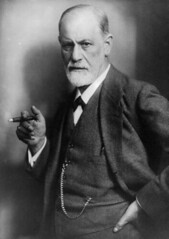
9208118759Sigmund FreudFounder of psychoanalysis Originally a medical doctor and found that his patients were suffering from an illness with psycho-logical causes This led him to develop theories of the unconscious mind, psycho-sexual development and Psychoanalysis0
9208118760Psychoanalytic TheoryPsychologist: Sigmund Freud Behavior is due to unconscious motives and conflicts Early childhood experiences determine personality1
9208118761Unconscious Mind-foundation for the psychoanalytic theory -controls the phenomena of repressed feelings, automatic skills, subliminal perceptions, thoughts, habits and automatic reactions as well as possibly holding emotional complexes, phobias and desires.2
9208118762Idlocated in the unconscious present at birth Ruled by the "Pleasure Principle" and has no values, morality, or logic (animal instincts)3
9208118763Egolocated in both conscious, & unconscious Developed after birth, the self Ruled by the "Reality Principle" and balances the id and superego by being organized, rational, and postponing gratification4
9208118764SuperEgolocated in both conscious, & unconscious developed by age 5 Ruled by the "Morality Principle" and is the opposite of the Id because it is the internal, parental voice with rules and values5
9208118765Free AssociationA technique used to access the unconscious patient freely exposes his/her ideas, impressions, etc.6
9208118766Freudian SlipsSlips of the tongue that expose the unconscious7
9208118767Psychosexual Development- sequential and discontinuous stages with changing erogenous zone and conflict in each stage if conflict is not successful resolved, the result is fixation O.A.P.L.G (Oral, Anal, Phallic, Latency, Genital)8
9208118768Oral stageAge: 0-1 Erogenous Zone: Mouth Task: Oral Activities (sucking, chewing, biting, etc) Fixation: Smoking, Over-eating9
9208118769Anal stageAge: 1-3 Erogenous Zone: Anus Task: Potty Training Fixation: Anal retentive or Anal Expulsive10
9208118770Latency stageAge: 6 to puberty Erogenous Zone: None Task: develop relationships with same sex peers to strengthen gender identity Fixation: doesn't occur at this stage11
9208118771Phallic stageAge: 3-5 Erogenous Zone: Genitals Task: Gender Identity Fixation: Narcissism, Homosexuality12
9208118772Genital stageAge: Puberty to death Erogenous Zone: Genitals Task: Find a hetero-sexual relationship Fixation: doesn't occur at this stage but old conflicts will arise13
9208118773Penis EnvyFreudian theory that girls become upset and scarred because because they don't have a penis and a penis is a key to being successful. Phallic Stage14
9208118774Electra Complexgirls sexually desire dad and hate mom but need to resolve this in order to develop a gender identity Phallic Stage of Psycho-sexual Development15
9208118775Oedipus Complexboys sexually desire mom and hate dad but need to resolve this in order to develop a gender identity Phallic Stage of Psycho-sexual Development16
9208118776Defense mechanisms- extreme measures protect the ego from threats; operate unconsciously and deny, falsify, or distinct reality - not successful coping strategies because they do not remove stressors17
9208118777Neo-FreudiansJung, Horney, Adler Believed that Freud put too much emphasis on sex and there needed to be more emphasis on social factors18
9208118778Collective unconsciousPsychologist: Carl Jung Defined: A warehouse of "instinctive memories" passed down to each generation and all humans share and is made up of archetypes19
9208118779ArchetypesDefined: Inherited universal concepts that create the Collective Unconscious Examples: Anima v. Animus, Mother v. Father, Persona v. Shadow, Hero v. Villain20
9208118780Basic AnxietyPsychologist: Karen Horney anxiety that is created by being born helpless. Most overcome this, those who don't develop neurotic personalities- aggressive, compliant, or withdrawn21
9208118781Womb envyPsychologist: Karen Horney Defined: women do not suffer from "penis envy" but are envious of male's superior status. Men are envious of a women's ability to have children and therefore, they compensate with other forms of achievement.22
9208118782Inferiority ComplexPsychologist: Alfred Adler Defined: people who compensate for feelings of inferiority (feeling like they're less than other people, not as good as others, worthless, etc.) by acting ways that make them appear superior.23
9208118783Projective TestsDescription: Provide ambiguous stimuli in order to trigger the projection of one's inner dynamics Strengths: Provide lots of information Weaknesses: highly subjective and has low reliability Tests: Rorschach Inkblot Test, & Thematic Apperception Test (TAT), Draw a Person test24
9208118784Rorschach Inkblot Testseeks to identify people's inner feelings and conflicts by analyzing their interpretations of 10 inkblots. Critics question the validity and reliability of the tests.25
9208118785Thematic Apperception Testpeople view ambiguous pictures and then make up stories about them. Presumably, their accounts reflect their interests and inner feelings.26
9208118786Humanistic PsychologistsCarl Rogers, Abraham Maslow Description: People develop their personality by trying to reach their full potential Strengths: model was built in a therapy setting Weaknesses: concepts are vague and subjective, individualistic and western based and naive because it fails to appreciate the reality of our capacity for evil27
9208118787Self-ConceptPsychologist: Carl Rogers Goal: Actualizing Tendency (full potential) Theory: A person has who they are, Real Self, and who they want to be, Ideal Self and a successful persoanlity has congruence People need genuineness (honesty), unconditional positive regard (love), and empathy (understanding) to develop a good persoanlity28
9208118788CongruenceA person's Real Self and Ideal Self can merge together Part of Roger's Self-Concept Theory29
9208118789IncongruenceWhen a person's Real Self and Ideal self do not match, causing anxiety. Part of Roger's Self-Concept Theory30
9208118790Unconditional positive regardDefined: receiving acceptance, value, and love from others without requirements Part of Roger's Self-Concept theory in which he says it is necessary to receive from others in order to develop a healthy personality31
9208118791EmpathyPeople will try to understand one's feelings and mirror it back to them Part of Roger's Self-Concept theory in which he says it is necessary to receive from others in order to develop a healthy personality32
9208118792Hierarchy of NeedsPsychologist: Abraham Maslow Description: Pyramid33
9208118793Trait TheoriesDescription: focuses on identifying how people typically behave but does NOT explain how personality developed Strengths: based on empirical evidence with factor analysis Weaknesses: people might behave differently based on the situation they are experiencing Tests: 16 Personality Factors (16 PF), 3 Dimensions, and Myers Briggs34
9208118794Factor analysis- a statistical procedure that identifies common factors among groups of items, to simplify a long list of items into a small number of dimensions -used with trait theories35
9208118795Self-Report InventoriesDescription: a questionnaire which is used to gauge a wide range of feelings and behaviors Strengths: empirically derived Weaknesses: social desirability-people can lie and manipulate the information Tests: MMPI, CPI, 16 PF36
9208118796MMPIMost extensively researched personality inventory. Used to assess mental health professions (police, nurses, doctors, pilots)37
9208118797Big Five Trait TheoryPsychologists: McCrae and Costa Description: OCEAN or CANOE Significance: traits are stable in adulthood, heritability accounts for 50% of personality and can be used to predict other personal attributes38
9208118798Openesscharacteristics such as imagination and insight, and those high in this trait also tend to have a broad range of interests39
9208118799Conscientiousnessinclude high levels of thoughtfulness, with good impulse control and goal-directed behaviors.40
9208118800Extraversioncharacterized by excitability, sociability, talkativeness, assertiveness and high amounts of emotional expressivenes41
9208118801Agreeablenessincludes attributes such as trust, altruism, kindness, affection and other pro-social behaviors.42
9208118802Neuroticismcharacterized by sadness, moodiness and emotional instability43
9208118803Social Cognitive Approach to PersonalityDescription: Personality is influenced between the interaction of a person's traits (including their thinking) and their social context Strengths: based on empirical evidence Weaknesses: minimizes the importance of one's inner traits, emotions, and unconscious motives Examples: Reciprocal Determinism, Locus of Control Psychologists: Bandura44
9208118804Reciprocal determinismPsychologist: Bandura Defined: Personality is developed by the interaction of behavioral, cognitive, and environmental factors. How it works: Everyone has a "self-system" of skills abilities and attitudes Self-Efficacy is what can change the system45
9208118805External Locus of ControlThe perception that chance or outside forces beyond your personal control determine your fate Effects: Pessimism and often learned helplesses46
9208118806Internal Locus of ControlThe perception that you control your own fate Effects: Optimism Optimism leads to longer lives with less illnesses but excessive optimism can also lead us to be blind to risks and overconfidence47
9208118807Self- efficacyDefined: the belief in your own ability to deal with different situations and accomplish specific goals It is NOT self esteem which is your general sense of self worth Consequences: people with high self-efficacy are able to succeed because they have an internal locus of control48
9208118808CompensationDefense Mechanism where people try to overcome feelings of inferiority in one area by striving to be superior in another area Major part of Alfred Adler's theory49

History & Approaches Myers for AP Flashcards

Terms : Hide Images
5867782184empiricismthe view that knowledge originates in experience and that science should rely on observation & experimentation0
5867793623Wilhelm Wundtfather of psychology, first psychology lab in Germany1
5867800177structuralismearly school of thought promoted by Wundt & Titchener, used introspection to reveal the structure of the human mind. Too subjective.2
5867813717functionalismearly school of thought. Promoted by William James & inspired by Darwin. Explored how mental processes and behavior function and how they help organisms adapt, survive & flourish.3
5867838557William JamesA functionalist and early US psychologist. Harvard professor.4
5867857075Mary Whiton CalkinsMemory researcher, awarded a Harvard Ph.D posthumously. APA's 1st female president.5
5867863200Margaret Floy Washburnfirst women to receive a psychology Ph.D. 2nd female president of APA.6
5867873127experimental psychologythe study of behavior and thinking using the experimental method.7
5867876651behaviorismPsychology should be an objective science , study behavior without mental processes.8
5867884151Humanistic psychologyhistorically significant perspective in psychology emphasized the growth potential of healthy people.9
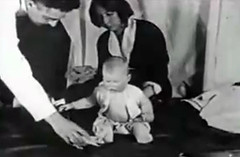
5867907118John WatsonBehaviorist. Little Albert10
5867911066B.F. Skinnerbehavioral perspective, studied how consequences shape behavior.11
5867935994Sigmund Freudfather of psychoanalysis. Believed in id, ego, superego influencing our behavior and thoughts.12
5867947270cognitive neurosciencethe interdisciplinary study of the brain linked with cognition.13
5867951087psychologyscience of behavior and mental processes14
5867954635nature-nurture issuelongstanding controversy of how much of us is made up of genetics vs. our environment.15
5867970335natural selectionCharles Darwin's principle that among the range of inherited trait variations, those contributing to reproduction and survival will most likely be passed on.16
5867976770levels of analysisthe differing complementary views, from biological to psychological to social-cultural, for analyzing any given phenomenon.17
5867983996Biopsychosical approachan integrated approach that incorporates biological, psychological and social-cultural levels of analysis.18
5867992800behavioral psychologythe study of observable behavior and its explanation by principles of learning19
5867996555biological psychologylinks between genetic, neural, hormonal and psychological processes.20
5868002148Cognitive psychologythe study of all mental activities associated with thinking, knowing, memory, communicating and processing.21
5868010724evolutionary psychologythe study of the evolution of behavior and mind using principles of natural selection.22
5868019092psychodynamic/psychoanalytic psychologya branch of psychology that studies how unconscious rivers and conflicts influence behavior, and uses that information to treat people with psychological disorders.23
5868029638social cultural psychologythe study of how situations and cultures affect our behavior and thinking24
5868031898psychometricsthe scientific study of the measurement of human abilities, attitudes, and traits.25
5868085317basic researchpure science that aims to increase the scientific knowledge base26
5868089504developmental psychologya branch of psychology that studies how physical, cognitive, and social cange throughout the lifespan27
5868094684educational psychologythe study of how psychological processes affect and can enhance teaching and learning28
5868098078personality psychologythe study of an individuals' characteristic pattern of thinking, feeling and acting29
5868102871social psychologythe scientific study of how we think about, influence, and relate to one another30
5868106293applied researchscientific study that aims to solve practical problems31
5868109294I/O psychologythe application of psychological concepts and methods to optimizing human behavior in the work place32
5868121673human factors psychologyan I/O psychology subfield that explores how people and machines interact and how machines and physical environments can be made safe and easy to use.33
5868162315counseling psychologyassists people with problems in living (work, family, marriage etc.) and in achieving greater well being.34
5868237424clinical psychologya branch of psychology that studies, assesses, and treats people with psychological disorders35
5868240442psychiatrybranch of medicine dealing with psych disorders, can provide drug treatments.36
5868244891positive psychologystudy of human functioning, with the goals of discovering and promoting strengths and virtues that help individuals and communities thrive37
5868252857community psychologya branch of psychology that studies how people interact with their social environments and how social institutions affect individuals and groups38

AP Biology Cell Structure Flashcards

A Tour of the Cell

Terms : Hide Images
9088681617History of Cells (Review)1665- Robert Hooke, observed cells in cork 1833 - Robert Brown, discovered the nucleus 1838 - M.J. Schleiden, all plants are made of cells 1839 - T. Schwann, all animals are made of cells0
9088681618Cell Theory (Review)1. all living matter is composed of one or more cells 2. the cell is the structural and functional unit of life 3. all cells come from cells1
9088681619Prokaryotic Cellslack a nucleus and other membrane bounded structures domains: Bacteria and Archaea2
9088681620Eukaryotic Cellshave a nucleus and other membrane bounded structures; protists, fungi, animals and plants; much larger than prokaryotes3
9088681621Why are cells so small?cell volume-to-surface area ratios favor small size; surface area increases by a factor of n2, the volume increases by a factor of n3; small cells have a greater surface area relative to volume, this allows substances to cross the cell membrane in an efficient manner4
9088681622Basic Cell Organizationmembrane, nucleus, cytoplasm, organelles5
9088681623Cell/Plasma Membranefound in both Eukaryotes and Prokaryotes, made of phospholipid bilayer function: separates the cell from the environment; boundary layer for regulating the movement of materials in/out of a cell6
9088681624Cytoplasm/Cytosolthe "fluid" part of a cell exists in two forms: gel - thick; sol - fluid function: cell substance between the cell membrane and the nucleus7
9088681625Organelleterm means "small organ", membrane-enclosed structures (or compartment) in a cell with a specialized function; important in organizational structure of cells function: way to form compartments in cells to separate chemical reactions, keeps various enzymes separated in space8
9088681626Membrane-Bound Organellesnucleus, endoplasmic reticulum, golgi apparatus, lysosome, mitochondria, chloroplast, vacuole, vesicle (*ribosomes are not membrane bound*)9
9088681627NucleusMost conspicuous organelle; structure: usually spherical, but can be lobed or irregular in shape consists of: Nuclear Envelope, Nuclear pores, Nucleolus, Chromatin function: contains the genetic instructions in a cell10
9088681628Nuclear Envelope/Membranedouble membrane that surrounds nucleus; inner membrane supported by a protein matrix which gives the shape to the nucleus11
9088681629Nuclear Poresregular "holes" through both membranes; protein complex gives shape; allows materials in/out of nucleus12
9088681630Nucleolusdark staining area in the nucleus; 0 - 4 per nucleus; synthesizes or creates ribosomes13
9088681631Chromatin(chrom: colored; - tin: threads) DNA + Protein in a "loose" format; DNA is wrapped around proteins that forms the cell's chromosomes to make it all fit inside of the nucleus14
9088681632Ribosomesstructure: 2 subunits made of protein and rRNA, no membrane function: protein synthesis *eukaryotes and prokaryotes BOTH have ribosomes, but they are different in size* found in: cytosol (free) and on outside of rough ER (bound)15
9088681633Endomembrane Systemmembranes that are related through direct physical continuity or by the transfer of membrane segments called vesicles16
9088681634Endoplasmic Reticulum(often referred to as ER) makes up to 1/2 of the total membrane in cells structure: folded sheets or tubes of membranes; often continuous with the nuclear membrane17
9088681635Smooth ERno ribosomes function: used for lipid synthesis, carbohydrate storage, detoxification of poisons18
9088681636Rough ERwith ribosomes function: synthesizes secretory proteins to be excreted by the cell (ex: insulin)19
9088681637Golgi Apparatusstructure: parallel array of flattened cisternae (3 to 20 per cell) function: processing - modification of ER products; distribution - packaging of ER products for transport into vesicles20
9088681638Lysosomestructure: single membrane made from the Golgi apparatus function:contains hydrolytic enzymes that work best inside the acidic environment inside of the lysosome; breakdown of fats, proteins, polysaccharides, and nucleic acids, and also old or unneeded cellular materials21
9088681639Vacuolesstructure: single membrane, usually made by ER and Golgi apparatus function: depends on the organism. Plant Vacuoles- makes up 90% of the cell's volume - Water storage, ion storage, can enlarge cells and create turgor pressure, stores pigments toxins and enzymes Contractile Vacuoles- pump excess water out of protists Food Vacuoles- formed by phagocytosis and digested by lysosomes22
9088681640Mitochondriastructure: 2 membranes the inner membrane has more surface area than the outer membrane matrix: inner space Intermembrane space: area between the membranes folded into "cristae" function: cell Respiration - the release of energy from food; major location of ATP generation23
9088681641Chloroplaststructure: arranged into flattened sacs called thylakoids, some regions stacked into layers called grana which are surround by a fluid called storm; contains chlorophyll (green pigment) function: photosynthesis24
9088681642Endosymbiotic Theorymitochondria and chloroplasts were once free-living prokaryotes that got englufed by what we now know as a eukaryotic cell25
9088681643Peroxisomesspecialized metabolic compartments bounded by a single membrane function: contain enzymes that add Hydrogen atoms to O2 to generate hydrogen peroxide and enzymes that then convert it to water (ex: liver cells can detoxify alcohol by doing this)26
9088681644Cytoskeletonnetwork of protein rods and filaments in the cytoplasm; Microtubules, Microfilaments, Intermediate Filaments function: cell structure and shape; cell movement; cell division (helps build cell walls and move the chromosomes apart)27
9088681645Ciliashort, but numerous; found in respiratory passage cells function: to move cells or to sweep materials past a cell28
9088681646Flagellalong, but few; found on the end of sperm function: to move cells or to sweep materials past a cell29
9088681647Cell Wallnonliving jacket that surrounds some cells 1. plants = made of cellulose 2. bacteria = peptidoglycan 3. fungi = chitin found in: plants, prokaryotes, fungi, some protists function: cell's exoskeleton - support and protection30
9088681648Extracellular Matrix"fuzzy outer coat" of animal cells structure: made of glycoproteins and collagen function: helps glue cells together evidence suggests ECM is involved with cell behavior and cell communication31
9088681649Tight Junctionstight fusion of the membranes of adjacent cells seals off areas between cells - prevent leakage (ex: skin epithelial cells)32
9088681650Desmosomesbundles of filaments that anchor junctions between cells linking them together into strong sheets (ex: muscle cells)33
9088681651Gap Junctionsprovide cytoplasmic channels from one cell to an adjacent cell, similar to plasmodesmata in plants, materials {ions, sugars, amino acids} can pass through (ex: heart muscle)34
9088681652Plasmodesmatachannels between adjacent cell walls; allow communication between cells35

AP Music Theory Terms Flashcards

Terms : Hide Images
6146062349a bIndicates a contrasting phrase0
6146062350a b aphrase, contrasting phrase, original phrase1
6146062351a a'phrase and a varied restatement2
6146062352A Blarger pieces of a composition3
6146062353Cadencemelodic or harmonic configuration that creates a sense of resolution4
6146062354Cadential extensiondelay of cadence by addition of material5
6146062355Codaending phrase in a piece of music following a restatement of the original melody6
6146062356Codetta"little coda" brief conclusion, a dominant tonic cadence at the end of the exposition that may be repeated several times for emphasis7
6146062357Contourthe shape of the melody as rising or falling8
6146062358Countermelodysequence of notes, perceived as a melody, written to be played simultaneously with a more prominent melody.9
6146062359Elisionwhen the last note of one phrase serves as the first note of the next phrase10
6146062360Fragmentationuse of fragments or the "division of a musical idea" into segments11
6146062361Introductionpassage or section which opens a movement or separate piece, preceding the theme or lyrics.12
6146062362Bridgetheme following the main melody, often uses different chord changes, known most times as the B section13
6146062363Chorusmain melody of a pop or jazz song, known as the A section14
6146062364Song form (AABA)chorus repeated twice, most times with a different lyrics, followed by the bridge, then another chorus15
6146062365TurnaroundPassage at the end of a section which leads to the next section, the next section is often a repeated section of the song16
6146062366Twelve Bar BluesMost well-known chord progression in western music (I|IV|I|%| IV|%|I|%| V|IV|I|%|)17
6146062367Augmentationcompositional device where a melody or theme is presented in longer note values than were previously used18
6146062368Conjunct (motion)a step, the difference in pitch between two notes in a musical scale19
6146062369Diminutionform of embellishment when a long note is divided into a series of shorter, more melodic, values20
6146062370Disjunctany leap in music larger than one step21
6146062371Extended versionlonger version of a song via the addition of new phrases or lyrics22
6146062372Interval expansionphrase extends beyond the expected phrase length23
6146062373Inversionrearrangement of the top-to-bottom elements in an interval, a chord, a melody, or a group of contrapuntal lines of music24
6146062374Literal repetitionoften indicated by a repeat sign, or a DS or a DC25
6146062375Motivic transformationchange of rhythmic theme26
6146062376Octave displacementtaking a melodic line and moving some notes into a different octave27
6146062377Retrograde"backwards and upside down", sounded in reverse order28
6146062378Rhythmic transformationmultiplication, rotation, permutation and combinations thereof involving rhythm29
6146062379Sequencepattern that is repeated immediately in the same voice but that begins on a different pitch class30
6146062380Sequential repetitiontransposing a longer sequence to a different scale degree; may be diatonically or intervalically exact31
6146062381Shortened versionabbreviated reiteration of material already presented32
6146062382Transpositionto write or play music in a different key than the original33
6146062383Truncationutilizing a melody with a part of the end omitted34
6146062384Motivesmallest identifiable music idea, can consist or pitch pattern, rhythmic pattern, or both35
6146062385Periodtwo or more phrases in antecedent-consequent relationship, ends in a cadence36
6146062386AntecedentFirst phrase in a period37
6146062387Consequentterminal phrase in a period38
6146062388Contrasting periodperiod where phrase beginnings are not similar39
6146062389Double periodFour phrases in two pair, cadence at end of second pair is stronger than cadence at the end of the first pair40
6146062390Parallel periodmelodic material that begin the two halves of the periods are similar41
6146062391Phrase Groupgroup of phrases seem to belong together without forming a double period42
6146062392Refrainmusic that is repeated after each verse, also called chorus or burden43
6146062393Small Formin reference to binary or ternary forms44
6146062394Binary formTwo complementary sections of music or more or less equal duration that may be represented as ab. Two sections are distinguished by double bars and repeat signs which denote an aabb structure45
6146062395Rounded binaryoften continuous or open form meaning the two principle sections modulate, first section, may cadence on tonic.46
6146062396Ternary FormMusical form consisting of three sections, third section is often a literal or varied version of the first.47
6146062397Solowhen one musician has the melodic line48
6146062398Soliwhen one section has a prominent melodic line49
6146062399StanzaVerse, repeated passage, recurring rhythms and chords50
6146062400Strophicwhen all verses or stanzas of text are sung to the same music.51
6146062401Thememelody of a piece of music52
6146062402Thematic transformationwhen a theme is developed via changing the theme by using permutation53
6146062403Through-composedwhen new music is written for each stanza54
6146062404Tuttiwhen all musicians are playing55
6146062405Variationa change in a melodic passage or theme56
6146062406VerseSame as stanza57
6146062407Capital Roman NumeralsDenote major chords or keys58
6146062408Lowercase Roman NumeralsDenote minor chords or keys59
6146062409C is relative to...a60
6146062410G is relative to...e61
6146062411D is relative to...b62
6146062412A is relative to...f#63
6146062413E is relative to...c#64
6146062414B/C♭ is relative to...g#/a♭65
6146062415F#/G♭ is relative to...d#/e♭66
6146062416C#/D♭ is parallel to...a#/b♭67
6146062417A♭ is relative to...f68
6146062418E♭ is relative to...c69
6146062419B♭ is relative to...g70
6146062420F is relative to...d71
6146062421+Denotes an augmented chord, (M3, M3)72
6146062422oDenotes a diminished chord (m3, m3)73
61460624236Denotes a first inversion triad74
61460624246 4Denotes a second inversion triad75
61460624257denotes a root position seventh chord76
6146062426o7denotes a fully diminished seventh chord (m3, m3, m3)77
6146062427øDenotes a half diminished seventh chord (m3, m3, M3)78
61460624286 5Denotes a first inversion seventh chord79
61460624294 3Denotes a second inversion seventh chord80
61460624304 2Denotes a third inversion seventh chord81
6146062431Ionian182
6146062432Dorian283
6146062433Phrygian384
6146062434Lydian485
6146062435Mixolydian586
6146062436Aeolian687
6146062437Locrian788
6146062438IAnything89
6146062439iiviiO, V90
6146062440iiiIV91
6146062441IVii, I, viiO, V92
6146062442Vvi, I93
6146062443viii, IV94
6146062444viiOI95
6146062445iAnything96
6146062446iiOviiO, V97
6146062447IIIVI, iv, iiO98
6146062448ivi, viiO, V99
6146062449V (minor key)VI, i100
6146062450VIiv, iiO101
6146062451viiO (minor key)III, i102
61460624528-7indicates melodic movement from an octave to a seventh above the bass103
61460624539-8, 7-6, 4-3Indicate a suspension or harmonic resolution104
6146062454Slashed figures or plusesinterval in question to be raised a half step105
6146062455#raise the third106
6146062456Authentic cadenceV-I, sometimes even V7-I107
6146062457PACAuthentic cadence that requires the dominant and tonic chords to be in root position108
6146062458IACHas either the V or I inverted or has a chord member other than the root in the soprano of the tonic chord109
6146062459PC"Amen Cadence" IV-I or iv-i110
6146062460DCV-vi, or V-VI, or v-VI111
6146062461HCends with a V or V7, preceded by Iv, ii, or ii6 and vi112
6146062462PHCOccurs in harmonic minor: iv6-V113
6146062463mm, m7Minor Minor Seventh Chord114
6146062464Mm7Dominant or Major Minor Seventh Chord115
6146062465mM7Minor Major Seventh Chord116
6146062466Tonic1117
6146062467Supertonic2118
6146062468Mediant3119
6146062469Subdominant4120
6146062470Dominant5121
6146062471Submediant6122
6146062472Subtonic, Leading Tone7123
6146062473Tonic FunctionReferring to the chords in a diatonic mode124
6146062474Dominant Functionhas the role of creating instability that requires the tonic for resolution125
6146062475Predominant Functiona chord that resolves to a dominant chord, most times is a V7/V126
6146062476Circle of FifthsC, G, D, A, E, B/Cb, F#/Gb, C#/Db, Ab, Eb, Bb, F127
6146062477Deceptive ProgressionV, vi in a progression to seem like it is going back to the tonic128
6146062478Harmonic RhythmThe rhythm created by changes in harmony129
6146062479Modulationkey change130
6146062480Common Tone ModulationUsing one or more tonalities that are common to both keys as an intersection between them131
6146062481Phrase ModulationWhen the phrase cadences in one key and then the phrase after immediately follows in another key132
6146062482Pivot Chord ModulationA type of modulation that moves from the original key to the destination key (usually a closely related key) by ways of a chord both keys share133
6146062483Neighboring Chordchords which are next to one another in scale degree ranking, their notes separated by a half or whole step134
6146062484Rate of Harmonic ChangeRate at which chords change. Usually used when the rate is constant135
6146062485Realization of a figured bass or four-part Roman numeral progressionto write out a figured bass part or Roman numeral progression136
6146062486RetrogressionA harmonic motion in which each chord moves to a new chord more distant from the tonic as measured in ascending 5th root movements, such as a supertonic to a supermediant137
6146062487Secondary dominantThe V or dominant of a key other than the tonic138
6146062488Secondary Leading Tone ChordA leading tone chord that functions as an applied or secondary dominant; usually a fully diminished seventh chord leading to a key other than the tonic139
6146062489TonicizationTemporarily allows a chord other than the tonic to function as a goal of motion or point of stability and therefore, function as a temporary tonic140
6146062490AriaOne single song done with no accompaniment , now taken as a lyrical piece for vocals generally having two contrasting parts141
6146062491Art Songsong, featuring poetic text, written for performance outside popular tradition142
6146062492Concertoa solo piece for an instrument and orchestra. Often consist of a fast, a slow, and a fast section143
6146062493FugueComposition that features a number of voices , entering one after another in imitation, after which each continues independently but in accordance with counterpoint144
6146062494Genrestyle, manner145
6146062495Interludeany piece of music sung or played between the movements of a larger composition146
6146062496Operalarge play-like work done without dialogue and communicated entirely with music147
6146062497PreludeComposition done to set up another larger composition or set of compositions148
6146062498PostulateComposition that concludes another composition or a larger set of compositions. Usually done at the end of a church service149
6146062499Sonatamulti-movement piece for soloist and piano of three or four different movements150
6146062500SongPiece of music151
6146062501String quartetgroup of four string players that consist of a cello, a viola, and two violinists152
6146062502Symphonyvery large piece of music for an orchestra, generally in three or four, sometimes five movements.153
6146062503Relative keyMajor and minor keys that share the same key signature154
6146062504Parallel keyKeys that share the same starting note155
6146062505Cadencial 6 4 chordDelays the arrival of the V chord that proceeds it156
6146062506Passing 6 4 chordHarmonizes the middle note of a three-hour scalar figure in the bass157
6146062507Pedal 6 4 chordsElaborates the root position chord that precedes it and usually follows it as well158
6146062508Submetrical NCTLess than a beat in duration and occurring on either accented or unaccented portions of the beat159
6146062509Metrical NCTOne beat in duration and occur in on either accented or unaccented beats160
6146062510Supermetrical NCTMore than one beat in duration161
6146062511Enharmonically equivalent keysSound the same but are spelled differently162
6146062512Change of mode163

Ap Flashcards

Terms : Hide Images
4491273674Labi/o cheil/oLip0
4491273675Gloss/o lingu/oTongues1
4491273676Or/o stomat/oMouth2
4491273677Lapar/o Celi/oAbdomen,belly3
4491273678HepatomegalyEnlargement of the liver4
4491273679Study of a cause of a diseaseEtiology5
4491273680Incision of common bile ductCholedochotomy6
4491273681Word for surgical repair for the roof of the mouth (palat)Palatoplasty7
4491273682Word for after mealsPostprandial8
4491273683The word for new opening between the common bile duct and the jejunumCholedochojejunostomy9
4491273684Word that describes the inflammation of the appendixAppendicitis10
4491273685Word that describes inflammation of the large intestinesColitis11
4491273686Membrane around the abdomenPeritoneum12
4491386912Inflammation of the gallbaldderCholecystitis13
4491386913Inflammation of salivary glandsSialadenitis14
4491386914Inflammation of small and large intestinesEnterocolitis15
4491386915Inflammation of the liverHepatitis16
4491386916Inflammation of the mouthStomatitis17
4491386917Inflammation of the gumsGingivitis18
4491386918Inflammation of third part of the small intestineIleitis19
4491386919Lack of appetiteAnorexia20
4491386920Word describes fresh bright red blood in stoolHematochezia21
4491386921Abnormal accumulation of fluid in the abdomenAscites22
4491406768Loose watery stoolDiarrhea23
4491406769Gas being expelled through the anusFlatus24
4491406770Black stoolMelena25
4491406771The membrane that holds together the intestinesMesertary26
4491406772Under the tongueSublingual27
4491406773High level of pigment in the blood such as jaundiceHyperbilirubinemia28
4491406774New connection between two previously unconnected tubesAnastomosis29
4496860456Inflammation of pancreasPancreatitis30
4497178479The word for the removal of the gallbladderCholecystectomy31
4497178480The word for specialist for anis and rectumProctologist32
4497178481The word for new sugar sugar formation from fat and proteinGluconeogenesis33
4497178482The word for wave like movement of the wall of the digestive tractPeristalysis34
4497178483Inflammation of the membrane that covers the abdomenPeritonitis35

AP Human Geography - Religion Flashcards

Vocabulary flashcards from chapter 6 on religion

Terms : Hide Images
5550826578Religiona system of beliefs and practices that attempts to order life in terms of culturally perceived ultimate priorities. It is a dynamic culture trait.0
5550826579Secularismthe idea that ethical and moral standards should be formulated and adhered to for life on Earth, not to accommodate the prescriptions of deity and promise of a comfortable afterlife.1
5550867564SecularAbout one-sixth of the world's population is indifferent to or rejects religion.2
5550826580Monotheistic Religionbelief system in which one supreme being is revered as creator and arbiter of all that exists in the universe3
5550826581Polytheistic Religionbelief system in which multiple deities are revered as creators and arbiters of all that exists in the universe4
5550826582Animistic Religionthe belief that inanimate objects, such as hills, trees, rocks, rivers, and other elements of the natural landscape, possess souls and can help or hinder human efforts on Earth5
5550826583Universalizing Religiona belief system that espouses the idea that there is one true religion that is universal in scope. Adherents of universalizing religious systems often believe that their religion represents universal truths, and in some cases great effort is undertake in evangelism and missionary work.6
5550826584Ethnic Religiona religion that is particular to one, culturally distinct, group of people. Do not try to invite new followers.7
5550838741Tribal Religionspecific to one particular group of people and is usually practiced in a highly localized region. Often such religions celebrate spirits found in living and none living things, believe in and worship nature, and are very small in scale and isolated. Ex: individual Native American group of people, Australia (aboriginal religions).8
5550826585Hinduismone of the oldest religions in the modern world, dating back over 4000 years. It does not have a single founder, a single theology, or agreement on its origins. Does not have a central authority or single book. 70% worship Vishnu (loving God) and 25% worship Shiva (protective and destructive God)9
5550826586Caste Systemthe strict social segregation of people—specifically in India's Hindu society—on the basis of ancestry and occupation10
5550826587Buddhismreligion founded in the sixth century BCE and characterized by the belief that enlightenment would come through knowledge, especially self-knowledge; elimination of greed, craving, and desire. Does not require exclusive adherence.11
5551108012Four Nobel Truths1. All living beings must endure suffering. 2. Suffering, which is caused by a desire to, leads to reincarnation. 3. The goal of all existence is to escape from suffering and the endless cycle of reincarnation into Nirvana, which is achieved through mental and moral self-purification. 4. Nirvana is attained through an Eightfold Path, which includes rightness of belief, resolve, speech, action, livelihood, effort, thought, and meditation.12
5551087661Three main branches of Buddhism- Mahayana - 56% of Buddhist, Japan, China, Korea - Theravada - 38% of Buddhist, Southeast Asia - Tantrayana - 6% of Buddhist, Tibet, Mongolia13
5550826588Shintoism- distinctive ethnic religion in Japan -Consider forces of nature to be divine, especially the sun and moon, as well as rivers, trees, rocks, mountains, and animals. - Deceased emperors and other ancestors became more important deities for Shintoists than natural features.14
5550826589Taoismreligion believed to have been founded by Lao-Tsu and based upon his book entitled "Tao-te-ching," or "Book of the Way." Lao-Tsu focused on the proper form of political rule and on the oneness of humanity and nature.15
5550826590Confucianisma philosophy of ethics, education, and public service based on the writings of Confucius and traditionally thought of as one of the core elements of Chinese culture.16
5550826591Judaismreligion with its roots in the teachings of Abraham (from Ur), who is credit with uniting his people to worship only one God. According to Jewish teaching, Abraham and God have a covenant in which the Jews agree to worship only one God, and God agrees to protect his chosen people, the Jews. Uses the Torah.17
5550826592Diasporafrom the Greek "to disperse," a term describing forceful or voluntary dispersal of a people from their homeland to a new place. Originally denoting the dispersal of Jews. Relocation diffusion.18
5550826593Zionismthe movement to unite the Jewish people of the diaspora and to establish a national homeland for them in the promised land19
5551170340Judaism Today- 6 million Jews live in the United States, 4 million in Israel - In the United States Jews are located in large cities including 1/3 in New York - Majority in Israel, first time since biblical era an independent state has had a Jewish majority.20
5551184888Sects of JudaismOrthodox, Conservative, and Reformed21
5550826594Christianityreligion based on the teachings of Jesus. According to Christian teaching, Jesus is the son of God, placed on Earth to teach people how to live according to God's plan.22
5550826595Eastern Orthodox Church (eoc)- one of the three major branches of Christianity. - a collection of 14 self-governing churches in Eastern Europe and the Middle East - 40% belong to the Russian Orthodox23
5550826596Roman Catholic Church (rcc)- one of the three major branches of Christianity. - About 25% of North America - Compromises 95% of Christians in Latin America24
5553065378How did Christianity spread?1st through relocation diffusion (Palestine was the hearth). Now spreading rapidly through contagious diffusion. Some hierarchical diffusion.25
5550826598Islamthe youngest of the major world religions, Islam is based on the teachings of Muhammad, born in Mecca in 571 CE. According to the teaching, Muhammad received the truth directly from Allah in a series of revelations during which Muhammad spoke the verses of the Qu'ran (Koran), the Islamic holy book. Relocation diffusion. Practice at Mosque.26
5553092058Islamic Holy CitiesMecca and Medina27
5550826597Protestant- one of three major branches of Christianity - About 40% of North America.28
5551019006What are the largest Protestant Denominations?Baptist, Methodist, Pentecostal, Lutheran, Latter-Day Saints, Churches of Christ29
5550826599Sunnis- Adherents to the largest branch of Islam (83%)30
5550826600Shiites- adherents of one of the two main divisions of Islam (16%) - 40% live in Iran and 15% live in Pakistan - 90% of Iran's population31
5551064139Five Pillars of Islam1. There is no god worthy of worship except the one God, the source of all creation, and Muhammad is the messenger of God. 2. Five times daily, a Muslim prays, facing the city of Mecca, as a direct link to God. 3. A Muslim gives generously to charity, as an act of purification and growth. 4. A Muslim fasts during the month of Ramadan, as an act of self-purification 5. If physically and financially able, a Muslim makes a pilgrimage to Mecca32
5551076091What is Islam like in today?- Increased rapidly in recent years, mostly through immigration. - France has the largest Muslim population - colonies of North Africa - Nation of Islam founded in Detroit in 1930's (concentration - Dearborn, Michigan)33
5550826601Indigenous Religionsbelief systems and philosophies practiced and traditionally passed from generation to generation among peoples within a ... tribe or group34
5550826602Pilgrimagevoluntary travel by an adherent to a sacred site to pay respects or participate in a ritual at the site35
5550826603Sacred Sitesplace or space people infuse with religious meaning36
5550826604Minaretstower attached to a Muslim mosque, having one or more projecting balconies from which a crier call Muslims to prayer37
5550826605Hajjthe Muslim pilgrimage to Mecca, the birthplace of Muhammad38
5550826606Interfaith Boundariesboundaries between the world's major faiths39
5550826607Intrafaith Boundariesboundaries within a single major faith40
5550826608Ethnic Cleansingthe systematic killing or extermination of an entire people or nation41
5550826609Activity Spacethe space within which daily activity occurs42
5550826610Religious Fundamentalismreligious movement whose objectives are to return to the foundations of the faith and to influence state policy43
5550826611Religious Extremismreligious fundamentalism carried to the point of violence44
5550826612Shari'a LawsThe system of Islamic law, sometimes called Quranic law. Unlike most western systems of law that are based on legal precedence, sharia is based on varying degrees of interpretation of the Quran.45
5550826613Jihada doctrine within Islam. Commonly translated as "Holy War," Jihad represents either a personal or collective struggle on the part of Muslims to live up to the religious standards set by the Qu'ran46
5550898852What is the fastest growing religion in the US?the Church of Jesus Christ of Latter Day Saints (Mormons) The Mormon church grew by about 19 percent to 4.2 million members.47
5550905726What is the most widespread religious group in the US?United Methodists who are present in 96 percent of the counties in the US48
5550911170What is the largest Christian denomination in the US?Roman Catholics are the largest denomination in the country growing 16 percent to 62 million. More Catholics now live in the West than in the traditionally Catholic Midwest. The Catholic population in the South grew faster than in the North.49
5550927372What is the largest Protestant group in the US?The evangelical Southern Baptist Convention grew by only 4.9 percent during the last decade but remained the nation's largest Protestant group with nearly 20 million members.50

AP Psychology Important People Flashcards

Important people in AP PSychology

Terms : Hide Images
9820178795Sigmund Freud1856-1939; Field: psychoanalytic, personality; Contributions: id/ego/superego, reality and pleasure principles, ego ideal, defense mechanisms (expanded by Anna Freud), psychoanalysis, transference0
9820178796Anna Freud1895-1982; Field: psychoanalysis; Contributions: focused on child psychoanalysis, fully developed defense mechanisms, emphasized importance of the ego and its constant struggle1
9820178797Carl Jung1875-1961; Field: neo-Freudian, analytic psychology; Contributions: people had conscious and unconscious awareness; archetypes; collective unconscious; libido is all types of energy, not just sexual; Studies: dream studies/interpretation2
9820178798Erik Erikson1902-1994; Field: neo-Freudian, humanistic; Contributions: created an 8-stage theory to show how people evolve through the life span. Each stage is marked by a psychological crisis that involves confronting "Who am I?"3
9820178799Lawrence Köhlberg1927-1987; Field: cognition, moral development; Contributions: created a theory of moral development that has 3 levels; focuses on moral reasoning rather than overt behavior4
9820178800Carol Gilligan1936-pres; Field: cognition; Contributions: maintained that Köhlberg's work was developed by only observing boys and overlooked potential differences between the habitual moral judgments of boys and girls; girls focus more on relationships than laws and principles5
9820178801William James1842-1910; Field: functionalism; Contributions: studied how humans use perception to function in our environment; Studies: Pragmatism, The Meaning of Truth6
9820178802William Wundt1832-1920; Field: structuralism: research on workings of senses; applied scientific method to psychology; used Introspection Studies: 1st psychological laboratory in world at University of Leipzig7
9820178803BF Skinner1904-1990; Field: behavioral; Contributions: created techniques to manipulate the consequences of an organism's behavior in order to observe the effects of subsequent behavior; Studies: Skinner box8
9820178804John B Watson1878-1958; Field: behaviorism; Contributions: generalization-inductive reasoning, emphasis on external behaviors of people and their reactions on a given situation; Studies: Little Albert9
9820178805Jean Piaget1896-1980; Field: cognition; Contributions: created a 4-stage theory of cognitive development, said that two basic processes work in tandem to achieve cognitive growth (assimilation and accommodation)10
9820178806Harry Harlow1905-1981; Field: development; Contributions: realized that touch is preferred in development; Studies: Rhesus monkeys, studied attachment of infant monkeys (wire mothers v. cloth mothers)11
9820178807Carl Rogers1902-1987; Field: humanistic; Contributions: founded person-centered therapy, theory that emphasizes the unique quality of humans especially their freedom and potential for personal growth, unconditional positive regard, fully functioning person12
9820178808Abraham Maslow1908-1970; Field: humanism; Contributions: hierarchy of needs-needs at a lower level dominate an individual's motivation as long as they are unsatisfied, self-actualization, transcendence13
9820178809Karen Horney1885-1952; Field: neo-Freudian, psychodynamic; Contributions: criticized Freud, stated that personality is molded by current fears and impulses, rather than being determined solely by childhood experiences and instincts, neurotic trends14
9820178810Alfred Adler1870-1937; Field: neo-Freudian, psychodynamic; Contributions: basic mistakes, style of life, inferiority/superiority complexes, childhood influences personality formation; Studies: Birth Order15
9820178811Gordon Allport1897-1967; Field: trait theory of personality; Contributions: list of 11,000 traits, 3 levels of traits-cardinal, central, and secondary16
9820178812Hermann Rorschach1884-1922; Field: personality, psychoanalysis; Contributions: developed one of the first projective tests, the Inkblot test which consists of 10 standardized inkblots where the subject tells a story, the observer then derives aspects of the personality from the subject's commentary17
9820178813Solomon Asch1907-1996; Field: social psychology; Contributions: studied conformity, found that individuals would conform even if they knew it was wrong; Studies: conformity, opinions and social pressures18
9820178814Stanley Schachter1922-present; Field: emotion; Contributions: stated that in order to experience emotions a person must be physically aroused and know the emotion before you experience it19
9820178815Stanley Milgram1933-1984; Field: social psychology; Contributions: wanted to see how the German soldiers in WWII fell to obedience, wanted to see how far individuals would go to be obedient; Studies: Shock Study20
9820178816Philip Zimbardo1933-present; Field: social psychology; Contributions: proved that peoples behavior depends to a large extent on the roles they are asked to play; Studies: Stanford Prison Study-studied power of social roles to influence people's behavior21
9820178817Elizabeth Kübler-Ross1926-2004; Field: development; Contributions: 5 stages the terminally ill go through when facing death (1. death, 2. anger/resentment, 3. bargaining with God, 4. depression, 5. acceptance)22
9820178818Elizabeth Loftus1944-present; Field: memory; Contributions: expert in eyewitness testimony (false memories or misinformation effect); Studies: Reconstruction of Auto. Destruction, Jane Doe Case (repressed memories of Nicole Taus' sex abuse)23
9820178819Robert Sternberg1949-present; Field: intelligence; Contributions: devised the Triarchic Theory of Intelligence (academic problem-solving, practical, and creative)24
9820178820Albert Bandura1925-present; Field: sociocultural; Contributions: pioneer in observational learning, stated that people profit from the mistakes/successes of others; Studies: Bobo Dolls-adults demonstrated 'appropriate' play with dolls, children mimicked play25
9820178821Raymond Cattell1905-1998; Field: intelligence; Contributions: fluid & crystal intelligence; 3 domains of personality sphere (personality, ability, & motivation), 16 Personality Factors (personality test)26
9820178822Aaron Beck1921-present; Field: cognitive; Contributions: father of Cognitive Therapy, created Beck Scales-depression inventory, hopelessness scale, suicidal ideation, anxiety inventory, and youth inventories27
9820178823Noam Chomsky1928-present; Field: language; Contributions: disagreed with Skinner about language acquisition, stated there is an infinite # of sentences in a language, humans have an inborn native ability to develop language28
9820178824Edward Thorndike1874-1949; Field: behaviorism; Contributions: Law of Effect-relationship between behavior and consequence; Studies: Law of Effect with cats29
9820178825HJ Eysenck1916-1997; Field: personality; Contributions: asserted that personality is largely determined by genes, used introversion/extroversion30
9820178826Mary Ainsworth1913-1999; Field: development; Contributions: compared effects of maternal separation, devised patterns of attachment; Studies: The Strange Situation-observation of parent/child attachment31
9820178827Lev Vygotsky1896-1934; Field: child development; Contributions: investigated how culture & interpersonal communication guide development, zone of proximal development; play research32
9820178828Martin Seligman1942-present; Field: learning; Contributions: Positive Psychology, learned helplessness; Studies: Dogs demonstrating learned helplessness33
9820178829Howard Gardner1943-present; Field: intelligence; Contributions: devised the theory of multiple intelligences (logical-mathematic, spatial, bodily-kinesthetic, intrapersonal, linguistic, musical, interpersonal, naturalistic)34
9820178831Ivan Pavlov1891-1951; Field: Gastroenterology; Contributions: developed foundation for classical conditioning, discovered that a UCS naturally elicits a reflexive behavior; Studies: dog salivation35
9820178832Hermann Ebbinghaus1850-1909; Field: memory; Contributions: 1st to conduct studies on forgetting: first, a rapid loss followed by a gradual declining rate of loss; Studies: memory-series of meaningless syllables/words36
9820178834Charles Spearman1863-1945; Field: intelligence; Contributions: found that specific mental talents were highly correlated, concluded that all cognitive abilities showed a common core which he labeled 'g' (general ability)37
9820178835Albert Ellis1913-2007; Field: cognitive-behavioral; Contributions: Rational-Emotive Therapy (RET), focuses on altering client's patterns of irrational thinking to reduce maladaptive behavior and emotions38
9820178836Robert Yerkes187601956; Field: intelligence, comparative; Contributions: social behavior of gorillas/chimps, Yerkes-Dodson law-level of arousal as related to performance39
9820178837Alfred Binet1857-1911; Field: testing; Contributions: general IQ tests, designed test to identify slow learners in need of remediation-not applicable in the U.S. because too culture-bound (French)40
9820178838Ernst Weber1795-1878; Field: perception; Contributions: just-noticeable-difference (JND) that eventually becomes Weber's law; Studies: 1st study on JND41
9820178839Gustav Fechner1801-1887; Field: perception; Contributions: stated that the magnitude of a sensory experience is proportionate to the # of JND's that the stimulus causing the experiences above the absolute threshold42
9820178840Paul Ekman1934-present; Field: emotion; Contributions: found that facial expressions are universal43
9820178841Francis Galton1822-1911; Field: differential psychology AKA "London School" of Experimental Psychology; Contributions: behavioral genetics, maintains that personality & ability depend almost entirely on genetic inheritance; Studies: Twin Studies-compare identical & fraternal twins, Hereditary Genius-used bell curve for normal distribution, & "Law of Errors"-differences in intellectual ability44
9820178842Charles Darwin1809-1882; Field: geology, biology; Contributions: transmutation of species, natural selection, evolution by common descent; Studies: "The Origin of Species" catalogs his voyage on the Beagle45
9820178843Phineas Gage1823-1860; Field: neurobiology; Contributions: 1st person to have a frontal lobotomy (by accident), his accident gave information on the brain and which parts are involved with emotional reasoning46
9820178845Dorothy DixActivist and reformer for the treatment of the mentally ill in prison's and institutions.47
9820178846Margaret Floy WashburnFirst female to be awarded a PhD in psychology; 2nd president of the APA (1921). Studied animal behavior.48
9820178847Mary Whiton CalkinsFirst woman president of the American Psychological Association. Should have earned a PhD from Harvard in 1895 but was denied because she was a woman.49
9820178848G. Stanley HallEstablished the 1st psych lab in the US (@johns hopkins). Founder of the APA.50
9820204583David RosenhanIllustrated the power effects of diagnostic labeling with pseudo-schizophrenic patients.51
9820237939Mary Cover JonesDeveloped systematic desensitization to help individuals overcome fears.52
9821185359Leon FestingerIllustrated cognitive dissonance theory; how our actions cannot clash with our beliefs and they want to be in harmony with each other.53

AP Biology Molecular Genetics Flashcards

Terms : Hide Images
9828334591DNA ligaseA linking enzyme essential for DNA replication and recombinant DNA techniques0
9828334592Histonesproteins around which eukaryotic DNA is tightly coiled in chromatin1
9828334593TranscriptionThe synthesis of RNA using DNA as a template (takes place in the nucleus)2
9828334594Messenger RNA(produced during transcription) It carries the genetic message of DNA to the protein-making machinery of the cell in the cytoplasm, the ribosome3
9828334595RNA PolymeraseAn enzyme that separates the two DNA strands and connects the RNA nucleotides as they base-pair along the DNA template strand (can only add RNA nucleotides to the 3' end of strand, so RNA elongates in the 5' to 3' direction4
9828334596PromoterSpecific region of a gene where RNA polymerase can bind and begin transcription5
9828334597TerminatorThe DNA sequence that signals the end of transcription6
9828334598Transcription FactorsAssist the bind of RNA polymerase to the promoter and thus the initiation of transcription7
9828334599IntronsNoncoding segments of nucleic acid that lie between coding sequences.8
9828334600Exonsexpressed sequence of DNA; codes for a protein9
9828334601snRNAFound only in the nucleus of eukaryotes and functions to remove introns from mRNA10
9828334602RibozymeRNA enzyme that removes introns and splices exons together11
9828334603Operonset of prokaryotic operator and promoter sites and the structural genes they control12
9828334604Regulatory GenesProduce repressor proteins that bind to the operatore site (when regulatory protein occupies operator site RNA polymerase is blocked and operon is off)13
9828334605Repressible OperonNormally on but can be inhibited; repressor protein produced by the regulatory gene is inactive14
9828334606Inducible OperonAn operon that is normally off but can be activated and is normally catabolic15
9828334607DNA methylationThe addition of methyl groups to DNA which causes DNA to be more tightly packaged, reducing gene expression16
9828334608Histone AcetylationAcetylation of histone "loosens" DNA so that it can be transcribed.17
9828334609Recombinant DNADNA that has been artificially made using DNA from different sources18
9828334610Gene cloningThe process by which scientists can produce multiple copies of specific segments of DNA that they can work with in the lab19
9828334611Restriction EnzymesUsed to cut strands of DNA at specific locations20
9828334612Sticky endThe single stranded end of DNA when restriction enzymes cut it (can form hydrogen bonds with complementary single-stranded pieces of DNA) DNA ligase(an enzyme) can seal those two single-stranded pieces21
9828334613Prokaryotic DNA traitsno introns, not in nucleus, circular, one chromosome, plasmids22
9828334614Eukaryotic DNA traitshistones, introns, linear, more than one chromosome, chromatin23
9828334615electrophoresistechnique used in laboratories in order to separate DNA/RNA, proteins based on size24
9828334616plasmidBacterial genes outside the main chromosome25
9828334617transformationgenetic alteration of a cell resulting from the direct uptake of genetic material from its surroundings through the cell membrane26
9828334618micro RNAa RNA fragment that prevents the production of a particular protein by binding to and destroying the messenger RNA that would have produced the protein.27
9828334619RNAiRNA molecules inhibit gene expression or translation, by neutralizing targeted mRNA molecules28
9828334620cytoplasmic determinantsregions of the cytoplasm accumulate chemicals whose distribution is heterogenic. They play a role in development of the embryo's organs. Each type of cell is determined by a particular determinant29
9828334621pattern formationgeneration of cell fates in space and time controlled by genes. Morphogenesis.30
9828334622PCRtechnique used to amplify DNA generating millions of copies of a particular DNA sequence31
9828334623hox genea group of genes that control the body plan of an embryo along the head-tail axis. Hox proteins determine the type of appendages or vertebrae that will form on a segment32
9828334624transposona DNA sequence that can change position within a genome, sometimes creating or reversing mutations and altering the cell's genetic identity and genome size.33
9828334625p53 genehalts the cell cycle when the cell is need of repair.34
9828334626reverse transcriptaseAn enzyme used by retroviruses that catalyzes the synthesis of DNA on an RNA template.35
9828334627cDNAComplementary strand of DNA synthesized from an RNA template by the enzyme reverse transcriptase.36
9828334628inductionThe process by which neighboring cells can influence the determination of a cell.37
9828334629inducerA specific small molecule that inactivates the repressor in an operon.38
9828334630activatorA protein that binds to DNA and stimulates transcription of a specific gene.39
9828334631transductionTransfer of genes between bacteria by bacteriophages.40

Pages

Subscribe to CourseNotes RSS

Need Help?

We hope your visit has been a productive one. If you're having any problems, or would like to give some feedback, we'd love to hear from you.

For general help, questions, and suggestions, try our dedicated support forums.

If you need to contact the Course-Notes.Org web experience team, please use our contact form.

Need Notes?

While we strive to provide the most comprehensive notes for as many high school textbooks as possible, there are certainly going to be some that we miss. Drop us a note and let us know which textbooks you need. Be sure to include which edition of the textbook you are using! If we see enough demand, we'll do whatever we can to get those notes up on the site for you!