AP Notes, Outlines, Study Guides, Vocabulary, Practice Exams and more!

AP Flashcards

Terms : Hide Images
7320763302Bahamas130
7320763303Belize141
7320764606Canada152
7320766374Costa Rica163
7320768765Cuba174
7320773770Dominican Republic185
7320775289El Salvador196
7320777195Greenland (Denmark)207
7320778841Guatemala218
7320780342Haiti229
7320781899Honduras2310
7320784162Jamaica2411
7320786039Mexico2512
7320787506Nicaragua2613
7320789587Panama2714
7320796059Puerto Rico (U.S)2815
7320796060United States2916
7320800605Appalachian Mountains117
7320802665Rocky Mountains218
7320804030Mississippi River319
7320813036Missouri River420
7320817048Colorado River521
7320820070Hudson Bay622
7320824374The Great Lakes723
7320824433Atlantic Ocean824
7320827630Pacific Ocean925
7320827739Arctic Ocean1026
7320829395Gulf of Mexico1127
7320831592Caribbean Sea1228
7320833344Los Angeles3229
7320835337San Francisco3330
7320835338New York3431
7320837023Chicago3532
7320838998Miami3033
7320838999Washington DC3634
7320842178Las Vegas3735
7320844356Mexico City3836
7320844357Havana3937
7320846030Toronto3138
7320846111Ottawa4039

AP Psychology Important People Flashcards

Important people in AP Psychology

Terms : Hide Images
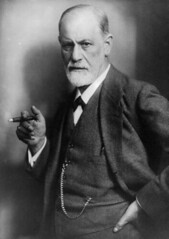
9830063263Sigmund Freud1856-1939; Field: psychoanalytic, personality; Contributions: id/ego/superego, reality and pleasure principles, ego ideal, defense mechanisms (expanded by Anna Freud), psychoanalysis, transference0
9830063264Anna Freud1895-1982; Field: psychoanalysis; Contributions: focused on child psychoanalysis, fully developed defense mechanisms, emphasized importance of the ego and its constant struggle1
9830063265Carl Jung1875-1961; Field: neo-Freudian, analytic psychology; Contributions: people had conscious and unconscious awareness; archetypes; collective unconscious; libido is all types of energy, not just sexual; Studies: dream studies/interpretation2
9830063266Erik Erikson1902-1994; Field: neo-Freudian, humanistic; Contributions: created an 8-stage theory to show how people evolve through the life span. Each stage is marked by a psychological crisis that involves confronting "Who am I?"3
9830063267Lawrence Köhlberg1927-1987; Field: cognition, moral development; Contributions: created a theory of moral development that has 3 levels; focuses on moral reasoning rather than overt behavior4
9830063268Carol Gilligan1936-pres; Field: cognition; Contributions: maintained that Köhlberg's work was developed by only observing boys and overlooked potential differences between the habitual moral judgments of boys and girls; girls focus more on relationships than laws and principles5
9830063269William James1842-1910; Field: functionalism; Contributions: studied how humans use perception to function in our environment; Studies: Pragmatism, The Meaning of Truth6
9830063270William Wundt1832-1920; Field: structuralism, voluntarism; Contributions: introspection, basic units of experience; Studies: 1st psychological laboratory in world at University of Leipzig7
9830063271BF Skinner1904-1990; Field: behavioral; Contributions: created techniques to manipulate the consequences of an organism's behavior in order to observe the effects of subsequent behavior; Studies: Skinner box8
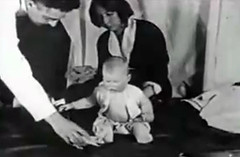
9830063272John B Watson1878-1958; Field: behaviorism; Contributions: generalization-inductive reasoning, emphasis on external behaviors of people and their reactions on a given situation; Studies: Little Albert9
9830063273Jean Piaget1896-1980; Field: cognition; Contributions: created a 4-stage theory of cognitive development, said that two basic processes work in tandem to achieve cognitive growth (assimilation and accommodation)10
9830063274Harry Harlow1905-1981; Field: development; Contributions: realized that touch is preferred in development; Studies: Rhesus monkeys, studied attachment of infant monkeys (wire mothers v. cloth mothers)11
9830063275Carl Rogers1902-1987; Field: humanistic; Contributions: founded person-centered therapy, theory that emphasizes the unique quality of humans especially their freedom and potential for personal growth, unconditional positive regard, fully functioning person12
9830063276Abraham Maslow1908-1970; Field: humanism; Contributions: hierarchy of needs-needs at a lower level dominate an individual's motivation as long as they are unsatisfied, self-actualization, transcendence13
9830063277Karen Horney1885-1952; Field: neo-Freudian, psychodynamic; Contributions: criticized Freud, stated that personality is molded by current fears and impulses, rather than being determined solely by childhood experiences and instincts, neurotic trends14
9830063278Alfred Adler1870-1937; Field: neo-Freudian, psychodynamic; Contributions: basic mistakes, style of life, inferiority/superiority complexes, childhood influences personality formation; Studies: Birth Order15
9830063279Gordon Allport1897-1967; Field: trait theory of personality; Contributions: list of 11,000 traits, 3 levels of traits-cardinal, central, and secondary16
9830063280Hermann Rorschach1884-1922; Field: personality, psychoanalysis; Contributions: developed one of the first projective tests, the Inkblot test which consists of 10 standardized inkblots where the subject tells a story, the observer then derives aspects of the personality from the subject's commentary17
9830063281Solomon Asch1907-1996; Field: social psychology; Contributions: studied conformity, found that individuals would conform even if they knew it was wrong; Studies: conformity, opinions and social pressures18
9830063282Stanley Schachter1922-present; Field: emotion; Contributions: stated that in order to experience emotions a person must be physically aroused and know the emotion before you experience it19
9830063283Stanley Milgram1933-1984; Field: social psychology; Contributions: wanted to see how the German soldiers in WWII fell to obedience, wanted to see how far individuals would go to be obedient; Studies: Shock Study20
9830063284Philip Zimbardo1933-present; Field: social psychology; Contributions: proved that peoples behavior depends to a large extent on the roles they are asked to play; Studies: Stanford Prison Study-studied power of social roles to influence people's behavior21
9830063285Elizabeth Kübler-Ross1926-2004; Field: development; Contributions: 5 stages the terminally ill go through when facing death (1. death, 2. anger/resentment, 3. bargaining with God, 4. depression, 5. acceptance)22
9830063286Elizabeth Loftus1944-present; Field: memory; Contributions: expert in eyewitness testimony (false memories or misinformation effect); Studies: Reconstruction of Auto. Destruction, Jane Doe Case (repressed memories of Nicole Taus' sex abuse)23
9830063287Robert Sternberg1949-present; Field: intelligence; Contributions: devised the Triarchic Theory of Intelligence (academic problem-solving, practical, and creative)24
9830063288Albert Bandura1925-present; Field: sociocultural; Contributions: pioneer in observational learning, stated that people profit from the mistakes/successes of others; Studies: Bobo Dolls-adults demonstrated 'appropriate' play with dolls, children mimicked play25
9830063289Raymond Cattell1905-1998; Field: intelligence; Contributions: fluid & crystal intelligence; 3 domains of personality sphere (personality, ability, & motivation), 16 Personality Factors (personality test)26
9830063290Aaron Beck1921-present; Field: cognitive; Contributions: father of Cognitive Therapy, created Beck Scales-depression inventory, hopelessness scale, suicidal ideation, anxiety inventory, and youth inventories27
9830063291Noam Chomsky1928-present; Field: language; Contributions: disagreed with Skinner about language acquisition, stated there is an infinite # of sentences in a language, humans have an inborn native ability to develop language28
9830063292Edward Thorndike1874-1949; Field: behaviorism; Contributions: Law of Effect-relationship between behavior and consequence; Studies: Law of Effect with cats29
9830063293HJ Eysenck1916-1997; Field: personality; Contributions: asserted that personality is largely determined by genes, used introversion/extroversion30
9830063294Mary Ainsworth1913-1999; Field: development; Contributions: compared effects of maternal separation, devised patterns of attachment; Studies: The Strange Situation-observation of parent/child attachment31
9830063295Kenneth Clark1914-2005; Field: social psychology; Contributions: research evidence of internalized racism caused by stigmatization; Studies: Doll experiments-black children chose white dolls32
9830063296Lev Vygotsky1896-1934; Field: child development; Contributions: investigated how culture & interpersonal communication guide development, zone of proximal development; play research33
9830063297Martin Seligman1942-present; Field: learning; Contributions: Positive Psychology, learned helplessness; Studies: Dogs demonstrating learned helplessness34
9830063298Howard Gardner1943-present; Field: intelligence; Contributions: devised the theory of multiple intelligences (logical-mathematic, spatial, bodily-kinesthetic, intrapersonal, linguistic, musical, interpersonal, naturalistic)35
9830063299Kurt Lewin1890-1947; Field: social psychology; Contributions: German refugee who escaped Nazis, proved the democratic style of leadership is the most productive; Studies: Leadership syles-studied effects of 3 leadership styles on children completing activities36
9830063300Ivan Pavlov1891-1951; Field: Gastroenterology; Contributions: developed foundation for classical conditioning, discovered that a UCS naturally elicits a reflexive behavior; Studies: dog salivation37
9830063301Hermann Ebbinghaus1850-1909; Field: memory; Contributions: 1st to conduct studies on forgetting: first, a rapid loss followed by a gradual declining rate of loss; Studies: memory-series of meaningless syllables/words38
9830063302Benjamin Whorf1897-1941; Field: language; Contributions: his hypothesis is that language determines the way we think39
9830063303Robert Rosenthal1933-present; Field: social psychology; Contributions: focus on nonverbal communication, self-fulfilling prophecies; Studies: Pygmalion Effect-effect of teacher's expectations on students40
9830063304Judith Langloisdates ?; Field: developmental; Contributions: social development & processing, effects of appearance on behavior, origin of social stereotypes, sex/love/intimacy, facial expression41
9830063305David Rosenhandates?; Field: social psychology; Contributions: proved that once you are diagnosed with a disorder, your care would not be very good in a mental health setting; Studies: Hospital experiment-checked into hospital to check diagnosis42
9830063306Daniel Goleman1946-present; Field: intelligence; Contributions: emotional intelligence43
9830063307Charles Spearman1863-1945; Field: intelligence; Contributions: found that specific mental talents were highly correlated, concluded that all cognitive abilities showed a common core which he labeled 'g' (general ability)44
9830063308Albert Ellis1913-2007; Field: cognitive-behavioral; Contributions: Rational-Emotive Therapy (RET), focuses on altering client's patterns of irrational thinking to reduce maladaptive behavior and emotions45
9830063309Harry Stack Sullivan1892-1949; Field: psychoanalysis; Contributions: groundwork for enmeshed relationships, developed the Self-System-a configuration of personality traits46
9830063310Robert Yerkes187601956; Field: intelligence, comparative; Contributions: social behavior of gorillas/chimps, Yerkes-Dodson law-level of arousal as related to performance47
9830063311Alfred Binet1857-1911; Field: testing; Contributions: general IQ tests, designed test to identify slow learners in need of remediation-not applicable in the U.S. because too culture-bound (French)48
9830063312Little Albertca. 1920; Field: behaviorism; Contributions: subject in John Watson's experiment, proved classical conditioning principles: Studies: Little Albert-generalization of fear49
9830063313Karl Wernicke1848-1905; Field: perception; Contributions: area of left temporal lobe involved language understanding; Studies: person damaged in this area uses correct words but they do not make sense50
9830063314Ernst Weber1795-1878; Field: perception; Contributions: just-noticeable-difference (JND) that eventually becomes Weber's law; Studies: 1st study on JND51
9830063315Gustav Fechner1801-1887; Field: perception; Contributions: stated that the magnitude of a sensory experience is proportionate to the # of JND's that the stimulus causing the experiences above the absolute threshold52
9830063316Mary Cover-Jones1896-1987; Field: learning; Contributions: systematic desensitization, maintained that fear could be unlearned53
9830063317Robert Zajonc1923-present; Field: motivation; Contributions: believes that we invent explanations to label feelings54
9830063318Henry Murray1893-1988; Field: intelligence, testing; Contributions: devised the Thematic Apperception Test (TAT) with Christina Morgan, stated that the need to achieve varied in strength in different people and influenced their tendency to approach and evaluate their own performances55
9830063319Paul Ekman1934-present; Field: emotion; Contributions: found that facial expressions are universal56
9830063320Clark Hull1884-1952; Field: motivation; Contributions: maintains that the goal of all motivated behavior is the reduction or alleviation of a drive state, mechanism through which reinforcement operates57
9830063321David McClelland1917-1998; Field: intelligence, testing; Contributions: devised a way to measure Murray's theory (TAT), developed scoring system for TAT's use in assessing achievement motivation, not the TAT58
9830063322Francis Galton1822-1911; Field: differential psychology AKA "London School" of Experimental Psychology; Contributions: behavioral genetics, maintains that personality & ability depend almost entirely on genetic inheritance; Studies: Twin Studies-compare identical & fraternal twins, Hereditary Genius-used bell curve for normal distribution, & "Law of Errors"-differences in intellectual ability59
9830063323Charles Darwin1809-1882; Field: geology, biology; Contributions: transmutation of species, natural selection, evolution by common descent; Studies: "The Origin of Species" catalogs his voyage on the Beagle60
9830063324Lewis Terman1877-1956; Field: testing; Contributions: revised Binet's IQ test and established norms for American children61
9830063325Phineas Gage1823-1860; Field: neurobiology; Contributions: 1st person to have a frontal lobotomy (by accident), his accident gave information on the brain and which parts are involved with emotional reasoning62
9830063326William Sheldon1898-1977; Field: personality; Contributions: theory that linked personality to physique on the grounds that both are governed by genetic endowment: endomorphic (large), mesomorphic (average), and ectomorphic (skinny)63
9830063327David Weschler1896-1981; Field: testing; Contributions: established an intelligence test especially for adults (WAIS)64
9830063328Walter B. Cannon1871-1945; Field: motivation; Contributions: believed that gastric activity as in empty stomach, was the sole basis for hunger; Studies: inserted balloons in stomachs65

AP Biology Evolution Vocabulary Flashcards

Terms : Hide Images
9770314143AdaptationCharacteristics passed down to an organism over generations that help it to survive and reproduce in a specific environment0
9770314144MutationChange in the nucleotide sequence of an organisms DNA (or RNA in a virus)1
9770314145SpeciationEvolutionary process where a species splits into multiple species2
9770314146SpeciesMembers of the same population that are able to interbreed and produce viable, fertile offspring from that same population, but not with a different population3
9770314147Sympatric SpeciationFormation of new species in populations that live in the same geographic area4
9770314148Vestigial OrganA feature on an organism that served as a function for their ancestors5
9770314149Allotropic SpeciationFormation of a new species in populations that are geographical isolated from one another6
9770314150Artificial SelectionUnnatural selective breeding of plants and animals to gain desirable traits in an offspring7
9770314151Biological Species ConceptSame definition as "Species"; members of populations that are able to interbreed and produce viable, fertile offspring, but are unable to with members of a different offspring8
9770314152Common AncestorWhen species share the same ancestor from many years ago9
9770314153FossilA preserved remnant or impression of an organism from many years ago10
9770314154GeologyScience that deals with Earth's physical structures and history11
9770314155Natural SelectionProcess where organisms have a certain inherited trait that allows them to survive and reproduce in an environment better than other organisms.12
9770314156PolyploidyChromosome alteration where an organism has more than two sets of chromosomes. Result of accident in cell division.13
9770314157PopulationGroup of individuals of the same species that live in the same area and are able to produce viable and fertile offspring14
9770314158Postzygotic BarrierPrevents hybrid organisms from developing into viable, fertile adults. Examples: 1. Reduced Hybrid Fertility 2. Reproductive Isolation 3. Hybrid Breakdown15
9770314159Prezygotic BarrierFactors that prevent organisms from mating in order to produce offspring or hinders fertilization. Examples: 1. Temporal Isolation 2. Mechanical Isolation 3. Habitat Isolation 4. Behavioral Isolation 5. Gametic Isolation16
9770314160Directional SelectionNatural selection where organisms on ONE end of the phenotypic spectrum are able to survive and reproduce better than other organisms.17
9770314161Disruptive SelectionWhen organisms on TWO ends of the phenotypic spectrum are able to survive and reproduce better than organisms with intermediate phenotype18
9770314162EvolutionChange in genotype of organism from generation to generation that allow the organism to be different than their ancestors. Descent with modification.19
9770314163Evolutionary FitnessDescent where they have a specific trait that will not allow them to die out20
9770314164Homologous StructuresStructures in organisms that are similar21
9770314165HomologySimilarity in characteristics resulting from shared ancestry22
9770314166HybridOffspring that results from the mating of two different species23
9770314167Reproductive IsolationBiological factors that prevent members from two species from producing viable, fertile offspring24

APES Test 3 Flashcards

Terms : Hide Images
8252518118Community EcologyThe study of interactions between species.0
8252525760Symbiotic RelationshipThe relationship between two species that live in close association with each other.1
8252533364CompetitionThe struggle of individuals to obtain a shared limiting resource.2
8252565069Competitive Exclusion PrincipleThe principle stating that two species competing for the same limiting resource cannot coexist.3
8252577878NicheThe interrelationship of a species with all the biotic and abiotic factors affecting it.4
8252584631Resource PartitioningWhen two species divide a resource based on differences in their behavior or morphology.5
8252599593Temporal Resource PartitioningWhen species utilize the same resources but at different times.6
8252605884Spatial Resource PartitioningWhen two species reduce competition for resources by using different habitats.7
8252616519Morphological Resource PartitioningThe evolution of differences in body size or shapes in order to reduce competition.8
8252625593PredationAn interaction in which one animal typically kills and consumes another animal.9
8252631181ParasitoidA specialized type of predator that lays eggs inside other organisms (its host).10
8252641915PathogenA parasite that causes a disease in its host.11
8252648703ParasitismAn interaction in which one organism lives on or in another organism, benefitting from it.12
8252663445HerbivoryAn interaction in which an animal consumes a producer.13
8252667993MutualismAn interaction between two species that increases the chances of survival or reproduction for both species.14
8252676167CommensalismA relationship between species in which one species benefits and the other is neither harmed nor helped.15
8252685504Keystone SpeciesA species that plays a far more important role in its community than its relative abundance might suggest.16
8252692472Ecosystem EngineerA keystone species that creates or maintains habitat for other species.17
8252709163Fundamental NicheThe entire set of conditions under which an animal can survive and reproduce.18
8252709164Realized NicheThe set of conditions actually used by given animal after interactions with other species have been taken into account.19
8252728193Ecological SuccessionThe predictable replacement of one group of species by another group of species over time.20
8252738314Primary SuccessionEcological succession occuring on surfaces that are initially devoid of soil.21
8252745975Secondary SuccessionThe succession of plant life that occurs in areas that have been disturbed but have not lost their soil.22
8252758751Pioneer SpeciesA species that can colonize new areas rapidly and grow well in full sunshine.23
8252766165Climax CommunityA concept that there is a final stage in succession, with the oldest forests being this stage. However, this is out of favor because natural disturbances occur regularly so there can be no final succession stage.24
8252805540Rocky Intertidal ZoneArea often re-colonized often due to constant natural disturbances.25
8252830978Species RichnessThe number of different species represented in an ecological community, landscape or region. The basic processes that determine this are: colonization of an area by a new species, speciation within the area and losses from the area by extinction.26
8252857512Theory of Island BiogeographyA theory that demonstrates the dual importance of habitat size and distance in determining species richness.27
8252868142Habitat IslandA habitat surrounded by less hospitable land,28
8252909585BiodiversityThe variety of life in the world, a particular ecosystem or habitat. Which is difficult to quantify because although some species are easy to find, others only come out at certain times, live in unaccesible places, or can only be visible under a microscope.29
8252928684Species EvenessThe relative proportion of individuals within the different species in a given area.30
8252937375Shannon's IndexAccounts for species abundance and eveness by calculating how many species there are and how evenly distributed they are. -Σ(pi(ln(pi))31
8252945233PhylogenyThe branching pattern of evolutionary relationships, which is determined by the similarity of traits.32
8252953864EvolutionA change in the genetic composition of a population over time.33
8252960652MicroevolutionEvolution bellow the species level.34
8252964874MacroevolutionEvolution that gives rise to new species, genera, families, classes or phyla.35
8253073133GeneA physical location on the chromosomes within each cell of an organism.36
8253363451AllelesForms of a gene that arise by mutation and are found at the same place on a chromosome.37
8253363452GenotypeThe complete set of genes in an individual.38
8253363453PhenotypeA set of traits expressed by an individual.39
8253363454MutationA random, change in the genetic code produced by a mistake in the copying process. They can be passed on if they occur in cells responsible for reproduction.40
8253375633RecombinationThe genetic process by which one chromosome breaks off ant attaches to another chromosome during reproductive cell division.41
8253381657Evolution by Artificial SelectionThe process in which humans determine which individuals breed, typically with a preconceived set of traits in mind.42
8253387689Alfred WallaceA British naturalist, explorer, geographer, anthropologist, and biologist who came up with a theory of national selection independently of Charles Darwin.43
8253387690Charles DarwinAuthor of "On the Origin of Species by Means of Natural Selection". His key ideas for a theory of evolution by natural selection were: - Individuals produce an excess of offspring. - Not all offspring can survive. - Individuals differ in their traits. - Differences in traits can be passed on from parents to offspring. - Differences in traits are asociated with differences in the ability to survive and reproduce.44
8253420206Evolution by Natural SelectionThe process in which the environment determines which individuals survive and reproduce.45
8253425730FitnessAn individual's ability to survive and reproduce.46
8253427939AdaptationA trait that improves an individual's fitness.47
8253431188Gene FlowThe process by which individuals move from one population to another and thereby alter the genetic composition of both populations.48
8253439296Genetic DriftA change in the genetic composition of a population over time as a result of random mating.49
8253444722Bottleneck EffectA reduction in the genetic diversity of a population caused by a reduction in its size.50
8253449114ExtinctionThe death of the last member of a species.51
8253451156Flounder EffectA change in the genetic composition of a population as a result of descending from a small number of colonizing individuals.52
8253456522Geographic IsolationPhysical separation of a group of individuals from others of the same species.53
8253458468Allopatric SpeciationThe process of speciation that occurs with geographic isolation.54
8253461430Reproductive IsolationThe result of two populations within a species evolving separately to the point that they can no longer interbreed and produce viable offspring.55
8253468362Sympatric SpeciationThe evolution of one species into two, without geographic isolation.56
8253473189PolyploidyWhen the number of sets of chromosomes increases to more than two which can occur during the division of reproductive cells.57
8253479507Genetically Modified Organism (GMO)An organism produced by copying genes from a species with a desirable trait and inserting them into another species.58
8253485795Range of ToleranceThe limits to the abiotic conditions that a species can tolerate.59
8253489032DistributionAreas of the world in which a species lives.60
8253491743Niche GeneralistA species that can live under a wide range of abiotic or biotic conditions.61
8253494580Niche SpecialistA species that is specialized to live in a specific habitat or to feed on a small group of species.62
8253498820Mass ExtinctionA large extinction of species in a relatively short period of time.63
82535041205How many Mass Extinctions have occurred to date?64
8253508400True (caused by humans: habitat destruction, overharvesting, introductions of invasive species, climate change and emerging diseases)True or False: Are we currently in a mass extinction?65
8253521731Terrestrial BiomeA geographic region categorized by a particular combination of average annual temperature, annual precipitation, and distinctive plant growth forms on land.66
8253525964Aquatic BiomeAn aquatic region characterized by a particular combination of salinity, depth and water flow.67
8253529674TundraA cold, treeless biome with low growing vegetation. Some of the plants that grow here are small woody shrubs, mosses, heaths, lichens which can grow in shallow, waterlogged soil and can survive short growing seasons and bitterly cold winters.68
8253542682PermafrostAn impermeable, permanently frozen layer of soil.69
8253545896Boreal ForestA forest biome made up primarily of coniferous evergreen trees that can tolerate cold winters and short growing seasons. They are subarctic biomes with very cold temperatures. Although they provide little agricultural value, they serve as an important source of trees for pulp, paper and building materials.70
8253560751Temperate RainforestsA coastal biome typified by moderate temperatures and high precipitation. They allow for the growth of immensely tall trees which can live for hundreds of years. These trees are often used for lumber.71
8253570723Temperate Seasonal ForestA biome with warm summers and cold winters and over 1 m of precipitation annually. They are dominated by broadleaf deciduous trees and can be used for agriculture on a large scale.72
8253582763Woodland/ShrublandA biome characterized by hot, dry summers and mild, rainy winters. Typical plants in this biome include drought and wild fire resistant shrubs. It is used for grazing by livestock and to produce drought tolerant products such as wine grapes.73
8264238165Temperate Grassland/Cold DessertA biome characterized by cold, harsh winters and hot, dry summers. Typical plants of this biome include grasses and non-woody flowering plants which are generally well adapted to wild fires and grazing by animals. This biome is also very agriculturally productive and good for grazing animals.74
8264266982Tropical RainforestA warm and wet biome found between 20 degrees N and 20 degrees S of the equator with little seasonal variation and high precipitation. They have more biodiversity than any other terrestrial biome and its forests have several layers of vegetation. This soil is rich in nutrients which is great for agriculture; however, the high rate of decomposition causes soil to lose their fertility quickly so farmers have to keep moving to newly deforested areas.75
8264314947Tropical Seasonal Forest/SavannaA biome marked by warm temperatures and distinct wet/dry seasons. In areas with the longest dry seasons, the landscape becomes relatively open and dominated by grasses and scattered deciduous trees. Grazing and fires discourage the growth of many smaller woody plants. This biome is fairly good for agriculture and grazing.76
8264365298Subtropical DesertA biome prevailing at approximately 30 degrees N and 30 degrees S with hot temperatures, extremely dry conditions and sparse vegetation. Cacti, euphorbs and succulent plants are well adapted to this biome.77
8264397210CanopyThe first layer of vegetation made up of the largest trees in the forest.78
8264401067Sub-canopySeveral layers of successively smaller trees under the canopy.79
8264405222EpiphytesPlants that hold small pools of water and support small aquatic ecosystems.80
8264421741Annual PlantsPlants that live only for a few months reproduce and die, growing rapidly during periods of rain.81
8264432117Perennial PlantsPlants that live for many years and experience spurts of growth when it rains, but then exhibit little growth during the rest of the year, making them particularly vulnerable to disturbance.82
8264453709RapidsStretches of turbulent waters in fast-moving streams and rivers where water and air are mixed together.83
8264470336Littoral ZoneThe shallow zone of soil and water in lakes and ponds where most algae and emergent plants grow.84
8264482631Limnetic ZoneA zone of open water in lakes and ponds.85
8264489302PhytoplanktonFloating algae.86
8264496346Profundal ZoneA region of water where sunlight does not reach, below the limnetic zone of very deep lakes.87
8264509962Benthic ZoneThe muddy bottom of a lake, pond or ocean.88
8264517269OligotrophicA lake with a low level of productivity.89
8264521974MesotrophicA lake with a moderate level of productivity.90
8264528461EutrophicA lake with a high level of productivity.91
8264541323Freshwater wetlandsAn aquatic biome that is submerged or saturated by water for at least part of each year, but shallow enough to support emergent vegetation. They are important ecologically because they provide several ecosystem services such as taking large amounts of rain water and releasing it slowly into groundwater, thus reducing the severity of floods and droughts and filtering the water.92
8264601754Salt MarshA marsh containing non-woody emergent vegetation, found along the coast in temperate climates. They are important ecologically because they are very productive places for plants and algae. Also, the abundant plant life helps filter contaminants out of the water. They also provide an important habitat for spawning fish and shellfish.93
8264643985Mangrove SwampA swamp that occurs along tropical and subtropical coasts, and contains salt-tolerant trees with roots submerged in water. They often grow along estuaries or shallow coast lines that lack inputs of fresh water. They are important because their trees help protect coasts from erosion and storm damage.94
8264679496Intertidal ZoneThe narrow band of coastline between the levels of high tide and low tide. Although its environment conditions are quite stable during a high tide, they become much harsher during the low tide. During the low tide, organisms are exposed to direct sunlight, high temperatures and desiccation.95
8264710959Coral ReefThe most diverse marine biome on Earth, found in warm, shallow waters beyond the shoreline.96
8264720322Coral BleachingA phenomenon in which algae inside corals die, causing the corals to turn white and eventually die as well.97
8264733373Open OceanDeep ocean water, located away from the shoreline where sunlight can no longer reach the ocean bottom.98
8264744012Photic ZoneThe upper layer of ocean water in the ocean that receives enough sunlight for photosynthesis.99
8264753475Aphotic ZoneThe deeper layer of ocean water that lacks sufficient sunlight for photosynthesis.100
8264765652ChemosynthesisA process used by some bacteria in the ocean to generate energy with methane and hydrogen sulfide.101
8327778927PopulationThe individuals that belong to the same species and live in a given area at a particular time.102
8327781401CommunityAll of the populations of organisms within a given area.103
8327783609Five Levels of ComplexityIndividual, Population, Community, Ecosystem, Biosphere104
8327786992Population EcologyThe study of factors that cause populations to increase or decrease.105
8327789841Population Size (N)The total number of individuals within a defined area at a given time.106
8327792858Population DensityThe number of individuals per unit area at a given time.107
8327795731Population DistributionA description of how individuals are distributed with respect to one another.108
8327797269Random Population DistributionWhen there is no pattern to the locations of species. Ex: Trees in a forest.109
8327800025Uniform Population DistributionWhen individuals are evenly spaced. Common among territorial animals and toxic plants that prevent other plants of the same species from growing near them.110
8327805102Clumped Population DistributionPopulation distribution that is often observed when living in large groups provides enhanced feeding opportunities or protection from predators.111
8327809474Sex RatioThe ratio of males to females in a population.112
8327815291Age StructureA description of how many individuals fit into particular age categories in a population.113
8327818614Limiting ResourceA resource that a population cannot live without and that occurs in quantities lower than the population would require to increase in size.114
8327826880Density-Dependent FactorA factor that influences an individual's probability of survival and reproduction in a manner that depends on the size of the population.115
8327830044Carrying Capacity (K)The limit of how many individuals in a population the environment can sustain.116
8327833090Density-Independent FactorA factor that has the same effect on an individual's probability of survival and the amount of reproduction at any population size.117
8327837193Population Growth ModelsMathematical equations that can be used to predict population size at any moment in time.118
8327839913Population Growth RateThe number of offspring an individual can produce in a given time period, minus the deaths of the individual or its offspring during the same period.119
8327845465Intrinsic Growth Rate (r)The maximum potential for growth of a population under ideal conditions with unlimited resources.120
8327850698Exponential Growth ModelNt=Noe^rt. A growth model that estimates a populations future size (Nt) after a period of time (t), based on the intrinsic growth rate (r) and the number of reproducing individuals currently in the population (No).121
8327856910J-Shaped CurveThe curve of the exponential growth model when graphed.122
8327861639Logistic Growth ModelA growth model that describes a population whose growth is initially exponential, but slows as the population approaches the carrying capacity of the environment.123
8327867090S-Shaped CurveThe shape of the logistic growth model when graphed.124
8327869236OvershootWhen a population becomes larger than the environment's carrying capacity.125
8327872299Die-offA rapid decline in a population due to death.126
8327877656Population OscilationWhen the size of a population goes up and down continuously.127
8327881155K-Selected SpeciesA species with a low intrinsic growth rate that causes the population to increase slowly until it reaches carrying capacity. Their population fluctuations are small. They are typically large organisms that reach reproductive maturity relatively late, produce a few, large offspring, and provide substantial parental care. This slow growth rate poses a challenge because an endangered species cannot respond quickly.128
8327889430r-Selected SpeciesA species that has a high intrinsic growth rate, which often leads to population overshoots and die-offs. They tend to be small organisms that reach reproductive maturity relatively early, reproduce frequently, reproduce many small offspring and provide little to no parental care.129
8327905394Survivorship CurveA graph that represents the distinct patterns of species survival as a function of age.130
8327908241Type I Survivorship CurveA pattern of survival over time in which there is high survival throughout most of the lifespan, but then individuals start to die in large numbers as they approach old age.131
8327911175Type II Survivorship CurveA pattern of survival over time in which there is a relatively constant decline in survivorship throughout most of the lifespan.132
8327916099Type III Survivorship CurveA pattern of survival over time in which there is low survivorship early in life with few individuals reaching adulthood.133
8327924105Habitat CorridorsStrips of natural habitat that connect populations.134
8327926745MetapopulationA group of spatially distinct populations that are connected by occasional movements of individuals between them.135
8327928223Interbreeding DepressionWhen individuals with similar genotypes, typically relatives, breed with each other and produce offspring that have an impaired ability to survive and reproduce.136
8361538030PhotosynthesisThe process by which producers use solar energy to convert carbon dioxide and water into glucose. Formula: Solar Energy + 6H2O + 6CO2 ---> C6H12O6 + 6O2137
8361586328Cellular RespirationThe process by which cells unlock the energy of chemical compounds.138
8361609795Aerobic RespirationThe process by which cells convert glucose and oxygen into energy, carbon dioxide and water.139
8361650937Anaerobic RespirationThe process by which cells convert glucose into energy in the absence of oxygen.140
8361666573ConsumerAn organism that is incapable of photosynthesis and must obtain its energy by consuming other organisms. Also known as Heterotroph.141
8361716303HerbivoreA consumer that eats producers. Also known as a Primary Consumer.142
8361736711CarnivoreA consumer that eats other consumers.143
8361742613Secondary ConsumerA carnivore that eats primary consumers.144
8361760385Tertiary ConsumerA carnivore that eats secondary consumer.145
8361780469Trophic LevelsThe successive levels of organisms consuming one another.146
8361785776Food ChainThe sequence of consumption from producers through tertiary consumers.147
8361837841Food WebA complex model of how energy and matter move between trophic levels.148
8361856965ScavengerAn organism that consumes dead animals.149
8361870433DetritivoreAn organism that specializes in breaking down dead tissues and waste products into smaller particles. Ex: Beetles150
8361894870DecomposersFungi and bacteria that convert organic matter into small elements and molecules that can be recycled back into the ecosystem.151
8361963496Gross Primary Product (GPP)The total amount of solar energy that producers in an ecosystem capture via photosynthesis over a given amount of time.152
8362006170Net Primary Product (NPP)The energy captured by producers in an ecosystem minus the energy producers respire.153
8362029577BiomassThe total mass of all living matter in a specific area.154
8362036618Standing CropThe amount of biomass present in an ecosystem at a particular time.155
8362059680Ecological EfficiencyThe proportion of consumed energy that can be passed from one trophic level to another.156
8362081778Trophic PyramidA representation of the distribution of biomass, numbers, or energy among trophic levels.157
8362109170Biogeochemical CycleThe movements of matter within and between ecosystems.158
8362119872Hydrologic CycleThe movement of water through the biosphere.159
8362124909TranspirationThe release of water from leaves during photosynthesis.160
8362158797EvapotranspirationThe combined amount of evaporation and transpiration.161
8362186826RunoffWater that moves across the land surface and into streams and rivers.162
8362193515Carbon CycleThe movement of carbon around the biosphere.163
8362289406MacronutrientOne of six key elements that organisms need in relatively large amounts: nitrogen, phosphorous, potassium, calcium, magnesium and sulfur.164
8362310063Limiting NutrientA nutrient required for the growth of an organism but available in a lower quantity than other nutrients.165
8362327215Nitrogen CycleThe movement of nitrogen around the biosphere.166
8362352161Nitrogen FixationA process by which some organisms can convert nitrogen gas molecules directly into ammonia.167
8362369371NitrificationThe conversion of ammonia into nitrite and then into nitrate.168
8362378626AssimilationThe process by which producers incorporate elements into their tissues.169
8362385861MineralizationThe process by which fungal and bacterial decomposers break down the organic matter found in dead bodies and waste products and convert it into inorganic compounds.170
8362440478AmmonificationThe process by which fungal and bacterial decomposers break down the organic nitrogen found in dead bodies and waste products and convert it into inorganic ammonium.171
8362481068DenitrificationThe conversion of nitrate in a series of steps into the gases nitrous oxide and eventually nitrogen gas which is emitted into the atmosphere.172
8362546412LeachingThe transportation of dissolved molecules through the soil via groundwater.173
8362562008Phosphorous CycleThe movement of phosphorous around the biosphere.174
8362583942Algal BloomA rapid increase in the algal population of a waterway.175
8362597123HypoxicLow in oxygen.176
8362601515Sulfur CycleThe movement of sulfur around the biosphere.177
8362629982DisturbanceAn event, caused by physical, chemical, or biological agents, resulting in changes in population size or community composition.178
8362648694WatershedAll land in a given landscape that drains into a particular stream, river, land or wetland.179
8362683182ResistanceA measure of how much a disturbance can affect flows of energy and matter in an ecosystem.180
8362698815ResilienceThe rate at which an ecosystem returns to its original state after a disturbance.181
8362723966Restoration EcologyThe study and implementation of restoring damaged ecosystems.182
8362753484Intermediate Disturbance HypothesisThe hypothesis that ecosystems experiencing intermediate levels of disturbance are more diverse than those with high or low disturbance levels.183

AP Human Geography Urbanization Flashcards

Terms : Hide Images
9775152736takes up less than 1 percent of the urban land area, yet contains a large percentage of the services offered in the city.CBD0
97751527373 types of services offered in CBD1. Public 2. Consumer 3. Business1
9775152738Examples: city hall, courts, county and state agencies, and libraries.. Centrally located for ease of accessibility to all residents Sports centers and conventions centers are often downtown to stimulate commerce in the CBD.Public Services2
9775152739Examples: advertising agencies, banks, financial institutions, and law firms. Proximity to other service providers for businesses promotes collaboration and face-to-face meetings.Business Services3
9775152740Created in 1923 by sociologist E.W. BurgessConcentric Zone Model4
9775152741First model to explain the distribution of different social groups within urban areasConcentric Zone Model5
9775152742Model suggests that a city grows outward from a central area in a series of concentric rings.Concentric Zone Model6
9775152743In concentric zone model, this is where innermost ring where nonresidential activities occur.CBD7
9775152744area eventually consumed by CBDZone of Transition8
9775152745Zone of Working-Class Homesmodest, older houses9
9775152746Zone of Better Residence: newer, larger houses for middle-class families10
9775152747Commuter Zonebeyond the continuous built-up11
9775152818Draw the Concentric Zone Model12
9775152748Created by land economist Homer Hoyt in 1939.Sector model13
9775152749Model that posits a city develops in a series of sectors, not rings.Sector Model14
9775152750As a city grows, activities expand outward in a wedge, or sector, from the center.Sector Model15
9775152819Draw the sector model16
9775152751Created by geographers C. D. Harris and E. L. Ullman in 1945Multiple nuclei model17
9775152752Model posits that a city is a complex structure that includes more than one center around which activities revolve.Multiple nuclei model18
9775152753Examples of Multiple nuclei model nuclei.Ports Universities Airports Parks19
9775152820Draw the multiple nuclei model20
9775152754Purpose of urban modelsThe models of urban structure help us understand where people with different social characteristics tend to live and why.21
9775152755Problems with urban modelsCritics point out that the models are too simple and may be too dated to explain contemporary urban patterns in the U.S. or in other countries.22
9775152756What trend do geographers see in models?Combining the models help geographers explain where different types of people live in a city. They suggest that most people prefer to live near others who have similar characteristics.23
9775152757Chauncy Harris (Harris and Ullman) in 1960Galactic model24
9775152758Inner city, surrounded by large suburban residential and business areasGalactic Model25
9775152759What is the galactic model tied together by?Tied together by transportation nodes A beltway or ring road to avoid traffic congestion26
9775152760Represents the decentralization of the urban areagalactic model27
9775152761Shows an Increase in edge cities Transition to a post-industrial society (fewer 2nd sector jobs, more 3rd, 4th sector jobs)galactic model28
9775152821Draw the galactic model29
9775152762James E. Vance Jr. in 1960urban realms model30
9775152763City has been decentralized and edge cities are now the center of realms which surround the city Each realm is a separate economic, social, and political entity Linked together to form a large metro frameworkurban realms model31
9775152764Main CBD is no longer influentialUrban realms model32
9775152765Realms become "exurbs," not just suburbs So far away from a city they really can't be called suburbs anymoreUrban Realms model33
9775152766Example of urban realms modelSan Francisco Bay Area34
9775152822Draw the urban realms model35
9775152767Ford-Griffin ModelLatin America City Model36
9775152768City Life" Cultural norm in Latin America (primate cities)Latin America City Model37
9775152769Most jobs downtown Commute to CBD developing countryLatin America City Model38
9775152770Two parts Modernized CBD Traditional "market" - small, street-oriented businessesLatin America City Model39
9775152771"Spine" Continuation of feautres of city center along a main wide street (upper-middle-class housing) connecting elite commercial zoneLatin America City Model40
9775152772Barrios and Favelas (slums) Outskirts of the city Transition zones of in situ accretion when times are goodLatin America City Model41
9775152773CBD has both traditional and modern elementsLatin America City Model42
9775152774High class homes surround CBD, "Spine," and MallLatin America City Model43
9775152775Common to find massive peripheriesLatin America City Model44
9775152776(de Blij, 1968Subsaharan African City Model45
9775152777Name and describe the 3 CBDs of Subsaharan African City ModelColonial CBD (most vertical development) Transitional CBD (commerce from the curbside or storefront in single-story buildings) Informal and periodic market zone (usually open air)46
9775152823Draw the Latin American City Model47
9775152778Quality of residences tends to get poorer as you move towards the peripherySubsaharan African City Model48
9775152779Mining and manufacturing areas reflect the nature of the types of jobs found in Africa Lack of elite, middle-class, or gentrification zones tells of the lack developmentSubsaharan Africa City Model49
9775152780Ethnic neighborhoods reflect the tribalism that exists throughout AfricaSubsaharan Africa City Model50
9775152824Subsaharan Africa City Model51
9775152781Rapid population growth and in cities. 1950-15% urban, 1990s, 29% urbanSE Asian City52
9775152825Draw SE Asian City Model53
9775152782Example of SE Asian City ModelHo Chi Minh City54
9775152783Precolonial CitiesBefore the Europeans established colonies, most people lived in rural settlements. There were but a few principal cities in Latin America, Africa, and Asia. Examples In present-day Mexico, the Aztecs built the city Tenochtitlan, where present-day Mexico City is located.55
9775152784Colonial CitiesWhen European colonization gained control of Latin America, Asia, and Africa, they expanded the existing cities to provide colonial services Examples include: Administration Military Command International Trade Housing for European Settlers56
9775152785Cities Since IndependenceFollowing independence, cities have become the focal points of change. Millions of migrants have arrived to them in search of work. In some cities, such as Mexico City, previous social patterns from the previous century were reinforced.57
9775152786city/central cityan urban settlement that has been legally incorporated into an independent, self-governing unit.58
9775152787urban areaa dense core of census tracts, densely settled suburbs, and low-density land that links the dense suburbs with the core. The census recognizes two types of urban areas59
9775152788urbanized areaan urban area with at least 50,000 inhabitants.60
9775152789urban clusteran urban area with between 2,500 and 50,000 inhabitants.61
9775152790metropolitan statistical area (MSA)The U.S. Bureau of the Census has created a method of measuring the functional area of a city It includes: An urbanized area with a population of at least 50,000 The county within which the city is located Adjacent counties with a high population density and a large percentage of residents working in the central city's county.62
9775152791Overlapping Metropolitan AreasSome adjacent MSAs overlap so that they now form one continuous urban complex. Example: Extending north of Boston to South of Washington D.C., geographer Jean Gottmann named this region Megalopolis, a Greek word meaning "great city".63
9775152792Local Government FragmentationMost U.S. metropolitan areas have a council of government, which is a cooperative agency consisting of various local government representatives. Purpose may be to do some overall planning for the area that cannot be performed by a single local government.64
9775152793AnnexationMany U.S. cities grew rapidly in the 19th century, because they offered better services than available in the rural countryside (e.g. water supply, sewage disposal, etc.)65
9775152794Density GradientU.S. tend to become less and less dense as one ventures farther from the city's center66
9775152795Cost of Suburban SprawlA flattening of the density gradient for a metropolitan area means that its people and services are spread out over a larger area.67
9775152796sprawlthe progressive spread of development over the landscape68
9775152797The modern residential suburb is segregated in two ways:1. Social Class 2. Land uses69
9775152798Social ClassSimilarly priced houses are typically built in close proximity to one another, thus attracting a specific range of income earners.70
9775152799Residents are separated from commercial and manufacturing activities that are confined to compact, distinct areas. Zoning ordinances enacted in the early 20th century have contributed most notably to the segregation of land uses associated with suburban areas.Land Uses71
9775152800Motor VehiclesCars and trucks permitted large-scale development of suburbs at greater distances from the city center. Motor vehicles use a considerable amount of space in U.S. cities. An average city allocated about ¼ of its land to roads and parking lots. Multilane freeways cut a 23-meter (75-foot) path through the heart of a city, and elaborate interchanges consume even more space. Valuable land in the central city is devoted to parking cars and trucks.72
9775152801Car of the futureMotor vehicles are one of the greatest challenges to reducing pollution in congested urban areas. Automakers are scrambling to bring alternative-fuel vehicles to the market73
9775152802Diesel fuelDiesel engines burn fuel more efficiently. Biodiesel fuel can be produced partly with vegetable oils or recycled restaurant grease.74
9775152803HybridEnergy that would be otherwise wasted when coasting and braking is reduced, because an electric engine takes over during those instances75
9775152804EthanolFuel made by distilling crops, such as sugarcane, corn, and soybeans. Critics question whether the amount of energy put into growing the crops is not equal to, if not more than, the amount of energy derived from them as fuel.76
9775152805Plug-in HybridElectric motor supplies the power at all speeds. Gas engine can recharge the battery, as well as plugging the car into an electrical outlet.77
9775152806Hydrogen Fuel CellHydrogen forced through a PEM (polymer electrolyte membrane or proton exchange membrane) combines with oxygen from the air, producing an electric charge.78
9775152807Public Transit Benefits and LimitationsBenefits In larger cities, public transit is better suited than motor vehicles to move large numbers of people, because each transit traveler takes up less space. More cost effective than privately operated vehicles Emits relatively less pollutants than privately operated vehicles More energy efficient than privately operated vehicles Limitations Most people in the U.S. overlook the benefits of public transit, because they place higher value on the privacy and flexibility of schedule offered by a car. Not offered in most U.S. cities79
9775152808FilteringLarge houses in older neighborhoods are subdivided into smaller dwellings for low-income families, through a process known as filtering. Over time, landlords cease maintaining the properties when they are no longer economically feasible.80
9775152809RedliningSome banks engage in redlining- drawing lines on a map to identify areas in which they will refuse to loan money to purchase or to fix up a house. Redlining is illegal but difficult to enforce81
9775152810Public HousingDuring the mid-twentieth century, many substandard inner-city houses were demolished and replaced with public housing- housing reserved for low-income households, who must pay 30 percent of their income for rent. A housing authority, established by the local government, manages the buildings, and the federal government pays for all expenses not covered by rent. Most of the high-rise public housing projects built in the U.S. and Europe at this time are now considered unsatisfactory for families with children.82
9775152811GentrificationGentrification is the process by which middle-class people move into deteriorated inner-city neighborhoods and renovate the housing. Most U.S. cities have at least one substantially renovated inner-city neighborhood where middle-class people live. Middle class-families attracted by some of the following: Houses may have more architectural character than those in the suburbs. Proximity to cultural and recreational activities Commuting time reduced to CBD83
9775152812UnderclassInner-city residents are frequently referred to as permanent underclass, because they are trapped in an unending cycle of economic and social problems. Suffers from relatively higher rates of unemployment, alcoholism, drug addiction, illiteracy, juvenile delinquency, and crime. Children often attend deteriorated schools Affordable housing is difficult to secure Tend to ignore good learning habits, regular school attendance, and completion of homework; the tendencies needed to elevate one's self out of the underclass.84
9775152813Culture of PovertyInner-city residents are trapped as a permanent underclass, because they live in a culture of poverty. Characterized by: Unwed mothers giving birth to ¾ of the babies in the U.S. inner-city neighborhoods ¾ of children in the inner city live with only one parent Relatively higher usage of drugs.85
9775152814The Eroding Tax BaseLow-income inner-city residents require public services, but they pay little of the taxes needed to fund the public services. Cities have two choices to close the gap between the cost of operating public services and the funding made available by taxing. Reduce Services Raise Tax Revenues86
9775152815The Impact of the RecessionHousing market collapse in 2008 was one of principal causes of the severe recession. Lower assessed values of houses led to lower tax revenues acquired from property taxes.87
9775152816foreclosureWhen borrowers cease paying their mortgages, lenders can take over the property88

Ap Art History Prehistoric Flashcards

Terms : Hide Images
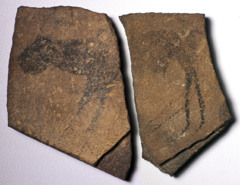
9778896332#1 Apollo 11 StonesNamibia, Africa 25,500-25,300 B.C.E Charcoal on stone0
9778896333#2 Great Hall of the BullsLascaux, France Paleolithic Europe 15,000-13,000 B.C.E Rock Painting1
9778896334#3 Camelid Sacrum in shape of a canineTequixquiac, Mexico 14,000-7,000 B.C.E Bone2
9778896335#4 Running Horned WomanTassili n'Ajjer, Algeria 6,000-4,000 B.C.E Pigment on Rock3
9778896336#5 Beaker (Bushel) with ibex motifsSusa, Iran 4,200-3,500 B.C.E Painted terra cotta4
9778896337#6 Anthropomorphic SteleArabian Peninsula 4,000 B.C.E Sandstone5
9778896338#7 Jade CongLiangzhu, China 3,300-2,200 B.C.E Carved Jade (stone)6
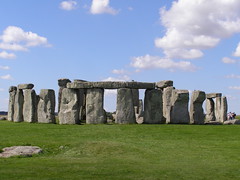
9778896339#8 StonehengeWiltshire, UK Neolithic Europe 2,500-1,600 B.C.E Sandstone7
9778896340#9 The Ambum StoneAmbum Valley, Enga Province Papus, New Guinea 1,500 B.C.E Greywacke8
9778896341#10 Tlatilco Female FigurineCentral Mexico, site of Tlatilco 1,200-900 B.C.E Ceramic9
9778896342#11 Terra Cotta FragmentLapita Solomon Islands 1,000 B.C.E Terra Cotta10

Ap Vocab List 10 Flashcards

Terms : Hide Images
10288125219Bolstersupport and strengthen0
10288125220Expletiveprofane or obscene expression usually of surprise or anger1
10288125221Furoran interest followed with exaggerated zeal2
10288125222Idiomaticof or relating to or conforming to an expression3
10288125223Intangibleincapable of being perceived by the senses, especially touch4
10288125224Laconicbrief and to the point5
10288125225Reciprocateact, feel, or give mutually or in return6
10288125226Subterfugesomething intended to misrepresent the nature of an activity7
10288125227Tawdrytastelessly showy8
10288125228Wistfulshowing pensive sadness9

Biochemistry Flashcards

Terms : Hide Images
8772017186Saturated FatsSolid at room temperature -Contains No double bonds -Can be stacked -ie) butter and fat0
8772022091Unsaturated FatsLiquid at room temperature -usually bent (double bond) -CANNOT be stacked -ie) oils and fish1
8772026881Functions of Lipids-Insulated internal organs -Builds cell membranes -makes LONG TERM energy compared to carbohydrates -Important to hormone production2
8772030589Function of Cholesterol-Insulates the cell within the cell membrane -Makes hormones3
8772034472Ester BondBond between glycerol and fatty acids in a triglyceride4
8772038709PolyunsaturatedMore than 1 C-C double bond5
8772042227MonounsaturatedOne C-C double bond6
8772044394Proteins componentsMade up of Carbon, hydrogen,oxygen , Nitrogen (CHON)7
8772051146Membrane ProteinsM8
8772051803Important to make hormonesI9
8772051805Source of energyS10
8772059225Structure building musclesS11
8772061714Enzymes to speed up biochemical reactionsE12
8772062322Defence to fight infectionsD13
8772062323Amino AcidsMonomers of protein (building block of protein)14
8772063179EnzymesSpeed up the chemical breakdown process -can be used over and over again -Are catalysts, as they are not affected by the reaction itself15
8772067155Lock and Key Model-Enzyme and substrate must be an EXACT match for reactions to proceed -The enzyme holds the substrate in place for the H2O to break down16
8772073113Induced Fit ModelThe enzyme changes according to the shape of the substrate17
8772078608Secondary StructuresAlpha helixes, Beta pleated sheets18
8772079495Tertiary StructureAlpha helices and beta pleated sheets are folded and held together by bonds to give it a 3D shape19
8772086453Quaternary StructureMore than one polypeptide chain held together by bonds20

AP Models Flashcards

Terms : Hide Images
9929314693Core-Periphery Modela model of the spatial structure of development in which underdeveloped countries are defined by their dependence on a developed core region0
9929314694Peters Projectionmap projection where area is correct, but shape is distorted1
9929314695Mercator Projectionmap projection where direction is accurate, but area is distorted on rectangular grid2
9929314696Fuller Projectionmap projection where it maintains shape and area but loses direction3
9929314697Goodes-Homosline Projectionmap projection where it maintains area but divides oceans which distorts distance4
9929314698Robinson Projectionmap projection where it equally distorts all four aspects5
9929314699Scalewhich means there is a direct connection between a unit of measurement on the map and the actual distance on Earth6
9929314700Isoline Mapmap line that connects points of equal or very similar values7
9929314701CartogramThe size of a location is based on a particular defined characteristic. Distortion is evident.8
9929314702Dot density mapa map type that uses a dot symbol to show the presence of a feature9
9929314703Proportional symbol mapMap that uses some symbol to display the frequency of a variable. The larger the symbol on the map, the higher the frequency of the variable found in that region10
9929314704Chloropleth mapMap that uses colors to represent the frequency of a certain feature11
9929314705Malthus Population CatastropheEnglish Economist (1766- 1883) who had a theory that eventually the population growth would grow faster than it could be sustained ; didn't consider the idea of possibilism; referred to natural disasters as population checks - Without Natural disasters 2 methods to reduce BR - Economic Approach: stronger the economy lower the birth rate due to social choice and education - Contraceptive Approach: more preventive knowledge the lower the birth rate12
9929314706Neo-MalthusiansAccept the basic tenets of Malthus' theories; more focus on regional growth; focus on food, environmental resources like land and fuel13
9929314707Boserup's Hypothesis of Population (anti-Malthusian)Believe that resources aren't becoming scarcer as price of resources hasn't risen. (Long term studies have shown that prices of natural resources have declined over time.) Believes Entrepenuers and innovators find new resources or new way of getting current resources cheaper.14
9929314708Population pyramid componentsconsists of the age, gender, and birth years. the years are done in increments of 5. The bar graph shows the number of people in each age range.15
9929314709Population pyramid example shapesTRIANGLE - fast growing EXTENDED TRIANGLE - moderate growth COLUMN - slow growth REDUCED PENTAGON - shrinking16
9929314710Demographic Transition Model (DTM)process of change in a society's population, when CBR goes up and CDR goes up then the RNI goes down, and when the CBR and CDR goes down the RNI goes up.17
9929314711DTM visual4 stages of the DTM18
9929314712Epidemiological Transition Model (ETM)focuses on causes of death in each stage of DTM stage 1.) Pestilence and famine i.e. black plague 2.) Epidemic and contagious diseases-- death rate stays higher in poorer areas i.e. Cholera in the 19th Century 3.) Degenerative and man-made diseases i.e. Cardiovascular disease and cancer 4.) Degenerative and man made diseases with an expanded lifespan due to medical advancements 5.) possible reemergence of infectious diseases i.e. antibiotic resistances19
9929314749ETM visual20
9929314713Gravity Model of Spatial InteractionA fraction that predicts the interaction between places on the basis of their population size and distance between them (Population 1 x Population 2 ÷ Distance)21
9929314714Ravenstein's Laws of Migrationman who created the laws of migration such as distance decay and the gravity model 1) Net Migration amounts to only a fraction of the gross migration between 2 places 2)The majority of migrants move short distances 3)Migrants who move longer distances tend to choose big city destinations 4) Urban residents are less migratory than people in rural areas 5)Families are less likely to make international moves than young adults22
9929314715Zelinsky Model of Migration Transition (MTM)migration patterns based on the Demographic Transition Model Stage 1 may have season or cyclic movement, but not migration Stage 2 will see the most migration People moving from farms to cities People moving internationally (from Stage 2 to Stage 3 and 4 nations) Stage 3 and 4 is made up of internal migration (within a nation) - Suburbanization - Counterurbanization23
9929314716MTM visual4 stages24
9929314717Indo-European Languagelargest language family25
9929314718I-E Language Diffusion Theories (Agriculture, Conquest)AGRICULTURAL - theory that explains how Proto-Indo-European languages diffused into Europe. Said it occurred through the diffusion of agriculture. CONQUEST - One major theory of how Proto-Indo-European language diffused into Europe which holds that the early speakers spread westward on horseback, overpowering earlier inhabitants and beginning the diffusion and differentiation of Indo-European tongues.26
9929314719Domino Theorythe political theory that if one nation comes under Communist control then neighboring nations will also come under Communist control27
9929314720Heartland TheoryHypothesis proposed by Halford Mckinder that held that any political power based in the heart of Eurasia could gain enough strength to eventually dominate the world28
9929314721Rimland TheoryNicholas Spykman's theory that the domination of the coastal fringes of Eurasia would provide the base for world conquest29
9929314722Rank Size RuleA pattern of settlements in a country, such that the nth largest settlement is 1/n the population of the largest settlement.30
9929314723World Systems Theory (Wallerstein)theory originated by Immanuel Wallerstein and illuminated by his three- tier structure, proposing that social change in the developing world is inextricably linked to the economic activities of the developed world31
9929314750World Systems theory visual32
9929314724Von Thünen's Agricultural ModelDeveloped by German geographer Johann Heinrich von Thunen, this model explains and predicts agricultural land use patterns in a theoretical state by varying transportation cost. Given the model's assumptions, the pattern that emerges predicts more-intensive rural land uses closer to the marketplace, and more-extensive rural land uses farther from the city's marketplace. These rural land use zones are divided in the model into concentric rings.33
9929314751Von Thünen's visual34
9929314725First Agricultural RevolutionDating back 10,000 years, the First Agricultural Revolution achieved plant domestication and animal domestication35
9929314726Second Agricultural Revolutiondovetailing with and benefiting from the Industrial Revolution, improved methods of cultivation, harvesting, and storage of farm produce36
9929314727Third Agricultural RevolutionCurrently in progress, the Third Agricultural Revolution has as its principal orientation the development of Genetically Modified Organisms (GMO's)37
9929314728Liberal Models of Development (self-sufficiency / international trade)-developed by Walter Rostow -all countries are capable of development -poor economic conditions are the result of inefficiancy in the short-term -key to development is the creation of a self-sufficient system and from their making advantageous international trade systems38
9929314729Structuralist Model of Development (dependency theory)A general term for models of economic development that treat economic disparities among countries or regions as the result of historically derived power relations within the global economic system.39
9929314730New International Division of LaborTransfer of some types of jobs, especially those requiring low-paid, less-skilled workers, from more developed to less developed countries.40
9929314731Rostow's Stages of Growth (Modernization Model)model of economic development most closely associated with the work of economist Walter Rostow. The modernization model (sometimes referred to as modernization theory) maintains that all countries go through five interrelated stages of development, which culminate in an economic state of self-sustained economic growth and high levels of mass consumption THE FIVE STAGES ARE -stage one -----The traditional society ----------mostly subsistent agriculture ----------activities that don't help with development such as military and religion -stage 2 -----Pre-Conditions for take-off: Initial Investment -----------limited few ivest in tech. and infreastructure, transportation, water supply, dams (irrigation) -stage 3 -----Take-Off: Initial Success -----------Limited # of industries become succeessful and competitive globally. Generally, textiles and food production. -----------Remainder of economy is still traditional. -stage 4 -----Drive to Maturity: Technology diffuses -----------Technology expands to many other businesses=> rapid growth -----------Labor becomes more skilled and educated -stage 5 -----Age of Mass Production: Shift to Consumer good production ----------Economy shifts from heavy indusrty in steel, energy to consumer goods (i.e. cars, fridges)41
9929314732Fordismform of mass production in which each worker is assigned one specific task to perform repeatedly.42
9929314733Post-Fordismadoption by companies of flexible work rules, such as the allocation of workers to team that perform a variety of tasks.43
9929314734Location Interdependence Theory (Hotelling)dealt with locational interdependence; the location of industries can't be understood without reference to the location of other industries of like kind. ex: two similar vendors would locate next to each other in the middle of a market area to maximize profit44
9929314735Weber Model of Industrial Location (Least Cost Theory)Model developed by Alfred Weber according to which the location of manufacturing establishments is determined by the minimization of three critical expenses: labor, transportation, and agglomeration.45
9929314752least cost theory visual46
9929314736Profit Maximization (Losch's Zone of Maximization)General Theory: -the best location for an industry is where the profit is the greatest Assumptions: -all areas are geographically identical -populations are identical in size and preference -consumers pay for transportation47
9929314737Bid-Rent Theory (Land Rent)-the price and demand for business real estate depends upon the distance of the real estate from the CBD -as distance increases, profitability decreases; therefore, the demand and price for real estate follow an inverse relationship to distance from CBD -the trend does not extent to residential real estate (inner city usually poorest, suburbs more affluent)48
9929314753bid rent visual49
9929314738Borchert's Model of Urban Evolution-American urbanization can be divided into 5 unique periods which are characterized by a transportation technology that influenced urban creation and growth Five Epochs: -1790 to 1830: wagons, boats -1830 to 1870: regional railroads, steamboats -1870 to 1920: national, long-distance railroads -1920 to 1970: automobilies, airplanes -1970 to ?: satellites, electronics, jets (less about movement of people or things but rather ideas)50
9929314739Central Place Theory (Christaller)-a predictor of how the urban hierarchy is functionally and spatially distributed Assumptions: -uniformity in physical surface, transportation, and economic power -a good or service can be spread in all directions up to a designated distance51
9929314754Central Place Theory visual52
9929314740Concentric Circle (Burgess)- a model of a city's functional zones composed of a CBD center and circles gradually increasing - analogous to a bull's eye - 1st circle/center: CBD where the majority of formal economic activities take place (service, finance, manufacturing) - 2nd circle: transition area between increasing business and declining residences - 3rd and 4th circles: increasingly affluent residential areas - 5th circle: surbanization with commutes into the city53
9929314755Concentric model visual54
9929314741Sector Model (Hoyt)- a model of a city's functional zones composed of a CBD center and sectors extending outward -analogous to pie slices -3 different residential sector: low, moderate, and high cost -educational and recreation sector (located within higher residential areas) -transportation and industrial sectors55
9929314756Sector Model visual56
9929314742Peripheral Model-metropolitian model with a inner city surrounded by surburbs and business areas -the inner city serves as the center of the metropolitian region -urban sprawl and economic development creates surburbanization (residential and buisness) on the periphery of the inner city -the city and peripheral subsidaries are all interconnected by a transportation system so as to create one functional region57
9929314757Peripheral model visual58
9929314743Multiple-Nuclei Model-the CBD is losing dominance in the organization of cities and other sectors are becoming nuclei of their own -lack of organization around a CBD -economic sectors (types of manufacturing, finance, etc.) are becoming their own nuclei -around the numerous nuclei are clusters of residential sectors with the level of residency corresponding to the type of nuclei59
9929314758multiple nuclei visual60
9929314744Urban Realms Model-super cities are formed by a main urban center with independent surburban realms that are interconnected into one functional zone -a central urban center -each of the realms is independent (politically, economically) with some type of distinguishing feature but stays within the context of the central city -the city and the realms are connected by transportation and are one functional unit61
9929314759Urban Realms visual62
9929314745Latin American Cities Model-modern form of Griffen-Ford model to explain combination of Latin American heritage and globalization -1st Circle/Center: split between CBD (global) and market (local) -Three Sectors Extending from Center to Periphery: ~Industrial ~Commerical Mall with adjacent elite residency ~Disamenity (poor, criminal squatter settlement) -2nd Circle: mix of mature infrastructure and gentrification for upper-middle class -3rd Circle: modest housing termed "in situ accretion" -4th Circle: middle class housing limited to near commerical sector while majority is periferico, or surrounding squatter settlements63
9929314746SE Asian Cities Model- modern SE Asian city based on McGee Model that shows mixing of preexisting colonial structures and new economic developments -Center/Stem: port zone created by colonial powers and links local economy to global economy -Sector: a government sector extends outward and incorporates elite housing -1st Circle: mixed land use that includes portions that are solely Western commerical areas or foreign commerical areas (showing the influtration of global economic forces in SE Asia) -2nd Circle: moderate residential zone -3rd Circle: new residential development that includes suburbs and squatter settlements -4th Circle: small scale agriculture for market commerce -Periphery: industrial estates64
9929314760SE Asian Cities Model Visual65
9929314747African Cities Model-modern African city that reflects urbanization with the great influence of colonial powers -1st Circle/Center: combination of colonial CBD (global), traditional CBD (local working in global), and market (local) -2nd Circle: ethnic and mixed ethnic residential areas(not as much stratification based on wealth) -3rd Circle: continuation of residencies but primarily industry in the forms of mining and manufacturing -4th Circle: informal satellite settlements from the unchecked immigration influx66
9929314761African Cities Model visual67

Pages

Subscribe to CourseNotes RSS

Need Help?

We hope your visit has been a productive one. If you're having any problems, or would like to give some feedback, we'd love to hear from you.

For general help, questions, and suggestions, try our dedicated support forums.

If you need to contact the Course-Notes.Org web experience team, please use our contact form.

Need Notes?

While we strive to provide the most comprehensive notes for as many high school textbooks as possible, there are certainly going to be some that we miss. Drop us a note and let us know which textbooks you need. Be sure to include which edition of the textbook you are using! If we see enough demand, we'll do whatever we can to get those notes up on the site for you!