AP Notes, Outlines, Study Guides, Vocabulary, Practice Exams and more!

AP US History Essay Flashcards

Terms : Hide Images
57814383783 presidentsThomas Jefferson (Dem) Andrew Jackson (Dem) James Polk (Demrep)0
5781438379years of presidents1801-09` 1829-37 1845-491
5781438380Jefferson eventEmbargo Act-cut off trade in foreign ports2
5781438381Jefferson why-Britain and France at war and tried to stay neutral -Britain and France stole ships -Impressment: stole American soldiers3
5781438382jefferson affect americans-us markets wrecked -modernized -independent -planted seed for industrial revolution -unemployment rate high4
5781438383Andrew Jackson eventGot rid of US Bank-removed funds from the US bank and deposited them into state banks5
5781438384Jackson why-banks favored the rich not the common man -he was in favor of the common man -rich oppressed the poor6
5781438385jackson affect americans-wildcat banks instead of national bank -states more power -harder to get money and loans7
5781438386James Polk eventGained Oregon territory and other territories-oregon treaty and mexican american war gained land8
5781438387Polk why-set ambitious goals for presidency -gold in cali -manifest destiny9
5781438388polk affect americans-manifest destiny achieved -american territory expanded -more land to live on -gold rush in cali -nationalism increased10

AMSCO AP US History Chapter 4 Flashcards

AMSCO United States History 2015 Edition, Chapter 4 Imperial Wars and Colonial Protest, 1754-1774

Terms : Hide Images
9731147298Patrick HenryYoung Virginian lawyer who coined the phrase "No taxation without representation" in his speech to the House of Burgesses. (p. 73)0
9731147299Stamp Act CongressRepresentatives from nine colonies met in New York in 1765 and decided that only their own elected representatives had the power to approve taxes. (p. 73)1
9731147300Sons and Daughters of LibertySecret society organized to intimidated tax agents. Sometimes they destroyed revenue stamps and tarred and feathered tax collectors. (p. 73)2
9731147301John Dickinson; Letters from a Farmer in PennsylvaniaIn 1767 and 1768, he argued that the idea of no taxation without representation, was an essential principle of English law. (p. 74)3
9731147302Samuel AdamsIn 1768, he was one of the authors of the the Massachusetts Circular Letter which urged colonies to petition Parliament to repeal the Townshend Acts. (p. 74)4
9731147331James OtisIn 1768, he was one of the authors of the the Massachusetts Circular Letter which urged colonies to petition Parliament to repeal the Townshend Acts. (p. 74)5
9731147332Massachusetts Circular LetterIn 1768, this document was distributed to every colonial legislature. It urged the colonies to petition Parliament to repeal the Townshend Acts. (p. 74)6
9731147303Committees of CorrespondenceInitiated by Samuel Adams in 1772, these letters spread news of suspicious or threatening acts by the British throughout the colonies. (p. 74)7
9731147304Intolerable ActsColonist name for the Coercive Acts of 1774, a series of acts created to punish the colonists for the Boston Tea Party. (p. 75)8
9731147305George IIIIn the 1760s, he was the King of England. (p. 71)9
9731147306WhigsIn the 1760s, this was the dominant political party in Parliament that wanted the American colonies to bear more of the cost of maintaining the British empire. (p. 71)10
9731147307ParliamentThe legislative house of Great Britain. (p. 71)11
9731147308salutary neglectGreat Britain had exercised little direct control over the colonies and did not enforce its navigation laws. This changed after the French and Indian War, as the British adopted more forceful policies for taking control of the colonies. (p. 71)12
9731147309Lord Frederick NorthNew prime minister of Britain who convinced Parliament to repeal the Townshend Acts in 1770. (p. 74)13
9731147310Pontiac's RebellionIn 1763, American Indian chief Pontiac led a major attack against the colonial settlements on the western frontier. The British did not rely on colonial forces, but instead sent their army to deal with the rebellion. This led to the creation of the Proclamation of 1763. (p. 72)14
9731147311Proclamation Act of 1763This proclamation prohibited colonists from settling west of the Appalachian Mountains. The British hoped it would prevent violence between Native Americans and colonists. The colonists were angry and disobeyed the law, moving to the west of the imaginary boundary in large numbers. (p. 72)15
9731147312Seven Years' War (French and Indian War)War fought in the colonies from 1754 to 1763 between the English and the French for possession of the Ohio River Valley area. The English won the war and the Peace of Paris was negotiated in 1763. (p. 70)16
9731147313Albany Plan of UnionThe British government called for representatives from several colonies to meet in Albany, New York in 1754, to provide for an inter-colonial government to recruit troops and collect taxes. Each colony was too jealous of its own taxation powers to accept the plan. (p. 70)17
9731147314Edward BraddockIn 1755, this general led an army from colonial Virginia, to attack the French near Ft. Duquesne. More than 2,000 of his British and colonial troops were defeated by a smaller force of French and American Indians. (p. 70)18
9731147315George WashingtonHe led a small militia from the Virginia colony, to halt the completion of the French fort in the Ohio River Valley, Fort Duquesne. In July 1974, he was forced to surrender to a superior force of Frenchmen and their American Indian allies. This was the beginning of the French and Indian War. (p. 70)19
9731147316Peace of ParisPeace treaty signed to end the French and Indian War (The Seven Years' War) in 1763. Great Britain gained French Canada and Spanish Florida. France gave Spain its western territory. (p. 71)20
9731147317Sugar ActA 1764 British act which placed duties on foreign sugar and other luxuries. Its primary purpose was to raise money for the English Crown. (p. 72)21
9731147333Quartering ACTThis 1765 act required the colonists to provide food and living quarters for British soldiers. (p. 72)22
9731147318Stamp ActThis 1765 act required that revenue stamps be placed on almost all printed paper, such as legal documents, newspapers, and pamphlets. This was the first tax paid directly by the colonists, rather than merchants. Boycotts were effective in repealing this act. (p. 72)23
9731147319Declaratory ActIn 1766, Parliament declared that it had the right to tax and make laws for the colonies in all cases whatsoever. (p. 73)24
9731147320Townshend ActsIn 1767, Parliament enacted new taxes to be collected on imports of tea, glass, and paper. It also created the writs of assistance, which was a general license to search for smuggled goods anywhere. (p. 73)25
9731147334Writs of AssistanceA general license to search anywhere. (p. 73)26
9731147321Tea ActIn 1773, Parliament passed this act which taxed imported tea. The result was that British tea was even cheaper than smuggled Dutch tea. (p. 75)27
9731147335Coercive ActsIn 1774, after the Boston Tea Party, Great Britain created four Coercive Acts to punish the people of Boston and Massachusetts. (p. 75)28
9731147322Port ActOne of the Coercive Acts, which closed the port of Boston, prohibiting trade in and out of the harbor until the destroyed tea was paid for. (p. 75)29
9731147323Massachusetts Government ActOne of the Coercive Acts, which reduced the power of the Massachusetts legislature while increasing the power of the royal governor. (p. 75)30
9731147324Administration of Justice ActOne of the Coercive Acts, which allowed royal officials accused of crimes to be tried in England instead of the colonies. (p. 75)31
9731147325Quebec ActIn 1774, this act organized the Canadian lands gained from France (Quebec). It established Roman Catholicism as the official religion, set up a government without a representative assembly, and set the Quebec border further south, at the Ohio River. (p. 75)32
9731147326EnlightenmentA European movement in literature and philosophy; used human reasoning to solve problems. (p. 76)33
9731147327DeismBelieve that God established natural laws in creating the universe, but that the role of divine intervention in human affairs was minimal. (p. 77)34
9731147328RationalismTrusted human reason to solve the many problems of life and society; emphasized reason, science, and respect for humanity. (p. 77)35
9731147329John LockeEnglish philosopher who said that all people have rights, simply because they are human and that people have a right and a responsibility to revolt against any government that failed to protect their rights. (p. 77)36
9731147330Jean-Jacques RousseauFrench philosopher who had a profound influence on educated Americans in the 1760s and 1770s. (p. 77)37

AMSCO AP US History Chapter 12 Flashcards

Terms : Hide Images
9731217589manifest destinyThe belief that the United States had a divine mission to extend its power and civilization across the breadth of North America. (p. 230)0
9731217590TexasThe Republic of Texas was an independent nation, it's annexation was by a joint resolution of Congress, supported by President-elect Polk, was approved in 1845. Land from the Republic of Texas later became parts of New Mexico, Colorado, Oklahoma, Kansas, and Wyoming. (p. 233)1
9731217591Stephen AustinKnown as the Father of Texas, led the second and ultimately successful colonization of the region by bringing 300 families from Missouri. (p. 231)2
9731217592Antonio Lopez de Santa AnnaA Mexican general and dictator, who dominated Mexican politics for a quarter of a century. He was elected president, but didn't serve; instead he overthrew the government and established himself as a dictator. He commanded the Mexican army that stormed The Alamo during the Texas Revolution of 1835 and 1836 and killed all 187 defenders, but he was shortly afterward defeated and captured by Sam Houston's Texans.3
9731217593Sam HoustonUnited States politician and military leader who fought to gain independence for Texas from Mexico and to make it a part of the United States; First president of the Republic of Texas4
9731217594Alamomission and fort that was the site of a siege and battle during the Texas Revolution, which resulted in the massacre of all its defenders; the event helped galvanize the Texas rebels and eventually led to their victory at the Battle of San Jacinto and independence from Mexico.5
9731217595John TylerHe was elected Vice President, then he became the tenth president (1841-1845) when Harrison died. He was responsible for the annexation of Mexico after receiving a mandate from Polk. He opposed many parts of the Whig program for economic recovery. (p. 231)6
9731217596Aroostook WarAn undeclared confrontation in 1838-39 between the United States and Great Britain (lumbermen) over the international boundary between British North America (Canada) and Maine. The dispute resulted in a mutually accepted border between the state of Maine and the provinces of New Brunswick and Quebec.7
9731217597Webster-Ashburton TreatyIn this 1842 treaty US Secretary of State Daniel Webster and British ambassador Lord Alexander Ashburton created a treaty splitting New Brunswick territory into Maine and British Canada. It also settled the boundary of the Minnesota territory. (p. 232)8
9731217598Oregon territoryFor twenty years, the British and the United States agreed to jointly occupy this region. But in the mid-1840s this region became a political issue in the United States, with many expansionists willing to risk war to get all of the territory, including present-day British Columbia (54 40 or fight!). (p. 232)9
9731217599Fifty-four Forty or FightThe slogan of the supporters of James K. Polk's plan for Oregon. They wanted the border of the territory to be on 54' 40° and were willing to fight Britain about it. Eventually 49 degrees was adopted as the border and there was no violence. (p. 232)10
9731217600James K. PolkThe eleventh U.S. president (1845-1849). Polk was a slave owning southerner dedicated to Democratic party. In 1844, he was a "dark horse" candidate for president. He favored American expansion, especially advocating the annexation of Texas, California, and Oregon. He was a protege of Andrew Jackson. (p. 232)11
9731217601Mexican War (1846-1847)an armed conflict between the United States and Mexico from 1846 to 1848 because U.S. annexation of Texas, which Mexico considered part of its territory despite the 1836 Texas Revolution. Whig Party and anti-slavery elements strongly opposed. The War forced Mexican give Alta California and New Mexico in exchange for $18 million. Mexico accepted the Rio Grande as its national border, and the loss of Texas.12
9731217602Zachary TaylorCommander of the Army of Occupation on the Texas border. He took the Army into the disputed territory between the Nueces and Rio Grande Rivers and built a fort on the north bank of the Rio Grande River. When the Mexican Army tried to capture the fort, his force engaged in is a series of engagements that led to the Mexican War. His victories in the war and defeat of Santa Ana made him a national hero.13
9731217603California; Bear Flag RepublicIn June 1846 John C. Fremont quickly overthrew Mexican rule in Northern California to create this independent republic. (p. 234)14
9731217604Treaty of Guadalupe HidalgoTreaty that ended the Mexican War in 1848. Under its terms Mexico gave up all claims to Texas north of the Rio Grande and ceded California and the Utah and New Mexico territories to the United States. The United States paid Mexico fifteen million dollars and assumed responsibility for any claims of American citizens against Mexico. (p. 234)15
9731217605Mexican CessionHistorical name for the former Mexican provinces of California and New Mexico that was ceded to the U.S. by Mexico in 1848 under the Treaty of Guadalupe Hidalgo following the Mexican-American War. It leads to slavery debate and breakup of Union. (p 234)16
9731217606Wilmot ProvisoIn 1846, the first year of the Mexican War, this bill would forbid slavery in any of the new territories acquired from Mexico. the bill passed the House twice, but was defeated in the Senate. (p. 234)17
9731217607Ostend ManifestoThe United States offer to purchase Cuba from Spain. When the plan leaked to the press in the United States it provoked an angry reaction from antislavery members of Congress, forcing President Pierce to drop the scheme. (p. 236)18
9731217608Franklin PierceHe was the fourteenth president. (p. 236) And no one really cares. oops19
9731217609Clayton-Bulwer TreatyAn 1850 treaty between the U.S. and Great Britain agreeing that neither country would try to obtain exclusive rights to a canal across the Isthmus of Panama. (p. 236)20
9731217610Gadsden PurchaseIn 1853 the U.S. acquired land (present day southern New Mexico and Arizona) from Mexico for $10 million. (p. 236)21
9731217611Great American DesertIn the 1850s and 1860s these lands between the Mississippi River and the Pacific Coast, this vast arid territory included the Great Plains, the Rocky Mountains, and the Western Plateau. (p. 236)22
9731217612overland trailsThe long and arduous trek usually began in St. Joseph or Independence Missouri or in Iowa and followed the river valleys through the Great Plains, months later, the wagon trains would finally reach the foothills of the Rockies or face the hardships of the southwestern deserts. Disease was a much greater threat than Indian attack.23
9731217613mining frontierThe discovery of gold in California in 1848 caused the first flood of newcomers to the West. A series of gold strikes and silver strikes in what became the states of Colorado, Nevada, Idaho, Montana, Arizona, and South Dakota kept a steady flow of hopeful young prospectors pushing into the West. (p. 237)24
9731217614gold rush; silver rushThe gold rush to California (1848-1850) was followed by gold or silver rushes in Colorado, Nevada, the Black Hills of the Dakotas, and other western territories, created a mining boom. (p 237)25
9731217615farming frontierIn the 1830s and 1840s pioneer families moved west to start homesteads and begin farming. Government programs allowed settlers to purchase inexpensive parcels of land. (p. 237)26
9731217616urban frontierWestern cities that arose as a result of railroads, mineral wealth, and farming. They included San Francisco, Denver, and Salt Lake City. (p. 238)27
9731217617Elias HoweThe U.S. inventor of the sewing machine, which moved much of clothing production from the home to factories. (p. 238)28
9731217618Samuel F. B. MorseIn 1844 he invented the electric telegraph which allowed communication over longer distances. (p. 238)29
9731217619federal land grantsIn 1850 the U.S. government gave 2.6 million acres of federal land to build the Illinois Central railroad from Lake Michigan to Gulf of Mexico. (p. 238)30
9731217620industrial technologyAfter 1840 industrialization spread to Northeast, new factories produced shoes, sewing machines, ready-to-wear clothing, firearms, precision tools, and iron products. (p. 238)31
9731217624railroadsThis became America's largest industry, it required immense amounts of capital and labor and gave rise to complex business organizations. Local and state governments gave the industry tax breaks and special loans to finance growth. (p. 238)32
9731217621foreign commerce; exports and importsThe growth in manufactured goods as well as in agriculture products caused a significant growth of exports and imports. Other factors also players a role in the expansion of US trade during this time. (p. 238, 239)33
9731217622Matthew C. Perry; JapanCommodore of the U.S. Navy who was sent by federal government to persuade Japan to open up a port for trade. (p. 239)34
9731217623Panic of 1857Financial crash sharply lowered Midwest farmers prices and cause unemployment in the Northern cities. The South was not affected as much because cotton prices remained high. (p. 239)35

AMSCO AP US History Chapter 8 Flashcards

AMSCO United States History 2015 Edition Chapter 8 Nationalism and Economic Development, 1816-1848

Terms : Hide Images
9731188137Era of Good FeelingsTerm to describe James Monroe's period as president (1817-1825). The Democratic-Republican party dominated politics. On the surface everything looked fine, however there were conflicts over tariffs, the national bank, internal improvements, and public land sales. (p. 150)0
9731188138sectionalismThe Era of Good Feelings was damaged by the sectional controversy of the Missouri Compromise. Sectionalist tension over slavery became apparent during this period (1817-1825). (p. 150, 157)1
9731188139James MonroeThe fifth President of the United States (1817-1825). His administration was marked by the Tariff of 1816, Rush-Bagot Agreement with Britain (1817), acquisition of Florida (1819), the Missouri Compromise (1820), and the profession of the Monroe Doctrine (1823). (p 151)2
9731188140cultural nationalismA new generation was interested in expanding west, had little interest in European politics, and patriotic themes were everywhere in society. (p. 151)3
9731188141economic nationalismPolitical movement to subsidize internal improvements such as roads and canals. Also the protecting of US industries from European competition. (p. 151)4
9731188142Tariff of 1816The first protective tariff in U.S. history. It helped protect American industry from British competition by placing a tax on imported British manufactured goods. (p. 151)5
9731188143protective tariffA tax on imported goods that is intended to protect a nation's businesses from foreign competition. (p. 151)6
9731188144Henry Clay; American SystemHis proposed plan for advancing the nation's economic growth consisted of three parts: 1) protective tariffs, 2) a national bank, and 3) internal improvements. The internal improvements, to be funded by the national government, were not approved because James Monroe felt that the Constitution did not allow it. (p. 152)7
9731188145Second Bank of the United StatesThis institution was chartered in 1816 under President James Madison and became a depository for federal funds and a creditor for (loaning money to) state banks. It became unpopular after being blamed for the Panic of 1819. Suspicion of corruption and mismanagement haunted it, until its charter expired in 1836. (p. 152)8
9731188146Panic of 1819In 1819, this was the first major financial panic since the Constitution had been ratified. Many state banks closed, and unemployment, bankruptcies, and imprisonment for debt increased sharply. the depression was most severe in the West, where many people had speculated on land. (p. 153)9
9731188147Lancaster TurnpikeBuilt in the 1790s, this first highway was developed in response to the ineffectiveness of slow water transportation and uncertain road transportation. It stretched from Philadelphia to Lancaster and inspired many other turnpike projects. (p. 161)10
9731188148National (Cumberland) RoadA paved highway that extended more than a thousand miles from Maryland to Illinois. It was built using state and federal money over many years (1811-1852). One of the few roads crossing state boundaries. (p. 161)11
9731188149Erie CanalA New York canal, completed in 1825, that linked the economies of western and eastern cities. It lead to more canal building, lower food prices in the East, more settlers in the West, and stronger economic ties between the regions. (p. 161)12
9731188150Robert Fulton; steamboatsIn 1807, he built a boat powered by a steam engine. Commercial steamboat lines soon made river shipping faster and cheaper. (p. 161)13
9731188151railroadsA major economic development of the 1820s. By the 1830s they were competing directly competing with canals as a method for carrying passengers and freight. Towns such as Cleveland, Cincinnati, Detroit, and Chicago soon became booming commercial centers. (p. 161)14
9731188152Eli Whitney; interchangeable partsIn 1793, he built the first cotton gin, which would have a huge impact on the Southern economy. During the War of 1812 he devised a system to make rifles with mass produced interchangeable parts. (p. 162)15
9731188153corporationsIn 1811, New York state passed a law that made it easier for business to incorporate and raise capital by selling shares of stock. Owners of a corporation only risked the money they had invested in a venture. This allowed large sums of money to be raised to build factories, canals, and railroads. (p. 162)16
9731188154Samuel SlaterBritish-born textile producer and one of the first industrialists in America. In 1791, he helped establish the nation's first factory using cotton spinning machine technology. (p. 162)17
9731188155factory systemIn the 1820s, New England emerged as the country's leading manufacturing center because of abundant water power to drive machinery and seaports to ship goods. (p. 162)18
9731188156Lowell System; textile millsThe system that recruited young farm women to work in textile mills and house them in company dormitories. (p. 163)19
9731188157industrializationCaused a shift from farming economy to using manufacturing machines in a factory economy. (p. 164)20
9731188158specializationFarmers produced food, workers in the cities produced manufactured goods. (p. 164)21
9731188159unionsTrade unions were organized as early as the 1790s when the factory system started to take hold. A prime goal of the early unions was a 10 hour workday. (p. 163)22
9731188160cotton ginIn 1793, this machine was invented by Eli Whitney. It removed seeds from cotton fibers so cotton could be processed quickly and cheaply. As a result more cotton was grown in the South and more slaves were needed in the cotton fields. (p. 162)23
9731188161market revolutionThis revolution was a result of specialization on the farm, growth of the cities, industrialization, and the development of modern capitalism. It brought the end of self-sufficient households and a growing interdependence among people. (p. 164)24
9731188162John MarshallChief Justice of the Supreme Court from 1801 to 1835. A Federalist, whose decisions favored the central government and the rights of property against advocates of state's rights. Several of his decisions became landmark ruling that defined the relationship between the central government and the states. (p. 153)25
9731188163Fletcher v. PeckAn 1810 Supreme Court case, in which Georgia tried to revoke a land grant on the grounds that it had been obtained by corruption. The Supreme Court ruled that a state cannot arbitrarily interfere with a person's property rights. Since the land grant was a legal contract, it could not be repealed. This was the first time that the Supreme Court declared a state law to be unconstitutional and invalid. (p. 154)26
9731188164McCulloch v. MarylandThis 1819 Supreme Court case, ruled that states could not tax a federal institution, the Bank of the United States. The court ruled that, even though no clause in the Constitution specifically mentions a national bank, the Constitution gives the federal government the implied power to create one. (p. 154)27
9731188165Dartmouth College v. WoodwardAn 1819 Supreme Court case, in which New Hampshire attempted to change Dartmouth College from a private college into a public institution. The court struck down the state law as unconstitutional, arguing that a contract for a private corporation could not be altered by the state. (p. 154)28
9731188166Gibbons v. OgdenThis 1821 Supreme Court case ruled that New York state could not grant a monopoly to a steamboat company. This case established the federal government's control of interstate commerce. (p. 154)29
9731188167implied powersEven though a power is not specifically stated in the Constitution, it may be possible for the federal government to exercise a power. (p. 154)30
9731188168Tallmadge AmendmentProposed solution to Missouri becoming a state. It forbade slavery in Missouri and said that all black children would be free after the age of 25. It did not pass in the Senate and angered the South. (p. 156)31
9731188169Missouri CompromiseAn 1820 compromise, that allowed Missouri to join the Union as a slave state, and Maine to join as a free state. It also established a line across the southern border of Missouri (36°,30') stating that except for the state of Missouri, all states north of that line must be states without slavery. (p. 157)32
9731188170Stephen DecaturIn 1815, this naval officer led a U.S. fleet to force the leaders of North Africa to allow safe American shipping in the Mediterranean. (p. 157)33
9731188171Rush-Bagot AgreementAn 1817 disarmament pact between U.S. and Britain, it strictly limited Naval armament on the Great Lakes. The agreement was extended to place limits on U.S. and Canadian border fortifications. (p. 157)34
9731188172Treaty of 1818Treaty between U.S. and Britain which 1) shared fishing rights off the coast of Newfoundland, 2) joint occupation of the Oregon Territory for ten years, 3) set the northern limits of the Louisiana Territory at the 49th parallel. (p. 157)35
9731188173Andrew JacksonIn 1817, this general lead a militia force to Florida where he destroyed Seminole villages and hung Seminole sympathizers. He would later become president. (p. 158)36
9731188174Florida Purchase TreatyAn 1819 treaty, in which Spain turned over Florida and the Oregon Territory to the United States. The U.S. agree to assume $5 million debt and give up any claims in Texas. (p. 158)37
9731188175Monroe DoctrineAn 1823 doctrine by President James Monroe, warning European powers to refrain from seeking any new territories in the Americas. The United States largely lacked the power to back up the pronouncement, which was actually enforced by the British, who sought unfettered access to Latin American markets. (p. 158)38

AMSCO AP US History Chapter 17 Flashcards

AMSCO United States History 2015 Edition Chapter 17 The Last West and the New South, 1865-1900

Terms : Hide Images
9731262844The Great American DesertName given to lands between the Mississippi and the Pacific Coast before 1860. There was very little rainfall in this area and the conditions were poor for settlement. (p. 339)0
9731262866100th meridianThe plains west of this meridian had few trees and usually received less than 15 inches of rain per year. This meridian crosses near the middle of Nebraska. (p. 339)1
9731262845buffalo herdsThese animals were essential to the nomadic Native American tribes. In early 19th century there were 15 million of these animals on the Great Plains, but by 1900 they were nearly wiped out. (p. 339)2
9731262867Great PlainsThe region west of the Mississippi River and east of the Rocky Mountains. (p. 339)3
9731262868mineral resourcesFrom 1848 to the 1890s, gold and silver strikes occurred in what became the states of California, Colorado, Nevada, Montana, Arizona, and South Dakota. (p. 340)4
9731262869mining frontier, boomtownsIn 1848, the discovery of gold in California caused the first flood of newcomers to the territory. Gold and silver were later discovered in many other areas of the west. These discoveries caused towns to grow up very quickly, then often lose population and collapse after the mining was no longer profitable. (p. 340)5
9731262846Chinese Exclusion Act of 1882In the 1860s, about one-third of the western miners were Chinese immigrants. Native-born Americans resented the competition of these immigrants. In 1862, this act was passed to prohibit further immigration by Chinese laborers to the United States. (p. 341)6
9731262870commercial citiesA few towns that served the mines, such as San Francisco, Sacramento, and Denver, grew into prosperous cities. (p. 341)7
9731262847longhorns, vaquerosThe name for the cattle which were brought to Texas from Mexico. The name for the Mexican cowboys who raised and rounded up the cattle in Texas. (p. 341)8
9731262871cattle drivesMoving the cattle from Texas to railroad towns in Kansas. (p. 342)9
9731262872barbed wireThese fences became common, they cut off the cattle's access to the open range. (p. 342)10
9731262848Joseph GliddenHe invented barbed wire to help farmers fence in their lands on the plains. (p. 342)11
9731262873Homestead ActIn 1862, this act offered 160 acres of public land free to any family that settled on it for 5 years. (p. 342)12
9731262874dry farmingThis technique along with deep-plowing enabled settlers to survive on the Great Plains. (p. 342)13
9731262875Great Plains tribesThese nomadic tribes, such as the Sioux, Blackfoot, Cheyenne, Crow, and Comanche, had given up farming in colonial times after the introduction of the horse by the Spanish. By the 1700s, they had become skillful horse riders and their lives centered on hunting buffalo. (p. 343)14
9731262876Southwest tribesThese tribes in the Southwest, such as Navajo and Apache adopted a settled life, raising crops and livestock, and producing arts and crafts. (p. 343)15
9731262877federal treaty policiesThe Indian Appropriation Act of 1871 ended recognition of tribes as independent nations by the federal government and nullified previous treaties made with the tribes. (p. 345)16
9731262878causes of Indian warsIn the late 19th century, the settlement of the thousands of miners, ranchers, and homesteaders on American Indian lands led to violence. (p. 344)17
9731262849Little Big HornIn 1876, the Sioux Indians, led by Crazy Horse and Sitting Bull, massacred the U.S. 7th Cavalry led by General Custer. This was the last major battle between the U.S. Army and the American Indians. (p. 345)18
9731262850assimilationistsThe idea that Native Americans should be integrated into American society by becoming educated, adopting American culture, customs, and Christianity. (p. 345)19
9731262851Helen Hunt JacksonThe author of "A Century of Dishonor", which created sympathy for Native Americans, but also generated support for ending American Indian culture through assimilation. (p. 345)20
9731262852Dawes Act of 1887This act supported the idea of assimilation of the American Indians. It divided tribal lands into plots of up to 160 acres. U.S. citizenship was granted to those who stayed on the land for 25 years and adopted the habits of American life. (p. 345)21
9731262853Ghost Dance movementThis religious movement was a last effort of Native Americans to resist U.S. government domination and drive whites from their ancestral lands. In an effort to suppress the movement, at the Battle of Wounded Knee more that 200 American Indians were killed. This battle marked the end of the Indian Wars. (p. 345)22
9731262879Indian Reorganization Act of 1934In 1934, this act promoted the re-establishment of tribal organization and culture. Today, more than 3 million American Indians, belonging to 500 tribes, live within the United States. (p. 346)23
9731262880Mexican War aftermathAfter the Mexican War ended in 1848, the Spanish-speaking landowners in California and the Southwest were guaranteed their property rights and granted citizenship. However, drawn-out legal proceeding after resulted in the sale or la of lands to new Anglo arrivals. (p. 346)24
9731262881Spanish-speaking areasIn 1848, the New Mexico territories, border towns, and the barrios of California were dominant spanish-speaking regions. (p. 346)25
9731262882Migration for jobsMexican Americans moved to find work, such as the sugar beet fields and mines of Colorado, and the building of western railroads. (p. 346)26
9731262883deforestationThe conservation movement was sparked by removal of large number of trees. (p. 346)27
9731262884Yellowstone, YosemiteIn 1872, this area of Wyoming was declared the first national park. In 1864 this area in California was declared a state park, later it became a national park. (p. 346)28
9731262885Department of the InteriorCarl Schurz, as Secretary of the Interior in the 1880s, advocated the creation of a forest reserves and a federal forest service to protect federal lands from exploitation. (p. 347)29
9731262886conservationists and preservationistsConservationist believed in scientific management and regulated use of natural resources, preservationists went a step further, and aimed to preserve natural areas from human interference. (p. 347)30
9731262887Forest Reserve Act of 1891This act withdrew federal timberland from development and regulated their use. (p. 347)31
9731262888Forest Management Act of 1897This act withdrew federal timberland from development and regulated their use. (p. 347)32
9731262889John Muir, Sierra ClubIn 1892, he founded this organization, with the goal of preserving some natural areas from human intervention. (p. 347)33
9731262854New SouthAfter the Civil War, the South was in a period of recovery. There was a new vision for a self-sufficient southern economy built on economic diversity and laissez-faire capitalism. (p. 347)34
9731262855Henry GradyJournalist from Georgia who coined the phrase "New South". Promoted his ideas through the Atlanta Constitution, as editor. (p. 347)35
9731262890Birmingham steelThis Southern city developed into one the nation's leading steel producers. (p. 347)36
9731262891Memphis lumberThis Southern city prospered as the center of the South's growing lumber industry. (p. 347)37
9731262892Richmond tobaccoThis Southern city became the capital of the nation's tobacco industry. (p. 347)38
9731262893integrated rail networkAfter the Civil War, the Southern railroad companies rapidly converted to standard-guage rails, which integrated them into the national rail system. (p. 347)39
9731262894agriculture's dominanceDespite progress and growth after the Civil War, the South remained a mostly agricultural based economy. (p. 347)40
9731262895sharecropping; tenant farmersAfter the Civil War, most Southerners of both races remained in traditional roles and barely got by from year to year as sharecroppers and farmers. (p. 348)41
9731262856George Washington CarverAn African-American scientist, who promoted planting of diverse crops such as peanuts, sweet potatoes, and soybeans. (p. 348)42
9731262896Tuskegee InstituteAn industrial and agricultural school established by Booker T. Washington to train blacks. (p. 348)43
9731262897white supremacistsThis group favored separating (segregating) public facilities, as a means of treating African American as social inferiors. (p. 349)44
9731262898Civil Rights Cases of 1883In 1883, the Supreme Court ruled that Congress could not legislate against the racial discrimination practiced by private citizens, which included public businesses. (p. 349)45
9731262857Plessy v. FergusonAn 1896, Supreme Court landmark case, which ruled that separate but equal accommodations in public places were constitutional and did not violate the 14th amendment. (p. 349)46
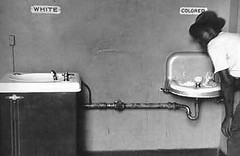
9731262858Jim Crow lawsIn the 1870s, the South passed segregation laws which required separate washrooms, drinking fountains, park benches, and most other public facilities, for blacks and whites. (p. 349)47
9731262899literacy tests, poll taxes, grandfather clausesAfter Reconstruction, various political and legal devices were created to prevent southern blacks from voting.48
9731262900white primaries, white juriesAfter Reconstruction, discrimination took many forms. Political party primaries were created for whites only, and African Americans were barred from serving on juries. (p. 349)49
9731262901lynch mobsIn the 1890s, more than 1,400 African American men were lynched (hung by a mob without trial) by Southerns.50
9731262902economic discriminationAfter Reconstruction, economic discrimination was widespread in the South. Most African Americans were kept out of skilled trades and factory jobs. African Americans remained in farming and low-paying domestic work. (p. 349)51
9731262903African American migrationIn 1894, the International Migration Society was formed to help blacks emigrate to Africa. Other blacks moved to Kansas and Oklahoma. (p. 350)52
9731262859Ida B. WellsShe was the editor of a black newspaper, she campaigned against lynching and Jim Crow laws. (p. 349)53
9731262860Booker T. WashingtonFamous African-American, who established an industrial and agricultural school for African Americans in 1881. He taught the virtues of hard work, moderation, and economic self-help. In 1900, he organized the National Negro Business League to support businesses owned by African Americans. (p. 350)54
9731262904economic cooperationBooker T. Washington's National Negro Business League emphasized racial harmony and economic cooperation. (p. 350)55
9731262905markets and farmersIn the late 1800s, farming became increasingly commercialized and specialized. They became dependent on large and expensive machinery and small, marginal farms were often driven out of business. (p. 350)56
9731262906crop price deflationAfter the Civil War, increased American and foreign food production caused a downward pressure on prices. For instance, corn per bushel prices, went from $.78 in 1867 to .$.28 in 1889. (p. 351)57
9731262907railroads and middlemenRailroads and middlemen were able to charge high or discriminatory rates in the food supply chain because they had little competition. (p. 351)58
9731262908National Grange MovementIn 1868, this organization was created primarily as a social and educational help for farmers. (p. 351)59
9731262909cooperativesGrangers established these business, owned and run by the farmers, to save the costs charged by middlemen. (p. 351)60
9731262910Granger lawsIn some states, the Grangers, with help from local businesses, successfully lobbied their state legislatures to pass laws regulating the rates charged by railroads and elevators. (p. 351)61
9731262861Munn v. IllinoisSupreme Court case in 1877, which upheld the right of a state to regulate businesses of a public nature, such as railroads. (p. 352)62
9731262862Wabash v. IllinoisSupreme Court case in 1886, which ruled that individual states could not regulate interstate commerce. (p. 352)63
9731262863Interstate Commerce CommissionThe first federal regulatory agency created to regulate interstate commerce which had the power to investigate and prosecute pools, rebates, and other discriminatory practices. (p. 352)64
9731262864Ocala Platform of 1890In 1890, a national organization of farmers, called the National Alliance, met in Florida to address the problems of rural America. It fell short of becoming a political party, but many of the reform ideas would become part of the Populist movement. (p. 352)65
9731262911census of 1890The census of 1890 declared that except for a few pockets, the entire frontier had been settled. (p. 343)66
9731262912Frederick Jackson Turner, "The Significance of the Frontier in American History"He argued that 300 years of frontier experience had shaped American culture by promoting independence and individualism. (p. 343)67
9731262913role of cities, "Nature's Metropolis"Book written by William Cronon, it argued that the frontier and cities grew up together, they were dependent on each other. (p. 353)68

AMSCO AP US History Chapter 20 Flashcards

AMSCO United States History 2015 Edition, Chapter 20 Becoming a World Power, 1898-1917

Terms : Hide Images
9731298516William SewardSecretary of State who was responsible for purchasing Alaskan Territory from Russia. By purchasing Alaska, he expanded the territory of the country at a reasonable price. (p. 409)0
9731298517Monroe DoctrineThis doctrine stated that European powers could not interfere in the Western Hemisphere. In 1895 and 1896, the U.S. applied this doctrine to push Great Britain to arbitrate a boundary dispute between Venezuela and British colony of Guiana. (p. 412)1
9731298518French in MexicoIn 1865, Secretary of State William Seward invoked the Monroe Doctrine when Napoleon III sent French troops to occupy Mexico. He threatened U.S. military action unless France withdrew their troops, and they did. (p. 410)2
9731298519Alaska PurchaseIn 1867, Secretary of State William Seward bought Alaska from Russia for $7.2 Million ("Seward's Folly"). (p. 410)3
9731298520Pan-American Conference (1889)In 1889, this conference was called by Secretary of State James G. Blaine. It created an organization of cooperation between the United States and Latin American countries. (p. 412)4
9731298521James BlaineIn 1889, as secretary of state he arranged the first Pan-American Conference in Washington D.C. Various nations in the Western Hemisphere met to discuss trade and other issues. (p. 412)5
9731298522Venezuela boundary disputeAn issue between Venezuela and the neighbouring territory, the British colony of Guiana. The United States convince Great Britain to arbitrate the dispute. (p. 412)6
9731298523Cleveland and OlneyIn 1895 and 1896, President Grover Cleveland and Secretary of State Richard Olney insisted that Great Britain agree to arbitrate the border dispute between Venezuela and the British colony of Guiana. (p. 412)7
9731298524HawaiiIn 1893, American settlers aided in the overthrow of Queen Liliuokalani. President McKinley completed the annexation of Hawaii in 1898. (p. 415)8
9731298525Queen LiliuokalaniThe Hawaiian queen who was forced out of power by a revolution started by American business interests. (p. 414)9
9731298526Cleveland blocks annexationIn 1893, President Grover Cleveland block the annexation of Hawaii because he opposed imperalism. However, in 1898, President McKinley did annex Hawaii. (p. 414)10
9731298527international DarwinismDarwin's concept of the survival of the fittest was applied not only to competition in the business world but also to competition among nations. Therefore, expansionist wanted the U.S. to demonstrate its strength by acquiring territories overseas. (p. 410)11
9731298528business and imperialists competitorsThe United States was not alone in pursuing imperialism, which meant acquiring territory or gaining control over the political or economic life of other countries. Great Britain, France, Germany, Russia, and Japan tried to influence or possess weaker countries around the world. (p. 410)12
9731298529spreading religion and scienceSome Protestant Americans believed that the United States had a religious duty to colonize other lands in order to spread Christianity and our superior science technology. (p. 411)13
9731298530Josiah StrongThis reverend believed that Protestant American had a religious duty to colonize other lands in order to spread Christianity and the benefits of their superior civilization . (p. 411)14
9731298531expansionist politiciansRepublican politicians generally endorsed the use of foreign affairs to search for new markets. (p. 411)15
9731298532steel and steam navyBy 1900, The United States had the third largest navy in the world. (p. 411)16
9731298533Alfred Thayer MahanHe was a U.S. Navy captain whose ideas on naval warfare and the importance of seapower changed how America viewed its navy. (p. 411)17
9731298534nationalist mediaNewspapers and magazines published printed stories about ]distant and exotic places. This increased public interest and stimulated demands for a larger U.S. role in world affairs. (p. 411)18
9731298535Cuban revoltIn 1895, Cuban nationalists sabotaged and laid waste to Cuban plantations. Spain sent General Valeriano Weyler who put civilians into armed camps where many died. (p. 413)19
9731298536Valeriano WeylerA general sent by Spain to stop the Cuban revolt. He forced civilians into armed camps, where tens of thousands died of starvation and disease. (p. 413)20
9731298537jingoismAn intense form of nationalism calling for an aggressive foreign policy. (p. 412)21
9731298538yellow journalismJournalism that exploits, distorts, or exaggerates the news to create sensations and attract readers. (p. 413)22
9731298539De Lome LetterSpanish Ambassador's letter that was leaked to the press and and published by American newspapers. It criticized President McKinley in insulting terms. Many considered it an official Spanish insult against U.S. national honor. (p. 413)23
9731298540sinking of the MaineOn February 15, 1898, the USS Maine battleship exploded in Havana Harbor. The yellow press accused Spain of blowing up the ship even though experts later concluded that the explosion was probably an accident. (p. 413)24
9731298541Teller AmendmentA resolution authorizing war, but it promised the U.S. would not annex Cuba after winning the Spanish-American war. (p. 414)25
9731298542a splendid little warThe ambassador to England wrote to his friend, Teddy Roosevelt, with these words because of low casualties in the war against Spain. (p. 414)26
9731298543invade the PhilippinesCommodore George Dewey led a U.S. fleet to the Philippines where he defeated Spain. (p. 414)27
9731298544George DeweyA United States naval officer remembered for his victory at Manila Bay, Philippines in the Spanish-American War. (p. 414)28
9731298545Rough RidersVolunteer regiment of U.S. Cavalry led by Teddy Roosevelt during the Spanish American War. (p. 414)29
9731298546Theodore RooseveltHe became that 26th President in 1901. He as an expansionist who increased the size of Navy, "Great White Fleet". He added the Roosevelt Corollary to Monroe Doctrine. His motto was to "speak softly and carry a big stick". He received the Nobel Peace Prize for mediation of end of Russo-Japanese war. Later arbitrated split of Morocco between Germany and France. (p. 417)30
9731298547Treaty of Paris: Puerto RicoThis treaty was signed on December 10, 1898 with Spain. It provided for: 1) Cuban independence, 2) Purchase of Puerto Rico and Guam, 3) Purchase of the Philippines. (p. 415)31
9731298548Guam and PhilippinesOn December 10, 1898, the Spanish-American War treaty was signed in Paris. Under the treaty the U.S. acquired Guam and also the Philippines. (p. 415)32
9731298549Emilio AguinaldoFilipino nationalist leader who led guerrilla fighters in a three year war against U.S. control of the Philippines. (p. 415)33
9731298550Anti-Imperialist LeagueLead by William Jennings Bryan, they opposed further expansion in the Pacific. (p. 415)34
9731298551Insular casesA series of Supreme Court cases from 1901 to 1903 which arose when the United States acquired the Philippines and Puerto Rico. The court ruled that constitutional rights were not automatically extended to territorial possessions and that the power to decide whether or not to grant such rights belonged to Congress. (p. 416)35
9731298552Platt AmendmentA 1901 amendment to an army appropriations bill that said Cuba would make no treaties that compromised its independence, permit the U.S. to maintain law and order in Cuba, and allow the U.S. to maintain naval bases in Cuba. (p 416)36
9731298553spheres of influenceThe term when countries came to dominate trade and investment within a particular region and shut out competitors. In the 1890s, Russia, Japan, Great Britain, France, and Germany were all establishing close ties with China that disturbed the United States. (p. 417)37
9731298554John HayIn 1899, as William McKinley's secretary of state, he sent a note to all the major countries involved in trade with China. He asked them to accept the concept of an Open Door, by which all nations would have equal trading privileges in China. The replies that he got were evasive, so he declared that all nations had accepted the Open Door policy. (p. 416)38
9731298555Open Door PolicyA policy proposed by the U.S. in 1899, under which all nations would have equal opportunities to trade in China. (p. 416)39
9731298556Boxer RebellionA 1900 rebellion in Beijing, China that was started by a secret society of Chinese who opposed the "foreign devils". An international force marched into Beijing and crushed the rebellion. (p. 417)40
9731298557U.S. joined international forceTo protect American lives and property, U.S. troops participated in an international force that marched into Peking (Beijing) and quickly crushed the rebellion of the Boxers. (p. 417)41
9731298558Second Hay NoteIn 1900, the U.S. was fearful that the international force sent to Beijing might try to occupy China. A second note was written to all the major imperialist countries, stating that China's territory must be preserved and that equal and impartial trade with all parts of China must be maintained. (p. 417)42
9731298559big-stick policyTheodore Roosevelt's foreign policy motto was to "speak softly and carry a big stick". By acting boldly and decisively in a number of situation, Roosevelt attempt to build the reputation of the United States as a world power. (p. 417)43
9731298560TR supports Panama revoltIn 1903, President Theodore Roosevelt orchestrated a revolt for Panama's independence from Columbia. The revolt succeeded quickly and with little bloodshed. (p. 418)44
9731298561Hay-Bunau-Varilla Treaty (1903)In 1903, the Panama government signed this treaty with the United States. It granted the U.S. all rights to the 51 mile long and 10 mile wide Canal Zone, in exchange for U.S. protection. (p. 418)45
9731298562building the Panama CanalThis canal was started in 1904 and completed 10 years later. The building of this large canal was important because it would benefit American commerce and military capability. (p. 418)46
9731298563George GoethalsUnited States army officer and engineer who supervised the construction of the Panama Canal. (p. 418)47
9731298564William GorgasArmy physician who helped eradicate yellow fever and malaria from Panama, so work on the Panama Canal could proceed. (p. 418)48
9731298565Roosevelt CorollaryTheodore Roosevelt's 1904 extension of the Monroe Doctrine. It stated that the United States would intervene in the Americas, on the behalf of European interests. (p. 418)49
9731298566Santo DomingoThe capital of the Dominican Republic. In 1904, European powers were ready to use military power here in order to force debt payments. (p. 418)50
9731298567Russo-Japanese WarIn 1904, Russia and Japan went to war over imperial possessions in the region. In 1905, President Theodore Roosevelt arranged a successful treaty conference for the two foes at Portsmouth, New Hampshire. (p. 419)51
9731298568Treaty of Portsmouth (1905)In 1905, the United States mediated the end of the Russo-Japanese War. Negotiating the treaty in the U.S. increased U.S. prestige. Roosevelt received a Nobel Peace Prize for the mediation. (p. 419)52
9731298569Nobel Peace PrizeFor his work in settling the Russo-Japanese War, President Theodore Roosevelt was awarded the Nobel Peace Prize in 1906. (p. 420)53
9731298570segregation in San Francisco schoolsIn the early 20th century San Francisco schools required that Japanese American students attend segregated schools. In 1908, President Roosevelt worked out a "gentleman's agreement" with Japan, Japanese American students would be allowed to attend normal schools and Japan would restrict the emigration of Japanese workers to the United States. (p. 420)54
9731298571gentlemen's agreementIn 1908, an informal agreement between the United States and Japan. President Roosevelt agreed that Japanese American students would be allowed to attend normal schools in San Francisco and Japan agreed to curb the number of workers coming to the U.S. (p. 420)55
9731298572Great White FleetSixteen United States battleships, painted white, were sent around the world to display American naval power. (p. 419 )56
9731298573Algeciras ConferenceIn 1906, this conference held after the First Moroccan Crisis in which the dispute between Germany and France over control of Morocco was settled. (p. 420)57
9731298574Hague ConferenceIn 1907, the Second International Peace Conference at the Hague discussed rules for limiting warfare. (p. 420)58
9731298575Root-Takahira AgreementIn 1908, this executive agreement between the United States and Japan pledged mutual respect for each nation's possessions in the Pacific region and support for the Open Door policy in China. (p. 419)59
9731298576William Howard TaftThe 27th President of the United States, from 1909 to 1913. He adopted a foreign policy that was mildly expansionist but depended more on investors' dollars than on the military. His policy of promoting U.S. trade by supporting American business abroad was known as dollar diplomacy. (p. 420)60
9731298577role of American moneyPresident Taft believed that private U.S. investment in China and Central America would lead to greater stability there. His policy, was thwarted by growing anti-imperliasm both in the U.S. and overseas. (p. 420)61
9731298578railroads in ChinaIn 1911, President Taft succeeded in securing American participation in agreement to invest in railroads in China along with Germany and France. (p. 420)62
9731298579Manchurian problemIn 1911, the U.S. was excluded from investing in railroads in Manchuria because of a joint agreement between Russia and Japan, which was in direct defiance of the Open Door Policy. (p. 420)63
9731298580intervention in NicaraguaIn 1912, President Taft sent military troops here when a civil war broke out. (p. 420)64
9731298581Henry Cabot LodgeA Republican senator, he was in favor building U.S. power through global expansion. He introduced the Lodge Corollary to the Monroe Doctrine. (p. 411)65
9731298582Lodge CorollaryIn 1912, the Senate passed this resolution as an addition to the Monroe Doctrine. It stated that non-European powers (such as Japan) would be excluded from owning territory in Western Hemisphere. (p. 420)66
9731298583Woodrow WilsonThe 28th president of the United States from 1913 to 1921. This Democrats is known for his leadership during World War I, creating the Federal Reserve, Federal Trade Commission, Clayton Antitrust Act, progressive income tax, lower tariffs, women's suffrage (reluctantly), Treaty of Versailles, sought 14 points post-war plan, League of Nations (but failed to win U.S. ratification). He won the Nobel Peace Prize. (p. 421)67
9731298584anti-imperialismPresident Woodrow Wilson differed from his Republican presidential predecessors. He believed that the U.S. should not expand its territory overseas. (p. 421)68
9731298585William Jennings BryanIn 1913, he was Woodrow Wilson's secretary of state. He tried to demonstrate that the U.S. respected other nations' rights and would support the spread of democracy. (p. 421)69
9731298586Jones ActIn 1916, this act granted the Philippines full territorial status, guaranteed a bill of rights and universal male suffrage to Filipinos, and promised independence for the Philippines as soon as a stable government was established. (p. 422)70
9731298587Puerto Rico citizenshipIn 1917, an act of Congress granted U.S. citizenship and limited self government for this island. (p. 422)71
9731298588Conciliation treatiesWilson's commitment to democracy was shared by Secretary of State William Jennings Bryan. Bryan negotiated treaties in which nations pledged to submit disputes to international commissions and observe a one-year cooling-off period before taking military action. Thirty of these treaties were negotiated. (p. 422)72
9731298589military interventionPresident Woodrow Wilson used military action to influence Mexico, Central America, and the Caribbean. (p. 423)73
9731298590Mexican civil warPresident Wilson's moral approach to foreign affairs was severely tested by a revolution and civil war in Mexico. He refused to recognize the military dictatorship of General Victoriano Huerta, who had seized power in Mexico in 1913 by arranging to assassinate the democratically elected president. (p. 423)74
9731298591General HuertaIn 1913, this Mexican revolutionary seized power in Mexico by killing the democratically elected president. (p. 423)75
9731298592Tampico incidentIn April 1914, some U.S. sailors were arrested in Tampico, Mexico. President Wilson used the incident to send U.S. troops into northern Mexico. His real intent was to unseat the Huerta government there. After the Niagara Falls Conference, Huerta abdicated and the confrontation ended. (p. 423)76
9731298593ABC powersThe South American countries of Argentina, Brazil, and Chile, which attempted to mediate a dispute between Mexico and the United States in 1914. (p. 423)77
9731298594Pancho VillaThis Mexican leader led raids across the U.S.-Mexican border and murdered several people in Texas and New Mexico. (p. 423)78
9731298595expeditionary forceThe name given to the group sent to capture Pancho Villa in Mexico. (p. 423)79
9731298596John J. PershingThe U.S. general who chased Pancho Villa over 300 miles into Mexico but didn't capture him. (p. 423)80

AMSCO AP US History Chapter 28 Flashcards

AMSCO United States History 2015 Edition, Chapter 28 Promise and Turmoil, The 1960s

Terms : Hide Images
9732358544Election of 1960In this election, Democrat John F. Kennedy ran against Republican Richard M. Nixon. Television was perhaps the most decisive factor in this very close race which Kennedy won. (p. 601)0
9732358561New FrontierPresident Kennedy proposed new domestic programs such as aid to education, federal support of health care, urban renewal, and civil rights. These programs did not become law until many of them passed in the Lyndon Johnson administration. (p. 601)1
9732358562Jacqueline KennedyAs first lady in the early 1960s, she brought style, glamor, and appreciation of the arts to the White House. (p. 601)2
9732358563Robert KennedyHe was attorney general during his brother John Kennedy's administration. In 1964, he was elected as a senator in New York. In 1968, he decided to enter the presidential race after Eugene McCarthy's strong showing in New Hampshire. On June 5, 1968, he won a major victory in the California Democratic primary but was shot and killed just after his victory speech. (p. 616)3
9732358564Warren CommissionChief Justice Earl Warren headed this commission which concluded that Lee Harvey Oswald was the lone assassin in President Kennedy's murder. Many unanswered questions lead to various theories about the assassination. For many Americans, this marked the beginning of the loss of credibility in government. (p. 604)4
9732358565Peace CorpsIn 1961, President Kennedy set up this organization, which recruited young American volunteers to give technical aid to developing countries. (p. 602)5
9732358566Bay of PigsIn April 1961, the Central Intelligence Agency (CIA) trained Cuban exiles to attempt the invasion of Cuba and the overthrow of Fidel Castro. The invasion failed and Castro tightened his grip on Cuba. (p. 602)6
9732358567Berlin WallIn 1961, the East Germans, with Soviet backing built this wall around West Berlin to stop East Germans from escaping to West Germany. (p. 602)7
9732358568Cuban missile crisisIn October 1962 the United States discovered that the Soviets were building underground offensive missile sites in Cuba. President Kennedy responded by announcing a naval blockade of Cuba until the missiles were removed. Nuclear war seemed possible until Soviet premier Nikita Khrushchev agreed to remove the missiles in exchange for a pledge that the U.S. would not invade Cuba and the U.S. would remove some missiles from Turkey. (p. 602)8
9732358569flexible responsePresident Kennedy increased spending on conventional arms and mobile military forces. This type of military force could be used in response to smaller wars in Africa and Southeast Asia and avoid the possibility of having to use nuclear weapons in these conflicts. (p. 603)9
9732358570Nuclear Test Ban TreatyIn 1963, the United States and 100 other nations signed this agreement to end the testing of nuclear weapons in the atmosphere. (p. 603)10
9732358571Lyndon JohnsonOn November 22, 1963, just two hours after John Kennedy's assassination he took presidential oath of office aboard an airplane at the Dallas airport. In the 1964 presidential election he easily defeated Senator Barry Goldwater. In 1968, he decided to not run for president again. (p. 604)11
9732358572Great SocietyPresident Lyndon Johnson was determined to expand the social reforms of the New Deal and passed a long list of new programs that would have a lasting effect on American society. (p. 604)12
9732358573War on PovertyIn 1964, President Johnson declared "an unconditional ________ _____ ____________". This led to his development of the Great Society, which provided government assistance to society's most vulnerable (poor, uneducated, elderly, and handicapped) (p. 604)13
9732358545The Other AmericaWritten by Michael Harrington, in 1962 this best-selling book that focused on the 40 million Americans living in poverty. This book went against the idea that the 1950s were the "Happy Days". (p. 604)14
9732358546Election of 1964In this presidential election, Democrats Lyndon Johnson and Hubert Humphrey ran against the very conservative Senator Barry Goldwater of Arizona. Johnson and Humphrey easily won, capturing 61 percent of the popular vote. (p. 605)15
9732358574MedicarePart of the Great Society, this program provides health insurance program for all people 65 years of age and older. (p. 605)16
9732358547MedicaidPart of the Great Society, this program provides funds to states to pay for medical care for the poor and disabled. (p. 605)17
9732358575Elementary and Secondary Education ActThis 1965 act provided federal funds to poor school districts, funds for special education, and funds to expand Head Start. (p. 605)18
9732358548Immigrant ActThis 1965 act abolished discriminatory quotas based on national origins. (p. 605)19
9732358549National Foundation on the Arts and HumanitiesThis agency formed in 1965 provided federal funding for the arts and for creative and scholarly projects. (p. 605)20
9732358550DOT and HUDPresident Lyndon Johnson established the Department of Transportation (DOT) and the Department of Housing and Urban Development (HUD). (p. 606)21
9732358576Unsafe at Any SpeedRalph Nader's 1965 book lead Congress to pass automobile industry regulations that would save thousands of lives, including the use of seat belts. (p. 606)22
9732358577Silent SpringRachel Carson's 1962 book exposed the use of pesticides and would lead Congress to pass clean air and water laws. (p. 606)23
9732358578Lady Bird JohnsonThis first lady contributed to improving the environment with her Beautify America campaign which lead to the Highway Beautification Act. (p. 606)24
9732358579Civil Rights Act of 1964This act made segregation illegal in all public facilities and gave the federal government additional powers to enforce school desegregation. (p. 606)25
973235858024th AmendmentIn 1964, this amendment abolished the practice of collecting a poll tax, one of the measures that discouraged poor people from voting. (p. 606)26
9732358581Voting Rights Act of 1965In 1965, this act ended literacy tests and provided federal registrars in areas in which blacks were kept from voting. (p. 606)27
9732358582George WallaceDixiecrat governor of Alabama who tried to personally prevent blacks from attending University of Alabama. In 1968, he was the American Independent party presidential candidate. The growing hostility of many whites to federal desegregation, antiwar protests, and race riots was tapped by his campaign. (p. 616)28
9732358583Martin Luther King Jr.Leader of SLCC and one of the most famous figures of the civil rights movement. He promoted the idea of non-violent protest. In August 1963, he led 200,000 people in a peaceful March on Washington. (p. 607)29
9732358584March on WashingtonIn August 1963, Dr. Martin Luther King led one of the largest and most the successful demonstrations in U.S. history when about 200,000 blacks and whites took part in this peaceful march. The highlight was Dr. King's famous "I Have a Dream Speech" at the Lincoln Memorial. (p. 607)30
9732358551March to MontgomeryIn 1965, this was a voting rights march from Selma Alabama to the capitol in Montgomery. Television showed protesters being beaten and tear gassed and the march was a turning point in the civil rights movement. President Johnson sent federal troops to protect the marchers. (p. 607)31
9732358585Black MuslimsTheir leader Elijah Muhammad preached black nationalism, separatism, and self-improvement. (p. 608)32
9732358586Malcom XOne of the most significant figures in the civil rights movement, he began as a member of the Black Muslims, although later separated from the group. He criticized Martin Luther King as "an Uncle Tom" and advocated self-defense against white violence. (p. 608)33
9732358587Student Nonviolent Coordinating CommitteeThis civil rights organization of young blacks, influenced by Malcolm X, repudiated non-violence and advocated "black power" and racial separatism. (p. 608)34
9732358588Stokely CarmichaelThe leader of the Student Nonviolent Coordinating Committee (SNCC) repudiated non-violence and advocated "black power" and racial separatism. (p. 608)35
9732358589Black PanthersIn 1966, this organization was founded by Huey Newton, Bobby Seale and other militants as a revolutionary socialist movement advocating self-rule for American blacks. (p. 608)36
9732358552de facto segregationSegregation and discrimination caused by racists attitudes in the North and the West. This is segregation that is considered a social rule or norm, although not actually a law. (p. 608)37
9732358590Kerner CommissionIn 1968, this federal investigation of many riots concluded that racism and segregation were chiefly responsible and that the U.S. was becoming "two societies, one black, one white-separate and unequal". (p. 608)38
9732358591Warren CourtThe Supreme Court under Earl Warren. It had an impact on the nation comparable to that of the John Marshall Court. (p. 609)39
9732358553Mapp v. OhioIn 1961, this Supreme Court case ruled that illegally seized evidence cannot be used in court against the accused. (p. 609)40
9732358592Gideon v. WainwrightIn 1966, this Supreme Court case ruled that that state courts must provide counsel for poor defendants. (p. 609)41
9732358593Escobedo v. IllinoisIn 1964, the Supreme Court ruling that required the police to inform an arrested person of his or her right to remain silent. (p. 609)42
9732358594Miranda v. ArizonaIn 1966, the Supreme Court extended the ruling in Escobedo to include the right to a lawyer being present during questioning by the police. (p. 609)43
9732358595Baker v. CarrIn 1962, the Supreme Court declared it was unconstitutional for one house of a state legislature to draw district lines that strongly favored rural areas, to the disadvantage of large cities. (p. 609)44
9732358596Yates v. Unted StatesIn 1957, the Supreme Court ruled that the first amendment protected radical and revolutionary speech, even by Communists, unless it was a "clear and present danger" to the safety of the country. (p. 610)45
9732358597Engel vs. VitaleIn 1962, the Supreme Court ruled that state laws requiring prayers and Bible readings in the public schools violated the first amendments provision for separation of church and state. (p. 610)46
9732358554Griswold v. ConnecticutIn 1965, the Supreme Court ruled that in recognition of a citizen's right to privacy, a state could not prohibit the use of contraceptives by adults. (p. 610)47
9732358598Students for a Democratic SocietyIn 1962, this group of radical students led by Tom Hayden issued a declaration of purposes known as the Port Huron Statement. It called for university decisions to be made through a participatory democracy. (p. 610)48
9732358599New LeftActivists and intellectuals who supported Tom Hayden's ideas. (p. 610)49
9732358600countercultureExpressed by young people in their rebellious styles of dress, music, drug use, and for some, communal living. (p. 611)50
9732358555WoodstockIn the summer of 1969, about 500,000 million young people descended on upper New York State farm for what turned into a free music festival. In the early morning hours of the last day Jimi Hendrix played his jaw dropping version of the "Stars Spangled Banner" featuring amplifier feedback to convey bombs falling, jets overhead, and cries of human anguish. (p. 611)51
9732358601sexual revolutionOne aspect of counterculture that continued beyond the 1960s was a change in many Americans' attitudes toward sexual expression. (p. 611)52
9732358602women's movementThe increased education and employment of women in the 1950s, the civil rights movement, and the sexual revolution all contributed to a renewal of this movement in the 1960s. (p. 612)53
9732358603The Feminine MystiqueBetty Friedan gave the women's movement a new direction by encouraging middle-class women to seek fulfillment in professional careers rather than confining themselves to the roles of wife, mother, and homemaker. She wrote about the "unsaid problem" in her famous book which included letters from unsatisfied housewives. (p. 612)54
9732358604National Organization for WomenIn 1966, this organization was formed. They adopted activist tactics of other civil rights movements to secure equal treatment of women, especially for job opportunities and pay. (p. 612)55
9732358605Equal Pay ActIn 1963, this act prohibited discrimination in employment and compensation on the basis of gender. (p. 612)56
9732358606Equal Rights Amendment (ERA)This proposed constitutional amendment stated that "equality of rights under the law shall not be denied or abridged by the United States or by any state on account of sex". It just missed being passed. (p. 612)57
9732358607Gulf of Tonkin ResolutionIn 1964, North Vietnamese gunboats allegedly fired on U.S. warships off the coast of Vietnam. Congress gave approval for President Johnson to wage war in Vietnam. (p. 613)58
9732358556credibility gapThe media's term for President Johnson's reluctance to speak frankly with the American people about the scope and costs of the Vietnam war. (p. 614)59
9732358608Tet OffensiveIn January 1968, the Vietcong (North Vietnam troops) launched an all-out surprise attack on almost every provincial capital and American base in South Vietnam. The U.S. military counterattacked and recovered the lost territory. However, the destruction viewed on television in the United States, appeared as a setback for the U.S. efforts. (p. 615)60
9732358557white backlashIn the 1968 presidential election, the growing hostility of many whites to federal desegregation, antiwar protests, and race riots was tapped by Governor George Wallace of Alabama. He became the American Independent party's presidential candidate. (p. 616)61
9732358558Richard NixonHe served as vice president under Eisenhower from 1953 to 1960. He was nominated as the Republican candidate for president in 1960, but lost the close election to John Kennedy. In 1968 he was elected president, and again in 1972. However, he was forced to resign the presidency in 1974. (p. 600)62

AP US History People to Know Chapter 18 Flashcards

Terms : Hide Images
5628625283Lewis Cass (1782-1866)War veteran, diplomat and U.S. Senator, He ran as the Democratic candidate in the 1848 election, losing to Zachary Taylor. He is best known as the father of "popular sovereignty", the notion that the sovereign people of a territory should themselves decide the issue of slavery.0
5628625284Millard Filmore (1800-1874)New York Congressman and vice president under Taylor, He took over the presidency after Taylor's death in 1850. He, a practical politician, threw his support behind the Compromise of 1850, ensuring its passage. He was passed over for the Whig nomination in 1852 when the party chose to select the legendary war hero, Winfield Scott.1
5628625285Matthew C. Perry (1794-1858)American Naval Officer sent by Millard Fillmore to negotiate a trade deal with Japan. Backed by an impressive naval fleet, He showered Japanese negotiators with lavish gifts. Combining military bravado with diplomatic finesse, he negotiated the landmark Treaty of Kanagawa in 1854, ending Japan's two centuries of isolation.2
5628625286Franklin Pierce (1804-1869)Pro-Southern Democrat from New Hampshire who became the fourteenth president of the United States on a platform of territorial expansion. As president, he tried to provoke war with Spain and seize Cuba, a plan he quickly abandoned once it was made public.He emphatically supported the Compromise of 1850, vigorously enforced the Fugitive Slave Law, and threw his support behind the Kansas Nebraska Bill.3
5628625287Zachary Taylor (1784-1850)Military general and twelfth U.S. president, He emerged as a popular war hero after defeating Santa Anna's forces at Buena Vista in the war with Mexico. As president, He, a Louisiana slave owner, sought to avoid a sectional confrontation over slavery, though he opposed the Compromise of 1850.4
5628625288Harriet Tubman (c. 1820-1913)Famed conductor on the Underground Railroad, She helped rescue more than three hundred slaves from bondage. Born into slavery, She fled to the North in 1849 but returned to the South nineteen times to guide fellow bondsman to freedom. After the Civil War, she worked to give freedmen access to education in North Carolina.5

AMSCO AP US History Chapter 2 Flashcards

AMSCO United States History 2015 Edition, Chapter 2 The Thirteen Colonies and the British Empire, 1607-1754

Terms : Hide Images
5295492282corporate coloniesColonies operated by joint-stock companies during the early years of the colonies, such as Jamestown.0
5295492283royal coloniesColonies under the direct authority and rule of the king's government, such as Virginia after 1624.1
5295492284proprietary coloniesColonies under the authority of individuals granted charters of ownership by the king, such as Maryland and Massachusetts The king believed that proprietary colonies would give him almost total control, as the individual granted the charter would be loyal to the king and obey his wishes2
5295492285Jamestown1607 Colony in Virginia, The first successful settlement in the Virginia colony founded in May, 1607. Harsh conditions nearly destroyed the colony. The settlement became part of the Joint Stock Virginia Company of London in 1620. (p. 25)3
5295492286PilgrimsRadical dissenters to the Church of England. They moved to Holland, then sailed to to America on the Mayflower in 1620 in search of religious freedom. The established a new colony at Plymouth on the Massachusetts coast. (p. 26)4
5295492287PuritansGroup of dissenters that wanted to purify the Church of England. In 1630 they founded the Massachusetts Bay Colony at Boston. (p. 26)5
5295492288Mayflower CompactDocument that Pilgrims signed to pledge that they would make decisions by the will of the majority. It was an early form of colonial self-government and one of the first simple written constitutions. (p. 27)6
5295492289Chesapeake ColoniesThe now divided area once known as the Virginia company; composed of Maryland and Virginia (1632). Maryland becomes first proprietary colony (1632).7
5295492290George Calvert (Lord Baltimore)As a reward for loyal service, the king granted George Calvert, a Catholic nobleman, control of the first proprietary colony, Maryland.8
5295492291Cecil Calvert (Second Lord Baltimore)Son of George Calvert, Cecil Calvert set about making his father's dream come alive in Maryland (1634).9
5295492292Act of TolerationThe first colonial statue granting religious freedom to all Christians, but it called for death of all non-Christians. It was created to provide a safe haven for Catholics. (p.27)10
5295492293slaveryThe first slaves arrived in the colonies in 1619, and were not slaves for life, but worked for a period of time, like an indentured servant. Then discriminatory laws were passed, slaves and their offspring were kept in permanent bondage. (p. 28)11
5295492294headright systemA method for attracting immigrants, Virginia offered 50 acres of land to each immigrant who paid for passage to America and to any plantation owner who paid for an immigrants passage. (p. 28)12
5295492295indentured servantYoung people from England under contract with a master who paid for their passage. Worked for a specified period for room and board, then they were free. (p. 28)13
5295492296Sir William BerkeleyRoyal Governor of Virginia (1641-1652, 1660-1677) who favored large plantation owners and did not support or protect smaller farms from Indian raids. Put down Bacon's rebellion in 1676. (p. 29)14
5295492297Bacon's RebellionNathaniel Bacon led a group of army volunteers in 1676 that raided Native American villages, fought the governor's forces, and set fire to Jamestown. The rebellion lost momentum when Bacon died of dysentery. This was caused by the Governor's unfair favoritism of large plantation owners and refusal to protect small farms from Native American raids. (p. 29)15
5295492298Roger WilliamsA respected Puritan minister who believed that the individual's conscience was beyond the conrol of any civil or church authority, and was banished from the bay colony for his beliefs. He founded the settlement of Providence in 1636.16
5295492299Anne HutchinsonPuritan who believed in antinomianism and was banished from the bay colony because of her beliefs. Founded the colony of Portsmouth in 1638.17
5295492300antinomianismThe idea that faith alone, not deeds, is necessary for salvation.18
5295492301Rhode IslandIn 1644, Parliment granted Roger Williams a charter, joining Providence and Portsmouth into Rhode Island.19
5295492302Thomas HookerLed a group of Boston Puritans dissatisfied with the Massachusetts Bay colony. Founded Hartford in 1636, which is now Connecticut.20
5295492303Fundamental Orders of ConnecticutFirst written constitution in 1639. Established a representative government made up of a legislature elected by the people and a governor chosen by the legislature.21
5295492304John DavenportFounder of New Haven (1637)22
5295492305ConnecticutIn 1665, New Haven and Hartford joined to form Connecticut under a royal charter.23
5295492306New HampshireHoping to increase royal control in the colonies, King Charles II separated New Hampshire from Massachusetts in 1679 and made it a royal colony.24
5295492307Halfway CovenantPeople could now take part in church services and activities without making a formal commitment to Christ. It was created because the next generation of colonists were less committed to religious faith, but churches still needed members. (p. 31)25
5295492308New England ConfederationIn 1643, Plymouth, Massachusetts Bay, Connecticut, and New Haven formed a military alliance to deal with the threat from the Native Americans. It lasted until 1684.26
5295492309WampanoagsIndian tribe led by Metacom.27
5295492310MetacomMetacom, aka King Phillip, joined together the Native American tribes to fight the colonists in King Phillips War, a war that lasted from 1675 to 1676.28
5295492311Restoration coloniesColonies founded during the Restoration era in Europe, the restoration of the power of King Charles II.29
5295492312The CarolinasKing Charles II granted eight nobles who had helped him gain the throne the Carolinas in 1663. In 1729, the Carolinas were split into to royal colonies. In South Carolina, the economy was based on the fur trade and growing food for the West Indies, which led to many plantations. In North Carolina, there were many small tobacco farms and fewer plantations.30
5295492313rice plantationsThese plantations grew food for the West Indies, and relied on slave labor. Found in South Carolina.31
5295492314tobacco farmsThese were mainly small farms in North Carolina, but larger tobacco plantations were found in other parts of the colonies.32
5295492315New YorkIn 1664, King Charles II granted his brother James (the Duke of York) the land now known as New York. James took the land from the Dutch, but treated them fairly. James was unpopular because of his taxes and refusal to institute representative government. He relented in 1683.33
5295492316New JerseyLand granted by James to Lord John Berkeley and Sir George Carteret, 1664. Eventually sold to Quakers, and later (1702), became a royal colony. (p. 33)34
5295492317QuakersMembers of the Religious Society of Friends who believed in the equality of men and women, nonviolence, and resistance to military service. (p. 34)35
5295492318William PennFounder of Pennsylvania, he wanted his colony to generate wealth, provide a safe place for Quakers, and enable him to try new, liberal ideas in government36
5295492319Holy ExperimentPenn put his Quaker beliefs to the test in his colony. He created a government for his colony, and planned his cities.37
5295492320Frame of Government (1682-1683)Guaranteed a representive assembly elected by land owners38
5295492321Charter of Liberties (1701)Guaranteed freedom of worship for all and unrestricted immigration39
5295492322DelawareIn 1702, Penn granted the lower three colonies their own legislature, but Delaware and Pennsylvania had the same governor until the American Revolution40
5295492323GeorgiaGeorgia was formed in 1732 to provide a buffer between wealthy Georgia from Spanish controlled Florida, and to provide a place for the many debtors of England to begin again41
5295492324James OglethorpeFounder of Georgia's first settlement, Savannah, in 1733. Acted as governor of Georgia and had strict laws which included a ban on rum and slavery. (p. 35)42
5295492325MercantilismAn economic policy in which the colonies were to provide raw materials to the parent country of growth and profit of the parent country. (p. 35)43
5295492326Navigation ActsBasically, the colonies could only trade with England, and only ship goods on colonist or English ships. This helped the shipbuilding industry, and helped protect the colonists, but farmers received low prices for their goods and colonists had to pay high prices for manufactured goods.44
5295492327Dominion of New EnglandJames II wanted to increase royal control in the colonies, so he combined them into larger units and abolished their representative assemblies. The Dominion of New England was combined New York, New Jersey, and the other New England colonies into a single unit. (p. 36)45
5295492328Sir Edmund AndrosSent from England to govern the dominion; was very unpopular due to increase of taxes, limiting town meetings, and revoking land titles.46
5295492329Glorious RevolutionIn 1688, James was deposed and replaced with William and Mary, ending the Dominion of England. (p. 37)47
5295492330Triangular TradeMerchants traded colonist rum for African slaves, African slaves for West Indies sugar cane, and sugar cane was brought back to the colonies to make rum. (p. 37)48
5295492331Middle PassageVoyage from Africa to the West Indies; miserable for the slaves transported, many died49
5295492332John CabotFirst Englishman to explore lands in North America which England would later settle in the early 1600's50
5295492333Captain John SmithBecause of his leadership, Jamestown survived its first five years barely, with his forceful leadership and the establishment of a tobacco industry by john rolfe, the jamestown colony survived51
5295492334John RolfeHelped Jamestown develop a new type of tobacco which became popular in Europe and became very profitable52
5295492335John WinthropLed a ship full of Puritans from England to Massachusetts and founded Boston and a few other towns53
5295492336Virginia House of BurgessesLegislative Assembly of Virginia that enacted laws in the late 1660's that made African slaves permanently bonded to their owners for life54
5295492337joint-stock companygiven the privilege of taking control of the region for economic gain (dutch west india company)55
5295492338Virginia CompanyJamestown chartered by England's King James i and established the first permanent english colony in america in 1607.56
5295492339Pocahontasdaughter of Powhatan; saved John Smith from his captors; her marriage to John Rolfe sealed peace agreement of First Anglo-Powhatan War57

AP US History IDs Flashcards

Terms : Hide Images
5721218777Christopher ColumbusAn Italian explorer who sailed on behalf of the Spanish Queen Isabella. In search for trade routes across the Atlantic to Asia, he sailed in 1492 on three ships (Nina, Pinta and Santa Maria) and instead of landing in Asia he reached islands in the Caribbean.0
5721218778Meso-AmericansOrganized native societies that occupied much of what is now Mexico and Central America. These civilizations included the Olmec people, the Aztecs and the Mayans. The culture of these societies had established religions, calendars, languages and numeric systems.1
5721218779EncomiendaSystem used by the Spanish in the New Mexico Region of North America. Encomiendas were licenses issued by the Spanish to exact labor and tribute from the native population. This forced labor system would later lead to an unstable relationship with the local native population and resulted in numerous revolts from the Pueblo tribes in the region.2
5721218780Corn (Maize) CultivationNorth American Native societies that developed around agriculture and the cultivation of crops such as corn led to sedentary settlements. This was especially true with the Pueblo tribes that built densely populated settlements that resembled large apartment buildings.3
5721218781RoanokeThe "Lost Colony" of Roanoke was one of the first attempts by England to establish a permanent colony in North America. Sir Walter Raleigh secured the grant for the colony from Queen Elizabeth but the colony only lasted a few years and in 1590 the colony was found deserted.4
5721218782JamestownThe first permanent English settlement in North America. In 1607 the colony of Jamestown was established along the James River and the Chesapeake Bay. After few years of very rough conditions known as the "starving time", John Smith is credited with saving the colony by mandating work and order. The colony began to thrive once John Rolfe introduced tobacco cultivation to the Virginia colony.5
5721218783Chesapeake RegionVirginia (established at Jamestown in 1607) and Maryland (established by the Calverts.)6
5721218784MercantilismEconomic belief that the nation as a whole, not the individual, was the principal actor in the economy. In a mercantile economic system everything is set up in order to benefit the "mother" country and belief was that one nation could grow rich only at the expense of another nation. This economic belief led to the growth of European colonization and expansion of empires to extract as much wealth and resources from foreign lands as possible.7
5721218785Virginia House of BurgessesFirst meeting of elected legislature in what would become the United States. The meeting occurred on July 30, 1619 in the Jamestown Church.8
5721218786TheocracyA society in which the line between the church and the state government was hard to see.9
5721218787Enlightenment IdealsSuggested that people had substantial control over their own lives and the course of societies. This movement stressed the importance of science and human reason.10
5721218788Indentured ServitudeIn return for passage to the New World, young men and women bound themselves to a master for a period of servitude (usually about 4-5 years).11
5721218789John LockeEnglish philosopher and writer who was an influential writer and thinker in the Enlightenment movement. His writings greatly influenced colonial ideas about political thought.12
5721218790PrimogenitureEnglish tradition of passing all inherited property to the firstborn son. This did not take root in New England and fathers divided their land among all of their sons.13
5721218791Triangular TradeComplex pattern of trade between Europe, North America and the west coast of Africa. It involved rum, slaves and sugar but also included numerous other products shipped across the Atlantic.14
5721218792Massachusetts Bay CompanyA group of Puritans merchants who organized an enterprise designed to take advantage of economic opportunities in America. Obtained a land grant in New England which became a haven for Puritans. In 1630, 1,000 Puritans (mostly families) migrated to New England in a move known as the "Great Migration."15
5721218793PuritansArdent Protestants who hoped to "purify" the Church of England. They believed that the "reformation" did not create enough changes in theology. Political and religious dissenters.16
5721218794QuakersKnown as the "Society of Friends," the Quakers were dissenting English Protestants seeking to find a home for their religion and their own distinctive social order. William Penn, a Quaker, became the proprietor of Pennsylvania and sought to create a "holy experiment."17

Pages

Subscribe to CourseNotes RSS

Need Help?

We hope your visit has been a productive one. If you're having any problems, or would like to give some feedback, we'd love to hear from you.

For general help, questions, and suggestions, try our dedicated support forums.

If you need to contact the Course-Notes.Org web experience team, please use our contact form.

Need Notes?

While we strive to provide the most comprehensive notes for as many high school textbooks as possible, there are certainly going to be some that we miss. Drop us a note and let us know which textbooks you need. Be sure to include which edition of the textbook you are using! If we see enough demand, we'll do whatever we can to get those notes up on the site for you!