AP Notes, Outlines, Study Guides, Vocabulary, Practice Exams and more!

AP US History vocab Flashcards

Terms : Hide Images
4883748383Convulsed by factionsDisrupted by quarreling groups0
4883748384EmbryosSeeds1
4883748385Ecclesiastical dominionChurch authority2
4883748386EquitableFair3
4883748387IndigencePoverty4
4883748388PromiscuousConsisting of different elements, indiscriminately mingled5
4883748389PenuryPoverty6
4883748390PosterityDescendants7
4883748391AllurementAppeal8
4883748392DespoticTyrannical9
4883748393PlenitudeFullness, abundance10
4883748394LaudablePraiseworthy11
4883748395EpochNoteworthy period12
4883748396MetamorphosisComplete change13
4883748397ServilityBehaving like a servant; submissiveness14
4883748398SheavesBundles of grain (Biblical passages use it to describe taxes)15

AMSCO AP US History Chapter 14 Flashcards

AMSCO United States History 2015 Edition Chapter 14 The Civil War, 1861-1865

Terms : Hide Images
8350272669border statesDuring the Civil War the term for the the states of Delaware, Maryland, Kentucky and Missouri. Keeping these states in the Union was a primary political and military goal of President Lincoln. They were slave states, but did not secede. (p. 269)0
8350272670Confederate States of AmericaIn February 1861, representatives of South Carolina, Georgia, Florida, Alabama, Mississippi, Louisiana, and Texas met in Montgomery, Alabama to form this new country. After the attack on Fort Sumter, the states of Virginia, North Carolina, Tennessee, Arkansas also seceded and joined the Confederacy. The Confederate capital was moved to Richmond, Virginia. The Confederate Constitution was modeled after the U.S. Constitution, except that it provided a single six-year term for the president and gave the president an item veto (power to veto part of a bill). (p. 269, 270)1
8350272671Jefferson DavisHe served as President of the Confederate States during the Civil War. (p. 270)2
8350272674greenbacksName given to paper money issued by the Union government during the Civil War. They bills were not redeemable for gold, which contributed to creeping inflation. (p. 280)3
8350272675Morrill Tariff ActIn 1861, this tariff act raised rates to increase revenue and protect American manufacturers. (p. 281)4
8350272677Pacific Railway ActIn 1862, this act authorized the building of a transcontinental railroad over a northern route in order to link the economies of California and the western territories to the eastern states. (p. 281)5
8350272678Homestead ActIn 1862, this act promoted settlement of the Great Plains by offering parcels of 160 acres of public land free to any person or family that farmed that land for at least five years. (p. 281)6
8350272679Fort SumterA federal fort in the harbor of Charleston, South Carolina. It was cut off from vital supplies because the South controlled the harbor. President Lincoln announced that he was sending provisions to the Union fort. On April 12, 1861, Carolina guns opened on the Union, and the Civil War began. (p. 269)7
8350272680Bull RunIn July 1861, 30,000 federal troops marched from Washington D.C. to attack Confederate forces near Bull Run Creek at Manassas Junction, Virginia. In the first major battle of the Civil War, Union forces seemed close to victory, but then Confederate reinforcements counterattacked and sent the inexperienced Union troops in retreat. (p. 271)8
8350272681Thomas (Stonewall) JacksonIn July 1861, at the First Battle of Bull Run, this Confederate general counterattacked the Union and sent their troops in a retreat back to Washington D.C. (p. 271)9
8350272683Anaconda PlanThe Union's Civil War plan, created by General Winfield Scott. It called for the U.S. Navy to blockade Southern ports cutting off essential supplies from reaching the Confederacy. (p. 271)10
8350272685Robert E. LeeConfederate general who defeated the Union at the Second Battle of Bull Run. At the Battle of Antietam (in Maryland) he was unable to break through the Union line and had to retreat back to Virginia. At Fredericksburg, Virginia his army suffered 5,000 casualties compared to 12,000 casualties for the Union army. His army was finally defeated and he surrendered to Union General Grant at Appomattox Court House on April 9, 1865. (p. 272 273, 277, 278)11
8350272686AntietamThis battle took place in September 1862, when Confederate General Robert E. Lee moved his troops into Union territory in Maryland. The Union army met them at Antietam Creek, in Sharpsburg, Maryland. It was the bloodiest single-day battle in American history, with more than 22,000 killed or wounded. Unable to break through the Union lines the Confederate army retreated to Virginia. The win was important because it stopped the Confederate invasion of the North and gave Lincoln the victory he was waiting for. He could now act against slavery. (p. 273)12
8350272688Monitor vs. MerrimacFirst engagement ever between two iron-clad naval vessels. On March 9, 1862, the two ships battled for five hours, ending in a draw. This marked a turning point in naval warfare, wooden ships would be replaced by ironclad ones. (p. 273)13
8350272689Ulysses S. GrantIn early 1862, this Union general led his troops from Illinois to capture Fort Henry and Fort Donelson on the Cumberland River (branch of the Mississippi). These victoires opened up the state of Mississippi to attack by the Union. A Confederate army surprised him at Shiloh, Tennessee, but the his army held its ground and finally forced the Confederates to retreat after 23,000 total casualties. In July 1863, he captured Vicksburg, Mississippi and the Union now controlled the Mississippi River. In early 1864 Lincoln made him commander of all the Union armies. As General Robert E. Lee tried to flee to mountains with army of less than 30,000 men he cut off his army and forced them to surrender at Appomattox Court House. (p. 273, 274, 277, 278)14
8350272690ShilohMajor battle in the American Civil War, fought in 1862, in southwestern Tennessee. Confederate forces led by Albert Johnston launched a surprise attack against the Union army led by General Ulysses S. Grant. The Union army held its ground and finally forced the Confederates to retreat after 23,000 casualties (dead and wounded) on both sides. (p. 274)15
8350272692GettysburgOn July 1, 1863, General Robert E. Lee led a Confederate army into Pennsylvania. He surprised the Union troops, and started the most crucial and bloodiest battle of the war. There were 50,000 casualties, but the Confederate army eventually retreated to Virginia, never to regain the offensive. (p. 277)16
8350272694Sherman's MarchUnion General William Tecumseh Sherman led a force of 100,000 troops on a destructive march through Georgia. Destroying everything in their path, they captured Atlanta, Georgia in September 1864, then marched into Savannah by that December, then they captured and burned Columbia, South Carolina in February 1865. (p. 277)17
8350272695Appomattox Court HouseSite of the surrender of the Confederate army led by Robert E. Lee to Union commander Ulysses S. Grant, on April 9, 1865. (p. 278)18
8350272696executive powerDuring the Civil War, President Abraham Lincoln acted in unprecedented ways, often without the approval of Congress. He called for 75,000 volunteers to stop the Confederacy, authorized spending for the war, and suspended habeas corpus. (p. 270)19
8350272697habeas corpusThis is the term for the constitutional right to be informed of charges and to be given a fair trial. During the Civil War Abraham Lincoln suspended this right, and arrested an estimated 13,000 people on suspicion of aiding the Confederates. (p. 279)20
8350272698insurrectionA term President Lincoln used, to describe the Confederacy actions at the start of the Civil War. (p. 269)21
8350272699Confiscation actsSeries of acts passed by the Union government, designed to liberate slaves in Confederate states. The second act in July 1862, freed slaves from anyone engaged in rebellion against the United States (Union). (p. 275)22
8350272700Emancipation ProclamationAfter the Battle of Antietam, on September 22, 1862, President Lincoln warned that enslaved people in all states still in rebellion on January 1, 1863 would be freed. He also urged the border states to draft plans for emancipation of slaves in their states. On January 1, 1863, Lincoln as promised issued this famous proclamation. This led to slaves joining the Union army and increased Union support from Europe. (p. 276)23
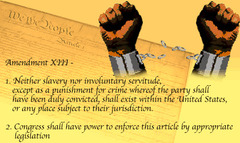
835027270113th AmendmentThis constitutional amendment, ratified in December 1865, forbade slavery and involuntary servitude in all states. (p. 276)24
8350272702Ex Parte MilliganIn 1866, the Supreme Court ruled that the government had acted improperly in Indiana where, certain civilians had been subject to a military trial during the war. The Court ruled that such trials could be used only when regular civilian courts were unavailable. (p. 279)25
8350272703draft riotsIn July 1863 riots against the draft erupted in New York City. Some 117 people were killed before federal troops and a temporary suspension of the draft restored order. (p. 280)26
8350272704CopperheadsNorthern Democrats who opposed the Civil War and wanted a negotiated peace. (p. 279)27
8350272705election of 1864In this presidential election, the Democrats nominated the popular General George McClellan. The Republicans renamed to the Unionist party, nominated President Abraham Lincoln. Abraham Lincoln won the election, however McClellan did win 45 percent of the popular vote. (p. 278)28
8350272706Trent AffairIn 1861, the Confederacy sent diplomats to Britain on a British steamer, to gain recognition for their government. A Union ship captured both men and took them as prisoners of war. The British threatened war if they were not released, and Lincoln gave into their demands. However, the diplomats were not able to get recognition for the Confederacy, from Britain or France. (p. 274)29
8350272707AlabamaA Confederate war ship purchased from Britain. It captured more than 60 Union merchant ships before being sunk off the coast of France. (p. 274)30
8350272708Laird ramsThese ships with iron rams could have been used against the Union's naval blockade. However, the Union persuaded the British government to cancel the sale of these ships to the Confederacy, rather than risk war with the Union. (p. 274)31
8350272709John Wilkes BoothAn American stage actor who, as part of a conspiracy plot, assassinated President Abraham Lincoln at Ford's Theatre in Washington, D.C., on April 14, 1865. (p. 278)32
8350272710segregated black troopsAlmost 200,000 African Americans joined the Union army during the Civil War. (p. 276)33
8350272711Massachusetts 54th RegimentAn all black regiment in the Civil War. (p. 276)34
8350272712women in the workplaceAs men went off to battle in the Civil War, women stepped into the labor vacuum, operated farms and took factory jobs customarily held by men. (p. 282)35
8350272713women in nursingDuring the Civil War women played a critical role as military nurses. (p. 282)36
8350272714war's long term effectsThe Civil War had long term effects on women. The field of nursing was now open to women for the first time. The enormous responsibilities undertaken by women gave impetus to the movement to obtain equal voting rights for women. (p. 282)37
83502727154 million freedmenWith the passage of the thirteenth amendment in 1865, 4 million African Americans were now free. (p. 282)38

AMSCO AP US History Chapters 16, 17, 18, 19 Summary Flashcards

AMSCO United States History 2015 Edition, Chapter 16 The Rise of Industrial America, 1865-1900

Terms : Hide Images
6716924760Gospel of WealthSome Americans thought religion ideas justified the great wealth of successful industrialists. (p. 325)0
6716924761Social DarwinismThe belief that government's helping poor people weakened the evolution of the species by preserving the unfit. (p. 324)1
6716924762nation's first big businessRailroads created a nationwide market for goods. This encouraged mass production, mass consumption, and economic specialization. (p. 320)2
6716924763Knights of LaborStarted in 1869 as a secret national labor union. Only allowed skilled workers, no minorities or women. It reached a peak of 730,000 members. (p. 330)3
6716924764Cornelius VanderbiltHe merged local railroads into the New York Central Railroad, which ran from New York City to Chicago. (p. 320)4
6716924765Eastern Trunk LinesIn the early days of the railroads, from the 1830s to the 1860s, railroad lines in the east were different incompatible sizes which created inefficiencies. (p. 320)5
6716924766transcontinental railroadsDuring the Civil War, Congress authorized land grants and loans for the building of the first transcontinenal railroad. Two new companies were formed to share the task of building the railroad. The Union Pacific started in Omaha, Nebraska, and the Central Pacific started in Sacramento, California. On May 10, 1869, at Promontory Point, Utah, a golden spike was driven into the rail ties to mark the completion of the railroad. (p. 321)6
6716924767Frederick Jackson Turner, "The Significance of the Frontier in American History"He argued that 300 years of frontier experience had shaped American culture by promoting independence and individualism. (p. 343)7
6716924768Union Pacific and Central PacificTwo railroad companies, one starting in Sacramento, California and the other in Omaha, Nebraska were completed in Utah in 1869 to create the first first transcontinental railroad. (p. 321)8
6716924769American Railroad AssociationIn 1883, this organization divided the country into four different time zones, which would become the standard time for all Americans. (p. 320)9
6716924770Tammany HallA political machine in New York City, which developed into a power center. (p. 364)10
6716924771Stalwarts, Halfbreeds, and MugwumpsGroups which competed for lucrative jobs in the patronage system. (p. 381)11
6716924772Dawes Act of 1887This act supported the idea of assimilation of the American Indians. It divided tribal lands into plots of up to 160 acres. U.S. citizenship was granted to those who stayed on the land for 25 years and adopted the habits of American life. (p. 345)12
6716924773Jim Crow lawsIn the 1870s, the South passed segregation laws which required separate washrooms, drinking fountains, park benches, and most other public facilities, for blacks and whites. (p. 349)13
6716924774railroads and time zonesThe United States was divided into four time zones by the railroad industry. (p. 320)14
6716924775speculation and overbuildingIn the 1870s and 1880s railroad owners overbuilt. This often happens during speculative bubbles, created by exciting new technology. (p. 321)15
6716924776Jay Gould, watering stockEntered railroad business for quick profits. He would sell off assets inflate the value of a corporation's assets and profits before selling its stock to the public. (p. 321)16
6716924777rebates and poolsIn a scramble to survive, railroads offered rebates (discounts) to favored shippers, while charging exorbitant freight rates to smaller customers. They also created secret agreements with competing railroads to fix rates and share traffic. (p. 321)17
6716924778bankruptcy of railroadsA financial panic in 1893 forced a quarter of all railroads into bankruptcy. J.P. Morgan and other bankers moved in to take control of bankrupt railroads and consolidate them. (p.321)18
6716924779Panic of 1893In 1893, this financial panic led to the consolidation of the railroad industry. (p. 321)19
6716924780causes of industrial growthAfter the Civil War, a "second Industrial Revolution" because of an increase in steel production, petroleum, electrical power, and industrial machinery. (p. 323)20
6716924781Andrew CarnegieA Scottish emigrant, in the 1870s he started manufacturing steel in Pittsburgh. His strategy was to control every stage of the manufacturing process from mining the raw materials to transporting the finished product. His company Carnegie Steel became the world's largest steel company. (p. 323)21
6716924782vertical integrationA business strategy by which a company would control all aspects of a product from raw material mining to transporting the finished product. Pioneered by Andrew Carnegie. (p. 323)22
6716924783John D. RockefellerHe started Standard Oil in 1863. By 1881, Standard Oil Trust controlled 90 percent of the oil refinery business. His companies produced kerosene, which was used primarily for lighting at the time. The trust that he created consisted of various acquired companies, all managed by a board of trustees he controlled. (p. 323)23
6716924784horizontal integrationBuying companies out and combining the former competitors under one organization. This strategy was used by John D. Rockefeller to build Standard Oil Trust. (p. 323)24
6716924785Plessy v. FergusonAn 1896, Supreme Court landmark case, which ruled that separate but equal accommodations in public places were constitutional and did not violate the 14th amendment. (p. 349)25
6716924786federal land grants and loansThe federal government provided land and loans to the railroad companies in order to encourage expansion of the railroads. (p. 320)26
6716924787Interstate Commerce Act of 1886This act, created in 1886, did little to regulate the railroads. (p. 322)27
6716924788Sherman Antitrust Act of 1890In 1890, Congress passed this act, which prohibited any "contract, combination, in the form of trust or otherwise, or conspiracy in restraint of trade or commerce." The U.S. Department of Justice secured few convictions until the law was strenghted during the Progressive era. (p. 324)28
6716924789federal courts, U.S. v. E.C. KnightIn 1895, the Supreme Court ruled that the Sherman Antitrust Act could be applied only to commerce, not manufacturing. (p. 324)29
6716924790American Federation of LaborThe labor union focused on just higher wages and improved working conditions. By 1901 they had one million members. (p. 330)30
6716924791Samuel GompersHe led the American Federation of Labor until 1924. (p. 330)31
6716924792laissez-faire CapitalismIn the late 19th century, american industrialists supported the theory of no government intervention in the economy, even as they accepted high tariffs and federal subsidies. (p. 324)32
6716924793Homestead ActIn 1862, this act offered 160 acres of public land free to any family that settled on it for 5 years. (p. 342)33
6716924794literacy tests, poll taxes, grandfather clausesAfter Reconstruction, various political and legal devices were created to prevent southern blacks from voting.34
6716924795Immigration Act of 1882In 1882, this act placed restrictions on the immigration of undesirable persons, such as paupers, criminals, convicts, and mentally incompetent. (p. 362)35
6716924796political machines, bossPolitical parties in major cities came under the control of tightly organized groups of politicians, known as political machines. Each machine had its boss, the top politician who gave orders and doled out government jobs. (p. 364)36
6716924797Jane AddamsIn 1889, she started Hull House in Chicago, which was a settlement house which provide help to immigrants. (p. 365)37
6716924798settlement housesThey provide social services to new immigrants. (p. 365)38
6716924799Social GospelIn the 1880s and 1890s this movement espoused social justice for the poor based on Christian principles. (p. 365)39
6716924800Susan B. Anthony, NAWSAIn 1890, one of the founders of the National American Womens Suffrage Association (NAWSA), which worked to secure voting rights for women. (p. 366)40
6716924801laissez-faire economics and politicsThe idea that government should do little to interfer with the free market. (p. 380)41
6716924802divided electorateIn the late 1800s, Republicans kept memories of the Civil War alive to remind war veterans of the pain caused by the Southern Democrats. Democrats could count on winning every former Confederate state. (p. 381)42
6716924803identity politicsPolitical activity and ideas based on the shared experiences of an ethnic, religious, or social group emphasizing gaining power and benefits for the group rather than pursuing ideological goals. (p. 381)43
6716924804divided governmentGovernance divided between the parties, as when one party holds the presidency and the other party controls one or both houses of Congress. (p. 381)44
6716924805patronage politicsThe use of government resources to reward individuals for their electoral support. (p. 381)45
6716924806big-city political machinesIn the North, one source of Democratic strength came from big-city political machines. (p. 381)46
6716924807business vs. consumersSome people objected to the high tariffs because the raised the prices on consumer goods. (p. 385)47
6716924808"hard" money vs. "soft" moneyMoney backed by gold vs. paper money not backed by specie (gold or silver). (p. 384)48
6716924809banks, creditors vs. debtorsDebtors wanted more "easy, soft" money in circulation. On the opposite side creditors stood for "hard, sound" money - meaning currency backed by gold. (p. 384)49
6716924810Panic of 1873, "Crime of 73"Congress stopped making silver coins. (p. 385)50
6716924811Sherman Silver Purchase Act of 1890This act increased the coinage of silver but it was not enough to satisfy the farmers and miners. (p. 386)51
6716924812election of 1888, Harrison "Billion Dollar Congress"In 1888, the Republican Benjamin Harrison became the president and the Republicans controlled Congress. They passed the first billion dollar budget in U.S. history. (p. 386)52
6716924813rise of the Populist PartyIn 1892, delegates met in Omaha, Nebraska to draft a political platform that would reduce the power of trusts and bankers. They nominated James Weaver as their candidate for president. (p. 386)53
6716924814unlimited coinage of silver at 16 to 1In 1896, the Democrats favored silver coinage at this traditional but inflationary rate. (p. 389)54
6716924815gold standard and higher tariffIn 1897, William McKinley became president just as gold discoveries in Alaska increased the money supply under the gold standard. The Dingley Tariff increased the tariff rate to 46 percent. (p. 390)55
6716924817Government subsidies to the railroadsRecognizing that the western railroads would lead the way to settlement, the federal government provided the railroads with huge subsidies in the form of loans and land grants. (AMSCO p. 320 bottom)56
6716924818Conflict between management and laborThe late 19th century witnessed the most deadly and frequent labor conflicts. Management held most of the power in its struggles with organized labor. Strikers could easily be replace by bringing in unemployed workers desperate for jobs. Management also used the following tactics to defeat unions: the lockout (closing the factory), blacklists (do not hire lists given to other companies), yellow-dog contracts (workers had to sign agreement not to join a union), use of private guards and state militia to put down strikes, and court rulings. (AMSCO p. 329 top)57
6716924819Direct election of SenatorsTraditionally U.S. senators had been elected by state legislatures rather than by the direct vote of the people. In 1899, Nevada was the first state to allow the voters to elect their U.S. senator directly. In 1913, the 17th Amendment was passed, which required that U.S. senators be elected by the popular vote of the people. (AMSCO p. 435 middle, this is Chapter 21)58
6716924820Fred Jackson Turner, "Frontier Thesis"By about 1890, most the the United States had been settled, and the unsettled land of the frontier had vanished. Frederick Jackson Turner has troubled by the closing of the frontier. In 1893, he wrote an influential essay, "The Significance of the Frontier in American History". He argued that 300 years of frontier experience had shaped American culture by promoting independence and individualism. The frontier was a powerful social leveler, breaking down class distinctions and encouraging social and political democracy. Turner believed that once the frontier was gone the U.S. would become more troubled like Europe, which had class divisions and social conflict. (AMSCO p. 343 top)59
6716924821Silver and Gold StandardIn 1897, William McKinley became president just as gold discoveries in Alaska increased the money supply under the gold standard. The Dingley Tariff increased the tariff rate to 46 percent. (AMSCO p. 389 bottom)60
6716924822Big Business and the governmentThe election of 1896 was a clear victory for big business. (AMSCO p. 390 middle)61
6716924823Mugwump, Stalwart and Half-breed RepublicansStalwarts, Halfbreeds, and Mugwumps Groups which competed for lucrative jobs in the patronage system. (AMSCO p. 381 bottom)62
9366963997Strikes/riots; Haymarket, Homestead, & PullmanAs unions and workers sought to protect their jobs and receive fair wages battles occurred between labor and owners, some of these lead to large strikes and others to demonstrations that sometimes turned violent.63

AP US History Period 8 (1945-1980) Flashcards

Terms : Hide Images
9450210076Lend LeaseLegislation stating that the US could either sell or lease arms to any country whose security was vital to America's interest.0
9450210077Cash and Carry PolicyA law that allowed a nation at war to purchase goods and arms in US as long as they paid cash and carried merchandise on their own ships. This benefited the Allies, because Britain was a dominant naval power.1
9450210078Neutrality Act4 laws that were designed to keep the US out of international incidents. Originally designed to avoid American involvement in WWII by preventing loans to those countries taking part in the conflict.2
9450210079Pearl HarborJapanese surprise attack on the US Pacific Fleet in Pearl Harbor, Hawaii. The Japanese destroyed US ships and aircrafts. In response, the US declared war on Japan and Germany.3
9450210080MidwayAn important battle in the Asian part of WWII, in which US sank 4 Japanese aircraft carriers4
9450210081MobilizationAct of assembling and putting into readiness for war or other emergency5
9450210082Victory GardensAmericans were encouraged to grow their own vegetables to support the war effort6
9450210083RationingA system of allocating scarce goods and services using criteria other than price7
9450210084D-DayAllied troops landed along a heavily fortified French coastline to fight Germany on the beaches of Normandy. Thousands of ships and aircrafts supported the invasion and the Allies gained victory8
9450210085Battle of the BulgeIn 1944, Germany staged a massive counterattack in Belgium and Luxembourg that pushed a 30 mile bulge into the Allied lines. The Allied stopped the Germans and threw them back across the Rhine with heavy losses9
9450210086Manhattan ProjectCode name for the US effort during WWII to produce the atomic bomb in New York. Most of the research was done by physicists10
9450210087HiroshimaThe first Japanese city destroyed by an atomic bomb in 1945. It hastened the end of WWII.11
9450210088Island HoppingA military strategy used during WWII that involved attacking specific enemy islands and bypassing others12
9450210089Iwo JimaA bloody and prolonged operation in Iwo Jima in which American marines defeated Japanese defenders13
9450210090United NationsAn international organization that facilitate co-operation in international law, international security, economic development, social progress, and human rights issues. It replaced the League of Nations14
9450210091Yalta ConferenceFDR, Churchill and Stalin met at Yalta. Russia agreed to declare war on Japan after the surrender of Germany and in return FDR and Churchill promised the USSR concession of Manchuria and the territories that it had lost in the Russo-Japanese War15
9450210092Potsdam ConferenceTruman, Stalin, and Churchill met in Germany to set up zones of control and inform the Japanese that if they refused to surrender, they would face total destruction.16
9450210093Rosie the RiveterA propaganda character designed to increase production of female workers in the factories. It became a rallying symbol for women to do their part.17
9450210094LevittownWilliam Levitt used mass production to build inexpensive homes in surburban New York to help relieve the postwar housing shortage.18
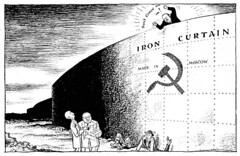
9450210095Iron CurtainA political barrier that isolated the people of Eastern Europe after WWII, restricting their ability to travel outside the region19
9450210096Truman DoctrinePresident Truman's policy of providing economic and military aid to any country threatened by communism or totalitarian ideology, mainly helped Greece and Turkey20
9450210097Marshall PlanA US program of economic aid for the reconstruction of Europe during 1948-195221
9450210098Berlin BlockadeSoviet attempt to starve out the Allied in order to gain supremacy in Berlin. It was a high point in the Cold War and it led to the Berlin Airlift.22
9450210099Korean WarThe conflict between communist North Korea and non-communist South Korea, helped by the UN.23
9450210100McCarthyismThe term associated with Joseph McCarthy who led the search for communists in America during the 1950s through his leadership in the House Un-American Activities Committee.24
9450210101Brown v Board of Education, 1954The Supreme Court overruled Plessy vs Ferguson, declared that segregated facilities are unequal and ordered all schools desegregated.25
9450210102Montgomery Bus BoycottAfter Rosa Parks was arrested for refusing to give up her seat on a bus, MLK led a boycott on buses. The Supreme Court later ruled that segregation of public transportation was illegal.26
9450210103Interstate Highway Act1956 law that authorized the spending of $32 billion to build 41,000 miles of highway27
9450210104Little Rock ArkansasIncident where President Eisenhower sent federal troops to allow black students into the high school.28
9450210105SputnikFirst Earth satellite launched by Moscow in 1957 which sparked US fears of Soviet dominance in technology and space. It led to the creation of NASA, space race, and increased focus of math and science in American schools.29
9450210106Sit insProtests by black students who took seats at whites only lunch counters and refused to leave until served. Their success prompted the formation of the student non-violent coordinating committee.30
9450210107NASAThe National Aeronautics and Space Administration is the US government agency responsible for the space program, aeronautics, and aerospace research.31
9450210108Berlin WallA fortified wall that prevented East Germans from entering the West. This wall was both a deterrent to individuals trying to escape and a symbol of repression to the free world.32
9450210109Bay of PigsIn 1961, a group of Cuban exiles organized by the CIA landed in Cuba to overthrow Fidel Castro. When the invasion ended in failure, President Kennedy took full responsibility33
9450210110Freedom RidesAn event organized by CORE and SNCC in which a group of civil rights activists tested southern states compliance to the Supreme Court ban of segregation on interstate buses34
9450210111Cuban Missile CrisisAn international nuclear crisis between the US and the USSR. When US discovered Soviet nuclear missiles in Cuba, President Kennedy announced a naval blockade of Cuba. Khrushchev acceded to the US demands on the condition that US doesn't invade Cuba35
9450210112Rachel CarsonUS biologist who opposed the use of pesticides that were hazardous to wildlife. Considered the birth of environmentalism36
9450210113March on WashingtonIn 1963, MLK gave his famous I have a dream speech to show support for the Civil Rights Bill in Congress37
9450210114JFK Assassinated1963, President JFK was assassinated in Dallas, Texas.38
9450210115Civil Rights Act of 1964Banned discrimination in public places, federal program, and most job employment. It enlarged federal powers to protect voting rights and desegregate schools. African Americans gained more power for social equality39
9450210116Voting Rights Act of 1965Invalidated the use of any test for authorized federal examiners to register disenfranchised black voters in states. As more blacks became politically active and elected black representatives, it brought jobs, facilities, and services for the black community, encouraging greater social equality and decreasing the wealth and education gap40
9450210117Gulf of Tonkin ResolutionCongressional resolution that authorized President Johnson to commit US troops to South Vietnam and fight a war against North Vietnam41
9450210118Cesar ChavezFarm worker, labor leader, and civil rights activist who formed the National Farm Workers Association42
9450210119Malcolm XRenamed himself X to signify the loss of his African heritage, converted to Nation of Islam, and became Black Muslims most dynamic street orator. His beliefs were based on the Black Power movement built on separationist and nationalist impulses to achieve independence and equality.43
9450210120Stonewall RiotPolice raided gay bar and triggered protests among gays and lesbians. It became a symbol of oppression of gays which began the gay pride movement44
9450210121WoodstockA free music festival that attracted thousands of young people to a farm in upstate New York in 196945
9450210122Earth DayA holiday created by environmental activists and Gaylord Nelson to raise awareness of environmental concerns46
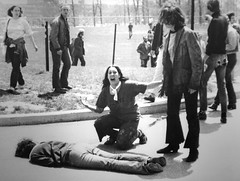
9450210123Kent State MassacreProtests to the war that caused National Guard being called in and shot students because they burned the ROTC building.47
9450210124Nixon in ChinaNixon met with Mao Tse-Tung for improved relations with China. Nixon agreed to support China's admission to the UN48
9450210125SALT I TreatyA five year agreement between the US and the Soviet Union that limited the numbers of intercontinental ballistic missiles and submarine missiles.49
9450210126Roe v WadeThe Supreme Court decision holding that a state ban on all abortions was unconstitutional. The decision forbade state control over abortions during the first trimester of pregnancy, permitted states to limit abortions during the second trimester, and permitted states to protect the fetus during the third trimester.50
9450210127WatergateNixon feared loss so he approved the commission to re-elect the President to spy on the Democrats. A security guard foiled an attempt to bug the Democratic National Committee Headquarters, exposing the scandal. Nixon was impeached.51
9450210128Jimmy CarterHe was criticized for his return of the Panama Canal Zone, he enacted an embargo on grain shipments to USSR, and he created the Department of Energy and the Department of Education. His last year in office was marked by the takeover of the American embassy in Iran, fuel shortages, and Soviet invasion of Afghanistan.52
9450210129Camp David AccordsNegotiations at Camp David organized by President Carter between Anwar Sadat and Menachem Begin. It led to a peace treaty that returned the Sinai Peninsula to Egypt, gave Israel access to the Red Sea and Suez Canal, and normalized diplomatic and economic relations between the two countries.53
9450210130Iran Hostage CrisisRevolutionaries stormed the American embassy in Tehran and held Americans hostage. The Carter administration unsuccessfully tried to negotiate for the hostages release. In 1981, Iran released the Americans after Carter left office54
9450210131Salt II TreatyA controversial experiment of negotiations between the US and the Soviet Union, which sought to limit the manufacture of strategic nuclear weapons.55

AP US History Vocab Flashcards

Terms : Hide Images
4867656154AlienBelonging to a foreign country or nation0
4867656155AlienateCause (someone) to feel isolated or estranged1
4867656156AlienationThe state or experience of being isolated from a group or an activity to which one should belong2
4867656157AnnexationThe action of annexing something especially territory3
4867656158AntebellumOccurring or existing before a particular war especially the American civil war4
4867656159AssimilationThe process by which a person or persons acquire the social and psychological characteristics of a group5
4867656160CapitalsimAn economic and political system in which a country's trade and industry are controlled by private owners for profit rather than by state6
4867656161CommunismA political theory derived from Karl Marx advocating class war and leading to a society in which all property is publicly owned and each person works and is paid according to their abilities and needs7
4868612296SocialismA political and economical theory of social organization that advocates that the means of production distribution and exchange should be owned or regulated by the community as a whole8
4868612297ColonialismThe policy or practice of acquiring full or partial political control over another country occupying it with settlers and exploring it economically9
4868612298ColonizationAn ongoing process of by which a central system of power dominates the surrounding land and its components10
4868612299ConformityCompliance with standards and rules or laws11
4868612300ConservativeHolding to traditional attitudes and values and cautious about change or Innovacion typically in relation to politics or religion12
4868612301ModerateAverage in amount intensity quality or degree13
4868612302LiberalOpen to new behavior or opinions and willing to discard traditional values14
4868612303ContainmentThe action of keeping something harmful under control or within limits15
4868612304DemocracyA system of government by the whole population or all the eligible members of the state typically through elected representatives16
4869445134DemocraticOf relating to or supporting democracy or its principles17
4869445135DétenteThe easing of hostility or strained relations especially between countries18
4869445136DissidentA person who opposes the show policy especially that of an authoritarian state19
4869445137EmancipationThe fact or process of being set free from legal social or political restrictions liberation20
4869445138EmigrationThe act of leaving one resident country with the intent to set up elsewhere21
4869445139ImmigrationThe action of coming to live permanently in a foreign country22
4869445140EnfranchisementAdmit to citizenship especially to the right of voting to endowed with municipal or parliamentarian rights23
4869445141DisenfranchisementDeprive someone of the right to vote24
4869445142ImperialismA policy of extending a country's power and influence through diplomacy or military force25

AMSCO AP US History Chapter 13 Flashcards

AMSCO United States History 2015 Edition, Chapter 13 The Union in Peril, 1848-1861

Terms : Hide Images
8368174236free-soil movementThis movement did not oppose slavery in the South, but they did not want the Western states to allow slavery. (p. 247)0
8368174237Free-Soil partyIn 1848, Northerns organized this party to advocate that the new Western states not allow slavery and provide free homesteads. Their slogan was, "free soil, free labor, free men". (p. 248)1
8368174238conscience WhigsWhigs that opposed slavery. (p. 248)2
8368174239barnburnersAntislavery Democrats, whose defection threatened to destroy the the Democratic party. (p 248)3
8368174240New England Emigrant Aid CompanyNorthern abolitionist and Free-Soilers set up this company to pay for the transportation of antislavery settlers to the Kansas Territory. They did this to shift the balance of power against slavery in this new territory. (p. 253)4
8368174241bleeding KansasAfter 1854, the conflicts between antislavery and proslavery forces exploded in the Kansas Territory. (p. 252)5
8368174242Pottawatomie CreekIn 1856, abolitionist John Brown and his sons attacked this proslavery farm settlement and killed five settlers. (p. 253)6
8368174243Lecompton constitutionIn 1857, President James Buchanan asked that Congress accept this document and admit Kansas as a slave state. Congress did not accept it. (p. 255)7
8368174244popular sovereigntyAround 1850, this term referred to the idea that each new territory could determine by vote whether or not to allow slavery would be allowed in that region. (p. 248)8
8368174245Lewis CassThis Democratic senator from Michigan, proposed popular sovereignty as the solution to the slavery question in the territories. (p. 248)9
8368174246Henry ClayHe proposed the Compromise of 1850. (p. 249)10
8368174247Zachary TaylorThe twelfth president of the United States from 1849 to 1850. He was a general and hero in the Mexican War. He was elected to the presidency in 1848, representing the Whig party. He died suddenly in 1850 and Millard Fillmore became the president. (p 248, 249)11
8368174248Compromise of 1850Henry Clay proposed and it was signed into law by President Millard Fillmore. It proposed: * Admit California to the Union as a free state * Divide the remainder of the Mexican Cession into New Mexico and Utah (popular sovereignty) * Give land in dispute between Texas and New Mexico to federal government in return for paying Texas' public debt of 10 million * Ban slave trade in D. C., but permit slaveholding * New Fugitive Slave Law to be enforced (p. 249)12
8368174249Stephen A. DouglasIn 1854, he devised the Kansas-Nebraska Act, which in effect overturned the Missouri Compromise, and allowed the South the opportunity to expand slavery. In 1858, he debated Abraham Lincoln in a famous series of seven debates in the campaign for the Illinois senate seat. He won the campaign for reelection to the Senate, but he alienated Southern Democrats. In 1860, he won the Democratic presidential nomination, but Southern Democrats nominated their own candidate, John Breckinridge. He was easily defeated by Abraham Lincoln in the presidential election that year. (p. 252, 256, 258)13
8368174250Millard FillmoreThe thirteenth president of the United States, serving from 1850 until 1853, and the last member of the Whig Party to hold that office. He was the second Vice President to become president upon the death of a sitting President, when he succeeded Zachary Taylor. As vice president he helped pass the Compromise of 1850. (p. 249, 255)14
8368174251Kansas-Nebraska ActThis 1854 act, sponsored by Senator Stephen A Douglas, would build a transcontinental railroad through the central United States. In order gain approval in the South, it would divide the Nebraska territory into Nebraska and Kansas and allow voting to decide whether to allow slavery. This increased regional tensions because it effectively repealed the Missouri Compromise, which had already determined that this area would not allow slavery. (p. 252)15
8368174252Crittenden compromiseIn the winter of 1860-1861, Senator John Crittenden proposed a constitutional amendment to appease the South. He proposed that slavery would be allowed in all areas south of the 36 30 line. The Republicans rejected the proposal because it would allow extension of slavery into the new territories. (p. 260)16
8368174253Franklin PierceThe fourteenth President of the United States from 1853 to 1857. A Democrat from New Hampshire, he was acceptable to Southern Democrats because he supported the Fugitive Slave Law. (p. 252)17
8368174254Know-Nothing partyThis political party started in the mid-1850s. Also known as the American party, they were mostly native-born Protestant Americans. Their core issue was opposition to Catholics and immigrants who were entering Northern cities in large numbers. (p. 254)18
8368174255Republican partyThis political party formed in 1854, in response to the passage of the Kansas-Nebraska Act. It was composed of a coalition of Free-Soilers, antislavery Whigs, and Democrats. Although not abolitionist, it sought to block the spread of slavery in the territories. (p. 254)19
8368174256John C. FremontIn the presidential election of 1856, this California senator was the Republican nominee. The Republican platform called for no expansion of slavery, free homesteads, and a probusiness protective tariff. He lost the election to James Buchanan, but won 11 of the 16 free states, which foreshadowed the emergence of a powerful Republican party. (p. 255)20
8368174257James BuchananThe fifteenth President of the United States from 1857 to 1861. He tried to maintain a balance between proslavery and antislavery factions, but his moderate views angered radicals in both North and South, and he was unable to forestall the secession of South Carolina to December 20, 1860. During his term: "Bleeding Kansas" (1856), Caning of Senator Sumner (1856), Lecompton Constitution (1857), Dred Scott case (1857) (p. 255)21
8368174258election of 1860In this presidential election, the Republican candidate, Abraham Lincoln won. Lincoln won all the northern states, while John C. Breckinridge, a South Democrat, won all the southern states. The South felt like it no longer had a voice in national politics and a number of states soon seceded from the Union. (p. 258)22
8368174259sucessionThe election of Abraham Lincoln was the final event that caused the southern states to leave the Union. In December 1860, South Carolina voted unanimously to secede. Within the next six weeks Georgia, Florida, Alabama, Mississippi, Louisiana, and Texas had all seceded. In February 1861, representatives of seven states met in Montgomery, Alabama to create the Confederate States of America. (p. 259)23
8368174260Fugitive Slave LawCongress passed a second version of this law in 1850. The law's chief purpose was to track down runaway slaves who had escaped to a Northern state, capture them, and return them to their Southern owners. Enforcement of the law in the North was sometimes opposed even though there were penalties for hiding a runaway slave or obstructing enforcement of the law. (p. 250)24
8368174261Underground RailroadA network of people who helped thousands of enslaved people escape to the North by providing transportation and hiding places. (p. 250)25
8368174262Harriet TubmanBorn a slave, she escaped to the North and became the most renowned conductor on the Underground Railroad, leading more than 300 slaves to freedom. (p. 250)26
8368174263Dred Scott v. SandfordAn 1857 Supreme Court case, in which Chief Justice Roger Taney ruled that African Americans (free or slave), were not citizens of the United States, that Congress could not exclude slavery from any federal territory, and that the Missouri Compromise was unconstitutional. The ruling delighted Southern Democrats and infuriated Northern Republicans. (p. 255)27
8368174264Roger TaneyHe was a Southern Democrat and chief justice of the Supreme Court during the Dred Scott v. Sandford case. (p. 255)28
8368174265Abraham LincolnHe was elected president of the United States in 1860. He was a Republican, who ran on a platform that appealed to those in the North and the West. It called for the exclusion of slavery in the new territories, a protective tariff for industry, free land for homesteaders, and a railroad to the Pacific. (p. 258)29
8368174266Lincoln-Douglas debatesIn 1858, Stephen Douglas and Abraham Lincoln had seven debates in the campaign for the Illinois senate seat. Lincoln was not an abolitionist, but he attacked Douglas's seeming indifference to slavery as a moral issue. Although Lincoln lost the election to Douglas, he emerged as a national figure and leading contender for the Republican nomination for president. (p. 256)30
8368174267house-divided speechThe speech given by Abraham Lincoln when accepting the Republican nomination for the Illinois senate seat. He said, "This government cannot endure permanently half slave and half free". (p. 256)31
8368174268Freeport DoctrineDoctrine developed by Stephen Douglas that said slavery could not exist in a community if the local citizens did not pass laws (slave codes) maintaining it. This angered Southern Democrats. (p. 257)32
8368174269Sumner-Brooks incidentThis incident took place in 1856, when Congressman Preston Brooks severely beat Massachusetts Senator Charles Sumner. The attack occurred in the Senate chamber, after Sumner gave a vitriolic speech, "The Crime Against Kansas". (p. 254)33
8368174270John BrownHe led his four sons and some former slaves, in an attack on the federal arsenal, called the Harpers Ferry raid. (p. 257)34
8368174271Harpers Ferry raidIn October 1859, John Brown led his four sons and some former slaves, in an attack on the federal arsenal at Harpers Ferry. His impractical plan was to obtain guns to arm Virginia's slaves, whom he hoped would rise up in a general revolt. He and six of his followers were captured and hanged. Southern whites saw the raid as proof of the north's true intentions - to use slave revolts to destroy the South. (p. 257)35
8368174272Harriet Beecher Stowe, Uncle Tom's CabinIn 1852, she wrote this influential book about the conflict between a slave named Tom, and a brutal white slave owner, Simon Legree. It caused a generation of Northerners and many Europeans to regard all slave owners as cruel and inhuman. Southerners believed it to be proof of Northern prejudice against the Southern way of life. (p. 250)36
8368174273Hinton R. Helper, Impending Crisis of the SouthIn 1857, he wrote this nonfiction book, that attacked slavery using statistics to demonstrate to fellow Southerners that slavery weakened the South's economy. Southern states banned the book, but it was widely read in the North. (p. 250)37
8368174274George Fitzhugh, Sociology of the SouthIn 1854, he wrote this proslavery book which argued that slavery was a positive good for slave and master alike. He was the boldest and most well known of proslavery authors. He questioned the principle of equal rights for unequal men and attacked the capitalist wage system as worse than slavery. (p. 251)38

AP Language Vocabulary Set 5 Flashcards

Terms : Hide Images
7315002722Sequester(V) to cause to withdraw or retire, as far from society or public life0
7315002723Sanctimonious(adj) making an ostentatious display or hypocritical pretense of holiness or piety1
7315002724Recidivist(n) A confirmed criminal2
7315002725Quiescene(n) quiet3
7315002726Proscribe(V) to reject, as a teaching or a practice, with condemnation or denunciation4
7315002727Moratorium(n) an emergency legislation authorizing a government suspend some action temporarily5
7315002728Licentious(adj) wanton, wild6
7315002729Hirsute(adj) Having a hairy covering7
7315002730Acrimonious(adj) Full of bitterness8
7315002731Belie(v) To misrepresent9

AMSCO AP US History Chapter 16 & 19 Flashcards

AMSCO United States History 2015 Edition, Chapter 19 The Politics of the Gilded Age, 1877-1900

Terms : Hide Images
8206935319laissez-faire economics and politicsThe idea that government should do little to interfer with the free market. (p. 380)0
8206935320divided electorateIn the late 1800s, Republicans kept memories of the Civil War alive to remind war veterans of the pain caused by the Southern Democrats. Democrats could count on winning every former Confederate state. (p. 381)1
8206935321identity politicsPolitical activity and ideas based on the shared experiences of an ethnic, religious, or social group emphasizing gaining power and benefits for the group rather than pursuing ideological goals. (p. 381)2
8206935322"Rum, Romanism, and Rebellion"In the 1884 election, the Democratic party was labeled with this phrase. (p. 383)3
8206935323close electionsNational elections between 1856 and 1912, were very evenly matched. The objective was to get out the vote and not alienate voters on the issues. (p. 381)4
8206935324divided governmentGovernance divided between the parties, as when one party holds the presidency and the other party controls one or both houses of Congress. (p. 381)5
8206935325weak presidentsThe Gilded Age presidents were not memorable and only served one term. (p. 380)6
8206935326patronage politicsThe use of government resources to reward individuals for their electoral support. (p. 381)7
8206935327corrupt politiciansParty patronage, the process of providing jobs to faithful party members was more important than policy issues during the Gilded Age. (p. 381)8
8206935328Union veterans, "bloody shirt"A form of politics that involved reminding Union veterans of how the Southern Democrats had caused the Civil War. (p. 381)9
8206935329Whig past, pro-businessRepublicans followed the tradition of Hamilton and the Whigs, supporting a pro-business economic program of high protective tariffs. (p. 381)10
8206935330Hamiltonian traditionThe Hamilton tradition supported a strong central government. (p. 381)11
8206935331social reformers, temperanceThe core of Republican support came from middle-class Anglo-Saxon Protestants who supported temperance or prohibition, along with business men. (p. 381)12
8206935332Anglo-Saxon heritageMost supported Republicans and temperance or prohibition. (p. 381)13
8206935333Protestant religionThese religious groups usually supported Republicans. (p. 381)14
8206935334African AmericansAround 1890, a bill to protect voting rights of African Americans passed the House but was defeated in the Senate. (p. 386)15
8206935335former Confederacy, "Solid South"From 1877 until the 1950s, the Democrats could count on winning every election here. (p. 381)16
8206935336states rights, limited governmentDemocrats of the Gilded Age were in favor of these ideas. (p. 381)17
8206935337Jeffersonian traditionDemocrats of the Gilded Age followed this tradition, which included states rights and limited government. (p. 381)18
8206935338big-city political machinesIn the North, one source of Democratic strength came from big-city political machines. (p. 381)19
8206935339immigrant voteIn the North, one source of Democratic strength came from the immigrant vote. (p. 381)20
8206935340against prohibitionThe Catholics, Lutherans, and Jews were generally against this policy. (p. 381)21
8206935341Catholics, Luterans, JewsDemocrats were usually from these religions and they were against temperance and prohibition campaigns. (p. 381)22
8206935342federal government jobsDuring the Gilded Age, these jobs were given to those who were loyal their political party. (p. 381)23
8206935343Stalwarts, Halfbreeds, and MugwumpsGroups which competed for lucrative jobs in the patronage system. (p. 381)24
8206935344Election of 1880In 1880, James A. Garfield was elected president in a very close election. His vice president was Chester A. Arthur. (p. 382)25
8206935345assassination of James GarfieldPresident James Garfield was shot while preparing to board a train. He died after an 11 week struggle. (p. 383)26
8206935346Chester A. ArthurHe became president after James Garfield died of a gun shot wound. (p. 383)27
8206935347Pendleton Act of 1881Set up by the Civil Service Commission, it created a system where federal jobs were awarded based on competitive exams. (p. 384)28
8206935348civil service reformPublic outrage over the assassination of President Garfield pushed Congress to remove some jobs from control of party patronage. (p. 384)29
8206935349election of 1884Grover Cleveland won the 1884 presidential election. (p. 383)30
8206935350Grover ClevelandIn 1884, he was elected president of the United States. He was the first Democratic president since 1856. (p. 383)31
8206935351high tariffIn the 1890s, tariffs provided more than half of the federal revenue. Some Democrats objected to the tariffs because the raised the price on consumer goods and made it for difficult for farmers to sell to export because foreign countries enacted their own tariffs. (p. 385)32
8206935352business vs. consumersSome people objected to the high tariffs because the raised the prices on consumer goods. (p. 385)33
8206935353Cleveland threatens lower tariffToward the end of Grover Cleveland's first term he urged Congress to lower the tariff rates. (p. 385)34
8206935354McKinley Tariff of 1890In 1890, this tariff raised the tax on foreign products to a peacetime high of 48 percent. (p 386)35
8206935355Wilson-Gorman Tariff of 1894This tariff provided a moderate reduction in tariff rates and levied a 2 percent income tax. (p. 388)36
8206935356Dingley Tariff of 1897Increased the tariff rate to more than 46 percent and made gold the official standard of U.S. currency. (p. 390)37
8206935357"hard" money vs. "soft" moneyMoney backed by gold vs. paper money not backed by specie (gold or silver). (p. 384)38
8206935358banks, creditors vs. debtorsDebtors wanted more "easy, soft" money in circulation. On the opposite side creditors stood for "hard, sound" money - meaning currency backed by gold. (p. 384)39
8206935359Panic of 1873, "Crime of 73"Congress stopped making silver coins. (p. 385)40
8206935360Specie Resumption Act of 1875Congress sided with creditors and investors when it passed this act which withdrew all greenbacks (paper money not backed by gold or silver) from circulation. (p. 385)41
8206935361Greenback partyThis political party was formed by supporters of paper money not backed by gold or silver. (p. 384)42
8206935362James B. WeaverIn 1892, he was the Populist candidate for president. He is one of the few third party candidates in history to have ever won any electoral votes. (p. 387)43
8206935363Bland-Allison Act of 1878In 1878, this act allowed a limited coinage of silver each month at the standard silver-to-gold ratio of 16 to 1. (p. 385)44
8206935364Sherman Silver Purchase Act of 1890This act increased the coinage of silver but it was not enough to satisfy the farmers and miners. (p. 386)45
8206935365run on gold reserves, J.P. Morgan bail outA decline in silver prices encouraged investors to trade their silver dollars for gold dollars. The gold reserve fell dangerously low and President Grover Cleveland was forced to repeal the Sherman Silver Purchase Act of 1890. The president then turned to J.P. Morgan to borrow $65 million in gold to support the dollar and the gold standard. (p. 387)46
8206935366repeal of Sherman Silver Purchase ActA decline in silver prices encouraged investors to trade their silver dollars for gold dollars. The gold reserve fell dangerously low and President Grover Cleveland was forced to repeal the Sherman Silver Purchase Act of 1890. (p. 387)47
8206935367election of 1888, Harrison "Billion Dollar Congress"In 1888, the Republican Benjamin Harrison became the president and the Republicans controlled Congress. They passed the first billion dollar budget in U.S. history. (p. 386)48
8206935368rise of the Populist PartyIn 1892, delegates met in Omaha, Nebraska to draft a political platform that would reduce the power of trusts and bankers. They nominated James Weaver as their candidate for president. (p. 386)49
8206935369Farmers' Alliances in South and WestIn 1890, this group of discontented farmers elected senators, representatives, governors, and majorities in state legislatures in the West. (p. 386)50
8206935370Alliance of whites and blacks in SouthThe Populist party tried to form a political alliance with these poor farmers. (p. 387)51
8206935371Thomas WatsonHe was from Georgia and he appealed to poor farmers of both races to join the Populists party. (p. 387)52
8206935372reformers vs. rasism in SouthIn the presidential election of 1892, Southern Democrats feared the Populist party and used every technique possible to keep blacks from voting. (p. 387)53
8206935373Omaha PlatformIn 1892, the Populist party met in Omaha, Nebraska to draft this political platform and nominate a presidential candidate. (p 386)54
8206935374government regulation and ownershipThe Populist movement attacked laissez-faire capitalism and attempted to form a political alliance between poor whites and poor blacks. (p. 387)55
8206935375election of 1892, Cleveland returnsThe 1892 presidential election was between President Benjamin Harrison and former president Grover Cleveland. Cleveland became the only president to win a presidential election after having left the office. (p. 387)56
8206935376Panic of 1893In 1893, the stock market crashed as a result of speculation in railroad companies. One of the worst and longest depressions in U.S. history. (p. 387)57
8206935377Coxey's Army, March on WashingtonIn 1894, Populist Jacob A. Coxey led a march to Washington to demand that the federal government spend $500 million on public works programs. (p. 388)58
8206935378Coin's Financial SchoolIn 1894, this book taught Americans that unlimited silver coining would end the economic problems. (p. 388)59
8206935379William Jennings BryanThe 1896 Democratic nominee for president. (p. 388)60
8206935380"Cross of Gold" SpeechWilliam Jennings Bryan gave this speech at the 1896 Democratic convention. The prosilver and anti-gold speech assured him of the nomination. (p. 389)61
8206935381fusion of Democrats and PopulistsIn the 1896 presidential election the Democrats and Populists both nominated William Jennings Bryan for president in fused campaign. (p. 389)62
8206935382unlimited coinage of silver at 16 to 1In 1896, the Democrats favored silver coinage at this traditional but inflationary rate. (p. 389)63
8206935383"Gold Bug" DemoratsDemocrats who favored gold. (p. 389)64
8206935384Mark Hanna, Money and mass mediaA master of high-finance politics, he managed William McKinley's winning presidential campaign by focusing on getting favorable publicity in newspapers. (p. 390)65
8206935385McKinley victoryWilliam McKinley won the presidential election of 1896 by carrying the all the Northeast and the upper Midwest. (p. 389)66
8206935386gold standard and higher tariffIn 1897, William McKinley became president just as gold discoveries in Alaska increased the money supply under the gold standard. The Dingley Tariff increased the tariff rate to 46 percent. (p. 390)67
8206935387rise of modern urban industrial societyThe 1896 election was a victory for big business, urban centers, conservative economics, and moderate middle-class values. Rural America lost its dominance of American politics. (p. 390)68
8206935388decline of traditional rural-agricultualThe 1896 election marked the point of decline of rural America's power in national politics. (p. 390)69
8206935389start of the modern presidencyWilliam McKinley emerged as the first modern president, he would make America an important country in international affairs. (p. 390)70
8206935390era of Republican dominanceThe election of McKinley in 1896 started an era of Republican dominance of the presidency (seven of next nine elections) and Congress. (p. 390)71
8206935391nation's first big businessRailroads created a nationwide market for goods. This encouraged mass production, mass consumption, and economic specialization. (p. 320)72
8206935392Cornelius VanderbiltHe merged local railroads into the New York Central Railroad, which ran from New York City to Chicago. (p. 320)73
8206935393Eastern Trunk LinesIn the early days of the railroads, from the 1830s to the 1860s, railroad lines in the east were different incompatible sizes which created inefficiencies. (p. 320)74
8206935394transcontinental railroadsDuring the Civil War, Congress authorized land grants and loans for the building of the first transcontinenal railroad. Two new companies were formed to share the task of building the railroad. The Union Pacific started in Omaha, Nebraska, and the Central Pacific started in Sacramento, California. On May 10, 1869, at Promontory Point, Utah, a golden spike was driven into the rail ties to mark the completion of the railroad. (p. 321)75
8206935395Union Pacific and Central PacificTwo railroad companies, one starting in Sacramento, California and the other in Omaha, Nebraska were completed in Utah in 1869 to create the first first transcontinental railroad. (p. 321)76
8206935396American Railroad AssociationIn 1883, this organization divided the country into four different time zones, which would become the standard time for all Americans. (p. 320)77
8206935397railroads and time zonesThe United States was divided into four time zones by the railroad industry. (p. 320)78
8206935398speculation and overbuildingIn the 1870s and 1880s railroad owners overbuilt. This often happens during speculative bubbles, created by exciting new technology. (p. 321)79
8206935399Jay Gould, watering stockEntered railroad business for quick profits. He would sell off assets inflate the value of a corporation's assets and profits before selling its stock to the public. (p. 321)80
8206935400rebates and poolsIn a scramble to survive, railroads offered rebates (discounts) to favored shippers, while charging exorbitant freight rates to smaller customers. They also created secret agreements with competing railroads to fix rates and share traffic. (p. 321)81
8206935401bankruptcy of railroadsA financial panic in 1893 forced a quarter of all railroads into bankruptcy. J.P. Morgan and other bankers moved in to take control of bankrupt railroads and consolidate them. (p.321)82
8206935402Panic of 1893In 1893, this financial panic led to the consolidation of the railroad industry. (p. 321)83
8206935403causes of industrial growthAfter the Civil War, a "second Industrial Revolution" because of an increase in steel production, petroleum, electrical power, and industrial machinery. (p. 323)84
8206935404Andrew CarnegieA Scottish emigrant, in the 1870s he started manufacturing steel in Pittsburgh. His strategy was to control every stage of the manufacturing process from mining the raw materials to transporting the finished product. His company Carnegie Steel became the world's largest steel company. (p. 323)85
8206935405vertical integrationA business strategy by which a company would control all aspects of a product from raw material mining to transporting the finished product. Pioneered by Andrew Carnegie. (p. 323)86
8206935406U.S. SteelIn 1900, Andrew Carnegie sold Carnegie Steel to a group headed by J. P. Morgan. They formed this company, which was the largest enterprise in the world, employing 168,000 people, and controlling more than three-fifths of the nation's steel business. (p. 323)87
8206935407John D. RockefellerHe started Standard Oil in 1863. By 1881, Standard Oil Trust controlled 90 percent of the oil refinery business. His companies produced kerosene, which was used primarily for lighting at the time. The trust that he created consisted of various acquired companies, all managed by a board of trustees he controlled. (p. 323)88
8206935408horizontal integrationBuying companies out and combining the former competitors under one organization. This strategy was used by John D. Rockefeller to build Standard Oil Trust. (p. 323)89
8206935409Standard Oil TrustIn 1881, the name of John D. Rockefeller's company, which controlled 90 percent of the oil refinery business in the United States. (p. 323)90
8206935410interlocking directoratesThe term for the same directors running competing companies. (p. 322)91
8206935411J. P. MorganA banker who took control and consolidated bankrupt railroads in the Panic of 1893. In 1900, he led a group in the purchase of Carnegie Steel, which became U.S. Steel. (p. 321, 323)92
8206935412leading industrial powerBy 1900, the United States was the leading industrial power in the world, manufacturing more than an of its rivals, Great Britain, France, or Germany. (p. 319)93
8206935413Second Industrial RevolutionThe term for the industrial revolution after the Civil War. In the early part of the 19th century producing textiles, clothing, and leather goods was the first part of this revolution. After the Civil War, this second revolution featured increased production of steel, petroleum, electric power, and industrial machinery. (p. 323)94
8206935414Bessemer processIn the 1850s, Henry Bessemer discovered this process. By blasting air through molten iron you could produce high-quality steel. (p. 323)95
8206935415transatlantic cableIn 1866, Cyrus W. Field's invention allowed messages to be sent across the oceans. (p. 325)96
8206935416Alexander Graham BellIn 1876, he invented the telephone. (p. 325)97
8206935417Thomas EdisonPossibly the greatest inventor of the 19th century. He established the first modern research labratory, which produced more than a thousand patented inventions. These include the phonograph, first practical electric light bulb, dynamo for electric power generation, mimeograph machine, and a motion picture camera. (p. 326)98
8206935418Menlo Park Research LabThe first modern research laboratory, created in 1876, by Thomas Edison in Menlo Park, New Jersey. (p. 326)99
8206935419electric power, lightingIn 1885, George Westinghouse produced a transformer for producing high-voltage alternating current, which made possible the lighting of cities, electric streetcars, subways, electrically powered machinery, and appliances. (p. 326)100
8206935420George WestinghouseHe held more than 400 patents. He invented the high-voltage alternating current transformer, which made possible the nationwide electrial power system. (p. 326)101
8206935421Eastman's Kodak cameraIn 1888, George Eastman invented the camera. (p. 325)102
8206935422large department storesR.H. Macy and Marshall Field made these stores the place to shop in urban centers. (p. 326)103
8206935423R.H. MacyHe created a New York department store. (p. 326)104
8206935424mail-order companiesTwo companies, Sears Roebuck, and Montgomery Ward, used the improved rail system to ship to rural customers to sell many different products. The products were ordered by mail from a thick paper catalog. (p. 326)105
8206935425Sears-RoebuckMail order company that used the improved rail system to ship to rural customers. (p. 326)106
8206935426packaged foodsBrand name foods created by Kellogg and Post became common items in American homes. (p. 326)107
8206935427refrigeration; canningThese developments in the food industry changed American eating habits. (p. 326)108
8206935428Gustavus SwiftHe changed American eating habits by making mass-produced meat and vegetable products. (p. 326)109
8206935429advertisingThis new technique was important to creating the new consumer economy. (p. 326)110
8206935430consumer economyAdvertizing and new marketing techniques created a new economy. (p. 326)111
8206935431federal land grants and loansThe federal government provided land and loans to the railroad companies in order to encourage expansion of the railroads. (p. 320)112
8206935432fraud and corruption, Credit MobilierInsiders used construction companies to bribe government officials and make huge profits. (p. 321)113
8206935433Interstate Commerce Act of 1886This act, created in 1886, did little to regulate the railroads. (p. 322)114
8206935434anti-trust movementMiddle class people feared a growth of new wealth due to the trusts. In the 1880s trust came under widespread scrutiny and attack. In 1890, the Sherman Antitrust Act was passed, but it was too vaguely worded to stop the development of trusts. Not until the Progressive era, would the trusts be controlled. (p. 324)115
8206935435Sherman Antitrust Act of 1890In 1890, Congress passed this act, which prohibited any "contract, combination, in the form of trust or otherwise, or conspiracy in restraint of trade or commerce." The U.S. Department of Justice secured few convictions until the law was strenghted during the Progressive era. (p. 324)116
8206935436federal courts, U.S. v. E.C. KnightIn 1895, the Supreme Court ruled that the Sherman Antitrust Act could be applied only to commerce, not manufacturing. (p. 324)117
8206935437causes of labor discontentWorker's discontent was caused by performing monotonous task required completion within a certain time, dangerous working conditions, and exposure to chemicals and pollutants. (p. 328)118
8206935438iron law of wagesDavid Ricardo developed this theory which stated that low wages were justified. He argued that raising wages would only increase the working population, the availability of more workers would cause wages to fall, thus creating a cycle of misery. (p. 327)119
8206935439anti-union tacticsEmployers used the following tactics to defeat unions: the lockouts (closing the factory), blacklists (lists circulated among employers), yellow dog contracts (contracts that forbade unions), private guards to quell strikes, and court injunctions against strikes. (p. 329)120
8206935440railroad strike of 1877In 1887, this strike spread across much of the nation and shut down two-thirds of the country's railroads. An additional 500,000 workers from other industries joined the strike. The president used federal troops to end the violence, but more than 100 people had died in the violence. (p. 329)121
8206935441Knights of LaborStarted in 1869 as a secret national labor union. It reached a peak of 730,000 members. (p. 330)122
8206935442Haymarket bombingOn May 4, 1886 workers held a protest in which seven police officers were killed by a protester's bomb. (p. 330)123
8206935443American Federation of LaborThe labor union focused on just higher wages and improved working conditions. By 1901 they had one million members. (p. 330)124
8206935444Samuel GompersHe led the American Federation of Labor until 1924. (p. 330)125
8206935445Pullman StikeIn 1894, workers at Pullman went on strike. The American Railroad Union supported them when they refused to transport Pullman rail cars. The federal government broke the strike. (p. 331)126
8206935446Eugene DebsThe American Railroad Union leader, who supported the Pullman workers. The government broke the strike and he was sent to jail for six months. (p. 331)127
8206935447railroad workers: Chinese, Irish, veteransIn the construction of the first transcontinental railroad, the Union Pacific, starting in Omaha, employed thousands of war veterans and Irish immigrants. The Central Pacific, starting from Sacramento, included 6,000 Chinese immigrants among their workers. (p. 321)128
8206935448old rich vs. new richThe trusts came under widespread scrutiny and attack in the 1880s, urban elites (old rich) resented the increasing influence of the new rich. (p. 324)129
8206935449white-collar workersThe growth of large corporation required thousands of white-collar workers (jobs not involving manual labor) to fill the highly organized administrative structures. (p. 327)130
8206935450expanding middle classIndustrialization helped expand the middle class by creating jobs for accountants, clerical workers, and salespeople. The increase in the number of good-paying jobs after the Civil War significantly increased the size of the middle class. (p. 327)131
8206935451factory wage earnersBy 1900, two-thirds of all working Americans worked for wages, usually at jobs that required them to work ten hours a day, six days a week.(p. 327)132
8206935452women and children factory workersBy 1900, 20 percent of adult woman working for wages in the labor force. Most were young and single women, only 5 percent of married women worked outside the home. (p. 327)133
8206935453women clerical workersAs the demand for clerical workers increased, women moved into formerly male occupations as secretaries, bookkeepers, typists, and telephone operators. (p. 328)134
8206935454Protestant work ethicThe believe that hard work and material success are signs of God's favor. (p. 325)135
8206935455Adam SmithIn 1776, this economist wrote "The Wealth of Nations" which argued that business should not be regulated by government, but by the "invisible hand" (impersonal econmic forces). (p. 324)136
8206935456laissez-faire CapitalismIn the late 19th century, american industrialists supported the theory of no government intervention in the economy, even as they accepted high tariffs and federal subsidies. (p. 324)137
8206935457concentration of wealthBy the 1890s, the richest 10 percent of the U.S. population controlled 90 percent of the nation's wealth. (p. 326)138
8206935458Social DarwinismThe belief that government's helping poor people weakened the evolution of the species by preserving the unfit. (p. 324)139
8206935459William Graham SumnerAn English social philosopher, he argued for Social Darwism, the belief that Darwin's ideas of natural slection and survival of the fittest should be applied to the marketpalce and society. (p. 324)140
8206935460survival of the fittestThe belief that Charles Darwin's ideas of natural selection in nature applied to the economic marketplace. (p. 324)141
8206935461Gospel of WealthSome Americans thought religion ideas justified the great wealth of successful industrialists. (p. 325)142
8206935462Horatio Alger Stories self-made manHis novels portrayed young men who became wealth through honesty, hard work and a little luck. In reality these rags to riches stories were somewhat rare. (p. 327)143

AMSCO AP US History Chapter 6 Flashcards

AMSCO United States History 2015 Edition Chapter 6

Terms : Hide Images
5068826668James Madison"Father of the Constitution"; wanted a new document; took detailed notes during the convention. (p. 104)0
5068826669Framers of the ConstitutionRich, white, male, educated and most weree heavily involved in state governments. (p. 104)1
5068826670Alexander HamiltonOne of the authors of the Federalist Papers. He favored a strong central government. (p. 106)2
5068826671Gouverneur Morris and John DickinsonLeaders who helped James Madison write the Constitution.3
5068826672FederalistsFavored a strong central government, favored a Constitution to improve on the Articles of Confederation. (p. 107)4
5068826673Anti-FederalistArgued against the Constitution out of fear it created a central government that was too powerful. (p.. 107)5
5068826674Federalists PapersSeries of essays, later published as a book, written by James Madison, Alexander Hamilton, and John Jay. It argued effectively in favor of Constitution. (p. 106)6
5068826675Bill of RightsThe first ten amendments added to protect the rights of individual citizens, adopted in 1781. (p. 108)7
5068826676AmendmentsChanges to the Constitution8
5068826677economic sanctionsEfforts to boycott and other ways to protest the action of England in Intolerable Acts9
5068826678Washington's Farewell AddressGeorge Washington's farewell address written in late 1796. It warned against: making permanent alliances in foreign affairs, not to from political parties, not to fall into sectionalism. (p. 115)10
5068826679permanent alliancesWashington warned against these as things that could obligate us to unnecessary alliances and actions. (p. 115)11
5068826680Alien and Sedition ActsActs by the Federalists which authorized the president to deport dangerous aliens, and detain enemy aliens in wartime. Made it illegal for newspaper editors to criticize the president ofr Congress. (p. 117)12
5068826681Kentucky and Virginia ResolutionsTwo states passed resolutions that argued states had the right to nullify laws passed at the federal level. (p. 117)13
5068826682slave tradeInternational slave trade protected at Constitutional Convention for 20 years, after which Congress could vote to end it. (p. 105)14
5068826683infant industriesTerm for new and developing industries which were supported by placing high tariffs on imported goods. This was part of Alexander Hamilton's economic plan. (p. 110)15
5068826684National bank tariffs; excise tariffsFavored by Federalists in North as way to fund government/protect businesses; opposed by South and farmers16
5068826685Battle of Fallen TimbersIn 1794 the US Army led by General Anthony Wayne defeated the American Indians. (p. 113)17
5068826686Treaty of Greenville/Public Land ActIn this treaty the American Indians surrendered claims to the Ohio Valley and promised to open it to settlement. (p. 113)18
5068826687Mt. Vernon ConferenceIn 1785 George Washington Hosted a conference at his home, It led to the Annapolis Convention. (p. 104)19
5068826688Annapolis ConventionOnly five states sent delegates, but led to Constitutional Convention in May 1787. (p. 104)20
5068826689Constitutional ConventionDelegates from all states but Rhode Island met in Philadelphia in May 178721
5068826690Checks and balancesDesigned to keep one branch of government from dominating the other22
5068826691Virginia Plan"Large state" plan; wanted representation based on state population23
5068826692New Jersey Plan"Small state" plan; called for representation to be equal regardless of size24
5068826693Connecticut Plan/Great CompromiseEst. a bicameral legislature that compromised for small and large states (House and Senate)25
5068826694House of RepresentativesRepresentation in the House would be based on population of each state26
5068826695SenateTwo people per state, regardless of size27
5068826696Three Fifths Compromise3/5's of a state's slave population would be counted for representation purposes28
5068826697Commercial CompromiseAllowed Congress to regulate interstate trade and foreign commerce29
5068826698Electoral college systemProcess by which a President would be elected30
5068826699Legislative branchThis branch of government compromises Congress; it makes laws31
5068826700CongressLegislative branch; House and Senate32
5068826701Executive departmentOrganized by Washington as part of the new departments of the executive branch33
5068826702CabinetTerm for chiefs of departments appointed by Washington34
5068826703Henry KnoxWashington's Secretary of War35
5068826704Edmund RandolphWashington's Attorney General36
5068826705Judiciary ActEstablished a Supreme Court with one chief justice and five associate justices37
5068826706Federal courtsCourts created by the Judiciary Act38
5068826707Supreme CourtUltimate court in the land39
5068826708National debtWas very high at the revolution; Hamilton proposed paying it off at face value40
5068826709Whiskey RebellionFirst real test of the new government; put down when Washington called in forces41
5068826710Federalists EraPeriod in early when Federalists dominated the government42
5068826711Democratic-Republican PartyRival to Federalists; opposed strong central government; led by Jefferson43
5068826712political partiesNot anticipated by founders; Federalists and Democratic-Republicans44
5068826713Two-term TraditionSet the precedent, until Franklin Delano Roosevelt, of Presidents only staying in office for two terms45
5068826714John AdamsIn 1796 he was a Federalist who was elected as the second president. In 1800 he lost the presidential election to Thomas Jefferson, a Democratic-Republican. (p. 115, 117)46
5068826715Revolution of 1800Election in which Democratic-Republicans peacefully took power from the Federalists.47
5068826716French RevolutionDemocratic-Republican's felt we were obligated to support the French.48
5068826717Proclamation of NeutralityIn 1793 Washington announced us a neutral in the war between England and France49
5068826718"Citizen" GenetSought to gain American support for French; led to criticism of Washington in the US50
5068826719Jay TreatyTreaty that embarrassed US because England did not respect us; US gained very few concession from England51
5068826720Pinckney TreatyBetter deal than Jay's Treaty; Spain agreed to open lower Mississippi River and New Orleans to US trade52
5068826721Right of depositUS gained right to transfer cargoes in New Orleans without Spanish duties53
5068826722XYZ AffairFrench demanded a bribe before we could speak with French leader; led many to call for war against England54

AP US History Period 8 (1945-1980) Flashcards

Terms : Hide Images
9761264071Cold WarA state of political and military tension after World War II between powers in the Western Bloc and powers in the Eastern Bloc. Historians do not fully agree on the dates, but 1947-91 is common.0
9761264072authoritarianA form of government characterized by strong central power and limited political freedoms.1
9761264073communistA political system focused on creating a socioeconomic order structured upon the common ownership of the means of production and the absence of social classes, money, and the state. Purists of the communist movement also advocated for a violent overthrow of the upper class by the lower classes in order to create such a society.2
9761264074free-market economyA system in which the prices for goods and services are set freely by consent between vendors and consumers, in which the laws and forces of supply and demand are free from any intervention by a government, price-setting monopoly, or other authority.3
9761264075collective securityA type of coalition building strategy in which a group of nations agrees not to attack each other and to defend each other against an attack from one of the others, if such an attack is made.4
9761264076DétenteA French term often used in reference to the general easing of the geo-political tensions between the Soviet Union and the United States which began in 1969, as a foreign policy of U.S. presidents Richard Nixon and Gerald Ford called détente; a "thawing out" or "un-freezing" at a period roughly in the middle of the Cold War.5
9761264077ICBMInter-continental Ballistic Missile - a ballistic missile with a minimum range of more than 5,500 kilometers (3,400 mi) primarily designed for nuclear weapons delivery (delivering one or more nuclear warheads).6
9761264078SALT TalksTwo rounds of bilateral conferences and corresponding international treaties involving the United States and the Soviet Union—the Cold War superpowers—on the issue of armament control. The two rounds of talks and agreements were SALT I and SALT II.7
9761264079Tet OffensiveOne of the largest military campaigns of the Vietnam War, launched on January 30, 1968, by forces of the Viet Cong and North Vietnamese People's Army of Vietnam against the forces of the South Vietnamese Army of the Republic of Vietnam, the United States, and their allies. A campaign of surprise attacks against military and civilian commands and control centers throughout South Vietnam8
9761264080Students for a Democratic Society (SDS)A student activist movement in the United States that was one of the main representations of the New Left. The organization developed and expanded rapidly in the mid-1960s before dissolving at its last convention in 1969.9
9761264081Martin Luther King, Jr.An American Baptist minister, activist, humanitarian, and leader in the African-American Civil Rights Movement.10
9761264082nonviolent resistanceThe practice of achieving goals such as social change through symbolic protests, civil disobedience, economic or political noncooperation, satyagraha, or other methods, without using violence. Common examples: Boycotts, Sit-ins11
9761264083boycottTo withdraw from commercial or social relations with (a country, organization, or person) as a punishment or protest.12
9761264084sit-InA form of direct action that involves one or more people occupying an area for a protest, often to promote political, social, or economic change.13
9761264085Executive Order 9981Issued by President Harry S. Truman on July 26, 1948. It abolished racial discrimination in the United States Armed Forces and eventually led to the end of segregation in the services.14
9761264086Brown v. Board of Education of Topeka, Kansas (1954, Warren)Unanimous decision declaring the "separate but equal" clause of the Plessy v. Ferguson ruling unconstitutional.15
9761264087Civil Rights Act of 1964A landmark piece of civil rights legislation in the United States[5] that outlawed discrimination based on race, color, religion, sex, or national origin.16
9761264088The Great SocietyA set of domestic programs in the United States launched by Democratic President Lyndon B. Johnson in 1964-65. The main goal was the elimination of poverty and racial injustice.17
9761264089The Baby Boom(1946-1964) The period of time when the number of annual births exceeded 2 per 100 women (or approximately 1% of the total population size) in the United States.18
9761264090social mobilityThe movement of individuals, families, households, or other categories of people within or between layers or tiers in an open system of social stratification.19
9761264091suburbA residential area or a mixed use area, either existing as part of a city or urban area or as a separate residential community within commuting distance of a city.20
9761264092Sun BeltA region of the United States generally considered to stretch across the Southeast and Southwest (the geographic southern United States). Another rough boundary of the region is the area south of the 36th parallel, north latitude.21
9761264093CountercultureA subculture whose values and norms of behavior differ substantially from those of mainstream society, often in opposition to mainstream cultural mores. Such opinions became more visible and popular, especially in the 1960s and early 1970s in response to the Vietnam War.22
9761264094Gideon v. Wainwright (1963)Extends to the defendant the right of counsel in all state and federal criminal trials regardless of their ability to pay.23
9761264095Escobedo v. Illinois (1964)Ruled that a defendant must be allowed access to a lawyer before questioning by police.24
9761264096Miranda v. Arizona (1966)The court ruled that those subjected to in-custody interrogation be advised of their constitutional right to an attorney and their right to remain silent.25
9761264097Roe v. Wade (1973)The court legalized abortion by ruling that state laws could not restrict it during the first three months of pregnancy. Based on 4th Amendment rights of a person to be secure in their persons.26
9761264098Dwight D. EisenhowerA World War II hero and former supreme commander of NATO who became U.S. president in 1953 after easily defeating Democratic opponent Adlai E. Stevenson.27
9761264099DixiecratsConservative southern Democrats who objected to President Truman's strong push for civil-rights legislation. Southern Democrats who broke from the party in 1948 over the issue of civil rights and ran a presidential ticket as the States' Rights Democrats with J. Strom Thurmond of South Carolina as a canidate.28
9761264100Truman DoctrinePresident Truman's policy of providing economic and military aid to any country threatened by communism or totalitarian ideology; mainly helped Greece and Turkey.29
9761264101Marshall PlanA plan that the US came up with to revive war-torn economies of Europe and encourage loyalty and friendliness to the United States and democracy (instead of influence from the Soviet Union). This plan offered $13 billion in aid to western and Southern Europe.30
9761264102Joseph McCarthyThe senator of Wisconsin; he charged 205 State Department employees, and accused them of being communist party members, but they were never proven. Eventually he came across as a bully, and his popularity plunged.31
9761264103Soviet UnionA Communist nation, consisting of Russia and 14 other states, that existed from 1922 to 1991.32
9761264104ContainmentA U.S. foreign policy adopted by President Harry Truman in the late 1940s, in which the United States tried to stop the spread of communism by creating alliances and helping weak countries to resist Soviet advances.33
9761264105NSC-68A National Security Council document, approved by President Truman in 1950, developed in response to the Soviet Union's growing influence and nuclear capability; it called for an increase in the US conventional and nuclear forces to carry out the policy of containment.34
9761264106Domino TheoryA theory that if one nation comes under Communist control, then neighboring nations will also come under Communist control.35
9761264107Martin Luther King, Jr.U.S. Baptist minister and civil rights leader. A noted orator, he opposed discrimination against blacks by organizing nonviolent resistance and peaceful mass demonstrations. He was assassinated in Memphis, Tennessee. Nobel Peace Prize (1964)36
9761264108Malcolm XMinister of the Nation of Islam, urged blacks to claim their rights by any means necessary, more radical than other civil rights leaders of the time.37
9761264109Little Rock NineIn September 1957 the school board in Little rock, Arkansas, won a court order to admit nine African American students to Central High a school with 2,000 white students. The governor ordered troops from Arkansas National Guard to prevent the nine from entering the school. The next day as the National Guard troops surrounded the school, an angry white mob joined the troops to protest the integration plan and to intimidate the AA students trying to register. The mob violence pushed Eisenhower's patience to the breaking point. He immediately ordered the US Army to send troops to Little Rock to protect and escort them for the full school year.38
9761264110Voting Rights Act of 1965A law designed to help end formal and informal barriers to African American suffrage. Under the law, hundreds of thousands of African Americans were registered and the number of African American elected officials increased dramatically.39
9761264111SputnikFirst artificial Earth satellite, it was launched by Moscow in 1957 and sparked U.S. fears of Soviet dominance in technology and outer space. It led to the creation of NASA and the space race.40
9761264112John F. Kennedy35th President of the United States 35th President of the United States; only president to have won a Pulitzer Prize; events during his administration include the Bay of Pigs Invasion, the Cuban Missile Crisis, the building of the Berlin Wall, the Space Race, the African American Civil Rights Movement and early events of the Vietnam War; assassinated in Dallas, TX in 196341
9761264113Election of 1960Brought about the era of political television. Between Kennedy and Nixon. Issues centered around the Cold War and economy. Kennedy argued that the nation faces serious threats from the soviets. Nixon countered that the US was on the right track under the current administration. Kennedy won by a narrow margin.42
9761264114Kent State ShootingsIncident in which National Guard troops fired at a group of students during an antiwar protest at Kent State University in Ohio, killing four people.43
9761264115Golf of Tonkin ResolutionBill passed in 1964 that gave President Johnson authority to take "all necessary measures to repel any armed attack against forces of the U.S." after an alleged attack on a naval vessel off the coast of Vietnam. It gave Johnson the ability to send over a large amount of combat troops to Vietnam.44
9761264116War Powers Act1973. A resolution of Congress that stated the President can only send troops into action abroad by authorization of Congress or if America is already under attack or serious threat.45
9761264117Richard NixonElected President in 1968 and 1972 representing the Republican party. He was responsible for getting the United States out of the Vietnam War by using "Vietnamization", which was the withdrawal of 540,000 troops from South Vietnam for an extended period. He was responsible for the Nixon Doctrine. Was the first President to ever resign, due to the Watergate scandal.46
9761264118New ConservatismThis mostly republican political movement started as a reaction to the New Deal policies of the 1930's. Its goal was to reduce the role of government.47
9761264119Iron CurtainA term popularized by British Prime Minister Winston Churchill to describe the Soviet Union's policy of isolation during the Cold War. The barrier isolated Eastern Europe from the rest of the world.48
9761264120Fair DealAn economic extension of the New Deal proposed by Harry Truman that called for higher minimum wage, housing and full employment. It led only to the Housing Act of 1949 and the Social Security Act of 1950 due to opposition in congress.49
9761264121Rosenberg TrialThe controversial 1951 trial of two Americans, Ethel and Julius Rosenberg, charged with passing atomic secrets to the Soviet Union; the two were sentenced to death and executed in 1953, making them the only American civilians to be put to death for spying during the Cold War.50
9761264122RollbackA strategy that called for liberating countries that were under Soviet dominion.51
9761264123House Un-American Activities CommitteeThe House of Representatives established the Committee on Un-American Activities, popularly known as "HUAC," in order to investigate "subversion." Represented the political group associated with McCarthy's anti-communism.52
9761264124Interstate ActThe largest public works project in the US history in acted during the Eisenhower administration it was designed for military and economic purposes.53
9761264125Suez CrisisNasser took over the Suez Canal to show separation of Egypt from the West, but Israel, the British, Iraq, and France were all against Nasser's action. The U.S. stepped in before too much serious fighting began.54
9761264126Massive RetaliationThe "new look" defense policy of the Eisenhower administration of the 1950's was to threaten "massive retaliation" with nuclear weapons in response to any act of aggression by a potential enemy.55
9761264127U-2 IncidentThe incident when an American U-2 spy plane was shot down over the Soviet Union. The U.S. denied the true purpose of the plane at first, but was forced to when the U.S.S.R. produced the living pilot and the largely intact plane to validate their claim of being spied on aerially. The incident worsened East-West relations during the Cold War and was a great embarrassment for the United States.56
9761264128LevvitownPost-WWII Suburban areas that were practically factory made and then put together which each house look the same.57
9761264129Operation WetbackProgram which apprehended and returned some one million illegal immigrants to Mexico - end of the Braceros program started during WWII.58
9761264130Affluent SocietyTerm used by economist John Kenneth Galbraith to describe the American economy in the 1950s, during which time many Americans joined the middle class and became enraptured with appliances and homes in the suburbs.59
9761264131BeatsYoung people, many of whom were writers and artists, who discussed their dissatisfaction with the American society of the 1950s.60
9761264132HippiesMembers of the youthful counterculture that dominated many college campuses in the 1960s; rather than promoting a political agenda, they challenged conventional sexual standards, rejected traditional economic values, and encouraged the use of drugs.61
9761264133Betty FriedenAuthor of The Feminine Mystique (1963) she spoke out against women seeking fulfillment solely as wives and mothers and wanted women to "establish goals that will permit them to find their own identity."62
9761264134Warren CourtThe Supreme Court during the period when Earl Warren was chief justice, noted for its activism in the areas of civil rights and free speech.63
9761264135CORECongress of Racial Equality, and organization founded in 1942 that worked for black civil rights.64
9761264136NAACPNational Association for the Advancement of Colored People, founded in 1909 to abolish segregation and discrimination, to oppose racism and to gain civil rights for African Americans, got Supreme Court to declare grandfather clause unconstitutional.65
9761264137SCLCThe Southern Christian Leadership Conference is an African-American civil rights organization. SCLC, which is closely associated with its first president, Dr. Martin Luther King, Jr., had a large role in the American Civil Rights Movement.66
9761264138Freedom rides1961 event organized by CORE and SNCC in which an interracial group of civil rights activists tested southern states' compliance to the Supreme Court ban of segregation on interstate buses.67
9761264139SNCC(Student Non-Violent Coordinating Committee) a group established in 1960 to promote and use non-violent means to protest racial discrimination; they were the ones primarily responsible for creating the sit-in movement.68
9761264140March on WashingtonIn August 1963, civil rights leaders organized a massive rally in Washington to urge passage of President Kennedy's civil rights bill. The high point came when MLK Jr., gave his "I Have a Dream" speech to more than 200,000 marchers in front of the Lincoln Memorial.69
9761264141Black PowerA slogan used to reflect solidarity and racial consciousness, used by Malcolm X. It meant that equality could not be given, but had to be seized by a powerful, organized Black community.70
9761264142Black PanthersA black political organization that was against peaceful protest and for violence if needed. The organization marked a shift in policy of the black movement, favoring militant ideals rather than peaceful protest.71
9761264143Cesar ChavezNon-violent leader of the United Farm Workers from 1963-1970. Organized laborers in California and in the Southwest to strike against fruit and vegetable growers. Unionized Mexican-American farm workers.72
9761264144Elvis Presley1950s; a symbol of the rock-and-roll movement of the 50s when teenagers began to form their own subculture, dismaying to conservative parents; created a youth culture that ridiculed phony and pretentious middle-class Americans, celebrated uninhibited sexuality and spontaneity; foreshadowed the coming counterculture of the 1960s.73
9761264145Equal Rights AmendmentA constitutional amendment originally introduced in Congress in 1923 and passed by Congress in 1972, stating that "equality of rights under the law shall not be denied or abridged by the United States or by any state on account of sex." Despite public support, the amendment failed to acquire the necessary support from three-fourths of the state legislatures.74
9761264146Silent SpringA book written (Rachel Carson) to voice the concerns of environmentalists. Launched the environmentalist movement by pointing out the effects of civilization development.75

Pages

Subscribe to CourseNotes RSS

Need Help?

We hope your visit has been a productive one. If you're having any problems, or would like to give some feedback, we'd love to hear from you.

For general help, questions, and suggestions, try our dedicated support forums.

If you need to contact the Course-Notes.Org web experience team, please use our contact form.

Need Notes?

While we strive to provide the most comprehensive notes for as many high school textbooks as possible, there are certainly going to be some that we miss. Drop us a note and let us know which textbooks you need. Be sure to include which edition of the textbook you are using! If we see enough demand, we'll do whatever we can to get those notes up on the site for you!