AP Notes, Outlines, Study Guides, Vocabulary, Practice Exams and more!

AP US History 1 Chapter 29 People Flashcards

Terms : Hide Images
8172712702Woodrow WilsonWas the Democratic candidate in the presidential elections of 1912 and 1916. He was elected into the presidency as a minority president. He was an aggressive leader and believed that Congress could not function properly without good leadership provided by the president. His progressive program was known as the "New Freedom" and his foreign policy program was "Moral Diplomacy." He was president during World War I.0
8172728422Eugene DebsHe represented the Socialist Party in the 1908 and 1912 elections. He got a high number of votes in the 1912 election which made the Socialists think that they would win the presidency in 1916.1
8172736752Louis D. BrandeisHe was a prominent reformer and attorney in the Muller v. Oregon (1908). He wrote the book Other People's Money and How Bankers Use It (1914) that pushed for reform within the banks. He was nominated in 1916 by Woodrow Wilson for the Supreme Court.2
8172788777Venustiano CarranzaHe became president of Mexico in 1914. He succeeded the harsh President Huerta. He at first supported Wilson's sending General Pershing into Mexico to look for the criminal Pancho Villa, but when he saw the number of troops, he became outraged and opposed Wilson3
8172799202Pancho VillaHe was a combination of a bandit and Mexican Robin Hood who raided Americans and American towns. He was a rival of President Carranza. He escaped Pershing and was never caught.4
8172814195John J. PershingHe was an American general who led troops against Pancho Villa in 1916. He was the commander of the American Expeditionary Forces in Europe during World War I.5
8172871335Kaiser Wilhelm IIHe was the ruler of Germany during WWI. His dictatorial and militaristic tendencies helped lean America toward the Allies.6

AP US History Period 6 (1865-1898) Flashcards

Terms : Hide Images
9830707049People's (Populist) PartyAn agrarian-populist political party in the United States For a few years, 1892-96, it played a major role as a left-wing force in American politic Drew support from angry farmers in the West and South and operated on the left-wing of American politic Highly critical of capitalism, especially banks and railroads Allied itself with the labor movement.0
9830707050assimilationthe process by which a person or a group's language and/or culture come to resemble those of another group1
9830707051The Gilded AgeMeans something is gold covered The late 19th century, from the 1870s to about 1900. Term derived from writer Mark Twain's 1873 The Gilded Age: A Tale of Today, which satirized an era of serious social problems masked by a thin gold gilding of economic progress.2
9830707052Social DarwinismTerm coined in the late 19th century to describe the idea that humans, like animals and plants, compete in a struggle for existence in which natural selection results in "survival of the fittest." Provided a justification for the enormous wealth and power wielded by industrialists in the latter half of the 19th century.3
9830707053Gospel of WealthAn essay written by Andrew Carnegie in June of 1889 that describes the responsibility of philanthropy by the new upper class of self-made rich. Promoted the idea of philanthropy4
9830707054Plessy v. Ferguson1896 - Legalized segregation in publicly owned facilities on the basis of "separate but equal."5
9830707055free enterprisean economic system that permits unrestricted entrepreneurial business activity associated with laissez-faire capitalism6
9830707056trustA set of companies managed by a small group known as trustees, who can prevent companies in the trust from competing with each other.7
9830707057socialistone who believes in the ownership and control of the major means of production by the whole community rather than by individuals or corporations8
9830707058radicalone who believes in fundamental change in a political, economic, or social system9
9830707059lockoutthe refusal by an employer to allow employees to work unless they agree to his or her terms10
9830707060cooperativean organization for producing, marketing, or consuming goods in which the members share the benefits11
9830707061anarchistone who believes that formal, coercive government is wrong in principle12
9830707062tenementa multi-dwelling building, often poor or overcrowded13
9830707063sweatshopa factory where employees are forced to work long hours under difficult conditions for meager wages14
9830707064reservein finance, the portion of money held back from circulation by a bank or treasury, which provides backing for its notes or loans15
9830707065bimetallismthe legalized concurrent use of two precious metals as currency at a fixed ratio of value in US History associated with the Free Silver movement16
9830707066Wabash v. Illinois (1886)Declared state-passed Granger laws that regulated interstate commerce unconstitutional.17
9830707067Frontier Thesisstereotypical thesis that west represented individualism, democracy, economic freedom, and starting over Turner's idea18
9830707068Land Grantsland given by government to universities and railroad companies19
9830707069Dawes Act1887 land given to individual Indians to discourage tribal mindset encouraged Indians to farm for a living instead of communally owning land20
9830707070Bureau of Indian Affairsdesigned to assimilate Native Americans (children particularly) into American culture21
9830707071Open Rangethe idea that cattle can be grazed on large tracts of public and/or private property invention of barbed wire ended this idea and drove many small cattle ranches out of business and off their small plots of land22
9830707072Vertical IntegrationStrategy to maximize profits by attempting to own every step of the manufacturing process (ex. Carnegie Steel)23
9830707073Horizontal IntegrationStrategy to maximize profits by attempting to purchase competing companies in the same industry; monopoly-building (ex. Rockefeller's Standard Oil)24
9830707074Knights of LaborAmerican labor organization in the 1880s led by Terence V. Powderly. Organized a wide range of workers, including skilled and unskilled, and had broad reform goals.25
9830707075Haymarket Riot1886 Labor dispute in Chicago that ended with a bomb being thrown at police resulting in many deaths. Led to an unfavorable public opinion of organized labor especially the Knights of Labor26
9830707076American Federation of Labor (AFL)An organization of various trade unions that fought for specific reforms Wanted better wages, fewer hours, better working conditions Founded by Samuel Gompers27
9830707077Homestead Steel StrikesViolent labor conflict in Carnegie's mills Henry Frick (manager) announced pay cut Strike had to be put down by state militia28
9830707078Urbanizationmovement of people from rural communities and settlements to big cities29
9830707079"New Immigrants"immigrants from southern and eastern Europe such as Poland, Italy, etc. that arrived in the US during & after the 1880s30
9830707080Chinese Exclusion ActFirst law limiting immigration based on race; effectively stopped immigration from China through the end of WWII.31
9830707081Political MachineUnofficial political organization that works to win elections in order to exercise power Sometimes referred to as a shadow government Rose to power in the late 1800s because of ill-equipped local governments that failed to meet the needs of growing urban populations32
9830707082Tammany HallPolitical machine of New York City that was well-known for its corruption Lead by William Boss Tweed33
9830707083Pendelton Civil Service Act, 1883Standardized an exam for federal employees so that people were awarded jobs on merit rather than political affiliations Made it illegal to remove federal employees without just cause.34
9830707084Sherman Antitrust ActOutlawed monopolistic business practices not effective initially without a strong progressive federal government that would enforce it.35
9830707085Grange Movement and Farmers AllianceGrassroots movements that attempted to address the plight of farmers in the late 1800s; attempted to regulate railroads and enlarge opportunity for credit evolved into Populist movement.36
9830707086William Jennings BryanDemocratic presidential hopeful that was a member of the Populist Party free silver advocate "Do not crucify mankind on a cross of gold".37
9830707087Seward's Folly or Seward's Ice BoxSecretary of State William Seward's negotiation of the purchase of Alaska from Russia in 1867. At the time everyone thought this was a mistake to buy Alaska the "ice box" but it turned out to be the biggest bargain since the Louisiana purchase.38
9830707088Laissez-Faire EconomicsThis was an economic philosophy begun by Adam Smith in his book, Wealth of Nations, that stated that business and the economy would run best with no interference from the government. This economic thought dominated most of the time period of the Industrial Revolution.39
9830707089New SouthAfter the Civil War, southerners promoted a new vision for a self-sufficient southern economy built on modern capitalist values, industrial growth, and improved transportation. In reality, this growth was fairly slow.40
9830707090AmericanizationProcess of assimilating immigrants into American culture by teaching English, American history, and citizenship.41
9830707091Interstate Commerce Act1887 Created the Interstate Commerce Commission (ICC) to regulate railroads to be fairer to farmers First legislation to regulate corporations Ineffective because government failed to enforce it.42
9830707092Andrew CarnegieA Scottish-born American industrialist and philanthropist who founded the Carnegie Steel Company in 1892. By 1901, his company dominated the American steel industry. Great philanthropist43
9830707093Transcontinental RailroadRailroad that would cross the continent and connect the East to the West Opened new markets and helped spur the Industrial Revolution Completed in 1869 at Promontory, UT44
9830707094Social GospelLate 19th-century movement Protestant movement preaching that all true Christians should be concerned with the plight of immigrants and other poor residents of American cities and should financially support efforts to improve lives of these poor urban dwellers. Settlement houses were often financed by funds raised by ministers of this movement.45
9830707095Standard OilJohn D. Rockefeller's company that gained a monopoly over the world petroleum market with the practice of trusts and swift elimination of competition. By 1890, owned 90% of the US oil market46
9830707096Carnegie SteelA steel producing company created by Andrew Carnegie to manage business at his steel mills in the Pittsburgh, Pennsylvania area in the late 19th century Significance: had a monopoly in the steel industry. vertical integrations.47
9830707097John D. RockefellerWealthy owner of Standard Oil Company. Considered to be a robber baron who used ruthless tactics to eliminate other businesses. Built trusts and used money to influence government.48
9830707098Central Pacific RailroadStarted in CA & pushed eastward Eventually connected with the Union Pacific RR in Promontory Point, UT Hired Chinese laborers to complete the work49
9830707099Union Pacific RailroadRR that started in Omaha, NE Connected with Central Pacific RR in Promontory Point, UT Hired inexpensive Irish laborers50
9830707100Wyoming & women's suffrageWY was the 1st state to provide women the right to vote in 1870 Sometimes referred to as the "Land of Freedom"51
9830707101"old immigrants"Immigrants who had come to the US before the 1880s Mainly from England and Northern Europe52
9830707102Panic of 1873Financial panic in which banks closed and the stock market crashed53
9830707103US SteelLargest steel company of the US Created by JP Morgan by merging with Carnegie Steel Largest corporation in existence at the time54
9830707104Bessemer ProcessWay to manufacture steel quickly & cheaply55
9830707105Battle of Little Bighorn1876- Indian leaders Sitting Bull & Crazy Horse defeated Gen. Custer & his troops56
9830707106Nez Perce WarConflict between the Nez Perce & the US gov't Chief Joseph finally agrees to surrender & relocate to reservation57
9830707107Great Railway Strike of 1877RR workers initiated a strike in 1877 when they were told there would be a pay cut58
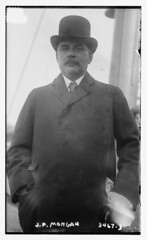
9830707108JP MorganBanker that controlled 2/3 of RRs and eventually merged with Carnegie's steel company Formed US Steel Considered a robber baron59
9830707109Captains of IndustryOwners & mangers of large industrial enterprises who wielded great political & economic power More positive term in contrast to "robber barons"60
9830707110Robber BaronsRefers to industrialists or big business owners who gained huge profits by paying employees low wages Drove competition out of business by selling goods much cheaper61
9830707111Jacob RiisDanish immigrant Report who pointed out terrible conditions of tenement houses Author of How the Other Half Lives (1890)62
9830707112Wounded Knee1890 Last Native American battle 300 Native killed by US military63
9830707113Ellis IslandImmigration processing center in NY Harbor64
9830707114Pullman StrikePullman RR car announced pay cut American Railway Union boycotts the use of the Pullman cars US mail failed to be delivered US gov't sent injunction to end boycott SCOTUS ruled injunction was constitutional65
9830707115Homestead ActGave settlers 160 acres of land if they lived on the land for 6 months and cultivated crops66

AP US History 2 Chapter 23 People Flashcards

Terms : Hide Images
7949911601Ulysses S. GrantAn American general and the eighteenth President of the United States (1869-1877). He achieved international fame as the leading Union general in the American Civil War.0
7949911605Thomas NastWas a cartoonist for the New York Times and drew many famous political cartoons, including many of Boss Tweed and Tammany Hall.1
7949911609Horace GreeleyHe was editor of the New York Tribune .In 1872 the Democratic and Liberal Republican Parties nominated him for president. There was much mudslinging involved in this election. Along with the loss of the election, he lost his job, his wife, and his mind within one month of the election.2
7949911616Rutherford B. HayesHe was the 19th president of the United States. He was famous for being part of the Corrupt Bargain in which electoral votes were contested in 4 states, most corrupt election in US history.3
7949911617Samuel J. TildenHe was a New York lawyer who rose to fame by bagging Boss Tweed, a notorious New York political boss. He was nominated for president in 1876 by the Democratic party because of his clean up image. This election was so close that it led to the Compromise of 1877. Even though he had more popular votes, the compromise gave the presidency to the Republicans and allowed the Democrats to stop Reconstruction in the South.4
7949911623James A. GarfieldHe was elected to the presidency in 1880. He barely won the popular vote, but won by a huge margin in the electoral college. He was assassinated, so that the Stalwarts could be in power in the government. This brought about reforms in the spoils systems.5
7949911624Charles GuiteauIn 1881, he shot President Garfield in the back in a Washington railroad station. He allegedly committed this crime so that Arthur, a Stalwart, would become president. His attorneys used a plea of insanity, but failed and he was hanged for murder.6
7949911625Chester A. ArthurAppointed customs collector for the port of New York - corrupt and implemented a heavy spoils system. He was chosen as Garfield's running mate. Garfield won but was shot, so he became the 21st president.7
7949911628Grover ClevelandHe was the Democratic presidential candidate for the 1884 election. The election turned into a mudslinging contest. He won, becoming the first Democratic president since Buchanan. He would lose the 1888 election but return to the presidency by winning the 1892 election.8
7949911629Benjamin HarrisonHe was the 23rd President of the United States, elected in 1888. He had previously served as a senator from Indiana. His administration is best known for a series of legislation including the McKinley Tariff and federal spending that reached one billion dollars.9
7949911630Thomas ReedRepublican Speaker of the House in 1888, he gained a reputation for an iron grip over Congress and kept Democrats in line.10
7949911634James B. WeaverFormer Civil War general who ran for president with the Greenback Party (1880) and the Populist Party (1892).11
7949911637Horatio SeymourA former governor of New York who ran for president (Democrat) against Republican Ulysses S. Grant in the election of 1868.12
7949911639Roscoe ConklingA politician from New York who served both as a member of the United States House of Representatives and the U.S. Senate. He was the leader of the Stalwart faction of the Republican Party. Was highly against civil service reforms.13
7949911640James G. BlaineA U.S. Representative, Speaker of the United States House of Representatives, U.S. Senator from Maine, two-time United States Secretary of State, and champion of the Half-Breeds. He was a dominant Republican leader of the post Civil War period, obtaining the 1884 Republican nomination, but lost to Democrat Grover Cleveland.14
7949911641Winfield S. HancockA Civil War general who appealed to the South due to his fair treatment of it during Reconstruction and a veteran who had been wounded at Gettysburg, and thus appealed to veterans. he was the 1880 Democratic candidate for president15

AP US History Period 1 Flashcards

Terms : Hide Images
7278580358maize cultivationThe growing of Indian corn, a staple of many Indians diets, leading many nomadic tribes to settle and develop great civilizations such as the Aztecs incas and Mayans.0
7278580359hunter-gatherer economyA nomadic way of life with no agriculture focused on following food sources including animals and wild plants1
7278580360western hemisphereThe Americas2
7278580361west africaA area of Africa that was previously unreachable until the invention of the caravel by the Portuguese, leading to exploitation of the region for its gold and slaves3
7278580362plantation-based agricultureLarge scale agriculture worked by slaves4
7278580363capitalismEconomic system based on private investment and possessions5
7278580364Cultural autonomyFreedom of a group to express ones own culture without outside control i.g. The Christianization of the natives took away there Cultural autonomy6
7278580365great basinDesert area with no drainage to the ocean7
7278580366agricultural economyeconomy based on the production of crops8
7278580367spanish explorationColonization of the Americas by the conquistadors in search for gold, glory and god9
7278580368encomienda systemA government system where natives were given to colonists to work in return for converting them to Christianity.10
7278580369empire buildingThe Spanish increasing their empire through grafting their culture onto the natives and taking over the land11
7278580370white superiorityThe European idea they were superior to other cultures/ races and needed to enforce European culture/religion on them12
7278580371great plainsThe open plains of the Midwest where the natives adapted to roming the prairies on horseback13
7278580372permanent villagesThe settlements of Indians tribes based on the spread of agriculture14
7278580373Portuguese explorationDue to advancements in sailing technology the Portuguese were able to sail down the coast of Africa and open trade of gold and slaves, settle and make plantations and eventually find the way around Africa to the indies15
7278580374slave laborForced labor of people considered property by the people in charge16
7278580375feudalismA political, economic, and social system based on the relationship between lord and vassal in order to provide protection17
7278580376political autonomythe ability of a state to govern themselves without outside control18
7278580377Colombian exchangethe exchange between the new world and the old world consisting of the old world bringing wheat, cows, horses, sheep, pigs, sugar, rice, coffee, smallpox, malaria and yellow fever. while the new world sent gold, silver, corn, potatoes, tobacco, and syphills19

AP US History 2 Chapter 28 Vocabulary Terms Flashcards

Key terms, people, and events from Chapter 28 of the 13th edition of the American Pageant.

Terms : Hide Images
8168839847ProgressivesIndividuals that "waged war on many evils, notably monopoly, corruption, inefficiency, and social injustice."0
8168839848recallAbility for voters to remove elected officials1
816883985017th AmendmentStated that senators were to be elected by popular vote from the citizens of their state.2
8168839851MuckrakersInvestigative journalists who were trying to make the public aware of problems that needed fixing and corruption that needed cleaning.3
8168839855initiativeProvided the ability for voters to introduce specific legislation4
8168839856Muller v. OregonProtected women workers on grounds of women having weaker bodies; restricted women to 10-hour work day5
8168839857referendumFinal approval of laws would be approved by voters6
8168839858Lochner v. New YorkInvalidated NYS law establishing a 10 hour workday7
8168839859Square DealTeddy Roosevelt's program, focused on three C's: control of corporations, consumer protection, conservation of natural resources8
8168839860Northern Securities DecisionSupreme Court decision that upheld Roosevelt "busting" up JP Morgan's railroad monopoly in the North West9
8168839861Hepburn Act of 1906This 1906 act give the ICC the right to set rates that would be reasonable. It also extended the jurisdiction of the ICC to cover express, sleeping car, and pipeline companies. It prohibited free passes and rebates.10
8168839862Meat Inspection Act of 1906This law was passed in 1906 after The Jungle grossed out America. It stated that the preparation of meat shipped over state lines would be subject to federal inspection.11
8168839863conservationTried to preserve natural resources and stop the rapid destruction of these resources and land. It's reached its pinnacle with President Teddy Roosevelt and the founding of first national park, Yellowstone.12
8168839864Aldrich-Vreeland Act of 1908Authorized banks to issue emergency currency backed by various collateral; Increases money supply in times of crisis13
8168839865Dollar DiplomacyTaft's foreign policy which replaced "bullets with dollars." The policy involved investors instead of the military. In the policy, American investors would get poorer nations into debt, then have a bit of economic leverage against those nations.14
8168932326Elkins ActPassed by Congress in 1903 against the railroad industries. It specifically targeted the use of rebates. It allowed for heavy fining of companies who used rebates and those who accepted them.15
8170420188Pure Food and Drug ActIt was created in 1906 and was designed to prevent the adulteration and mislabeling of foods and pharmaceuticals. It was made to protect the consumer16
8170432271Newlands ActThis act was Congress's response to Teddy Roosevelt in 1902. In the law, Washington was to collect money from sales of public lands in western states and use the funds for development of irrigation projects.17
817264162418th AmendmentEnacted in 1919, this forbade the sale and manufacture of liquor.18

AP US History 1 Chapter 20 Vocabulary Terms Flashcards

Terms : Hide Images
7849594302martial lawThe body of law imposed by the military over civilian affairs during the Civil War.0
7849594303merchant marineCivilian ships and sailors who transported food, weapons,and munition during the Civil War.1
7849594304habeas corpusThe civil right to obtain a writ of protection against illegal imprisonment; Abraham Lincoln suspended it during the Civil War.2
7849594305greenbackA piece of U.S. paper money first issued by the North during the Civil War3
7849594306border statesStates bordering the North: Delaware, Maryland, Kentucky and Missouri. They were slave states, but did not secede.4
7849594317Fort SumterFederal fort in the harbor of Charleston, South Carolina; the Confederate attack on the fort marked the start of the Civil War5
7849594318ConfederacyThe southern states that seceded from the United States in 18616
7849594319Trent AffairIn 1861 the Confederacy sent emissaries James Mason to Britain and John Slidell to France to lobby for recognition. A Union ship captured both men and took them to Boston as prisonners. The British were angry and Lincoln ordered their release7
7849594320Morrill Tariff ActPassed by Congress in 1861 to meet the cost of the war. It raised the taxes on shipping from 5 to 10 percent however later needed to increase to meet the demanding cost of the war.8
7849594321conscriptionDrafting of civilians to serve in the army during the Civil War9
7849594322New York City Draft RiotsIn July 1863, just after the Battle at Gettysburg, mobs of Irish working-class men and women roamed the streets for four days until federal troops suppressed them. They loathed the idea of being drafted to fight a war on behalf of slaves who, once freed, would compete with them for jobs.10
7849594323AlabamaShip built for the C.S.A. by the British; fast-moving and maneuverable; wreaked havoc on Union trade and blockade attempts11
7849594324National Banking SystemAuthorized by Congress in 1863 to establish a standard bank currency. Banks that joined the system could buy bonds and issue paper money. First significant step toward a national bank.12
7849594325Billy YankThe nickname of the Union used by the Confederate soldiers13
7849594326Johnny Reb'johnny' was applied as a nickname for Confederate soldiers by the Federal soldiers in the American Civil War14
7849594328Emancipation ProclamationIssued by Abraham Lincoln on September 22, 1862, it declared that all slaves in the rebellious Confederate states would be free on January 1, 1863.15
7850039032MerrimackWas a former wooden warship turned into an ironclad. The Confederates plated it with iron railroad rails. They renamed it the Virginia. The Virginia easily wrecked Union Navy ships and threatened to destroy the whole Navy. The Confederates later destroyed the ship to keep it from the Union. This marked the end of wooden ships.16
7850049213MonitorWas a small Union ironclad built in about 100 days to stop the Confederate ship, the Merrimack. The Union built the ship and transported it to the Chesapeake.17

AP US History Period 5 (1844-1877) Flashcards

Terms : Hide Images
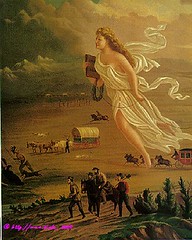
4777852341Manifest DestinyA notion held by a nineteenth-century Americans that the United States was destined to rule the continent, from the Atlantic the Pacific.0
4777852342Louis O'SullivanCoined the term Manifest Destiny in a newspaper article1
4777852343Texas Annexation1845. Originally refused in 1837, as the U.S. Government believed that the annexation would lead to war with Mexico. Texas remained a sovereign nation. Annexed via a joint resolution through Congress, supported by President-elect Polk, and approved in 1845. Land from the Republic of Texas later became parts of NM, CO, OK, KS, and WY.2
4777852344Fifty Four Forty or FightThe phrase used in James K Polk's 1844 presidential election dealing with the Oregon Territory Dispute.3
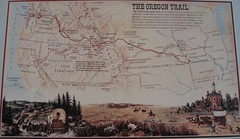
4777852345Oregon Trail2000 mile long path along which thousands of Americans journeyed to the Willamette Valley in the 1840's.4
4777852346Mountain MenFur trappers of the northwest who paved the way for continuous settlement of the great west5
4777852347California Gold Rush1849 (San Francisco 49ers) Gold discovered in California attracted a rush of people all over the country and world to San Francisco; arrival of the Chinese; increased pressure on federal government to establish a stable government6
4777852348Mexican American War1846 - 1848 - President Polk declared war on Mexico over the dispute of land in Texas. At the end, American ended up with 55% of Mexico's land.7
4777852349Treaty of Guadalupe Hidalgo(1848) treaty signed by the U.S. and Mexico that officially ended the Mexican-American War; Mexico had to give up much of its northern territory to the U.S (Mexican Cession); in exchange the U.S. gave Mexico $15 million and said that Mexicans living in the lands of the Mexican Cession would be protected8
4777852350Gadsden PurchaseAgreement w/ Mexico that gave the US parts of present-day New Mexico & Arizona in exchange for $10 million; all but completed the continental expansion envisioned by those who believed in Manifest Destiny.9
4777852351popular sovereigntyA belief that ultimate power resides in the people.10
4777852352Kansas Nebraska Act1854 - Created Nebraska and Kansas as states and gave the people in those territories the right to chose to be a free or slave state through popular sovereignty.11
4777852353Free "Soiler"People who opposed expansion of slavery into western territories12
4777852354Republican Party1854 - anti-slavery Whigs and Democrats, Free "Soilers" and reformers from the Northwest met and formed party in order to keep slavery out of the territories13
4777852355Stephen A DouglasSenator from Illinois who ran for president against Abraham Lincoln. Wrote the Kansas-Nebraska Act and the Freeport Doctrine14
4777852356Freeport DoctrineIdea authored by Stephen Douglas that claimed slavery could only exist when popular sovereignty said so15
4777852357Abraham Lincoln16th President of the United States saved the Union during the Civil War and emancipated the slaves; was assassinated by Booth (1809-1865)16
4777852358secessionFormal withdrawal of states or regions from a nation17
4777852359Dred Scott DecisionA Missouri slave sued for his freedom, claiming that his four year stay in the northern portion of the Louisiana Territory made free land by the Missouri Compromise had made him a free man. The U.S, Supreme Court decided he couldn't sue in federal court because he was property, not a citizen.18
4777852360Uncle Tom's CabinWritten by Harriet Beecher Stowe in 1853 that highly influenced England's view on the American Deep South and slavery. A novel promoting abolition. intensified sectional conflict.19
4777852361SectionalismLoyalty to a region20
4777852362John Brown's RaidBegan when he and his men took over the arsenal in Harpers Ferry, Virginia, in hopes of starting a slave rebellion.21
4777852363Robert E LeeConfederate general who had opposed secession but did not believe the Union should be held together by force22
4777852364Fort SumterFederal fort in the harbor of Charleston, South Carolina; the confederate attack on the fort marked the start of the Civil War23
4777852365AntietamA battle near a sluggish little creek, it proved to be the bloodiest single day battle in American History with over 26,000 lives lost in that single day.24
4777852366VicksburgGrant besieged the city from May 18 to July 4, 1863, until it surrendered, yielding command of the Mississippi River to the Union.25
4777852367GettysburgA large battle in the American Civil War, took place in southern Pennsylvania from July 1 to July 3, 1863. The battle is named after the town on the battlefield. Union General George G. Meade led an army of about 90,000 men to victory against General Robert E. Lee's Confederate army of about 75,000. Gettysburg is the war's most famous battle because of its large size, high cost in lives, location in a northern state, and for President Abraham Lincoln's Gettysburg Address.26
4777852368Appomattox CourthouseApril 1865., the Virginia town where Robert E. Lee surrendered to Ulysses S. Grant in 1865, ending the Civil War27
4777852369Ulysses S Grantan American general and the eighteenth President of the United States (1869-1877). He achieved international fame as the leading Union general in the American Civil War.28
4777852370William Tecumseh ShermanUnion General who destroyed South during "march to the sea" from Atlanta to Savannah, example of total war29
4777852371Thomas "Stonewall" JacksonHe was a confederate general who was known for his fearlessness in leading rapid marches bold flanking movements and furious assaults. he earned his nickname at the battle of first bull run for standing courageously against union fire. During the battle of Chancellorsville his own men accidently mortally wounded him.30
4777852372habeas corpusConstitutional protection against unlawful imprisonment31
4777852373martial lawrule by the army instead of the elected government32
4777852374emergency powersWide-ranging powers a president may exercise during times of crisis or those powers permitted the president by Congress for a limited time.33
4777852375Lincoln 1st Inaugural AddressLincoln tries to appease the south and avoid war34
4777852376Gettysburg AddressA 3-minute address by Abraham Lincoln during the American Civil War (November 19, 1963) at the dedication of a national cemetery on the site of the Battle of Gettysburg35
4777852377Lincoln 2nd Inaugural Address"with malice toward none, and charity for all"36
4777852378Presidential ReconstructionPresident's idea of reconstruction : all states had to end slavery, states had to declare that their secession was illegal, and men had to pledge their loyalty to the U.S.37
4777852379Radical ReconstructionReconstruction strategy that was based on severely punishing South for causing war38
4777852380Black CodesLaws denying most legal rights to newly freed slaves; passed by southern states following the Civil War39
4777852381Military Reconstruction Act1867; divided the South into five districts and placed them under military rule; required Southern States to ratify the 14th amendment; guaranteed freedmen the right to vote in convention to write new state constitutions40
4777852382Reconstruction Amendments13th: abolished and continues to prohibit slavery and involuntary servitude, 14th: secured the rights of former slaves after reconstruction, 15th: prohibits each government in the United States to prevent a citizen from voting based on their race41
4777852383Freedmen's Bureau1865. help former black slaves after civil war Organization run by the army to care for and protect southern Blacks after the Civil War42
4777852384Compromise of 1877Ended Reconstruction. Republicans promise 1) Remove military from South, 2) Appoint Democrat to cabinet (David Key postmaster general), 3) Federal money for railroad construction and levees on Mississippi river43
4777852385Election of 1876Ended reconstruction because neither candidate had an electoral majority. The Democrat Sam Tilden loses the election to Rutherford B Hayes, Republican, was elected, and then ended reconstruction as he secretly promised.44
4777852386KKKStands for Ku Klux Klan and started right after the Civil War in 1866. The Southern establishment took charge by passing discriminatory laws known as the black codes. Gives whites almost unlimited power. They masked themselves and burned black churches, schools, and terrorized black people. They are anti-black and anti-Semitic.45
4777852387carpetbaggerA northerner who went to the South immediately after the Civil War; especially one who tried to gain political advantage or other advantages from the disorganized situation in southern states46
4777852388scalawagA derogatory term for Southerners who were working with the North to buy up land from desperate Southerners47
4777852389sharecropperA person who works fields rented from a landowner and pays the rent and repays loans by turning over to the landowner a share of the crops.48
4777852390Morehouse CollegeFounded in Atlanta in 1867 for black education for professional careers such as lawyers, ministers, and educators.49

AP US History 1 Chapter 7 People Flashcards

Terms : Hide Images
7105363587John HancockNicknamed "King of the Smugglers," he was a wealthy Massachusetts merchant in 1776 who was important in persuading the American colonies to declare their independence from England. He was the ringleader in storing gunpowder which resulted in the battles in Lexington and Concord.0
7105367615Lord NorthKing George III's stout prime minister 1770's-1782. Governor during Boston Tea Party.1
7105372085George GrenvilleBritish Prime Minister from 1763-1765. To obtain funds for Britain after the costly Seven Years' War, he ordered the Navy to enforce the unpopular Navigation Laws. He had Parliament pass the Sugar Act, the Quartering Act, the Stamp Act.2
7105376370Samuel AdamsOften called the "Penman of the Revolution," he was a master propagandist and an engineer of rebellion. He organized the local Committees of Correspondence in Massachusetts.3
7105378019Charles TownshendHe was in control of the British ministry and persuaded Parliament in 1767 to pass regulations imposing a light import duty on glass, white lead, paper, and tea. It was a tax that the colonists were very much against.4
7105382215John AdamsPatriot of the American Revolution and second president of the U.S. from 1796-1800. He attended the Continental Congress as a delegate from Massachusetts.5
7105385056George IIIKing of England in the 1770's.6
7105387246Baron Von SteubenA stern, Prussian drillmaster that taught American soldiers during the Revolutionary War how to successfully fight the British7

AP US History Chapter 16 Flashcards

AMSCO United States History 2015 Edition, Chapter 16 The Rise of Industrial America, 1865-1900

Terms : Hide Images
5769733161nation's first big businessRailroads created a nationwide market for goods. This encouraged mass production, mass consumption, and economic specialization. (p. 320)0
5769733162Cornelius VanderbiltHe merged local railroads into the New York Entral Railroad, which ran from New York City to Chicago. (p. 320)1
5769733163Eastern Trunk LinesIn the early days of the railroads, from 1830s to the 1860s, railroad lines in the east were different incompatible sizes which created inefficiencies. (p. 320)2
5769733164transcontinental railroadsDuring the Civil War, Congress authorized land grants and loans for the building of the first transcontinenal railroad. Two new companies were formed to share the task of building the railroad. The Union Pacific started in Omaha, Nebraska, and the Central Pacific started in Sacramento, California. On May 10, 1869, at Promontory Point, Utah, a golden spike was driven into the rail ties to mark the completion of the railroad. (p. 321)3
5769733165Union Pacific and Central PacificTwo railroad companies, one starting in Sacramento, California and the other in Omaha, Nebraska were completed in Utah in 1869 to create the first first transcontinental railroad. (p. 321)4
5769733166American Railroad AssociationIn 1883, this organization divided the country into four different time zones, which would become the standard time for all Americans. (p. 320)5
5769733167railroads and time zonesThe United States was divided into four time zones by the railroad industry. (p. 320)6
5769733168speculation and overbuildingIn the 1870s and 1880s railroad owners overbuilt. This often happens during speculative bubbles, created by exciting new technology. (p. 321)7
5769733169Jay Gould, watering stockEntered railroad business for quick profits. He would sell off assets inflate the value of a corporation's assets and profits before selling its stock to the public. (p. 321)8
5769733170rebates and poolsIn a scramble to survive, railroads offered rebates (discounts) to favored shippers, while charging exorbitant freight rates to smaller customers. They also created secret agreements with competing railroads to fix rates and share traffic. (p. 321)9
5769733171bankruptcy of railroadsA financial panic in 1893 forced a quarter of all railroads into bankruptcy. J.P. Morgan and other bankers moved in to take control of bankrupt railroads and consolidate them. (p.321)10
5769733172Panic of 1893In 1893, this financial panic led to the consolidation of the railroad industry. (p. 321)11
5769733173causes of industrial growthAfter the Civil War, a "second Industrial Revolution" because of an increase in steel production, petroleum, electrical power, and industrial machinery. (p. 323)12
5769733174Andrew CarnegieA Scottish emigrant, in the 1870s he started manufacturing steel in Pittsburgh. His strategy was to control every stage of the manufacturing process from mining the raw materials to transporting the finished product. His company Carnegie Steel became the world's largest steel company. (p. 323)13
5769733175vertical integrationA business strategy by which a company would control all aspects of a product from raw material mining to transporting the finished product. Pioneered by Andrew Carnegie. (p. 323)14
5769733176U.S. SteelIn 1900, Andrew Carnegie sold Carnegie Steel to a group headed by J. P. Morgan. They formed this company, which was the largest enterprise in the world, employing 168,000 people, and controlling more than three-fifths of the nation's steel business. (p. 323)15
5769733177John D. RockefellerHe started Standard Oil in 1863. By 1881, Standard Oil Trust controlled 90 percent of the oil refinery business. His companies produced kerosene, which was used primarily for lighting at the time. The trust that he created consisted of various acquired companies, all managed by a board of trustees he controlled. (p. 323)16
5769733178horizontal integrationBuying companies out and combining the former competitors under one organization. This strategy was used by John D. Rockefeller to build Standard Oil Trust. (p. 323)17
5769733179Standard Oil TrustIn 1881, the name of John D. Rockefeller's company, which controlled 90 percent of the oil refinery business in the United States. (p. 323)18
5769733180interlocking directoratesThe term for the same directors running competing companies. (p. 322)19
5769733181J. P. MorganA banker who took control and consolidated bankrupt railroads in the Panic of 1893. In 1900, he led a group in the purchase of Carnegie Steel, which became U.S. Steel. (p. 321, 323)20
5769733182leading industrial powerBy 1900, the United States was the leading industrial power in the world, manufacturing more than an of its rivals, Great Britain, France, or Germany. (p. 319)21
5769733183Second Industrial RevolutionThe term for the industrial revolution after the Civil War. In the early part of the 19th century producing textiles, clothing, and leather goods was the first part of this revolution. After the Civil War, this second revolution featured increased production of steel, petroleum, electric power, and industrial machinery. (p. 323)22
5769733184Bessemer processIn the 1850s, Henry Bessemer discovered this process. By blasting air through molten iron you could produce high-quality steel. (p. 323)23
5769733185transatlantic cableIn 1866, Cyrus W. Field's invention allowed messages to be sent across the oceans. (p. 325)24
5769733186Alexander Graham BellIn 1876, he invented the telephone. (p. 325)25
5769733187Thomas EdisonPossibly the greatest inventor of the 19th century. He established the first modern research labratory, which produced more than a thousand patented inventions. These include the phonograph, first practical electric light bulb, dynamo for electric power generation, mimeograph machine, and a motion picture camera. (p. 326)26
5769733188Menlo Park Research LabThe first modern research laboratory, created in 1876, by Thomas Edison in Menlo Park, New Jersey. (p. 326)27
5769733189electric power, lightingIn 1885, George Westinghouse produced a transformer for producing high-voltage alternating current, which made possible the lighting of cities, electric streetcars, subways, electrically powered machinery, and appliances. (p. 326)28
5769733190George WestinghouseHe held more than 400 patents. He invented the high-voltage alternating current transformer, which made possible the nationwide electrial power system. (p. 326)29
5769733191Eastman's Kodak cameraIn 1888, he invented the camera. (p. 325)30
5769733192large department storesR.H. Macy and Marshall Field made these stores the place to shop in urban centers. (p. 326)31
5769733193R.H. MacyHe created a New York department store. (p. 326)32
5769733194mail-order companiesTwo companies, Sears Roebuck, and Montgomery Ward, used the improved rail system to ship to rural customers to sell many different products. The products were ordered by mail from a thick paper catalog. (p. 326)33
5769733195Sears-RoebuckMail order company that used the improved rail system to ship to rural customers. (p. 326)34
5769733196packaged foodsBrand name foods created by Kellogg and Post became common items in American homes. (p. 326)35
5769733197refrigeration; canningThese developments in the food industry changed American eating habits. (p. 326)36
5769733198Gustavus SwiftHe changed American eating habits by making mass-produced meat and vegetable products. (p. 326)37
5769733199advertisingThis new technique was important to creating the new consumer economy. (p. 326)38
5769733200consumer economyAdvertizing and new marketing techniques created a new economy. (p. 326)39
5769733201federal land grants and loansThe federal government provided land and loans to the railroad companies in order to encourage expansion of the railroads. (p. 320)40
5769733202fraud and corruption, Credit MobilierInsiders used construction companies to bribe government officials and make huge profits. (p. 321)41
5769733203Interstate Commerce Act of 1886This act, created in 1886, did little to regulate the railroads. (p. 322)42
5769733204anti-trust movementMiddle class people feared a growth of new wealth due to the trusts. In the 1880s trust came under widespread scrutiny and attack. In 1890, the Sherman Antitrust Act was passed, but it was too vaguely worded to stop the development of trusts. Not until the Progressive era, would the trusts be controlled. (p. 324)43
5769733205Sherman Antitrust Act of 1890In 1890, Congress passed this act, which prohibited any "contract, combination, in the form of trust or otherwise, or conspiracy in restraint of trade or commerce." The U.S. Department of Justice secured few convictions until the law was strenghted during the Progressive era. (p. 324)44
5769733206federal courts, U.S. v. E.C. KnightIn 1895, the Supreme Court ruled that the Sherman Antitrust Act could be applied only to commerce, not manufacturing. (p. 324)45
5769733207causes of labor discontentWorker's discontent was caused by performing monotonous task required completion within a certain time, dangerous working conditions, and exposure to chemicals and pollutants. (p. 328)46
5769733208iron law of wagesDavid Ricardo developed this theory which stated that low wages were justified. He argued that raising wages would only increase the working population, the availability of more workers would cause wages to fall, thus creating a cycle of misery. (p. 327)47
5769733209anti-union tacticsEmployers used the following tactics to defeat unions: the lockouts (closing the factory), blacklists (lists circulated among employers), yellow dog contracts (contracts that forbade unions), private guards to quell strikes, and court injunctions against strikes. (p. 329)48
5769733210railroad strike of 1877In 1887, this strike spread across much of the nation and shut down two-thirds of the country's railroads. An additional 500,000 workers from other industries joined the strike. The president used federal troops to end the violence, but more than 100 people had died in the violence. (p. 329)49
5769733211Knights of LaborStarted in 1869 as a secret national labor union. It reached a peak of 730,000 members. (p. 330)50
5769733212Haymarket bombingOn May 4, 1886 workers held a protest in which seven police officers were killed by a protester's bomb. (p. 330)51
5769733213American Federation of LaborThe labor union focused on just higher wages and improved working conditions. By 1901 they had one million members. (p. 330)52
5769733214Samuel GompersHe led the American Federation of Labor until 1924. (p. 330)53
5769733215Pullman StikeIn 1894, workers at Pullman went on strike. The American Railroad Union supported them when they refused to transport Pullman rail cars. The federal government broke the strike. (p. 331)54
5769733216Eugene DebsThe American Railroad Union leader, who supported the Pullman workers. The government broke the strike and he was sent to jail for six months. (p. 331)55
5769733217railroad workers: Chinese, Irish, veteransIn the construction of the first transcontinental railroad, the Union Pacific, starting in Omaha, employed thousands of war veterans and Irish immigrants. The Central Pacific, starting from Sacramento, included 6,000 Chinese immigrants among their workers. (p. 321)56
5769733218old rich vs. new richThe trusts came under widespread scrutiny and attack in the 1880s, urban elites (old rich) resented the increasing influence of the new rich. (p. 324)57
5769733219white-collar workersThe growth of large corporation required thousands of white-collar workers (jobs not involving manual labor) to fill the highly organized administrative structures. (p. 327)58
5769733220expanding middle classIndustrialization helped expand the middle class by creating jobs for accountants, clerical workers, and salespeople. The increase in the number of good-paying jobs after the Civil War significantly increased the size of the middle class. (p. 327)59
5769733221factory wage earnersBy 1900, two-thirds of all working Americans worked for wages, usually at jobs that required them to work ten hours a day, six days a week.(p. 327)60
5769733222women and children factory workersBy 1900, 20 percent of adult woman working for wages in the labor force. Most were young and single women, only 5 percent of married women worked outside the home. (p. 327)61
5769733223women clerical workersAs the demand for clerical workers increased, women moved into formerly male occupations as secretaries, bookkeepers, typists, and telephone operators. (p. 328)62
5769733224Protestant work ethicThe believe that hard work and material success are signs of God's favor. (p. 325)63
5769733225Adam SmithIn 1776, this economist wrote "The Wealth of Nations" which argued that business should not be regulated by government, but by the "invisible hand" (impersonal econmic forces). (p. 324)64
5769733226laissez-faire CapitalismIn the late 19th century, american industrialists supported the theory of no government intervention in the economy, even as they accepted high tariffs and federal subsidies. (p. 324)65
5769733227concentration of wealthBy the 1890s, the richest 10 percent of the U.S. population controlled 90 percent of the nation's wealth. (p. 326)66
5769733228Social DarwinismThe belief that government's helping poor people weakened the evolution of the species by preserving the unfit. (p. 324)67
5769733229William Graham SumnerAn English social philosopher, he argued for Social Darwism, the belief that Darwin's ideas of natural slection and survival of the fittest should be applied to the marketpalce and society. (p. 324)68
5769733230survival of the fittestThe belief that Charles Darwin's ideas of natural selection in nature applied to the economic marketplace. (p. 324)69
5769733231Gospel of WealthSome Americans thought religion ideas justified the great wealth of successful industrialists. (p. 325)70
5769733232Horatio Alger Stories self-made manHis novels portrayed young men who became wealth through honesty, hard work and a little luck. In reality these rags to riches stories were somewhat rare. (p. 327)71

AP US History Significant Dates Flashcards

Terms : Hide Images
66789646001492Columbus sails ocean blue. What a loser.0
66789646011607Jamestown established.1
66789646021619First African slaves brought to North America.2
66789646031754French and Indian War Begins3
66789646041763French and Indian War Ends; Proclamation of 1763; End of Salutary Neglect.4
66789646051776Declaration of Independence5
66789646061781Battle of Yorktown; End of Revolutionary War Fighting (war not officially ended until Treaty of Paris #2 in 1783)6
66789646071789Ratification of the Constitution7
66789646081800Revolution of 1800; peaceful transition of power from John Adams to Thomas Jefferson8
66789646091803Louisiana Purchase9
66789646101815Battle of New Orleans; I love you Andrew Jackson.10
66789646111820Missouri Compromise11
66789646121823Monroe Doctrine12
66789646131828Andrew Jackson elected - Age of the common man13
66789646141846Beginning of the Mexican-American War14
66789646151850Compromise of 1850; New, more harsh fugitive slave law.15
66789646161854Kansas-Nebraska Act; Birth of the Republican Party16
66789646171860Election of 1860; Abraham Lincoln Elected; South Carolina Secedes17
66789646181865Civil War Ends; Reconstruction Begins18
66789646191869Transcontinental Railroad completed19
66789646201877Reconstruction Ends; Rutherford B. Hayes Elected in Compromise of 187720
66789646381890Massacre of wounded knee; Sherman Anti-Trust Act; frontier closes21
66789646211896Plessy v. Fergusson22
66789646221898Spanish-American War; Beginning of American imperialism23
66789646231906Upton Sinclair writes The Jungle24
66789646241911Triangle Shirtwaist Factory Fire25
66789646251919Treaty of Versailles; Race Riot in Chicago; First Red Scare26
66789646261929Stock Market Crash; Onset of Great Depression27
66789646271933FDR Inaugurated; Beginning of New Deal28
66789646281941Pearl Harbor; America Enters World War II29
66789646291945End of World War II; Dropping of Atomic Bombs30
66789646301949Soviets get Atomic Bomb; Communist Revolution in China; NATO formed31
66789646311954Brown v. Board of Education decided - Segregation illegal.32
66789646321964Civil Rights Act of 1964; Gulf of Tonkin Resolution33
66789646331968MLK Assassinated; Chicago Democratic Convention; Tet Offensive; Richard Nixon Elected ushering in a period of conservativism.34
66789646341974Watergate Scandal35
66789646351980Ronald Reagan Elected36
66789646361991Operation Desert Storm; End of the Cold War37
667896463720019/1138

Pages

Subscribe to CourseNotes RSS

Need Help?

We hope your visit has been a productive one. If you're having any problems, or would like to give some feedback, we'd love to hear from you.

For general help, questions, and suggestions, try our dedicated support forums.

If you need to contact the Course-Notes.Org web experience team, please use our contact form.

Need Notes?

While we strive to provide the most comprehensive notes for as many high school textbooks as possible, there are certainly going to be some that we miss. Drop us a note and let us know which textbooks you need. Be sure to include which edition of the textbook you are using! If we see enough demand, we'll do whatever we can to get those notes up on the site for you!