AP Notes, Outlines, Study Guides, Vocabulary, Practice Exams and more!

AP US History, Chapter 12 Flashcards

Terms : Hide Images
8512825874War of 1812(1812-1815): Fought between Britain and the United States largely over the issues of trade and impressment. Though the war ended in a relative draw, it demonstrated America's willingness to defend its interests militarily, earning the young nation new- found respect from European powers.0
8512825875Battle of New Orleans(January 1815): Resounding victory of American forces against the British, restoring American confidence and fueling an outpouring of nationalism. Final battle of the War of 1812.1
8512825876Congress of Vienna(1814-1815): Convention of major European powers to redraw the boundaries of continental Europe after the defeat of Napoleonic France.2
8512825877Treaty of Ghent(1815): Ended the War of 1812 in a virtual draw, restoring prewar borders but failing to address any of the griev- ances that first brought America into the war.3
8512825878Hartford Convention(1814-1815): Convention of Federalists from five New England states who opposed the War of 1812 and resented the strength of Southern and Western interests in Congress and in the White House.4
8512825879Rush-Bagot agreement(1817): Signed by Britain and the United States, it established strict limits on naval armaments in the Great Lakes, a first step in the full demilitarization of the U.S.-Canadian border, completed in the 1870s.5
8512825880Tariff of 1816First protective tariff in American history, created primarily to shield New England manufacturers from the inflow of British goods after the War of 1812.6
8512825881American System(1820s): Henry Clay's three-pronged system to promote American industry. Clay advocated a strong banking system, a protective tariff and a federally funded transportation network.7
8512825882Era of Good Feelings(1816-1824): Popular name for the period of one-party, Republican, rule during James Monroe's presidency. The term obscures bitter conflicts over internal improvements, slavery, and the national bank.8
8512825883panic of 1819Severe financial crisis brought on primarily by the efforts of the Bank of the United States to curb overspeculation on western lands. It disproportionately affected the poorer classes, especially in the West, sowing the seeds of Jacksonian Democracy. (258)9
8512825884Land Act of 1820Fueled the settlement of the Northwest and Missouri territories by lowering the price of public land. Also pro- hibited the purchase of federal acreage on credit, thereby eliminat- ing one of the causes of the Panic of 1819.10
8512825885Tallmadge amendment(1819): Failed proposal to prohibit the importation of slaves into Missouri territory and pave the way for gradual emancipation. Southerners vehemently opposed the amendment, which they perceived as a threat to the sectional bal- ance between North and South.11
8512825886peculiar institutionWidely used term for the institution of American slavery in the South. Its use in the first half of the 19th century reflected a growing division between the North, where slav- ery was gradually abolished, and the South, where slavery became increasingly entrenched.12
8512825887Missouri Compromise(1820): Allowed Missouri to enter as a slave state but preserved the balance between North and South by carv- ing free-soil Maine out of Massachusetts and prohibiting slavery from territories acquired in the Louisiana Purchase, north of the line of 36°30'.13
8512825888McCulloch v. Maryland(1819): Supreme Court case that strength- ened federal authority and upheld the constitutionality of the Bank of the United States by establishing that the State of Maryland did not have power to tax the bank.14
8512825889loose constructionLegal doctrine which holds that the federal gov- ernment can use powers not specifically granted or prohibited in the Constitution to carry out its constitutionally mandated respon- sibilities.15
8512825890Cohens v. Virginia(1821): Case that reinforced federal supremacy by establishing the right of the Supreme Court to review decisions of state supreme courts in questions involving the powers of the federal government.16
8512825891Gibbons v. Ogden(1824): Suit over whether New York State could grant a monopoly to a ferry operating on interstate waters. The rul- ing reasserted that Congress had the sole power to regulate inter- state commerce.17
8512825892Fletcher v. Peck(1810): Established firmer protection for private property and asserted the right of the Supreme Court to invalidate state laws in conflict with the federal Constitution.18
8512825893Dartmouth College v. Woodward(1819): Supreme Court case that sustained Dartmouth University's original charter against changes proposed by the New Hampshire state legislature, thereby protecting corporations from domination by state governments.19
8512825894Anglo-American Convention(1818): Signed by Britain and the United States, the pact allowed New England fishermen access to Newfoundland fisheries, established the northern border of Louisiana territory and provided for the joint occupation of the Oregon Country for ten years.20
8512825895Florida Purchase Treaty (Adams-Onís Treaty)(1819): Under the agreement, Spain ceded Florida to the United States, which, in exchange, abandoned its claims to Texas.21
8512825896Monroe Doctrine(1823): Statement delivered by President James Monroe, warning European powers to refrain from seeking any new territories in the Americas. The United States largely lacked the power to back up the pronouncement, which was actually enforced by the British, who sought unfettered access to Latin American markets.22
8512825897Russo-American Treaty(1824): Fixed the line of 54°40' as the south- ernmost boundary of Russian holdings in North America.23
8512825898Isaac Brock(1769-1812): British general who helped stave off an American invasion of Upper Canada during the War of 1812. Brock successfully captured Detroit from American forces in August of 1812, but was killed in battle later that year.24
8512825899Oliver Hazard Perry(1785-1819): American naval officer whose decisive victory over a British fleet on Lake Erie during the War of 1812 reinvigorated American morale and paved the way for General William Henry Harrison's victory at the Battle of the Thames in 1813.25
8512825900Thomas Macdonough(1783-1825): American naval officer who secured a decisive victory over a British fleet at the Battle of Plattsburg, halting the British invasion of New York.26
8512825901Francis Scott Key(1779-1843): American author and lawyer who composed the "Star Spangled Banner"—now the national anthem— purportedly while observing the bombardment of Fort McHenry from the deck of a British ship where he was detained.27
8512825902James Monroe(1758-1831): Revolutionary war soldier, statesman and fifth president of the United States. As president, he supported protective tariffs and a national bank, but maintained a Jeffersonian opposition to federally-funded internal improvements. Though Monroe sought to transcend partisanship, even undertaking a goodwill tour of the states in 1817, his presidency was rocked by bitter partisan and sectional conflicts.28
8512825903George Canning(1770-1827): British foreign secretary who pro- posed what would later become the Monroe Doctrine—a declara- tion issued by James Monroe, warning European powers to refrain from acquiring new territories in the Americas.29

AP US History 1 Chapter 2 People Flashcards

Terms : Hide Images
7041151248PocahontasA Powhatan woman (the daughter of Powhatan) who befriended the English at Jamestown and is said to have saved Captain John Smith's life0
7041151249PowhatanIndian chief and founder of the Powhatan confederacy of tribes in eastern Virginia; father of Pocahontas1
7041151250John RolfeCredited with the first successful cultivation of tobacco as an export crop in the Colony of Virginia and is known as the husband of Pocahontas2
7041151251Lord BaltimoreGeorge Calvert was the first person to dream of a colony in America where Catholics and Protestants could prosper together3
7041151252Walter RaleighEnglish courtier (a favorite of Elizabeth I) who tried to colonize Virginia4
7041151253James OglethorpeThe founder of the colony of Georgia.5
7041151254Oliver CromwellEnglish general and statesman who led the parliamentary army in the English Civil War6
7041151255John SmithEnglish explorer who helped found the colony at Jamestown, Virginia; was said to have been saved by Pocahontas7
7041151256John WesleyEnglish clergyman and founder of Methodism8
7041151257Francis DrakeEnglish explorer and admiral who was the first Englishman to circumnavigate the globe and who helped to defeat the Spanish Armada9
7041151258William PennEnglishman and Quaker who founded the colony of Pennsylvania10
7041151259Elizabeth IQueen of England from 1558 to 160311
7041151260Philip IIKing of Spain and Portugal and husband of Mary I; he supported the Counter Reformation and sent the Spanish Armada to invade England12
7041151261James IThe first Stuart to be king of England and Ireland from 1603 to 162513
7041151262Charles ISon of James I who was King of England and Scotland and Ireland; was deposed and executed by Oliver Cromwell14
7041151263Charles IIKing of England and Scotland and Ireland during the Restoration15
7056921257Lord De la WarrAn Englishman who came to America in 1610. He brought the Indians in the Jamestown area a declaration of war from the Virginia Company. This began the four year Anglo-Powhatan War. He brought in brutal "Irish tactics" to use in battle.16

AP US History 1 Chapter 13 Vocabulary Terms Flashcards

Chapter 13 key terms, figures, etc. of Chapter 13 of The American Pageant.

Terms : Hide Images
7445198819common manEveryday men, with universal white male suffrage, who were the best off after the transformation to politics that occurred after the era of good feelings.0
7445198820New DemocracyEra of Jacksonian Democracy, where things were done for the people and democracy was more appealing to the masses1
7445198821nullificationThe idea that a state has the ability to nullify federal laws and decisions that they do not agree with.2
7445198822Spoils SystemStarting with Andrew Jackson, the incoming president would fill his cabinet with allies that had helped them in the election3
7445198827King MobA nickname given to Andrew Jackson by conservatives as an insult after he allowed commons into the white house on the night of his inauguration; they created a mob, wrecking china and furniture and causing Jackson to have to sneak out for his safety.4
7445198829Kitchen CabinetNickname given to Andrew Jackson's advisors, which was composed entirely of friends of allies that many believed to have snuck in through the kitchen door.5
7445198830Tariff of AbominationsA tariff put forth by Jacksonians in 1828 in order to embarrass John Quincy Adams. Mean to fail, the tariff passed by a fluke, causing anger in the south, who said that this was simply more favoritism for the northern states over the south.6
7445198831Eaton AffairMargaret, "Peggy," was the wife of John Timberlake. When he died at sea, Peggy quickly remarried. The hasty marriage was seen as scandalous, and many politicians wives refused to speak to Peggy. Andrew Jackson attempted to remedy the situation, but the only man to heed his requests was Martin Van Buren.7
7445198832South Carolina ExpositionWritten by John C. Calhoun in 1828, itwas meant to encourage all states to nullify the Tariff of Abominations.8
7445198837rotation in officeThe practice of changing public officers at frequent intervals by discharges and substitutions.9
7445198838Anti-Masonic PartyWas basically against elite groups such as the Masons (a private, secret organization). They were also opposed to Jackson, who was a Mason.10
7445198839Revolution of 1828Refers to the election of 1828.11
7445198841Corrupt BargainAn alleged deal between presidential candidates John Q. Adams and Henry Clay to throw the election, to be decided by the house of representatives, in Adam's favor. Though never proven, the accusation became the rallying cry for Jackson supporters, who had been majority of the popular vote.12
7445302984Force BillAuthorized the president to use the army and navy to collect taxes if necessary.13
7445317518Compromise Tariff of 1833Tariff proposed to settle the dispute between nullifiers and Jackson14
7445327653Specie CircularOrder that all new land be bought with metallic money15
7445341857Maysville Road BillBill for internal improvements from federal funds, vetoed by Jackson16
7445738706Panic of 1837This was the nation's first economic depression. Banks loaned too much money out for Western expansion and they began to fail one by one.17
7445746717Divorce BillThis was a bill proposed by Van Buren to move federal monies into a separate bank vault so it would not be connected with the ups and downs of the federal economy18
7445755740Pet BanksThese were state banks that existed in the 1830's and which received federal funds from Jackson.19

AP US History - US Presidents Flashcards

Terms : Hide Images
9823492862George Washington1789-1797 Federalist Whiskey Rebellion; Judiciary Act; Neutrality; Farewell Address0
9823492863John Adams1797-1801 Federalist XYZ Affair; Alien and Sedition Acts1
9823492864Thomas Jefferson1801-1809 Democratic-Republican Marbury v. Madison; Louisiana Purchase; Embargo of 18072
9823492865James Madison1809-1817 Democratic-Republican War of 1812; First Protective Tariff3
9823492866James Monroe1817-1825 Democratic-Republican Missouri Compromise of 1820; Monroe Doctrine4
9823492867John Quincy Adams1825-1829 Democratic-Republican "Corrupt Bargain"; "Tariff of Abominations"5
9823492868Andrew Jackson1829-1837 Democrat Nullification Crisis; Bank War; Indian Removal Act6
9823492869Martin Van Buren1837-1841 Democrat Trail of Tears; Specie Circular; Panic of 18377
9823492870William Henry Harrison1841 Whig "Tippecanoe and Tyler too!"; First Whig President8
9823492871John Tyler1841-1845 Whig "His Accidency"; Webster-Ashburton Treaty9
9823492872James Polk1845-1849 Democrat Texas annexation; Mexican War10
9823492873Zachary Taylor1849-1850 Whig Mexican War hero and staunch Unionist11
9823492874Millard Fillmore1850-1853 Whig Compromise of 185012
9823492875Franklin Pierce1853-1857 Democrat Kansas-Nebraska Act; Gadsden Purchase13
9823492876James Buchanan1857-1861 Democrat Dred Scott decision; Harpers Ferry raid14
9823492877Abraham Lincoln1861-1865 Republican Secession and Civil War; Emancipation Proclamation15
9823492878Andrew Johnson1865-1869 Democrat 13th and 14th amendments; Radical Reconstruction; Impeachment16
9823492879Ulysses Grant1869-1877 Republican 15th amendment; Panic of 187317
9823492880Rutherford Hayes1877-1881 Republican Compromise of 1877; labor unions and strikes18
9823492881James Garfield1881, Republican Brief resurgence of presidential authority; Increase in American naval power; Purge corruption in the Post Office19
9823492882Chester Arthur1881-1885 Republican Standard Oil trust created Edison lights up New York City20
9823492883Grover Cleveland1885-1889 (1st term), 1893-1897 (2nd term) Democrat Interstate Commerce Act; Dawes Act; Panic of 1893; Pullman Strike21
9823492884Benjamin Harrison1889-1893 Republican Sherman Anti-Trust Act; Closure of the frontier22
9823492885William McKinley1897-1901 Republican Spanish-American War; Open Door policy23
9823492886Theodore Roosevelt1901-1909 Republican Progressivism; Square Deal; Big Stick Diplomacy24
9823492887William Howard Taft1909-1913 Republican Dollar diplomacy NAACP founded25
9823492888Woodrow Wilson1913-1921 Democrat WWI; League of Nations; 18th and 19th amendments; Segregation of federal offices; First Red Scare26
9823492889Warren Harding1921-1923 Republican "Return to normalcy", return to isolationism; Tea Pot Dome scandal; Prohibition27
9823492890Calvin Coolidge1923-1929 Republican Small-government (laissez-faire) conservative28
9823492891Herbert Hoover1929-1933 Republican "American individualism"; Stock Market Crash; Dust Bowl; Hawley-Smoot Tariff29
9823492892Franklin Delano Roosevelt1933-1945 Democrat New Deal; WWII; Japanese Internment; "Fireside Chats"30
9823492893Harry Truman1945-1953 Democrat A-bomb; Marshall Plan; Korean War; United Nations31
9823492894Dwight Eisenhower1953-1961 Republican Brown v. Board of Education; Second Red Scare; Highway Act and suburbanization ("white flight"); Farewell Address warning of the military industrial complex32
9823492895John Kennedy1961-1963 Democrat Camelot; Bay of Pigs; Cuban Missile Crisis; Space program; Peace Corps33
9823492896Lyndon Johnson1963-1969 Democrat Civil and Voting Rights acts; Gulf of Tonkin Resolution; Great Society34
9823492897Richard Nixon1969-1974 Republican Environmental Protection Act; China visit; Moon Landing; Watergate35
9823492898Gerald Ford1974-1977 Republican Pardoning of Nixon; OPEC crisis36
9823492899Jimmy Carter1977-1981 Democrat stagflation / energy crisis; Iran hostage crisis; Camp David Accords37
9823492900Ronald Reagan1981-1989 Republican Conservative revolution; Iran-Contra scandal38
9823492901George H. W. Bush1989-1993 Republican Persian Gulf War39
9823492902Bill Clinton1993-2001 Democrat NAFTA; Lewinsky scandal and impreachment40
9823492903George W. Bush2001-2008 Republican War on terrorism; Patriot Act; Tax cuts; "No Child Left Behind"41
9823492904Barack Obama2008-2017 Democrat Affordable Care Act42
9823492905Donald Trump2017-? Republican "Make America Great Again"43

AP US History 1 Chapter 17 People Flashcards

The American Pageant Chp #17 (15th Edition)

Terms : Hide Images
7533734209John TylerHe Was the first Vice President to take office because of a president's death.0
7533734210James K. PolkPresident who settled the Oregon boundary and waged the Mexican War (1846-1848). Often referred to as "Young Hickory" or the "Dark Horse" president.1
7533734211Steven W. KearnyHe was an American Army officer in the Mexican War. In 1846, he led 1,700 troops over the Santa Fe Trail to Santa Fe. He conquered New Mexico and moved his troops over to Los Angeles. He was defeated by the Mexicans at San Pascual in 1846.2
7533734212John C. FremontHe was a captain and an explorer who was in California with several dozen well-armed men when the Mexican War broke out. He helped to overthrow the Mexican rule in 1846 by collaborating with Americans who had tried to raise the banner of the California Bear Republic3
7533734213Winfield ScottA United States general who was nicknamed "Old Fuss and Feathers." He held command of the main expedition of capturing Mexico City.4
7533734214Nicholas P. TristHe was chief clerk of the State Department in 1848. He arranged the armistice with Santa Anna during the Mexican War and signed the Treaty of Guadeloupe Hidalgo.5
7533734215David WilmotThe Pennsylvania representative of Congress who introduced the Wilmot Proviso.6
7533857487Zachary TaylorHe was major general from 1846-1847 in the Mexican War. Known as "Old Rough and Ready," he defeated the Mexicans in a campaign that took him to Buena Vista in Mexico. He later became president due mostly to his military victories.7

AMSCO APUH Names Chapter 4, AMSCO AP US History Chapter 5, AMSCO AP US History Chapter 6 Flashcards

AMSCO United States History 2015 Edition, Chapter 4 Imperial Wars and Colonial Protest, 1754-1774

Terms : Hide Images
8452249092Patrick HenryYoung Virginian lawyer who coined the phrase "No taxation without representation" in his speech to the House of Burgesses. (p. 73)0
8452249093John Dickinson; Letters from a Farmer in PennsylvaniaIn 1767 and 1768, he argued that the idea of no taxation without representation, was an essential principle of English law. (p. 74)1
8452249094Samuel AdamsIn 1768, he was one of the authors of the the Massachusetts Circular Letter which urged colonies to petition Parliament to repeal the Townshend Acts. (p. 74)2
8452249095James OtisIn 1768, he was one of the authors of the the Massachusetts Circular Letter which urged colonies to petition Parliament to repeal the Townshend Acts. (p. 74)3
8452249096George IIIIn the 1760s, he was the King of England. (p. 71)4
8452249097Lord Frederick NorthNew prime minister of Britain who convinced Parliament to repeal the Townshend Acts in 1770. (p. 74)5
8452249098Edward BraddockIn 1755, this general led an army from colonial Virginia, to attack the French near Ft. Duquesne. More than 2,000 of his British and colonial troops were defeated by a smaller force of French and American Indians. (p. 70)6
8452249099George WashingtonHe led a small militia from the Virginia colony, to halt the completion of the French fort in the Ohio River Valley, Fort Duquesne. In July 1974, he was forced to surrender to a superior force of Frenchmen and their American Indian allies. This was the beginning of the French and Indian War. (p. 70)7
8452249100John LockeEnglish philosopher who said that all people have rights, simply because they are human and that people have a right and a responsibility to revolt against any government that failed to protect their rights. (p. 77)8
8452249101Jean-Jacques RousseauFrench philosopher who had a profound influence on educated Americans in the 1760s and 1770s. (p. 77)9
8452249102Patrick HenryRadical delegate from Virginia to the Continental Congress. Radical delegates were those demanding the greatest concessions from Great Britain. (p. 85)10
8452249103Samuel AdamsRadical delegate from Massachusetts to the Continental Congress. He started Committees of Correspondence. (p. 85)11
8452249104John AdamsRadical delegate from Massachusetts to the Continental Congress. He had acted as a lawyer for British soldiers involved in the Boston Massacre. (p. 85)12
8452249105John DickinsonModerate delegate from Pennsylvania to the Continental Congress. He wrote "Letters from a Farmer in Pennsylvania". (p. 85)13
8452249106John JayConservative delegate from New York to the Continental Congress, favored a mild statement of protest. (p. 85)14
8452249107Joseph GallowayConservative delegate from Pennsylvania to the Continental Congress. He proposed a plan that would have reordered relations with Parliament, but the plan lost by one vote. (p. 86)15
8452249108Thomas JeffersonIn 1776, he was the primary author of the Declaration of Independence. (p. 88)16
8452249109George WashingtonModerate delegate from Virginia to the Continental Congress. In 1775, at the Second Continental Congress he was appointed commander-in chief of a new colonial army and sent to Boston to lead the Massachusetts militia and volunteer units from other colonies. He later became the first president of the United States. (p. 88-89)17
8452249110Paul RevereHe warned the militia that the British were coming along with William Dawes at the Battle of Lexington and Concord. (p. 86)18
8452249111William DawesWarned the militia that the British were coming along with Paul Revere at the Battle of Lexington and Concord. (p. 86)19
8452249112George Rogers ClarkIn 1778-1789, he led the capture of series of British forts in the Illinois country. (p. 90)20
8452249113Thomas Paine; Common SenseIn January 1776, he wrote Common Sense, which argued in clear and forceful language that the colonies should break with Britain. (p. 88)21
8452249114Abigail AdamsDuring the Revolutionary War, she wrote letters to her husband describing life on the home-front. She urged her husband to remember America's women in the new government he was helping to create. (p. 94)22
8452249115Deborah SampsonAt the age of 21, she dressed up as a man in order to fight in the Revolutionary War. (p. 94)23
8452249116Mary McCauleyAlso know as Molly Pitcher, she carried water to soldiers during the Battle of Monmouth Court House and took over her husband's gun when he was overcome by heat. (p. 94)24
8452249117James MadisonHe is known as the Father of the Constitution. He was later elected president in 1808, and served for two terms. (p. 104)25
8452249118Alexander HamiltonOne of the authors of the Federalist Papers. He favored a strong central government. He was George Washington's secretary of the treasury. (p. 106)26
8452249119John DickinsonLeader who helped write the Constitution. (p. 105)27
8452249120Henry KnoxPresident George Washington's secretary of war. (p. 110)28
8452249121Edmund RandolphPresident George Washington's attorney general. (p. 110)29
8452249122John AdamsIn 1796, this Federalist, was elected as the second president of the United States. In 1800, he lost the presidential election to Thomas Jefferson, a Democratic-Republican. (p. 115, 117)30
8452249123"Citizen" GenetThe French minister to the United States, objected to Washington's neutrality in the war between Britain and France. He appealed directly to the American people to support the French cause. France removed him from his position at the United States's request. (p. 111)31

AP Us History: Chapter 4- The Empire in Transition Flashcards

Terms : Hide Images
7287045344French- Indian trade networks0
7287045345American Indian autonomy1
7287046499Local self- ruleThe local small land-owners who wanted to rule amongst themselves.2
7287047397Enlightenment ideas ( of government)3
7287047398Colonial independence movementThe move the colonist created to have independence from Great Britain.4
7287049144Direct (vs. "virtual" ) representationAlso known as "direct tax" direct was the British imposed tax that was directly on the colonies. This tax was in order to raise revenue; and example was the Stamp Act who gave direct tax on the colonies. Meanwhile "virtual" representation claimed that Parliament represented all the British subject, including the people in the colonies who've never voted.5
7287050076Individual talent vs Hereditary privledge6
7287050077Popular movement ( political activism)7
7287050762Patriot movement8
7287051500Democratic and republican ideals of the American Revolution9
7287051501Natural rights10
7287052470Rights of British subjects11
7287052471Thomas Paine's Common Sense12
7287054235Rights of the individual13
7287054236Declaration of IndependenceStatement adopted by the Second Continental Congress in the Pennsylvania State House on July 4, 1776. In this statement, it announced that the thirteen American colonies regarded themselves as independent from Great Britian.14
7287055253Loyalist opposition15
7287055254Patriot cause16
7287056377Enroachment on Tribal lands17
7287057460"No taxation without representation"A saying used by colonist in order to protest the Stamp Act of 1765. The colonist said they had no one representing them in Parliament, so it wasn't okay for them to tax the colonist.18
7287057461English Costitution19
7287058543John LockePhilosopher who inspired the European Enlightenment and the Constitution of the United State. His political view was the notion of a social contract between citizen , importance of toleration ( especially in Relgion)20
7287058544Metacomet Lord North21
7287059361MinutemenA group of soldiers during the American Revolution whose duty was to be ready to fight anyone right away ( in 1 minute).22
7287059362March of the Paxton Boys23
7287072731Albany PlanA plan submitted by Ben Franklin in which colonial delegates (Pennsylvania, Maryland, New York, New England) met in Albany, New York. This plan was issues in around the time of the French and Indian War. Franklin's plan was for the colonies to unify with one another, because of the threats between the French and Native Americans. Although the delegates approves, the colonies had rejected because they were fearful in losing their power.24
7287072732Benjamin FranklinOne of the Founding Fathers of the US. He played a major role in the American Enlightenment due to his history of physics and his discoveries and theories about electricity. In addition, he sought a campaign for colonial unity and was the spokesman in London for several colonies.25
7287073322Boston MassacreOccuring on March 15, 1770 in Boston, Massachusetts, it was when British soldiers had fired into a group of colonist because they were mocking them by throwing rocks and snowballs at the soldiers. This caused franticness, as five of the colonists were killed. These colonist had blamed the British and the Songs of Liberty for the cause of this. Because of this incident, they used it as a perfect example to start the Revolution.26
7287073323Boston Tea PartyOn December 16, 1773, three companies of fifty men had dressed up as Mohawks and went aboard to three ships, broke tea chests and threw them into the harbor.27
7287074285Charles TownshendA Political figure who was in control of the British ministry. He was very flamboyant but also bit reckless. In 1767, he convinced Parliament to pass the Townshend Acts. These Acts included: 1. Disband New York Assembly until colonist agree to obey the Mutiny Act. 2. Levied new taxes (Townshend Duties) on various goods imported to the colonies from England (lead, paint, paper, tea). The Townshend Duties Act caused colonist to get upset and almost commit rebellions.28
7287075160Coercive Acts (Intolerable Acts)All acts in 1774, created by Grenville to punish the colonist after their actions in the Boston Tea Party. First, they closed the port of Boston until colonist paid for all the tea they lost. Next, Boston had went under martial law meaning that there was less or no power in colonial assembles. Additionally, they revoked Massachusetts charter and had forbidden town meets. Lastly, Royal officials who were charged with American crimes had to be tried in England.29
7287075161Committess of CorrespondenceA colonial organization create in 1770 who wanted to spread news of Great Britain's actions throughout the colonies. To do this, they used pamphlets and letters. It was basically TMZ for the 1770s.30
7287078001CreolesA mix of white immigrants of French descent. They usually owned plantations in lower Mississippi.31
7287078002Currency ActAn act that prohibited colonies to print money, resulting in a decline of the value of paper money- nobody could accept it. Grenville was the one who passed this act because colonies kept facing shortages of money, making England pay debts. It also cause paper money to be eliminated from circulation.32
7287078998Daughters of LibertyA organization group whose plan was to boycott all of the goods British produced. To do this, they encouraged Americans to create their clothing out of fabrics and produce their goods from anywhere other than Britain. This act would allow American colonies to become more economically independent.33
7287078999First Continental CongressCreated in September 5, 1774- this meetings was held to protest the Intolerable Acts. The people art of this congress had voted for the boycott of British imports. To make sure their opinion was being heard, they sent a petition to King George III. In the petition they explained that the Parliament is having an unfair taxation and judical system. Delegates from all colonies except Georgia were participants.34
7287079024George GrenvilleAppointed by King George III, Grenville became prime minister of Britain in 1763. He create many acts to help benefit mostly the British, yet many people didn't like him.35
7287082089Imperial Authority36
7287082090Impressment37
7287082840Iroquois ConfederacyThe Iroquois (Mohawk, Seneca, Cayuga, Onondaga, and Oneida ) had created an defensive alliance that had been the most powerful tribal presence in the Northeast. They had fought and won bitter wars, such as against the Hurons. When they got rid of major competitors, they create a commercial relationship with the English and Dutch along the eastern sea board.38
7287082841Lord North39
7287084782Mercy Otis Warren40
7287084783Mutiny ActAn act created in 1765 where colonist had to aid and maintain the British army by allowing them to stay at their houses, care for them, etc. Also known as the Quartering Act.41
7287085405Patrick HenryA passionate critic who put himself in politics. He asked the House of Burgesses to put into act the most extreme proposals. He is well known for his dramatic speech to the House of Burgesses in May 1765, where we exclaim what would happen if the present policies aren't revised. Henry's resolutions included: declaring Americans same rights as English, the right to be taxed only buy representatives, Virginians not pay taxes except those voted by assembly, and anyone who advocated the right of Parliament to tax Virginans is deemed as the enemy. Since the House of Burgesses got upset, they people created print that said "Virginia Resolves" that created the impression that colonies were more militant than they actually were.42
7287085406Pontiac's RebellionAn Indian Chief who led a war in the Ohio River Valley and the Great Lakes Region in 1763. His actions led to the Proclamation of 1763, which made many colonist angry.43
7287086417Proclamation of 1763A Proclamation created by King George the III, who closed the region west of the Appilation Mountains to any settlement by the colonists.44
7287086418Quebec ActAn act signed in 1774 that's object was to provide a civil government for French- speaking Roman Catholic people of Canada and Illinois. This law extended the boundraries of Quebec in order to include French communites between the Ohio and Mississippi Rivers. This act also granted political rights to Roman Catholics, recognized the legality of the Roman Catholic Church, within a large province.45
7287086419Samuel AdamsA politician who organized the first local committee of correspondence in Boston, Massachusetts in 1772. He created much propaganda over certain things such as the war.46
7287087907Seven Years' War (French and Indian War)A North American war between Great Britain and France. The French and Indian War began in 1754 and ended with the Treaty of Paris in 1763.47
7287087914Sons of LibertyA group who terrorized Stamp agents and effectively stopped the sea of stamps. They also intimidated those who were reluctant to boycott.48
7287088780Stamp ActAn Act where Parliament agreed the tax many paper materials that the colonist used ( cards, almanacs, mortagages). The colonies were very upset, so they boycotted British imports that caused them to repeal the act.49
7287088781Stamp Act CongressA meeting where the delegates from the colonies formed to protest the Stamp Act (1765). They adopted a declaration of rights and sent letters of complaints to the King and Parliament.50
7287089513Sugar ActBeginning in 1764, this act was an effort to pay for the British Army that was located in North America. They did this by imposing tax on sugar and other imports.51
7287089514Tea ActIn 1773, the act was created by Parliament in order to provide American colonies with cheap tea, but at the same time force the colonist s to admit that Parliament had the right to tax them.52
7287091291Townshend DutiesActs imposed by Parliament that forced colonists to pay duties of the goods coming from England. These goods included tea and paper, which had increased the power of custom boards in the colonies to make sure the duties were paid well.53
7287091292Virgina Resolves54
7287092380William PittThe English Secretary of State who transformed the war effort in America by bringing it under full British control.55
7287435050French and Indian WarA war beginning in 1754 French against English because they both wanted control of the Ohio River Valley. The reason the British wanted to establish themselves there was due to trade with Native Americans. The French however, built forts in order to protect their trade with Indians. George Washington led the English to fight for their land in 1754. After 9 years, the English had defeated the French in 1763. This win had established England as the number one in world power.56

AP US History Unit 6 (1865-1898) Flashcards

Terms : Hide Images
6208380976Jane AddamsA pioneer American settlement activist/reformer, social worker, public philosopher, sociologist, author, and leader in women's suffrage and world peace. She created the first Hull House. Co-winner of 1931 Nobel Peace Prize.0
6208404849Emilio AguinaldoLeader of the Filipino independence movement against Spain (1895-1898). He proclaimed the independence of the Philippines in 1899, but his movement was crushed and he was captured by the United States Army in 1901. (p. 743)1
6208381004American Federation of Labor (AFL)An organization of various trade unions that fought for specific reforms Wanted better wages, fewer hours, better working conditions Founded by Samuel Gompers2
6208418713Boxer rebellionRebellion in China against foreigners that occurred soon after the "Open Door" notes. Caused by foreign (American and European) "spheres of influence" within the Chinese empire. Led to no formal division of China and the world powers accepted compensation from the Chinese for damages instead.3
6208381022Andrew CarnegieA Scottish-born American industrialist and philanthropist who founded the Carnegie Steel Company in 1892. By 1901, his company dominated the American steel industry. Great philanthropist4
6208381008Chinese Exclusion ActFirst law limiting immigration based on race; effectively stopped immigration from China through the end of WWII.5
6208436058Kate ChopinBorn in St. Louis, husband died, and mothered 8 kids. Became a writer and one of the early Women's Rights activists. Church did not like her, especially because of her story "The Awakening", which told of a women who felt so oppressed marriage she would rather commit suicide6
6208453621Jacob Coxeybusinessman who wanted to put jobless to work building roads and wanted a Coxey Good Roads Bill to authorize $500 million paper printed money to finance road construction; led march to Washington from Massillon, Ohio; drew nation's attention on Easter 1894; made it to capitol steps when beat, arrested, jailed by police; reaction to Panic of 18937
6208459030Stephen CraneWrote Red Badge of Courage; American novelist, short story writer, poet, journalist, raised in NY and NJ; style and technique: naturalism, realism, impressionism; themes: ideals v. realities, spiritual crisis, fears8
6208380997Dawes Act1887 act. land given to individual Indians to. discourage tribal mindset. encouraged Indians to farm for a living instead of communally owning land9
6208479486Eugene V. Debsfounder and president of American Railway Union. served several months in prison for initiating the Pullman Strike (boycott that disrupted railroad traffic in the Midwest) became one of the leading socialists of America, running as the presidential candidate of the Socialist Party of US for five elections 1900-192010
6208491265Theodore DreiserAuthor from Indiana of the book Sister Carrie in 1900. The main character was Carrie Meeber who escapes from rural boredom to Chicago. The sight of the city's dazzling lights and department stores awaken her yearning for a richer, more elegant way of life. She was opened to a new way of life that she couldn't have imagined in the countryside. She completely disregards the moral standards of the day. His book was even put out of circulation for a while but came back a classic.11
6208495112Samuel GompersIs responsible for the formation of one of the first labor unions. The American Federation of Labor worked on getting people better hours and better wages. The formation of this triggered the formation of various others that would come later.12
6208380975Gospel of WealthAn essay written by Andrew Carnegie in June of 1889 that describes the responsibility of philanthropy by the new upper class of self-made rich. Promoted the idea of philanthropy13
6208507563half-breedsDuring the presidency of Rutherford B. Hayes, 1877-81, a moderate Republican party faction led by Senator James G. Blaine that favored some reforms of the civil service system and a restrained policy toward the defeated South.14
6208510316Alice HamiltonA physician who exposed many dangerous substances such as lead, ceramic dust, and chemical waste which were making many people unhealthy15
6208381003Haymarket Riot1886 Labor dispute in Chicago that ended with a bomb being thrown at police resulting in many deaths. Led to an unfavorable public opinion of organized labor especially the Knights of Labor16
6208519526Homestead ActAct that allowed a settler to acquire as much as 160 acres of land by living on it for 5 years, improving it, and paying a nominal fee of about $30 - instead of public land being sold primarily for revenue, it was now being given away to encourage a rapid filling of empty spaces and to provide a stimulus to the family farm, turned out to be a cruel hoax because the land given to the settlers usually had terrible soil and the weather included no precipitation, many farms were repo'd or failed until "dry farming" took root on the plains , then wheat, then massive irrigation projects17
6208529295Homestead StrikeIt was one of the most violent strikes in U.S. history. It was against the Homestead Steel Works, which was part of the Carnegie Steel Company, in Pennsylvania in retaliation against wage cuts. The riot was ultimately put down by Pinkerton Police and the state militia, and the violence further damaged the image of unions.18
6208531221Interstate Commerce ActAn act that created an organization aimed to make sure that the railroads were charging farmers reasonable prices and not favoring certain shippers. It prohibited rebates and pools and outlawed discrimination in rates. It wasn't widely enforced19
6208533652Chief JosephTribal chief of the Nez Pearce tribe. he fought to preserve his homeland and did much to awaken the conscience of America to the plight of Native Americans. persuaded followers to flee from expected retribution after several young Indians killed four white settlers. Joseph moved with 200 warriors and 340 women, children, and elderly people in an attempt to reach the Canadian border. They were pursued by 4 columns of American soldiers, and covered 1,321 miles in 75 days before being caught.20
6208381002Knights of LaborOne of the most important American labor organizations of the 19th century. Founded by seven Philadelphia tailors in 1869 and led by Uriah S. Stephens, its ideology may be described as producerist, demanding an end to child and convict labor, equal pay for women, a progressive income tax, and the cooperative employer-employee ownership of mines and factories. Leaderships under Powderly, successful with Southwest Railroad System, failed after Haymarket Riot21
6208562167Laissez-faireEconomic concept of the Scottish philosopher Adam Smith (1723-1790). In opposition to mercantilism, Smith urged governments to keep hands off the operation of the economy. He believed the role of government was analogous to the night watchman, guarding and protecting, but not intervening in the operation of the economy, which must be left to run in accord with the natural laws of supply and demand.22
6208564137Mary E. LeaseThe fiery populist orator was a fixture in the Alliance circuit in 1890s. she made 160 speeches in 1890 alone."raise less corn and more hell"23
6208570300Little Big Horn1876, an armed engagement between combined forces of the Lakota, Northern Cheyenne, and Arapaho tribes, against the 7th Cavalry Regiment of the United States Army; an overwhelming victory for the Lakota, Northern Cheyenne, and Arapaho, led by several major war leaders, including Crazy Horse and Chief Gall, inspired by the visions of Sitting Bull24
6208573315Alfred T. MahanArgued that the federal government should build a stronger and more modern navy to protect American businesses as trade in far off places rapidly increased. He wanted modern steam powered steel ships (later called the GREAT WHITE FLEET).25
6208578373The MaineThe USS Maine blows up and we blame Spain in Feb. 1898. We make demands and begin more reforms and set Cuba free, we go to war. American battleship sent on a friendly visit to Cuba that ended in disaster and war.26
6208652632Molly MaguiresA secret Irish organization of coal miners in regions of western Pennsylvania and West Virgina in the mid to late 1800's. The miners worked together to achieve better working conditions, and when demands weren't met, they protested by destroying mining equipment and other activities. They were eventually brought down by a Pinkerton detective, and some alleged members had trials and were hanged.27
6208656416New SouthTerm to describe the South in the late 1800s when efforts were made to expand the economy by building up industry, The rise of a South after the Civil War which would no longer be dependent on now-outlawed slave labor or predominantly upon the raising of cotton, but rather a South which was also industrialized and part of a modern national economy28
6208659041Pendleton Act1883 - The first federal regulatory commission. Office holders would be assessed on a merit basis to be sure they were fit for duty. Brought about by the assassination of Garfield by an immigrant who was angry about being unable to get a government job. The assassination raised questions about how people should be chosen for civil service jobs.29
6208666473People's partyOffered a unique perspective on economic democracy by challenging the private big business that dominated the American economy of the time. For example, they wanted government ownership of the railroads and telegraph systems. This would allow a much more even distribution of prices across America and would eliminate the various and inflated rates that railroad companies charged. Another idea the People's party advocated were free silver and greenbacks in an attempt to further the farmers abilities to obtain credit.30
6208682202Platt AmendmentA rider to the Army Appropriations Bill of 1901, it specified the conditions under which the U.S. could intervene in Cuba's internal affairs, and provided that Cuba could not make a treaty with another nation that might impair its independence. Its provisions where later incorporated into the Cuban Constitution.31
6208686425Pullman StrikeThis was a nonviolent strike which brought about a shut down of western railroads, which took place against the Pullman Palace Car Company in Chicago in 1894, because of the poor wages of the Pullman workers. It was ended by the president due to the interference with the mail system, and brought a bad image upon unions.32
6208697047Jacob RiisA Danish immigrant, he became a reporter who pointed out the terrible conditions of the tenement houses of the big cities where immigrants lived during the late 1800s. He wrote How The Other Half Lives in 1890.33
6208702868Sand Creek MassacreIn Colorado territory in 1864, U.S army colonel John M. Chivington led a surprise attack on a peaceful Cheyenne settlement along Sand Creek River. The Cheyenne under Chief Black kettle tried to surrender. First he waved the America Flag and the White flag of surrender. Chivington ignored the gestures. The U.S army killed about 200 Cheyenne during the conflict34
6208711493Scientific ManagementAs described by Taylor, scientific management involves (a) scientifically analyzing jobs into their component parts and then standardizing those parts; (b) scientifically selecting, training, and placing workers in jobs for which they are mentally and physically suited; (c) fostering cooperation between supervisors and workers to minimize deviation from scientific methods of work; and (d) having managers and workers assume responsibility for their own share of their work.35
6208716300SharecroppingA system of farming that developed in the South after the Civil War, when landowners, many of whom had formerly held slaves, lacked the cash to pay wages to farm laborers, many of whom were former slaves. The system called for dividing the crop into three shares — one for the landowner, one for the worker, and one for whoever provided seeds, fertilizer, and farm equipment.36
6208729771Sherman Anti-Trust ActFirst federal action against monopolies, it was signed into law by Harrison and was extensively used by Theodore Roosevelt for trust-busting. Intended to prevent the creation of monopolies by making it illegal to establish trusts that interfered with free trade, However, it was initially misused against labor unions37
6208733032Upton Sinclairvegetarian activist who exposed the horrific conditions in the meat packing plants of Chicago. His book, The Jungle, aimed to hit America in the heart, but hit in the stomach instead. This book led to the passage of the Meat Inspection Act of 1906 and brought awareness to unsafe practices.38
6208749506Social DarwinismA social application of Charles Darwin's biological theory of evolution by natural selection, this late-nineteenth century theory encouraged the notion of human competition and opposed intervention in the natural human order. Social Darwinists justified the increasing inequality of late-nineteeth-century industrial American society as natural.39
6208757180Social GospelLate 19th century movement Protestant movement preaching that all true Christians should be concerned with the plight of immigrants and other poor residents of American cities and should financially support efforts to improve lives of these poor urban dwellers. Settlement houses were often financed by funds raised by ministers of this movement.40
6208760467Tammany HallWas founded in 1786 and incorporated on May 12, 1789 as the Tammany Society. It was the Democratic Party political machine that played a major role in controlling New York City politics and helping immigrants, most notably the Irish, rise up in American politics from the 1790s to the 1960s41
6208766884Transcontinental RailroadA train route across the United States, finished in 1869. It was the project of two railroad companies: the Union Pacific built from the east, and the Central Pacific built from the west. The two lines met in Utah. The Central Pacific laborers were predominantly Chinese, and the Union Pacific laborers predominantly Irish. Both groups often worked under harsh conditions.42
6208770872Frederick Jackson Turner(1861 - 1932) He was an American historian in the early 20th century. He is best known for The Significance of the Frontier in American History, where he stated that the spirit and success of the United States is directly tied to the country's westward expansion. According to Turner, the forging of the unique and rugged American identity occurred at the juncture between the civilization of settlement and the savagery of wilderness.43
6208773361Wounded KneeLast notable armed conflict. US troops and Native Americans 1890 Occurred after a Sioux holy man named Wewoka developed a religious ritual caused the Ghost Dance -believed this dance would bring back the buffalo and return Native Americans to their land - alarmed white settlers and caused great concern so govt sent in US army -army believed that the Sioux leader Sitting Bull was using the Ghost Dance to start an uprising -when soldiers tried to arrest Sitting Bull, a gunfight resulted in the deaths of 14 people, including Sitting Bull -soldiers then pursued the Sioux to Wounded Knee Creek -when a shot rang out, the soldiers started firing -before it was over more than 150 Native American men, women, and children, most of whom were unarmed, were dead44
6208780682Yellow JournalismSensational newspaper writing, A term for sensationalist, irresponsible journalism. Reputedly, the term is an allusion to the cartoon "The Yellow Kid" in the old New York World, a newspaper especially noted for its sensationalism., Downplaying legitimate news in favor of eye-catching headlines that sell more newspapers --- can be deceptive to readers ---- originated with conflict between Pulitzer and Hearst45
6208380972assimilationthe process by which a person or a group's language and/or culture come to resemble those of another group46
6208380973The Gilded AgeMeans something is gold covered The late 19th century, from the 1870s to about 1900. Term derived from writer Mark Twain's 1873 The Gilded Age: A Tale of Today, which satirized an era of serious social problems masked by a thin gold gilding of economic progress.47
6208380971People's (Populist) PartyAn agrarian-populist political party in the United States For a few years, 1892-96, it played a major role as a left-wing force in American politic Drew support from angry farmers in the West and South and operated on the left-wing of American politic Highly critical of capitalism, especially banks and railroads Allied itself with the labor movement.48
6208380974Social DarwinismTerm coined in the late 19th century to describe the idea that humans, like animals and plants, compete in a struggle for existence in which natural selection results in "survival of the fittest." Provided a justification for the enormous wealth and power wielded by industrialists in the latter half of the 19th century.49
6208380977Plessy v. Ferguson1896 - Legalized segregation in publicly owned facilities on the basis of "separate but equal."50
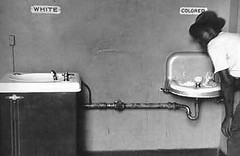
6208380978racial segregationthe separation of humans into ethnic or racial groups in daily life. Generally applies to activities such as eating in a restaurant, drinking from a water fountain, using a public toilet, attending school, going to the movies, riding on a bus, or in the rental or purchase of a home.51
6208380979free enterprisean economic system that permits unrestricted entrepreneurial business activity associated with laissez-faire capitalism52
6208380980trustA set of companies managed by a small group known as trustees, who can prevent companies in the trust from competing with each other.53
6208380981socialistone who believes in the ownership and control of the major means of production by the whole community rather than by individuals or corporations54
6208380982radicalone who believes in fundamental change in a political, economic, or social system55
6208380983lockoutthe refusal by an employer to allow employees to work unless they agree to his or her terms56
6208380984cooperativean organization for producing, marketing, or consuming goods in which the members share the benefits57
6208380985anarchistone who believes that formal, coercive government is wrong in principle58
6208380986tenementa multi-dwelling building, often poor or overcrowded59
6208380987sweatshopa factory where employees are forced to work long hours under difficult conditions for meager wages60
6208380988paupera poor person, often one who lives on tax-supported charity61
6208380989tycoona wealthy businessperson, especially one who openly displays power and position62
6208380990filibusterto utilize the technique of obstructing legislation by tactics such as making long speeches and introducing irrelevant amendments63
6208380991landslidean overwhelming majority of votes for one side in an election64
6208380992reservein finance, the portion of money held back from circulation by a bank or treasury, which provides backing for its notes or loans65
6208380993bimetallismthe legalized concurrent use of two precious metals as currency at a fixed ratio of value in US History associated with the Free Silver movement66
6208380994Wabash v. Illinois (1886)Declared state-passed Granger laws that regulated interstate commerce unconstitutional.67
6208380995Frontier Thesisstereotypical thesis that west represented individualism, democracy, economic freedom, and starting over Turner's idea68
6208380996Land Grantsland given by government to universities and railroad companies69
6208380998Bureau of Indian Affairsdesigned to assimilate Native Americans (children particularly) into American culture70
6208380999Open Rangethe idea that cattle can be grazed on large tracts of public and/or private property invention of barbed wire ended this idea and drove many small cattle ranches out of business and off their small plots of land71
6208381000Vertical IntegrationStrategy to maximize profits by attempting to own every step of the manufacturing process (ex. Carnegie Steel)72
6208381001Horizontal IntegrationStrategy to maximize profits by attempting to purchase competing companies in the same industry; monopoly-building (ex. Rockefeller's Standard Oil)73
6208381006Urbanizationmovement of people from rural communities and settlements to big cities74
6208381007"New Immigrants"immigrants from southern and eastern Europe such as Poland, Italy, Russia, Greece. that arrived in the US during & after the 1880s -unskilled75
6208381009Political MachineUnofficial political organization that works to win elections in order to exercise power Sometimes referred to as a shadow government Rose to power in the late 1800s because of ill-equipped local governments that failed to meet the needs of growing urban populations76
6208381010Tammany HallPolitical machine of New York City that was well-known for its corruption Lead by William Boss Tweed77
6208381011Pendelton Civil Service Act, 1883Standardized an exam for federal employees so that people were awarded jobs on merit rather than political affiliations Made it illegal to remove federal employees without just cause.78
6208381012Sherman Antitrust ActOutlawed monopolistic business practices not effective initially without a strong progressive federal government that would enforce it.79
6208381013Grange Movement and Farmers AllianceGrassroots movements that attempted to address the plight of farmers in the late 1800s; attempted to regulate railroads and enlarge opportunity for credit evolved into Populist movement.80
6208381014William Jennings BryanDemocratic presidential hopeful that was a member of the Populist Party free silver advocate "Do not crucify mankind on a cross of gold".81
6208381015Seward's Folly or Seward's Ice BoxSecretary of State William Seward's negotiation of the purchase of Alaska from Russia in 1867. At the time everyone thought this was a mistake to buy Alaska the "ice box" but it turned out to be the biggest bargain since the Louisiana purchase.82
6208381016Susan B. AnthonySocial reformer who campaigned for women's rights, the temperance, and was an abolitionist, helped form the National Woman Suffrage Association.83
6208381017Laissez-Faire EconomicsThis was an economic philosophy begun by Adam Smith in his book, Wealth of Nations, that stated that business and the economy would run best with no interference from the government. This economic thought dominated most of the time period of the Industrial Revolution.84
6208381018New SouthAfter the Civil War, southerners promoted a new vision for a self-sufficient southern economy built on modern capitalist values, industrial growth, and improved transportation. In reality, this growth was fairly slow.85
6208381019AmericanizationProcess of assimilating immigrants into American culture by teaching English, American history, and citizenship.86
6208381020middle classa social class made up of skilled workers, professionals, business people, and wealthy farmers87
6208381021Interstate Commerce Act1887 Created the Interstate Commerce Commission (ICC) to regulate railroads to be fairer to farmers First legislation to regulate corporations Ineffective because government failed to enforce it.88
6208381023Transcontinental RailroadRailroad that would cross the continent and connect the East to the West Opened new markets and helped spur the Industrial Revolution Completed in 1869 at Promontory, UT89
6208381024Social GospelLate 19th-century movement Protestant movement preaching that all true Christians should be concerned with the plight of immigrants and other poor residents of American cities and should financially support efforts to improve lives of these poor urban dwellers. Settlement houses were often financed by funds raised by ministers of this movement.90
6208381025Standard OilJohn D. Rockefeller's company that gained a monopoly over the world petroleum market with the practice of trusts and swift elimination of competition. By 1890, owned 90% of the US oil market91
6208381026Carnegie SteelA steel producing company created by Andrew Carnegie to manage business at his steel mills in the Pittsburgh, Pennsylvania area in the late 19th century Significance: had a monopoly in the steel industry. vertical integrations.92
6208381027John D. RockefellerWealthy owner of Standard Oil Company. Considered to be a robber baron who used ruthless tactics to eliminate other businesses. Built trusts and used money to influence government.93
6208381028Industrial RevolutionPeriod characterized by the rapid social and economic changes in manufacturing and agriculture that occurred in England during the late 18th century and rapidly diffused to other parts of the developed world. In the US, this occurred during the period roughly 1825-1925.94
6208381029AlaskaThe last frontier of the North American continent. It was purchased from Russia in 1867 and was considered to be worthless land; however, in time, this was proven false95
6208381030Central Pacific RailroadStarted in CA & pushed eastward Eventually connected with the Union Pacific RR in Promontory Point, UT Hired Chinese laborers to complete the work96
6208381031Union Pacific RailroadRR that started in Omaha, NE Connected with Central Pacific RR in Promontory Point, UT Hired inexpensive Irish laborers97
6208381032Wyoming & women's suffrageWY was the 1st state to provide women the right to vote in 1870 Sometimes referred to as the "Land of Freedom"98
6208381033"old immigrants"Immigrants who had come to the US before the 1880s North/ West Europe Irish German English skilled99
6208381034Yellowstone National ParkEstablished in 1872 by US Congress 1st national park100
6208381035Panic of 1873Financial panic in which banks closed and the stock market crashed101
6208381036US SteelLargest steel company of the US Created by JP Morgan by merging with Carnegie Steel Largest corporation in existence at the time102
6208381037Bessemer ProcessWay to manufacture steel quickly & cheaply103
6208381038Battle of Little Bighorn1876- Indian leaders Sitting Bull & Crazy Horse defeated Gen. Custer & his troops104
6208381039Nez Perce WarConflict between the Nez Perce & the US gov't Chief Joseph finally agrees to surrender & relocate to reservation105
6208381040Great Railway Strike of 1877RR workers initiated a strike in 1877 when they were told there would be a pay cut106
6208381041A Century of DishonorWritten by Helen Hunt Jackson Exposed mistreatment of Native Americans by US gov't & settlers107
6208381042James GarfieldBecame president in 1880 Republican Assassinated after only 4 months Promoted civil service reform, but died before it could be enacted108
6208381043JP MorganBanker that controlled 2/3 of RRs and eventually bought Carnegie steel company Formed US Steel Considered a robber baron109
6208381044Captains of IndustryOwners & mangers of large industrial enterprises who wielded great political & economic power More positive term in contrast to "robber barons"110
6208381045Robber BaronsRefers to industrialists or big business owners who gained huge profits by paying employees low wages Drove competition out of business by selling goods much cheaper111
6208381046Hull HouseSettlement home designed as a welfare agency for needy family Provided social & education opportunities for working class Worked to improve conditions caused by poverty Est. by Jane Addams in Chicago112
6208381048Wounded Knee1890 Last Native American battle 300 Native killed by US military113
6208381049Ellis IslandImmigration processing center in NY Harbor114
6208381050Pullman StrikePullman RR car announced pay cut American Railway Union boycotts the use of the Pullman cars US mail failed to be delivered US gov't sent injunction to end boycott SCOTUS ruled injunction was constitutional115
6208381052Credit MobilerRailroad scandal under Grant116
6208381053Whiskey RIngDuring the Grant administration, a group of officials were importing whiskey and using their offices to avoid paying the taxes on it, cheating the treasury out of millions of dollars.117
6208381054Thomas Nastexposes Boss Tweed's corruption through political cartoons118
6208381055Tight money policymonetary policy that reduces the money supply119
6208381056Causes of Panic of 1873-overproduction in industry -over speculation by banks (giving too many loans)120
6208381057Compromise of 1877Hayes is President (Republican) pulls out militia in south ENDS RECONSTRUCTION land grants and patronage121
620838105815th amendmentAfrican American males can vote122
6208381059RedeemersWhite Democrats who reassumed political power in South123
6208381060Mark TwainHuckleberry Finn, named period the Gilded Age124
6208381061Civil ServiceMade people take an exam to make sure they were qualified125
6208381062Munn vs. IllinoisVictory for farmers126
6208381063Wbash caseoverturns the victory in the Munn case127
6208381064Interstate Commerce ActEstablished the ICC (Interstate Commerce Commission) - monitors the business operation of carriers transporting goods and people between states - created to regulate railroad prices128
6208381065Yellow dog contractscant join unions129
6208381066Great Railroad StrikeJuly, 1877 - A large number of railroad workers went on strike because of wage cuts. After a month of strikes, President Hayes sent troops to stop the rioting. The worst railroad violence was in Pittsburgh, with over 40 people killed by militia men.130
6208381067Homestead Strike1892 steelworker strike near Pittsburgh against the Carnegie Steel Company. Ten workers were killed in a riot when "scab" labor was brought in to force an end to the strike.131
6208381068Reasons for immigrationJob opportunities - in factories, businesses steamships, railroads,that many other countries didnt have. political and religious freedom -lack of land in europe -religious persectution in europe132
6208381069Salvation ArmyThis welfare organization came to the US from England in 1880 and sought to provide food, shelter, and employment to the urban poor while preaching Christian values.133
6208381070horatio Algerrags to riches134
6208381071Edward Bellanyfuture utopian society135
6208381072Booker T washingtonmust get jobs for respect of african americans -gradual equality136
6208381073WEB deboisimmediate equality for african americans137
6208381074Helen Hunt"a century of dishonor" reveals mistreatment of natives by federal gov138
6208381075Fredrick Jackson TurnerClosing of the Fronteir139
6208381076Coxey's armyunemployed march to dc to demand for public work jobs140
6208381077Sherman Silver Purchase ActIncreased the amount of silver the gov. bought for coinage, but the money supply did not increase enough to satisfy silver supporter141
6208381078Cross of Gold SpeechAn impassioned address by William Jennings Bryan at the 1896 Deomcratic Convention, in which he attacked the "gold bugs" who insisted that U.S. currency be backed only with gold.142

Pages

Subscribe to CourseNotes RSS

Need Help?

We hope your visit has been a productive one. If you're having any problems, or would like to give some feedback, we'd love to hear from you.

For general help, questions, and suggestions, try our dedicated support forums.

If you need to contact the Course-Notes.Org web experience team, please use our contact form.

Need Notes?

While we strive to provide the most comprehensive notes for as many high school textbooks as possible, there are certainly going to be some that we miss. Drop us a note and let us know which textbooks you need. Be sure to include which edition of the textbook you are using! If we see enough demand, we'll do whatever we can to get those notes up on the site for you!